
Sign up to save your podcasts
Or



A lot of people misunderstand the third commandment. The third commandment says, “You shall not take the name of the Lord your God in vain.”
Most Christians think that means you shouldn’t say OMG. Now, you probably shouldn’t say OMG, but that’s just one part of what it means to break the third commandment.
The third commandment means to misrepresent God. Now, you may say, how can taking God’s name in vain be a way of misrepresenting God? The reason is, because when you are a follower of God, you place God’s name upon yourself. Therefore, the way you behave will be a signpost of God to the world.
For example, we followers of God today are most commonly known as Christians. Now think about this: what are the first six letters of Christian? Christ. When you’re known as a christian, you’re seen by unbelievers as a representative of Christ.
That means when you show love as a Christian, you are showing people that God sees them and loves them and wants to know them.
Likewise, if we show hate or malice toward people as a Christian, it gives the impression that God is angry with them and doesn’t like them, either.
And that’s the essence of the third commandment. Yes, we shouldn’t use God’s name as a swear word. We shouldn’t tack God’s name onto things as a marketing strategy. We shouldn’t speak of God in a mocking way. That’s all part of this commandment. But misrepresenting God is the main way we take His name in vain.
And what we’re going to see today is that God is not as laidback as Joan Jett when it comes to giving him a bad reputation. Turn to Ezekiel 36 as we continue that chapter today on the Cross References podcast.
0:00 - Introduction
2:15 - For the Sake of His Name
18:45 - Secondhand Embarrassment
If you want to get in touch with me, send an email to [email protected]
Is prophecy meant to be taken literally, or is it all symbolic? And if it’s both, then how can you know the difference? That’s the question we’re going to answer today.
Because we Christians find a lot to argue about on the subject of prophecy. How can we know if the Israel of today is the fulfillment of prophecies in Old Testament Scripture? How can we know if the Millennium is something future or something happening now? How can we know if it is 1000 actual years?
It’s the “how-can-we-know” questions that I want to settle for you today. And the best way to understand how future prophecy should be interpreted is to examine how past prophecy was fulfilled. And you’ll learn about that today on the Cross References podcast.
0:00 - The Taylor Test
4:45 - v1-7, Thus Says the Lord
9:15 - v8, Timing of the Return
20:05 - v9-15, Restoration of the Land
26:30 - Closing Thoughts
If you want to get in touch with me, send an email to [email protected]
We’re coming up on three years since I started this podcast, and when I started it, I didn’t know that by the time we got done, Israel would be attacked in the largest one-day massacre of Jewish people since WWII. I didn’t know Israel would be engulfed in a literal war with the Palestinian terrorists who have been seeking to overthrow it for decades. And I didn’t know we’d be seeing Ezekiel 35 being repeated so vividly right before our eyes.
But that’s exactly what’s going on. And the battle you see playing out in the Middle East right now is a battle that started- not on October 7, 2023, but- all the way back in the book of Genesis.
So how did all of this start, and where is all this going? I can’t wait to tell you about it today on the Cross References podcast.
0:00 - Introduction
4:30 - v1-4, The Identity of Mount Seir
13:50 - v6-9, The Sins of the Edomites
20:30 - A Brief history of Edom
33:33 - The Origin of Palestine
40:10 - v10-15, Edom’s Doomed Future
If you want to get in touch with me, send an email to [email protected]
Ezekiel has not been the easiest book of the Bible to study. Up until today’s lesson, most of it has been dark, depressing, gloomy and full of judgment and wrath.
But regardless of the past, I have some news about the future: the best is yet to come.
Because the book is making a major turning point in this section we’re in. So far, we’ve just encountered the bad news. But now we’re in a part called the Gospel According to Ezekiel. That’s what some commentaries call it.
And the word “Gospel” means good news.
So we have some good news for you today, and this good news will be in the form of future prophecy. This book is turning it’s attention toward the future for the material we’re going to talk about in today’s verses.
We’re covering the back half of Ezekiel 34 on this episode, and we’ll answer these questions…
You’ll find out today on the Cross References podcast.
0:00 - Introduction
1:20 - v11-16, The Best Shepherd
12:45 - v17-24, Judgment Within the Church
19:45 - v25-31, The Millennial Sheep Pen
24:30 - Closing Thoughts
Special thanks to the Two Witnesses Live podcast for inviting me on their show recently! Here is a link if you’d like to see/hear it: https://www.youtube.com/live/Mh0bTZhUKwk?si=vqVdx6KZx9tQIZSo
If you want to get in touch with me, send an email to [email protected]
A pastor must be a good public speaker, able to draw large crowds with his authority and charisma.
A pastor must be like a CEO, an expert in management and leadership.
A pastor must be a skilled fundraiser, and know how to execute a building program.
A pastor must be on-call 24/7, even on holidays and vacations.
A pastor must be an expert psychologist and counselor, able to diagnose and treat every mental illness.
A pastor must have a picture-perfect family, a wife who leads the women’s ministry and teaches children’s church and does it all with a smile- and their kids must never misbehave or embarrass their parents.
And by the way, the pastor is supposed to be one of the poorest members of the church, driving an old used vehicle, living in a 1000 square foot house, taking now more of a salary from the church than the absolute minimum needed to survive, as a way to show his true devotion to God.
These are some of the modern expectations of a pastor or ministry leader. This is what many in the modern American church want- or think they want- from their pastors.
But are these expectations biblical? Are these the priorities that God said He expected from a pastor when He gave us the New Testament? Or are some of these things that we’ve added over the years? And if we’re adding human standards to God’s Word for what qualifies a pastor, is it wrong of us to do that?
We’re going to explore that question today by looking at a text from Ezekiel 34 where he shares God’s heart on the qualifications of a spiritual leader. All of that today on the Cross References podcast.
0:00 - Introduction
3:50 - The Pastor as Shepherd
15:20 - A Pastor’s Job Description- I Timothy 3
21:20 - Ezekiel 34, verses 1-10
33:00 - Closing Thoughts- The Good Shepherd
Special thanks to the Two Witnesses Live podcast for inviting me on their show recently! Here is a link if you’d like to see/hear it: https://www.youtube.com/live/Mh0bTZhUKwk?si=vqVdx6KZx9tQIZSo
If you want to get in touch with me, send an email to [email protected]
I have heard all my life about declaring God’s promises. The idea was that certain things in scripture became true in reality as long as you declared them to be so.
Sounds a little bit magical. But is it biblical?
We’re going to talk about that today. We’ll also wrap up Ezekiel 33, and for the first time in 30 chapters, Ezekiel is going to be allowed to speak freely. You may have forgotten, but Ezekiel’s mouth was shut for a large chunk of his time in ministry. God supernaturally prevented him from speaking.
We’ll talk about that. And nobody wants to be unpopular, but if you listen to the end today, you’ll also learn about the dangers that come with being too popular.
So are God’s promises something you just have to declare? Are they activated by faith? Or are there conditions that have to be met for God’s promises to be fulfilled?
You’ll find out today on the Cross References podcast.
0:00 - Introduction
3:30 - v21-22, No Longer Mute
7:00 - v23-29, Standing on the Promises of God?
18:30 - v30-33, The Dangers of Popularity
25:15 - Mailbag
26:35 - He Opened Not His Mouth
If you want to get in touch with me, send an email to [email protected]
Entire books have been written about the thorny theological issue I want to talk about today.
James chapter 2. At face value, James 2 seems hard to reconcile with the rest of the New Testament.
That’s because the rest of the New Testament pretty clearly teaches this doctrine of salvation by grace through faith not of works. That’s a direct quote, actually.
Ephesians 2:8-9 says
For by grace you have been saved through faith. And this is not your own doing; it is the gift of God, 9 not a result of works, so that no one may boast.
Romans 4:2-3
For if Abraham was justified by works, he has something to boast about, but not before God. 3 For what does the Scripture say? “Abraham believed God, and it was counted to him as righteousness.”
Galatians 2:16
yet we know that a person is not justified by works of the law but through faith in Jesus Christ,
So it’s like, every page of the New Testament makes this clear: salvation is only by grace through faith. There is nothing you can do to earn your salvation. Works play no part in it.
And then James comes along and says this in his second chapter,
Verse 14
What good is it, my brothers, if someone says he has faith but does not have works? Can that faith save him?
Wait a second here. Let me read that again. (Re-read it)
Is James going against Paul? I can’t emphasize enough how much this seems to be saying the exact opposite of so many other verses in the Bible.
Is James contradicting Paul? Is James contradicting the Bible? Is James contradicting God Himself?
I find this to be weird, and I’d like to explore why it’s in the Bible.
Turn to James 2, and let’s get weird.
0:00 - Introduction
3:00 - James 2
6:15 - The Context of James
11:30 - Going Back to the Greek
17:00 - Next Time
20:00 - Closing Thoughts
If you want to get in touch with me, send an email to [email protected]
Hosted by Luke Taylor
So we’re in this chapter called Ezekiel’s Greatest Hits. That’s my name for it. Ezekiel 33 recaps some of Ezekiel’s earlier lessons; in fact, some of my favorite lessons from earlier in the book. And today we’ll be looking at verses 10 through 20, which recap my favorite chapter of Ezekiel: chapter 18.
This is the chapter on personal responsibility. It was one of my most popular podcast episodes before, and it’s still getting a lot of play even today. If you heard the lesson on Ezekiel 18 before, don’t tune out, because even though this is recapping something we’ve already studied, I’m going to expand on it today.
A lot of people question how Ezekiel 18 fits in with the doctrine of salvation by grace through faith, not of works. We’re going to talk about dispensationalism. We’re going to talk about Calvinism and God’s sovereignty. And if you listen until the end, we’re even going to talk about the difference in worldly sorrow and true repentance that Paul discusses in the New Testament.
So you’re gonna get a lot of good theology if you stick around today on the Cross References podcast.
0:00 - Introduction
2:30 - Javascript Bible
5:20 - v10-12, The Limits of Calvinism
13:35 - v12-13, The Limits of Dispensationlism
20:30 - Faith and Works
30:50 - Next Time
34:10 - v17-20, Worldly Sorrow vs Godly Sorrow (II Corinthians 7)
If you want to get in touch with me, send an email to [email protected]
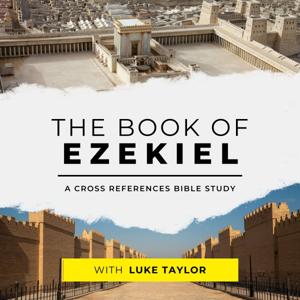
I am looking at changing this podcast's name to "The Book of Ezekiel: A Cross References Bible Study."
I hope you will agree that I have a good reason to make this change.
You are probably going to regret listening to today’s episode. I’m just gonna put that out there now.
Why do I say that? Do you ever learn something and you just kind of wish you didn’t know?
Like, I wish I didn’t know about germs. Sometimes I just really wish I didn’t know that there are these tiny little microscopic bacteria all over virtually everything and if you get too many of them you’ll get sick and feel yucky.
That sounds like pretty helpful information to know, except for the fact that I have this awareness at all times that I’m constantly surrounded by germs. I’m a bit of a germaphobe. I keep hand sanitizer in my car, on my desk at work, and sitting over here by me as I say these words at my desk at home.
Yes, it makes me feel better to have it. But I kinda wish sometimes I didn’t worry about germs as much as I do.
Well, there are things about spiritual reality that we don’t know and that we are perfectly happy not to know and yet that we should know. For example, whose responsibility is it when someone goes to hell? Is it just that person’s fault? Can another person be responsible for it? Can YOU be responsible for it?
The answer might make you a little uncomfortable. But, it’s something you need to know, and you’ll learn that answer today on the Cross References podcast.
0:00 - Introduction
4:50 - v1-9, The Burden of the Watchman
19:50 - A Note about the Future
23:50 - Closing Thoughts
If you want to get in touch with me, send an email to [email protected]
From the publisher's feed

2,563 Listeners

648 Listeners

1,255 Listeners
1,023 Listeners
5,422 Listeners

65,453 Listeners

576 Listeners

2,442 Listeners

916 Listeners

5,215 Listeners

687 Listeners

13,156 Listeners
409 Listeners

53 Listeners
381 Listeners