Good Will Hunters

Good Will Hunters

By Good Will HuntersNews
Download on the App Store

Good Will Hunters episodes

  • Jacqui De Lacey - Are managing contractors the problem, or the solution?
    Welcome to Episode 86 of Good Will Hunters from the Development Policy Centre. Today on the show I speak to Jacqui De Lacy.
    Jacqui is the Managing Director of Abt Associates Australia, one of Australia’s major development contractors. Prior to joining Abt, Jacqui was the head of AusAid in Indonesia, and she’s had a range of other high level roles in the aid program. Jacqui is also on the board of UNICEF Australia.
    Jacqui and I discuss the criticisms of facilities and managing contractors, in particular in the context of PNG. We also discuss the reform that’s required in our aid program, to promote partnerships over economic dependence. Jacqui shares her strong views on why aid to Indonesia should not be reduced.
    Finally, Jacqui reflects on her extensive career in development and how she remains positive, as well as her advice for the next generation looking to forge their careers. Jacqui’s advice is some of the most tangible and actionable advice I’ve ever heard so definitely stay tuned until the end!
    Some of Jacqui's recent articles include:
    https://devpolicy.org/in-search-of-a-strategic-aid-program-5-messages-for-the-new-australian-aid-policy-20200318/
    https://devpolicy.org/facilities-deserve-a-place-in-development-20171113/
    Articles on managing contractors and facilities include:
    https://devpolicy.org/the-problem-with-facilities-and-aid-20190502/
    https://devpolicy.org/improving-the-monitoring-and-evaluation-of-facilities-in-the-australian-aid-program-20190723/
    The Development Policy Centre is running its annual fundraising appeal. The Centre provides critical support to this podcast and of course runs the Devpolicy Blog and undertakes important research around aid and development. If you appreciate this podcast and the Devpolicy blog, please make a tax deductible donation at devpolicy.org/donate.
    Enjoy the episode,
    The GWH Team
    37 min
  • Elizabeth Peak - What does the Partnerships for Recovery Policy mean for the Indo-Pacific?
    Welcome to Episode 85 of Good Will Hunters from the Development Policy Centre. Today on the show I speak to Elizabeth Peak.
    Elizabeth currently serves as the Co-Head of the COVID Development Response and Recovery Taskforce and First Assistant Secretary of the Human Development and Governance Division at the Department of Foreign Affairs and Trade. Prior to this she was Minister-Counsellor (Economic) at Australia’s at the Department of Foreign Affairs and Trade embassy in Beijing, China. She has previously held the role of Assistant Secretary South-East Asia Services and Investment Branch.
    Elizabeth has been instrumental in the Australian Government’s recent development policy Partnerships for Recovery — Australia’s COVID-19 Development Response and performance framework, which outlines Australia’s approach to tackling COVID-19 in our region, pivoting our development program to focus on the virus, together with our partners.
    This interview is an exciting and rare opportunity to unpack the new policy with a senior representative of DFAT.
    During the episode, Elizabeth and I examine how aid funding will be repurposed and allocated to assist the Indo-Pacific’s response and recovery to the COVID-19 pandemic, including where the 280m allocated to the response will be spent, and what programs have been cancelled or paused to make these funds available.
    We then discuss whether bilateral aid to Sri Lanka, Bangladesh and Nepal, among others, will continue, in light of the decision to only make targeted investments outside of South East Asia. I ask Elizabeth whether the Department and the Government regret cutting funds to health programs by over 30% in recent years, and why no additional funds have been allocated to the Covid-19 response, given that 1bn of additional funding was allocated to the region following the Indonesian tsunami.. Finally, Elizabeth and I discuss labour mobility and tourism, including whether the Government is doing enough to promote the Pacific Travel Bubble.
    You can read the policy here - https://www.dfat.gov.au/publications/aid/partnerships-recovery-australias-covid-19-development-response
    You can read analysis by the Devpolicy Blog on the policy here - https://devpolicy.org/australias-new-covid-19-development-response-strategy-strengths-and-contradictions-20200604-1/
    The Development Policy Centre is running its annual fundraising appeal. The Centre provides critical support to this podcast and of course runs the Devpolicy Blog and undertakes important research around aid and development. If you appreciate this podcast and the Devpolicy blog, please make a tax deductible donation at devpolicy.org/donate
    Enjoy the episode,
    The GWH Team
    33 min
  • Jonathan Pryke and Roland Rajah - What does the future of aid to the Pacific look like?
    Welcome to Episode 84 of Good Will Hunters from the Development Policy Centre.
    Today on the show I speak to Jonathan Pryke and Roland Rajah from the Lowy Institute. The Lowy Institute is an independent, nonpartisan international policy think tank located in Sydney, Australia.
    Jonathan is the Director of the Lowy Institute’s Pacific Islands Program, a program that investigates the contemporary challenges facing the Pacific Islands region in areas including sustainable economic development, governance and leadership, and poverty alleviation. Jonathan’s research is interested in all aspects of the Pacific Islands, including economic development in the Pacific Islands region, Australia’s relationship with the Pacific, the role of aid and the private sector in Pacific Islands development and Pacific labour mobility.
    Roland is the Lead Economist and Director of the Lowy Institute’s International Economics Program, a program that aims to explain developments in the international economy and influence policy by undertaking independent analytical research. Before joining the Lowy Institute Roland was a Senior Economist and Country Manager at the Asian Development Bank, where he worked on macro-fiscal policy, economic growth, and development issues in the Pacific region.
    Jonathan, Roland, and I discuss the Pacific Aid Map, a major initiative by the Lowy Institute that charts aid flows across the pacific region. We also talk about China’s and Australia’s evolving aid engagement within the Pacific region, particularly in relation to supporting the Pacific’s economic stability and recovery from the COVID-19 pandemic. Lastly, we discuss the new Partnerships for Recovery Strategy.
    You can find recent coverage on the Pacific region via https://devpolicy.org and https://www.lowyinstitute.org/about/programs-and-projects/melanesia.
    The Development Policy Centre is running its annual fundraising appeal. The Centre provides critical support to this podcast and of course runs the Devpolicy Blog and undertakes critical research around aid and development. If you appreciate this podcast and the Devpolicy blog, please make a tax deductible donation at devpolicy.org/donate.
    Once again, we hoped to bring you coverage of the new aid strategy however this interview has again been delayed and we hope to bring it to you soon.
    Enjoy the episode,
    The GWH Team
    53 min
  • Ofa Guttenbeil-Likiliki and Konnie Yoifa - How do you address gender based violence in the Pacific?
    Welcome to Episode 83 of Good Will Hunters from the Development Policy Centre. Today on the show I speak to Ofa Guttenbeil-Lilkiliki and Konnie Yoifa.
    Ofa is a women’s rights activist and filmmaker from Tonga. She has advocated for equality in women's economic and educational empowerment, in their political involvement and representation, in land reform, protection from violence, and has advocated for the ratification of the Convention on the Elimination of All Forms of Discrimination Against Women for over a decade. She has twice been nominated for the U.S. Secretary of State International Women of Courage Award (2012,2013) recognising her work in advocating for women and childrens rights in Tonga.
    Ofa and I discuss the Women and Children’s Crisis Centre in Tonga, and their work to support women who have experienced violence, whilst simultaneously advocating for policy reform at a national level. You can learn more about Ofa and the Centre via these links:
    https://www.spc.int/sdp/70-inspiring-pacific-women/ofa-guttenbeil-likiliki
    https://www.tongawccc.org
    https://devpolicy.org/tongas-double-whammy-covid-19-and-tropical-cyclones-20200422/
    Konnie is the Port Moresby Director of Femili PNG (pronounced 'Family PNG'). Femili PNG runs runs Case Management Centres to assist survivors of family and sexual violence to access the services they need. Their target population is women, men or children who are survivors of intimate partner violence, sexual violence, sorcery accusation related violence and/or child abuse. Konnie and I discuss the extent of gender based violence in PNG, particularly in light of recent news events relating to Debbie Kaore.
    You can learn more about Femili PNG via these links:
    https://www.femilipng.org
    https://devpolicy.org/femili-png-hiring-in-canberra/femili-png/
    To learn more about gender based violence in the Pacific, visit the Devpolicy archives:
    https://devpolicy.org/tag/gender-based-violence/
    Enjoy the episode,
    The GWH Team
    38 min
  • Martha Macintyre - Does democracy work in PNG?
    Welcome to Episode 82 of Good Will Hunters from the Development Policy Centre. Today on the show I speak to Martha Macintyre.
    Martha is an anthropologist who initially studied History at The University of Melbourne and then moved on to postgraduate study in Anthropology at The University of Cambridge (UK) and gained her PhD at The Australian National University. She was elected a Fellow of the Academy of Social Sciences in Australia in 2012.
    Martha has undertaken research in Papua New Guinea for over 30 years. Martha has combined anthropological and historical scholarship with practical and policy concerns as an advisor and consultant to the Papua New Guinea government and several multinational corporations. She has particular interest in questions about changes in women’s power, health and well being in the context of rapid social change and has written extensively on gender, human rights and violence against women.
    In this episode, Martha and I discuss why healthcare in PNG continues to be inadequate. We also discuss the contribution of anthropology to the international development sector, along with Martha’s hopes and fears for the future of PNG. Martha wrote an article for the Devpolicy blog in April 2019 on the catastrophic failure of health service delivery in PNG.
    https://devpolicy.org/catastrophic-failures-in-png-health-service-delivery-20190404/
    For more coverage on healthcare in PNG and the Pacific, visit the Devpolicy blog.
    We did say we were bringing you coverage of the new aid partnership strategy this week. Unfortunately that interview had to be delayed but we hope to bring it to you next week.
    Enjoy the episode,
    The GWH Team
    36 min
  • Graham and Glennys Romanes - How do you dedicate a life to aid and development?
    Welcome to Episode 81 of Good Will Hunters from the Development Policy Centre. I’m your host Rachel Mason Nunn.
    Today I’m speaking with Graham and Glenyys Romanes. This is the last of our interviews recorded at the Australasian Aid Conference hosted by the Development Policy Centre in partnership with the Asia Foundation back in February.
    Through their long careers, and through their lives, both separately and as a couple, Graham and Glenyys have been trailblazers in a range of areas from gender equity, to disaster response, to Indigenous progamming.
    In the 70s, Graham became famous for being a stay-at-home Dad, a rare species even today, but practically unheard of then. In the 80s, the couple took the equally radical step of job sharing the role of Victorian State Secretary of Oxfam Australia
    In the early 80s, Graham led Oxfam’s response to the famine in the Horn of Africa, a pivotal event for Australia’s development NGOs. He again became a media figure, this time exposing the fact that the Ethiopian famine was not simply a natural disaster, but the outcome of a tyrannical regime. His 13-week journey by vehicle and foot from Sudan to Tigray was live-threatening but also life-changing. Ever since, Graham has worked in support of the people of Ethiopia, particularly through funding the digging of wells. Thanks to Graham’s work, more than half of the 4 million rural population of Tigray is now in walking distance of a well.
    Glenyys’ focus was on the Pacific and Indigenous Australians. Oxfam was the first Australian development NGO to program domestically, and Glenyys oversaw the transition of their Indigenous programs into Indigenous hands. And if you’ve worked in the Pacific you will have heard of one One Small Bag, the ni-Vanuatu theatre group. It received its first funding from Oxfam Australia under Glenyys’s management.
    Eventually Graham and Glenyys left Oxfam. In 1997, Graham became the Honory Consul for Ethiopia, a position he held till 2014. Glenyys commenced a career in Victorian local and state politics, which saw her serve as the Mayor of Brunswick and in the Victorian Upper House. They both remain active to this day through a range of numerous local, statewide and international engagements.
    In this interview, Graham and Glenyys reflect on some of their achievements, and the lessons that they have learnt. Theirs is an inspirational and instructive story, that we should both celebrate and learn from, not only in our work, but in terms of our lives and aspirations.
    Graham and Glenyys, along with Mark Sullivan and Sally Lloyd, were all featured in the Aid Profile series as part of their nomination for a Mitchell Humanitarian Award.
    https://devpolicy.org/aidprofiles/2020/01/16/glenyys-and-graham-romanes-trailblazers/
    We’ve also featured Mark and Sally on Good Will Hunters - you can find their episodes at www.goodwillhunterspodcast.com.au. If you know of anyone who has made an outstanding contribution to the development, with an Australian angle, nominate them for the annual Mitchell Humanitarian Award by writing to [email protected]. And check out the Aid Profile website at devpolicy.org/aidprofiles
    Enjoy,
    The GWH Team

    36 min
  • Ji Hongbo and Denghua Zhang - Insider Perspectives on Chinese Aid
    Welcome to Episode 80 of Good Will Hunters from the Development Policy Centre. The focus of today’s episode is Chinese Aid, with our guests Ji Hongbo and Denghua Zhang.
    China’s aid has been on the rise for years, not only in the Pacific, but around the world. And with China-US rivalry taken to a new level as a result of COVID-19, China’s aid is set to become more important and more controversial than ever.
    We often hear from experts on China about Chinese aid, but rarely from Chinese experts themselves. Yet given China’s complexity, not to mention the language barriers, hearing from those who understand the country and its systems is obviously critical
    In this episode I chat with two experts who have both worked in the past for China’s Ministry of Foreign Affairs. Ji Hongbo is the Asia Foundation’s Country Representative in China, in Canberra for the year at the ANU, but normally based in Beijing. Hongbo’s prior experience includes 5 years of diplomatic experience with China’s Ministry of Foreign Affairs, including an assignment to the Permanent Mission of China to the United Nations in New York.
    Denghua Zhang is a Research Fellow in the Department of Pacific Affairs at the ANU. He completed his PhD on Chinese Foreign Aid and Trilateral Aid Cooperation in 2017, and recently released a book with ANU Press titled ‘A Cautious Approach: China’s Growing Trilateral Aid Cooperation’. You can access it here -
    https://press.anu.edu.au/publications/series/pacific-affairs/cautious-new-approach
    Hongbo and I discuss China’s approach to international aid and development, including their focus on bilateral engagement over trilateral or multilateral engagement. We also discuss the rise of NGOs in China, and the independence of these NGOs as they attempt to implement government-funded projects. We discuss what traditional donors can learn from China and vice versa. Lastly we discuss how Chinese aid is responding to Covid-19.
    Denghua and I discuss China’s approach to the Pacific, and why China is so interested in the Pacific. We address claims of debt-trap diplomacy and deepening military and security ties. We also discuss whether China can realistically collaborate with Australia on aid delivery on an ongoing basis.
    In this episode you’ll hear some real insider perspectives on Chinese aid. It’s a rare opportunity, and I hope it promotes the sort of understanding we’re going to need as a globe if we are to successfully navigate China’s rise to superpower status.
    For more coverage of Chinese aid to the Pacific, including artcles by Denghua and Hongbo, visit the Devpolicy blog at devpolicy.org. Recent articles on Chinese aid include:
    https://devpolicy.org/the-new-chinese-aid-agency-after-its-first-two-years-20200422-2/
    https://devpolicy.org/chinas-coronavirus-covid-19-diplomacy-in-the-pacific-20200527-1/
    https://devpolicy.org/covid-19-and-chinas-soft-power-ambitions-20200424-2/
    You’d also be aware that the Government released a strategy a few days ago, outlining Australia’s response to Covid-19 in the region. We’ll be bringing you more coverage and analysis of that soon.
    Enjoy,
    The GWH Team

    1 hr 1 min
  • Richard Curtain and Liz Pechan - Should the Pacific join the Trans-Pacific Travel Bubble?
    Welcome to Episode 79 of Good Will Hunters from the Development Policy Centre. Today on the program we have Richard Curtain and Elizabeth Naru Pechan.
    Richard is a Research Fellow with the Development Policy Centre, with a focus on Pacific Labour Mobility. Liz is the Founder and Co-Owner of the multi-award winning resort The Havannah in Vanuatu. Within four days of Australia closing its borders to international travel, Liz’s resort had zero income. Over the last two months, she’s been contributing to Vanuatu’s response to both Covid-19 and Cyclone Harold by devising a tourism sector recovery plan.
    Liz, on the Devpolicy blog - https://devpolicy.org/vanuatu-a-tourism-sector-perspective-on-potential-recovery-from-covid-19-and-tc-harold-20200506-1/
    Richard, on the Devpolicy blog - https://devpolicy.org/a-travel-pathway-to-revive-pacific-tourism-20200522/
    In this episode Richard and I discuss the Trans-Pacific Travel Bubble, including whether the benefits outweigh the risks for Pacific Island countries. We discuss whether the Pacific is too dependent on tourism, along with how best to approach labour migration during the Covid-19 recovery period.
    Liz and I discuss what the reality has been for tourism sector workers in Vanuatu, and whether any support is being provided to workers who have had their contracts terminated. This episode analyses the road-ahead for tourism and labour mobility in the Pacific, and whether a travel bubble is the best way forward.
    Enjoy,
    The GWH Team
    37 min
  • Diana Fernandez and Faisal Seraj - Is COVID-19 worsened by internet blackouts in Asia?
    Welcome to Episode 78 of Good Will Hunters from the Development Policy Centre. Today on the show we have Diana Fernandez and Faisal Bin Seraj.
    Diana is the Deputy Country Representative for the Asia Foundation in Myanmar and Faisal is the Asia Foundation’s Country Representative in Bangladesh. Myanmar and Bangladesh, like all countries, have been hit by Covid-19. At this stage, the economic impacts are outweighing the health impacts, despite both countries having fragile health systems.
    Diana and I discuss Myanmar’s economic dependence on China, and how this has impacted on Myanmar’s response to Covid-19 including the closure of their borders along with the emergence of Chinese NGOs. We discuss why Myanmar’s healthcare system is ranked as one of the worst in the world, and why the Ministry of Health recognises that it cannot cope with a Covid-19 outbreak. We also discuss the internet blackout occurring in Myanmar, as revealed by a private telecommunications provider, Telenor, who was ordered by the Ministry of Information in Myanmar to switch off some of their internet towers. The blackout has made the coordination of aid to parts of Myanmar difficult and speaks to broader concerns about the freedom of the media and the spread of critical information.
    Faisal and I discuss why the growth-rate of Covid-19 infections in Bangladesh has been higher than other Asian countries, but also how Cox’s Bazar and the large refugee camp it houses, have managed to emerge with no confirmed cases. However, since the time of recording, two Rohingya refugees have tested positive for Covid-19 in Cox’s Bazar.
    Faisal and I also discuss the low-cost test kits that have been distributed in Bangladesh and whether their reliability is a problem. Like Myanmar, there are also restrictions on internet access and media freedoms in Bangladesh, which we discuss. Lastly, we discuss the stimulus package announced by the Bangladesh government and whether it is enough to protect precious informal sector workers as well as the garment manufacturing sector, who have been hit hard by international brands cancelling their orders.
    You can find out more about the Asia Foundation here - https://asiafoundation.org
    You can also find more coverage of Covid-19 impacts in Asia via the Devpolicy blog at Devpolicy.org. Recently, Diana, Faisal and other staff from the Asia Foundation wrote an article for Devpolicy on women’s safety in Asia. It’s an important read - https://devpolicy.org/in-asia-not-all-homes-are-safe-we-need-an-urgent-shift-in-thinking-20200408/
    Other articles contributed by Asia Foundation staff on Devpolicy cover the impact of and response to COVID-19 in Vietnam, Laos, and Malaysia
    Enjoy,
    The GWH Team
    49 min
  • Michael Kabuni and Maho Laveil - How are the most vulnerable in PNG coping with COVID-19?
    Welcome to Episode 77 of Good Will Hunters from the Development Policy Centre.
    Today we’re bringing you two experts from Port Moresby, to give a snapshot of the state of PNG at this unprecedented time. First, I speak with Michael Kabuni, Research Fellow in Politics at UPNG and contributor to the Devpolicy blog. Michael and I discuss the prevalence of police brutality outside of Covid-19, and the role of policing in containing the pandemic. We also discuss the impacts of Covid-19 on crime rates, including in the settlements, which are being hit the hardest.
    Following Michael, I speak to Maho Leveil, Economics Lecturer at UPNG, and we look more closely at the economic impacts of Covid-19 on informal sector workers, as well as the income guarantees made by the Government of PNG. We discuss the popularity of the Marape Government and the likelihood they’ll get through 2020 without a Vote of No Confidence. Maho raises some interesting points about the lack of investment in health infrastructure in PNG and the drivers of this.
    Both Michael and Maho are young academics at the University of Papua New Guinea, PNG’s leading university, that was established only ten years before the country’s independence in 1975. Both are contributors to the Devpolicy blog and we’ve included links to their recent articles here:
    https://devpolicy.org/author/maholopa-laveil/
    https://devpolicy.org/author/michael-kabuni/
    You can visit our website www.goodwillhunterspodcast.com.au or connect with us on social media via @goodwillpod. We’d love to hear from you.
    Enjoy,
    The GWH Team
    31 min

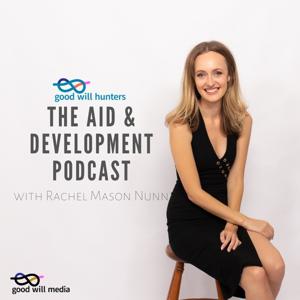
About Good Will Hunters

From the publisher's feed

Join us as Rachel Mason Nunn explores the nuanced world of international development by talking to experts and game-changers whose voices and work are critical to radically transforming the sector and…

More shows like Good Will Hunters

Lowy Institute by Lowy Institute

Lowy Institute

20 Listeners

Big Ideas by ABC Australia

Big Ideas

100 Listeners

Late Night Live — Full program podcast by ABC Australia

Late Night Live — Full program podcast

97 Listeners

Late Night Live - Separate stories podcast by ABC Australia

Late Night Live - Separate stories podcast

45 Listeners

Saturday Extra - Separate stories podcast by ABC Australia

Saturday Extra - Separate stories podcast

7 Listeners

Radio National Breakfast by ABC Australia

Radio National Breakfast

15 Listeners

Follow The Money by The Australia Institute

Follow The Money

14 Listeners

Australian Politics by The Guardian

Australian Politics

48 Listeners

Politics with Michelle Grattan by The Conversation

Politics with Michelle Grattan

12 Listeners

ABC News Daily by ABC Australia

ABC News Daily

137 Listeners

The National Security Podcast by ANU National Security College

The National Security Podcast

25 Listeners

Democracy Sausage with Mark Kenny by The Australian National University

Democracy Sausage with Mark Kenny

28 Listeners

7am by Solstice Media

7am

109 Listeners

Full Story by The Guardian

Full Story

162 Listeners

The Fin by Australian Financial Review

The Fin

29 Listeners