
Sign up to save your podcasts
Or



Some of you may be asking, “Why does my daily routine matter?”
So let’s talk about what would constitute a daily routine when I talk about it. I talk about a morning ritual, a workday start up ritual, a workday shut down ritual, and an evening ritual.
What is a routine?
A routine is a sequence of actions regularly followed.
What is a habit?
A habit is a subtle or regular tendency or practice, especially one that is hard to give up.
So by having rituals to start your day, before your workday, after your workday, and before you go to bed it allows your body to shift into different modes or different head spaces.
Multitasking can actually reduce your productivity as much as 40%, unless you have certain learning disabilities that make bouncing from one thing to another a positive thing. You’re probably getting yourself out of the groove otherwise.
Much like our zone of genius, this productivity groove feels effortless and makes us either produce a better quality of work or simply more work.
The goal for this is to allow our body to adjust accordingly. Your brain is not here to make you happy, it’s not here to make you productive, no matter what we wish. Our mind is here to keep us from dying. It’s going to assume that things are scary, and if things are energy draining they’re going to lump that in with scary. It’ll tell you to avoid them.
Remember, decision fatigue can be life or death during ancient times. If you were being chased by a lion or a tiger, you’d be able to quickly think and get out of that. But generally the decisions that we make nowadays aren’t life or death.
You need to be able to save your brain power for when you need it most. So with these rituals and routines, you’re going to train your mind like Pavlov’s dogs. Remember, he would hit the bell and then the dogs would start salivating because they knew the meat powder was coming. This is called classic conditioning.
You’re going to teach your brain when it needs to be productive and when it can shut off and recharge. Having a workday ritual to start your brain up, you’re going to start warming it up, and let it know it’s got to get to work.
If you’ve ever taken your dogs through agility, or ridden horses, you know that you need to warm up to stretch the muscles. What if you don’t? You’re going to get a cramp. Think of your mind like a muscle that needs to be warmed up, stretched out, and cooled down.
What are some examples of rituals?
Now the truth is that everyone has different goals and different types of goals.
For example, are your goals physical like working out? Are they mental, like reading 4 books a month? Are they spiritual, like meditation or praying? Are they family oriented goals, like having breakfast with your spouse or children every morning?
Creating goals is not just for your business. It’s also for your life, which will allow you to find balance. Knowing what is important to you and setting those goals. Those goals need to be reinforced by your rituals. If you don’t reinforce your goals with rituals, they’re going to fall to the wayside.
So let’s say your goal is to lose weight. Well, if you don’t make it a ritual to wake up early and go for a run or go work out, you’re probably going to stop doing that.
The goal of rituals is to make things habits. Going from a routine, having a ritual, to reinforce that routine, that way it becomes a habit.
Here are some of my personal morning rituals.
Every morning, I wake up and I spend a minimum of 5 minutes snuggling and petting my cat. It’s very soothing and relaxing for me personally to start my day like this petting him.
I generally then do 15 minutes of stretching or 30 minutes of yoga, depending upon how ambitious I’m feeling.
Then I’ll take a shower.
I’ll take 15 minutes with my journal where I write about things in the present tense. I’ll write about gratitude. I will also write about things that I know I want because I want to be grateful about the things that I will have in the future. It allows me to align with those goals.
For example, you could write:
I am grateful for the wonderful business that I have. I’m grateful for the wonderful employees I have. It allows you to put yourself in the headspace of where you will be once all of those things have come to fruition.
When my son is home, I love to have breakfast with him and then do a morning walk with him.
Now when I start my workday here are some things that I like to do.
I like to start out with my planner. I use a Full Focus planner by Michael Hyatt. When I write in my planner I prefer to do it somewhere in nature. I make sure to get really clear on my goals and decide what I can honestly accomplish. I write in the planner what I want to get done today, and I have a very specific way that I organize things in my planner. We may talk about that another time.
I then go through the Facebook groups and post when I can help. The other thing I like to do is check my email.
I have a specific playlist that I listen to while I’m getting these things done. And I know that once my playlist is over, my day has to begin.
When my day is coming to a close, I have different rituals.
When I was in my van, I would pull into a Starbucks on my way home, then I would sit somewhere with a view while having my drink.
Then I’ll drive back, shut down the van.
If I’m ending my day in my office, I’ll begin checking Facebook groups again because I want to help people.
I’ll look in my planner and whatever I didn’t accomplish I’ll move over to the next day.
I always have a specific song, 15 Tons, that I listen to at the end of the day. I’m signaling to my brain that it’s time to do anything but work.
Here are my evening rituals before bed.
I am not as good at evening rituals, and it is something that I do need to get better at. Because Savvy Groomer has been growing a lot, it’s harder for me to get into the headspace of having bed time.
I shower at the end of the day. I generally read for about a minimum of an hour. I prefer to have a physical book, but if I can’t, I have my Kindle. Or if I’m really exhausted I’ll have my Air Pods in and listen to about an hour of a book.
Right before bed I always meditate or pray. I project any ideas or dreams that I have. I say that this is what I’m going to do and this is how I’m going to do it. From there, I kind of just let my mind wander and daydream. I fantasize about what I want. Then I will slowly fall asleep.
I have always hated the saying, “Old dogs can’t learn new tricks.” We all know that isn’t true. The old dog simply knows that eventually you’ll give up and probably give him the treat anyway.
Now in this instance, you have trained your brain to avoid doing a budget.
Let’s start by first making a conscious decision that you will take firm control of your personal finances.
Business finance and implementing an accounting process can take a back seat for 90 days, while you tackle your personal finances.
It’s like learning to groom. If you don’t first understand the bath, you have no hope of ever creating the perfect groom.
Before starting your day, look at your appointment book. Don’t just look at the names and the haircuts, but how much the grooms cost. Are there any upsells? Are you charging based on time? Spend a few minutes each morning to make a note of your balances and your debt.
If you use the envelope system, how much is in each envelope?
The more you pay attention, the more comfortable you'll become with money, and the more open you will be to receiving it.
In this line of work, there are always ebbs and flows - from where the phone is ringing off the hook to picking it up to make sure there’s even a dial tone. Just give it a few weeks, or months, before it booms again.
Knowing exactly where your money is coming from, and how much expenses you have each month, will help you prepare for those slow months. Financial knowledge equals financial power.
If you guys are interested in learning more about Personal Finance on a Leash, be sure to visit me at savvygroomer.com/enroll. This is a 12 module masterclass where we teach you how to get on a personal budget, learn how to work with your money, and change your relationship with money.
Intro:
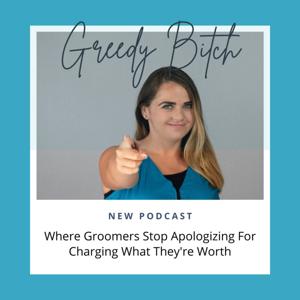
Hello hello and welcome to Greedy Bitch, a podcast where groomers stop apologizing for charging their worth. I’m your host River Lee, founder of the Savvy Groomer. This episode is sponsored by the Business Workshop Library where you can access all my favorite workshops, seminars and guides in one place. Let’s talk about today's topic:
3 tips that made a difference in my pet grooming business
Are you running a business and it really feels like your business is running you? I’m going to share 3 tips that will help get your business back under control. These 3 tips made a difference in my pet grooming business.
Tip #1 - Basket it!
Organizing your loose items into containers or baskets will make a huge difference. Consider what your desk or salon currently looks like. Having things put away will melt away stress. The saying “a place for everything and everything in its place” has a lot of merit.
For example, I personally have a place to put my keys when I get home, otherwise I spend a few hours a day looking for my keys.
What do you often lose? What could you put away in a basket that would allow you to find it more quickly?
Tip #2 - Prime your day by setting expectations
You don’t need to be a morning person to prime your day for success.
For example, I personally start my day by journaling and filling out my Michael Hyatt Full Focus planner. It makes me reflect on what I’m grateful for, what I have to do in the day, and lets me snuggle my cat for a few more minutes in bed. I find when I start my day reminding myself of all the beautiful things in my life it’s easier to get the day going. I have a list of things that are a mile long to do, but I get to do them. What I choose to focus on defines my reality.
Tip #3 - Schedule repetitive tasks
There are so many things that we waste our time on that we simply hate to do.
For example, mine is taking out the garbage and laundry. I didn’t actually mind doing towels for my pet grooming business - I actually found rolling up the towels to be really relaxing. What I don’t really like trying to match socks.
In the morning when I’m planning my day, I schedule these tasks. I give myself a set amount of time to do them so they don’t drag on.
If I give myself 30 minutes to do laundry and I haven’t matched all the socks, that’s okay. I’ll do it tomorrow or I’ll schedule it around a time I can multitask so it’s not eating into my day.
How about my business? How does that work? I scheduled certain times of the day to check my business phone and email to reply to clients.
Days when I was in my van, I had a list of things to do. It just helped me to schedule them so I didn’t forget about them.
What are some repetitive tasks that you could schedule to get them over with and make them easier?
Outro:
If you guys are interested in learning more about the Business Workshop Library, be sure to visit me at savvygroomer.com/gwg. This is a library that has all favorite workshops, seminars and guides all in one place. It tackles simple yet effective business topics to organize and grow your grooming business.
Thank you all so much for listening to this podcast, 3 tips that made a difference in my pet grooming business. Be sure to visit me at SavvyGroomer.com to see my current opportunities to work with me in growing your pet grooming business plus more free resources for you to learn. See you in our community on Facebook - Savvy Pet Professionals! As always, Happy Grooming
Hello, hello and welcome to Greedy Bitch a podcast where groomers stop apologizing for charging their worth. I'm your host River Lee, founder of the Savvy Groomer. This episode is sponsored by Personal Finance on a leash, a 12 module masterclass where we teach you all about your personal finances. Let's go ahead and talk about today's topic, how to use the debt snowball method.
This week's topic is all about how to use a debt snowball to pay off debt. You're in over your head in debt and it doesn't feel good. You need the money to start your business and eventually to cover your daily living expenses. It was the only way to get by. Now you're faced with this ridiculous debt. What do you do? Ignoring it doesn't work.
It's not going anywhere. Making minimum payments doesn't help. Your credit score doesn't suffer because you made the minimum payments, but your pocketbook suffers interest, charges accumulate at crazy rates and before you know it, you feel buried. So now what? Try the debt snowball method. It's an organized and proven way to get yourself out of debt. It offers quick wins that create motivation and it will eventually get you out of debt.
Here is how it works. So you might be asking, what is the debt snowball method? The debt snowball method is a strategy to reduce your debt in an organized manner. If you're tired of trying to figure out which bill to payoff first, this is a great way to figure it out. This method focuses on all of your debts in order of balance, but not interest rates. Arrange your debts from the smallest to the largest balance. Focusing on the bill with the smallest balance first. This method focuses on intention. You pay all your bills, but you focus on the first bill in line. After you pay off the first debt, celebrate your victory, you paid your debt off and you showed your money how to work.
It's the first step to financial freedom. Alright, but how does the debt snowball method work? Start by grabbing your statements of all your credit cards and bills and use the following steps. Order your bills from smalls to largest balance and don't look at your interest rate. You may have bills with high APRs first, last, or somewhere in the middle. It doesn't matter.
Budget the minimum payment for each bill into your fixed expenses. Make these payments on time every month. Figure out how much extra money you have each month. If you don't have a budget, now is a great time to start. I personally love zero based budgets because they give every dollar a job. Take the extra money and pay it towards the first bill in line.
This is in addition to the minimum required payment. Keep paying extra money to the first debt in line until it's paid off in full. Then celebrate your victory. But mindfully, take the full amount you paid to the first debt, including the minimum payment, and add it to the minimum payment of the next debt in line. Keep going until you've paid off all your debt.
All right, how to find extra money. Here's where many people struggle. They assume they don't have any extra money, so the debt snowball method won't work for them, but everyone has extra money. You just have to know where to find it. Here are a few ways. Host a garage sale or sell some items you no longer need. Facebook market, Craigslist, Poshmark, eBays are all great. We all have like 30 pairs of scissors in our drawer that we haven't touched ever. Put them up on Facebook marketplace. Have another groomer who wants them. Start a side hustle if you can. If you have a spare few minutes you could even if it's just answering market research surveys or use the cashback apps to save on your purchases.You can earn extra money that way. Switch insurance providers or negotiate lower rates with your current company. I know that I had been with a company that I really loved for about five years, but I'd never really shopped around and what I found out was that I was paying like triple the average rate in the area. Now, I still loved my insurance company, so I went to that company with these quotes and they actually cut my bill in half, so I got to stay with them. I was still paying more than I would've gotten the other companies, but it was a great compromise. Cut the cord already. If you haven't, I mean really. Who needs cable? When we have Netflix, Hulu, Disney Plus. Go ahead and switch bank accounts so you stop paying bank fees. I'm always shocked at how many of you guys have like $12 fees on your bank statement. It's not a lot of money, but when you look at it over the year, or if you have multiple accounts, it can get really pricey. Think about your current spending, where you can cut and how you can bring in those few extra dollars and put every dollar you earned towards your debt.
An example of the debt snowball method, right? So let's look at the debt snowball method like it was real life. You've created your budget and you've pulled in your statements here, right here, your following bills. So imagine a $300 credit card with a minimum payment of $20, $1,000 medical bill with an agreed minimum of $50, $2,200 credit card with a minimum payment of 75 $5,000 car loan with a minimum of two $57,000.
Student loan, minimum $150. All right? You budget the minimum payments, which is a total of $545, plus your other required expenses like mortgage, utilities, insurance, gas, food. After looking at your budget and realize you have an extra $220 each month, you could put towards your debt. Okay? So what's gonna happen there is you're gonna, the first month is you're gonna pay that $220 on the credit card with a $300 balance. That means it's gonna take you two months to pay that bidt in full, then celebrate. Next, you take the $220 and you add it to the $50 agreed upon minimum payment of your medical bill for a total of $270 per month. So then it's gonna take you four months to pay that debt in full.
You've knocked out two debts. Yay. Good job. Now we can move on to the $2,200 credit card. Paying the $345, which is the $270 plus $75 minimum payment each month. You keep doing this until you've paid all your debts in full. Since you've now aware of how to spend your money and the effort it takes to get outta debt, you may be able to stay out of debt. Is the debt snowball a good idea? Different methods work for different people, but the debt snowball method, it is a tried and true method for millions of people. If you can't organize your finances or figure out which debt to focus on, like which one to pay off first, this is a great way to get organized.
You know you exactly where your money should go and how to get out of debt. The method is great for people who thrive on quick wins. Paying off debt usually isn't quick fixes, which is why many people fall off the wagon, so to speak. They don't see progress and they hate sacrificing in other areas, so they go back to making minimum payments and staying in debt.
But the debt snowball method, organizing your debts rather in order of balance though, is a great way to see that you can pay off your debt. The goal is to keep the momentum going so you can pay off your larger debts too. Why the debt snowball method works, if you look at it realistically, the debt snowball method is just a way of organizing your money.
It's nothing extraordinary financially speaking, but it does create behavioral modification. If we are all creatures of habit and it sometimes works, you're likely to keep going, right? When you're just making minimum payments or making payment haphazardly, you don't see the method in the madness and you're likely to give up with the debt snowball method. It's a proven method and it becomes habit, almost like muscle memory. You see what you're capable of and you want more of it, almost like you're trying to lose weight. When you lose the first few pounds, you feel empowered, excited, and ready to lose more. This is the same as a, as this debt payoff strategy. All right? If that's not gonna work for you, here is another debt payoff strategy.
The debt snowball isn't the only method. The debt avalanche is another method, but it requires a significant more willpower. It doesn't provide the same quick win because you order your debts by interest rate from highest to lowest, not balance. The debt avalanche method is for people who wanna save more money on interest rather than pay off debts fast.
Then when you focus on that card debt with the highest interest rate, you decrease the amount of interest you'll pay. Overall, it uses the same idea, making minimum payments on each debt and focusing on the extra money of the first debt in line. When that first debt may have the largest balance, the smallest, or somewhere in between, you may pay the principle balance of that debt down.
You'll pay less interest over the debt lifetime, putting more money in your pocket. This method isn't for everyone. It takes a while, sometimes even more than a year to see progress. If you need motivation, you may not like this method because it takes more dedication in patients to see it through to the end. So I want you guys to get out of debt today.
It doesn't matter what, which debt and payoff methods you choose. The key is to get outta debt once and for all you. As you pay off your debt, stay mindful of your spending. Lock up your credit cards so you don't use them anymore. Only buy what you can afford in cash. Don't close your credit cards though. That hurts your credit score.
Keep them open and let the balances drop. The lower balances decrease your credit utilization ratio, which improves your credit score. If you keep up these habits, stick to the budget and don't get yourself in debt again. The debt snowball method could be the last time you have to deal with overwhelming debt again.
If you guys are interested in learning more about Personal Finance on a Leash, be sure to visit me at savvygroomer.com/enroll. This is a 12 module masterclass where we teach you how to get on a personal budget, learn how to work with your money, and change your relationship with money. Thank you all so much for listening to this podcast, How to use the debt snowball method. Be sure to visit me at savvygroomer.com to see my current opportunities to work with me growing your pet grooming business, plus more free resources for you to learn. See you at our community on Facebook Savvy Pet Professionals. As always guys, happy grooming!
Hello hello and welcome to Greedy Bitch, a podcast where groomers stop apologizing for charging their worth. I’m your host River Lee, founder of the Savvy Groomer. Today's episode is sponsored by the Pay Masterclass, a 6 module m masterclass where we teach you all about paying employees. Let’s talk about today's topic:
Trade Shows, A Wise Investment?
When was the last time you went to a grooming trade show? Was it a wise investment of your time and money? Are you an employee or business owner? As a business owner are you considering bringing your employees? Let’s talk today about reasons you should, or should not, invest in going to a trade show.
So if you’re an employee, let’s say you work for a corporate salon, or you work for a small grooming salon, is it worth the money to go to a trade show? And that really depends on, is this going to be your profession, is this going to be your career? Or is this going to be a hobby for a little bit and you’re going to move on in your life?
Now I will say that if you can go, you should, because I think that trade shows are really good for the soul.
If you’re an employee, I think that it’s important that at least once a year to make it a priority to go to a trade show. They can be expensive. Look at how much money you want to spend. What is it that you want to get out of this trade show? What do you want to learn? Do you want to learn more about a specific breed? Is there somewhere in your grooming that you're really struggling? Is there a specialty you want to get into? Do you want to bring home some really awesome tools, tips, and tricks to make your job a little bit easier? Do you want to learn how to be a competition groomer? Is there somewhere you’re really lacking? Do you want to learn something like hand stripping? There are a lot of things that you can do there that are going to increase your worth as a groomer. What can I learn that I’m going to end up earning more money? Quick tips, any weaknesses you have in your grooming, how to take care of your body more (scissoring or body positioning) to prolong your grooming life.
If you’re a grooming business owner, you can always learn more because the industry is always growing and changing. There have been so many advancements in the last 10 years. There’s always going to be a better, faster way of doing something. As a business owner, it helps you to know where to invest. If you’re going to invest that much in products, you’re going to want to try them. If you are struggling with customer service, or wondering why you just can’t get the right customers, if you feel like you want to grow with employees. For the business classes look up the speaker and make sure that you are in line with what they like. Don’t be afraid to go to things outside of the pet grooming industry. Before covid I used to go to at least 2-3 a year that are outside of the grooming industry, mostly because a lot of the grooming industry is behind business-wise. For example, offering 50% commission is not a pay scale, it is not sustainable. In the grooming industry we continue to fight about independent contractors versus W2 employees. We are very behind in a lot of things, and it’s honestly because most business owners in the grooming industry are not business owners, they’re groomers. Having a degree in business management and running a company with 200-300 people or a CEO is a lot different than running a company with 5 people. You’re going to be looking at tools and what you want to learn.
You might also be asking, “Should I pay to bring my employees?” And that’s a tough question.
It’s really hard to move up as a grooming employee. Most salons don’t have salon manager positions. The only way they move up is either by renegotiating at another salon for more pay, moving to a salon that makes more money because they charge more per dog, or opening up their own shop.
Right now, how is your employee’s performance? What is their attitude? Are they being kind? Are they grateful for the job they have? Are they appreciative of everything that you do?
You might say:
“Okay guys so if everyone earns X amount of points, or does this amount of work, or whatever the tier is, then I will pay for you to come to Hershey.”
“If you don’t hit these numbers I can’t take you.”
**added rift, put in searchie, add later
People don’t stay in jobs often. People want more. Just be happy you were part of their journey.
If you’re going to grow yourself or your business, or bond closer with your employees, I think it’s a great investment. Trade shows are good for networking, trying out products, and taking classes.
I think that once a year you should set aside a certain amount of money to go and add to your education.
You could also do a trade show every other year, and in those off years do an online course. You could have a speaker come to you or you could have someone come to do a demo.
If you’re feeling burnt out, going to a trade show will help you with your burn out, because you’re going to be around the buzz and excitement. Enjoying the time with other groomers is really going to uplift you.
If you guys are interested in learning more about the Pay Masterclass, be sure to visit me at savvygroomer.com/pgmc. This is a 6 module masterclass where we teach you how to create a pay structure that actually works. We'll show you how to calculate sustainable pay structures, set up your back end to legally pay employees, and create bonuses and benefits to keep those employees.
Thank you all so much for listening to this podcast, Trade Shows; A Wise Investment. Be sure to visit me at SavvyGroomer.com to see my current opportunities to work with me in growing your pet grooming business plus more free resources for you to learn. See you in our community on Facebook - Savvy Pet Professionals! As always, Happy Grooming
This episode is sponsored by Personal Finance on a Leash, a 12 module masterclass where we teach you all about your personal finances.
So what is debt?
Debt is money that you don’t have and that you borrow from a bank, a friend, a credit card, or any kind of loan. It is money that you owe.
When you are thinking about debt, a lot of times people will say that debt is necessary, debt is a tool, etc.
Here’s what no one tells you: If your business fails and you’ve taken out debt, you still owe that money.
Did you know that statistically, over 50% of small businesses close within the first 5 years?
I’m not going to lie. I took out $10,000 on a credit card to open up a grooming salon. Now, I was very blessed because $10,000 is not a lot of money to take out for a grooming salon. Most salon buildouts are between $40,000 and $80,000, if that person doesn’t have a family member who’s a contractor, an electrician, etc.
So my salon was a very small buildout because my salon had already been a salon, which I was very grateful for.
I was very good at budgeting each month and was able to pay that off in about a year. For some quick math, that’s about $800 a month. That’s a lot of money to have to pay extra each month. With that same $800 a month, we could have eaten like kings and spent money on other things.
What could a business look like with less debt?
If I were to open up a business with zero debt, it’s a lot easier to balance bills and be able to pay myself. There are so many things that I could start saving that money for, instead of paying back that debt.
When I bought my grooming van, (most grooming vans are between $75,000 and $100,000) I didn’t have that kind of money laying around. So what did I do? I put down $20,000 and I paid off that van in less than 5 years. I’ve spent thousands of dollars in interest paying off that van. My van payment was about $1,500 a month. An extra $1,500 in my pocket each month is amazing now that I don’t have my van payment anymore.
If I save $1,500 a month for 6.5 years I could pay $100,000 for a new van. I would also get between $45,000 and $75,000 for my used van, so I could potentially get a new van within 3 years (also interest free!).
So there are ways that you can utilize debt in the beginning to get your business moving along and then you can move on.
Now, it’s incredibly difficult to sell salons because salons are designed with you in mind. You generally set up a salon based on your grooming preferences.
Most of the grooming vans are generic in the sense that you can set up everything that you want inside and then take everything down. That’s why vans are easier to sell and the person can take them wherever they want. There are less complications when selling your van vs. when you are selling a shop.
When you are using debt to open a business you are promising money to someone.
“Debt is like any other trap, easy enough to get into, but hard enough to get out of.” -Henry Wheeler Shaw
It’s really easy to have the best of intentions to open up a salon.
Realistically, the first 2-5 years of your business you’re going to be working 60-80 hours a week, so you’re going to be tired.
When you finally do hire a person, you’re going to realize how little they do compared to you. But that’s because you’re doing everything. You’re just hiring them to groom or bathe. It is such a commitment to open a business.
So when you open up a business, not only are you taking on all of this stuff, but you are promising money that you haven’t even earned yet. So you’re hoping to earn enough money to cover not just your bills, not just to put food on the table, but you’ve also promised to pay back this money with interest. Now, hopefully that interest is low, like 4% - but a lot of times it’s 8, 10, 15, 24 in some cases. Good luck paying that back. And when you do finally pay that back you’ve likely paid thousands of dollars in interest.
I also think of money in terms of time. So let’s say I value my time at $40 an hour, and I think about handling over a $20 bill. Is this worth half an hour of my time?
“Today, there are three kinds of people: the haves, the have-nots, and the have-not-paid-for-what-they-haves.” -Earl Wilson
It was very annoying to see the first $1,500 in my business not go to me or my bills, but go towards the van.
So when you open up your business and take out debt, you are promising time that you haven’t earned yet.
What if your life changes? If your life changes, you want to be able to get out. And these things are very hard to do when you have debt. Even if you sell the business or the van or salon, you are still responsible for the debt.
“Never spend your money before you have earned it.” -Thomas Jefferson
When you spend money that you don’t have, you don’t know what the future holds. You’re making promises that you hope you can keep. But what if you’re sick, your spouse is sick, you get bit and you can’t groom anymore? There are so many bad things that could potentially happen.
“Creditors have better memories than debtors.” -Benjamin Franklin
That’s the truth. I talk a lot about how to grow wealth. Wealth is a mindset. You have a plethora of abundance.
Debt is something you owe.
You need to have money to spend it.
There is always a lot of stress and pressure to make enough money, and to make more money in a month that you need to survive.
The last point that I want to make is that when you are in debt, you are a slave to the lender. It means that you are stuck.
For example, let’s say I borrow $10,000 from my grandfather. When I go to Thanksgiving, he’s going to critique every decision that I make. Let’s say I went on vacation to Disneyland with my son. He’s going to be like, “Well, where did you get the money for that?” And I’m going to be like, “Oh, I just saved up the money and went.” Then he’s going to say, “Well, you owe me $10,000. Where is that money? Why didn’t you pay me back first?” Borrowing from friends or family can be tricky like that.
If you can save up that money, save up that money. Another option is to start as a house call groomer. Start small, build clientele, purchase equipment slowly over time, and work to build a steady income.
As an employee, however, if you cannot get on a budget and get on a written monthly plan of your finances, then do not open up a grooming salon.
Because if you can’t make your money work now, what makes you think that with more responsibility and less time you will be better at this?
I want to encourage you to sign up for my masterclass - Personal Finance on a Leash. This will help you get your money under control. You will only be able to thrive financially, if you get on a written budget every month, intentionally pay off debt, intentionally save up money for emergencies as well as for retirement, and this masterclass will help you do just that. It is 12 modules long, and it will help you change your habits if you do the work.
Thank you all so much for reading these show notes for Should I Take Out Debt to Start a Business. Be sure to visit me at SavvyGroomer.com to see my current opportunities to work with me in growing your pet grooming business plus more free resources for you to learn. See you in our community on Facebook - Savvy Pet Professionals! As always, Happy Grooming
This episode is sponsored by Personal Finance on a Leash, a 12 module masterclass where we teach you all about your personal finances.
Today I’ll be talking to employees.
Did you seek employment at a place you can afford to work at?
How much money do you have to make in order to survive, live, and thrive? Do you know how much that is? Depending on your lifestyle, ask yourself, “How much money do I need to survive and just pay the bills?” “How much money do I need to live where I have enough money to surviive and enough to be comfortable?” Whether that’s little creature comforts like Netflix, little things that make you happy, and you’re not living like a monk or in a cave. And then thrive is putting money towards retirement or having the correct types of insurance. These are both things which we should be doing anyway, but a lot of times we just cannot afford a lot of those extra luxuries that come with being in thrive. So knowing where you are in your financial stance will help you begin there, and then knowing how much money you need to earn in order to do that will help get you further along.
For example, let’s say that you know in fact that you need $2,000 a month to survive, but you are actually making $5,000. Perfect, you are making enough to be in live and almost enough to be in thrive.
If you have enough money, then why aren’t you saving?
Do you have a written budget?
A budget is not about withholding money, a budget is all about giving your money direction. I generally use the example of an appointment book. If we just had customers come and go as they pleased, and they just showed up whenever they wanted to, and they just picked up whenever they wanted to, our lives would be in chaos. Maybe you know you make enough money and you have a written budget, but you still can’t save.
Do you keep track of your expenses?
And this would be like if you had an appointment book and you had what everyone’s appointment should be, but you’re not actually paying attention to what’s coming and going.
I use an app called Every Dollar. You can either input it directly or link it to your bank account.
Now, what if you still have money after creating a budget and tracking your expenses? Well, there should not be money left over. That money needs a place to go. When you’re doing a zero-based budget, you have to actually allocate money and write a category for savings. If you’re on a written budget and you’re allocating money, and you’ve written let’s say $500 a month for savings, but it’s not there, then something’s going on.
There could be drama going on in your life. There could be family trouble or something else going on.
But if you say that you’re going to put away $500 this month, and you spend it on popsicles you have no one to blame but yourself.
Now if you have a chronically sick pet, if you have a family member who’s asking you for money, those are things that you’re going to have to make lifestyle choices about. That’s tough. It’s tough to make lifestyle choices. You’re going to have to cut something.
Now let’s say you’re not making enough money.
Have you considered a second job?
Can you work more hours at another shop? Can you do one or two more dogs per week? Another option is to start your own little side business.
Have you considered selling some of your things?
Go in your grooming drawers and see what you have. I promise that you have way too many scissors, you have way too many blades, so you can sell one. Is it going to get you as much as you paid for it? Never, but that’s okay. If you need another one down the road when you’re more financially stable, it’s okay, you’ll have the money later. Don’t worry about it. Same goes for things to sell around the house.
Have you asked for a raise?
This is where I really prefer for people to have hourly rather than commission. They’re not going to increase their prices for you as an employee. That’s not going to happen.
You could always say to your boss, “Hey, I really can’t afford to take commission on a $25 lab bath, when I have to turn away $65 Yorkies or Shih Tzus. At my skill set and my level, I would really like to focus on doing that.” They may say no, but it doesn’t hurt to ask.
Do you need a lifestyle change?
What are you spending your money on? Go through your budget. What can you cut? Don’t pick things that you genuinely enjoy, that make you happy, or that make you a better worker, because if you cut those things out, then it’s going to make it really hard for you. Eventually you’re going to feel weary from grooming, you’re going to feel burnt out, because you sucked all the joy out of your life.
What is it that’s stopping you from saving? Is it your habits? Have you considered an automatic withdrawal? As an employee, it’s easier for you to have a certain amount of money from each paycheck go into a certain account.
A lot of it comes down to overspending too.
Do you have debts to pay?
What are you in debt for? Debt is you’ve already spent the money and now you’re working to pay it off. Savings is you’re going to work and you’re going to have the money. They’re just opposite ends.
If you guys are interested in learning more about Personal Finance on a Leash, be sure to visit me at savvygroomer.com/enroll. This is a 12 module masterclass where we teach you how to get on a personal budget, learn how to work with your money, and change your relationship with your money.
Thank you all so much for reading these show notes for How do I Save Money when I’m Struggling? Be sure to visit me at SavvyGroomer.com to see my current opportunities to work with me in growing your pet grooming business plus more free resources for you to learn. See you in our community on Facebook - Savvy Pet Professionals! As always, Happy Grooming
5 Signs you’re Secretly Afraid of Wealth
I thought it would be a great idea to talk about all the things I’ve learned that are actually subliminal ways of showing you that you’re afraid of wealth or have a negative association towards money.
1. You justify every purchase to everyone.
For example, let’s say that someone complimented my shoes. I would say that I got them on sale, even if I didn’t. A way to practice being vibrationally in tune with wealth is simply to say thank you. If they want to know where you got them, they’ll ask.
What you’re feeling in that moment when you think you have to justify your purchase is guilt or embarrassment, which doesn’t make any sense; they’re just complimenting what you’re wearing. You’ve somehow associated those feelings with that item.
So if you’ve bought something and you’ve earned that money, or you were given a beautiful gift, be happy. Be grateful for something you’ve earned or received. Better yet, choose to compliment others. That is a sign of a secure person who feels comfortable in the purchase they made and allows you to open this practice to others.
2.You mention that something is “outrageously expensive.”
What’s interesting is that the more wealthy you become, it doesn’t become directly proportional to how much money things are.
What happens is you realize that the value of things may or may not be evident to you.
Let’s take a look at art for instance. We may say something like, “It’s insane they paid a million dollars for that.” But the intrinsic value can be totally different than what you view it is. It’s completely subjective. Just having a lot of money doesn’t make you wealthy. Wealthy is also a mindset, just as broke can also be a mindset.
So when you say things are “outrageously expensive” or “that’s a rip off” you are assuming things that you may or may not know. The truth is that when we think something is too expensive, we don’t see the value or we simply don’t value those things. Your decision on what is valuable is completely up to you.
3. Describing rich people as bad people.
Stop describing rich people as greedy or bad people in general.
Stu McLaren, an online entrepreneur and multimillionaire, raises literally millions of dollars every year to build schools in Africa. It is based on his love for teaching online, which he wanted to give back in the real world. What it proved to me is that being wealthy isn’t about retaining money, it’s about giving to others. It’s about charity. It's so important to give back.
There are always going to be bad people, and they may have lots of money or they may have no money.
Let’s have groomers that own shops and employ people and set the standards. How awesome would that be?
4. Feeling uncomfortable around anything/anyone fancy.
If you went to a crappy motel, you might feel uncomfortable because it’s dirty or outdated, and you may just settle for it. If you went to a 5-star hotel, you may feel out of place or like it’s too fancy. You may feel like you’re a weird fixture, like you’re peeking into somebody else’s world. And that’s either because you feel like you don’t belong there, like you don’t deserve to be there. These are all weird guilt things that we all just deal with.
A lot of times you are dealing with limiting financial beliefs. “I have to work hard for my money” is a toxic and limiting belief because what if I just got money? What if I worked really hard for 10 years and I took all of that knowledge and then I made money really easily? When you have a blue-collar mindset and you think that money is coming too easily, often that mindset can become self-destructive.
If you want to feel wealthy, try on a really nice dress. Try on those thousand dollar pair of shoes and walk around the store to see how it feels. Go ahead and sit in a car that is way above your pay grade. Keep doing things like this until you start to feel like it’s no big deal. Because once it becomes no big deal, your vibration is going to be different.
You’re creating a false narrative that you aren’t good enough, you don’t feel like you belong, and that’s crazy because the universe wants to give to you. You deserve to make money - you work hard. Even if you don’t physically work hard, you have earned your place. You have done enough things to deserve to be here, so you get to enjoy the things you have. You have to feel comfortable in order to enjoy them.
5. You set a limit on your savings and/or earnings.
Once your savings account gets to a certain amount, you have an uncontrollable urge to spend it. Or once you start to earn a certain amount of money, you either let off the gas or you find yourself unable to earn even more.
At these conferences that I’ve gone to, I have heard so many people say that they’ve been making six figures, and then want to earn seven, and they don’t know why they can’t.
If I said to you, “You’re going to make one million dollars this year.” How does that make you feel in your heart? And not what do you think, but how do you feel?
I learned this from Tony Robbins. Every time you say this, go ahead and stop yourself, break the habit.
The format is: “I tell myself x. That’s bullshit, the truth is y.”
For example: People are making more money than I ever will. That’s bullshit, the truth is I can make as much money as I want as long as I’m willing to put the work in.
I tell myself that buying things that cost a lot is bad. That’s bullshit, the truth is that I earned that money and I deserve to enjoy the things that I have.
I tell myself that purchasing fine art photography is outrageously expensive. That’s bullshit, I am not in a place in my life where I can appreciate their skillset and their art.
I tell myself I don’t belong around these people, they’re not my people. That’s bullshit, they’re people just like me, they’re just in nicer clothes.
I tell myself if I have over $10,000 in my bank account, then I need to spend it. That’s bullshit, the truth is I need a savings/emergency fund that’s 3-6 months worth of expenses as an employee, and 6 months-1 year if I’m a business owner.
Thank you all so much for reading this blog, 5 Signs you’re secretly afraid of wealth. Be sure to visit me at SavvyGroomer.com to see my current opportunities to work with me in growing your pet grooming business plus more free resources for you to learn. See you in our community on Facebook - Savvy Pet Professionals (Facebook.com/groups/savvygroomer)! As always, Happy Grooming
Why do I Keep Attracting the Wrong Clients?
Are your ideal clients in your area?
So, if you want wealthy clients, are they in your area? Now, for some of you, they’re not in your immediate area but they’re within a short drive. A short drive is always relative to where you live. If you live somewhere near those clients, they’ll come to you if they know where you are.
If you do have wealthy areas, you have to make sure that you’re actually communicating to those wealthy areas that you are available. If they don’t know you’re there, then they can’t use you.
Are you providing the appropriate level of service?
Maybe you’re really happy being Dunkin’ Donuts, maybe you’re really happy being McDonald’s. There are grooming salons that are really good at being the Walmart of the grooming industry.
The more high end the client, the more needy they are, which is incredibly frustrating sometimes. You don’t have to offer high-end. When I talk about high-end stuff, it’s honestly because there are so few groomers doing high-end well.
Do you act high end to your ideal client?
Do you look high end? What does that mean?
If I walk into your salon, are things clean and do they smell clean? Your salon should not smell like dirty, wet dog, because it’s disgusting and generally speaking, it’s a really big turn off to high end clients. I know sometimes there really is nothing that you can do.
In my grooming salon, we used to have the whole salon smell like cookies. We either used South Bark Blueberry facial - it’s like blueberry and clove. Or we used a sugar cookie fragrance. People would walk in and go, “Wow, it smells delicious in here!” That immediately created trust and it immediately put us in a different category business-wise.
Do you and your employees have a professional appearance?
Having wet, furry jeans is not attractive. Wearing a T-shirt covered in dog hair is not attractive.
To that high-end client, we may immediately go from someone who is a professional to someone who is not an authority figure; and that’s a big problem if you want someone to trust you enough to spend a lot of money on your service.
There are lots of companies that make really professional-looking smocks. I would personally suggest picking a smock color that makes sense with your branding. If your brand color is green, wearing a teal or a pink top doesn’t really make sense. However, if you are mainly green and you want to wear brown, that makes sense. Don’t go crazy with your colors. For example, I would do a teal top and black pants. Because too much of one color is just a bit much. Don’t pick colors that look unflattering to you. In a perfect world, you and your employees would at least wear complementary things.
Is your branding considered vulgar or too cutesy in a way that people can’t take you seriously?
If I am a high-end client, Doggy Style is gross. It’s a sex position, it’s not the name of a grooming salon. It’s clever, but not in a professional way. Now with cat grooming, you can probably imagine that there are some names like The Wet Pussy or The Shaved Pussy - that is not appropriate branding. Nobody wants to say, “I’m dropping my cat off at The Wet Pussy.” Some people think it’s funny, but is that your ideal client? Is your ideal client someone who has no problem with being vulgar?
On the flipside, sometimes names are just way too silly. I don’t want to call anyone out specifically, but we all know the names. It’s like Princess’s Perfect Puppy. What adult professional woman would be like, “Yeah, I bring my dog to Princess’s Perfect Puppy.” Can you imagine their conversation with a colleague? These cutesy names are hard to find, hard to spell, and they’re not really clear. Being clever is fun, but being clear is more important.
Is your website clear?
You don’t want to have a giant wall of text that no one is ever going to read. A lot of times I find that the information is not up to date. I can’t figure out where you are. If I have to search for that, that’s a problem. Where’s your phone number? There’s no clear-cut way of contacting this company at all.
I owned a business called Shear Bliss, “Shear” like scissors. My clients consistently put in sheer like s- h- e- e- r, and they would write checks to that. It just got crazy and I had to simplify that because clients were confused. Confused clients don’t buy. Also, confused clients aren’t completely on board and confident in your branding.
So look through your website and really say, “If I had no idea who you are, could I get an appointment? Why would I pick you? Is this clear and concise?”
Review your logo. I don’t recommend having a logo that looks like it’s a Disney character. Even if they’re well done, I don’t know many high-end people that are attracted to overly cartoon-y logos. If I look at high-end companies, their logos are simple, clean, and easy to understand.
My business name was clear enough that people would know what I do, without having to have a picture of a pet in my logo. If, without a picture of a pet, people don’t have any idea what you do, then that’s a problem.
Do you look high end to your ideal client?
Do I appeal to my ICA (ideal client avatar)? You should know your ideal client inside and out.
For example, my clients appreciated the fact that I was just very straightforward,an “it is what it is” type of person. Maybe your clients want a little bit more kindness and to take it easy.
Do your policies reflect your ideal client?
People who are more high end, tend to be more high maintenance. You’re going to have to create policies that cater to these clients. If you ran a Walmart-style business, you wouldn’t tell everyone they have to come in monthly. It doesn't make sense. These clients are more likely to come in irregularly - that’s every 4, 6, or 12 month clients. They’re not regular monthly clients. The reality is that people shopping for a bargain, or being a little bit cheaper, generally are not going to stay on a consistent basis.
Whereas with high end, it’s really easy to create that monthly grooming appointment policy, because you’re already creating a situation where you’re creating exclusivity and a higher price point, so your policies are going to reflect that.
If you have a Starbucks-style business, you may want to make sure that your policies are clear cut, but have a little bit more understanding. Personally, I find it very difficult to pick up my dog within 30 minutes of a phone call, because I’m busy. I can’t drop my dog off anywhere for between 2 and 4 hours and then only have 30 minutes to pick up my dog. You can’t give me a two hour window and then expect me to drop everything and drive back. Why? Because I’m generally doing something, I’m either working on a call, I’m getting lunch, or whatever it is. It’s really difficult for higher end clients. Giving a client a more reasonable window is more realistic. Or not charging somebody if they drop the dog off and can’t get back within 30 minutes. Make sure your policies reflect that person’s mindset.
You also want to make sure - are you treating that client like a number or like a person? If you want a high-end business, you have to treat people like they’re important. They’re willing to put their money down because they want to feel important. They want to feel like they are heard. They want to know that what they are doing is going to be taken care of.
Thank you all so much for reading this blog, Why do I Keep Attracting the Wrong Clients? Be sure to visit me at SavvyGroomer.com to see my current opportunities to work with me in growing your pet grooming business plus more free resources for you to learn. See you in our community on Facebook - Savvy Pet Professionals (Facebook.com/groups/savvygroomer)! As always, Happy Grooming
Today’s episode is sponsored by the Price Increase Masterclass, a 6 module masterclass where we teach you all about increasing your prices
What do you say when clients ask for a discount? Everyone has different business models and different ways of going about their business. There are things that you like to do that I might hate and vice versa. You have to do what’s best for your business and don’t let anyone tell you what’s best for your business unless they're your business coach.
So my answer when someone asks for a discount is that I ask them, “Why”. It’s an opportunity to educate them and consider their feelings. A lot of times they simply don’t understand what we do and why we charge what we do.
I’ve heard in a lot of grooming groups that people think it’s rude for clients to ask for a discount and that no one should do that. So let’s think about why someone might ask for a discount for a moment.
What are some potential answers they’re going to give me?
They may ask if you offer multi-pet discounts.
They’re probably going to ask, “Do you do multiple pets?” Now this may be somebody who’s considering getting another dog or maybe even two puppies. That’s up to you if you want to offer a multi-pet discount. You may end up saying, “It takes the same amount of time to groom four dogs no matter if they’re in the same household or not.” That is the case for the salon. In a mobile, it would take a lot less drive time if you were to groom the 4 pets at a single household.
It’s up to you to educate them in a polite manner.
Clients just want to know what discounts you offer.
As someone who spends an obscene amount of money at Starbucks, I asked them if there were any discounts, and there was. I wouldn’t have known unless they told me about it or I asked about it.
Did you know that Tiffany’s offers a discount on engagement rings to military personnel? My ex husband is a Navy veteran and he would ask all the time, “Do you offer a military discount?” We would always be surprised at how many places were so generous to help out veterans and we really appreciate that. I think we saved about 10-20% on my engagement ring.
Now you’re probably not going to get a discount at Nordstrom, but they created a whole other business, Nordstrom Rack, for those who are more discount shoppers. So you may say to Nordstrom, “Do you have any sales? Or do you offer discounts?” They may say, “At this store we don’t, however, we have an outlet.”
It’s not rude to ask for a discount. Asking for discounts is very common, especially in America, but even more so in other cultures. If you think that asking for discounts is rude, then on the flipside, do you think that offering upsells is rude? You’re essentially saying, “That price you’re willing to pay, are you willing to pay more?”
If you don’t want to discount your services, you absolutely do not have to. Please do not think that on any level that I am suggesting that you should. What I’m saying is that when your client is asking, consider what their motivation is.
Another reason may be that they’re thinking about coming in more often.
They may want to increase their frequency, but they’re not really sure if it’s a wise thing to do. A lot of that comes down to them not understanding what we do. For example, if I had someone ask me, “Hey, if I come for a haircut every 4 weeks, and then I do a bath every two weeks, is there a discount?” That’s a great question and it depends on your business model.
If you don’t and a client says, “That’s stupid.” You could say, “You know, I totally respect that but due to the time, care and attention that your pet needs to receive, I cannot lower my prices.” If they continue, say, “Thank you so much. That’s just not something I’m willing to work with right now.”
They may say that they’re willing to do a part of the grooming beforehand.
They may ask, “Hey, if I bathe my own dog can I get a discount?” I would say, “I really appreciate the thought, however, it’s really hard to get a professional blowout on your dog at home. And if it’s not properly blown out, I won’t be able to give a good haircut. I don’t want you to get a subpar haircut.” They typically don’t have a $600 high velocity dryer at home, or the patience or the set up to sit there and blow that hair out so that it’s ready to be cut. Without the proper prep work, a bad haircut could reflect poorly on your reputation.
By giving them that education, you’re going to be the go to authority.
Even high-end clients are going to ask for discounts, and don’t take it personally.
If you guys are interested in learning more about the Price Increase Masterclass, be sure to visit me at savvygroomer.com/pimc. This is a 6 module masterclass where we teach you how to formulate and implement your price increase so you can finally make money and grow your business.
Thank you all so much for listening to this podcast, Why do customers ask for discounts. Be sure to visit me at SavvyGroomer.com to see my current opportunities to work with me in growing your pet grooming business plus more free resources for you to learn. See you in our free community on Facebook - Savvy Pet Professionals (Facebook.com/groups/savvygroomer)! As always, Happy Grooming
From the publisher's feed

346 Listeners
237 Listeners

99,668 Listeners

8,030 Listeners
15 Listeners

929 Listeners