
Sign up to save your podcasts
Or

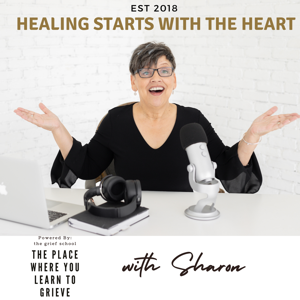


In this episode of Grieve That Shit, Sharon Brubaker introduces a defining moment for The Grief School and the podcast. For the first time, she welcomes Dr. Elijah Frazier and shares the news that The Grief School is now powered by The Frazier Group.
This is not an announcement episode filled with buzzwords or credentials. It's a conversation about people, pain, and what real care actually looks like when someone is at their breaking point.
Sharon and Dr. Frazier talk openly about why grief cannot be handled by systems, scripts, or one-size-fits-all solutions. They explore the difference between easy work and necessary work, and why healing requires intentional relationships, honesty, and empowerment rather than dependency.
Dr. Frazier shares his philosophy of care, his commitment to meeting people where they are, and why building a multidisciplinary team matters when someone's life has been shaken by loss. Together, they explain how grief, mental health, physical health, faith, and life circumstances are deeply connected and why separating them often leaves people stuck.
This episode sets the foundation for what's coming next. It introduces a partnership built on trust, integrity, and the belief that grief deserves to be held by people, not processed through a system.
This is part one of a two-part conversation. Part two goes deeper into grief, choice, and what it means to move forward without abandoning your pain.
🧠 Key Points Discussed:Why The Grief School is now powered by The Frazier Group and what that truly means
The difference between easy conversations and necessary conversations in healing
Why grief cannot be treated with cookie-cutter scripts or checklists
The importance of honoring each person's story instead of forcing outcomes
Why empowerment matters more than dependency in long-term healing
How unresolved grief often overlaps with weight, health, relationships, and identity
Why a collaborative, multidisciplinary approach serves grievers better
The role of intentionality in healing and decision-making
What it means to do heart-centered work instead of system-centered care
Where have I felt rushed, minimized, or misunderstood in my grief?
What kind of support have I been needing but not receiving?
How does it feel to consider care that honors my full story, not just my symptoms?
Where in my life do I need empowerment instead of being rescued?
What would it mean to feel truly seen in my grief?
Grief does not need to be fixed. It does not need to be rushed. And it should never be handled by a system that forgets the human in front of it.
This episode marks the beginning of a deeper, more intentional way of supporting grievers. A way that honors pain, respects complexity, and believes healing happens through real connection.
Your story is not finished. And you deserve care that treats it that way.
This is Grieve That Shit. And this is where healing begins.
"Grief is not a mental illness. It's not weakness. It's not a checklist to finish or a line you're supposed to move through. It's love—with nowhere left to go."
In this episode of Grieve That Shit, Sharon Brubaker, Certified Grief Specialist and founder of The Grief School, gets brutally honest about everything grief isn't.
For too long, society has treated grief like a disorder to diagnose, a problem to medicate, or a series of stages to climb. But grief isn't logical, linear, or tidy—it's wild, unpredictable, and deeply human. Sharon unpacks why labeling grief as depression or PTSD misses the truth entirely, and how our culture's obsession with "fixing" pain keeps us from actually healing it.
You'll hear the truth about what happens when you zig and zag through your pain, why falling apart is part of the process, and why crying, rage, and exhaustion aren't weakness—they're proof that you loved deeply.
Because grief isn't something you escape. It's something you integrate. It's the story of love that still lives in you, even when the person you loved is gone.
What You'll Learn in This EpisodeWhy grief is not a mental illness—and what it actually is
The truth about the "five stages" and why they never applied to grievers
Why grief isn't linear, logical, or something to "get over"
How emotional chaos (crying, anger, numbness) is a normal part of healing
The many ways we try to numb grief—through work, food, alcohol, or pretending
Why facing your grief head-on is the only way through
This week, write this sentence at the top of a page: "Grief is not…"
Then finish it five times, in your own words.
"Grief is not something I can control." "Grief is not weakness." "Grief is not my enemy."
Keep writing until the truth feels real in your body. You're not broken—you're human.
Resources + Next Steps🎥 Get the Video Series "This Is Grief" — A powerful companion to Sharon's book that walks you through every truth she teaches in this episode, with reflective journaling prompts after each lesson.
📘 Read the Book "This Is Grief" — The definition Sharon wished existed when her nephew Austin died.
🧠 Join Study Hall at The Grief School — Weekly live sessions where you can ask questions, share stories, and find tools for healing.
👉 Access everything at clickhereforhope.com
"When your person died, a part of you died too. Not your whole self—but the version of you that only existed in connection with them. That's the part grief takes. That's what forever changed really means."
In this episode of Grieve That Shit, Sharon Brubaker, Certified Grief Specialist and founder of The Grief School, opens her heart about what it truly means to be forever changed—but not broken.
After losing her nephew Austin and later her best friend Sharon, her life split into two: before and after. But in this episode, she invites you into the middle—the space between who you were and who you're becoming. It's the unseen, disorienting place where identity, routine, and meaning fall apart.
This is the part of grief no one talks about. The part where you're not who you were, but not yet who you'll be. Sharon calls it "the tween." And it's here, in the unknown, that real healing begins.
You'll hear what it means to let go of the pieces that no longer match your truth, how to live with the absence that screams louder than words, and why being "forever changed" is not the same as being broken.
Because the truth is—grief rewires your story. But you still get to decide how that story ends.
What You'll Learn in This EpisodeThe three phases of grief: before, between, and after
Why your identity shifts after loss—and how to honor the version of you that's gone
How to navigate the "tween," the unknown space between devastation and rebuilding
The truth about being "forever changed, not broken"
Why time doesn't fix grief—but processing the pain does
Find a quiet place this week and journal through these prompts:
1️⃣ What part of me died when they died? 2️⃣ What part of me is still here, waiting to be known again? 3️⃣ What truth am I ready to stop fighting?
You don't have to have perfect answers. You just have to begin writing them. Because healing starts the moment you stop trying to go back—and start facing the after.
Resources + Next Steps🎥 Get the Forever Changed Video Series — A 3-part self-guided video course with slides, reflection prompts, and deep-dive lessons to help you process your pain. 📘 Download the eBook "This Is Grief" — Learn the foundations of grief and what it really means to be forever changed. 🧠 Join The Grief School Study Hall — Live weekly support sessions where you can bring your questions, your tears, and your truth.
👉 Access everything at clickhereforhope.com
Episode Summary: This episode cracks open one of the most frightening and misunderstood parts of grief: when a memory hits your body like a shock. You're sitting still, lost in a moment with your person, and suddenly your stomach drops, your breath tightens, your heart races, and you remember all over again that they died. It feels like you're grieving in two places at once.
Sharon Brubaker takes you inside the neurobiology behind that jolt. She breaks down how the hippocampus pulls old memories like scenes from a movie, why the amygdala tags those memories as danger, and how your brain fires survival signals long before you can think. This isn't denial and it isn't weakness. It is your nervous system trying to protect you from emotional injury, and it moves faster than the rest of you can keep up.
Through real-life examples and clear teaching, Sharon explains why certain memories hit harder, why they cycle over and over, and why it feels like the loss is happening in real time even years later. Most importantly, she shows you what it takes to calm the system that's been stuck on high alert and how real healing begins when you learn to process the pain—rather than waiting for it to fade on its own.
Key Points Discussed: • Why your brain drops you into old memories without warning • How the hippocampus and amygdala replay emotional pain as if it's happening now • Why the body reacts before the mind understands • What reconciliation shock is and why it feels like losing your person twice • How unresolved emotion keeps your nervous system stuck in survival mode • Why memory jolts soften once grief pain is processed • What Processing the Pain of Grief teaches your brain to finally settle
Journal Questions: • What memory pulls your body into a sudden drop • What part of that memory still feels emotionally unresolved • How does your body respond before your mind catches up • What does the second wave feel like when the truth hits • What would change in your life if your brain learned to soften these jolts
Conclusion: These memory shocks don't mean you're going backwards. They don't mean you're in denial. They are the biology of grief doing what it was never taught to do differently. When you learn how to process the pain, the brain finally stops hitting the danger button every time you touch the past. Your system settles. The memories soften. The grief stops feeling like an ambush.
This is the work. This is the shift. This is where healing begins.
Contact Us:
Ready to calm your grief brain and learn how to process the pain, not just survive it
Join Sharon Brubaker inside Processing the Pain of Grief, her live classroom where you learn what your brain is doing, how grief works in the body, and how to move the pain out instead of holding it in.
Learn more and get support inside The Grief School community.
Website: thegriefschool.com
Contact: [email protected]
TikTok, YouTube, Instagram: @thegriefschool
Episode Summary: In this episode of Grieve That Shit, Sharon Brubaker talks about something most grievers never see coming: why normal sounds suddenly feel like an attack. The kids laughing, the microwave door slamming, a choir starting at church, a car alarm in the parking lot. Things you used to handle just fine now hit your body like lightning.
Sharon walks you through what is really happening inside your grieving brain. She breaks down the amygdala, the nervous system, the HPA axis, and why grief flips all of them into survival mode. This is not you "being dramatic." This is biology. Your brain is trying to protect your broken heart and it does not know the difference between emotional danger and physical danger.
Through real stories from her clients, Sharon shows how jumpiness, noise sensitivity, snapping at people, and shutting down in crowds are not personality flaws. They are signs that your grief system is stuck on high alert and has not been taught how to turn off. Then she shows you the path out: learning how to calm your brain by processing the pain of grief instead of running from it.
Key Points Discussed:
Why everyday noise can feel like an attack when you are grieving
How the amygdala scans for emotional pain and treats it like danger
What happens to your thinking center when grief hits and why you feel numb
How the sympathetic nervous system keeps your body in survival mode
Why your senses feel sharper, your reactions bigger, and your patience thinner
The four grief responses Sharon sees most often: resisting, reacting, avoiding, and pretending
How stress hormones like cortisol and adrenaline keep your system on high alert
Why this noise sensitivity is not permanent when you learn to process the pain
How Processing the Pain of Grief helps calm your brain and soften your grief
Journal Questions for Reflection:
What sounds or situations make your body jump or tense up now that you are grieving
Where do you notice your thinking has slowed down or feels foggy
When was the last time you snapped or shut down and later realized you were not really mad at that person or thing
What background noise or repeated behavior from others feels harder to tolerate since your loss
What would it look like to give your brain and body a place to calm down instead of just pushing through
Conclusion: Noise sensitivity in grief is not you "losing it." It is your grief biology doing its best to protect you with the only tools it knows. Your brain is on high alert. Your body is tired. Your system is trying to outrun the pain. But this does not have to be your forever.
When you learn how to process the pain of grief, your nervous system can settle. Your thoughts get clearer. Your reactions soften. The world gets a little quieter again. You will still miss your person, but the grief does not have to feel like an attack every time a memory or a sound shows up.
Contact Us: Ready to calm your grief brain and learn how to process the pain, not just survive it Join Sharon Brubaker inside Processing the Pain of Grief, her live classroom where you learn what your brain is doing, how grief works in the body, and how to move the pain out instead of holding it in.
Learn more and get support inside The Grief School community. Website: thegriefschool.com Contact: [email protected] TikTok, YouTube, Instagram: @thegriefschool
🎙️ Episode Summary: In this powerful episode of Grieve That Sh!t, Sharon Brubaker opens the door on one of the most misunderstood experiences in grief: the silent battle happening inside your body. After the loss of her nephew Austin, Sharon discovered that grief isn't just sadness. It's a full body takeover. It's your mind racing, your stomach twisting, your heart pounding, and your nervous system trying to protect you in ways that end up keeping you stuck.
Through honest storytelling and deep reflection, Sharon explains why so many grievers stay busy, stay strong, and stay silent while their bodies carry the weight of what their hearts are terrified to feel. She shares the truth about resisting pain, pretending to be okay, and the invisible cost of swallowing your emotions day after day.
If you've ever felt like your body reacts before your mind can catch up, or if you've wondered why your grief hits you out of nowhere, this episode will help you finally understand what's happening inside you.
🧠 Key Points Discussed: 1) Why resistance in grief feels safer but creates emotional paralysis 2) How the nervous system goes on high alert after loss and why that leads to exhaustion 3) What happens to your body when you stay busy instead of feeling your pain 4) Why pretending to be strong teaches everyone around you to avoid the truth 5) How swallowed emotions return louder, heavier, and more confusing 6) What it means when old memories surface years after the loss 7) How hiding your grief disconnects you from the people you love 8) Why you can't heal what you refuse to feel 9) How to begin turning toward your grief instead of away from it
📓 Journal Questions for Reflection: 1) Where am I resisting my pain instead of feeling it 2) What emotions have I been swallowing 3) Where have I been pretending to be okay 4) What memories or moments keep resurfacing and what might they be asking me to notice 5) What support would help me feel safe enough to stop being strong and start being honest
🩶 Conclusion: Your silence doesn't heal you. Your resistance doesn't protect you. Your pretending doesn't bring peace. Grief lives in your body until you turn toward it with honesty. Healing begins the moment you stop swallowing your truth and start letting yourself feel what's real.
When you soften, even a little, your grief begins to move. When you let yourself name the pain, it finally has somewhere to go. You deserve relief. You deserve support. You deserve to let your body exhale.
📬 Contact Us: Ready to go deeper and get the support you've been needing Join Sharon Brubaker inside The Grief School community
📝 The Courage Club every Thursday at 10 AM CST Live inside The Grief School Facebook Group
🎤 Surviving the Holidays Masterclass now open thegriefschool.life/holidays2025
📧 Contact: [email protected] 📲 TikTok, YouTube, Instagram: @thegriefschool
🎙️ Episode Summary: In this deeply personal episode of Grieve That Sh!t, grief specialist Sharon Brubaker opens her heart about the painful truths she learned after the death of her son, Austin.
She shares the moments she wishes she had faced differently—the pretending, the resisting, and the avoiding—and how each of those choices kept her trapped in silence. Through raw honesty and reflection, Sharon reveals what she's learned about strength, vulnerability, and what real healing actually requires.
If you've ever felt like you had to be strong for everyone else… or that your tears made you weak… this episode will meet you right where you are.
You'll hear the truth about why hiding your pain doesn't protect you—it just delays the healing.
🧠 Key Points Discussed:
What "being strong" really cost Sharon after her son's death
The difference between surviving grief and processing it
How pretending you're okay teaches everyone around you to do the same
The danger of waiting for time to heal what needs to be faced
What happens when grief becomes silence inside a family
How to begin sharing your pain safely—with honesty, not performance
Why feeling your grief doesn't make you weak, it makes you real
📓 Journal Questions for Reflection:
Where in my life am I pretending to be strong?
What would it look like to show up honestly in my grief?
Who might be learning from the way I'm handling my pain?
What's one thing I wish I had said—or still want to say—to my person?
What kind of support would feel safe for me right now?
🩶 Conclusion: Grief doesn't need you to be strong. It needs you to be honest.
You don't have to hide your pain, smile through it, or wait for time to fix it. Healing begins the moment you stop resisting what hurts and start letting yourself feel it.
Because pretending keeps you stuck— but honesty opens the door to peace.
📬 Contact Us: Want to go deeper or get live support as you heal? Join Sharon Brubaker inside The Grief School community:
📝 Grief Study Hall – every Wednesday @ 7PM CST 📍 Live in The Grief School Facebook Group (link in comments)
🎤 Surviving the Holidays Masterclass – Now Open for Registration Learn how to move through this season with care, peace, and a plan for your heart. 👉 thegriefschool.life/holidays2025
📧 Contact: [email protected] 📲 TikTok, YouTube, and Instagram: @thegriefschool
In this deeply moving and unforgettable episode of Grieve That Sh!t, grief specialist Sharon Brubaker shares a story that stopped her in her tracks, a moment that changed two families' lives forever.
What began as an ordinary drive with her husband turned into a tragedy they witnessed unfold before their eyes. Through this raw, emotional experience, Sharon explores how quickly life can change, how grief shatters the illusion of time, and what it truly means to live with awareness, compassion, and love before it's too late.
This episode isn't just about loss it's about the fragility of life, the depth of empathy, and the sacred invitation to love harder, forgive faster, and be present now.
🧠 Key Points Discussed:
How grief can enter your life in one split second
Why no one is immune to loss—grief is the great equalizer
The illusion of "time" and how we waste it on silence, anger, or pride
The difference between empathy and agreement—and why both matter
How witnessing tragedy reminds us that everyone is carrying invisible pain
Why judgment has no place in grief
What it means to truly "love in the now" and not wait for later
How unspoken words become the loudest echoes after loss
📓 Journal Questions for Reflection:
What moment in your life divided your world into "before" and "after"?
What are the words you wish you had said—and who still needs to hear them?
Who do you need to forgive or apologize to today?
What would loving harder and living slower look like for you right now?
How can you honor both sides of a painful story—with empathy instead of blame?
🩶 Conclusion: Life changes in an instant. One minute you're laughing at a gas station—and the next, everything is different.
Grief doesn't wait for your permission. It breaks in, rewrites your story, and asks you to start living with your eyes open. You cannot control what happens, but you can choose how you show up when it does.
So before you go to bed tonight—say what needs to be said. Tell your people you love them. Forgive where you can. Because the ache in your heart is proof that it still works.
📬 Contact Us: If your heart feels heavy after this episode, that's okay. That means it's working. Come sit with us and learn to process your grief with guidance and community.
📝 Processing the Pain of Grief – Join the self-guided program and begin healing today 💻 clickhereforhope.com
🎄 Holiday Grief Care Plan Masterclass – November 8 at 7PM CST If the holidays feel impossible, this class will help you breathe again. You can join one session for $19, or get the full bundle for $47 to receive all October freebies, recordings, and access to November and December's live sessions.
📧 Contact: [email protected] 📲 TikTok, YouTube, Instagram: @thegriefschool
"Avoiding the pain won't make it go away—it only teaches it to hide."
In this episode of Grieve That Shit, grief specialist Sharon Brubaker breaks down one of the sneakiest traps that keeps grievers stuck: avoidance. When life shatters, the natural instinct is to run from the pain, to stay busy, and to pretend you're doing fine. But as Sharon reminds us, ignoring grief doesn't erase it—it buries it.
This episode dives deep into what happens when we try to outsmart our pain. Sharon explains why our brains convince us to avoid reminders of our person, how distraction becomes a survival skill that turns into a lifestyle, and how avoidance slowly shrinks our world until even joy feels out of reach. She shares real, compassionate tools to help you stop running from grief and begin facing it—one small, brave step at a time.
What You'll Learn in This Episode Why grief convinces you that avoiding pain will make it fade The difference between healthy, temporary breaks and lifelong avoidance How avoidance shows up in daily life—from over-cleaning to staying "too busy" Why the longer you avoid your grief, the smaller your world becomes Simple, gentle steps to start meeting your grief instead of running from it
Homework for You Take five quiet minutes this week to notice when you avoid your feelings. Ask yourself: 1. What emotion am I trying not to feel right now? 2. Where do I feel it in my body? 3. Then set a time limit for your avoidance. 4. Give yourself permission to take a break, but also promise yourself to come back—to cry, to write, to feel. That's how you begin to heal.
Resources + Next Steps Check what's happening in the Grief School: clickhereforhope.com Join Grief Study Hall – live support with Sharon every Tuesday at 1 PM CST Sign up for the Surviving Christmas Masterclass on November 8th to create your holiday grief plan Follow Sharon on TikTok and YouTube at @thegriefschool
"Grief isn't just sadness—it's a full-body takeover. It's the storm that hits when love has nowhere left to land."
In this episode of Grieve That Shit, Sharon Brubaker takes you back to the foundation of it all: understanding what grief actually is. For too long, we've been fed clichés about "moving on" or "staying strong," while no one ever taught us how to live through the ache.
Sharon unpacks the real definition of grief—the kind you feel in your bones. She shares what she wishes she'd known when her nephew Austin died, and why understanding the truth about grief changes everything. This isn't theory—it's lived experience, raw and unfiltered.
You'll learn why grief isn't just emotional, but physical. Why it feels unnatural even though it's the most natural thing in the world. And why no two people grieve the same, even when they're mourning the same person.
By the end of this episode, you'll stop asking "what's wrong with me?" and start realizing: nothing is wrong with you. Your grief is proof that you loved deeply.
What You'll Learn in This EpisodeWhy grief is normal and natural—and what that really means
The truth about conflicted feelings and why you can miss someone and still feel relief they're gone
How grief becomes physical, showing up in your body as much as in your heart
Why your grief will never look like anyone else's
How naming your grief gives you power to begin healing
Print this out and do it this week:
Write down three moments when grief hits you the hardest.
Is it when you wake up? When you reach for the phone to call them? When silence gets too loud?
Then, for each moment, write one sentence starting with: "This is grief."
"This is grief when I reach for the phone." "This is grief when I cook their favorite meal." "This is grief when I laugh and feel guilty right after."
Naming it helps you see it for what it is—love looking for a place to land.
Resources + Next Steps📘 Download your free eBook: clickhereforhope.com 🎥 Get the video series "This Is Grief" – self-guided lessons that walk you through Sharon's full teaching on the definition of grief. 🧠 Join Grief Study Hall – live support with Sharon every Tuesday at 1 PM CST.
From the publisher's feed