
Sign up to save your podcasts
Or

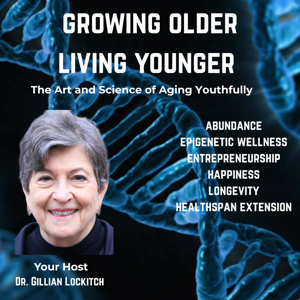


What happens when something you have loved for decades suddenly no longer makes you feel good? In this deeply personal solo episode of Growing Older Living Younger, Dr. Gillian Lockitch shares her evolving relationship with wine—from studying for Levels 1 and 2 of the Wine & Spirit Education Trust (WSET), exploring vineyards around the world, and writing about food, wine and travel, to gradually realizing that even a single glass of wine was affecting her sleep, contributing to brain fog and seeming to be associated with painful nighttime leg cramps. This is not an episode about declaring wine "good" or "bad." It is about learning to recognize when your body is telling you that something has changed. Dr. Gillian explores how aging can alter our response to alcohol, why alcohol-induced sleepiness is not the same as restorative sleep, the changing evidence around wine and cardiovascular health, and why alcohol reduction became especially important to her after experiencing persistent atrial fibrillation and undergoing cardiac ablation. Most importantly, she introduces a principle that applies far beyond wine: Listen to your body whispers before they become shouts. The central question she asks is "Are you still making choices based on what worked for your body years ago—or are you listening to what your body is telling you now?"
Episode Timeline
00:30 A personal story about loving—and eventually giving up—wine
02:08 Studying wine through WSET and discovering the world of wine tasting
03:33 Riesling, Sauvignon Blanc and the pleasures of learning about wine
05:58 Why wine represented much more than alcohol
07:19 The first whisper: sleepiness, brain fog and disrupted sleep
09:00 Nighttime leg cramps and distinguishing cramps from restless legs syndrome
10:31 Wine, carbohydrate-rich meals and Dr. Gillian's personal N-of-one experience
11:22 Why she gradually stopped drinking wine
12:03 The French paradox and the belief that red wine might protect the heart
13:47 Why the evidence about alcohol and health has become more complicated
15:25 Alcohol, atrial fibrillation and protecting sinus rhythm
17:08 Memories of favorite wines and why appreciation doesn't require consumption
18:02 Listen to the whispers before they become shouts
19:14 Your Ageless Action: track how something you routinely eat, drink or do actually makes you feel today
20:14 Adaptation, freedom and choosing the life you want to create now
Three Questions to Ask Yourself What did I learn that I didn't know before? What immediate action can I begin today? What do I want to protect or improve over the next year, five years or ten years?
Your Ageless Action Choose one thing you routinely eat, drink or do that has been part of your life for years. Ask yourself - how does this actually make me feel now? For the next week or two, track what happens afterward and ask what impact does this have on how I feel from day to day.
You can also schedule a personal conversation with your host, Dr. Gillian Lockitch, to begin creating your own Roadmap for Growing Older Living Younger.
About Your Host Dr. Gillian Lockitch is a physician, medical professor emerita, researcher, international speaker, author, and entrepreneur. Her work focuses on helping people understand how lifestyle choices and healthy-aging strategies can support healthspan, independence and the ability to continue doing the things that give life meaning. She is also an affiliate with Nu Skin, a global beauty and wellness company, and incorporates her interest in wellness technologies and healthy-aging strategies into her broader approach to living younger while growing older.
Host Links
Website: Growing Older Living Younger
Connect with Dr. Gillian:LinkedIn Meta
Growing Older Living Younger Community
What happens when a medical tradition thousands of years old meets 21st-century wearable technology? In this solo episode of Growing Older Living Younger, Dr. Gillian Lockitch explores that question through her personal experience with the Watch2Care smartwatch, a wearable that tracks contemporary physiological data while presenting its findings through a Traditional Chinese Medicine (TCM) framework. As a Western-trained physician and medical biochemist, Dr. Gillian was intrigued—but also skeptical—when her watch displayed unfamiliar scores associated with the TCM concepts of heart, liver, spleen, lungs and kidneys. Studying her scores led to an important distinction: the watch is not directly measuring these organs or diagnosing organ function. It tracks 38 physiological metrics and uses an AI-based platform to transform those data into functional indicators interpreted through a TCM-derived framework. It looks at scores in 5 system concepts - heart, lung, liver, spleen and lung.These do not equate to anatomical organs but to TCM functional systems that add to an overall wellness score. This episode explores the difference between what a wearable actually measures and what an algorithm subsequently infers, why trends may be more useful than isolated numbers, and how curiosity and critical thinking can help us use increasingly sophisticated health technology intelligently. The central question: Can wearable technologies help us understand our bodies better without allowing algorithms, scores and increasingly abundant health data to confuse—or control—us?
Episode Timestamps
00:30 — When ancient Traditional Chinese Medicine meets modern wearable technology
06:05 — Understanding TCM functional systems and the five elements
08:00 — Western medicine and Traditional Chinese Medicine: two different interpretive frameworks
10:00 — Tracking patterns rather than relying on a single measurement
11:56 — When more health data creates confusion rather than clarity
14:00 — Why wearable wellness scores should not be treated as medical diagnoses
17:01 — Your Ageless Action: choose one meaningful metric and follow the trend
20:00 — Curiosity, critical thinking and what is coming next for healthy aging.
Your Ageless Call to Action:Choose one metric from a smartwatch, fitness tracker, sleep tracker, scale or other health-monitoring device and follow its trend to see what improves or makes things worse. It might be your resting heart rate, sleep duration, number of steps or another measurement meaningful to your healthy aging. Then ask yourself -Is there one small behavior I could change?
Your Longer-Term Healthy Aging Objective: Over the coming months, learn to recognize patterns in your own health data and relate them to changes in sleep, activity, nutrition, stress, illness, travel and daily routines.The objective isn't to achieve perfect numbers. It is to know yourself better and use information intelligently to support the larger goals of protecting your brain, body, resilience, independence and quality of life.
About Dr. Gillian Lockitch: Email her at [email protected] to schedule your personal conversation about aging youthfully.Dr. Gillian Lockitch is a physician, medical biochemist, professor emerita, researcher, author, international speaker, entrepreneur and host of Growing Older Living Younger. She translates the science of healthy aging into practical strategies designed to help people protect their brain, body and independence as they grow older. She is the author of Growing Older Living Younger: The Science of Aging Gracefully and the Art of Retiring Comfortably and an independent Brand Affiliate with Nu Skin, a global integrated beauty and wellness company. Her entrepreneurship complements her longstanding interest in healthy aging, wellness, lifelong learning and helping people take an active role in how they age.
All information provided in the Growing Older Living Younger podcast and project is for education and entertainment purposes only, and must not be construed as medical advice. Discuss any changes that you plan with your appropriate health care professional.
Welcome to Season 5 of Growing Older Living Younger, and a new way of exploring what it means to grow older while continuing to live younger. In this solo episode, Dr. Gillian Lockitch introduces a new themed format designed to move beyond individual topics and create a clearer pathway from information to action. Season 5 will explore healthy aging through three interconnected themes: Ageless Brain, Ageless Body and Ageless Living. Each series will look more deeply at one major dimension of healthy aging, bringing together different experts, perspectives and areas of science while asking a practical question: The central question is how can we turn the rapidly expanding science of healthy aging into practical choices that help us remain healthy, capable, engaged and independent throughout our lives?
The Three Season 5 Themes:Ageless Brain How can we give our brains the best possible environment in which to remain healthy, adaptable and engaged? The Ageless Brain series will explore memory and cognitive aging, dementia and potentially modifiable risk factors, cardiovascular and metabolic health, inflammation, nutrition and micronutrients, the gut-brain relationship, sleep, stress, social connection, hearing, vision, smell, exercise and neuroplasticity. It will also examine some of the rapidly expanding claims around supplements, biomarkers, brain-training programs, devices and longevity technologies—asking what is supported by meaningful evidence, what remains preliminary and what may simply be effective marketing.
Ageless Body: An ageless body is not a body that looks 25 at 75, 85 or 95. The more important question is how well does your body allow you to live? This series will explore muscle and sarcopenia, resistance training, protein, bone health and osteoporosis, balance, falls, joints, mobility, cardiovascular fitness, metabolic health, body composition, nutrition, energy, mitochondrial function, inflammation, immunity, recovery, vision, hearing and skin. The emphasis will be on maintaining function, strength, mobility, energy, resilience and the physical independence that allows us to participate fully in our own lives.
Ageless Living: Healthy aging is about more than preventing disease. It is about what we do with the life that our health makes possible. Ageless Living will explore purpose, relationships, friendship, family, community, resilience, retirement, lifelong learning, technology, independence, creativity, curiosity, play, travel, ambition and continuing to set meaningful goals.
Each Ageless Series will begin with an introductory episode from Dr. Gillian explaining why the subject matters and providing a framework for the conversations that follow. Approximately six to eight guest conversations will then explore different perspectives and areas of expertise. Each guest episode will end with the speaker suggesting two practical elements that you can consider: One Immediate Action — something you could potentially begin today or this week. One Longer-Term Healthy Aging Objective — the larger goal that repeated actions can help you work toward over months and years. At the conclusion of each themed series, Dr. Gillian will return to connect the dots: Where did the experts agree? Where did they disagree? What surprised us? And, most importantly, what can we actually implement? The goal is not many new habits starting tomorrow morning. It may be two or three meaningful changes that you can make part of everyday life.
Episode Timeline:00:30 Welcome to Season 5 and why the podcast is changing 03:00 Introducing Ageless Brain, Ageless Body and Ageless Living 06:12 Ageless Brain: cognition, cardiovascular health, sleep, senses and neuroplasticity 11:29 Ageless Body: muscle, mobility, bones, metabolism, nutrition and independence 17:04 Why ambition should not have an expiry date 22:36 Moving from information to transformation 27:57 What "ageless" really means 29:32 Closing and medical disclaimer
About your host:Dr. Gillian Lockitch is a physician, medical biochemist, professor emerita, researcher, author, international speaker, entrepreneur and host of Growing Older Living Younger. She translates the science of healthy aging into practical strategies designed to help people protect their brain, body and independence as they grow older. She is the author of Growing Older Living Younger: The Science of Aging Gracefully and the Art of Retiring Comfortably and an independent Brand Affiliate with Nu Skin, a global integrated beauty and wellness company. Her work in entrepreneurship complements her longstanding interest in healthy aging, wellness, lifelong learning and helping people take an active role in how they age. Medical Disclaimer: Each episode is for education and entertainment only and does not offer medical advice. As a retired physician Dr. Lockitch does not diagnose, treat or prescribe for any medical conditions and suggests that you should consult your personal practitioner before making any therapeutic changes.
Connect with Your Host: Website: https://www.askdrgill.com/
Email: [email protected] to schedule a conversation
oes an increase in forgetfulness or increasing "senior moments" imply developing dementia? One of the greatest fears associated with growing older is losing memory, cognitive ability and ultimately independence. But dementia is not a single disease, and not every change in memory or thinking represents irreversible neurodegeneration.
In this episode of Growing Older Living Younger, Dr. Gillian Lockitch welcomes Dr. Brad Montagne, a functional medicine practitioner, educator, author and host of the podcast Your Health Reclaimed.
Brad begins by describing a personal history of gastrointestinal illness, vertigo, food intolerances and other health problems beginning in childhood. He explains how his experiences led him toward functional medicine and an approach emphasizing extensive investigation of chronic health problems.
They discuss hydration, nutrition, medications, sleep disorders, thyroid disease, depression, infection, nutritional deficiencies, gut health and metabolic factors. Dr. Montagne also presents his functional-medicine perspective on food intolerances, toxicity, Lyme disease and alternative testing methods. In this spirited conversation, Dr. Gillian questions several broad claims during the conversation and emphasizes the need to distinguish established evidence from emerging hypotheses and unproven approaches. They agree on the essential message: new cognitive symptoms deserve investigation—not the assumption that they are simply an inevitable part of getting older.
Episode Timeline
00:30 — Is memory loss always irreversible dementia?
03:36 — Brad Montagne's background and personal journey through chronic illness
06:39 — Normal forgetfulness, mild cognitive impairment and dementia
07:04 — Hydration and Brad's perspective on cognitive symptoms
09:16 — Minerals, nutrition and dietary patterns
11:14 — Dr. Gillian's approach to individualized nutrition
13:10 — Food intolerance and Brad's approach to testing
14:40 — Conventional laboratory testing, muscle testing and bioenergetics
19:07 — Can dementia really be called "avoidable"?
19:31 — Lyme disease, neurological disease and claims requiring careful evaluation
24:40 — Reversible conditions that can mimic dementia
25:30 — Brad's approach to extensive functional testing
28:02 — Sudden versus gradual cognitive change
30:37 — The 2024 Lancet Commission and modifiable dementia risk
31:30 — How to evaluate expensive tests, programs and treatment claims
31:56 — Three questions Brad recommends asking a practitioner
32:54 — Why memory changes should not simply be dismissed as aging
34:39 — Protecting brain health and independence
Resources from Brad Montagne https://healthfullyu.com/ https://healthfullyu.com/lyme-book/ https://www.instagram.com/healthfullyu/ https://www.facebook.com/healthfullyu/ https://diet.healthfullyu.com/
Your Host, Dr. Gillian Lockitch
website: askdrgill.com
schedule your consult
The Growing Older Living Younger Community
Is it possible to eat nourishing whole foods without letting grocery costs overwhelm your budget? Grocery industry insider and author Carol Ann Kates joins Dr. Gillian Lockitch to share practical ways to plan meals, shop sales, select produce, understand labels, and store food so less goes to waste. Their conversation offers useful ideas for smaller households as well as families. Rising prices and confusing product claims can make a healthy grocery trip feel expensive and complicated. A thoughtful plan can help you bring home only food you will enjoy and use. For people who want to stay healthy and independent as they age, a sustainable eating routine has to work in everyday life. Carol Ann explains how planning around weekly specials, checking what is already in the pantry, and shopping with a list can protect both your food budget and your time. Raised in her family's corner market, Carol Ann later helped run its supermarkets and wrote recipes for store advertisements. She is the author of "Grocery Shopping Secrets" and the award-winning cookbook "Secret Recipes from the Corner Market". She shares what that experience taught her about fresh ingredients and the real cost of convenience. Dr. Gillian and Carol Ann discuss frozen versus fresh vegetables, pre-cut produce, choosing avocados, prioritizing purchases when organic foods cost more, and interpreting food date labels. They also explore storage habits, batch cooking, and ways to make the same ingredients work across several meals. They recommend starting with one change before your next trip: plan the week's meals around what you already have in your kitchen and what you will actually eat.
Episode Timeline: 00:30 — Why healthy food and grocery costs belong in the same conversation 04:34 — Carol Ann's family markets and the path to her books 10:50 — Meal planning around store specials 11:48 — Lists, impulse buys, coupons, and loyalty offers 14:06 — Pantry organization, food waste, and date labels 18:47 — Shopping for whole foods, frozen produce, and convenience costs 22:12 — Organic produce and the Dirty Dozen/Clean Fifteen discussion 26:07 — Grass-fed and free-range labels; where Carol Ann prioritizes spending 28:44 — Selecting avocados 29:59 — Produce storage and reducing spoilage 32:51 — Shopping and cooking for one or two 34:24 — One practical change before your next grocery trip
Connect with Carol Ann Kates https://www.facebook.com/p/Carol-Ann-Kates-Kitchen https://www.carolannkates.com https://www.linkedin.com/in/carol-ann-kates https://www.instagram.com/carolannkates https://www.pinterest.com/CarolAnnKates/Pinterest https://x.com/CarolAnnKates
Connect with Your Host, Dr. Gillian Lockitch Explore physician-led resources designed to help midlife and older women remain healthy, active, independent, and engaged in life. Website and podcast episodes: https://www.askdrgill.com
Download the Growing Older Living Younger app For your personalized one-one-one lifestyle strategies conversation email me at [email protected] Join the Growing Older Living Younger Facebook Community
What if ingredients that can enrich a healthy lifestyle are already growing in your garden, waiting at the farmers' market, or sitting in your spice cupboard? Too often, eating for longevity is framed as a list of restrictions, a mindset that can drain pleasure from food and make healthy choices feel difficult to sustain. or healthy longevity, nourishment must be practical enough for daily life and enjoyable enough to continue. Fresh ingredients, seasonal variety, herbs, plants, and mindful attention to what works for your own body can help make the kitchen a place of creativity rather than deprivation. Growing even one herb can also reconnect us with the source of our food and turn nurturing a plant into a small, restorative ritual. In this episode, international culinary consultant, award-winning pastry chef, cookbook author, and former professional ballerina, Natasha MacAller joins Dr. Gillian to discuss her new book, The Apothecary Chef: Recipes with Beneficial Herbs & Plants for a Long and Healthy Life. She shows how everyday herbs, edible plants, fresh seasonal ingredients, and sensory pleasure can support a more nourishing approach to healthy longevity. She and Dr. Gillian Lockitch explore responsible food-based guidance, simple ways to begin—even from a condo windowsill—and the importance of curiosity, movement, resilience, and joy in aging youthfully. Natasha explains how the book grew from her New Zealand garden, how its food and health statements were researched and reviewed, and how celebrated chefs around the world created recipes around carefully chosen "hero" ingredients.
You will learn how to begin with familiar alliums such as onions, garlic, shallots, and chives; how to use color, aroma, seasonality, and curiosity at the farmers' market; and why mistakes are part of becoming a confident cook. Natasha also recommends approachable recipes and combinations, including a sunshine citrus salad with lemon balm vinaigrette and simple avocado, tomato, pickled onion, and fresh-herb salads.
This reunion podcast is especially meaningful for Dr. Gillian, who first interviewed Natasha when Vanilla Table was published for her lifestyle website reviewfromthehouse.com . Their shared stories of dance, spinal injury, reinvention, and recovery bring a deeply personal dimension to a conversation about resilience—and remind us that creativity, curiosity, nourishing food, and joyful movement can continue to grow throughout life.
Episode Timeline:
00:00 — Welcome and the promise of beneficial plants, flavor, and healthy aging
06:12 — From Vanilla Table to The Apothecary Chef: Natasha's garden-inspired journey
14:18 — Responsible food-based guidance, research, and culinary medicine review
19:12 — Gut health, calm, immunity, longevity, resilience, and the book's chapter themes
21:03 — Where beginners can start: alliums, windowsill herbs, and familiar ingredients
23:52 — Why healthy longevity does not have to mean a restrictive diet
26:18 — Movement, spinal recovery, resilience, and finding physical joy
34:44 — One simple action to take today and easy recipes to try
39:24 — Final reflections: nourishment, creativity, curiosity, and lifelong resilience
Connect with Natasha MacAller
The Apothecary Chef: https://www.dancingchef.net/cookbooks
https://www.octopusbooks.co.uk/titles/natasha-macaller/the-apothecary-chef/9781804192818/
Natasha's cookbooks: https://www.dancingchef.net/cookbooks
Vanilla Table, Spice Health Heroes, The Apothecary Chef: Recipes with Beneficial Herbs & Plants for a Long and Healthy Life
PubMed: https://pubmed.ncbi.nlm.nih.gov/
Disclosure: No affiliate relationship with Natasha MacAller or the book publisher is indicated. As always, this episode is educational and does not provide medical or nutritional treatment advice.
Connect with Your Host Dr. Gillian Lockitch
Explore physician-led resources designed to help midlife and older women remain healthy, active, independent, and engaged in life.
Website and podcast episodes: https://www.askdrgill.com
For your personalized one-one-one lifestyle strategies conversation email me at [email protected]
Call to Action
Download your Quick Guide to Medicinal and Culinary Mushrooms
Subscribe to Growing Older Living Younger and leave a review to help more people discover practical, joyful ways to age youthfully—and share this episode with someone who would love to bring more flavor, color, and beneficial plants into their kitchen.
Could difficulty hearing conversations today affect your brain health, independence and quality of life in the years ahead? Hearing loss is often treated as a minor inconvenience of growing older, yet it can affect communication, relationships, social connection, confidence and independence. In this episode, Dr. Gillian Lockitch speaks with hearing-health advocate and author Robert "Bob" Keefer, MD, about the association between hearing loss and cognitive decline, why so many people delay seeking help for hearing deficits and what questions to ask before choosing a hearing-care provider. Listeners will learn how hearing is assessed, why the fitting of a hearing aid matters, and how proactive hearing care may support brain health and healthy longevity. Dr. Gillian also shares her own experience of unequal hearing following a minor head injury, feeling she had no time to follow up, and her decision to arrange a new audiology assessment after this podcast.
Bob Keefer,is a physician, hearing-health and Alzheimer's-prevention advocate, author and former founder of an audiology clinic. After discovering that many hearing-care professionals were not consistently using their profession's recommended fitting practices, he created a clinic centred on evidence-informed care. His books, Hear Better, Live Longer and The Alzheimer's Hearing Aid Paradox, explore the relationship between hearing, cognition and quality of life, as well as the importance of properly assessed and fitted hearing aids.
Episode Timeline:
00:11 — Welcome to Growing Older Living Younger
00:30 — Why hearing health matters for brain health and independence
04:31 — Bob Keefer's path from medical-product consulting to hearing-health advocacy
07:59 — Why millions of people delay hearing tests and hearing aids
11:19 — Dr. Gillian's personal experience with unequal hearing after a head injury
13:56 — When family members notice hearing loss first—and how to start the conversation
16:23 — Hearing loss, cognitive decline and dementia: what the research can and cannot show
24:02 — How better hearing may improve connection, confidence and quality of life
26:03 — Choosing a hearing-care provider and asking about real-ear measurement
27:50 — What to expect during hearing testing and hearing-aid fitting
30:54 — One practical action to take for hearing and brain health
32:22 — Closing thoughts and invitation to create your healthy-aging roadmap
Contact Robert C Keefer MD
Website: https://www.hearbetterlivelonger.com/ LinkedIn: https://www.linkedin.com/in/drrobertkeefer Book information: https://www.hearbetterlivelonger.com/
Books: Hear Better, Live Longer by Dr. Robert Keefer The Alzheimer's Hearing Aid Paradox by Dr. Robert Keefer
Contact Your Host: Dr. Gillian Lockitch
Explore the Growing Older Living Younger approach to extending healthspan, protecting independence and aging youthfully. Website: https://www.askdrgill.com/ Podcast page: https://www.askdrgill.com/podcast
https://www.linkedin.com/in/gillianlockitch/ Subscribe to the Growing Older Living Younger NewsletterMessage Dr. Lockitch to schedule a one on one conversation about healthy longevity
Health care professionals emphasize optimizing cholesterol, blood sugar and hormone levels and from that assessing biological age. These measurements can provide useful information, but do they tell us whether the body is still resilient, adaptable and capable of recovering from illness, injury or stress? In this episode, Dr. Gillian Lockitch and Dr. Sean Fletch explore the difference between moving a laboratory number into the desired range, and addressing the upstream conditions that caused it to change.
Dr. Fletch reframes healthspan as more than the number of years lived without disease. It is the functional capacity to meet life's demands, recover from disruption and continue doing the things that matter to you. Measures such as grip strength, gait speed, balance, cardiovascular recovery and the ability to get down to and rise from the floor may reveal changes in resilience that conventional blood tests can miss.
Drawing on more than 30 years of clinical, athletic-performance and rehabilitation experience, Dr. Fletch introduces his HealthSpan Framework. He describes the body as an orchestra rather than a machine: light, sleep, movement, nutrition, stress and recovery must work together, while circadian rhythm helps keep the entire system synchronized.
The conversation also examines fasting insulin, insulin resistance and continuous glucose monitoring; the limits of chasing individual biomarkers; and the growing enthusiasm for GLP-1 medications and peptides. Dr. Fletch explains why an intervention should be evaluated not only by whether it changes a number or symptom, but by whether it restores underlying biological capacity.
You will also hear how concussion rehabilitation has evolved, why appropriate graded rehabilitation matters, and how movement supplies essential sensory information to the brain. Dr. Fletch concludes with one deceptively simple practice: obtain outdoor light early in the day to help synchronize circadian biology and support the many systems involved in long-term health.
Episode Timeline:
00:00 — Why reassuring biomarkers may not reveal declining resilience
03:52 — How a college neck injury changed Dr. Fletch's career
07:48 — Biological resilience, health literacy and upstream signals
13:33 — Why biomarkers are a map—not the terrain
20:13 — The HealthSpan Framework and functional self-assessment
26:56 — Peptides, GLP-1 medications and the difference between regulation and resolution
29:56 — Concussion recovery, brain metabolism and movement
34:08 — The first practical step: reset your circadian clock with outdoor light
38:39 — Closing reflections and key takeaways
Connect with Sean Fletch
Website: DrSeanFletch.com
Practice: BeyondSports.ca
LinkedIn: Dr. Sean Fletch
Book: HealthSpan: Redefined—Biological Principles for the Long Game of Health
Newsletter: The Long Game
Contact Your Host: Dr. Gillian Lockitch
Explore the Growing Older Living Younger approach to extending healthspan, protecting independence and aging youthfully. Website: https://www.askdrgill.com/ Podcast page: https://www.askdrgill.com/podcast
https://www.linkedin.com/in/gillianlockitch/ Subscribe to the Growing Older Living Younger NewsletterMessage Dr. Lockitch to schedule a one on one conversation about healthy longevity
What does a physician-scientist actually do each day to support her own healthy aging? This is a question Dr. Gillian Lockitch hears often. Her answer is not a prescription, a shopping list or a collection of fashionable biohacks. Healthy longevity is personal: our genetics, health histories, medications, priorities and goals differ, so the most useful routine is one designed for the individual. In this solo episode, Dr. Gillian organizes her approach around the seven pillars of healthy longevity described in her book, Growing Older, Living Younger. She explains how epigenetics offers a more hopeful way to think about aging, how food and movement send biological signals, why skin must be treated as an important organ, and how sleep, curiosity, purpose and relationships help protect health and independence. Dr. Gillian also shares her own daily routine—from nutrient-dense foods and time-restricted eating to walking, resistance and balance work, skincare practices and carefully selected supplements. She discusses mitochondrial support, CoQ10, collagen peptides, carotenoid antioxidants, nutrients for bone, joint and eye health, and support for autophagy. She emphasizes that supplements complement beneficial lifestyle habits such as healthy nutrition, movement, sleep, stress management and where needed, medical care. Her own post-retirement health challenges—including emergency spinal surgery, myopic macular degeneration, and atrial fibrillation have made prevention, resilience and measurement deeply personal concepts. Blood pressure, laboratory testing, bone density, fitness and carotenoid scanning can provide useful feedback, but no single measurement tells the whole story. Her central thesis is simple: do not simply copy someone else's routine. Begin with the fundamentals of your lifestyle, work with healthcare professionals you trust, measure what matters, notice how your body responds, and remain willing to adapt as evidence and circumstances change. Noting that as a retired physician she does not treat or prescribe for medical diseases, she offers one on one conversations on constructing your own Roadmap for Growing Older Living Younger and extending healthspan not just lifespan. A plan for healthy longevity is not a fixed blueprint; it is a lifelong practice developed through curiosity, consistency and purposeful choice and she would love to work with you on your plan.
Episode Timeline
00:11 — Introduction: why Dr. Gillian is sharing her routine—but not prescribing it
03:10 — Pillar 1: Your genes are not your destiny and the promise of epigenetics
06:14 — Pillars 2 and 3: Food is information and movement is medicine
10:00 — Pillars 4 and 5: Caring for skin and nourishing the brain
15:00 — Inside Dr. Gillian's daily healthspan, nutrition and supplement routine
17:59 — Pillars 6 and 7: Lifelong learning, curiosity, connection and community
21:30 — How health challenges reshaped her approach to prevention and resilience
25:00 — Measure what matters: testing, carotenoid scanning and guiding principles
28:40 — Closing invitation: create your own healthy-longevity roadmap with Dr. Lockitch
About Dr. Gillian Lockitch
Dr. Gillian Lockitch is a physician, medical biochemist, professor emerita, researcher, international speaker, author and host of the Growing Older Living Younger podcast. After retiring from academic medicine, she began a new chapter in entrepreneurship and healthy-longevity education. Through her book, podcast and Growing Older Living Younger programs, she helps people understand how lifestyle, epigenetics, measurement and purposeful action can support vitality and independence across the lifespan.
Dr. Gillian Lockitch is an independent Nu Skin Brand Affiliate. You can join her team as an affiliate ( and build your own business), or a member to buy product or devices at member prices. She may earn a commission from qualifying product purchases. Products and devices mentioned in this podcast reflect her personal routine and are shared for educational purposes only. They are not intended to diagnose, treat, cure or prevent disease, and individual results may vary. She emphasizes that supplements and skincare devices should complement—not replace appropriate nutrition, movement, sleep or healthcare professionals advice.
Call to Action
Your best healthy-longevity plan is the one designed with you for your lifestyle. Visit askdrgill.com or email [email protected] to begin a conversation about your personal Growing Older Living Younger Roadmap. Subscribe to the podcast, leave a review, and share this episode and the show link with someone ready to invest in extending their healthspan.
Website: www.askdrgill.com
Podcast: Growing Older Living Younger on Apple Podcasts, Spotify and other platforms
Join the evolving Growing Older Living Younger Community
Could retirement actually become the beginning of your most meaningful work? In this personal solo episode, Dr. Gillian Lockitch shares how spinal surgery, ballroom dancing, entrepreneurship and podcasting transformed her understanding of healthy longevity. You'll discover why curiosity, consistency and a renewed sense of purpose can help you remain mentally sharp, physically engaged and excited about the future at any age.
For most of her professional life, Dr. Gillian Lockitch was a physician, medical biochemist, researcher, university professor and department head. She expected retirement to bring more travel, reading, dancing and time with her family—not a new career as an entrepreneur, author, podcast host and healthy longevity advocate. Her journey changed when severe spinal stenosis led to emergency surgery and a lengthy recovery. Faced with the challenge of regaining her strength, mobility and independence, Gillian began exploring healthy aging not simply as a scientist, but as someone personally determined to age differently. That shift in perspective became the foundation of Growing Older Living Younger. In this episode, Gillian describes how curiosity led her from exploring a Wellness Trade Show into entrepreneurship at 70. She explains how her scientific training shaped the way she evaluated wellness products and opportunities, why she remained committed to evidence, and how she discovered that people were looking for trusted guidance rather than another sales presentation. She also shares the lessons she learned from ballroom dancing, building a business, adapting during the COVID-19 pandemic, writing a book and launching a podcast on her 76th birthday. Each new undertaking required her to become a beginner again, develop unfamiliar skills and learn that consistency is more important than occasional intensity. Finally Gillian reflects on the setbacks and opportunities that have shaped her purpose. Her message is simple but powerful: your purpose has no expiry date, retirement does not have to mean withdrawal from action, and reinvention is possible for anyone who remains curious. Although we inherit our genetic blueprint, everyday lifestyle choices can affect how our genes are expressed—and ultimately help us live gracefully as we grow older.
Episode Timeline:
00:00 — Introduction: How did a physician and scientist become an entrepreneur at 70?
06:00 — Spinal stenosis, emergency surgery and the decision to reclaim an active life
08:15 — A visit to the Vancouver Wellness Show changes the direction of retirement
11:22 — Scientific skepticism, personal experimentation and the beginnings of entrepreneurship
16:19 — Becoming a beginner again and the lessons learned from ballroom dancing
19:05 — Adapting during COVID-19 and discovering the possibilities of podcasting
21:52 — Launching Growing Older Living Younger and finding a new mission
24:00 — Atrial fibrillation, patience and the lessons hidden within setbacks
26:53 — Purpose, legacy and the promise of epigenetics
30:15 — Why reinvention belongs to anyone who remains curious
Connect with Your Host: Dr. Gillian Lockitch
Dr. Gillian Lockitch is an independent Nu Skin Brand Affiliate. You can join her team as an affiliate (and build your own business), or as a member to buy products or devices at member prices. She may earn a commission from qualifying product purchases. Any products and devices mentioned in this podcast reflect her personal routine and are shared for educational purposes only. They are not intended to diagnose, treat, cure or prevent disease, and individual results may vary. Dr. Lockitch emphasizes that supplements and skincare devices should complement not replace appropriate lifestyle habits — nutrition, movement, sleep and others, nor healthcare professionals advice.
Call to Action
Your best healthy-longevity plan is the one designed with you for your lifestyle. Visit askdrgill.com or email [email protected] to begin a conversation about your personal Growing Older Living Younger Roadmap. Subscribe to the podcast, leave a review, and share this episode and the show link with someone ready to invest in extending their healthspan.
Website: www.askdrgill.com
Podcast: Growing Older Living Younger on Apple Podcasts, Spotify and other platforms
Join the evolving Growing Older Living Younger Community
Email: [email protected]
website: https://askdrgill.com
To learn how to become an affiliate with the "World's Number 1 Home Beauty Device Brand" contact Dr. Lockitch at [email protected] or message her through The Growing Older Living Younger community.
From the publisher's feed

111,832 Listeners

7,915 Listeners

29,068 Listeners

1,221 Listeners

10,697 Listeners
7 Listeners

2,105 Listeners