
Sign up to save your podcasts
Or

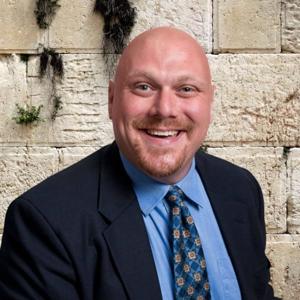


In this episode of Hebrew Voices #196, Reconciling the Bible with Science: Part 1, Nehemia speaks to Orthodox Jewish physicist Dr. Gerald Schroeder, who expounds a biblical proverb to explain the age of the universe and presents the argument that God created a pre-Adamic race.
I look forward to reading your comments!
PODCAST VERSION:
You are listening to Hebrew Voices with Nehemia Gordon. Thank you for supporting Nehemia Gordon's Makor Hebrew Foundation. Learn more at NehemiasWall.com.
Gerald: God created the laws of nature that predate the universe; they’re not physical, they’re outside of time. They can create something from nothing. That’s the definition of God in this universe.
Nehemia: Shalom, and welcome to Hebrew Voices. I’m here today with Dr. Gerald Schroeder. He has his bachelor’s, master’s and PhD from MIT, the Massachusetts Institute of Technology, and is a renowned physicist who has written about reconciling the Bible with science. Shalom, Dr. Schroeder. We’ve had you on the program before, I think you probably don’t remember.
Gerald: No, I do remember but I don’t remember the date.
Nehemia: Oh, it must have been almost 10 years ago.
Gerald: Really? Wow!
Nehemia: I was trying to get a Minion cake from a bakery. I think it was called New York Bakery, or something, on Emek Refaim Street in Jerusalem, and your wife was right in front of me, and she got my cake!
Gerald: Okay! That I don’t remember.
Nehemia: It was the day before we did the recording! And you mentioned, as we were getting to know each other, something about a Minion cake, and I was like, “That was my Minion cake!” That was your wife! It’s a small world!
So, Dr. Schroeder, let’s jump into it. I had another guest on my program recently who talked about, from a scientific perspective, his explanation that the world is only 6,000 years old. And you have a different explanation of the age of the universe. The age of the Earth in particular, I think, is what we’re more interested in.
Gerald: It’s the age of the universe, so it’s the same thing.
Nehemia: So, how old is the Earth?
Gerald: Who was the person, so I have some perspective here?
Nehemia: It was Kent Hovind.
Gerald: Ken?
Nehemia: Kent Hovind. He is a Christian Evangelical Young Earth Creationist.
Gerald: Okay. The first question I have to ask him is, how fluent is he in Hebrew? That was the first question you should have asked him. I didn’t hear the recording. If he’s not fluent in Hebrew, he should stay out of the argument since the whole text is based on the Hebrew text. The whole argument is totally related to… There’s a proverb that says, “A word well spoken,” it’s Proverbs 25, “A word well spoken is like apples of gold in dishes of silver.”
The commentator Maimonides in about the year, I’m making a guess, 1110, 1120-30, almost a thousand years ago, writes, “What was King Solomon talking about when he wrote ‘A word well spoken is like apples of gold in dishes of silver?’” And he writes like this… this was well before anyone was worried about dinosaurs or cavemen. We’re talking about almost a thousand years ago. He says, “The Torah has several levels of meaning. ‘A word well spoken is like apples of gold in dishes of silver.’ The ‘dishes of silver’ is the literal text of the Torah. And when you look at a dish from a distance, you see the silver dish, but you can’t see what’s inside it. Only when you look deep into the dish itself do you find the apples of gold. What’s the silver dish? The literal text of the Bible. What’s the golden apples? The secrets of why one word was chosen over another.”
Now, you’ll notice that it wasn’t apples of silver in dishes of gold, it was golden apples in dishes of silver. The silver is the literal text; the gold, being more valuable, takes that text way beyond the meaning. The silver dish has huge value, obviously. No one’s throwing out a silver dish, at least not in my house. I don’t know about your house, but not in my house.
Nehemia: I don’t think we have any silver dishes.
Gerald: I beg your pardon?
Nehemia: I don’t think we have any silver dishes in my house. But if we did, we probably wouldn’t throw them away.
Gerald: So anyway, the deeper meanings are the subtleties within the text, and the subtleties within the text allows you to see that there’s a reality of two different perspectives of time. And that’s the whole answer to the age of the universe. The universe is 6,000 or whatever years old from the biblical perspective looking forward. But we don’t live in that perspective, that’s the Bible’s perspective. I don’t know how to say God’s perspective. It’s the perspective that God gave in the written text, and that is why in the six days of Genesis… and when I get to Gerry Schroeder, I’ll tell you it’s my idea, okay?
Nehemia: Okay.
Gerald: The calculations are totally mine. But the idea that the Torah perspectives is thousands of years old. And it is Maimonides and… it doesn’t matter, they’re all from the same period, about a thousand years ago that… why is the numbering of the six days of Genesis rather bizarre? The numbering of the text is six days; at the end of each day there’s a couplet that appears nowhere else in the entire Hebrew Bible. And that is, in the English translation, “And there was evening and there was morning,” and then the day is numbered. You’re probably familiar with that, this and this happens, “in the beginning God creates the Heavens and the Earth,” and there’s this and this, “and there’s evening and morning, day one.” More things are happening, “a second day,” “a third day,” “a fourth day,” “a fifth day,” “the sixth day.”
So, the question stands out like a flame. Why does the text say, “day one”? Evening, morning, day one? It says, “second day,” “third day”, “fourth day”, “fifth day”, “the sixth day”, give me a first day. Why does the text say there is evening… this is not me speaking. As I said, I’ll let you know when it’s my idea. But this forms the entire basis for all the calculations that the universe is 6,000 years old, and the universe is 14 billion years old, from two different perspectives.
The text writes “day one” because there had not yet been a second day. That means the perspective of time is from the beginning looking forward in Genesis. It’s not from Sinai. By the time you get to Sinai, there have been hundreds of thousands of days. If the perspective of time in the Bible for these six days was from Sinai, the text would have written, “Evening and morning, a first day,” because it’s been thousands of days until you get to Moses on Sinai. You had to go through the whole Egypt experience, and the Exodus, and the wandering, et cetera.
So, the text says “day one” because the Torah sees time from the beginning looking forward. That’s not now. There wasn’t yet a second day means it’s from the beginning. The only time there wasn’t a second day is on the first day, and therefore the text writes, “evening and morning,” “yom echad,” “day one”.
I’ve got to tell you, there are many unfortunate… you refer to me as Gerry or Yakov. I refer to you as Nehemia, right? My Hebrew name is Yakov. So, there are, unfortunately, many mistranslations that write “there is evening and morning,” into English and into other languages also. “A first day.” The fact is, the Hebrew says, “day one.” There’s no question about the Hebrew.
So, the Torah sees time from before there was a time there was a second day, which means the Torah… the Torah, meaning the Hebrew word for the Bible… The word Torah is the Hebrew name for the five books of Moses: Genesis, Exodus, Leviticus, Numbers and Deuteronomy. So, the Bible, the Torah, sees time from the beginning looking forward until you get to Adam, where the description of time changes and becomes Earth time. So, we have this cosmic view of time looking forward from the beginning.
Nehemia: So, it’s really interesting what you’re saying. I just pulled it up on BibleHub.com, because I read it in the Hebrew like you do, so I actually wasn’t aware, or I certainly didn’t remember, that in Genesis 1:5 a lot of translations have “the first day”. I’m looking at NIV, New Living Translation, King James Bible, New King James. But then the New American Standard Bible has, “There was evening and there was morning, one day.” So, some of them do have in English, “one day”, but then other ones have “the first day.” They’ve even added the word “the.” So, that’s interesting, I didn’t remember that. So, you’re making a distinction between “the first day” and “one day”.
Gerald: No, no, no! The commentators a thousand years ago made the distinction. I put the numbers in.
Nehemia: Okay, alright.
Gerald: I didn’t make that distinction.
Nehemia: Okay.
Gerald: And the commentary is, “The reason that the Torah says day one,” it’s not me, Nehemia. I’m not stealing from anyone, okay? When it becomes my idea, I’ll tell you.
Nehemia: Okay.
Gerald: I’ve got to… thank God. I’ll tell you. I think God got the address wrong that He let me be the one to make the calculation, but anyway…
Nehemia: Alright.
Gerald: The text says, “day one,” to quote Maimonides, Nachmanides, they’re all from the same time, around 1,000 to 1,500 years ago, “because there was not yet a second day.” That is the commentary on “day one” from a thousand years ago. Now, why would that interest anyone? Because Nehemia, in a static universe, it makes no difference where you see time from. Zero! The only difference in perspective of time that we have in this universe is because the universe is expanding. And the commentary on the creation of the universe, again, from these same commentators, it reads like something out of NASA. A very small point… This is not a modern comment, remember, it’s a thousand years ago. A very small point, not “matter” as we say, the Hebrew is “Dak me’od ein bo mamash,” “So thin there’s no physicality.” We call that stuff “energy” today. “Dak me’od,” “It’s so thin,” “ein bo mamash,” there’s no… you can’t call that air because air has plenty of “mamash”, you get caught in a hurricane and you know how much “mamash” air has. And then this, “dak me’od ein bo mamash”, as the universe expands, changes into “mamash”, into “matter” as we know it, and that’s when the clock begins.
Again, now I’m about to tell you when it’s Schroeder. Then it says in the commentaries, “When this first matter forms, time grabs a hold.” Now before that time, time is going by…
Nehemia: Where does it say that?
Gerald: In the commentaries, Nachmanides and Maimonides.
Nehemia: Okay. Nachmanides says that before there was matter there was no time, basically, is what he’s saying…
Gerald: No, I say that. He writes this, “mi she’yesh,” “When we finally get matter, time grabs hold,” “yitfos bo zman.” “mi she’yesh yitfos bo zman,” a strange statement.
Nehemia: Okay.
Gerald: So, that’s in his commentary on Genesis chapter 1 verse…
Nehemia: Verse 5.
Gerald: 1 or 2 or 3, one of the first few verses. So, time grabs a hold. Now, before that, time is going by, but he uses the word “tofes”, “but it grabs a hold”, because energy is outside of time. Time is only linked into something, so that’s the beginning. I call it the cosmic clock. Now comes Gerry Schroeder.
Nehemia: Okay.
Gerald: So, I say, when is the first matter that formed? And I have no wiggle room here, I’m stuck. Electrons, protons… what’s the first stable matter? Well, let’s see. Electrons are formed when neutrons decay. Neutrons decay into protons and electrons. Neutrons are not stable unless they’re inside an atom, so they have a short half-life of a few minutes. So, that’s the reason that electrons and protons match. In the universe, by convention we call protons positive and electrons negative, and that’s why they match, because neutrons, like the word neutral, are essentially, in simplistic talk, a combination of a proton and an electron. But they disintegrate, and then you have a proton and an electron.
That’s the beginning of matter. Because protons define matter. If I say I have an atom with one proton, I’m saying hydrogen. If I say I have an atom with two protons, it’s helium; six protons, carbon; eight protons, oxygen. My background is nuclear physics. And the Earth science is just lucky, it’s the two things together, or fortunate. I was told once… I was on with Pat Robertson once, and I said I was just lucky, and he said something… I apologize for getting off track, but it was a huge lesson. I said, “I was just lucky,” and he said to me, “You weren’t lucky, you were blessed.” Now not blessed like, “Oh boy, I am blessed.” No, it’s a gift. He said, “It wasn’t luck. You studied physics and Earth sciences so that you can put these together. It wasn’t luck.” It wasn’t like, “you deserved it.” It was like a gift. We think some things are… you know what I’m getting at, right?
Nehemia: Well, I think there’s this thought that luck is this kind of force in the universe, and we can influence it. Sometimes we can’t influence it; we can do things that cause bad luck… and that’s not a Torah concept, that there’s such a thing as luck.
Gerald: Well anyway, getting to being blessed. But in any event, so what’s the first stable matter that formed? Protons.
Nehemia: Yeah.
Gerald: So, I say the clock of the Bible is when matter forms, time grabs ahold. “Mi she’yesh yitfos bo zman,” that’s Maimonides… I’m sorry, it’s Nahmanides, let’s get it right… but let’s stick with Nahmanides. So, time grabs a hold when stable matter forms. That’s the beginning of Gerry Schroeder’s calculation.
Nehemia: Yeah.
Gerald: So, the Bible sees time from there looking forward.
Nehemia: Yeah.
Gerald: We see time from looking back from today. We measure 14 billion years looking back, the Torah makes six days looking forward, however it goes, and with those two different perspectives you get a universe that can be 14 billion years old or only a few thousand years old. They’re both true.
Nehemia: Okay. So, when they… So, talk to me about… there are radiometric dating systems, like potassium argon and uranium lead. So, when those date a rock, and that rock gives a date of a billion or two billion years… I don’t think we have rocks on Earth that are more than two billion years old according to those dating systems, or those methods. What are you saying?
Gerald: I’m saying that Earth is… I’m going from memory now. I had a bad fall about a half year ago and it really knocked out the science…
Nehemia: I’m sorry to hear that.
Gerald: It has affected my memory, so I… from memory. But the Earth is about 4.6 billion years old, I think that’s the number. The Earth is four billion years old, four and a half billion years old. The Earth is that old, the universe is just under 14 billion years old. On Earth as we measure time… and that’s where we live, I mean, where else are you going to measure? You measure on Earth, even before… We’re using an Earth based clock. The radioactive measurements of the decay of those nuclei you can measure quite accurately. The choices were 100% correct, that we have an Earth that’s billions of years…
Nehemia: Other people say, “Well, they’ve done Carbon-14 dating on the age of the Earth.”
Gerald: I hope you correct them with that.
Nehemia: Carbon-14, even according to the most maximalist claims, doesn’t go back millions of years.
Gerald: The half-life of Carbon-14 is about 5,000 years.
Nehemia: Right.
Gerald: So, after 20 half-lives, there’s nothing left to measure.
Nehemia: So, you’re saying maybe 100,000 years.
Gerald: No, what did you just say? I heard a sentence about 100,000 years.
Nehemia: No, you said there were 20 half-lives, so 20 times 5,000…
Gerald: Oh, just for the number.
Nehemia: I think it’s considered accurate to 50,000 years, if memory serves me. I could be wrong.
Gerald: It for sure isn’t measured to billions of years.
Nehemia: For sure. So, in any event…
Gerald: But let your readers know, because you said it before, there are about six radioactive clocks.
Nehemia: Uranium, lead, potassium, argon… So, if you take uranium lead dating and you find a rock that says it’s two billion years old…
Gerald: I have one right here in this room.
Nehemia: Do you? You’re saying this isn’t a satanic lie of the scientists who want to destroy our faith, this is actually correct.
Gerald: As we measure time on this, it’s absolutely correct. And the argument… I had this once in front of a whole group of students, and their teacher was there, and he had always taught a Young Earth. He started saying how the flood could have caused the changes because that’s often the argument. “Well, the flood would have mixed up all the…” the flood messed up nothing because we happen to have fossils from before the flood that were dated in several different ways, not just radioactive, and they match. The flood couldn’t have changed… in brief, the flood could not have changed the radioactive decay of these elements. It takes nuclear events like atomic bombs to change rates of decay.
Nehemia: Which… we’ve had atomic bombs, so there is a little bit of a problem. But…
Gerald: I’ve actually seen quite a few.
Nehemia: Right. I understand you were involved in nuclear testing; I think we mentioned that in the last interview.
Gerald: Yeah, the SALT Talks, the Strategic Arms Limitation.
Nehemia: Alright, so… let me ask this question. You talked in the beginning about the plate of silver with the apples in it, which is a phrase from Song of Songs if I’m not mistaken.
Gerald: Proverbs 25, I think it’s Proverbs 25.
Nehemia: Oh, Proverbs 25, okay. It’s from, you say, King Solomon. So, what you’re saying is, there is metaphor in the Bible and there’s non-literal meanings. So, if you were to get into a time machine, which you’ll probably tell me doesn’t exist because you’re a physicist, but if you were to get into your Tardis and travel back and meet Adam, was there a literal man named Adam that walked the Earth and he had a wife named Chava, Eve? Do you believe that was the case?
Gerald: I think for certain there was. And there were other homo sapien sapiens around at the same time. He was the first homo sapien sapien to have a soul, a neshama.
Nehemia: Ah! Wow!
Gerald: That’s verse 26 through verse 27 of Genesis chapter 1. It makes it very clear. And this is from memory now, so anyone who’s looking it up in the Bible, it’s Genesis chapter 1 from verse 26, I hope I remember. God says, “Let us make Adam,” “na’aseh Adam,” “let us make,” I’m emphasizing the verb now, “let us make Adam”. And the next sentence says, “God created the Adam,” the English misses that totally, the “the.” … God says, “Let us make Adam.” Making is a process verb, and he wrote, “it takes time and stuff.” And that’s why it says for six days, in the opening, “God created the Heavens and the Earth.” And then later in chapter 2, it says, “For six days the Lord made the Heavens and the Earth.” “Made,” “asiyah” takes time and stuff. Creation does not. And Nehemia, stop me if I’m blabbering away too much.
Nehemia: No, this is great.
Gerald: So, Genesis chapter 1 verse 26, God says, “Let us make,” and I’m emphasizing “make Adam”. Stuff and time. The next sentence says, “And God created the Adam.” Well, if I got Adam made in verse 26, why do I have to create him in verse 27? Because the making is the physical body; creation is something from absolute nothing, and whatever it brings into the world, it brings it in instantaneously. So, something over time was made Adam, and it’s Adam there, but the next sentence God creates “the Adam;” the Hebrew has the “the,” “the Adam,” “et ha’Adam”. And that creation can’t be his body; we already mentioned in verse 26. That creation is the spiritual creation, the soul.
Because according to all the ancient commentaries that I have read, and I have not read all of the ancient commentaries by a long shot, but I’ve read a lot of it, all commentary says that there was one physical creation, the opening sentence of the Bible. All the other creations are spiritual. So, when God says in verse 27 of Genesis chapter 1, “God creates the Adam,” that’s a spiritual creation. It changed a homo sapien sapien person into a homo sapien sapien human.
Nehemia: Wow.
Gerald: That’s the problem.
Nehemia: Wow!
Gerald: Nehemia, I promise you, I’m not bending it in any way. God forbid.
Nehemia: No, I’m not saying you’re bending it. I want the audience to understand, because there’s some subtleties here. So, we have two Hebrew verbs; asah, Ayin-Sin-Hey, and you’re saying that’s a process, that’s “to make”, and there’s bara, Bet-Reish-Alef, which is to create, what we call ex nihilo, something out of nothing.
Gerald: Only God does creation. People can do making.
Nehemia: So, in verse 26 God said, “Let us make man.” But then in verse 27 it says, “and He created man,” and that creation is something out of nothing.
Gerald: He makes Adam, and then God creates “the Adam”.
Nehemia: The Adam, ha’Adam. But also, it says “Zechar u’nekevah bara otam,” “He created them male and female.”
Gerald: Yeah, beautiful. “He called their name Adam.” Nehemia, it’s a beautiful quote, “and He called their name Adam.” That sentence you just quoted ends, “and He called their name Adam.” We don’t even know if that Adam in that verse in Genesis could have been Adam and Eve, because He called their name Adam.
Nehemia: Well, it says, “Male and female He created them.” That’s female as well.
Gerald: Yeah.
Nehemia: Alright, so, if I can put it maybe in layman’s terms… and correct me if I’m wrong; you’re arguing that evolution took place, there was Australopithecus afarensis which evolved into some later…
Gerald: … the word developed. If you skip out the word evolved, use the word developed.
Nehemia: Okay. It developed into more advanced hominids, and at one point God decided… I hope hominids is the right word; “this particular hominid I’m going to give a soul, and it’s no longer going to be an animal, it’s going to be ha’Adam, ‘a human being.’” Is that what you’re saying?
Gerald: A hundred percent.
Nehemia: Okay, wow.
Gerald: And those hominids, homo sapien sapiens, they go back over 120,000 years. They look just like you and me. They invented farming 11,000 years ago, long before Adam. That takes brains!
Nehemia: But those were people who didn’t have souls.
Gerald: They were people. They weren’t humans.
Nehemia: Okay. Do all humans today have souls?
Gerald: Well, I live in the Middle East, where I question that sometimes.
Nehemia: But joking aside, meaning you could say, “Hamas isn’t responsible for raping little boys and killing people because they’re not human,” but that’s the atrocity of it. When a lion kills a person nobody says, “What an immoral lion,” because lions, that’s what they do. But when a human kills another human, then it’s because they have a soul that makes it so abominable.
Gerald: Yeah, it makes them responsible, yeah. Your description was one hundred percent of what I was thinking. I thank you for making that statement, yeah.
Nehemia: Wow, so this is mind-blowing. I find what Kent Hovind and other Young Earth creationists teach, I find it very attractive because it has this very literalistic approach. “All the scientists are wrong, the world is only 6,000 years old, and when you find a tree down in a coal mine, it’s really a tree that couldn’t be more than 6,000 years old.” And at the same time, I feel like I have to do these mental gymnastics to make it work.
Gerald: I was just going to mention another person who is very much like yourself that I won’t mention the name of; you probably know the name also. In fact, if we turn off the speaker a second, I can just tell you.
Nehemia: We’ll edit it out. I have an editor here.
Gerald: Do you know the name Zola Levitt? Did you ever know Zola Levitt?
Nehemia: He interviewed me once, yeah. I’ve met Zola Levitt.
Gerald: We met, he read my book, and he said it changed his life because he’d always been a Young Earth person, and suddenly he realized there’s no reason for the gymnastics.
Nehemia: Would you mind leaving it in? It’s up to you.
Gerald: I don’t mind, no. I was a good friend of his. I slept at his house…
Nehemia: I mean leaving in that you mentioned his name, if that’s something you’re comfortable with.
Gerald: I didn’t know if you were comfortable with it.
Nehemia: Yeah, I think people would find that interesting. Look, I’m not a Christian, so part of the audience that’s Christian is saying, “Well, it’s just those Jews, and the Jews don’t take it literally.” And look, this is one of the things I asked Kent Hovind. I said, “Well, you’ll agree there are things that aren’t meant to be taken literally,” and of course he agreed.
Gerald: Yeah, … literally, but you have to understand the perspective of the Bible.
Nehemia: Right. I was once having a conversation with a Flat Earther, and I mean literally a Flat Earther. And there’s a verse in Yeshayahu, in Isaiah, which says, “The Heavens is His throne, and the Earth is His footstool.” And this Flat Earther told me that’s literally true. God sits on a really big chair with His feet on… I’m like, that’s just stupid to me. I mean, I shouldn’t insult other people’s beliefs, but from my perspective that’s irrational. Obviously, that’s a metaphor, and yes, the Bible is full of metaphors.
So now, this brings us to, for me, what’s a fundamental question. When it says, “God made man out of the earth,” out of a clump of dirt, you’re saying that’s metaphorical? What are you saying?
Gerald: Chapter 2 verse 7.
Nehemia: Here, it’s verse 7, “Va’yitser ha shem Elohim et ha’adam afar min ha’adamah,” “And the Lord God made the man dust from the earth.”
Gerald: “Made.”
Nehemia: What’s that?
Gerald: Asiyah.
Nehemia: Well, no, it’s va’yyitser there, yatsar.
Gerald: Va’yyitser, double Yud. There’s two Yuds in that, by the way.
Nehemia: Right.
Gerald: Other than the yatsar, when he forms the animals, there’s only one Yud. There’s a nice little derash on that.
Nehemia: Alright, well you can share that derash too, but I guess the non-literal interpretation. So, you’re saying that’s metaphorical; God didn’t actually…
Gerald: No, no, it depends what you mean by forming. I don’t think He did it like a pottery, that He formed him. That’s why I don’t use the word evolution. The problem with evolution, it didn’t need to have, but it’s been built into it, that the first stage in evolution is random; random mutations, random changes. The word random is the problem, so I say developed. That life did develop by God twinkling, because I don’t see how any way, in my understanding, that rocks and water and all the oil slimes or whatever… well, there were no oil slimes. Rocks and water, that’s what you have, turn into life.
Nehemia: Could I call your approach “guided evolution”?
Gerald: I’d call it guided development. Okay, guided evolution. Yeah, okay, if it’s guided, yeah.
Nehemia: Alright. In other words what you’re saying is, in Genesis 2:7, “And God formed man,” or ha’adam, the man or humankind, “from dust from the earth,” He did it through a process that took, from some sort of perspective, millions of years.
Gerald: Yeah, that’s why it’s formed, asah. If it had said, “And God created…” notice it doesn’t say, “God created Adam from a bunch of…” it’s “God formed.” Those are process verbs. By process I mean stuff and time.
Nehemia: Tell us the derash, the non-literal interpretation of the second Yud there. The word vayyitser there is with two Yuds.
Gerald: Look, when it says, “And God formed the Adam,” it’s spelled with the one Yud, ve’yatsar is spelled with one Yud, it’s the Hebrew letter Yud. It’s the tenth letter of the Hebrew alphabet; it’s the beginning. “Ve’ya”, it sounds like “ya” for the English speakers. And when it says, “God formed the animals,” it’s the same thing, sequence word, “God formed the animals, this, this and this, God formed the Adam, this and this.” But the ve’yyatsar for the “formed” for the animals is one Yud, and Yud is the first letter of God’s explicit name in Hebrew, so they get one soul. Adam gets two Yuds, he gets a double soul. All life, all animal life, has the first; it’s the creation in which God creates these animals, and that’s the nefesh. All animals have a soul, a nefesh, it’s the soul of life. I don’t know how else to say that. But we get a nefesh, because we’re part animal, and then some verses go by, and then God creates the Adam. That’s the second soul, so we have a nefesh and a neshama.
The nefesh knows, “Me, me, me, and I’ve got to survive.” That’s why an animals’ basic instinct is food, survival, and even if you have a pet… I don’t suggest doing that… a friend of mine wanted to pet one of his favorite cats while he was eating. Well, that caused him to have a bunch of stitches in his hand, because although he’d been feeding this particular animal for a decade or so, he made the mistake of putting his hand near the animal’s head and food. That’s the nefesh, “it’s all about me”.
And there are people who are nefeshdiks, that they think the world is spinning. That’s the great song, “Let me tell you babe, this world isn’t spinning just for you alone,” it’s a wonderful song. The neshama takes the “me, me, me” and it makes it like “we” or “us”. The neshama knows that there’s a spiritual oneness that connects the whole world; that everything you do affects further issues, but as an effect it’s universal. So, the neshama knows… the jargon, I think, would be “the other”. The neshama knows you have to act in a way that’s decent to other people. You’ve seen people that are nefesh. Nefeshdik people throw their garbage in the street, and they don’t even care about it! I have to walk in that street, so why do I have to walk by his garbage?
Nehemia: I want to summarize in… maybe in more simple English terms. The way the word in Genesis 2:7 is spelled has what we would call an extra Yud, which isn’t actually necessary for the spelling of the word, and that indicates that humans have both this life force and some kind of a soul which animals don’t have. Does that summarize, basically, what you’re saying?
Gerald: Yeah. Any dog lover would say that dogs have a soul, but we have a higher soul.
Nehemia: Okay, alright. But all human beings, all homo sapiens alive today… because here in we’re in dangerous territory…
Gerald: Yes, I agree with you before you even say it. They all have a neshama. They’re all humans. They’re all humans.
Nehemia: Because for example, there are these… what do they call it? Christian identity, which is kind of like this white supremist movement, who say that they’re actually descended from different lines. That Jews are physical descendants… they have this weird theology that they’re physically descended from Satan, who raped Eve and produced offspring, which was Cain. So, they want to say there are humans who don’t have the same inherent… they’re not made in the image of God in the way that others are. And that’s where we get into really dangerous territory, I think. Certainly, from a Tanakh perspective, it’s un-Torah.
Gerald: I don’t see the basis for that theologically. I mean, maybe they can try to read something into verses. I would not call that the golden apple, I would call that the rotten apple!
Nehemia: So, there’s an old joke… well, it’s not a joke. The Greek word for parshanut, for “interpretation,” is exegesis. “Gesis” is reading, G-E-S-I-S, and “ex” is from, and then there’s eisegesis, which is you read into. It’s not a joke, that’s actually the terms.
Gerald: I’ve never heard of that.
Nehemia: So, what they’re doing is eisegetical; they have a racist doctrine they’re trying to justify, and they’re grasping at straws in the biblical text to try and read something into it which… you would never get that from the biblical text alone. But if you’re trying to explain, “I know this person is inferior to me because I’m a racist bigot. How do I explain that from the Bible?” That’s basically what they’re doing.
Gerald: Yeah.
Nehemia: This is kind of mind-blowing. And look, Dr. Schroeder has many books he’s written. We’re going to put links on my website, NehemiasWall.com, where you can…
Gerald: Can I just say one thing about… If there’s no time I won’t say it.
Nehemia: No. there’s time. I think we have another hour, technically, so go ahead! There’s as much time as you need, go ahead.
Gerald: The Bible gives the ages of people. Later, I’ll get into something else, if you remind me, about a subtlety about why nothing is superfluous in the Bible. But the Bible gives the ages of people. Now, why does the Bible break our heads? It’s hard enough to study the Bible, let alone to know that Adam and Eve had 130 years until they had their third kid, Seth, and Seth is 105 years until… In any event, why do we have to know these ages? Because they let us form a calendar. Otherwise, there would be no 6,000-year calendar that people are concerned with. The only reason they have it is because you add all the ages in the Bible, they’re all given, and you add kings and queens, and it comes to a number less than 6,000 years. Not the biblical, but you get to the end of the Hebrew Bible, and then you have to add the kings, queens and everyone else. Christians would add on Jesus, et cetera, and you get to less than 6,000 years. If the numbers hadn’t been given, if the ages of people hadn’t been given, there would be no calculation, no problem. So, the ages are given… and why was I getting onto this point? Sorry, I forgot, I was getting there for a reason.
Nehemia: You were talking about, why is it that we’re told the ages of the people? Because it gives us a calendar. And so, I think really the question for me is, are you saying that from the time of Adam and Eve were given a neshama, a soul, that the world really is around 6,000 plus-minus years? Give or take a couple hundred years.
Gerald: Exactly. Because then it says Adam lived 130 years and had a kid named Seth. He was doing that on Earth, not in outer space. From Adam on, it’s an Earth-based calendar. Okay?
Nehemia: Okay.
Gerald: So, we add up those years and we see how long-ago Adam was. Then Barbara, my wife, Barbara Sofer, she writes every two weeks for the Jerusalem Post called The Human Spirit. It’s really worth getting on her blog. Her pen name is Sofer. She has a blog every… for the readers I’m saying this, she has thousands of people… Every Friday she puts out about 20 lines or so on Facebook. I don’t have Facebook, it’s her Facebook. Sofer, her name is, B. Sofer.
Nehemia: And you said this is your… who is this?
Gerald: My wife.
Nehemia: Your wife! Okay, Barbara Sofer, we’ll put a link on my website as well.
Gerald: Okay. She has a pen name; sofer means “writer”. In fact, it was her name before we married, and so it’s her professional name. So, she has a website and every Friday she puts out a blog of about 15-20 lines, which she spends hours on, on a summary of what we’re reading in the Bible the next day in the synagogue. So, if you want to go through the Hebrew, it’s a summary in English. It’s written in English.
So, what am I getting at? Okay, leave that aside. If we add up all the years… Oh, here’s what I was getting at. Barbara and I were in London giving lectures back-to-back. She’s a great speaker and a great writer. We have an afternoon off, and we go to the British Museum. Not the Science Museum, the British Museum in London. We walk in on the Mesopotamian Wing; it’s a whole wing, and what do we see? A sign, “The First Cities”, a whole section related to the first cities that are known in the world. Not the first little towns, the first big cities. They date back to, Nehemia, the time of Adam.
National Geographic a half a year ago had something very similar. They date back, and the year is given, they say, “Such and such, approximately this amount of years ago, the first cities appear.” I look at the number and I say, “Barbara, look at the number!” Of course they give in BCE, they say BC, so you have to add 2,000 years onto that. It matches the biblical. I know the numbers because I work with this stuff all the time. So, it matches Adam! I say, literally, Nehemia, “Thank God the curator of this entire exhibit…” and I said literally “thank God”, because these people are busy all the time, and he was there to answer my question. I didn’t mention Adam, I didn’t mention neshama, I didn’t mention the Bible, nothing. Why did the cities form at this time? That was my question. Do you know what his answer was? “We’ve no idea. We have no idea because it’s strange, because the population explosion of humans starts thousands of years earlier when farming was invented.” Farming was invented 11,000 years ago, and we’re talking about something like 6,000 years ago, that’s thousands of years. He said, “We have no idea why suddenly…” and it was sudden. Do you know what the answer is? He gives a year that’s about 200 years after the biblical date. He gives it in BCE or BC, so you add the 2,000. So, what does it mean? I know what it means. Before the creation of the neshama, there were homo sapiens all around, but they weren’t humans, they were people. They had all the drives of an animal but all the skills of a human; opposing thumbs, intelligence to invent farming, how to treat this one… they were animals!
The neshama comes into the world, and for the first time ever you could have people of different clans that smell differently and who had different folks and grandfolks live together. You couldn’t have a city before the neshama, because if you didn’t look like me, talk like me, and come from my mishpachah, “extended family”, my chamulah, I had you for dinner, either roasted or boiled. I mean, it was literally a dog-eat-dog world. The neshama changed the world, and suddenly people who weren’t from the same family line, the Hebrew word being chamulah or mishpachah, could live together. You couldn’t have a city before this.
What’s amazing, Nehemia, at this time also… in fact, that’s what the plaque said besides the timing, I’m seeing it in my head. “However, the most important discovery at the time was the invention of…”
Nehemia: Agriculture.
Gerald: What did you say, poker?
Nehemia: No, I said agriculture.
Gerald: No, that goes back 4,000 years before that.
Nehemia: Ah, okay. What was the most important discovery?
Gerald: Writing.
Nehemia: Writing! Okay.
Gerald: Now, why was writing invented? Because cities appeared. And what happens with cities? Now Sam and his family lives in the city. Frank and his family live on a farm; all rainy season, all winter long, Sam in the city is weaving baskets, and Frank on the farm is growing corn. Come the spring, Sam in the city picks up his 50 big storage baskets, carries them out to Frank on the farm, and Sam in the city said to Frank on the farm, “You need these baskets, they breathe and you can store your corn, and you’ll have corn for the whole year…” there’s no supermarkets, “and it won’t get moldy.” And Frank on the farm says, “Sam, you’re a gift from heaven. I really need those storage baskets. I’ll give you two baskets full of corn for your family if you’ll give me the other 48 baskets for me.” And Sam in the city says, “It’s a good deal. I’ll trade you these for two big baskets for my family.” Then Frank breaks the bad news: “Sam from the city, you came out two weeks too early. The corn won’t be ripe for another two weeks. Don’t break your back carrying the baskets back to town, leave them here and write out…” And that’s why all the first writing is economic transactions. All the first writing isn’t, “Hallelujah, there’s a God.” All the first writings are, “Frank on the farm and Sam in the city owes this and that.” Writing is invented because of trading. Trading is invented because of division of labor. Division of labor is because Frank lives on the farm and Sam lives in the city, and they do separate stuff.
Nehemia: So, trade is the basis of civilization. Is what you’re saying?
Gerald: Yeah.
Nehemia: At least the writing part of civilization. So, let’s go back around 6,000 years… what is it? 5,780?
Gerald: 5,780, yeah, about 6,000.
Nehemia: Around 6,000 years. So, we have a human being, his name is Adam, and he has a wife named Chava. Are there other people who have souls at that time who aren’t their physical descendants?
Gerald: No, and that’s what… Oh, I get you. I’m going to say two things about this. First let me say what’s on my mind, and then please say that again.
Nehemia: Sure, please.
Gerald: What’s interesting about the age that’s given at the British Museum for the first cities is it’s a few hundred years after the biblical age of Adam, which is exactly what would be needed because the soul has to spread. The soul spreads biologically, and according to Rashi, sociologically also. To answer your question, I think one couple gets the soul…
Nehemia: Yeah.
Gerald: And it spreads biologically and also sociologically. Supposing you were soulless. You’re a mom and dad and have kids and they’re soulless, but they see this family over there and they’ve really got something going for them. They sing on Friday nights. They just seem to have a better life. “Junior, why don’t you go play with those kids, maybe you’ll pick something up from them.” And Junior picks up a neshama, because, if Rashi’s correct, the commentator Rashi from the year 1050 approximately, we see one particular place where it implies that if a souled person, an ensouled person, raises another child that wasn’t from souled parents, that child will have a neshama also. In other words, the neshama is able to be instilled sociologically as well as biologically.
Nehemia: So, at the time of Adam and Chava, Adam and Eve, which you take to be literal people if I understand correctly…
Gerald: I think so, for sure.
Nehemia: There may have been thousands of people in the world, tens of thousands maybe. Not every one of them was given a neshama, but by a couple of hundred years later or something that soul had spread to every human being. Is that…?
Gerald: I don’t know if to every human being, but it certainly had spread enough so you could start having cities. Notice there are only cities in the Middle East. There are only cities in the Fertile Crescent. There weren’t cities over in China yet; the soul hadn’t spread. It doesn’t mean that the Chinese are inferior because… no one had souls in those days. There’s only this one little… and it spread.
Nehemia: It’s interesting you mentioned China. So, I lived in China for a year, and I was a high school teacher there. My students used to tell me that what they were taught is that every human today is descended from… they said a monkey, but they meant an ape. And they said, “We’re descended from a different monkey than you’re descended from.” I said, “What do you mean?” They said, “Well, they found fossils, Australopithecus robustus.” It used to be called Peking Man, and Chinese people are descended from that. I don’t even think it was a hominid, Australopithecus; he didn’t walk up. Anyway, “and we’re descended from something else.” So, that’s what they were taught.
I don’t think mainstream anthropologists or physical anthropologists accept that; I think that might have been what their ignorant teacher taught them. Are you saying that not every human being today is a physical descendant of Adam and Eve? Some are descended from people who were… the idea of neshama was transmitted to them, a soul was given to them…
Gerald: I never thought about it that way. I would say yes, they still have the same neshama, because when neshama comes into the world and it bifurcates, it spreads. And again, the commentary of Rashi said about how you can get it biologically. It says, “These are the children of Moses,” but then it mentions Aaron’s children also. I don’t remember the verse, but I remember the context of it. And it’s because those children had been raised and influenced by Moses. I guess that’s what the point being there, that that’s how they could be called the children of Moses even though they’re children of Aaron. That happens in the Book of Exodus.
Nehemia: So, in the Andaman Islands there’s a famous island called North Sentinel Island, which according to mainstream anthropologists and scientists has been cut off from the rest of civilization, from the rest of humankind, for ten, or tens of thousands of years. They call it the last uncontacted tribe. And there’s a question about whether they’ve actually gone through… whether they actually have fire on this island. It’s 500 people or something like that. We don’t actually know if it’s 50 or 500 people. So, they were never really in contact… It’s a thought experiment.
So, the people on the North Sentinel Island… There was a Christian a few years ago who said, “These are the last people who have never heard the good news of Jesus.” And he went to, what they call “share the Gospel” with them, and they killed him. They killed him because they’ve had bad experiences of people coming in the past and kidnapping. I think it was the British government or the Indian government, kidnapped 10 or 20 of them to try to bring them back and to teach them the language, teach them our languages so we could communicate with them, and then they ended up dying of disease. So, they have bad experiences with strangers coming and kidnapping them. But the people who are there virtually have no knowledge of the outside world except for the boats they see go by and the planes maybe that they see fly over.
So, do they have a neshama? And you don’t have to answer; it’s just kind of a thought experiment here. Let’s get to the flood. Young Earth Creationists would say everyone on North Sentinel Island is a descendant of Noah, a physical descendant of Noah and his children. So, talk about the flood.
Gerald: Well, one thing that’s very interesting about the flood. Just before the flood… I’m bypassing your question.
Nehemia: Okay.
Gerald: Just before the flood… why does God bring on the flood? Because the world, I’m almost certain it’s chapter 10, but I’m not sure it’s chapter 10…
Nehemia: It’s chapter 6.
Gerald: It’s Exodus…
Nehemia: No, the flood is Genesis chapter 6.
Gerald: Okay.
Nehemia: And you’re looking for verse 5. It says, “Rabah ra’at ha’adam ba’aretz,” “Great was the evil of man on the Earth,” “V’kol yetzer machshavot libo,” “and all the,” “yetzer,” “the thought of his heart was only evil all day long.”
Gerald: Okay.
Nehemia: It’s chapter 6 verse 5.
Gerald: Okay, I’m going a bit further than that then. When does it say the flood is going to come? I’ve got the wrong glasses.
Nehemia: Well, technically you could say it says it in the previous…
In 6:3 it says, “My soul will not remain for man.”
Gerald: Here we go, “The world was filled with violence.” Where does it say that?
Nehemia: You’re looking for verse 11.
Gerald: Of what chapter?
Nehemia: Chapter 6 verse 11. It says, “Va’tishachet ha’aretz lifni ha’elohim va’timaleh ha’aretz hamas.”
Gerald: Ah yeah! Okay, yeah, so, tell your readers about it… or maybe you did already. Have you told them?
Nehemia: I’m going to do a separate discussion on that. But please, share your… So, the word there for “violence” is hamas.
Gerald: Yes. The readers… it’s literally hamas. And we read that on the day when Hamas attacked our people on October 7th. That was the portion that we read in the synagogue that day! It’s frightening. And it says, and the word there, you’re going to do a session on it, so I don’t want to pre-empt you…
Nehemia: No, go ahead, please share it, share your thoughts.
Gerald: … that is violence, the Hebrew text there is, and I’m going to use my glasses.
Nehemia: Is “hamas”.
Gerald: Is “hamas”! At the end of this it says, “And God says that hamas must be destroyed.” That the violence must be destroyed. And the word violence… your readers, you’ll hear this from Nehemia in more detail, but the word for violence is hamas. It’s not changing the transliteration; that’s what the Hebrew says and that’s how you pronounce it. It’s the exact same sounding word. Now, hamas for the Arabs is an abbreviation of several things, but no one knows, and I doubt if there’s a person listening to this knows why everyone calls it Hamas. The UN calls them Hamas. The American president calls them that. Everyone calls them that because it is Hamas. In the Middle East here we call it Hamas. And we read it in the synagogue that day!
Nehemia: It almost sounds like it’s prophetic.
Gerald: Yeah.
Nehemia: And maybe not almost.
Gerald: It was, because we tore the country apart politically, and God said, “You want to tear it apart? Run the system yourself.” God stepped back. The attack was coming, this is now Gerry Schroeder, okay? The attack was going to happen. You don’t build 500 kilometers worth of tunnels, and you have weapons and machines that can fly in the air that can carry people… It was all happening. That wasn’t what brought on the attack. I mean, our being separate. But the fact that we were torn politically… people may not realize, but our country was torn politically into two camps as whether we should reform our Supreme Court… it wasn’t getting rid of democracy, that’s what the people who are against the reform… “They’re trying to destroy democracy.” It’s not true. In my opinion we were trying to make sure democracy is balanced. Our Supreme Court is the strongest Supreme Court in the world. It has power that no other Supreme Court has. And they’re not elected officials, they’re appointed by themselves. I just plead for one thing; make it like the American system where each new justice is vetted. It may be brutal. We listen to some of these vettings on American TV that gets here. It’s almost brutal, but it keeps the Supreme Court honest. Not just honest, but… how should I say it? It’s directed to what it’s supposed to do. We don’t have that here. We don’t have that here, so it’s a problem. I’m not going to get into it. I never took part…
Nehemia: Aharon Barak was once described by an American judge as… I think they called him a judicial buccaneer. Buccaneer in the sense of a pirate. But anyway, that’s a whole separate issue.
Gerald: But the result of the attack was… the attack was coming, but the disaster of the attack was because God stepped back and said, “You want to tear your country apart? I’ll help you get it back together.” Because the entire password of this war is, in Hebrew, yachad, “togetherness”. I’ve been with the IDF… I don’t want to get into my history with the IDF… I mean, I was part of it. I’m an old guy now, but… we never had the byword, “we’re together, we’re together” … we were torn apart… Anyway, I don’t want to get into politics, but it was so sad. Okay, let’s leave that aside.
Nehemia: I would say as a side point that I don’t think it’s a coincidence that Hamas is called Hamas. When they formed their organization, these were people who had some knowledge of Hebrew and Israeli culture, and I think they chose that word very deliberately. It is an acronym in Arabic for the Islamic Resistance Movement, but it couldn’t have been lost on them the significance of this word in Hebrew as well.
And by the way, in Arabic it has a meaning, which is “intensity in war and religion.” Basically, it’s being a zealot; that’s what hamas means in Arabic. It’s hard to believe that they weren’t aware of it. Look, Yahya Sinwar, who is now the leader, he wasn’t before, he speaks fluent Hebrew. What was different between Hamas and the PLO is that Arafat was born in Egypt and didn’t know the first thing about Israel. He didn’t know the first thing about Palestine. Hamas is different; they grew up under Israeli rule. They were formed under Israeli rule. They had served time in Israeli prisons before they broke off and formed their Islamist movement.
Gerald: We cured him of some kind of disease!
Nehemia: Yeah, he had a heart disease that Israel cured him of. Well, he’s not the founder, but the point is that the founders back in the 80’s, a lot of them were very well versed in Israeli culture and the Hebrew language. Let’s get back to the flood.
Gerald: I don’t have an answer for the flood.
Nehemia: Fair enough.
Gerald: I have no… I used to teach… until a few years ago. I taught for 25 years at what’s called a yeshiva, a place where you come to study about God, and I taught science and Bible there. For a few years running, about three years running, all the teachers got together… we closed the doors, and we tried to figure out the flood. We did that for three years running, and we never got an answer of how you can show that in the world that there was a flood. I do not know from my studies, which doesn’t mean I know everything. I want to make that very clear; my Earth science wasn’t focused on trying to find a flood… earth science and nuclear physics, my two majors. But I don’t know of data that are strongly pointing in favor of the flood. Now, other persons may have, and so I’m saying I haven’t studied even 1% of the information. However, I can say explicitly: the flood could not have changed radioactive decay chains. No matter how hot you get water, the temperatures that change nuclear reactions occur in atomic bombs. Those are the temperatures that you require. Obviously, there’s nothing left.
Nehemia: To me the easiest explanation is that the word for eretz, which we translate usually as “earth”, could also mean “land”. So, there could have been a regional flood that flooded parts of Mesopotamia, or the Black Sea is one of the popular theories these days. I’m not saying that’s the answer. Maybe Kent Hovind is right, and the world is only 6,000 literal years old, and all the fossils in the world are explained by that. I don’t know, I’m not an expert.
Gerald: No, no! That couldn’t change the fossils.
Nehemia: No, I’m saying I don’t know. So, you’re saying, though… there were fossils before the flood.
Gerald: Oh, sure, the fossils from before the flood have… show a strata layer that you can guess ages of, and a radioactive age that matches the strata layer that, if there would have been a flood, they would have been changed… they were pre-flood. The Bronze Age fossils are good ones, they…
Nehemia: So, dinosaurs weren’t walking around with humans?
Gerald: No, dinosaurs died about 30 or 40 million years ago. Dinosaurs were way before there were people. Would you say were or were not?
Nehemia: Would I say? This gentleman that I interviewed, he argued that there were dinosaurs on the Ark; that Noah built a really big boat and there were dinosaurs on the Ark.
Gerald: No, there were no dinosaurs; dinosaurs disappeared. The number is quite strongly confirmed now… the last 40 years. The impact in the northern part of the Caribbean, off the Yucatan…
Nehemia: Chicxulub, or something like that. I can never pronounce it.
Gerald: Yeah. That date is around the whole world.
Nehemia: Let me ask you another question. So, we have… is it 93 naturally occurring elements?
Gerald: I think it’s 92, but I don’t know.
Nehemia: 92 or 93, whatever the number is, it’s definitely not my field. So, the standard explanation from mainstream scientists is that originally, from the Big Bang… do you believe in the Big Bang? Let’s start with that.
Gerald: My first book is called Genesis and the Big Bang.
Nehemia: There you go.
Gerald: The Big Bang… The Big Bang is the best news for God since Moses came down from Sinai. If you’re Christian, you could say Jesus also, but as a Jew I say the Big Bang is the best news for God since Moses came down from Sinai. The Big Bang is just another way of saying there was a creation to our world, which was big news 40 or 50 years ago, because 100 years ago the universe was considered to be eternal.
Nehemia: Oh, so this brings up something which maybe, if you don’t want to talk about it, it’s fine, it might not be your expertise. But what comes to mind for me is Olbers’ Paradox. Because the Big Bang essentially solved Olbers’ Paradox, didn’t it? That’s this idea that there’s an infinite number… the universe is infinite and there’s an infinite number of stars, so at night there should be no darkness because every point in the universe should end in a star.
Gerald: Yeah.
Nehemia: And scientists struggled for centuries; why isn’t the night sky light?
Gerald: Yeah. And the answer would be…
Nehemia: The universe isn’t infinite and it’s expanding.
Gerald: Yeah. It had a beginning and that’s it. If it was infinitely extant and infinitely old the light would be bright. Yeah, yeah.
Nehemia: Right. So, that actually solved a problem that had been in science, or Western thought, going back to the Greeks.
Gerald: There’s such strong data now that there was a creation… Robert Jastrow, one of the founders of NASA, which began as the Goddard Space Agency and became NASA… they bled together. He was one of the founders. He writes… it’s a wonderful piece of literature; I actually have a copy of the original. It was in a newspaper article back… when was it? It must go back at least 40 years, and he writes, “The story ends like a bad dream. We scientists have climbed the mountain of ignorance. As we finally pull ourselves over the final rock, we’re greeted by a band of theologians that have been sitting there for centuries.”
Nehemia: And the term Big Bang originally was to mock the concept, if I remember correctly.
Gerald: Yeah, Fred Hoyle. Fred Hoyle on the BBC in the 1950’s. Big Bang.
Nehemia: Because it implied God, that there was a creation. So, you made a statement when we were talking about the flood, that you don’t know of any data that support a flood. Am I right? It seems like your approach is, you look at what the scientific data are and then you try to see how it fits in with the Bible along with historical Jewish interpretation. Would you say that’s your approach?
Gerald: I would say that. And I’m saying that if it doesn’t match, and it’s significant, it means you just haven’t found the data. But if it conflicts… as an example, that until the mid-1950’s, I think it was, we said that the universe is eternal. I would say the science is wrong.
The Bible has a tremendously good track record of being correct. And for the Christian listeners, I want to make it… and Jewish ones even more especially, when it says God chose the Jewish people, it doesn’t mean that they’re wonderful or better, it just means that they’re the marker.
You should make it very clear; there are only two peoples, two nations in the entire Hebrew Bible, that’s The Five Books of Moses and all the writings and Judges, et cetera, and Joshua and Judges, et cetera, all of them. In all the Hebrew Bible there are only two nations that God says explicitly, “If I had my way I would destroy them.” One was Amalek, and that’s where we relate Hamas to Amalek. And what’s the second nation that God said, if he had his way, He would destroy them? It’s in Deuteronomy; the Jewish people. He said, “You’ve been such a bunch of lousy people. You didn’t follow My laws.” Read it, it’s chapter 32. “You’re such a bunch of lousy people. I give you the laws, you rebel right and left. If I had my way, I would destroy you, but I can’t.” I’m paraphrasing the literal Hebrew text, but I’m paraphrasing. “The nations of the world would say it was by their power that this happened, and they wouldn’t realize that it was I that made it happen.” God made a covenant with us that we would be a marker in this world.
I had a very close Christian friend that her mother said to her, “You want to believe in God? Follow the Jewish people. The history doesn’t make sense.” And it doesn’t make sense, and that’s why God says, “I would like to destroy you, but I made you My marker. Not for the better; you’re such a bunch of schlemiels. You don’t follow,” et cetera, et cetera, “but you are My marker.”
And it is identical to the argument that Moses used. When we come out of Egypt, we’re about to go into the Promised Land, and we, our forefathers, say, “No, no, no!” The women didn’t say this, by the way, the men said it; the text is very clear about who dies in the desert in the next 40 years. Only the men over 20 years old, and under 20 they didn’t because there’s a connection between the amygdala and the frontal cortex… we’ll leave the biology out of it. The men say, “Let’s go back to Egypt. We can’t beat them; we can’t beat them.” And God hits the roof and says, “You know what? I’m going to destroy you and make you a new people.” And what’s the logic that Moses uses? He’s always used it, always. It’s never… his argument with God is never, “Oh, they’ll be good people…” Moses knows the facts of life.
Nehemia: He’s met the Jewish people.
Gerald: He knows it. So, what does Moses say? “You can do it, but it’s not in Your best interest. Because if you destroy them now, on the edge of going to the land, the people of the world will say that You destroyed them here at the entrance of the Promised Land because You weren’t strong enough to beat the nations in there to give them the land.” And God backs down. You can read the text. People don’t like to read it that way but it’s exactly what it says, “Va’yinachem,” “And God repents.” Yinachem means “repents” or “rethinks” the actions, and He says, “You’re right, I won’t. But they’re going to walk for 40 years now in the desert. And those people who were old enough to know better, they will perish in the desert. They won’t come in. But the children under 20 will come in.” Because if you’re under 20 you’re not responsible, because of the connections in the brain.
Nehemia: Yeah.
Gerald: But it’s always the argument… the argument works, and this is the problem God has Himself in Deuteronomy. “I would have destroyed you but you’re My marker.” And look at the history of the Jews. If you’re looking for the invocation of God in the world, there are many. Just try to look at the chemistry of how you remember anything. I’d just been working on it before we got onto Zoom. The complexity is frightening, and it’s all going on right in here.
Nehemia: So, you’re saying that the complexity of the human brain and of life couldn’t just be accidental, is that what you’re saying?
Gerald: Yeah. And I don’t think… like, these arguments that are used by Dawkins, that climbing the mountain… that step by step, if the complexity exceeds what would normally develop over time in many, many people’s opinion who have studied the complexity in really great depth…
Nehemia: There’s a concept they call intelligent design; irreducible complexity. There are things if you take away one element the whole system breaks. So how could it have gradually evolved?
Gerald: Yeah, I’ve heard about that. I don’t think we even have to hang onto that, just the extreme complexity. Because it’s always risky to say, if you can’t define something that you know if you… I apologize, but there’s a book… I’m sorry, I have it on my shelf. There are so many wrong choices. In the development of the world, at each stage of mutation there are a million wrong choices and one or two that will work to make things go forward in a way that will allow for the complexity to develop towards life. Now, it didn’t have to develop life, but the likelihood is so slim. Nehemia, even if you look at the creation of the universe, the universe is made for complexity. The construction of an atom that has a heavy nucleus and these almost ethereal electrons that weigh… each electron has the identical charge of the proton but it weighs almost 2,000 times less! Why should something that’s 2,000 times lighter have the identical charge of this massive proton? And it’s electrons that allow life, because it’s the sharing of electrons among atoms that make atoms bond to form molecules that form life! If the universe wasn’t like that, you couldn’t share electrons. You couldn’t move them; they’d be too heavy.
Nehemia: So, you’re saying even the rules of physics are so unlikely to create the elegant world in which we live that that has to be divine intervention. Is that what you’re saying?
Gerald: And Scientific American a few years ago, which is very highly materialistic, said, “This is another proof that there must be an infinite number of universes.”
Nehemia: Right! And we just happen to live in the one where everything is elegant and works out.
Gerald: Yeah! There’s always an answer!
Nehemia: Well, so they need a huge amount of time and an infinite number of universes to make it work from a materialistic perspective. I know you’ve got a bunch of books; we’re going to put links to those on the website. Any final things you want to share?
Gerald: www.geraldschroeder.com. There is a God in the world. God is active in the world. I urge you to watch The Proof of God in Five Minutes, please. It has three million views, it’s enough already. And as I say again, I get nothing from it, zero. But it’s important to have arguments on how to answer a skeptic. It is crucial, there are a lot of skeptics in the world… that… for instance, I’ll give an example. There’s a wonderful book, the science is fantastic, it’s A Universe from Nothing by Krauss… pardon me for the Christians in the group, but he’s a Jew that wrote it. The science is magnificent. I urge you, just forget the last chapter, the last chapter could not be stupid enough than I can imagine. And he has quotes from Dawkins and other ones. This is the final nail in the coffin. We creat the universe from absolute nothing. He fails to point out the fact that you create the universe from absolute nothing provided you’ve got the laws of nature.
And that’s exactly what The Proof of God in Five Minutes is about. In fact, he once, in an interview, the author of this book, A Universe from Nothing, if you read all the book except the last chapter and then at least wrap your head around the fact about the stupidity that this argues against a God. God creates the laws of nature that predate the universe. They’re not physical, they’re outside of time. They can create something from nothing! That is the very definition of God in this universe.
And the only name for God in Genesis chapter 1 is Elokim. God is made manifest in nature. There’s several names for God in the Bible but the only name for God in Genesis chapter 1 is Elokim, and that’s the name of God physically acting in the universe. God is manifest in nature. So, if you want to know the physics behind the universe, A Universe from Nothing is extraordinary, but you have to watch the last chapter. And when he was confronted by someone saying, “But you have to have the laws of nature.” He says, “Don’t be a nitpicker; who cares where they come from.” The laws of nature… that’s the whole story!
Nehemia: It’s kind of an important thing, you would think.
Gerald: The laws of nature! It’s the whole story of God’s gift to the world.
Nehemia: Fascinating, wow. Thank you so much for joining us on the program, we’ve learned a lot. We need to have you back on to talk about so many more things.
You have been listening to Hebrew Voices with Nehemia Gordon. Thank you for supporting Nehemia Gordon’s Makor Hebrew Foundation. Learn more at NehemiasWall.com.
We hope the above transcript has proven to be a helpful resource in your study. While much effort has been taken to provide you with this transcript, it should be noted that the text has not been reviewed by the speakers and its accuracy cannot be guaranteed. If you would like to support our efforts to transcribe the teachings on NehemiasWall.com, please visit our support page. All donations are tax-deductible (501c3) and help us empower people around the world with the Hebrew sources of their faith!
Subscribe to "Nehemia Gordon" on your favorite podcast app!
Apple Podcasts |
Amazon Music
| TuneIn
Pocket Casts | Podcast Addict | CastBox | iHeartRadio | Podchaser
| Pandora
If you have found Nehemia Gordon’s teachings to be of value, please consider supporting his efforts through his ministry Makor Hebrew Foundation.
Make a lasting impact through the year by making your donation recurring.
Or support Makor Hebrew Foundation by becoming a member of the Scholar Club.
VERSES MENTIONED
Proverbs 25:11
Genesis 1-2
Genesis 6
Deuteronomy 32
Numbers 14
Exodus 32
BOOKS MENTIONED
A Universe from Nothing: Why There Is Something Rather than Nothing by Lawrence Krauss
RELATED EPISODES
Hebrew Voices #21 – A Physicist on the Nature of God (Rebroadcast)
Hebrew Voices #22 – Creation, Evolution, and the Human Soul (Rebroadcast)
Hebrew Voices #184 – Creation vs. Evolution: Raw and Unedited
Hebrew Voices #186 – The Hamas Prophecy: Part 1
Support Team Study – The Hamas Prophecy Part 2
Hebrew Voices #88 – A Geneticist's Perspective on the Tree of Life
OTHER LINKS
Dr. Schroeder’s website
Maimonides’s commentary on Genesis 1
Nachmanides’s commentary on Genesis 1
Barbara Sofer
Barbara Sofer | The Jerusalem Post
The post Hebrew Voices #196 – Reconciling the Bible with Science: Part 1 appeared first on Nehemia's Wall.
Watch this Sneak Peek of Support Team Study, The Dot that Changed Hebrew, where Nehemia speaks with Prof. Viktor Golinets about his examination of the Leningrad Codex with a magnifying glass and how that led him to rewrite biblical grammar in the encyclopedia.
I look forward to reading your comments!
PODCAST VERSION:
Subscribe to "Nehemia Gordon" on your favorite podcast app!
Apple Podcasts |
Amazon Music
| TuneIn
Pocket Casts | Podcast Addict | CastBox | iHeartRadio | Podchaser
| Pandora
If you have found Nehemia Gordon’s teachings to be of value, please consider supporting his efforts through his ministry Makor Hebrew Foundation.
Make a lasting impact through the year by making your donation recurring.
Or support Makor Hebrew Foundation by becoming a member of the Scholar Club.
The post Support Team Study SNEAK PEEK! The Dot That Changed Hebrew appeared first on Nehemia's Wall.
In this episode of Hebrew Voices #193 - Global Outpouring "The Name of Our Father", Nehemia is interviewed by Philip and Sharon Buss from Global Outpouring where he shares his fascinating perspective on the deep things of the Hebrew Scriptures and how he has put decades of study into finding and confirming the correct pronunciation of the Name “Yehovah.” He shares with the Busses just a few of his many discoveries, the fascinating history of how and why God’s name, Yehovah, became forbidden to say, and why it’s important for Christians and Jews to understand it’s meaning.
I look forward to reading your comments!
PODCAST VERSION:
Download Audio
You are listening to Hebrew Voices with Nehemia Gordon. Thank you for supporting Nehemia Gordon's Makor Hebrew Foundation. Learn more at NehemiasWall.com.
Nehemia: The Romans said, “If we can get people to just use God, we know that God is Zeus and Jupiter, and they don’t know that yet, but they’ll eventually get it.” But if, instead of God you say Yehovah… well, no, Yehovah is not the same as Zeus and Jupiter. So, for me it’s important that if he says, “This is My name forever. This is My mention for generation to generation”, I should take that seriously.
—
Philip: God promises in Joel 2:28 to pour out His spirit on all humanity. Welcome to Global Outpouring, where we contend for that promised outpouring. We equip for that outpouring so that we may engage in that very outpouring. I’m Phillip Buss.
Sharon: And I’m Sharon Buss. Welcome to the podcast today. We have with us a very, very special guest that I’ve been longing for a long time to have with us. His name is Dr. Nehemia Gordon, and he is an author, and he is a scholar of the deep things of the manuscripts of the Hebrew Bible. And he’s going to share with us some things that we need to know about the name of our Father.
Thanks for joining us today. I know you’re going to enjoy this podcast. But before we get started, we want to encourage you; if you haven’t already done so, please go to our website, globaloutpouring.net and sign up for our email lists. You never know when something might happen, that we might say something on YouTube or on some other platform that we might get thrown off, and then you wouldn’t be able to find us. So, if you are on our mailing list, we’ll be able to stay in touch with you. And we’d love it for you to stay in touch with us, if you would give us some feedback. You can send an email to [email protected], or you can go to that globaloutpouring.net page, and there’s a feedback form there.
And also, if there’s anybody that is really being fed by this podcast, if you would like to help us pay it forward, help us to continue to make these podcasts, there’s a donation page on our website, and we would greatly appreciate your help.
So, today we have with us Dr. Nehemia Gordon, and I need to tell you some of the backstory for this episode. If you want to understand the Bible, you have to get back to the Hebrew first. The scriptures that the writers of the New Testament referred to are the Hebrew Bible, what we call the Old Testament. Paul, writing to Timothy, said, “All scripture is given by inspiration of God and is profitable for doctrine, for reproof, for correction, for instruction in righteousness.” He said that in 2 Timothy 3:16. So, what he’s referring to is the Hebrew Bible. There was no canon of New Testament scripture in those days.
And then he wrote in Romans chapter 3, verses 1 and 2. Verse 1 says, “What advantage has the Jew?” Or “What is the superiority of the Jew?” Depending on what translation you read. And then in verse 2 it says, “Much in every way. For first, indeed they were entrusted with the oracles of God, the very words or the utterances of God.” And the contemporary English Version says, “First of all, God’s messages were spoken to the Jews.” So, that’s why we should go back to the Jews to find out the nitty gritty of the Hebrew language.
So, I’ve been following Nehemia Gordon on YouTube for years, and I’ve read two of his books. He’s an expert in the Hebrew language because he’s Jewish and he has studied it all of his life. He comes from a long line of rabbis, so he has a great teaching gift in his DNA. He’s not a Christian. He’s a Karaite Jew, a scripturalist not following the Rabbinic additions to the Bible, but just going by the Hebrew Bible itself without adding or taking away like the Pharisees of old did, and those who follow the Rabbinic sages of a thousand years ago.
Dr. Gordon’s first impression of Jesus was that he was a Karaite, a scripturalist, somebody who’s really just paying attention to what the word says. So, as I learned from Dr. Gordon about the correct pronunciation of the name of our Father, I became passionate to share this information. And if you listen to many of our podcasts, you often hear me pronounce the name “Yehovah” instead of reading the word “LORD”, that’s written all in caps. That is really just hiding the name and saying “Lord” instead of saying what the name is; Yehovah.
So, a few months ago I was hearing in my spirit the words from the Lord’s Prayer, “Hallowed be thy name, thy kingdom come.” And so, this thought came to me, so I wrote it like this in my journal: “Lord, I never saw this connection before, that the sanctification of Your name, Yehovah, immediately precedes Your kingdom coming.” Let that sink in for a second. I went on to write, “I have longed to participate in shedding light on the truth of Your name.” And then I heard in my spirit… I heard the Lord say, “My child, I have longed for this as you have. Now is the time.”
So, long story short, we connected with Dr. Gordon to record this interview. So, he has put in decades of study into finding and confirming the correct pronunciation of the name of our Father, and he’s going to share a little of it in this podcast. Now, that is not to say that we feel like we have something to be proud of, because our father is looking at hearts. He’s really looking at the intents of our heart. He’s looking to find out what we’re thinking about having something right. He would rather have us mispronounce His name with a right heart than to know the proper pronunciation and be proud or have an attitude of superiority. That kind of thing is disgusting to Him. So, He really just wants us to have a pure heart, and knowing Him is part of purifying our hearts.
So, we want you to know the importance of knowing our Father’s name, because to know Him is to love Him. And if we’re supposed to be loving Him with all of our heart, our soul, our mind, our strength, how strange it would be not to know His name. If you fall in love with somebody, love at first sight kind of thing, you want to know, who is that person? What’s their name? You want to build a relationship, but you start with wanting to know their name. So, that’s how you begin a relationship. So, we’re trying to build our relationship with our Heavenly Father, and knowing His name is a part of that, because we want to know Him. And knowing His name is important. And scripturally, it’s time for His name to be known again, as I wrote in my journal. “Zephaniah 3:9 says, ‘For then I will restore to the peoples a pure language, that they may all call on the name of,’ it says the LORD, but we know it’s ‘Yehovah.’ ‘To serve Him with one accord.’”
Now, we know that the restoration of the Hebrew language that began in the 1800’s is a part of this restoration of the pure language, so it’s time for His name to start being used again. And then Psalm 105:1 and verse 3 says, “O give thanks to Yehovah. Call upon His name,” call His name! “Make known His deeds among the people. Glory in His holy name. Let the hearts of those rejoice who seek Yehovah.”
So, just wanted to give you that little introduction. Here is the interview.
—
Sharon: Nehemia Gordon, we are so delighted to have you with us today on the Global Outpouring podcast. I’ve been following you for about 12 years now on YouTube and I’ve read two of your books. I was first introduced to the Hebrew Yeshua Versus the Greek Jesus when Christine Darg was interviewing you about it.
Nehemia: Okay.
Sharon: And I got the book, and I was fascinated, and then I started following you on YouTube. So, at some point I also got your book Shattering the Conspiracy of Silence. So, we want to talk about the name of our Heavenly Father as we find it in the Hebrew Scriptures. Now, I’ll just say welcome. We’re glad that you are with us, and we look forward to whatever is going to roll out of this interview.
Nehemia: Well, it’s great to be here. Thanks for having me on the program.
Sharon: Thank you so much for joining us. This has been a dream of mine for a long, long, long, long time. And I’ve got a gazillion questions for you, but we’re going to have to settle down and focus on this, because I feel like it’s so important. Let me just back up and say it this way. The traditional church in the English language, and probably in other languages, has been using the word LORD in all caps in the Old Testament. Well, we call it the Old Testament; we could call it the Hebrew Bible or the Tanakh. But that’s hiding the name, the true name. So, how did you become so passionate about discovering how to pronounce the name of our Father?
Nehemia: So, I’m not a Christian. My background is, I was raised as an Orthodox Jew. I’m now what’s called a Karaite Jew…
Sharon: Which means?
Nehemia: Which means strictly Old Testament. A lot of Judaism today is about… in addition to the Hebrew Bible, the Tanakh, what Christians call the Old Testament, there’s this whole body of teaching, which is considered just as important, in some respects more important than what’s in the Bible, in the Hebrew Bible. And I say, I’m only bound by what’s in the Hebrew Bible. All the rest is interesting history, but I don’t consider it to be the word of God. Meaning, what a rabbi said a thousand years ago or 2,200 years ago is really interesting history but not God’s word. What the prophets spoke, or God spoke through the prophets, that’s the word of God for me. Or what they heard God speaking in the Throne Room, that’s the word of God. So, I look to the Hebrew Bible, the Tanakh, as my scripture.
Now, in the Hebrew Bible, God’s name, Yud-Hey-Vav-Hey, which… and there’s, I don’t know if we’ll have time to get to the whole controversy of how to pronounce it, because many people will say, Yahweh. My understanding is that it’s Yehovah. But no one really disputes what the letters are in the Hebrew: Yud-Hey-Vav-Hey, which is translated in English, as you said, as LORD. But where that comes from is from a Jewish tradition to replace, in certain contexts, the name Yehovah with Adonai, which does mean Lord.
Now, Yehovah appears, that name, 6,827 times in the most accurate manuscripts of the Hebrew Bible, and “Adonai” appears about, I want to say 300 times, but I forget the exact number. So, Adonai, meaning “Lord”, is a perfectly legitimate title for God in the Hebrew. When Moses prays, he says, bi Adonai, “O my Lord.” But God’s name, when Moses says, “What is Your name?” He says, “Yehovah, this is My name forever. This is My mention from generation to generation.” They translated it as “memorial”, like He’s dead or something, but no, the Hebrew word is “this is My mention for generation to generation”.
And the fact that it appears almost 7,000 times… and this is really something that blew my mind when I realized it, when I learned this, the name Yehovah appears in the Hebrew Bible, what Christians call the Old Testament, more than all the other titles combined. More than “Lord”, more than “God”, more than “El Shaddai”, which means something like God Almighty… or not exactly, but that’s a different conversation. If you take all those titles combined, they don’t appear, I think, even half as much as His name, Yehovah.
And in ancient Jewish culture, we’re told that people would greet each other in the name. You know like how we say, “How are you doing?” and you say, “I’m doing fine,” even if you’ve had the worst day in your life? It’s just like kind of a formality. So, the formality they had in ancient Israel is they would say, “Yehovah be with you”, and the response was, “Yehovah bless you”. And you actually see Boaz, when he’s walking on the road to Bethlehem, he sees these men harvesting in the field. They’re covered in the dirt and the grime of their labor, and he says to them, “Yehovah be with you.” And they respond, “Yehovah bless you.” And then Gideon, when he meets the angel, he doesn’t realize it’s an angel. And the angel says, “Yehovah be with you.” And he thinks, “Oh, yeah, this is a greeting, you know? Okay, whatever.” And then he finds out, no, no, “Yehovah is with you, and that gives you the power to save Israel from the oppressors,” that’s what it says there. So, then he’s overcome with this… I’m going to call it a spirit, and then when that happens, he realizes, “Oh, wait. This isn’t just a glib greeting. This is actually the angel proclaiming that Yehovah is with me in this mission I’ve been sent on, and I have the power to carry it out.”
So, we’ve gone from greeting each other in the name to where, my tradition, the Jewish tradition, has made it forbidden to speak the name.
Sharon: Tell us why.
Nehemia: It’s a good question, why, and it’s complicated and there’s probably no time to get into all the reasons why, but really what we have is… I remember the term from about 20 years ago, they’d talk about “mission creep”. Mission creep is, you go to, I don’t know, Iraq, to do one thing, and you end up doing ten other things that you didn’t intend to do and spend 20 years there. That’s mission creep.
So, we have a certain amount of mission creep in Judaism, where, at first the idea was, “Well, God’s name is so holy, we should only use it when we bless people.” Well, originally, it’s greeting each other in the name. And then it’s like, “You know what? Let’s stop greeting each other in the name. We’re using it too loosely. We’ll only use it in the Temple.” And then the Temple is destroyed and they’re still using it, but it’s getting more and more narrow. And instead of Yehovah, they’ll say, “Adonai”. And now, today, if you go to Orthodox Jews, they’ll say, “Well, no, that name Adonai, that title Adonai, Lord, can only be used in a formal prayer.” And there’s a lot of formal prayers in Rabbinical Judaism. I mean, it’s not necessarily just in the synagogue; it might be you’re going to eat an apple and then you make a blessing. And it’s interesting, Christians bless the food; Jews bless God for the food. But when you make the blessing over the apple to God for giving you this apple, then you can say Adonai. But if we’re just having a conversation, or you even say to me, “What’s the blessing over the apple?” So, an Orthodox rabbi will not say the word “Adonai” unless he’s actually making formally that blessing.
So, this is the mission creep. We’ve gone from using Yehovah’s name to using a replacement, and now even the replacement has its own replacement. And so, the Orthodox Jews today will say “Hashem,” which literally just means “the name”, instead of saying Adonai even. So, we now have a replacement for a replacement. So, that’s what I call mission creep.
Sharon: Wow! Wasn’t there something about the name being forbidden by the Romans?
Nehemia: Absolutely. So, the Romans… this is mentioned by the Jewish historical sources and early rabbinical sources. There’s a whole discussion in the Talmud about this rabbi who was burned at the stake, and he was wrapped in a Torah scroll, and inside, between the rabbi and the Torah scroll, they then put in wet… I believe it was cotton, or some kind of wet fabric, to make it take longer to kill him. And the Talmud says, “Why was it such a brutal way and a torturous way?” They could have just slit his throat. Because he spoke the name the way it is written. Or it actually says, “He used to speak the name the way it is written.” He didn’t just do it once; it was a practice.
And this is in the Bar Kokhba revolt, which ends around the year… Well, the revolt ended in the year 135, but they still kept killing people for another three years. So, this is sometime in the time of the Emperor Hadrian, who died… and if there is a hell, he went there, in the year 138. So, you’re talking about the early 2nd century AD, or Jews say CE. And this rabbi used to speak the name the way it is written, and he’s getting executed by the Romans.
So, the Romans are trying to stamp out Judaism, and the problem was… so they had this vast empire, and it’s actually quite similar to what the Chinese are doing today. So, China has 56 different ethnic groups, and they want to have one coherent, unified people. So, what they’re essentially doing is, I guess what they used to call American Nation Building, and you do that by stamping out all the other cultures and making one single culture, thinking that somehow that will make it more cohesive. I don’t know that that necessarily works, but that was their goal.
That’s what the Romans were trying to do. It’s what the Greeks before them were trying to do. Not always the Romans doing it, meaning, not every emperor did that, but Hadrian in particular said, “Look, everybody brings a sacrifice to the emperor.” Bringing a sacrifice to the emperor, who was a god in their mind, is the way you show your loyalty. And if you don’t bring the sacrifice that means you’re not loyal to the state. And the state is more important in the Roman mind than any relationship you have with some supreme being who created the universe. The Roman emperor is a god himself.
And there was one special exception of who was allowed to not bring sacrifices and still be considered loyal to the state, and that was the Jews. And Hadrian comes along, and he says, “This is crazy. The Jews have revolted against us twice at this point. We’ve got to stamp out this Judaism thing and have them bring sacrifices just like everybody else.” And you have to understand their perspective, the Roman perspective. So, there was a god in Syria called Hadad, and the name of that god was so sacred in the mind of the Canaanites, particularly in what’s today Lebanon and southern Syria, that they wouldn’t even say the name Hadad. Hadad was considered an ineffable name, and they would call him, instead of his actual name, they would call him “Lord”, which in the Canaanite language is “baal”.
Sharon: Right.
Nehemia: So, the Romans come along, and they say, “You can worship any god you want, as long as you call him Zeus.” Zeus in Greek and Jupiter in… in the Eastern Roman Empire, they spoke Greek, so Zeus is the same as Jupiter in the Roman minds. “So, you can continue to worship Baal, whose name you don’t even use anyway. Just call him Zeus.” And the Canaanites were like, “Sure, if you want to call him Zeus, fine, we’ll even call him that. But we know he’s Hadad, he’s Baal. We never use his name anyway.”
And the Jews refused to do this, and they revolted. First, they revolted against the Seleucid Greeks in the year 168 BCE. And then Hadrian’s like, “Okay, the Greeks, the Seleucids, they had a nice little cute empire in the eastern Mediterranean, but I’m Hadrian! I’ve reached all the way to Hadrian’s Wall. This is the largest extent of the Roman Empire,” up to date, at least. I guess Trajan went a little bit before, but it was only for two years. He’s like, “It’s time they have to start worshipping our gods, including me.”
And so, he goes to the Jews and tells them to do it, and they say, “No, we worship Yehovah.” And the Romans, apparently… we say, “the penny dropped, the dime dropped”. They realized, “Okay, well, if we can get rid of that name.” So, the name is the problem. “You believe in a supreme being. We believe in a supreme being,” and that supreme being has lots of other beings around him in the Roman mind, right? He has many partners, right? He’s got a wife, and he’s got a daughter, and he’s got all kinds of other gods. “But if we could get you to worship this one God and not call him Yehovah, then it’s the same thing, right?” So, it’s this name that was the barrier, I guess the Romans thought.
In other words, I’m trying to understand why they did what they did. But the bottom line is, they forbade Jews from speaking the name of God. And it’s something that the Seleucid Greeks had done before; that’s the story of Hanukkah, in 168 to 165 BCE. Now, this is 132 to 138 AD. So, they’re forbidding Jews from speaking God’s name, and Jews are being killed for this. They’re being martyred for this.
Now, there were some internal reasons that the rabbis also didn’t want people speaking the name, and I don’t know if we have time to get into that.
Sharon: Would there be anything like trying to preserve life that they would forbid?
Nehemia: Oh, absolutely! So, look, at this point in history… we’re talking in the 2nd century AD, the rabbis are dominating Jewish institutions, and they’re very pragmatic. And by pragmatic, I mean they’re practical. There’s an interesting statement in the Talmud which says there’s only three things that you should be martyred for, and everything else just give in. You don’t want to give in, but if it’s a sword to your neck, or violating some biblical or rabbinical principle, you violate it, except for three things. They call that yehareg ve’al ya’avor. “The three things that one should be martyred for rather than violate.” And those three things are idolatry, sexual immorality, and murder.
So, if somebody says, “I’m going to kill you if you don’t kill that other person.” “Okay. Execute me. What can I do?” Or if they say, “Go engage in a certain act that’s forbidden, sexually.” “No. Execute me.” Or “bow down to this idol.” “Okay, I’ll be executed.” Everything else… it’s not ideal, but you’re allowed to give in on everything else.
And so, if the Romans come to them and say, “We’ll execute you if you speak the name.” “Okay, I’m not going to worship Zeus, but if you say I’m not allowed to speak the name or I’ll be killed, I can give in. I’m allowed to give in on that.” There’s actually a nuance there in the Talmudic discussion about this where they say, “But if they’re doing this in order to show other people that you’ve renounced obedience to the Torah, then you should be martyred even over the color of the shoelaces.” And that’s sort of this exaggeration. In other words, if Jews only wear white shoelaces and they say, “Okay, you’ve got to wear black shoelaces to show you’re no longer a Jew,” then you get martyred over that. I don’t know that anybody actually did that, but the point is that there are these three things that you get martyred over, and everything else you can give in on. And so, not speaking the name was something the rabbis were willing to compromise.
There are numerous examples of this in Jewish history, where people who dominated the Jews… Jews were almost always a minority; they would compromise on many principles as long as you didn’t violate these three central principles. And there were a lot of Jews who were martyred over these three principles.
There were instances where people came to the Jews and said, “You have to convert to this religion or we’ll kill you,” and they accepted martyrdom. There are stories of Jews jumping off of the walls, like in the city of York, in England. The Catholics came and said, “Okay, you’ve got to convert to Catholicism, or we’ll kill you all.” And the Jews were held up in this fortress, and they jumped off the walls with their children and died, because they said, “We have no choice. We have to accept martyrdom.”
Sharon: So, they were trying to preserve life, among other reasons, that…
Nehemia: Absolutely.
Sharon: … they came up with the idea that it’s too sacred to say.
Nehemia: Right. I mean, they already had this idea that in certain contexts it’s too sacred to say. So, mission creep was very natural here because, “Hey, I’ll get killed if I say it, and already there are certain contexts in which I won’t say it. So, let’s just extend that.”
Sharon: But that’s not what the Torah says. And it’s not what you see in…
Nehemia: No. It’s not what the Torah says, right. They had another practical problem, and the practical problem was, in the 2nd century, what they defined as magic was very widespread and was very influential. And you have to remember, they didn’t have doctors in the modern sense. So, if you had a fever or something, they’d say, “Oh, we know what to do. Let’s cut you and draw blood.” And I believe that’s what killed George Washington.
Sharon: Yes, I think so.
Nehemia: Which isn’t that long ago. He was killed by doctors who bled him. Well, they were doing that in the 2nd century, the Romans were doing that already. And that was cutting edge science and technology as far as they believed. Well, in that kind of situation people turn to magicians. And the magician will do “eye of newt” type stuff. And I mean, literally, they would do things like take dust from a grave and mix it and make a solution and have somebody drink it… the grave of a special person, not just anybody.
And then part of that is, you pronounce God’s name in healing. Now, where does prayer end and magic begin? Boy, that’s a whole discussion. But in the minds of the rabbis, this was magic. And so, in opposition to magic, they also limited the use of the name. So, there was an external reason, the Roman persecution, and an internal reason, which was, if somebody comes to me and says… if I’m a rabbi, somebody comes to me and says, “I have a compound fracture. I’m going to die in a couple hours.” And I say, “Well, there’s nothing I can do.” And I go to the magician, and the magician says, “Oh, I’m going to perform this ceremony.” And of course, when the guy dies, he says, “I didn’t perform the ceremony just right. I mispronounced one of the words, or I didn’t take the dust in the right way, or people were talking in the back.” There’s always an excuse of why it didn’t work.
And then sometimes it does work. Maybe not for a compound fracture, but sometimes people are sick and they just… call it what you will. Call it demonic forces or call it maybe naturalistic processes that people just get over disease. Every time that happens then the magician takes credit. And when it doesn’t work out, “Okay, well, it’s probably your fault because you didn’t have enough faith or something,” or somebody spoke during the ceremony or something. They had all kinds of excuses.
So, the rabbis are combating this magic, and there’s actually a really interesting story in the Talmud about what the rabbis considered to be magic, but what seems to be some sort of early Christians who were healing in the name of Yeshua. And there’s a discussion; what happens if someone’s going to die? Like, there are two choices: Get healed in the name of Yeshua or die. And the rabbis say you should die, because that’s idolatry and it’s magic.
And then they tell the story of this one rabbi who was bitten by a snake, and someone comes to heal him. And he has seconds to decide, and he accepts death. Which is really interesting. So, the rabbis were wrapping up this whole thing of magic with, what they perceive to be magic, which was Christians healing in the name of Jesus… or, I mean in Hebrew it was Yeshua, right? It wasn’t Jesus.
Sharon: Wow. So, this is very interesting. What I also want to have you explain is how you discovered the actual name of Yehovah
Nehemia: So, for that, I’m going refer people, since we’re running out of time… I have a series online called The Open Door Series, and I believe there’s an episode called “The Tower That Still Stands.” It was at this point 13 years ago, or something like that, so I don’t remember exactly what it’s called. But go to my website, nehemiaswall.com, and you can hear the whole story. I don’t think I can do it justice right now. I also have a book called Shattering the Conspiracy of Silence, where I talk about that. That was a really long time ago, and I’ve discovered a lot more things since then, so that was the tip of the iceberg.
Sharon: Well, let me ask you this.
Nehemia: Yeah, go ahead.
Sharon: So, the last I heard, you had found 19 rabbis that had written about how to pronounce the name. And is it still just 19? Or have you found some more?
Nehemia: Let’s call it 19 for now. And frankly, if we have two, I feel like we’re in really solid territory.
Sharon: Sure.
Nehemia: So, there are these medieval Rabbinical discussions where… So, let’s back up. The rabbis are under pressure externally and internally, and they say, “Not only will we not use the name outside the Temple, and not only do we not use the name in certain contexts, we won’t use it at all. We’ll completely replace it with the Lord, with Adonai.” And that then influences the Christians. When they translate their Bibles, they end up writing “Lord,” through a few intermediaries. But that’s how it ends up happening. So now, fast forward, and there’s a rabbi named Maimonides who says, “We don’t even know how to pronounce the name. We don’t know what the vowels are. We don’t know if there’s a certain letter… We know what the letters are, Yud-Hey-Vav-Hey, but what are the vowels? We don’t know.”
I believe Maimonides did not know, but we have other rabbis who talk about the secret of the name, and they… at least they believed, that they knew, and they are pretty consistent. Now, I say pretty consistent, because there’s one exception of a rabbi who offers an alternative pronunciation, but we have all these… there’s one rabbi in particular who, off the top of my head… I want to say was in the 13th century in Europe, and he says… maybe he was 14th century, I don’t remember off the top of my head. But he makes the statement that the name is… he actually doesn’t say it’s Yehovah, he says it has the same vowels of the word le’olam. Now, le’olam is the word that means forever.
And he says, “When God says, ‘This is My name forever,’” which is in Exodus 3:15, “He’s actually hinting at what the pronunciation is.” So, le-o-lam is eh-oh-ah, which becomes Ye-ho-vah. And then he says this was revealed to him by the man of his secret. So, there was some kind of culture in medieval Judaism where people… and this is mentioned already in the Talmud, where it says that the name is not to be taught to the common man, the pronunciation of the name, that is, but it’s to be transmitted once every seven years from rabbi to disciple. And you think it’s some kind of throwaway line in the Talmud in 500 AD, right? But here we have, almost 800, 900 years later, we have a rabbi saying, “Yes, someone revealed this to me. And the name is the same vowels as le’olam,” meaning Yehovah. And then you have other rabbis who say similar things.
Sharon: Beautiful. So, the reason why I think it’s really important for us to know the name, and there are scriptures that talk about, “The Gentiles shall know My name” and “swearing in the name”. And I just am amazed at the times that you see where it says that “LORD is My name”, and obviously it’s not. So, it’s important for us, I believe, to know because of what it means. Can you explain what it means?
Nehemia: The name Yehovah means “He that was, He that is, and He that will be”. It is… for nearly 2,000 years at least, that’s how Jews have understood it. And I think that’s correct based on there is what’s called a paronomasia, or Hebrew word pun. I don’t have time to get into that, but Exodus 3:14 God says, “eheye asher aheye,” “I will be that which I will be”, and then He says, “My name is Yehovah.” So, He says, “I will be”, and we refer to him as Yehovah, which is a combination of three forms of the Hebrew verb, hayah, hoveh, yihiyeh, “He was, He is, and He will be”.
And there’s almost no question… I think most… well, I don’t know… Scholars accept that in the Book of Revelation, when it talks about “he that was and he that is, and he that is to come”, that it’s aware of this Jewish explanation of the name and is tying into that. In other words, there’s a passage in Revelation where the angels say, “Holy, holy, holy is,” and I’m sure I’m misquoting it, “is the Lord…” I think it says the “Almighty” or something like that.
Sharon: Yes, the Lord God Almighty. Who was, and who is, and who is to come.
Nehemia: Right, exactly. So, what it’s actually taking is a phrase that appears in Isaiah 6, “Kadosh, kadosh, kadosh Yehovah tsva’ot,” “Holy, holy, holy is Yehovah of hosts”, and then it adds to that the explanation of that name. “He that was, He that is, and He that is to come.” Now, we could have a whole conversation about the difference between “He that will be” and “He that is to come”, but we probably don’t have time for that. That’s a separate thing.
But it seems pretty clear to me, at least, that this is based on this Jewish understanding of the name meaning, “He that was, He that is, and He that will be”, which is the explanation of the name. Now, names in Hebrew have explanations. Sometimes they have multiple explanations, by the way, meaning, often they do.
So, Jacob is called Ya’akov in Hebrew because he grabs on to his brother’s heel, and the word akev is heel. But then his brother Esau says, “He has deceived me twice.” And the word for deceived is ya’akveni. So, there’s two meanings. There’s the original meaning when he was named, which is that he grabbed on to his brother’s heel, and then his brother flips it on its head and says, “No, this reference is him as a deceiver.”
So, it’s very common for there to be two name explanations. The nation that came out of Esav, the brother of Jacob, is called Edom. And why is it called Edom? Well, there’s two different reasons given in Genesis, and they’re both true. One reason is that he came out all “ruddy”, meaning red, because the adom means red, and the other reason is he sold his birthright for red lentil stew. And red is adom and lentil is adom, so it’s ha’adom ha’adom, the red lentil. And so, we have two, you could even say three, reasons, because lentil and red, right? That’s very common.
So, the name Yehovah is related to “I will be that which I will be” and is related to “He was, He Is, and He is to come”.
Sharon: Thank you. And I remember that you wrote something also about when He says, “I am that I am,” that’s how it’s translated into English. And you wrote about that, “I will be that which I will be.” Can you give us that explanation about how it’s more than just once?
Nehemia: Right. Well, so, the Hebrew verb system… people have literally written entire dissertations, doctoral dissertations, on the Hebrew verbs. Speaking English today, we have past, present and future. In Biblical Hebrew it’s a bit more complicated. And that’s why when He says, “eheye asher eheye,” which we translate, “I am that I am”, many Jews will say, “No, it means I will be that which I will be”, which is based on the modern Hebrew. And in this case, by modern Hebrew, it was true also 1,900 years ago as well in Hebrew, that you shift over to these three tenses. But that’s a bit complicated.
I want to end with a passage from Joel. In the Hebrew it’s chapter 3 verse 5. I see in the King James it’s chapter 2, verse 32. It says, in the King James, “It shall come to pass that whosoever shall call on the name of the LORD shall be delivered.”
Sharon: Come on.
Nehemia: And “LORD” there is in all caps. It says in the Hebrew, “Ve’haya kol asher yikra be’shem Yehovah yimalet,” “And it shall come to pass, that everyone who calls on the name of Yehovah will…” yimalet means something like “will escape.” So, there’s going to be this end times bad stuff that happens, and the people who call on the name of Yehovah will escape from that calamity. So, it seems like this is an important name that we should know.
Sharon: Beautiful. Absolutely, absolutely. And it also has to do with the fact that there are so many other names out there that people are worshipping. That, if you’re having a discussion with them and you talk about God, they’re thinking about their God when you’re thinking about your God. And that’s another reason, I think, that it’s important for us to know His name.
Nehemia: Oh, and this was the whole point of the Romans. The Romans said, “If we can get people to call on… to just use ‘God,’ we know that God is Zeus and Jupiter. And they don’t know that yet, but they’ll eventually get it.” But if instead of God you say Yehovah, well, no, Yehovah is not the same as Zeus and Jupiter. And this is something… Look, I’ve had this interesting conversation with Muslims. I’ll ask them, “Do you worship the same God that I worship?” “Oh, a hundred percent. Absolutely, unequivocally.” “Do you worship Yehovah?” “Who’s that? Never heard of him. No way.” What?
Sharon: Exactly.
Nehemia: “But in the Hebrew Bible, he’s called Yehovah 6,828 times.” Oh, well… now some Muslims will say, “Okay, yeah, okay. Sure. Yehovah is the same as Allah.” Others will say, “No, but in the original Bible it said ‘Allah’, and you Jews changed it.” That’s this idea of the corruption of Scripture, that they have this theology about that, or some do.
Sharon: Yeah.
Nehemia: So, yeah, it’s really interesting, right? If He has a name, if He’s the generic God, then He is Allah. If He has that specific name, well, some Muslims will say yes, and some will say no. It’s really interesting. I’ve heard this conversation between Christians, talking about Islam, where they’ll say, “Oh no, they don’t worship the same God as we do because they don’t believe that Jesus is part of the Godhead.” And of course, as a Jew, I say, “Well, what about us?” “Oh no, no, no, no, you guys worship the same God.”
Sharon: No, no, no!
Nehemia: Which is really interesting, because like, wait a minute. And I do think we worship the same God. So, for me, it’s important that if He says, “This is My name forever, this is My mention for generation to generation,” I should take that seriously.
Sharon: Absolutely.
Nehemia: And I should do my best to fulfill that.
Sharon: Amen!
Well, we hope that we can have you back another time to talk about lots of other things.
Nehemia: Sounds good.
Sharon: And that we’ll have more time to talk. We had some technical difficulties that shortened things up for us today. But we just want to say thank you so, so very much for being with us today and look forward to the next opportunity.
Nehemia: Thanks for having me. Shalom.
Sharon: Shalom, shalom.
Sharon: So, we’re so grateful to Dr. Nehemia Gordon for sharing this with us, and I just want to add something that he didn’t have time to add. We were having technical difficulties at the beginning of this and lost a lot of our time that we were going to have, that would have been an opportunity for him to share some of these things that I’m just going to fill in from his website. There’s an article on his website that we will put a link to in the show notes so that you can get the rest of the story. But I’m just going to give you a little smattering of what I was asking him about that he didn’t have time to explain.
And so, he says in this article, “The name Yehovah derives from the three-letter root,” and he spells it in Roman letters. You know, our letters H, Y, H, which would be Hey-Yud-Hey, which means “to be”. “We know this from Exodus 3:14 in which the Almighty explains His name as Ehyeh Asher Ehyeh. The word ehyeh is an imperfect verb from the root H-Y-H, meaning ‘to be’. In later Hebrew, the imperfect form took on the meaning of future, but in Biblical Hebrew it primarily expresses repetitive action.”
“In plain English, ehyeh means ‘I am now, and I will continue to be in the future.’ This is why Ehyeh Asher Ehyeh can be translated as ‘I am that which I am’, but also as ‘I will be that which I will be’. Both of these translations are correct, even if they are a bit inaccurate. An accurate translation would be ‘I am now and will continue to be in the future, that which I am now and will continue to be in the future.’”
“That’s quite a mouthful, and you can see why most translations prefer to dumb it down. Yehovah comes from the same root as ehyeh, the hollow root H-Y-H. Yehovah is actually a combination of three verb forms, hayah – he was, hoveh – he is, and yihyeh – he is now and will continue to be in the future. Together, hayah, hoveh, and yihyeh combine into the name Yehovah.”
And as Dr. Gordon said, you can go to his website, nehemiaswall.com, and you can order his books there. I particularly recommend The Hebrew Yeshua Versus the Greek Jesus and Shattering the Conspiracy of Silence. This one, Shattering the Conspiracy of Silence, is covering so much more of the things that he talked about today, and you’ll enjoy these things. And we’ll also put a link to some of the explanations that he has on other videos that you can watch. And if you’re interested in knowing more about this, we’ve got some good resources in our show notes.
And we just want to bless you as we close. Yehovah bless you and keep you. Yehovah, make His face to shine upon you and be gracious to you. Yehovah, lift up His countenance upon you and give you His shalom, His peace, where there’s nothing broken and nothing missing. Amen.
Philip: Amen.
—
Sharon: If you enjoyed today’s podcast, please subscribe, rate and review this podcast on Apple Podcasts or wherever you listen to podcasts. Your review helps the podcasting platform suggest this podcast to other listeners, who are also looking for a great move of the Holy Spirit. Check out our website at globaloutpouring.org to find out more information, read our blogs, connect with us and donate. You can also browse our web store for life changing anointed books. Until next time, this is Sharon Buss.
Philip: And I’m Phillip Buss.
Sharon: God bless you with His overwhelming loving presence.
You have been listening to Hebrew Voices with Nehemia Gordon. Thank you for supporting Nehemia Gordon’s Makor Hebrew Foundation. Learn more at NehemiasWall.com.
We hope the above transcript has proven to be a helpful resource in your study. While much effort has been taken to provide you with this transcript, it should be noted that the text has not been reviewed by the speakers and its accuracy cannot be guaranteed. If you would like to support our efforts to transcribe the teachings on NehemiasWall.com, please visit our support page. All donations are tax-deductible (501c3) and help us empower people around the world with the Hebrew sources of their faith!
Subscribe to "Nehemia Gordon" on your favorite podcast app!
Apple Podcasts |
Amazon Music
| TuneIn
Pocket Casts | Podcast Addict | CastBox | iHeartRadio | Podchaser
| Pandora
If you have found Nehemia Gordon’s teachings to be of value, please consider supporting his efforts through his ministry Makor Hebrew Foundation.
Make a lasting impact through the year by making your donation recurring.
Or support Makor Hebrew Foundation by becoming a member of the Scholar Club.
The post Hebrew Voices #193 – Global Outpouring – “The Name of Our Father” appeared first on Nehemia's Wall.
In this episode of Hebrew Voices #194 - Pious Fraud, Nehemia and Dan Vogel discuss a shared concept in early Mormonism and rabbinical Judaism about lying for the Lord, what biblical studies can learn from Mormon history, and the dangers of the “idealist” fallacy.
I look forward to reading your comments!
PODCAST VERSION:
You are listening to Hebrew Voices with Nehemia Gordon. Thank you for supporting Nehemia Gordon's Makor Hebrew Foundation. Learn more at NehemiasWall.com.
Nehemia: And for me, the takeaway from early Mormon history, what my whole interest in this really has developed into is, we’ve got to be really careful making the types of arguments we’ve been making, because we have this case of early Mormonism where there are these evolutions of ideas within, like you said, the same month the book came out, he’s saying the opposite in what later becomes Doctrine and Covenants.
—
Nehemia: I’m back with Dan Vogel, the greatest living historian of early Mormon history, and I don’t think I’m exaggerating there, at least that’s my view on it. So, I want to respect people who are coming from a devout perspective, but I also want to hear what the truth is, and then I want to think about how this applies to other situations. For me, that’s the bottom line. How can I apply this?
And I want to I want to tell you one of the things, Dan, that I take away from this. We have all these ideas in biblical studies, Old Testament and New Testament, that are completely undermined by what happened in Mormonism. And I’ll just give you an example. I have no doubt whatsoever that Joseph Smith Jr. wrote the Book of Mormon, that he created it out of his own imagination, and that the Doctrine and Covenants were created out of his own imagination.
Yet they sound like they were raised by two different authors. One of them is… I mean, we started, and we didn’t get to it… before the discussion about what it means “eternal damnation”. Eternal damnation on its face in the Book of Mormon means, if you don’t have the right beliefs and do the right things, you’re going to hell for eternity. But then in Doctrine and Covenants, he explains, “No, it means you’re going to be punished by the Eternal One, by God, and eventually end up in some kind of heaven.” So, how could that be the same author? But it is.
Dan: And so soon.
Nehemia: Yeah… within a few years, he’s… within a year, even, he’s giving a different story…
Dan: The revelation you just quoted…
Nehemia: Yeah.
Dan: …is given the very month the book comes off the press.
Nehemia: That’s amazing! So, now when I look at a document and I say, “Oh, this was …” and this is a real example.
Dan: Yeah.
Nehemia: I say, “Well, how could this have been written by Maimonides in the 12th century, because Maimonides in his Systematic Theology says X, Y, Z, and you realize, well, okay, even though he was a systematic theologian, he’s also a human being, and in some context, he’s being systematic, and in other contexts he’s not.” And that’s really important for historical study of documents, not just the Bible, but for historical philology. We have this tendency… and I know you quote, and I want you to talk about this, there’s a concept you talk about here, a certain fallacy, I forget what it’s called, that people aren’t really consistent.
Dan: Right. The Idealist Fallacy.
Nehemia: The Idealist Fallacy. So, we employ…
Dan: The Idealist Fallacy is that you hold the ideal view of humans, and the ideal view of humans is that they’re always consistent. And so, you argue, “Well, Joe Smith couldn’t have said that because that contradicts what he said over here.” And you go, “Therefore, he didn’t mean that, he meant something else.” And then you tried to spin it and try to harmonize.
And my position is, well, that’s an apologetic position to demand that Joe Smith never contradict himself. “He’s always consistent.” And to use consistency as the rationale for your very difficult interpretation to accept… like with Masonry. How could he be anti-Masonic in the Book of Mormon and then join Masonry in Nauvoo? That’s contradiction, so therefore the Book of Mormon is not anti-Masonic.
Nehemia: Or it wasn’t written by Joseph Smith. That’s the other option, right?
Dan: Yeah.
Nehemia: Maybe Sidney Rigdon was anti-Masonic, and he duped Joseph Smith, who actually… because that’s one of the claims, that not only is Joseph Smith a Mason, but he came from a Masonic family, right? Isn’t there a whole discussion about that?
Dan: His brother, we know, was a Mason.
Nehemia: So, if his brother was a Mason, that means, by implication, maybe he was a Mason. How could he be anti-Masonic in the Book of Mormon? And it seems like he is, though. Secret combinations, you argue, refers to Masonry, right?
Dan: Yes.
Nehemia: Okay. So, it’s like… and we didn’t really get into the whole Masonry thing. Why was this such a big deal, Freemasonry, in that time period?
Dan: Well, 1826. There’s always been anti-Masons from the very beginning.
Nehemia: Tell us about Morgan.
Dan: Morgan. When Jefferson ran for president, it was anti-Illuminati; basically the same thing. A French version of Masonry. So, there have always been anti-Masons around, but it really took fire when this gentleman named William Morgan, who lived in a town just east of Palmyra… He was going to publish The Secrets of Masonry, and he eventually did, after he died, but he was planning on it. The Masons got wind of it, and he got arrested on trumped up charges and put in the Canandaigua jail, which is about ten miles below Palmyra. And while in the jail, he disappeared from jail. Some Masons in a carriage drove up, yanked him out of the jail, put him in the carriage, and he rode off, and no one ever saw him ever again.
Nehemia: And the assumption is he was murdered by the Masons, right?
Dan: That’s what everyone assumed, that he had been assassinated.
Nehemia: What do you think happened to him?
Dan: Yeah, I think that’s what happened to him.
Nehemia: He got…
Dan: There were trials, but some people that were involved only got light sentences, and so a governmental conspiracy theory started that they got off easy. They didn’t have the body, of course, but they got off easy because the judges, the juries, they were all Masons. And they all gave each other the secret handshake or secret word or sign or whatever, and they all stuck together and protected… because that’s part of the covenant, of Royal Arch Masons especially, is to protect one another no matter what circumstance. Murder and treason not excepted.
Nehemia: And it’s my understanding, and someone correct me in the comments if I’m wrong, but it’s my understanding that in the United Kingdom today you can’t be a judge if you’re a Freemason.
Dan: I don’t know.
Nehemia: That’s what I’ve read. I don’t know if it’s still true.
Dan: There was a lot of anti-Masonry there as well.
Nehemia: Well, it’s also a fear that they’re going to they’re going to be biased in their judgement of a court case…
Dan: Yeah.
Nehemia: …based on that. So, on the one hand, it sounds like insane conspiracy theories; Masons are murdering people. I met this guy who was a Mason, and he said, “Look, they’re just a bunch of old nice men who get together and play games.”
Dan: Yeah, I’m sure.
Nehemia: And that might be true today, but if they’re murdering people in the 1800’s, then that’s a different sort of thing.
Dan: Well, that was an isolated instance, they would say. They would say that maybe the Canandaigua Lodge had apostatized from the truth.
Nehemia: But now we’ve got the idea of rogue Masons, which is… that’s what, essentially, Joseph Smith accused the Masons of being, rogue against the true ancient… what is it, religion or customs, or isn’t there something like that?
Dan: Well, that would be a Mormon apologist position or…
Nehemia: Wasn’t there something that that… what’s that?
Dan: There’s a new book out recently that tries to argue that Joseph Smith was always a Mason, that from birth, his family wanted him to be the restorer of the pure Masonry.
Nehemia: Okay.
Dan: Which I don’t follow any of this stuff.
Nehemia: Okay.
Dan: So, they would argue that, because the temple, the Mormon temple, is somewhat like the Masonic ceremony, or part of it…
Nehemia: And maybe was more so in the 19th century, right?
Dan: Yes.
Nehemia: Okay.
Dan: And so, they tried to argue that Masons are apostate and… Well, Joseph Smith said in Nauvoo, after he joined and borrowed their ceremony, “Masonry is an apostate Mormon endowment,” or, “they’re an apostate priesthood.” So, he bought into the notion that Masonic ceremony was handed down from Solomon’s Temple, and that that was the ceremony, a part of the ceremony in Solomon’s Temple that was handed down by the Masons, and he restored it to its pure form.
Nehemia: So, this statement of Joseph Smith that you just cited, is this a matter of dispute? Like, would Stoddard accept that Joseph Smith said that or…?
Dan: About Masonry? Yes. It’s…
Nehemia: We don’t know what Stoddard would say. Well, is this something that, like, was said by the enemies of Mormonism, or just…
Dan: No. This was quoted by Heber C. Kimball.
Nehemia: Okay.
Dan: An apostle… Morman apostle. He recalled it while he was in Utah, an apostle, and Joseph Smith said that Masonry is an apostate endowment. And so did another guy, Benjamin Johnson, had a similar statement. It’s not disputed that Joseph Smith said that Masonry… He’s trying to explain that his ceremony, that he gave, which is different… it’s different than the Masonic ceremony. It’s more religious. It’s Mormonized, let’s put it that way. It’s Masonry Mormonized. And so, he was claiming to restore Solomon’s Temple ceremony and restore and purify Masonry at the time of his death.
Nehemia: So… wow.
Dan: That creates a problem with… And so, they would say that there is true Masonry, pure Masonry, and spurious Masonry.
Nehemia: That’s what the apologists say? Or Joseph Smith basically said that?
Dan: That’s what these new authors I just mentioned…
Nehemia: Okay. And what Joseph Smith was saying is that there was some true ancient ceremony from the time of Solomon that the Masons have corrupted.
Dan: No one really actually believes that… no critical person believes that Masonry was handed down from Solomon’s Temple.
Nehemia: No, of course not. But Joseph Smith made that claim that he’s just restoring some ancient custom that they’ve corrupted.
Dan: Yeah.
Nehemia: Okay. And then the apologists want to say, “Oh, well, he didn’t learn that in Nauvoo, he knew that from the time he was…” I don’t know, a child or something. Is that what they’re trying to argue?
Dan: The apologists would not argue that. That’s a new interpretation that’s going around on the internet now.
Nehemia: Right, okay.
Dan: It’s a book written about Joseph Smith and Masonry. They try to harmonize how Joseph Smith could join the Masons and be an anti-Mason in the Book of Mormon. And I say, “He’s still an anti-Mason in Nauvoo, because they they’re apostates!”
Nehemia: So, they’re committing the Idealist Fallacy, which, frankly, is something that, and I’m speaking here coming from philological studies, it’s something people are doing all the time in my field. And they’re doing it about things where they have no vested interest in their ideology or theology. Like I said, it could be something about what Maimonides or Sa’adia Ga’on wrote in the Middle Ages. And you say, “Well, Sa’adia couldn’t have written that, because he wrote the opposite somewhere else.” Or maybe he contradicted himself.
Dan: I mean, it’s something to point out. This is a problem, but you can’t put too much stock in that kind of argument because humans contradict themselves.
Nehemia: It’s kind of the bread and butter of some fields of historical, philological studies. And for me, the takeaway from early Mormon history, what my whole interest in this really has developed into is, we’ve got to be really careful making the types of arguments we’ve been making because we have this case of early Mormonism where there are these evolutions of ideas within. Like you said, the same month the book came out, he’s saying the opposite in what later becomes Doctrine and Covenants.
Dan: The thing about that revelation is that the revelation itself says to not publish it, to keep it secret, and not to let people know that it’s around contradicting the Book of Mormon. That’s one of the reasons David Whitmer and others didn’t want it published, because it said not to publish it. And the reason for that is, the revelation itself gives reason for not letting it out.
Nehemia: Let’s go back to explain to people what we’re talking about, because that was an hour ago that we talked about that…
Dan: So, the Book of Mormon is anti-Universalist. It’s against those who shall, in the last days, preach, “I shall be beaten with a few stripes, but at last I shall enter into the kingdom of God” kind of a thing. That it’s okay to sin, that all shall be forgiven. That kind of a thing. And there was a sect in the Book of Mormon time period, supposedly, called the Order of Nehor, who were Universalists, that their prophets pound on all the time. And then it predicts that in the last days there will be the same kind of people, believing that you shall be saved no matter what you do. But the problem that the Book of Mormon worried about was that if you have that, no one will ever obey the commandments. There’s no incentive to…
Nehemia: So, you need the fear of eternal hell in order to be a good person, basically.
Dan: Yeah. So, Martin Harris is a Universalist, and he believes in universal salvation, and it might be one reason he was starting to hesitate here for a second. So, the revelation explains… and the revelation is given to Martin Harris, telling him not to covet his own property and to give it for the publication of the Book of Mormon, not to hold it. So, before it says that, it says…
Nehemia: Spoken like a true socialist. “Don’t covet your own property”. Go on.
Dan: Yeah. So, it’s on Martin Harris that, it has been said in olden times that you should… that eternal damnation and everlasting damnation, endless damnation… But it doesn’t say that there shall be no end to that punishment, which…
Nehemia: Well, the word “eternal” would imply that.
Dan: Well, then it says, “for eternal is my name”. So, “eternal punishment” is just saying
Nehemia: Yeah.
Dan: A noun. God’s name is eternal. So, it’s God’s punishment, but it’s not eternal in the sense of duration.
Nehemia: Okay, so, is the phrase he’s referring to “eternal punishment,” help me out. That’s in the Book of Mormon?
Dan: Yeah. You should be able to find it. Eternal, everlasting… I don’t know if the two words…
Nehemia: All right, the Book of Jacob 7:18. “And he spake plainly unto them that he had been deceived by the power of the devil. And he spake of hell, and of eternity, and of eternal punishment.” And I’m not sure what the context here… Let’s see… Okay.
Dan: It also uses language of the Book of Revelation, “the Lake of Fire” and “it shall be everlasting”, and things like that.
Nehemia: Okay. So, what’s so interesting to me about this is that the Book of Mormon is making sort of a big deal about how there’s this heresy that needs to be combated, and “it will appear in the last days.” Meaning it’s Joseph Smith projecting about “let’s be concerned about these Universalists”, and yet when he has this “revelation” for Martin Harris, he’s interpreting his own book in a way that’s completely far-fetched. Yet he’s the author of both the book and the interpretation, obviously.
Dan: Well, the revelation explains that… that this language, which has been used so that it may work upon the hearts of the children of men…
Nehemia: Mm-hmm.
Dan: And not to let the revelation be known, not to publish the revelation.
Nehemia: Yeah.
Dan: Because that the people need milk and not meat, and that they shall use it as an excuse, and to their own punishment, their own damnation. So, in other words, what it’s saying is that God uses misleading language on purpose. On purpose. The Book of Mormon doesn’t mean eternal damnation, it’s using misleading language in order to deceive his children into obeying his commandments so that they’ll be saved. They’ll be saved anyway, but they’ll be saved from a temporary hell, and the revelation itself describes this temporary punishment. Even though it’s temporary, it’s something you want to avoid because it is so painful that it caused “even I, God”, it says. Jesus, “I God”, Jesus, “to tremble and to bleed at every pore in the Garden of Gethsemane.” Right?
Nehemia: Yeah. This reminds me of a scene in The Sopranos where they’re talking about purgatory, and the one guy says, “Oh, I’m not going to go to hell. I gave all this money to the church.” “Yeah,” he said, “I figure I’ll do 6,000 years. I could do that time standing on my head.” So, he’s okay being this, like, degenerate murdering criminal because he thinks, “Oh, I’m not going to go to hell forever. It’s just purgatory.” I mean, they’re Catholic, of course. And so, Joseph Smith is explaining in this revelation, “Let people think it’s eternal hellfire, or they might think it’s okay to sin.”
Dan: Right.
Nehemia: And he’s attributing that to God. And so, my point is that it sounds like a far-fetched interpretation of what’s in the Book of Mormon…
Dan: Yes, it is.
Nehemia: … yet Joseph Smith is the author of both the Book of Mormon and The Revelation. Meaning, I think he made them both up. In which case it really raises some issues of historical philology. When you see a far-fetched interpretation, we would call this a drash in Judaism, here’s an example where the drash is the pshat, is the plain meaning, is the original intention of the author, that is to say. Unless he’s just telling Martin Harris what he wants to hear, and then Joseph Smith really maybe does believe what’s in the Book of Mormon about eternal punishment, but he doesn’t want to lose Martin Harris or his money. Now I’m attributing motivations that I don’t have evidence for.
Dan: Well, the setting given to Martin Harris rather than somebody else, and the revelation also talks about using his money to publish…
Nehemia: “Don’t covet your own money,” yeah.
Dan: Not to hold on to his farm. I mean, the situation implies very strongly that he’s saying words that Martin Harris wants to hear. And…
Nehemia: But what does Joseph Smith believe? That’s the question.
Dan: I use this as one of the evidences for his pious fraud thesis, and that’s…
Nehemia: Oh, talk about that! That’s fascinating.
Dan: This is one of the evidences that Joseph Smith is portraying God as deceiving his children for a greater good. To help them avoid a temporary hell, anyway. So, he’s laying at God’s feet this notion of “God sometimes deceives us”. And religious deception; deceiving for the greater good. And I go to the Bible sometimes. I go to the Old Testament; I go to Jacob and Esau. I go to Jacob and Esau and how they deceived Isaac to give the blessing to the wrong son. Well…
Nehemia: The right son, just not the one that Isaac wanted to give it to.
Dan: Just not the one he thought he was giving it to! And it still…
Nehemia: At least that’s the Israelite perspective, not the Edomite perspective.
Dan: And it still worked!
Nehemia: Yeah, that’s interesting.
Dan: God still honored it!
Nehemia: So, here’s an example from the Talmud, which later became a principle in Rabbinical Judaism, and I’ll just say up front, I’m biased because I’m not a Rabbinical Jew. I’m a Karaite Jew. But that’s beside the point. The example is, there are these two rabbis and they’re traveling just before the Sabbath, and one of them knows the correct practice of what they’re supposed to do while they’re traveling, because there are special rules when you’re traveling just before Sabbath. So, one of them knows what the correct ruling is, but he lies and attributes it to another rabbi, and then the Talmud comes along discussing this incident. And they say, “Well, we know that other rabbi didn’t say it. Why did this rabbi attribute it to the other dead rabbi?” And the answer is, “Well, how else would the other guy have accepted it from him?” In other words, it’s exactly pious fraud. He believes what he’s saying is true, but in order to get somebody else to accept what he’s saying, he lies and attributes it to someone who didn’t say it. He attributes it to an authority, in that case another rabbi, to say, “Well, this other rabbi says you’re supposed to do X, Y, Z,” knowing that was a lie. But the purpose of the lie was, “Well, I know I’m right. And how else will you accept it from me?”
So, this later becomes a principle that’s discussed in Rabbinical Judaism. And it’s the question of, to what extent are you allowed to attribute something to someone who didn’t say it in order to get people to accept your authority when you know something is true; you know the ruling is true? I would argue that the entire Oral Law is based on that, but that’s the topic for a different discussion. I mean, the opening…
Dan: That’s what ancient pseudepigraphists believed.
Nehemia: Absolutely! That’s what the pseudepigraphists believed. And I’ll just finish this example of the Oral Law. So, the opening passage of the Mishnah says that the Oral Law was revealed to Moses on Mount Sinai, and he transmitted it to Joshua, and Joshua to the… there’s a chain of transmission. Did the rabbis who said that really believe that? Maybe yes, maybe no. Maybe they just said that because they said, “How else will people accept it if we don’t attribute it to Moses?”
Now, where do I get that from? And I don’t know if I want to go into too much detail, but there’s a story in the Talmud about… Moses is in heaven and he sees God doing something mysterious, and he says, “Why are you doing that?” He’s tying crowns upon the letters, whatever that means. And God then puts Moses forward in time, into the time of Rabbi Akiva, and Rabbi Akiva… this may be the first time travel story in history, I’m not sure. And Moses hears Rabbi Akiva teaching something completely nonsensical and ridiculous. And people challenge Akiva, and they say, “Where’d you get this, Akiva?” And they even call him Akiva Bar-Joseph; they’re being very familiar with him. And he says, “It was revealed to Moses on Mount Sinai.”
And the point of the story is, Akiva made something up and attributed it to Moses, but it was still what God intended, even though he knew he didn’t hear it from Moses. It was, in a sense, revealed to Akiva, and because Akiva believed it was revealed to him, he was allowed to falsely attribute it to Moses because God intended it. It’s a very complex theology, but it really is the pious fraud concept. And they’re telling you, in a sense… this is my interpretation of the story in the Talmud, they’re telling you in a sense that every rabbi knows he’s doing this and it’s legitimate.
And so, is Joseph Smith doing that? I don’t know. I can’t read his mind, but you’re arguing he is doing that. That he knows that he didn’t see these words on the stone. But he worked it out in his heart, and he had a burning feeling that it was true and therefore he was able to attribute it to God. That’s basically what it is.
Dan: You got it. He does believe it’s from God.
Nehemia: Yeah.
Dan: Just not in that manner.
Nehemia: Yeah. And the rabbi who says, “This was revealed to Moses on Mount Sinai,” believes it was revealed to Moses on Mount Sinai, even though that’s not where he heard it from. He made it up.
Dan: Yeah.
Nehemia: But he believes it must have been revealed to Moses on Mount Sinai. How else would I know this?
Dan: Yes.
Nehemia: And the way they expressed that in the Talmud is, they say, “Even that which a student asks his rabbi was revealed to Moses on Mount Sinai.” Well, I mean, the student made up the question. What are you talking about? “Well, yeah, it was revealed to that student, and therefore it must have also been revealed to Moses on Mount Sinai.”
So, there’s this whole theology of attributing something to Moses that nobody believes they heard from Moses. They know they made it up, because five minutes ago they didn’t know it and they’d never heard it before, but they can attribute it to Moses because of this complex theology. Things were revealed to Moses that even Moses didn’t know. And I know that’s off the topic of Mormonism, but to me it’s uncanny, the parallel there of pious fraud. So, anyway.
Dan: That’s a term that they used in the 19th century… the deists called the Book of Deuteronomy a pious fraud.
Nehemia: Right. So, they claim that it was made up by Ezra, you say, and I know there’s people today who would argue it was made up in the time of Josiah by Hilkiah. It doesn’t matter. Anyway.
So, I found the earliest use in the English language, what I think is the earliest use of “pious fraud,” and it goes back to the early Reformation where they were talking about the Catholic monks who were creating… what do you call those… indulgences. They were selling indulgences, and they knew… this is the accusation of the reformers. They knew that there’s nothing about the indulgence that gets people out of sin, it’s the Catholic priest who just… and I don’t know the exact theology, but something to the effect of the Catholic priest, he absolves you of the sin, but he needs money for the church. So, he can charge you for it and tell you that paying for the indulgence gets you out of the sin. So, you can look it up, that pious fraud was used in the early Reformation to refer to the indulgences. And they’re not saying it in a positive way. They’re saying, “This is why we need the Reformation, because the Catholics were doing this.”
Dan: I say that Joseph Smith, like the pseudepigraphists, needed authority. He’s just a farm boy. What does he know about theology and things? But he believes he’s right. He’s prayed about it. He’s gotten confirmation from God about it. How does he get someone else to believe it?
Nehemia: Right.
Dan: And he wants to fulfill God’s will, and that takes other people to do it. But he starts out with this Book of Mormon, moves into church, then moves in, as he’s writing the Book of Mormon, it’s a total institution thing where he’s going to set up the Kingdom of God on earth.
Nehemia: And we’ll go back to that. Just to end here, although I want to bring a quick example of pseudepigrapha that wouldn’t be controversial even to anybody. Which is, you have in the Second Temple period Jews writing all kinds of works, like the Book of Jubilees, which claims to be an angel that’s revealing things to Moses on Mount Sinai. Well, there are no Jews, certainly today, who believe that the Book of Jubilees was revealed to Moses on Mount Sinai by an angel. Everybody pretty much accepts that that’s falsely attributed to Moses in order to give it authority. Even the most devout Jew today would believe that.
Another example is the book of Zohar, which some Jews today would say was the revelations of Rabbi Shimon bar Yochai. Many Orthodox Jews, and all historians, anybody from a critical perspective, would say it was made up in the 13th century by a rabbi who, in order to give it authority, attributed it to a rabbi, Shimon bar Yochai, in the 2nd century. Why Rabbi Shimon bar Yochai? Because he was known as a mystic. So, attribute it to somebody who has this mystical authority, even though it was written 1,100 or 1,200 years later.
So, just to end here, it’s your contention that Joseph Smith wanted to establish… or at certain point, at least, in his career, wanted to establish a theocratic government in the United States. Talk to us about that. Let’s end on that note. That’s really fascinating.
Dan: What about it?
Nehemia: So, just explain that concept. Like where do you get that from? That he wanted to establish a theocracy.
Dan: Well, the theocracy… I mean, a lot of people in past history have wanted to set up theocracies, like the Anabaptists in Europe. Even the Puritans came to America believing that America was the New Jerusalem, the seat of the New Jerusalem. So, it’s a concept that Joseph Smith inherited from his Puritan ancestors.
Now, why it was in America… So, he tries to make America relevant to God’s prophecies. And he wasn’t the first one to do that, either. I mean, like I said, the Puritans saw themselves as the new Israel in America, and that they were setting up a New Jerusalem. They tried to have a theocracy here in America. Then other Puritans, like Roger Williams and others, started saying that they didn’t have authority to set up a New Jerusalem, or to “restore the true…”
Nehemia: And you mean they didn’t have the religious authority, right? We’re not talking about from the king.
Dan: Right. They had left that behind. They left England and all that problem, the Church of England and all that behind when they came to America because they were being persecuted there. So, they came here, and they wanted to set up a theocratic government, and they did. And it kind of went a little astray here and there with the witches and all that, but…
Nehemia: That didn’t work out well for a lot of people, yeah.
Dan: So, there is that dream, that strain of thinking from Joe Smith’s ancestors up to his time… And he read the Bible. He was a literalist. He believed that God would restore Israel. First, the mound builder myth and the Indians coming from Jerusalem, or Israel; the ten tribes. It was mostly the ten tribes came from Israel to America, and the Indians are ancestors of the ten tribes. That was a theological solution to, how did the Indians get here? Who are they? Are they even related to Adam? Do they have souls to be saved? Or should we just destroy them and take their land?
And a group of evangelical types, different religious types, started believing that the Indians were the lost ten tribes of Israel. And one reason why they wanted to argue that was that it would fulfill Bible prophecy of restoring Israel, and that they’re worth saving… That if you convert the Indian, which you should be spending a lot of your energy converting instead of destroying the Indians, that you will fulfill Bible prophecy and hasten the Second Coming.
Nehemia: That’s interesting.
Dan: This is how they thought.
Nehemia: Okay.
Dan: So, they were trying to save the Indians from being destroyed by suggesting that they were the ten tribes of Israel. And there were people that believe they came from Asia all along. They kind of became the minority. People mostly turned to the Bible. Like, maybe it was the Tower of Babel. They were spread throughout the world, Genesis says. And then the next obvious thing was the Apocrypha, and the Book of Ezra talked about the ten tribes of Israel being led eastward to a land where never mankind dwelt.
Nehemia: Hmm.
Dan: And that became America.
Nehemia: Okay.
Dan: And so, they ran with that, and Joseph Smith picked up on it, and he thought that would be a great way of converting the Indians, telling them that they’re really Israelites and that they’re fulfilling Bible prophecy and…
Nehemia: Do you think he believed that? Or is that, again, the… Well, I mean, it’s the pious fraud idea. He believed it, but it was also a strategy to advance his agenda, in a sense.
Dan: Yes. He had ambitions beyond… I would argue that he had narcissistic tendencies as a charismatic leader himself, and he shows signs of having narcissism. I don’t know how psychological that became, whether it was an actual personality disorder or not. I would not go that far. But he has psychological… he has narcissistic tendencies and grandiose ideas, and eventually he saw himself as the great prophet of the latter days that would set up the kingdom for Jesus to come to, the New Jerusalem. The Lord would come into his temple in the New Jerusalem, and they would be there to meet him. They would be caught up in the air, this rapture kind of concept that a lot of Christians have, and then the millennium will begin.
Nehemia: Okay. So, he was proclaimed king. Let’s end with that. Shortly before he was assassinated, wasn’t there a Council of Fifty that proclaimed him king?
Dan: Yeah. They set up a secret Council of Fifty. It was made of Mormons and non-Mormons that were trying to help him in his bid for the United States presidency, actually. And part of what they were doing was looking for a new place of settlement.
Nehemia: So, he was running for president when he was assassinated?
Dan: Yeah. How serious he was is not sure. Sidney Rigdon was the vice president candidate.
Nehemia: I mean, we recently had a president elected that nobody thought was serious either, so…
Dan: Yeah.
Nehemia: You know, who’s to say?
Dan: Yeah.
Nehemia: No, I mean, nobody thought… I shouldn’t say nobody. Very few people thought, let’s say in the mainstream media for sure, very few people thought President Trump would ever be elected. Yet he was.
Dan: True.
Nehemia: So, who’s to say that Joseph Smith wouldn’t have been elected? I don’t know. Anything’s possible.
Dan: Well, in that day he had some things going for him.
Nehemia: He definitely could have taken Illinois.
Dan: He had a whole missionary program that could spread his pamphlet. He had a presidential platform of “my views on the” whatever, and the missionaries would spread that all around. So, yeah, he was running for president. And he gave various solutions for the problems of his day, on slavery, to give them their own state.
Nehemia: Hmm. Okay, that’s interesting. I don’t know that anybody else has suggested that, or in the period had suggested that.
This has been a fascinating conversation, Dan. Definitely kind of a first for me to talk about a topic that I wish I knew a lot more about, and hopefully I’ll learn more about. I’ve already learned more about it just from talking to you.
Well, I want to say one final thing, and then I’ll let you say some final closing remarks. If you’re watching this, listening to this, and you have the burning feeling in your heart that tells you Joseph Smith is a true prophet and the Book of Mormon is true, far be it for me to tell you that that’s not the case. I was trying to have this conversation to… I’m not a believer, as Mormons would define it. And so, I want to understand what happened, and how, more importantly, for me, how I can apply that to other situations. And I think I’ve learned a lot from this process. Dan, any final words?
Dan: It was great being with you today. I’ve just recently become aware of your show. I must say that I have a lot of Jewish relatives.
Nehemia: Okay.
Dan: My wife is Jewish.
Nehemia: Oh, wow.
Dan: But she’s a Christian now.
Nehemia: Okay.
Dan: And I’m nothing.
Nehemia: Kind of like the Nephites, right? I mean, the story in the Book of Mormon… and we didn’t even really talk about this, is that you had these Jews who came to believe in Jesus even hundreds of years before he came, and… so that’s… I was kind of making a joke there, but there is an interesting… “Jesus believing Jews”, according to the Book of Mormon.
In some respects, the Book of Mormon is what you would have expected to find in the Old Testament if Christianity is true. In other words, you have people openly saying hundreds of years before Jesus that “God is coming soon,” and, “He’s going to come down to earth,” right? That’s the way that Isaiah is interpreted, but it’s explicitly stated in the Book of Mormon.
Dan: Yes.
Nehemia: By Christians, I should say. So, I think that’s really interesting. Anyway, thanks so much for all your time.
Dan: Thanks for having me.
Nehemia: I hope we are able to broadcast all of this. We’ve been recording, at this point… guys, I think this is a personal record for me. We’ve been recording for, I want to say, almost like 7.5 hours or something like that. So, thanks so much.
Dan: All right.
Nehemia: All right. Shalom, goodbye, thank you. Shalom to your wife.
Dan: Yes, sure.
You have been listening to Hebrew Voices with Nehemia Gordon. Thank you for supporting Nehemia Gordon’s Makor Hebrew Foundation. Learn more at NehemiasWall.com.
We hope the above transcript has proven to be a helpful resource in your study. While much effort has been taken to provide you with this transcript, it should be noted that the text has not been reviewed by the speakers and its accuracy cannot be guaranteed. If you would like to support our efforts to transcribe the teachings on NehemiasWall.com, please visit our support page. All donations are tax-deductible (501c3) and help us empower people around the world with the Hebrew sources of their faith!
Subscribe to "Nehemia Gordon" on your favorite podcast app!
Apple Podcasts |
Amazon Music
| TuneIn
Pocket Casts | Podcast Addict | CastBox | iHeartRadio | Podchaser
| Pandora
If you have found Nehemia Gordon’s teachings to be of value, please consider supporting his efforts through his ministry Makor Hebrew Foundation.
Make a lasting impact through the year by making your donation recurring.
Or support Makor Hebrew Foundation by becoming a member of the Scholar Club.
VERSES MENTIONED
Doctrine & Covenants 19:6-12
Doctrine & Covenants 19:26
Jacob 7:18 (Book of Mormon)
Revelation 19:20; 20:10; 20:14-15
Doctrine & Covenants 19:21-22
Genesis 27
Eruvin 51a:3-5 (Talmud)
Menachot 29b:3-5 (Talmud)
Pe’ah 2:4:9 (Jerusalem Talmud)
BOOKS MENTIONED
Joseph Smith: The Making of a Prophet
by Dan Vogel
Charisma under Pressure: Joseph Smith, American Prophet, 1831–1839
by Dan Vogel
Early Mormonism and the Magic World View
by D. Michael Quinn
The Magus (1801)
by Francis Barrett
Book of Jubilees
Book of Zohar
RELATED EPISODES
Hebrew Voices Episodes
Hebrew Voices #164 – A Karaite Jew on Mormonism: Part 1
Support Team Study – A Karaite Jew on Mormonism: Part 2
Hebrew Voices #183 – Early Mormonism Revealed: Part 1
Support Team Study – Early Mormonism Revealed: Part 2
Hebrew Voices #190, Mormon Chains of Authority: Part 1
Support Team Study: Mormon Chains of Authority: Part 2
Hebrew Voices #192 - Early Mormonism on Trial
OTHER LINKS
Dan Vogel’s YT channel
FAIR Mormon Apologetic Site
The Joseph Smith Papers
The post Hebrew Voices #194 – Pious Fraud appeared first on Nehemia's Wall.
In this episode of Hebrew Voices #195, Ancient Hebrew in America?, Nehemia speaks to a geologist about the only Paleo-Hebrew inscription found in an Indian burial mound during an archeological excavation. Is the Bat Creek Inscription scientific evidence of pre-Columbian contact with Israelite lost tribes or a 19th century hoax by a Smithsonian Institute archeologist?
I look forward to reading your comments!
PODCAST VERSION:
You are listening to Hebrew Voices with Nehemia Gordon. Thank you for supporting Nehemia Gordon's Makor Hebrew Foundation. Learn more at NehemiasWall.com.
Scott: How are you doing?
Nehemia: I’m really excited! We’ll be talking about the Bat Creek inscription, which is a Paleo-Hebrew inscription that was discovered in a Smithsonian Institute archeological excavation in 1889. Steven, I’m going to hand it off to you now.
Steven: Okay. Well, welcome to Mormon Book Reviews, where an Evangelical encounters the Restoration. I’m your host, Steven Pynakker, and I’m honored and privileged to do this joint collaboration with Nehemia. By the way, Nehemia, it’s Pynakker!
Nehemia: Pynakker, okay!
Steven: I’m not calling you Nehemiah anymore!
Nehemia: I don’t mind you calling me Neheemiah, Nehemia. Just don’t call me baldy, that’s very sensitive!
Steven: Okay! So, I just want to welcome Scott onto the program as well, and I’m really excited to be doing this collaboration. And it’s really nice, because Nehemia, you’re an expert. You’re a scholar, and we’re both very interested in the subject of Mormonism. Of course, you’ve been doing this epic interview recently with my good friend Dan Vogel…
Nehemia: That was a seven plus hour interview, so we ended up breaking it up into multiple episodes. We’re about to broadcast the last episode.
Steven: That’s great, I love it! And I want people to check out Nehemia’s channel. For those of you who are interested in Mormon studies and history, it’s really a fascinating conversation that he’s having with Dan. And actually, it was my interview with Dan that kind of got you down that rabbit trail.
Nehemia: Absolutely.
Steven: It’s how we ended up becoming friends and collaborators. And I think to an audience, specifically to a Latter-Day Saint audience, who believe that the Book of Mormon is an ancient record of an ancient people that inhabited the American continent… And there’s this idea… people don’t realize, they think it’s just a story about one people. In the Book of Mormon there’s actually three transoceanic… I miss pronounced that, migrations to the New World. We had the Jaredites around the fall of the Tower of Babel, then we had what would become the Nephites and the Lamanites coming around 589 BC, and then we had the Mulekites also coming. So, in the Book of Mormon there’s three that are talked about.
So, if we find something, whether it is a relic that is from Book of Mormon times or not, it just makes the book more plausible that there have been groups throughout history that have been coming across.
And not only that, but my friend Hannah Stoddard of the Joseph Smith Foundation believes that the Nephites were also diffusing across the continent as well to the Old World. She believes specifically that the Dutch people are Nephites, so she thinks that I’m a Nephite.
So, it’s really interesting just to hear these stories. The Book of Mormon also talks about shipbuilding and sending things out away from the New World into the Old World, so it’s fascinating stuff. And honestly, I’m a big fan of our guest Scott, because you and the work that you’ve done with your show, America Unearthed on the History Channel… I’ve probably watched a vast majority of the episodes. And last night I got to reacquaint myself with your Bat Creek Stone episode that was ten years ago. I can’t believe it!
It’s amazing! I think it’s really fascinating because you’re not a Latter Day Saint, you don’t have skin in this game in that you have some kind of ideological reasoning about why you would want this to be a relic that might make the Book of Mormon plausible, or that this could be possibly from the lost ten tribes of Israel, one of those possibilities. You’re just open to the facts, studying the rocks and letting the rocks speak. So, I want to thank you.
Nehemia, why don’t you start off?
Nehemia: I appreciate you joining us, Scott. My perspective, and I’m sure there’s some LDS and Mormons who watch my program and listen to the program, but probably the majority of them are interested more generally in Hebrew studies, which is my background. My PhD is in biblical studies, and I deal with the manuscripts.
I actually examined the Bat Creek inscription. Not in the way that you did, but I got to see it for myself at the end of 2014. So, that was after the work that you had done.
Scott: Yeah, right after, yeah. Not long after.
Nehemia: Actually, then it was in this glass enclosure. It wasn’t on display. They brought me into the back room and opened up a box, but it was mounted by the Smithsonian Institute, they told me… This was at the Museum of the Cherokee Indian, where I saw it.
Scott: Yep, yep.
Nehemia: And it was mounted, it had glass on top and the bottom was like a mirror.
Scott: Yep.
Nehemia: So, you actually got to examine it directly without the intervening glass, which is pretty cool.
Scott: Yep.
Nehemia: This is a heavy lift of what we’re doing here. You’re claiming that there is a pre-Columbian Paleo-Hebrew inscription, or authentic inscription, whatever language it is. For most archaeologists it’s prima facie, just the starting assumption is this is a fake. So, let’s start with, what is the Bat Creek inscription? And then tell us why it’s not a fake.
Scott: Well, you know, I sent you guys a PDF of a PowerPoint that I put together and presented, actually, at a Masonic Red Room presentation several years ago. It was 2018, and I just went through it again, and it brought back all these interesting memories about that work.
But when I was doing America Unearthed, one of the things we were trying to do was find these different out of place artifacts and sites that we could investigate in a scientific manner and let the chips fall where they may. And the Bat Creek Stone was one that came up fairly early, and I remember reading about it, and I actually have a list of the Smithsonian reports going all the way back to the late 1800’s, and the 1894 volume is the Bat Creek report. It’s really interesting because, when you read it from the standpoint of an archeological context, we’re talking about something that was discovered by a professional, an agent with the Smithsonian Institution, who had no reason to question the veracity of this dig, certainly not at the time.
And what was interesting is, when you study the history of it, it wasn’t until the 1960’s when a Chicago patent attorney, a woman by the name of Henriette Mertz, took interest in the Bat Creek Stone. She went to the Smithsonian, she studied it… she actually turned it around because in the 1894 publication it’s displayed upside down if you want to read it as Paleo-Hebrew. And correct me or jump in if I make a mistake because I’m certainly not an expert on Hebrew or Paleo-Hebrew, but this is my understanding. So, once she turned it around, apparently, she thought she recognized what she thought were Pheonician characters. And then it was brought to the attention of Cyrus Gordon, who was a Semitic scholar, supposedly the top Semitic scholar around the time of 1970-71, and he published a report that said it wasn’t Paleo-Cherokee, as what they originally thought, and that it was actually Paleo-Hebrew. Of course, this caused a huge controversy. And what I find so interesting and disappointing, and I’ve experienced this many times, is that academics, immediately upon realizing something doesn’t fit the expected narrative, that nobody in the Old World was here before Chris Columbus in 1492, it has to be fake.
And so, the immediate reaction by academia and the Smithsonian was that the Bat Creek Stone was a fake. And they went a step further, and I think they really stepped in it, when they made the accusation that John Emmert, who had already been dead for who knows how long, was the perpetrator.
And as I began to understand the history of this artifact, it became more and more interesting, and I felt compelled that I wanted to get to the bottom of this story. And so, I dug in, and I didn’t just do it on America Unearthed, I actually did it before we did that episode, in real life.
And let me tell you, it was a journey to say the least because the Smithsonian Institute did everything they could to try to keep me from doing my examination. Because you’ve got to remember, I’m the guy that validated the Kensington Runestone. They came up with all kinds of names for me, but this is their technique, this is what they do. If they can’t attack the evidence, they attack the person.
So yeah, this is just one more example of academia trying to distort the real history of what happened here. And the Bat Creek Stone, in my opinion, is one of the “Mount Rushmore” of artifacts of pre-Columbian contact in North America.
I’m not sure where you want to go at this point.
Nehemia: Let me ask you a couple of follow up questions on what you just said.
Scott: Yeah, yeah.
Nehemia: Alright, so you talked about how the academics, or let’s say mainstream archeologists… I hope that’s not an offensive term, mainstream archeologists; that’s what they would consider themselves for sure. Maybe let’s even go back further than that. What is your background to study this artifact?
Scott: Okay.
Nehemia: Because basically the way you’re presented, if I’m understanding you and from what I’ve read, is you’re presented as someone who doesn’t have the credentials to study this, and you’re obviously not part of mainstream archeology by their definition of it. I think they call you a cult archeologist or something like that. You quote that…
Scott: Oh, that’s one of many names, okay.
Nehemia: What is that? I don’t even know what that means. But basically, that’s an ad hominem attack. I’m interested in the evidence, not…
Scott: Yeah.
Nehemia: But what are your qualifications?
Scott: Okay. Well, let me just tell you my background. I founded a laboratory in 1990 called American Petrographic Services, which is a sister company to American Engineering and Testing, and that’s when we started our operations. Basically, what I do is, in our laboratory we do material forensics, essentially autopsies, if you will, on concrete and rock. And so, the bulk of our business is looking at problematic concrete. If you place a slab and it cracks or it has low strength, or the top peels off, or there’s some kind of catastrophic failure, they will take samples of the concrete, send it to us in our lab; we will perform the “autopsy”, if you will. It’s called a petrographic analysis, and we will diagnose what caused the problem. And of course, at that point they want to know who’s responsible, who’s going to pay. So, we get involved in a lot of litigation, and I’ve testified as an expert witness many times.
But I work in the professional field. I’m a licensed geologist. It’s interesting, because when we start talking about the academic world, they come after me like I’m some type of donkey that has no qualifications for looking at these things. I’m a geologist, okay? I was formally trained in the scientific method. And I have to tell you, one of the things that I’ve concluded after all of this is that the people that are accusing me of not understanding scientific method are the ones that are the soft scientists, the social scientists which includes archeology, anthropology, history, language, runes, dialect and grammar. These are not hard science fields. And so, when I look at the work that has been done on these various artifacts by these academics in the past, it’s terrible! It’s not scientific, and basically, in my view, and I’m being a little bit hard on them, but essentially this is what I see in academia that I’ve worked with, they basically reach truth by consensus. In other words, they sit around and talk about it until they all agree.
Now, there may or may not be good hard scientific factual evidence to support the conclusion that they’ve drawn. In some cases, there is but, in many cases, there isn’t. The Bat Creek Stone is a good example of one that isn’t, from the standpoint of the conclusion they’ve reached that it’s not authentic.
Now, going back to my history. I was minding my own business, running my laboratory, doing my thing, until July of 2000, when a strange artifact… I was approached to study a strange artifact called the Kensington Runestone, something that I had never heard of before. I didn’t know what it was. Frankly I didn’t care, because in my business I can’t become personally involved in the projects that we work on.
So, I did a weathering study. I compared the weathering of tombstones of known age, the dates are right there, with the weathering of the Runestone. And I concluded that the weathering was older than 200 years, and that was from the date it was pulled out of the ground, because it hasn’t been in a weathering environment since, and that was 1898. So, if you go back 200 years from that standpoint, the claim of a late 19th century hoax is impossible.
So, what else do you have? There’s only one thing left; it must be genuine. And that’s what I wrote in my report. I published it and I thought, “Well good for them, they got one.” And I was ready to move on and continue on with my life.
But then the backlash came. And it was hard, it was brutal, and it was personal, and I just sort of went, “Wait a minute, people, let’s take a time out here.” I said, “Look, I’m a human being, I make mistakes. Point out where I screwed up in my report and I’ll fix it.”
I didn’t screw up in my report, they just didn’t like the results. Well tough hop; sometimes life doesn’t go your way. And it was confusing at first, and then it got personal, and then I got pissed. And so, what I decided was, I was going to try to get to the bottom of this. Why is it that these people, these academics that you would think would be thrilled to have this incredible artifact that I now know everything about… it’s 24 years later of course, but at the time, I’m like, what is it that bothers them so much? Why are they so adamantly against it?
So, what I decided to do was to dig deeper and look into the questions of, who carved it? Where did they come from? And why did they come here to North America, to the center of the continent, and place this long inscription carved in Scandinavian runes? And so, what I did was I trusted the rock. I trust rocks, I don’t trust some people. And I knew that if the geology… if the rock told me it was authentic, then everything in that inscription must be consistent with the 14th century, because it’s dated 1362.
So, starting in 2003 through to 2005, I took five trips to Scandinavia looking at the runes, the dialect, the grammar, the dating, and I found everything. And of course…
Nehemia: Let me back up. I don’t know anything about the Kensington Runestone.
Scott: Oh, okay!
Nehemia: My background is biblical studies and ancient Hebrew manuscripts. Where was the Kensington Runestone found? And you’re saying it’s from the 14th century?
Scott: Well, it was found in central Minnesota…
Nehemia: Okay.
Scott: … by a Swedish immigrant farmer who was clearing trees in preparation for farming. And there it is. It was pulled out of the ground; it was tightly wrapped in the roots of a tree. When they tipped the tree down the stone was pulled out of the ground, and they’ve been trying to figure out what this thing is ever since. Now, I don’t want to jump ahead and get into the details right now.
Nehemia: Let’s focus on the Hebrew stuff if we can.
Scott: Yeah. Well, the reason it’s important is because it dovetails with the Hebrew history of North America. Because the people that carved the Kensington Runestone were the ideological and biological descendants of the Knights Templar.
Nehemia: The Knights Templar?
Scott: Yeah. And I’m not kidding. And just in the interest of full disclosure, I am a Freemason. I am also a Knights Templar. I’m a member of three different orders; some are Masonic, some are not Masonic.
Nehemia: Is that what that ring is on your hand? Does that have something to do with that?
Scott: Yeah.
Nehemia: What is that ring? I’ve never seen that before.
Scott: This is just a cheap ring of the one version of the Templar Cross. We have different versions that appear at different times throughout history, and I’m not going to get into all those details.
Nehemia: I know very little about the Freemasons or Knight Templar, and we probably don’t want to go into that too much. But is part of their ideology, or one of those groups’ ideologies, is that there was pre-Columbian contact with the New World?
Scott: Absolutely.
Nehemia: Okay.
Scott: At some point, when you understand the depth of the research I’ve done, the books that I’ve published, and the books I’m going to publish about this subject matter, you are going to be all over it, my friend, as a Hebrew scholar.
Nehemia: I want to identify this. So, one of the criticisms against you is going to be, and this is completely an ad hominem attack…
Scott: Fire away, brother!
Nehemia: Oh, I’m not making it.
Scott: I’m okay, it’s okay.
Nehemia: Rather than attacking the evidence, you attack the person. I just did a seven-plus hour interview with Dan Vogel, who is one of the great historians of early Mormon history, and he’s accused by… particularly by Mormon apologists, not so much Mormon scholars, that, “Well, you’re saying that because you’re not a Mormon.” Well, his point is, “I just looked at the evidence. I just want to know what happened and this is what I found.”
So, the ad hominem attack, guys, look it up, is considered a logical fallacy. It’s a way of not dealing with the evidence. I just want to put that out there because the attack is going to be, “Well, of course he says that; he is a Freemason,” or “a Knights Templar.” Which one of those groups believes in the pre-Columbian contact? Is it both groups? Because I literally know very little about it.
Scott: First of all, let me put that into context. I did not become a Freemason until November of 2015. I wasn’t knighted in the first order that I was in until May of 2016. I joined the Freemasons, I became a Freemason, I was initiated into Templarism because of the research, because of what I found.
And so, I did that because I wanted to learn more. I wanted to become initiated and understand allegory, symbolism, and code because that’s what was turning up in the research, and I wanted to further understand it. And it was the best thing I could have ever done, because it added additional context to a lot of the stuff that I already knew and really opened doors to new avenues of knowledge and understanding that I didn’t even know were there.
Nehemia: So, this is a really important thing I want to emphasize, because what you just said is that you became a Freemason as a result of this research, not, “I believe this because I’m a Freemason. Let’s go prove my pre-existing preconceptions.”
Scott: Exactly.
Nehemia: And now in the terms of the Book of Mormon, you’re part of a secret combination. Am I right about that?
Scott: Well, let’s put it this way! I don’t know how far we want to get into the Mormon history.
Nehemia: Let’s focus on Hebrew stuff. The Kensington Runestone; the academics said it couldn’t be real, and you’re saying it is because of weathering. Can we pull up your PowerPoint that you sent us? And maybe you can go through that.
Scott: You mean Bat Creek?
Nehemia: Yeah, and Bat Creek. Because Bat Creek is what I’m interested in.
Scott: Yeah, okay, well…
Nehemia: You have a Paleo-Hebrew inscription was found…
Scott: First off, let me share the screen. I’ll hit that.
Nehemia: And maybe you’ll say this, but I want to say it from my perspective; there’s a lot of Hebrew inscriptions that were found in America, but they’re all pretty much surface finds or they were dug up by someone who wasn’t an archeologist. Bat Creek is the one that actually came from an archeological excavation.
Scott: Correct.
Nehemia: So, if it’s not authentic, that’s because it’s an intentional hoax by somebody who was working for the Smithsonian Institute.
Scott: Yeah! Well, it’s funny; if you go on my blog, this is going back to the time that we did this work, and I put out a blog after the episode. The Smithsonian, for the one and only time, actually went on my blog and made a statement about the Bat Creek Stone, saying that it was a fake, and John Emmert, the Smithsonian Institution agent that conducted the dig, was the one that perpetrated it.
Now, this might be a little bit early to go into that, but I don’t think people quite understand, so I’m not quite sure how you want to go through this.
Nehemia: Well, actually, if you could click that little X where it says, “Try it now” so we don’t have to advertise for Adobe.
Scott: Let’s see, where is it?
Nehemia: There’s a little X there in the upper right. Not the main X, but the second X. Go down a little bit and to your right. A little bit more down to your right where it says, “Try it now”.
Scott: Oh, you guys, I’ve got to move you over here. You’re covering things.
Nehemia: Okay.
Scott: Okay, that X right there?
Nehemia: Yeah, click that. And is there a full-screen button on this version of Adobe? Do you know about that? This is fine. So, I’m going to turn this over to you, and you tell us… because you’ve got here… Look guys, this is really valuable. You could say this whole thing is a hoax and it’s a fake or whatever you want to say, but here we have the man who is, I think, making the strongest claim for authenticity and is willing to spend time with us and present his best evidence.
I’ve read a bunch of articles on this, and I can see from your PowerPoint that there’s stuff that isn’t in those articles. So, in Judaism, we say there’s the Written Law and the Oral Law. You’re about to share the Oral Law with us.
Scott: Okay.
Nehemia: I’m excited… I’m going to let you talk. I’ll probably jump in, because I’m Israeli and that’s what we do, but go ahead.
Scott: Pardon me, I’ll take you through this, and I’ll try to keep it short…
Nehemia: Don’t keep it short, give us all the details. That’s what we want.
Scott: Alright! You asked, you got it brother! So, when you look at this inscription… and before I get started, I want to ask you a question. Being a Hebrew scholar, is this Paleo-Hebrew? What is this text?
Nehemia: Obviously it’s Paleo-Hebrew.
Scott: Okay.
Nehemia: Look, now Mertz, I think it was Mertz…
Scott: Henrietta Mertz.
Nehemia: …who said it was Phoenician. The difference between Phoenician and Paleo-Hebrew, that’s what doctors call a differential diagnosis.
Scott: Okay, alright.
Nehemia: Like, in this case you would have to say, “According to Cyrus Gordon, who is the great scholar of Ugaritic, but that includes Semitic languages, what makes this Hebrew and not Phoenician is the mater lectionis, which is basically a letter that functions as a vowel, Vav, in the inscription.
Now, I’m not saying whether it’s real or whether it’s fake, but whether it’s real Phoenician or fake Phoenician or real Hebrew or fake Hebrew, it’s clearly Paleo-Hebrew and not Phoenician based on the mater lectionis.
Scott: Okay.
Nehemia: And that’s a pretty definitive argument, I think, that he brings. So yes, it’s Paleo-Hebrew. Whether it’s authentic Paleo-Hebrew, that’s a separate question. And that’s an archeological question.
Scott: Yeah. I will talk about the archeology here in a second, but I just want to come out and state categorically; this is an ancient inscription. Exactly how old it is, we’ll talk about that too. But this is not a fake. This is not modern, this is old. You can take that for what you will.
Now, just to give you an idea, this is a drawing that was done by John Emmert in 1889 of Mound #3 of the Bat Creek complex that was found on… I can’t remember the river name, but I’ve been to the site.
Nehemia: On the Little Tennessee River.
Scott: Little Tennessee, that’s right!
Nehemia: And I know that from reading other people’s stuff. I’ve never been there.
Scott: I have been there, and it’s underwater now, but you can get pretty close to where it was. They backed up the Little Tennessee with a reservoir, and so this is now underwater. But this is what he found. There were seven bodies that were aligned with their heads… let’s see, yeah, seven, with their heads to the north, and in the southwest quadrant we had two more bodies, one with the head to the north, and the ninth body, or in this case the first body, with its head to the south.
Now, I’ve read some things in the past about the Essenic tradition. Are you familiar with the Essenes? You must be.
Nehemia: I am, yes.
Scott: Okay. Is it true that their tradition is that they bury their dead with their heads to the south?
Nehemia: That’s a bit complicated, because there are… I don’t want to go too much into this, but there are cemeteries adjacent to Qumran, which is the main site that we have that we attribute to the Essenes, and it’s not entirely certain which of those graves were from Bedouin in the 12th century, let’s say, or maybe more recently, and which there were by the Essenes. So, it’s a bit complicated.
Scott: Okay. In any case, that was something I remember hearing or read back in the day, but I wanted to ask you about that. Anyway, these are the bodies, and it was under the skull of the one with its head to the south that they found the sacred bundle that contained the Bat Creek artifacts.
Now, this is an interesting quote from the report that I devoured in the Smithsonian publications report that was published in 1894, but this is what he wrote in his field notes: “In the one with nine, a large pair of copper bracelets and a polished stone with letters or characters cut on it unlike anything I have ever seen.” And I thought it was interesting that he used the words “polished stone”, and that is an interesting fact that he interpreted the surface of the stone as having been polished, presumably after the inscription was carved.
Now, there’s something from a geological standpoint that’s very important about this drawing. If you look in the lower right corner, right down here… let me see, where’s my mouse? Right down here, this area.
Nehemia: Yep.
Scott: You don’t see anything.
Nehemia: Right.
Scott: Now, this is a photograph that was taken and published in 1894. And Cyrus Thomas was in charge of the Bureau of Ethnology’s reports, and you’ll see in that lower right quadrant there is nothing there. Okay? That will become important in a second.
And here’s Henriette Mertz. In her book, The Wine Dark Sea, you see that she has her interpretation. When she flipped the stone around, she thought she saw some Phoenician characters.
And then eventually it was brought to the attention of Cyrus Gordon, and he published in Argosy Magazine that it was actually Paleo-Hebrew. Now, what I want to point out, this is the stone after it’s been turned 180 degrees, and you’ll notice that lower right quadrant that had nothing on there before, when it was found, when it was pulled out of the ground, has since… two scratches have been added to the stone. Now, we don’t know when this happened, but it had to have happened when it was in the custody of the Smithsonian Institution. So, I’m going to put that on them, okay? But somebody added these scratches sometime after the stone was found. Are you in agreement with that?
Steven: Yes.
Nehemia: It’s not in the photo from 1894, or sometime between 1889 and 1894, so yeah, it seems to… And look, this happens in museums and libraries. Damage happens. So, that’s actually really important. By the way guys, in my study of Hebrew manuscripts this is huge, because you may have a really bad grainy photo from the 1920’s and then you compare it to the manuscript today, and I’ve seen this, where there are parts of the manuscript that are no longer there. And you think, “Oh, that’s how it was preserved through the Middle Ages.” No, that was lost in the last hundred years!
Scott: Yeah exactly, exactly!
Nehemia: So, that definitely happens.
Scott: My interpretation of these scratches is that they were test scratches, maybe just to see what it would take to carve an inscription like this. It’s a relatively soft rock; it’s an ironstone concretion. And one of the reasons I went to the site was to see if the local geology was consistent with this stone, because one of the questions I often get from people when I look at artifacts like this is, “The stone that it was carved in, is it indigenous to the area? Did it come from the Old World? Is it from the New World?” And in this particular case, these ironstone concretions in the sedimentary rock are quite common in the area of the Little Tennessee River where Mound #3 was, so presumably this stone was from the local area. And it may or may not be important, but it’s a conclusion that I drew.
Okay, moving on.
Nehemia: Can you explain before you go on… could you go back to that picture? What is an ironstone concretion? I know very little about geology.
Scott: Basically, it’s a sedimentary rock that is comprised of essentially sandstone or mudstone that contains iron oxide in it; iron. And what happens is, as it weathers in the ground it will form a crust, or a rind, if you will, a coating around the surface of the stone. Now, when we look at later photographs, this will make more sense to you. I’m just telling you now, the geology of the stone is the first thing that we need to do anytime we look at any stones, because then you can get some idea of how it’s going to weather. What’s going to happen to that rock over geological time?
Steven: Scott, I just have a quick question. These other items that are in the photograph…
Scott: Yes, I was going to address those.
Steven: Okay, like the bracelets. These were also found with it, is that correct?
Scott: They were all found within the bundle. So, by association, when you do Carbon-14 dating on anything organic… there are particles of wood, there’s a bone all there; that’s between the two bracelets. Anytime you date something that is found together with something else, by association, whatever the age of that organic material is, the rest of the stuff is the same age. Does that make sense? Because it was all found together.
Nehemia: It actually doesn’t really make sense to me, but that’s a bigger issue. In other words, this is something that they’ll do in prehistoric sites, in particular. They’ll take a stalagmite, and they’ll do some sort of radiometric dating on that, and they’ll say, “Well, the bones that were found next to it were 100,000 years old…”
Scott: No, that’s different. It’s a different context situation.
Nehemia: Oh, for sure, but…
Scott: What you’ve got here is a burial that had a bundle that was placed under the skull that was placed there at the time of the burial. Unless you can prove there was intrusion and that it was added later, which John Emmert did not document. So, I think we have to take it at face value that this bundle, that contained all these artifacts, were placed there at the time of burial. We have no reason to believe otherwise. So, everything in that bundle was placed there at the same time.
Nehemia: But Carbon-14 tells you when the tree died, or when the bone died. And we don’t have to go too much into this but…
Scott: Well, no, you make a good point, because, could it be that the artifacts that were found under that bundle are actually older than…
Nehemia: They could be from different periods. I’m not saying I believe this, but the piece of wood could have been 500 years old, from when the bones died. Whenever it was, I don’t know. And then maybe the stone was 1,000 years old when the person died, that it was a relic that was handed down father to son through his family. So, you can’t date the stone directly, not using Carbon-14, because it doesn’t have organic material, so you’re making some assumptions there. But let’s not get bogged down by that. I’ll let you…
Scott: No, you make a good point that there are other possibilities. However, there’s an archeological term that I’ve heard tossed about. The most parsimonious explanation, the likelihood, the most plausible explanation, is that these things all came from roughly the same time, which would be close to the time of burial. Now is it possible? Sure, it’s possible these things could be much older, but unless you can provide factual evidence to support that argument, you really have to, I think, go with the most parsimonious or most likely explanation is that they were…
Nehemia: And parsimonious means something like cheap, thrifty, am I right about that?
Scott: I don’t know who thrifty is. Who’s that?
Nehemia: No, thrifty, like, I Googled it. It’s “excessively unwilling to spend”, parsimonious, thrift, is their example. Stingy is another word for it. So, in other words, the simplest explanation without introducing a whole bunch of different assumptions is that it’s from the same date as the things found in the context of it. I know archeologists say that, but it’s a bit lazy, but okay.
Scott: Well, I happen to agree with that. Unless you have evidence to go somewhere else, I think you have to go with what you’ve found, and it was in that burial mound. There was no evidence of intrusion, so it dates to that time period, or older.
Nehemia: Do we have Carbon-14 tests on the wood?
Scott: We’ll get there. Yes, there was.
Okay, now, this was a guest I had on my show. That’s Dr. Hugh McCulloch, who was actually a professor of economics at Ohio State University. This was a picture we took while we were filming, but he was the one in… I believe it was late 1970’s, early 1980’s, you’ll have to look it up, I don’t recall. But he was the one that initiated a testing program on the Bat Creek artifacts. And one of the things they did was they tested some of the wood that was found inside the bundle. And as I recall, I think they got a date of… yes, the polished… Sorry about that, the barking is of a dog next door. We’ll just have to work with it.
Nehemia: We are dog people… I am a dog person. I love dogs.
Scott: I love dogs too, but when I’m trying to do a Zoom call…
Nehemia: Right.
Scott: But if you look at the top of this slide, you’ll see that the C-14 testing yielded dates between 32 AD to 769 AD. Regardless, it’s old!
Nehemia: Wait a minute, wait a minute. Did each one have that range or among them?
Scott: No, that was the test result. That was the range. Now, this was done in 1987.
Nehemia: I’m pretty sure that’s… well, I’m not an expert in Carbon-14, but my understanding is if you have a range… what is that range? I’m bad at math but that’s…
Steven: About 730 years.
Nehemia: What’s that?
Steven: About 730 years.
Nehemia: Right, but we have to look at for Carbon-14 if I understand, and if some Carbon-14 expert can correct me in the comments, but I believe if you have such a large range that’s basically saying it’s inconclusive and doesn’t say anything. I mean, I could be wrong about that. So, in other words, it’s about 1,300 years ago, with a 700-year range. So, 700 divided by 1,300 is a 50% margin of error. That basically means something was wrong with our sample or our test.
Scott: No, no, it doesn’t. Because this was technology that dates to 1987. If we had those samples and tested them again today, I’m sure we would get a much tighter range. And I think that’s work that needs to be done. In any case, I think we can reliably say that this is not a modern forgery; that this thing is at least a thousand years old, and probably much older.
Nehemia: So, you’ve got a Carbon-14 test here, it has a 730-something year range…
Scott: Anyway, again, by association, if the wood dates to that period, then all the other artifacts date to that period, or older. So, that would be the conclusion that I would draw.
Now, the copper bracelets are also very interesting, because they weren’t copper. They were tested and they turned out to be brass. And if you look below, you can see the test data for the elemental composition of copper and zinc, which is what brass is primarily comprised of, and in this case about a little over 3% lead.
But what’s really interesting is, if you look over on the far right, a 1st century Egyptian statue that was made out of brass has a very similar composition. So, the suggestion is that maybe this was Old World brass works that was done here, presumably in the New World, or they were brass bracelets that were brought over from the Old World. You can speculate all you want, but the presumption, for a long time, was that they were copper, and it turns out they’re not copper. They have been metal-worked. So, there was actually a forge that was used to create this alloy of brass. And that begs some very interesting questions; where did that come from? Native Americans were not believed to have understood metallurgy, so could it have been somebody that came from the Old World? I mean, all these things are pointing to an explanation that doesn’t fit with what archeologists are saying is Native American.
Steven: So, it’s really interesting, because from my understanding, and correct me if I’m wrong here, Scott, but my understanding is that they can’t date metals, but they can tell you their origin. Now, of course there was copper mining going on in the upper peninsula of Michigan that we know was ancient. Do you know if they’ve done any tests that they’ve been able to find out the… Could we go and retest them to see if we can know the origin of where these metals were mined?
Scott: I think you can, yeah. What you’re talking about is trace element analysis, in which you can actually fingerprint the site, the origin, if you will, of where that particular metal came from. And yes, you can do that with upper peninsula, Lake Superior region copper. And I live in Minnesota. I went to school in Duluth, in northern Minnesota. I actually worked as a field geologist after I graduated, in northern Minnesota, so I understand the copper deposits very well, and they’re very extensive. And so, yes, they do contain trace element signature that is unique to the location, so yeah, you can source these things. And nowadays we can do it pretty reliably.
Look, there’s all kinds of testing that should be done on these artifacts, and getting the Smithsonian to cooperate is the issue, but we’ll get to that question here in a little bit. Are we ready to move on from this?
Nehemia: No, I have a question about that.
Scott: Yeah?
Nehemia: So, what Steven is describing would only work… in other words, if you took some kind of ore and you made it into a bracelet without adding lead or adding zinc, then that would work. But if you took copper and if you added… and they didn’t have zinc isolated until the 17th century, but they had zinc that was naturally occurring in different ores.
Scott: Well, this suggests otherwise.
Nehemia: That what?
Scott: Well, that zinc was understood, and that it appears…
Nehemia: Are you saying that the ancient Egyptians understood zinc?
Scott: Well, what I’m saying…
Nehemia: The 1st century Egyptians?
Scott: Hold on. What I’m saying is, this data suggests that people did understand how to work with copper and zinc to make brass.
Nehemia: Right, but you might have had some ore that you took from a mine, let’s say in 1st century Egypt, and you didn’t know what the elements were because you didn’t know there were 92 naturally occurring elements. You knew that the ore from this particular mine had these properties and the ore from a different mine had other properties, and maybe you were able to somehow refine it, but you weren’t isolating zinc, if I understand correctly. You might have been isolating copper actually, but you didn’t know that 31% of the 1st century Egyptian statue, according to what you said here, is not copper. They didn’t know what that 31% was, they knew though that there was this… we would call it a mineral, that had certain properties, and when you mix that with pure copper you get…
So, here’s an important point. In the ancient world there is no intentional brass, there’s only bronze, which is where you take pure copper, and you’ll correct me here; from my understanding is you took pure copper, and you mixed in with pure tin. And if you ended up with brass it was kind of by accident, because they didn’t know what zinc was. They knew what lead was for sure. So, am I wrong about that?
Scott: Let’s just say I strongly disagree.
Nehemia: Okay.
Scott: I think what we do is we make assumptions about what the ancients did and did not understand, and I think we’d be making a huge mistake to underestimate them.
Nehemia: So, my assumptions in this case… 100% I’m making assumptions, but it’s based on what’s written by Pliny the Elder, who died in the Vesuvius. He wrote a book called The Natural History, and Dioscorides, who was sort of like a doctor in the 1st century, and they both talk about different ores and things like that, and minerals, and they don’t seem aware of zinc. They don’t even fully understand the minerals they have, that actually might have the same elemental composition, but they have… I’m probably mispronouncing this word; cations. In other words, you have minerals that end up with the same elemental composition but maybe have different acidity, or different pH, or they’re made under different conditions, so they end up having different properties. They knew about the properties. They didn’t have a machine to determine what the elemental composition was.
Scott: Well, they made…
Nehemia: How did you determine it was 27.5% zinc, or, whoever did that? How did they find that out? They used X-ray fluorescence? Or maybe a synchrotron?
Scott: Like I said, this is the data that was presented by Hugh McCulloch. He was the one that initiated this testing program, and these were the results. So, I’m interpreting these results. If we want to talk about what the ancients knew and didn’t know, I’m sure they didn’t call whatever that particular mineral was that was working for them to make this, what we now call brass, maybe they called it something else.
Nehemia: In the Bible, for example, there’s reference to “yellow copper”, which is probably what we call brass.
Scott: Right, right.
Nehemia: Because bronze has more of a red hue.
Scott: In any case, this is the data. And I think the point that’s most important is that it was a surprise that this clearly indicates that these bracelets were manufactured using a metallurgical process, and not just taking natural copper and pounding it into bracelets. We have evidence that the same thing was taking place in the Old World, in this case in Egypt, so I just find that very compelling. The data, if you look at the numbers, statistically they’re right on.
Nehemia: I’m going to go ahead here and quote from an article by Mainfort and Kwas, who, I know have been some, at least in the archeological word, your critics. And you can respond and tell me why they’re wrong or…
Scott: Well, in my view, their work is terrible. They were a hit job that was hired by the Smithsonian to try to put down any talk that these things are connected to ancient Hebrews and pre-Columbian contact. So, I don’t respect anything that they’ve done.
Nehemia: Okay. So, just as they accuse you of being a… what was the term? A cult archeologist, or something like that, you’re accusing them of having…
Scott: Let’s not talk about who I am, let’s talk about the data.
Nehemia: And I agree with that, but you’re talking about…
Scott: Let’s stop calling people names and let’s get after it. I mean…
Nehemia: I’m going to quote what they said on page 767 of their article from 2004. And I don’t know if this is correct or not, I’m asking you.
Scott: Yeah.
Nehemia: So, they said, “The brass bracelets appear to be of European origin dating to the 18th or early 19th century.” And I love that they quote their own previous article from 1991 as proof of that. Which I would need…
Scott: What evidence do they have that it’s 18th, 19th century?
Nehemia: Yeah, so I’d have to pull up the 1991 article.
Scott: They don’t have any.
Nehemia: Well, what’s your response? So, they have no evidence, they’re just making that assertion?
Scott: Of course they are. Because this thing can’t be old, and they were hired guns, and it’s just BS. It’s not scientific, and frankly, to give it any oxygen is a waste of time.
Nehemia: But everyone’s one Google click away from this, so we’re going to present this and someone’s going to say, “This was already disproved by Mainfort and Kwas.”
Scott: No, it’s not proven. Show us the evidence.
Nehemia: So, you’re saying it was asserted and not proven.
Scott: Exactly, exactly.
Nehemia: Okay, okay. Alright. And by the way, I’ve invited them to come on the program, and they haven’t responded yet.
Scott: They won’t, they won’t.
Nehemia: Maybe they will after they see this, I’d love to hear their perspective.
Scott: Okay. So, in any case, what happened next was, I made a plea to the Smithsonian Institution to have access to the Bat Creek Stone, and they denied my request. So, I thought, how else can I possibly get assistance to get this artifact?
Well, the fact that it came out of what is now determined to be a Cherokee burial mound, I decided to approach the Eastern Band of Cherokee and their Tribal Council to make a formal request to get their help. And this is a picture of myself, on the far right is Leslie Kalen, her maiden name is Rose, and standing between us is her father Donald Rose and another member of the Tribal Council on the left, I forget his name right now, I apologize for that. But this is at the Tribal Council, and I had talked to Leslie about, “How do I make a request to get help from your tribe?” And she said, “I’ll help you set it up, and you make a formal request, and we’ll see what happens.” So, this was the day we did that. I made the formal request, and they chose to support me. And they wrote a letter and asked the Smithsonian to make the stone available. Now, the Smithsonian would not send the artifact to my lab, so I took my lab to them. And we went to the McClung Museum…
Nehemia: Where’s that?
Scott: It’s in Knoxville. It’s at the University of Tennessee at Knoxville. The McClung Museum is on campus there. And so, here I am setting up my microscope. I shipped all this stuff out, I paid for it all, and I’m getting ready to examine the stone. You see I’ve got the gloves on, and I’ve got the stone.
But I do have to tell you a quick story because this was interesting. When I was getting set up… these are the archeologists, and I think the head of the museum was standing in the middle. I can’t remember his name now but anyway, there were three representatives that came from the Eastern Band, and here they are, three women. Sharon Littlejohn on the left, Barbara Duncan in the middle, who is an actual professional archeologist, and then there’s Leslie Kalen, who was representing Don Rose, who was then the chief of the Eastern Band of Cherokee at the time. So, they’re holding the Bat Creek Stone.
But if you look at this photograph… I had Leslie take this picture, because these three clowns were standing on that side of the room, the women that were representing the tribe were on the other side of the room and I was in the middle. And I remember, I looked at these three people and I said, “Really, people? You’re going to do this?” I said, “This is Barbara Duncan, this is Sharon, this is Leslie. Come over and introduce yourselves.” The tension in the room was just palpable. This is the environment that we’re dealing with. They did not want us there.
Steven: Where were these people from? What group were they with?
Scott: They were with the museum, the McClung Museum.
Steven: Okay, they…
Scott: The director is in the middle.
Nehemia: Do you know their names?
Scott: I can’t remember, but I can probably find them if I look.
Nehemia: You’re saying they’re archeologists?
Scott: Yeah, they were archeologists.
Nehemia: Okay.
Scott: Yeah.
Nehemia: Can I put something out there? I want to let you talk, but… So, one of the reasons I think… and let’s just put the cards on the table. One of the reasons I think a lot of mainstream archeologists are so opposed to this has to do with what’s called the Mound Builder Myth, which I’m sure you’re aware of. It was this idea that… and here’s it’s interesting that the Cherokee are here. So, the Mound Builder Myth was this idea in the 19th century that the Native Americans, what they called Indians back then, weren’t sophisticated enough to make all of these mounds east of the Mississippi. So, there must have been this white race that the Native Americans wiped out, and they were the ones who built the mounds. And then you have all these artifacts pop up, seemingly confirming that there were Europeans before Columbus came over, let’s say before the Vikings, and that was brought as confirmation of the Mound Builder Myth. But by the end of the 19th century the Mound Builder Myth had been completely rejected, some would say discredited. It was rejected by mainstream archeology.
And so, I think maybe there’s… I wonder if… I’m thinking out loud here, I wonder if they’re protective of the Native Americans, thinking that there’s this racist undertone to the Mound Builder Myth. And look, I’m not part of American archeology, that’s not where I come from. To me, I’d just like to know. Nobody has a problem, I think, saying that there were Polynesians who made it to Chile. I don’t know if it’s correct or not, but it wouldn’t be a controversial thing. But saying that the Europeans who made it to the New World before, let’s say, the Vikings for sure, because Columbus wasn’t the first. There’s a site in Newfoundland that I can’t pronounce, something Meadows.
Scott: L’Anse aux Meadows.
Nehemia: Exactly, the French name there. So, there were people before Columbus, the Vikings in Vinland, or whatever. I wonder if they’re defensive to say, “Well no, the mounds were built by the ancestors of the Native Americans. We don’t need to introduce Europeans to explain them.” Do you think there’s something to that?
Scott: Well, I think the whole notion that the indigenous people were not sophisticated enough to create these complex mounds that have connection to the heavens, and “as above, so below” and all that, that’s nonsense. Of course they had the ability and the knowledge and the cosmology, there’s no question about it. In fact, if you just give me one second, I’m going to show you a brand-new book that was just published that deals with this exact subject matter. Hold on.
Steven: This is great.
Scott: Hold on.
Nehemia: I’m just putting this out for people, Cahokia Mound. I’m from Illinois originally.
Steven: Oh, yeah!
Nehemia: Cahokia is an astounding work of engineering.
Steven: Yeah.
Nehemia: And how do we know the Native Americans had the technology to do it? Because it’s there.
Steven: Yeah.
Nehemia: So, obviously they were able to do it. It’s a bit of a circular argument, I admit that.
Steven: I think it’s interesting because… Yeah, okay, Scott, share the book.
Scott: Okay. So, this book was published by a very good friend of mine who’s also indigenous. He’s also a Freemason, a Rosicrucian, a Knight’s Templar. We’ve talked about all of this, but anyway it’s called Rediscovering Turtle Island.
Steven: Oh, I think…
Scott: And it’s written by Brother Taylor Keen, who is Cherokee and Omaha. And basically, what he talks about in here is the First Peoples account of the sacred geography of America. And how, yes, the indigenous people constructed the mound, they were the mound building culture. And what’s interesting is that he talks about how the mounds that we find in North America, and indeed around the world, actually reflect what’s happening in the heavens.
So, when you go to one site, you see all this interconnectedness that’s happening within the mounds and structures that were constructed there. But they are just one part of a much bigger puzzle, or matrix if you will, that is on Earth, that they’re all connected across the continents. And it’s really an interesting take. Let me tell you, this guy is one sharp dude. He’s an academic, he’s a PhD and he’s a really good guy. So, this just came out here in the last month, and I was asked to write a blurb in here, and I did that.
Nehemia: Okay, on my website NehemiasWall.com, we’ll post a link to that where people can find the book.
Steven: We’ll have a link to this…
Scott: It’s called Rediscovering Turtle Island.
Steven: Okay.
Nehemia: Beautiful. So, here you are back in 2010, from your report, I believe.
Scott: Yeah.
Nehemia: What’s that piece of equipment there?
Scott: That’s just an optical reflected light microscope. We have magnifications up to about 150X, but looking at the artifact, we don’t need to go into that high a magnification for the observations that I was making at that particular point. And just to give you some idea, guys, when we do these analyses, we start by looking at the large-scale features of these objects and we work small. In other words, we start at low magnification, we document the dimensions, the weight, the physical features that are present on the stone, and then we start to work small. And eventually we will get to the scanning electron microscopy, where we can identify things elementally, and we can also go up to magnifications as high as 1,000,000X if we want. But that was not necessary in this particular case.
Nehemia: So, the 1500X… I’m looking at your report that I was able to download online, and by the way, can we have permission to repost this report?
Scott: Sure!
Nehemia: Okay. I’ll post it, because it was hard to find. It was archived by someone else; I couldn’t find it on your website.
Scott: Oh.
Nehemia: I hope it’s actually yours.
Scott: I’m sure it is.
Nehemia: It’s Wolter and Stehly, and it’s from 2010.
Scott: Stehly, yeah.
Nehemia: Okay.
Scott: Dick is no longer with us; he died.
Nehemia: Oh, I’m sorry to hear about that.
Scott: About 10 years ago.
Nehemia: So, you have on Figure 13, 1500X. What was that done with? Was that the electron microscope?
Scott: Yeah, yeah. I’m sure it was, yeah.
Nehemia: Okay.
Scott: So, we’ll get to that.
Nehemia: So, going up to 150X is the optical microscope.
Scott: On this particular one.
Nehemia: Right.
Scott: And it also has a camera on the top, and so, everything that I was looking at you could see on the monitor to my right, that black laptop there, behind that light, you can see it to the right. So, everybody could see what I was looking at in real time.
Nehemia: Okay.
Scott: It was live.
Nehemia: Beautiful. Alright.
Scott: Okay, so there are the ladies. Now these are just… like I said, we start by looking at the large-scale features, and we work small. Now, one of the things that I thought was kind of interesting, you can see Cyrus Thomas was the one that presumably wrote this information on the back of the stone, and J.W. Emmert was the field agent that conducted the dig.
Now, if you look at the back of the stone there’s some interesting things that I want to point out. Do you see how it’s a lighter color than the darker side where the inscription is? And if you look along the edges, you can see the darker areas. What’s happened is that that darker rind, kind of like when you peel back the rind on an orange, has peeled off of the back side. We see one little island of that material that’s still intact on the lower right.
Steven: Okay.
Scott: The corner of the artifact, that’s a little recess, and so it didn’t peel off.
Nehemia: On the circle… you’re talking about this thing here?
Scott: Correct.
Nehemia: Okay.
Scott: And you can see the remnants on the topside, even little bits on the other side, or on the bottom side. But on the opposite side where the inscription is, that dark layer is still intact, okay?
Nehemia: Okay.
Scott: Now, I want you to look directly above that little island that we talked about. Do you see that scratch there? Now in the report, John Emmert talked about taking a probe, and he was probing the mound, and he hit the stone. That’s how he found it. And I think that’s the impact where John Emmert hit the backside with the metal prod. That’s my interpretation.
Nehemia: Okay.
Scott: And it’s a fresh scratch. Okay?
Nehemia: So, let me ask you a geology question, because I don’t know anything about geology.
Scott: Yeah.
Nehemia: So, what’s your explanation of why the rind is on the other side, and only a little bit here, but mostly this is rind free. I read that in your report. I don’t know that I understood it.
Scott: Yeah, well we don’t know exactly why. But at some point in this rock’s history, probably after it came out of the ground, maybe it weathered out and it was found laying on the ground. But there were some conditions, like water freezing, who knows, that caused this side to spall off and the other side didn’t. We’ll just never know. Maybe it was done by the person who found the stone. I don’t think so, I don’t see any evidence of tool marks. I think it was a natural process, but we just don’t know at this point.
Nehemia: You don’t mean Emmert? You mean the ancient Native American who found it on the ground and wrote the inscription.
Scott: Right, right, whoever it was that inscribed the inscription.
Nehemia: So, in other words, they picked up the stone off the ground and it already had that rind removed on the back.
Scott: More than likely, more than likely, yeah.
Nehemia: Okay.
Steven: And just to clarify, we don’t have any pictures of the backside of this from the 1890’s, Scott?
Scott: That’s a good question. I’d have to go back and look. I don’t think so. I think the only one we have in the Smithsonian reports, and you can look this up, it’s volume… I forget what the volume number was, but it was published in 1894.
Steven: Okay.
Nehemia: And guys, you can actually download it. It’s really cool. I downloaded it. You can find these online, the Smithsonian reports.
Scott: Oh, okay.
Nehemia: It’s volume 12…
Scott: Okay, that sounds right.
Nehemia: …of the Smithsonian, and you can see it for yourselves. And they have that black and white photo that you referenced.
Scott: Yeah. I don’t know if they have one on the backside, though.
Nehemia: It’s on page 394, figure 273.
Scott: Okay.
Nehemia: And that’s only the front side.
Scott: Are there any others of the backside? I don’t remember.
Nehemia: Not in this volume.
Scott: Okay.
Nehemia: And what you did, actually, I want to give you credit here, because the mainstream archeologists are saying you didn’t do serious work. But you actually went and found the field notes at the Smithsonian. That’s actually, I think, very commendable. In other words, when it was published in 1894, that was the result of taking a bunch of raw data and putting it into “What can we actually put into the printed form. We can’t put everything.” So, you found the actual field notes written by Emmert, am I right?
Scott: Yes. Well, I read the report. I have a copy, an original copy, of the 1894 volume. In fact, I have all the volumes. I bought a whole set of the Smithsonian reports.
Nehemia: No, but the field report was the handwritten report from February 1889.
Scott: No… field notes. The field notes from 1889, when he did the actual dig.
Nehemia: That’s really important. If we’re saying this is a fake and we’re just basing it on what was published in 1894, well, we can go back before 1894 and see, “Okay what were they saying in February of 1899 when it was first discovered?” That might have changed over those five years. I think that’s important original research that you did.
Scott: Yeah? Well, I wanted to know everything I could about the dig itself, what he found, what his observations were, to see if they were consistent with what I was seeing. And as it turns out some of the things were not; things were different.
Nehemia: Like those two lines on the front.
Scott: Like those two scratches, exactly. So, I wanted to go back… Look, I was doing work for the Cherokee. This is serious work, and I take all my work very seriously. And for people to accuse me of somehow being a shlocky dude… I was assigned to the Pentagon after 9/11, and I was tasked with overseeing the examination of 750 samples of concrete, of fire-damaged concrete from the jet fuel fire after the plane hit the building. And a lot of times we find ourselves, in our business, going out and talking to engineering firms trying to get work in. I had been in business long enough, and apparently had a reputation that was good enough, that the federal government sought me out to work on what was the worst terrorist attack in the history of our country. So, I like to think that they hired me because I knew somewhat what I was doing. And for people out there to make a claim that I don’t know what I’m doing, show me the evidence!
Nehemia: I think their claim is that… well, I don’t know what their claim is. I can give you my impression. When it comes to archeology, and this is meant as an insult, not by me, but they would say that you’re an autodidact. That you taught yourself, and that you weren’t formally trained in their institutions in archeology. And look, let’s just be honest here. If you were to go to the University of Tennessee, like that place there, and you were to get a degree in archeology, you would be told… and this is kind of Oral Law stuff, you would be told, “There’s a bunch of people who publish those things; don’t pay attention to them because they’re wrong.” And you would internalize that and come out and say, “These are the things we consider legitimate; these are the things we consider not legitimate.” And you didn’t have that indoctrination, and so they said, “disregard what you said.”
Scott: That’s the key. That’s the word right there, that’s the word; “indoctrination.”
Nehemia: Yeah.
Scott: This is funny. Here we are, we’re talking about archeology. They dig things up out of the ground. The ground is made up of weathered rock. Remember, I’m a geologist. They examine pottery, right? Pottery is fired clay; clay is a rock, if you will. They study lithic artifacts, they study metallic artifacts, like copper artifacts. Last I checked, they are rocks!
I’m a geologist. I know a little something about rocks, and I don’t want to get into this game where I’m just as qualified as they are and everything else. Look, there are a lot of things about archeology that I don’t know, but I certainly understand the basic premise of archeology and the various techniques and things that they do. It’s not rocket science. We’re talking about a soft science discipline. Let’s be honest, it’s a humanities discipline. And for them to make the accusation that I don’t understand scientific method or that I’m not capable of understanding what they do, that’s just BS.
In fact, what I would love to see is this thing called collaboration. Because I guarantee you if I was working with an archeologist, there are some things that they deal with that I might be able to help them with. And there’s absolutely some wonderful archeologists out there that I have worked with that have helped me understand the archeological aspects of certain things that I’ve looked at.
I wrote a 574-page book called The Kensington Runestone: Compelling New Evidence with a linguist, with a runologist, Dr. Richard Nielsen. And it was the collaboration of our two disciplines that made all the difference in, really, authenticating the Kensington Runestone. I can give you numerous examples of where our collaboration led to breakthroughs that were absolutely profound, that helped us with our overall analysis. And what I really find disappointing is these archeologists that feel that they need to attack me for somehow treading in their sacred ground of archeology. I mean, this is not difficult.
Nehemia: Well, “sacred ground” literally and figuratively, right? Meaning, you didn’t tread there, but this was a Native American sacred… I once heard this described as, “How would you feel if somebody dug your grandmother up?” And you didn’t do that, right? Somebody else did it.
Scott: Yeah, but you get my point, right?
Nehemia: I definitely hear what you’re saying. So, maybe this can be an invitation to any archeologists out there who are watching this to contact Scott Wolter and do some interdisciplinary work with him. And maybe he’ll come to the opposite conclusion if you can explain to him why he’s wrong. Would you be open to that?
Scott: Of course I would be open to that! But I have… and I’ll tell you this right now. When it comes to the Kensington Runestone, I’m just going to give you a quick little diatribe of something…
Steven: You know what? Why don’t you exit out of the screenshare while you… You say you’re going to do a diatribe, so let’s just go to full screen so it enhances the viewers’ experience.
Scott: Alright. Oh jeez, I don’t know if we want that, do we?
Steven: It’s okay. I just don’t like to stay on something for too long.
Nehemia: Especially if someone’s watching on their phone. There’s a little tiny Scott they’re seeing and a giant slide.
Scott: I’m trying to figure out how to get me big here.
Steven: Just exit “Screen Share”.
Nehemia: Or just do “Stop Share”.
Steven: “Stop Share”, yeah.
Scott: “Stop Share”, there we go! Okay, here we go.
Steven: I think it’s important, because I’ve always been respectful… I’ve always liked the mavericks, the people who think outside of the box, people who don’t defoul the institutions but kind of do their own thing. That’s why I’ve always enjoyed the work that you do, Scott. So, why don’t you explain to the audience what you want to tell them?
Scott: Well, when I first did the Runestone, which brought me into this world… and like I said, there are some wonderful archeologists that I’ve worked with in the past that saw the value of the work that we do in our laboratory, the forensic work that we’ve done on many, many of these artifacts. When it came to the Kensington Runestone… think about it like this. In this 574-page book we went down every rabbit hole; we looked at every question, every argument, every complaint. We looked at everything. And in the end, we were able to document voluminous quantities of facts in multiple disciplines which includes geology, late 19th century history, 14th century history, because the stone is dated 1362. We documented the runes, the dialect, the grammar, the dating, the history behind Olof Ohman and his family, the discoverer. And, of course, the history of the Templars who carved it and left it as a land claim.
All this voluminous evidence in multiple disciplines is consistent, cohesive, and conclusive that this is a 14th century artifact. It is authentic, there is no question about it. So, that being true, how can there possibly be factual evidence to support the contrary? It can’t exist and it doesn’t exist. Because when you look at all of the arguments against the Kensington Runestone, they don’t stand up to scrutiny for one second. And how could they? Because there cannot be facts to support a conclusion that’s not valid.
That’s one of the dirty little secrets of our forensic geology, of material forensics that we do. And so, I challenge anyone out there, any archeologist; bring it. You want to have a one-on-one debate with me about the Kensington Runestone? About the Bat Creek Stone? About the Tucson Lead Artifacts, which, by the way, if you haven’t looked at them, you’d better! As a Hebrew scholar, you’re going to love them.
Nehemia: I’m not familiar with those.
Scott: You’re not?
Nehemia: No. I’ve seen the Los Lunas Inscription twice, once before it was defaced.
Scott: No, dude…
Nehemia: But I’m not familiar with the Tucson material.
Scott: Oh my God, dude, you’ve got to look at them! Besides the Kensington Runestone, I would say the Tucson Lead Artifacts are the most compelling out of place artifacts I’ve ever seen. Thirty-two artifacts that were found buried outside…
Nehemia: Let’s do a follow up on that after I’ve done some research, because I’ve literally never heard of them until just now.
Scott: You’re going to go crazy. Tucson Lead Artifacts, look them up.
Nehemia: Lead as in the material? L-E-A-D?
Scott: L-E-A-D, yeah. They’re made of lead, yes.
Nehemia: Oh, okay, alright. I’m interested in looking at those.
Scott: I’ve done scientific testing on them, and I did a pretty good job on those too, if I do say so myself.
Nehemia: So, Scott, in preparation for this, because this isn’t my field… I’m an expert, like I said, in Hebrew manuscripts and Hebrew philology. I haven’t even heard of the Tucson material, the Tucson Lead. So, here’s what I did; I went to Google Scholar, and I typed in archeo-petrography. Is that the term that you’d use?
Scott: I came up with that term, archeo-petrography.
Nehemia: Fair enough. So, I wrote that into Google Scholar to see what’s been published in archeo-petography, and it says online that Scott’s the founder of that, and I couldn’t find anything. What I did find was an archeologist that deals with petrography. And I wrote to her, and I said, “Do you know about this method? And can you refer me to anything on it?” And here’s what she wrote. And I’m not going to name her name because I didn’t get her permission, but I want you to comment on it. “I am unfamiliar with Dr. Wolter’s method, as I specialize in traditional petrography, which doesn’t date artifacts but rather provides the analyst with the object’s mineral composition and geologic and/or anthropogenic development. I have not seen or read anything about his method or the artifact,” meaning Bat Creek, “unfortunately, until reading your email.” This was a couple of weeks ago. And look, to be fair, she says she doesn’t know about it, so maybe there are people who do know about it.
Scott: First of all, I’m not a doctor. I don’t have a PhD, so let’s get that on the table. I am a professional. I am not an academic.
Nehemia: There are academics who don’t have doctorates. Dan Vogel is at the head of his profession, and he only has a bachelor’s degree.
Scott: Yeah.
Nehemia: In humanity… It’s a field of humanity… I want to defend humanities there for a second, because you were pushing on the humanities. And there is some fair criticism, maybe. There are humanities that are serious scholarship.
Scott: They’re all wonderful disciplines. That’s not my point.
Nehemia: And there are people in humanities who are pseudo-scholars, there’s no question about it. And some of them are professors, and some are published scholars, or published, in any event. Within humanities, there are especially certain fields that are pseudo, in my view. And really, they’re unfalsifiable, they can’t disprove them. And it’s true there are hard sciences, like what you’re part of, but the hard sciences without the humanities element, they don’t have the full picture. And I do a lot of interdisciplinary work, and I deal with brilliant physicists and chemists and people who deal with archeometry, really brilliant people. But without the humanities side of it, they’re missing… And they’ll tell you, “We have these powerful tools, we don’t know where to point them unless you tell us. Now you won’t know what the results mean unless we tell you.” There’s this important synergy…
Scott: Hence collaboration.
Nehemia: For sure. So, I think it would be wonderful if there was a collaboration like that in this field, and maybe there is and I’m just not aware of it because I’m not an expert in American archeology. Look, their starting assumption is that these things are fake unless you can prove otherwise, let’s just be honest. They openly say that.
Scott: Well, they do, but…
Nehemia: And it sounds like you’re saying, “Look, I’ve been convinced they are authentic. You need to prove they are fake.” Is that fair to say?
Scott: Well, I think their starting premise is wrong. You don’t start with a conclusion; you start with a blank slate. You don’t have an opinion because you have no basis for an opinion other than your indoctrination. So, the premise from the very beginning is flawed. My experience in dealing with these people for 24 years now is that they seem to have an inability to say three little words, “I don’t know.” It’s okay to say that! And if you don’t know, you don’t draw an opinion. You don’t just defer to, “Well, it’s probably fake, so I’m going to start with that. You prove to me that it’s authentic.” No, that’s not a scientific approach. There should be a blank slate. You have an unknown here, so you do the analysis to try to figure out if there’s something there or if there’s something not. And I will tell you this, in my experience when dealing with these out of place artifacts, I have found plenty of fakes.
Nehemia: Tell us about the most interesting fake. I’d like to hear that. By the way, how are we on time? Because I have some questions about your report and don’t want to run out of time.
Scott: I’m not sure how much time I have, because we are taking Hayley’s sister out to a brewery here in a little bit…
Nehemia: So, we’ll save it for a different…
Scott: I’ve got to get ready for that before…
Nehemia: Let’s save it for a different conversation, about the fakes.
Scott: Yeah.
Nehemia: I have some specific questions about your report.
Scott: Oh, well, we should probably go back to the PDF, because we’re getting into that right now.
Nehemia: Okay, so go ahead, let’s do that. I hope we have a follow up conversation because this has been fascinating.
Scott: Oh yeah, we can do this anytime you want. This is fun. I’m enjoying this. And when I get fired up, don’t take it personally, it’s like I have old memories that are coming back here.
Nehemia: I have thick skin; I have to in my field.
Steven: Same here, my goodness. I get attacked all the time, my friends, so I’m sympatico.
Scott: Yeah, it’s kind of disappointing that people feel they have to attack to try to win their arguments. Where’s the file now?
Nehemia: I once spoke to a professor at Tel Aviv University, and somebody had written something unkind about me. He said, “Look, this is academia. You fight it out and leave as much blood on the ground as possible!” I’m like, “Wow, that’s really sad. I don’t want to be like that.”
Scott: Yeah. It doesn’t need to be like that. But you have to understand something. I went to school on a football scholarship, and I was a linebacker, and if you want to go, let’s go! The linebacker in me will never die! And so, when people challenge me or attack me, bring it.
Nehemia: So, this is the metal prod. This is modern, according to your interpretation of it.
Scott: Yeah. Now let’s go back here. Where the hell am I now? Hold on here.
Nehemia: So, here we have the Paleo-Hebrew letter Vav.
Scott: Okay. Now, this is a close up, and this is actually a scanning electron… No, this is reflected light here. This picture is of the two scratches.
Nehemia: Okay.
Scott: Now, the yellow boxed area is blown up on the right, and you can see where we have clay. That is, we busted through that brown rind that peeled off on the back side, and we are now into the center of the stone, which is clay in composition. It’s an iron rich clay, and you can see the little step fractures, and we can actually see that the direction of the probe went from the bottom to the top. Do you follow me?
Nehemia: So, what we’re seeing here is two scratches on the front, and you call those numbers 11 and 12 in your report, for people who want to check this.
Scott: Right, yeah.
Nehemia: And these were made sometime between 1894 and 1971. They’re not in the 1894 photo, but they are in the 1971 photo.
Scott: Correct.
Nehemia: This is what a modern scratch looks like. That’s your point here, I think.
Scott: Yeah. And we can even tell the direction of the scratch. In this particular case it was from bottom to top. Now, this is also an unweathered scratch, because, unless somebody at the Smithsonian put this thing outside for a while or buried it in the ground, I’m going to make the assumption that this thing has never been in a weathering environment from the time that scratch was made until I took these pictures. Are we okay with that?
Nehemia: I mean, that could be correct. What is the orange rich clay here? You talk about that in your report.
Scott: Iron rich, yeah.
Nehemia: What’s that?
Scott: That’s the iron rich clay. That’s the center of the stone.
Nehemia: You say, “Iron rich orange colored clay.” Where is the orange? I don’t…
Scott: Well, to me that looks orange, those colors.
Nehemia: Okay.
Scott: Kind of yellowish orange.
Nehemia: And then one of the points you’ll make later is that this modern scratch after 1894 has the orange clay in it, but the original scratches of the Hebrew inscription doesn’t. Is that right?
Scott: Yes. Well, I mean, here’s another presumption. When the original inscription was carved, what we’re calling Paleo-Hebrew for this discussion… but you’re the expert. If it’s something else, you can let us know. But for now, let’s refer to it as a Paleo-Hebrew inscription. When that was carved, we’re making the assumption that it would have looked something similar to this. There would have been clay that was in the groove like this that has those step fractures, and it would have looked a lot like this.
Nehemia: Guys, pay attention. That’s a very important statement, that this is an assumption. And this is one of the key points of your argument, if I understand correctly.
Scott: Yeah.
Nehemia: This is what a modern scratch looks like, and the characters, let’s call them that, the Hebrew inscription, what I call Paleo-Hebrew, that doesn’t have this orange clay in it.
Scott: Well, before we go there, let’s agree that when that inscription was done, the day it was done, according to the C-14, at some point in the historical past, those grooves, after they were carved, just like these scratches, would have had that clay in the step fractures that we see…
Nehemia: I will say that I have no reason to think that. That is your assumption. You do state that this was made with a different tool than the other ones. That this tool was more pointy than the letters, which were made with a more rounded tool. So, maybe that type of tool leaves a different residue. I don’t know.
Scott: No.
Nehemia: I think it’s important to identify what the assumptions are.
Scott: In my opinion the answer is no. It would have looked similar to this; it would have that…
Nehemia: But this is the crux of the argument, I think. This is what I wanted to see from Mainfort and Kwas, and maybe they wrote it and I didn’t see it. But this should have been what they were arguing, “Well, Wolter and Stehly make this assumption, and here’s why that assumption is wrong.” Now I’m not a geologist. I have no idea if the assumption is right or wrong. I have no reason…
Scott: Good luck with that argument.
Nehemia: Okay. Alright. And this is something that…
Scott: Let me tell you something. My work has been peer reviewed by other geologists and by Dick Stehly, who was one of the top materials scientists in the world at the time. So, any archeologist that’s going to make that claim is going to have to provide evidence to the contrary.
Nehemia: Okay. I’ve got to challenge you on that. I hate to do it, but you say it’s been peer reviewed. Was it published in a peer review publication?
Scott: Okay. Now what you’re doing is, you’re framing the argument.
Nehemia: No, I’m asking a question.
Scott: You’re asking a question. The answer is no. But you have to understand we do things differently in the professional field.
Nehemia: Okay, so peer review means different things to different people. There’s a really interesting thing recently by Eric Weinstein about how peer review is kind of modern… Let’s not get into that.
Scott: Yeah.
Nehemia: Guys, look that up.
Scott: Let me make this point. When we do our peer review in the professional material science world, we have to be prepared to testify in a court of law to our findings under oath. And that is an extremely high bar, especially when you’re dealing with absolute prick attorneys that are doing anything and everything they can to undermine your findings. So, it is an extremely high bar in my opinion.
Nehemia: Okay.
Scott: And I would argue, probably a higher bar than the opinion truth-by-consensus that we see in various academia.
Nehemia: And the reality is that no peer review journal would publish this. We know that, so let’s move on. Let’s not get bogged down in that. They wouldn’t publish it because they probably wouldn’t even send it for peer review. They would say, “We know that this is pseudo-science so we’re not going to waste our time.” That’s what they would probably say.
Scott: And I wouldn’t even dignify that statement with a response.
Nehemia: Oh, I’m not saying that. I’m saying that’s probably…
Scott: I know. But I’m saying anybody that would say something like that, to me, is ignorant and wouldn’t be worthy of taking the time to even try to explain it.
Nehemia: Okay. So, let’s move on here because we’re running out of time, and this is important. We’ve got the orange clay there…
Scott: Okay. So, now what I’m doing is, I’m looking at these modern scratches, the grooves of these modern scratches, using scanning electron microscopy, and you can see those clay areas with the step fractures… and we’re looking at them closer; you can see that material is in the bottom of that groove. Right?
Nehemia: I guess.
Scott: Now we’re looking at one of the characters of the inscription that is older and came out of the burial mound. Now, if we take a close look, you can see that we see vertical scratches, parallel scratches, that are consistent with the polishing that was mentioned by Emmert. Do you see them?
Nehemia: Guys, those looking at the report, this is character number 6, which is the Lamed in the inscription.
Scott: Okay. And you see those parallel scratches, correct? On the surface?
Nehemia: Yeah.
Scott: Okay. And now, in my conclusion, that is consistent with Emmert’s statement that he saw a polished stone. So, this wasn’t polished after it was pulled out of the ground. This is consistent with the state of the artifact when it was pulled out of the ground.
Nehemia: Wait, I didn’t follow that. How do we know that?
Scott: What I’m saying is that Emmert in his field notes said, and I made a comment on this in the early part of the presentation, that he called it a “polished stone”.
Nehemia: Right.
Scott: These scratches on the surface of the stone, next to the carved Lamed, you called it, are consistent with his statement. So, what that leads me to believe is that this wasn’t polished after it was found, it was already polished when it was pulled out of the ground based on Emmert’s observation and these…
Nehemia: So, here again is another crux of the argument. If Emmert is the one who made it, or someone on his behalf, and polished it, he would know that it was polished and he would say that, or he could say that. What’s your response to that? How do we know that Emmert didn’t polish this, or somebody on his behalf?
Scott: Well, I think you get to the point where things are getting ridiculous.
Nehemia: Really?
Scott: Don’t you want to give this field agent the benefit of the doubt unless you have reason to question him?
Nehemia: No. Well, so, here’s the reason to question him. And Mainfort and Kwas bring this, and you can disagree with it, but there’s a statement from Cyrus Thomas, and Cyrus Thomas was of course the boss of Emmert. And it’s in a book called Introduction to the Study of North American Archeology, published in 1898. And he warns people about how there’s a whole bunch of fakes out there and you can’t trust them, and he mentions specifically Hebrew…
Scott: You know what? I’m sorry, but that’s a rumor. There is no factual evidence to support that statement, it’s just rumor. And it’s designed to create doubt, and it has no place in the scientific discussion.
Nehemia: Wait, doesn’t Thomas say that, though? Are you saying it’s not true that he says that?
Scott: No, I’m sure he did say that. I’m sure a lot of people did. But unless you have evidence to support the statement…
Nehemia: So, it’s on page 24 of his book. He says… this is Cyrus Thomas writing in 1898. “Another fact which should be borne in mind by the student is the danger of basing conclusions on abnormal objects.” Do we agree that this is an abnormal object? Maybe not.
Steven: This is the thing…
Scott: I’m not the one to ask.
Nehemia: Okay. He says, “Or on one or two unusual types,” and I’ll jump ahead a little bit, “stones bearing inscriptions in Hebrew or otherworld characters have at last been banished from the list of prehistoric relics.”
Steven: But you know what? I want to say in defense of this; he did not know at the time that that was a Hebrew inscription.
Nehemia: Fair enough.
Scott: It’s an assumption, and it’s an erroneous statement he had no business making, as far as I’m concerned.
Steven: But I’m just saying, even if he’s saying that, he did not know that we would later find that’s a Hebrew inscription. So, to me that’s not a condemnation…
Scott: That’s right. And he would never have made the statement because he was making an assumption that turned out not to be valid. It’s an erroneous statement he should never have made.
Steven: But also, he thought this was Cherokee, so it would not have been abnormal in his mind because he would have thought it was something that was…
Scott: Exactly.
Nehemia: Well, no, but if it’s Paleo-Cherokee… am I right that it’s the only Paleo-Cherokee inscription?
Scott: They didn’t have a written language, so, no, there’s no Paleo-Cherokee…
Nehemia: Right, but he thought it was Paleo-Cherokee. So, his statement would apply to the stone because it’s the only supposedly Paleo-Cherokee inscription in existence, and he says if you have an unusual thing of one or two, you can’t base conclusions on that. And I agree. He doesn’t mention this specifically, but it sounds like he’s alluding to this. I don’t know. Alright, I’ll let you continue.
Scott: In any case, it’s a statement he shouldn’t have made.
Nehemia: That might be true.
Scott: In my view…
Nehemia: That might be.
Scott: It’s irrelevant and it creates bias. And…
Nehemia: But you said, “Shouldn’t we give Emmert the benefit of the doubt?” And I’m saying, based on his boss, no, we shouldn’t. Meaning, it could be a wrong statement he made, but the statement that he made in 1898 is that if you have some unique artifacts, you should ignore them because we keep digging in mounds and not finding this kind of thing. And the fact that you found a couple, supposedly, you shouldn’t base conclusions on that. That’s the Introduction to the Study of North America Archeology.
Scott: I understand, but frankly it’s a stupid statement. It doesn’t make any sense.
Nehemia: It might be.
Scott: I just don’t have a lot of patience for some of these early statements that just have no basis in fact.
Nehemia: In any event, one of your main contentions is that we should trust Thomas, and obviously scholars are saying “no we shouldn’t”. Meaning, your opponents are saying no, we shouldn’t.
Scott: No, I’m not saying anything. I’m saying look at the data and look at each artifact on a case-by-case basis. You don’t make assumptions about a group of artifacts…
Nehemia: Okay. But you’re saying this is polished, and my question was, how do we know it wasn’t polished by Thomas? And I think your response is, “Because Thomas told us it was.”
Steven: Emmert.
Nehemia: Am I right?
Scott: No, no. Emmert.
Nehemia: Emmert, sorry, Emmert.
Scott: Look, all I am saying is that he made a comment that most people wouldn’t have caught, I don’t think, that he called it a “polished stone”. And when I first looked at the artifact, holding it in my hand, I didn’t notice that, indeed, it was polished until I saw these scratches and it reminded me of what he said.
Nehemia: Okay.
Scott: So, the polish was there when he found it, and not something that was added later. And I just found it consistent with his statement, that’s all.
Nehemia: Right. So, it was found in 1889. So, the polish, in February…
Scott: Was there when he found it.
Nehemia: Right, and he found it on February 15th, or thereabouts, 1889. Maybe it was done on January 31st, I don’t know. Now, if you have different evidence…
Scott: Look, you can sit there and ask questions all you want, but you also have to…
Nehemia: It’s my job to ask questions.
Scott: Yeah, I know, but sometimes it gets to the point of being silly. Take the guy at face value. Now we’ll talk about him at the end, about who John Emmert was…
Nehemia: Yeah.
Scott: … and what happened there. Okay, so let’s keep going. So, now what we’re doing is we’re taking a closer look at the inscription, and what we don’t see in any of the carved lines that are part of the Paleo-Hebrew inscription is any of that silt. It’s gone. That would have presumably been there when it was carved because the fresh scratches tell us what a freshly carved character looks like. And it’s got silt and sediment at the bottom of the grooves, and we don’t see it in any of these grooves of the Paleo-Hebrew inscription.
Wait, why is this jumping ahead. Sorry, this is really pissing me off.
Now, based on that, and there are some more slides here that are not showing up because I made a PDF, but in the end, I concluded that because there’s no evidence of intrusion, there’s no evidence this was made at the time it was found. All the physical evidence that we see geologically on the stone is consistent with this thing having been pulled out of the ground in the state it was in.
The only way for those grooves to be clean and devoid of that clay is if it was weathered in a wet burial mound for an extensive period of time. How long that took, I don’t know, but it’s not going to happen overnight. It’s going to take many years. And based on the C-14 testing, we’re pushing it back over 1,300 years, almost 2,000 years, and could that be consistent with the weathering we see on the stone based on what we know about its discovery? The answer is yes. And I felt that was enough evidence to draw the conclusion that it was genuine.
Nehemia: So, here’s one of my big questions that I wanted to ask you from the very beginning.
Steven: Okay, why don’t we exit out. Let’s exit out of the…
Scott: Wait, I don’t want to do that yet, because… How about this? Let me finish the presentation.
Nehemia: Sure.
Steven: Yeah, let’s do that.
Scott: So, after that… and actually, I wrote that report. You’ll see, it was to the Eastern Band of Cherokee. And when I presented the report, they got pissed off, and they said, “We want that stone back.” And so, I went to the Tribal Council. I was there. They passed a resolution demanding the Smithsonian Institution return the Bat Creek Stone and all the artifacts with it. That is why you saw the stone at the Eastern Band of Cherokee Museum inside that glass box.
Nehemia: That was in December 2014, yeah.
Scott: Yeah. And to my knowledge it’s still there. The Cherokee told me they’re not giving it back. It came out of one of their burial mounds; it’s a funerary object and it’s not leaving. And I don’t blame them. Screw the Smithsonian, they don’t deserve it.
Nehemia: I don’t blame them either.
Scott: By the way, that vote was passed unanimously. There were 12 members of the Tribal Council, and so the stone came back.
Now, this is an interesting slide that I have in here that just shows how ridiculous and idiotic some of these academics can be. And this is Gerald Schroedl, who did an interview on August 3rd, and he accused proponents who are saying that this artifact is in fact an authentic artifact, of being racist. And the reason he calls people like me racist, and I’ve been called racist many times, and what I find ironic is that I have a very, very close relationship with many indigenous people, with multiple tribes, and they have backed me up in my research on the Kensington Runestone and the Knights Templar being in North America 400 years before Chris, but that’s another discussion. But they called me racist because I have the audacity to claim that these so-called out of place artifacts could not have been created by indigenous people.
Well, good luck with the argument that the Kensington Runestone, which is written in old Swedish, is a Native American artifact. Or the Bat Creek Stone, or the Tucson Lead Artifacts, or the Spirit Pond Runestones… there’s a whole host of these artifacts that were not created by the Natives. I’ve asked the Natives. They said, “Are you kidding me? We don’t do this stuff.” But yet, I’m a racist because I make the claim that there were Europeans that carved these and not indigenous people.
Then he went on to say that Emmert could have pulled this stone from his pocket. Well, the geological evidence I just presented to you shows that that’s impossible. And then he talks about the bones and the wood artifacts, that they could have placed 2,000-year-old bones in a grave. Are you kidding me, Gerald? I mean, this isn’t even anything to be taken seriously, but these are the kind of claims these people make just to hang on to that sacred paradigm. To me it’s ridiculous, but in any case…
So, Leslie was the one who took offense to the Smithsonian Institution blaming John Emmert for placing this artifact, just like Gerald Schroedl just did. So, what we did is, we took a trip to the East Hill Cemetery in Bristol, Tennessee, where we found that John Emmert’s name is listed on this monument in the park, but his grave is not marked. He’s buried in an unmarked grave.
And what we also learned is that John Emmert not only served in the Civil War for the Confederates, he also was a member of law enforcement. He was also a Freemason. And I can tell you that the Smithsonian’s official position was that John Emmert is the one that created this fake. And they went on my blog site and they wrote something to that effect. I don’t remember exactly what their wording was, but what I did was I shot back to the Smithsonian, and I said, “Well, you know what guys? You’ve got a real problem here because this is your field agent who conducted this dig. And you’re making the claim that he created and placed a fake artifact into this dig, which calls into question everything about the Bat Creek dig.” Right?
Nehemia: For sure.
Scott: Okay.
Nehemia: And actually, anything that Emmert excavated.
Scott: Exactly!
Nehemia: Not just Bat Creek.
Scott: Did you know that he conducted over 200 digs?
Nehemia: And according to Mainfort and Kwas…
Scott: Archeological digs. So, now you’re calling into question those 200 digs.
Nehemia: For sure.
Scott: This is the guy that you’re riding your hat on, and all these reports are based largely on digs that he conducted? You’ve got to question those too.
So, then the Smithsonian Institution went back on my blog, deleted their previous post, and they took out the part about John Emmert, but they said the stone is still a fake. This is how fraudulent this BS is, and it’s just astounding. Okay, let me just finish real quick.
So, what happened then was, Leslie went back to the Eastern Band of Cherokee, and they put up $10,000 to have that obelisk made out of a very rare and expensive green granite, and invited all of his known relatives, descendants, that we could round up… and that’s a picture of him in the foreground. And we had a dedication ceremony of a marked monument for John Emmert that has on its four sides a symbol that acknowledges his service in the Civil War, his service as a constable, and as a Brother Mason with Shelby Lodge number 162 in Tennessee, and as the discoverer of the Bat Creek Stone.
The reason this is important is because this is the guy that the Smithsonian Institution is throwing under the bus for creating this fake artifact. But I can tell you, to become a member of law enforcement, you need to be vetted. Your background is vetted. I can also tell you as a Freemason, you are also very carefully vetted before you can become a Brother Mason. So, by disparaging the reputation of this person many decades after his death is shameful, and the Smithsonian Institution should issue an apology for their ridiculous behavior.
So, here we are at the Museum of the Cherokee Indian. That is the artifact, that’s the display right there. There is a picture of the artifact.
Nehemia: What year is that from? Because when I was there it wasn’t on display.
Scott: It’s not on display now?
Nehemia: Well, in December 2014 it wasn’t.
Scott: This would have been 2011, I think.
Nehemia: Oh, okay. So maybe they took it down. I don’t know.
Scott: Yeah. And then this is Don Rose and I celebrating at that time what we thought was a real positive plus and a victory, frankly. And then there I am standing next to the monument. So, that’s it.
Nehemia: Okay. So, one question I had, which really is a question of information. Like, I’m not challenging you or anything.
Scott: No, go ahead. Look, I’m just pushing back on you. I’m getting fired up.
Nehemia: No, you should push back. That’s good.
Steven: Okay so, exit out, Scott. Exit out.
Scott: Yeah, yeah, okay, here we go.
Nehemia: Your key contentions is that the original scratches had this orange clay and therefore the ones that don’t have the orange clay, it’s because number one, it was polished, and number two…
Scott: No, no.
Nehemia: No? Oh, the sides are polished.
Scott: No, the polish had nothing to do with removing the clay in the original inscription. It was weathering in a wet burial mound.
Nehemia: So, how does something weather in the ground? I’m not a geologist. I read that and I’m like, “Don’t things weather when they’re on the surface? Does something weather when it’s buried?”
Scott: No, no, no. We can get all kinds of different weathering processes. You can have secondary deposits that build, you have groundwater solutions that are percolating through the ground that are leaching out materials and mobilizing them and redepositing them in other places. That’s probably what we had going on here.
Nehemia: Okay.
Scott: So, yeah, this happens. And of course, it depends on the depth, it depends on the climate, it depends on the soil type. There’s all kinds of variables that will impact the type of weathering that happens above, at, and below grade.
Nehemia: Okay. So that’s something I’m just not an expert in, and I read that and I was curious.
Scott: No, that’s fine.
Nehemia: It was really impressive that you brought the electron microscope. It wasn’t clear to me what the electron microscope taught us that we didn’t get from the visual reflecting microscope.
Scott: Well, we were able to get elemental analysis of whatever it was that we put the probe on, so we could understand exactly what the chemical makeup of that particular clay was, of what the iron oxide rind was, so we understood the geochemistry of the artifact.
Nehemia: That’s how you determined… Okay, I see, that’s in your report where you say it’s something like 50-something percent… so, that’s based on the electron microscope. So, did the electron microscope add anything or clarify anything as far as the weathering? Or as far as the evidence of the antiquity of the object?
Scott: Yeah. I mean, it helped us better understand what the composition of that secondary material was that was produced during the scratch that was no longer present under the original inscription. And when you looked at that one photo, there were some dark areas that actually was iron that was in the rock. So, that whole premise of my statement, that it was an ironstone concretion… I mean, as a geologist I’ve looked at innumerable examples of this. I know what I’m looking at, but in this case, we had to do the confirmation. Even though I knew exactly what I was looking for and what I was looking at, I still had to do the work to confirm what its composition was, and it was what I thought it was.
Nehemia: Okay.
Steven: So, the two scratches, then new scratches that were done, are they deeper than the scratches of the inscription, or superficial?
Scott: No, no. They’re consistent with the original inscription. Let’s just call it the Paleo-Hebrew, whatever you want to call it, the original inscription. There were areas that were deeper, but it really won’t matter, because once you get through that rind you hit that clay material and you’re going to get that same step fracturing build up. It’s kind of like if you take your finger and you run it through wet sand and you get those little step fractures. That’s analogous to what we see here, but it really doesn’t matter how deep you go. Some areas of the original inscription were shallower than those scratches, some were deeper, but most of them were about the same depth.
Steven: I know a lot of people are going to ask this question. Why is it that Emmert would get the stone and recognize that it was polished, see that it was polished after it had been in the ground after all these centuries, but yet it didn’t look obviously polished to you when it had been in a more stable environment.
Scott: Well, when I first looked at it, I didn’t think to comment on the polish. It was Emmert who brought it to my attention, so I’ll give him credit. But then once I looked at it, it was obvious.
Steven: Okay, okay.
Scott: I was singularly focused on the inscribed characters; I wasn’t really looking at the other part of the stone. Shame on me, I should have paid more attention initially. But after I read his field notes, I went, “Polished?” And I went back and looked at it and I said, “I’ll be damned, there it is.”
Steven: Okay.
Nehemia: So, this would be an interesting follow up test to document what an unpolished stone from that area, made of that same material, with the same rind, what it looks like as opposed to a polished one. Because I have no idea.
Scott: I’ll tell you this; it wouldn’t look a hell of a lot different. It probably would have been more shiny, because when you find these ironstone concretions that still have that dark brown, blackish-brown colored rind on it, oftentimes they’re really shiny. I kind of wonder if the person who did that… there may have actually been a ritualistic reason for polishing it, to preserve or to somehow protect this sacred inscription that ended up going inside of a burial mound. I don’t think it’s a stretch to say there was likely some aspect of ritual that was involved with interring this stone beneath the skull of this person that was important enough to receive a burial at all. I mean, obviously that’s speculation, but when you see things like a polish or even an inscribed stone like that, it begs questions.
Nehemia: For sure.
Scott: You know, these humanities aspects of this whole artifact and everything surrounding it. Why did they do this? Who was it that did this? Was there a ritual associated with it? In my heart and in my own head, I’m absolutely convinced that there was, and maybe the polish was one piece of that. Of course, we’ll never know because it’s speculation, but it’s fun speculation.
Nehemia: So, another follow up related question… In the archaeology of Israel that I know about, I know much more about, and they’ll talk about how an ancient artifact will have patina from being weathered. It’s kind of like this crusted layer. This came up when they were talking about the James, the Brother of Jesus, Ossuary. Which nobody disputed that the ossuary was 2,000 years old; the dispute was the inscription on it was maybe made more recently.
Scott: I’m very, very, very familiar with the Talpiot Tomb and that work with Simcha and Charlie Pellegrino, Shimon Gibson and Jerry Lutgen… you don’t know these names.
Nehemia: I know those names. Well, I know some of those names. I don’t know all of them.
Scott: In any case, yeah, one of the things… there’s a lot I could do to help these guys understand those ossuaries and the geochemical fingerprint of the terra rossa soil that flowed into the tomb that was used to help validate the James, son of Joseph, brother of Jesus, Ossuary. This is the exact kind of work that I do, and bravo to the guys that did that work. And actually, I’ve written quite a bit about the Talpiot Tomb that you might enjoy.
Nehemia: Oh, really? So, shouldn’t we expect some patina on the Bat Creek inscription? And here maybe I’m completely wrong. You describe it as weathered; I would expect after all that time there would be a layer, like a film, no?
Scott: No, no. Again, it depends on a lot of factors. In some cases, things buried in the ground are going to develop secondary deposits, a patina, if you will. But in other cases, you’re going to have the opposite, where it’s actually going to take away material from the artifact. It’s going to clean it out, if you will, or weather it in a way that’s not going to leave secondary material like it did in the case of the Talpiot Tomb. But you’re talking about two completely different environmental situations.
Nehemia: No, for sure.
Scott: So, it all depends. It depends. That’s why you have to look at every artifact, every situation on a case-by-case basis, because they’re not all the same. And in many cases, what appears to be similar geologically can be very different based on one or two little things. Every situation is unique, and you have to take them on a case-by-case basis; start big, work small, and see what the data tells you.
Nehemia: So, here is an experiment I’m going to suggest… not necessarily for you, but for your critics.
Scott: Okay.
Nehemia: This should be really easy to determine using this… and maybe I’m wrong and you’ll tell me why I’m wrong. If they were to go to that area and collect other stones like this, iron concretions, you called it, I think…
Scott: Ironstone concretions, yeah.
Nehemia: … ironstone concretions with a similar sort of rind, and then scratch them with various implements that could have been around in the 1880’s.
Scott: I already did it.
Nehemia: Okay, so where are those results? Because I haven’t seen that study. That’s something you can publish in a peer review journal!
Scott: Oh, for God’s sake! This is such basic stuff! It’s already done! It was already done on the artifact. There it was, that’s the most…
Nehemia: No, but on other… So, your whole assumption… The way I read it, the central contention that you’re making is that there should be iron clay in the older… if it was modern, it would have orange clay in it, and the fact that there’s no orange clay suggests that this was weathered over centuries in the ground. So, do some tests, and maybe you’ve done these, but your opponents should do some tests and show, “he’s wrong about this assumption” or “he’s right about this assumption. How do we explain it? What’s our excuse?” They’ll still come up with an excuse about why it’s not ancient, but at least they will have done that work. Because right now I don’t know what the answer is; you may know the answer because you’ve done it.
Scott: Well, why do you think I went out in the field and went and visited the location that I already knew was under water? People said, “Why did you go there when you knew you couldn’t get to the actual site?” I said, “I didn’t need to get to the actual site, I just had to get into the area to see if the geology was consistent.” In other words, was that stone, that Bat Creek Stone, that ironstone concretion that that inscription was carved into, could that rock have come from the area? And the answer is yes. Now, does that prove…
Nehemia: So, you’ve done tests where you’ve scratched a different stone and then looked under the microscope?
Scott: Yeah! I did the same thing, but it was so obvious to me, it wasn’t worth even…
Nehemia: Well, it’s obvious to you but obviously not to others. So, have you published those results somewhere? Even on your website, or anywhere? If not, please do! Present the data and let scholars give their excuse of why it’s not valid. Or maybe they’ll accept it.
Scott: It’s all there on the Bat Creek Stone. It’s already done right there. And look, the only thing… I think I see what you’re saying. If I take another ironstone concretion, will it do the same thing as this rock? The answer is yes.
Nehemia: Okay.
Scott: But by testing another rock, really to me doesn’t push the ball down the field at all.
Nehemia: Wasn’t that a scientific control that we want to…
Scott: Well, the control is the stone. It’s right here! The control is right here, and that is the best control sample you could possibly have. We have test scratches right here and then we have the inscription. Maybe I’d pick another ironstone concretion and it behaves slightly differently, but I would always go back to the source material, which is that rock.
Nehemia: You could pick multiple different stones which maybe have different compositions, I don’t know.
Scott: Understood.
Nehemia: That’s my proposal, I don’t know.
Scott: No, I appreciate that, and I see where you’re going, but to me, the tests are performed right there. The Smithsonian did it for us, and you could even make the argument that the Smithsonian, in their haste to try to prove this thing a hoax, went out of their way to test the scratches which ended up being used by me to actually help prove the authenticity. Thanks guys!
Steven: Thank you, this was really great…
Nehemia: Yeah, this was amazing.
Steven: This was an amazing conversation. I’ve got a million more questions I would love to ask you, but I want to be respectful of your time.
Scott: Yeah, I’ve got to get going here pretty soon. But listen, this is fun guys, and I just want to say one thing; I love the pushback, and I love the banter. I think this is healthy, and I really appreciate that we can have this and kind of get after each other a little bit, but it’s all done in the spirit of respect and trying to get to the truth, and I love it. So, I’m happy to do this anytime.
Nehemia: I appreciate you dialoguing with us and giving us more information. I definitely got more information than what I read in the written reports, so that’s really valuable.
Steven: I’m highlighting here real quick the episode, if you want to watch it on YouTube, about the Bat Creek Stone on America Unearthed. I also want to point out to people that Scott has a blog that I want to direct you to. We’ll have links in the description to both of these as well. And I want to thank you so much, Scott, for coming on. I always end at “All the voices of the Restoration will be heard here on Mormon Book Reviews.” Nehemia, how do you close your program?
Nehemia: Well, I mean, I think in this particular case I’d thank you for being so willing to tolerate my many questions and bringing up your critics, some of whom weren’t generous. They were parsimonious, because you should be given credit for finding the original notes, you should be given credit for doing the tests you did. Whether they agree with your conclusions or not, okay, fair enough, you don’t have to agree with his conclusions, but he’s done some tests and found some information from sources you didn’t have, and he’s pushed the story forward. I think that’s really valuable. And let’s acknowledge there what we can acknowledge, even if you don’t agree with him. And thank you for being willing to discuss that with us.
Scott: Hey, thank you. I guess the people that are critical, they expect people to respect their expertise, their knowledge, their findings and their conclusions, and I just find it disappointing that they can’t respect the fact that I’m recognized as an expert in my field. I’ve published a lot of my material. I follow proper scientific method, and frankly, I don’t have a horse in the race. I don’t reach these conclusions because I want them to be real. There’s plenty of other artifacts out there that would support the narrative that I would like to see brought forth as truth. And unfortunately, some of these things I would have loved to have been authentic, I was the one who said they’re not. They’re fake, or they’re modern, and these weren’t made by somebody in the historical past.
So, I call it as I see it, and there are sometimes when I don’t have enough data and I’m not afraid to say I don’t know. If that’s the appropriate response, I’ll say it. But if I say I think something is real, I believe I have the evidence to support it. And I appreciate anybody who wants to push back, but don’t just sit there and call me names and tell me what you think. Show me your evidence to back up your opinion. Otherwise, frankly, your opinion is meaningless. Because that’s what I do; I have to put the evidence forth. I’ve done it in this case, I’ve done it with the Runestone and many other artifacts, including the ones that weren’t authentic, so I think that’s important.
Nehemia: I’m actually looking forward to that, to you coming back on and telling us about the fakes, because that’s really fascinating too.
Scott: Oh, yeah! I’ve got some good ones! Have you ever heard of Burrows Cave?
Steven: Yeah.
Nehemia: I haven’t.
Scott: The artifacts?
Nehemia: I haven’t.
Steven: There’s a lot of people in the Latter-Day Saint world that use the Burrows Cave stuff a lot. Wayne May does, of course, of Ancient American Magazine. Also, I did an episode on the Michigan Relics, which you haven’t been able to get access to, but…
Scott: No, I’ve looked at some of them, but I wasn’t able to get access to… I have been able to look at some of them. I wasn’t able to get access at the University of Michigan because I was doing the show, and they were afraid to see what would happen.
Steven: Yeah. So, we’ll have to…
Scott: I don’t have an opinion on those. I have not been able to do enough work to draw a definitive conclusion.
Steven: I’d like to see what I can do to help you with that, because I’m connected to the family that used to own those relics, and they were given certain promises that those items would be able to be investigated and studied. And they’ve reneged on that promise, so this might be an opportunity for you to use that as a calling card to look at those objects.
Scott: I’d love it.
Steven: Because I’d be fascinated to hear what you have to say…
Scott: Let’s do it, let’s do it!
Steven: Alright, well, this is a great episode, man! This was awesome! I’m looking forward to having you back on the program, Scott, you’re a great human being. Thanks for putting up with us. This was a relatively easy episode for me because Nehemia was doing all the questions. It was pretty good, actually!
Scott: Nehemia, you are awesome, man!
Nehemia: Well, thank you, this has been fascinating.
Scott: I can’t wait to sit down over a beer and get after it, because in all seriousness, there is some stuff that I’m working on right now that you need to know that I think you could be a tremendous help on.
Steven: Yeah, yeah.
Scott: And I just have a quick question. Are you familiar with a Hebrew scholar by the name of Rabbi Mark Sameth?
Nehemia: I’m not familiar with him, no.
Scott: Okay. You might want to look this up. He wrote a book called The Name, and I forgot the subtitle.
Nehemia: How do you spell his name?
Scott: S-A-M-E-T-H.
Nehemia: I’ll look that up.
Scott: He published this book in 2020, it’s called The Name.
Nehemia: Okay, I’m definitely interested in that.
Scott: Yeah, The Secret Hebrew Name of God in the Hebrew Priesthood… that’s not what it is.
Nehemia: Whaaat?
Scott: The Dual-Gendered Name of God, yes. And there’s a reason why it’s so important to me, because there is a symbol on the Kensington Runestone called the Hooked X.
Steven: Yep.
Scott: And it’s being used for the letter A, but in my mind, it looks like a straight line Stonemason’s version of the Hebrew Alef. And I’ve done enough research into Hebrew mysticism to know that the Alef is the first letter in the Hebrew alphabet that, amongst many other things, stands for the oneness of God. And so, you could make the argument that it’s also being used as an acknowledgement of deity.
There’s a lot more to this that I can talk about, but in my research, I came to the conclusion… in fact, I wrote a book called The Hooked X: Key to the Secret History of North America. And my belief is that it also represents the true ideology of the Knights Templar and their ideological and biological ancestors, which go through the Essene priesthood back in the 1st century, Jesus and Mary Magdalene and all of that, and it represents their true ideology in the belief of a single deity that has male and female aspects that are equal.
And it’s interesting, Dr. Mark Sameth, Rabbi Mark Sameth, came to the conclusion that the ancient Hebrew word of Yahweh actually is two words, and you split it in half and you pronounce them inside out, and the English translation of that is Hu-Hee, and it represents an equal male and female aspect of the Godhead. And this was supposedly the ancient secret of the Hebrew priesthood. Now, look it up, read the book.
Nehemia: Yeah, I’ll need to find that book.
Scott: And what happens is, he writes… it’s a quick read, it’s only 150 pages, it’s really good stuff. But the ancient word that he talks about in the Hebrew priesthood of Yud-Hey-Vav-Hey, which was Hey-Vav-Hey prior to that, which I think in Hebrew letters spells Hih, which is feminine, but that’s a whole other thing. But anyway, he writes this book as if he was the first person to make this discovery in modern times, and then he has a subsequent chapter at the end of the book where he says, “Guess what? It turns out I wasn’t the first guy.” And then he talks about the person who actually was an archivist at the Roman Catholic Church who made that discovery in the early 1800’s. But later on… and of course, the Roman Catholic Church, when he published his paper they said, “Ah, no. That’s not going anywhere,” and they suppressed it. But eventually, one of his students took up the mantle of this research and he passed it on to a Freemason by the name of Albert Mackey, who wrote the encyclopedia in the 1850’s I believe, 1860’s… the Masonic Encyclopedia and A History of Freemasonry was written by Albert Mackey, and he talks about this discovery in that book. But I never recognized it until Sameth’s book came out, and sure enough, there it was.
So, I find it interesting that we have these ancient Hebrew words for deity, in this case, and it eventually dovetails with Freemasonry, which dovetails with my work with the Knights Templar. And there’s no question that our gentle craft of Freemasonry evolved directly from the medieval Knight Templarism. And of course, Knights Templarism goes back even further to the 1st century, to Egypt and beyond. But that’s a whole other discussion.
Steven: Oh my gosh, okay.
Nehemia: Wow.
Steven: We’re ending on this? Well folks…
Nehemia: I’m like, “Wow, what’s that about?”
Scott: You guys have your assignment, so get after it guys!
Steven: Okay. Well Scott, we’re looking forward to having you back on. Thanks again for joining us, and folks, leave your comments, we’d love to hear them. We’ll talk to you.
Scott: Alright, thanks!
You have been listening to Hebrew Voices with Nehemia Gordon. Thank you for supporting Nehemia Gordon’s Makor Hebrew Foundation. Learn more at NehemiasWall.com.
We hope the above transcript has proven to be a helpful resource in your study. While much effort has been taken to provide you with this transcript, it should be noted that the text has not been reviewed by the speakers and its accuracy cannot be guaranteed. If you would like to support our efforts to transcribe the teachings on NehemiasWall.com, please visit our support page. All donations are tax-deductible (501c3) and help us empower people around the world with the Hebrew sources of their faith!
Subscribe to "Nehemia Gordon" on your favorite podcast app!
Apple Podcasts |
Amazon Music
| TuneIn
Pocket Casts | Podcast Addict | CastBox | iHeartRadio | Podchaser
| Pandora
If you have found Nehemia Gordon’s teachings to be of value, please consider supporting his efforts through his ministry Makor Hebrew Foundation.
Make a lasting impact through the year by making your donation recurring.
Or support Makor Hebrew Foundation by becoming a member of the Scholar Club.
VERSES MENTIONED
Genesis 1:1
Deuteronomy 26:5
2 Kings 21
2 Chronicles 33
Judges 18
Psalm 68
BOOKS MENTIONED
Rediscovering Turtle Island: A First Peoples' Account of the Sacred Geography of America (2024) by Taylor Keen
The Kensington Rune Stone: Compelling New Evidence (1969) by Richard Nielsen & Scott F. Wolter
Introduction to the study of North American archaeology (1898) by Prof. Cyrus Thomas
The Name: A History of the Dual-Gendered Hebrew Name for God (2020) by Rabbi Mark Sameth
The Hooked X: Key to the Secret History of North America (2009) by Scott Wolter
Albert C Mackey: His Complete Works
RELATED EPISODES
Hebrew Voices Episodes
Hebrew Voices #164 – A Karaite Jew on Mormonism: Part 1
Support Team Study – A Karaite Jew on Mormonism: Part 2
Hebrew Voices #183 – Early Mormonism Revealed: Part 1
Support Team Study – Early Mormonism Revealed: Part 2
Hebrew Voices #190, Mormon Chains of Authority: Part 1
Support Team Study: Mormon Chains of Authority: Part 2
Hebrew Voices #192 – Early Mormonism on Trial
OTHER LINKS
Mormon Book Reviews website:
https://www.mormonbookreviews.com/
Scott’s website:
https://scottfwolter.com/
Scott’s blog:
https://scottwolteranswers.blogspot.com
Bat Creek Stone investigation report (Wolter & Stehly 2010):
https://web.archive.org/web/20220401075042/http://www.ampetrographic.com/files/BatCreekStone.pdf
12th annual report of the Bureau of Ethnology to the Secretary of the Smithsonian Institution (1890-’91)
https://archive.org/details/annualreportofbu1218901891smit
The post Hebrew Voices #195 – Ancient Hebrew in America? appeared first on Nehemia's Wall.
In this episode of Hebrew Voices #192 - Early Mormonism on Trial, Nehemia welcomes back Dan Vogel to discuss the uncovering of Joseph Smith’s court hearing documents, his background digging for treasure using seer stones, and the influence of folk magic on early Mormonism.
I look forward to reading your comments!
PODCAST VERSION:
You are listening to Hebrew Voices with Nehemia Gordon. Thank you for supporting Nehemia Gordon's Makor Hebrew Foundation. Learn more at NehemiasWall.com.
Dan: Only the apologists that seem to have come from another century. They’re the old apologists. They’re the bad apologists, the apologists that really…
Nehemia: I don’t feel like I, as an outsider, should make a judgment about who are the good and bad apologists, but…
Dan: Oh, I will.
—
Nehemia: I’m back with Dan Vogel, the greatest living historian of early Mormon history, and I don’t think I’m exaggerating there. At least that’s my view on it.
Dan: Joseph Smith didn’t answer any of that. Never answered his relatives, never answered the neighbors, never disputed the magic or money digging or seer stone or anything. Never said a word. All he did is publish his own version.
Nehemia: Well, I think he made a statement about how, “Well, if I was a money digger, I wasn’t a very successful one, because I only made $14.” Didn’t he say something like that?
Dan: Yeah, and the only time he ever mentions money digging is to imply that he was nothing but a digger.
Nehemia: Mm-hmm. Tell us about the money digging. So, we alluded to it a few hours back.
Dan: He only dug… “I dug, and I talked to the guy out of doing it anymore, and we quit,” you know.
Nehemia: So, money digging… the audience who isn’t familiar with this will have no idea what that is. Tell us about money digging. Let’s go. And this has to do with the Mound Builder Myth, doesn’t it?
Dan: No, not so much. Yes and no. But there were treasures from the Indians that they don’t…
Nehemia: There were actual treasures from Indians…
Dan: That were hidden. They believed like there was a golden throne…
Nehemia: Did anybody ever find gold? Let’s find out…
Dan: No.
Nehemia: Okay.
Dan: Nobody ever found anything, really
Nehemia: Okay, so, there is this whole culture of, every time there’s a hill, they believe it’s manmade… and that’s why I connect it to the Mound Builder Myth. And then there’s gold in that hill, and so people are going back over 100 years… before Joseph Smith, we have, I think, Thomas Jefferson or somebody… Or maybe not 100 years, but decades before, he’s describing how people are out in the countryside and they’re digging holes, wasting their time, looking for treasures.
Dan: Yeah. Benjamin Franklin.
Nehemia: Benjamin Franklin, okay.
Dan: Yeah. Jefferson dug in the mountains, and…
Nehemia: I meant Benjamin Franklin, sorry.
Dan: He’s an archaeologist, kind of. But Benjamin Franklin, yeah, he talked about people consulting astrologers for the best time to dig for money. And they would look for various things, and seers… Joe Smith wasn’t the only one putting a stone in his head. They were more than you think, anyway. In his own neighborhood, there were several people that had stones. There was Sally Chase, who was the main seeress, a neighbor of his, that had a green stone, that would look in her stone. There was William Stafford down about a mile south of their farm. He had a seer stone also, and one of his sons had a seer stone. There was Samuel Lawrence. Samuel Lawrence was one of the major seers in the area that actually went up on the hill with Joseph Smith and said he saw the plates in his stone. So, there were seers around; Joe Smith wasn’t an oddity. But it was a competition, that… I argue that he was trying to win. This was his major goal in life at this time, was to be the best seer in Manchester.
Nehemia: Okay. So, there’s this whole culture, they believe that the Native Americans, what they call the Indians, have buried treasures in the ground. Actually, some of them have to do with the pirate, I forget his name, that he buried stuff.
Dan: Well, there’s Captain Kidd, Bluebeard…
Nehemia: Okay. So, that could be a pirate buried… So, either one of the pirates buried stuff in the ground, or the Indians buried stuff in the ground, and these people who are dirt poor… Look, I mean, I look at this like, people play the lottery today, and they spend their children’s lunch money, literally, in some cases, on the lottery, because they’re like, “My life is so horrible. I just want to strike it rich to change my life.” And I think; is there something to that? That these people, who are just so poor, and they think, “If I could just find some gold, my life would be so much better.”
Dan: They’re desperate.
Nehemia: Yeah, it comes from desperation, I think, to some extent.
Dan: Yeah. So, they got paid for doing it sometimes.
Nehemia: Yeah. But the people paying them are thinking, “Boy, I could change my life if we could just find some Indian silver.”
Dan: Yeah, so, what makes you start digging, and where do you dig? And those kinds of questions come up. But back then people buried their valuables. They buried…
Nehemia: So, that was a real thing that happened; not believe, they actually did. Okay.
Dan: There were no banks around in some of these places, out in the country, especially. And they were afraid of thieves, and they would bury their treasures or money. People would know… you know, “Old man so and so, he died, but where is his money? He must have buried it somewhere on his property.” And they would try to find it. And they would look for other things like minerals, you know, even salt, they would look for salt, and they would look for whatever they needed. And they would use divining for all sorts of things… lost objects… Somebody says: “Oh, I lost my cows. I can’t find my cows. Where are my cows? Let’s go ask Joseph to look in his stone and find my cows.” And they would try different seers sometimes, and one would be better than another, and one would start having a better reputation. And one method, let’s say, it was mentioned by a couple of the early sources, and that’s during an 1830 trial. Abraham Benton said that the rumor was that Joseph Smith had stolen some of the stuff and then pretended to find it.
Nehemia: Mm-hmm. And there was a thing in the law about pretending to find things. Tell us about that.
Dan: Well, there was the statute on the New York books that said that. And the law just assumed you were fake. Okay? They didn’t assume, “Oh, there’s true and false ones.” And when Joe Smith went to trial, his defense was, “I’m a real one.” Well, that didn’t work. But it was anybody pretending to discover lost money or… I forget the exact wording now, but it’s all sorts of… “juggling” is the one term they use.
Nehemia: And “juggling” doesn’t mean what it means today. It meant…
Dan: Oh yeah, not juggling. Juggling situations and people and things and…
Nehemia: Juggling basically meant to scam, if I understand correctly. Right?
Dan: A what?
Nehemia: A scammer; someone who’s deceiving someone.
Dan: Yeah. A con.
Nehemia: A con man. Yeah, okay. So, they had this belief that you could dig and find treasures, and you went to supernatural agents who would look into a stone… So, did Joseph Smith invent the thing of putting the stone in the hat? Or did other people do that?
Dan: Well, other people did it.
Nehemia: Okay. So, that was just a thing at the time.
Dan: Yeah. And they had different kinds of stones. Some were transparent. They would hold transparent ones up to the light.
Nehemia: Mm-hmm.
Dan: And Sally Chase had a greenstone set in a paddle, like a little wooden tiny paddle, so she could hold it.
Nehemia: And that was one of the neighbors.
Dan: Yeah. That was one of the neighbors. One of his competitors. And as one account says that he looked into her stone to find his first stone, and he found that stone, but it didn’t quite work. But the stone that he finally got, that brown one that’s in the church archives today, was found while digging a well on the Chase property.
Nehemia: Why do you believe that it was a well and not a…
Dan: I don’t necessarily do.
Nehemia: …and not a money hole?
Dan: It probably was a money hole.
Nehemia: Okay, that sounds more likely.
Dan: …says that it was a well.
Nehemia: Right. So, let’s go back to Philastus Hurlbut. There’s this ex-mormon in 1830… what is it, 1832 or something?
Dan: 1833 and 1834, he went and…
Nehemia: So, he goes around to Joseph Smith’s neighbors and says, “I want you to tell me what happened,” and then sign it as an affidavit. And this is to discredit Joseph Smith, explicitly.
Dan: Yeah. Yes.
Nehemia: I think he says he’ll wash his hands in the blood of Joseph Smith, or something. This guy hates Joseph Smith.
Dan: He believed the Spalding stuff; he was a sincere believer. He didn’t make it up. The people were testifying that it was a similar story long before he came along, and he came along and heard it, and he just collected… “Hey, can I get your statement on that,” kind of a thing. And he collected statements. He didn’t make up the Spalding theory to destroy Joseph Smith. He actually lost his testimony based on some of that information.
Nehemia: So, that’s the book… I actually read all of your footnotes, I think all of your footnotes, of Mormonism Unveiled. That was a book published in, I think, 1834 by E.B. Howe, who was upset because his wife converted to Mormonism, right?
Dan: Right.
Nehemia: So, he’s upset, and he says, “I’m going to publish all these statements from Philastus Hurlbut,” who was not a doctor, his name was “Doctor”.
Dan: Yeah.
Nehemia: That itself is a crazy story. His name is Doctor Philastus Hurlbut, but his name is “Doctor”. So, E.B. Howe publishes these because he’s upset that his wife has converted to a religion he doesn’t believe in, and he wants to discredit Joseph Smith. So, the apologists like Stoddard, I think, would say… I think she does say… “Why should I give up my faith? Dan Vogel says we should believe Philastus Hurlbut. He hated Mormons. Why would I listen to somebody who hates Mormons?” It’s essentially an ad hominem argument. Talk to me about that.
Dan: Well, first of all, E.B. Howe, before his wife joined and his sister joined…
Nehemia: Sister as well.
Dan: He was already publishing in his newspaper, the Painesville Telegraph, and he was publishing statements about the Mormons that were critical. He also got a document from somebody, probably a guy named Abner Cole in Palmyra, that had ten Palmyra residents’ signatures, talking about Joseph Smith’s money digging. So, this is way before Philastus Hurlbut even was converted or anything. So, E.B. Howe was already doing that. So, people in northern Ohio, with the Mormons, already have heard about the money digging claims from ten residents that they didn’t include the signature when they published the document.
Nehemia: Mm-hmm.
Dan: Residents testifying that Joseph Smith, and his father, were money diggers, and they wanted to know more about that. So, they hired Philastus Hurlbut. They hired him, actually, and helped pay for his trip to gather these statements. And they were upset with the Mormons, of course, in their community, and they heard these things. And they wanted more, and to publish it… whether they were positive or negative, it doesn’t really matter, because their neighbors are doing it.
So then, Stoddard and these kind of apologists have a circular definition, in a way, going. These people are biased against Joseph Smith. Well, how do you know they’re biased? Because they said something against Joe Smith. You know, it’s like, you can never say anything against Joseph Smith and not be biased. So…
Nehemia: Well, I mean, Philastus Hurlbut was obviously biased against Joseph Smith.
Dan: What about the neighbors?
Nehemia: So, all the neighbors who had positive things… we don’t have their affidavits, right?
Dan: Well, so there’s a former friend of the Smiths who also said negative things.
Nehemia: Okay.
Dan: He stated that Philastus Hurlbut came into the neighborhood and collected affidavits, but he didn’t collect one from him because he didn’t criticize the Smiths hard enough. And…
Nehemia: Okay. Alright, so he’s admitting there’s a…
Dan: So, the neighbors are saying, “Oh, Joe Smith and his father drank too much.” Especially the senior Smith was a drunkard, a devoted drunkard. But Lorenzo Saunders over here, he would say, “Yeah, they drank. Not any more than the rest of us.”
Nehemia: Okay. You know, if you spoke to my neighbors from when I was a kid, they would say, “Oh, those are the jerks who never put their dog on a leash, and the dog used to poop on our yard.” And, you know, that’s actually probably true. But then the positive things they wouldn’t have known, because we didn’t necessarily share that stuff with them, right? Or I certainly didn’t. And I guess in the country, neighbors are different than in the city. Like, I have neighbors who I’ve never met. In the city it’s kind of, you know… a bit different maybe, in some cities, anyway.
So, here’s my concern. So, if you went, you could collect a whole bunch of documents. There wouldn’t be affidavits, because nobody had that concept, but you could collect a whole bunch of documents about Jews drinking Christian blood. Have you heard of the blood libels? You know what that is?
Dan: Blood? Wasn’t that…
Nehemia: There’s a…
Dan: Didn’t Paul have a story about that?
Nehemia: Who did?
Dan: The apostle Paul. Isn’t there a story about some kind of thing…
Nehemia: I don’t know that story. What I’m referring to is, there’s something from history called the blood libels.
Dan: Okay.
Nehemia: And it was an accusation that Jews would kidnap Christians and slaughter the children and use their blood to make unleavened bread on Passover. And this is such a pervasive anti-Jewish trope, that it goes back at least a thousand years, and you’ll find it in modern Saudi newspapers reported as fact. They’ll give you the name of the specific Christian child in Egypt who was kidnapped and murdered by the Jews.
Dan: Yeah.
Nehemia: And it’s utterly preposterous, because Jews don’t even eat cows blood, let alone children’s blood.
Dan: Right.
Nehemia: So, if somebody were to bring that to me and publish a book about it, I’d say, “Okay, those are anti-Semites. I don’t take anything they say seriously.” And you can say, “How do you know they’re anti-Semites?” Because they say these horrible lies about Jews. So, I know there’s a difference between what we’re talking about, but I understand where they’re coming from. They’re saying, “Well, those people are anti-Mormon. Of course they say that.” So, help me explain the difference to myself and the audience.
Dan: It’s a closed system altogether. There’s no way to ever get any negative evidence in there.
Nehemia: No, I understand…
Dan: How would I ever prove it with this system of argument?
Nehemia: Well, no. But then you have somebody like Richard Bushman… is it Richard Bushman?
Dan: Yeah.
Nehemia: Who is, from what I’ve seen in his interviews… I don’t know if this is still true, these might have been old interviews. Where he does temple work and he’s a good stand… is he still alive?
Dan: Yeah.
Nehemia: From what I understand, he’s a member of the Mormon Church in good standing, right?
Dan: Yes.
Nehemia: So, it’s hard to accuse him of a bias. You can accuse him of liberalism, which is what Stoddard does.
Dan: Yes.
Nehemia: I don’t know Stoddard per se, but people from that perspective will say, “Okay, they’re liberals and they’re trying to undermine our faith with their liberal agenda.” Okay, fine. But you can’t say they’re anti-Mormon or anti-LDS, whereas you could definitely say that about Philastus Hurlbut. So, why do you do what you do? That’s a more fundamental question.
Dan: I don’t consider myself an anti-Mormon because I’m not trying to de-convert anybody. I’m not interested in de-converting Mormons.
Nehemia: So, why do you study this history?
Dan: I’m only interested in dead Mormons.
Nehemia: Okay!
Dan: Mormons from the 19th century. That’s as far as I go. I just want to find out what happened.
Nehemia: Okay.
Dan: What is the most probable reconstruction of the past that we can construct? What is the most defensible position you can take on whatever issue? What’s the most defensible position? It doesn’t mean that’s what happened. Nobody can go back and get there, you know? Nobody can go back and verify. There’s no time machine, there’s nothing. The best we can do is to get the most defensible interpretation. And…
Nehemia: Okay.
Dan: …until we get further information. We might discover some documents. It’s not highly likely, but… During my lifetime I’ve seen some discoveries of a lot of documents, so I can’t say it’s not impossible, but there’s a lot of people looking nowadays.
Nehemia: Well, like one of the important documents… I don’t know if this is in your lifetime or not. I don’t know how old you are, but I’ve heard you talk about, and heard Bushman talk about… or read in his book, the 1826 trial, or the 1826 hearing, whatever you want to call it.
Dan: Yeah.
Nehemia: So, for over a century, Mormon apologists said that didn’t happen. Joseph Smith wasn’t put on trial or didn’t have a hearing in 1826 for illegally looking into a seer stone. And then tell us about the guy in the 70’s who found the bill. I mean, it’s…
Dan: Well, you know… the knowledge of Joseph Smith’s 1826 trial was not known until like the 1880’s or late 1870’s. There were three separate publications of the trial. The transcript of the trial record itself… It’s not a trial, technically. I mean, they use “trial”, but it’s a preliminary hearing.
Nehemia: Okay.
Dan: And the conclusion of the hearing is always in dispute. I mean, the apologists…
Nehemia: Well, what was the hearing about? Why did he have a hearing?
Dan: Okay, so, we’d have to back up a little bit even before this, but in October of 1825, Mr. Smith’s claims… because nothing happened… but his talent for finding treasures. And when they wouldn’t get them, they would say they were enchanted, and they slipped away. They got slippery and slipped. The evil spirit moved the treasure or some sort of excuse. But there was enough evidence somehow, either through what I described before as stealing cows and finding them again or whatever… Joe Smith built up a career that spread a lot further than his little community, and this gentleman named Josiah Stowell, a well-to-do farmer in Chenango County, New York, which is about 150… is like directly north from that Harmony… along the Susquehanna River. You know, there’s a Susquehanna River goes around the great bend of that mountain and then goes up north through New York and a couple of counties… there’s Windsor, and then it goes to Colesville, where this gentleman named Joseph Knight, who’s also a money digger, lived. And the next county, Shenango County, that’s Josiah Stowell. And both of these gentlemen are well-to-do, and they make friends with Joe Smith even before Mormonism. Joseph Knight actually gets converted later. But, not so sure about Josiah Stowell. Maybe, maybe not. It’s not certain.
Nehemia: Okay.
Dan: But if he did, he never pursued it very far. So, Josiah Stowell, he hears about Joseph Smith 150 miles away, being a seer. And, actually, he probably got a letter from his son, Simpson Stowell, who lived in Manchester. Now, Josiah Stowell is only interested in buried treasure and seers because he has spent the previous summer… and this is like October when he gets to Joe Smith’s home, he spent the previous summer digging in Harmony, Pennsylvania. And he knows Isaac Hale, and Isaac Hale’s family, and they may have even been boarding with them at this time, before the second time. But this time they’re up there, they have heard about a treasure in this bend mountain. In the mountain…
Nehemia: Yeah.
Dan: They heard about a treasure being there, and a seeress named… all we know is Odol. Odol. This seeress lady had pinpointed some area in that mountain and they were digging, and Josiah Stowell hired a group of men to go with them. And they were digging and digging and digging, and nothing happened, and they finally gave up. Then he goes home, and he finds, probably, a letter from his son talking about Joseph Smith, this great seer, and he goes all the way there and hires Joseph Smith. Joe Smith gave an exhibition of his skill by looking at his stone and describing his outhouses and homes back in Chenango County. And there’s ways that psychics have of doing that kind of stuff.
Nehemia: Or maybe the stone really worked, and he could see what the outhouse looked like.
Dan: There’s always that possibility.
Nehemia: And isn’t there somebody… you had a friend who is a scholar who said that? What was his name? You know who I’m talking about. Who believed that…
Dan: Oh, D. Michael Quinn.
Nehemia: Yeah, the Magical World View; he wrote a book about.
Dan: Yeah. He wrote the book…
Nehemia: And he was a devout Mormon, right?
Dan: He was a devout Mormon, if you can see that. Joseph Smith…
Nehemia: Early Mormonism and the Magic Worldview. Okay.
Dan: This is a second edition. I’m using it because I’m preparing a video on part of the topic, but on the magic part. So, Joe Smith knows Simpson Stowell, and, I mean, he must have described where he came from, his home and stuff, or he said it in such vague terms that Josiah Stowell applied his own interpretation on things.
Nehemia: Mm-hmm.
Dan: And that’s usually how psychics do what is called cold reading, or hot reading, which is having knowledge that the other person doesn’t think you have. But…
Nehemia: Okay.
Dan: So, there’s those ways, and then there’s… well he really saw it in his stone, but never was able to recover any treasure.
Nehemia: That was inconvenient. I’ve heard you say, “He should have used the stone to find the missing 116 pages.”
Dan: Exactly. Wow, that’s pretty good. You’re pretty quick.
Nehemia: That’s a good point. That’s a really good point.
Dan: Yeah. So, that’s true, why didn’t he just find the 116 pages or…
Nehemia: Yeah.
Dan: Or when it really mattered, it didn’t work, because he wasn’t in control…
Nehemia: Right. And then the other example I’ve heard you give, which is a pretty… if I was a Mormon, this would really bother me, is, he sent the people to Canada to sell the copyright, and they went to the wrong city or something.
Nehemia: Yeah.
Nehemia: He should have looked in the stone and said, “Where do we go?”
Dan: Or he went from Harmony, Pennsylvania, up to Colesville to meet with Joseph Knight Sr. to ask for financial help, but Knight wasn’t home.
Nehemia: Mmm. Okay. And that wasn’t a trivial trip back then.
Dan: It seems like he should have looked in his stone first to see if he was there.
Nehemia: Yeah.
Nehemia: Anyway, so Josiah Stowell goes to Manchester in October 1825 and hires Joseph Smith and his father. And they all go down, they go down back to his home, and he gets some other diggers… there’s 11 people altogether, and they go down the Susquehanna to Harmony, Pennsylvania and start digging there. And then Joseph Smith says that it’s no longer there. It has slipped down the hill to another location, and they start digging there. And for a long time there were holes, like, five different holes around that hill. And one of the holes was still there in the early 1900’s, and a Mormon from Utah went there and photographed a guy standing in that hole.
Nehemia: Wow.
Dan: And wrote on the bottom of the photograph, “Mormon money hole.”
Nehemia: So, this is an important point. This isn’t just Philastus Hurlbut, who hates Joseph Smith, who’s saying this. We have Mormons that are corroborating some of the details here.
Dan: Yeah.
Nehemia: I feel like we could actually corroborate more details about this story than we can about the history of the Book of Mormon, right? Like, I can show you where… I mean, you might say something like, “I don’t believe the Red Sea was split by Moses,” but I can show you where the Red Sea is.
Dan: Yeah.
Nehemia: But I can’t show you where… what is the one in… the big city of the Nephites that actually has a Hebrew meaning…
Dan: Zerahemla?
Nehemia: Yeah… Zarahemla, which means seed of mercy. Like, he might have just gotten lucky with that name, I don’t know, because that’s actually… that’s one of the names that actually has a Hebrew meaning. So, where’s that city? We don’t know. But here, in the case of the holes, you can say, “Here’s a picture of the hole.” So, somebody was digging those holes, right?
Dan: Yeah.
Nehemia: It’s almost like you can corroborate more details of Joseph Smith’s money digging days than you can of the Book of Mormon itself, right?
Dan: Well, so far. So, there’s nothing… they have like one spot that they get excited about.
Nehemia: Yeah, Nahum in Eastern Arabia. Yeah. You’re gonna have to do better than that. So, I want to read two passages from the Book of Mormon. You talked about how the treasure slipped down, so…
Dan: Yeah, it’s in the book.
Nehemia: Yeah. So, it’s in the Book of Mormon! I couldn’t believe that! So, Helaman 13:31, “And behold, time cometh that he curseth your riches, that they become slippery, that you cannot hold them, and the days of your poverty you cannot retain them.” And then Mormon 1:18, “And these Gadianton robbers,” which I assume is related to the tribe of Gad or something.
Dan: Well, it’s the kind of forerunners of the Masons.
Nehemia: Right, because they’re the ones with the secret combinations. But the word gadianton, I think he took from the word gad, which has to do with gdud. Which is… could be bands of robbers, although I don’t know that he had that much Hebrew knowledge, but I don’t know. “And these Gadianton robbers who are among the Lamanites did infest the land, insomuch that the inhabitants thereof began to hide up their treasures in the earth, and they became slippery, because the Lord had cursed the land, that they could not hold them nor retain them again.” In other words, you’re hiding your stuff in the ground to keep it from the Gadianton robbers; when you go to look for it, it’s moved. And now Joseph Smith comes along, looks into his hat with the stone, and he says, “Oh, it’s over there. We can find it, you know, 1,500 years later.”
Dan: Yeah.
Nehemia: But then when you actually get to that spot, it’s slipped again, is what you’re saying.
Dan: There’s a curse.
Nehemia: And so, how did Michael Quinn, as a believing Mormon, how… he believed this, right? He believed that there were treasures in the ground that would slip when you would get too close to them, right? I mean…
Dan: Yeah, well, he believed that magic and religion are one and the same thing, basically, and if you believe one, why can’t you believe the other? You know, if it takes faith to believe in the miracles the Bible describes, or miracles you even hear about in early Mormonism, why is it different? Why is this different than that?
Nehemia: Right. Look, and there’s something to be said for that. Meaning, one definition of magic is somebody else’s religion, right?
Dan: Right.
Nehemia: Now, there are religions that have a category of magic which is forbidden or permissible, depending on what your religious view is. But… it’s not that easy to define magic, right?
Dan: No, it’s not, it’s…
Nehemia: Yeah. So, okay.
Dan: It’s kind of a cultural thing, and you arbitrarily define it and decide what is orthodox and what is not.
Nehemia: But there are also ancient religions, or even maybe some modern ones, where magic is orthodox and is accepted.
Dan: Yeah.
Nehemia: So, it’s complicated. Like in Judaism, obviously, and Christianity, magic is forbidden, yet there’s people who are devout who engage in magic or… even what they would say is magic, so it’s complicated.
Dan: So, he understood, and I understand, that the folk magic, that a lot of the magic is Christian magic. The books that these people would be reading are mixing the Kabbalah, you know…
Nehemia: Oh, I know about Kabbalah. That’s Jewish mysticism, which in many cases is just magic.
Dan: Right. So, a lot of the English books take a lot of their information from the Kabbalah, in the early Latin versions of magic, and all these things that have developed to Joseph Smith’s time, the books that he had access to, like Francis Barrett… these are people in London. Francis Barrett’s The Magus, it had all sorts of descriptions of magic, signs, symbols, things like that. Talismans that you can use to ward off evil spirits and things like that. And the Smith family owned magic parchments, three magic parchments that were…
Nehemia: Which have Hebrew on them.
Dan: They have…
Nehemia: So, let me demonstrate for you and the audience how pervasive Kabbalistic magic is in modern Judaism. The State of Israel had to pass a law making it illegal to offer someone an amulet in exchange for their vote. They had to pass a law to define that as bribery, because it was a standard practice in certain communities to say, “If you vote for this political party, we will give you this amulet that will give you different positive… it’ll make you rich, or it’ll make your children healthy, or it’ll cure you of cancer.” So, they actually had to pass a law to define that as bribery because it was so pervasive. And frankly, it still goes on.
Now, that’s not everybody in the Jewish world, but it was parties that were buying votes by… and how much does it cost to make an amulet? A few cents, right? You just have to have a rabbi make a blessing over it and you’ve got an amulet. Maybe a few dollars, because you have to have somebody sit and write a parchment. Or maybe you print the amulet, and they don’t know the difference.
So, that’s today in the 21st century! This is something that in Jewish history… and I look at amulets as magic. I would think that’s the quintessential example of magic. There are debates between rabbis about what’s in an amulet, like a famous debate in the 18th century between these two rabbis in Hamburg about… the one rabbi’s amulet has forbidden things in it. But the question about, “Wait a minute, why are you even doing amulets in the first place?” Nobody even talks about that in this particular event.
So, now translate into the Christian world; the influence of Kabbalah, and particularly the amulets, is profound. I was at the Ashmolean Museum in Oxford, and they have all these Hebrew amulets that have nothing to do with Jews, like, the name Jesus is in the amulet. And it’s clearly people whose Hebrew isn’t even that good writing the amulets.
Dan: Yeah.
Nehemia: You could tell from the script that it’s not somebody with Jewish training who wrote the Hebrew letters. So, you have Kabbalah having a profound influence on the Christian world, and some of that pouring over into Christian magic. So, Joseph Smith is growing up in this environment where this stuff is pervasive…
Dan: Yeah. I’m studying the parchments that were handed down. They’re called layman, but they’re like little parchments, and they were kept in a bag and kept around the neck…
Nehemia: Yeah.
Dan: … to ward off evil spirits. And one of them is titled “Holiness to the Lord…”
Nehemia: Mm-hmm.
Dan: … on three sides of it, and then the Tetragrammaton at the bottom. And then another one, “Saint Peter Bind Them” is the short title that we give it, but it has a long thing and it’s about Peter binding the evil spirits and protecting the magician so that he can get the treasure.
Nehemia: Wow, okay.
Dan: So, when the treasure is located, now they have to get it out of the ground without it slipping away. And so…
Nehemia: Because treasures are slippery. So, let’s go back. He’s with Josiah Stowell, and he’s helping him find a silver mine or something like this. And how does he end up in court?
Dan: Well, so that lasts about a month, and they end that project in failure. And so, Josiah Stowell hires Joseph Smith who’s like, 20 years old… 19, 20 years old, to work on his farm and to keep on looking for treasures along the Susquehanna River up north near his home. And while he’s doing that, and Joe Smith’s taking money for it, one of his relatives gets upset.
Nehemia: $14 a month, right?
Dan: That’s what Joe Smith later said.
Nehemia: Okay.
Dan: That he got paid, I don’t know.
Nehemia: So, this is important. Joseph Smith doesn’t deny he was involved with digging for treasure for Josiah Stowell, he just says, “Well, I was a technician. I was a laborer.”
Dan: In his official history, he makes it sound like he was digging, and it was never profitable. And he finally prevailed upon Josiah Stowell to stop. Well, why would a digger have anything to do with… Why would you stop him from digging if you’re still getting paid? The fact is that he was the leader of that group. He was the seer; everybody was following his instructions of where to dig. He suppresses that information in his official history. So, he’s less than forthcoming. And that’s his answer to E.D. Howe’s book. That. That’s all he gives. He doesn’t respond to it honestly, really, and tries to cloud it over without really addressing the exact facts of what happened.
Nehemia: Okay.
Dan: It’s an official history, and not to be trusted, really.
Nehemia: Okay. Well, so I think what I can say from my perspective is, Joseph Smith was biased and so was E.D. Howe. And if you look at enough sources, you can try to figure out what was going on. I think that’s what you do.
Dan: That’s what we have to do.
Nehemia: And if you’ve got…
Dan: It’s not a simple matter of saying, “Joseph Smith and all these Mormons are telling the truth, and all these non-Mormons are telling the lies.”
Nehemia: If you’ve got David Whitmer saying he’s still using the seer… David Whitmer saying his problem is he’s not using the seer stone, which was the true source of revelation. Then, okay, I guess the seer stone thing is real, and now we have a picture of it, so… All right, so he’s looking for treasure with the seer stone, and how does that land him in a preliminary hearing in 1826?
Dan: Josiah Stowell’s nephew, actually, Peter Bridgeman, he gets upset, and on behalf of the family he writes out a complaint, you know, on Joe Smith. There’s a warrant issued for his arrest, and he gets arrested. And he goes before this Justice Albert Neely, a justice of the peace in South Bainbridge, now Afton, Chenango County, New York, and he’s tried. So, we have the transcript of the trial. And some people testified against him, some people testified on his behalf. Josiah Stowell testified in Joe Smith’s defense, saying that he believes that Joe Smith has a gift, and he talks about that Joe Smith saw his house from all the way from Palmyra, New York, and…
Nehemia: And this is nothing to do with Philastus Hurlbut.
Dan: Nothing!
Nehemia: This is a transcript that was published by three different sources.
Dan: Three different sources by Albert Nealy’s niece.
Nehemia: Mm-hmm.
Dan: Who went to Utah in the 1880’s to be a missionary to the Mormons.
Nehemia: So, let’s acknowledge some bias there, that she wants people to leave Mormonism and become Evangelical Christians, or whatever she was. So, you could say she made the whole thing up, but then someone corroborated the prices that were quoted.
Dan: You got it! That’s it.
Nehemia: So, tell us that; that’s the most… that’s an incredible piece of evidence! Like I said, it’s the kind of thing that you would dream to find, this kind of thing in Christian history, you know, the… Imagine if we found the… what do we call it? The lumberjack who cut down the tree that was carved to make the cross for Jesus. Imagine that kind of, like, level of information. We couldn’t even fantasize about finding that. And we find the bill in the courthouse in New York. I mean, it’s… and it’s the same as what was published in the 1870’s or whatever, right? From Albert Neely’s niece.
Dan: Right. So, like I said, it was published three different times, showing that this niece had something. She claimed it was… she either had the whole docket book that Albert Neely used to record his cases, or she had torn the pages out and they published those, and which got lost, probably in the fire in Utah, in one of the churches of the last person that published it. And there’s reading… there’s little variants. You could tell the person’s having a hard time reading some parts and… and the apologists flat out just said, “Oh, it’s forged. It’s not real. It’s all an anti-Mormon lie.”
So, this went on… I mean, I had the whole transcript of different people testifying, and what Joseph Smith did, talked about slippery treasures and things like that. And you have to also remember that even at this point when it’s published, why would an anti-Mormon write this and make Josiah Stowell testify that Joseph Smith is a true prophet? He really could see in his stone, and he found treasures and another that slipped away. And another guy testified in Joseph’s behalf the same way. They’re testifying in Joseph’s behalf, that he can use that stone.
Nehemia: I don’t know, people lie all the time.
Dan: … like that.
Nehemia: So, I’ll answer that. And I think it’s probably authentic, right?
Dan: Right.
Nehemia: But the answer would be, well, people lie, and part of the way they lie is they say something positive about somebody else that includes a lie within it.
Dan: Mm-hmm.
Nehemia: In order for you to say, “Well, why would somebody make that up about Nehemia?” You know, half of it is positive because they want to slip in the part that’s negative, right? So, could it be a lie? It’s entirely possible the whole thing is a lie and there was no 1826… I guess you really can’t say at this point there was no 1826 hearing because of the document that was found in the 70’s. Let’s talk about that.
Dan: Yeah.
Nehemia: You could say the testimony was fabricated, and that what they were really talking…
Dan: Hard to believe that they would write anything positive about Joseph Smith’s gift with the stone, that Josiah Stowell believed it.
Nehemia: Mm-hmm.
Dan: He mentioned other evidences that he had to believe that Joseph Smith had a true gift. But it doesn’t work for me.
Nehemia: And I agree with you, with the little I know about it, but I can understand where the apologist is going to come up with… Because look, the apologist felt the thing in their heart that said Joseph Smith is a true prophet. So, now they have to deal with that reality and say, “I know he’s a true prophet. How do I explain away?” Because here’s the bottom line. It sounds really…
Dan: First of all, this doesn’t make him a false prophet.
Nehemia: No, but let’s be honest here. Here’s the real issue. Tell me if this is wrong. So, Joseph Smith is looking for treasures of gold using a seer stone, and there are spirits that protect over the treasures and move them around.
Dan: Yeah.
Nehemia: Gold plates protected by a spirit called Moroni, and Moroni is moving the treasure around. And why do I say moving it around? When he first went there, he took it out of the hole… Am I wrong about this?
Dan: No.
Nehemia: And he looked down and it was gone. It was back in the hole or something like that.
Dan: Yes, you’re right.
Nehemia: So, it sounds exactly like the treasures. And then Richard Bushman would say, yeah…
Dan: It is exactly like the treasures.
Nehemia: So, Richard Bushman would say, “Yeah, God was preparing him for the discovery of the gold plates.” So, he does say that, that God was preparing… who else would find the gold plates and believe the angel Moroni, except somebody who had experience with spirits, or believed in spirits?
Dan: There is a connection. And you would… the Stoddards have to deal with… Well, he used the same stone that he translated the Book of Mormon with later to earlier find treasures that slipped away and never found any treasures. How do you explain that? If it didn’t work, then, now why do you think it worked here?
Nehemia: Because the treasures weren’t real, and the Book of Mormon was real. I don’t know what they would say, maybe. I don’t know.
Dan: Okay.
Nehemia: I don’t know.
Dan: That’s why they didn’t want the stone being used… one reason. The other reason is, Joe Smith said the spectacles were preserved specifically to…
Nehemia: Ah, okay.
Dan: Why would he change instrument?
Nehemia: Right.
Dan: It’s because he didn’t plan on using the spectacles even to begin with in the story at all. But that’s another…
Nehemia: We’ll get back to the spectacles, because that is an interesting part of the story, but… So, tell…
Dan: Yeah.
Nehemia: The document in the 70’s, that’s important.
Dan: Yeah. So, the Mormon apologists are denying that the trial took place. We have Hugh Nibley, the great Mormon scholar, linguist, at BYU, saying it would be the most damning evidence ever. But I don’t believe that’s true.
Nehemia: That didn’t age well, that he said that. He probably shouldn’t have backed himself into a corner like that.
Dan: Yeah, he didn’t need to say that. So, Wesley Walters, my friend Wesley Walters, the Presbyterian minister, he’s very interested in Mormon history. He decided he was going to try to find records associated with that transcription. He tried to find the transcription, but he found it was probably burned in the fire in Utah.
Nehemia: Yeah.
Dan: So, he decided there has to be other county records of this. This probably was the personal docket book. If Neely had it, then his niece had it and took it to Utah… it wasn’t the county record.
Nehemia: Okay.
Dan: It’s his personal docket book. And so, he says, “Well, there’s got to be other records in the county,” and that’s what he went after. And he started looking and looking and looking. And finally… because they moved records around over the hundred or so years. He finally found that they were located in the basement of the jail, and he went there, and as it happens, they were in cardboard boxes. You know, they usually have them folded up into little transcriptions and then tied together in bundles.
Nehemia: Yeah.
Dan: And they had them tossed in a cardboard box up against a wall underneath a window that was leaking. And they were soaking wet. He found them. You know, you have to find the right bundle, and then you have to go through the bundle. You find the bill that Albert Neely sent the county. He also found the bill that the arresting constable sent the county.
Nehemia: Wow.
Dan: And he laid them out and took photographs of them. And he was with another gentleman, and they were so worried that these were going to perish. What are they going to do with them? Fold them up? They weren’t sure if they told anybody they were there, that they would be there when they came back, because they might get stolen or something. So, they did remove them from the jail, which was not very cool, but they removed them. And I think they took them to a preservation university somewhere to preserve.
Nehemia: Do they still exist, those documents?
Dan: Yeah, I’ve seen them. I went there and I looked at them myself.
Nehemia: Wow.
Dan: They are water damaged on one side, which is the reason I wanted to see them in person, because the stain was so dark brown that I couldn’t read all of the writing. And so, I had to go and see it in person to make the best transcription I could.
Nehemia: Has the Joseph Smith Papers published these documents?
Dan: Yes.
Nehemia: They have!
Dan: Yeah.
Nehemia: Wow!
Dan: They’re online under like legal…
Nehemia: Okay, that’s cool.
Dan: “Legal Section” and there’s a “New York Section”, and then you can go to the year, 1826. They also have the records for the 1830 trial.
Nehemia: Wow!
Dan: Which proves that the 1826 trial took place, because they were retrying them on the same charges.
Nehemia: So, the people who published the Joseph Smith Papers, which is part of the church, they’re not denying this took place.
Dan: Nope!
Nehemia: Okay.
Dan: Only the apologists that seemed to have come from another century. They’re the old apologists. They’re the bad apologists, the apologists that really…
Nehemia: I don’t feel like I, as an outsider, should make a judgment about who the good and bad apologists, but…
Dan: Oh, I will, because…
Nehemia: And you come from a Mormon background, you can do that. I don’t feel like that’s my place.
Dan: It’s embarrassing. It’s embarrassing to everybody concerned. Besides this…
Nehemia: If the word fundamentalist didn’t mean something else in the Mormon context, I would use that. So, we can’t.
Dan: Yeah.
Nehemia: We can’t, because it means something else.
Dan: They’re not fundamentalists.
Nehemia: What’s that?
Dan: They’re not “fundamental-ists.”
Nehemia: Right. Not “big f” fundamentalists.
Dan: Yeah, they are the earlier thinking type Mormons that don’t care what anything says. They’re just going to proclaim this is the way it should be.
Nehemia: Mm-hmm.
Dan: I wish it to be this way. Therefore, it is this way, you know.
Nehemia: Wow.
Dan: And they’re not trained. They don’t have any training. They haven’t… they don’t…
Nehemia: Well, this is an open invitation to the Stoddard lady to come on this podcast and give responses to all these points. I’d actually love to hear her, and maybe someone will share this with her, and she can come and explain. And I’ll be respectful, right? I mean… you know, within my religious tradition, I am, in a sense, a fundamentalist. I’m also a critical scholar, right? So, like I said, I wear two hats, and I’m comfortable with that dichotomy. You know, I believe Moses wrote the Torah, or it was revealed through Moses, let’s put it that way more precisely. You know, Joshua also was involved. So, I want to respect people who are coming from a devout perspective, but I also want to hear what the truth is. Anyway, thanks so much for all your time.
Dan: Thanks for having me.
Nehemia: I hope we are able to broadcast all of this. We’ve been recording at this point, guys… I think this is a personal record for me. We’ve been recording for… I want to say… almost like 7.5 hours or something like that. So, thanks so much.
Dan: All right.
Nehemia: All right. Shalom, goodbye, thank you. Shalom to your wife.
Dan: Yes, sure.
You have been listening to Hebrew Voices with Nehemia Gordon. Thank you for supporting Nehemia Gordon’s Makor Hebrew Foundation. Learn more at NehemiasWall.com.
We hope the above transcript has proven to be a helpful resource in your study. While much effort has been taken to provide you with this transcript, it should be noted that the text has not been reviewed by the speakers and its accuracy cannot be guaranteed. If you would like to support our efforts to transcribe the teachings on NehemiasWall.com, please visit our support page. All donations are tax-deductible (501c3) and help us empower people around the world with the Hebrew sources of their faith!
Subscribe to "Nehemia Gordon" on your favorite podcast app!
Apple Podcasts |
Amazon Music
| TuneIn
Pocket Casts | Podcast Addict | CastBox | iHeartRadio | Podchaser
| Pandora
If you have found Nehemia Gordon’s teachings to be of value, please consider supporting his efforts through his ministry Makor Hebrew Foundation.
Make a lasting impact through the year by making your donation recurring.
Or support Makor Hebrew Foundation by becoming a member of the Scholar Club.
VERSES MENTIONED
Helaman 13:31 (Book of Mormon)
Mormon 1:18 (Book of Mormon)
BOOKS MENTIONED
Joseph Smith: The Making of a Prophet
by Dan Vogel
Charisma under Pressure: Joseph Smith, American Prophet, 1831–1839
by Dan Vogel
Early Mormonism and the Magic World View
by D. Michael Quinn
The Magus (1801)
by Francis Barrett
Book of Jubilees
Book of Zohar
RELATED EPISODES
Hebrew Voices Episodes
Hebrew Voices #164 – A Karaite Jew on Mormonism: Part 1
Support Team Study – A Karaite Jew on Mormonism: Part 2
Hebrew Voices #183 – Early Mormonism Revealed: Part 1
Support Team Study – Early Mormonism Revealed: Part 2
Hebrew Voices #190, Mormon Chains of Authority: Part 1
Support Team Study: Mormon Chains of Authority: Part 2
OTHER LINKS
Dan Vogel’s YT channel
FAIR Mormon Apologetic Site
The Joseph Smith Papers
The post Hebrew Voices #192 – Early Mormonism on Trial appeared first on Nehemia's Wall.
Watch the Sneak Peek of this episode of Support Team Study - The Cairo Genizah: Part 4, Nehemia concludes his discussion with Dr. Ben Outhwaite of Cambridge with a look at the sketchy methods of a 19th century Karaite scholar, the autographs of famous medieval Jews in the Cairo Genizah, and the problem of archaeological artifacts that show up on the antiquities market.
I look forward to reading your comments!
PODCAST VERSION:
Download Audio
Subscribe to "Nehemia Gordon" on your favorite podcast app!
Apple Podcasts |
Amazon Music
| TuneIn
Pocket Casts | Podcast Addict | CastBox | iHeartRadio | Podchaser
| Pandora
If you have found Nehemia Gordon’s teachings to be of value, please consider supporting his efforts through his ministry Makor Hebrew Foundation.
Make a lasting impact through the year by making your donation recurring.
Or support Makor Hebrew Foundation by becoming a member of the Scholar Club.
The post Support Team Study SNEAK PEEK! The Cairo Genizah: Part 4 appeared first on Nehemia's Wall.
In this episode of Hebrew Voices #191 - The Cairo Genizah: Part 3, Nehemia continues to discuss with the head of the Cambridge Genizah Research Unit how fragments from 1,000 years ago now scattered in libraries throughout the globe are reunited using technology and scholarly elbow grease. They also talk about the coming AI revolution that will change the face of Hebrew scholarship.
I look forward to reading your comments!
PODCAST VERSION:
Download Audio
You are listening to Hebrew Voices with Nehemia Gordon. Thank you for supporting Nehemia Gordon's Makor Hebrew Foundation. Learn more at NehemiasWall.com.
Ben: And he really got seduced by the intimacy that comes from reading documents that were not intended for posterity. The letters were only ever intended to be read by one or two people, perhaps to be read out in the synagogue.
Nehemia: Yeah.
Ben: But not more than that. And yet here you are a thousand years later, and you’re reading about, “Why won’t you come home? Your daughter is pregnant. And everyone’s saying, ‘Where’s her father?’”
Nehemia: Wow. That’s pretty cool.
Nehemia: Shalom, this is Nehemia Gordon, welcome to Hebrew Voices. I’m here today with Dr. Ben Outhwaite, who is the head of the Genizah Research Unit at the University of Cambridge. He got his PhD here at the University of Cambridge. Thank you for joining the program.
Ben: Thanks very much for having me.
Nehemia: Alright, so, Solomon Schechter brings these boxes and shiploads of stuff back here to Cambridge, and he then has to catalog it.
Ben: Yes. So, that’s in 1898 that he settled down to start working on it, and that’s when the photos were taken. He starts, really, just randomly pulling stuff out. He’s not really cataloging, he’s looking for stuff, and he’s publishing it in the JQR (Jewish Quarterly Review).
Nehemia: Okay. Can we say something about the JQR? This blows my mind, that we have a journal that’s around today that goes back to the 19th century. That’s incredible!
Ben: It was the leading… the Jewish Quarterly Review was the leading English language… I don’t know, was it a product of the Wissenschaft des Judentums Movement?
Nehemia: I mean, wasn’t it in the United States? Am I wrong about that, that the JQR started in the U.S.?
Ben: I don’t know.
Nehemia: So, in Hebrew literature of the early 20th century they referred to the “English journal” and the “French journal”, by which they mean the Jewish Quarterly Review and the Revue des Études Juives, which both go back to the 19th century, and both are around today.
Ben: Well, the JQR is fantastic. I’m not sure that the JQR has quite the same excitement they had in the early days, because there are so many journals…
Nehemia: Right.
Ben: But in the early days, every issue would have had an article by Schechter. Every issue would then have an article with rebuttal by Margoliouth or something like that. But there would also be Neubauer…
Nehemia: Even Neubauer, which is the rivalry between Cambridge and Oxford.
Ben: Yeah, yeah.
Nehemia: I never realized that! Oh!
Ben: Yeah. And then later on, what’s his name… Solomon Zeitlin. He was very skeptical about the Dead Sea Scrolls.
Nehemia: So, tell us about that. That’s an amazing story!
Ben: Well, I don’t know that much about it. I know because he launched attacks on the Dead Sea Scrolls and often referred to the sort of scurrilous and spurious nature of the Ben Sira discoveries, and so on. He regarded the Dead Sea discoveries that Schechter made as being part and parcel of the same…
Nehemia: So, he thought that the Dead Sea Scrolls were from the Middle Ages.
Ben: Middle Ages, yeah.
Nehemia: Just like the Cairo Genizah.
Ben: Yeah. And I think that to his dying day he was holding onto that.
Nehemia: But I think he had people who agreed with him until they did the Carbon-14 tests.
Ben: Yeah, yeah.
Nehemia: And then they’re like, “Okay, obviously they’re not from the Middle Ages.”
Ben: Yeah. But he wrote article after article accusing the whole world of having fallen for this fraud.
Nehemia: That’s amazing!
Ben: And Margoliouth did exactly the same, because Margoliouth, in the generation before him, was saying, “Don’t believe this rubbish about Ben Sira. It’s clearly a medieval thing.”
Nehemia: Like a back translation from Greek?
Ben: Yeah.
Nehemia: Wow, okay. So, he’s not really cataloging it, because today we use TS – Taylor-Schechter. So, what was Taylor’s involvement? Was it just funding?
Ben: So, Schechter gave the collection… Schechter wasn’t here that long. Schechter in 1904 was asked to go to the Jewish Theological Seminary and re-found it…
Nehemia: In New York.
Nehemia: Okay. And that’s why the Conservative Jewish day schools in the U.S. are called Solomon Schechter Day School.
Ben: Yeah.
Nehemia: Okay! That makes a lot of sense.
Ben: And so, he’d been imported to England to help here, and then he was now needed elsewhere.
Nehemia: Okay.
Ben: So, he goes off in 1904 or 1905, I think, he goes off to the US, but because he acquired the collection for Cambridge, on Cambridge time, he gives it to the library, and he gives some conditions. It has to be named after the two people who made it possible, which is Taylor and Schechter. Taylor gave the money; Schechter did the work.
Nehemia: Okay, so Taylor didn’t actually do the cataloging.
Ben: I think he was involved in the Greek stuff, yes, because he published some of the Greek stuff.
Nehemia: Alright.
Ben: And it has to be conserved and cataloged by the library.
Nehemia: Okay.
Ben: And could they send him progress reports, that kind of thing. And so, he goes off and the library appoints Ernest Worman to catalog it, who is a young library assistant who is self-taught in Hebrew and Arabic.
Nehemia: Wow!
Ben: He was self-taught in many languages, because before working on the Genizah he’s copying Indian manuscripts for people. Because in those days you had two ways of getting access to a manuscript, really. One was to write to them and ask them to send you the manuscript, which they did occasionally. So, in the early days, we sent Genizah manuscripts to Kahle.
Nehemia: In Germany?
Ben: In Germany, yeah.
Nehemia: You actually sent the physical manuscript to him! Can we go back to that please?
Ben: The recent discovery by Judith, that we have one of the earliest copies of the Mishnah manuscripts, which can now be reliably dated to 841 CE. There are many bits of that scattered in our collection, and they were first identified by Kahle in an article he wrote about the Mishnah in Babylonia. Because they’ve got Babylonian vocalization, supralinear vocalization. And he identified a whole bunch of these from one manuscript. He called them Manuscript A, Manuscript B, and so on.
Nehemia: Okay.
Ben: And he says this cannot be any later than the 9th century or something, the late 9th century. I can’t remember what he says. But anyway, he was spot on, because Judith found the colophon in another collection.
Nehemia: Judith Schlanger found it in… was it Toronto, I think?
Ben: In Toronto, yeah. It was one of the Friedberg manuscripts.
Nehemia: And it’s the oldest… correct me if I’m wrong, it’s the oldest dated Hebrew manuscript that has an actual date.
Ben: Yeah, yeah.
Nehemia: 841 CE.
Ben: Yeah.
Nehemia: Okay. And there might be earlier manuscripts, but they don’t have the date recorded in them.
Ben: Yeah.
Nehemia: That we know of so far.
Ben: And prior to that the oldest was 903-904. So, this pushes it back by 60 years.
Nehemia: That’s the Joseph Ben Nimrud manuscript…
Ben: Yes, from Babylon, from Iran, sorry, from Gonbad-e Malgan.
Nehemia: And there are other ones that are before the 903-904 manuscript, but they’re considered dubious, which we’ll get to if we have time.
Ben: Yeah.
Nehemia: All the dubious manuscripts, or the possibly fake colophons.
Ben: So Kahle cataloged and wrote a study on those manuscripts, and he does write in his article that he’d asked for them to be sent to him so that he could do a study.
Nehemia: That’s amazing.
Ben: That’s not that uncommon, actually. That happened quite a lot. But the other way of doing it is you ask some munchkin in the library to copy it for you, and that’s what Ernest Worman’s job was. So, he had to learn various Indian languages to copy manuscripts.
Nehemia: Oh, wow! Because people were saying, “Hey, I want to copy this Sanskrit manuscript,” or something…
Ben: Yeah, “Can you please copy it for me?” Because there wasn’t photocopying.
Nehemia: This was one of the problems with Firkovich, which hopefully we’ll get to, which is that early on he would send transcripts of these manuscripts from his collection, and then people started to say, “Wait a minute, maybe you just made that up. How do we know that manuscript even exists?”
Ben: Yeah, yeah.
Nehemia: But you’re saying it was common practice that a transcript would be sent.
Ben: Yeah.
Nehemia: Okay, so, this librarian here at Cambridge…
Ben: Ernest Worman. He was put in charge of cataloging the collection, and we’ve got his old notebooks.
Nehemia: Oh wow!
Ben: So, he has these lovely old, marbled notebooks in sort of Victorian copper plate. He’s going through each one identifying it, and it’s being conserved and put under glass and what they did in the early days… And he’s amazing, because he has to teach himself Judeo-Arabic. He’s learned Arabic, he knows Hebrew, which, I don’t know when he learned Hebrew, but his Hebrew seems to be pretty good. But he has to teach himself Judeo-Arabic. So, in the front of the notebook you can see he’s writing out the paradigms of Arabic verbs in Hebrew script so he can learn them.
Nehemia: Oh, that’s pretty cool.
Ben: And he’s going through and identifying really quite tricky stuff, because no one… Steinschneider studied Judeo-Arabic, but not a lot of Jewish scholars knew Arabic as a Jewish language. Schechter certainly didn’t. Jacob Mann, a great early historian of the Genizah, wrote on Jews from Fatimid Egypt. He did that without knowing any Arabic.
Nehemia: Really?
Ben: Yeah, yeah.
Nehemia: Okay.
Ben: But anyway, he’s going through cataloging them one by one. And given enough time he would have done the whole collection, but he died five years later, quite young, at 38 or something.
Nehemia: Oh, wow.
Ben: And at that point, the library sort of stopped cataloging.
Nehemia: Really!
Ben: Yeah, yeah. They kept the collection; they still had someone who looked after it, but they didn’t do any more conservation or cataloging. And so, a lot of the collection, the majority of the collection, was still in the tea chests.
Nehemia: You’re kidding! So, it’s in these wooden boxes…
Ben: Yeah. And the library itself used to be in the center of town, a mile away from where we are now, in an old medieval building. But in the 1930’s they built this new building because the library had outgrown the old building. And so, they moved all of the contents over, and they moved all the boxes and put them here. And then during the Second World War, they were trying to save space and so on, so there was talk about burning the collection because…
Nehemia: Are you serious?
Ben: Yeah, because they were just sitting in boxes, and no one wanted it. But they decided against it.
Nehemia: Thank God!
Ben: Yeah. And then in the 1960’s, Israeli scholars started turning up. And one of them, one in particular was very important, S. D. Goitein. Goitein was an Arabist who worked in Yemen, a German Jew originally who studied Arabic. He ended up in Budapest looking at manuscripts from the David Kaufmann Collection there. Now, some of those are from the Genizah, because Kaufmann acquired his own Genizah collection. And while he was there the librarians told him, “If you’re interested in this kind of thing, you should go to Cambridge, because there’s loads more.” So, he came to Cambridge, and apparently, he was working in our manuscript reading room looking at items under glass that Ernest Worman 60 years before had had conserved.
Nehemia: Yeah.
Ben: And the librarian of the library, the main man, walked past and said, “Oh, if you like those, you should look out the back. There’s loads more in boxes.” And supposedly he went out the back and pulled from one of these boxes a document that talked about the medieval Jewish trade of India, and he said, “You don’t know what a treasure you have.”
Nehemia: Wow!
Ben: And part of this was because scholarship wasn’t ready. In the early days, scholarship wasn’t ready for a heterogeneous collection like this. Schechter was interested in… well not really even the Bible; he was interested in Midrashim, and Ben Sira, and the rabbis and that kind of stuff, a bit of Saadia, but he definitely wasn’t interested in how Jews lived their lives in the Middle Ages. He wasn’t interested in how Islam ruled the Jewish community. He wasn’t interested in any of that. And yet by the time you get to the 1960’s, economic history and social history has become the vogue in historical circles, and social history, in particular, is the great strength of the Genizah. What other collection has the writings of everyday ordinary people about their everyday ordinary lives in the Middle Ages?
Nehemia: Wow, that’s a really interesting point. Historians used to focus on kings and dates of wars and battles.
Ben: Yeah, yeah.
Nehemia: And they still do, but then also it’s the history of housewives…
Ben: Yeah, exactly. You can see that. Schechter was interested in Saadia Gaon, he was not interested in Wuhsha, the female broker.
Nehemia: Is that an actual person?
Ben: Yeah, yeah.
Nehemia: What was she a broker of?
Ben: Well, she inherited a brokerage business from her father, I think. Goitein wrote a whole article about her, she was a businesswoman of the 12th century.
Nehemia: Okay.
Ben: And she was infamous because she had a child out of wedlock.
Nehemia: Okay.
Ben: We know about it because there was a court case, and we have the court records in the Genizah. We also have her will. She got married to a man who was from somewhere else outside of Egypt, but they got married before a Muslim judge, possibly because he was already married to someone else.
Nehemia: Oh.
Ben: It’s not quite clear. So, they used a different venue to get married, and had a child with him. And she was worried, because he was technically married to someone else, that he would deny the child was his and that would cause the child problems. He wouldn’t be accepted as a member of the community, it would cause inheritance problems, all sorts of stuff. And so, she arranged that two witnesses, fine upstanding members of the Jewish community, would walk in on her while she was with him, and they would testify in a court about what they had seen, and therefore proving the two were in a relationship.
Nehemia: Okay. Oh wow, that’s interesting.
Ben: And we know that, because they testified in a court case which we have the transcript of, that they had been asked by Wuhsha, who had come down… in fact, in the documents, she says she comes down to this guy who’s called the Diadem, and she says to him, “Oh what a mess I’m in. I’ve become pregnant by this man. I need you to go upstairs and catch us together so he can’t refute that it’s his child.”
Nehemia: Oh, okay. And this has to do with the Jewish concept of marriage, that one of the ways of being married…
Ben: Is by intercourse.
Nehemia: Exactly. Well, not just intercourse, but intercourse with the person you live with. In other words, common law marriage is marriage in Jewish sources.
Ben: Yes.
Nehemia: Or one of the types of marriage. And so, if she could prove that they had been intimate, then they are married.
Ben: Yeah. And so, she arranges for these two… I think it’s the shopkeeper and this guy called the Diadem, I can’t quite remember, to go upstairs in their apartment and sort of walk in while they’re together, and then they testify to it.
Nehemia: Yeah.
Ben: And so, this guarantees her child will be able to operate, not as a bastard, as a mamzer… But also, in her will, we learn… I can’t remember where we learn it, but she gets excommunicated…
Nehemia: Oh, no.
Ben: Because of her behavior, from the synagogue, which means she can’t attend services and all that kind of stuff. In her will, she leaves money to both synagogues in Fustat, so to the Iraqi synagogue and to the Palestinian synagogue. And probably, one, she’s obviously generous… Oh, to her ex-husband she leaves no money at all, she says, except she forgives him for the considerable amounts of money that he owes her.
Nehemia: Okay! Why? Because her estate could have demanded those debts to be repaid?
Ben: Yeah, I guess so.
Nehemia: Oh, wow. Okay.
Ben: If you still owe them money, you owe them money whether you’re dead or not.
Nehemia: Then the synagogue shows up and says, “Hey, you owe us the money because we inherited from Wuhsha.”
Ben: Yeah. But anyway, she left money. So, what happens, of course, is that on high holy days or whenever they read out the list of benefactors, they’re going to have to read the name of Wuhsha, the excommunicated.
Nehemia: Ah! Okay, that’s her way of kind of…
Ben: The whore of the fortress of Babylon.
Nehemia: Oh wow! That’s a great story.
Alright, so, in the 60’s people started showing up from Israel, Goitein…
Ben: And Goitein in particular. And at that point, the library appoints a new librarian specifically to look after the collection, which is Dr. Knopf, K-N-O-P-F. I think he went off to become the librarian at Bar Ilan.
Nehemia: Okay.
Ben: And he restarts the whole process that’s been dormant for 50 years, of conserving and cataloging the collection. So, he starts the process of cataloging the Bible manuscripts, which eventually become the catalog by Malcolm Davis.
Nehemia: Not just Davis, Davis and…
Ben: Davis and Outhwaite, many, many years later.
Nehemia: So, you were part of that.
Ben: Yeah.
Nehemia: That’s where I first heard your name. When I met you the first time, I’m like, “Wait. This guy’s from the catalog!”
Ben: That’s right, my magnum opus.
Nehemia: Is he real in the flesh? No, I really thought you were this legendary figure because of your David and Outhwaite catalog.
Ben: No, I came much later. Davis had already done all the work, and I just sort of polished it for publication.
Nehemia: Okay, well you did some of it, obviously!
Ben: Yeah. And so, Dr. Knopf started that off, and then after a while he left to go off and they decided to appoint a new person to replace him. And so, that’s when Stefan Reif arrived. Stefan Reif was appointed, and Stefan, sort of gauging the whole scale of the task, decided you couldn’t just do this the way that you would do any library collection, because library collections are full of uncataloged, unconserved collections. Because we keep things for posterity… so there’s always the idea, “Well, we’ll bring them into the library, and we’ll worry about them later.” Which is why things sit on our shelves for centuries not being read or cataloged.
Nehemia: I’ve been to library archives where they bring out a box. And what’s in that box? Nobody knows. You’ve got to go through it and see.
Ben: Because it’s easy to acquire collections, but it’s very difficult to get money for cataloging.
Nehemia: Hmm, okay, I never thought of that.
Ben: And although you’d think that cataloging was a core activity of the library, all of our efforts are for cataloging the new books that come in, and not for the ancient collections we have hanging around. Anyway, so Stefan decided what it needed was to create a research center to actually drum up interest in the collection and start fundraising for it. So, he did that. In 1974 he created the Genizah Research Unit.
Nehemia: Which is where we’re sitting right now.
Ben: Which is where we are now, and I’m now the head of.
Nehemia: Okay.
Ben: And he did deals… well, the Chief Rabbi of England who then was… had fundraising dinners. Stefan was very good at schmoozing the wider Jewish community in England, and he was able to fund the complete conservation, and Israel as well. So, Israel got copies of the microfilm of all of our material for the Institute of Microfilmed Hebrew Manuscripts, which is why the Genizah has been available since the 1970’s or 80’s in the Institute of Microfilmed Hebrew Manuscripts. And so, he did all that and within about 10 years he had conserved the whole collection and begun the process of these catalog volumes that we produced.
Nehemia: And when you microfilm something, you’re basically photographing it, and then it has a shelf mark? Was that part of the idea, or did it already have a shelf mark?
Ben: No, some shelf marks were added at that stage.
Nehemia: Oh, wow.
Ben: So, Goitein himself helped with the… that’s why the collection… if you use the collection today, we talk about the old series, the new series and the additional series.
Nehemia: So, explain that. I’ve never understood that fully.
Ben: The old series comprises lots of different sections; there’s the Arabic, there’s the miscellaneous, there’s TSA, B, C, D and all that. The old series is what was originally sorted and conserved in the days of Worman, essentially.
Nehemia: Okay.
Ben: A bit of overlap, but that’s it. That’s the stuff that was conserved and identified early on. The new series was the stuff that was conserved after Goitein had come and said, “This stuff is important.” And he helped categorize some of that. His fingerprints are all over the collection, both literally and metaphorically, because he put great store by the documentary corpus, not just the literary, he wasn’t interested in the Bible. But he put great store by all these tattered remnants of the Jewish trade of India, and some amazing things we have from there…
Nehemia: And he really was an historian of… I mean, what I know of his work is mostly about merchant activity, right?
Ben: Yeah.
Nehemia: That’s what I know of it. So, he really was almost like an economic historian.
Ben: He began life as sort of a linguist folklorist, and then he was an economic historian by the time he started working on… he wrote his five volumes, A Mediterranean Society.
Nehemia: Right, that’s the one I know.
Ben: The first volume is called Economic Foundations. At that point he was still an economic historian. He was interested in… well, they didn’t have spreadsheets in those days, but he would have been interested in spreadsheets.
Nehemia: Well, they had them, but they were just physical; they weren’t in Excel!
Ben: Yeah, he probably had a slide rule. But anyway, in that book are chapters on the size and types of baskets used to ship stuff across the Mediterranean.
Nehemia: Oh, wow!
Ben: Yeah, if you want to know how big the baskets were on a boat laden with the stuff of India going to the markets of Southern Europe, then it’s in that book. And he could give you the wages of workers, and the value of the Dinar, and the price of bread, all that kind of stuff. But he got seduced by the intimacy of the Genizah, because you’re not just reading these texts. Ibn Yiju writing from India, a famous India trader, he will be telling you about the price of spices and bronze. But at the same time, you’ll also learn that he got married to a local girl in India; pretty tricky if you’re Jewish and you want to marry a Jew in India, there aren’t so many. So, in his case what did he do? He bought a slave, he freed her, therefore she became Jewish, and he married her.
Nehemia: I see.
Ben: In later life, when he decided to move back to Egypt and settle in Yemen, they said that he’d actually broken the law because he’d actually had sex with her before he had freed her.
Nehemia: Okay.
Ben: And therefore, that invalidated the marriage. You’re not allowed to do that.
Nehemia: Okay.
Ben: And so, he had to get a Rabbinic ruling. So, he applied to the academy that was then in… he applied to the leadership in Yemen for a ruling. And this was a leadership that he had donated extensively to, and they ruled in his favor.
Nehemia: A-ha. That’s shocking!
Ben: And supposedly misquoting the Mishnah in doing so.
Nehemia: It helps to be a donor, I suppose!
Ben: Yeah, yeah. Anyway, in the course of reading these various economic documents, he’s also learning a lot about the lives of everyday people. And so, his next volume is more about the family and social life, and they go on and on until his final volume is about… I can’t remember what it’s actually called, but anyway, he ends up with a chapter on the Mediterranean Mind. And he starts talking about these people who were products of the Mediterranean. They were neither Jew nor Muslim, they’d see themselves in such simple terms, they were inhabitants of this great land under the Mediterranean sun. And he really got seduced by the intimacy that comes from reading documents that were not intended for posterity. The letters were only ever intended to be read by one or two people, perhaps to be read out in the synagogue.
Nehemia: Yeah.
Ben: But not more than that. And yet here you are a thousand years later and you’re reading about, “Why won’t you come home? Your daughter is pregnant. And everyone’s saying, ‘Where’s her father?’”
Nehemia: Wow. That’s pretty cool.
Ben: Yeah.
Nehemia: A glimpse into everyday life, that’s really cool.
Ben: So, Goitein helped create the new series, and at that point there was kind of a feeling that that’s it, we’re done. There were lots of little bits left over, but they’re too little to be of any use. But by the time Stefan got here and finished up the new series, he decided we might as well do the lot. So, that’s then the additional series, and these are all the tiny bits that Goitein thought were too small to be useful. And that became the additional series, which is actually the largest part of the collection.
Nehemia: And from my perspective with what I do, some of the most important ones. Like, some of the fragments that we’re working on, that I’m here to be working on, manuscripts and fragments, a lot of them are from the AS, the Additional Series.
Ben: Yeah.
Nehemia: And that includes fragments of a Torah scroll that was Carbon-14 tested to the 6th or 7th century.
Ben: Yeah, and similarly all the Palestinian Niqqud fragments of Bibles. Most of those are from the Additional Series.
Nehemia: They’re tiny bits.
Ben: Yeah, because they’re old and they haven’t been well treated. They were possibly in several different Genizahs or libraries before they got to Egypt.
So yeah, that’s why the collection is divided into these series. And so, Stefan created the Genizah Research Unit in 1974, and he managed to get this great achievement done of getting everything made available. Now, he retired in 2006, and that’s when I took over. And we already had at that point, because Stefan had built up a good relationship with the Friedberg family in Toronto they’d been funding Genizah research around the world, and they were funding cataloging and so on. And when I took over, we talked to them. They were very interested in digitization, which was then becoming the big thing. Very, very few collections around the world had actually done a lot of big digitization.
Nehemia: That was 2006.
Ben: 2006.
Nehemia: Wow.
Ben: So, for about two years we quibbled over how we would do it and we planned and so on, and then we got a million pounds from the Friedberg family to digitize the whole collection. They built a team in Israel who would accept all our images, and they would process them, and they would build this great website which we all use now, the Friedberg Genizah Project website.
Nehemia: At least five days a week I use it, yeah.
Ben: And they did that. They got an Israeli computer scientist called Yaacov Choueka who had built the Bar Ilan Responsa Project website.
Nehemia: Oh, which I also use about five days a week!
Ben: Exactly! So, he had done that, which is a remarkable piece of work.
Nehemia: I didn’t know those two are related.
Ben: It’s still usable today. So, he was the perfect choice to do this. And we had long conversations with him about how exactly we were going to digitize, because it’s not easy to digitize 200,000 items. Would we include scales? Would we shoot an individual photo of each item? Which is what we more or less did. Everything had to have a number, which wasn’t that easy because we had lots of items where there were multiple pieces under one number. But that’s no good, so we had to come up with all new ways of numbering. And then shoot them on a vibrant blue background, which we really didn’t want to do, because in the early days of digitization you’d shoot on a neutral background, a black, a gray or a white. But he wanted them shot on a vibrant blue background because he had worked out that, as he said, the biggest consumer of our images in the future would not be people but computers. Right? Because, as soon as everything would be imaged, you can then do super things with silicon pieces…
Nehemia: So, he anticipated AI and big data.
Ben: Exactly.
Nehemia: Wow! This was Choueka?
Ben: Yeah. He actually said that to me, that the biggest consumer of our collection would be computers.
Nehemia: Wow, that was some insight!
Ben: And he said the problem is computers are not that smart, and they can’t see a brown manuscript against a black or gray background, especially if it’s got black ink on it, they get too confused. So, he did some calculations and worked out the exact opposite. He took an average color of our brown manuscripts, and he worked out the exact opposite with this vibrant blue color; he gave us a specific Pantone number.
Nehemia: So, a specific blue.
Ben: Yeah, a specific blue…
Nehemia: That’s cool!
Ben: …which we made sheets of that sit behind every fragment, and we called this blue “Choueka Blue”.
Nehemia: Oh really? I didn’t know that.
Ben: Yeah, because it’s a unique shade of blue.
Nehemia: That’s very interesting.
Ben: And that’s why, if you look at the collection on our website, for instance, everything is on a vibrant blue background. And after we shot everything, it took three years, it took every day of my life for three years. I wasn’t doing the photography. We had a whole team downstairs. We had three or four photographers. We bought these brand-new phase one digital backs, they were like 16 megapixels or something.
Nehemia: That’s a big deal back then! The iPhone we’re recording on has 45 megapixels, but the lens isn’t as good, probably.
Ben: No these… And so, the cameras hung above, and we shot everything at a fixed height so that in the beginning of every folder we would shoot a ruler and a color chart, and we would know, therefore, if we had a fixed height, that every item thereafter the computer would be able to measure and know exactly the scale.
Nehemia: How did you do it for really big fragments? I mean, there are fragments that are this big.
Ben: We’ve got bits of Torah scrolls and stuff like that. We had to buy this bespoke German scanning back. It was a camera that hung above a massive grate, and it shot, and it scanned the whole thing in multiple images, and then it sewed them together, stitched them together.
Nehemia: Okay. So, that’s maybe on a different scale than the other ones.
Ben: Yeah. And it had its own bespoke color space as well, which gave us some trouble, but the only thing that was capable of doing it in those days. Now it would be much easier, but it was the only thing in those days. So yeah, we had to get through that, and we were kind of learning on the job, because we had these big lenses on these cameras, and these cameras hung above, and once a day you’d shoot the ruler and then you’d shoot, shoot, shoot, and we had to get through 200,000 fragments, front and back.
Nehemia: So, here’s my big question. Today they’re all sewn into Melinex, which is this type of plastic. Were they in Melinex back then?
Ben: They were in Melinex, which is a nightmare!
Nehemia: Did you have to take them out?
Ben: No.
Nehemia: Oh, you did it through the Melinex?
Ben: Because photographers, as you said before, the art of photography is not by focusing the camera, it’s lighting the object.
Nehemia: Yeah.
Ben: So, if you have lights on both sides, you can cancel out reflections. At the end of the process, we had a quality control check where we went through and said, “No, there’s a reflection. You can’t read the text on this bit,” and we had to reshoot those. Occasionally we had to take them out of the Melinex, because the Melinex is sometimes a bit rippled.
Nehemia: And sometimes it’s full of scratches.
Ben: Yeah.
Nehemia: Every time I see those scratches… I see them in my microscope. Every time I see them, I’m like, “Wow this really is necessary, the Melinex, because if it wasn’t here those scratches would have been on the fragment.”
Ben: Yeah. Like the Maimonides fragment that everyone has looked at. The autograph of Maimonides has got so many fingerprints, and so on, and also, I’d been there when certain Israeli government ministers have kissed the manuscripts.
Nehemia: Really?
Ben: Yeah, yeah.
Nehemia: Okay.
Ben: So, in the course of doing that, we…
Nehemia: Specifically the Maimonides fragment…
Ben: Yeah, Maimonides, yeah.
Nehemia: Wow, okay. They kissed it, oh boy!
Ben: One problem we hit early on was that, in shooting hundreds and thousands of images a day, you do actually need to adjust the focus on the camera even though you’re shooting at a fixed height. Because gravity… if your camera is hanging and you’ve got a big lens on it, gravity will gradually unfocus the lens, right?
Nehemia: Okay, wow!
Ben: And we didn’t discover that for some weeks.
Nehemia: Oh, no! Did you have to redo a bunch?
Ben: We had to reshoot a whole bunch of stuff as it was increasingly going blurry.
Nehemia: Wow. And this took three years?
Ben: Three years, yeah.
Nehemia: That’s pretty good!
Ben: Yeah.
Nehemia: It actually gives me a lot of hope, because there’s a particular collection, that I’m not going to mention here, that one of my goals in life is to get that collection digitized, and somehow facilitate that. Even if it’s not me, and we’ll talk about that afterwards. But wow, that gives me hope, because I think that collection is probably more than 200,000… no, that sounds about right. But then, it’s a lot of bound codices… anyway, okay that’s doable. Give me five years…
Ben: Yeah, yeah. And obviously technology and everything has moved on in a way. Now, when we shoot codices, we now have these amazing cradles that we use vacuum pumps to hold pages open so you don’t have to put heavy weights on them and all that, and you can shoot volumes at different angles so you don’t have to put too much pressure on the spine. All that kind of stuff you can do. When we were doing it, it was pretty basic, but the power of these new digital backs is what makes it possible. Because, if we’d done it five years before, everything would have been shot at a much lower resolution and by now we would probably be thinking we need to reshoot everything. As some of the early pioneers of digitizing their collections have discovered, if you shoot everything at 300dpi or whatever they shot in those days, it’s not good enough.
Nehemia: And I probably shouldn’t name names, but there’s one particular collection here in the United Kingdom that they were some of the pioneers… and I’m specifically thinking of the Torah scrolls they did, that basically I can’t use the images, because when I zoom into the full zoom, it’s blurry. I’m looking for details like, was a letter re-inked? Was it drawn over? Was it erased? And I can’t tell.
Ben: Yeah, yeah. So, hopefully with ours, we kind of future-proof them by shooting at the highest possible resolution.
Nehemia: Yeah, those are pretty amazing, the images you have.
Ben: When you’re shooting at that scale, you have to think about things like… Choueka wanted us to put a scale on the color chart in every photo, and to use the standard color chart or whatever. They’re quite big, and so, if you think that’s increasing the file size of every single image, once you start thinking about storage…
Nehemia: Times 200,000. Wow.
Ben: …you’re looking at adding terabytes to your storage. It’s not cheap now, but in those days it was really expensive. So, we had to not do color charts in every photo; we took an index photo at the beginning of every folder.
Nehemia: So, those little scale bars that you have, is that a physical thing or is that added afterwards in post?
Ben: The scale bar that’s in it, that’s on the class mark that’s sewn into the Melinex.
Nehemia: Oh, I see.
Ben: Yeah, yeah.
Nehemia: Okay, that makes sense, yeah.
Ben: And then once we finished it all, once we had all 200,000… we have a copy here. We’re still gradually putting it up online with catalog descriptions. But the whole thing has been available now for years on the Friedberg Genizah website and it’s also available now on Ktiv, the national library of Israel’s fancy, new digital library. And what Choueka did in the early days was, he recognized that when you have all the photographs, you can attempt to try and reunite these torn up bits of manuscript. Because in the past… I did it myself. I managed to find two halves of Moreh Nevuchim, “The Guide for the Perplexed” by Maimonides. I found two halves. A bit was in Manchester and a bit was in our collection. The same leaf that had been torn in half and was now in two separate Genizah collections.
Nehemia: Wow, that’s a puzzle!
Ben: You can only do that from your memory.
Nehemia: Right.
Ben: But Choueka had all these images, so he hired some supercomputer time in Israel, and he ran everything through supercomputers.
Nehemia: Oh, really?
Ben: I don’t quite know exactly, but I think the computer rasterizes the images and it just looks sort of white and… because computers don’t see color anyway.
Nehemia: So, trying to fit the puzzle pieces together…
Ben: Yeah. They look at the density of ink on a page, and then they compare that with every other image.
Nehemia: Wow! All 200,000…
Ben: Yeah. And if they’re close… so, on the Friedberg Genizah website, there’s a button that says, “Find joins to this fragment.”
Nehemia: Right.
Ben: And if you have a nice three-column Bible, you’ll press that, and it’ll come back with all these printed copies of the Bible that have multiple columns.
Nehemia: Right.
Ben: So, it’s not great, but…
Nehemia: But it’s a place to start.
Ben: It is a place to start, and it has found some matches.
Nehemia: That’s amazing.
Ben: The problem there is that probably the computing power wasn’t enough, and we should probably do this again in the future and it’ll be much better.
Nehemia: What I love on that website, genizah.org, Freiberg’s site, is that you can take two different pieces and you can try to move them around. It’s literally like one of those puzzle games where you can try to fit them together. And you can probably do that yourself in Photoshop, but here you don’t have to mess around with it; it’s an interface where you can do it organically there. And then you can document that, “Hey, I found these two pieces that joined, and here’s where they join together.” And I’ve seen fragments where a bunch of different scholars have come along and fit all these pieces together, and there might be five different fragments that form a single bifolio, two leaves.
Ben: Yeah, and particularly with paper, and the kind of paper that you get in the Genizah, it does tend to fragment into tiny little pieces.
Nehemia: Alright, so that’s how they were cataloged here at Cambridge. And I’ve asked this question to other librarians… there are over a dozen libraries, maybe two or three dozen. Do you know how many have collections of Genizah fragments?
Ben: Yeah, people have done lists of them. In the back of Glickman’s book there’s a list. I can’t remember, it’s probably about two dozen.
Nehemia: So, I understand how they got to the Adler Collection in New York, because we talked about that. But how did they get to all these other places? Do we even know?
Ben: In some cases, we don’t know, but in most cases we do. There were various scholars and collectors, the David Kaufmanns, the Adlers. Oxford’s got a lot of material from the Genizah before Cambridge, even.
Nehemia: Really?
Ben: They were buying some from Wertheimer, but there were also people like the Reverend Chester, who traveled in Egypt, and he gave manuscripts to us and to Oxford.
Nehemia: And we know those came from the Genizah?
Ben: Yeah.
Nehemia: Okay.
Ben: We mainly know that because of what’s in it, that we know it fits with other Genizah fragments. There’s collections in Geneva and Paris. There’s the Mosseri Collection. The Mosseri Genizah Collection, which is currently here on loan, which was collected by a native of Egypt, Jacques Mosseri, a member of the Jewish community of Egypt. He went down to the synagogue after Schechter, some years after Schechter.
Nehemia: So, a lot of these are leftovers that Schechter missed.
Ben: Yeah. But taking a maximalist approach to what the Genizah is, Mosseri definitely collected from the graveyards and from other…
Nehemia: So, tell us about that, the cemetery.
Ben: Well, the Jewish cemetery, the Bassatine cemetery… Schechter went there, it seems, and he dug stuff up out of the graves or the monuments.
Nehemia: What do you mean, he dug stuff out of the graves?
Ben: Well, I don’t know, but he acquired stuff from the cemetery. He doesn’t really go into more detail.
Nehemia: So, we talked in the beginning, a few hours ago, about how the Genizah process is that you would eventually put it in a grave. And you’re saying that actually happened?
Ben: Well, it does appear to have happened. So, in the 1970’s, they discovered what’s now known as the new Genizah. The Egyptian government put a road through the Bassatine Cemetery, and in the course of doing that, they did some archeological work and they found documents.
Nehemia: Okay.
Ben: And those are now known as the New Genizah, and they’ve remained in Egypt. But they’re mostly Ottoman era stuff, so the suggestion is that it seems to have been a later practice to actually bury them, physically bury them. Although that is questionable. We don’t know for sure because there have been recent Genizah finds in the cemetery which could be old, but we just don’t have enough information.
Nehemia: Is that something you can talk about?
Ben: I don’t know, really. I mean, the Egyptian government has taken them into their care, and nobody knows anything about them.
Nehemia: I see, okay.
Ben: Yeah.
Nehemia: So, some of the stuff didn’t come from the Cairo Genizah synagogue, the Ben Ezra Synagogue, it came possibly from the cemetery.
Ben: Yeah, from the cemetery. And also, of course, as I said, Schechter got stuff from the whole Jewish community, so he was getting stuff that never went anywhere near a Genizah.
Nehemia: Oh, that’s interesting.
Ben: And some of it never was in Jewish hands.
Nehemia: Thanks so much for joining us. This has been an amazing conversation.
Ben: It was a pleasure. Thank you very much.
Nehemia: Thank you.
You have been listening to Hebrew Voices with Nehemia Gordon. Thank you for supporting Nehemia Gordon’s Makor Hebrew Foundation. Learn more at NehemiasWall.com.
We hope the above transcript has proven to be a helpful resource in your study. While much effort has been taken to provide you with this transcript, it should be noted that the text has not been reviewed by the speakers and its accuracy cannot be guaranteed. If you would like to support our efforts to transcribe the teachings on NehemiasWall.com, please visit our support page. All donations are tax-deductible (501c3) and help us empower people around the world with the Hebrew sources of their faith!
Subscribe to "Nehemia Gordon" on your favorite podcast app!
Apple Podcasts |
Amazon Music
| TuneIn
Pocket Casts | Podcast Addict | CastBox | iHeartRadio | Podchaser
| Pandora
If you have found Nehemia Gordon’s teachings to be of value, please consider supporting his efforts through his ministry Makor Hebrew Foundation.
Make a lasting impact through the year by making your donation recurring.
Or support Makor Hebrew Foundation by becoming a member of the Scholar Club.
RELATED EPISODES
Hebrew Voices Episodes
Support Team Study – How Medieval Jewish Children Read Hebrew
Hebrew Voices #156 – Bibles Written by Medieval Jewish Kids
Hebrew Voices #141 – When were the Hebrew Vowels Written Down
Support Team Study – 3 Hebrew Vowel Systems
Support Team Study – The Vowels of the Aleppo Codex
Hebrew Voices #153 – Sighting the New Moon in the Middle Ages
Hebrew Voices #154 – Reaping the Benefits of the Medieval Aviv Calendar: Part 1
Support Team Study – Reaping the Benefits of the Medieval Aviv Calendar: Part 2
Support Team Study – The Masorah as an Error Correcting Code
Hebrew Voices #174 – How We Got Our Hebrew Bible
Support Team Study – Bible Vowels of Ancient Israel
Hebrew Voices #144 – The Scribe of the Leningrad Codex
Hebrew Voices #183 – Early Mormonism Revealed: Part 1
Support Team Study – Early Mormonism Revealed: Part 2
Hebrew Voices #164 – A Karaite Jew on Mormonism: Part 1
Support Team Study – A Karaite Jew on Mormonism: Part 2
Hebrew Voices #161 – The Moses Scroll
Support Team Study – The Shapira Scrolls
Hebrew Voices #98 – Toilets in Ancient Israel
Hebrew Voices #26 – Easter Miracle of the Holy Fire
Support Team Study – Hebrew Bible Manuscript Gold Rush
Hebrew Voices #189 – The Cairo Genizah: Part 1
Support Team Study – The Cairo Genizah: Part 2
OTHER LINKS
Taylor-Schechter Genizah Research Unit | Cambridge University Library
Jewish Quarterly Review
Full archive of JQR: The Jewish Quarterly Review on JSTOR
The Friedberg Jewish Manuscript Society (Digitized Cairo Geniza)
Bar-Ilan Responsa Project - vast Jewish sources
Ktiv | Digitized Hebrew manuscripts (nli.org.il)
A Jewish Business Woman of the Eleventh Century on JSTOR
The post Hebrew Voices #191 – The Cairo Genizah: Part 3 appeared first on Nehemia's Wall.
In Hebrew Voices #48, Jewish Freedom in America, Nehemia Gordon and Tel Aviv University Professor Michael Kochin, explain how Jonas Phillips, an 18th century Jewish merchant gave us freedom of religion, how George Washington set us free from the tyranny of religious "toleration", and how the Regressive Left is ushering in a new era of religious persecution. They also discuss how President Trump's "Muslim Ban" fits with the American Constitution, and the history of US immigration law.
I look forward to reading your comments!
PODCAST VERSION:
Download Audio
You are listening to Hebrew Voices with Nehemia Gordon. Thank you for supporting Nehemia Gordon's Makor Hebrew Foundation. Learn more at NehemiasWall.com.
Benjamin Netanyahu: Le ma’an Zion lo ekhesheh, u’l’ma’an Yerushalayim lo eshkot. (For Zion’s sake I will not be silent, and for Jerusalem’s sake I will not rest. Isaiah 62:1)
Nehemia: Shalom, this is Nehemia Gordon with Hebrew Voices, and I am coming to you this week with Professor Michael Kochin of Tel Aviv University, the Department of Political Science. He did his undergrad at Harvard University and his PhD at the University of Chicago, and today, we’re going to be speaking about the cornerstone of American Jewish history. Shalom, Professor Kochin.
Professor Kochin: Hi, Nehemia.
Nehemia: We’ll be talking today about this letter written by a Jew named Jonas Phillips, who wrote to the Constitutional Convention as they were formulating the Constitution of the United States. So what was the issue here, Michael? Why is it that he wrote this letter? And then I’ll read a little bit of the letter.
Professor Kochin: So what bothers Jonas Phillips is something they have in Pennsylvania and the other states, except New York. They have religious tests for office that prohibit Jews from taking office under the state government.
Nehemia: Now, they don’t actually say Jews can’t participate in government, but the way they word it makes it impossible for a Jew to participate, right?
Professor Kochin: To take office you have to swear an oath that you believe in the Old and New Testament, which Phillips explains in his letter as something no Jew could swear.
Nehemia: Okay, and he’s in Pennsylvania, and the Convention is in Philadelphia, is that correct?
Professor Kochin: Yeah. He’s a Jew from Philadelphia. He’s a member of Mikva Israel, which is today, the oldest continually operating Jewish congregation in the United States.
Nehemia: Wow. And by the way, Mikva Israel, Mikveh Israel, people might think that’s the immersion bath of Israel, but the word “mikva” also means “gathering”. So it’s the gathering of the Israelites, is kind of what the name of the synagogue means.
Before we read the letter, I want to read from Article 6 Clause 3, or Section 3, of the US Constitution. And it says as follows: “The Senators and representatives aforementioned and the members of the several legislatures and all executive and judicial officers, both of the United States and several states, shall be bound by oath or affirmation.” And this is this the key part. “Anybody who holds public office shall be bound by oath or affirmation to support this Constitution, but no religious tests shall ever be required as a qualification to any office or public trust under the United States.”
And this Clause 3 of Article 6 of the US Constitution is a response to the letter written by Jonas Phillips in 1787. This whole idea that we have religious freedom, and in order to hold public office we cannot be forced through a religious test, is a response to this letter by Jonas Phillips.
Professor Kochin: It’s certainly a response to the kind of concern that he had. And he was an important guy, and it’s quite possible that he had other social opportunities and so forth, to express his views to the members of the Convention.
Nehemia: There was an article written by this Jewish scholar in 1879, who actually claims that Article 6 Section 3 of the US Constitution was a direct response to Phillips’ letter. Let me read this. This is written on August 22, 1879. It says, “In connection with this circumstance, I wish to remark that it was due to Jonas Phillips that the article on religious liberty, as contained in the New York Constitution of 1777, was made a part of the Constitution of the United States in 1789 by Congress.”
In other words, this idea of religious freedom already existed in the New York Constitution of 1777, and they copied that clause. And he says here in 1879 that it was a response to the letter. And like you say, whether it was a response specifically to the letter or that kind of concern, I guess you could never know that.
So let’s read this letter. It’s pretty amazing. He starts out, and he writes it on September 7, 1787. And the really cool thing is, I went online and I was able to find the original letter. It’s really hard to read. It’s really faded. I had to put it though Photoshop to enhance the ink. But you could actually read it! You can make out some of what it says. So here’s what he wrote in the letter of 1787.
He says, “I, the subscriber…” meaning the writer, and this is again, Jonas Phillips writing. “I, the subscriber, being one of the people called Jews of the city of Philadelphia, a people scattered and dispersed among all nations, do behold with concern that among the laws in the Constitution of Pennsylvania, there is a clause, Section 10, which says…” and then he quotes Section 10 of the Pennsylvania Constitution. And basically, what it’s talking about is that to hold public office you have to make the following declaration. And he quotes the declaration.
The declaration is, “I do believe in one God, the Creator and governor of the universe, the rewarder of the good and the punisher of the wicked, and I do acknowledge the Scriptures of the Old and New Testament to be given by divine inspiration.” This is what people had to declare in order to hold any public office in Pennsylvania, according to their constitution.
And so Jonas Phillips, after quoting this, he writes, “To swear and believe that the New Testament was given by divine inspiration is absolutely against the religious principle of a Jew, and it is against his conscience to take any such oath. By the above law, a Jew is deprived of holding any public office or place of government, which is contradictory to the Bill of Rights.” And it’s interesting, he then quotes the Bill of Rights of the Pennsylvania Constitution, which says that, “All men have a natural and inalienable right to worship Almighty God, according to the dictates of their own conscience and understanding.”
And then it says, “They cannot be deprived or abridged of any civil rights as a citizen on account of his religious sentiments or peculiar mode of religious worship.” In other words, there’s a contradiction in the Pennsylvania Constitution, which on the one hand says you can’t be deprived of civil rights as a citizen based on your religion and on the other hand, it says you have to declare you believe the New Testament was given by divine inspiration, which Jews cannot do, based on the Jewish faith.
And I love this. I was very moved by this part. Let me read you this, and we’ll post a link to the transcript of the letter and to the original letter itself on the website, on nehemiaswall.com. He says, “It is well-known among all citizens of the 13 United States that the Jews have been true and faithful whigs…” and I had to look up what whigs were. Whigs was a term that referred originally to people who believed in the rights of the Parliament in England, opposing the Tories, but in the Revolutionary war, apparently whigs were those who supported the Revolution.
Professor Kochin: Against Parliament. [laughing]
Nehemia: Against Parliament, right. Okay. Ironically, right. “The Jews have been true and faithful whigs, and during the late contest with England…” [laughing] meaning the Revolutionary War, “they have been the foremost in aiding and assisting the States with their lives and fortunes. They have supported the cause, have bravely fought and bled for liberty, which they cannot enjoy.” Meaning, you have formulated in 12 of the 13 states a religious test preventing Jews from holding public office. We fought for this liberty. We bled for it. We put our money behind it, our lives and our fortunes, and now we can’t enjoy it. We can’t enjoy the fruits of freedom.
And I thought that was interesting, he writes here, “Their lives and fortunes.” And so I looked up this man, Jonas Phillips, and I found out that in 1770 he signed a covenant with other merchants, saying they would no longer import goods from England. I guess it was sort of an embargo or a boycott against English goods, because of the unfair taxes that were being imposed by the English. And here was this Jew in Philadelphia who was a merchant, and he says, “Okay, we’re not going to import anything more from England.” And that must have cost him dearly.
So when he says, “We’ve put our lives and fortunes behind the revolution,” he’s not talking just in general about Jews, he means personally, as well. He fought for this freedom. And there’s this great letter that’s been discovered. He sent a letter to a Jewish merchant in Amsterdam, and it’s really interesting, because he writes the letter in Judeo-German, or maybe a dialect of Yiddish. And he writes in the letter, he said, “I’d be able to express myself much better if I didn’t have to write in Yiddish.” [laughing]
And in the letter, he’s bragging about how the United States now has freedom, and he actually appends a copy of the Declaration of Independence to this letter. And we have the letter today, because it was intercepted by the British, by the English, during the American Revolution, and it’s now in the English archives in England. And in the letter, he’s saying, “Now America has done what Holland had done much earlier,” which is interesting, because as far as I know, Holland was the only country in Europe that had freedom of religion, is that right?
Professor Kochin: They had partial freedom of religion in England. They had legalized the Jewish community and the residency of Jews back in the 17th century. That was legalized by Cromwell. They didn’t have complete religious freedom for Catholics.
Nehemia: Okay. Well, so basically, he’s bragging about the American Revolution and including a copy of the American Declaration of Independence in English. But he writes his letter in apparently very bad Yiddish or Judeo-German. And this letter has survived, it’s incredible. He’s bragging about how the US, how the colonies have 100,000 soldiers, which I’m not sure if that was true, but he’s certainly very proud of his new country, the newly-formed country, or forming country.
All right, so talk to me about this letter.
Professor Kochin: So there’s no real question about religious freedom, certainly not in Pennsylvania. But he’s upset about religious tests, where it’s possible to hold office without swearing a religious oath that Jews can’t swear.
Nehemia: In other words, no one was going to come and shut down a synagogue or arrest you for practicing Judaism, but if you wanted to hold a government office you had to be a Christian. And that was the whole point of the revolution. What triggered it was, “Hey, taxation without representation.” And he’s saying, “Where’s my representation, if I’m not allowed to hold a public office?”
Professor Kochin: Representation means voting. So in Pennsylvania, Jews could vote. I’m not sure they could vote in all the states, and I don’t think they could. But in Pennsylvania, they could vote. They just couldn’t be elected. And that’s what upsets him.
Nehemia: Which, if we fought for this freedom and we put our fortunes behind it, and our lives, then we should be able to hold public office. I want to go back to one really interesting issue, in the Pennsylvania Constitution, Section 10. They’re declaring they believe the New Testament was given by divine inspiration. And then, after the declaration it says, “And no further or other religious tests shall ever hereafter be required of any civil officer or magistrate in this state.” In other words, once you declare you believe in the New Testament, we’re not going to impose any other additional religious test in Pennsylvania, which is very interesting. In other words, they were allowing for Catholics and other Christian minorities to be part of the government, but not Jews.
And the wording earlier in the passage allows a person to make an oath or affirmation. And I thought that was really interesting, because this whole idea of making an affirmation versus an oath, it goes back to the Quakers. And the Quakers were obviously a Christian denomination. In their faith, it was forbidden to make an oath, and they based it on the Gospel of Matthew 5:33-37. By the way, I’ve talked about some of this in my book, The Hebrew Yeshua Versus the Greek Jesus. Verse 34, this is Jesus speaking, and he says, “I say to you, swear not at all, but let your communication be yea-yea, nay-nay.” In other words, you can say yes or no, but don’t swear. “For whatsoever is more than these, commeth of evil.” And most Christians read that in context and say, “Well, he’s not saying you can’t make an oath.” They kind of ignore what he says, to be honest with you.
But they took it literally, the Quakers, based on what it actually says in the Greek and English texts, and said, “Okay, we’re not allowed to make an oath. We’re not allowed to swear.” So the Pennsylvania Constitution and the US Constitution allows someone to affirm, and specifically guarantees the right to affirm, and this was for the Quakers. There was no other Christian group that I know of, or no major group, at least, that had this issue. But this is basically a Quaker provision allowing people to affirm.
And it’s quite interesting, because I recently did jury duty here in Texas, and they made us recite this statement, and we’re allowed to swear or affirm. So even now in the 21st century, this carries over. And I learned about this years ago. My father, of blessed memory, who was a rabbi, but also a lawyer, once had to testify in court, and they asked him to swear and he said, “Your Honor, it’s against my beliefs to swear. I can affirm.” And the judge thought he was trying to pull a fast one. And my father had to pull out a US Constitution and say, “Hey, it’s my constitutional right to affirm and not swear.”
And so I asked my father, “Where’s that from?” My father wasn’t reading the Gospel of Matthew. He was actually getting it from Ecclesiastes chapter 5, of all places, and it says in verses 3 and 4, “When you make a vow to God, do not delay to fulfil it, for He has no pleasure in fools. What you vow, fulfil. It is better not to vow at all than to vow and not fulfill.” And my father took this to mean, “I should never make a vow. If I have the opportunity, I should affirm.”
And by the way, in the Israeli army today, when you make your declaration, you can say, “Ani nishba” or “Ani matzhir,” “I swear” or “I affirm.” So to this day, there are many Jews who interpret it the same way as my father, similar to the Quakers, [laughing] although they’re basing it on something else, not to make an oath, but to make an affirmation. Now, the affirmation has no difference in the eyes of the law, and I don’t think before God. But it doesn’t mean you’re allowed to lie. You’d better keep your word, whether you’re affirming or making an oath.
But I think it’s interesting that the Constitution of Pennsylvania had – I’m going to put it this way – it had a Quaker clause, but it didn’t have a Jew clause. It was an anti-Jew clause, I mean, in a sense. Anti-Jew, and, I guess, anti-atheist clause. And so the US Constitution then comes and corrects that. That’s pretty cool.
So you know, this term “religious test” is something we hear about a lot today in the news in relation to President Trump’s so-called Muslim Ban, that is an executive order that he issued and it was shut down by the courts. I mean, were the courts right? Meaning, if you’re not allowed to have a religious test, does that apply to President Trump’s so-called Muslim Ban or travel ban?
Professor Kochin: Well, until these court rulings, there was no law that said that these issues applied to people outside the US. So the courts have really done something pretty radical and said that foreigners can also get certain rights or privileges from the US Government without regard for their religion, and they have some kind of constitutional right to that. Which if it’s the law, it’s only the law in the last few months, because up until then there was no such law.
Nehemia: Does this concept of a religious test apply to immigration, or is it only for holding public office?
Professor Kochin: So the US has a long history of offering haven to people who are fleeing religious persecution, and there are laws that empower the President to let those people in. So it’s a little hard to examine some of these claims of religious persecution if you can’t find out what religion they are. I mean, there are other ways in which religion comes into immigration, but quantitatively speaking, that’s the most important.
Nehemia: So actually what you’re saying is that there’s a law – and you had sent me a link to this, and we’ll post it on the website on nehemiaswall.com – but in the US law, not only are they allowed to look at religion as a consideration for accepting refugees, they’re required to, aren’t they?
Professor Kochin: If someone is claiming religious persecution, yes.
Nehemia: Right, and I actually read the executive order, the original one that President Trump put out. And the only thing it said about religion is that religious minorities would be allowed to get preferential status, and presumably, the context there was the Yazidis, who were being murdered en masse and turned into sex slaves by the Islamic State in Syria and Iraq, or they were particularly in Iraq. And really, I think future generations are going to judge the American leftist establishment for the hundreds of thousands of Christians – I mean, I’d be shocked if the number isn’t hundreds of thousands – who needlessly died because of this quashing President Trump’s executive order. I mean, it really is criminal what they’ve done. They’ve shut the door on hundreds of thousands of people who are being murdered, for no other reason than that they’re Christians and other minorities, as well.
So to invoke the religious tests of holding public office and in a sense it’s a reverse religious test. “Hey, we’re not going to keep you out, based on your religion. We’ll let you in, based on your religion, if that religion’s persecuted from where you’re coming from.” Am I right about that?
Professor Kochin: Yes. That’s what it means in this context.
Nehemia: Right. You know, I’ve been doing some genealogy research recently, and I found my great-grandfather’s application for US citizenship. It’s called a Petition for Naturalization, and he’s actually the man I was named after, Rabbi Nehemia Yaakov Robinson, or “Reubenson”, they wrote it back then. And this is from 1928. So here he signs in this declaration, he says, “I am not a polygamist, nor a believer in the practice of polygamy.”
Now, whether you agree with polygamy or not, that’s not the topic here. But the US Government had a ruling that you may not immigrate to the United States and become a citizen if you’re either a polygamist or even if you believe in polygamy. I mean, if that’s not a religious test… I mean, obviously this was formulated against the early Mormons, who later disavowed polygamy, but originally considered it to be a righteous thing. And so this in 1928 is still in the petition for naturalization, the application for US citizenship.
So to say that the US never has had a religious test is just not true, meaning this isn’t just, “Okay, we’ll let you in if you’re persecuted for your beliefs.” This is, “We won’t let you in if you have certain religious beliefs.” And I’d like your thoughts on this. But given the reality of the world today, how immigrants to the United States, and even people who are coming to visit, how there is not some kind of at least declaration that says, “I am not a violent Jihadi, nor a believer in violent Jihad.” I don’t see how that is not part of the immigration process. That’s just criminal. It’s criminal to the people who are already here.
Professor Kochin: If one didn’t want to actually ban Muslims from coming into the United States, then one would have to work on the wording a little bit, because the Muslim scholars like to talk about “defensive versus offensive jihad”, and so-forth. If Muslims are attacked for their religion, then to defend themselves and their religion is also considered jihad.
Nehemia: I said violent jihad, and the reason I said violent jihad is some Muslims will tell you – and I think they’re sincere – some Muslims will tell you, “Jihad is the inner struggle against Shaitan,” which is Satan, “to keep Allah’s commandments,” or whatever. You know what? That’s some doctrine I’ve no interest in whatsoever. We’re not talking about the inner struggle of jihad. We’re talking about violent jihad. It’s a term that they use. It’s one of the five pillars of Islam, is jihad. If they take that jihad to be violent jihad, I don’t want them in my country. Let them go to their countries.
And the ones who don’t believe in violent jihad, okay. Hey, I’m not even talking about those people.
Professor Kochin: No, the question is whether you should expect Muslims to be Quakers, and not be allowed to use force to stand up for themselves when they’re attacked by people who don’t like Muslims. There are places in the world where Muslims are persecuted, in Burma, for example. There was just this attack in London. Now, there’s a violence by Muslims and there’s some violence against Muslims. So it’s very tricky to figure out how to write these things down.
Nehemia: And I’m not in favor of that. That’s horrible, violence against Muslims, violence by Muslims, and against each other. I’m not saying there should be violence against Muslims. What I’m saying is that I think it should be a basic question. And you’re right, so now you’re getting into religious nuance, and you have to work on the exact wording.
But anyway, one of the things I know you’ve spoken about in the past is this issue of tolerance. And I’ve found this to be a very fascinating topic. Tolerance is held up today as the highest and most noble value, that we should tolerate people. But actually, it’s a really disgusting, horrible thing. [laughing] Can you tell us about why tolerance is such an evil thing?
Professor Kochin: Well, tolerance means that there’s something bad, or at least unpleasant or distasteful about what somebody’s doing, or something you don’t like about it. I happen to like reggae music. If somebody doesn’t like reggae music, then I don’t just tolerate that difference. I’m happy for them to listen to whatever kind of music they like, and they should just let me listen to whatever kind of music I like. That’s not tolerance.
Nehemia: So tolerance is confused with acceptance?
Professor Kochin: Yeah, to recognize that people are different and that not every kind of difference is something that, even if we have some feeling about it, maybe that’s a feeling we shouldn’t indulge, even so far as to say, “Well, you know, if find that the food he eats smells really bad, but I guess I have to tolerate it.”
Nehemia: By the way, I lived in China for a year, and they have a delicacy in China called chodofu which translates as “stinky tofu”, and it’s the smelliest thing you can even imagine. There are actually laws that you’re not allowed to make it in certain places, because it smells so bad. [laughing] So I hear what you’re saying, but there is an ancient Jewish adage, “Al tam vereakh ein lehitvakeakh,” “One may not argue concerning smell and taste.” And the point there is that those are inherently subjective.
Now, I don’t believe religion is subjective, I believe there is a true faith that the Creator of the Universe taught to mankind. But I also believe that in this day of exile, that it’s really not my place, as long as somebody’s not harming somebody else, I don’t need to get involved in what his beliefs are.
So here’s why I think the idea of tolerance is really evil – because when I hear that term, what I think of is the Roman debate concerning the Jews. We’re talking like in the 4th and 5th century. So the Romans had basically made Christianity the official religion of the Roman Empire, and then they have this decision, “Hey, we have the political power to either kill all the Jews or force them to convert,” or at least offer them conversion or death, or exile them. And they came to the conclusion that they would tolerate the Jews.
And what does “toleration” mean in that concept? It means, “We really can’t stand the Jews, but we’ll allow them to exist.” And that became the policy – Jews were tolerated. And there were places Jews weren’t tolerated. Like for example, they were banned from England, I think in the 12th century. And as you said, they were brought back by Cromwell in the 17th century. But in most places, Jews were tolerated. And what that meant is, Jews had to pay extra taxes, there were humiliating laws that they had to live under, they had to wear literally, funny hats. I mean, it sounds so immature and ridiculous, but literally, they made Jews wear funny-looking hats to humiliate them. And in Muslim countries, they had the “jizya”, the Jew tax. The Jews were under a special tax, as were Christians.
So tolerance is actually a way of saying, “I can’t stand someone. I hate them, but I’m going to allow them to exist, and in order to allow them to exist, I’m going to probably treat them in a bad way.” And one of the things that you’ve shared is that the US is a new page in history. It wasn’t that the Jews were tolerated, the Jews were actually accepted. And there’s a famous letter that George Washington sent to the Hebrew Congregation of Newport, Rhode Island, from 18th August, 1790, and how that is a new page, it’s no longer tolerance, it’s acceptance as full citizens. Tell us about that letter.
Professor Kochin: When Washington becomes president, he goes on a tour of the United States. But in his first tour, he doesn’t go to Rhode Island, because Rhode Island was the last state to ratify the Constitution, and they weren’t actually part of the United States when Washington became president.
Nehemia: And you had told me before that Rhode Island was considered like a foreign country, basically?
Professor Kochin: Right. So Rhode Island was sort of dragging its feet on ratifying until the United States made clear that they were going to treat Rhode Island as a foreign country, especially for tariff purposes, and at that point, the Rhode Islanders gave up and ratified the Constitution.
Nehemia: Oh, wow. [laughing]
Professor Kochin: But until then, he didn’t go. He only visited the states that were in, and he didn’t visit Rhode Island, which was out. So then, after Rhode Island ratified, he went to Rhode Island and he met with all kinds of groups and went to all kinds of places in Rhode Island, and one of the places he went to was to the synagogue in Newport, Rhode Island. So this is a thank-you note for the reception that he received from them while he was there in Rhode Island.
And he says in this letter, this is the passage that I think is really most amazing. “The citizens of the United States of America have a right to applaud themselves for having given to mankind examples of an enlarged and liberal policy, a policy worthy of imitation. All possess liberty of conscience and immunities of citizenship. It is now no more that toleration is spoken of as it if was by the indulgence of one class of people that another enjoy the exercise of their inherent, natural rights. For happily, the government of the United States, which gives to bigotry no sanction, to persecution no assistance, requires only that they, who live under its protection, should demean themselves as good citizens in giving it on all occasions, their effectual support.”
Nehemia: Tell us what that means, in plain English. [laughing]
Professor Kochin: In plain English, well, I think it’s actually pretty plain English for 1790. But what he’s saying is that Jews are citizens. It’s the first time in the history of the world that a gentile ruler addressed Jews as citizens.
Nehemia: And I think this is the key passage for me. “It is now no more that toleration is spoken of as if it were by the indulgence of one class of people that another enjoy the exercise of their inherent, natural rights.” In other words, it’s not that, “Hey, we Christians, we’re tolerating you Jews and allowing you to live in our country. You are citizens, and as long as you pay your taxes and are loyal to the government, and support the government, you’re full citizens just like everybody else, equal before the law.” And that really is the power of the American enterprise, which is really special in world history. It’s not that, “Yeah, Jews are allowed to be in the country too.” No, Jews were citizens and had the same rights as anybody else. I mean, what a powerful thing.
You do a teaching on this, and you call it the Cornerstone of American Jewish History. Explain that a little bit.
Professor Kochin: Well, the documents from pretty early on in the history of the United States sort of set the tone for both the attitudes of the United States towards Jews and the attitude of Jews towards the United States. As you said, Jews are citizens, just like any other group of citizens, and the expectations from them are precisely the expectations from any other citizens – that they should pay their taxes and obey the laws and support the government.
Nehemia: And I want you to reiterate that. I just want to emphasis that. So you’re telling me, in all of world history, there had never been a gentile ruler that comes to mind that turned to the Jews just like any other citizens? Or at least, that we have an address from.
Professor Kochin: So there’s a little technicality, which is “citizens” means people who live in a republic, who are full members and who have full political rights of the republic.
Nehemia: Okay, so for example, in China there were Jews, and the Jews had the same status, probably, as the peasants, which basically meant they had no rights. [laughing]
Professor Kochin: No, there were Jewish Mandarins. The Jews were the same as everybody else, because the government really wasn’t all that interested in any religion that didn’t interfere with government. But China was an empire, it was a monarchy, people’s rights depended on what their official status was. But the whole concept of citizenship wasn’t one that was at all relevant.
But in the republics of Europe, places like Venice and so forth, the citizens all had to be Christians, and pretty much everywhere, Christians of a certain sort – in Venice, they had to be Catholic, in Hamburg, they had to Protestant.
Nehemia: So if a Jew was born in Venice and his great-great-great-great grandfather was born in Venice, but because he was a Jew, he wasn’t a citizen of the republic, is what you’re telling me?
Professor Kochin: No. Shakespeare lays this out pretty clearly in Merchant of Venice. Shylock is a Jew from Venice, but the merchant, the Venetians, the citizens, they’re all Christian.
Nehemia: So literally, I could show up in Venice as a Catholic, get citizenship and I have more rights and standing before the law than a Jew who’s lived there for 1,000 years, since the time of the Roman Empire.
Professor Kochin: Yeah.
Nehemia: And that made sense to people in Europe. And so here is a departure from that, that because you are a citizen of the republic, it doesn’t matter what religion you are. And I love this progression. So we have the letter of 1787, saying, “Hey, wait a minute. We fought for freedom. Why are we not allowed to hold public office?” And then we have Article 6 of Clause 3 of the Constitution, that basically says, “No religious test.” And then we have this letter in 1790 that says, “Hey, you’re citizens. And it’s not that we’re tolerating you and we’re allowing you to exist, gritting our teeth saying, ‘We’ll allow those Jews the indulgence of one class of people against another, or for another,’ but that you are citizens just like anybody else.” That’s pretty cool. That’s something really special about the United States.
Professor Kochin: Right.
Nehemia: And as you said, this is something that is an example for mankind, and I think it’s been imitated now in probably other countries. But like, for example, in the United Kingdom, in England, it’s still officially a Christian country, isn’t it? I mean, by law. [laughing]
Professor Kochin: By law, it’s a Christian country, and the Queen has to protect the Christian faith, and I think it’s still true, probably, the heir to the throne can’t be married to a Catholic. And in Sweden and Norway, the king – there’s an official religion. The king has to be a Lutheran. So it’s not completely gone now, even in democratic countries.
Nehemia: Right. So not everybody so quickly accepted this.
Professor Kochin: No. So the thing’s a little complicated, because the ‘no religious test’ clause only applies to the Federal Government. It doesn’t apply to the state governments. Twelve of the 13 state governments had religious tests, all of them except New York, and they continued to have them for many years.
Nehemia: For example, Texas, where I currently am, Article 1 Section 4 of the Texas Constitution says, “Religious tests – no religious tests shall ever be required as office or public trust in this State, nor shall anyone be excluded from holding office on account of his religious sentiments, provided he acknowledges the existence of a Supreme Being.” In other words, according to the Texas Constitution, if you’re an atheist, you can’t hold public office. [laughing] A Jew, a Christian, I don’t know, maybe a Buddhist and a Hindu could, but not an atheist. And that’s today, that’s still in there.
Professor Kochin: Right. So the US Constitution, they added after the Civil War, the Civil Rights Amendments, 13, 14, and 15, and those were interpreted in 1961 by the Supreme Court to prohibit the states from applying religious tests, and in the case of Texas, preventing atheists from holding office. But certainly, the original Constitution was never interpreted that way, and the states continued to apply their own religious tests until they got rid of them.
Nehemia: So Texas didn’t get rid of it. So is this something that’s enforced today? I mean, I know it’s not.
Professor Kochin: It’s not, no. The 1961 Supreme Court case would prohibit the State of Texas from actually excluding atheists from office. There was recently a thing with Bernie Sanders, where Trump appointed some guy, and Sanders started interrogating the guy about what his beliefs are regarding salvation, and who he thinks is going to hell. And so a lot of people pointed out this is exactly what the US Constitution was intended to prohibit. You can’t ask somebody if they’re a Christian. You can’t ask somebody not to be a Christian, in order to hold office under the United States.
Nehemia: And this was in a Senate confirmation hearing?
Professor Kochin: Yes.
Nehemia: So the atheist man of Jewish descent, Bernie Sanders, was imposing a religious test? [laughing]
Professor Kochin: He was trying, yes. He was trying.
Nehemia: Unbelievable. I didn’t know that. That’s really shocking. And by the way, you had another thing that you had quoted, that one of the ways of dealing with Jews by the anti-Semites was to say, “Well, they’re not human beings.” Can you talk about that?
Professor Kochin: So, when I gave this talk at Claremont McKenna College a few years ago, I found this book by this kind of dubious English guy. But the book is called, The Jews; Are They Human? And it was a book attacking anti-Semitism, published in 1939, as I recall.
Nehemia: It was attacking anti-Semitism? Okay.
Professor Kochin: Attacking anti-Semitism, in other words, making fun of the notion that Jews aren’t really human or can’t be treated as human beings, or that somehow things would be better, in some helpful way, if the gentiles get rid of the Jews, which he thought was just utter nonsense. But in the lecture, I brought it up because of the following problem, which is, you read this letter by Washington, and it’s really inspiring. And every time I read it, I choke up and I cry.
But then, you have to remember that Washington doesn’t actually care whether there are any Jews in America or not. If all of them would convert to Christianity, he’d be completely indifferent. There’s a story about the American sailors who were being held as slaves in Algiers by the jihadi pirates of Algiers, and the Bey of Algiers says at one point to the American who’s sent to negotiate…
Nehemia: That’s the ruler, the bey is the Turkish ruler, right?
Professor Kochin: He’s the ruler, yeah. So he says to him, “Look, the US is very slow to pay. They’re not well organized. They don’t have money. They’re not paying the ransom. They agreed on the ransom, and they haven’t paid.” And the Bey is kind of impatient with this, right? And he says at one point to the American representative, “Look, if you don’t pay, these guys are all going to convert to Islam, because if they’re Muslim slaves, then they’re going to be treated better than if they’re Christian slaves.” And the American representative says he doesn’t care, they can all go convert to Islam. That has nothing to do with him. That’s not the issue. The US doesn’t care.
So it’s not that the US wants there to be Jews, or doesn’t want there to be Jews, or wants there to be Christians, or doesn’t want there to be Christians, or wants there to be Muslims, or doesn’t want there to be Muslims. It’s really indifferent, and people have to make their own choices, and they have to live their own lives, which in America, has given a lot of Jews and a lot of Christians the opportunity to throw away the faith that they were brought up in, and to live without religion, or to live under a different religion.
You know, as Washington says, as long as they pay their taxes, obey the Government, and give it all lawful support, the government really is completely indifferent to them. Now, if you’re a Jew, you’re not indifferent to the survival of Judaism. If you’re a Christian, you’re not indifferent to the survival of Christianity. And so this letter, which is really impressive, it’s a world historical document…
Nehemia: And you’re talking about the George Washington letter to the synagogue in Rhode Island?
Professor Kochin: The Washington letter, yeah, or the provision of the Constitution, which is eloquent in its own way. These things, from the point of view of traditional religious life, there’s a lot that’s really scary here.
Nehemia: Scary?
Professor Kochin: Yeah.
Nehemia: In other words, can I put it differently? That Jews thrive in persecution? [laughing]
Professor Kochin: It does seem that that was the point of the author of that book, whose name has suddenly escaped my mind. Unless you kill all the Jews, persecuting the Jews is probably not going to be the way to convince them to stop being Jewish.
Nehemia: So you’re saying… Jews obviously don’t survive being murdered, but a certain mild level of persecution actually causes traditional Jewish communities to thrive, is what you’re saying.
Professor Kochin: That seems to be the lesson of history.
Nehemia: That sounds like a whole other topic we need to explore. [laughing]
Professor Kochin: Yes. But freedom gives people tremendous opportunities, and that kind of freedom was generally rejected by traditional societies, both Jewish and gentile. And they had their reasons, so it’s worth remembering that.
Nehemia: So traditional Jewish and Christian societies didn’t want the freedom, is what you’re saying?
Professor Kochin: No, they didn’t give the freedom to their own members. They didn’t give it to other people.
Nehemia: In other words, if you were a Christian heretic in the 1400s, you were burned at the stake. So there was persecution of Jews and there were laws against them having certain professions, and to humiliate them, but the gentile Christians weren’t free citizens under the law, either. [laughing]
Professor Kochin: They were, but freedom didn’t mean religious freedom.
Nehemia: Okay, it wasn’t freedom in the sense that we consider it today, in the United States or in the Western… Maybe it was more like North Korean freedom?
Professor Kochin: I wouldn’t go that far, but you know, if your neighbor worships idols, God’s going to look at that. The Book of Deuteronomy has something to say about that.
Nehemia: Yeah, but we don’t implement that today. I don’t want to go too far down this rabbit hole, but people make the argument, “Well, wait a minute. So Muslim jihadis, they’re no different than the Jews and the Christians, because in the Old Testament, the Tanakh, it talks about waging religious wars and all kinds of things like this.” Yeah, but nobody actually implements that today. That’s deferred to the time of the King Messiah, who will work those things out. At least, that’s my perspective.
In today’s world, I want the government staying out of my personal business and my religion and my faith, and I’m going to stay out of other people’s personal religions and faith and things, as well. Theoretically, the people who say this are right in a sense that you could create an ISIS-like state under the Torah, but nobody today in Judaism is even thinking in those terms, I don’t think. Maybe they’re fantasizing about that, some people, in the ultra-Orthodox world, but nobody is seriously going to do that, whereas it actually exists today in the Islamic world. It’s not a hypothetical thing. And I think that’s a fundamental difference.
Professor Kochin: If your conception of religion makes religious freedom fundamental, then it’s a fundamental difference. And you and I are Americans, and this is the kind of understanding of religion that we were brought up with.
Nehemia: Yeah. Well, it reminds me of the Essenes, who when Josephus describes them, he describes them as these extreme pacifists. And one of the first seven scrolls that was discovered was called “Milkhemet Benei Ohr veBenei Khoshekh,” “The War of the Sons of Light against the Sons of Darkness,” in which they described their battle formations, and the weapons, and they’re going to write on their different spears and swords. Wait a minute, what’s going on here? Well, that’s an eschatological war. That’s not something anyone is attempting to carry out today.
And that, from my perspective, is the fundamental difference between the way Jews understand the Torah today, and it doesn’t matter what denomination you’re part of, even the most extreme ultra-Orthodox Jew is not in any active way, attempting to set up the death penalty for… I don’t know, for adulterers, right? No one’s thinking in those terms, whereas in Saudi Arabia, that’s actually a weekly event. You go and you see people’s hands get cut off, and things like that. People are executed for things that, certainly the way I look at it, I don’t need to know about what you’re doing. I don’t want to know about it. It’s got nothing to do with me. The government should stay out of my personal business, and it should stay out of yours. That’s how I look at it. And God will sort those things out, and I view see that as a fundamental difference.
Look, we’re putting this episode out for July 4th, although people will be listening to it for years to come. And just my personal feeling is that the United States really has created this wonderful thing in world history. It became a haven for the Jews. Millions of Jews were not killed in the Holocaust because they found refuge in the United States, I think because of this letter by Jonas Phillips, and things like that, that the people responded to and said, “Okay, you know what? These people were on our side. They’re no different than us. They might believe differently, they might have a different synagogue, or a different church, but they’re citizens, and if we believe what we say, that all men are created equal…” And okay, there were some issues that had to be worked out with slavery, obviously.
But the beginning of that was to say, “Everyone is a citizen before the law, every human being.”
Professor Kochin: Yes. There’s a basic message about religious freedom here, that’s really important. I think in some ways, the sort of Bernie Sanders attitude, or what’s come out of the gay marriage legalization in the US, now the question is whether traditional religious belief, biblical belief, Christian belief, Orthodox Jewish beliefs, are going to be tolerated, and to what extent. Those are really the political questions.
So whereas Washington could say, “It’s some time since people have ceased to speak of toleration,” now the whole question regarding religion, the religion of the majority, biblical religion, is a question of toleration. What’s the room for people who believe in the Bible? Are they going to be able to educate their children to bring up their children the way they think they ought to be brought up, in terms of the biblical imperatives? And will the government, will the powers that be in society, tolerate that, or to what extent will they repress that?” That’s really the politics of religion today in America. Those are the main issues.
You have a case like this farmer, I think in Wisconsin, and they said that because he won’t allow gay weddings on his farm – he has a farm which he rents out for weddings, he won’t let them out for gay weddings – so they’re not going to let him sell his produce in the city farmers’ market, because he’s a bad person. So now there’s a religious test for occupation. Do you subscribe to the currently fashionable beliefs, and if you don’t, then the government feels free to deprive you of a livelihood. So that’s where we are in terms of the politics of these things right now in the United States, and it’s kind of dispiriting when you compare it to what Washington said in 1790.
Nehemia: Wow, that’s a really interesting analogy. In other words, what Jonas Phillips writes in his letter is basically… Theoretically I could say the words, “I declare the divinity of the New Testament,” but that would be against my religious faith. It excludes me based on my conscience. And what you’re saying here today is, the man who says, “I don’t want to have a gay wedding,” which is viewed certainly from a Christian perspective and a Jewish perspective as a religious ceremony, any wedding, “I don’t want that kind of religious ceremony on my property.” So he’s now deprived of his livelihood. And you know, when they say, “Life, liberty and the pursuit of happiness,” my understanding is that the pursuit of happiness is a capitalist statement – meaning, originally, I think it was the pursuit of property, right?
Professor Kochin: Wealth; Locke says, “Life, liberty and pursuit of wealth.”
Nehemia: Oh, “Life, liberty and pursuit of wealth,” okay. So they’re now being deprived of their ability to pursue wealth because of their religious conscience. And I just heard this case the other day, that there was this neo-Nazi who changed his son’s name to Adolf Hitler, and went to get a cake, and they refused to make the cake. If you were of certain persuasions, the government would have gotten behind him, and instead, what happened is, his kids were taken away, because they said he’s a bad influence on his kids.
Now, he might be a bad influence on his kids – he’s a neo-Nazi, I agree. But they’re not my kids, they’re his kids. [laughing]
Professor Kochin: Right. So you know, you have to draw these lines. But until 2015, people tried to draw these lines in such a way that everybody was treated equally, and that people were free to relive their religious lives as far as possible if they didn’t do any physical harm to anybody else, and that’s no longer the way people look at things in the United States. It’s no longer the way the law or the government looks at things. And so I’ve found that dispiriting.
Nehemia: Wow. Well, to paraphrase what a Lutheran Pastor in World War II said, “First, they came for the communists.” And I’ve got to say, first they came for the Evangelical Christians, and then they came for the neo-Nazi. We know it always ends with the Jews. I’m no fan of the neo-Nazis, you know? [laughing] But I know where this ends. This doesn’t end well for us. This is a lot to think about, but this really is a beautiful letter written by Jonas Phillips, and what I see as the response in a way, of the Constitution and then ultimately, by George Washington. It’s a beautiful gift to mankind.
So thank you very much. Shalom, and happy Fourth of July, Independence Day, to everyone. Shalom.
Professor Kochin: Shalom.
You have been listening to Hebrew Voices with Nehemia Gordon. Thank you for supporting Nehemia Gordon’s Makor Hebrew Foundation. Learn more at NehemiasWall.com.
We hope the above transcript has proven to be a helpful resource in your study. While much effort has been taken to provide you with this transcript, it should be noted that the text has not been reviewed by the speakers and its accuracy cannot be guaranteed. If you would like to support our efforts to transcribe the teachings on NehemiasWall.com, please visit our support page. All donations are tax-deductible (501c3) and help us empower people around the world with the Hebrew sources of their faith!
Subscribe to "Nehemia Gordon" on your favorite podcast app!
Apple Podcasts | Spotify | Google Podcasts |
Amazon Music
| TuneIn
Pocket Casts | Podcast Addict | CastBox | iHeartRadio | Podchaser
| Pandora
SHOW NOTES:
Original Pennsylvania Constitution, Section 10
Letter from Jonas Phillips a Jew, dated Sept. 7. 1787 to the President & Members of the Convention
To His Excellency the president and the Honourable Members of the Convention assembled
Present
Sires
With leave and submission I address myself To those in whome there is wisdom understanding and knowledge. they are the honourable personages appointed and Made overseers of a part of the terrestrial globe of the Earth, Namely the 13 united states of america in Convention Assembled, the Lord preserve them amen —
I the subscriber being one of the people called Jews of the City of Philadelphia, a people scattered and despersed among all nations do behold with Concern that among the laws in the Constitution of Pennsylvania their is a Clause Sect. 10 to viz — I do believe in one God the Creature and governour of the universe the Rewarder of the good and the punisher of the wicked — and I do acknowledge the scriptures of the old and New testement to be given by a devine inspiration — to swear and believe that the new testement was given by devine inspiration is absolutly against the Religious principle of a Jew. and is against his Conscience to take any such oath — By the above law a Jew is deprived of holding any publick office or place of Government which is a Contridectory to the bill of Right Sect 2. viz
That all men have a natural and unalienable Right To worship almighty God according to the dectates of their own Conscience and understanding, and that no man aught or of Right can be Compelled to attend any Relegious Worship or Erect or support any place of worship or Maintain any minister contrary to or against his own free will and Consent nor Can any man who acknowledges [79] the being of a God be Justly deprived or abridged of any Civil Right as a Citizen on account of his Religious sentiments or peculiar mode of Religious Worship, and that no authority Can or aught to be vested in or assumed by any power what ever that shall in any Case interfere or in any manner Controul the Right of Conscience in the free Exercise of Religious Worship —
It is well known among all the Citizens of the 13 united States that the Jews have been true and faithful whigs, and during the late Contest with England they have been foremost in aiding and assisting the States with their lifes and fortunes, they have supported the Cause, have bravely faught and bleed for liberty which they Can not Enjoy —
Therefore if the honourable Convention shall in ther Wisdom think fit and alter the said oath and leave out the words to viz — and I do acknoweledge the scripture of the new testement to be given by devine inspiration then the Israeletes will think them self happy to live under a goverment where all Relegious societys are on an Eaquel footing — I solecet this favour for my self my Childreen and posterity and for the benefit of all the Isrealetes through the 13 united States of america
My prayers is unto the Lord. May the people of this States Rise up as a great and young lion, May they prevail against their Enemies, May the degrees of honour of his Excellencey the president of the Convention George Washington, be Extollet and Raise up. May Every one speak of his glorious Exploits. May God prolong his days among us in this land of Liberty — May he lead the armies against his Enemys as he has done hereuntofore — May God Extend peace unto the united States — May they get up to the highest Prosperetys — May God Extend peace to them and their seed after them so long as the Sun and moon Endureth — and may the almighty God of our father Abraham Isaac and Jacob endue this Noble Assembly with wisdom Judgement and unamity in their Councells, and may they have the Satisfaction to see that their present toil and labour for the wellfair of the united States may be approved of, Through all the world and perticular by the united States of america is the ardent prayer of Sires
Your Most devoted obed Servant
Jonas Phillips
Philadelphia 24th Ellul 5547 or Sept 7th 1787
Photo of the Original Jonas Phillips Letter to the Constitutional Convention
Reference to 1879 Study Crediting Phillips with Article VI Section 3 of the Constitution
"...it was due to Jonas Phillips that the article on religious liberty... was made a part of the Constitution of the United States in 1789 by Congress."
Jonas Phillips's Participation in the American Revolution
Jonas Phillips Yiddish Letter to a Dutch Jew
George Washington's Letter to the Jews
The United States was born "in the Name of the Great Jehovah"! During the early days of the Revolutionary War in 1775, the American Patriot Ethan Allen surrounded Fort Ticonderoga in upstate New York and called on the British garrison to surrender. "By what authority?" the British commander demanded. Ethan Allen famously replied: "In the name of the Great Jehovah and the Continental Congress!" Fort Ticonderoga fell to American forces without a single shot fired! Happy American Independence Day!
The post Hebrew Voices #48 – Jewish Freedom in America appeared first on Nehemia's Wall.
Watch the Sneak Peek of this episode of Support Team Study, Mormon Chains of Authority: Part 2, Nehemia continues his discussion with Dan Vogel about an early conspiracy theory to explain how an uneducated farm boy wrote the Book of Mormon and how a hunger for charismatic experiences drove the formation of the early Mormon church..
I look forward to reading your comments!
PODCAST VERSION:
Download Audio
Subscribe to "Nehemia Gordon" on your favorite podcast app!
Apple Podcasts |
Amazon Music
| TuneIn
Pocket Casts | Podcast Addict | CastBox | iHeartRadio | Podchaser
| Pandora
If you have found Nehemia Gordon’s teachings to be of value, please consider supporting his efforts through his ministry Makor Hebrew Foundation.
Make a lasting impact through the year by making your donation recurring.
Or support Makor Hebrew Foundation by becoming a member of the Scholar Club.
The post Support Team Study SNEAK PEEK! Mormon Chains of Authority: Part 2 appeared first on Nehemia's Wall.
From the publisher's feed

227,679 Listeners

5,166 Listeners

153,138 Listeners

310 Listeners

2,170 Listeners
246 Listeners

45,944 Listeners

43,780 Listeners

5,222 Listeners
682 Listeners

26,551 Listeners
478 Listeners
444 Listeners

15,971 Listeners
408 Listeners