
Sign up to save your podcasts
Or

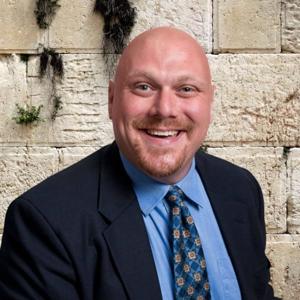


In this episode of Hebrew Voices #175, Thanksgiving to Yehovah for He is Good, Nehemia Gordon discusses whether Thanksgiving is a pagan holiday, looks at the Hebrew words for "turkey" and “thanks”, and what the Tanach teaches us about gratitude in excerpts from the Support Team Study, "Thanksgiving to Yehovah".
I look forward to reading your comments!
PODCAST VERSION:https://audio.nehemiaswall.com/Hebrew-Voices/Hebrew-Voices-175-Thanksgiving-to-Yehovah-for-He-is-good-NehemiasWall.mp3Download Audio
Transcript
You are listening to Hebrew Voices with Nehemia Gordon. Thank you for supporting Nehemia Gordon's Makor Hebrew Foundation. Learn more at NehemiasWall.com.
Today, I’m going to speak about the feast of Thanksgiving, or in Hebrew, Chag Ha’Hodayah. And let me be honest with you, in this episode of the Raw Stream of Torah Consciousness, this is really just an excuse to speak about being thankful.
Now, let me stop before I talk about Thanksgiving and say, okay, there are some people out there who say that Thanksgiving is this Pagan holiday. I just don’t see it. I did the research; I couldn't find it. And it’s one of those things that if you really want to find Paganism, you can find it everywhere, but to me that’s like, “Is that really what it’s about?” And I don’t think it is. I think it’s pretty clear. Now, if you’re a Native American or a First Nations person, you might not really appreciate Thanksgiving, I’ll be honest with you.
As far as I can tell, there’s nothing Pagan in it. I think it’s a great little holiday. I love the whole Snoopy thing, I do. So, now I’ve got to share about the word pun, that’s what I started talking about. Once I gave my caveat of recognizing the negative side of it, let’s go to the positive.
So, in Hebrew, Thanksgiving is called Chag Ha’Hodayah, “the feast of hodayah". And hodayah is the Hebrew word for “thanking.” We’re going to talk a lot about that word, “thanking”. And here’s the really strange thing, which is a coincidence but it’s hard to believe it’s a coincidence, and the strange thing is that the Hebrew word for “turkey” is hodu. Hodu, hodayah, that sounds like a Hebrew word pun like Adam and adamah. And you’re almost tempted to say, “We eat hodu on Thanksgiving to remember the hodayah,” giving thanks to God, but it’s a complete and total coincidence. And I think it's a really important lesson about word puns, that word puns can be a coincidence. And it’s only when you take cumulatively the evidence of hundreds, maybe thousands of them, that you can say, “Okay, we have something we can learn from here.” But if it’s one single word pun, it could be a coincidence.
Now, where does the word hodu come from? Hodu is just the Hebrew pronunciation of “India”. You have the word Hindi, which is the language of India, and their religion is called Hindu, which really just means “Indian”, and in Hebrew it’s Hodu. Hindu, Hodu, Hindi, is the language. So, Hodu is just the Hebrew word for India, and it’s actually mentioned twice in Tanakh, in the Scroll of Esther. It’s specifically in a phrase that Achashverosh, the King of Persia, ruled, “mi’Hodu v’ad Kush,” “from India to Ethiopia,” or literally Kush, which is in Northwestern Ethiopia today, the Kingdom of Kush, or Northern Sudan as well.
So, Hodu appears twice in the Tanakh referring to India, and today it is the national… It’s not the national bird of Israel, but they eat more turkey in Israel than any other country in the world per capita. But there’s no connection between hodu and hodayah, “turkey”, and that’s just how it is.
I want to talk about another word pun if we’re going to do word puns. And that's a true word pun that really appears in the Tanakh, and this is the word pun of the name, Yehudah. Yehudah is what we know in English as Judah, and Yehudah actually has two word puns related to it. One, when Judah is born and his mother decides what name to give him, his mother Leah, and that’s in Genesis 29:35. The other one appears in Genesis 49:8 when his father blesses him just before Jacob dies. And it's very common in the Tanakh, name explanations based on a word pun related to a name. And why am I telling you this? Because the Feast of Hodayah, the feast of Thanksgiving, you could really call this the Feast of Judah.
So, Genesis 29:35 says, “And she conceived again and bore a son and said, ‘This time I will thank Yehovah,’ therefore she called his name Judah.” What’s the connection? In Hebrew she said, “Odeh Yehovah,” “I will thank Yehovah.” Odeh, “I will thank" Yehovah, and Judah was therefore called Yehudah, Odeh Yehovah, Yehudah.
And really it’s, "Yehovah odeh" is what his name means. And really, he should have been called “Yeho-odeh”, but Hebrew doesn’t like Yeho-odeh, these two “O’s” in a row, so it was truncated. And through a process that linguists call, that language experts call dissimilation, when you have two similar things, they become dissimilar, that’s dissimilation. And the dissimilation made Yeho-odeh into Yehudah. Yeho-odeh, Yehudah.
Now, I’ve just got to point out for the Yahweh people that if God’s name was really Yahweh, if it was pronounced that way, there would be no reason to employ dissimilation because you could have called him “Yahwehdeh”. “Yahwehdeh” would have been a perfectly good combination, but he’s called Yehudah.
The second word pun is in Genesis 49:8 where his father says, “Yehudah,” or, “Judah, your brothers will thank you that your hand will be upon the neck of your enemies,” which is a double word pun. Because “they will thank you” is “yoducha”, so, Yehudah, yoducha, also from the word “to thank”. But then there’s another root that’s employed there which is the word, “yad’cha”, which also sounds a little like Yehudah and yoducha, “yad’cha” is “your hand”.
Alright, Psalms 44:9, “Be’elohim hilal’nu chal ha’yom ve’shimcha le’olam nodeh selah,” literally, “We praise God all day long, and to Your name forever we will give thanks,” or “we will confess.” Remember, in Hebrew it really is the same concept. We’re going to throw out those words, remember, the word is “to cast”, “to throw out.” We're going to throw out those words of thanks and those words of confession, “thanking Your name and confessing our sins to Your name.” This is what it means to be thankful in Hebrew, to confess your sins and be thankful for His mercy, for His grace, even when things are bad.
Psalm 54:8, look there and you’ll find there’s this idea of the free will sacrifice and thanking in God’s name. Psalm 57:10, “thanking God’s name among the nations.” Psalm 100, the whole thing is called “Mizmor le’Todah”, “A Psalm of Thanksgiving”, and there’s the word todah, “thanks”, “thanksgiving”, “thanking”.
Psalm 106:47, let me read you the JPS, “Deliver us O LORD,” which of course in Hebrew is “Yehovah,” in capital, L-O-R-D, “Deliver us O Yehovah, our God, and gather us from among the nations to acclaim Your Holy name.” In Hebrew it says, “le’hodot,” that’s the infinitive form of todah, of the verb hod’u, “to give thanks” or “to confess”, “le’hodot le’shem kod’shecha,” “to give thanks to Your holy name,” “le’hishtabech bit’hilatecha,” “to glory in Your praise.”
So, I think that’s really interesting. We’re being gathered from among the nations to acclaim Your holy name, to give thanks to Your holy name. It doesn't say “to gather us from among the nations to be silent about Your name because it's too holy to confess". It says, "no, we’re asking Him to gather us from among the nations, the ingathering of the exiles, so we can confess His name".
But there’s definitely this idea here of giving thanks to Yehovah, to confess to Yehovah among the nations. And it doesn’t say, “Your name is too holy to confess among the nations.” No, it says to give thanks to Him and to confess Him.
I want to end with prayer. I really am thankful to all of those who have stood with me, whether financially or in other ways, to be part of my Support Team and allow me to continue to do what I'm doing. That’s no small thing to me. And really, I don’t want someone to support my ministry because they think, “Okay, we’ve got to pay our religion tax.” I really want them to support my ministry because they want to be part of what I’m doing; they believe in empowering people with information. Like I say, standing with me on the wall.
And again, the image is Nehemia, he’s in the Bible, he’s on the wall, and there’s the trumpeters and there’s the people, and the people are armed with two things; they’re armed with a weapon, and they’re armed with a building implement. And I don’t want to tear down the wall, I want to build the wall.
Some people, their whole ministry is about tearing down; that’s not what I’m about. There may be things we agree with or don’t agree with, but I want to empower you to build your faith and to defend your faith, even when I don’t agree with you on some things, because I’m not about destroying and tearing down, I’m about building. And if you want to be part of that, then I really am grateful for your supporting what I’m doing. That really is no small thing.
I’m going to give thanks to Yehovah. Avinu she’ba’shamayim, Yehovah od’cha ba’amim, Yehovah I will give thanks to You and confess my sins for the nations. Yehovah, our people have sinned, and we ask that You forgive us and have mercy upon us. Even those who aren’t ready to return to You are in these days of pain and suffering, they’re calling upon You the best way they know how. Maybe they’re not speaking Your name, but they’re being cut down in their synagogues as they pray to You in the way that they know how and the way that they’re able to. Please Yehovah, have mercy upon us.
I thank You, Yehovah, for Your city, Jerusalem, and the land You gave my forefathers, Israel, for protecting us in this difficult time from our enemies who want to cut off our heads and sell our women into slavery, literally. I thank You for giving us the strength to stand up to them like a pillar of cloud by day and a pillar of fire by night, with an Iron Dome and the greatest army in the world. We wouldn’t last one minute without You.
I’m thankful for my friends, and my mother, and sisters. I'm thankful, Yehovah, that You have put Your protection around my nephew, who’s in the Israeli army now defending his people, defending Your people, Yehovah. I’m thankful for all my 16 nephews and nieces. I’m thankful for my health, for the knowledge You have blessed me with. I’m thankful for the opportunity to teach Your people the glory of Your name and proclaim Your mighty deeds among the nations, and I thank You for all of these things Yehovah. Od’cha Yehovah, I will give thanks to You, todah Yehovah. Amen.
You have been listening to Hebrew Voices with Nehemia Gordon. Thank you for supporting Nehemia Gordon’s Makor Hebrew Foundation. Learn more at NehemiasWall.com.
We hope the above transcript has proven to be a helpful resource in your study. While much effort has been taken to provide you with this transcript, it should be noted that the text has not been reviewed by the speakers and its accuracy cannot be guaranteed. If you would like to support our efforts to transcribe the teachings on NehemiasWall.com, please visit our support page. All donations are tax-deductible (501c3) and help us empower people around the world with the Hebrew sources of their faith!
Subscribe to "Nehemia Gordon" on your favorite podcast app!
Apple Podcasts |
Amazon Music
| TuneIn
Pocket Casts | Podcast Addict | CastBox | iHeartRadio | Podchaser
| Pandora
VERSES MENTIONED
Genesis 29:35
Genesis 49:8
Psalms 44:9
Psalm 54:8
Psalm 57:10
Psalm 100
Psalm 106:47
RELATED EPISODES
Support Team Study – Thanksgiving to Yehovah
The post Hebrew Voices #175 – Thanksgiving to Yehovah for He is Good appeared first on Nehemia's Wall.
In this episode of Hebrew Voices #171 - 3 Jews & An Arab Discuss The War in Israel, Nehemia joins a panel of three Jews, an Evangelical and a Palestinian to discuss the Hamas genocide and the war with Hamas.
I look forward to reading your comments!
PODCAST VERSION:https://audio.nehemiaswall.com/Hebrew-Voices/Hebrew-Voices-171-3-Jews-and-an-Arab-Discuss-the-War-in-Israel-NehemiasWall.mp3Download Audio
Transcript
You are listening to Hebrew Voices with Nehemia Gordon. Thank you for supporting Nehemia Gordon's Makor Hebrew Foundation. Learn more at NehemiasWall.com.
Steven: Welcome to Mormon Book Reviews: Where an Evangelical Encounters the Restoration. I’m your host, Steven Pynakker, and as many of you know, on the morning of October 7th all hell broke loose in the Middle East, especially in Israel. And this barbaric, nihilistic death cult, Hamas, did the unthinkable and the unspeakable. But it’s all there, and we know it’s happened. Now we’re on the verge of the Israeli's response to this brutal attack.
I was just talking to the panel beforehand, before we got started. I was telling them about Mohammed, who’s my friend in the Gaza Strip, and he’s in a very difficult situation. He’s a Muslim philosopher, writer and historian, and is not a fan of Hamas. Now, he does have criticisms of Israel and some of our engagements, which I would understand. If I was a resident of Gaza I probably would too. But Mohammed is one of those people of faith who wants to do things in a peaceful way. So, I just want to ask our audience, those of you who are believers, I’d like you to keep Mohammed in your prayers as well as all the people in the Middle East.
So, many of you probably recognize many of these gentlemen that have already come on. Of course, we know Jason Olson with this book, The Burning Book: A Jewish-Mormon Memoir. It’s got a lot of views, many new subscribers to the channel since my interview with Jason. Jason, welcome to the program.
Jason: Thanks so much Steve, I’m really glad to be here.
Steven: And I want to thank you, because you actually then introduced me to Jabra. Jabra, welcome back to the program today, sir.
Jabra: Thank you, Steve. Glad to be back.
Steven: Now, Jabra is an Arab Palestinian Christian who is also now a member of the Church of Jesus Christ of Latter-Day Saints.
Jason was raised Jewish, and then at the age of 18 he got baptized into the Church of Jesus Christ of Latter-Day Saints as well.
And then we’ve got my really good friend. Honestly, I think God put us together for such a time like this, I believe this for all the panelists here. And a really remarkable story about how Nehemia and I met. It was just fascinating. He had on Dan Vogel, one of the top foremost Mormon scholars there is, and my neighbor sent me a link to the interview, because my neighbor is a Messianic Christian and watches Nehemia, and he showed me. And within an hour or two of me seeing this, I was in touch with Nehemia, and later he became a guest on my program. And later I became a guest on his program, on the morning of October 7th, live, as Nehemia had just been in his bunker three times already earlier that day and he was right in the middle of all of it, and we did a real time thing from Jerusalem on his program. And since then, Dr. Nehemia has been doing almost daily updates about what's going on in Israel. Of course, many of you may have seen his interview on A Rood Awakening, where he talks about this miraculous escape from Israel. Dr. Nehemia Gordon, welcome to the program sir.
Nehemia: Thanks Steven, thanks for having me.
Steven: And of course, then I’ve got my good friend AJ. Now, AJ is a really important person to me because I didn’t think what I was doing was what would be called “interfaith” for a very, very long time. I was just this Evangelical fanboi of Mormonism, and then I realized that it’s much bigger than that. And one of the people that made it real to me was when AJ Levy reached out to me because of my appearance on Mormon Stories, and he and I have become friends.
And AJ, you were raised ultra-Orthodox, and you’re a very good friend of Israel, and you’re doing a work… One of the reasons I wanted to have you on the program today was to talk about the work that you’ve done. Of course, I’ve already had you on as well, so many of you probably already recognize AJ. AJ, I want to welcome you, my friend. We’ve been friends longer than anybody here, for over a year. Welcome back to the show, my friend.
AJ: Thank you for having me, it’s a pleasure to be on and it's a pleasure speaking with everybody here as well, who I’ve seen on your show many times, so, it’s great to be here!
Steven: So, actually, I just want to get started out with you real quick, AJ, because you are actually doing a lot of work on the ground to help the people of Israel. Maybe talk a little bit about the organization that you’re working with, that you’re affiliated with. And then, also how people can help your cause. And also, from my understanding you guys do have a Utah connection, maybe talk about that as well.
AJ: Sure, I’ll try to dive into it pretty quickly. The morning of October 9th, which was after the Jewish holidays were over, a bunch of my friends reached out to me. “We’re trying to get to friends in Israel that were called up to serve,” friends who were driving out to wherever it was to deliver aid to people, and they’re like, “We need ‘X’ item,” and all different sort of stuff. So, myself and many people who I work with that care about Israel and were affected by what happened on the 7th, banded together. We started raising funds and collecting equipment to send out to people that were called up for reserve duty, that were under-armed, well, under-defended really, so body armor and those sorts of items, raincoats. As well as for civilian first responders and people who had been displaced. There’s over 140,000 Israelis who have been displaced from their homes currently in Israel.
So, we opened up a charity called The Support of Israel, which we’ve successfully sent a lot of equipment to Israel. There’s another initiative which should be on national news tomorrow. It’s been on the local news in Virginia, and this ties into the Utah part, where we’re advocating individual states to step up and help support Israel and the people that are living there.
Tomorrow there should be a press conference with the governor of Virginia or the attorney general, I’m not sure maybe both together, where the Commonwealth of Virginia donated. I don’t want to say the number, I don’t want to steal the thunder, but they collected a significant amount of surplus equipment from the police departments and sheriff departments across the entire state of Virginia, been manifested and put together, with the Attorney General's Office and also with local volunteers, and it will be getting shipped out to civilian first responders across Israel.
So, as we saw on October 7th, these places where people live, some of the areas where their first responders were properly equipped were actually able to fend off, or at least mitigate the attacks and the massacres. Versus some other places where there wasn’t the proper training, equipment, and so forth. So, that’s been a priority for me for the past week-and-a-half, two weeks, is really this initiative.
The Utah parties are looking to advocate in other states. Some of the people that we work with have some connections in the state of Utah. We haven’t officially approached them yet, but we are looking for partners, potentially, to help us lobby the right departments in the state of Utah, possibly to help step up and donate equipment. Hopefully that sums everything up.
Steven: Okay, AJ. Now just real quick, what’s the website?
AJ: The website is called The Support of Israel. I actually have it open; I’ll send you the link...
Steven: So, this is really important, because I was telling AJ there’s a lot of people in Utah, of course, that watch my program, and we want to make this accessible for people in Utah. We also want to know any of my connections in the state of Utah, maybe you guys should consider doing something similar to what the state of Virginia is doing. So, this is thesupportofisrael.org and there’s a donate button there.
AJ: And you’ll get live updates every week of what’s been donated and what’s going on. And it’s for everything; medical equipment, food and clothing, protective gear. You can also note, for example, in your donation, what you want to donate it for. So, people that want to just donate for medical equipment, for food, for defense related products, you can state what you want to donate to over there. I appreciate everybody's support with that as well, so thank you.
Steven: Okay, great. Thank you, thanks for sharing that AJ. And of course, Nehemia, you’ve got some stuff as well, and we’re going to get to that in a minute. But before we do that, I know Jason, you’re only available for the first hour, and if this goes over an hour, I want to get your thoughts in here.
Now, last week I released our video with Jabra, and Jason, you were on my very first episode with Nehemia the day after everything happened. Jason, I just want to ask you, as somebody who’s really one of the leading experts on Zionism in the country, in the world, you’ve done some really good work in this area. You were born Jewish, you are Jewish, but you are a convert to the Church of Jesus Christ of Latter-Day Saints, and Jobra has a very interesting story as well to tell about that, which we’ll have him back on for. Jason, I just want to know on a personal level, how has this affected you, all these events that have happened?
Jason: Well, thank you Steve. Personally, I see this as not just a war on the Jewish state, I see this as a war on the Jewish people. So, it’s affecting me, it’s affecting my family, affecting my brother, my sister, my mom, my dad. My dad is a supporter of the Jewish people, but he’s not Jewish himself. But my cousins… we have cousins in Israel, and my friends that I grew up with reaching out, banding together, we all feel that there’s this genocidal thirst for Jewish blood. That the intent to destroy, exterminate the Jewish people is here, it’s palpable. It’s especially concerning for me on college campuses all across the United States, and around the world, but especially the United States. The United States for my family, our ancestors just a few generations back were immigrants from Ukraine, Poland, and Russia, Ashkenazi Jews fleeing pogroms, and now we’re feeling the pogroms are in the United States.
At Cornell University, Jewish students are not allowed to go to their Jewish Life Center on campus because of all the credible death threats. The Cooper Union, we’ve seen the videos where pro-Hamas, pro-terror student organizations are banging on the doors of the Jewish Center. Myself, my family members, we’ve all been in those spaces, and we just feel like the pogroms are coming after us even out here in the Diaspora.
Now, the Jewish people have a lot more strength now with the Jewish state that sees itself as responsible for Jews worldwide. And of course, I’m not speaking on behalf of the United States or the Church of Jesus Christ of Latter-Day Saints in saying this, but that’s one source of solace, that there is a state apparatus out there that intends to defend Jewish people all over the world. So, even while Israel is under attack, rocket attacks are still going, that’s intolerable.
I served in South Korea for two years, and if you study North Korea and South Korea, you just have to dig just a little bit and see what would happen if North Korea were to divert its rockets from the sea, which is where all North Korean rockets go, into the sea. What if they diverted them onto civilian population centers? Just that is intolerable for a modern nation-state.
And a lot of people don’t realize that. They just say, “Oh, rockets. No big deal, there’s the Iron Dome.” But you can't carry out your economy, your daily life, and your time with your family when you’re constantly under rocket sirens. And of course, the incessant terror attacks. So personally, we want Israel to win in the sense of having a very strong deterrence so that none of this happens again to the citizens of all types that live there. But there’s a greater war on the Jewish people that is happening globally, and it’s out of control. And we have freedom of speech and all those things, and I think that’s great, but these threats and acts of violence against Jewish people in the United States and around the world are intolerable.
Steven: Yeah. So, that is true, that is happening, and we’re seeing the rise of ultra-nationalist movements in Europe, that many of them are steeped in anti-Semitic views as well. We also see in areas where there’s large Muslim populations in Europe, a lot of anti-Semitic things happening as well. So yeah, this is a worldwide thing. And of course, we’ve seen it here in the United States, as you talked about there, Jason.
Nehemia, I want to bring you into this conversation.
Nehemia: Yeah.
Steven: I want to say welcome back to America. I know it was quite a harrowing story of you getting out of Jerusalem. I just want to ask you, how are you doing, sir?
Nehemia: You know, it was a difficult experience. I never imagined that I would be a refugee. That’s something you learn about in history. I never imagined I would actually experience it, where I was fleeing for my life and going through situations where I could be kidnapped. I’m still getting over it, it’s something I’m still processing. And while that’s still happening, I’m seeing the things around me, the mob coming to attack the plane of what were Israelis in Dagestan, in Russia.
I study Jewish history. That’s what I do, and I studied about the pogroms. One of the things that sparked the modern major exodus from Europe before the Holocaust was the Kishinev Massacre in 1904, and it actually triggered a series of pogroms. Golda Meir… her father was cowering and hiding while the people in Kishinev were massacring the Jews. She was hiding in an attic somewhere with her family, and that shaped her life. And it really shaped a lot of the major emigration from Eastern Europe to the United States of Jews, was in response to the Kishinev Massacre.
And on the morning of October 7th, we were back in Kishinev. And at the time it happened, we thought, “Where is the army? Where is this powerful army that we have? How come they’re not responding to this?” But as more and more information is coming out, we were realizing, “Wow, this wasn’t Kishinev, this could have been Auschwitz.” And that was the intention. The reason it was a massacre of 1,400 people, which is horrific, I still can’t believe it, but not 100,000 is because the Israeli army and other Israeli forces stopped them.
There was this woman in Nir Am, which is a little town on the border there, she was part of what they call the readiness squad. Meaning, it’s ten civilians and this woman. It’s her job. She organizes this squad of ten civilians, they’re supposed to come out with M-16’s if there is ever a lone terrorist that infiltrates. Well, they found an onslaught of 40 terrorists. Actually, more than 40; they killed 40. People were still killed in Nir Am, but it would have been everyone in Nir Am if they hadn’t responded.
So, there are these acts of incredible heroism. At least when I watch the Israeli media, I’m hearing about. I don’t know if that information is coming over to America. There were intense battles that took place. There was an attempt to capture Ashkelon that came by air and by sea; that’s a city of 127,000 people, and that attack was repelled. We’re talking about… and you’re in the navy, Jason, they were throwing depth charges because they were coming from under the water, these terrorist divers, to land in Ashkelon just to massacre the population there.
So, this was horrible. It’s the worst thing in my lifetime, certainly to the Jewish people. It could have been much worse, is what we’re realizing. It’s one of those things… I don’t know if it’s ever happened to you, where you’re driving, and you realize you were almost just killed by a truck. And in this case people were killed, but it could have been much, much worse, and I’m just thankful to the Creator of the universe that… When the Nazis invaded the Soviet Union, they had what’s called the Einsatzgruppen, the special units of the SS that gathered up the Jews in each area and lined them up and shot them… and did other horrific things as well just to entertain themselves. And that’s what we were invaded by, Einsatzgruppen. But we were able to fight them back. And so, it wasn’t 100,000. I don’t know what the final number will be. It won’t be 1,400, it's going to be higher than that. That's a miracle.
Steven: So Nehemia, it’s one of the things that we talked about, and we might as well just bring it up now because you asked me to bring this subject up. Jabra and Jason, one of the things that Nehemia brought up to me was the question I had asked about how in the United States have what’s called the Second Amendment, which is the right to keep and bear arms for self-defense. And we didn’t really explore that question, but to me, as an American, where guns are very common… let's just put it this way. People have guns, my neighbors have guns, it’s very common especially in red states. That’s the world I live in. And so, it’s almost incomprehensible that if these people who live along the Gaza border, if everybody had at least a weapon, a gun of some kind, it could have also helped to defend themselves.
Nehemia, you asked me to bring this up, so I have a feeling you have a few words you want to say about that. And again, I want to hear all the different perspectives on this issue as well because it's obviously a very sensitive issue here as well in America.
But that was always the question. People, too, even said the Jews were unarmed in Europe, and that’s what ultimately led to Auschwitz. And now you have the State of Israel and it's their role is to protect the people. It just seems ironic that they wouldn’t empower the individuals like they do in the United States to defend themselves. Maybe talk a little bit about that, Nehemia.
Nehemia: Well, there’s a backstory to the Jews being armed in Europe. The Weimar Republic had a gun registry law, and so every gun had to be registered. And when Hitler took over, he seized all the guns. He just went through the list and took the guns from the Jews. So, when they then came to murder the Jews and arrest them and send them to concentration camps, they were powerless.
So, they should have been armed. Every family on that border should have had an AR-15 or an M-16. But the Israeli government… you get this impression that every Israeli walks around with a gun; that’s not true. There was a readiness squad of ten people plus this 20-something year old woman who had gotten out of the army and that was her job, to make sure the security on the kibbutz was looked after. But they were prepared for, like I said, a lone gunman, or two or three guys who might infiltrate, not dozens that were coming with RPG’s. So, they were under-armed.
Look, I came to this conclusion… I grew up in Chicago and I never held a firearm until I was in my 20’s, when I did a short service in the Israeli army. I’d never even held a firearm in my life. And then I saw the Yazidi genocide, and I came to the conclusion that every household owner, as a matter of responsibility to protect those under your care, needs to have something like an AR-15, or, if legal, more powerful. And these things will be investigated after the war. I don’t know if it’s appropriate for me to second guess them now. But I can tell you that since the war began, they’ve handed out 16,000 M-16’s. I know those M-16’s, some of them are from the Vietnam War and they say, “Property of the US Government.” And they were sold to Israel basically to dump them because they were worthless to the US. And they were refurbished and everything, and a lot has been invested in them.
But every family there should have been allowed to have an M-16 or an AR-15, or something, because when they came to murder them… The bad guys have guns. That’s one of the things I learnt growing up in Chicago. The bad guys always have guns. And it’s your responsibility as the head of the household to defend your family.
Steven: An interesting thought there. And of course, we also know the vivid images of when the war first broke out in Ukraine. One of the first things you saw images of was citizens having guns. And I think we lost Jabra there, but I’m sure he'll hop back on there as well… and they were there to defend themselves. So, this is not unusual for wartime situations for the population to be armed.
Okay, there’s Jabra, you’re back. We lost you for a second there. Maybe, Jabra, you haven’t chimed in yet. I’d like to maybe get your perspective because you’re unique. You are a Palestinian Arab Christian who’s a member of the Church of Jesus Christ of Latter-Day Saints, and I thought that you brought a lot to the table in our last conversation. Maybe just comment a little bit about what we’ve talked about so far, and maybe give your perspective as somebody who has this really unique story to tell.
Jabra: So, yeah, I have a lot of thoughts about everything that Nehemia, and Jason, and AJ said. I missed the last part of what you were talking about, Nehemia, but let me just talk about it from the bottom and then go up, if I may say so.
So, here are my thoughts about being armed. It’s your gut instinct to say, “Yes, if everyone was armed, this wouldn’t have happened, or maybe it would have been minimized.” Nehemia brought up the story about the readiness squads, and yes, absolutely that works. But as citizens, especially in the United States or anywhere, actually, even in Syria, the way I look at it is, even if you have all the Kalashnikovs, M-16’s, all the weapons, all the bullets, you will not be able to fight effectively against a superior force that has RPG’s, tanks, airplanes, helicopters, night vision goggles, and all of that. So, you might be able to kill a bit of the enemy, but eventually they will come in and they will rain death on you.
And we see in Syria, even, for example, during the Arab Spring, you rebel against a regime like the Assad regime, which we’ve always known is a barbaric, bloodthirsty system there. The people revolted, the United States is aiding them, the European Union is aiding them, they are giving them weapons and training. But Assad, just because he's acting on his territory with a well-equipped army, is able to quash resistance. And in the end as a population, when you start fighting a war like that, even if you win… it’s like an American lawsuit; whether you’re right or wrong, once the lawsuit is filed you lose because you have to pay the extreme legal cost. You have to pay lawyers $300 to $500 an hour to go through the lawsuit.
And it’s the same thing. Once you make a decision as a citizen to hold weapons against… Let’s say your government turns corrupt, or dictatorial, or whatever, then you’ve lost, because in the end your city, your town, your home, your buildings, your neighborhood, all of that will be destroyed.
Now, this might not apply in the Israeli case, because you’re surrounded by people who are not friendly. I’ve heard AJ, I’ve heard Nehemia, I’ve spoken with Jason, I’ve read his book, and as I said in the earlier interview, the thing that Arabs have never grasped, and actually contributed to, and I came to this realization a few years ago, is the depth, width, and breadth of the Jewish angst. We’re talking about a population of the world that has a collective trauma that goes back millennia because of the pogroms.
It was interesting to hear Nehemia talk about the pogroms in Russia. That is almost like living history. It’s a living memory for the Jewish people. And the Arab discourse… and I say Arab, not just Muslim discourse because it’s an even wider thing, the Arab discourse is not helpful. Arabs contribute to this Jewish trauma, and it basically leaves nowhere for trust. And that’s why I’ve come to the conclusion that the only way to break through that cycle is for someone to decide to model a different way, a different path, a different conversation, talking to the other side.
I’ve already received some flak for the interview that we’ve done from dear friends who are shocked that I would meet with Jason and talk the way I did. But I stand by what I said. It’s the truth, and I think Arabs need to face the truth. We need to be realistic with ourselves.
I feel like when it comes to Hamas, for example, for the last decade and a half, many people have given them a pass because everyone, including me, at the time, felt this is legitimate resistance. But there was always this fear in me that this streak of violence would eventually turn against the Palestinian people themselves.
Let me give you an example, something I wrote about this week. In Ancient Canaan, the Canaanites, the Philistines, the people in Gaza and that area, worshiped the god Molech. And I don’t know if you know Nehemia, what Molech was famous for.
Nehemia: I sure do. My ancestors also worshipped Molech. We learned it from the Ammonites.
Jabra: I know! And I mentioned that, but here’s what Molech’s specialty was. To worship Molech you had to take your firstborn and sacrifice that first born. And when it wasn’t the firstborn, you had to let your children walk on fire for Molech. And I feel like on the altar of whatever Hamas stands for now, because to be honest I’ve lost track of what Hamas stands for anymore, they are sacrificing the Palestinian children. And not just the firstborn, they’re sacrificing every Palestinian child so that they can accomplish whatever purpose they have.
Now, another thought I had this week was that Arab leaders in general, and this is a generalization that I know to be true with every fiber of my being because I lived through it. Arab leaders treat their countries, their populations, as farms, and feudal farms at that. And everyone works on that farm, and everyone is a slave on that farm, and to please the feudal lord you have to do everything in your power, even sacrificing yourself, to please the feudal lord. Hamas has been revealed by these recent attacks, because not only the horror and the massacres, and to be honest, the genocide and the crimes against humanity that they committed in those attacks, on top of that streak of violence that I was always worried about, it was revealed that they have invested the resources that had been given to them to build tunnels, weapons of war, rockets, and all of that stuff.
I fail to see the endgame and the end purpose of that because, again, you’re fighting against a superior force, everyone knows it. Israelis and Arabs might not feel like this is true right now based on what happened on October 7th. They might feel like we had this victory. But again, I wrote this in a post to my friends and I said, “You’ve tried everything. You’ve tried regular war, you’ve tried kidnappings, you’ve tried storming embassies, you’ve tried taking hostages, you’ve tried bombings, you’ve tried bus bombings, and every time, every single strategy that was followed ended up with more defeat and more bloodshed. And what’s being lost are the lives of the innocent civilians and Palestinian people, and as Palestinians we are losing a generation of children to trauma." I’ve seen and I try to avoid those scenes as much as possible, but it gets posted and you see this little child in a hospital in Gaza shaking, eyes bulging, and you see children being carried on stretchers, thanking the ambulance people, and it made me cry. It made me cry. Those children are growing up and there’s no way they are going to recover from this trauma. I don’t think there is. Only grace can save them from it somehow, but I don’t see how they can recover from it.
But like that man who thinks that by arming himself he can stand against a tyrannical US government, you can’t win. The Israelis have world support. Israel is a state, it’s a regular state that’s recognized, it has alliances, it has the weapons, it has the manpower, and it will defeat any armed struggle every single time. The only way that we can have a peaceful coexistence with our Jewish neighbors is by thinking radically out of the box and honestly, practicing radical humility.
And many of my friends have written to me and told me, “This is unbelievable. You’re meeting with Zionists, with Jews, with Israelis, and you’re sympathizing with them. You’re acknowledging their history,” and all of that stuff. Which is anathema to 99% of Arabs and Palestinians. But I’ve decided that I want to listen to the other side, and listen with humility, and remove all of the prejudices that I might have had in the past and just listen with pure intent, with real intent, and model that. Because that’s the only way. No weapon can achieve victory for the Palestinian people. I wouldn’t even say victory, but they want, which is the right to self-determination, living in their own independent state.
And again, as I said in the previous interview, there is even a problem when we talk about that, and the problem is that the Palestinian Authority or Hamas have not been good governments. They have not been good, effective leaderships that give the Israelis any ray of hope that they can achieve something, or they can be stable neighbors. Because listening to what Nehemia said, listening to what Jason said, listening to AJ, what the Jewish people crave, and want, and need, is to feel safe and that they are not besieged by people who want to drive them into the sea. And the Arab narrative, unfortunately, whether it’s in the public street, or governmental, doesn’t inspire any confidence.
On the one hand you have these governments who use that narrative whenever it suits them to basically divert the populace attention from the fact they are using them as feudal labor, they are on this farm. And then you have the populace, who are really emotional, trapped in the past, trapped in this historical thinking, trapped in their indoctrination, trapped in the lies that we've been taught as children, about how this conflict started, its roots, and how it happened.
One of the biggest revelations when I was doing my PhD work was studying about the Mizrahi communities who lived in Iraq, in Egypt, in Lebanon, in Syria, in Libya, in Algeria, in Tunisia, you name it, Yemen, and the story of the pogroms. In Iraq, they call it the Farhuds that were committed against those Mizrahi communities who, you read the literature, you read people like Eli Amir, and the man, before 1948, before the Farhud, he thought of himself as nothing but an Iraqi who is a Jew by religion. To him, Iraq was his country. He was a Jew religiously, but he was as indigenous as any Arab in Iraq. And you learn about that, and then you realize, “Oh, this is a very important piece of information.”
The biggest hurdle to peace negotiations has always been the Palestinian refugees in all of these Arab countries. And then you hear about the million Jews who had been uprooted from Arab countries and driven to Israel or to some other places in the world, and you say, "Well, on moral grounds, we can’t ask for Palestinian refugees to be returned to Israel, to take back their place, because first, those people have died, and secondly, their children, and their children’s children are the responsibility of the Lebanese, the Jordanians, the Saudis, the Emirates, the Egyptian governments that absorbed them." Because that’s what's normal, that’s what you do.
The fact that they’ve kept them in refugee status for so long, and they treat them like nothing… luckily, we had Jordanian citizenship when we lived in Kuwait, so I didn’t experience even 1% of all the inconveniences and the hassles that the people with Palestinian travel documents experience. But those people were my friends, my neighbors, and I’ve seen what happened to them. They could be kicked out of Kuwait and their businesses taken from them at a moment's notice. And that is a moral failure on the part of the Arab leaderships.
I was born in Kuwait, yet I was never eligible for Kuwaiti citizenship because the Kuwaitis wouldn’t do that. And the question is, if you love the Palestinians so much, and if you care about them, why wouldn’t you give them citizenship and end their refugee status? At least they could travel, at least they could have a normal life and have equal rights with work, et cetera, et cetera. But they would not do that because the suffering of the Palestinian refugee populations in their midst suits them. They can use them as cheap labor, they can kick them out whenever they want, and it’s easier for them to look like the heroes and the big nationalist leaders when they want to pump themselves up and talk about Israel.
Because as Nehemia knows, and as AJ knows, and Jason, maybe a little bit, Arab leaders love to do that! If you want to pump yourselves up, you start speaking against Israel and you’re the hotshot, and people are diverted from you. King Abdullah of Jordan is doing that right now. His wife gave an interview on CNN, and there was not one word of sympathy to the Jewish survivors and the Israeli victims. Instead, she narcissistically focused on the people of Gaza, who we should sympathize with. But again, as I keep telling my Palestinian friends, nobody is going to listen to one word you say unless you acknowledge what happened on October 7th.
Steven: Jason, you wanted to say something. Why don’t you chime in?
Jason: Yeah. Thank you so much, Jabra. I just wanted to interject. I just had this discussion with a Latter-Day Saint scholar friend. Israel is a Jewish and democratic state. Everything surrounds these two principles. And I appreciate what Jabra is saying, because a lot of times folks want to make this about race, or they want to make it only about ethnicity. They want to compare it to the situation of black people, African Americans in the United States. The issue is, Israel absorbs all kinds of Jewish immigrants. If you go to Israel… and that’s why what Jabra is saying about what he studied in Mizrahi history is so crucial.
But it goes even further than that. Israel has black Jews, brown Jews, white Jews, all kinds of Jews from Africa that racially are black. But Israel is taking in… it is a Jewish State. It is Jewish and democratic, but in the Jewish category, it is a religious state, and it is bringing in immigrants that practice Judaism, that their religious identities are Jewish. And Israel is bringing them in from all over the world, from every imaginable racial or ethnic demographic, including Africa, India, China, it doesn’t matter. If that’s your religion, Israel is willing to bring you in.
And so, there is this idea that there’s only one Jewish state. Even Netanyahu, I actually agree with how he phrased it, “The one and only Jewish state.” It’s very tiny, it’s very small, it’s very beleaguered, but it’s one place. And I think members of the Church of Jesus Christ of Latter-Day Saints have to sympathize with this because the early history of the church was all about religious immigration. There was the Perpetual Emigration Fund, PEF, now it’s Education, but in those early days of Joseph Smith, Brigham Young, they were bringing in Latter-Day Saints, Mormons, of any racial background in those days. If they adhered to this particular religion, the church would help them emigrate to Missouri, or Nauvoo, Illinois, or Utah, and there was a way to absorb these immigrants and then find a way to protect them. That required a lot of negotiation with the federal government and state governments, and in the case of Missouri, it failed. It also failed in Nauvoo.
But if anybody can sympathize, this is not about colonialism, it’s not about imperialism, it’s actually about Judaism, and about bringing in all kinds of Jews to one land that Judaism considers sacred. So, I’m forced to reframe this. And not only that, Judaism is indigenous to the Land of Israel. So are Islam and Christianity, and that’s why these things are very complicated.
But I really view Hamas’s intentions as small, but Hamas has great powers backing it. They have Iran, plus Hezbollah, plus the Houthis, plus Syria, and Hamas, and so many other sympathizers, even the Taliban. So, Hamas is a beachhead for an Islamist empire against an indigenous population that includes Jews and Arabs. So, I’m just reframing it. It might sound totally different the standard that people are hearing, but we have to understand… And part of this conflict is that democratic part; it’s a Jewish and democratic state. Israel’s trying tooth and nail to remain democratic, and that’s also why, what Jabra is hinting at, Israel cannot absorb Palestinian refugees, because if Israel absorbs the Palestinian refugees and then it has a Palestinian majority, then there is no more Jewish state. So, it’s this battle and this balance of trying to maintain a Jewish and democratic state. At the end of the day… Yeah?
Jabra: I’m sorry Jason.
Jason: Yeah.
Jabra: So, here is my main thesis, and this is something I believe in deeply. Nations survive and fall by one idea, which the Founding Fathers of the United States enshrined, and I think it's the most important idea, which is equality before the law. I'm not someone who thinks of democracy as, you go, you elect, because we know people don't care about elections. But people care about being equal before the law and having the freedom to worship according to their conscience and believe according to their conscience, and this is enshrined in the United States.
And the failure, I think, in all Arab countries, no exceptions, have been failures in reaching this conclusion that there is equality, that they need to give their people equality before the law and freedom of conscience. And this is a part of the reason why we struggle, and I think the best way to end this whole conflict is to enshrine that idea.
When I was at BYU, I wrote this paper many years ago when Rabin and Arafat shook hands. I wrote this paper and I expressed great enthusiasm and hope. And I was very excited about it, and I think every Palestinian was excited about that. But I think the main failure of those agreements was that Arafat was not told by either Rabin, or by Clinton, or whoever, that that is the idea, that's what we need the Palestinian society to look like. This is the first step towards establishing trust with Israel.
And I think one of the biggest failures on the Israeli side has been… not that it's Israel's responsibility, but I think there has been this short-term thinking that we need someone here, we need Arafat, we need someone to take control of the West Bank and Gaza…
Arafat was corrupt, the whole PLO was corrupt, and them being in there without being told that explicitly was a problem from the start. If that expectation was set, things might have ended up different.
Now with Israel, what is really interesting, just going back to what you were talking about, I think the reason Israel has been really successful at integrating all of these Jewish people from all over the world is because there’s that idea enshrined in Israeli law. Now, I know it has many shortcomings, and Palestinian activists would bring up all kinds of opinions about it, but on the whole, when you look at it, Israel has this system where everyone is equal before the law, and you have this freedom of conscience to worship, say, act, do, however you want.
So, on one hand, I have my very good friends in Kfar Chabad. I study the Torah with them, and they're very ultra-Orthodox. They love the Torah, they’re very conservative. But then in Tel Aviv, just a few miles away from them, you have the Pride parades every year. And this is wonderful.
Now imagine, you can't have that in any Arab country surrounding Israel because most of those people in the parade would be killed. And I think that's what Israel has to bring to the table. Now, everyone now is talking about what's going to happen in Gaza after this whole operation is done. I think the best way to achieve peace is by starting a dialogue around these ideas that Arab societies, Palestinian society, needs to have this idea. And I don't know how to do it. We need people like the Founding Fathers of the United States, people with that kind of vision to do it. Nobody else can do it for the Palestinians but themselves. But the seed of this idea has to be planted, that this is the way forward.
And we need to stop talking in terms that raise this existential angst with our Jewish Israeli neighbors. We need to stop talking about the past. We need to be informed by the past, but we need to have, like I said before, a veil of ignorance over it and start from a new, original position. We need to focus on the future. We need to focus on the children. We need to have peace. We need to have a society that's free, that has freedom of conscience and equality before the law. Israel already has that. The challenge is in the Arab mind because I'm afraid that, because of cultural, religious, or for other reasons, we Arabs can't think in these terms yet.
Steven: Jabra, I want to interject here, too, that one of the great tragedies of the Western education system is that we have the capabilities of educating Palestinians Western values, democratic values and everything like that. Unfortunately, many of our universities have been corrupted by these very same horrible ideas that have infected the Middle East. They have also infected many of the campuses in our country. So, this great opportunity to help westernize the Palestinians, they would literally be taught the same things that are being taught by Hamas in some of these classrooms.
Jabra: Here is my take on academics in the United States. And this is not a cliche, this is a fact. Most academics live in ivory towers, are very detached from reality on the ground. And my wife and I… she's going through her PhD. I did mine, and we talked about how hard academic papers are, and how it’s like they live on another planet. But I think they have something to bring to the table, and I think universities need to be places where people can freely talk, but without prejudice. People need to freely talk in a civilized manner about issues and do this radical sharing, facing of ideas. At least you know what everyone's thinking, and that's where you start.
What's happening in academics right now, unfortunately, driven by the scenes that we're seeing on the street, angry students and all of that, there is a push to limit academic freedom on campuses. And what that does, when we limit academic freedom… And I'll say it openly here; for the last, I’d say, 10 years there has been this push on American campuses. It's driven by a lot of American Jewish organizations, to censor Palestinian professors or any professors who express opinions that are pro-Palestinian. And many people have lost their jobs, contracts have been rescinded.
Just last night, a friend of mine who's an academic told me that she was told to stop and not say anything. And that is not productive, because we need a safe space to express our opinions respectfully, without calls to violence, without supporting violence, with empathy. For example, for Palestinian professors, their allies on American campuses right now, the idea that they need to understand is that you cannot talk about any of this without expressing explicit sympathy towards what happened to the Israelis on October 7th. That was a horrendous, genocidal, barbaric act that does not belong in the second decade of the 21st century. That's the starting point.
Now, you want to argue about apartheid, BDS, all of that stuff? Fine, let's put that on the table and talk about it. But also, when you talk about that, you need to listen to the Israeli allies, and Israeli professors, and Jewish professors, and have them talk to you about their angst, what angst this dialogue brings in them. When you say things like, “Palestine from the river to the sea,” you're basically saying, “I want to throw the Jewish people into the sea.” I'm sorry, it's never going to happen. Firstly, that's incitement to violence, that's genocide, that's ethnic cleansing. And you can't say these things, that shouldn't be a part of your vocabulary.
But you need to listen to the Jewish side, and why this is bad, why this brings up the pogroms, the Holocaust, and all of that stuff. You can't publish… and I sent this to Jason last week. I sent it to you over the weekend. I'm in this pro-Palestinian Arab group. I've watched them for years. I never said a word and I will never say a word, I just watch. And they post this stupid tweet, and in it they say, “It wasn't 1,400 people, it was more like 100. Haaretz revealed the numbers,” and then they “quote” Haaretz. And I'm like, “First of all I've read Haaretz. I have a subscription. I've read it for years and I know for sure this hasn't happened.” But they're spreading this fake information and people are lapping it up. And this group I'm on, it's smart Palestinian academics.
So, we need to have open spaces where we can talk and express our feelings. We need to talk about why this conflict is happening. But we also need to be careful with our speech so that we don't appear to be sympathizing with acts of violence and acts of genocide or supporting further acts of genocide and violence.
And to be honest, there is no way for Arabs to go forward with this without understanding Jewish history, the Jewish point of view, the Israeli point of view, without talking to people like Nehemia and AJ. There is no way forward other than that.
Steven: Yeah, and of course, Jabra, you got flak for having these very conversations...
Jabra: Yes.
Steven: …from some of your peers. But Jabra, real quick. Jason is going to have to hop off here in a minute.
Jabra: Oh, yeah, sorry Jason!
Steven: And I want to get Nehemia and AJ into this conversation as well. Jason, you’ve only got like a minute or two here. Are there just any final words you want to say before you leave the panel discussion?
Jason: No, I'm just so grateful that Jabra can just acknowledge the humanity of the Jewish people. And I think that right now all the Jewish people, almost all the Jewish people in the whole world, are hardening because they're being hardened against. But the way through this is, we Jewish people also need to see the humanity of the Palestinian people. And that's the beautiful thing that even Jabra has tapped into, I think, of the Jewish tradition, on why I go back to Abraham Joshua Heschel and every human being is an image of God. We have to hold on to that, because that is the conscience, the humanity. That conscience and humanity is why Jews are targeted all over the world.
As I've said before, Hitler wanted to destroy the Jewish people because he saw them as the source of conscience and humanity; that they looked at the world in this way, in this beautiful way. I think that every single human being is an image of God, and comes from a common father and mother, Adam and Eve. That story was either revealed to or invented by the Jews, and so I think, as a Jewish people, we have to hold on to those teachings.
Steven: Amen. Well, Jason, I want to thank you so much for coming. The Burning Book is your book that you wrote along with James Goldberg. I definitely recommend it. It's a beautiful story, and you're a beautiful person, Jason. Thank you for being my friend and thank you for hopping on today.
Jason: Thank you. God bless you all, love to you all. We'll talk again.
Nehemia: Bye, Jason.
Steven: We're going to continue here for a little bit longer, and I want to bring in both AJ and Nehemia here. Jabra?
Jabra: Yes!
Steven: You say a lot of good things, but we also need to hear from our brothers here.
Jabra: Yes, absolutely. I want to hear from Nehemia and AJ. So, go ahead.
Nehemia: I think Jabra’s voice is extremely important.
AJ: Yes.
Nehemia: Because I'm hearing people on the Arab side who are expressing similar things, but not that many. And I'm just talking about in English or Hebrew, so maybe there's more in Arabic. I kind of doubt it. There's not that many. There’s Yoseph Haddad, who is an Israeli Arab, and there are people who are expressing what I think is sanity. I mean, look, you talked about apartheid. Israel has two official languages, Hebrew and Arabic. Palestinians, let’s say Arabs, have more rights in Israel than they do in Lebanon.
Jabra: I know.
Nehemia: Lebanon is the apartheid state. In Lebanon, someone whose grandfather fled the war of 1948, and he was born in Lebanon, and his father was born in Lebanon, his grandfather fled, is by law a second-class citizen who can't engage in certain professions.
I mean, it's unbelievable that people of the same descent living a few miles across the border in Israel, many of them… I heard one testimony of this Israeli Arab from the Galilee. I think he was from Umm-al-Fahm, and he said that his family was leaving in 1948 and the Jews went after them and said, “Stay, we want to build a country together.” And his family and everyone in his area, at least, that clan, they serve in the Israeli army. And they feel a part of the country, and they feel their people were attacked on October 7th as well. And some of them were killed. There was a member of United Hatzalah, which is a volunteer organization that helps… it’s like an ambulance organization.
Jabra: They are the ones you call, and they come in. They’re volunteers.
Nehemia: Right! So, there was a man named Awad, I forget his last name, an Arab, and he was not only murdered by Hamas, who knew he was an Arab, who knew he was a Muslim…
Jabra: Yeah.
Nehemia: Because he told them. But then they butchered him and disfigured him to where he was unrecognizable. So, I mean, their desire was definitely to kill Jews, but they'll kill Arabs if they get in the way. And so, an Arab in Israel actually has more rights than an Arab in Gaza or an Arab living under the PLO, Fatah control in the West Bank, and certainly more than in Lebanon.
So, this is kind of this paradox. Jews are accused of having an apartheid state, well, because one of the arguments I heard is, “You allowed Jews to immigrate there, so it’s an ethno state.” You mean like China? China, if your ancestor came to build the railroads in the 1800’s in the US, and you’re Chinese of Han descent in particular, you can emigrate to China. And some do. I know people who have.
So, that's a policy that some countries have. But what makes a democracy, and I'm a big believer in democracy, what makes a democracy is the protection of minorities. And Israel is proud of that. If you have four wolves and a sheep who vote on what's for dinner, that's not democracy.
Israel gives rights to the Muslim minorities. And there are some problems with Latter-Day Saints, I'll admit that, as a relatively new movement, but the traditional populations who were in Israel, if you're a Muslim cleric in the Galilee, you get your salary from the State of Israel. If you're a Christian cleric in the Galilee, you get your salary from the State of Israel that comes out of taxes. I mean, you're not even allowed to be a Jew and live in Jordan. Certainly not in Gaza or the Palestinian territories.
Steven: AJ, I want to thank you so much for coming on. I know you've got… at the beginning. There's a lot to unpack here. We've covered a lot over the last hour, and I really want to hear your perspective on this. Just talk about whatever you want to talk about, what we talked about over the last hour.
AJ: Sure, a lot of great stuff that Jabra and you brought up, and what Jason has brought up, and what Dr. Nehemia has brought up. A few different subject matters that were touched upon. The reason why, with the whole gun control in Israel, that topic, just briefly…
Jabra: Oh, here we go!
AJ: The point, really, the State of Israel, why do they have their laws? They're very careful because they know it's a very hot situation there. So, what they try to do is really minimize civilian deaths in the sense that the people who get the guns and what guns they carry, every single bullet that every Israeli person gets, is noted. And really, the point is the military is supposed to step in and there isn’t ever supposed to be a failure like there was a failure on October 7th. And heads will roll after this is all over, politically, and in the military sector, as they should. And we do see, not to touch upon, but there are certain more radical fringe elements in settlement areas that have gone on and have done personal vengeance, which again is not really…
Nehemia: And those people are hunted down by the Israeli authorities and prosecuted as they should be.
AJ: Yes, exactly. So, it's very clear that any sort of resistance on both sides, people that move out to these predominantly Arab areas and are instigating violence, are kind of acting in a similar sense of where they're not really respecting the law, democracy, and their neighbors. And that's not going to solve anything, because that's just going to inflame people to behave in response with violence. Violence begets violence.
And as Jabra said, you have to first acknowledge that there is violence happening and that there are casualties to civilians, people that are truly innocent civilians. If you want to talk about the music festival, which is something which over the days, more and more people who I’m adjacent friends with that were slaughtered there, who were the kindest, most peaceful people, and from all over the world, that were slaughtered. And beyond just being slaughtered, as Dr. Nehemia said, afterwards their bodies were defiled, their corpses were defiled, and there's no form of resistance that's going to gain any sympathy on any sort of level if that's how the resistance happens. And that's something which, unfortunately, October 7th, October 8th, October 9th, people are like, “Okay, we kind of get that.” Hopefully the world gets that that's not the way to go.
And then what happens, kind of automatically over the next couple days, is that there's a response and there’s collateral damage. It’s a whole other podcast if you want to get into Israel's response and the failure of the state there. I have friends that were quiet for a week, and then after the IAF is responding the way they are, preparing for some sort of ground invasion, minimizing casualties for soldiers, and so on and so forth, and there are plenty of issues there as well, so people then totally disregard, "Oh, wait a second, women and children and older people were butchered.” Just two days ago they buried somebody's head. They only had the head of a child; they couldn't find the body. There’s hundreds of bodies that haven’t been identified because families have been massacred, complete families have been massacred. People were burned alive to the point where they can't pull DNA samples, and there's no form of resistance that's going to gain sympathy.
So, if you want to be productive, and I think from the Israeli perspective, and there are a lot of different voices that are coming out, if you want to be productive, and at least tempering the violence and moving towards a solution that will be mutually beneficial for the majority of the population, knowing you'll never have everybody happy in a situation like this. We have to talk to people from the other side. We have to go out of our way to really have dialogue with people that are suffering on both sides and acknowledge the suffering on both sides. That's something which has been very important for me to think about, those sorts of things.
And regarding the comment that was brought up about the universities, the problem that I’ve found is it's beyond the educational infrastructure, where there's a lot of silencing of opposing voices depending on who holds the keys or has the most support on campus. But the spiraling of information and the barrage of whatever you're into, of anxiety that social media empires are built on, where you're not fed anything that would do anything productive, at least for me and my wife and friends. You're just fed more and more stuff that will drive more and more of your anxiety, or your anger, from whatever side. You won't get anything in your feed unless you go out of your way, and we have these sorts of conversations. Nothing will come onto your social media information or engagement that doesn't drive a certain addiction of anxiety which gets you into this kind of tunnel vision.
And for me, I find it sickening and wild to see that this is just happening for advertising dollars. That people can't sleep at night because they're being exposed to violent videos. And people are getting riled up to do things which they would never do. I don't think people that have acted in ways they have on the streets in Europe and in America and so on and so forth necessarily thought about these things a month ago, that, “I'm going to go and attack Jewish students.” “I'm going to go and attack Palestinian students violently,” without being driven there by algorithms that are built to profit and drive you in that place. And it's something which is very concerning. Any sort of path forward, there has to be this dialogue and understanding of each other's voices, and I would say not just the spokespeople that are feeding for their engagement, like gotcha quotes, having the really difficult conversations, talking about people's day-to-day lives in all of these areas.
I lived in Jerusalem for five years near where East Jerusalem and West Jerusalem meet, kind of the border. And I worked in an area that's… I would call them anarchist Jews that have rejected the State of Israel. They were the original settlers in Jerusalem from the restoration of Israel, so in the 17th, 18th century, I believe, they moved out there, and they live peacefully with their Arab neighbors.
I worked in the kitchen with Arab workers, and you're talking about Jews and Arabs with ten-inch chef knives working right next to each other, and people say, “How's your day? How's your kids?” That is going on as well, and there needs to be more of that, of people just recognizing the humanity. Everybody just wants to have a meal. Everybody wants to spend time with their family, with their elders on all sides. And that's just something which I feel very passionately about, I guess.
Steven: Nehemia?
Nehemia: Yeah! I just have a question for AJ because he's talking about being productive, that the Hamas resistance wasn't productive. And this is a question for Jabra as well. Do either of you think for a minute that it was Hamas's objective to be productive? I think their objective was to draw Israel into Gaza so that Israel would kill as many Arab civilians as possible, and then they would demonize Israel and turn Saudi Arabia, who was looking into a peace deal with Israel, against Israel. I think that was the objective.
It's very similar to what Al Qaeda did on 9/11. The objective was to draw the United States into Afghanistan. And I don't know that it was a mistake to go into Afghanistan; you had to defeat Al Qaeda and root them out. Well, that's what Israel needs to do.
Here's a quote. RT News asked a Hamas official named Mousa Abu Marzook, they said, “Look, you’ve got like 500 kilometers of tunnels underneath Gaza. Why don't you bring the civilians in there to protect them?” And his response was, “The tunnels in Gaza were built to protect Hamas fighters, not civilians. Protecting Gazan civilians is the responsibility of the UN and the occupation,” meaning Israel.
Jabra: Will you send me this quote?
Nehemia: Sure.
Jabra: I haven't seen this quote, but please send it to me. But I concur with everything that you've said. It goes back to my original point about Hamas reverting to that whole Arab leader. I wouldn't even desecrate the word leader by associating it with any Arab man in power. But here's what they revert to. Exactly, the population is there to serve their ends. Hamas gets aid, power, money, weapons, whatever, because of the suffering of the people that it governs. It’s not invested, they have never been invested. It's like the Palestinian Authority; it's a money-making endeavor and they do not serve their populations. It's the same with the government of Egypt. It's the same with the government of Iraq. It's all of these armed governments. This is the logic they think in.
And Hamas could see the writing on the wall. I watched an excellent YouTube video with Fareed Zakaria from CNN. He’s one of those people on that channel that I really respect, and he’s always had a balanced opinion about things. But that's what he said. He said they could see the writing on the wall. They could see Saudi Arabia having a peace treaty with Israel, finally. They could see their support withdrawing in the region. Nobody has been talking about them. And they did this attack in a spectacular way, with as much… my words for it is, “They released the psychopaths on those people in the Gaza envelope.” They released the psychopaths knowing exactly what's going to happen, knowing the extent of the damage, and putting the Israeli government in a position where it has to respond. The minute I heard about what happened, it was like I could see the future. I knew exactly what was going to happen, it was so predictable.
And as I said in the previous interview, I'm a chess player. And when I play chess, I like to sow chaos in my opponents' minds. I don't play the traditional moves. And the untraditional move at that point would have been, "We can call 300,000 reservists, put them on the Gaza border, go after strategic Hamas targets where we’re minimizing as much as possible the civilian damage, depriving them of all the pictures of children and women, and homes being demolished and all of that, but still inflicting some damage."
And I would even be for a campaign to go after their leadership abroad. But what I would have done, I would have sent a message to the Saudis. “This is Bibi Netanyahu, here is my price. You call an immediate summit, and you recognize the State of Israel unconditionally. We have a peace treaty together. You bring in the UAE, which has ordered the Abraham Accords, but we're going for a full-fledged peace accord with Israel, where all the Arab nations, the Arab League meet, and they will recognize the State of Israel, right now. This is my price, otherwise, I'm going for option B.” And that would have taken the initiative from Hamas, because in chess terms, Hamas had the one pawn or had the rook. They had your rook, but the Israelis are catching up still. The Israelis do not have a victory yet. I mean, eventually we know Israel will win this, just by the sheer force of the Israeli military. But I wish that that would have been the response on October 8th… that would have been the response.
Now, I understand why Bibi Netanyahu had to do what he did, and why he's doing what he did. And I'd say Israel has the right to defend itself because of the anxiety we know that the Jewish people and Israel has. That is the logical move. You're playing Indian defense in a chess game, and these are the moves, you’re moving your rook to A-3… We know how this will work.
But there is room for some creative thinking, and I would say there is still room for that, even though the Israeli penetration into Gaza has started. I wish to see the Israeli Government or the American government thinking in those terms, saying, “Okay guys, here is the price that Israel wants.” First, and again, I can't stress that enough to anyone who wants to talk about the subject in my tribe; release the hostages unharmed, unconditionally, now. That's number one.
And number two, Netanyahu should say to the Arab leaders, “Get your act together again to Cairo, or whatever hole you meet in, and say we recognize the State of Israel,” and deprive Hamas and Iran from the PR victory they are having on the Arab mind. Because that's my biggest concern, that the Arab mind is being further polluted by what's happening in Gaza. The radicalization… and again, I'm not saying this from an Islamophobe perspective. The Islamic mindset needs to change. That’s a topic probably for another podcast.
But right now, what's happening with the usual dynamic is that the Islamic mind, the Arab mind, the Eastern Christian mind even, is being polluted by all the scenes of carnage they are receiving from Gaza. And that's my biggest concern because my concern is the future. The past has passed. I can't dwell on it, or I'd go meshugenah, as you'd say in Yiddish. I need to think of the future, and I need to think of those children and kids and the future generation, both Israeli and Arab, because I really care about the Israeli generations too. These will be the neighbors of my nephews, their friends, hopefully. The people they go to college with, the people they will learn from.
And to be honest, I'm selfishly invested in this in the sense that I want to go back to Israel, Palestine, whatever it is. I want to walk into a Chabad shiur and listen to Torah and study Torah with them. I want to go to a Breslov shiur and study there with them. I love doing that. I want to talk to Israeli students. I want that. I want this future that Hamas, radical Islam, is standing in the way of right now.
So, that's why it's even more urgent to think in non-conventional terms, like playing the game in a chaotic manner that confuses Hamas’ and Iran’s strategy book, something that they did not expect.
Steven: That’s fascinating, that’s a very interesting perspective. And like you said, Nehemia, Jabra’s voice is a very important voice that needs to be heard and is a unique perspective. Why don’t you chime in there.
Nehemia: Yes. So, I think the Israeli perspective is that if we don't go in and deal a crippling blow to Hamas, then this is going to happen every year.
Jabra: Yeah, I understand.
Nehemia: And then Hezbollah will say, “Okay, we can get away with this.”
Jabra: Yeah.
Nehemia: I think what's happening in Gaza is absolutely tragic. Something like 50% of the houses have been destroyed.
Jabra: Yes.
Nehemia: Thousands of people have died.
Jabra: Yes.
Nehemia: That was Hamas’ intention, and they’re using them as human shields. They’re preventing people from fleeing. I mean, the people on October 7th weren't given a 24-hour warning. Israel gave a 24-hour warning, and then actually gave a week or more, two weeks.
Jabra: That blood is on Hamas’ hands.
Nehemia: 100%.
Jabra: 100% that they could see that happening. It's hard to see October 7th and October 8th without putting an estimate on the casualties and what would happen to Gaza.
Nehemia: They knew exactly what would happen. There's a famous quote from Golda Meir I’m going to read. She said, “When peace comes, we will perhaps in time be able to forgive the Arabs for killing our sons. But it will be harder for us to forgive them for having forced us to kill their sons. Peace will come when the Arabs will love their children more than they hate us.” Well, that’s not today, not in Gaza.
But I appreciate, Jabra, that you're expressing empathy for Jews who have suffered. And you know, I don't know anybody on the Israeli side who's happy about the death of civilians in Gaza. It's tragic, it's absolutely tragic. But it's a tragedy caused by Hamas, intentionally, very deliberately, and very cynically.
Jabra: Very cynically. And I think Arabs… and I know anyone who watches this will say, “Turncoat, traitor.” Let them say it. We need to take radical responsibility, radical responsibility for the lives of those people. And we need to know where to lay the blame, and the blame is on Hamas, on Iran, on Hezbollah, on all those people who have these rigid, ancient mindsets, who are not open to anything but their vision of a future of whatever state they want that's dominated by their version of Islam.
And to be honest, as an Arab Christian, I want to tell you this. I want to have it out there. The most concerning part for me about the Palestinian Arab rhetoric about the whole Palestine-Israel conflict or Israel-Palestine conflict is this; in the last two decades, it has totally become added to these Islamic causes, and they totally wiped out from the picture any Palestinian Christians. And the Palestinian Christians are having to insert themselves into this and say, “Hey, you're deciding things for us. You're shelling rockets in Israel. You’re not consulting with anyone.” But the Palestinian Christians have been taken out of that whole situation.
And it's even more disconcerting to me when I look on TV and I see these Palestinian flags in New York, and they have the ISIS logo on it, or the Saudi logo, or even saying, Allahu Akbar, or whatever. Because to me that says, “This is an Islamic conflict. You Christian, you stay out of it. But you are a convenient prop when a church falls in Gaza because Hamas was camping next door.” And deliberately, like what happened with that hospital, they were firing from it and one of their rockets misfired. They still refused to take responsibility for it.
This is one of the reasons I'm doing this, it's because someone needs to go out there, and I'm not saying it's me, but I'm saying there needs to be examples of taking radical responsibility and saying there are children dying, but those children are in the care of Hamas. And Hamas did this knowing exactly what's going to happen to them, and this quote that you just mentioned about the tunnels not being for the protection of the people of Gaza, that goes right into what I've always believed about their system. That they are invested in protecting themselves, not the people. The people are props and tools and nobody else matters. Because in the end, this is about them; their power, their wealth, their bank accounts, whatever it is that they're sitting there accumulating.
You know, Khaled Mashal sits in Qatar in a comfortable room, and he makes his announcements. And Ismail Haniyeh calls these families in Gaza. And I'm like, “Well, go there. If you think this is important, go there and face the consequences of your actions yourself. Don't do the media prop, an Al Jazeera video, showing that you care, because you're not invested in this.” How many kids did Khaled Mashal lose in this fight? How many kids did Ismail Haniyeh lose in this fight? Zero. Not that I know of. And the rest of the Palestinian children are traumatized and dying, right?
Steven: I think the term you used, radical responsibility, is a really important way of describing that. Nehemia, I know you actually are doing a fundraiser with your group as well. If you have a chance, pull that up on your computer screen.
Nehemia: Yeah.
Steven: You can share the screen.
Nehemia: My website is NehemiasWall.com, let me share the screen here. Here's an episode we just put out on my program, Hebrew Voices, called What I Can’t Control. And we were talking here about some of the anxiety that Israelis are going through, and there's things I can't control. I mean, in the US, there’s things like, “Well, I can't control the noisy neighbor, and people being disrespectful.” And here it's like, “The status of the kidnapped and number of murdered,” and things like that.
So, here we have a fundraiser where we’ve raised at this point, something like, I don't remember exactly, like $70,000, just to help the survivors. When we were over there, my wife went to help the survivors. My sisters are in the field of optometry, and some of these people ran out of their homes that day without their glasses. I mean, literally, they had to leave immediately, they couldn't stop to get anything. And so, they left, sometimes, in their pajamas, without shoes… the survivors I'm talking about. And so, we decided, “We're leaving, because our situation makes it that it’s the best thing for us. But we're going to do what we can to help the survivors.” Because this is, like I said, it’s Kishinev, and we need to help the people who survived.
I know we probably need to end soon. I wish Jason was here. Can we end with a short reading from the Book of Mormon? Can we do that? Would that be okay?
Jabra: Yeah.
Nehemia: Jabra, I have a passage I'd like to read. You mentioned in your previous interview, Jabra… and I really recommend people go watch that over on Mormon Book Reviews. You talked about the example of the Anti-Nephi-Lehies, who were these pacifists who went out to battle and over 1,000 of them were killed. And look, I'm a text person, that's what I do. I read texts, that's my profession.
Jabra: Me too!
Nehemia: I'm not a Mormon, but I'd like to read from the Book of Mormon, if that's okay with you.
Jabra: That’s absolutely fine!
Nehemia: It’s in 3rd Nephi, Chapter 3. You also mentioned that Hamas is the Gadianton robbers.
Jabra: Yes.
Nehemia: Guys, Google that if you don't know who it is, if you're not from a Mormon background, or the LDS background. So, interesting figures, the Gadianton robbers. They were sort of like these bandits who had a secret society. So, there it's a story of this man named Giddianhi who's the head of the Gadianton robbers. I hope I'm pronouncing these words correctly.
Jabra: It's okay.
Nehemia: And he writes a letter to the head of the Nephis, the Nephites, who are the good guys in the Book of Mormon. You could actually be racially from the other group, but if you follow the right beliefs then you're considered a Nephite, if I understand it correctly. Like, you could racially be a Lamanite, but if you are of the belief of the Nephites, then you can be Nephite, and vice versa. Oh, we lost Jabra, oh no!
Steven: That's okay, he’ll be back on.
Nehemia: Okay. So, he writes this letter. This is chapter 3, verse 2 of 3rd Nephi. “Lachoneus, most noble and chief governor of the land, behold, I write this epistle unto you, and do give unto you exceedingly great praise because of your firmness, and also the firmness of your people, in maintaining that which ye suppose to be your right and liberty.” So, already this is like a tone of Hamas. "You think you've got this country, Israel; there's not even such a country".
Jabra: Yeah.
Nehemia: “Which ye suppose to be your right and liberty; yea, you do stand well, as if ye were supported by the hand of a god.” I mean, this really sounds like Hamas, you believe in this… I guess they do recognize the God of Israel. They just don't think we have any relationship with Him.
“…the hand of a god in the defense of your liberty, and your property, and your country, or that which ye do call so.” So, you have this pretend country, Israel, “and it seemeth a pity unto me, most noble Lachoneus,” again, this is the bad guys writing to the good guys, “that you should be so foolish and vain as to suppose that ye can stand against so many brave men who are at my command.” In other words, “We're going to come and slaughter you all if you don't surrender immediately.”
In verse 6, he says, “Therefore I write unto you, desiring that ye would yield up unto this my people, your cities, your lands, and your possessions, rather than that they should visit you with the sword and that destruction should come upon you.”
And verse 7 is really interesting, because here the Gadianton robbers are fundamentally different from Hamas. So Giddianhi says to Lachoneus, “Or in other words, yield yourselves up unto us, and unite with us and become acquainted with our secret works, and become our brethren that ye may be like unto us; not our slaves, but our brethren and partners of all our substance.”
So, there's two models in Jewish history. There's the model of 1492 Spain and 1497 Portugal. In 1492, the Spanish said to the Jews, which was… I mean, Ashkenazi Jews were a backwater. The main Jewish community in 1492 was the Sephardic Jews, the center of Jewish intellectual life. Rabbis used to come from Germany and France to learn, “How do we write a Torah scroll? Because you guys in Spain, you know what to do. We're just kind of on the fringe.”
So, in 1492, the Spanish said, "Convert or leave Spain. Convert or surrender", those are your choices. So that’s Giddianhi, that's the Gadianton robbers. Hamas is like Portugal in 1497. The choice wasn't convert or leave, it was convert or die.
Jabra: Yeah, yeah.
Nehemia: Here… I guess this is actually Portugal, I said it wrong. There wasn't the option to leave to Lachoneus and the Nephites, it was, “you join us or we're going to kill you all”.
Jabra: Yes.
Nehemia: So, Hamas is actually worse than Spain or Portugal, now that I think about it. There's not even an option to convert, just die!
Jabra: Yeah. Yeah.
Nehemia: When they say, “From the river to the sea, Palestine be free,” they mean the seven million Jews between the river and the sea should be dead.
Jabra: Yeah. And I’ll tell you this, that, again, and I hope… I always say this, people will hear this and they'll say, “traitor, turncoat,” all of that stuff. But let me say this. There is, and I don't approach this from an Islamophobe perspective, but as an Arab Christian who lived in Muslim countries, and I lived in several of them. You are always a second, third, even fourth-class citizen in those communities. You don't have access to opportunities, you're not equal before the law, and there are laws that are specific to you. And this is the kind of vision that, I'm afraid, I'm sad to say, that even the most moderate of Arabs would grant, is that we’ll take over this place and the constitution becomes based on the Quran, and Jews, Christians, all of that are second-class citizens.
And unfortunately, the Christian Arab population, and many people, even in the West Bank… I have a huge family there, uncles, aunts, cousins, and they would tell you that since the Palestinian Authority came, it has degraded to where it’s very Islamic. Christians are excluded, all of that stuff. And so, that's the vision they have. And unfortunately for Jews, we know how Arab governments treat the Jews, how they treated them in Iraq, how they treated them in Syria, how they treated them in Egypt, how they treated them in Libya and Yemen. We know that, and we know that's the model they have in mind. So, I see no reason why an Israeli or a Jew would see any future in a place ruled by an Arab majority, it's very sad for me to say.
But again, this is radical responsibility and radical truth telling, and I think that they need… and I welcome anyone to challenge me on that view. I welcome anyone to challenge me on that view, because even if they do, in the depths of their heart they would know that they would be lying. No Arab is willing to take from their constitutions, the Quran is the basis of this constitution. And to be honest, as a Christian, I reject that. I don't want that.
Luckily, I live in the US. I'm an American citizen, and I don't have to worry about it. But that is the fact. That is the fact.
Nehemia: Yeah. With all that said, Israel is a democracy that has over a million citizens who are Muslims, and they have full rights before the law. And they can work in any job they want. Many of them serve in the Israeli army to defend the country. Not all of them, but many of them. And even the ones who don't, though, have full rights before the law. And I think in that respect Israel is more similar to the Nephite nation, because you could be ethnically a Lamanite, but if you signed up for the values of the Nephite nation, you were considered a Nephite.
Jabra: Yeah.
Nehemia: And I think that's a beautiful thing. There's this concept today called civil nationalism; Jews invented this basically. You talked about how there were Jews who were integrated into Germany and integrated into these other countries. Jews, what they did is, they said, “Look, I don't have German ethnicity, but I can write a beautiful poem, I can write a beautiful book, a beautiful opera, and make that part of German culture, and I can belong to that.”
Jabra: Exactly.
Nehemia: “And I can belong to the state, and I can be loyal to the state.” In Judaism, we have this principle, dina d’malkhuta dina,” “the law of the land is the law”, which means that as an American citizen, I need to be loyal. My religion tells me I have to be loyal to the United States, and if you're a French Jew, you have to be loyal to France. It’s part of your religion, and it's certainly part of our culture.
Jabra: Yeah. And Israelis, the Jews… in Israel, they've done that beautifully. We've seen that, and the Jews did it beautifully in Germany. In my studies, that was what stood out; how amazingly integrated Jews were in every European population. And that to me has always been the greatest mystery. Churchill said, “An enigma folded in a mystery, folded in…” something else, I forgot the exact saying.
And many of them bled and died in the First World War for Germany. And they were loyal czarists. They were braver than Hitler himself. And still, the Nazis managed to turn the minds of the German population, and in most of Europe. I mean, we talk about Ukraine. We have the Ukrainian collaboration, there is the Serbian collaboration, which unfortunately Amin al-Husseini was a part of. I mean, you talk about all of these things, and you think, wow! I mean, Thessaloniki in Greece, those people were as Greek as Greek can be, and still the populations turned on them on a dime, and to me that is the greatest mystery in the world.
Steven: You know, I’ve said it before that anti-Semitism is satanic.
Jabra: It’s ugly, it’s satanic, it needs to be eradicated. I don't know how to eradicate it other than by practicing radical truth, radical responsibility, confronting it and saying things even when it's not comfortable for people to listen to.
Steven: And I think what we also modeled here was, we had a Karaite Jew read from the Book of Mormon today. And I think that was the most beautiful thing.
Jabra: I want to study the Book of Mormon with you, man.
Nehemia: I would love to do that!
Jabra: Let's do it! Let's do it!
Steven: I love it. Hey, AJ, what do you think? Do you want to join in on the study? Wouldn't that be interesting?
AJ: I'm working my way through the Quran now, actually. It's a very beautiful book. I have it actually right behind me. What Jabra mentioned, the way that people even weaponize certain religious texts in a way that when you actually engage with the text… there's a lot of different ways to read everything. So, what are your intentions when you look at a book?
Jabra: Yeah.
AJ: Do you look at the very fundamental violent parts, and say, “Oh, this is the most important, this is relevant for nowadays”? Or do you go through the parts which, I think the overarching theme in a lot of Abrahamic religions, at least, is really loving other humans, making the world a beautiful place, being kind to people, being kind to those that are downtrodden. So, do you focus on that? What are your intentions? Where do you want to go with that? Because you could read any of these books and there’s very violent Jewish people and violent Christians of all different sects, and violent Muslims of all different sects. But there are peaceful people from all those religious backgrounds. So, what are you going to do with that? And that's, I think, very important.
Something for me that I find very important is sometimes also to engage in those texts yourself, like the Book of Mormon. I was actually looking up some quotes prior to this, as well. Look at the Quran, look at something else which isn't necessarily something that you revere in your personal day-to-day but other people do, and you'll see that so many of the common themes of being kind and being nice to your neighbor and stuff that are really the thread of every… of what I find is the main thread of all these texts.
Steven: That's great, thanks AJ.
Jabra: One more thing, Steve, and I'm so sorry about this, but I have to say it. So, my morning, and this has been the case for the last five years, always starts with listening to Scriptures or reading Scriptures. But then for about two hours, I study Torah. And I study it from… I have these files that I collect, and I study the d'var Torahs from everywhere, from Breslov, Chabad, Reconstruction, Progressive, and Reform Judaism. And I have to tell you, I just love it! And I even study from a rabbi whose name is Gordon, Nehemia. Rabbi Gordon, he's a Chabad Rabbi, he was in the Chabad of the Valley in California. And I love listening to his shiurs. May his memory be a blessing, he's dead. But I feel like he's my friend, and I can't have a day without listening to his d'var Torahs and his lessons.
So, there is beauty when we study those texts without prejudice, and we see the good in them and try to put them in a better context.
Steven: Amen. Wow. Gentleman, I just want to thank all of you. And of course, we're going to have links for AJ's fundraiser that we talked about at the beginning, as well as for Nehemia’s project that they're doing as well to help the Jewish people and the survivors. By the way, AJ, just real quick, how is Rabbi Lerner doing?
AJ: I just get updates from there; he seems to be doing fine. Every day they're mobilizing, delivering packages to displaced people, all those sorts of things. Aid is coming in; they have a giant warehouse and they're distributing it to everybody there. So, he's doing good, all my other friends that are in the military, as of now, are fine. I try to check in with them every day.
My friend, who actually called during the podcast… I was supposed to have a call with him prior, but he's like, “I'm in the bomb shelter, I can't call,” and then he called me now. So, there is always that stress and worry that I think everybody in the region is going through, of the feeling anything can happen. And for me, at least, I try to pray for everybody's peace, and really, peace in the region and around the world.
Steven: Amen. Well, thank you all for coming on. Thank you, Jason, my homie, for coming on. Sorry you had to bail early, but that happens. We got through some of our technical difficulties with Jabra there, but everything went without a hitch. This was, I think, a really beautiful, important, conversation we had today, and I'm really proud of what this channel has been able to do, to have, I think, very unique conversations that aren't being had anywhere else. And this, to me, is how it works. This is interfaith in action.
And don't forget to also subscribe to my Utah Interfaith YouTube channel. I’ll have a link in description there. I’ll also have links in description to everything we talked about today. I want to thank all of you again for coming on. The most important thing is this, folks; remember, all the voices of the Restoration will be heard here on Mormon Book Reviews.
You have been listening to Hebrew Voices with Nehemia Gordon. Thank you for supporting Nehemia Gordon’s Makor Hebrew Foundation. Learn more at NehemiasWall.com.
We hope the above transcript has proven to be a helpful resource in your study. While much effort has been taken to provide you with this transcript, it should be noted that the text has not been reviewed by the speakers and its accuracy cannot be guaranteed. If you would like to support our efforts to transcribe the teachings on NehemiasWall.com, please visit our support page. All donations are tax-deductible (501c3) and help us empower people around the world with the Hebrew sources of their faith!
Subscribe to "Nehemia Gordon" on your favorite podcast app!
Apple Podcasts |
Amazon Music
| TuneIn
Pocket Casts | Podcast Addict | CastBox | iHeartRadio | Podchaser
| Pandora
Please donate!
RELATED EPISODES
Israel War Episodes
The post Hebrew Voices #171 – 3 Jews & An Arab Discuss The War in Israel appeared first on Nehemia's Wall.
In this Support Team Study, The Lost Scrolls of Auschwitz, Nehemia Gordon explains how a series of scrolls hidden by Jews facing imminent death during the Holocaust, serve as a rare testimony of human dignity, the importance of free speech, and the glory of Yehovah.
I look forward to reading your comments!
Podcast Version:
Download Audio
Transcript
Nehemia: Before I get started, I want to really thank you guys for having me. And particularly, I want to thank Dr. Burckel, who’s the head of this university, and I want to thank the Israeli Alliance at McNeese. Can we get a round of applause for them?
Audience: [Audience applauds]
Nehemia: I don’t want to miss anybody. Dr. Mi, who’s the advisor to the Israeli Alliance at McNeese, Kyle, Clifton, Joe, and last but not least, Adam Harris, who contacted me and said, “Would you come and speak here?” And he assumed I was in Israel at the time. It happened to be that I was spending some time in Dallas, Texas, and I said, “Yeah, that's less than an hour flight, sure.”
My name is Nehemia Gordon. You can call me Nechemia, Nehemiah, Nihamiah, just don’t call me Baldy!
Audience: [Audience laughs]
Nehemia: It’s very sensitive! Although this is a choice… I tell myself that every day… and it becomes less and less of a choice every day!
So, in any event, I grew up in Chicago. My father was an Orthodox Rabbi in Chicago, and a lawyer. I moved to Israel in 1993 and lived in Jerusalem for over 20 years where I studied at the Hebrew University of Jerusalem. I did a double major for my undergrad, Biblical Studies and Archeology. I found out that archeology is digging through ancient garbage, and decided to continue in Biblical Studies and got my master’s in biblical studies. I worked on the Dead Sea Scrolls and with various Hebrew manuscripts.
And that’s really what I normally do; I deal with Hebrew manuscripts. I’ve dealt with issues in the New Testament as it relates to the Hebrew and Jewish cultural background. I’m what’s known as a Karaite Jew. Do you guys know what that is? It’s a type of Jew… it doesn’t matter, we have a lot of denominations in Judaism. I think the Christians have us beat with like 40,000.
So, they invited me here to talk about the Holocaust. And what Adam told me when he invited me to come speak is that the theme of this event… there’s two themes really, critical thinking and diversity. And I said, “This is perfect! I have a topic that I have been working on for a number of years that fits the bill perfectly with that.” And that topic, I call it “The Lost Scrolls of Auschwitz.” And we’ll get to what that is.
Before I get to that I want to give a little bit of background about myself, what I do, what I've been doing lately. I have a podcast called Hebrew Voices. It’s one of the most exciting things I’ve ever done. What inspired me to do Hebrew Voices was really this whole idea of diversity. I’d been invited to speak, at various churches in particular, and I would get people walking up to me afterwards saying, “We’re so glad you came to speak, but there was a big controversy about whether we can have you speak at our congregation because you’re not a Christian. You’re not a Messianic Jew. How can we as Torah keepers have you come speak at our congregation?” I’ve heard all kinds of versions of this. I hear it all the time. And it got me thinking over the years. If they’re so afraid to hear what I had to say, what about all those other Hebrew voices out there they were afraid to hear? And so, the idea came to me.
And I just want to give you an idea of some of the things I’ve done. Professor Emanuel Tov, who’s the editor-in-chief of the Dead Sea Scrolls, I actually worked for him during my master's studies. And I interviewed him on the Dead Sea Scrolls. It was really interesting because he said, “An interview? Like for regular people?” He’s used to writing a paper that’s read by 12 people, and if it’s 13 it’s a bestseller, and he’s excited about that. And half of those 13 don’t understand what he’s talking about because he’s so smart. And I said, “No, this is just for regular people who love the Dead Sea Scrolls, and it’s usually between 30 and 45 minutes.” He said to me, “I can’t imagine what people would be interested in for 45 minutes about the Dead Sea Scrolls,” meaning the common people, because he deals with complex, linguistic things. And of course, it's so exciting, he doesn’t understand… to “normal people”.
The next one I did there was with the deputy minister, Micheal Oren, who was an ambassador to the United States. He’s the world's leading historian on modern Israel, who's still alive.
I interviewed a lady who is an archeologist who is putting back the floor of the Second Temple. They found pieces of the Second Temple, and they found all these different designs. And she went to the head archeologist and said, “We’ve got hundreds of these pieces. Shouldn’t we try to put the floor back together?” He said, “I don’t know how to do that.” She said, “Well, my undergrad was in mathematics,” and she worked out the mathematics of how to do this. It’s incredible stuff!
The next lady down there on the bottom left is a woman named Shamir who was raised in the United States as a Muslim. She now lives in Israel and studies at Bar Ilan University, in Israel, an Orthodox Jewish University, and she is not Orthodox. I like to put people in boxes so I’m going to call her a Torah-keeping believer in Yeshua. What an incredible journey! Being raised as a Muslim and… I’m hearing all these incredible stories. Once I’m willing to listen and hear what’s going on in the world beyond my little box. It's just incredible.
I interviewed Rabbi Dr. Abraham Twerski, who is a legend in the Jewish world. And I interviewed the head of the Jordanian opposition, who is living in exile in London with a life sentence hanging over his head if he ever returns to Jordan.
So, that’s what Hebrew Voices is about; understanding anything to do with modern Israel, ancient Israel, ancient Judaism, Christianity, the Hebrew language, and just really exploring these issues. People listen to some of the episodes and say, “I didn’t really like that.” No problem, listen to the next one. It’s interesting; I often hear about the same episodes where people tell me that it was the worst episode ever, and other people tell me that was the best episode ever. So, to each their own, right?
Before I actually get started talking about my main topic, which is the Holocaust and the Scrolls of Auschwitz, I’m here at a university, and I felt I really couldn’t speak at a university unless I said something about free speech. Free speech is under assault in the United States, and this breaks my heart. My father was a rabbi, and a lawyer by profession. And I remember when the Nazis tried to march in Skokie, which is a northern suburb of Chicago, and the Supreme Court ruled that it was their First Amendment right to have a march even though they’re Nazis.
And my father’s response was, he said, “Nehemia, we don’t have free speech for popular ideas. We have free speech for the ideas that people hate. If we ban the Nazis today, 20 years from now they’re going to be banning us.” And he actually told me this was how great America was; that they even let the Nazis… now they can’t attack you, they can’t call for violence, that’s not free speech. “Kill the Jews” is not free speech, but expressing yourself in a nonviolent way, that is the greatness of the American enterprise. And I remember my father, the rabbi, telling me, “Basically, it’s wonderful the Nazis are marching on Skokie, because it means they won’t shut us down!”
In 1263 there was a rabbi named Nachmanides, a very famous rabbi. He became a famous Bible commentator. Even at the time he was a famous Talmudic commentator. He was one of the great luminaries of the 13th century. And he was ordered by King James I of Aragon, what we would call Spain, at the time it was just Aragon, he was ordered to appear in a disputation with a Jewish convert to Catholicism named Pablo Christiani. The rabbi did not want to participate in this debate. This was not a debate he could win. If he lost the debate, the Jews could be forced to convert to Catholicism. If he won the debate, the Jews could be killed. Some debate!
He comes to the debate, and he says as follows… and I found this quote years ago and it just really touched my heart, how this connects with the modern American idea. And not just American, Israeli as well. I’m a citizen both of the United States and Israel, and in Israel we have a concept of free speech. I’ll be honest, not quite like you do in the United States. No one in the world has free speech like in the United States, embedded in your constitution, but in Israel we do have the foundation laws. And one of those foundation laws is chofesh ha’dibur, “freedom of expression”, “freedom of speech”.
In 1263, he writes… well, he actually said this before the king, King James I of Aragon. He said, “When His Majesty the King ordered me to debate with Friar Pablo in his court, in his presence, and in the presences of his counselors in Barcelona, I replied saying, ‘I will do according to the commandment of my lord the king if you grant me permission to speak according to my desire.’” I want free speech. Why do I want free speech? You’re making me debate! I’ve got to be able to say whatever I want to say. “I request this permission from the king and from Dominican Friar Raymond de Penyafort and his associates present here.”
That’s really interesting! You have to understand the historical context there. This Dominican leader, he wasn’t just a monk, a pious monk. What the Dominicans would do in Spain, and in many countries in Europe, is they would whip up the Christian mob, the Catholic mob, to attack Jews. This guy is the head of Antifa of the 13th century.
And what Nachmanides is saying is, “You could give me permission all day long, King, but if the Dominicans don’t give me permission, when I go home, they’re going to kill me and my family and my friends.” History doesn’t change, does it? Friar Raymond answered, “Only on the condition that you do not speak offensive things,” “bizyonot” in Hebrew. "Well, how can I talk about religion and not say things that are offensive? There’s no way I could even speak, there’s nothing I could say. Everything I say is going to be offensive."
He was being forced to debate, and really, in essence, the question was: why is it you’re a Jew? Your identity as a Jew is invalid. You need to be Catholic. And the fact that you’re a Jew, you need to defend that. That really was the fundamental question. And he’s saying, "Look, if I can’t express myself, then how can I respond to this?" "Well, only if you don’t say things that are offensive." "Well, it’s the things that are offensive that we need protection for! Those are the things we need freedom of speech for."
I love Nachmanides’ response. He goes on and says, “I said to them, ‘I will speak everything that I desire in the matter of the disputation, just as you speak as you desire. Although I intend to speak politely, but it will be whatever I desire to say.’” He’s saying, look, I’m going to be a mensch. I’m not going to come up here and insult you and insult your religion, but the things I say will be inherently insulting to you and your religion. I’m not going out of my way to insult you, but I am identifying myself as a Jew and why I am a Jew, and there’s no way I can do that without insulting a Catholic, in the 13th century.
It’s really interesting; if you read on in the disputation, there’s two points in the disputation where he writes in Hebrew, “Aniti ke’mahatel,” “I answered sarcastically.” In other words, he’s saying, I’m going to be polite, but there’s that Jewish sarcasm, which is a part of our culture, and it’s apparently been part of our culture since the 13th century. And once he’s being sarcastic to Friar Pablo, who he’s debating. The second time he’s being sarcastic to the king! That took some chutzpah! What it shows you is that free speech in the Jewish sense is a core value. We cannot express ourselves and our faith if we don’t have that freedom of speech. And as a persecuted minority, we cherish that value of free speech.
And it breaks my heart when I turn on the news, and I open up Facebook, and I see these attacks against free speech, particularly at American universities. The universities should be the bastion of free speech, and instead, those are the places that are the most dangerous to express your identity if it’s not the right identity. This is tragic.
What came out of the disputation really underscores how important free speech is and how delicate free speech is. So, Nachmanides won the debate. And after the debate, Pablo Christiani, the Jewish convert to Catholicism, wrote down what happened, and he lied. And so Nachmanides responded and wrote a transcript of what happened, word for word, and he was sentenced to death by the Catholic Church. "But you gave me free speech." "Yes. You had freedom to speak, not to write.” You can say whatever you want but you can’t post it on Facebook.
The king of Aragon, James I, commuted his sentence from death to exile, and Nachmanides ended up becoming one of the Jews who returned to the Land of Israel, helping to reestablish the Jewish presence after the Crusades had wiped out the Jewish community.
In 1264 in Spain, they then began the censorship of the Talmud. Why censor the Talmud? Well, we lost the debate; a hundred years from now we want to win, so we’d better make sure the things in their books that caused us to lose the debate aren’t in there. This is how fascists work. This is how totalitarians work. They won’t let you say what you want to say, and then they say, “Okay, you can say it,” but then they find a way to persecute you anyway.
I really hope the United States turns around and that free speech is restored, because what’s happening is a slippery slope. It can happen faster than you think. You think, “Oh, it'll never happen here.” Those are famous last words, “it'll never happen here”. That’s what the Jews said in the Holocaust in Germany, “Not in Germany! Germany is the home of literature and music, all of the great, fine culture of the world! It'll never happen here. There’s some crazy guy who’s saying stuff now, he’ll be gone in another four years, or six years.” How did that end? Not so well.
Let me get to my main topic here. Years ago, I was at Yad Vashem. Yad Vashem is the Holocaust Museum in Jerusalem. And they had just rearranged the museum. They had new exhibits, and one of the things they had there was a quote from a rabbi, and it explained that this was something the rabbi said just before he went into the gas chamber. In Jewish culture, when you understand what is being said here, this is such a powerful story. The rabbi said to the German SS commander, “‘Do not think you will succeed in destroying the Jewish people. The Jewish people will live forever.’ When he had finished, he cried out emphatically, ‘Shema Yisrael!’ ‘Hear, O Israel’, and all the Jews cried out with him ‘Shema Yisrael!’”
And I remember seeing this in Yad Vashem, and my first reaction was… I mean, it touches your heart. If you understand the Jewish culture, this rabbi is about to walk into a gas chamber, or he’s in the gas chamber, actually, and he’s crying out the most precious words in the Jewish culture and in the Bible, Shema Yisrael. My next reaction, as someone who has a master’s degree from Hebrew University and has studied ancient history, was that this can’t possibly be true. How could this be true? It’s a great story. What a wonderful, powerful, motivating story, but it can’t possibly be true. The rabbi is dead, everybody who was there with him in the gas chamber is dead. How could anybody know this? And it began a journey for me of searching to find out if it’s true, and if it’s true, how do we know it? And if it’s not true how would anybody dare to put this into the Yad Vashem Museum?
I really can’t get into the details of this without being really open about this. My background as a Jew, in a sense, sets me up to be very sensitive to this topic. It’s a sensitive topic. Here I am questioning part of the narrative of the Holocaust. When I was 17 years old in 1990, I went on a trip to Poland, and I visited Auschwitz. And this is me, believe it or not! This is me many decades and pounds ago. That skinny little guy was me standing in Krema II, the second crematorium at Auschwitz. And I’m standing here in a place where 500,000 Jews were murdered, in that very spot, in that building. So of course, I’m sensitive about this.
On the other hand, it’s just in my nature and in my training from Hebrew University to employ critical thinking. And I have to balance that out, my emotional attachment to the topic and my critical thinking. And what I was trained to do at Hebrew University, really as a philologist… a philologist is somebody who uses language, and history, and the study of manuscripts to understand ancient texts… and modern texts, it can be used for that as well. So, my critical thinking had to win out.
About a year ago I was researching my family, and I had always suspected someone in my family died in the Holocaust. I didn’t know any details. I signed up for ancestry.com and started clicking around and found out there was this database called the All-Lithuania Database, where they were archiving all kinds of documents about Jews, not just in the Holocaust, but Jewish genealogy. And I found out that my great-grandmother, Fruma Robinson, who came to the United States in 1925, that she had a sister. I never knew this. I found her Polish citizenship application from 1923. And she never came to the United States.
And as I continued to research, I found more information about her. I even found her picture. Her name was Fani, or Feiga, in Yiddish, Zemel; she was my great-great-aunt. And her husband, Yirmiyahu Zemel, who’s my great-great-uncle. So, this is my grandmother's aunt, my grandmother’s mother’s sister. I had never heard of this woman, so I asked my mother about her. She said, “Yeah, that was my aunt Feigi, we think she died in the Holocaust. We really don’t know. She was in Europe before the Holocaust; we never knew what happened to her.”
So, I’m clicking around in this database and doing research, which is what I do, and I find there’s a listing that mentions her and her husband. There she’s called Fani, which is the more secular form of Feiga, which is the Yiddish form. Her husband was Yirmiyahu, they had a son named Natan, Nathan, and they had a granddaughter whose name is not known. And I found out that all four of them were killed in the Holocaust. And their granddaughter, whose name we don’t even know, was a little girl who was eight years old. And if you look there, it says, “Killed 1943, Ponar, daughter of Nathan Zemel.” What’s Ponar? Well, I knew exactly what that was. Ponar refers to the Ponary Forest outside of Vilna, Lithuania; today it’s known as Vilnius. And that’s where the Jews were taken out, lined up over trenches and shot. And this wasn’t a one-time event; this was a process over years. "We’ve got too many Jews in the ghetto, let’s shoot some more. We’ve got a shipment of bullets, let’s shoot some more." And they shot an eight-year-old girl.
Well, I’m a guy who always wants to see the source. Really, I tell people I was born and raised in Chicago, in Illinois, but deep in my heart I’m from Missouri, which is the “Show Me” state. So, I’m seeing this document… and this is a modern thing, a database that was put together really in the last couple of years. And I say, “How do they know this?” And if you look there, they tell you. It says there, “Book by Shmerke Kaczerginski - ITS Archive and other sources.”
So, I find that there are actually references to this at Yad Vashem. They have testimonies of people who survived the Holocaust. But I wanted something a little more concrete. Who’s this Shmerke Kaczerginski? So, I researched him, and I found out he wrote a book called Churban Vilna, or Hurbn Vilna in Yiddish, The Destruction of Vilna. Vilna was the cultural capital of the Jewish people outside the Land of Israel up until the Holocaust. In fact, it was called, and somewhat embarrassingly, I have to say, it was called Yerushalyim DeLita, “the Jerusalem of Lithuania”. I say embarrassingly because there should never be another Jerusalem. There’s only one Jerusalem, the eternal capital of the Jewish people in the Land Israel! But culturally, outside the Land of Israel, Vilna, Vilnius, was the center of the Jewish world, of Jewish learning at the very least.
And Kaczerginski was a partisan who lived out in the forests. I purchased this book online. It took me quite a long time to even find it, and then I had to hire someone to translate it because it was in Yiddish. And I got the translation five hours ago. I had no idea what it said. I knew my great-great-aunt was killed in the Holocaust, Fani Zemel, and her husband, Yirmiyahu Zemel, but I didn’t know the details.
Five hours ago, I called up my mother who lives in Israel. It was around 9 pm in Israel. She lives in Jerusalem. And I said, “Mom, you know how we’ve talked about your aunt Feigi. How she was killed in the Holocaust, and I found a reference to it in this modern database. Now I found out how she was killed. Do you want to know?” It was one of the most difficult things I’ve ever done. I read to my mother the translation. I said, “Do you really want to know?” Because I had read it 60 seconds earlier. She said, “I really want to know. Tell me whatever it is. We’ve wanted to know for decades. We knew she must have been killed," because she knew where my grandmother lived, and her sister. She knew her sister lived in Chicago. Why didn’t they contact us? She must have been dead. I’m going to read it to you; I got this five hours ago.
So, this is in the book, Churbn Vilna 1947, pages 67 to 68, and this is a report that’s identified there. It says, “Sent by Shaul Kaplan of Voronova,” I’m going to use the Jewish pronunciation of these towns. Voranova is today in Belarus. At the time it was Belaya Rus, “White Russia.”
And it was sent from Vilna, August 31, 1944. "When the slaughter of the Jews began in Lithuania, many of them fled to Belarus, to Voranova, 62 kilometers away from Vilna. In November 1941, the SS surrounded the village. They caught over 300 Lithuanian Jews, men, women, and children. They were confined in the village’s cinema, where they were shamefully tortured. In the village there was a German communications company that used to come every evening to the cinema’s lobby and go wild on the Jews,” that’s what it says in the Yiddish apparently. “And they gradually tortured them. The Germans used to come in and call, ‘Who wants to go to the toilet?’ Those that asked to go were taken to the yard and shot. There were also events… striking and crushing skulls using the butts of their rifles, leaving the Jew suffering until his end. A week later, they walked Jews out of the cinema to the railroad, at the right side of the train station, where they were shot. They forced the Jews to dig graves for the corpses at the same place. The confined Jews in the cinema were ordered to take off their shoes and their better clothing,” whatever that means, “and to hurry to the grave half naked in a frost of -15 degrees Celsius. Among the shot were the well-known Vilna teacher, Yirmiyahu Zemel and his wife… When shooting, they often used explosive bullets so that many of the bodies were impossible to identify.” And there it is, you can see it in the Yiddish, “Yirmiyah Tzemel mit der froy,” “with his wife.”
I read this to my mother five hours ago, and until then she had no idea how her great-aunt died. Imagine that. They knew she wasn’t around; she must have been dead. And this was written in a book in 1947, but she didn’t know that. How did I find it? We live in an information age where it’s available at your fingertips. This is a miracle age we live in, that you can find out information that the woman's sister didn’t know! That her niece didn’t know! That her grandniece didn’t know! That her nephew didn’t know. We now have this information that nobody knew for over 70 years, available. This is a blessing in a way, and in a way, it gave my mother, today, closure. She had no idea what happened to her great-aunt, my great-great-aunt, and now we know.
I actually found out there’s a photo of the Ponary Forest, of them shooting the Jews in Ponary. This is where my cousin was killed, that is the granddaughter of Fani Zemel.
And I bring all of this to say that I struggle as a scholar to be objective here. I honestly do. I want to have critical thinking and be objective, and to question, as a critical scholar should question, this story about the Shema Yisrael. But I have this emotional attachment. I can’t get around that. So, I think it’s important to be honest about that emotional attachment. This is one of the things I see going on, particularly in the media. People will come out and pretend they’re objective, and everyone knows they’re not objective. Let’s just be honest about it! Tell us what side you’re on. Tell us what your biases are and work to overcome those biases if you want to find truth.
I found out a few years back that I have Asperger’s Syndrome, and one of the characteristics of my Asperger’s is that I’m obsessed with the truth. Because most people would say, “Shut up, Nehemia. We had the great story about the Shema, just shut up. Stop questioning it. Don’t ruin our story!” And if you don’t want to hear the rest of this, don’t listen. That's fine. Turn it off on YouTube. But I’m going to investigate this and find out what the truth is because I have a true love of the truth, even when it’s uncomfortable.
Now, why was I so skeptical about the Shema Israel story? I want to give you the background here. Some of you may know this. The rabbi said as he’s in the gas chamber, “‘Do not think you will succeed in destroying the Jewish people. The Jewish people will live forever.’ When he had finished, he cried out ‘Shema Yisrael!’ and all the Jews cried out ‘Shema Yisrael!’”
What is Shema Yisrael? “Hear, O Israel!”
What we refer to in Judaism as Shema Yisrael is really three passages which are combined together as a prayer. And many Jews recite this prayer twice a day. It’s Deuteronomy 6:4-9, Deuteronomy 11:13-21, and Numbers 15:37-41. Many Jews recite the Shema twice a day. Many Jews recite it a third time just before they go to sleep. That’s called kriyat Shema al hamita, “reciting the Shema over the bed”, especially children who don’t really go to prayer services. Jews go to prayer services, traditionally, two to three times a day. My father went three times a day. Or at least he prayed three times a day or went to two formal services certainly every day.
The children who don’t do that, their parents take them to the bed and recite the Shema with them, word after word, “Shema, Yisrael…” word after word. And this is the prayer, “Shema Yisrael,” and traditionally this is read as “Adonai,” “the Lord.” In Hebrew it has the name. I hope this doesn’t offend anybody, but I have been given free speech here. “Yehovah Eloheinu, Yehovah Echad.” “Hear O Israel, Yehovah is our God, Yehovah is One.”
The earliest copy of the Shema is the Nash Papyrus from 150 BCE. It was discovered in Egypt. Before the discovery of the Dead Sea Scrolls, this was the oldest known Biblical text at all. Now we have much older Biblical texts, or copies of Biblical texts. I don’t know if you can see it. It’s not so easy to see, but if you look here… I’ll use my laser pointer. Is that on? Yes. That is the Lamed of “Yisrael”, of “Shema Yisrael”, we don’t have the word “Shema”, actually. That is the name, Yud. Everybody with me, Yud.
Audience: Yud.
Nehemia: Hey.
Audience: Hey.
Nehemia: Vav.
Audience: Vav.
Nehemia: Hey.
Audience: Hey.
Nehemia: That’s what scholars call the Tetragrammaton. In Judaism we usually call that Shem Hameforash, “the explicit name” or “the unequivocal name”, also known as Shem Hameyuchad, “the unique name”, the four-letter name of God. It says there, “Yehovah Elohinu, Yehovah Echad.” That’s the oldest currently known copy of the Shema, and we only have the first verse… I guess we have part of the second verse.
It goes on, “Ve’ahavta et Yehovah Elohecha b’chol levavcha u’ve’chol nafshecha u’v’chol me'odecha.” “And you will love Yehovah with all your heart, and all your soul, and all your might.” “V’shinantam l’vanecha,” “And you will teach them to your children,” “v’dibarta bam,” “and you will speak about them,” these are the words of the Torah, the Five Books of Moses, “b’shivtecha b’veitecha u’v’lechtecha ba’derech,” “when you sit in your house and you walk on your way,” “u’v’shachbecha u’v’kumecha,” “when you lie down and when you get up.”
And this is why many Jews, for thousands of years, every morning and every evening, have recited the Shema, because it says, “when you lie down and when you get up”. They said, “Maybe not literally when I lie down, but sometime in the evening. Maybe not literally when I get up, but sometime in the morning.” And this is so deeply ingrained in the Jewish culture, this idea of reciting the Shema… the words that that rabbi, we’re told, spoke just before he was killed at Auschwitz, it’s so deeply ingrained that the opening passage of the Talmud… the Talmud is the repository of Rabbinical learning. In some sense it’s the encyclopedia of ancient Judaism. The opening words of the Talmud are, “Me’ematai kori’in et Shema b’aravin.” “From when do we recite the Shema in the evening?”
There’s no question that we recite the Shema. Nobody discusses that! Everyone knows you recite the Shema in the evening. The question is, from when are you allowed to first recite the Shema? It says, "when you lie down." Okay. Well, what time do you go to sleep? From sunset, can I recite it? And then there’s a great discussion that ensues where there’s a debate between rabbis about, “Okay, we agree when you can start reciting it. But how long are you allowed to recite it? Can you recite it until sunrise?”
And then there’s a great story about the children of Rabban Gamaliel; that’s Gamaliel II. He’s the grandson of the Gamaliel mentioned in the New Testament. And it talks about how his children were in a tavern until very late at night and they came home to their father and said, “Can we still recite the Shema?” You feel the Jewish experience of ancient times. This was an important question. Really, it wasn’t a question about reciting the Shema, but when. The parameters of when you can recite the Shema, that was something that Jews were debating.
Of course, the Shema makes an appearance in the New Testament. Mark chapter 12 verse 28, “And one of the scribes came and asked Yeshua, ‘Which is the first commandment of all?’ And Yeshua answered him, ‘The first of all commandments is, Shema Yisrael Yehovah Eloheinu, Yehovah Echad. Hear, O Israel; The Lord our God is one Lord,’” that’s just kind of a paraphrase in English. “‘And thou shalt love the Lord your God with all your heart and all your soul and all your mind and all your strength: this is the first commandment.’”
And what’s really interesting here is, the scribe hears this answer and he’s like, “Okay, I’m satisfied. You’ve spoken something that’s authentically Jewish, that I hear, and I cannot dispute.” There’s no disputing the Shema remember, even in the Talmud. You could dispute the parameters of it, but you can’t dispute inherently the Shema.
The Shema makes another appearance in Jewish history in a very famous story in Jewish culture of the martyrdom of Rabbi Akiva. Rabbi Akiva was the leading rabbi during the Bar Kokhba Revolt, which took place between 132 and 135 CE. It was a Jewish revolt against the Romans; it was really the third in a series of revolts. And Rabbi Akiva is eventually executed by the Romans, skinned alive. And we have an account of his martyrdom. “When they brought forth Rabbi Akiva for execution, it was the time for reciting the Shema,” there we have it, the Shema in the execution of the leading rabbi in the early 2nd century. “As the Romans were combing his flesh with iron combs, he was receiving upon himself the yoke of the Kingdom of Heaven.” Now, in Hebrew that phrase, “Kabalat or malchut shamayim”, “receiving upon oneself the yoke of the Kingdom of Heaven,” “yoke,” in the sense of an ox that puts a yoke on its neck; that means he was reciting the Shema. How do you get that, reciting the Shema? Because when you say, “Hear, O Israel, Yehovah is our God, Yehovah is One,” you’re accepting upon yourself God in Heaven as your God, as your king.
The story goes on. “Rabbi Akiva’s disciples said to him, ‘Even now? You’re reciting the Shema now, as they’re combing your skin with iron combs? “He said to them, ‘All my days I was troubled by the verse, ‘with all your soul,’” which means ‘even if it costs you your life’. “I said to myself, ‘When will I have the opportunity to fulfill this?’ And now that I have the opportunity, should I not fulfill it?” And these are some of the most famous words in Rabbinical literature. “He elongated his pronunciation of Echad until his soul left him.” His last words were the Shema, and the last word was “One”, proclaiming the oneness of the God of Israel.
What’s really interesting is, my father, he knew this story. Everyone knows this story, certainly in the Orthodox Jewish world, and they walk it out in their lives. How do they walk it out? When my father would recite the Shema, he would take off his glasses. He would put his hand over his eyes, and he would say, “Shema Yisrael Adonai Eloheinu, Adonai Echad-d-d-d.” And he would actually do it like that, elongating the Dalet in the manner of Rabbi Akiva.
Of course, I study ancient Hebrew texts and the ancient Hebrew language, and when I read this, I say, “That doesn’t make any sense. You can’t elongate a D.” It doesn’t make any sense linguistically, philologically, or phonologically. Of course, anybody who studies ancient Hebrew knows there are six letters in the Hebrew language that have two forms, we call them the Beged Kefet letters, Bet, Gimel, Dalet, Kaf, Peh, Tav. When they have a dagesh, a dot in the letter, we have the hard form of the letter, “B” for Bet; when there’s no dot, we have the soft form, “V”. Well, what’s the soft form of Dalet? Well, we know that, because some Jewish communities preserved it, and the soft form of Dalet is “TH”. And so, Rabbi Akiva didn’t say, “Echad-d-d,” like my father, he said, “Echath-th-th”, as the life went out of his body.
So, here we have an example where understanding the ancient Hebrew language can help us. Here’s a testimony that tells us this is how they spoke, the way that’s preserved by a Jewish community even today.
The Shema didn’t end in Jewish culture with Rabbi Akiva. There was the German Crusade of 1096. In the German Crusade of 1096, Pope Urban II had called for a crusade, for the Catholics to go to the Holy Land and liberate Jerusalem. And many of the people said, “Why would we go all the way to the Holy Land when we have heathens in our midst? First let's wipe out the heathens among us before we go and wipe out the heathens over there.” And they wiped out three major Jewish communities, Speyer, Worms, and Mainz. Those were the three major Jewish communities in what today is Germany. And just to give you an idea of how important these were as Jewish cultural centers, Rashi, the famous rabbi, went to study in Speyer and then in Worms before he returned to his homeland in France.
In Judaism these are called G’zerot Tatn”u. Most people don’t know the details, but many Jews know the general picture; that the Catholics would surround the Jewish synagogues, demand that the Jews be baptized, and rather than profess the Catholic faith, these Jews were martyred. And many of them recited the Shema. And why the Shema of all things? One, they remembered the story of Rabbi Akiva, but more importantly, as they were being asked to profess a doctrine which they felt did not honor the oneness of God. And so, the Shema was their way of saying, “Look, we’re going to die for the oneness of God.” And many, many Jews died reciting the Shema during the G’zerot Tatn”u, the mass German Crusade of 1096. And more importantly, this is remembered in the Jewish collective consciousness.
Now, that was a thousand years ago. My critical thinking is a bit skeptical. Do we know for sure that happened? It may have. I looked for contemporary documents that describe this. They may exist, but I couldn’t find them. And I’ll admit, I might just need to look harder.
There’s a modern instance of the Shema being recited, which is indisputable because it happened in the internet age. There was a man named Major Ro’i Klein in the Second Lebanon War. He wasn’t a soldier, he was a father with two children, little beautiful children. And he was called up for reserve duty. He was the second in command of the 51st Golani Battalion, which is a mechanized infantry brigade. In the Battle of Bint Jbeil in Lebanon, a Lebanese terrorist, on July 26th, 2006, threw a grenade in among him and his men. He jumped on it, covered it with his stomach, and his men reported that as he was dying, he recited, “Shema Yisrael Adonai Eloheinu, Adoni Echad.” This is not some story that you can question, it’s in the internet age. There are many witnesses who testified about it.
We’ve got some other stories about the Shema, and these I’m extremely skeptical of. I don’t know if they happened, I honestly don’t know. I have to be critical. I’m a critical thinker, it’s what I do. This story is told about three separate rabbis, which already raises a red flag. And in general, the story is true. Whether this specifically happened I don’t know. What happened is, many Jews survived the Holocaust as babies, as children, by being handed over to orphanages run by Catholic nuns and monks. And after the war, the Jews went and said, “Okay, can you give us our children back?” And they said, “Show us some documentation.” There was no documentation. “Bring their parents.” “Their parents are dead, or we don’t know where they are.” So, the story is that these rabbis went to the orphanages, and they started crying out the Shema, singing the Shema, “Shema Yisrael…” And the children in their bunks as they were being put to sleep started crying, the ones who were Jews, because they remembered their parents reciting the Shema with them as little children.
Now, did that actually happen? I really want to believe it happened. I couldn’t find any solid documentation that it happened. I found a lot of stories written decades later, and I’m not saying it didn’t happen. I’m just saying that for me this remains a question mark.
And this is how I approach the story of Rabbi Moshe Friedman, the Boyaner Rebbe, who prior to being murdered in the gas chambers cried out the Shema. You understand why I’m skeptical? This is your archetypal martyrdom story, and that should make you skeptical. It should make you have some critical thinking. And really, the reason that I had the critical thinking is I couldn’t understand who reported this event! Everyone was killed! The rabbi was killed, everyone in the gas chamber was killed. I couldn’t believe the SS officers reported this, it doesn’t make sense. Even if they heard it, they wouldn’t have necessarily known what it was.
The only people who could have reported this were what were known as the Sonderkommandos. I knew this. The Sonderkommandos, that’s the German word that means “special squads”, those were the Jews who were pressed into slavery to clean the bodies out of the gas chambers. And do some worse things that I don’t know if I’ll say. I had assumed all the Sonderkommando were killed, and so surely they didn’t report this.
And what I discovered is, first of all, there were approximately 2,000 Sonderkommando, and 30 of them survived. In addition to that, some of the Sonderkommando wrote down what happened during the events as they were happening and hid their documents, their diaries and their reports, among the human ashes and bones that they were forced to create. Their job was to burn the bodies, grind up the bones into ash, and eventually toss the ashes into the Vistula River to hide the crime that had been done. And they knew they were going to be killed. Why were they going to be killed? Because if the Nazis lost the war, they knew there would be trials and they would be held accountable. And so, the first thing you do is you kill the witnesses.
There are two really good movies about the Sonderkommando. I’ve got to say, I did most of the research on this topic before I knew about these movies! I was reading academic journals and articles in Hebrew, and all kinds of first-hand documents and studies about these Scrolls of Auschwitz in which the Sonderkommando recorded the events, and I didn’t even know about these movies. And what’s interesting is, as a scholar, I kind of look down on movies. This is not a serious source of historical information.
But what it did is, through art it brought to life many of the things I had been reading. In fact, some of the events described in the Scrolls of Auschwitz became the storyboard for these movies, became the outline for these movies. It actually blew me away, particularly the Son of Saul, which won an Academy Award. It's a movie in Hungarian with subtitles and it won, I believe, The Best Foreign Film, or something like that. The Grey Zone honestly isn’t the best movie ever. It has a relatively negative portrayal of the Sonderkommando, The Grey Zone. And it’s true, some of the Sonderkommando maybe weren't the best people, but other ones are heroes.
This next part is difficult, and you might say, “Wait, it hasn’t been difficult until now?” This is really difficult, the next part. And look, if you need to get up and leave, no problem. And if you’re watching on YouTube, this may not be for children.
One of the Sonderkommandos who survived was an artist named David Olère, and he made a series of drawings showing the work he did. Now remember, these guys had a number of jobs. Basically, these people were taken when they arrived at Auschwitz, separated from their families, sent into a bunk, and told, “Your families have been killed. Your job now will be to burn their bodies.” These people thought they were coming on a work detail. Many of them knew they weren’t, but some of them were deluded into believing they were coming to work. They were told by the Nazis, “Jews are lazy. We’re going to put you to work in the east.” They put you on a train, they arrive on the train, and in less than 24 hours they’re burning their families' bodies.
And they’re not just burning the bodies, the Germans didn’t want anything to go to waste. So, they stripped the people naked before they sent them into the gas chambers, to recycle the clothing. They cut their hair, after they were dead, the women’s hair. They pulled out gold teeth. Well, the Germans weren’t going to do that. It was the Sonderkommando who did those things. It was the Sonderkommando who were assigned to pull the teeth out. They had a German guard watching over them who was drunk most of the time.
This is one of the drawings of David Olère’s, The Undressing Room. He did this in 1946, which is really significant, because this is a year after the war. You could say, “40 years later, did he really remember that? Did he remember if the door is on the right side or the left side? Okay, maybe not.” But a year after the war, this guy is not going to forget.
This next painting is called In the Gas Chamber, and that’s the SS officer standing at the door. Of course, these Jews weren’t told, “We’re sending you to the gas chamber.” The Jews were told, at least by the Germans, “We’re sending you to be deloused before we put you to work. There’s soup waiting for you, there’s hot coffee, let’s get over there, let’s do it quick. Take your clothes off and put them on a hook. And remember your hook number, you’re coming back for your clothes.”
One of the descriptions is by a man named Leib Langfus. He did not survive the war. He wrote down what was happening during the war, during the Holocaust. This is one of the men who worked in the gas chambers removing the bodies. And he describes his first experience just after arriving at Auschwitz, what it was like to go into the gas chamber after the people were dead.
He said, “Falling down dead in such a confined space, the people pressed against each other in five or six layers, one on top of the other, to over a meter in height. Mothers were left sitting on the ground clutching their children, men and women hugging each other. Some were stuck in a bent over posture on account of the mass,” they were all smashed together. “The legs standing up, and from the waist up lying down. Some were left completely blue under the effect of the gas, and some completely fresh, as if sleeping. One group did not go into the bunker...” In other words, a train arrived, and they didn’t have enough room in the gas chambers to kill all the Jews at once. “They were held in a wooden hut until 11 in the morning the next morning. They heard the despairing voices of the people being gassed, and worked out exactly what was awaiting them. They witnessed everything. As I later found out, my wife and son were among them.”
Wow. So, this was the life of a Sonderkommando. And one of the reasons I bring this up is, in the literature on the Holocaust the Sonderkommando are often vilified as these… In fact, I was telling my mother about this earlier today, and I explained what the Sonderkommando was, and she said, “Oh, you mean collaborators?” I don’t know that that’s fair. What would you do if you were pulled off a train and told, “We just killed your family. If you want to live… you probably won’t live for more than three days anyway,” that’s what they told them, two or three days. “The only reason you’re alive is because your job now is to burn bodies, pull teeth, and cut hair.” What would you do? And some of the people in the Sonderkommando were bad people, but some of them were true heroes.
There was a man named Zalman Lewental, who was also killed, but he wrote what happened. His document was discovered in 1962. I call it “#8” because there were nine caches of documents. I’ll get to that in a bit. He wrote, “When the Sonderkommando set to work, many recognized members of their families among the dead, as this kommando was made up of men who had just arrived. Thus were murdered all the population of our settlement, all our community, our town, our dear parents, our wives, our children, our sisters, our brothers, on 10 December 1942 late at night. The rest were killed on the next day.” It’s very similar to the other description, meaning they were over capacity in the killing. They were doing so much killing that they didn’t have room in the gas chambers, especially early on. They got more efficient with time.
This next image is of David Olère. This is a very difficult image, but this is what it meant to remove the bodies from the gas chamber. If you don’t want to watch, close your eyes for a few seconds. This is what the life of the Sonderkommando was. Imagine that’s your wife and your son. They then took the bodies to an elevator, brought them up the elevator, and then there were ovens where they burned the bodies. And again, this is David Olère, 1950, The Oven Room.
Now, you could read about this all day long, but until you see an image of it… it was hard for me to understand. What did this really involve? And then I found these drawings. These drawings are the storyboards for those two movies. They’re based on these drawings and other documents.
There was a Sonderkommando who survived named Yaakov Freimark, and he wrote about Zalman Gradowski, who we’re going to hear a little bit more about. Zalman Gradowski was a very devout Jew who was pressed into service as a slave in the Sonderkommando. “After the cremation of each shipment of Jews, Zalman Gradowski would return to the block, wrap himself in his tallit,” his prayer shawl, “put on his phylacteries,” his tefillin, “and say Kaddish for the souls of the victims.” Kaddish is the prayer over the dead. “He wept for the holy books, prayer shawls and phylacteries which had been burned.”
This was a man who didn’t want to be doing this. He did this so he could live another day, and another day, and so he could tell people what happened. That was the goal of many of the Sonderkommando, to let the world know what happened. And they knew they were going to be killed, and he was killed, Zalman Gradowski, but he wrote down what happened. And we have those; those are called the Scrolls of Auschwitz. We have those documents. They exist.
There was a Sonderkommando named Filip Müller who was one of the 30 or so who survived. He tells the story of how, at one point, he decided to commit suicide. He walked into the gas chamber, and the people in the gas chamber said to him, “We understand that you have chosen to die with us. We think your decision is pointless. Return to the camp and tell everybody about our last hours. Perhaps you’ll survive this terrible tragedy, and then you must tell everybody what happened.” This man was given a solemn duty. That solemn duty was to survive whatever it took so he could tell the world what happened. And he did. He wrote a book about it explaining what happened. It’s an invaluable historical document, his book.
We have different types of documents. In history you learn that there are different types of documents. There are documents that are written years later. His book was written in the 1970’s, decades after the war, after the Holocaust.
One of the Sonderkommando was a man that didn’t survive. We only know him as Alex the Greek. Alex the Greek was killed, but before he was killed, he took the only photos that exist of the extermination process at Auschwitz. He took four photos; one of them is black, you can’t see anything. One of them is naked women being taken to their deaths. I won’t show you that. The two other photos are the Sonderkommando out in the open, burning the bodies. They had run out of room in the crematoriums. There was no more room in the ovens, so they were burning the bodies in the open air. And this is the photo.
In the movie Son of Saul, they recreate Alex the Greek taking this photo. And imagine what this man had to go through. His job was to drag the bodies and burn them and grind them to dust and pull-out teeth. Where does he get a camera from? I’ll tell you where he got a camera from. People came with luggage and the Nazis said, “Mark your name on the luggage. You’ll be coming back for it.” And then they took the luggage, and they sent things back to Germany. Well, one of the Jews whose job it was… this was an area of Auschwitz the Jews called Kanada, which in the Jewish mind meant “great riches”. In this area called Kanada they would go through the luggage, and somebody found a camera and smuggled it to the Sonderkommando. This wasn’t an individual act, this was a group act, to make sure the world knew what was happening. At least in the future they would find out, and these are the only four photos of the extermination process at Auschwitz. We have photos from the selection process, a few of those, but this is an incredible document. I’m talking about the Scrolls of Auschwitz, but I don’t want to discount this, which in a sense is a scroll as well. It’s not written, but it’s an invaluable document of history.
This is one of the nine caches of scrolls; this contains two different documents. It’s interesting, there were nine caches, but the way I count them, 11 different scrolls. And I didn’t name them scrolls, scholars have named them scrolls. I guess because they were rolled up, but also presumably because of the association with the Dead Sea Scrolls, which were just coming out at the time that these were discovered. This cache was discovered in 1962, and it contained the documents of Zalman Lewental and Leib Langfus.
This is the last one to be discovered, in 1980. And here you can see very clearly that it was in some kind of a thermos, some kind of a metal thermos that's decayed. And that thermos was put inside of a leather briefcase, and it contained a letter in Greek by a Sonderkommando named Marcel Nadjary, a Jewish man from Greece. And he was a Greek nationalist. He famously wrote the name of Greece, in Greek Hellas, in capital letters in his letter. He was very proud of being a Greek, but to the Germans he was just a Jew and needed to die.
This is Cache #6, 1952, Leib Langfus. This is the one that we’re going to be coming back to because this is the one that has the story about Shema Yisrael. This one is Cache #7; it was discovered in 1961. It wasn’t written in Auschwitz; two of the 11 documents were written in the Lodz Ghetto. Lodz was a Jewish community, and the ghettos were a place where they amassed Jews from all over, hopefully to starve them to death. That was the plan of the Nazis, that the Jews would die of disease and starvation. And if they didn’t die of disease and starvation there was always Auschwitz. But you want to save some gas, that was the way the Nazis thought. Save the train space if you can. Well, two of those people from Lodz both separately ended up at Auschwitz and their diaries were discovered.
And this one is really moving to me. This is the diary of a little girl, or possibly a young man, and it’s written in four different languages, Polish, German, Yiddish, and English. And we can actually read this. “We have to love good times in the ghetto. We can get some cabbage with what to lessen our mortal hunger.” That’s a Yiddish expression, “with what to lessen”. “The only care is about our future; the nearest future because everyone is concerned that the war has decidedly approaching its end. Fears are aroused by rumors according to which the Germans destroyed tens of thousands of Hungarian Jews.” It was over 500,000. She didn’t know that. “When will this question of ‘to be or not to be’ be taken off our shoulders?” She’s quoting Shakespeare in English. And this little girl was taken to Auschwitz. In this instance we actually know who discovered it. Presumably, when they were stripped of their clothing, she may have had this in her pocket or in a small bag. It was discovered by one of the Sonderkommando, who buried it along with a commentary. He explains, “I found this,” and he’s commenting on it. It’s incredible! I mean, their sense of history facing impending doom is just beyond comprehension!
I want to give you a little bit of a historical outline here very quickly. October 7th, 1944, was the Sonderkommando Uprising. On that day, the Sonderkommando decided… and they had been planning this for many, many months, they had been smuggling explosives. There were Jews who were used as slave labor in a munitions factory, particularly three women who smuggled out explosives that they handed off to the Sonderkommando. They were later raped and hanged, those three women. The Sonderkommando managed to blow up one of the crematoria, and the word crematorium is maybe a bit of a euphemism. It had the ovens for burning people, but it also had the undressing room and it had what’s called the gas bunker, the gas chamber. It wasn’t just a place for burning bodies. So, they realized, “If we blow this up maybe it will slow down the murder.” They managed to kill three SS officers, and 400 Sonderkommando were killed.
January 18th, 1945, the Nazis decide to abandon Auschwitz, by and large, and they deport thousands of Jews. “Why take the Jews with you when you’re leaving?” “Well, it’s slave labor, we’ve got factories to man, what are you talking about? And we’ve got people to kill.” Imagine what the Nazis could have done if they would have used those trains to transfer weapons and supplies. But they were so obsessed with killing the Jews that they were willing to let it harm their military effort. And this wasn’t an isolated incident; this was a pattern for several years.
January 27th, 1945, Auschwitz was liberated by the Soviet Red Army.
I’m going to quickly go through the nine caches just so you get an idea of what was discovered and when. Most of them were discovered in 1945. One of the reasons I’m going through this is that it’s really hard to get information on this topic. I started with this book called The Scrolls of Auschwitz, and it talked about six different scrolls. Okay, there are only six. There’s a book from a few years ago that mentions eight. I find out there’s nine. There might be more than nine, but I only know about nine.
The first one is late January, possibly early February 1945. There's a Red Army doctor, her name is Zinaida Berezovskaya. She finds the diary of a young Jewish girl named Rywka Lipszyc from the Lodz Ghetto near the crematorium at Auschwitz. It was just on the ground. Now, this isn’t the diary we read from, it’s a different little girl from Lodz. It was only turned over by her granddaughter in 2012. Imagine that! She put this in an attic somewhere, and her son put it in an attic somewhere, or in a drawer, and her granddaughter moves to San Francisco. Her granddaughter's not Jewish, and she looks at this document that she got from her grandmother and says, “I wonder if the Jews would be interested in this.” She contacts the Jewish Community Center in San Francisco and they said, “We’ve got to authenticate if this is real. This doesn’t sound like it’s real!” And it was real. So, the first one to be discovered is the last one to come to light.
The second one is from February 1945. Andrzej Zarski, he's a 21-year-old doctor from Poland. He describes how he came out, walking among the crematoria, and he sees Polish villagers pillaging, digging through the piles of human ash and bones. Why would they do that? Because they assumed the Jews had hidden gold among those piles. They didn’t find gold, but they probably found some documents which we’ll never see because they were destroyed. Because they said, “That’s not valuable.” He scares them off and finds a letter written in French by a man named Haim Hermann. And it’s in a glass bottle, which is really interesting. Why is it in a glass bottle? Because the plan was to dump the ashes into the Vistula River, and he figured this would be washed down and someone downriver would find it. Well, the Nazis didn’t have the time to dump this particular ash pile, or they missed it.
May 5th, 1945. This to me was one of the most moving instances. Shlomo Dragon was a Sonderkommando himself who escaped on January 18th. He was taken in the transport from Auschwitz and escaped from the transport in January. He then went back four months later to Auschwitz to dig up one of the documents. He knew that his brothers, his fellow Sonderkommando, had hidden documents and he went there specifically to dig them up. And he dug up the document of Zalman Gradowski near Crematorium II. That was the man that would put on his tefillin and pray for the souls of the dead.
Early in 1945, we don’t know exactly when, an unknown Polish man finds documents and sells them to a Jew who’s from Auschwitz. He’s about to leave for Israel and it turns out that it’s a letter from Zalman Gradowski, a second document from the same man! And it’s a letter, where in the letter he says, “Please send this to my family in New York,” and the man sends it to his family in New York! Can you imagine? You open up the mail one day and there’s a letter that was written in Auschwitz by a man who knew he was going to be killed, and he’s essentially writing as a dead man. How come I don’t know about this? How come this isn’t taught in schools?
In April 1945, Gustaw Borowczyk found The Deportation, which is a long document, many, many pages written by Leib Langfus at Birkenau. He put it in his attic until 1970. Incredible.
In 1952, a man, whose name I can’t pronounce, Franciszek Ledwon, he’s cutting the grass. And as he’s cutting the grass, he turns up this document from Leib Langfus, the one that actually mentions the Shema that we’ll get to. Unbelievable.
July 28th, 1961, an anonymous diary from the Lodz Ghetto; that’s the one that we read where it’s written in English, a part of it. How did she know English? Well, my great-grandfather, when he came to the United States, it says at Ellis Island, he spoke English. He spoke Polish, English, Yiddish, Russian. That wasn’t unusual for the Jews of that area. Many of them had family in the United States and they corresponded with them. Her English is British English, so she may have had a family in England.
October 17th, 1962, Lewental’s diary plus loose papers of Leib Langfus.
And finally, October 24th, 1980, students cutting grass near Crematorium III. These are forestry students from a forestry college who every year would come to volunteer at Auschwitz because it’s in a forested area and they don’t want it to be overrun by trees. So, they come, and they pull up shrubs and they cut grass, and they do what forestry people do, and they find this letter of Marcel Nadjary, written in Greek.
So, these are the nine authors of 11 documents, and when I bring the quotes, at the top I put the number of the cache in which they were found. And you can see they were written in many different languages; Polish, Yiddish, Hebrew, French, English, German. There were Jews from all over Europe. What they had in common is, they were Jews.
Now, why do I call this The Lost Scrolls of Auschwitz? One reason I call it The Lost Scrolls is because they were lost and rediscovered. But there’s another reason I call it that. An archeological excavation needs to be carried out at Auschwitz to find more documents. It is a crime against history that this has not been done. It was done in a very limited sense in the 60’s, but this needs to be done. I don’t know if they’ll find anything decades later, but we won’t know if we don’t look.
Zalman Lewental wrote on October 10th, 1944, in a document discovered in 1962, he says, “— you will find more —” and those dashes indicate sections where the mold has destroyed the page. We don’t know what it says, “of the courtyard under the crematorium, not to the street — on the other side, you will find many — because we must, up till now, until — event — in a chronological historic manner, to expose everything to the world. From now on we will bury everything in the earth.” There are dozens of documents that have never been discovered, and some might still be there. We don’t know!
Zalman Gradowski, on September 6th… and I want to put this in context. What happened on October 7th 1944? There was the uprising of the Sonderkommando; 400 of them were killed, 200 remained. He knew it was only a matter of time before they killed him. So that’s what he’s talking about, “From now on we're going to put everything in the earth, because we know we’re going to be killed any day.” Up until then, they had tried to smuggle some documents out with the Polish underground. That wasn’t going to happen after October 7th. They had buried some things in the ground before. They’re going to bury everything now.
On September 6th, 1944, before the uprising, he wrote, “Dear finder, search all the grounds. Buried in them are dozens of documents.” How clear can you be? “Mine and those of others which cast light on all that has happened here… The future will judge us on the basis of these writings. The world will learn from them, though it be only the smallest testimony of the tragic world in which we live.”
November 25, 1944, Leib Langfus. Leib Langfus is a Dayan, “Day’an,” he is a Rabbinical judge. He’s the head of a Jewish community in a place called Makova, that’s how the Jews pronounced it, Makova, in Poland. He says, “I would request that my various writings of the past, signed with the initials A.J.R.A. and buried in jars and boxes in the courtyard of Crematorium II, be collected, as well as the two larger writings: one titled The Deportation, hidden in the bone pit of Crematorium I,” that was actually found, The Deportation. “And another entitled Auschwitz…” which has never been found, “was hidden in a heap of bones on the southwest side of that courtyard.” No one’s ever gone to look for those. How can that be? “I later recopied them and completed them and they were separately buried in the ashes of Crematorium II. I would request that they be edited and published together under the title, The Horrors of Murder.”
These people were charged with a solemn duty by the people in the gas chambers, “You have to tell the world what’s happening!” And they did whatever they could to tell the world, and they buried documents describing what happened. And we haven’t found all of those documents. We haven’t even looked! This is a crime against history, in my opinion.
The very next day, Leib Langfus writes, “We are now going to the ‘sauna’.” The sauna was a euphemism for the gas chamber. “The 170 remaining men. We are convinced that they are taking us to our death.” And he was right. “They have selected 30 men to remain in Crematorium IV. Today is 26 November 1944.” And this is actually the original, and you can see he scrawled it on the side, sideways. He had maybe 30 seconds. They said, “We’re coming to take you to the sauna,” and he scribbles it down and puts it somewhere. And somebody else must have hidden it, buried it. He couldn’t have buried it, I don’t think. Incredible.
So, Leib Langfus was really an incredible man. He was a religious man. Like I told you, he was a Dayan, which is kind of like a rabbi. He was the religious leader of a community in Poland, and he has a series of stories, of accounts, that happened over a period of several years that he calls The Particulars, which can also be translated as “The Individuals”. He writes, “End of summer 1944. A transport arrived from Slovakia.” A transport, meaning of Jews. “The arrivals knew without a doubt that they were being taken to their death. Nevertheless, they were calm. They undressed and entered the bunker. As they were leaving the dressing room and entering the gas bunker, a woman said: ‘Maybe a miracle will still happen with us.’”
And I don’t know if it fully conveys the power of that. This was written in Yiddish, but Yiddish has many Hebrew words, and the word here is “nes”. She says, “Maybe a nes will happen with us.” And I can hear my grandmother saying those words in her Yiddish accent. I read that and I was in tears, because the hope of this woman… she’s stripped naked, walking into the gas chamber, and she says, “Maybe a miracle will still happen with us. I still have faith in God.” Wow.
“He continued to speak until he had calmed down. Only when the gas was thrown into the bunker did the preacher with the well-developed conscience awaken from the dream of innocence. The pretexts that he had used to calm his brothers were shown to be mere illusion and self-deception.” And I think it’s so important to understand this. I only read this very recently when I was researching these scrolls of Auschwitz. But this sense that we’ve been told in the past, "don’t worry, this will pass". Every Jew knows that. “This will pass. Hilter’s a nut. There will be another chancellor in a few years. Don’t worry about it, this too will pass.” And it didn’t “just pass”. Six million Jews were murdered.
And I think it’s key to understand that if you want to understand the geopolitical situation in the world today between Israel, and particularly Iran, here’s a tweet from Ayatollah Khamenei, who is the actual ruler of Iran. He’s the religious ruler of Iran. For some reason this wasn’t considered a violation of Twitter’s terms of service. I can’t quite understand that. Ayatollah Khamenei, “Israel is a hideous entity in the Middle East which will undoubtedly be annihilated.” No Jew can hear that and know what happened in the Holocaust and say, “Oh, we’ve got a piece of paper, don’t worry about it. They won’t do that, they’re rational actors. What are you worried about? The people who are making you worry must have their reasons.” We’ve heard that before, we can’t take that risk. You can understand that I hope.
Leib Langfus goes on in The Particulars, “End of summer 1943. A group of Poles from the immediate vicinity was brought to the camp; all its members, including 12 young women, were members of the underground organization…” These are not Jews; these are Polish Catholics. “At the same time, several hundred Dutch Jews from among the camp inmates were brought to be killed by gas.” This is an incredible account here. “In the gas bunker, totally naked, a young Polish woman made an impassioned speech against the German murderers. The Poles then knelt, and, formally, in an impressive pose, whispered a prayer.” Remember, this is a rabbi writing about Catholic women. He doesn’t say, “Oh, they’re Catholics, God doesn’t hear them.” He sees them as women of faith standing before their Creator, literally naked about to die! And he’s moved by their faith. “Still on their knees, they sang the Polish national anthem in chorus. The Jews sang Hatikvah.”
Hatikvah, as many of you know, is the national anthem of the State of Israel. There was no State of Israel in 1944, 1943. Before the State of Israel, this was the anthem of the Jewish people.
He goes on, “Their common, cruel fate joined in that cursed place…” This is incredible, the way he writes. Imagine him writing this. He has to get paper from Kanada, meaning from the place where the Nazis were pillaging the Jewish possessions. The people came with suitcases, and somebody smuggled for Leib Langfus a notebook and a pen. And he’s writing this in a notebook with a pen that was stolen, that was smuggled in for him. And he’s writing poetry! Every moment he’s in danger of death, and he’s writing high literature. This is incredible! “Their common, cruel fate joined in that cursed place the lyric notes of the two anthems so different from one another.” Meaning the Polish anthem and the Jewish anthem. “Movingly and heartily, they expressed their last emotions and their consolation in the hope of their peoples’ future.” That’s a play on words with Hatikvah, obviously. Meaning, the Jewish national anthem means, “the hope”. “The gas was thrown into the bunker. They passed away in the midst of their song, borne on the wings of a dream of brotherhood and a better world.” I could sit down with my computer, and I couldn’t write that well. And this guy is writing at night. If he’s caught, he’s going to be killed. He’s in danger every moment and he’s writing fine literature.
Hatikvah, “the hope,” the song, says, “As long as in the heart within a Jewish soul still yearns,” these are the words that were sung at Auschwitz, and they’re still sung today by the State of Israel. “Towards the end of the east an eye still gazes toward Zion, our hope is not yet lost, the two-thousand-year hope, to be a free nation in our land, the land of Zion and Jerusalem.” And the Jews are naked in the gas chamber and they’re singing about their hope. They have no hope, individually, but they know we, as a people, will have a hope. That’s what they’re singing about. The hope that God won’t forget us and as a people we will survive.
And one of the things you see in Leib Langfus’ diaries and his scrolls is these religious references to a miracle, the confession of these Catholic women in their prayer. And he actually talks quite a bit about Jewish confession, we call it the vidui. I think it’s important to talk about this because I read a lot of books and articles about the Scrolls of Auschwitz, and I couldn’t find anybody, at least in English, who talked about this. They glazed over this as if it was, "Yeah, before you die, you say a confession." Well, no, this is a deeply moving religious practice for Jews.
Langfus writes in The Particulars, “End of summer 1943. This was a transport of Jews from Tarnow. They inquired where they were being taken. They were told they would be liquidated,” meaning murdered. “They were already standing naked. A heavy, serious mood overtook them. They became lost in thought and whispered the Confession,” the Vidui, “for the sins of the past. All their emotions had become dulled and only one thought stunned and electrified them; the need to take account of their souls before extinction.” Wow.
What is this vidui? What is this confession? This is part of the Jewish experience. On Yom Kippur, in the traditional prayer book, throughout the whole service of Yom Kippur, from the beginning in the evening to the following evening, 25 hours later, there are 11 recitations of the Vidui, of the confession. And it’s a formula, it’s a formula I can recite some of by heart even though I haven’t recited it in a synagogue in decades. “Ashamnu, bagadnu, gazalnu, dibarnu dofi…” Why do I beat my chest? Because this is what you do when you recite the confession.
This is what is says in English, “We are not so arrogant and stubborn as to declare before Thee that we are wholly righteous and without sin. Surely we have sinned. We have offended, we have betrayed, we have robbed, we have spoken basely, we have been devious, we have been mean, we have been arrogant, we have been violent, we have been false…” and on, and on, and on, every sin you can imagine. You may not have individually done that, but someone has done that, and we’re asking God to forgive our sins, “We have turned away from Your goodly commandments…”
This actually appears in the Gospel of Luke, a reference to the Vidui, to the confession. Luke 18:9-14, “Two men went up to the Temple to pray,” this is a parable of Yeshua, “one a Pharisee and the other a tax collector. The Pharisee standing by himself, was praying thus, ‘God, I thank you that I am not like other people: thieves,’” they’re beating their chest saying, “‘thieves, rogues, adulterers.” That’s what they’re beating their chest saying. “I might beat my chest, but I know that I'm not like them. I’ve never done any sins, I’m good.” “‘Or even like this tax collector.’ And the tax collector, standing afar off, would not so much as raise his eyes to heaven, but beat his breast.” 2,000 years we've been doing the same thing. When I first read this in the New Testament, I’m like, “Yeah, that's what I do every Yom Kippur in the synagogue.” “He beat his breast, saying, ‘God, be merciful to me, a sinner!’”
So, imagine, this was being done 2,000 years ago by Jews, this confession, this Vidui. And it appears in Auschwitz, in the diaries of Leib Langfus. “The two Hungarian Jews asked the Sonderkommando: ‘Should we say the Vidui, the confession?’ He replied in the affirmative. They then pulled out bottles of brandy and drank happily, raising their bottles in a toast to l'chaim, to life.” Which I can’t say I entirely understand, but maybe they at least knew what was going to happen to them. They had been living in terror thinking they were maybe going to die at any moment, wouldn’t know if they’d live or die. And they must have been Chassidim. I don’t say that even jokingly. Like, that’s a very Chassidic thing to do, I think, in some respects.
“The Sonderkommando became very emotional and burst out weeping. He ran into the crematorium and sobbed bitterly for a long time: ‘We have burned enough Jews. Let us destroy everything, and ourselves as well, for the sanctification of the Name, Kiddush Hashem.’” And that’s a theme that we’re going to see again, this sanctification of the Name. There are these themes that are weaved throughout these Auschwitz documents.
Let’s get to the Shema Yisrael, that’s what we were looking for. “Passover 1944,” this is the actual source that I saw years ago at Yad Vashem. This is the actual account. “Pesach 1944. A transport arrived from Vittel in France, including several Jewish notables. One of them was the rabbi of Bayon, the late Rabbi Moshe Friedman. He had been one of the great Jewish scholars of Poland, a truly rare patriarchal figure.”
Who is this, Moshe Friedman? This is him; he was a beloved rabbi in Poland. He was one of the leading rabbis in Poland. They called him Moshenu, “our Moshe”, “our Moses”. He was known as the Boyaner Rebbe. He was a Chassidic Rebbe; a Chassidic leading rabbi of a denomination called the Boyaner. But everybody loved Rabbi Moshe in Poland, all branches of Jews. He was really a unifying figure. And just so you understand, I didn’t know who this was. But I looked into who this was, and just to give you a comparison… God forbid may it never happen. But imagine if there was a Holocaust today, and you’re a Sonderkommando, and all of a sudden, a group arrives, let’s say 10 years ago, and standing there naked before you, stripped, about to be sent into the gas chamber is Billy Graham. That’s the stature of this rabbi in Poland at the time.
So, Rabbi Leib Langfus, from a little town in Poland, sees this man and he can’t even believe it. It’s Moshenu standing before us. “Rabbi Moshe undressed along with everyone else. He then addressed the Oberscharfuhrer,” that’s the SS commander, “holding on to the lapel of his coat, he spoke to him in German: ‘Do not think that you will succeed in destroying the Jewish people. The Jewish people will live forever. The innocent blood you have spilled will be demanded of you.’ He spoke with great emotion and great strength. Then when he had finished, he put on his hat.”
I’m going to stop here for a second. The hat is the symbol of a rabbi, the big black hat. The man is standing there naked, and he puts on his hat. That’s really significant. “And in great excitement he called out ‘Shema Yisrael!’ And all the Jews faithfully responded with him ‘Shema Yisrael!’ out of a sense of profound faith which had surrounded them in the last moments of their lives. It was a moment of supreme elevation, such as may be encountered but once in a lifetime, proving the eternal nature of Jewish spiritual experience.”
So, when I started this research, I began with critical thinking. I was skeptical, and it was right for me to be skeptical. But I found out this was real, this really happened, and it was recorded by an eyewitness. It was recorded by an eyewitness who didn’t survive, who wrote down what happened. And those who did survive went back to look for some of these documents. This one turned up in 1952.
What I really wanted to do is find not just the translation, I found the English translation of the document, I found the Yiddish original, printed in a book in Israel in 1972. I wanted to see the original handwritten document, the autograph. “Autograph” in a manuscript means the one written by hand by the original author.
And there was a book written in 2015 about the Scrolls of Auschwitz. It’s called something like Understanding the Scrolls of Auschwitz, and they referred to this as a lost scroll. They said it was missing. It was discovered in Poland, and it was in a museum in Poland, and nobody knew where it was. I found it. And I actually contacted the authors. They said, “Yeah, we found it too, after we wrote the book.” It’s at Yad Vashem in Israel. And what apparently happened was the head of the Jewish Museum in Warsaw was experiencing persecution for being a Jew in 1968, in Poland, persecution at the hands of the communists. So he went to Israel, and apparently, he stuck this in his luggage and brought it with him.
And this is it. This is the actual document which is on the website of Yad Vashem, Israel’s National Holocaust Museum. And this is the passage where it says in Hebrew, “Shema Yisrael”, and again, “Shema Yisrael”, “Hear O Israel”. Now, it’s in Yiddish, and I don’t read Yiddish, but I can make out some of the words from what I learned from my grandmother, very little Yiddish.
And what’s really moving to me, in a sense, and in many ways, is these words here. Translated into English, “He said it with great excitement,” in the Yiddish it’s, “gevaltika hitlahavus,” hitlahavut is a Hebrew word. Yiddish had many Hebrew words. “Gevaltika,” have you ever hear Jews say, “Oy vey, gevalt?” “Gevalt” means “with intensity”. So, “gevaltika hitlahavus,” hitlahavut is from the word lahav, which is “a flame of fire”, and hitlahavut means “a burning excitement”, that’s the best way to describe it, “a flaming excitement”. He didn’t just say “Shema Yisrael,” he said, “SHEMA YISRAEL!” And the Jews responded “SHEMA YISRAEL!” as they were going to their deaths.
So, this sounded like it was this archetypal martyrdom story, but it turned out it really happened. And it was recorded not decades later by somebody trying to reshape history, but by somebody in the thick of the events who knew he was going to die! And knew he had to leave a legacy of what happened, to document the history of what happened, of what the Nazis did and how the Jews behaved in the last moments before they died. That they still had faith in that moment in the Creator of the Universe. That they went to their deaths like Rabbi Akiva. That they went to their deaths like the Jews in the German Crusade of 1096, proclaiming the oneness of God, “Shema Yisrael!”
Now, I found this document, and I was very happy because I wanted it to be true. But if it wasn’t, I was fine with that too. And I found that it was true. What I didn’t know is there’s a second account of Shema Yisrael in the Scrolls of Auschwitz. Zalman Lewental, in the eighth cache discovered in 1962… he wrote this in 1944, presumably. Now, here a lot of it is missing because it was found so late and it was damaged by water, so that’s what those dashes are. We don’t know the blanks; we can’t fill them in. And he’s describing his first few nights in Auschwitz, when he's separated from his family when they got off the train. And he’s thinking, “We’ll be allowed to see them every Sunday. There’s rumors going around that maybe we’ll see them once a month, our family.” And then he’s thrown into a bunk and told, “No. Your family's dead.” And he’s like, “They’re messing with us, right? You're telling me my family is dead. We came here to work. Why would they kill people? My wife could do some work… that can’t be true!” And then they find out it is true.
“The screams were still heard; slowly became weaker. The people were killed. The half who could not get into the bunker,” remember, they sometimes were at over capacity, and they cut the selection of people in half; half went to the gas chamber, half waited. So, these are the half that waited. “The half who could not get into the bunker remained sitting naked in the wooden barracks. A strong winter cold – listened to the screams and cries of those who – and with a cry of ‘Shema Yisrael’ on their lips and how they became silent and were killed.”
The last words of faith on these peoples' lips as they died, not just this rabbi and this one group of people. This probably happened tens of thousands of times, hundreds of thousands of times, that the Jews, as they were being gassed in the chambers and shot in other places, they would recite Shema Yisrael, “Hear O Israel”.
Now we talked about Kiddush Hashem, the “sanctification of the Name”, and that was something that we hear particularly from Leib Langfus. He talks about that quite a bit. And look, I’ve done a lot of research on the name of God, so it’s something near to my heart and dear to me. And when I saw this, I was very moved. That there was a self-awareness that, when they were being killed and murdered by the Nazis, it was an act of sanctifying God’s holy name.
Now, Leib Langfus was expelled in 1942, and we actually have a photo of the event, which is unbelievable! He wrote a document describing how he was expelled from his hometown where he was the rabbi, and we have a photo of that expulsion. He may be one of the men in this photo, we don’t know. We don’t have a photo to identify Leib Langfus. This was before Facebook. He wrote a document called The Deportation that was discovered in 1945 and kept in an attic until 1970. And he describes, when the Jews were gathered in his town of Makow, Makova, how they were told by the Germans they were going to be taken for a work detail in the east. “We’re not going to kill you; we’re just going to take you to work. Jews don’t work. We’re going to take you to work, put you to work for the war effort.” And the people in the town are talking, “What’s happening? What do we do?”
“The most moving and bravest of the speakers was the last, the dayan of Makow.” Here he’s referring to himself in third person, which is quite interesting. “He dealt with the subject with complete frankness, warning against illusions and unwillingness to believe: people should be ready and prepared for the fact that they were taking us to an inevitable death. When leaving their houses, they should say farewell to all their nearest… to their wives, to their children. We were all going to lay down our lives for Kiddush Hashem, the sanctification of the Name of God.”
And this is incredible, that this is a concept that first appears in Leviticus. It’s something that’s emphasized in Ezekiel, that through the way you behave, through your actions, you can sanctify God’s name. You can also desecrate His name if you’re a bad person. And what does that mean, to sanctify His name? Everyone looks upon you and says, “This is a decent man.” Or you sin and live a life of sin and people look upon you and say, “Oh, those people who worship the God of Israel, that’s how they act,” that’s a desecration of God’s name. And people who were martyred, who were murdered for the very fact of being Jews, were described as dying for Kiddush Hashem, for “the sanctification of the Name”.
And I’ve got to emphasize this point. I didn’t see this in the English literature; it’s discussed extensively in the Hebrew literature, that this was actually a question the rabbis asked. They said, “Up until now, when we talked about sanctification of the Name, what we meant was the Gentiles came to us and said, ‘Convert to Islam or we’ll kill you’, ‘Convert to Catholicism or we’ll kill you.’” And if the Jew said no and he was killed, that was the sanctification of the Name.
In the Holocaust, they didn’t give them a choice; they just killed them for being Jews. And not only didn’t they give them the choice, they rounded up thousands of Christians whose grandparents had been Jews. There were Jews who converted to Christianity and married other Christians, and they had children, and they had children. To the Nazis those were all Jews who needed to be killed.
And the rabbis said, “Look, they’re not only killing us for our faith, they’re killing the people, who from our perspective, left our faith. Is that Kiddush Hashem? When a Jew who converted to Christianity is killed for being a Jew?” And they decided it is. Because the man is being killed, or the woman is being killed, for the very fact that he’s a Jew. Not out of his choice, but simply that he’s a Jew. He’s being killed, and that is a sanctification of God’s holy name.
In The Particulars, Leib Langfus writes, “Among the transports arriving from Bedzin and Sosnowiec was an old rabbi. As residents of the immediate vicinity, the deportees knew that they were being taken to their death. The rabbi entered the dressing room in the bunker singing and dancing. He was privileged to die for Kiddush Hashem.” I don’t have words for this. If you told me this story and didn’t tell me the source, I’d say, “Yeah, I don’t believe it.” I wouldn’t believe something like that. It’s too much of a martyr story! It’s the story of Rabbi Akiva! He’s reciting the Shema while he’s being skinned alive! How can that be? Nobody does that! He’s screaming for his life! He’s not thinking about God! And these Jews went to their death joyous, some of them, for Kiddush Hashem, to sanctify God’s holy name.
I found an amazing document. It was written in 1963 and it’s about a rabbi who’s telling the story of what happened on October 29, 1941. He was in the Kovno Ghetto. Kovno was the second major Jewish city in Lithuania; today it’s called Kaunas. And on October 29th, there was an event that the Jews called the Great Action at something called the Ninth Fort; 2,007 men were murdered, shot to death, 2,920 women, and 4,273 children.
Now, the Jews are waiting for the selection. There’s 30,000 Jews; they didn't know who's going to be selected for death. It turns out about a third of the Jews were selected for death. They figured, “Well, you can’t work. We’re going to kill you.” Or “We don’t like the look of your face. We’re going to kill you.” For whatever reason they selected those people. There was an old rabbi there who came over to Rabbi Ephraim Oshry, and he said, “Look, I know I’m not going to make it through the day. I can’t work, I’m a sick old man. I know I’m going to die, and I’m dying for Kiddush Hashem.”
Now, in Rabbinical Judaism every act of serving God is sanctified through a blessing. When you eat an apple, you say a blessing, “Baruch atah Adonai borei pri ha’etz”. When you eat a potato, you say, “boray pri ha’adamah”. When you drink a cup of water, you say a different blessing. Every sacred act can be sanctified to God. And this rabbi comes to Rabbi Ephraim Oshry, this old rabbi from Poland, he says, “I know I’m going to die today. What’s the blessing over the sanctification of the Name?” That’s his thought hours before death! And the man died that day. And Rabbi Oshry wrote in 1963. He tells the story, and he gives the answer that he gave to that rabbi. The rabbi knew he was going to die, “We don’t know if that man is going to live or not, but I’m an old man. I’m sick. No way they don’t pick me.” And they picked him. He died.
He tells the story here on page 29 of his book, Mi’Ma’amakim, and this is the prayer. “Blessed art Thou Lord, King of the Universe, who sanctified us with His commandments, commanding us to love the awesome and honorable name of the One Who Is, and the One Who Was, and the One Who in the Future Will Be, with all our heart and all our soul, to sanctify His Name in public. Blessed art Thou, o Lord, who sanctifies Your name in public. Afterwards he will say Shema Yisrael and then deliver his neck for sanctification of the Name.” This is the ruling that Rabbi Oshry related based on an earlier ruling of a rabbi in the 16th century, which we’ll see in a minute. So, there was an actual blessing.
So, when we read about the sanctification of the Name, this isn’t some abstract concept. Leib Langfus was a rabbi, a dayan, he knew what he was talking about. I don’t know if he said these exact words, but they said something like this. They were proclaiming the sanctification of God’s name and the meaning of God’s name, because what is that statement, “the One Who Is, and the One Who Was, and the One Who in the Future Will Be”? That’s actually the meaning of God’s name.
Every Jew knows this from Adon Olam. It’s a prayer that’s recited by virtually every Jewish community in the world. This is from the Sephardic community of Constantinople 1863 but open any prayer book and they have this prayer. It’s, “Adon olam asher malach,” that’s the tune I learned growing up. Many people know the Israeli tune from Uzi Hitman from 1976. That’s much more popular today, but I’ll sing the one I learned. “B’terem kol yetzir nivra, l’et na’asah b’cheftzo kol, azay melech shemo nikra, v’acharei kichlot hakol, levado yimloch nora, v’hu hayah, v’hu hoveh, v’hu yihyeh b’tif'arah.” Which means, “And He is He who was, and He is He who is, and He is He who will be”. The exact words that we see in the prayer of the sanctification of the Name.
In the 12th century there was a rabbi named Yoseph Bechor Shor, and he writes in his commentary on Exodus 3:14, “This the meaning of the name: Hoveh, (He is), Hayah, (He was), and Yihyeh (He will be).” Now what are they saying here? And I have a much longer teaching on this called The Great ‘I AM’ Revealed, I’ll just give you the short version. There are three Hebrew forms of the verb, “to be” - Hayah, Hoveh, and Yihyeh, “He who was, He who is, He who will be”. When you take them together and combine them into a single word, you get the name of the God of Israel that appears in the Hebrew Bible, in the Tanakh, 6,827 times, the name Yehovah. You not only get that name, you get it with its pronunciation.
And when they recited that prayer before they went to their deaths, they knew what God’s name was. They knew it was Yud-Hey-Vav-Hey, and whether they knew the pronunciation or not, they knew the meaning of the name was “He who was, He who is, and He who will be”, Hayah, Hoveh, Yihyeh.
This actually appears in the Book of Revelation, and I bring this only to show that this continues as a thought in Jewish culture going back to the 1st century AD. And in my teaching, The Great ‘I AM’ Revealed, I bring other Jewish sources from outside the New Testament. I bring the Targum for example, that shows this is in Jewish culture. But it goes back 2,000 years, all the way from the 1st century, in the Book of Revelation and the Targum and other sources, through to the 20th century in Auschwitz. That’s incredible. I was talking to this scholar, and he said, “Well, that’s just the folk explanation of the name.” I said, “If so, it’s a very persistent one.”
“And the four living creatures, each of them with six wings, are full of eyes all around and inside. Day and night without ceasing they sing, ‘Holy, holy, holy, the Lord God the Almighty, who was and is and is to come.’” Which is Hayah, Hoveh, Yihyeh, and it appears five times, with some variations, in the Book of Revelation. And like I said, it appears in other Jewish sources, and then we find it as the prayer over the sanctification of the Name, or part of that prayer, in the Holocaust. And why is that prayer being recited? Because it’s the meaning of the Name! And while you’re sanctifying the Name, it is appropriate to proclaim the meaning of that name, and in a coded way to proclaim what that name is.
There was a rabbi in 1723 who wrote a book, his name was Rabbi Joseph Hahn. And he’s quoting from an earlier rabbi named Josel of Rosheim in the 16th century. And this is actually the source of Rabbi Oshry’s prayer, of his blessing over the sanctification of the Name. This was a period in Germany when there were martyrdoms; it wasn’t an unusual event. “When a persecution takes place, let him say the confession.” And what’s interesting about this is, this is the expanded version. Rabbi Oshry gives us the short version.
Rabbi Joseph Hahn explains the Scrolls of Auschwitz and what the dayan of Makow, Leib Langfus, was talking about! He has all these references to this, but people miss it because they don’t know the Jewish context of the Scrolls of Auschwitz! You’d think you would know that. You’d think it would be important.
“When a persecution takes place, let him say the vidui,” the confession, and then he gives you a short version of the confession. You know what it is because you say it 11 times on Yom Kippur. He doesn’t need to waste ink on it. “‘My God and God of my fathers, Ashamti, bagadati, I have sinned, I have offended, I have betrayed. Behold, the time has come for my life to be taken from me and to deliver it into Your hand for Kiddush Hashem, for the sanctification of your unique Name…’”
That’s quite interesting; it says, “your unique Name”. The “unique Name” is one of the titles of the Tetragrammaton. In English we say Tetragrammaton to refer to the name Yud-Hey-Vav-Hey, the four-letter holy name of God. In Jewish literature they call it the Shem Ha’meforash, “the explicit”, or “unequivocal name”, or often they call it Shem Ha’meyuchad, “the unique name”. Why the unique name? Well, the thought of the rabbis was that any angel or deity can be called "god." Moses is called a god. The gods of the pagans were called gods. Anybody can be called lord. There’s only one that can be called Yehovah, and therefore that’s His unique name.
The instruction goes on, of Rabbi Joseph Hahn, according to Josel of Rosheim. “At his end, let him say in accordance with the joy of Rabbi Akiva, to fulfill the verse, ‘And you shall love the Lord your God with all your heart and all your soul and all your might.’” That’s the second verse of the Shema, Deuteronomy 6:5. This is the actual blessing, “‘Blessed art Thou Lord, King of the Universe, who sanctified us with His commandments, commanding us to love the awesome and honorable name of the One Who Is, and the One Who Was, and the One Who in the Future Will Be… Shema Yisrael, Adonai Eloheinu Adoni Echad.’ With these words in his mouth let the persecuted person deliver his life for Kiddush Hashem, for the sanctification of His Blessed Name.”
And what you see here in Joseph Hahn’s passage quoting from Josel of Rosheim, which then in the Holocaust is actually implemented, are five elements that we actually see in the Scrolls of Auschwitz! And I feel like they unlock the Scrolls of Auschwitz in a way that I haven’t seen other scholars do because they’re not looking at it from the perspective of the faith of the people that actually went through this.
There’s the Vidui, the confession; Kiddush Hashem, the sanctification of the Name. There’s the meaning of the name, Hayah, Hoveh, Yihyeh, “The One Who Was, the One Who Is, the One Who Will Be.” There’s Deuteronomy 6:5, “V’ahavta et Yehovah Elohecha b’chol levavcha u’v’chol nafshecha u’v’chol me'odecha”, “And you shall love the Lord, your God,” which is not just some vague statement. What they’re thinking about when they say that is the part with all your soul, which means your life, “Put your money where your mouth is or your soul where your faith is.” And then, as they’re dying, "Shema Yisrael." Everyone please stand.
Heavenly Father, thank you for bringing us here today to learn about the history of Your people who suffered persecution. And Father, when they suffered persecution, they didn’t go to their deaths boldly, they went to their deaths acknowledging their sin. Father, they went to their deaths for the sanctification of Your Name. Father, they went to their deaths proclaiming Hayah, Hoveh, Yihyeh, the meaning of Your name, they went to their deaths proclaiming their love for You, expressed through giving up their lives. And finally, their last words on their breath before they died were, “Shema Yisrael Yehovah Eloheinu Yehovah Echad.”
We hope the above transcript has been a helpful resource in your study. While much effort has been taken to provide you with this transcript, it should be noted that the transcript has not been reviewed by the speakers and its accuracy cannot be guaranteed. If this teaching has been a blessing to you, please consider supporting Nehemia's research and teachings, so he can continue to empower people around the world with the Hebrew sources of their faith!
Subscribe to "Nehemia Gordon" on your favorite podcast app!
Apple Podcasts |
Amazon Music
| TuneIn
Pocket Casts | Podcast Addict | CastBox | iHeartRadio | Podchaser
| Pandora
Related Posts:
The Most Difficult Episode for Me in 2018
Torah Scrolls from the Holocaust
Nothing is Forgotten
My Favorite Bible Verse
The Great 'I AM' Revealed
Hope from Despair on Yom Kippur
Nehemia Gordon's Teachings on the Name of God
The post Released From the Support Team Study Vault! – The Lost Scrolls of Auschwitz appeared first on Nehemia's Wall.
Nehemia and Lynell Gordon recount their stressful period in Israel and a harrowing, midnight run for the border!
I look forward to reading your comments!
PODCAST VERSION:https://audio.nehemiaswall.com/Hebrew-Voices/Israel-War-Bible-Israel-War-Part-4-NehemiasWall.mp3
Subscribe to "Nehemia Gordon" on your favorite podcast app!
Apple Podcasts |
Amazon Music
| TuneIn
Pocket Casts | Podcast Addict | CastBox | iHeartRadio | Podchaser
| Pandora
The post Israel War – Bible, Israel, War – Part 4 appeared first on Nehemia's Wall.
Nehemia and Lynell Gordon recount their stressful period in Israel and a harrowing, midnight run for the border!
I look forward to reading your comments!
PODCAST VERSION:https://audio.nehemiaswall.com/Hebrew-Voices/Israel-War-Courage-of-Israel-NehemiasWall.com.mp3
Subscribe to "Nehemia Gordon" on your favorite podcast app!
Apple Podcasts |
Amazon Music
| TuneIn
Pocket Casts | Podcast Addict | CastBox | iHeartRadio | Podchaser
| Pandora
The post Israel War – Courage of Israel! – Part 3 appeared first on Nehemia's Wall.
In this episode of Hebrew Voices #170 - Rabbi Helps Survivors of Hamas, Nehemia spoke with civil rights activist Rabbi Yehudah Glick, a former member of the Israeli Knesset, about the struggles of thousands of Israeli families living under daily rocket bombardments. Rabbi Glick gives updates about the war in Israel and shares about the numerous lives changed by the generous donations of many of our viewers and listeners to the survivors of the Hamas genocide. [Viewer Discretion Advised]
I look forward to reading your comments!
PODCAST VERSION:
Transcript
You are listening to Hebrew Voices with Nehemia Gordon. Thank you for supporting Nehemia Gordon's Makor Hebrew Foundation. Learn more at NehemiasWall.com.
Nehemia: Shalom, and welcome to Hebrew Voices. I’m here today with Rabbi Yehudah Glick, an Orthodox rabbi who is the head of the Shalom Jerusalem Foundation. He also has the Amitsim Foundation. The flag behind him says, “Zion, a House of Prayer for all nations.” He is a former member of the Israeli Knesset, and he famously survived an assassination attempt by terrorists who actually shot him. And more recently, there was an assassination plot by Iran against you. Rabbi Yehudah Glick, I’m so happy that you’re here with us, and that you’re safe and you’re healthy.
You’re over in Israel, I’m over in Texas, so we need you to tell us what’s going on in Israel. We have been asking people to donate to help the survivors of the Hamas genocide, and you’re the one on the ground who is helping those people with the money that we have raised. So far, we’ve sent $60,000, and we’ve raised some more, and as soon as that comes through to us we’ll be able to send it to you. So, tell us what’s going on on the ground in Israel.
Yehudah: Nehemia, right this moment there is a siren in the center of the country, in Rishon Lezion and Nes Ziona, in the center of the country. But that's a kind of a normal situation, unfortunately, that we’re getting used to these days.
Look, there’s room for perspective to look at what's going on. I can say that if we look purely rationally, the feeling in the street in Israel today, I think we’re a country in post trauma, or maybe still in the trauma. I don’t think anybody has recovered from the horrible, heartbreaking massacre, pogrom, any word you call it, what happened two and a half weeks ago on the southern border of the State of Israel. There’s nobody in this country… we’re a small country. There’s nobody in this country who does not know some 10 people at least that were killed, or kidnapped, hijacked, or kept hostage now in Gaza.
There’s a lot of wounded people, and other people, many, many thousands more, on our northern border and our southern border, who are daily either in shelters or evacuated from their homes to temporarily living in hotels. The entire north - Kiryat Shmona, Nahariya, and the south – Sderot, Netivot, Ofakim, and all the kibbutzim and all the settlements in the south, the people have all been evacuated to some 60,000 hotel rooms all over the country.
Nehemia: I read there are something like 500,000 Israelis who are displaced from their homes, like the entire city of Kiryat Shmona. It’s unprecedented.
Yehudah: Yeah, the whole of Kiryat Shmona and the whole of Sderot. I don’t know the exact numbers, but those numbers are definitely… But even people who were not evacuated, many people in places not far like in Ashdod, or in Be’er Sheva even, who don’t feel comfortable, or they don’t have a sheltered room in the house, they’ve moved to their grandparents, or they stay with other family in some other place in the country.
Nehemia: Let’s slow down. What’s a sheltered room? For our audience who doesn’t know what that means.
Yehudah: Okay. So, in the past, every building, or in the neighborhood, they would have a shelter, what’s called a miklat.
Nehemia: A bomb shelter.
Yehudah: It would be a place where all the neighbors would run to. Today, in the last 20 years, actually, since Saddam Hussein started sending missiles, every new house, every new house that is built, one room in the house is built with sort of cemented walls, I think, I believe, and walls that are sort of missile-proof. Or at least they’re protected, which means that they don’t fall apart if the missile falls on them.
So now, in different places in the country, you have a certain amount of time from the moment the missile is sent, and the Israeli detectors announce it. If you’re in Sderot you get 15 seconds. If you’re in Jerusalem I think you’ve got a minute. You have to run to the room until, usually they tell you 10 minutes, but until the Iron Dome manages to prevent that missile from reaching civilian populations.
Nehemia: Or if it does fall and hit civilian populations. I was in Israel a couple of weeks ago, and I ran with my wife to our bomb shelter. We didn’t have a room in the apartment because the building was built in 1950, before that practice, and we’re sitting in the bomb shelter, and we hear 10 explosions. Later we found out one of the missiles fell on Abu Ghosh and killed a little Arab boy.
Yehudah: We’re sad about anybody who gets killed.
Nehemia: Amen.
Yehudah: And I think that the fact that people take their right to take life… If there’s one command that repeats itself in every one of the Five Books of the Torah, the Pentateuch, every single one, and that is the law against taking somebody else’s life. It appears already in Genesis, it appears in the Ten Commandments in Exodus, it appears again in Leviticus, it appears again in the Book of Numbers, and it appears again in Deuteronomy. Every one of the five books of the Pentateuch, it’s repeated again and again - it’s the only law that’s repeated five times, that ha’Shem created us in His image and therefore nobody has the right to take somebody else’s life.
And one of the reasons why ha’Shem says He wants to get rid of the nations that were living at those times in Canaan was because these people sanctified killing their own children in honor of some kind of gods, what’s called the molech, or burning children in front of their god. Life is a basic concept; the command to choose life, to add life, to create life. And when there are people who sanctify terror, murder, killing, and other violence, you know for sure that these people are against our God.
Nehemia: Wow. Okay, so you’re over there in Israel, and I know you’re dealing with some of the survivors… Let’s back up. Maybe some people who are listening don’t know what happened two and a half weeks ago. I was speaking to a friend last night who is a person who obsesses over international news. He’s a Christian who believes the world is about to end, and he needs to read in the newspaper to find out exactly how to connect all the dots.
Yehudah: How it’s happening.
Nehemia: And so, he said he reads everything that comes out about Israel, and I said, “Do you really know what happened?” And I shared with him… honestly, I shared with him stuff I heard on Chadashot 13, Channel 13 News. I don’t have any intelligence sources… and stuff I read on Ynet; these are just things that are being reported. And he said, “I haven’t seen that in any American sources. All we heard was…” And I’m sure maybe other people have heard other things, but what this person heard is that there was a nature party and 260 people were killed by Hamas. That’s all they know. And I’m like, “That’s what you heard?” That would be like saying, “The Holocaust happened, and a few people died in Warsaw.”
Yehudah: It’s important people know, because we’re talking about something that I don’t know of any precedent, definitely nothing that I know of in my lifetime. We’re talking about on Shabbat, the 7th of October, which happens to be the eighth day of the holiday of Sukkot, which is celebrated as the Simchat Torah, the day that we dance and sing in synagogues all over the country. But even for people who are secular, it’s a national happy, singing, dancing holiday.
At 06:30 in the morning, Hamas first of all sent out thousands of missiles so that the Israeli army and the Israeli security forces would concentrate on the missiles. And then at the same time, 2,000 Palestinian Hamas terrorists ran into over 20 settlements, going from house to house, door to door, pulling people out of those sheltered houses, murdering them with bullets to the head. Not only that, there are stories that they burned people alive. They…
Nehemia: I’m going to do a trigger warning. So, if you’re going to go into details, this is sensitive stuff and I want you to share this.
Yehudah: I’m not going to show pictures.
Nehemia: No, no, we’re not going to show pictures. But I’ll tell you… so, the warning has been given. I kept hearing in certain media channels that 80% of the people who were killed were tortured. I’m like, "Torture; what does that mean?" I looked into it; I haven’t slept in two days.
Yehudah: I heard about the story about the woman who was pregnant, and they cut her stomach, and they shot the baby in the womb. The story about the parents… ZAKA, those identifying the bodies, they come into a house, on the left side of the living room they find a husband and a wife with their hands tied behind their backs and the husband had his eyes removed with a spoon. On the other side of the room are the son and the daughter, a seven-year-old and an eight-year-old, also with their hands tied behind their backs, and the son… there was a son and a daughter; the son, every one of his fingers was cut off. Then afterwards, they were both shot with a bullet in the head. Nobody knows which one came before. But the terrorists take out one of the phones from the house and they film how they are sitting and eating on the dining room table, while on the one side they have the husband and the wife crying and the other they have the children crying, and they’re sitting and eating, and only then did they shoot them with bullets.
These are crazy stories. Yesterday, we came out with a… one of the Hamas terrorists sent his parents an audio telling them, “You don't know! I’m in a kibbutz! I just personally murdered 10 Jews! I personally murdered 10 Jews!” And his parents are applauding him, “Wow! Good for you! Good for you!” And he’s going crazy.
These people were stabbed, people were murdered. Now, beside the settlements, there was this party where 3,000 people participated, and over 260 at least were murdered point blank. Meaning they caught them, and they shot them.
And aside from all this, over 220 Israeli citizens, many of whom have dual citizenships, were dragged by these Hamas people into Gaza as hostages. Amongst them 30 children under the age of 16, including an eight-month-old baby. These are hostages, including 70-, 80-year-old men and women, and these people were taken hostage.
All this happened, as I said… these are just examples, but every single one of the people that were killed, they were dragged out of their rooms… and many, many pages have been found how they described how holy the work they’re doing is. They just want to kill Jews because they’re Jews. And that was what happened here. This is anti-Semitism in its most severe situation, murdering…
Nehemia: There was actually an incident that, I think, for me underscored it. There was this doctor who was an Arab who lives in the Negev, and he was driving to work, and he was shot in the chest by one of the terrorists. And the other terrorist shouts…
Yehudah: What happened was, he got out of his car…
Nehemia: Right, to help them.
Yehuda: Because he saw the guy laying on the ground, playing as if he was wounded. He came over to him to take care of him. He got up and he shot him in the stomach.
Nehemia: And he was wearing a bulletproof vest because he knew there were rockets flying, the Arab doctor, and then one of the other terrorists says, “Don’t kill him, he’s an Arab.” So that proves… and they killed Arabs, but it proves the intention was genocide; to actually systematically go killing Jews.
I studied a lot about the Nazis, and there was something called the Einsatzgruppen, which were the Nazi death squads that followed the Wehrmacht into the Soviet Union. And they would famously go to Kiev, and they lined the people up and murdered them. And sometimes they did it in sadistic ways, like what we’re hearing here. I can’t see a difference between what Hamas did, objectively, between what Hamas did and the Einsatzgruppen, except for one thing; the Einsatzgruppen, the Nazis, tried to cover it up. Hamas is bragging about it!
Yehudah: Not only are they bragging about it, they had this guy interviewed this week, one of the guys who were investigated. The guy said in his investigation, “Our commanders said, 'If you’re interested, after you shot the girl or before you shot her, you can rape her.'” And he said, “Yes, some of my friends did it, before and after!”
So, these are really monstrous acts of hate. I don’t know any rational explanation but demonizing Jews because they’re Jews, and giving yourself permission, legitimizing yourself to…
Nehemia: What was the word you used? Demonizing Jews?
Yehudah: Demon, yeah. They drew Jews as if they were demons, as if they were satans. One said, “The Jews are satans. We can do anything we want to them.”
Nehemia: It’s definitely dehumanizing people, for sure. So, there are survivors. There’s thousands of survivors, and you’re working with the survivors.
Yehudah: I’d say the country right now is divided into several things. First of all, there are 300,000 soldiers who are getting ready for victory, to destroy the Hamas, to destroy and wipe them out, because these people have no right morally to live in this world anymore. At the same time, there are thousands, tens of thousands of families, who have been evacuated from their homes.
And aside from that, there are tens of thousands of people… the evacuation was only for families that are living up to seven kilometers from the border. But there are those who are living 10 kilometers from the border, 15 kilometers from the border, so they’re not evacuated, but they’re in their house, and they can’t leave their house because every hour, almost, they have to run to their sheltered room. They’re afraid, so schools are closed. Once in a while the mother or father runs to do some shopping and runs back home. And these guys are 24 hours a day, around the clock, at home climbing the walls.
One woman told me, “I divide my time into three. A third of the time I protect my kids from Hamas, a third of the time I protect my kids from each other, and a third of the time I protect my kids from myself.” When you’re climbing the walls 24 hours a day and you’re bored stiff… These are people who weren’t evacuated from their house, they’re living in Ashkelon and Ashdod...
Nehemia: Under lockdown.
Yehudah: And these are cities that are not far from the border, and they’re getting missiles. But they’ve not been evacuated because the Israeli command, what we call the Home Front Command, has decided that these people are not considered directly part of the war.
Nehemia: Even though yesterday there was a Hamas attempted incursion… they were trying to land more terrorists in Ashkelon by sea and air.
Yehudah: In Zikim and the Ashkelon area, yes there are. But there’s also a limit of how many hotel rooms Israel has.
Nehemia: Yeah.
Yehudah: But many people are going to their grandparents… but the situation is really very, very tough, and there’s a lot more I can say about the people of Israel. There’s a lot of solidarity, a lot of people are volunteering. Many Jewish communities and Christian communities from around the world are also supporting, and there’s a lot of people volunteering to help our army forces. There’s a lot of people who are out there helping the civilians who have been evacuated, and everyone is trying to find a niche that someone else is not doing, and that's very important.
Nehemia: So, share with the people… a lot of people that are listening to this may have donated to the work that you’re doing. So, tell us about some of that work.
Yehudah: So, when this thing started, we started inquiring where we were needed, and we saw that the soldiers were really... that they're pouring - justly - but they’re pouring… a lot of volunteers are going to help soldiers and bring them things. And so, we felt that that was already taken care of. And then we said, “We're going to go to the civilians.”
So, what we actually did is, we started off with civilians who had been evacuated, but then we saw that there also there are already a lot of volunteers. So, what we decided is, we’re going to go to the cities where the families are still there and are actually under anxiety 24 hours a day. And we’ve gone already… personally, I went to over 100 families, but our volunteers have reached out to 1,000 families that are living in these cities. Nobody knows about them. They’re normal people - a father, a mother and two or three children, and they’re bored stiff. So what we did is we brought out thousands…
Nehemia: And just to be clear, they’re under daily rocket attacks.
Yehudah: They’re under rocket attacks all the time.
Nehemia: This isn’t just something that happened on October 7th, it’s happening now.
Yehudah: And these mothers and fathers are taking care of little kids, in horror, afraid where the next missile is going to fall down, and when they’re going to have to run again to the shelter room. And by the way, many of these kids sleep in the shelter room and they spend their whole day there. They have televisions in their sheltered room, and they’re bored stiff all day.
So, what we did, our volunteers, Hadas and myself included, we went out to families that we know have little kids and we brought every family around 10 boxes of board games. And we not only brought them boxes of board games, we sat there for an hour or two with every family, playing with the kids these board games and making sure the kids knew how to play, and getting them into an atmosphere of playing.
In many of these houses we have to convince the mother to turn off the TV, because the TV is pouring news, which is not healthy for anybody 24 hours a day. Once in a few hours if you want to listen to what happened, okay, but TV’s are running. So, instead of having the TV on, we’re sitting down with the family, with the parents and the children, playing a game! And it makes such a change. And then we leave them the games so they go on and play. We contact them on a daily basis. We have lists of names that we’re contacting every single day. Our volunteers ask, “What’s going on? What do you need?” Some people say, “Listen, I’m afraid to go out shopping.” So besides bringing the board games, they go and do shopping for them, and they bring it.
So, what we believe is, this war is going to take time. It’s not going to be over in two days. An army has to be strong, but in order for the army to be strong, we need the rear to be strong as well. And if the rear is going to start falling apart, then the army is going to fall apart. We don't call it “the rear”, we call it “the home front”. These are fathers, mothers, and little kids who are, every single day, challenged by the fact that they have to be in horror, anxiety, and depression.
In some of these places, like in Ashkelon, all the stores are closed, so people don’t have an income, people are not going to work. It’s really a crazy situation, and we don’t know how long it’s going to last. We need our civilians to be strong enough to be able to go through this time, and thanks to the contributions… as I said, Hadas and myself are volunteering. We don’t take a cent; every single cent that came in and every single cent that comes in immediately goes out to buy games for these families, to go shopping for these families.
At the same time, we did have a few specific requests from some soldier units, and we brought them stuff also. There was one unit of 50 soldiers going in, and they needed a special bag, so we bought 50 bags. There was one unit which was far away that didn’t have water, so we transferred 120 bottles of water. But mostly, we’re concentrating on the civilian population, fathers, mothers, and little kids to give them the strength to go through these days and to be strong, because… On the one hand there’s a strong consensus in Israel that we have to go in and take care of the Hamas, and we can’t allow this to continue, and at the same time, we know we’re eating a lot of fingernails and sitting, and we need nerves made of iron.
Nehemia: I want to just draw an analogy here. Some of our audience… and I’ve spoken to a lot of people since I’ve gotten back, and they’ve said, “We can’t imagine what that was like.” And for me, the best analogy is, I remember 9/11, and I remember the American… And look, America lost 3,000 people in 9/11, it was a horrific thing. Israel lost half that number, but the American population at the time was 300 million, and the Israeli population is 10 million. So, if you look at it proportionally… I’m bad at math.
Yehudah: Nehemia, that’s definitely true, but again, 9/11 was one act.
Nehemia: Right, that’s what I’m getting at. 9/11 was over in one day, and this has been going on now for two and a half weeks and will probably continue for another three months, if not more.
Yehudah: Yeah. Look, they’re still identifying bodies. I don’t know if you understand. Many of the bodies were found burned to pieces or in pieces, and the difficulty of identifying the bodies is still going on. Many of the bodies have not been identified yet.
Also, besides the 220 that are hostages, over 100 that are still missing, nobody knows… The 200 we know for sure have been taken to Gaza, 100 we don’t know where they are. They could be laying out somewhere. People started running away… and by the way, the Hamas was shooting on the roads at anybody who was running; wherever you were going, they were shooting all over. They just had one purpose; they wanted to kill as many as they could.
Nehemia: I saw one report from the forensics, and again trigger warning guys if you don’t want to hear this, which I completely understand, then fast-forward about a minute. So, they had this gush, “a clump” of carbonized material, and they were like, “Okay, it looks like it’s a body, but we’re not sure.” So, they put it through a CT scan, and they saw there were two skeletons; a father holding his son wrapped in wire, burned alive. So, they wrapped them in wire, the father and son, and set them on fire and killed them. And so, you don’t know at first if it’s one person, if it’s two people, you just see a block of carbonized material. And those are the ones they were able to identify. There are others that they’re saying they may never be able to identify.
Yehudah: Yeah. These stories are really horrific… For me until now, these are only stories I read about in history books. I read about them in Kishinev, in the massacres there, in the random times… the Inquisition, and of course, the time of the Holocaust. But I think, maybe somebody wrote it here, that Israelis who were taking for granted the fact that we have a state and never got to see the Jewish people in exile, now got a picture of what the exile looked like and the importance of the State of Israel.
But I think here we have to emphasize the fact that right now we’re not talking about a national Israeli battle. It’s a battle of the free world against evil. Like ISIS, just like everybody understood that ISIS beheading people was something that’s way beyond anything that’s legitimate in any kind of war, Hamas has committed every single war crime, crimes against humanity, in the book. Every single one. And the slaughtering of people one after another, that’s something that’s horrific.
And the Hamas is supported by Hezbollah, by Iran, and by Qatar. And we have to make it clear that the free world… not only the free world, the world of people who believe in God, have to understand that God told us to wipe out Amalek. God Himself wiped out Sodom. When there are sins that are intolerable in terms of cruelty, and their only reasoning is cruelty…
And they didn't get anything. The Hamas did not gain anything from this! They knew that Israel was going to fight back. So, what did they gain? They didn’t gain anything! Just the very fact that they did it out of hate, it's really something that my mind cannot understand. These are things as a human being I definitely cannot understand, and we cannot forgive.
Nehemia: So, I want to talk more about some of your work with the survivors. Share some stories, because some people don’t understand. So, share if you can.
Yehudah: For sure. I’m loaded with stories and pictures.
Nehemia: We’re not going to show pictures but share some stories.
Yehudah: The hugs and the kisses that we’re getting from these families… since everybody is right now concentrating on the families of the civilians that were killed and the families that were evacuated, but simple families who are just living in a city subjected to missile attacks every single day, a few times a day, people say, “Okay. This is normal life.” But this is not normal life. We walk into a house and see a grandmother and a grandfather, some of them don’t even speak the language, together with the father, the mother, and three kids, and they’re all living together because they don’t have a shelter in their house. So, they’re living together in a three-room apartment, 8, 10, 12 people coming in and spending all day there, morning to night.
Nehemia: Wow.
Yehudah: Now, we did a lot of arts and crafts with these kids, and every one of these kids… not one of them did not write something to do with todah. You saw how… like they say, “Cold water to a thirsty throat.” Every single family whose door we knocked on, the family was so grateful, they said, “Wow, thank you so much for thinking of us.” Because these are families that nobody thinks about because everybody is right now concentrating on so many other things and so many other missions.
We really took a niche that nobody else is taking, and again, none of the contributions goes to any of our logistics or to any of our organization. It goes directly to families, 100% to the families, and it’s doing a lot of good. After we gave the families their presents, we keep getting phone calls saying, “We’re playing every single day with the game you gave us! It changed our whole atmosphere in the room in the house. We were fighting all day, now we’ve had a whole week that nobody fought with anybody.”
It’s a change in the atmosphere and it gives them strength because people were really in despair. I can tell you; I spoke in one of the houses to a mother who works in El Al, in the airport, and she told me, “Listen, you’ll be surprised, but the airport is packed with people that are leaving. People are getting up, moving out, and flying somewhere safe.” This is something that, when we have a country with 300,000 soldiers who are in reserves that are out there, we can’t allow this to happen.
So, I say personally to families that say, “Listen, we can’t bear it,” I say, “You’re right, go, go." But I say that as a nation we need people to be strong, and everyone understands it. They understand that’s what we need, but it’s not easy. It’s not easy to sit around at home with six or seven kids.
I’ll tell you another thing. We had three families, three different families, and a child was supposed to celebrate his bar mitzvah, and they bought all the stuff for the bar mitzvah. A bar mitzvah is… in Jewish tradition a 13-year-old-boy celebrates becoming an adult, and they have a big, big celebration. Three children, their celebration was canceled.
We had one child in Netivot, one child in Ashdod, and one child in Yavne, three kids. The one from Netivot, they went to Eilat, and they celebrated just it the mother and their friends instead of a big celebration with everybody. And now, these are kids who have been waiting months and months for this big celebration they were going to have, and now it was canceled. And you can imagine the 13-year-old kid, the disappointment in his eyes… not only do they tell it. You have to sit with these children for 20 minutes, 30 minutes… our volunteers are told that we don’t leave the house in less than an hour, because the first 20 minutes you say, “How are things?” “Everythings okay, everythings okay.” Slowly, things come out, and the children start crying and telling us how difficult it is for them. And it’s difficult, believe me, it’s so difficult. And no psychologist has any time for these kids now. Not for the kids and not for the parents.
Nehemia: I just want the audience to understand; a bar mitzvah is such a big thing in Jewish culture. Think of planning a wedding, but it’s just for the kid who’s now becoming an adult, that’s what a bar mitzvah essentially is. And to have that canceled because there’s a war going on… there are rockets falling, and they’ve closed the celebration areas, a wedding hall or something. Just imagine your wedding was canceled because there’s rockets firing, and instead, you have to celebrate it with two or three people. By the way, my wedding had seven people because it was during COVID, but I wasn’t upset about that.
Yehudah: … there’s a difference between what an adult can tolerate and what a child can tolerate.
Nehemia: Yeah.
Yehudah: And these children, usually they’ve prepared a year in advance and they’re waiting for it. And we went to the houses. We saw all the bags of candies waiting, and all these souvenirs that they were supposed to give out, and the clothing, the suit that the kid had bought. He was waiting for that special day in his life, and they canceled it. It’s very difficult.
Nehemia: That sounds very difficult. So, I want to ask you a provocative question, which maybe we’ll edit out.
Yehudah: Please.
Nehemia: So, you’re talking about how all these kids are suffering, and one of the ways they’re presenting this in the Western media is, “Well, at least in Israel you have bomb shelters. In Gaza the innocent civilians…” I’m not talking about the terrorists, “they don’t have bomb shelters.” So, what would your response to that be?
Yehudah: I really don’t find myself… I don’t know if the United States took into consideration in Hiroshima, bomb shelters, and if we fought against the ISIS, did the children of the ISIS families have where to live? Right now, Gaza has announced war and the Hamas has announced war against Israel. One of the reasons Israel has not entered Gaza yet is because we are begging the families to move out of their houses to places in the south of the Gaza area. We’re not fighting there, and we’re giving them time. We’re talking about the people who came into a music festival and shot people dead.
Nehemia: And how much time were the families in Be'eri and Nir Oz given before the Hamas came to murder them? They were given none.
Yehudah: They were sitting and hiding in closets for 18 hours, 20 hours, these families. Nobody gave them any time. Not only did they not give them any time, they shot them brutally. So, the question right now is… it’s a war against cruelty, a war against evil. Do I say that there aren’t going to be innocent people affected? There are. But these people are under the responsibility of Hamas. Hamas right now rules over Gaza.
I want to remind people; 20 years ago, Israel evacuated from the Gaza Strip every single Jewish settlement, and every single Jewish settler, and every single Jewish soldier. It was handed over to the Palestinians in Gaza. Not only was it handed over, 25% of Israel’s agricultural exports came from these Jewish settlements in the Gaza Strip. The Jews moved out, the grass helms were still there, everything was just there. Israel raised tens of billions of dollars for the population of Gaza. What did the Gazans do with that money? Instead of investing it in their civilians, they went ahead and built tunnels under Gaza, cities of tunnels just for the sake of terror. Billions of dollars that the international community donated to the Gazan civilians, where is it now? It’s being used for developing terror.
Nehemia: By the way, the Gazans could go into those tunnels and be perfectly safe, but Hamas won’t allow them to.
Yehudah: For sure, and the Hamas bombed their own hospital. Hamas, I don’t know if people know, hundreds of people were killed…
Nehemia: Yeah, the al-Ahli Hospital was hit by a Palestinian Islamic Jihad rocket, and then they blamed it on Israel. It’s a modern-day blood libel. By the way, when Israel pulled out of Gaza in 2005, they didn’t just take the Jews out of their home. I think it was 9,000 Jews who had lived in the Gaza Strip; they dug up the graves. Jews had been living there for three generations. They dug up graves of Jews and moved them out of Gaza.
Yehudah: We moved everything out so they won’t have any Jewish symbols there. They could have taken over the place and really turned it into a paradise. Instead, the leadership of the Gazans turned their place into a hell, and the civilians of Gaza can only blame their government. They were talking about turning Gaza into a Singapore of the Middle East. Unfortunately, their leadership did not want to do that because they have one goal. Their goal, and they say it out loud, their goal is to kill as many Jews as possible.
Nehemia: And by the way, Singapore is a really good analogy because Singapore is this tiny little political entity, which has a much higher population density than Gaza. And it is one of the richest countries in the world, with no natural resources. What’s that?
Yehudah: It’s one of the most beautiful countries in the world also.
Nehemia: I’ve been to Singapore, it’s an amazing place. It has different ethnic groups, and they all get along, and they’re very productive. And that’s because they decided, “That’s what we want to do.” They could have had eternal civil war in Singapore, but they decided, “No, we’re going to get along and we’re going to live in peace.”
Yehudah: By the way, in Singapore there are 10 official religions, and they all live in harmony, diversity, and respect. The people of Gaza could have done the same...
Nehemia: By the way, including Jews and Muslims, there’s a large Muslim population in Singapore, and they made the decision, “We’re going to get along in harmony and peace.” It’s possible.
Yehudah: So, as you said, it’s not a fight against Islam. It’s not a fight against the Palestinian nation. It’s a fight against evil, cruelty, against human beings who think they have a right to sanctify murder. It’s against people that their whole brain is disordered and maneuvered by hate, by glorifying hate, and these people… there's no other alternative, the world cannot tolerate it. Just like the world couldn’t tolerate Nazis, and just like the world cannot tolerate ISIS. These people are Taliban, these people, the world cannot tolerate.
Nehemia: So, okay, you’re a rabbi, and I want you to talk about… in Judaism we have this verse in Deuteronomy… because what they say, their official motto, their official policy, is that they love death more than the Jews love life. Talk for a minute about the Jewish love of life. We have a verse that says “va’chai ba’hem”, “and you will live by them”, and you talked about “be’tzelem Elohim”.
Yehudah: Not only “va’chai bahem", u’vacharta ba’chaim”, God says, “choose life.” When God created man, He said, “Be fruitful, make sure to eat and to develop the world.” The mission that the Bible talks about is always that ha’Shem gave the world over to mankind, and He wants us to make this a better place to live in.
And so, in the Book of Deuteronomy, as you mentioned, which is really Moses saying goodbye to the people in his last month and a half of his life, telling the people, “Listen, you’re going to a new land, you want to develop a land that will be fruitful.” In Judaism not only do we not idealize hate, we don’t idealize poverty either. We idealize living rich and enjoying the world. Everything should be blessed, your animals, your cattle, your fruits of the tree and the fruit of your womb. Everything. Just one thing… remember that you’re here for a purpose. Remember that you’re here to make this world a better world to live in. Remember that you’re here to choose life. Choosing life means choosing to walk in a way that develops the world and not in a way that destroys it.
Ha’Shem says specifically, again and again… when ha’Shem chooses Abraham, He says, “I choose you because you chose justice and righteousness.” And He talks about the fact that that's our mission. Our mission is to bring this message to the entire world. The people of Israel have to bring this message to the world, that we have to raise the banner of ha’Shem, God Almighty, as one king who wants us all to be different. He created this world with diversity, but He wants us to live and to co-operate and to turn our swords into plowshares because really, we’re here to make this world a better world, to develop this world, to upgrade the world. And that’s why I say it’s not a battle of Israel, it’s a battle of the world. It's a battle of God.
I say God of Zion, the time has come. The time has come for ha’Shem to stand up, to rise, to arrive, and have mercy on Zion, and to tell the world, “We’re here for shalom.” Jerusalem is called "the city of shalom". Shalom does not only mean peace, it means a comprehensive peace; a peace in which the drum does not want to be a violin and the piano does not want to be a cello, but they’re all there to serve the harmony, to serve the symphony. And the symphony is there so that the different instruments serve together, and that’s the different nations that can serve together. But when nations decide to get up against another nation, the concept is, if the reason is to achieve… achievements is one thing, but if the reason is just pure hate, then that’s evil, and we have an obligation to step on evil.
When you brush your shoes, you don’t brush the bottom of the shoe, because when something is supposed to be stepped on, it should be stepped on. And I think you can’t put shoe polish on the bottom of your shoe and make it shine. In the world, evil is evil, and we have to fight it, and we have to destroy it. And part of being moral is to make sure this world does not tolerate a people that promotes values that are values of death.
Nehemia: Amen. Okay, so people can go to my website, NehemiasWall.com, and we have a special link there, a special campaign for raising money to send over to the survivors in Israel. And you’re the boots on the ground who is doing that work. Over at NehemiasWall.com.
Yehudah: I want to take advantage of the fact that I’m talking to you, and to thank… really, from the bottom of my heart, I don’t take it for granted at all. I want to thank all of those who have already participated in the contributions up until now. I promise you every single cent was used for a good purpose. And I once again pray to ha’Shem to be worthy to be your emissary here in Israel, and to support those families that need us and that need us to be strong.
Nehemia: Amen. Rabbi, would you end with some kind of a bracha, or a prayer or something?
Yehudah: Yes. Usually we say, “Let's pray, may ha’Shem protect Israel, guard Israel.” But today, I don’t think that’s the idea. We don’t want guarding and we don’t want protection. Today we’re talking about victory, and it's not for Israel, it's for the world. We need to make sure this world does not tolerate evil. And there should be room and place for everyone in this world to contribute, to make this world a better world to live in.
And it’s a call from Zion, it’s a call from the mountain of ha’Shem, it’s a call from the Kingdom of ha’Shem, from His palace. He wants this world to serve as His kingdom. I want to bless each and every one of you that ha’Shem should open the treasures of heaven, pour His blessings on each and every one of you. Each and every one of you should be a flame in His menorah, to bring light to the world, to your friends, to your relatives, to your neighbors, to yourselves. Ha’Shem should help you overcome every one of the challenges. Challenges of healing, physical healing, mental healing, emotional healing, psychological healing, financial healing, educational healing, family healing.
Ha’Shem should give you strength to overcome every one of the challenges you’re in so that you should be able to serve as a flame for His light to bring about that this world should be a much holier world, a much better world, a fruitful world and a caring world, and a world of generosity, and not a world of hatred, God forbid. So, I bless each and every one of you and I thank you again for participating and for being with us.
Nehemia: Amen. Thank you.
You have been listening to Hebrew Voices with Nehemia Gordon. Thank you for supporting Nehemia Gordon’s Makor Hebrew Foundation. Learn more at NehemiasWall.com.
We hope the above transcript has proven to be a helpful resource in your study. While much effort has been taken to provide you with this transcript, it should be noted that the text has not been reviewed by the speakers and its accuracy cannot be guaranteed. If you would like to support our efforts to transcribe the teachings on NehemiasWall.com, please visit our support page. All donations are tax-deductible (501c3) and help us empower people around the world with the Hebrew sources of their faith!
Subscribe to "Nehemia Gordon" on your favorite podcast app!
Apple Podcasts |
Amazon Music
| TuneIn
Pocket Casts | Podcast Addict | CastBox | iHeartRadio | Podchaser
| Pandora
VIDEO CHAPTERS
00:00 Intro
09:24 Trigger Warning: Disturbing information
12:41 Genocidal intent
27:34 Working with the survivors
33:33 What about the Gazan civilians?
39:40 Choose life that you may live
44:03 Closing thoughts
MENTIONED VERSES
Leviticus 18:5
Deuteronomy 30:19
Genesis 1:28
RELATED EPISODES
Israel War Episodes
Hebrew Voices #32 - City of Rockets
Support Team Study – The Lost Scrolls of Auschwitz
The post Hebrew Voices #170 – Rabbi Helps Survivors of Hamas Genocide appeared first on Nehemia's Wall.
Nehemia and Lynell Gordon recount their stressful period in Israel and a harrowing, midnight run for the border!
I look forward to reading your comments!
PODCAST VERSION:https://audio.nehemiaswall.com/Hebrew-Voices/Israel-War-Escape-from-Israel-Part-2-NehemiasWall.mp3
Subscribe to "Nehemia Gordon" on your favorite podcast app!
Apple Podcasts |
Amazon Music
| TuneIn
Pocket Casts | Podcast Addict | CastBox | iHeartRadio | Podchaser
| Pandora
The post Israel War – Escaping the War Zone – Part 2 appeared first on Nehemia's Wall.
Nehemia and Lynell Gordon recount their stressful period in Israel and a harrowing, midnight run for the border!
I look forward to reading your comments!
PODCAST VERSION:https://audio.nehemiaswall.com/Hebrew-Voices/Israel-War-Escape-From-Israel-Part-1-NehemiasWall.mp3
Subscribe to "Nehemia Gordon" on your favorite podcast app!
Apple Podcasts |
Amazon Music
| TuneIn
Pocket Casts | Podcast Addict | CastBox | iHeartRadio | Podchaser
| Pandora
The post Israel War – Escape From Israel! – Part 1 appeared first on Nehemia's Wall.
From the publisher's feed

227,679 Listeners

5,166 Listeners

153,138 Listeners

310 Listeners

2,170 Listeners

246 Listeners

45,944 Listeners

43,780 Listeners

5,222 Listeners
682 Listeners

26,551 Listeners

478 Listeners
444 Listeners

15,971 Listeners
408 Listeners