
Sign up to save your podcasts
Or

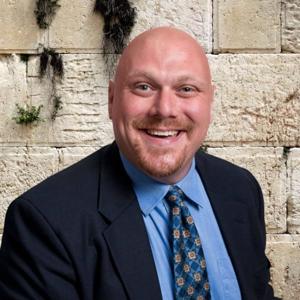


In this episode of Hebrew Voices #190, Mormon Chains of Authority: Part 1, Dr. Nehemia Gordon welcomes back Dan Vogel to discuss a modern-day American prophet’s claim of divine authority, Mormon beliefs about Jesus' arrival to America, and the redefinition of angels.
I look forward to reading your comments!
PODCAST VERSION:
Download Audio
You are listening to Hebrew Voices with Nehemia Gordon. Thank you for supporting Nehemia Gordon's Makor Hebrew Foundation. Learn more at NehemiasWall.com.
Nehemia: How does he think he can get away with it? That’s an even better question!
Dan: Oh, yeah, really.
Nehemia: I’m back with Dan Vogel, the greatest living historian of early Mormon history, and I don’t think I’m exaggerating there, at least that’s my view on it.
So, alright, I want to read this. I want to show the people chapter 4 of the Book of Commandments from 1833, which I didn’t realize wasn’t published until you just explained that. But now you can see it online, what was printed… I guess it was salvaged from the destruction in Missouri. And this raises an interesting question that we’ll get to in a minute. So, it’s chapter 4, I’m going to share my screen here. It says, “A Revelation given to Joseph Smith and Martin,” I guess Martin Harris.
Dan: Yes.
Nehemia: Oh, yeah, it says it in parentheses here. On the right here is their transcription, on the left is, I guess, a photo of it. “…in Harmony, Pennsylvania, March 29th, when Martin desired of the Lord to know whether Joseph had in his possession the record of the Nephites.” So, tell us, what is the background here?
Dan: So, Martin Harris had been fired from being a scribe.
Nehemia: Oh, after he lost the 116 pages.
Dan: Right, in 1828. And he comes back… Well, there was a trial, actually, somebody was trying to sue… Martin Harris’ wife had something to do with this trial, and at this trial somebody got on the witness stand and said, “Joseph Smith told me there was nothing but sand in that box. There’s nothing but sand.”
Nehemia: Okay.
Dan: “It’s all a fraud.”
Nehemia: The plates don’t exist, they’re claiming, on the stand.
Dan: And Martin Harris is hearing this. So, he goes down to Harmony, Pennsylvania and says, “I need to have a greater witness.” Issac Hale tells this part of the story. “I need to have a greater witness,” and Joseph Smith told him, “Well, I’ll take the plates out into the woods, and you follow my footprints in the snow, and you will eventually see the plates out there.” And he does it, and nothing happens. He doesn’t see anything and he doesn’t get his greater witness. But Joseph Smith dictates a revelation to… probably Martin Harris is the scribe for this revelation, telling him that he wouldn’t get a greater witness.
Nehemia: He would or would not?
Dan: Basically until he had faith.
Nehemia: Ah. So, it’s Martin’s fault that he doesn’t have enough faith.
Dan: Right.
Nehemia: Okay, fair enough.
Dan: This is trying to tell Martin Harris basically that… you’ll read it, that Joseph Smith is not to pretend to any other gift that he would grant him.
Nehemia: That’s the mind-blowing part here I want to get to. Alright, so let’s read it. And by the way, and just because I don’t know, is this part the introduction?
Dan: Yeah.
Nehemia: Is that considered part of the revelation?
Dan: No, no. Even though it has a “1” next to it.
Nehemia: Okay, so the italics… So, “Behold, I say unto you, that my servant Martin has desired a witness from my hand, that my servant Joseph has got the things of which he has testified and borne record that he has received of me.” Let’s keep reading, “And now, behold, this shall you say unto him.” So, the voice here is God speaking to Joseph, right?
Dan: Yeah.
Nehemia: Meaning, the way it’s presented. “I the Lord am God, and I have given these things unto my servant Joseph, and I have commanded him that he should stand as a witness of these things. Nevertheless, I have caused him that he should enter into a covenant with me, that he should not show them except I command him,” meaning, don’t show them the plates?
Dan: Don’t show anybody.
Nehemia: Okay. “Unless I, God, command him to do so. And he has no power over them except I grant it unto him; and he has a gift to translate the book, and I have commanded him that he shall pretend to no other gift, for I will grant him no other gift.” Wow, okay. So, his job is to translate the plates, not to show the plates. And here’s an interesting thing…
Dan: Evidently, he didn’t get a commandment to show them to Martin Harris, that’s why he didn’t see them.
Nehemia: Let’s assume for argument’s sake that the plates are real, because later on he has these mummies, and what they do with the mummies is they charge people to see them, right?
Dan: Yeah. In 1835, in Kirtland, Ohio.
Nehemia: And the mummies are real.
Dan: They’re real.
Nehemia: He could have said, “Hey, I’ve got these gold plates, pay me two shillings and you’ll get to see the plates, these things that were written by ancient Israelites in America.” But God is telling him “No, he has no other gift other than to translate. He’s not allowed to show the plates unless I give him authority to do so.”
Dan: Yeah. He hasn’t even started dictating the part that remains of the Book of Mormon. He hasn’t even started that. He won’t start that until the next month…
Nehemia: Oh, okay.
Dan: When Oliver Cowdery arrives. But right now, he hasn’t done anything. His only goal is to translate the Book of Mormon.
Nehemia: Okay.
Dan: And nothing else! Nothing about founding a church, nothing about anything. And that same revelation goes on to say that through the Book, God will cause a reformation to appear among the churches, among the believers.
Nehemia: So, he might have thought originally that he’s not going to start a new church, but that he’ll change the existing churches to get them right or something.
Dan: Yes.
Nehemia: Okay.
Dan: Through the book. The book will solve anti-doctrines, resolve doctrinal disputes, it will solve all of those debates about whether you should baptize infants or not.
Nehemia: But doesn’t that kind of go against what you’re saying, that his aspiration was to found the theological empire? Meaning, at some point that might have been the case, but at this point…
Dan: That’s later.
Nehemia: Okay, so at this point he’s not thinking of a theological empire, he wants to fix the Presbyterians and the Catholics and whoever.
Dan: Yeah, he hasn’t worked out everything in advance. He knows the end and the beginning of the story, that begins with the Israelites coming to America and it ends with the Indians destroying this supposed white Jewish race and burying their bodies in these mounds that exist in Joseph Smith’s neighborhood, and all over America, basically, too. It’s the Moundbuilder Myth.
Nehemia: And you wrote a book about the Moundbuilder Myth…
Dan: Yeah.
Nehemia: …which is an incredible subject, but we probably won’t get to it today.
Dan: No. So, he knows the end and he knows the beginning. He doesn’t even know Jesus is going to come and visit these people. There’s several clues along the dictation, when you go according to the order of dictation, he doesn’t even know that Jesus is going to come and visit these Nephites after his resurrection. That’s not even seen. But he knows a lot about what he wants to do. He knows the historical structure of these people. He’s just going to tell the story that these people that come from Israel are bringing true beliefs with them, which includes a version of Christianity even though they’re Jewish. And they lived the law of Moses, but they looked forward to Jesus coming, and they all know about what’s going to happen with Jesus because they’re prophets.
So, it’s going to be a story of a family that comes to America that has religious disputes, and finally the patriarch, the prophet patriarch, is trying to teach the truth and some rebel against it. And this is the story of what happens when some rebellion…
Nehemia: This is Lehi you’re talking about?
Dan: Lehi and Nephi.
Nehemia: Well, so Nephi, essentially, we said, if I understand you correctly, in some respects represents Joseph in that he’s the son of the patriarch.
Dan: Yeah, and Lehi represents his father.
Nehemia: Right, wow.
Dan: A kind of a dual aspect of the father, actually.
Nehemia: What do you mean by the dual aspect?
Dan: The good and the bad.
Nehemia: Okay.
Dan: But Lehi is the good version of his father.
Nehemia: Okay. I want to now go back to the Book of Commandments, 1833. So, this again is Joseph Smith papers, and again, this is a publication of the LDS Church. This isn’t some critical organization; this is the LDS church’s publication. And it says here, Revelation, March 1829 D&C5. So, D&C5 means Doctrine and Covenants 5, meaning that’s what it’s called today.
Dan: Yeah.
Nehemia: Okay, so let’s go to D&C5.
Dan: Well, D&C5 doesn’t always… the numbers in the 1835 doctrine… oh yeah, it is the current edition.
Nehemia: So, in other words, although this is chapter 4, it’s equivalent to D&C5.
Dan: Yeah.
Nehemia: Now this is churchofjesuschrist.org, which I understand is the LDS church, and it’s D&C5, and it’s the same thing as we just read, except it says, “And you have a gift to translate the plates.” Let’s go back to the other one… is that what it says? I guess it’s not word for word.
Dan: No, well…
Nehemia: We’re coming to the difference, but I want to see the parts that are similar. So, it says, “I have given you a gift to translate the plates, and this is the first gift that I bestowed upon you.”
Dan: Yeah, the first gift.
Nehemia: “This is the first gift that I have bestowed upon you.”
Dan: Yeah.
Nehemia: “And I have commanded that you should pretend to no other gift,” and that is verbatim, right?
Dan: Yes.
Nehemia: Let’s find it here.
Dan: It’s right there, right above the 3, right there.
Nehemia: Okay, “that he,” that’s interesting, here it’s in third person, and here it’s in second person, “that you should pretend to no other gift.” And it says, “that he should pretend to no other gift,” “until my purpose is fulfilled in this,” meaning translating the plates, “for I will grant unto you no other gift until it is finished.” So, once it’s finished, then I’m going to give you another gift, which is to establish the church maybe, and do other things. But here it’s, “that he shall pretend no other gift for I will grant him no other gift.” “Full stop”, as the British say, “period” in American English. And then it’s “other things”.
So, what happened between 1833 and 1835 when we got “until it is finished”?
Dan: Well, as he dictated the Book of Mormon it became more and more religious as time went on. It became more and more concerned with actual worship and the church and authority and organization. And when Jesus comes, he sets up 12 apostles, and those 12 apostles administer the church and… until there’s an apostasy among the Nephites, and there’s no more apostles left, and they go into this apostasy, and they actually dwindle and…
So, they were united when Jesus came, and had all things in common and everything was a golden era for 200 years. And then they started apostatizing and changing…
Nehemia: Just to be clear; when Jesus came to America everything was this golden era for 200 years according to the Book of Mormon, is what you’re saying?
Dan: Yeah.
Nehemia: Okay.
Dan: But they apostatized eventually, and the church became corrupted and lost authority and lost the spirit. It didn’t have the gifts. No more gifts, no more speaking in tongues, no more healings, no more revelations, no more prophesy, and then they became ripe for destruction. This is all a metaphor for what the Book of Mormon is trying to warn Jacksonian America to be aware of. And they became ripe for destruction, and they split into tribes… they splintered into tribes, they were not united anymore. And then they started warring, and the righteous part became even more wicked than the wicked part, because they have sinned against the light.
Nehemia: Okay.
Dan: They have sinned against the light and become more wicked than even the Lamanites, who are only wrong because of the false traditions of their fathers.
Nehemia: Whereas the Nephites should know better.
Dan: Yeah.
Nehemia: Okay.
Dan: So, God allows the Lamanites to destroy the Nephites totally in a war of extermination, and that’s how it basically ends. And Moroni becomes almost the lone survivor, although the only Nephites that survive are the ones that apostatize over to become Lamanites. And the truth is gone, and Moroni writes the last parts of it and then buries the gold plates in the hill in New York near Joseph Smith’s farm. And then later, 1,400 years later or whatever, appears to Joseph Smith in his room.
Nehemia: This is incredible stuff, Dan! Alright, I want to just finish up this issue of the Doctrine and Covenants. So going back to the Book of Commandments, 1833, and then the modern Doctrine and Covenants, maybe it was changed in 1835. Whenever it was, did Joseph Smith, when they published the Doctrine and Covenants, did he have those revelations in his hand and he said, “I want to change this. I want to add the words until it is finished,” or is he trying to reconstruct it in his memory after this catastrophe that happened in Missouri and the press is destroyed? Maybe he doesn’t remember, or maybe he thinks nobody else knows, and he’s adding until it is finished to say, “Hey, I’m not just a translator, I’m actually the founder of a church.” How does that happen in a two-year period? It’s such a big difference! How does he think he can get away with it? That’s an even better question.
Dan: Yeah, really! Well, there’s several strings of the story here.
Nehemia: Okay.
Dan: But the thing that changes the whole story of the restoration, the apostasy and restoration, is when they’re trying to… Joseph Smith and Olver Cowdery, they were trying to keep the Missouri church from apostatizing because they’re questioning a lot of Joseph Smith’s revelations and his leadership. And they’re not so sure about certain innovations like the high priesthood. They’re not so sure about that. And him becoming the president of the high priesthood, “No, we’re not so sure about that.”
So, they kind of saw it as themselves in Missouri. The Missouri church had its own presidency, as a little autonomous to the Kirtland church over here. And then Joseph Smith started trying to control this one more. They are charismatic themselves, and David Whitmer is the president, actually, of that Missouri church.
Nehemia: Oh! Okay.
Dan: Bishop Partridge is over here questioning Joseph Smith, and there’s a lot going on over a period of years. And then finally, out of nowhere almost, Oliver Cowdery and Joseph Smith get together to write the history of the church and publish it in letters written to the Missouri church. And the first thing they announce is, “By the way, we were ordained by John the Baptist shortly before our baptisms while we were translating the Book of Mormon. We just never mentioned it.”
Nehemia: Wow! So, “I’m not just a translator now,” I, Joseph Smith. “I’m only the translator until it is finished, and now I’ve got this other authority.”
Dan: Directly from someone who has indisputable authority.
Nehemia: And David Whitmer is thinking, I presume…
Dan: “I’ve never heard of that before.”
Nehemia: Well number one, he’s thinking, “I never heard that.” And he’s also thinking, “I saw the angel. I saw the plates. Why is Joseph Smith so special?”
Dan: Before this, you mean?
Nehemia: Well, even at that point he’s probably thinking this right?
Dan: No, this puts a whole different concept of authority in place.
Nehemia: But does David Whitmer accept that?
Dan: We’re not just being commanded by revelation and obeying commandments, that’s the authority. We now have established a chain that can’t be broken.
Nehemia: Okay, I see.
Dan: You can’t splinter off over here in Missouri and be legitimate.
Nehemia: You’re not defying Joseph Smith and Oliver Cowdery, you’re defying John the Baptist.
Dan: Right.
Nehemia: Okay.
Dan: There’s a chain of authority from John the Baptist, the authority to baptize. He physically ordained us because he was resurrected, right?
Nehemia: Was he? I mean, that’s part of the doctrine here, right?
Dan: Yeah. In the New Testament, he was beheaded before Jesus, and so when Jesus was resurrected, all the bodies of the saints arose and went into…
Nehemia: Oh, okay, so that’s the idea, that he’s been alive since the time of Jesus’ resurrection.
Dan: Yeah, so he could ordain…
Nehemia: Okay. Is that the claim about Moroni? That he was resurrected during the resurrection? Is that why they changed the name?
Dan: That’s a whole other story.
Nehemia: Right. Because originally it didn’t say Moroni was the one that appeared to him in the room.
Dan: Yeah, it was Nephi. It’s always been Moroni, the earliest is Moroni.
Nehemia: Oh, it is? Okay.
Dan: In his official history it was changed to Nephi. Some people claimed it was just a mistake, it was just an error. And I say, well what if it wasn’t? What if it was on purpose?
Nehemia: Okay.
Dan: What if he wanted Nephi to have a body? Because Nephi is 600 years before Jesus, and it would make more sense. It wouldn’t be necromancy, delving into familiar spirits.
Nehemia: Oh, because Nephi was resurrected when Jesus died.
Dan: Yeah.
Nehemia: But Moroni can’t be resurrected because it was 400 years after Jesus.
Dan: But the funny thing is that in 1838, he’s dictating his official history and he accidentally, or on purpose, says Nephi instead of Moroni. At the same time, he’s publishing answers to questions in the newspaper called The Elder’s Journal, in 1838 in Missouri, right around the same month, April, May, June, July of 1838. He answers a question about, where are the plates? Where did you get the plates? Where are the plates? He says, “Moroni, who was resurrected, gave them to me and took them back.”
Nehemia: Alright.
Dan: So, it must have been a special resurrection, in other words. So, he’s telling them that he’s concerned about a body belonging to that angel.
Nehemia: I see.
Dan: It’s not a spirit, it’s not a familiar…
Nehemia: Because like we said before, angels in Jewish and Christian culture had been this idea of a specially created being and not somebody who used to live and who now came back as an angel.
Dan: He’s actually redefining the term angel from what everybody else thinks an angel is. He’s redefining it to be mortals.
Nehemia: There’s definitely, in Jewish culture… I want to be careful about this. There’s all kinds of stories of rabbis having appearances of angels. Are there stories of the spirit of a dead rabbi coming to a living rabbi? I want to say there are, but somebody should verify that.
Dan: That would be a familiar spirit.
Nehemia: Well, you’re saying from an Old Testament perspective. I’m talking about medieval Jewish superstition.
Dan: Oh. I don’t know.
Nehemia: And medieval Jewish Kabbalistic beliefs. So, off the top of my head… we need to investigate that further. There’s definitely the idea of a dybbuk, which is the disembodied spirit of a dead person, but that’s usually an evil spirit of a sort.
Dan: Yeah.
Nehemia: We’ll have to look more into that. So, I want to go onto the next thing, and we’re going to take a break before we do that.
Dan: Okay.
Nehemia: I’ve got to go to the bathroom again. But the last thing before that, if you still have the energy to go on…
Dan: Yeah.
Nehemia: So, the last thing before we take that break. I want to wrap up this issue of the Book of Commandments from 1833, chapter 4 verses D&C5.
Dan: No, D&C5 was published in September of 1835.
Nehemia: So, it’s two years later.
Dan: They were highly edited revelations. The edits that you read were done at that time.
Nehemia: They were done at that time?
Dan: Yes. Joseph Smith did them. So, along with introducing this angel story, angel ordination story, he’s actually worked in some of these early revelations, mentions of that visit.
Nehemia: Okay. I’m going to go back to this question, and I’m thinking as somebody in the 21st century. I have a web page open here and another web page open here, and I look at them side by side. Is he thinking no one’s ever going to check? And I’m talking about where he adds the words, “there’s no other purpose until it is finished”.
Dan: At the time they published it in 1835 there was a review committee, Joseph being on it and Oliver Cowdery being on it. This review committee, the statement they made was that the only published versions of these early revelations they had were in the newspaper. The Morning Star published some of them, and people would be able to compare. Nobody else could compare because they were all in manuscript versions. And they blamed it on the typesetter.
Nehemia: Okay, so they had an explanation.
Dan: A carelessness of the scribe; the scribes could make mistakes in hearing. So, they gave an excuse that wasn’t really transparent.
Nehemia: So, if you’re a devout Mormon, you can hear everything we just said about how he added the words “until it is finished” and say, “Okay Nehemia, don’t lie to us, don’t deceive us. That’s because of the typesetter, and you should have known that that was Joseph Smith’s explanation at the time.” Okay, that would be the apologist answer, right? I guess.
Dan: It was the explanation at the time.
Nehemia: At the time even, okay.
Dan: Most Mormons that know about this, that know that that doesn’t really cover it all, would say that Joseph Smith under inspiration updated the revelations.
Nehemia: Oh, okay.
Dan: That they were given line by line, precept upon precept, sort of like what I was telling you, that the Bishops were added later than the 1830 foundational articles and covenants, and that they had to come back and add to that. They would just say, “He had authority by God to update it.”
Nehemia: Just like he did with the Old Testament and New Testament, where he goes through, and he corrects the… but in that context…
Dan: It’s a little different.
Nehemia: …is he claiming he’s restoring the original truth about it?
Dan: He did. He claimed that. In one sermon he gave in Nauvoo, he quoted one of his changes, like, “God doesn’t repent… it repented God that He had created man.” Well, God doesn’t repent, so he corrected that to, “It repented Noah that God had created man.”
Nehemia: I see.
Dan: But at the same time, he delivered this sermon and gave one of his revisions, which were never published. He said that he believes the Bible as it fell from the lips of the authors. And so, by implication, he’s restoring it to the way it fell from their lips as it was originally written. Nowadays, if you ask more apologetic types, they try to say, “No, he didn’t claim to be restoring the text to its original reading,” as if it had been lost, because you can prove that that’s not true.
Nehemia: How can you prove that that’s not true?
Dan: It’s just not… it won’t work.
Nehemia: Wait, how can you prove it’s not true?
Dan: The revisions that he gives are too extensive.
Nehemia: Okay. Well, maybe whole chapters were lost, I don’t know, like the Book of Moses.
Dan: But there are some parts that people who know Hebrew…
Nehemia: Well, there it raises the question… in other words, if you wanted to be an apologist and maintain that he’s restoring the original words that came off the prophets’ lips, I guess you could say what has survived in the Masoretic text isn’t what Moses wrote, or Jeremiah wrote, or Isaiah wrote. That it’s not just the translation that’s wrong of the King James Version, it’s that there’s entire sections. That’s, I assume, what they would say. That’s what I would say if I was a devout Mormon.
Dan: Yes.
Nehemia: That there were things that were corrupted… that’s what Muslims say, that there are things that were corrupted in the Jewish… and in the case of Muslims they’ll say the Christian Bibles, and Mohammed is essentially telling you what Allah really said. And the Jewish version is corrupt, the Christian version is corrupt, and Mohammed came to restore what was really revealed by Allah. That’s what Muslims say.
And I guess you could say that… like, let’s say, what they call the Book of Moses, or you have these whole sections about Enoch, maybe those were in the original Torah written by Moses 3,500 years ago and the Jews lost it until Joseph Smith came along and restored it. I don’t think that’s what happened, but I guess you could make that argument.
Dan: The Book of Mormon claims that this great and abominable church of the devil has corrupted the text and taken out of the text the plain and precious parts.
Nehemia: Okay, there you go! So, he restored them.
Dan: So, a textualist would say the Bible has been corrupted by glosses more than losses.
Nehemia: Okay.
Dan: The Bible suffers from additions, like accidental things, marginal things being incorporated in the text and things like that. And the Dead Sea Scrolls, more or less, show that the Isaiah text has been pretty stable.
Nehemia: Yeah. But then Jeremiah is fundamentally… not fundamentally different; there’s big issues with Jeremiah. But that’s a different issue.
Dan: Well, 1st, 2nd, 3rd, 4th Isaiah, that kind of thing, those things come up as problems with the Book of Mormon, actually.
Nehemia: Right, but that’s on the level of textual…
Dan: That’s an addition, textual additions.
Nehemia: Right, that has to do with chronology, that’s a separate… Let’s not get into that.
So, the last thing on this subject. There’s this apology channel on Tik Tok that I follow. I find it fascinating, and he addresses this whole issue… and it’s also on YouTube, he addresses this whole issue, and this guy…
Dan: I think I know who you’re talking about.
Nehemia: It’s called Saints Unscripted.
Dan: Oh no, that’s a different name.
Nehemia: And I wouldn’t even say he’s really hard core like The Joseph Smith Foundation.
Dan: No, he’s not.
Nehemia: I think he’s more liberal in his approach. So, he has a video where he talks about why LDS have multiple temples. And he says some people say, “Hey, you guys can’t have more than one temple. Deuteronomy 12, there’s one temple.” And the explanation he offers is, “No, that was made up by Josiah during the Josianic Reformation. That Moses didn’t write that,” that’s his explanation. “That was added by the priest in the Temple, Hilkiah, or somebody in the court of Josiah,” a Josian, whatever. He doesn’t get to that.
Dan: The Deuteronomist.
Nehemia: Right, the Deuteronomist. But he’s essentially saying, “Deuteronomy 12 is just made up. That’s not from God. We know what’s from God.” I’m paraphrasing what he said, and I might be getting it wrong, but what I understood he said is, “What came from God is what we know from Joseph Smith and our prophets in the LDS church. And what you see in Deuteronomy 12, that’s somebody who wanted power and wanted to concentrate,” which is what secular scholars say, “someone who wanted to concentrate the power of the Jerusalem Temple. He proclaimed there’s only allowed to be one temple.”
Dan: Yeah, there is that in the Documentary Hypothesis.
Nehemia: Absolutely, that’s the explanation of Deuteronomists.
Dan: There is a competition of where the holy mount is… which priest is going to win. I understand the guy’s argument.
Nehemia: So, then I wrote to him on the video. I said, “Well, I looked at the Joseph Smith papers. We have what, at least according to the Joseph Smith papers, is Joseph Smith’s copy. And in Deuteronomy 14, Joseph Smith says something to the effect of, in the note, ‘everything up until Deuteronomy 14 is correct.’ So, if Deuteronomy 12 was made up by Josiah or somebody in his court in the Temple, wouldn’t Joseph Smith have pointed that out to us?” So, I don’t understand how a modern apologist could ignore… If Joseph Smith is restoring the true scripture as it came from the mouth of the prophets, then why would you ignore that he says that Deuteronomy 12 is correct? I don’t know.
Dan: I don’t know. The multiple temple thing: Joseph Smith has to solve that problem since he wants to build the new Jerusalem temple himself.
Nehemia: Okay.
Dan: So, the question is, by what authority are you going to run this temple? And by what authority did the Ephramites, Menasseh or Ephraim, it’s supposed to be both of them there…
Nehemia: Okay.
Dan: Because the tribe of Joseph is the wrong tribe for the priesthood to run the Temple.
Nehemia: Right.
Dan: And he solved that by introducing the Melchizedek priesthood.
Nehemia: Wow.
Dan: And Jews struggle with this question too! By what authority did Abraham offer sacrifice?
Nehemia: Right.
Dan: And the Patriarchs? And usually, it ends up going to Psalms 110.
Nehemia: Right. I’m impressed that you know that! That’s very interesting. That is one of the Jewish explanations, to say that God took the priesthood from Melchizedek and handed it off to Abraham, and then eventually it gets to the hands of Aaron. That’s interesting.
Dan: So, you’re talking about how it gets to Moses. But that’s an Aaronic priesthood temple for animal sacrifice and all that kind of stuff, and we’re talking about Melchizedek priesthood temples.
Nehemia: Well, I’m saying on the Jewish side. The other explanation, which I think is probably the more common Jewish explanation, is to say that it’s really Leviticus 17, not just Deuteronomy 12. Both of those passages together limit where you’re allowed to bring sacrifices. Well, before that was revealed… There is this idea of progressive revelation, and then Deuteronomy 12:32 says, “Don’t add and don’t subtract from anything I have commanded you today.” So, up until that time, God could bring in new revelations, just from that point forward you weren’t allowed to change things.
So, there is an idea of progressive revelation. So, Noah bringing a sacrifice, most Jews would say, isn’t a problem because at that time it hadn’t been limited to the Aaronic priesthood.
Dan: They had a Temple, but they also had the Tabernacle, and the Tabernacle moved around.
Nehemia: Right, for sure. So, there it gets complicated, the Tabernacle… Anyway, it’s beyond the scope of the discussion today. And then there’s the whole debate with the Samaritans on where the true chosen place is, but that’s a whole separate discussion. Because they would say the chosen place is Mount Gerizim, not Jerusalem. And I as a Jew would say they’re wrong, but that’s beyond the scope of scholarship, I suppose, for here.
Alright, I want to continue, and you had brought up before the issue of the theory of how Joseph Smith could have written the Book of Mormon.
Dan: Yeah.
Nehemia: And there was an explanation at the time that nobody today believes as far as I know, and I want to take a break and then come back and have you explain that.
You have been listening to Hebrew Voices with Nehemia Gordon. Thank you for supporting Nehemia Gordon’s Makor Hebrew Foundation. Learn more at NehemiasWall.com.
We hope the above transcript has proven to be a helpful resource in your study. While much effort has been taken to provide you with this transcript, it should be noted that the text has not been reviewed by the speakers and its accuracy cannot be guaranteed. If you would like to support our efforts to transcribe the teachings on NehemiasWall.com, please visit our support page. All donations are tax-deductible (501c3) and help us empower people around the world with the Hebrew sources of their faith!
Subscribe to "Nehemia Gordon" on your favorite podcast app!
Apple Podcasts |
Amazon Music
| TuneIn
Pocket Casts | Podcast Addict | CastBox | iHeartRadio | Podchaser
| Pandora
If you have found Nehemia Gordon’s teachings to be of value, please consider supporting his efforts through his ministry Makor Hebrew Foundation.
Make a lasting impact through the year by making your donation recurring.
Or support Makor Hebrew Foundation by becoming a member of the Scholar Club.
VERSES MENTIONED
Isaiah 28:10-13
Deuteronomy 12; Leviticus 17
Psalm 110
BOOKS MENTIONED
Indian Origins and the Book of Mormon
by Dan Vogel
RELATED EPISODES
Hebrew Voices Episodes
Hebrew Voices #164 – A Karaite Jew on Mormonism: Part 1
Support Team Study – A Karaite Jew on Mormonism: Part 2
Hebrew Voices #183 – Early Mormonism Revealed: Part 1
Support Team Study – Early Mormonism Revealed: Part 2
OTHER LINKS
Dan Vogel’s YT channel
FAIR Mormon Apologetic Site
The Joseph Smith Papers
The post Hebrew Voices #190 – Mormon Chains of Authority: Part 1 appeared first on Nehemia's Wall.
Watch the Sneak Peek of this episode of Support Team Study - The Cairo Genizah: Part 2, where Nehemia continues discussing the Cairo Genizah with Cambridge scholar Ben Outhwaite including the discovery of a lost 2nd Temple period book in a medieval synagogue, the first Dead Sea Scroll published over 50 years before the Dead Sea Scrolls were discovered, and the influence of Arabic culture on medieval Jewish scholarship.
PODCAST VERSION:
Download Audio
Subscribe to "Nehemia Gordon" on your favorite podcast app!
Apple Podcasts |
Amazon Music
| TuneIn
Pocket Casts | Podcast Addict | CastBox | iHeartRadio | Podchaser
| Pandora
If you have found Nehemia Gordon’s teachings to be of value, please consider supporting his efforts through his ministry Makor Hebrew Foundation.
Make a lasting impact through the year by making your donation recurring.
Or support Makor Hebrew Foundation by becoming a member of the Scholar Club.
The post Support Team Study SNEAK PEEK! The Cairo Genizah: Part 2 appeared first on Nehemia's Wall.
In this episode of Hebrew Voices #189 - The Cairo Genizah: Part 1, Nehemia sits down with the head of the Genizah Research Unit at Cambridge to learn about the most important cache of surviving Hebrew manuscripts after the Dead Sea Scrolls. The Genizah was a chamber in the Cairo synagogue where Jews placed old scrolls, books, and letters for 1,000 years. Learn the story of how this treasure trove was discovered and brought to England.
I look forward to reading your comments!
PODCAST VERSION:
Download Audio
You are listening to Hebrew Voices with Nehemia Gordon. Thank you for supporting Nehemia Gordon's Makor Hebrew Foundation. Learn more at NehemiasWall.com.
Dr. Ben Outhwaite: That’s why the Genizah is so important. Because, in addition to preserving some of the best copies and earliest copies of important Jewish texts, the main Jewish religious texts, and lost works and so on, it also preserves an amazing archive of everyday life, of a kind that’s not preserved in other archives.
—
Nehemia: Shalom. This is Nehemia Gordon. Welcome to Hebrew Voices! I’m here today with Dr. Ben Outhwaite, who is the head of the Genizah Research Unit at the University of Cambridge. He got his PhD here at the University of Cambridge. Thank you for joining the program.
Ben: Thanks very much for having me.
Nehemia: So, let’s start with a really basic question. Let’s assume my audience knows nothing. What is the Genizah? And why is there a Genizah research unit? And why is it here at Cambridge?
Ben: Okay. Yeah. All good questions, actually. So, what is a genizah? A genizah is a… the usual words we use are like sacred storeroom. As you know, in Judaism there is a practice of “genizah-ing”, of putting away texts that are holy. That once you’ve finished with something that has God’s name in it, you shouldn’t leave it lying around… one, just because that’s not respectful, but two, you don’t want to leave things that are potentially holy to be misused, like old Torah scrolls, Bibles, prayer books, all that kind of stuff.
So, in Judaism, and you can see this in the Mishnah already, they developed a practice whereby you have to put these things away where they can be securely stored and won’t be misused, and they are treated respectfully. And the comparison is with a dead body. So, when someone has died, you don’t leave the body lying around. You bury it with due ceremony. And it’s the same with texts, that you practice a kind of holy hygiene and that you lock them away. Now, in England, and I think it possibly is still the practice, they will bury books with people. So, when they bury someone…
Nehemia: You mean the Jews will?
Ben: Yes. Jews will, yes.
Nehemia: Non-Jews don’t do that in England, do they?
Ben: No.
Nehemia: Okay.
Ben: They will put books in sometimes, into the graves as well, old books that they no longer have a need for, but which are hanging around in a synagogue to be disposed of according to the laws of genizah. And so, what the genizah is, and the Cairo Geniza is in particular, is the contents of the storeroom, the genizah storeroom of the what’s now known and has been since maybe, I don’t know, 16, maybe, probably later, 17th or 18th century, the Ben Ezra Synagogue in Cairo. Their storeroom, which was by all accounts quite enormous, a two-story storeroom, although accounts differ, filled up with the detritus of the medieval Jewish community over a period of nearly a thousand years as they followed this practice of “ganeezering” their old texts.
Nehemia: You say “ganeezering”. So, for the audience that doesn’t know any Hebrew, what is this word “ganaz”, “lignoz”, what does that mean?
Ben: So, the word geniza is a noun taken from a root which is originally Persian. You find it in the book of Esther.
Nehemia: Oh, really? Okay.
Ben: So, there’s lots of Persian in Esther, because it’s the story of, you know…
Nehemia: Okay. Ginzei hamelekh.
Ben: Yeah. And in that case, it means the treasury of the king.
Nehemia: Oh, wow. Okay.
Ben: And so, the word does mean to store away, like treasure. And it comes to be used in post-biblical Hebrew specifically for hiding away texts in two meanings, because you can find it used in two meanings. One is to hide away texts that you can no longer use because they are too old, too damaged, or perhaps the rite that is practiced in them is no longer the current one that you practice. But, since they are holy texts, you ganeezer them away, you put them in a genizah.
The other use of it is texts which are inherently holy because they’ve got the name of God in, but which are not to be used. And at certain times this has included things like the Book of Ben Sira or other texts that are regarded as not suitable for contemporary consumption, and so you should hide those away. But you can’t destroy them, you can’t burn them, you can’t rip them up, you can’t cast them to the four winds, as you can in some other religious… So, Islam, for instance, when they finished with a text, it’s acceptable, like even a Quran, to rip it up, to put it in running water.
Nehemia: Really?
Ben: Yeah, yeah.
Nehemia: Really!
Ben: Yeah, yeah. You have to dispose of it that way.
Nehemia: You’re telling me Muslims, when there’s a Quran manuscript… maybe not even a manuscript, is no longer in use, they rip it up?
Ben: It’s technically possible. It is technically allowed to do that. Now, obviously, if a non-Muslim does that, that’s a different matter.
Nehemia: Okay!
Ben: Because the intention is that you are stopping it from being misused. And we can kind of see that in the Genizah already because we have pages of the Quran, for instance, in the Genizah, which were perhaps used by Jews for magical purposes.
Nehemia: What does that mean? Tell me what that means.
Ben: Well, on the grounds that your own religion is sacred, but other people’s religions are sort of… they are your source of magic. So, the Toledot Yeshu, the story of Jesus. So, Jesus performs miracles and so on, so that…
Nehemia: This is the Jewish version…
Ben: The Jewish version of the story of Jesus. So, this is the polemic against Jesus written and circulated amongst medieval Jews. So, they don’t deny that Jesus performs miracles in it, but they say that he stole the ability to do it by stealing the magic or stealing the holy powers of the Temple from the rabbis, and that’s how he does it. So, basically, he’s taken Jewish religious power and turned it into magic. And so, the same idea is, if you were to leave… so in Judaism, if you were to leave pages of the Bible around, people might cut them up and use them as amulets, lucky amulets, and you can kind of see that because there was that guy who had a piece of the Aleppo Codex in America, wasn’t he?
Nehemia: He was a Syrian Jew who became a taxi driver in New York, and he had walked by the synagogue in Aleppo the day that the Aleppo Codex was supposedly destroyed and burned. And he saw two pieces on the ground, and he picked them up and he kept them in his wallet for decades. And when he died, his daughter turned them over to the… to Israel.
Ben: That’s right. So, that was a kind of lucky charm, you know?
Nehemia: But they would do that with the Quran, you’re saying? Jews would do that?
Ben: Well, we do have Quranic passages copied into Hebrew script.
Nehemia: Really?
Ben: In the context of a book that also contains kind of charms for good luck in travel, for protection in travel and so on. So the suggestion is that the Quran here is being used specifically for kind of magical good luck purposes.
Nehemia: Hmm. Okay. All right, so we had three questions. One is what’s a genizah, what’s the Cairo Geniza? And how did it end up here at Cambridge?
Ben: So, a genizah is a storeroom where you put used or worn-out texts that you can’t leave lying around because, one, would be disrespectful to God’s name that’s in them, but also, they might be profaned by other people misusing them.
Nehemia: Talk for a minute about misusing them. So, you gave the example of… well, you said they rip it up in Islam in order to avoid the misuse. So, using it as an amulet is one type of misuse. What’s something else?
Ben: Well, even quite simple things, such as accidentally writing an obscene text over the top of it. Or it is quite… I think it’s an established fact that some old Roman papyri are used subsequently as toilet paper.
Nehemia: Really?
Ben: Yeah.
Nehemia: That’s so interesting. I didn’t know that.
Ben: Yeah. You want to be careful when handling old manuscripts.
Nehemia: That’s interesting.
Ben: Yeah.
Nehemia: That reminds me of the scholar who… or the archaeologist who discovered the toilet at Qumran. And he told me he walked around, he measured 2,000 cubits, and then he walked around the 2,000-cubit perimeter and just smelled until he found it. And after nearly 2,000 years it still stank. So, that’s interesting. And then when they did tests on the feces there, they found that it was endemic to have diarrhea, like… So, we used to think they were so clean because they went to a mikvah, they immersed in water every day. But if you’re using the same water for six months and you immerse every morning, that’s not going to be clean water. And so, people were dying in their 30’s because they constantly had diarrhea out in the desert, probably from the mikvahs. So, you’re saying you could be handling old manuscripts? I didn’t know this. And you could be touching feces…
Ben: Yeah, because they have done some tests on some Roman stuff from certain areas that has that…
Nehemia: Really? Oh, Roman stuff. So, I’ve smelled some Torah scrolls that had two distinct smells. One was the smell of death, and that ties into what a genizah is, and what you just said, that they bury it with a body. So, if they’re burying it in a cave, at some point maybe somebody went and pillaged that cave, but the death smell is still there. And the other is a very strong smell of perfume, which may also tie in, because that’s a practice in some Eastern Jewish communities, to throw a bottle of perfume into the grave so that the dead person… and I asked people, “Why do you do that?” And they say, “We don’t want our beloved father to have to smell the death.” Well, he’s dead, right? But maybe on some metaphorical level to… they don’t want it to stink.
Ben: Yeah, yeah.
Nehemia: So, I wondered if those Torah scrolls… Of course, it could have been that there was a genizah and a rat crawled in and died, and that’s why it smells of death. I don’t know, but I like my version better. It’s a good story.
Ben: And you can see this as well. So, in geniza one, right, so we have Qurans, now we have Quranic pages that are proper…
Nehemia: Intact?
Ben: Intact, and from a Muslim… almost certainly from a Muslim provenance, the written Arabic script, finely written… Why they end up in genizah we can’t be entirely sure… how they’ve ended up in a storeroom associated with Jewish objects. But the genizah has become contaminated over time with other things which we can get into.
Nehemia: Aren’t there love letters and things in the Genizah?
Ben: Yeah. There’s everything.
Nehemia: Right, so it’s not just things with God’s name.
Ben: No. So, we probably have to make a distinction between a genizah in theory and the practice that is proposed for it by the rabbis. And it’s not mentioned that often, but you can see, for instance, in the Mishnah… Mishnah Shabbat talks about… we often quote this bit from Mishnah Shabbat, where it says what you can do on Shabbat and what you should do, and it says, “kol kitvei kodesh matsilim otam mipnei hadleika”.
Nehemia: Translate that for the audience.
Ben: “All holy writings should be saved from fire.” So, it should be saved from destruction.
Nehemia: So, the background of that is that there’s two prohibitions in Rabbinical literature about Shabbat. One is you can’t start a fire, and the other is you can’t put out a fire. So, if you’re saving a holy book from the fire… if it was a secular book, that would be a violation of Shabbat. But a holy book, okay, you can save from fire.
Ben: And it’s kind of up there with the idea of saving lives on holy days, when you’re not supposed to do any work, but you’re allowed to jump in and save someone from a pit. And it’s the same… and so, they almost equate the idea of holy books, which they don’t define. So, they say kitvei kodesh, “holy writings.” They don’t actually say whether that’s because it’s got the Tetragrammaton in it, the shem hashem, or whether it’s a book because… there are books of the Bible without the shem hashem in it…
Nehemia: Like Esther, for example.
Ben: Like Esther. And probably at different times and by different communities the idea of kitvei kodesh has been taken in different ways. But anyway, it kind of equates that with saving human life. And so, the idea is that you should drop everything, and you should save holy writings. It does say, “bekhol lashon”, so whichever language they’re written in.
Nehemia: Really?
Ben: And, it says, “bein she’korim ba’hem uvein she’einam korim ba’hem”.
Nehemia: Mmm.
Ben: So, whether you read them or not. So, the implication there is whether they’re holy to you or not. So, maybe they are a different branch of Judaism, or maybe even if they’re holy to Muslims or Christians, it’s still the Abrahamic God.
Nehemia: Okay. So, we have to unpack that, because another way of understanding whether you read them or not might be what exactly what we’re talking about; it’s so old you don’t read out of it anymore. So, whether it’s still in use or not still in use, that’s one possibility. And you’re saying the other possibility is, well, maybe it’s not your sacred text or your branch of Judaism. Let’s say something written by the Dead Sea Scroll community, the rabbis, we have the example of Ben Sira, which we’ll get to, I think. Well, it’s unclear whether they read from that or not. I guess they probably did. Okay. So… all right, interesting. So, you save them from the fire, and so how does that connect to a genizah?
Ben: And then it says, “and then you should subject them to the laws of genizah”. And…
Nehemia: Oh! Okay. Because they’ve been damaged by fire.
Ben: Yeah. And so, you should then put them away. And so that’s genizah in theory, but the Cairo Genizah in practice… so this chamber that was in the Ben Ezra Synagogue… and although we call it the Ben Ezra Synagogue, in the Middle Ages it had a completely different name. So, nowadays it is known as the Ben Ezra Synagogue, and it’s a tourist site in the oldest part of the city of Cairo…
Nehemia: So, people can go visit it today?
Ben: Yes. And in fact, it’s kind of on the… because for start, the Fortress of Babylon, the heart of Old Cairo, it’s actually the city…
Nehemia: You said the Fortress of Babylon?
Ben: The Fortress of Babylon. That’s sort of a walled city.
Nehemia: That’s called the Fortress of Babylon?
Ben: Yeah, yeah, yeah.
Nehemia: I didn’t know that. But Babylon’s in Iraq, so why is it called the Fortress of Babylon?
Ben: The Persians are supposed to have… people who came from the East are supposed to have founded it.
Nehemia: Okay.
Ben: It’s a Roman city… So, the synagogue is in the heart of what’s known as al-Fustat. Al-Fustat was the first Islamic capital of Egypt. So, when the Muslims captured Egypt, they camped at Fustat, and they built their first sort of big city there, and that grew to be the capital. In the 10th century, when the Fatimids came… the Fatimid Empire expanded from North Africa, so, a Muslim empire, they conquered Egypt, which they had long wanted to do. And in the 960’s they conquered Egypt and they decided to found a new city celebrating that, and they founded Cairo, a little bit north of the old city. Now, as Cairo has expanded… of course, now it’s a huge megacity, it’s completely encompassed Fustat. But Fustat used to be a separate city.
Nehemia: Okay.
Ben: And it used to be the most important administrative center in Egypt and was long after Cairo was founded. Cairo is where the caliph and then the sultan lived, and the army, and the Islamic administration and the emirs and the highest echelons of Islamic society lived. Whereas all the people associated with the previous regime, and with the administration of it under the previous Islamic regimes, lived in Fustat, and they were Christians and Jews for the most part. So, it’s a very Christian city.
Nehemia: Hmm.
Ben: There was a synagogue in al-Fustat, which nowadays is known as Ben Ezra, but in the Middle Ages was one of two Jewish synagogues within the walls of the old city of Fustat. The city of Fustat was there before the Muslims conquered it. It was a Roman town for a long time; it was a port city, because it sat right on the Nile, and you can see that there’s two big round towers at the entrance to Fustat that are now churches, or ones a church, and one’s a ruin. And the railway runs right in front of the old city of Fustat. Now, the railway actually follows the course of the Nile. So, the Nile used to run right in front of it, but because the Nile silts up and moves over time…
Nehemia: Okay.
Ben: It’s actually moved away from Fustat. So, you don’t get the feeling that this was a maritime city, but it was really because it sat right on the Nile as a port. And between those two round towers was a canal that went to the Red Sea.
Nehemia: So, currently… and I’ve never been to that part of Egypt, so currently the Nile doesn’t run through…
Ben: No, it’s moved to the west.
Nehemia: Oh, that’s so interesting.
Ben: Yeah. It’s still within… you can probably stand in a tower and see it, but there is now a railway that follows the exact route that the Nile ran.
Nehemia: Okay.
Ben: And there used to be a canal that ran through the middle of the city. So, it was a port city canal that connected the Nile with the Red Sea. So, a very important town in Egypt. And the Jews had two synagogues. The Jewish community of Fustat had two synagogues within those walls. So, as part of the oldest part, the synagogue of the Shami’im, so of the Syrians, the Palestinians, however you want to translate…
Nehemia: Levantines.
Ben: Al-Shams, the Levantines, yeah, yeah.
Nehemia: Al-Shams is Syria, Lebanon, Israel and the Palestinian territories and Jordan today, right?
Ben: Yes. When the Muslims took that part of the world, that was their administrative division; they created al-Sham. And it doesn’t fit with the modern geography of Syria and Palestine, so we say Syria-Palestine or something like that. But it was also known as the synagogue of the Jerusalemites. So, in Arabic this would be like Kanisa, which means synagogue in Arabic like Knesset. Kanisat ha’shami’in, or kanisat ha’yerushalmi’in. And then the other synagogue, which was built, it appears, right next to a Christian church, of which there are many in Fustat, known as the Hanging Church, was the synagogue of the Iraki’in, of the Iraqi Jews, so, the Babylonian Jews.
Nehemia: Okay.
Ben: Now, that synagogue, by all accounts, was originally a church that was purchased from the Christian community in the 9th century.
Nehemia: Really?
Ben: Because the Iraqi Jews arrived later. The Palestinian Jews were already there; they were the largest congregation in Fustat, but many Iraqi Jews left the Abbasid Empire. They settled in North Africa, they followed in the footsteps of the Fatimids, and eventually they came to be the majority in Egypt, but not originally.
So, the oldest synagogue in Fustat, and perhaps one of the oldest synagogues in Egypt, is the Kanisat ha’shami’in, what became the Ben Ezra Synagogue. So, when we talk about the Cairo Genizah, we mean the storeroom of that synagogue in the oldest part of the capital city of Egypt. And unlike the normal principles of genizah, when this was opened up by Solomon Schechter… and perhaps I’ll say a bit more about how that happened, what he discovered, to his great surprise, was that it did not contain Torah scrolls, Siddurim, prayer books, copies of the Mishnah and Talmud, the holy sort of…
Nehemia: It didn’t only contain that.
Ben: No, it didn’t only contain that. It had those, but it also contained personal letters, philosophical writings, poetry in huge abundance, not just liturgical poetry, so religious poetry, but also secular poetry and bad poetry.
Nehemia: [Laughter]
Ben: You know, poetry about wine and love for boys. And the kind of thing that was in was in vogue.
Nehemia: Did you say love for boys?
Ben: That was. Yeah. I mean, so, love expressed in poetry could be towards romantic ideals of women or the idea that you find in Spanish Hebrew poetry, which as well comes from Arabic poetry, is the boy as an object of worship.
Nehemia: And this is men writing about…?
Ben: Yeah, yeah, yeah.
Nehemia: Okay, I learned something new.
Ben: It’s a kind of ideal love.
Nehemia: Okay, I’m just gonna ask, does that mean homosexual love?
Ben: Yeah. But it…
Nehemia: Or is it some kind of ideal of… I love my dog, right?
Ben: Yeah. It does, but it’s a kind of idealized love, you know, it’s a kind of pure love that… and whether or not it actually reflects practice is debatable.
Nehemia: Okay, wow.
Ben: Yeah, there’s a lot of poems about it.
Nehemia: So, that’s in the Genizah, even though that’s obviously… nobody even then would have considered that sacred. And is it there because it’s written in Hebrew letters and they just threw everything in there?
Ben: So, this is the big question, because when Schechter emptied out the storeroom, he said it was a battlefield of books, and he had these strange combinations of… you would have a pious, rationalistic text arguing against superstition and magic, and stuck to it was an amulet, which…
Nehemia: [Laughter] Well that’s why you needed the text against superstition, because there are amulets.
Ben: Yeah… sought angels’ power to protect you against bad luck or whatever it was. And we don’t know why this happened, but there are a number of things that are worth bearing in mind, and you have to adopt the medieval mindset. Because what we’re talking about is text that… so, this synagogue was active from the 10th century, maybe earlier, we don’t really know. The building itself dates from about 1040, but it was built on an earlier building that was destroyed by the Caliph al-Hakim, and they immediately rebuilt it when he died.
Nehemia: And did they take the contents? I guess this is the big question.
Ben: Yeah.
Nehemia: Did they take the contents of the Genizah from the earlier synagogue into the 1040 synagogue?
Ben: We assume so.
Nehemia: Okay.
Ben: We assume so, because we have a lot of material that predates the 11th century. So, this synagogue was active from probably at least the 10th century all the way through to the 19th century, when Solomon Schechter, a scholar from Cambridge, arrived and emptied it out. And over the course of time, maybe originally, their intention was, “We’ll put Torah scrolls in here and we’ll put holy books associated specifically with this synagogue.” But over time, we got holy books from other congregations. There is material from the Iraqi congregation. There is material from the Karaite congregation. We have these strange survivals of Dead Sea sect works in there. But also, all of this, what we would regard as purely secular literature. And, in sort of the medieval mindset, of course, it’s very difficult to distinguish secular from religious because practically everything you write in the Middle Ages invokes God in some degree. So, if you write a letter to someone, whether it’s in Arabic or Hebrew or Aramaic, near the beginning you will say, “In the name of God.”
Nehemia: Mmm, okay.
Ben: Or you will say, “God bless you.” Whatever. We have letters where Sir Solomon Ben Judah, the head of the Jews in Jerusalem, falls out with an archrival who attempts to usurp his position as head of the Jews, and he describes him in one letter. He describes him as “the suspect”. He doesn’t want to name him because he so hates him. But he says, “God, kill him.”
Nehemia: Wow.
Ben: Yeah. “Yamito ha’el”. Yeah.
Nehemia: Wow. That’s literally a curse.
Ben: Yes.
Nehemia: But because he mentions God there… so that actually makes sense why that would show up there. But the love poetry, or… so, there’s a whole other genre which is like administrative texts of merchants and things like that, so there’s all these merchants’ letters. Like, there are entire archives of merchants. How did those end up in there? Why did they end up in there?
Ben: Well, again, even a bare bones kind of economic document, something that represents a financial transaction, will often invoke God. So, we have what are proto checks, we have these orders of payment that say… and we have them written by various different people, but we have a large number by one particular trader called Abu Zikri Cohen. So, he had an Arabic name. He’s a Jew living in an Arabic speaking land. So, he adopts an Arabic name, but his name is Judah.
So, Abu Zikri Cohen… and he writes these checks that are very similar to modern checks. They say, “pay to the bearer”. “May the banker”, and it names the banker, Abulkhair, “pay to the bearer the sum of two dinars” or whatever. And then it will also, on the note, write the number “2” as a numeral, so, like a modern-day check, like yesterday’s check. You write out the numbers in words and in numbers as a kind of security feature. It’s the same on these. But, at the top of it, it will have often a Bet, which is short for either… No, sorry. It often has a Bet, or sometimes you have a “be’emet” or something. So, it will have some kind of invocation of God. So, it will be “be’ezrat ha’el” or some kind of implying that God is guaranteeing this transaction.
Nehemia: Okay. Kind of like an American coin saying, “In God we trust”.
Ben: Yeah. Exactly, exactly.
Nehemia: In God we trust, but pay cash.
Ben: Yeah, exactly. Yeah. Yeah. No. Well, no…
Nehemia: It’s a bit ironic, right?
Ben: This is paper money, and what they’re paying is… basically it’s a promise to pay because of the difficulties of moving large amounts of gold and silver across borders, which was tricky. I mean, it’s tricky as a Jewish merchant carrying around large amounts of money when there were bandits everywhere. But also, it was a bit tricky for Jews rather than Muslims to move large amounts of money around under Muslim rule.
Nehemia: Okay.
Ben: But also, the distances involved. They were trading with India. You didn’t want to send vast amounts of cash.
Nehemia: So, you’re saying a merchant could take this promissory note or sort of check and bring it to India? And…
Ben: Yeah, there would be some Jewish banker there who would get… who would be able to…
Nehemia: Oh, that’s amazing.
Ben: Yeah. And these notes could then be traded.
Nehemia: And you mean literally India.
Ben: Yeah, yeah, literally. Yeah, yeah, yeah, yeah, the west coast of India. Jews settled there and had factories producing bronze and sending it back to Egypt. There was a whole Indian Ocean trade route in the 13th century. Most of our information comes out of the Genizah. But anyway, so getting ahead of myself a bit. So, you can’t write something without “In the name of God”. So, even a shopping list. So, we have a shopping list written by Judge Elijah, a judge from…
Nehemia: Wait, we literally have a shopping list?
Ben: Oh, we have loads of them. Yeah, yeah.
Nehemia: That’s amazing!
Ben: So, we have a shopping list written by Judge Elijah, who was active in the 13th century in Egypt, and it says, at the top it says, “expenditure for”, and it’s in Arabic, in Hebrew script, because most Jews wrote their Arabic in Hebrew script. And it says, “expenditure for the festival of Shavuot”.
Nehemia: Mm-hmm.
Ben: “If I live that long with the help of God.” And so, it’s in Arabic. So, the expenditure is nafaka or whatever, but at the end it’s “be’ezrat Shaddai”. So, “with the help of the Almighty”.
Nehemia: In Hebrew, not in Judeo-Arabic.
Ben: In Hebrew. It’s Hebrew words in a Judeo-Arabic sentence.
Nehemia: Okay, I see. So, it’s kind of like if you have a Hebrew word in Yiddish; is it Hebrew or is it Yiddish?
Ben: Yeah, exactly.
Nehemia: Okay, I see what you’re saying.
Ben: Yeah, yeah. And you can argue whether this is code switching or whether this is this…
Nehemia: So, how would you say, is that “be’ezrat”, “with the help of”, in Arabic? “Basa’ad” or something?
Ben: So… Yeah, something like that, I guess. And they would say “Allah”. They did say inshallah or something in Arabic. It would be quite common.
Nehemia: So, that’s a whole other maybe can of worms. But do they refer to God as Allah in this Judeo-Arabic? The Jews, refer to God as Allah?
Ben: When Maimonides, the greatest thinker of the Middle Ages, writes about God, he will often, in one of his philosophical contexts, he will call him Allah. When a teacher sends a note home for a schoolboy who’s being bullied at school, it’s in Judeo-Arabic, Arabic in Hebrew characters but it’s between two Jews, and he says, “God bless you” at the top of it, and that’s “Allah”.
Nehemia: And that’s an actual example of a letter sent home to a…
Ben: Yeah, yeah, yeah.
Nehemia: Oh, that’s really cool!
Ben: And so, it’s not only…
Nehemia: There were even bullies in the Middle Ages. I guess we knew that, but wow.
Ben: Oh, yeah, I know. It’s a fantastic little note. It’s just a little note that, that says, “Your son” basically, “the child has been getting on very well, in his reading,” or is it “writing”? I can’t remember. Anyway… and, unfortunately, another boy in the class conspired with the other kids to break his writing board. Because they don’t have tables. You sit on the floor.
Nehemia: Okay.
Ben: And you have a board on your knees, and you use that to write on.
Nehemia: Yeah.
Ben: And so, the other kids broke his writing board just to teach him not to shine in class, I guess.
Nehemia: Wow, man.
Ben: Yeah.
Nehemia: Things haven’t changed!
Ben: I know.
Nehemia: Okay.
Ben: But that gets preserved in the Genizah, and that’s a little piece of really ephemeral writing, because that’s of interest to no one other than the boy and his guardian, right?
Nehemia: Well, today it’s got to be interesting to historians of what life was like in the Middle Ages.
Ben: Exactly. That’s why the Genizah is so important, because in addition to preserving some of the best copies and earliest copies of important Jewish texts, the main Jewish religious texts and lost works and so on, it also preserves an amazing archive of everyday life, of a kind that’s not preserved in other archives. Because nobody intended… these were not deliberately put for posterity, they just felt they couldn’t throw them away. Well, they had the name of God in them. They’re written in Hebrew characters, so even most of their Arabic writing is done in Hebrew characters, because Jews went to school to learn Hebrew. They didn’t learn Arabic at school; they spoke it at home. So, when they came to write as adults, even the greatest scholar of the Middle Ages, Moses Maimonides, the greatest Jewish scholar of the Middle Ages, writes his Arabic in Hebrew characters. So, it’s written in lashon hakodesh, it’s written in the holy language. So maybe if God has chosen to transmit the Bible to the Jews in the holy language, maybe I shouldn’t throw this piece of paper away that’s written in that sacred language…
Nehemia: I mean, technically it’s not the holy language, it’s the holy script. But…
Ben: Yeah, yeah.
Nehemia: I guess they were like… When I was a kid and we would study the Talmud, they would talk about reading the Hebrew. Well, now I know that most of what I was reading was Aramaic, but we didn’t make that subtle distinction because it was in Hebrew letters.
Ben: Yeah.
Nehemia: So, that’s a similar sort of thing, what you’re saying.
Ben: Yeah. And so, they do refer to Judeo-Arabic, Arabic in Hebrew characters, they do refer to it as Arabic, but sometimes they have to be very clear and distinguish… do you mean Arabic in Arabic characters? So, he says, ktiva, to mean “the writing”, because sometimes we have one or two letters where they say things like, “I need to write to so and so, do you know, does he read Arabic?” And what he means is, does he read Arabic script? Because everyone can read Judeo-Arabic, because they can all read Hebrew and they can all speak Arabic.
Nehemia: Okay.
Ben: But not everyone can read Arabic script in the Jewish community.
Nehemia: Wow, that’s very cool.
Ben: That’s a skill by the kind of… your parents had to pay a bit extra to get you Arabic tuition for that, intending that you’ll go and work in the Islamic government or something. Anyway, so they keep it because it’s got the name of God on it. They keep it because it’s in Hebrew script. Maybe they keep it just because they don’t like to throw away anything written down, because the Jews are a highly literate society, far more literate than their neighbors, the Christians.
Nehemia: Mm-hmm.
Ben: And so, perhaps that’s why they put things in… rather than let these things be wasted, they put them in the Genizah. But also, there is possibly just a sense of… what the Genizah is is lots and lots of different archives. So, at some point, like the great merchant Abu Zikri, say, he dies, and people clear out his house. And as a merchant he would also be a scholar, because he would have been educated to some degree. So, he would have copies of books of the Bible. He will have poetry to recite. He will have prayer books. He will have Mishnahs and Talmuds to study, and do they really want to sort through all that stuff, from his shopping lists and his personal letters and the doggerel he wrote about love or whatever? No, they may just take it all and deposit that in the synagogue. Or maybe it was the beadle of the synagogue whose job it was to sort it out. And maybe the beadle wasn’t the most educated member of the Jewish community, which is possibly quite likely, who knows? But anyway, for whatever reason, they put it all in the Genizah.
Nehemia: Mmm. Wow. So, all right. How many documents are in the Genizah, approximately?
Ben: So, in the Cambridge Collection that we have, we have 197,000 from what’s known as the Taylor-Schechter Cairo Genizah Collection, which is this collection brought back in 1897 by Solomon Schechter.
Nehemia: Okay.
Ben: Other people went to the same chamber before Schechter went. Some people went and took away large pieces. The community associated with that synagogue in Egypt were also taking stuff out and selling it, and that found its way to different libraries and museums.
Nehemia: You mean like in the late 1800’s they’re taking it out and selling it?
Ben: Yeah, yeah, yeah.
Nehemia: Okay.
Ben: And that’s one of the reasons why Solomon Schechter went there. He found out about the Genizah because Cambridge was being offered manuscripts for sale from Jerusalem by a dealer in Jerusalem called Solomon Wertheimer. And he was offering various fragments of medieval manuscripts; pages of Bibles, bits of Mishnah, ketubot, marriage deeds, that kind of thing. And Schechter wasn’t that interested in it. But then, he met these… well, the story is long and involved, but he met two Scottish women who had travelled to the Middle East to go to Saint Catherine’s Monastery in the Sinai. They were great adventurers and explorers, and they went to old monasteries around the Mediterranean to recover texts of the Bible. They were Christians, very, very devout Christian Presbyterians, and their intention…
Nehemia: This is Lewis and Gibson?
Ben: Lewis and Gibson, exactly. Two immensely rich widows from Scotland, Irvine in Scotland. Raised Presbyterian, but they lived in Cambridge by just this bizarre combination of coincidences, all of the stars aligned and the whole Genizah story. They lived in Cambridge because one of them had married a Cambridge academic. Both of their husbands… they married late in life in their 40’s or something, and both their husbands were kind of weak Victorian men who died of Victorian illnesses running for trains.
Nehemia: What do you mean, running for trains?
Ben: He ran for a train and died on the train after sitting down.
Nehemia: Wow.
Ben: Yeah, it was too much strain on his Victorian heart.
Nehemia: Okay. Oh my gosh.
Ben: Yeah. And the other one died in bed after asking for flannel underwear.
Nehemia: What?
Ben: Yeah.
Nehemia: He died… wait, what?
Ben: Yeah.
Nehemia: I’m confused. Because he was cold? Or…
Ben: I don’t know, I don’t know, but his last words were apparently, “Please buy me some flannel underwear.”
Nehemia: Wow, okay. Maybe he was going into shock, and he was really cold or something. All right.
Ben: So, anyway, these two Scottish women who had married… one was a preacher, and the other was a librarian, their husbands, and so, they were associated with the university. But being women in Cambridge in the 1890’s, you couldn’t be employed by the university. They were very scholarly. They knew all sorts of languages, from Greek to Arabic, and they travelled. They were doing what was in vogue at the time, which was to go to monasteries and find old manuscripts, with a view of improving our knowledge of the original text of the Bible.
Nehemia: That’s how Codex Sinaiticus was found.
Ben: Exactly. They were following in the footsteps of people like Tischendorf…
Nehemia: Okay.
Ben: … who had really kind of revolutionized the approach, that you have printed editions that we’ve been relying on for centuries. But how reliable are these? We should go and find the best, earliest reliable texts, the critical editions of the Bible is what we want to create. And so, they were doing that off their own back because they were immensely rich through some accident of fate. They had inherited a lot of money from a Canadian who had built railroads.
Nehemia: Okay.
Ben: Like, a Scot had gone out and founded railroads in Canada…
Nehemia: It’s like a theme in their lives, railroads, right? They’re killing husbands, giving them wealth.
Ben: Yeah, yeah, yeah, right. After their husbands died, they decided to travel to get over the grief, because they’d always been great travelers, and they went to Saint Catherine’s Monastery in Sinai, and they discovered what was then the earliest Aramaic copy of the New Testament.
Nehemia: Okay. Is that the… what is that called? That’s the old Syriac, I think, or something like that.
Ben: Yeah, I’m a little… that’s not my area. So… and how they got there, because obviously Tischendorf had been to Saint Catherine’s before, and he had left behind… well, they don’t like him in Saint Catherine’s because he took Codex Sinaiticus away and they never got it back. The two women, when they went, had a very different experience. Because one, they were kind of unthreatening because they were women; two, they spoke Greek, whereas Tischendorf had very bad Greek.
Nehemia: Okay.
Ben: They spoke Greek. They were able to communicate with the monk librarian in Greek.
Nehemia: Oh, wow.
Ben: Because scholars in those days didn’t speak the languages. They knew the written language, right? Not the sort of modern vulgar dialect that they speak. But they could speak Greek. And that’s how they’d managed to inveigle their way into all sorts of monasteries around the Mediterranean and made friends with the librarians.
Nehemia: Yeah.
Ben: And in this case, the librarian, I think Galaction, his name was, showed… he opened up like the special, “This is where we keep the good stuff.”
Nehemia: Oh, okay!
Ben: That he hadn’t shown Tischendorf, and in it they found this Aramaic copy. Now, importantly as well, the other thing they did is, they photographed items in situ. They didn’t take them away. They were pioneers of academic photography of manuscripts, something that you…
Nehemia: …dabble in. Yeah, okay.
Ben: And so, they came back with a whole Cambridge expedition to photograph the manuscripts.
Nehemia: Oh, wow. At Saint Catherine’s…
Ben: At Saint Catherine’s.
Nehemia: Okay.
Ben: On the spot.
Nehemia: So, their goal wasn’t even the Cairo Genizah or Cairo.
Ben: No.
Nehemia: Saint Catherine’s Monastery in Sinai!
Ben: And the Genizah was just a byproduct. Because whenever they passed through Suez or Cairo or any of those places, and they took a tour to Palestine. They used to go to the book dealers in the market and look at what they had, and they bought things, and in that way, they bought some manuscripts that had been only just stolen from Saint Catherine’s, and they were able to return them to the monastery.
Nehemia: Okay. Wow.
Ben: But also, they bought a whole bunch of Hebrew stuff. Now, they could read Hebrew. They brought it back to Cambridge, like scattered, individual leaves of Bibles and that kind of stuff. And they brought it back to Cambridge in 1896, and they were in their house; they built a massive baronial mansion in the middle of Cambridge, because they were so rich.
Nehemia: Yeah.
Ben: And they were in their baronial mansion looking at these, and they realized they couldn’t understand what all of the pieces were. They could recognize some things, like Bibles and so on, because they knew the Bible. They could read Biblical Hebrew, but they couldn’t recognize other works. So, they called in Solomon Schechter. Now, Schechter was then teaching Rabbinics in Cambridge University. He was a Jew teaching in an Anglican organization Rabbinics to people intended mainly… I mean, up until then, Cambridge had been a factory for producing Anglican priests. It was modernizing a bit, but essentially the university was still kind of like an echo of the monasteries. That’s… his job was…
Nehemia: So, Solomon Schechter was a professor here at Cambridge, but he was teaching clergymen, Christian clergymen?
Ben: Yeah. Well, essentially, yes. People who were learning Hebrew were essentially learning it to enter…
Nehemia: Okay. And, and I’ll just make a little note here for American Jews. Every American Jew I’ve ever spoken to about Solomon Schechter, they’re like, “oh, I know the school.” Because there’s a chain of schools in the United States called Solomon Schechter.
Ben: Yeah, yeah. He is, I mean, he’s immensely famous in American Jewish circles, and utterly unknown in English circles.
Nehemia: Really?
Ben: And yet his career began here. He was essentially placed in Cambridge University to improve Jewish learning in England. The Montefiore family in England had originally tried to bring over Jewish scholars, the finest Jewish scholars of Europe, to England to improve the intellectual standing of the Jews of England. They thought they needed one or two kind of “tent pole scholars”, like to bring up the whole…
Nehemia: Okay.
Ben: They brought Solomon Schiller-Szinessy in, a Hungarian rabbi, and they put him in Cambridge to teach Hebrew. Up until then, Hebrew had been taught in Cambridge since the 16th century. Cambridge has had a professor of Hebrew since the 16th century. Why do we have a professor of Hebrew? Because Henry VIII wanted to divorce his wife.
Nehemia: Okay! So, he’s like, “We better get back to the source so I can find a reason for this divorce.”
Ben: And he ran out of reasons in the New Testament, so he started looking for the Old Testament and the Talmud. So, the Hebrew Bible and the Talmud. And for that he needed specialists.
Nehemia: Okay. I didn’t know that. So, it was Henry VIII.
Ben: Henry VIII owned a whole copy of the Talmud because…
Nehemia: Really? Has that survived?
Ben: Yeah. Yeah, yeah, it was bought by… I think it was collected by… the Valmadonna guy. Can’t remember.
Nehemia: Yeah. Okay. Wow. Okay. Yeah.
Ben: So, anyway, Henry VIII created the Regius Professor of Hebrew here in the 16th century to interpret the Old Testament.
Nehemia: Okay.
Ben: And the idea was really to interpret it in his favor, of his…
Nehemia: Well, you know the story of the Bologna Scroll? So, there was this meeting in 1530 between the Holy Roman Emperor and the Pope, and one of the things they discussed was King Henry’s great problem, which was he wants a divorce. And the Holy Roman Emperor says, “Well, here in Bologna we have the original Pentateuch written by Ezra,” which is what they believed, it’s what they would tell visitors to this church in Bologna. “This isn’t just a Torah scroll; it’s the original one written by Ezra.” So, they open it up to see, does it have the verse that Henry is citing as his justification for the divorce? And today we have that scroll, and that verse has been erased.
Ben: Ah.
Nehemia: Which is really strange, because we have an account from 1531 which says they found the verse and decided, “We don’t care what the verse says, we do what the Pope says.”
Ben: Okay, okay. That’s interesting.
Nehemia: So, that’s interesting that ties into Cambridge… and wow! Everything ties together.
Ben: It’s also… I just point out that’s not the original scroll written by Ezra…
Nehemia: No, of course not.
Ben: Because that’s in the Ben Ezra Synagogue.
Nehemia: Oh. Okay.
Ben: So, that… until today, I think, tourists are told that scroll is in the synagogue.
Nehemia: Really?
Ben: It was looked at by Adler, when Adler… he wrote his book… he traveled around Jewish communities of the Middle East, and he wrote his book about Jews in Many Lands. And he went to the synagogue, and he looked at the scroll and he said, “It’s like a 16th, 17th century one.”
Nehemia: Oh, wow. Okay, so, I don’t know about this scroll in the Ben Ezra Synagogue…
Ben: Yeah, I don’t know if it’s still there, but…
Nehemia: That’s really interesting. So, I just heard last week there’s a Torah scroll in Germany in a place called Kassel, and it has an inscription there, and I don’t remember if it’s Latin or German, and it says, that “this was written before the birth of Christ, although we’re not sure how many centuries.”
Ben: Yeah, yeah, yeah.
Nehemia: And it’s like 14th century or something, right? That’s interesting; this is the kind of story that Jews would tell, or maybe Christians would tell as well, about these Torah scrolls. That’s really interesting.
Ben: Yeah. I mean, Torah scrolls are impressive objects, and so, when you see one, you sort of… I can imagine they accrue legends around.
Nehemia: Well, so the Karaites in Israel in one of the synagogues have a Torah scroll which they believed was an ancient Torah scroll, a thousand or more years old, I don’t remember the exact legend. And so, I got some photos of it and sent them to some people who know Torah scrolls, about dating them. I want to say it was like a 19th century Syrian scroll or something like that. But it’s a much better story to say it’s a thousand years old. And look, it was old, right, but 19th century isn’t really that old. That means it… this legend couldn’t be that old. This is a legend probably from the last generation or two. Or they’re like, “Oh, this is a really old scroll,” and then they project it back further in time. It shows you how quickly these legends can develop.
Ben: Yeah, yeah. Yeah, you can see that. And maybe over time the scroll changes, and each time it gets a new… as they throw away the old scroll, this one is the new one, but this one is old.
Nehemia: Or “this is the old one we don’t use”, and then they start to spin stories about when it’s from…
Ben: Yeah. And obviously, I think… the Ezra Scroll in the Ezra Synagogue, Ben Ezra becomes associated with Ezra the Scribe.
Nehemia: Ezra the Scribe, okay, that makes sense.
Ben: But in fact, that name must have been given to it by some Ottoman guy who gave money to rebuild the synagogue, probably.
Nehemia: Somebody named Ezra.
Ben: Yeah, it’s probably some donor, some rich donor.
Nehemia: So, the theory with the Bologna Scroll is that when they gave this… because the Jews gave it to the Christians to actually the… or was it the French? No, the Dominicans, they gave it in 1304, in southern France. And the theory is that they explained… the Jews probably explained something like, “This is the original format that the Torah was written in by Ezra according to rules that Ezra established,” and then that kind of got misconstrued and misunderstood to, “This was the scroll that Ezra himself wrote.”
Ben: Yeah, yeah.
Nehemia: Or maybe they just made it up. Who knows?
Ben: That’s it. That’s the problem. Yeah. And the name Ezra always gets sort of… over time, everyone always associates the name Ezra with the Ezra.
Nehemia: Well, in the Talmud, we have the Sifrei Ha’azara, the Temple Courtyard Manuscripts of the Torah, and that’s corrupted in some manuscripts to the Scrolls of Ezra.
Ben: Right. Yeah, yeah, yeah.
Nehemia: As if Ezra himself wrote them.
Ben: Yeah. Yeah. So, we had a teacher of Hebrew here, so Rabbinics.
Nehemia: What does that mean, Rabbinics, for the audience who may not know?
Ben: Well, this means teaching everything, you know, after the Hebrew Bible, really.
Nehemia: Okay.
Ben: The idea being that, so the Mishnah and so on, they are important for understanding the context in which Jesus arose. That’s it. So, it’s the Second Temple period, that kind of thing.
Nehemia: So, they had that concept even back then. Because I’ll often hear that this is something that was kind of revolutionized by David Flusser, that up until then Christians didn’t really look to the Mishnah and the Talmud to understand the life of Jesus…
Ben: Well…
Nehemia: But it sounds like they had some notion of this even back then.
Ben: Well, I think this possibly, what you really do see… So, these were lone Jewish scholars in a Christian university, right? Solomon Schiller-Szinessy, in those days… so his salary, I think, was paid by the Montefiore family, not by the university, but he taught here. And when Schiller-Szinessy died in, I think, 1890, Schechter took over, I think in 1890. I think his salary was also still mostly paid by the Montefiore family. So, they were kind of like, sort of… they did important work, but you get the feeling they weren’t exactly welcoming, Cambridge. It wasn’t like… they weren’t rolling out the red carpet for Jews in the University of Cambridge, which was still… I mean, it’s a conservative organization even today, but in those days, they’d only just relatively recently allowed fellows, teachers, in the university, to marry, because until that point they had to be bachelors.
Nehemia: Really?
Ben: Yeah. Yeah. Like the old monastic principles.
Nehemia: Okay.
Ben: And that had changed in the 19th century.
Nehemia: So, Henry can get a divorce, but the professors at Cambridge can’t get married.
Ben: No, no. Yeah, yeah.
Nehemia: [Laughter]
Ben: No, no, not at all. Anyway, so Solomon Schiller-Szinessy, when he got the job here originally… Cambridge is sort of a democracy in that everyone has a vote in the Senate.
Nehemia: Really?
Ben: All the permanent staff have a vote in the Senate. And the account of the vote for Schiller-Szinessy is that he was much opposed because he was a Jew.
Nehemia: Wow. Like, openly they didn’t have a problem saying that.
Ben: Yeah.
Nehemia: It reminds me of… and I don’t know if this is apocryphal or not, but there’s a story about Benjamin Disraeli, who later became the prime minister. I think the first and only Jewish prime minister of the United Kingdom. I was going to say England, but I’m not sure that’s accurate. And so there was a debate in one of the House of Lords, or whatever it was, and… sorry, I’m American. I don’t know… one of the houses of your parliament, and they called him a barbaric Jew or something to that effect. And he responded famously, perhaps apocryphally, “When my ancestors ruled the world, your ancestors were running around painted blue.”
Ben: Yeah, yeah! So, yeah, it’s true.
Nehemia: And Disraeli was actually a Christian. He was a very devout evangelical Christian. He had converted, but still he was a barbaric Jew to his opponents.
Ben: Yeah. Yeah. He was also a great novelist. The idea of him being a barbarian…
Nehemia: Was he?
Ben: Yeah.
Nehemia: I didn’t know that.
Ben: I don’t know, possibly the only prime… No, no, there’s been other prime ministers who’ve written… oh, Boris Johnson. He wrote a novel.
Nehemia: Did he?
Ben: All right. Sorry. No. Anyway, let’s move on from that.
Nehemia: All right.
Ben: So, when Schiller-Szinessy started teaching here, he definitely brought a different side to the study of Hebrew. So, he exposed scholars who previously had studied Hebrew, essentially studying the Hebrew Bible, to the range of Jewish commentators on the Bible.
Nehemia: Mmm.
Ben: And you can see this by the time that Schechter is here, one of Schechter’s friends is Charles Taylor, who becomes the master of Saint John’s College. Cambridge is a collegiate university, lots of these old, again, kind of almost monastic houses, colleges.
Nehemia: So, unlike in the United States, here you have a university and there’s a bunch of colleges that make up the university.
Ben: That make up the university, yeah, yeah.
Nehemia: And each one of those is pretty much independent or autonomous.
Ben: Yeah, they’re all independent financial institutions. They’re all charities.
Nehemia: Okay.
Ben: They’ve all got their different customs. They’ve all got different ages. The oldest is Peterhouse, which dates back to 1284 or something like that. I don’t know. But a lot of the oldest colleges have been lost and amalgamated into new ones, because they were… that sort of religious orders are now disappeared and things…
Nehemia: And something that really surprised me is, you could be on staff here at the university, but you don’t have privileges at one of the particular colleges because you’re not a fellow of that college. Meaning, like, I encountered that with one of the people who works with you, that we tried to go to this particular library, and they said, “Oh, well, who are you? You’re not a fellow here at this…”
Ben: Yeah. So, Cambridge colleges are…
Nehemia: I’m like, what?
Ben: Yeah.
Nehemia: And I’m like, “Okay, I understand that for me.” And it was actually easier for me to get in than it was for her.
Ben: Yeah.
Nehemia: Which, like, that’s crazy!
Ben: Yeah, yeah. Cambridge colleges are a bit… they’re very old fashioned. Not as bad as Oxford, but they’re very old fashioned. I mean, you’ve seen the college porters, the guys who control the access to and from; they often wear bowler hats.
Nehemia: Yeah, and they’re not actually porters; they don’t carry your bags for you.
Ben: Oh, God, no!
Nehemia: So, what does “porter” mean, then? Is that what it originally meant?
Ben: Yeah, a porter. I don’t know. No, porter is something to do with… isn’t it to do with doors?
Nehemia: I don’t know.
Ben: Isn’t it like guarding the door? Port?
Nehemia: From the port? That makes sense.
Ben: Yeah, I think so. But anyway, I’m…
Nehemia: So, whenever I’m here, I stay usually at one of what we call dormitories. What do you call it, accommodations or something? Like where the students sleep.
Ben: Yeah. College accommodation, college rooms.
Nehemia: College rooms, okay. I call them dormitories in America. And then you check in with the porters’ lodge.
Ben: Yes.
Nehemia: And you’re always constantly dealing with the porters’ lodge. Yeah, it’s very old fashioned. And they do wear the bowler hats, that’s right.
Ben: They do. And some of them are rude because that is the history of their position in that college. So, Trinity porters are famously very rude because they have always been rude. And so, every new Trinity porter who starts work there knows that he has to be rude.
Nehemia: So, I can say from my experience, I’ve never had a negative experience with them. They’ve always been very polite to me, but I never stayed at Trinity College, so I don’t know.
Ben: Yeah, and maybe it’s changing, but that used to be the Cambridge thing.
Nehemia: And maybe it’s the renting. So, what I do usually is I’ll go between terms when the students aren’t there, and so I can sleep in one of the dorms. They’re basically like a hotel, but it’s like four minutes from this library, so it’s amazing.
Ben: Yeah, fantastic.
Nehemia: But no, they’ve always been really polite to me, really nice to me. It is kind of strange; I’m a grown man sleeping in a dorm room, but it’s better than staying somewhere that’s 30 minutes away, so I appreciate it.
Ben: Yeah, okay. Well, my understanding is that… the scholar of Rabbinic texts, Jacob Neusner…
Nehemia: Yeah.
Ben: A famously productive scholar, that he once came to give a lecture and he stayed in a college room. And I think I got this story from my predecessor, Stefan Reif, which means it must be true. Is that Neusner arrived, and the porter was rude to him, so he picked up his suitcase and left without ever giving the lecture.
Nehemia: Wow.
Ben: That sounds like a real… that sounds like a true Cambridge story to me.
Nehemia: Okay. All right, but I’m sure that was quite a few decades ago. And…
Ben: Yeah, that was some time ago.
Nehemia: And now you can do a bad review on universityrooms.com if they do that, so maybe they’re more careful.
Ben: Yeah, there you go. That’s right, that’s right. Yeah, no, TripAdvisor has probably changed everything.
Nehemia: Yeah.
Nehemia: So, anyway, one of Schechter’s friends, he mentored in Jewish texts, following in the footsteps of Schiller-Szinessy. It was Charles Taylor who was master of Saint John’s College, became master of Saint John’s College. He was a mathematician.
Nehemia: Mm-hmm.
Ben: He wrote about maths, cones or something. He did… I don’t know. Anyway, but he was far more interested in God because he was a devout Christian like many of them in the university in those days. And he had taken instruction from Schiller-Szinessy and from Schechter, and he wrote a commentary on Pirkei Avot, on a tractate in the Mishnah.
Nehemia: Ethics of our Fathers, it’s usually called in American English.
Ben: And that commentary is surprising for the number of Jewish sources which it uses.
Nehemia: Okay.
Ben: Which would be unheard of for a Christian scholar to do that. But the fact is, he’d been exposed by Schiller-Szinessy and Schechter to all the Jewish sources, and that commentary, I think, is still regarded today as the best commentary on Pirkei Avot written by a Christian mathematician.
Nehemia: So, that’s really interesting… [Laughter] Well, how many have been written by Christian mathematicians, to be fair? So, it’s really interesting… so, you do have this phenomenon that some of these Christian Hebraists, they would open up some Jewish text, and it would be like they were discovering it for the first time, like no one had ever read it or commented on it. And here you’re saying he’s within this whole internal Jewish dialogue of, “What does this passage mean? And how do we understand it? And what are the parallels?” And he’s drawing on all that. That’s really interesting.
Ben: And if you look at the college libraries… So, we’re in the university library, which is the main library of the university and has an official role in our guarding the intellectual knowledge of the nation as well, because we’re a copyright library. You get we get a copy of every book published in the UK.
Nehemia: Wait, so there’s multiple libraries like that in the UK?
Ben: Yeah, it’s about…
Nehemia: Because in the US there’s only the Library of Congress.
Ben: No, no. So, there’s Edinburgh, there’s us, there’s Oxford and Dublin. So, it goes across to the former member of…
Nehemia: Dublin in Ireland. So, in the US you publish a book, and you have to send two copies to the Library of Congress. Israel has a very similar law. What’s the rule here in the UK? Do you send it to each of those libraries? Or do you send it to one of those libraries?
Ben: There is an office in London that in the old days, when it used to be physical copies, used to collect them, and then I think it was up to the libraries to put in a claim.
Ben: Oh, okay.
Ben: Never having dealt with that side of libraries, so I can’t be sure that what I’m saying is true at all. But now it’s electronic deposit.
Nehemia: Oh, okay.
Ben: So, many of them, we just get electronically.
Nehemia: Okay. As far as I know, if you print a book in the US today, you still have to send two copies to the Library of Congress. Now, whether they keep those or not, because they couldn’t possibly have enough room for every book that’s published. And maybe some people don’t do it, but big publishing houses definitely still do it.
Ben: Yeah, we do it. We do it, and the great thing is that we get books that are withdrawn subsequently.
Nehemia: Oh, really?
Ben: So, we have copies of books that are effectively forbidden…
Nehemia: Wow!
Ben: And we have to put them in a special collection which is known as the Ark Collection.
Nehemia: Okay.
Ben: So, things like the first edition of Ulysses and so on, that was banned for a while. A recent publication by the Museum of the Bible that was withdrawn by its publisher…
Nehemia: Okay.
Ben: Has also now had to go into the Ark Collection.
Nehemia: So, is this accessible, things in the Ark Collection? or is it…
Ben: I’m not too sure how you get to see something. I think everyone thought that we had like this vast store of pornography because we get everything and we lock it away, when in actual fact, the books that we lock away are the ones that people steal or the ones that the publishers have withdrawn.
Nehemia: What do you mean they steal?
Ben: Some books are very popular to steal.
Nehemia: Oh, you mean readers might steal them?
Ben: Yes. Yeah, yeah. So, like, first edition Harry Potter is worth a lot of money.
Nehemia: Okay.
Ben: And we’ve got first editions of every book, you know.
Nehemia: Yeah.
Ben: And there’s… yeah, there’s all sorts of weird things that get stolen. We also have pornography locked away, because I found that the other day.
Nehemia: [Laughter] Really?
Ben: The other day somebody told me they found a bunch of publications by our unit, the Genizah unit, in the 1970’s. They published these big catalogues, and they found a whole store of them unsold downstairs. And I had to go and get a special key to access them, because they were right next to all the pornographic magazines.
Nehemia: [Laughter] That were also deposited as part of the copyright. That’s funny.
Ben: Yeah. And they’re locked away so librarians can’t go and have a look at them. You have to get a key from a supervisor.
Nehemia: Wow, that’s… in some ways that’s like very quaint because, like, I mean… yeah, that’s interesting. Okay, all right, let’s move on!
Ben: Anyway. So, Solomon Schechter…
Nehemia: Yeah.
Ben: You know, was the sort of pointy tip of Cambridge’s long interest in Jewish studies and in Hebrew in particular. But Cambridge did have a very long interest in Hebrew. We’ve had a professor of Hebrew since 16th century. We’ve been collecting Hebrew manuscripts since the 16th century, and every college library has a collection of Hebrew books, some of them very old, from the early days of printing, showing that the people who worked in Cambridge were engaging with Jewish scholarship, engaging with Jewish texts, engaging with Jewish ideas throughout. And much of this was the Reformation, the interest in Judaism and the Hebrew Bible at that stage, but all through up to the present day. But Schechter and Schiller-Szinessy, his predecessors, were new, because it wasn’t just Jewish books; these were actually Jews in the university who were teaching, which was very unusual.
Nehemia: And they were Jews who hadn’t converted to Christianity, who were still within the Jewish milieu.
Ben: Exactly. So, both of them were still very much in the Jewish milieu, especially… I mean, well, both of them, but especially Schechter, who went on to America to save Conservative Judaism in America, was his job.
Nehemia: So, just let’s sidetrack for a minute, which I love doing. So, you mentioned all these manuscripts that they’re collecting for centuries before Schiller-Szinessy and before Solomon Schechter. So, you have a cache of manuscripts here which were brought over from India by this priest named Buchanan, and they include things like a Torah scroll from India. They include a Hebrew translation of the New Testament, or let’s be more neutral, a Hebrew version of the New Testament, which presumably is a translation. I think we even today… well, there’s a theory today of who translated it. It was this Jewish convert to Christianity in the 17th century in Amsterdam who then went to India and worked among the Indian Jews, and he apparently is, according to some scholars, he’s the one who translated it. You have the words of Gad the Seer.
Ben: Yeah.
Nehemia: Which is an incredible story in itself.
Ben: Yeah, yeah, a really odd manuscript that just pops up here and nowhere else. A unique text.
Nehemia: Yeah. Well, there’s a debate now in Israel between two scholars. One is the grandson of the founder of Bar-Ilan University, whose name is Meir Bar Ilan.
Ben: Meir Bar Ilan.
Nehemia: And he claims that’s a copy of an earlier work that was brought from Yemen, which goes back to the Second Temple period, and it was something like the Book of Jubilees, meaning it was one of these pseudepigraphal works, attributed to Gad the Seer. The other opinion, who is the critique… I forget his name, Hillel something, of Bar-Ilan, he says, “No, no, no. This was translated by the same guy who translated the New Testament, this 17th century Jew who converted to Christianity.” And he also apparently translated, this same 17th century Jewish convert to Christianity also translated the Quran into Hebrew, which is now in the Library of Congress. So, makes sense… and I’ve seen some of the evidence, like, it’s frankly really bad Hebrew, although really bad Hebrew could just be Hebrew from the Second Temple period that I’m not familiar with. Right?
Ben: Yeah.
Nehemia: So, how do you know, sometimes? But apparently, he’s also the one who translated the Quran and the New Testament and wrote the words of Gad the Seer. That’s the claim of the opponents of Bar Ilan.
Ben: Yeah. That’s right. Yeah. So, yeah, we got the Buchanan manuscripts just sort of by chance.
Nehemia: So, that’s amazing. So, what do you know about that that you can tell us? Like, what’s the back story? Because I don’t know… I just know Buchanan brought these manuscripts from India.
Ben: I don’t know enough about it. I know that they were already here when Schechter was here because Schechter…
Nehemia: Yeah, he was like 1802, Buchanan. He came back from India.
Ben: Yeah, he catalogued… Schechter catalogued them, and he was… Schechter was super skeptical about the claims for the antiquity of Gad the Seer and so on. He sees Kabbalah in some of the writing. He can see that it can’t be earlier than 16th century.
Nehemia: Yeah. So, for the Hebrew New Testament, from what I’ve looked at it, for example, in Acts chapter 2, where they talk about Shavuot, the word there is pentecosta. So, that would suggest it was translated from a European language, because otherwise, why not just say Shavuot?
Ben: No, it’s a good collection. We’ve got these copper plates as well that are…
Nehemia: Oh, tell us about the copper plates!
Ben: They are records of… they are sort of legal deeds of rights given to the Jews, and they are in sort of Malayalam and various…
Nehemia: Is that in India?
Ben: Yeah. The language.
Nehemia: Oh! The language, okay.
Ben: Yeah, yeah, yeah, but they have some Hebrew names on them…
Nehemia: Wait, and that’s part of the Buchanan Collection?
Ben: The Buchanan Collection, yeah.
Nehemia: Copper plates?
Ben: Yeah.
Nehemia: Wow.
Ben: The thing is, and these were originally in the synagogues and in the places he went to in India, but he made copies of them. So, these are copper plates produced by Indian artisans based on the original copper plates.
Nehemia: Okay, so these are made under the auspices of Buchanan.
Ben: Yeah, and I think people haven’t realized that. Some people thought he carried away the originals, but in fact, the originals, I think, have now been lost. But these are copies, and it’s just sort of odd…
Nehemia: And when are these from, do we know?
Ben: Some of the deeds are supposedly quite ancient, but I don’t know enough about them. And since these are copies of… they’re not entirely reliable, the copies, because they were hand produced in India in the 19th century.
Nehemia: Okay, so you know what this evokes for me? Wow, and this is the early… so, like, around 1802. I think he made several trips to India, because there are different dates on some of the different manuscripts, 1802 and a little bit later. But what this immediately makes me think about is the gold plates of the Book of Mormon, because I’ve studied quite a bit about Mormonism, and I don’t remember anybody ever mentioning this. It would be a beautiful parallel to bring. I once asked a scholar from BYU, “Why are Mormons so interested in the Dead Sea Scrolls?” And he said, “It makes…” and look, this was just his personal opinion, I guess. He said, “For me, it makes the story of the gold plates more plausible, because here you have ancient documents that have survived, and then you have, of course, we have the Copper Scroll.”
Ben: The Copper Scroll, yeah.
Nehemia: Which they love, because, okay, it’s written on metal, and it survived. It’s not gold. So, I thought that was really interesting when he explained that to me, and then I said to him, like, I mean, “Do you really believe that these gold plates were written by an ancient American Indian? And you don’t have them, you’ve never seen them?” He said, “Well, you’ve never seen the Ten Commandments and the original tablets.” I’m like, “Well, that’s a good point. Okay. But yeah, it’s an interesting point. Fair enough.”
Ben: Okay. Yeah, yeah.
Nehemia: Anyway, so wow. So, you have copies of copper plates from India. Tell us about what… we’re going to get back to Solomon Schechter, because that’s where we want to get to, but the Nash Papyrus, that’s also here, isn’t it?
Ben: Yeah, and that arrived probably… we got that at the beginning of the 20th century, I think. So 1902, ‘03, ’04, something like that. And so, it’s called the Nash Papyrus because it was the Reverend Nash who gave it to us…
Nehemia: Okay.
Ben: And he acquired it from a bookseller in Egypt, I think in the Faiyum in Egypt. So, down the Nile a bit. And it is a very small item. It’s a strip of papyrus about, I don’t know, six inches or less, maybe. And on it, in what we now regard as a Herodian style of script, it has the Shema and the Ten Commandments.
Nehemia: Okay.
Ben: And when that was discovered, it was the earliest piece of the biblical text. It’s in an early hand from about the 2nd century BCE.
Nehemia: Wow, that’s amazing! So, that really… so, until the Dead Sea Scrolls, that was the oldest known…
Ben: Yeah, until 1947, that was the oldest piece of the biblical text that had been discovered. Now, since then, you’ve got the Dead Sea Scrolls, plus you’ve got the silver whatevers from…
Nehemia: Yeah, from Ketef Hinnom in Jerusalem, the Silver Scrolls.
Ben: Yeah, but this was… in character it’s very like the Dead Sea Scrolls, but it is not a Dead Sea Scroll. It was probably written in Egypt. It’s on papyrus…
Nehemia: And is it an amulet of some kind? Is it a mezuzah, tefillin? That’s what it sounds like.
Ben: No, nobody knows. Yeah, the size and shape of it suggests that it was of an amuletic property, so that it was to be rolled up and put in something, you know…
Nehemia: Right. Either for some kind of religious ritual, or maybe just for protection or…
Ben: Yeah, because these are sort of fundamental parts of the Jewish religion.
Nehemia: Right.
Ben: The Shema and the Ten Commandments.
Nehemia: Right.
Ben: What’s interesting about it, apart from that it is genuinely very old, and it was dated to the 2nd century BCE, I think by Albright or someone quite early on, or various people worked on it…
Nehemia: So, now you’re making me suspicious. I want to do carbon-14 on it.
Ben: It’s too small.
Nehemia: That’s a problem if it’s too small. Okay.
Ben: Yeah, we can’t afford to lose it. Plus, over the years, it’s been… it’s not been well-handled. It’s sort of been backed onto cardboard.
Nehemia: Oh, then you can’t…
Ben: Not by us. And then, it appears to be painted over with some kind of varnish, or something was put on it quite early on as well. Again, not by us. And it’s very fragile…
Nehemia: That’s probably because the ink was flaking, and that would protect the ink. But now you can’t really carbon-14 test it because you’re getting different layers of different material.
Ben: No. I don’t know. You’d have to strip the layers off and pull a bit out of the middle…
Nehemia: Yeah, we’re not going to do that, probably.
Ben: But the thing is, it was dated to the 2nd century BCE by the early scholars. So, Burkitt published it, various others worked on it… and there was some skepticism, but generally consensus was around 2nd to the 1st century CE. And then when the Dead Sea Scrolls came along, lo and behold, it is a pretty good match to the handwriting of that period, of the earlier scrolls.
Nehemia: So, you have some incredible treasures in this library, and we’re going to get to the most important treasure of all, which is the… well, maybe it’s not the most important treasure, but it’s the treasure that you’re focused on, which is the Cairo Genizah Collection. Arguably, it is the most important. I guess it depends what your perspective is. Like, some people might say Codex Bezae, which is also here. That’s one of the key manuscripts of the New Testament… is here in the library.
Ben: Yeah, one of the outliers, because it represents a slightly… considerable differences from the kind of received text.
Nehemia: But it’s one of like the five great uncials.
Ben: Yes. And it was deliberately… it was ganeezered in Cambridge. No, it’s absolutely true. So, Theodore Beza, who gave it to the university… I think we still have the… do we still have the letter that he sent with it? I think we do. He sent it to Cambridge. One, to sort of preserve it, but also two, to keep it out of the way so that people… because it was sufficiently divergent from the standard text of the New Testament that it’s…
Nehemia: Wow.
Ben: …better if, you know, people don’t look at it that much.
Nehemia: That’s interesting. So, I wonder to what extent that’s still the case. Meaning, the text of the New Testament in the Greek has, now… we have sort of a critical edition with Nestle-Aland, I think we’re at 28. So, I wonder how different it is today.
Ben: I think it’s less different today, and we can see where it fits into the different… like the Alexandrian stream and all that. We can see where it fits within those streams.
Nehemia: Okay.
Ben: It’s still a very precious manuscript, and it’s one that, again, we don’t show very often because it’s a beautiful manuscript with parchment so thin that it’s sort of translucent. But it’s very fragile. So, like the Nash Papyrus, we tend not to show that, although it is among our greatest treasures. So, yes. So, Cambridge has a pretty good record of biblical treasures. And also, we’ve got… so, in Jewish treasures. I mean, we’ve got a thousand Hebrew manuscripts of various kinds, codices, books…
Nehemia: Yeah, like one that is often like overlooked is Add. 1753… is one of the manuscripts that these great scholars of Masoretic studies, like Yeivin and Dotan…
Ben: Oh the… Yemenite one.
Nehemia: It’s a Yemenite one from the 16th century, but the claim is that it was copied either directly, or maybe several generations removed, from the Aleppo Codex, and it includes parts of the Aleppo Codex that are now missing.
Ben: Yes.
Nehemia: So, it’s one of the key manuscripts that when, like Breuer was comparing all the different manuscripts of the Tanakh, he considered this one of the key witnesses, like…
Ben: Yeah, yeah. I think that we should really digitize that manuscript. I don’t know why…
Nehemia: I photographed the whole thing, so I’m happy to share the images. But you can photograph it much better than I can with your sophisticated… well, really, it’s about the lighting, right? And you have to spend quite a bit of time to position it, but that absolutely needs to be digitized. It’s really an important manuscript.
Ben: Yeah, yeah. Yes, that’s true, and it’s a good example of how medieval manuscripts are important. It’s not just all about the Dead Sea Scrolls. The Dead Sea Scrolls will tell you a story about the Bible, but it’s actually… it’s a different story. It’s not the Urtext. You’re not searching for the best best edition of the final text for the Dead Sea Scrolls, because the Dead Sea Scrolls represent a text still in flux.
Nehemia: Mm-hmm. Well, in this case it’s a really late manuscript, but it may represent a textual tradition 700 years earlier.
Ben: Yeah.
Nehemia: At least that’s what Breuer’s claim was. So, a lot of times we’ll say, “Oh, that’s a late manuscript. We can ignore that, it’s not important.” But sometimes the later texts preserve an earlier version of the text.
Ben: Yeah. And if we’ve decided the Aleppo Codex is the text that we want, then any witnesses to it are important because of the great loss that happened to the manuscript itself.
Nehemia: No, he was focusing on things like gayot, and that kind of obscure linguistic features. The problem with that is there was this claim by almost everybody who wrote a manuscript in Yemen that it was based on the Aleppo Codex. It’s kind of a formula that you spit out, because Maimonides gave the stamp to the Aleppo Codex.
Ben: That’s right, and they worshipped Maimonides…
Nehemia: And whatever Maimonides… well, he basically, as they saw it, at least, saved Yemenite Jewry from persecution.
Ben: Yeah.
Nehemia: So, they became devotees of Maimonides, yeah. This has been an amazing conversation. Any last words you want to share about the Cairo Genizah, the future of the research…
Ben: Well, you know, the Cairo Genizah has been around a long time, 125 years in Cambridge. Genizah research, since the days especially of digitization, that’s the thing. And I know what a big fan you are of going around and photographing manuscripts, and in that you’re following in the footsteps of the Presbyterian sisters as well. And also, they’re the good ethical principles to that, so you’re not disturbing the original items, you’re not removing them from their rightful home. You’re just photographing and making them available.
Cambridge has always sought to make the collection available, because partly it’s aware of the fact that it’s slightly odd that the Cairo Genizah is here in Cambridge. Why isn’t it in Cairo? It’s just an accident of circumstances and fate that meant it got here. But had it not arrived here, would it be as important and well known as it is now? It’s unlikely, because it really did take someone like Solomon Schechter to show how important… If this had fallen into the hands of Neubauer in Oxford, it would probably still be moldering in a chest in Oxford, right? People wouldn’t have realized that.
So, the fact that it’s sat here for a long time, and it was neglected for many years, really, until the 1960’s, after Schechter’s time, and yet we’re still working on it. There’s still so much more to be done. And part of that is because it’s such a huge collection, but also the fashions, as I was saying, the fashions in scholarship changes. So, while you and I today are talking about the Bible, and I’ve always been very big about… because when I first took over the Genizah, no one was interested in the Bibles of the Cairo Genizah. Davis had done the catalogue, but even Yeivin is kind of sniffy about medieval Bibles that aren’t the Aleppo Codex and the big codices. He lumps all the Cairo Genizah fragments in his category of “most of them are too late to be interesting”. And by promoting the collection and having great scholars like Yosef Ofer come in and Mordechai Weintraub now, work that Kim Phillips has done, we can find Samuel Ben Jacob, the Scribe of Leningrad, in the Genizah. We can find the earliest Torah scrolls we have outside of the Dead Sea Scrolls in the Cairo Genizah. And they’ve been under our noses this whole time!
Nehemia: Yeah.
Ben: It shows that it just takes a little bit of change in scholarly outlook, and we find all sorts of new stuff in the Genizah. So, it’s always going to be the collection that keeps on giving. Twenty years from now, we’re going to be looking for different things, and find all these things we never knew were there.
Nehemia: In 20 years from now, I’m going to be saying, I stared at that fragment and had no idea how important it was.
Ben: Yeah, exactly.
Nehemia: When somebody else discovers it’s important.
Ben: Exactly.
Nehemia: Thanks so much for joining us. This has been amazing conversation.
Ben: It’s a pleasure. Thank you very much.
Nehemia: Thank you.
You have been listening to Hebrew Voices with Nehemia Gordon. Thank you for supporting Nehemia Gordon’s Makor Hebrew Foundation. Learn more at NehemiasWall.com.
We hope the above transcript has proven to be a helpful resource in your study. While much effort has been taken to provide you with this transcript, it should be noted that the text has not been reviewed by the speakers and its accuracy cannot be guaranteed. If you would like to support our efforts to transcribe the teachings on NehemiasWall.com, please visit our support page. All donations are tax-deductible (501c3) and help us empower people around the world with the Hebrew sources of their faith!
Subscribe to "Nehemia Gordon" on your favorite podcast app!
Apple Podcasts |
Amazon Music
| TuneIn
Pocket Casts | Podcast Addict | CastBox | iHeartRadio | Podchaser
| Pandora
If you have found Nehemia Gordon’s teachings to be of value, please consider supporting his efforts through his ministry Makor Hebrew Foundation.
Make a lasting impact through the year by making your donation recurring.
Or support Makor Hebrew Foundation by becoming a member of the Scholar Club.
VERSES MENTIONED
Esther 3:9; 4:7
BOOKS MENTIONED
Jews in many lands : Adler, Elkan Nathan, 1861-1946
RELATED EPISODES
Hebrew Voices Episodes
Support Team Study – How Medieval Jewish Children Read Hebrew
Hebrew Voices #156 – Bibles Written by Medieval Jewish Kids
Hebrew Voices #141 – When were the Hebrew Vowels Written Down
Support Team Study – 3 Hebrew Vowel Systems
Support Team Study – The Vowels of the Aleppo Codex
Hebrew Voices #153 – Sighting the New Moon in the Middle Ages
Hebrew Voices #154 – Reaping the Benefits of the Medieval Aviv Calendar: Part 1
Support Team Study – Reaping the Benefits of the Medieval Aviv Calendar: Part 2
Support Team Study – The Masorah as an Error Correcting Code
Hebrew Voices #174 – How We Got Our Hebrew Bible
Support Team Study – Bible Vowels of Ancient Israel
Hebrew Voices #144 – The Scribe of the Leningrad Codex
Hebrew Voices #183 – Early Mormonism Revealed: Part 1
Support Team Study – Early Mormonism Revealed: Part 2
Hebrew Voices #164 – A Karaite Jew on Mormonism: Part 1
Support Team Study – A Karaite Jew on Mormonism: Part 2
Hebrew Voices #161 – The Moses Scroll
Support Team Study – The Shapira Scrolls
Hebrew Voices #98 – Toilets in Ancient Israel
Hebrew Voices #26 – Easter Miracle of the Holy Fire
Support Team Study – Hebrew Bible Manuscript Gold Rush
OTHER LINKS
Taylor-Schechter Genizah Research Unit | Cambridge University Library
Jewish Quarterly Review
Full archive of JQR: The Jewish Quarterly Review on JSTOR
The Friedberg Jewish Manuscript Society (Digitized Cairo Geniza)
Bar-Ilan Responsa Project - vast Jewish sourcesKtiv | Digitized Hebrew manuscripts (nli.org.il)
The post Hebrew Voices #189 – The Cairo Genizah: Part 1 appeared first on Nehemia's Wall.
In this episode of Hebrew Voices #188, Writing a Torah Scroll: Part 1, Nehemia learns about an ancient Torah scroll from Yemen written by a woman, how modern scribes use archaeology to illustrate the scroll of Esther, and how the history of Egypt helps us understand what the Torah originally looked like when Moses wrote it.
I look forward to reading your comments!
PODCAST VERSION:
Download Audio
You are listening to Hebrew Voices with Nehemia Gordon. Thank you for supporting Nehemia Gordon's Makor Hebrew Foundation. Learn more at NehemiasWall.com.
Nehemia: Wait a minute. You’re telling me there’s a Torah scroll written by Miriam of the Benayahu family, a woman scribe, that was used in Yemen, in the National Library of Israel. That’s incredible… Wait, so if there’s no colophon, how do they know she wrote it?
Shalom, and welcome to Hebrew Voices! I’m Nehemia Gordon, and I’m here today with the female scribe, the soferet, Avielah Barclay. Shalom Avielah!
Avielah: Shalom, Nehemia.
Nehemia: So, you actually work as a scribe, which is somewhat unusual to be a woman who’s working as a scribe, but it’s becoming more common these days, isn’t it?
Avielah: It is becoming more common, yeah. We do have records of there being historical soferot, female scribes, that did ritual items like Torah scrolls and Tefillah.
Nehemia: I didn’t know about that. Tell me about that. What I did know about is there were female scribes who wrote regular manuscripts.
Avielah: Yeah.
Nehemia: Like there’s a famous one, I believe she’s from France or something, called Paula Ha’soferet, “Paula the Scribe.”
Avielah: Oh right, yeah.
Nehemia: I did a course at Oxford. And they brought out this manuscript, and it was like a commentary on the Talmud.
Avielah: Yeah, yeah, yeah.
Nehemia: Some really obscure text.
Avielah: I’ve seen that. Really intense writing. It’s very consistent.
Nehemia: Well, it’s a text that the average male Jew would not understand.
Avielah: No.
Nehemia: Because it’s a very complicated subject matter.
Avielah: Yeah.
Nehemia: And there’s no way you can copy something like that unless you understand it. And her father was a scribe.
Avielah: Yeah.
Nehemia: And he trained her, and she wrote it.
Avielah: Yeah. That’s how a lot of historical soferot became soferot.
Nehemia: And soferim right? Their father trained them.
Avielah: Well yes, exactly. One good example is in Yemen. There was a whole family of scribes, the Benayahu family.
Nehemia: Okay, I know them! Meaning, I know the manuscripts written by the Benayahu family.
Avielah: Exactly. And it was a family that had been scribes for multiple generations.
Nehemia: Right.
Avielah: And there was a daughter named Miriam, and she was also taught to be a soferet just like her brothers were taught to be soferim.
Nehemia: Okay, wow.
Avielah: And she wrote colophons, and she wrote codices. But according to a couple of the book binders, and artists, and scribes, and people that I know in Jerusalem, she has a Torah scroll that’s in the Israel National Library.
Nehemia: Really?
Avielah: Yeah. And she lived in the 1500’s.
Nehemia: Wait a minute. You’re telling me there’s a Torah scroll written by Miriam of the Benayahu family, a woman scribe, that was used in Yemen, in the National Library of Israel. That’s incredible… Wait, so if there’s no colophon, how do they know she wrote it? From the handwriting, or…
Avielah: It was referenced in Even Sapir, which was a book… There was an Ashkenazi rabbi that decided he was going to leave Jerusalem and go collect money all over the world, all over the Jewish world, for the poor of Jerusalem, and he ended up in Yemen. And he wrote this whole book, and it’s a really interesting book. You should read it.
Nehemia: Yeah?
Avielah: It’s in English as well. So, he referenced it there, and there were also multiple… Like I said, I know people who’ve seen it, but I haven’t seen it myself.
Nehemia: So, he’s around at the time of Miriam the scribe. Is that what it is?
Avielah: No, that was later on.
Nehemia: Oh, it was later on. Okay.
Avielah: He was later on. I’m really sorry, off the top of my head I can’t remember the name of the rabbi, but it was…
Nehemia: Okay. Well, this was very common, that there were these emissaries that would go out from Jerusalem…
Avielah: Yes.
Nehemia: And they would collect money on behalf of the Jews of Israel.
Avielah: I think that’s really brave. And also, at the time, you’d literally be walking, you’re traveling around with loads of cash on you. How is that safe? When you consider…
Nehemia: Well, traveling without the cash wasn’t safe.
Avielah: No, it probably wasn’t safe.
Nehemia: Traveling was so unsafe that there’s a traditional Jewish prayer, Tefilat Ha’derech.
Avielah: That’s right.
Nehemia: “The prayer of the traveling.” And I remember when I was a kid, and I was raised Orthodox, and we would recite this when we’d drive down to the Indiana Dunes. And my father would say, “Okay, we’ve got to recite Tefilat Ha’derech,” “The prayer for traveling.” And I’m like, “Armed robbers and bandits? What is this about? Why do we need to do this?” But you know what? There’s a lot of places in the world today that aren’t that safe to travel. And boy, back then, any kind of travel meant you were taking your life in your hands.
Avielah: You really were. You might not come home again.
Nehemia: So, this guy comes from Jerusalem, and he arrives in Yemen, and he finds out there’s a Torah scroll written by Miriam the scribe. I’ve got to hunt this down now and find out what is this Torah scroll…
Avielah: Good! Because if I have got any incorrect information from any of my sources, then obviously that would need to be corrected.
Nehemia: Yeah.
Avielah: This is exciting to me. But she’s not even the first one, because there have been female scribes all over the place. There’s a long list of them, a lot of Italian female scribes, mostly writing Megillot Esther as far as we know, and decorating them of course, because it’s Italy, so you have to decorate things.
Nehemia: And you’re allowed to decorate a Scroll of Esther, but you’re not allowed to decorate a Torah scroll, right?
Avielah: That’s correct, yeah.
Nehemia: Unless you call the Sefer Tagin, that we were talking about, decoration.
Avielah: That’s not the same as decoration. I’m talking about illustration.
Nehemia: Oh, like actual drawings. Yeah.
Avielah: Yeah, drawings or even…
Nehemia: And is that kosher to read from in a synagogue, if it has those drawings?
Avielah: Oh yeah, a lot of Megillot Esther are… it depends on how much money the future owner wants to spend on it, basically.
Nehemia: Okay.
Avielah: But yeah, they’re absolutely kosher to read from. You can yotzei the entire community. The whole community is included. Whoever hears it read will be included in the mitzvah, in the commandments.
Nehemia: Okay.
Avielah: They would have completed their mitzvah.
Nehemia: So, have you done Esther scrolls where they were decorated as well?
Avielah: Yes, I’ve done multiple ones of those. Probably the most elaborate one I’ve ever done… I did one, actually, just a few years ago for Rabba Lindsey Taylor-Guthartz, Dr. Lindsey Taylor-Guthartz, who also went through the Maharat program. So, she’s essentially an Orthodox rabbi as well.
Nehemia: I don’t know what that is.
Avielah: The Maharat program?
Nehemia: What’s that?
Avielah: It’s essentially an Orthodox Rabbinical program for women.
Nehemia: Really?
Avielah: Yeah, it’s out of HIR.
Nehemia: Which is? Hebrew… what is HIR?
Avielah: The Hebrew Institute of Riverdale, Rabbi Avi Weiss, and… there’s all kinds of names that are not coming to me now. And I’m going to say the wrong thing now, and then people write to you and me and say, “That’s not true!” Because I can’t remember!
Nehemia: I get that all the time!
Avielah: Yeah, but I don’t like it. I don’t want to get it! I want to be really responsible about what I’m saying!
Nehemia: I also do hundreds of hours, probably a year, of recordings. And I’ll say, “As it says in Psalm 22,” and someone will write in, “Nehemia, that liar. He’s trying to deceive people! It’s not Psalm 82, it’s Psalms 28!” And I had switched the numbers or something.
Avielah: Yeah, yeah. But they won’t be nice about you just making a mistake.
Nehemia: No.
Avielah: Transposing numbers, right?
Nehemia: No, of course, I did that so that people would be deceived. Because it couldn’t be that I possibly just made a mistake.
Avielah: No, exactly, that’s impossible! Kind of like a scribal error.
Nehemia: Right. Well, it’s interesting. I forget what it was, but there was something where we were exchanging text messages to organize this, and you had a scribal error. I forget what it was, or maybe I did, where we transposed the numbers of the time or something. I don’t remember what it was. And I was like, “Here’s a scribal error!” A modern scribal error in WhatsApp!
Avielah: Exactly.
Nehemia: So, wait, there’s a Rabbinical training program for women?
Avielah: Yeah.
Nehemia: In Orthodox Judaism?
Avielah: Yeah.
Nehemia: Is that accepted by most Orthodox Jews, or…?
Avielah: It’s an ongoing conversation.
Nehemia: Okay. That sounds like a different podcast there!
Avielah: Yes, it does, and better, you should talk to someone who’s actually been through the program. And there are many women in the United States, Britain, Israel, and actually, all over the world, because… I think the first graduate of the program, Rav Sara Hurwitz, was I think about 15 years ago. There’s been quite a few intakes since then.
Nehemia: Oh wow, okay. Alright, so you’ve done scrolls of Esther that are decorated.
Avielah: Yeah.
Nehemia: Because you also do art. Tell us about your art.
Avielah: Yeah, so the most elaborate one I did, actually, I did in between all of the columns, and the beginning and the end, the chelek, the pieces of parchment at the beginning and at the end, I did everything based on the archeological findings in the Louvre and here in the British Museum that they had taken from the Palace at Shushan, The Palace of Susa.
Nehemia: Wow!
Avielah: Because that’s the palace where it…
Nehemia: That’s cool!
Avielah: …was supposed to have happened, the story of Esther.
Nehemia: Right.
Avielah: Shushan Ha’bira, “the city of Susa,” Shushan. So, at the beginning, I have Achashverosh, the king, and I’ve got some attendant boys behind him with the feather fans and everything. And it was all based on actual statues and bas-reliefs, and things like that.
Nehemia: Oh, wow!
Avielah: And the whole thing, in between the columns and all along the top and bottom, are all the tiles. So, I used gouache…
Nehemia: What’s that?
Avielah: …which is a traditional water-based paint that’s basically pigment and binder. And that’s very common to be used in manuscripts, gouache. From hundreds of years ago they were using gouache, and the color stays the same.
Nehemia: Okay.
Avielah: And so, I did that. And I copied all the tile designs that they found in Shushan.
Nehemia: Wow!
Avielah: And I did color matching and everything, so it was in this particular color palette.
Nehemia: Oh, that’s cool!
Avielah: With the kind of technology they had for firing tiles, and glazes, and things like that at the time, so I did that. And then at the end, I had Esther and Mordechai in the garden reclining and having a little libation under the stars and everything.
Nehemia: Wow.
Avielah: And I obviously also did gold leaf. Yeah, it was all very Babylonian and all very period.
Nehemia: That’s pretty cool.
Avielah: It’s actually in Ontario now. A family sponsored that, and now it’s in a synagogue in Ontario.
Nehemia: That’s pretty cool.
Avielah: Yeah, it was fun. It took a long time, though.
Nehemia: How long does it take you to write a Scroll of Esther? And then how long in addition to that to decorate it?
Avielah: Well, it depends on the decorations. The one I wrote for Lindsey Taylor-Guthartz has a different kind of crown at the top of each of the columns, with the exception of the aseret bnei Haman, “the ten sons of Haman” in the story, because they’re all the baddies. Here, I’ll just find, here we go.
Nehemia: It has a special layout.
Avielah: It has a special layout, as you can see there. So, I didn’t put a crown up there, I put it at the top of every other column.
Nehemia: What do you mean a crown?
Avielah: Oh, I literally illustrated a crown.
Nehemia: Like a crown worn on the head?
Avielah: Yes!
Nehemia: Not like crowns like we were talking about in letters, like tagin?
Avielah: Not tagin, it’s more like an aterah, “a crown”. But the crowns were all based, again, on period Achaemenid Persian Empire crowns.
Nehemia: Oh, cool.
Avielah: So, their theme tended to be, like, chrysanthemums and daisies and different kinds of flowers. And particular shapes, like these architectural… And they were worn by kings and queens and princes and different idols and things like that. People who, in Zoroastrian religion, were maybe considered gods and goddesses, or like in the previous pagan religion. So, I used all of those, because that’s the time period that it occurred in.
Nehemia: Right.
Avielah: And I thought putting a European crown there would be a bit like, “Uh…”
Nehemia: That’s interesting. A lot of the scrolls of Esther I’ve seen from… I don’t know if they’re technically from the Middle Ages, because they might be 16th or 17th century. But they’re the Italian ones with all the decorations, and you see these European courtiers. And you’re like, “Wait a minute. That guy could be in a Shakespeare play. That doesn’t look like somebody from the time of Haman and Esther.”
Avielah: Right, but they had no way of knowing though, did they?
Nehemia: Right, right.
Avielah: Because they didn’t have the archeological evidence that we have now.
Nehemia: That’s so cool. So, you’ve taken the fruits of this historical investigation that’s taken place over the last few centuries and put it into a modern Jewish ritual artifact. That’s incredible! That’s really cool!
Avielah: What can I say? I love my research.
Nehemia: That’s very cool!
Avielah: I love my research!
Nehemia: That’s a very cool thing to do. Wow!
Avielah: So, that’s a simpler way of doing it, where you might just put one crown. Because that’s one of the traditional ways of illustrating it, to just put a crown or something like that that’s very simple. Or it can be full color and painted. Parchment is an amazing material. It can take a lot of art supplies, basically!
Nehemia: I saw a Scroll of Esther where every time the word Esther appeared, she had a crown. Meaning the word Esther had a crown on top of it.
Avielah: Nice, yeah.
Nehemia: Which, I’m like, “I didn’t know you’re allowed to do that.”
Avielah: I actually do a special thing with Vashti.
Nehemia: What do you do with Vashti?
Avielah: Well, there’s all kinds of different ways that, according to Sefer Tagin, you could write… There’s different kinds of crowns that you could write.
Nehemia: On Vashti.
Avielah: Onto the different letters of Vashti, different variations. Because I think Vashti gets demonized and bullied, but she knows who she is, and she stands up for herself. And I think she’s sometimes forgotten. In a lot of traditions, she’s sort of… “Hmm, Vashti. We didn’t like her anyway, so it doesn’t matter,” kind of thing. But I think she sets a very good example by saying, “No, I’m not going to be humiliated. I’m not going to have someone cross my boundaries like that.” So, I think she deserves to be recognized and decorated and admired for that as well. Just because she doesn’t end up being the heroine of the story…
Nehemia: Right.
Avielah: …and she’s not the savior of the Jewish people the way Esther is, she’s still done the right thing though, Vashti.
Nehemia: But even on the peshat level, the “plain level,” she’s not a bad character.
Avielah: No, not at all.
Nehemia: In other words, I think there’s this thought that making Vashti into a heroine is revisionism.
Avielah: Oh yeah, I don’t think she’s a heroine. I think she just stood up for herself and said no because it was an unreasonable request. It was humiliating.
Nehemia: Well, the question is, what exactly was the request? Meaning, tell… what was the request that was unreasonable?
Avielah: I feel much more comfortable when I can quote things, because if I paraphrase in this case, it could come out really wrong.
Nehemia: Okay, so, one interpretation of the story… Achashverosh, or Ahasuerus, or however it’s pronounced in English.
Avielah: I don’t bother pronouncing it in English.
Nehemia: Achashverosh is…
Avielah: Xerxes.
Nehemia: …he demands that she appear before him during his drunken stupor party, and one interpretation of that is he demands that she appear before all of his friends naked. And that certainly is an unreasonable request.
Avielah: It is.
Nehemia: And in that case…
Avielah: It doesn’t say “naked” in the scroll.
Nehemia: No, it doesn’t. I’m saying that’s one interpretation.
Avielah: Yes.
Nehemia: Meaning… the question is, just show up. What’s the problem? Your husband asked you to show up and show your beauty to his friends…
Avielah: Because they’re having a little locker room talk.
Nehemia: Okay, that’s not in the scroll either, right?
Avielah: No. But why show off what your wife looks like to a giant room full of drunken men? Is that really a good situation to put your wife into?
Nehemia: Yeah, that probably isn’t going to end well.
Avielah: Is that a room any woman wants to walk into?
Nehemia: Right, right.
Avielah: It doesn’t matter whether it’s nowadays or back then.
Nehemia: And there was definitely a theme in the scroll of Esther where this is one big drunken stupor. It’s such a big drunken stupor, he’s like, “I’m not even going to rule this kingdom. Who’s the highest bidder? I’ll just give him my signet ring.”
Avielah: Right.
Nehemia: And then he gives it to Haman.
Avielah: Yeah. Boo!
Nehemia: How would history have turned out differently if, in so many different periods, if alcohol wasn’t involved?
Avielah: It’s very funny how there’s so much drinking on almost every page.
Nehemia: It’s a central theme there.
Avielah: Yeah. And it goes on for a long period of time, actually. It’s not just a weekend. The story doesn’t take place over a week or two, it takes place over many months.
Nehemia: It’s an extended period.
Avielah: Yeah. Over a year.
Nehemia: And even at the plain level of the text, he sobers up the next day, and he’s like, “Oh, what did I do?”
Avielah: Yeah.
Nehemia: “I banished her.” Or in one interpretation, he executed her. But it doesn’t say that.
Avielah: It doesn’t say that either.
Nehemia: He just deposed her.
Avielah: Yeah.
Nehemia: And he sobered up and he’s like, “Oh, now what do I do?”
Avielah: Oops.
Nehemia: Yeah, exactly, so… it’s interesting. You were talking about female scribes, and you said there are other examples from history.
Avielah: Right, yeah. And also, there was a prince in Tawuk or Dakuk.
Nehemia: Where’s that?
Avielah: It’s in Persia. And he was always referred to as ben ha’soferet.
Nehemia: The “son of the female scribe”.
Avielah: Right.
Nehemia: Okay.
Avielah: So, nothing about his dad. They weren’t saying anything about his dad, they were just referring to that.
Nehemia: Okay, wow.
Avielah: And there was Rebbetzin Dulcea of Worms…
Nehemia: Tell me about that.
Avielah: …who was the wife of the rokeach, of Rav Eleazer of Worms.
Nehemia: Wow! The early 13th century.
Avielah: During Crusader times, because unfortunately she and two of her daughters were murdered by Crusaders. She used to sew the iriyot of the Sifrei Torah together.
Nehemia: The sheets, she would sew them together.
Avielah: The sheets together, she would sew them together, yeah.
Nehemia: That’s interesting.
Avielah: I don’t know if she did anything else, but that’s just an example of places… there’s many different places where it’ll say, “And don’t let a woman write this,” or, “Don’t let a woman sew that. And if she has, maybe unpick it and resew it.” And then another opinion will say, “Maybe not.” It’ll say something else.
Nehemia: So, this is really interesting. She sewed together the sheets of the Torah scroll. So, you know what it implies? That she was literate. Because how would you know which sheet to sew to which other sheet unless you read what it said?
Avielah: I suppose… in theory I suppose her husband could have said, “Can you sew this one to that one?” You could make that argument.
Nehemia: Yeah, it’s possible, but…
Avielah: But when you consider what a big rabbi he was, and the fact that his rulings influenced basically all of Ashkenazi Jewry, even until today, he’s a very important rabbi. And his wife was doing that.
Nehemia: He’s one of the key figures of medieval mysticism. He wrote a series of books, one of the more famous ones is Sodei Razaya, and that’s actually a collection of a bunch of works. It’s basically “The Secrets of the Mysteries”, or something like that, is the translation.
Yeah, so he is one of the key authors of medieval mysticism and all kinds of other works. And yeah, that’s interesting. I didn’t know. So, his wife sewed Torah scrolls together, the pieces of the scrolls. One of the things about the Torah scrolls is, there are catch words. So, in a codex, you’ll have a quire, which is basically a little notebook.
Avielah: Yeah.
Nehemia: And there will be the first word of the next quire. So, all you have to do is be able to read that word, not all of the context, to figure out what goes with what. Whereas in Torah scrolls, with the exception of the Bologna scroll, we don’t have catch words. And so, if you want to know which goes to which, you’ll have to like, “Read this verse… oh yeah, this lines up here.”
Avielah: And you’ve got your tikkun, obviously, to show you what goes with what.
Nehemia: Right. So, she could have been checking a tikkun. I suppose that’s possible.
Avielah: It’s possible.
Nehemia: Or other Torah scrolls.
Avielah: That was pre-printing press obviously, so it’s more likely back then that people were copying from other Torah scrolls.
Nehemia: No, no, but they had tikkuns. We have a tikkun from…
Avielah: Yeah, but they would have had to be handwritten.
Nehemia: For sure.
Avielah: Yeah.
Nehemia: We have a tikkun from, I believe it’s in Hamburg. And it is the exact layout of several Torah scrolls that we have that are today in Berlin.
Avielah: Yeah?
Nehemia: And it’s almost certain that either they were copies… well, it is certain, that they were either copied from that tikkun or they were both copied from a common source. That’s always the question.
Avielah: Right, yeah.
Nehemia: Whenever you have A and B, was A copied from B? Was B copied from A? Or were they both copied from C? That’s always the question. But there’s no question that this tikkun matches at least two Torah scrolls in the layout, meaning how each column begins.
Avielah: That’s really interesting. I did not know that. But then, that’s your field not mine.
Nehemia: So, we have tikkunei soferim that are handwritten.
Avielah: That’s one of the advantages of a codex, and that is one of the ways that it can be an improvement in technology.
Nehemia: How so?
Avielah: Well, it depends on what you’re using the words for. It depends on whether you’re traveling with it. It depends on whether you’re holding it in your hands when you’re reading it, or whether you’re putting it on the table to read it. It depends on whether it’s public or private.
The Torah scroll we have now, which is the five Books of Moses, used to be five separate books of Moses. And it used to be more democratized, in that people used to be able to potentially afford it, or write their own if they were literate enough, because they were smaller. And then it was only later on in Jewish history that the rabbis decided, “Oh no. We’re going to sew them all together and we’re going to have them in the synagogue, and then everyone will have to come there to hear it.” And it’s so big that your average person can’t afford it, and it’s so big that you generally can’t travel with it, again, because it’s handmade. You can make them quite small. There’s many small ones out there that literally the writing is like a Mezuzah; tiny, tiny, tiny.
Nehemia: I’ve seen ones where the writing’s much smaller than that.
Avielah: Smaller than that. Yeah, so have I. They are unusual but yes, they’re very easy to do hagbah.
Nehemia: Yeah! Well, that’s interesting. Hagbah is where you lift up the scroll in the synagogue.
Avielah: That’s right, and you show it to everyone. “This is the Torah.”
Nehemia: So, there’s a scroll in Berlin which I’ve been told… I haven’t lifted it up myself. I’ve seen it but I didn’t weigh it. I’m told it weighs 60 kilos, which is about 120 pounds. So, how on earth… it couldn’t have been one person, it had to have been at least two people, I would think, to lift that up.
Avielah: It’s kind of dangerous, though!
Nehemia: Yeah, you would think it would rip, because…
Avielah: Well, it depends on how much tension you put it under and how it’s sewn together…
Nehemia: You have to be really careful.
Avielah: Really careful.
Nehemia: Yeah. And Marc mentioned in the program we did together, a series of programs, that a lot of the scrolls he’s repaired are when someone did hagbah, and it ripped!
Avielah: Yeah, either a hagbah accident, or sometimes some synagogues for Simchat Torah will unroll… They’ll either be a Simchat Torah accident, potentially, where we take them all out and we do hakafot, we dance around the synagogue with them.
Nehemia: Right.
Avielah: And you can sometimes have an accident then, if you’re not careful. And also, sometimes some synagogues like to unroll the entire Sefer Torah all around the entire inside of the synagogue and have everyone hold onto it at the top and see the whole thing.
Nehemia: We have to talk about this. There was an incident…
Avielah: Of course there was!
Nehemia: It must have been about 10 years ago, where there was this Christian pastor who had had some kind of a scandal… I don’t even know the details. I was going to say I don’t remember the details…
Avielah: Let’s not gossip!
Nehemia: No, no, no, but here’s the part that’s important.
Avielah: Yeah?
Nehemia: When he came back out of exile, let’s call it that, he brought in a Messianic Jewish rabbi who took out a Torah scroll, unrolled it, and wrapped this Christian pastor in the Torah scroll. And this became an international scandal because they were touching the Torah scroll with their hands. You had people who were holding it, and it was this international scandal. It’s cultural appropriation, which I don’t entirely disagree with. It’s desecrating the Torah scroll, which I don’t entirely disagree with. But it’s something that Jews don’t do. And Jews do do that, that was just a lie.
Avielah: No. Jews don’t wrap another human being in the Torah scroll, though.
Nehemia: No, no, they don’t. But they do unravel an entire Torah scroll and they have people hold onto it and they have them touch it with their bare hands.
Avielah: They’re not supposed to do that.
Nehemia: But you just described how they’re holding it, right?
Avielah: So, this is only something that started happening with the baby boomer generation, with the Jewish Catalog generation and the Pnei Or Movement.
Nehemia: What’s the Jewish Catalog generation? I don’t know what that is.
Avielah: Oh, there’s the first, second, and third Jewish Catalog.
Nehemia: Never heard of it.
Avielah: They first started writing them, I believe, in 1968, 1970, something like that. It was basically Jews who are of the baby boomer generation who felt dissatisfied with… and they didn’t feel that they connected well with their parents’ Judaism.
Nehemia: Okay.
Avielah: And that’s fair. Every generation makes decisions like that for itself, right?
Nehemia: Yeah, sure.
Avielah: I’m a gen X’er. We did things differently too!
Nehemia: Okay.
Avielah: And now we have more generations who do things differently.
Nehemia: Okay.
Avielah: That’s just how it goes.
Nehemia: So, what was the catalog? I’m not familiar with that.
Avielah: The catalogs… well, they collected lots of different things and they illustrated it themselves and they wrote in it. There’s a bit on scribal arts in the first Jewish Catalog. There’s a bit on different creative ways of making different Jewish rituals meaningful, because a lot of people, if they had a very American identity and maybe they had become divorced from their tribal Jewish heritage and their religious affiliation and everything, then they didn’t necessarily find it meaningful. Because all that was left was the ritual and because the meaning hadn’t been passed down to everybody it was sort of hollow for them. So, they were trying to reclaim it.
As you know, a lot of people of that generation changed religion. And that’s the first generation, really, where it was becoming not unheard of for people to change religions, to convert to different religions. Now it’s very common. Yeah, so they wanted to reconnect with their Judaism. So, they did this, and it was amazing. So many people have benefited from the Jewish Catalogs. So many of them.
Nehemia: I have to learn more about this. I’ve literally never heard of it.
Avielah: They’re so good.
Nehemia: Are they books? What are they?
Avielah: Yeah, yeah, they’re books. They’re like this big, and when you see them, you’ll be like, “Oh yeah. That’s very late 60’s or early 70’s.”
Nehemia: It’s a catalog of what? Of practices?
Avielah: Just loads of things.
Nehemia: It’s not like the Sears catalogs. What is it?
Avielah: Every single catalog there will be like, “Let’s learn about this stuff and put that in.” And then everyone was like, “This is amazing! Let’s learn about more stuff and put that in!” And that’s why there’s three of them with an index and everything.
Nehemia: Okay.
Avielah: And they helped that generation, and subsequent generations, actually, because Jews reconnected with their Judaism and understand it better. And then it inspired so many people to learn more and reconnect. And if this was the beginning, the seeding of their reconnection, then they could find their own way.
Nehemia: Okay. And they described this unraveling of the Torah scroll?
Avielah: No. Not that I recall. I mean, there’s three catalogs. I can’t remember everything that’s in it.
Nehemia: Okay, but was your point…
Avielah: My point is that that is something that didn’t used to happen.
Nehemia: Well, I agree. It didn’t happen 100 years ago.
Avielah: And then if I’m not mistaken, it started happening with either the rabbis or the followers of the rabbis associated with Pnei Or and the Jewish Renewal movement, like Rebbe Solomon Schechter-Shalomi, who was a lovely man by the way. May he rest in peace. He was also a sofer.
Nehemia: Oh, really?
Avielah: Yeah, he gave me advice, actually, about spacing, which I appreciate.
Nehemia: Spacing words?
Avielah: Well, he said, and not every sofer or soferet will agree with this, but he said that when you write a pasuk, a sentence, he said there are rules about how much space you put in between words and how much space you put in between letters. But he said, “But at the end of a pasuk, at the end of a sentence, just add a little tiny bit more space. Don’t put the exact amount of space that you would between words, because that way when the person is reading it, their brain will register the very slight wider space. Don’t make it two spaces because that’s not allowed! Just like one-and-a-half, one-and-a- quarter spaces, because the eye and the brain will still see that. And then it’ll be easier for them to go, ‘Ah, that’s the end.’ And if they’re chanting it then it just makes it easier for them to read and to serve the community.”
Nehemia: So, do you know? That’s one of the characteristics of medieval Ashkenazi Torah scrolls.
Avielah: I have seen those; they actually have quite big spaces sometimes.
Nehemia: Very big spaces.
Avielah: Yeah, definitely two or more spaces!
Nehemia: There’s no question… Well, they want to make sure it’s not a Parashah Setumah, a closed Parashah.
Avielah: Yeah, but you have to have quite a few letters for that.
Nehemia: Right. But there’s a distinctive space… and by the way, they did it in mezuzahs as well.
Avielah: Yeah.
Nehemia: And it was done up until the 19th century, and possibly even the 20th century. It’s not just in the Middle Ages.
Avielah: No. I was going to say, I’ve seen one from 1790 that definitely had really wide spaces, that was from Germany.
Nehemia: And I’ve seen it in 13th century Torah scrolls.
Avielah: Really? I’m not surprised.
Nehemia: It’s a distinctive Ashkenazi practice to put spaces between verses.
Avielah: Right.
Nehemia: In Italian Torah scrolls they actually put a dot between verses, which is definitely forbidden in Masechet Soferim, and then somebody would often come along and erase all the dots.
Avielah: Right.
Nehemia: And you’ll see these Torah scrolls where there’s a scratch-off after every verse.
Avielah: Wow!
Nehemia: And sometimes they missed it, and you can still see… but it’s obviously a scratch-off in the shape of a dot.
Avielah: Originally, the Egyptians used to put a dot in between all the words because that’s before we invented spaces.
Nehemia: In Paleo-Hebrew they did that, for sure.
Avielah: Exactly. That was where I was going with that. We used to put a dot in between every single word because nobody… So, there’s this Midrash, there’s this idea that when Moses wrote the Torah and God was dictating the Torah to Moses, that he just wrote it as one long utterance, one long sentence.
Nehemia: With no spaces between the words.
Avielah: And there were no spaces, that’s right. And so, you think, “This sounds a bit mystical and some kind of mythological thing.” And the story goes on… but really, then, if you understand the history of writing, you go, “Oh, but there wouldn’t have been any spaces actually, because we didn’t invent spaces first.”
Nehemia: No, but there were dot dividers between the words.
Avielah: There were dot dividers, but that didn’t take up a whole space.
Nehemia: And sometimes you had two words that were together, and so it would be like, “et ha’aretz”, and that’s not an actual example, but if you look, for example, in the Siloam Inscription or the Lachish letters, it’s very common that when you have a small word, that word is attached to the following word. And we have represented in the Masoretic text with the makaf, with the hyphen, where essentially two words for the purposes of the accents, of the trope. The ta’amim are treated as one word, and that may reflect these dots that were word dividers. By the way, the Samaritans still do that. They divide the words with dots.
Avielah: Yeah! I’ve seen that, yeah, yeah, yeah.
Nehemia: But you have that in the Lachish letters, the Arad Letters, you have that in the Siloam Inscription…
Avielah: It was normal.
Nehemia: You have it in the Mesha, which isn’t Hebrew, it’s Moabite. But it’s basically the same thing.
Avielah: Yeah, yeah.
Nehemia: So, I want to go back to this unrolling of the Torah scroll.
Avielah: Right. So, that is a beautiful way for people to connect with the Torah scroll. And it means a lot to them, and their hearts are very full. And that is an important thing. Whatever religion or group you’re going to be a part of your heart has to be in it. You have to have a sense of belonging. And there are many ways of doing that. But when you think about the laws and the Halakhot, they’re not just there to keep things separate, or apart, or mysterious. That being said, sometimes it’s appropriate for things to be separate, and apart, and mysterious, because that’s a part of how it has its value. People don’t understand how to treat parchment. They don’t know that even if your hands are clean, if you touch that, then in 50 years your fingerprints are going to show up on it, and it will cause damage because there’s always acids in your fingers. That’s why you always have to work with paper down and sleeves. You have to be very careful, and some scribes work with gloves on.
Nehemia: That’s very controversial today.
Avielah: Because of the change in the haptic feedback, yeah.
Nehemia: So, basically the belief in most libraries that I have gone to with medieval manuscripts is that, if you have gloves on, you’re going to cause more damage than if you don’t.
Avielah: Yeah.
Nehemia: Because you don’t have the dexterity to turn the pages, and then Torah scrolls aren’t pages. But still, I can think of two, maybe three, libraries that I’ve ever been to that asked me to put on gloves, and every other place said, “No, you’re not allowed to put on gloves.”
Avielah: You’re not allowed to. Because, like you say, you don’t have that haptic feedback, you can’t feel the pages the same way. Very early on I was writing a Torah scroll, and the place that I was writing wasn’t heated because someone was offering attic space for me to work in. So, I wore gloves. But then, of course, I couldn’t feel the quill properly, really. So, then I ended up using gloves that had no fingers, it was like the fingertips were not there. And then I realized that they’re a little bit too fuzzy, because the tiny bit of fuzz, that was really microscopic, was dragging through the fresh ink because I’m right-handed.
Nehemia: Oh, no!
Avielah: So, I was like, “Okay, I can’t use these either.” Luckily God’s name was not involved.
Nehemia: Okay, wow. You were going to demonstrate some things for us.
Avielah: Right, okay.
Nehemia: Is that your keset ha’sofer?
Avielah: Yeah, sort of. Well, it is really, but yeah. I’ve actually got one…
Nehemia: Because keset could also mean “a bag”.
Avielah: I’ve got one. I’ve got a brass…
Nehemia: Oh, nice.
Avielah: Yeah, it’s amazing.
Nehemia: So, what are we doing here?
Avielah: Well, I thought I would just try to write some letters, if that’s alright with you?
Nehemia: Oh, that’s great.
Avielah: Is that alright?
Nehemia: Yeah.
Avielah: I didn’t cut this very well, actually. It’s not behaving well.
Nehemia: And this is a goose feather?
Avielah: Yeah, this is goose. It’s not turkey… I actually prefer turkey.
Nehemia: I heard that turkey is the best…
Avielah: Oh yeah, this is not the standard recording. I’m making very bad letters with this.
Nehemia: So, I heard turkey is the best quill.
Avielah: Okay, no, you’re not keeping that. Here, I’ve got some here. I prefer turkey because the feather is really thick, and the thing is that… I should have brought a bigger one as well. The thing is, you see all these surgical scars?
Nehemia: Yeah.
Avielah: So, my hand got crushed.
Nehemia: Oh, no!
Avielah: No, it’s part of my seferot journey. It’s fine, it turns out. So, that’s why I used to be a gemologist, and then I stopped being a gemologist, because I couldn’t handle tweezers anymore because my hand was crushed in a car accident.
Nehemia: Oh, no.
Avielah: And I had to have my hand put back together.
Nehemia: Wow, well that’s good.
Avielah: So, now she’s faster, stronger and better, we have the technology!
Nehemia: The Bionic Woman.
Avielah: Right, exactly.
Nehemia: Can you tell us what all these tools are?
Avielah: Well, yeah, these are just different kinds of kulmuses, these are just different…
Nehemia: That’s not a kulmus, is it?
Avielah: It is. This is one that’s usually… I forget the name of this.
Nehemia: Is this metal?
Avielah: No, it’s not. This is a particular kind of wood; I think it’s ebony or something. I got this from an Arabic calligrapher supply store. Because you get different… I’m going to use this one.
Nehemia: Now, would you be allowed to write a Torah scroll with this?
Avielah: Yeah, you absolutely can, because it’s wood.
Nehemia: Okay. Just not metal?
Avielah: Well, there are a lot of scribes today that will use metal pens that are basically like fountain pens.
Nehemia: Okay.
Avielah: So they don’t have to dip as much, and so they can write faster, so that they can get the Torah scrolls written faster.
Nehemia: So, they are allowed to do that?
Avielah: Only one authority, which was Ganzfried, said that was okay. No one else says it’s okay.
Nehemia: Are there Orthodox scribes who do that?
Avielah: Yeah.
Nehemia: Really?
Avielah: And I shouldn’t have that disparaging tone in my voice, because I shouldn’t really judge them.
Nehemia: Okay.
Avielah: But to me… I mean, it’s a completely different thing. That’s why they have to go through and put all the tagin on later on with basically a little art pen, like a felt pen kind of thing, because you can’t make tagin with these pens, these metal pens that are basically for fancy writing.
Nehemia: Because they’re not fine enough, is that why?
Avielah: They’re not fine enough, but also you don’t get the same snap. You don’t get the same flexibility. You can’t make it as thin, and you don’t get the same snap to it. You can’t use the spitz to make a proper letter.
Nehemia: Okay.
Avielah: But economically, I don’t judge them at all, because… See? This is so much better. Look at that!
Nehemia: So, while you’re doing this, talk about…
Avielah: I still made the nose too short though. It’s still an unacceptable letter.
Nehemia: Tell us why a robot can’t do this.
Avielah: A robot has no kavanah.
Nehemia: So, as you’re writing for a Torah scroll…
Avielah: That’s also not going on!
Nehemia: …you have to have some level of intent which a robot can’t form.
Avielah: Yes, you have to have intention about what you’re doing and why you’re doing it. And you have to have in mind that it’s a mitzvah, even though it’s considered, depending on the list, the 613th mitzvah, to write a sacred Torah. You don’t make a blessing over a Torah scroll before you start writing it, but you do… This is another argument as to why women should be able to do it, because it’s not really time bound, is it? And also, women are potential teachers of Torah, and that is actually what a Torah scroll is for, it’s to teach Torah.
Nehemia: Oh, okay.
Avielah: But again, it depends on which authority that you’re going to listen to.
Nehemia: Okay.
Avielah: So, I’ll try again.
Nehemia: There’s a type of inscription we see in medieval manuscripts, in codices, where somebody comes along and writes…
Avielah: There we go, that’s better!
Nehemia: “Nisiti ha’kulmus.”
Avielah: Nisiti?
Nehemia: “I tried the pen,” “I tried the pen,” “I tried the pen,” and they’ll write it over and over. And it’s usually in the flyleaf on the back page…
Avielah: Oh!
Nehemia: Uh oh.
Avielah: Okay…
Nehemia: I guess that’s the problem with wood!
Avielah: Umm… it can be, yes. I didn’t think I was being that tough on it! I was just being intense, like I am.
Nehemia: Ooh.
Avielah: Okay, well, I’ve got one left. It’s fine.
Nehemia: And tell us what the plastic one is.
Avielah: Well, the plastic one I really just got to experiment myself with art. As you can see, it’s been stained red. I’ve never used this for soferut. In fact, I’ve never used any of these for soferut because I was trained on a feather. And I may be biased, but that’s one of the reasons why Ashkenazi lettering looks different from Sephardi, and Mizrahi, and all the other lettering… Yemenite lettering… because the tools are different. And so, each tool lends itself to different letter shapes.
Nehemia: Okay.
Avielah: And different angles and things like that. So, I have collected these because I am an aficionado, and I also care very much about different scribal practices. And I also actually loan these out to people when I go and teach, and it’s like, “Do you want to try these? Do you want to try feathers?” And then they can see how hard it is, actually. So, this I’ve only ever used…
Nehemia: What would you even do with that?
Avielah: This? You dip it in ink or paint or whatever, and you can still use it as a stylus. You can use it basically as a brush, or you can do large letters. But I would only do this if it was big calligraphy, as it were.
Nehemia: I see.
Avielah: I would never use this on a… Because one of the things that is a concern if you use metal, or like, this is basically acrylic, this plastic, is that it will imprint. And that is actually another one of the rules; that you’re not allowed to stamp in or imprint in any of the letters. They have to be written.
Sorry it took me three Alephs just to make a good Aleph. But I changed the styluses. I cut this earlier, but the slit down the center is off-center. One of my mentors, who will obviously remain nameless, because he confided in me and Marc, he was like, “I’m not very good at cutting quills.” And it’s like, “Oh, wow, okay, that sucks!” So, he said he has to work really, really hard and cut them many, many, many times until he finally gets a good one. So, he spends a large proportion of his time actually making the tool correct so that he can actually make the right letters.
Nehemia: What do you do with the razor? Is that to erase letters and also to cut the quill?
Avielah: This?
Nehemia: No, I meant this thing.
Avielah: Oh, this? This is literally like a quill knife.
Nehemia: Okay, that’s to cut a quill.
Avielah: Yeah, you can use it to cut a quill. It’s got a blade here and it’s got a blade here. This is actually really more of a European tool, because… I don’t know what you grew up calling those little flip knives, like a pocketknife.
Nehemia: Yeah.
Avielah: Did you grow up calling it a pen knife?
Nehemia: I’ve heard that term, yeah.
Avielah: Okay, well that’s why.
Nehemia: Oh!
Avielah: Because all small knives, especially ones that folded and went in your pocket, that was so that you could cut your pen.
Nehemia: They were used to cut pens! I didn’t know that! That’s so cool.
Avielah: And everyone who was literate knew how to make a pen.
Nehemia: Wow!
Avielah: Because you would make it out of a feather, usually.
Nehemia: You’d grab a feather, and you’d make it. Wow!
Avielah: Yeah.
Nehemia: I didn’t know that.
Avielah: That’s why it’s called a pen knife.
Nehemia: That’s really cool.
Avielah: Yeah.
Nehemia: That’s fascinating. I did not know that.
Avielah: Yeah, and you can actually get them… you can get Victorian ones and even older ones on auctions sites or ebay, or whatever. And sometimes they’re sterling silver, sometimes they’re wood, it depends on how wealthy… And they have different sized knives and sometimes they have a little tool to pull out. It’s kind of like a corkscrew tool to pull out all of the stuff that’s inside the feather. I can’t remember what it’s called. There’s lots of compartments in there that you have to pull out when you’re cutting it, so the ink doesn’t end up getting caught in any of them and blobbing out later on.
Nehemia: Ooh.
Avielah: Yeah. So, it’ll have two different sized knives… But this I use to make the slit down the center.
Nehemia: Okay.
Avielah: And you can only use it once. You can only use one spot once.
Nehemia: Did you make this ink? Or you bought this ink? How does it work?
Avielah: This is ink that I bought, actually, yeah.
Nehemia: Do you ever make ink?
Avielah: I do. I forage for it.
Nehemia: Seriously?
Avielah: Yeah.
Nehemia: Tell me what…
Avielah: I go foraging on my own sometimes, but I also go foraging with my good friend and neighbor, Joumana Medlej, who is a Lebanese calligrapher who does Arabic calligraphy. She’s an artist.
Nehemia: What do you forage for?
Avielah: We forage for things like gall nuts.
Nehemia: You find gall nuts here in England?
Avielah: I have got a pile… I should have brought some.
Nehemia: I would love that.
Avielah: I knew I’d forgotten something! Yeah, I have loads of different gall nuts.
Nehemia: Really?
Avielah: I’ve actually got some… So, a bookbinder friend of mine, Yehudah Miklaf, you’d love him. Oh my God, he tells the best stories.
Nehemia: Okay.
Avielah: He used to be a monk.
Nehemia: He used to be what?
Avielah: He used to be a monk, and now he’s an Orthodox Jew in Jerusalem with grandchildren.
Nehemia: Oh, wow! Okay.
Avielah: Yeah, and he’s a bookbinder.
Nehemia: Okay.
Avielah: And he made books for the Pope, and the Queen, and everything. And he tells the best stories because he’s had an amazing life.
Nehemia: You have to email me his contact number.
Avielah: Yeah, I will do. Like I said, he tells the best stories. And it’s very funny, because last year, we discovered that we are distantly related!
Nehemia: Wow.
Avielah: Which is awesome!
Nehemia: It’s a small world.
Avielah: Because it’s 500-years-ago related, something like that.
Nehemia: One of those, okay.
Avielah: So, why was I telling you about him? Oh, right. So, I go foraging with Joumana, and we find gall nuts… He gave me a suitcase full of gall nuts that had been smuggled out of Persia at one point.
Nehemia: What?
Avielah: Into Israel. And he was like, “I’ve got loads of these. Here, have some.” So, then I brought them back to Canada. This was a long time ago; I’m sure the statute of limitations has run out. I don’t even know if it was okay for me to do that or not, I just wanted to have gall nuts! But yeah, you can get them here. They’re mostly on oak. Sometimes you can find them on sumac, but they’re pretty much always on oak. And there are different variety of gall nuts, because the Middle Eastern gall nuts are a different size and texture.
Nehemia: It’s on the Atlantic oak, isn’t it, in the Middle East? Or the Aleppo oak, or something like that.
Avielah: I wasn’t going to say Atlantic oak. I don’t know.
Nehemia: No, no, it’s the Atlantic.
Avielah: Atlantic?
Nehemia: So, the oak trees in Israel are very unusual because they come from the Atlantic region, and there was some kind of thing where they were very common, widespread all over the region, and then there was a climatic change…
Avielah: Okay.
Nehemia: …where the climate somehow shifted, and they were trapped there. So, there’s this small region… Like, you’ll have these Atlantic oaks that have no business in the Eastern Mediterranean, they’re just left over from some kind of earlier climate.
Avielah: Huh! That’s very interesting.
Nehemia: And they look unusual within the environment.
Avielah: I’m sure they do.
Nehemia: There aren’t other trees like that around there…
Avielah: Because if they look like they’re North American… there’s different varieties of varieties of Northern American oak as well.
Nehemia: No, they don’t look North American.
Avielah: They look English?
Nehemia: They look like something you would find on the western coast of Spain.
Avielah: Oh, okay, like that.
Nehemia: Something like that, I don’t know exactly. But yeah, it’s kind of this islet that got left when there was a shift in the climate.
Avielah: Right. I did not know that. That’s really interesting.
Nehemia: Yeah. And so, the oak tree is… and they have these gall nuts. It’s interesting…
Avielah: On my Instagram, I show you pictures of where I bray, and then where I actually…
Nehemia: Bray?
Avielah: Yeah, so, braying something is to crush it into bigger pieces, not to crush it into powder. So, I’ve got different sizes. I’ve actually got one that’s this massive brass one that has got Jerusalem written on it in Amharic. I’m like, “What? How did that happen? Weird.”
Nehemia: Wow. That is weird.
Avielah: So, I use the gall nuts. And the other thing I use is, we grow grapes at our home, and so, when I prune the grapes every year, I keep the grapewood, and then I…
Nehemia: What’s the grapewood? The seeds?
Avielah: No, just the branches.
Nehemia: The vine?
Avielah: Yeah, the vine. Because every year you’re supposed to cut them back. And so, I do that, then I dry them, and then you can put them… it’s like the fire equivalent of a double boiler. You put them in a small can and a big can, and then you turn them into charcoal. You put them in a fire. They can’t burn, you want to turn them into charcoal, and that’s where you get your soot from.
Nehemia: Really?
Avielah: Instead of burning olive oil, which is another way…
Nehemia: Really?
Avielah: Yeah. So, you get that. So, literally vine black, the paint, is from grapevines. And then you would add pigment to that, and that is vine black.
Nehemia: Wait, so, that big piece of charcoal, all of that can be used to make carbon ink?
Avielah: Well, if you buy it in an art store, then it’s usually made from willow.
Nehemia: No, I’m saying what you do.
Avielah: Oh yeah. What I do…
Nehemia: Because one of the things I’ve heard is…
Avielah: It’s usually smaller sticks of it that I prune back… So, I have the charcoal, and I can bray that, and then I’ve got the gall nuts, so I can bray that and make that into a tea and boil it down. And then I’ve got gum arabic…
Nehemia: So, what you’re making, first of all, is a mixed ink, meaning it has carbon and… we didn’t hear about iron sulfate, so it’s a carbon ink. Are you putting some kind of iron source into it?
Avielah: Yeah, sometimes. It depends, it depends on what I use it for. I don’t remember if I said this earlier, but I always give… yeah, I think I did, I always give my clients the choice. I say, “Well, I make this ink,” and then I tell them about it, “and I also buy…” And the ink that I tend to like to use is Rav Nahari ink, which is a Yemenite recipe.
Nehemia: Do you know what’s in it?
Avielah: Well, they’re proprietary.
Nehemia: Do you know if there’s carbon in it?
Avielah: But I can make some guesses, just because I know it certainly smells like vinegar. So, it’s probably like wine vinegar, grape vinegar.
Nehemia: Do you know the Yemenite Midrash about the dogs?
Avielah: The dogs?
Nehemia: Yeah.
Avielah: No.
Nehemia: So, when the Israelites left Egypt, the dogs didn’t bark. And there is a Midrash that says that the dogs were rewarded to participate in the writing of a Torah scroll because they didn’t bark. And what does that mean? They dye their skins; not of the dogs, but of the animals they write on. Meaning, not parchments, but the leather. One of the ways they dye that leather is they soaked it in different materials, and one of those materials involves dog feces.
Avielah: Yes. Okay, I didn’t know the story, but I did know that…
Nehemia: So, dogs were blessed to be able to be involved in writing the Torah scrolls because they didn’t bark when we left Egypt.
Avielah: Because they have so much tannic acid in their poo.
Nehemia: Well, that’s a different way of looking at it as well.
Avielah: This is why it says in the tradition that if a woman marries a tanner, and it turns out after she has lived with him, after they got married and she has lived with him, that she cannot stand to live with him because the smell is so terrible, she can petition the court for a divorce, for a get, and he has to pay out her ketubah as well.
Nehemia: Wow, I didn’t know that.
Avielah: And both of those things were quite unusual. A lot of times women weren’t even allowed to petition the court, it was really about the man giving the divorce.
Nehemia: Right.
Avielah: But she could actually demand a divorce from him, because she thought she could take it, and this is when they’re using, obviously, dog excrement.
Nehemia: And who knows what else, yeah.
Avielah: And the Dung Gate, that’s…
Nehemia: Very interesting. So, what I’d love to do at some point in the future is, if you could send me some samples of your writing…
Avielah: Yes.
Nehemia: …of the Yemenite stuff, I want to see… and I don’t have the tool here. I have a tool that can see if there’s carbon in it.
Avielah: Oh, okay.
Nehemia: Easily. Within a second I’ll know if there’s carbon or not.
Avielah: Oh, alright.
Nehemia: I won’t know if there’s iron compounds in it, because that requires a much more sophisticated machine that costs €50,000.
Avielah: They are very expensive, yes. They actually measure the metal content.
Nehemia: The XRF, right. We’d have to XRF, but I would just look at it under infrared light, at 940 nanometers, you can see if there’s carbon in it instantly.
Avielah: Yeah.
Nehemia: So, that would be interesting to see if he puts carbon… And also, I want to see your homemade ink, if it shows up as carbon.
Avielah: Right.
Nehemia: It should, but I don’t know.
Avielah: If I put soot in it, yes.
Nehemia: Yeah.
Avielah: It was olive oil soot, and it was also grapevine soot…
Nehemia: Right. So, it should, but maybe it doesn’t.
Avielah: …that they would use.
Nehemia: So, that would be really interesting.
Avielah: Yeah. So, I go foraging with Joumana, and she’s actually published a few books, like Inks and Paints of the Middle East, which you’d probably find really interesting.
Nehemia: Oh wow! Yeah, send me that.
Avielah: Yeah.
Nehemia: Absolutely.
Avielah: She’s also just a nice person.
Nehemia: Marc sent me something that somebody translated… is that her? It was an Arabic work that somebody translated.
Avielah: Yeah. Was it Alta Luci?
Nehemia: I don’t remember.
Avielah: Oh, okay. Yeah, it was probably her, yeah.
Nehemia: But it was really interesting. It was interesting because it had a lot of recipes.
Avielah: Oh yeah, that’s her.
Nehemia: Thank you so much. This has been amazing.
Avielah: Well, thank you. This was really fun.
Nehemia: Yeah!
You have been listening to Hebrew Voices with Nehemia Gordon. Thank you for supporting Nehemia Gordon’s Makor Hebrew Foundation. Learn more at NehemiasWall.com.
We hope the above transcript has proven to be a helpful resource in your study. While much effort has been taken to provide you with this transcript, it should be noted that the text has not been reviewed by the speakers and its accuracy cannot be guaranteed. If you would like to support our efforts to transcribe the teachings on NehemiasWall.com, please visit our support page. All donations are tax-deductible (501c3) and help us empower people around the world with the Hebrew sources of their faith!
Subscribe to "Nehemia Gordon" on your favorite podcast app!
Apple Podcasts |
Amazon Music
| TuneIn
Pocket Casts | Podcast Addict | CastBox | iHeartRadio | Podchaser
| Pandora
If you have found Nehemia Gordon’s teachings to be of value, please consider supporting his efforts through his ministry Makor Hebrew Foundation.
Make a lasting impact through the year by making your donation recurring.
Or support Makor Hebrew Foundation by becoming a member of the Scholar Club.
VERSES MENTIONED
Esther 1
Exodus 11:7
BOOKS MENTIONED
Even Sapir (1866) by Rabbi Yaakov Sapir
Paula Dei Mansi - Wikipedia
RELATED EPISODES
Hebrew Voices Episodes
Support Team Study – Paleo-Hebrew and Papal Parchment Repair
Hebrew Voices #145 – Decorative Doohickeys
Support Team Study – The Dog Ate My Torah Scroll
Hebrew Voices #142 – Sign Language of the Synagogue
OTHER LINKS
Online Course - Introduction to Hebrew Calligraphy (Allison Barclay (Avielah)) | Domestika
Soferet Avielah Barclay (@soferetavielah) • Instagram photos and videos
The post Hebrew Voices #188 – Writing a Torah Scroll: Part 1 appeared first on Nehemia's Wall.
In this episode of Hebrew Voices #187, Second Temple Hebrew in the Middle Ages: Part 1, the premier linguist of Northwest Semitic languages explains how scholars get behind the printed text of the Bible to access the proto-Masoretic reading tradition.
I look forward to reading your comments!
PODCAST VERSION:
Download Audio
Hebrew Voices #187 – Second Temple Hebrew in the Middle Ages: Part 1
You are listening to Hebrew Voices with Nehemia Gordon. Thank you for supporting Nehemia Gordon’s Makor Hebrew Foundation. Learn more at NehemiasWall.com.
Geoffrey: Until then, for me, Biblical Hebrew was essentially what you get in a printed edition of the Hebrew Bible. But then when I was introduced to this incredible collection of the Genizah, I realized that we have to get behind the printed texts of the Hebrew Bible.
Nehemia: Shalom and welcome to Hebrew Voices! I am here with Prof. Geoffrey Khan, who is the Regius professor of Hebrew at the University of Cambridge, which is part of the faculty of Asian and Middle Eastern Studies. He got his PhD from the School of Oriental and African Studies at the University of London. And I’m actually really honored to be with you here today, Prof. Khan. Guys, I’m here with the greatest linguist of Northwest Semitic languages of our time, and it’s a real honor. Thank you for joining me on the program.
Geoffrey: Well, thank you! Thank you for coming.
Nehemia: There are so many things I want to discuss with you. You’ve done groundbreaking work on Karaite studies, on the pronunciation of Tiberian Hebrew, on probably a whole bunch of things I don’t even know. I know one of your specialties is Modern Aramaic, Neo-Aramaic, so, there are so many things we could talk about. Of course, my interest is the Bible, so I’m going to try to discuss that sort of thing with you. You have this book in front of you; can you tell the audience about your book?
Geoffrey: Right, yes. This is a book about the pronunciation of Hebrew according to the Tiberian tradition, which came out in 2020. And this represents a product of many years of research on the pronunciation of Biblical Hebrew, which is one of my particular interests. I suppose it’s a bit of a long story on how I became interested in the pronunciation of Biblical Hebrew. I think perhaps I’ll say something about how my interest developed.
Nehemia: Please.
Geoffrey: As you said, when I did my PhD at SOAS, the School of Oriental and African Studies, a long time ago now… frankly it was 1984 that I got my PhD there, but I had the great fortune and great luck to get a post-doc job on the Cairo Genizah project here in Cambridge. So, for my PhD, I was working on the syntax of Semitic languages, working mainly on written texts, published texts in printed form. But when I got this post-doc position at the Genizah, this really introduced me to this world of Medieval Hebrew and Aramaic manuscripts. And this was a real turning point, I think, in my interests and my career, because I became aware of this incredible collection of primary sources of the Hebrew Bible. Until then, for me, Biblical Hebrew was essentially what you get in a printed edition of the Hebrew Bible. But then, when I was introduced to this incredible collection of the Genizah, I realized that we have to get behind the printed texts of the Hebrew Bible.
Nehemia: Okay, wow. I love that!
Geoffrey: And we have to actually see what the sources are, and the Genizah was an excellent opportunity for this. And then, as I began to study the various biblical manuscripts in the Genizah, I also became aware that some of the things we read about, or what I Iearned as a student about the Biblical Hebrew language, also requires us to ask ourselves, how do we know that this is the case? Or what are the sources for any aspect of the language which we find in our basic textbooks of Biblical Hebrew?
Now, of course, one of the central things which I realized was somewhat incorrect. In these textbooks, the presentation and the description of the pronunciation of Biblical Hebrew, which I learned from the textbooks and all the students learn from the textbooks… and I realized that first of all, what the textbooks were telling us about the pronunciation of Biblical Hebrew, it wasn’t clear what the source of this was. And it wasn’t clear what its relationship was to the vowel signs which appear in printed texts of the Hebrew Bible.
So, I think this experience of working in the Genizah made me realize that it was important to go back to the primary sources and really try to understand and get to the source of some of the basic dimensions of the Hebrew language.
Nehemia: Wow!
Geoffrey: And in particular the pronunciation of Biblical Hebrew. And then, one of the general things I learned from working in the Genizah was that there isn’t such a thing as a single Biblical Hebrew. There isn’t such a thing as a single Hebrew Bible one can say, but perhaps we can talk about that later. But certainly, Biblical Hebrew as a language is just a family of traditions. It’s a bit like, in a way, a natural spoken language in that a natural spoken language is not totally uniform, it has many different dialects. And there may be a standard language but there’s still a lot of spoken dialects and there’s a lot of imperfect versions of a standard language.
Now, this applies very much to Biblical Hebrew, and of course, in a natural language, or a living language, there are different historical layers, and the language is different. It’s pronounced differently at different times, so you have this diversity, both synchronically and diachronically, this whole…
Nehemia: Explain for our audience what synchronically and diachronically is.
Geoffrey: Yes. So, synchronically means at the same time, basically. So, in the Middle Ages… I should say the majority of Genizah manuscripts date to the so-called High Middle Ages, so let’s say 10th to 13th century roughly, or 11th to 13th century, the majority of them. So, in the Genizah one can find Bible manuscripts which reflect a diversity of pronunciations of Biblical Hebrew synchronically, i.e., in the Middle Ages.
But then if one wants to talk about the pronunciation of Biblical Hebrew, one has to consider diachronic issues. In other words, how it was pronounced at different periods, both earlier than the Middle Ages and after the Middle Ages.
Nehemia: Okay.
Geoffrey: So, when one says, what is the pronunciation of Biblical Hebrew, there is not a single answer. It depends on what tradition; at what period you’re talking about. So, just before perhaps we develop that a bit more, I could just go back to this particular book, which was a product of my… which all begin essentially in my work in the Genizah, was that one of the things I discovered in the Genizah was there’s quite a lot of sources which were very important for reconstructing a particular tradition of the pronunciation of Biblical Hebrew known as the Tiberian pronunciation tradition which is one of the central traditions of Biblical Hebrew pronunciation.
Now, why is it important to work on the tradition? Or why hasn’t this been described already? Or hadn’t been described at that time, some 25 years ago, whatever it was. We’re talking about… when I was working there in the late 80’s, early 90’s. So, the Hebrew Bible, although the text was fixed, or canonized, essentially, in Late Antiquity, it was transmitted in written and oral form from Late Antiquity down to the Middle Ages. And although the written form of the text was essentially fixed, its oral performance and the way it was read orally differed across different traditions and different geographical areas.
Nehemia: What do you mean by “the Bible was transmitted orally”? Tell us. And you talked about the performances. So, what does that mean?
Geoffrey: Well, it means that the Hebrew Bible was copied in terms of scribes copying manuscripts, so that one could call that a written transmission. And that had, therefore, a chain of transmission because a scribe would use a manuscript as a model, and then that manuscript would eventually be used as a model for another one. But parallel with that, in the transmission of the Hebrew Bible there was a tradition of oral reading. That is to say, a teacher would teach a pupil how to read this written text of the Hebrew Bible orally and that was called a reading tradition. And that oral reading was passed on from teacher to pupil through the generations.
Nehemia: Okay.
Geoffrey: And since Late Antiquity down to the Early Islamic Period, we’re talking about the 9th century perhaps…
Nehemia: Late Antiquity. What century are we talking about?
Geoffrey: Well, let’s say, just broadly speaking, after the destruction of the Second Temple in 70 CE the Hebrew Bible had this sort of dual channel of transmission in written and oral form. Now, the point is that the written tradition was reasonably stable and fixed, but the oral traditions exhibited some degree of pluriformity. This pluriformity of oral reading traditions could be correlated with region of transmission. For example, the tradition of reading the Bible in Palestine differed from that in Babylonia, and beyond, in other regions as well, but those are two of the main splits of traditions, of oral tradition.
Nehemia: In pluriformity, you mean that there’s not one way of doing it, there’s two rival traditions, essentially, on how to read the Bible.
Geoffrey: Yeah. And there were several different traditions, and in Palestine there were several different traditions. But one particular oral tradition, that’s known as the Tiberian tradition, had a particular prestige because these various oral traditions had different degrees of prestige. So, it was the Tiberian tradition which had the greatest prestige, certainly in the Middle Ages, and it seems since Late Antiquity, and this was a tradition which had been transmitted by scholars in Tiberias associated with the so-called Palestinian Yeshiva. The Palestinian Yeshiva was the seat of authority of Judaism in Palestine since Late Antiquity.
Nehemia: By Yeshiva, you mean there was this academy of rabbis, or something to this effect?
Geoffrey: Yeah, it was an academy, but it also had responsibilities of Jewish legislation as well. But it was also a center of learning. Certainly, since the middle of the first millennium CE, or certainly the Early Islamic Period, we come to learn about various scholars known as the Masoretes, who were specifically responsible for the transmission and preservation of the transmission of the Bible. And we know that in Tiberias there was a school of Masoretes, and many of them clearly had central positions in the Palestinian Yeshiva. In fact, one of the Masoretes in Tiberias was called Pinkas Rosh Ha’Yeshiva, which means he was the head of the yeshiva. So, it seems the Masoretic school was a central component of the Palestinian Yeshiva.
Nehemia: That’s really… well, I’m going to let you continue. I have all these questions to follow up! This is very exciting!
Geoffrey: Yeah, so the point being is that, therefore, the activities and transmission activities of the Tiberian Masoretes was very much associated with the center of Jewish authority. And that almost certainly was one of the main reasons why the Tiberian tradition became regarded as the most authoritative and prestigious tradition in the early Middle Ages.
Now, one could ask oneself why was this specific tradition being transmitted in Tiberias, and why was it endowed with such authority? I mean, okay, it was the tradition which was adopted by the Palestinian Yeshiva, but why did they adopt that particular tradition? My own hypothesis… I have to say that this is a hypothesis. I mean, there is some evidence for it, was that it’s because this Tiberian tradition had roots in an authoritative oral tradition which already was authoritative in the Second Temple Period. And it’s my own hypothesis that this was associated with the Temple authorities before the destruction of the Temple.
And within Second Temple Palestine, there were a variety of oral reading traditions. But already before the destruction of the Temple some of them had become associated specifically with the Temple authorities and they were endowed with a certain amount of authority. Now, I believe the Babylonian tradition that we have at the core of the Babylonian tradition also had its roots in some kind of authoritative oral tradition in Second Temple Palestine. And essentially the Tiberian and the Babylonian traditions split off from what I call the proto-Masoretic reading tradition, which would have most likely had its roots in the Temple.
The Tiberian tradition started off as an authoritative tradition. It was a sort of heritage from the Temple, as was, it seems, the biblical text in the written form as we know it. I mean, there is some controversy among Qumran scholars about the origin of the written text as it was imprecise, but my own feeling is that we’re dealing with some kind of… it has to be a product of some kind of control, of administered control, of an authority, and obviously that authority is the Temple.
But the main issue here is, this related not only to the written text but also to the oral reading, and there was an authoritative oral reading. So, Tiberian tradition, I think, is an heir to that authoritative oral reading tradition of Second Temple Palestine transmitted by the authoritative seat of Judaism in Palestine known as the Palestinian Yeshiva.
Now, until the Early Islamic Period… so, 9th century, let’s say, this was essentially only an oral tradition. So, it was just passed down through oral memory. Now, in the Middle Ages, in the early Islamic Period, there were developments going on in the Islamic world which had a big impact on the Hebrew Bible and one of them was an increase in committing oral traditions to writing.
In the very early Islamic Period, there was still a lot of oral transmission of key Islamic texts. For example, poetry and hadith, which are the oral traditions of the prophet Mohammed. In the very early Islamic Period, these were transmitted only in oral form, and sometimes scholars would take notes, but there was no real systematic commitment to writing of the traditions.
But by the 9th century there was a more systematic commitment to writing some of these oral traditions in the Islamic world. There were a variety of factors which might have had an impact on this. One of them was the influence of the Iranian in the Abbasid Period. That is, from the 2nd Islamic century, mid-8th century CE, there was an increase of the Iranian culture of scribal practice coming from Iranian traditions which had an impact, I think, on the Islamic world. Also, another factor was a big increase in bureaucracy in the Abbasid Period. There were far more documents being produced and that was kind of a catalyst to the spread of writing.
This phenomenon has been identified by historians of England, actually, that in the Middle Ages there was a certain period where there was an increase in bureaucracy and that was a trigger to a greater increase in literacy and the practice of writing.
So, this had an impact in the Hebrew Bible in that, it was about this period when these oral traditions of the Hebrew Bible became textualized, i.e. began to be written down, represented in written form. And this was done by, as you all know when you read the Hebrew Bible, this was done by marking Hebrew vowel signs, this sort of notational system in vowel signs.
Now, the phenomenon of writing these down was essentially stimulated by the Islamic environment. Another factor which had a big impact on the Hebrew Bible was the beginning of the use of the codex to write the Hebrew Bible, which until the Islamic Period, the Hebrew Bible was written on scrolls. It continued to be written in scroll form throughout the Middle Ages down to modern times, of course, in the liturgical context. But the codex got adopted, really, it appears, from the Islamic environment on the model of the Quran, almost certainly. And this was applied to the Hebrew Bible. And this, among other things, allowed a greater freedom in terms of notation. The scroll was a sacred object which was not changed in any way, whereas the codex became more of a study Bible. And this allowed the Masoretes to write down notations, like the vowel signs. But it was the actual shift in the environment to a more writing-based culture that was one of the stimuli to the writing down of the oral tradition.
So, the issue is, when we’re talking about what is the pronunciation of Hebrew, I decided, at least, that the first thing that needs to be done is to actually describe in detail the Tiberian pronunciation tradition. Because that is the pronunciation tradition which these vowel signs, which we have today in our printed Bibles, represent.
However, what happened was that, by the mid-10th century, the school of Tiberian Masoretes dispersed. After the generation of the two last major Masoretes, Aaron Ben Asher and Moshe Ben Naphtali, the school dispersed, and it seems quite rapidly the actual oral tradition of the Tiberian pronunciation tradition began to be forgotten. In the 11th century, there were few teachers of it around in Palestine. We know that from certain remarks by a Karaite grammarian known as Abu al-Faraj Harun, but certainly it really quite rapidly fell into oblivion. Already, Ibn Janah in Spain in the Middle Ages, a prominent grammarian, said he was not able to get any access to a teacher of Tiberian pronunciation.
Nehemia: This is a Jewish grammarian, one of the most important Jewish grammarians. He said he doesn’t have access to a teacher of Tiberian pronunciation. That’s amazing.
Geoffrey: Yeah. It was probably because the Tiberian pronunciation tradition was quite an elite, and it was only really observed by elite learned people. It was taught… there were missionaries, as we learned from certain Medieval sources, that there were missionaries or teachers that traveled from Tiberias to teach various communities this tradition, but it was a learned tradition. And the majority of Jews in Palestine, for example, were pronouncing Hebrew in a very different way. It was known as the Palestinian pronunciation tradition, which I’ll talk about in a minute. But essentially, the Tiberian pronunciation tradition fell into oblivion.
So, what happened was, the vowel signs, which were created to represent the Tiberian pronunciation, became fossils. As it were, what seems to have happened was that the authority of the ancient oral Tiberian reading tradition was transferred to these vowel signs. So, in other words, the authority of the oral tradition then became fossilized in these vowel signs, and they became the authoritative vehicle as it were, of transmission of reading. But the problem was that nobody knew how to pronounce them after a while because the actual original oral tradition of Tiberian pronunciation, which they were created to represent, had become forgotten.
So, as Jewish communities began to read, they would write down their Bibles with Tiberian vowel signs, because, if you like, they became part of the authoritative text, but they were reading the Bible with a different pronunciation. And certainly, in Palestine and in most of the Jewish world in the Mediterranean and north and south, they pronounced Hebrew with what’s known as the Palestinian pronunciation tradition, and so they were imposing this on their written Bibles. In other words, they wrote the Bibles with the Tiberian signs, but they actually read it with a completely different pronunciation tradition.
Now, the Palestinian tradition was a very widely used popular tradition of pronouncing Hebrew in Palestine since the Late Antiquity. One of its features was that it had merged quite certainly in its vowel structure, this vowel system, with the vernacular languages of Palestine, which included Palestinian- Greek and Jewish-Palestinian Aramaic. And this vowel system, which one of its distinctive features is this sort of obliteration of the distinction between Patach and Kamatz on the one hand, and Segol and Tzere on the other, that all developed through the influence of Palestinian Greek and Jewish-Palestinian Aramaic.
But then that was the dominant pronunciation in Palestine, and that got transmitted with Jewish migrations even before the Middle Ages, almost certainly, but certainly during the Middle Ages, migrations of Jews to Europe, to various countries in the Mediterranean. And this is why the Jews, essentially in most of those countries in the Mediterranean, in the north and in the south, their heritage is really of this Palestinian pronunciation tradition.
Now in Ashkenaz, there were quite radical phonological changes. Certainly, after about the 14th century, there were all kinds of vowel shifts in the vernacular language of German.
Nehemia: Last week I was at the European Association of Jewish Studies, and I heard a lecture where someone was quoting Eliezer Rokeach, Eleazar of Worms, which is in northwestern Germany today. And he’s spiritualizing the vowel sounds, and he says there are Vav kolot, “six sounds”, five vowels and Sh’va. And he’s writing at the beginning of the 13th century in northwestern Europe, and for him there is no distinction between Patach and Kamatz, and there is no distinction between Tzere and Segol. So, there’s only five vowels plus Sh’va, which is amazing.
Geoffrey: Yeah. You see, that reflects the fact that essentially the Jews of Ashkenaz were heirs to this tradition of Palestinian pronunciation which probably came in through Italy and then the Rhinelands, and then moved further to the East. But there was a shift somewhere post-14th century due to the influence of sound shifts in the vernacular spoken by the Jews, a sort of Germanic language, Yiddish basically, but which is obviously Germanic, essentially, which is a bit of a complicated story. But all I can say is that all the pronunciations, if you like, from Western Jewry, West of Palestine, was essentially inherited from Palestinian tradition. Which ultimately goes back to a form of Hebrew influenced by Jewish-Palestinian and Aramaic and Palestinian Greek.
Nehemia: So, the Palestinian pronunciation, what we call Niqqud Eretz Israeli, which has five vowels, you’re saying that doesn’t go back to Second Temple times the way that Babylonian pronunciation and Tiberian pronunciation does. Or does it?
Geoffrey: Well, no. The point is, first of all, you’ve got to distinguish pronunciation from vocalization signs.
Nehemia: Okay.
Geoffrey: So, what I call the popular tradition, which is, if you like, popular in the sense of the majority of people using it, it almost certainly does have quite early roots.
Nehemia: Oh.
Geoffrey: It certainly must go back to the periods of where Greek was still spoken, certainly, because it seems to have been influenced by Palestinian Greek. And so, it’s quite possible we’re talking about a kind of pronunciation which was around in the Second Temple Period.
Nehemia: Ah, okay.
Geoffrey: And it was simply that it was the popular tradition. You know, the Tiberian tradition came out of the… it was the Temple, it was the authoritative tradition of the Temple. So, we’re not dealing with different chronological layers, we’re dealing with different sort of social layers, if you like.
Nehemia: Okay.
Geoffrey: But the point is that the prestigious authoritative oral Tiberian tradition lost its oral dimension, but it was fossilized in these vowel sounds we have today, and on that it was imposed by different pronunciation traditions. Now, I should say, going back to this book…
Nehemia: Yeah.
Geoffrey: One of the greatest tacks I felt some years ago was to actually reconstruct the original Tiberian pronunciation tradition, because obviously that is what is behind the vowel signs. So, I did that by various means, and one of the things that got me very interested in this particular question was the discovery of particular sorts of manuscripts. And one of them was the variety of manuscripts I found written by Karaites in the Middle Ages, which were transcriptions of the Hebrew Bible in Arabic letters, which is a very interesting phenomenon. I mean, there were Karaites, mainly in Palestine, it seems, in the 10th and 11th centuries, who were writing some of their manuscripts of the Hebrew Bible in Arabic transcription.
Nehemia: Meaning, the words were Hebrew, but instead of writing a Hebrew Aleph, they wrote an Arabic Aleph.
Geoffrey: Right. So, they transcribed. But what they were transcribing, crucially, was the oral reading. They were not transliterating letter-by-letter from what they were seeing, most of the manuscripts. In the majority of the manuscripts, they were transcribing what they heard in the pronunciation tradition.
Nehemia: Wow.
Geoffrey: The important thing is that most of them were really representing, essentially, the Tiberian tradition of pronunciation.
Nehemia: Wow.
Geoffrey: So, that became an important source for reconstruction of some of the features of the Tiberian pronunciation tradition. Other important sources were so-called Masoretic treatises, many of which had survived in the Genizah, and some of them in other sources.
Nehemia: Why do you say so-called?
Geoffrey: Sorry?
Nehemia: You said “so-called” Masoretic treatises. Are they not actually Masoretic treatises?
Geoffrey: No. I mean, I didn’t mean that in a pejorative way. These are what I call them.
Nehemia: So, they didn’t refer to themselves… In other words, whoever wrote down one of these treatises wouldn’t have said, “I have written a Masoretic treatise.” What would he have said? “I’m writing something on the Hebrew language”?
Geoffrey: Yes, good point. There are some terms, like kuntresei hamesorah was one of them.
Nehemia: Okay. And kuntres is quires, meaning like… part of a codex is a quire.
Geoffrey: Yeah. They were regarded essentially as being a kind of an expansion of the development of the Masoretic tradition of the Masoretes.
Nehemia: Okay.
Geoffrey: In the 10th century, a tradition of grammar developed, Hebrew grammar, but that was a sort of innovation in Judaism which had its inspiration, to a large extent, from the Islamic world, from the Arabic traditions of grammar. But within Judaism there was a tradition, as we’ve been talking about, of so-called Masoretic activity. Which involved crucially, at some point at least in the early stages, the development of notation systems for their oral traditions. But it also involved writing notes in the margins of manuscripts which, essentially, were kind of notes which assisted in the accurate written transmission of the Hebrew Bible known as Masoretic notes.
But then a further stage, which seems to be a sort of later stage, was to develop writing of independent treatises on aspects of the transmission of the Hebrew Bible. These treatises sometimes related to the accent signs, but some of them related specifically to the pronunciation of vowel signs, and those treatises, or those parts of treatises which related to the pronunciation of vowel signs…
Nehemia: Like for example, there’s Dikdukei Ha’Ta’amim, which is attributed to Aaron ben Asher, would that be an example of a…
Geoffrey: Yeah, that’s one of the most famous Masoretic treatises, which is, as its name implies, you know, the fine points of the accents, was concerned largely with the accents, the Ta’amim. However, it does have a few sections on pronunciation of vowels, particularly the Sh’va.
Nehemia: We’re going to get to the Sh’va. I can’t wait! I’m excited about the Sh’va!
Geoffrey: Yeah! So, to cut a long story short, though these kinds of sources, which I was finding in the Genizah, Masoretic treatises and Karaite manuscripts, I think they inspired me to try to reconstruct the Tiberian pronunciation tradition. I have to say, I was very much indebted to previous scholars’ work on Masoretic treatises, largely Ilan Eldar did some very important work on the treatise known as Hidayat al-Qari. And then some of the great scholars such as Israel Yeivin, also, and Morag, they wrote quite a lot about Masoretic treatises. Nehemia Aloni. But it’s the world of those Karaite transcriptions of Hebrew which I think was a kind of a very exciting dimension to all of this.
Anyhow, I eventually, after a lot of years went by, put all this material together and I produced this book, which is open access, by the way.
Nehemia: Yeah! That’s amazing, by the way. I love that. So, you can legally download it.
Geoffrey: So, what I… this is slightly going on a tangent, but I’m very passionate now about the phenomenon of open access publishing. So, I set up this series called Cambridge Semitic Languages and Cultures, which is based here in Cambridge, and you can search it on Google and our series is growing quite rapidly. There’s a lot of stuff there on Hebrew Masorah and Niqqud. But the point is that it’s freely downloadable, or if you want this hard copy, it’s quite cheap and low cost.
Nehemia: Why is that so important? You said you’re passionate about it. I know, but I want the audience to hear.
Geoffrey: Well, because of dissemination. Because I came to realize that academic research, academic books and publications, academic publishers charge exorbitant prices for books. Which means that not even academics themselves can afford… they can only read it if they have access to some university, a rich university, whose library will buy it.
Nehemia: I have a colleague in Greece who’s very learned. He’s done a post-doc in Greek manuscripts, and his university can’t afford a lot of these databases.
Geoffrey: Yeah.
Nehemia: And he’ll write to me and other scholars and say, “I’m trying to get hold of this article. Do you have access to it? Because I don’t.” Maybe this is even cliche to say that the person who’s going to cure cancer is working in a rice field somewhere in Asia and won’t have access to PubMed to make the breakthroughs that humanity needs. It really is a problem.
Geoffrey: But if you just focus on our own field of Hebrew and Semitic studies…
Nehemia: Yeah.
Geoffrey: What I’ve learned is that in the world there is an incredible number of people who are hungry for knowledge.
Nehemia: Absolutely.
Geoffrey: Academic research is not only for scholars in the top universities, it’s a large amount of humanity. In fact, this book, for example, we have in our series… we have metrics that show how many times it’s been downloaded. It’s been downloaded nearly 12,000 times.
Nehemia: Wow!
Geoffrey: Across the whole world.
Nehemia: That’s amazing.
Geoffrey: Across the whole global south, the Indian Ocean, South America.
Nehemia: Wow.
Geoffrey: So, I feel this is our duty, really, as scholars, to disseminate our work and to feed the world knowledge.
Nehemia: So, I want to develop this issue just for a minute. Because a lot of the people who are watching this, they don’t know how academia works, and they might think, “Wow, that’s so generous of you. You’re giving up all the royalties you otherwise would make on the book.” And, in reality, you don’t get paid to write these books by the publisher. And I won’t name names but, if you published a book with one of the traditional academic publishers, they make money, but you don’t get anything.
Geoffrey: Yeah.
Nehemia: On the contrary, sometimes you pay. I was just talking to somebody last week, and she said, “I wrote an article for one of these academic publishers and included two photos, and I had to pay for the photos, to get the permission to publish those photos.”
Geoffrey: Yeah.
Nehemia: So, not only was she not paid, she had to pay.
Geoffrey: Yeah. Traditional publishers have to make a profit to run things. Open access publishing is still developing slowly, but you do obviously have to support it financially. And it’s supported essentially in two ways; if you have research grants you can support your publication that way, or sometimes there are departmental funds for helping out there. There is increasing development of another stream of support known as Library Support Fund, so that means that libraries who have a budget to buy books… and many libraries now are agreeing to allocate a part of their budget to actually support open access publication series, which they would have used otherwise to buy printed books. That’s how I think the future will be. But anyhow the point being, that’s just a bit on the side…
Nehemia: Well, it’s an important issue. I had an exchange last week with somebody from one of the big publishers, academic publishers, and she said, “Look, we can’t have everything for free because people will get funding for a project and they will make a really wonderful interface and website, and then the funding will end, and the project disappears.” And she said, “We’ve been here for 400 years publishing books,” you probably know who I’m talking about just from the 400 years, but I won’t say, “and we’re going to be here for another 400 or 500 years because we charge, and this is how we fund it.”
At the same time, I wrote an article, and I wanted it to be open access. And I had to pay an exorbitant amount of money after it was already published, to then… I feel like it’s one of those pidyon shvuyim from the Middle Ages, where someone was kidnapped by pirates, and you would pay to ransom them away from the pirates. I had to ransom my own article to make it available to the public.
Geoffrey: Yeah, but this is a general question about what we’re doing in our research, and I think one can regard it as simply a kind of self-fulfillment. I ask myself, “Why am I motivated to do what I’m doing?” I mean, obviously there is a personal element to it. There’s a sort of sense of self-fulfillment of a thing that’s very much the sort of thing that you want to do. It’s close to your heart. And I suppose some years ago I would just sort of assume I’m just a bit strange and not many people are interested in this kind of thing!
Nehemia: Well, apparently 12,000 people are!
Geoffrey: I’ve learned that, in fact, I was misestimating humanity, really, because I see that there is a massive interest in scholarship. And I think it shows that there are hundreds and thousands of people in the world who’ve not been able to have a university education or have not been able to study what they wanted to in university for a variety of reasons. But they want to. They want to get access to scholarship. And in a way, I feel that what we’re doing… this is a really important service to humanity to do this, to disseminate our research, important factual research. And it can only have a positive effect. Anyhow, that’s the story of my open access.
Nehemia: Well, I want to thank you for making that available because I think that’s really important. My cousin wrote a book about some obscure topic on political science. It was his dissertation, I think, that was then published. And he found it online on a website, and I said to him, “Are you upset?” He said, “No, I’m not upset. I don’t get any money when the book is sold. And if they pirate it and make it available, I want people to read my research. Ultimately, what did I write it for? Not just for myself, but to share it with other people.” And you’re doing it in a way which doesn’t involve piracy, which I absolutely love.
Geoffrey: Yeah, you can hack into websites, but that’s not a satisfactory way of operating, really. Anyhow, in this book I’ve done two things; I’ve done a detailed description of the Tiberian pronunciation tradition. But also, there’s a second volume attached to it which is an edition of the sections of one of the key Masoretic treatises, called Hidayat al Qari, literally “a guide for the reader” in Arabic. It’s written in Judeo-Arabic, Arabic in Hebrew letters, which describes in detail the pronunciation of the consonants and vowels according to the Tiberian pronunciation tradition, and the Sh’va.
Nehemia: This is amazing! It’s amazing because, until you made this book available, there were, I don’t know if it’s a handful, or a couple of dozen scholars in the world… is it even a couple of dozen, who had both the interest and the ability to read those texts. And there are entire worlds of discussion that were going on trying to reconstruct how they pronounced Hebrew a thousand years ago. There was an entire project… which is an important project; it was inherited, at least, by the Academy of Hebrew Languages, in which people would arrive in Israel and they would sit them down with a recorder and record. They’d say, “Read a chapter of the Torah,” “Read a chapter of Isaiah,” “Read a chapter of the Mishnah,” and they did that for people from all over the Jewish diaspora when they would come to Israel. And they wanted to get them early on, because 10 or 20 years into being in Israel, now your pronunciation has become assimilated to Israeli pronunciation, often. And that, by the way, is available now online.
Geoffrey: Yeah. That’s another very important dimension in research, that these living traditions of Hebrew pronunciations which are, after the gathering of the Diaspora from the various parts of the Jewish world, they’ve now become quite endangered. But the point about the Tiberian tradition is, it became extinct.
Nehemia: Already in the 10th century, as I’m told.
Geoffrey: Unfortunately, there are no living traditions, and so this is why you have to go back to these Medieval sources. But luckily, we can do this now to a great extent. It also demands a certain analysis of how to analyze the pronunciation, the so-called phonology and the prosody, the way which syllables are put together. This is what I do in my book.
Nehemia: It’s interesting that you say it was extinct. So, here’s a really interesting distinction with the Babylonian pronunciation. What Morag did, for example, is he went to the Yemenite Jews and the Yemenite treatises. And he had a very good access to, at least what we believe is, the Babylonian pronunciation because it was still being used in the 20th century by Yemenite Jews. But you’re saying already in the 10th and certainly the 11th century, virtually nobody was pronouncing Tiberian Hebrew the way it was written.
Geoffrey: No, no. In the Middle Ages, certainly by the late Middle Ages, it seems to have become extinct.
Nehemia: Okay, so maybe a little later.
Geoffrey: But even the Yemenite Jews, their pronunciation does seem to go back, inherited from Babylonian pronunciation. There are slight differences here and there, but essentially that seems to be where they got the pronunciation tradition from. The point is that Hebrew pronunciation is dependent on various factors. One of them is region. I’m talking about modern pronunciation. One of them is the region, so the modern pronunciation of Hebrew gets influenced by languages and contact. For example, the Yemenite traditions… by the way, there are several different Yemenite traditions, but they have been influenced to some extent by the local Arabic pronunciation.
Another factor is a kind of network of scholars networking because region is, of course, one thing, but the point about the Yemenites is that they had close networks with the Babylonian academies in the Middle Ages. And therefore, they were almost certainly taught… I mean, some of these oral traditions of reading, they were taught in the Babylonian academies, and so this sort of relationship between teacher and pupil can actually transcend a geographical location.
An interesting example of that in the modern world is the pronunciation of the Jews of Cochin in southern India who, when I heard their pronunciation some years ago… I heard them pronouncing the Ayins and Chets like Arabic. And I thought, “How is this happening?” Because in their location in southern India, where they’ve been for many centuries, their contact language was Malayalam, which is a local Indian language, but it has no Ayins and Chets, or no pharyngeals like in Arabic there at all. But then I learned that the reason they have these Ayins and Chets is because they developed in relatively recent times the tradition of Yemenite Jews traveling to India who settled there and often, they were the teachers, and they would teach the children to pronounce Hebrew.
Nehemia: That makes a lot of sense because the Cambridge University Library has an Indian Torah scroll which this man named Buchanan brought back from India in the early 1800’s and donated it to the library. And that is, in all respects, a Yemenite Torah scroll, probably from the 15th century. And they also have traditions… maybe not the Cochin Jews, but some of the Jewish communities there, because there were different Jewish communities there, the non-Baghdadi Jews who aren’t the indigenous ones have a tradition that they came from Yemen. There are three communities there, so that’s interesting. This is amazing, fascinating stuff!
Thank you so much for joining me. This has been an amazing conversation and a real honor to be able to sit with you and discuss these things and share this with people. A lot of these things, even though people have downloaded it 12,000 times, I think for a lot of the audience this is very esoteric in having you explain it, explaining what ortholepy is, and epenthetic. I think that is really valuable. So, thank you so much.
Geoffrey: Well, thank you, Nehemia, it’s a pleasure.
You have been listening to Hebrew Voices with Nehemia Gordon. Thank you for supporting Nehemia Gordon’s Makor Hebrew Foundation. Learn more at NehemiasWall.com.
We hope the above transcript has proven to be a helpful resource in your study. While much effort has been taken to provide you with this transcript, it should be noted that the text has not been reviewed by the speakers and its accuracy cannot be guaranteed. If you would like to support our efforts to transcribe the teachings on NehemiasWall.com, please visit our support page. All donations are tax-deductible (501c3) and help us empower people around the world with the Hebrew sources of their faith!
Subscribe to "Nehemia Gordon" on your favorite podcast app!
Apple Podcasts |
Amazon Music
| TuneIn
Pocket Casts | Podcast Addict | CastBox | iHeartRadio | Podchaser
| Pandora
BOOKS MENTIONED
The Tiberian Pronunciation Tradition of Biblical Hebrew, Volume 1
by Geoffrey Khan
RELATED EPISODES
Hebrew Voices Episodes
The post Hebrew Voices #187 – Second Temple Hebrew in the Middle Ages: Part 1 appeared first on Nehemia's Wall.
In this episode of Hebrew Voices #186 - The Hamas Prophecy: Part 1, Nehemia and Lynell explore the prophetic meaning of the word Hamas in the Hebrew Bible with striking comparisons between modern headlines and the words of the ancient Hebrew prophets.
I look forward to reading your comments!
PODCAST VERSION:
Download Audio
Hebrew Voices #186 – The Hamas Prophecy: Part 1
You are listening to Hebrew Voices with Nehemia Gordon. Thank you for supporting Nehemia Gordon’s Makor Hebrew Foundation. Learn more at NehemiasWall.com.
Lynell: Think about this. Our God was sad. It made Him sad, and it made Him regret…
Nehemia: That the Earth was filled with “hamas”.
Lynell: That He made man because it was filled with Hamas. That’s how strongly Yehovah feels about Hamas.
Nehemia: There are adult themes in this episode, and it may not be appropriate for children, or for all audiences.
Lynell: If you are not comfortable talking about the actual happenings of October the 7th, it’s those types of things that we’re going to talk about. Because when we do a teaching on Hamas, we do a teaching on what the Bible says the word means. And those things that happened on October the 7th to women… we’re very explicit about what happened. We’re going to talk about it. We’re going to talk about what happened to the young women. We’re going to talk about what the Bible says. The Bible uses a lot of euphenisms for… euphenisms for… you say it.
Nehemia: Euphemisms.
Lynell: Euphemisms. The Bible uses a lot of euphemisms too. For this, we’re going to talk very directly about it, and we’re going to talk about the meaning of hamas, what it means. And that’s part of it, guys.
Nehemia: And hamas is not a euphemism. It’s a very explicit term. So, if you’re not comfortable with that, consider this a warning, and you might want to skip this episode.
Lynell: Yeah, definitely. And if you have a lot of trauma in the past and you’re not able to handle talking about that, we’ll give you a really quick Cliff Notes version: hamas means violence, lies, do ethically wrong, violate the Torah…
Nehemia: A word that we’re not going to say because it might trigger you.
Lynell: Yes. Things done to women. Pillage, plunder, humiliate, kidnap.
Nehemia: There you go.
Lynell: So, there’s your… there’s your quick…
Nehemia: That’s the “TLDR.” Too long, didn’t read.
Lynell: Yeah. So, you can look at that if you want to know what hamas means.
Nehemia: It’s a lot more to it than that, but yeah.
Lynell: Yehovah, we pray for the peace of Israel. Yehovah, we pray for those captives, those who are still captive from October the 7th. Father, I pray that You would release them. God, that you would be with them. I don’t know what else to pray, Nehemia, about that… Will you please pray?
Nehemia: Father, set the captives free. When they call out hamas, be there to save them, Father. Let them be set free. The psalm says, “like a bird in a snare”. Let them be free and set them free from that captivity. Amen
Lynell: Amen.
Nehemia: Shalom and welcome to the Hamas Prophecy. We are going to talk about Hamas in the Tanakh. And very obviously, this was a teaching that we were inspired to do after escaping from Israel after the October 7th Hamas attack. We were both in Israel when the attack started.
Lynell: We wanted to know what the Bible said. What does the Bible say about Hamas? Does the Bible even mention Hamas? And it does. And so, we did a Palestine Prophecy, and now we’re doing a Hamas Prophecy.
Nehemia: And I think we should mention Amos 3:7. “For Lord Yehovah does not do a matter without revealing His counsel to His servants, the prophets.” And so, I would expect to find something in the Prophets about this, even if it’s not the specific event on October 7th. But that pattern, that type of event must be somewhere in the Prophets.
So, we started looking at hamas. You asked me, what does hamas mean? And we want to share a bunch of verses. And I actually had revelation from this. I learned something about a Hebrew word that I didn’t know, and as far as I can tell, I don’t know if anybody else knows either. So, I’m a bit surprised. No, I think we did find one of the translations had that, but it’s not commonly known.
Let’s start with Psalm chapter 11, verse five. Do you want to read the JPS there? Psalm 11:5.
Lynell: Sure. “Yehovah seeks out the righteous man but loathes the wicked one who loves injustice.”
Nehemia: So, that’s the new JPS, the 1985 JPS. King James has “the LORD trieth the righteous, but the wicked and him that loveth violence his soul hateth.” So, the JPS had injustice, and the King James had violence. And they’re both right because both of them have, in Hebrew, the word hamas. Now it’s the Hebrew word hamas, not the Arabic word hamas. Just want to be clear. We’ll talk about the Arabic. The group that attacked Israel on October 7th, known as Hamas, was established in the late 1980’s, and it’s an acronym for the Islamic Resistance Movement in Arabic, which I’m sure I’m mispronouncing, Harakat Al-muqawama Al-islamiyya. Which is Hamas.
So, is there any connection between the Hebrew hamas and the Arabic word Hamas? That’s the question. And let’s start out with, Hebrew is a Semitic language. But more importantly, in this case, the people who establish Hamas in the 1980’s, they grew up under Israeli rule. And here we have to distinguish it from the PLO, or Fatah, which was established in the 1960’s, and it was established by people who had never stepped foot in the State of Israel, who didn’t know Hebrew, who knew nothing about Jews, other than anti-Semitic tropes that they were trained on.
The PLO really had almost no connection whatsoever to Jewish culture. Hamas knew about Jewish culture. When they called their organization the Hebrew word for violence, because that’s what Hamas is in Hebrew, violence…
Lynell: You said to me when we first started talking, because we’ve studied this for a long time, there was a Sanskrit word as well.
Nehemia: Yeah, we’ve been studying this for months and finally decided, “Okay, we may never finish, we’ve got to share it.” So, the Sanskrit word is ahimsa, which… and the A there means non, and himsa is violence. And there’s an example of what we’ll talk about a little bit later, which is a false cognate. It’s a complete coincidence that the Sanskrit word himsa, violence, and the Hebrew word hamas… I think it’s a complete coincidence. There’s no organic connection there between the two words.
Now, Hebrew and Arabic, it’s different; they’re Semitic languages. And the people who decided this is the acronym we’re going to give the organization, because they could have called it Hama… it’s Harakat Al-muqawama Al-islamiyya. And Islamiya, the word Islam is the third word, so it could have been called Hama. Why did they call it Hamas instead of Hamaa? Probably because their goal was terror, and they knew that the word “violence” would strike terror in the heart of Israelis. Every Israeli knows what hamas means. Anybody who’s ever studied the Bible knows in Biblical Hebrew that hamas is violence. It also has the meaning of injustice, though, but the more common meaning is violence.
Lynell: So, this event that happened on October 7th, it was an event of biblical proportions. It used to happen on a much broader scale, you said, but we were able to do something different this time.
Nehemia: Right. So, it used to happen all the time. These were called pogroms, and they were race riots against the Jews wherever they lived, whether they were ruled by Romans, whether they were ruled by Catholics, Christians, Greek Orthodox, Muslims. This is something that happened. Even Zoroastrians did this against Jews, and it’s actually kind of a question; why did they do this against Jews? And to me, that’s prophetic. That’s Deuteronomy 28, where you have…
Lynell: We’ve been asked that.
Nehemia: Yeah, well, it’s Deuteronomy 28, where you have the blessings and the curse, and this is the curse. If you don’t obey God, bad things happen to you. Now, does that mean the people who were harmed on October 7th were bad? No. This is a collective thing about Israel. It’s not individuals that sinned and they got punished. That’s not what we’re saying at all, God forbid. They were completely innocent people who were killed. There were babies who were literally… literally there was a baby cut out of its mother’s womb while she was alive. So, that baby didn’t do anything. That was an innocent baby. So, I want to make that clear. But yes, it has biblical significance, anything like this.
Lynell: So, I just want to reiterate that word because I’d never heard it before. But since then, you hear it all the time.
Nehemia: Which word?
Lynell: Pogrom.
Nehemia: Oh, pogrom.
Lynell: I’d never heard that word, and I thought, what does that mean?
Nehemia: Pogrom is a race riot against Jews.
Lynell: There you go. But the difference between today and say, back in…
Nehemia: Right. So, let’s say, for example… or even before Hitler, you had the Khmelnytsky massacres in 1648, where something like one third of the Jews of Europe were wiped out. So, imagine October 7th, but it doesn’t stop after three days. It goes on month after month after month, until one in three Jews are dead, and then the survivors… can I be really brut… really…
Lynell: Honest?
Nehemia: Honest here. So, I have blond hair and blue eyes. I don’t know why that is, but it could be, probably… a bunch of my ancestors were raped, and they survived, and the Jews in the Middle Ages developed this idea, which is contrary to the Bible. The Torah talks about, or the Tanakh talks about, all inheritance is through the father.
Lynell: It’s Ginger. Just saying!
Nehemia: Okay, ginger and blue eyes. All right. And you want to call them bluish green? Whatever. That’s not the point. Right? The point is that you, of Cherokee extraction, are actually darker than me, whose ancestors came from the Middle East.
Lynell: True.
Nehemia: And the reason for that is that… and she’s more Cherokee than that lady in the Congress, but we’re not saying she’s a pure Cherokee. No, no. Right. Like, you have one Cherokee ancestor out of, like, 64 or something.
Lynell: Somewhere.
Nehemia: Yeah, whatever. I’m like, “Wow, what a nice tan you got.” She’s like, “No, this is what I look like.” All right. So, the point is that the Jews developed this idea in the Middle Ages. The Torah says inheritance and tribal affiliations are according to the father. They developed this idea that it’s according to the mother because they often didn’t know who the father was, frankly, because these pogroms were so common, and they involved murder, theft, kidnapping and rape. And that was the standard.
So, what happened on October 7th, Jews all over the world said, “This is Kishinev! This isn’t supposed to happen in Israel!” Kishinev was the one in 1904 that was famous. Fewer Jews died in Kishinev. It was a town in what today is Moldova, I think. I think it’s the capital of Moldova, which is next to Romania. It was part of the Russian Empire in 1904, and they just started massacring the Jews. And by the way, it was around the time of Passover.
These massacres in the Christian world often happened around the time of Easter, which coincides with Passover, and what would happen is they were in their churches and they would hear these sermons, “The Jews crucified our Lord!” And people would get whipped up into a frenzy of hatred. They’d hear terms like “Antichrist”, they’d hear terms like “Christ killer, killers of God, the Jews did it”, and then they would get whipped up into a frenzy and come out of their churches and attack the Jews. And this is just what happened.
And in the Kishinev massacre, fewer people were killed, but then it became famous because there was a lot of news coverage about it, and it was in modern times. But there were massacres throughout 1904 and 1905 where thousands and thousands of Jews were killed. And not only did no one come to save us, the people who were committing the massacres were being egged on by the secret police of the czar, which is the forerunner of whatever it’s called today, what later became the KGB. Or the same kind of idea of the KGB was the Tsar’s secret police, the same people who fabricated the Protocols of the Elders of Zion. It’s a forgery that was made by the Tsar’s secret police. And we know they existed, so when we say secret police, we mean they were, like, in plain clothes. And it’s not a conspiracy that they existed, but they were a secret police, that is.
So, this happened all the time in Jewish history. The difference was that on October 7th we had an army that came to fight back, and the army then went into Gaza to root out the enemy, to make sure that they don’t do this again. And are they never going to do it again? They probably will try, but we’re going to do the best we can to limit their capabilities to do this, because they’ve promised to do it again. There was the interview of the one Hamas guy who says, “October 7th, we’re going to do 8th, 9th, 10th and a millionth. We’re going to keep doing it.” And the other Hamas leader said, “This is a rehearsal for what we plan on doing throughout the whole country.”
So, this is biblical. And it says here, Yehovah hates… say hates.
Lynell: Hates.
Nehemia: It actually doesn’t say hate. It says His soul hates…
Lynell: His soul…
Nehemia: The soul of Yehovah hates the evildoer… Yehovah has a soul. The soul of Yehovah hates the evildoer and lover of Hamas. Is that what Christians call the Holy Spirit, Yehovah’s soul? No, I don’t know. That’s theology.
Lynell: I don’t know, spirit versus soul. So, I’m not a theologian either. Let me ask you this. When they named it Hamas, do you think that they knew that in Hebrew what it meant…
Nehemia: That it meant violence? They definitely knew that.
Lynell: Do you think that was a part of their tactic?
Nehemia: These were people who had been in Israeli prisons. Absolutely! It was a tactic to terrorize Jews. We have an organization that to us means freedom, but we know to you it means violence, and we’re coming to kill you all. Which is in their charter, which we’ll get to later. But yeah, let’s save that.
What I want to do is look at the different meanings of hamas in the Tanakh and the significance of hamas. One is, God’s soul hates hamas. The next one is actually the first time hamas appears in the Tanakh, and we’re told hamas was the reason for the flood. Hamas is the reason that God decided to wipe out humanity, except for one family that He preserved, because the world was full of hamas.
Lynell: Let’s read that.
Nehemia: So, it’s Genesis 6:11-13. And 11 and 13 are really interesting because they’re in what we call a chiastic structure. A chiastic structure is a sort of poetic structure where you say… you have a phrase, and then a second phrase, and then the next sentence, or a later sentence… you switch them, and then the second phrase comes first, and the first…
Lynell: Give me an example.
Nehemia: So, my favorite one is when God gives this commandment which, boy, it applies to Hamas. It says “Shofech dam ha’adam, ba’adam damo yishafech”. So, there you hear some alliteration, even if you don’t know Hebrew. Shofech dam ha’adam, ba’adam damo yishafech. So, first of all, hear the alliteration there. It’s dam, dam, dam, damo. Right? So, it’s literally four dams. And it begins with shofech and ends with yishafech. So, it’s ABC – CBA.
Lynell: Okay.
Nehemia: All right? That’s a very sophisticated type of chiastic structure. And in a sense, it’s not very sophisticated; it’s very simple. The purpose there of the chiastic structure is this is… oh, what does it mean? Genesis 9: “He who sheds the blood of man, by man shall his blood be shed”. And blood and man sound similar, but it’s “he who sheds the blood of man, by man shall his blood be shed.” So, it’s ABC – CBA, and the purpose there is clear; it’s so people memorize it. And once you know that and hear it in Hebrew two or three times, if you know Hebrew you’ll memorize that. Here it’s a little bit different. Here it’s maybe more poetic. So, here it says… we’re going to read verses 11 and 13. You can read verse 12 too if you want.
Lynell: “The earth became corrupt before God. The earth was filled with lawlessness. When God saw how corrupt the earth was, for all flesh had corrupted its ways on earth, God said to Noah, ‘I’ve decided to put an end to all flesh, for the earth is filled with…’” what’s this word?
Nehemia: Let’s just read what you have.
Lynell: Lawlessness? “…Because of them. I’m about to destroy them with the earth.”
Nehemia: Right. And the word there is hamas. The word lawless, in both cases, is hamas, and in this context it means probably something like violence. But what it says here, I’m going to give you my translation and you can hear a little bit better. I’ll explain the AB – BA, the chiastic structure. “The earth was corrupt before God, and the earth was filled with hamas. And God said to Noah,” I’m skipping verse 12, “God said to Noah, ‘The end of all flesh has come before Me because the earth is filled with hamas because of them. And behold, I will destroy the earth.’” So, the word for corrupt and the word for destroy has the same root – ShaChaT.
So, you don’t hear the chiastic structure in English, but you hear it in Hebrew. So, it starts with vatishachet, and it ends mashchitam, or near the end. It has, at the beginning of this three-verse section, shachat, and at the end, shachat. The next element is, the earth was filled with hamas, and then He says, “for the earth was filled with hamas” at the end of verse 11 and the first half of verse 13. Right, that’s AB-BA. And here hamas is… they translate as lawlessness. Hamas is violence in this context. But it’s not just violence, it’s also corruption. And we can see that here the earth was corrupt, vatishachet, “it was corrupted”. And so here, hamas is a synonym for vatishachet. And the earth was corrupt. Essentially, “and the earth was filled with hamas”. So, Hebrew likes to say everything twice, right? It’s like they felt like, in ancient Hebrew speech, they weren’t heard unless they said everything twice. Sometimes more than twice. Here, it’s… really shachat is four times, in fact, if you look at verse 12.
Lynell: So, one of my favorite parts about this, Nehemia, because I’m thinking about… we’re talking about God and God’s soul. We go up to verse 5. I love that it’s important for us to understand what God was looking at. It says “Yehovah saw how great was man’s wickedness on earth and how every plan devised by his mind was nothing but evil all the time. And Yehovah regretted that He had made man on earth, and His heart was saddened. Yehovah said, ‘I will blot out from the earth the men whom I created, men together with beasts, creeping things, birds of the sky, for I regret that I made them.’ But Noah found favor with Yehovah.”
Nehemia: We need to do a whole study on this word “regret” as applied to God. Do you know what the root is there?
Lynell: No, no, no, I don’t.
Nehemia: The same root as my name. NeHeM. It’s the nifal, which is lehinachem, which can also be translated “to be comforted”. So, how does it come to mean regret? That’s a separate study. Let’s not go down that rabbit trail.
Lynell: Okay, but I’ll put that on there. But here’s the thing that I think is really important. When we talk about the study on hamas, we talk about the fact that the flood happened because there was so much hamas on earth and God…
Nehemia: And that was corruption.
Lynell: …His soul hated hamas. And the part that… I mean, I wrote this down because it’s just… think about this. Our God was sad. It made Him sad, and it made Him regret that…
Nehemia: The earth was filled with hamas.
Lynell: …that He’d made man because it was filled with hamas. That’s how strongly Yehovah feels about hamas.
Nehemia: Mm-hmm. But to summarize here, hamas is parallel to ethical corruption, right, with the connotation of violence as well. So, we’re going to do the next part of this study is, what we’re going to do is what the dictionaries do. So, with a dictionary, if we looked in a dictionary… and we did look in a bunch of lexicons, what does the word hamas mean? And they gave us several definitions. So, here I’m going to make a distinction between a dictionary that is prescriptive and descriptive.
Lynell: Okay, what’s the difference?
Nehemia: So, a prescriptive dictionary is what we all grew up at school looking in.
Lynell: Webster’s?
Nehemia: Webster’s. The teacher would say, “You used that word, you used it wrong. Look it up, see what it means,” and you’d look it up and it would tell you, these are the four sanctioned definitions. We’re prescribing to you what it means.
Lynell: And then they give you a sentence and pronunciation.
Nehemia: Right. And if it’s not in that dictionary, it doesn’t mean that.
Lynell: Okay. That’s prescriptive.
Nehemia: Now, we… in reality we have a lot of words in our speech that don’t mean, in the dictionary, what the dictionary says. Let me rephrase that; we have a lot of words in our speech that mean, in our speech, in our daily usage, they have meanings that aren’t in the dictionary and that’s why they’re updating the dictionary all the time. So, when I was at Hebrew University at Mount Scopus, they had something called the Oxford English Dictionary, which was like 20 volumes. It filled up an entire… it was like the size of this couch, lengthwise, or the volumes lined up on the shelves. And it’s a descriptive dictionary. It doesn’t just tell you what the word means, it says, “Here’s what it meant in the 1600’s, and here’s how we know. Here’s an example of how it was used. And here’s what it meant in the 1700’s. How do we know? Because it was used in these three instances.” And then sometimes they’ll be usages that existed in the 1600’s that aren’t around today, and vice versa.
So, why is that important? What I want to do is reverse engineer what the descriptive dictionary did. So, when you look at a biblical Hebrew lexicon, the authors of the Bible didn’t use those dictionaries, because they didn’t exist. What the authors of those dictionaries did is they looked at all the verses in the Bible and they said, “Okay, what are the four definitions of hamas? And let’s give examples of each one.” And they may have missed some because they’re doing every word in the Bible. We have the advantage here of where we spent several months on one word, right?
Lynell: We did.
Nehemia: So, we probably put a lot more energy into the word hamas than they did. And that’s what people in my field would later do, is they’ll write an article, and they’ll say, “A new meaning of this word has been discovered that nobody ever noticed.” Happens all the time.
Lynell: We wanted to see for ourselves.
Nehemia: Yeah.
Lynell: Not what the dictionary said, but what it meant.
Nehemia: Well, and how do we know that? And how is the…
Lynell: What the Tanakh actually says about it…
Nehemia: How is it used in the Tanakh? Right.
Lynell: Yeah.
Nehemia: We’re also going to do a second thing, later, where we’re going to do something the dictionaries also do, which is comparative Semitic linguistics. So, Hebrew is part of a family of languages, and the importance of the comparative Semitic linguistics is, the Tanakh was written over 2,000 years ago, right? 2,500. The last book in the Tanakh… well, depending when you think it was written… around 2,500 years ago. And it was written over a period of a thousand years.
And look, if I was to look up a word in English, I would say, “What does this word mean in the English language in the 1600’s?” I’d look in the dictionary, and I’d look in the Oxford English Dictionary, and if I found a meaning that I didn’t find in the Oxford English Dictionary, then I’d say, “Wait a minute, okay, what does this word mean?” And that happens, by the way. English linguists actually encounter this, where they find a word, and they’re like, “Okay, is this some dialect, a local dialect of a certain part of upstate New York?” That’s an actual example. Or maybe it’s a certain dialect of a certain part of Scotland or something, because we don’t…
Lynell: Like here in North Carolina, is our brogue that you and I…
Nehemia: Well, that’s pronunciation. So, the question is, do they have words that we don’t know from anywhere else in English?
Lynell: Ah, okay.
Nehemia: And… I won’t give an example, but because we’re going to go down a rabbi trail there… or a rabbit trail. But the point is that not everything in the English language is in the dictionary. But here’s the important thing; the body, or what we call the corpus, of English literature is over a billion words. The corpus of the Hebrew Bible is much less than that. The Hebrew Bible is about a thousand pages, and then you maybe have some inscriptions. And the inscriptions are mostly: “There were three efas of flour that were sent to the kitim.” Right? And it’s more and more of that. “In the third year, there’s five efas of flour and three of wine,” or whatever. So, we have a lot of Hebrew inscriptions, but we don’t have a lot of words from those inscriptions. Meaning, it’s the same word over and over because they’re mostly like administrative lists.
And then we have inscriptions like, for example, the Siloam inscription, or the Shiloah inscription in Jerusalem, where we know every single word in that inscription except one. And there’s one word that’s unique in the entire history of the Hebrew language that has survived. Now, that might have been a common word that people used every day, but the Bible and the thousand pages just never mentioned that word.
Lynell: Didn’t you have a story about that, like with a broom or somebody that was…?
Nehemia: No, that was where they forgot the meaning of a word in Isaiah.
Lynell: Oh, they forgot it.
Nehemia: But it was a unique word in the Bible, right? But it was a word that was… Isaiah says, “And they will sweep away,” or “I will sweep away Babylon with the broom of destruction.” And the rabbis were discussing this verse, and they said, “What is this word, broom?” They didn’t know what it was. It’s matateh. They had no idea what it was until they heard the maidservant. They saw her hand a broom to her subordinate, and say, “Take the broom and sweep the floor.” And they said, “Oh! That means broom! It’s that thing that we have in our houses.” But in the Tanakh it only appears, I think, in that one place, and it wasn’t part of the learned dialect that the rabbis knew when they spoke Hebrew and studied Hebrew. But the maidservant knew it. And there it’s like the brogue of North Carolina. You go to these fishing villages in the Outer Banks, and you have a few hundred people who speak a specific dialect that nobody else speaks, and they might have words that were used hundreds of years in English that nobody else uses anymore.
Lynell: Right.
Nehemia: And that’s what happened with the broom of destruction in Isaiah, that the rabbis learned the word from this maidservant. Why the maidservant? She probably came from some distant village where they still spoke Hebrew and used words that had been forgotten in the big cities.
Lynell: Do we know how many times hamas was used?
Nehemia: Oh, we can look that up. I don’t think I checked that.
Lynell: I think that was interesting.
Nehemia: In our months of study.
Lynell: I know. I was just thinking, I don’t think I have that written down either.
Nehemia: So, it appears 68 times in 67 verses.
Lynell: Wow!
Nehemia: Yeah. And there might be other forms of it I’m not including. So… but that is… the verb, at least, appears or… no, it’s a noun, actually, in that form. No, that’s the noun and the verb. All right. So, what are the definitions of hamas in the Hebrew, in the Tanakh? And this is an important principle. The Bible needs to interpret the Bible, because what the word means today might not be what it means in Biblical Hebrew. I was once giving a talk in southern Israel… actually in some of the areas that were attacked on October 7th, and I was giving a talk to a group about the Aviv while we were going out and looking at the Aviv. And there was this Israeli woman who was listening in on us, and I explained, aviv in Biblical Hebrew, refers to a state of the ripening of the barley. And she interjects, like Israelis will, into other people’s conversations that have nothing to do with them, and she’ll say, “That’s not true. Aviv means spring.” And I said, “Thank you so much for saying that ma’am.” I’m sure I didn’t say that. That’s what I would say today. I was probably rude. But why did she say that? Because in modern Hebrew, aviv means spring. And from the 14th century, we can talk about… and here it’s from a descriptive dictionary, right?
Lynell: Mm-hmm.
Nehemia: Around the 14th century, if I remember correctly, the meaning of spring starts to appear in Hebrew literature. Before that, it didn’t mean spring. It meant this stage in the ripening of the barley. So, the point is, words change over time, and we have to interpret the Tanakh based on the Hebrew of that day. And when we look at later Hebrew, we’re treating it like another Semitic language, essentially.
Lynell: Okay.
Nehemia: All right. So, three definitions in the Tanakh with some sub-definitions. So, number one, it’s violence, which includes rape, pillage and kidnapping, and we’ll look at some examples of that. It means ethical corruption, which can include humiliation, lying, and violating the Torah. And then the third definition is one I didn’t know about, and isn’t in any dictionary that we could find, as far as I remember, and that’s to do something rigorously. And we’ll get to that at the end.
All right. Let’s start with violence. Nehemia says let’s start with violence. Hamas…
Lynell: Let’s start with the definition.
Nehemia: Let’s start with rape and pillaging. Joel 4:19. Do you want to read that one?
Lynell: Okay.
Nehemia: So, here… one of the things we’re looking for is, how is the word used in the verse? And what is the parallel? Because remember, Hebrew likes to say everything twice.
Lynell: Right.
Nehemia: And so, if we can find these parallels, we can see what it means in that specific verse. And there might be some nuance we’re missing, and we’ll look at a bunch of verses to get the nuance, but we can see the general meaning in Joel 4:19.
Lynell: “Egypt shall be a desolation”?
Nehemia: Yep.
Lynell: “In Edom, a desolate waste because of the outrage to the people of Judah, in whose land they shed the blood of the innocent.”
Nehemia: So, they translated hamas as “outrage” in the JPS, which tells me absolutely nothing. Here hamas means violence. And how do I know it means violence? It’s parallel to “they spilled innocent blood”.
Lynell: “Shed the blood of the innocent.”
Nehemia: Shafchu dam naki, they spilled innocent blood. And so hamas against the children of Judah, in that they spilled the innocent blood in their land, is what it says. And then another verse where we can see hamas meaning violence. And look, you can’t just look at one verse, because in one verse you might say, “Oh, okay. Well, it kind of does mean just…” they said outrage, right?
Lynell: Mm-hmm.
Nehemia: Well, it certainly doesn’t mean ethical corruption in Joel 4:19, right? Think about it. So, because of the ethical corruption against the children of Judah because they spilled innocent blood. No, it’s not just generic ethical… I mean, it’s a violent act, right? Something that results in blood being spilled. So, Genesis 49:5, we can read 5 through 7. That is where Jacob is blessing his children, and he has a blessing for Shimon and Levi. And the background here is that Shimon and Levi, or Simeon and Levi… when Dina, their sister, was raped, they tricked the men of Shchem to get circumcised, and they went and killed them all when they were weak from circumcisions. Start in verse 5.
Lynell: Genesis 49:5?
Nehemia: 49, start in verse 5.
Lynell: “Simeon and Levi are a pair. Their weapons are tools of lawlessness. Let not my person be included in their counsel. Let not my being be counted in their assembly. For when angry they slay men, and when pleased they maim oxen.”
Nehemia: And that’s a play on words because the name of the city is Shchem, which means the “shoulder of an ox.” And then the son of who raped Dina was called chamor, which is a donkey. So, we have like, animal terminology here.
Lynell: “Cursed be their anger so fierce and their wrath so relentless. I will divide them in Jacob, scatter them in Israel.”
Nehemia: So, this was a blessing, which in a sense was a curse. And what’s the curse part? All the other tribes got a contiguous piece of land, meaning there was a territory that they got. The Levites didn’t get a territory. They got individual cities, 42 or 48, depending on how you count them, cities scattered throughout Israel, and Simeon, they got little cities and regions within Judah. So, both of those tribes didn’t actually get contiguous land, meaning a continuous piece of land.
So, where’s hamas here? So, I’ll read you what it says in the Hebrew. “Simeon and Levi are brothers. The tools of hamas are their wares… for in their wrath they killed a man…” I’m skipping part of it here. “For in their wrath they killed a man” is the explanation of “the tools of hamas are their wares.” And here it means the tools of violence. So, hamas here means violence, and it definitely doesn’t mean “ethical corruption” in the sense of nonviolent ethical issues. You could say it’s unethical to kill somebody, but it doesn’t mean ethical corruption in the sense of robbery, lying… well, maybe robbery. Lying… theft, right? That’s the kind of… taking advantage of the poor, which is what hamas sometimes means. Here it doesn’t mean that, it means violence.
Lynell: So, verse 6 says, “Let not my person be included in their counsel.” Who is this talking?
Nehemia: Actually, it says, “let not my soul enter their counsel”. And counsel is where we get together and we discuss what we’re going to do. Yeah, so what does he mean by that? That’s… let’s save that for a separate study. Genesis 9:24.
Lynell: Okay.
Nehemia: At this rate this will be a four-hour teaching.
Lynell: No, no, no, no, no. Genesis 9:24.
Nehemia: Yes, my love.
Lynell: All right. Genesis 9:24.
Nehemia: And so, the background here is, they asked Gideon if he wanted to be king. And he said, “No, you have a king. God’s your king. You don’t need me.” And then Abimelech, his good-for-nothing son, said, “Oh, I’ll be king, and I better kill all my brothers, or they might claim the throne.” So, he killed all of his brothers, but he missed one. And another part of the background is, Gideon’s nickname is Yerubbaal or Jerubbaal. So, it’s… do you want to read it?
Lynell: I’m in Genesis 9?
Nehemia: Judges 9:24.
Lynell: Thank you.
Nehemia: Did I say Genesis?
Lynell: I don’t know, maybe you didn’t…
Nehemia: I think Penny Penguin said Genesis.
Lynell: Penny Penguin may have said that. She may have done that. So, we’re in Judges…
Nehemia: Judges 9:24.
Lynell: 9:24. Okay. Now…
Nehemia: Judges is going to be right after Joshua.
Lynell: I know, I look at it…
Nehemia: …which is just after Deuteronomy.
Lynell: And it’s like Joshua, Judges, Ruth…
Nehemia: Right.
Lynell: So, I’m in the other place.
Nehemia: Joshua’s just after Deuteronomy.
Lynell: I know… But now I’m in… I know, I know, I know, I got it. But what I was saying is in the…
Nehemia: Yeah. In your Christian Bible.
Lynell: Yeah.
Nehemia: She’s here from the Jewish Publication Society.
Lynell: So… old habits.
Nehemia: And you used to do a thing, right, when you were… tell them about the sword drills when you were a kid.
Lynell: So, I know the books of the Bible, but I know them much better in the, in NRSV or NIV…
Nehemia: Well, the Christian order is different.
Lynell: Yeah, the Christian order is different.
Nehemia: Tell them what a sword drill is.
Lynell: A sword drill is where you put your hand on the top of the Bible and the bottom of the Bible… everybody has the same Bible, and it’s always a King James Bible, didn’t matter.
Nehemia: Mmm.
Lynell: This is just as a child. It was a game we would play. They would bring the children in… you know how they bring children in and they’ll sing or they’ll do something in front of the church.
Nehemia: I actually don’t know. I have no idea.
Lynell: So, what we would do is, before church began, there was like singing and there’s all types of things before that, and one of the things we would do as children is we would have what’s called sword drill. And it was the Bible. And the first person… you’d hold it like this, and someone would say the scripture you had to find and the first person to find it and read it won.
Nehemia: So, they’d say, like, “Judges 9:24!”
Lynell: Exactly. And you go, Joshua, Judges. Ruth! Oh, I know where that is.
Nehemia: The first person to find it would win. And were you good at this?
Lynell: I was very good at it. But now, when Deuteronomy is after Judges, it’s not in the same place, so I’m just saying.
Nehemia: Well, no. Anyway.
Lynell: Yeah, I was very good at it.
Nehemia: Okay.
Lynell: I had to be. My dad was the pastor. You had to be good at it.
Nehemia: All right, all right. Judges 9:24, what does it say?
Lynell: And I love the Bible. Judges 9:24 is on this page. Okay. “To the end that the crime committed against…”
Nehemia: Oh, let’s start with…
Lynell: 23 maybe?
Nehemia: “And God sent an evil spirit…”
Lynell: “Then God sent a spirit of discord between…”
Nehemia: Is that what it says in the JPS? In the Hebrew it says ruach ra’a, which is literally “evil spirit”. God sent… say God sent.
Lynell: “God sent an evil spirit.”
Nehemia: Wow. Between… oh, read your verse.
Lynell: “Between Abimelech and the citizens of Shechem, and the citizens of Shechem broke faith with Abimelech, to the end that the crime committed against the 70 sons of Jerubbaal might be avenged, and their blood recoil upon their brother Abimelech, who had slain them, and upon the citizens of Shechem.” Is it Shem or Shchem?
Nehemia: Shchem.
Lynell: “Who had abetted him in the slaying of his brothers.”
Nehemia: So, here’s what it says. This is my translation, the correct one. “And God sent an evil spirit between Abimelech and the rulers of Shchem, and the rulers of Shchem betrayed Abimelech to bring the hamas of the 70 sons of Jerubbaal and to place their blood on Abimelech, their brother, who killed them.” That’s why God sent the evil spirit, meaning… “And on the rulers of Shechem, who strengthened his hands to kill his brothers.” So, God sent the evil spirit to cause… and it is correct… to cause discord. But that’s not what it says. It says an “evil spirit”. And the reason for this is to bring the hamas of the 70 sons of Gideon, of Yerubbaal, and to place their blood on Abimelech, their brother, who killed them.
Lynell: Hmm.
Nehemia: So, what did he do? He killed them. So hamas here is the violence of the 70 sons of Yerubbaal, or that was done against the 70 sons of Yerubbaal. So hamas was committed against the 70 sons of Yerubbaal by spilling their blood. And so, the evil spirit came to place their blood on Abimelech’s head. That’s the expression, “the blood is on his head”.
Lynell: Right.
Nehemia: In the Bible. So, hamas here means violence. Now, hamas also isn’t just generic violence. It can be spilling blood, we’ve seen. It can also be kidnap and rape.
Lynell: Mm-hmm.
Nehemia: There are one, two, three… I’ll read them. I won’t read the verses; I’ll give people the verses to do some homework. Jeremiah 6:7, Jeremiah 20:8, Ezekiel 45:9, Amos 3:10. Habakkuk 1:3. Habakkuk 2:17. Six verses have hamas as part of a phrase or parallel to the word shod. Shod means pillaging. Shod is, you come in, you burn the houses, you steal stuff, you slaughter. That’s pillaging.
Lynell: Shin Dalet?
Nehemia: Shin Dalet – shod. And the phrase often there in these verses, sometimes it’s two halves of a verse, but usually it’s hamas vashod. And that’s what we call hendiadys. That’s a fancy term that means “two that are one”, and it’s when you say two things. Either one modifies the other or they’re two of the exact same things, and so hence it modifies it by saying it twice. So, hamas vashod can mean shod in the manner of hamas. That’s what it can mean. Meaning violent shod, violent pillaging, or it can mean, violence and pillaging, because the form of violence that’s being carried out is pillaging. All right.
Lynell: Hamas vashod.
Nehemia: Hamas vashod. And sometimes it’s shod vahamas. Shod vahamas or hamas vashod. So, they are two concepts that are a pair. So, it’s violence and pillaging, and we can see the kidnapping part of the pillaging in Habakkuk 1:9. So, it says… do you want to read Habakkuk one? Can you find Habakkuk? I know it’s not easy.
Lynell: I’ll find Habakkuk, and we’re going to read Habakkuk 1:9. It’s going to be back here.
Nehemia: Well, no. So, it’s right before Psalms.
Lynell: Then I can find it.
Nehemia: No, you’re in Micah, so it’s somewhere around here. Just before Zephaniah maybe? I can never find it within the 12. But there’s what we call the 12 Minor Prophets.
Lynell: It’s right before Zephaniah, right?
Lynell: Oh, there you go. I believe so. Zephaniah…
Nehemia: There it is. Habakkuk before Zephaniah. Okay. So… Habakkuk 1:9.
Lynell: “They all come bent on rapine.”
Nehemia: What’s the word?
Lynell: “Rapine”.
Nehemia: How do you spell that?
Lynell: R-A-P-I-N-E.
Nehemia: What does that mean?
Lynell: You tell me.
Nehemia: So, according to the prescriptive dictionary…
Lynell: Okay.
Nehemia: Rapine means the violent seizure of one’s property. Okay.
Lynell: “The thrust of their van is forward…”
Nehemia: Oh, and this is interesting. So, the example the dictionary gives… this is from Oxford Languages I guess, but I got it from Google, is “the fruits of violence and rapine”. So, here’s an example of the concept I said before where you say two things that are the same, or they’re overlapping, right? So, the fruits of violence and rapine. So, rapine is the violent seizure of property. So, it’s violence and rapine. But rapine is violent! But it’s a specific type of violence, right? So, these go together. They’re very related concepts. And that’s exactly like hamas vashod, hamas and pillaging. Because Hamas is violence, which includes pillaging.
Lynell: This says, “they amass captives like sand”.
Nehemia: Right. So, here’s what I have. “He comes entirely for hamas.” This enemy that’s attacking. “The direction of their faces are forward, and he gathers up captives like the sand.” So, here this hamas includes, or involves, kidnapping. They’re kidnapping people; they’re taking them captive. In this case, in an invasion, in a raid. I mean, it’s exactly what happened, literally what happened on October 7th.
Lynell: It’s exactly what happened.
Nehemia: Not even similar; literally what happened on October 7th. It’s the type of raid that would have happened in history centuries ago, happened in the year 2023. Jeremiah 13:22 is the next one we want to look at. And here we can see the connotation of hamas involving rape. And actually, look, while you’re looking for that, can you talk about… we have a graphic for this episode, which we really prayed about whether we were going to use this graphic. And it’s a graphic from a video that was put out by Hamas, quite proudly. They put it out because they were proud of it. They were bragging about what they did. And it has a woman named… a 19-year-old woman, girl, named Naama Levi. Can you talk about that?
Lynell: So… we did pray about it. We’ve talked a lot about it. She’s still in captivity at this moment. One of the things that I want us to do together is to pray for the captives. I know that years from now, when you look at this teaching, they’ll no longer be captive. But right now, they’re still captive. And we need to pray, especially for Naama Levi. Her last name…
Nehemia: She’s a Levite.
Lynell: She’s a Levite. And she… it’s one of the pictures that many women can’t look at. It’s taken months and months and months for me to look at it. I looked at it again last night, and these things are traumatic to… One of the things, Nehemia, that you mentioned, in the Bible, is that we have euphemisms, especially for what we’re about to talk about. And the reason… why do we use euphemisms for these types of things? Why do they use euphemisms in the Bible, Nehemia?
Nehemia: Let’s start with, what is a euphemism?
Lynell: Okay.
Nehemia: A euphemism is… and let’s state the… years from now, someone may not know who Naama Levi is or what this image is, and they might be listening to it and not see the image. So, can you tell them what’s in the image?
Lynell: Okay, let me tell you what the image is of a young woman, 19 years old. The film shows her… this guy with a big armament pulling her from the back of a jeep where she’s stuffed in a little area. There’s blood. She’s been beaten around her face.
Nehemia: What’s she wearing?
Lynell: She’s wearing sweatpants and a shirt.
Nehemia: It’s clear she was sleeping in her pajamas when she was kidnapped.
Lynell: And the pants, the sweatpants, they push her, they take her from the back, and they put her around, and they push her into the middle of many men sitting in the back of this vehicle. And she has blood… from the behind. You can see, all the way at the top of her pants, in the back, down through her legs, and it’s obvious that she’s been… abused.
Nehemia: Let’s not use a euphemism. What happened to her?
Lynell: She was raped. Enough that there’s blood spilled all over. Everywhere. That’s hamas. And we’ll read in the Bible where this has happened, and it’s hamas.
Nehemia: That’s literally one of the meanings of hamas in the Hebrew.
Lynell: It is. And a euphemism is when we say something like “someone had relations with someone” or…
Nehemia: Or you said she was abused; you just used a euphemism. She wasn’t “abused”, she was violently raped. She was probably by multiple people and probably… can we say it?
Lynell: I don’t know what you’re going there, I don’t know. Oh…
Nehemia: You don’t even want to say it.
Lynell: I don’t know where you’re going with it, but she was… Things that are so offensive that you can’t hear them, that’s when you use the euphemism.
Nehemia: Also, in the Tanakh, things that are scary. So, there’s one euphemism, which is whenever the word afulim appears in the Tanakh, and it appears, I don’t know the number, but a number of times, it’s instead of that word when they would read it out loud in the synagogue, they would instead read the word tchorim. Now what is afulim? Afulim are the boils of the Black Plague. Why wouldn’t they say that word? There was obviously a superstition that if you say that word, the plague might come to your town, and you’d die. And so, they said another word that also means the boils of the Black Plague, but it was a word that somehow wasn’t frightening to them.
So, think about that. And the word that was frightening is written in the Bible, and even today when they read it in the synagogue, they read this other word. Because there’s this memory, this cultural memory, that that word is so frightening that you can’t even say it. Think about that. Thousands of years later, when we have antibiotics for the Black Plague, it’s still frightening to people.
Lynell: So, after October the 7th… and I’m sure I wasn’t the only woman to do this…
Nehemia: So, we were in Israel, and you’re in Jerusalem.
Lynell: We were. And we were in Israel.
Nehemia: Tell them what happened.
Lynell: And we knew what had happened. We knew all this. We were following very closely what had happened. We saw the videos and the pictures that Hamas put out. I mean, it was impossible not to. Put them across the AP, some of these violent photos won awards…
Nehemia: Some of the photographers… some of the photographers were Hamas terrorists.
Lynell: Right. Some of the… that’s exactly right. And, so, I would personally… Nehemia and I, we did a lot of filming during that time. We wanted people to know what was happening, and when we would go out normally, I would wear a dress. I wear… I love to wear long dresses. It’s very comfortable to me. But I would wear lots of clothes underneath. I would wear two layers of clothes, didn’t matter how hot it was. And I would wear my combat boots in case I had to run, because there were infiltrations that would happen in your area and you didn’t know if a terrorist is in the area we lived… Nehemia has a place in Jerusalem, and there’s a whole Arab area in Jerusalem… and I’m not being judgmental, all I’m saying is that there are things that have happened in that area, and still do to this day, right now, and probably will until Yehovah comes to establish…
Nehemia: So, let’s not use euphemisms. What were you doing and why?
Lynell: I was dressing… I was dressing to make it very difficult if someone wanted to rape me. Yeah.
Nehemia: So, you were wearing multiple layers, so it would take them longer and make it more logistically more difficult.
Lynell: Absolutely make it more difficult, yeah. I mean, there’s not a lot you can do. Guys, there’s not a lot you can do. There was nothing those young women could do to protect themselves except everything… There was not a whole lot you could do. You run, you hide…
Nehemia: And that was the moment where I said, “Okay, I’ve got to get my wife out of here. She’s not…” We were planning on leaving anyway, but when I saw that, I’m like, “Okay, this is not a healthy situation.”
Lynell: You know, I wasn’t afraid of a bombing, I wasn’t afraid of missiles overhead that were going off. I wasn’t afraid of that. Because Nehemia and I… you know, if something happened like that, we’re together, it’s okay. I didn’t want to lose my husband. But together, it’s okay. And I know you guys that are married and love each other will understand that. But I didn’t want… that that would be… I mean, it’s awful for the woman, but it’s also awful for a husband in that situation, so…
Nehemia: Mm.
Lynell: Yeah.
Nehemia: All right. Jeremiah 13:22. What does your JPS say?
Lynell: “And when you ask yourself, why have these things befallen me?”
Nehemia: Let me stop you here. So, in Hebrew we have four ways of saying you. What are the four ways?
Lynell: Um…
Nehemia: Oh, I’m putting you on the spot.
Lynell: No…
Nehemia: She studied Hebrew at ulpan last year.
Lynell: At, atah… my brain is not going there.
Nehemia: At…. aten….
Lynell: Oh, atem, aten.
Nehemia: There you go. So, we have four different you’s because there’s masculine and feminine, singular and plural. So, there’s masculine singular, feminine singular. Masculine plural, feminine plural. Now, why is that important? Because there aren’t a whole lot of passages in the Tanakh that are in the feminine “you”. Usually when someone’s addressed, they’re addressed as “you” masculine. Here, it’s “when you”, and it’s feminine. Because the context here, earlier in the passage, is the Queen of Israel, which might be a metaphor for Jerusalem, but literally it’s the Queen of Israel.
Lynell: Okay.
Nehemia: Or the Queen of Judah, I suppose.
Lynell: “And when you ask yourself why have these things befallen me, it is because of your great iniquity that your skirts are lifted up and your limbs exposed.”
Nehemia: “Your limbs exposed.” So, that’s the euphemism. That’s not what it says in the Hebrew. It says, “Your…” Well, let’s see. The King James has, “Thy skirts discovered and thy heels made bare.” So, there its heels, which it is in the Hebrew. So, literally what it says is, “your heels were hamased”. And heels in the Hebrew is a euphemism because it wasn’t her heels that were hamased.
Lynell: Right.
Nehemia: It was her… I’m going to use a euphemism too. Well, maybe not. It was her genitals that were hamased. She was raped. Here, hamas means raped. Literally raped. That’s what it means. So, when it says your heels were hamased, the image there is she’s bent, or laid down on her back, and her heels are sticking up in the air, and the man is coming and raping her. And hamas here means they were raped. But itsays “your heels were raped” because it doesn’t want to say your genitals are raped. Even for the Tanakh that’s too explicit.
But think about this; the King James added another… well, and the JPS too. They both added another level of euphemism. So, the JPS has “your limbs exposed”, and the King James has “thy heels made bare”. The NIV has, “and your body mistreated”. So “mistreated” is a better translation of hamas, right? So, really, it’s violence were done against your heels, meaning you were raped. Which kind of violence? He wasn’t hitting your heels, right?
Lynell: Well, here in the NRSV it says, “and you are violated”.
Nehemia: Right. So, that’s a euphemism too. She was raped.
Lynell: Yeah. Of course.
Nehemia: So, how do we know that? Because the first half of the verse is, “your skirt was laid bare”, right? So, I mean, I hate to be very… I’ll be… He pushed her down, lifted up her skirt, and she wasn’t wearing four layers, and he raped her. So, hamas here means… literally means rape.
Nehemia: So, should we be surprised at what happened on October 7th? They call themselves Hamas, and it wasn’t that there was a rogue terrorist who raped a Jewish woman. They were terrorists who were captured by Israel, and in the interrogation, they said, “We had a group, we had a team, and there was one member of the team whose job it was to operate the maps, another member who was to operate the drone, and another member whose job it was to rape.” And they were told what kind of people to rape and how many to rape. Yeah. So, they were given orders in advance, “You’re part of the rape squad.” That was a strategy of war, or a tactic, maybe you should say…
Lynell: Terror.
Nehemia: Yeah, it was 100% to strike terror in the heart of Israelis, and it was very effective, quite frankly. It was evil, but it was definitely effective. It traumatized the entire Jewish people, and probably beyond the Jewish people, in a way that I don’t know… I haven’t seen since 911.
Okay, so, hamas means violence, rape, kidnapping. That’s one definition. There’s another definition of hamas which is “to wrong ethically”, and part of that is to humiliate. We see that in Job 19:7. I’ll read that. But you look for Genesis 16 while I’m going there, because that’s an important one. So, Job 19:7, it says, “Hen etz’ak hamas ve’lo e’aneh, asheva’a ve’ein mishpat.” He says, “When I call,” actually, he says, “Behold! I call out hamas! None answers. I scream, and there is no justice.” So, the parallel here is “I call out, I scream.” What does he call out? “Hamas!” There’s hamas happening, and he says there’s no justice. So, hamas here is injustice. Right, that’s what the parallel tells you. And it’s not necessarily violence, it’s some wrong, some ethical wrong has been carried out against Job. That’s what he’s talking about here. Genesis 16:5…
Lynell: “And Sarah said to Abram, the wrong done me is your fault.”
Nehemia: Give us the background.
Lynell: So, Sarah didn’t have children.
Nehemia: Mm-hmm.
Lynell: And she said to Abraham, “Hey look, God has kept me from having children. Why don’t you take my maid and sleep with her, and I can have a son through her.”
Nehemia: What could possibly go wrong?
Lynell: And that’s what happened. He cohabitated with Hagar.
Nehemia: What a euphemism; cohabitated.
Lynell: I am going to use euphemisms. “And she conceived, and when she saw that she was pregnant, she looked down upon her mistress…”
Nehemia: She’s like, “Oh, I have a child and you don’t, ha-ha!”
Lynell: So, Sarah said to Abraham, “The wrong done me, it’s your fault.” But that’s not the word. What does it say in Hebrew?
Nehemia: It says, “My hamas is upon you”, meaning the hamas that was done to me is upon you. And here it’s not violence; there’s no violence at all. So, “My hamas is upon you. I gave you my maidservant in your bosom, and she saw that she was pregnant, and I was humiliated,” or belittled, really. “I was made light in her eyes. May Yehovah judge between me and between you.” What a powerful statement.
Lynell: That really is a powerful statement. I think that we should call that out just as a way… Guys, when somebody does you wrong…
Nehemia: Look, there have been situations where I’ve heard you say this, and I know I’ve said it myself, where I’m burning with anger and I take a deep breath and I say, “May Yehovah judge between me and that person. I’m turning it over to Yehovah.”
Lynell: Right.
Nehemia: “Let go, let God”, as they say in the modern terms.
Lynell: And when someone does hamas to you, sometimes the only thing you can do is say, “May Yehovah judge between me and this person.” Because His judgment is true. We know from the Word of God.
Nehemia: Right. So, she says, “My hamas is upon you,” the Hamas that was done to me is upon you. You’re responsible for it, and the parallel there is, “I was belittled in her eyes”, or literally, “I was made light in her eyes”. So, it’s “I was humiliated.”
Lynell: Humiliated. Yeah.
Nehemia: Right. She doesn’t actually say “I was humiliated”. She says, “she despised me”, right? “I was made light in her eyes.” But the result is, I felt humiliation. And to be humiliated, that’s hamas. You can see how you get from that to rape or vice versa, right? Rape isn’t about sex. Rape is about humiliating someone…
Lynell: And violence. Yeah. It’s about violence.
Nehemia: And violating them. Absolutely. Yeah. All right. Hamas also means to violate the Torah, and an example of that is Ezekiel 22:26. I’ll read that one, you open up Zephaniah 3:4. Remember, Zephaniah is just after Habakkuk.
Lynell: You want to get it, or do you want to read the one you’re supposed to read?
Nehemia: Yeah. Okay. All right, all right. Ezekiel 22:26. It says, “Her priests have hamased my Torah and desecrated my holy things.” To hamas the Torah is to violate the Torah. And I didn’t know until we did this study that there’s another nuance that I missed for years when I read this verse, for decades when I read this verse, and I didn’t know there’s a nuance that I missed. I won’t share what that is until the end.
Lynell: Read it again.
Nehemia: “Her priests have hamased my Torah”, and I think your JPS will say “they violated”.
Lynell: Yeah.
Nehemia: Yeah, “Her priests have violated my teaching”. Which is, “They have hamased my Torah,” it says, “Hamsu Torahti”. “They have done hamas against my Torah” and desecrated my holy thing. So, it means to violate the Torah. But why not just say “violate”? There is a word for violate the Torah. We’ll get to that later because I didn’t know until we did this study. “They did not distinguish between holy and unholy, and they did not make known the differences between unclean and clean. They hid their eyes from my Sabbath, and I was made unholy in their midst.” Does that sound like anything we were familiar with? I don’t know. I can’t put my finger on it.
People who hide their eyes from Shabbat and don’t distinguish between holy and unholy, clean and unclean. And I don’t know what that could be. Anyway, let’s go on. But that is to hamas the Torah. Okay… I’m going to control myself. Zephaniah 3:4. What do you have in your translation?
Lynell: “Her prophets are reckless, faithless fellows. Her priests profane what is holy. They give perverse rulings.”
Nehemia: Which is really strange because it’s almost the exact same phrase as in Ezekiel 22:26, “Hamsu Torah”. They have hamased the Torah. So, it should have been translated here, based on the JPS, as “They violated Torah”. In both cases, Ezekiel 22:26 and Zephaniah 3:4, who’s doing it? Kohanim, priests.
Lynell: Oh.
Nehemia: And they’re violating Torah. So, why would it say they give perverse rulings? And the answer is that this is a different… even though they’re both JPS, it’s two different translators. And the other translator either didn’t understand it or understood it differently. I would say he understood it wrongly, but that’s my opinion and I’m right. He obviously had a different opinion. So, what he was thinking is, “Okay, Kohanim give out rulings which can be called Torah, and hamsu Torah is they get… and hamas is corruption, perversion. So, “they gave out perverse Torahs, they gave out perverse rulings.” That’s his thought process. And that’s fine. Okay, it’s possible. But in both cases, you have Kohanim who are hamasing the Torah. That means they’re violating the Torah. Not their own Torah, but the Torah.
So, anyway. So, I think it’s interesting. Both are JPS, and it’s two different translators. We did a very brief search to try to find out who was the translator of Zephaniah versus Ezekiel, and we were lazy and gave up. But if somebody can find it and leave it in the comments, that would be really interesting because, I don’t know… we must know the name or the people on the committee who translated this, the 1985 JPS. Ezekiel versus Zephaniah.
Lynell: Interesting.
Nehemia: A little bit of research… it wasn’t that important to us, so we gave up. But one should be able to find that out. Anyway, next definition of hamas is a lie or deception. And that, you could say, is unethical behavior, but it’s a very specific type of unethical behavior. And for example, Exodus 23:1 and Deuteronomy 19:6 and Psalm 35:11, those three verses have the phrase ed hamas. In Psalms it’s plural. “A hamas witness” or “hamas witnesses”. Well, what’s a hamas witness? Is it a violent witness? No, he’s not getting up in court and punching out the judge, that’s not what it’s saying. He’s not humiliating the judge or the… And you could say it’s violence because he testifies against someone to be executed, and that person could be executed, and so that makes him a violent witness. That could be. That’s what I thought at first, and then I kept doing more research, and I thought that wasn’t probably the case. It’s a false witness, a lying witness. How do I know? Micah 6:12. You’re right there next to Micah, is a couple… no, the other way.
Lynell: I haven’t gone anyway yet.
Nehemia: No.
Lynell: Which way do you want me to go? I’m picking up my pen.
Nehemia: Yeah, that way. Okay. Okay, there it is. Micah 6:12.
Lynell: Okay. Micah 6:12. “Who’s rich men are full of lawlessness.”
Nehemia: And the word is hamas. They’re full of hamas.
Lynell: Oh, “…full of hamas, and whose inhabitants speak treachery with tongues of deceit in their mouth.”
Nehemia: So, here’s what it says in Hebrew, or my translation of the Hebrew: “Who’s wealthy are full of hamas, and whose inhabitants spoke falsehood, and their tongue of deceit is in their mouth.” So, it’s three different ways of saying they’re liars and deceivers. They spoke falsehood. The tongue of deceit is in their mouth and they’re full of hamas. So hamas here… in this context of a hamas witness, we see… to be full of hamas could be to speak falsehood or do falsehood, right? But we didn’t see “do” yet… we’re about to see that.
Isaiah 53:9. Now, can you bring the NRSV? Because Christians traditionally say Isaiah 53:9 is about Jesus. The Jewish position, although there are multiple historical Jewish positions, the more common one today, especially, is that Isaiah 53 is collectively about Israel.There are Jews in the past who said it was about a specific person, who either lived in the past… some people said it was King Josiah, some it was Jeremiah. Anyway. Some say it would be the future Messiah. Isaiah 53:9
Lynell: “They made his grave with the wicked and his tomb with the rich, although he had done no violence, and there was no deceit in his mouth.”
Nehemia: “He had done no hamas” is what it says. And we can see here, “There’s no deceit in his mouth” is the parallel to not doing any hamas. So, hamas is to do deception, is to be a liar and deceiver. So, Jesus or Israel, whoever it is, is not doing any hamas, is not a liar. And he was killed even though he didn’t do any hamas. That’s really interesting, because I’ve heard from the other side that Jesus was a Palestinian.
Lynell: Really?
Nehemia: Yeah. Even though there was no such thing as a Palestinian in the first century, but whatever. All right.
Lynell: Jesus was a… he was a…
Nehemia: Maybe he was a Pakistani.
Lynell: He was a settler.
Nehemia: He was a Jewish settler. But that’s a different study.
Lynell: He was. But that’s… I know it’s a different study, but…
Nehemia: But Psalm 27:12. Oh, you’re so close. It’s just… Here, Psalms. Now 27:12. Sword drill, sword drill!
Lynell: I can find Psalms, I promise.
Nehemia: I believe you. It’s a big one in the middle.
Lynell: It is the big one in the middle.
Nehemia: 27:12. And it might be a different verse number in the English. Well, the JPS will have the Hebrew numbering.
Lynell: “Do not subject me to the will of my foes, for false witnesses and unjust accusers have appeared against me.”
Nehemia: All right, so here’s what… Wow. “Do not give my soul to my enemies, for they rose up against me. False witnesses who breathe out hamas.” And really, it’s, “they blow out hamas”. What are they blowing out hamas? They’re testifying falsely, they’re liars. So hamas actually means violence, unethical behavior, rape, kidnapping, pillage, but also lying! Which means, to spew out hamas from your mouth is to lie.
Lynell: So, Nehemia, one of the things when we’ve covered these, as we’ve walked through, one of the things I noticed is some of the verses that talk about robbery, they talk about the pillaging. We haven’t pulled any of those up. The plunder. Are we going to do that?
Nehemia: Oh… we said there were six verses that talk about that.
Lynell: Okay. All right.
Nehemia: And we kind of were lazy and told people to look it up themselves.
Lynell: So, we’ve got violence, we’ve got lying, we’ve got to do ethically wrong, we’ve got to violate the Torah, rape, pillage, plunder, humiliate, kidnap.
Nehemia: And did you say falsehood?
Lynell: Lies, falsehood. Okay.
Nehemia: Okay. So, there’s a bunch of verses that talk about being saved from hamas, and one of those is 2 Samuel 22:3. He says, “The God of my rock, in whom I will find refuge, my shield and the horn of my salvation, my fortress and the place of my fleeing, my Savior: Save me from hamas.” That’s what he says. That’s David.
And this is also in, well… 2 Samuel 22 is in Psalm 18. This specific phrase is not in Psalm 18, interestingly, but then it’s repeated in 2 Samuel 22:49, which is in Psalm 18:49, where he says, “Save me from the man of hamas,” ish hamasim, a man of hamases. It’s plural there, but it’s an abstract concept. “From a man of violence, and deception, and rape and pillaging. Save me from that man, from the man of hamas.”
Psalm 72:12-14. Go to Psalm 140 while I’m reading this. Psalm 72:12-14, he says there, “Mitoch u’mi’hamas yigal nafsham”, which means something like, “May their souls be redeemed from deception and hamas.” So, it’s asking for redemption from salvation, from protection from hamas, hamas, both as violence in some verses and here as deception. Psalm 140. Can you read verses 2 through 5?
Lynell: 140:2-5. “Rescue me, O Yehovah from evil men. Save me from…” Is this hamas?
Nehemia: Yes.
Lynell: “Save me from the lawless, save me from hamas, whose minds are full of evil schemes, who plot war every day.” That sounds a lot like what Genesis says about… that sounds a lot like what we just read about Noah, in the Day of Noah.
Nehemia: Oh, that the world was… yeah. People were full of evil all day long, their thoughts and their vices, their plans.
Lynell: “They sharpen their tongues like serpents. Spiders’ poison is on their lips. Oh, Yehovah, keep me out of the clutches of the wicked. Save me from hamas,” from lawless men, “who scheme to make me fall.”
Nehemia: Can I throw something out here which is completely spontaneous here? Because we didn’t talk about this before. But I noticed that verses 2 and 5 have the same phrase, “me’ish hamasim tintzareni”, which is literally, it’s “guard me from a man of hamas”, or of “hamases”. “From a hamas person” is really what it means. I’m just thinking out loud here. It’s interesting that the word for “guard me”, the normal word for “guard me” appears at the beginning of verse 5. It’s shamar, shomreni, but in this phrase it’s a different word, it’s natzar.
Lynell: Nun...
Nehemia: Nun-Tzadi-Reish. It’s the same root as the word Nazareth or Nazarene. So, you could, if you wanted to… you guys out there, I’m not going to translate it this way, but if you wanted to, I guess you could translate this, “Nazarene me from a man of hamas.”
Lynell: Wow.
Nehemia: Just a thought, I don’t know. Forget I said anything. Okay. Move on, just move on really quickly. Move along sir, move along.
Lynell: You’re a lot deeper… you’re a lot deeper than most of us. I’m just saying. So, there you go.
Nehemia: All right. Okay, so there’s a bunch of verses. Habakkuk 1:2. “I call out hamas and you do not save.” Maybe we should read that. Habakkuk in the first chapter has the word hamas a number of times, and we’ve brought a bunch of different verses in different contexts. Maybe read like, I don’t know, the first number of verses of Habakkuk. How many times have you guys heard… serious question to put an answer in the notes; how many sermons have you heard in synagogue or church on Habakkuk?
Lynell: Not a lot.
Nehemia: No, I mean, maybe they have. Let’s ask.
Lynell: Maybe. Yeah. If you have, put it in the comments. I am interested.
Nehemia: Or if you haven’t, put it in the comments. I’m genuinely interested.
Lynell: Yeah.
Nehemia: Well, it’s a small book, and there’s other books that maybe are more interesting to most people. But… so, yeah, it’s an interesting question. So, it appears five times between verses 1 through… well, no, it’s verses 2, 3 and 9, I think, all of which we quoted so far, and then it’s in 2, 8 and 17. So, let’s read 1 through 9, or 2 through 9 just because… it’s a beautiful…
Lynell: 2:8? Oh, okay, 2:8, 17… Okay I see.
Nehemia: Yeah.
Lynell: Yeah, should do those two, because they’re good. “How long, O Yehovah, shall I cry out, and You not listen? Shall I shout to You, ‘Hamas…’”
Nehemia: Say “shout to you”.
Lynell: Shout to you.
Nehemia: No, I’m supposed to say that! Y’all in the audience, say “shout to you”. So, literally this is, “I cry out, hamas! And You do not save.”
Lynell: “Why do You make me see iniquity? Why do You look upon wrong? Raiding and violence are before me.”
Nehemia: Raiding and violence, that’s shod ve’hamas. That word shod that we said is pillaging, they’re translating there as raiding. That’s not wrong. Yeah.
Lynell: “Strife continues, and contention goes on. That is why decisions fail and justice never emerges, for the villain hedges in the just man. Therefore, judgment emerges deformed.”
Nehemia: Keep reading.
Lynell: “Look among the nations. Observe well, and be utterly astounded, for a work is being wrought in your days, which you would not believe if it were told. For lo, I am raising up the Chaldeans, that fierce, impetuous nation who crossed the earth’s wide spaces to seize homes not their own. They are terrible, dreadful. They make their own laws and rules. Their horses are swifter than leopards and fleeter than wolves of the steppe. Their steeds gallop, their steeds come flying from afar like vultures rushing toward food. They all come bent on rapine, the thrust of their vanities come forward…”
Nehemia: “They all come for hamas” is what it says.
Lynell: “They amass captives like sand.” We still have 100 and how many?
Nehemia: A hundred and thirty something, I don’t remember the exact number. So, here’s why you haven’t heard a sermon in church about Habakkuk, because he’s describing the Babylonian invasion that happened in 586 BCE, and a lot of people today say, “I don’t care about the Babylonian invasion of 586 BCE. That happened in ancient history.” He says, I’m raising up the Chaldeans who are going to come and kidnap people. And they did. They took the Jews captives to Babylonia, and they were captives there for 70 years. And they raped and they pillaged, and they burned. They burned the temple. They took slaves, right? They’re not just taking captives to relocate people to the east. They’re taking people as slaves, and they’re killing them and they’re raping them, right? Sex slaves in many cases. Well, we finished defining the word hamas based on what…
Lynell: …the Bible says.
Nehemia: …what we see in the Tanakh, and if we had nothing but the Tanakh, this is the conclusion we would come to. In part two, we’re actually going to see information that comparative Semitic linguistics helps us see another facet that we might not have seen, and apparently nobody else saw, without looking at the broader cultural context of ancient Hebrew. And then we’re going to see an actual prophecy that mentions hamas in part two. Can we end with a prayer?
Lynell: Yeah, we can do that.
Nehemia: Yehovah, Father in heaven, I pray for Naama Levi. I pray, Father, that You be with her in her captivity, and she be set free soon. Father, protect her, and Father, protect all the women around the world who are being hamased. All the women around the world who are being hamased by evil, foreign aggressors, or being hamased by people who are supposed to protect them and love them. Father, I ask that You be with Your people, Israel, and that You protect Your holy city, Jerusalem, and that You protect all the people who call upon Your name, who love You. Father, protect the people who don’t even know Your name, who have stretched out their hands to a foreign God, wanting to pray to You and not knowing Your name. Father, protect those people and be with them when they call out “hamas,” asking for Your salvation. Please save them.
Lynell: Amen.
You have been listening to Hebrew Voices with Nehemia Gordon. Thank you for supporting Nehemia Gordon’s Makor Hebrew Foundation. Learn more at NehemiasWall.com.
We hope the above transcript has proven to be a helpful resource in your study. While much effort has been taken to provide you with this transcript, it should be noted that the text has not been reviewed by the speakers and its accuracy cannot be guaranteed. If you would like to support our efforts to transcribe the teachings on NehemiasWall.com, please visit our support page. All donations are tax-deductible (501c3) and help us empower people around the world with the Hebrew sources of their faith!
Subscribe to "Nehemia Gordon" on your favorite podcast app!
Apple Podcasts |
Amazon Music
| TuneIn
Pocket Casts | Podcast Addict | CastBox | iHeartRadio | Podchaser
| Pandora
VERSES MENTIONED
Amos 3:7
Psalm 11:5
Deuteronomy 28:64-68
Genesis 6:11-13
Genesis 9:6
Genesis 6:5-8
Isaiah 14:23
Joel 4:19
Genesis 49:5-7
Genesis 34
Judges 9:23-24
Jeremiah 6:7
Jeremiah 20:8
Ezekiel 45:9
Amos 3:10
Habbakuk 1:3
Habbakuk 2:17
Habbakuk 1:9
Jeremiah 13:22
Job 19:7
Genesis 16:5
Ezekiel 22:26
Zephaniah 3:4
Exodus 32:1
Deuteronomy 19:6
Psalm 35:11
Micah 6:12
Isaiah 53:9
Psalm 27:12
2 Samuel 22:3
2 Samuel 22:49; Psalm 18:49
Psalm 72:12-14
Psalm 140:2-5
Habbakuk 1:2-9
RELATED EPISODES
Hebrew Voices Episodes
Hebrew Voices #176 – Palestine Prophecy: Part 1
Hebrew Voices #177 – Palestine Prophecy: Part 2
Support Team Study – Palestine Prophecy: Part 3
Support Team Study – Palestine Prophecy: Part 4
Support Team Study – Jephthah and the Palestinians: Part 1
Support Team Study – A Zionist Reads from the Quran – Jephthah and the Palestinians: Part 2
The post Hebrew Voices #186 – The Hamas Prophecy: Part 1 appeared first on Nehemia's Wall.
In this episode of Hebrew Voices #184: Creation vs. Evolution: Raw and Unedited, Young Earth creationist Kent Hovind of DrDino.com explains to Nehemia about the errors of evolution, dinosaurs on Noah's Ark, and the formation of heavy elements in stars. Nehemia's most controversial guest to date, Hovind describes himself as a "lowly high school science teacher with a non-accredited degree from a Christian school who happens to believe [the Bible] is true and evolution is not only stupid it's dangerous."
I look forward to reading your comments!
PODCAST VERSION:
Download Audio
Hebrew Voices #184 – Creation vs. Evolution: Raw and Unedited
You are listening to Hebrew Voices with Nehemia Gordon. Thank you for supporting Nehemia Gordon’s Makor Hebrew Foundation. Learn more at NehemiasWall.com.
Nehemia: Okay. Is this being recorded? Got it. Alright, I think we’re recording. Alright, let me just jump into it, and we’ll just have a conversation here. What is your timeframe? I’ve done interviews everywhere from 25 minutes to 7 hours, so, just to warn you!
Kent: Well, I have to preach tonight at 7:00 o’clock.
Nehemia: Okay, we’ll be done by then.
Kent: Okay.
Nehemia: If it’s okay, we’ll just go naturally. Like I said, it might be half an hour, it might be as long as it goes.
Kent: Okay.
Nehemia: If it’s longer, we’ll probably break it into multiple episodes.
Shalom and welcome to Hebrew Voices! I’m here today with Kent Hovind, who, I don’t think it’s an exaggeration to say is the most controversial guest I’ve ever had on the program! Shalom Kent!
Kent: Hey, shalom, very good to be with you!
Nehemia: Is it okay if I call you Kent?
Kent: Sure! I get called a lot worse than that on the internet, you would not believe.
Nehemia: I can imagine! So, Kent is, I think, probably one of the most famous Young Earth creationists in the world. Let’s start with, what is Young Earth creationism? Because some of my audience won’t be familiar with that. But in one sentence or in one phrase, you’re opposed to evolution, is that right?
Kent: Well, yes. I have been a Baptist preacher for 50 years. I taught high school science and math for 15 years. And I started a ministry back in 1989 called Creation Science Evangelism, defending the Bible as being scientifically accurate.
The Bible says God made everything in six days, but our kids in public school textbooks are being taught dinosaurs lived millions of years ago. Well, somebody’s lying. I mean, big time lying! I believe the Bible is true. God made everything in six days, and if you add up the dates in the Bible… if you look at the Bible, Genesis chapter 5, it says Adam was 130 when Seth was born and Seth was 105 when Enos was born. The dates are all right there in Genesis 5. After the Flood, you go to Genesis 11, and there’s more dates given of how old they were when their kids were born. Anybody can add them up. It comes to about 6,000 years for the age of the Earth.
So, I started traveling and teaching about the Bible being scientifically accurate. God made everything. And animals always bring forth “after their kind”, “after their kind”, “after their kind”, there are no exceptions. These evolution charts that they’re teaching our kids in school, where they have the sunflowers are related to frogs; this is not only propaganda, it is flat stupid.
I’ve done 351 debates now with atheists at universities. The most famous one… I was debating three atheists at the same time at Embry-Riddle University, south of Jacksonville, Florida, and one of them asked me, “Where did God come from?” And my two-minute answer has 900 million views. Two minutes long. Type in, “Where did God come from?”
Nehemia: What’s the answer? Give us the 30-second version.
Kent: Well, the question is invalid. If I said, “Why are elephants orange?” How would you answer that? They’re not orange. I can’t answer your question about why they’re orange because they’re not orange! To ask “where did God come from” assumes God had to come from somewhere. God’s not limited by time, space, or matter; we are. He created time, space, and matter. “In the beginning,” there’s time, “God created the Heaven,” there’s space, “and the Earth,” there’s matter. He’s outside of time, space, and matter. We’re the ones that are stuck in time, space, and matter, not God.
So, the question is invalid. “Where did God come from?” “Where” involves distance. He’s already everywhere. “Did” involves time, past, present, and future. God’s already standing at your funeral. He’s not limited by time. “Come” indicates He’s not there already. No, He’s already everywhere. So, the whole question is invalid.
Nehemia: So, I feel like my job here is to sort of be the devil’s advocate, no pun intended, because people can Google your videos and see hundreds of hours… and I hope the conversation we have is that I’m offering maybe a… coming from a Jewish perspective, maybe I’m throwing questions at you that… well, in the debates I’m sure you had all these questions. I’m sure I’m not going to say anything you haven’t heard a million times.
So, you said that to say that the world is millions of years old, when Genesis says that the first man was created about 6,000 years ago, that somebody’s lying. And so, I want to discuss the word “lying”. Does it have to be a lie? There are things in the Bible that, you’ll agree… or maybe you don’t agree…
Is everything in the Bible meant to be taken literally? Let’s start with that. Maybe that’s a much more important question.
Kent: Yeah, there are obviously parables and allegories, such as “like” and “as.” There are parables in the Bible, certainly. But when it talks about things like the Creation, it says very clearly that God created everything in six days. And he wrote it on the Ten Commandments with his finger. God said, “Honor the Sabbath, for in six days, the LORD made Heaven and Earth, the sea, and all that in them is.” That’s really inclusive. Everything was made in six days. He said it again in Exodus 31. God made everything in six days. And again, in Deuteronomy. So, the Bible’s clear. Whether it’s true or not, the Bible does clearly teach that God made everything, which would have to include dinosaurs, in six days.
Nehemia: So, I asked your staff to send me a thumbnail photo, and it shows you riding on a Triceratops, or something like that. And I understand that’s to be cute and everything, but is it your contention that humans and dinosaurs lived side by side on the Earth, let’s say before the Flood or something?
Kent: Oh, they had to. It’s no big deal. See, reptiles, like snakes, lizards, et cetera, never stop growing; it’s called indeterminate growth. Humans grow to be 16 or 18 years of age and then they stop growing, but they keep living after that. Reptiles don’t do that; they never stop growing.
Well, the Bible says that before the Flood came, people lived to be 900. What would happen if a lizard could live to be 900? It’d be 50 feet long! The dinosaurs were simply big lizards that lived with Adam and Eve. They were not millions of years ago. And then Noah would have taken them on the Ark.
You say, “Dinosaurs on the Ark?” Well yeah, he took two of every kind. Not two of every species, two of every kind. There’s only about 30 different kinds of dinosaurs. And Noah was 600 years old when he built that boat. He’d be smart enough to figure out, “I don’t have to bring the big ones. I’ll bring two babies. I’ll be sure to bring a pink one and a blue one.”
Nehemia: I’m not a biologist, and so I really don’t know the answer to this question, but snakes in the Amazon rainforest; why don’t they grow to be the size of dinosaurs? You’re saying reptiles continue to grow forever until something kills them…
Kent: We have in our science center here… we’re in Lenox, Alabama. Good luck finding that on the map; it’s 70 miles straight north of Pensacola. Somebody gave us an old gravel pit, 140 acres, straight north of Pensacola 70 miles in. We called it Dinosaur Adventure Land; it’s awesome! Come visit. It’s all free. People come from all over the world. We have, in our science center here, a 24-foot snakeskin that a friend of mine sent me. He’s a missionary in the Amazon. He said, “My natives just killed a big snake. Would you like the skin?” “Yeah!” There have been 50-foot snakes killed down there. So, snakes… they may reach the point where they’re so big, and they get cumbersome; they will keep growing as long as they’re living. That doesn’t prove that they’re going to keep living forever. Somebody might kill them, or something may kill them. They’ve got enemies too.
Nehemia: Okay.
Kent: But yeah, they never stop growing.
Nehemia: Interesting. So, I read somewhere on the internet… and I don’t believe half of what I read on the internet. Especially when there’s a lot of what I call ad hominem attacks, people attacking other people. I’m sure you’ve had a lot of ad hominem attacks, but it said on one website that you claim that Tyrannosaurus Rex ate plants only. Talk to me about that.
Kent: Yeah. If you read Genesis chapter 1 and 2, God said to Adam and Eve and all the animals, they’re all going to be vegetarian. He said, “I’ve given you every herb for food.” Now later, after the Flood’s over, Genesis chapter 9, God says to Noah, “now you can eat meat”. And if you look at the evidence… you can get these charts on our website, DrDino.com, before the Flood they’re living to be 900. And after the Flood something changed; they dropped off to 400, then 200, then 100. And today hardly anyone makes it to 100.
So, back here before the Flood, the Bible clearly teaches they were all vegetarian. People say, “Well, look at those ferocious teeth.” Yeah, look at the teeth on a panda bear who lives on bamboo. Maybe they had those big teeth to chomp giant watermelons, I don’t know. But the Bible says they were vegetarian.
Nehemia: Okay.
Kent: And after the Flood, the humans were allowed to eat meat. The assumption would be, if everything changed, and I cover that on my video #2… you can get my whole video series for $50, it’s 18 hours on all this kind of stuff. But video #2 is about what made them live to be 900? And what changed? Why don’t we live to be 900 today? So, yes, if somebody showed you, and they think it’s controversial that I said that the T-Rex was a vegetarian, I confess. I believe the Bible is true.
Nehemia: Do you believe lions and bears were vegetarians before the Flood? Is that what you’re saying?
Kent: Yeah. During World War II, the British had a hard time getting meat for their zoos because they’re giving it all to their soldiers. And they had a lion named Little Tyke. You can Google it. And they gave it nothing but vegetables for the whole time of the war. It did fine. Changing from a plant-eating lion to a meat-eating lion is not a very big change.
Evolutionists want to believe they changed from an amoeba to a lion. You want to go from an amoeba to a lion, now that’s a big change. Going from plant-eating to meat-eating is nothing major. They get all bent out of shape over that stuff. It’s the pot calling the kettle black.
Nehemia: Let’s go back to the issue, if it’s okay… You said either the world is millions of years old or it’s 6,000 years old; someone’s lying. And I’d asked you if there’s metaphor and parable in the Bible. So, look, the people who… not all of them, because I interviewed a really interesting guy named Dr. Gerald Schroeder, who is an MIT physicist. He said that the world is both literally billions of years old, but also 6,000 years; something to do with time dilation. I had an hour-long conversation with him, and I didn’t understand a single word. But he’s a physicist, and much smarter than me in that field for sure.
So, my point is, maybe there are other possibilities. It seems like you’re saying there’s a binary here. Either the world is 6,000 years old or it’s millions of years old. And somebody’s lying, or maybe they just have a different interpretation than you.
In other words, there are definitely people who believe in the Bible devoutly. And you might disagree; you could say they don’t believe devoutly. But I think there’s people who believe in the Bible devoutly, certainly in the Jewish world, who would say, “Well, the sun wasn’t created until the fourth day, so, maybe the first three days were millions or billions of years.” So, tell me why that’s wrong.
Kent: Well, the Bible says in John chapter 1, “And the Word was made flesh, and dwelt among us.” It’s talking about, “In the beginning was the Word, the Word was with God, and the word was God. And the word was made flesh and dwelt among us.” Obviously, this is talking about Jesus. And Jesus said, “By him were all things created in heaven and in the earth.”
So, the Bible is claiming that Jesus created everything, which I agree with. I think Jesus was God in the flesh, and the Jews missed it. He came on a donkey proclaiming himself king; three days later they crucified him. But Jesus said, “He answered and said, ‘Have you not read, that He which made them at the beginning made them male and female?’” Here’s Jesus claiming the beginning was when he made Adam and Eve. He’s talking about marriage and divorce. The same thing in Mark 10:6, “From the beginning of the creation God made them male and female.” This is what Jesus said. He was there, he did it.
The Bible says clearly that man brought death into the world, “By one man sin entered into the world, and death by sin.” “Since by man came death… in Adam all die…” The Bible’s clear. Jesus said the creation of Adam and Eve was the beginning and nothing died until Adam sinned. And “In six days the LORD made heaven and earth, the sea, and all that in them is…” This is what it says, and Adam was, “the first man”, and Eve is “the mother of all living”.
So, I don’t think a person can claim to believe the Bible and believe the Earth is millions of years old, because all you’ve got to do is add up the dates. Adam was 130 when Seth was born; Seth was 105 when his son was born. The dates are all given. Read Genesis chapter 5, add them up, 130 plus 105, et cetera, et cetera.
And then after the Flood, in Genesis 10 and 11, more dates are given. Let’s see, Shem was 100 years old when Arphaxad was born. And it gives all the dates; you can make a chart. I’ll send you one if you like.
Nehemia: I’ve done that, and I’ve seen it. Look, so, you introduced a lot of theology, which is totally legitimate, because you’re coming from a religious perspective. And most people who are listening to this program are coming from a religious perspective, which is totally fine. I try to approach things… there’s the faith side of things; that’s a better word than religious. A faith side of things, and there might be a factual science side of things.
There was this great series when I was a kid. I think his name was James Burke, The Day the Universe Changed. Did you ever see that?
Kent: I’ve heard of it, but I haven’t seen it.
Nehemia: It’s a really good series. He talks about how in the Middle Ages people were required to believe certain things about… I want to say it was geocentrism or something like that. The sun went around the Earth. I don’t remember exactly; it’s been decades since I saw it.
But when they were firing their cannons, they used the Copernican system because it worked. And look, today, when you fire a rocket into space, you use Newtonian physics even though the same physicists will tell you, “Well, actually Newton was wrong, and Einstein was right. The Newtonian model is false, but it works under certain circumstances.”
So, the way I’m trying to approach this is, when I use my phone, I’m assuming on some level that what mainstream science is telling me is correct. Whether it is or not, I don’t know, but I know my phone works.
And it seems you have a lot of heavy lifting, because you’re trying to explain all of science through the lens of a book that I believe that God revealed to my ancestors 3,500 years ago. We have this principle in Judaism, “God speaks in the language of men”. He’s speaking to us in terms that we can understand.
Kent: Right.
Nehemia: Talk about that. Why does it have to be a lie if somebody interprets the Bible differently than you? Maybe they’re just wrong, or maybe you’re wrong. Maybe we’re both wrong.
Kent: True.
Nehemia: And I’m not saying I’m taking one side or the other. I’m trying to flush these things out.
Kent: No, no, I understand. Well, there’s two ways to look at it; the biblical way clearly teaches about 6,000 years. I don’t think anybody’s going to argue with that. The scientific way to look at this… But first you’ve got to understand these big numbers they throw out, like 13.8 billion years ago. The human brain cannot absorb this.
Let me put it in perspective for you. Let’s say you’re walking across the street in Boston, and we’re going to say every inch you move is 285 years. Here we are today in 2024. Columbus discovered America 500 years ago.
Nehemia: Yeah.
Kent: That’s a few inches ago. This is Columbus discovering America. Jesus died in 28 AD, roughly. Noah’s Flood was about here, and Creation would be about here, 4,000 BC. That represents 6,000 years of human history, not even walking across the street. Now you want to see what 13.8 billion years looks like? Well, that’s going from Japan to Boston. If every mile is one and a half million years, that shows 13.8 billion years, every foot… I’m sorry, I said inch. Every foot is 285 years. It takes 24 years to go an inch, to go across the United States; that’s 3,000 miles. Well, if the Earth began as a hot ball of rock 4.6 billion years ago, that’s what that represents. So, when they say 4.6 billion, that’s from the Pacific to Boston, every foot being 285 years. There’s the hot ball of rock beginning. So, every mile is one and a half million years. This line shows what 4.5 billion looks like. So, just to get across South Dakota is 2,572 million years. These numbers simply get lost in the human brain.
Here you are back in the street in Boston. Here we are today. That’s Columbus discovering America. That’s Jesus dying on the cross. There’s the Flood, and there’s Creation. So, there is no possible way to prove the Earth is billions of years old.
On my video series… I’ve been covering every Friday night on our channel… we’re on about nine different channels; if you go to DrDino.com they’re all listed there. But go on YouTube to Genesis Baptist Church. Every Friday night we’ve been talking about different scientific ways to show the Earth cannot be billions of years old.
If I told you my Bic pen is 5,000 years old, you could say, “Come on now, Hovind, it’s a ballpoint pen. The ballpoint wasn’t invented until 1888.” Just that one scientific fact proves my claim of 5,000 is wrong. There was no ballpoint pen until 1888. And then you could say, “It’s made of plastic. Well, plastics weren’t invented until 1907.” Well, you just proved my claim wrong again. And you say, “Wait, it’s Bic Corporation. Bic didn’t even become a company until after World War II, 1945.” So, you can’t claim your pen is 5,000 years old, I’ve disproven that three different ways. I still don’t know how old the pen is, and I don’t care, but it’s after 1945.
So, if someone says this Earth is billions of years old, I say, “Guys, I’ve got a couple of questions for you. Forget the Bible, let’s just look at the science. Would you agree the moon is going around the Earth about every 28 days? Would you agree that all the scientists say the moon is getting further away from the Earth?” The moon is leaving us about an inch and a half a year, and I can bring up all the slides on that to prove it if you like. NASA… everybody agrees the moon is leaving us, they call it the lunar recession problem. Well, if the moon is leaving the Earth an inch and a half a year, that would mean it used to be closer. And bringing the moon closer creates a problem, a couple of problems.
If two objects are attracted to each other, like two magnets or something like that, when you take them to one-third of the distance, you take that fraction, one-third, flip it over, and square it, it’s nine times the gravitational pull; it’s called the inverse square law. Bringing the moon back into one third of the distance makes it nine times the gravitational pull. They’ve done all the math on this many times and say, “Guys, look, if you bring the moon back one billion years ago, it snaps together. The Earth-Moon system cannot be more than one billion years old.”
Okay, then why are we telling everybody the Earth is 4.6 billion years old? It’s not possible. Forget the Bible, just the science says it can’t be more than one billion. It’s like my Bic pen here. You say the Earth is spinning; except for the flat-Earthers, we all agree with that, the Earth is spinning. But the Earth is slowing down a thousandth of a second every day. They know why; lunar drag, Coriolis effect, tidal friction, et cetera. We know why. The fact is, it’s measurable.
Every year and a half they add a second to the clock. It’s called leap second. I think it’s every year and a half because the Earth is slowing down. The clocks are going off, but who cares, it’s a thousandth of a second. But whatever it is, some number, they add a second to the clock. I don’t think any scientist is going to argue with you, “Yes, you’re right, the Earth is slowing down.”
Okay, well then, I’ve got a question. Does that mean it used to be going faster? Well, yeah. How far back in time, in your imagination, can you go before this becomes a problem? If you speed up the spin of the Earth, not only do you affect the daylight hours and the nighttime hours, you create a problem called the Coriolis effect. The winds are circulating around because of the different speeds of the different latitudes. The Coriolis effect wind patterns would be horrible. The Earth would bulge out like a pancake. Then you would have a flat Earth, if it was billions of years old.
So, I think you can look at probably 50 different scientific indicators that say it’s not billions. Now, that doesn’t tell you when it was created, but just the moon tells me it’s not 4.6.
Nehemia: I’ve got to say, when you bring all of this scientific information, and I don’t have the skill set to know if any of this is correct or not, so, I’m going to ask people in the comments to come, people who know more about this science. If what Kent is saying is wrong, then guys, post something in the comments or come and debate him.
Kent: Yeah!
Nehemia: But I’ve got to say, it’s far more impressive to me when you quote this scientific information than when you’re quoting to me… And look, I’m not a Christian. I’m Jewish, so, certainly when you’re quoting what Jesus says, it doesn’t convince me. But even when you’re quoting Genesis, Genesis is obviously interpreted in different ways.
There’s a famous rabbi, Rabbi Schneerson, I believe it was; he died in 1994. He was the Lubavitcher Rebbe. From what I’m told, he said, at least, is that when the Earth was created it was mature. So, Adam wasn’t an embryo when he was created, he was a 30-year-old man. And when the trees were created, they might have looked like they were 5,000 years old. And when the mountains were created, maybe they looked like they were billions of years old, because that’s what a mountain is. So, from a Jewish perspective, that’s not controversial and that’s not a lie, it’s just a different way of interpreting what the Bible says.
Now, since Adam was born, there you’ve got a really good point, that we’re at the year 6,000 range. I’ll agree with that. We’re making a bunch of assumptions about the chronology, but let’s call it 6,000, or 10,000, or whatever.
Kent: Yeah, yeah.
Nehemia: That’s neither here nor there, but it’s not billions. But I think it’s much more convincing when you bring the scientific stuff than when you say, “Well, the Bible says this, and there’s no other way to interpret the Bible other than this literalistic way.”
But you’re the first one to admit, I think you are, that when it says, “Eve is the mother of all that lives,” she’s not the mother of dogs, and she’s not the mother of caterpillars. She’s the mother of all humans. So, it’s a matter of how we interpret these texts within their context, using common sense. And for me the context is historical context. God wouldn’t reveal something that the ancient people couldn’t understand. I guess there are some things they couldn’t understand. But overall, it would have to have been comprehensible in a way that they could wrap their heads around it, otherwise what was the point of it? And if He would have said, “Well, there were billions of years,” they wouldn’t have understood that, I think. I don’t know. I’m kind of thinking out loud here, so, go ahead…
Kent: Well, slide #41, this is in the Ten Commandments, Exodus chapter 20. God wrote this on the rock with his finger and handed the rock to Moses. Moses went down, got angry and smashed it. He broke all Ten Commandments at once, the worse sinner in the world. He goes back up and God says, “Moses, this time you write them down.” So, the same thing. The Ten Commandments are written down on a rock the second time. It talked about the Sabbath in Exodus 20, “In six days the LORD made heaven and Earth, the sea, and all that in them is.” How can you not interpret that to be that He made everything in six days?
Nehemia: Well, because in Psalms it also says He stretched out the heavens like a curtain and a tent… you don’t believe that do you? Or you do?
Kent: Oh, yeah. See, if you look at the Creation account in Genesis, God made the Earth first. He made the stars on day four. He made the sun, moon, and stars on day four. He made the Earth first. And then 17 times, not just in Psalms, 17 times in the Bible it says God stretched out the heavens.
I think that’s why, when we look at the stars through our telescopes, we see a red shift. It’s called the Doppler effect. If you’re standing by a train track and a train’s coming by, as it comes closer, it squeezes the soundwaves together and raises the pitch. As it leaves you, it stretches them out, or refracts them, and it lowers the pitch. So, you’re sitting there, and the train goes, “raaa-aa-aww”, it drops in pitch. The train is making the same noise, but you’re hearing it differently because it’s being compressed or refracted.
Well, the same thing happens with light. If an object is producing light, but that object is moving away, it’ll be stretched out; the light will be stretched. And if you look at it through a spectroscope, it’ll give what’s called a redshift. You can Google that. And astronomers look at the stars in all directions, and they say, “Wow, they’re all giving a red shift. That means they’re all moving away.” I would say that’s probably a reasonable conclusion. And then they say, “Well, that would mean they used to be closer.” I would agree. And then they’ll say, “See, that proves the Big Bang.” Oh no, the fact that they’re moving away doesn’t prove they’ve been moving away for billions of years.
I think God made the Earth, then He made the stars, and then He stretched them out. So, everybody’s asking the question, how did the light from the stars get here if it’s only 6,000 years old? Well, that’s the wrong question. “How did the star get from here to there?” is the question, not “how the light gets from there to here”. God made them all in six days, stretched them into place, and they probably are billions of light years away. I wouldn’t argue about that. But a light year is a distance, it’s not a time. A light year is a distance. It’s just a way to prove some big number in a single sentence, light year. How far can light go in a year?
Nehemia: So, does it go faster than light? Is that what you’re saying?
Kent: Well, the star is moving.
Nehemia: Right.
Kent: Even in their Big Bang Theory. They say in the Big Bang Theory a dot the size of an atom exploded and has traveled millions of times faster than the speed of light. That’s what the Big Bang Theory says.
Nehemia: Okay.
Kent: To have matter going faster than light, I think, is a real problem. To have light go faster than light, they’ve been doing that for years. At Princeton University they did an experiment and they got light to speed up to 300 times the speed of light; they’ve been able to speed light up, slow light down, they slowed it down to…
Nehemia: Okay guys, this is a beautiful opportunity, because I don’t know the first thing about this stuff. But someone out there knows if… well let’s put it this way, they don’t know if it’s right or not, but if there’s a refutation to the claim that Kent is making, come in the comments or contact his website and debate him on that.
Kent: Sure.
Nehemia: Because I think that whether it’s true or not that light can go faster than the speed of light, that I don’t know, but someone can verify or refute whether Princeton University makes that claim. And I honestly don’t know; that’s really interesting. That’s really fascinating.
Look, the redshift is a real thing that nobody disputes. That’s the beauty of it. There’s where I love what you’re doing. You’re bringing information that probably the average person doesn’t realize, that mainstream scientists are saying that the universe is speeding up and stretching out. And then you’re offering, actually, a really interesting literalistic explanation of what, to me, seems straightforward as a metaphor; that God stretched out the heavens. You’re saying, “No, that’s literally true.” That’s really interesting!
Kent: Well, if you watch my video #7, I tell people, “If you watch my whole video series, 18 hours…” I used to loan my videos out. I learned right away, Christians especially don’t steal, but they borrow and never return! So, you can buy it for $50. When you’re done send it back, and I’ll give you your $50 back! But meanwhile, I’ve got the $50 in case you don’t send it back.
But 18 hours, video #7 is actually six hours long, DVD #7, on commonly asked questions like, what about the speed of light? Well, back in 1814, 200 years ago, a guy discovered this redshift phenomenon. The dark absorption lines were seen by this guy 200 years ago, and he said, “Wow! That looks like that star is receding, or going away.” The redshift, Google it. I think anybody watching your program who understands physics will say, “Yeah, we understand the redshift phenomenon.”
So, whether the observer is moving towards the light, or the light is moving away from the observer, it still causes the same effect. Just like if you’re driving by a stationary object that’s making noise, like a train track, going, “ding, ding, ding, ding”, as you’re driving closer, it compresses the sound, “ding… ding… ding… ding… ding…… ding…… ding…… ding……” it’s called the Doppler effect.
Nehemia: Yeah.
Kent: Nobody argues about this. Christians, everybody agrees; there’s a redshift and there’s a Doppler effect. So, what is causing it? Well, clocks, gravity, and the limits of relativity… this is from EarthSky Magazine. What is The Red Shift? From whatever magazine this is. So, I’ve got tons of stuff on this. It looks like “the light from nearly every galaxy is redshifted.” They found that in 1910. Well, that looks like all the galaxies are moving away. I agree.
And then they went to the stupid conclusion of claiming “that proves the Big Bang”. No, no, no. Hubble… it said the redshifts were used to estimate distances. That’s where it gets a little fuzzy around the edges of science here. The Bible says God sits on “the circle of the Earth,” and that He “stretched out the heavens,” Isaiah 40. Seventeen times in the Bible…
Nehemia: Okay. Let me stop you there for a second. There, you agree that God sitting on “the circle of the Earth,” I’m asking, is a metaphor. Or do you think He’s literally sitting on the circle of…
Kent: I think God is everywhere. He’s sitting in my heart… See, He doesn’t take up any space, so He’s not…
Nehemia: So, I once had a conversation with this flat-Earther, and he quoted me this verse. Or actually, I think it was a different one than Isaiah, where it says, “The heaven is His throne, and the Earth is His footstool.” And this flat-Earther said to me, actually I think it was a she, “That’s literally true, isn’t that beautiful?” I said, “No, that’s stupid. God sitting on a really big chair?” Come on, nobody now… I don’t think even in ancient Israel they believed… I would argue they didn’t believe that God was sitting on a really, really, really, big chair. Solomon says, when he builds the House of God, which we call in English the Temple, he says, “Well, this is the House of God. But the heavens can’t contain You, and even the heavens beyond the heavens can’t contain You.” Meaning, they understood that God is not a physical finite being.
Kent: Right.
Nehemia: So, okay, I’m going to let you go on. I apologize.
Kent: Well, for the flat-Earthers, you can fill this in, “He sits on the circle of the Earth.” They’ll say, “See? The Earth is round. It’s a circle.”
Nehemia: Right! They say it’s like an upside-down plate or something.
Kent: I say, “Okay guys, listen. I taught mathematics, trigonometry, algebra, geometry, for years. There’s no such thing as a circle.” A circle is a completely imaginary object using flat plane geometry. If I draw a circle on paper, the thickness of my ink now turns it into a cylinder. It’s this tall, but it’s a… So, technically a circle is purely imaginary. They’re practical to talk about; we talk about Pi, and radius, and all that, circumference, but the circle doesn’t exist.
In solid geometry you could have a sphere; that exists, but a circle is only an imaginary construct which is useful and necessary. But if the Earth is really flat, and it’s a circle like they’re saying, then the Earth doesn’t exist at all.
Nehemia: What they say is it’s like an upside plate, or a pot cover or whatever. Okay, in any event, that was a distraction. Let’s go back. So, “And the inhabitants thereof are as grasshoppers… that stretched out the heavens.”
Kent: Seventeen times it says, “God stretched out the heavens.” So, everybody is asking, “how did the light get here from the stars?” I say that’s the wrong question. If the stars are being stretched out away from us, how did the star get from here to there? “He stretched out the heavens,” Job 26.
So, millions and millions of students are being brainwashed into believing the Big Bang based on this redshift, when they should be taught this proves the Bible is correct, “He stretched out the heavens.” So, yeah, I cover in video #7 some of the commonly asked questions that I get, what about carbon dating and all this kind of stuff.
Nehemia: Oh! Talk to me about carbon dating, I work with physicists on carbon dating. Talk to us about carbon dating. Is carbon dating not true?
Kent: Well, here’s a piece of coal…
Nehemia: “You look older than your profile picture.” “I’ve been under a lot of pressure.” That’s cute!
Kent: Here’s coal dating a diamond. They’re both made out of carbon.
Nehemia: That’s cute!
Kent: Yeah, “I’ve been under a lot of pressure.”
Nehemia: Okay.
Kent: So, fossils are really dated by which layer they come from. The geologic column was made up in 1830 of all the different layers, the Cenozoic, the Mesozoic, the Paleozoic, and the Jurassic age, Triassic, and Mississippian. I also taught Earth Science for 15 years. The geologic column does not exist anywhere in the world. It does not exist, it’s imaginary. If the top layer is younger, I keep asking… I’ve 351 debates now. I say, “If the top layer is younger, like you’re claiming, where did it come from? Did it come from outer space? How can the top layer be younger? If I shuffle a deck of cards, is the top card younger? If I take my little sand art toy, which is here somewhere, and flip it over, if it makes layers… No. All the layers of the Earth are the same age. All over the world petrified trees are found standing up.
See, during the Flood, the moon would be holding the water up, making a bump called the high tide, while we’re turning. So, we on Earth get to see high tide, low tide, high tide, low tide, but the moon only sees high tide. Well, by holding the high tide while we’re spinning… if the Earth were covered in water, like Noah’s Flood… In other words, if you push all the continents down and smooth out the world, there’s about a mile and a half of water everywhere. That’s how much water is in the ocean, enough to cover the whole Earth a mile and a half deep. Well, just that water going up, down, up, down, because it would become harmonic if it wasn’t interrupted by hitting continents, the tide would go up and down 200 feet every six hours, 12 and a half minutes. If the water is coming up 200 feet, where’s all the water coming from to fill that bump? It’s being sucked in from all sides.
And from the east, it’s always being sucked in at the same speed the Earth is turning the other way. Well, at the North Pole the Earth is turning zero miles an hour. At the equator it’s at 1037.6 depending upon your altitude and high tide, et cetera. So, if the water is going sideways at 1,000 miles an hour, what’s that going to do? It’s going to rush in and take all the rocks and stuff and round them off all over the world.
I live in a gravel pit. We have trillions of rounded rocks right here. Come down, I’ll give you all you want. The rounded gravel, it goes from Alabama to North Carolina, these gravel seams that we dig out of right here. All the gravel seams, all the layers of the Earth, were made in Noah’s flood in one year with what’s called tidal pumping, the water going up and down. Every time it comes up, it rushes in; every time it goes down it rushes out. That’s what made all the layers in one year.
But anyway, back to carbon dating. If you walked into a room… put my slides up there… and you found a candle burning on a table, and I asked you, “Hey brother, when was it lit? How long has it been burning?” You say, “I don’t know, it was burning when I got here.” Okay, well let’s do some science, empirical science. Let’s measure how tall the candle is. So, we get our micrometers and we measure it 30 different ways, and we find out that candle is seven inches tall. Now, this is a fact. We all agree that the candle is seven inches tall. When was it lit? Well, I don’t know. Well, let’s do some more science. Let’s measure how fast it’s burning. Suppose we measure and we find out it’s burning an inch an hour, nobody argues. Two scientific empirical facts; it is seven inches tall, and it is burning an inch an hour. When was it lit? I still can’t tell you unless I make a few assumptions; how tall was it when it started? Has it always burned at the same rate? You can’t prove either of those.
When they dig up a fossil and want to carbon date it or potassium argon or rubidium strontium, or lead-208, lead-206… there’s about nine different methods they use now. They’re all based on the same assumptions. Do we know how much was in it when it started? Do we know the decay rate has always been the same? And neither of those can be proven. Matter of fact, it can be proven that we don’t know, and that they change. The decay rate of all of these radioactive elements can be changed with magnetic field changes, solar flares… there’s a lot of things that they know that will change the date. I can show you some.
Nehemia: I don’t want to get into too technical details because we’ll lose the audience. So, for carbon dating in particular, we have the dendrochronology that allows you to have calibrated carbon-14 dating.
So, I hear what you’re saying about potassium argon. There’s nothing to calibrate it against. But we do have tree rings that we calibrate the carbon-14 against, don’t we?
Kent: Well, true. Even then they find discrepancies. When they find their carbon date does not match the date that they want from tree rings, they simply call it, “Well, we have to date it again.” Why do you have to date it again?
Nehemia: It’s calibrated, that’s the whole idea… well, I’m not an expert in this, but my understanding is that they accept that the rates in the atmosphere aren’t necessarily uniform, and that’s why it has to be calibrated.
Kent: Well, we know any volcano can change that atmospheric content greatly. But the oldest tree they’ve got to go on is the Methuselah tree at 4,400 years old, the Bristlecone pine in California. That was the Flood, 4,400 years ago. Why is the oldest tree 4,400 years old? Of course, some trees might have survived the Flood. What’s the Flood going to do to a tree?
Nehemia: Well, I don’t know. If it’s going up and down 200 feet, that might grind them into powder. But my understanding of dendrochronology is that they take different samples of trees in a particular area, and they line them up based on when there’s a lot of rain, not a lot of rain, and they can go back thousands of years.
Let me ask you this question. Here’s what I work with in my field. We’ll take a manuscript and we’ll do a carbon-14 date, and it’ll say that it’s 700 years old. Are you telling me that’s not trustworthy because the whole system is wrong?
Kent: With carbon dating they get wild dates. A freshly killed seal carbon dated at 1,300 years. They just killed it, it wasn’t 1,300. The only reason they knew it was wrong is because they just killed it. Had they not just killed it, they probably would have accepted that date. The troubles of radiocarbon dating are deep and serious. They allow “…for contamination… fractionalization…” There’s all kinds of ways to try and fix the date that they get. “No matter how useful it is… there are gross discrepancies… the accepted dates are selected dates.”
Nehemia: I’m going to invite the audience, because you’re giving sources here, I really appreciate that. Someone out there is an expert in carbon dating or in radiometric dating, in archeometry. Come and stitch this part of the video and tell us why Kent is wrong if he’s wrong.
Kent: Sure.
Nehemia: That’s a challenge I’m going to throw out to an archeometrist out there, to somebody who deals with radiometric dating systems, because it’s beyond my skill set. This sounds really impressive, Kent, but I don’t know if it’s right or not.
Kent: Okay. Well, first of all, I want to say the Bible clearly teaches 6,000. That would be my final authority. But I’m not afraid of any science they’ve got to bring it up. But if they want to use any dating method, all you’re doing is saying “this object contains a material that is decaying”. That’s like your candle is burning. I agree that carbon-14 is decaying and turning into carbon-12, nobody is arguing about that. That potassium is decaying into argon; the uranium is decaying into lead. All of them are based on the decay rate of something.
Do you know the rate’s always been the same? Do you know how much was in it when it started? You can’t know that. And has there been no contamination? There are many things that affect it. Let’s see, two mammoths found side by side were carbon dated at 22,000 and 16,000.
Nehemia: So, here’s what… and again, I’m going to invite someone who’s much more of an expert on this than I am. But from the experts on carbon dating that I’ve spoken to, things have changed dramatically in the last 15, 20 years, to the point where… and you’re talking 250,000 years ago, that’s something completely different. But for the periods in which we have calibrated carbon-14, which is around the last 5,000 or 6,000 years, it’s pretty accurate. Once you get beyond where we can calibrate it, you’re right, it’s based on a bunch of assumptions, which maybe are right, maybe they’re not.
Anyway, so, yeah, somebody who knows a lot more about this, come and tell us why he’s wrong or why he’s right. Ooh! I like penguins, go back to the penguins. So, tell me about the penguins.
Kent: They took samples off of a living penguin and carbon dated it at 8,000 years old, because it lives near the magnetic north pole or south pole where the magnetic fields are going to be affecting this. We know the magnetic fields affect…
Nehemia: I’m pretty sure it’s the South Pole.
Kent: Oh, okay. It affects the carbon dating, the rate of decay. The solar flares can greatly affect it. I’ve got a whole list in here somewhere of all the things that affect carbon dating. When they date a sample of known age it oftentimes doesn’t work. If they date a sample of unknown age, they assume it works, because there’s no other way to verify it. As the “elements decay they produce helium.” There’s less helium in the atmosphere than we would get in only two million years.
All of this argument, though, is to do one thing; try to rescue the pacifier the atheists need. Time. How can you explain an amoeba turning into a whale? They’ll say, “Given enough time…” It’s always their answer. And if you can take away the billions of years, this whole chart because obviously stupid. If you think you are related to a whale and a sunflower, you need to go and see a shrink. You’re in serious trouble!
But the kids are being taught right now in school, while we’re sitting here, millions of kids in America, and probably billions worldwide, are being taught, “Your ancestor was an amoeba and it evolved into all these things today.” This is propaganda, this is not science. They have humans being related to the flamingos. If you want to believe that, I don’t care what you believe. I do care that you want to call it science and I do care that you want me to pay to have all the kids taught that stuff.
If somebody believes this garbage, they should go and start a private school and teach it to anybody who’s willing to come learn it. I’m not against private schools, but in a public school that everybody is forced to pay for, you should teach science. It is science that flamingos produce baby flamingos. That’s all anybody has ever seen. Nobody has ever seen a flamingo produce a non-flamingo baby. They’ve never seen a flamingo come from a non-flamingo.
Science is what we can observe, study, test, and demonstrate. It would be science to say all the flamingos probably had a common ancestor. Okay. No, they want to say, “That proves flamingos and humans and whales have a common ancestor.” That is where I start to object. That’s not science. That’s what you believe, that’s your religion…
Nehemia: You brought up a public policy issue here which I think one could make an argument about. Should taxpayer funding go towards things that can’t be proven and things that are theories and hypotheses? I think those are some valid questions you’re raising there, and to what extent should the government be involved, certainly the federal government, in education? But those are public policy issues that I think are beyond the scientific scope of what we’re talking about here. But okay, you’re allowed to bring that up. I’m just saying, for me, I would have to do a lot more thinking about that.
I can tell you definitely, there are things being taught… I’m in Texas right now, and people think, “Oh Texas, it’s really conservative.” No. Down the street there are schools where they’re teaching them things that, five or ten years ago they would be kicked out of polite society for teaching the kids. And now they’re teaching them that as fact, and they’re teaching them that they’re bigots if they don’t accept these facts. So, we do have some problems here, that’s not a question. Whether it’s the whole scientific thing here…
So, talk about speciation because there, I think, you have some interesting… Oh, I like cows. Tell us about the cows. You’ve got a nice little picture of cows.
Kent: Twenty-four times in the first seven chapters of Genesis, it says, “The animals will bring forth after their kind.”
Nehemia: Okay.
Kent: He said it 24 times! They’re going to “bring forth after their kind”. Well, there are 450 breeds of cows that might have come from a common ancestor called a cow. And there’s a lot of variations in cows. They now have a breed of cows that are 20 inches tall, full grown.
Nehemia: That’s a stable cow!
Kent: That’s a dog, only it’s dumber. Cows can jump. I would accept that; it’s been proven that cows can jump. There’s a cow jumping over a six-foot fence. I wouldn’t argue with that. So, can I conclude that, since we have observed a cow jumping over a six-foot fence, if we give the cow vitamins and minerals and take it to the gym, someday the cow could jump over the moon? Would that be a logical conclusion? No, teacher, I bet there’s a limit on how high cows can jump. Have they reached the limit yet? I don’t know, but they’re not going to jump over the moon.
They’ve been doing this with dogs, trying to get dogs that are smaller, or bigger, or something. There are now 339 breeds of dogs. There’s the biggest dog and the smallest dog, they probably had a common ancestor called a dog.
Nehemia: That’s so, cute!
Kent: There it is, yeah. Those chihuahuas… a lot of people don’t know this. You can use chihuahuas for bear hunting and you don’t need a gun. The bear will die laughing, or he’ll choke on it!
Nehemia: That’s funny!
Kent: The fact that we see that probably all the dogs, wolves, and coyotes had a common ancestor, I wouldn’t argue with that. I ask four-year-olds when I do my sermon sometimes, I’ll get a four-year-old and I’ll say, “Okay kid, here we have a dog, a wolf, a coyote, and a banana. Which one is not like the others?” They get it right every time. I’ve only had one kid ever get it wrong, he said, “The boy.” Okay, well, yeah, I know.
God said they’ll “bring forth after their kind.” That’s all we’ve seen. Atheists want to argue, what’s a kind? Well, Darwin wrote a book about the origin of species. Let’s see, the definition of species… let me show you the problem here. The definition of species… here’s National Pornographic. “A species is defined as a group of organisms that can reproduce naturally with one another and create fertile offspring.” Can a cow and a pine tree mate and produce fertile offspring? No.
Nehemia: For sure.
Kent: I think we would all agree that a cow and a pine tree are different kinds. Species. Look at this, “A kind or sort.” So, the biblical word “kind” is probably similar in most cases to our current definition of “species”. Synonyms for species… let’s see, what are the synonyms? A kind. The Biological Dictionary, the definition, “A species is a group of organisms that share a genetic heritage and are able to interbreed.” We have on our North 40 pasture here a bunch of animals that kids come and get to pet them. We’ve got the sheep, the donkeys, and the cows all mixed together. They go out, eat together, live together. The cows show no interest in mating with the sheep, and the sheep show no interest in mating with the pine trees! They know what their kind is. Leave them alone, they’ll figure it out. You don’t have to worry about it, they know.
God said they will “bring forth… after his kind… after his kind… after his kind… after his kind… after his kind”. I mean, it couldn’t be more clear. Whether it’s true or not is not the point now. The Bible does teach they bring forth after their kind, 26 times in the first seven chapters.
Now, what is this definition of species? Well, let’s see. The definition of species. They’ve never come up with a good definition. I’ll show you. The textbooks are still struggling with that. I should have had it right there. Species, “An organism that can reproduce with one another in nature and produce fertile offspring.” What is a Species? Scientific American, “To this day, scientists struggle with the question… The debate over species definition is far from over.” Okay. “It may seem a surprise, but scientists are struggling to agree on something so basic as ‘what’s a species?’” What is a species exactly? “There is no general agreement among biologists on what species are.” There are 26 different published definitions of species. They still don’t know.
The Bible says very simply if they bring forth, they’re the same kind. Can you mate a dog and a cat and get living offspring? No. They may mate and exchange genetic information, but it won’t produce a baby.
Nehemia: So, just to clarify, you’re talking on… Here it’s complicated because I would imagine if you… how do I put this politely? If you marry a woman who’s currently your age, you’re probably not going to produce offspring. But you wouldn’t say you’re a different species, because when she was younger, presumably she could.
Kent: Sure.
Nehemia: And maybe she couldn’t as an individual because of some condition she had, but human women in general can produce offspring even though there’s individual human women who might not be able to produce offspring.
Kent: Right. But there are no cases where a human has been able to produce a baby with an ape, a gorilla, an orangutan, a monkey, those are all distinct kinds. Humans are not related to apes, monkeys, or orangutans. We have a similar body structure.
Nehemia: I’m curious if anybody has tried in vitro to do that. I actually don’t know the answer to that.
Kent: Oh, there are people who tried mating with dogs, and cows. You would not believe some of the strange things…
Nehemia: No, that’s actually mentioned in the Torah, in Leviticus.
Kent: Yeah. God told you what to do them, too!
Nehemia: It’s something you’re not supposed to do, so, obviously people were doing that and still are. So, this is fascinating. I want to do a thought experiment here, and I don’t know where this is going to go, so bear with me here. And I apologize if I’m going off the reservation here. Can you still hear me?
Kent: Yeah, I hear you fine. No problem.
Nehemia: Okay. So, what you do is really fascinating, and I know a lot of people who have watched your videos for decades. I watched your videos 20 years ago and I found them really fascinating.
So, my thought experiment is this; there’s a lot of Jews. Look I’m Jewish, okay? There’s a lot of Jews who believe the world is literally 6,000 years old, but they don’t do what you do. And I’m trying to think out loud and hear your thoughts about why that is. And I know for some of them they just say, “I’m not bothered by it. I don’t know why the science doesn’t match what I read in the Torah, but I don’t care.” It’s kind of like when I fire my cannons, I’m going to use what science says. When I go to my synagogue and read my Bible, I’m going to believe what the Bible says.
So, why do you think it is that there are whole ministries in the Christian world, and there’s a lot of really smart Jews who deal with science, a lot of smart Jews who believe in a literal 6,000-year-old world. Why do you think it is? And again, this is a thought experiment. This may go nowhere. I’m not aware of any Jews who are doing what you’re doing, so, I’m wondering why that is.
Kent: That’s a good question. I don’t know. They should be, if they really wanted to defend the Torah, defend the 6,000-year age of the Earth. Read Genesis 5, and Genesis 11, and do the math. We know Joseph was down in Egypt and became the assistant vice Pharoah, or whatever they called him. So, they know the approximate time when Joseph lived, and we’ve got dates from the Bible adding straight up to Joseph. It’s not hard, figure it out. It’s about 6,000 years old. So, there should be some Jewish Creationists out there talking to these folks who are claiming billions of years.
If you go back to my experiment of how long it takes to cross the street in Boston, that’s 6,000 years. If you want to go from California to Boston, that’s 4.6 billion. That’s ridiculous, that’s stupid. See, that stuff gets lost in the human brain. That’s why the Atheists rely on that.
How on earth can an amoeba turn into a whale? They say, “Given enough time.” That’s always their answer. What if you take away time? See, time is their pacifier. That’s what keeps them from crying, “You give me time, and I’ll do it.”
In the first place, we’ve never seen an amoeba produce a non-amoeba. We’ve never seen a bacteria produce a non-bacteria. There are some bacteria that have a very short generation time. They’re born, grow up, get married, and make babies in eight hours. Every day, you can see three generations in one day. So, in one year you can see over 1,000 generations of this bacteria. And so, they watch them for years in the laboratory, and they get some strange bacteria, but they’re still bacteria.
Nehemia: Well, yeah. And their argument will be, “Well, we’ve observed speciation in fruit flies,” that one species of fruit fly evolved into another species of fruit fly, or something like this. What do you say about that?
Kent: Sure. Well, all they did with the fruit flies is they nuked them, microwaved them, and x-rayed them. They did all kinds of mean things to the fruit flies, and they got them to have curly wings, they couldn’t fly. They got them to have no wings, they couldn’t fly. They got them to have no eyes, they can’t see. They never got an improvement on the ordinary fly. All they did was mess up a whole bunch of flies. So, that’s not any support for evolution.
All we’ve observed with mutations, and there’s been plenty, plenty of mutations that have been seen… mutations; all they do is destroy things. Mutations don’t make something better. Natural selection doesn’t make that new mutated one survive.
Adolf Hitler was a strong believer in evolution, and he had a chart he was going by of the different types of humans. He said there are different races of humans, which is a mistake to begin with, but he had them all classified. He had the blond-haired, blue-eyed Nordic, the Norwegians, blue eyes. He said they’re the superior race. Now, under them were the Germans, and he had the whole list down to the Jews at the bottom. He said they’re close to pure ape. Hitler tried to kill all the Jews, and he killed a bunch of them. He tried to kill them all. He thought he was improving the human race by getting rid of the inferior species. Right above the Jews, he had the blacks. When Jesse Owens, the black American athlete won the most gold medals in the Olympics in Germany in 1936, Hitler refused to shake his hand and walked out of the stadium. He said, “It’s not fair to make my men compete against this animal.” He thought blacks were animals.
So, what you believe about this evolution theory has a profound effect on how you will behave. My video #5, called The Dangers of Evolution, in this series, tells about how this theory is not only stupid, it’s dangerous. Here we are teaching our kids in public school, “You are nothing but an animal.” And then we wonder, why are they acting like animals? Well duh, look what you taught them for 12 years. Evolution is the dumbest and most dangerous religion in the world. Natural selection doesn’t make anything new; it selects from what’s already there. So, nobody’s ever seen a good mutation, but Darwin thought…
Nehemia: Can we agree… I hope we can agree. It says in the Torah that God created man, male and female, in the image of God, and then when it talks about not committing murder, the reason given in Genesis 9 is because we’re created in the image of God.
Kent: Right, exactly right.
Nehemia: And so, the inherent value of all humans, whatever race, we’re all one species, that is a core principle in the Torah. And whether you say it’s literally true or metaphorically true, it doesn’t matter. It is true because God said it’s true, that we’re all created in the image of God.
And so, I hear what you’re saying about the danger of turning us into animals, or an ideology that says we’re not made in the image of God; it devalues humans. And racism… people say, “Why does racism bother you so much?” Because it denies this fundamental core value of God’s revelation, which is that we are made all in the image of God. If you say that one race is superior to another race, then you are denying that core biblical principle. Would you agree with that?
Kent: Yeah. All it is is they’re talking about skin color. It’s a human race. There’s one race, the human race. There are different colors of cows. Is it okay if the brown cow mates with the black cow? Would that be okay? Yeah, it’s a skin color. They all look the same in the meat locker when you take the skin off.
So, humans, we’re all human. I tell people I have never met a black man, never. You haven’t either. This is black. Have you ever met a black man? I never have. They don’t exist. I’ve never met a white man! Here, this is white; I am not white. I’ve seen lots of different shades of light brown to dark brown, but that’s it. We’re all human, we’re all interfertile, and there’s no superiority because of the color of your skin. That is just absolutely evil.
Nehemia: Amen. Alright, we’re agreeing on that! So, we found some common ground here. So, I want to bring up something really controversial, and if you’re not comfortable talking about this, we can drop it.
Kent: No, anything.
Nehemia: So, I Googled you before this conversation, and there were people accusing you of promoting The Protocols of the Elders of Zion. Being Jewish, I’ve got to ask; do you believe The Protocols of the Elders of Zion is a true and legitimate historical document?
Kent: It’s been 20 years since I looked at that. I’ve got it in here someplace. I mention that on my video #5, The Dangers of Evolution. No, no, I do not believe the Jews are inferior, nor do I believe they are superior. I think we’re all human.
Nehemia: No, but do you believe there’s a Jewish conspiracy to control the world, perhaps going back centuries?
Kent: There have always been people who want to control the world, like Pinky and the Brain.
Nehemia: I don’t know if I know about Pinky and the Brain.
Kent: Satan came to Eve; he said, “Eve, if you eat off of that tree, you get to be God.” That’s where it started, that’s where the evolution theory started. Satan wants to take over God’s kingdom, so, God kicked him out of heaven and he came down to Earth. Adam and Eve were doing just fine, probably for 100 years. We don’t know how long they were in the Garden in perfect harmony. But Satan said, “If you follow me and eat off that tree, you get to be God.” And that’s where the evolution theory got started.
So, there probably have been cabals of Jews who say, “We’re going to take over the world.” I don’t know. God’s laughing at all their plans.
Nehemia: Okay.
Kent: He that sits in the heavens shall laugh. Whether it’s true or not, there’s all kinds of lodges and secret societies that get together, like Pinky and the Brain, “What are we going to do today, Pinky?”
Nehemia: I don’t know about Pinky and the Brain. I think that’s after my time so I’m not sure what it is.
Kent: It’s a cartoon of two mice, one’s really stupid, I guess, I’ve only seen part of it. But their goal is, every episode they’re going to try and take over the world.
Nehemia: Oh, okay! See, I didn’t know that. So, you’re saying there are Jews out there who might be trying to take over the world, but like…
Kent: … who wanted to take over the world. There were Japanese that wanted to take over the world. There have always been people who want to take over the world!
Nehemia: Okay.
Kent: Whether they’re Jewish or not is not the question.
Nehemia: So, The Protocols of the Elders of Zion, do you think that’s an historically accurate book?
Kent: I have no idea. I have no way to verify that, I don’t know. So much of history that gets hidden or twisted by the time it gets to us. I trust this book [the Bible], but I’m a little bit skeptical about everything else I read.
Nehemia: Okay.
Kent: I’m willing to read it. I’m willing to listen. I’m willing to learn. But this is what’s true [the Bible]. So, no, I didn’t promote it. I just mentioned it.
Nehemia: Okay. Because the standard explanation, of at least mainstream historians, I think, is that it’s a plagiarized book put together by the men of the czar based on a book that was originally written about Napoleon III, or something like that, who people were afraid wanted to take over the world. I don’t know.
Anyway, okay, guys, make of that what you will. Write in the comments and give us your thoughts about it.
So, you have something here about the number of fingers… Oh, did you see the Palestinian boy with six fingers that was made by AI? Anyway, that’s a different thing.
Kent: I’m just pointing out mutations. Mutations happen. All mutations that have been observed are harmful or fatal. Nobody has seen a good mutation. Hair all over the face; that’s a mutation. Extra thumb; mutation. Mutations are doubling of chromosomes or twisting or perverting the chromosomes. They’re all mistakes. Nobody has even seen a good one.
Nehemia: What about sickle cell anemia? Doesn’t that protect people from malaria?
Kent: Yeah, that’s like saying…
Nehemia: Isn’t that… that’s not a mutation, but it’s…
Kent: Yeah, it’s true!
Nehemia: Or actually it is, I don’t know.
Kent: It’s like saying, “Hey, if you cut off your feet, you can’t get athlete’s foot!” Is that a good mutation? No. Sickle cell anemia is not good. It may protect you from something else, but it itself is the same as cutting off your feet and protecting you from athlete’s foot.
Nehemia: I’m not saying it’s good, but it would explain why the people who had it survived and the people who didn’t maybe died of malaria. And so, it was emphasized by that… like, pressure, sort of.
Kent: Yeah. That is an example of something bad happening that protects you from something else bad that’s happening. That’s not adding new information. It’s certainly not going to change an amoeba into a human. And that’s the best they always bring up. Guys, you would need trillions of mutations to change an amoeba into a human.
Nehemia: That’s why they need billions of years.
Kent: That’s why they need the billions of years.
Nehemia: Okay.
Kent: So, I’m always saying, look guys, there are no… here it is slide #1741, okay. Here’s a five-legged bull. That’s not new information.
Nehemia: And that’s not bull.
Kent: All mutations do is remove information or double existing information, duplicate information, or scramble up information. “There is no scientific evidence that mutations support evolution.” There’s no “new useful information” ever added, ever.
Short-legged sheep; that’s a mutant. He would not last in nature. He’s the first one the wolf is going to catch. There’s a two headed turtle; that’s mutant, that’s not ninja. He’s going to die in the first winter because nobody makes a double-neck turtleneck sweater.
So, scrambling up letters of the word Christmas will get you all kinds of words, but it won’t get you Xerox, Zebra, or Queen, the letters aren’t available. There’s a biology textbook that says, “Normal fruit flies have two wings, this mutant has four. This rare mutation, like most mutations, is harmful.” Guess what? This fruit fly with four wings cannot fly. That’s not helpful. They say, “Look at that, it’s new information.” It’s not new information; he already had wings! You duplicated information. One professor said, “People with sickle cell cannot get malaria.”
Nehemia: Here you go.
Kent: That’s the one they always give.
Nehemia: Okay, even I’ve heard that one.
Kent: Yeah? Cut off your legs and you can’t get athlete’s foot either. What does that prove?
Beneficial mutations: color that allow animals to camouflage better. That’s not mutation. They already had white feathers or brown feathers, some just had more white and they blended in with the snow better. They already had feathers, they already had white feathers. They lost some color; that’s not adding information.
So, I go through in my video #7, probably for 40 minutes, on this topic, because it’s so common. Because evolutionists rely on mutations to change something, and they don’t. Beneficial mutations are non-existent. And if they were, if you could find…
Nehemia: Wait, wait, wait. Go back. What was that thing about HIV?
Kent: This one?
Nehemia: No, one forward, I think. One back, one back.
Kent: Back, back, back, back.
Nehemia: You skipped it, go forward. Slowly, there might be a delay here. Something about RNA and HIV; that sounds controversial.
Kent: There it is. RNA viruses, HIV, there it is. What’s happening, all that’s ever seen is they take information that already exists, scramble it, delete some, duplicate some. They’re not adding any more.
If I told you I’ll give you a box of the alphabetic letters, A through Z. I’ll give you thousands of each letter in a big box. I want you to dump it out. Is it possible that you’ll dump them out and spell a word on the table? Maybe, like Scrabble. Is it possible you’ll dump these letters out and spell a Japanese word? No, the letters aren’t available. I would have to add new information to the box.
So, mutations, all they do is scramble existing information, and if you had one that did evolve a little better, now, who is it going to marry? You’ve got to get two of the opposite sex in the same place. What if one happens here and one happens in China? Now they can’t find each other. And what if one happens now and one happens 30 years later? Now you’ve got a problem. They’ve got to have two at the same time, of the opposite sex, in the same place, and they’ve got to find each other and be interested. You’ve got a whole bunch of problems here!
And they want to rely on that. They think that is somehow evidence that an amoeba can turn into a human. I say, “Guys, I don’t care if you believe that, but you need to admit it’s a belief. It’s not science, we don’t observe that.” That’s why I continually say evolution is a religion. This is what they believe happened. This is nothing but artwork. This is a bunch of lines on paper. This isn’t science. We don’t know that a protozoa turned into a sunflower, and a frog, and a dinosaur, and a human, and a horse. You don’t know any such thing. You believe it.
And you tell anybody in your audience, I’ll debate any evolutionist, any day, with half my brain tied behind my back!
Nehemia: And to be fair, guys, I’m not an evolutionary biologist, so I don’t really have a way to evaluate a lot of what’s being said here. I do find it fascinating because I do deal with history, so, I find it fascinating…
I want to go back to the Bic pen that you mentioned maybe an hour ago. That, you know, when plastic was invented and when Bic became a corporation. And there is where, in my field, I would say, “How do we actually know when plastic was invented? And how do we actually know when Bic became a corporation?” Meaning, you’re saying that it couldn’t be before 1888, or something like that, because ballpoint pens weren’t invented.
So, a lot of times I’m dealing with things in my field where people say, “Well, we know X, Y, Z.” And it turns out we actually don’t know that at all. And then ten years later everybody says that’s wrong. So, that’s actually a really important thing, that a lot of things that we think we know, we don’t actually know. People don’t distinguish between fact and hypothesis, and then theory becomes really controversial what that is.
So, there’s information that says the Bic Corporation was founded in whatever year, or ballpoint pens were patented in 1888. Maybe they existed before that, I don’t know. I don’t know enough about it. Here’s my real point; how do we actually know that the Bic Corporation was founded in 1945? Because we have newspaper accounts that might mention that, and we have historical documents that might show when the corporation was founded. So, people mentioned it at the time when it was happening. The first advertisements might show up for Bic pens in 1945, or whatever year it is. So, we have corroborating pieces of evidence that we can go back and look at it. I haven’t done that work and I doubt you have either. You Googled it like I Googled it, right?
Kent: Sure, sure.
Nehemia: Is it correct? Who knows if it’s correct? I would not assume anything you read on the internet is correct, and I wouldn’t assume anything you read necessarily in history books is correct. Because I’ll tell you, all the time I’ll see things where it talks about… and here is something you can speak on maybe. I’ll read in textbooks, or in popular scientific magazines, where it will talk about how they carbon-14 tested a fossil. Well, that’s a pretty neat trick, there’s no carbon in a fossil! How did they do that? So, talk about that for a minute, because there you’re making a valid point. How do you carbon-14 test a fossil?
Kent: Right. But see, they do carbon date living tissue. It only works on things that contain carbon, obviously something that was alive and was breathing in CO2. Well, we know there are things that affect the amount of CO2 in the atmosphere. A volcano eruption can do that, a forest fire can do that. Anyway, that’s another story.
But you’re right. Observable science, that’s what you’ve got to go back to. What’s your definition of science? Well, science is what we can observe, study, test, and demonstrate. We cannot observe any animal producing anything other than their same kind. We never observe a shark producing a non-shark baby. It’s never been observed. So, why are we teaching the kids, at taxpayer expense, that sharks are related to sunflowers? Why are we allowing this in our textbooks? If somebody wishes to believe this, that’s fine, I don’t care what they believe. But they want me to pay to have this chart put in all the textbooks so the kids can learn that the shark and the sunflower have a common ancestor. That’s propaganda, that’s not science! Even if it’s true, it’s not science yet because it hasn’t been demonstrated, observed, and tested.
Nehemia: So, how could you demonstrate that in theory?
Kent: Well, sharks always make baby sharks. Sunflowers always make baby sunflowers. There are no exceptions. If somebody wishes to believe otherwise, they should admit that’s their religion. You can believe whatever you want; I don’t care! But don’t call it science! They are trying to say evolution should be part of science. No, evolution should be part of a fairytale book or part of a religious book, but it’s not part of science.
Nehemia: Wait a minute. So, you wouldn’t say, though, that Jesus rising from the dead was part of a fairytale book, right? So…
Kent: I don’t think we can prove that scientifically. I believe he did.
Nehemia: Fair enough.
Kent: I trust my eternity to that. But I didn’t see it. There were people who did see it who reported it at the time. Over 500 witnesses reported they saw him alive after the crucifixion, according to the Bible. All I can go on is that I have chosen to believe this book is true. I’ve chosen to believe Jesus did rise from the dead. He prophesied that it would happen. He told it in advance. “Guys, I’m going to Jerusalem. They’re going to kill me, and I’m going to rise from the dead.” He told his disciples ahead of time. I know that from four different witnesses: Matthew, Mark, Luke, and John. They all said that. So, I think four witnesses is enough. In a court of law, two witnesses can convict a person. And in the Torah, two or three witnesses… every word’s established in the mouth of two or three witnesses. So, I think we have enough witnesses and I’ve chosen to believe that. But if somebody said, can I prove it scientifically? Did I observe it? No, nobody alive today…
Nehemia: So, if somebody comes to you and says you’re believing fairytales… But your point is that it shouldn’t be taught by governments. Let’s say that the resurrection of Jesus shouldn’t be taught by the government in public schools because that’s your personal conviction.
So, here you’re dealing with, again, a public policy issue, which is valid, which is the separation of church and state for example, which I think most people in the Western World would agree with. Maybe you wouldn’t, I don’t know. But it sounds like that’s exactly what you’re saying, that there are things we can’t prove, and those shouldn’t be taught in public schools. Okay.
Kent: Well, here’s an example…
Nehemia: Those are interesting points.
Kent: Okay, I taught biology and had to teach anatomy one time. It is a biological fact that we have a muscle, that we’ve all chosen to give it a name called the deltoid. It raises your arm this way. The kids can learn, “Okay, boys and girls, this is the deltoid, this is the biceps, and here’s the triceps. This is the humerus, this is the radius and ulna, these are the flexors, these are the extenders.” You can learn all the muscles of the body, and all the bones, and all the anatomy, and never talk about evolution. There is no doctor on the planet who worries about evolution while he’s doing surgery! He better know his anatomy to not cut the wrong stuff. Even if it’s true, evolution is not science and it’s useless. Who cares?
Nehemia: So, this goes back to James Burke’s example, in The Day the Universe Changed, about the people who were to fire cannons. Even though they believed the Catholic theology about geocentrism or whatever, the sun goes around the Earth, when they came to fire the cannon, they used the Coriolis effect, or whatever it was. I don’t know the exact details, and the bottom line is, it worked.
And you’re saying you can be a practicing doctor, you can be a practicing scientist, and evolution doesn’t change it one way or another. And that’s a really interesting point. Like, what is the practical application of evolution? I guess an evolutionary biologist would say there’s a lot of practical applications, I don’t know.
Kent: Tell me one.
Nehemia: I’m not an evolutionary biologist, I don’t know.
Kent: You tell all your evolutionary biologists out there; I challenge them to show a practical application for this and to show an example. I have asked for years, what is the best evidence for evolution? They are still teaching in our biology textbooks today that the baby growing inside the mother, the embryo, has gill slits. That was proven wrong in 1874, and they’re still teaching that. I say, “Guys, if you wish to believe that, that’s fine, believe whatever you want. But don’t call that science.” I’ve got it on here somewhere, embryology as part of the evidence for evolution. Earnst Haeckel made up this idea after reading Darwin’s book. Do you see it on there anywhere? There we go, embryology, here we go.
Darwin predicted, “we should find evidence for my theory” in 1859. The textbooks are teaching the embryo has gills slits. I cover Lies in the Textbooks in my video #4. Here’s a human embryo. It has four different wrinkles under their chin. They develop into bones in the ear…
Nehemia: I’ve got more than that!
Kent: Yeah, well… they never have anything to do with breathing. Here’s a fat guy who’s got five or six chins and he can’t breathe through any of them! What happened is, Earnst Haeckel read Darwin’s book in 1860. He said, “Wow! I like this theory. There’s no God. Whoa, I like that!” A lot of people like the idea of getting rid of God. Because if there’s a God, that means He owns this place and that means He can make the rules. “Thou shall not”, “Thou shall not”. Well, they don’t like some of those rules, so they deny His existence.
Earnst Haeckel took a drawing of a human and a dog embryo at four weeks in development. Now, he was an embryologist at the University of Jena, in Germany. He liked Darwin’s theory, so he changed the drawings of the dog and the human and made them look exactly alike. Here are the actual drawings, of studying ones that they’re seeing, compared to his fake drawings. He made charts of his fake drawings of all kinds of different animals. Let’s see, the fish, the turtle, the duck, the human, the pig, the sheep, and he made the embryos, the top line, all look alike. Here’s his fake drawings. Underneath are actual photographs of those same creatures at that same stage in life. Now, either he’s a lousy artist or he’s a liar.
Well, the fact is, we know he was a good artist, and he was a liar. His own university, the University of Jena, held a trial. He’s their professor, and he was convicted. He confessed, “A small percentage of my embryonic drawings are forgeries. I had to fill in missing information.” It wasn’t missing, Ernst. You’re lying! He said, “I should feel utterly condemned, except that hundreds of other people lie also.” They lie, so, it’s okay for me to lie. That was his defense.
This biogenetic law, this embryology stuff that’s taught, I have a debate on that coming up this Wednesday, in two days. Go watch my channel Genesis Baptist Church on YouTube. He said this law “cannot be weeded out.” It’s been proven to be wrong, it’s as dead as a doornail. Haeckel was convicted of fraud, but the drawings persist. I collect biology textbooks. I’ve got them from all the different publishers from many, many years, back to the 1800’s. His fake drawings are still in use today! That’s Haeckel’s chart!
Nehemia: So, you’re telling me in 2024 there are kids out there who, in their textbooks, have a drawing that’s fake. That’s what you’re saying.
Kent: It was proven wrong in 1874!
Nehemia: No, but are they still publishing this today in the 2020’s?
Kent: Oh, yeah. Sure.
Nehemia: Okay.
Kent: You can Google right now “embryology.” It’ll probably show Haeckel’s fake drawings. The most recent biology book I have from a university is 2017. If somebody’s got a more modern one they’re not using, send it to me. I’ve got a collection of them here and I’d like to get some newer ones. But they’re still saying embryology… here we go, right here. They’re still using fake drawings. This is a public-school science book. Here it is, “they prove common ancestry.” Those are not gill slits. They’re just plain lying!
Here’s a 2017 biology textbook using Haeckel’s fake drawings. There they are. Those are not pharyngeal gill slits. The reason this is important to evolutionists is because they want to say it’s not a human yet while it’s growing inside the mother. It goes through fish, amphibian, reptile, mammal stages. So, it’s still in the fish stage, it’s okay to kill it. This is how they justify abortion. They say it’s not a human yet. No, it’s a human the instant it’s conceived.
Here’s a 2020 textbook, Early Embryonic Development Shows Similarities. This is… I’m sorry, it’s propaganda, it’s not science. Haeckel’s drawings were proven wrong in 1874 and they’re still teaching it today. I’ve got all kinds of stuff on this. This goes into homology.
It’s important because they’re desperate. They’ve got to have some kind of evidence to say, “Wow, we evolved from an amoeba, boys and girls.” They want so badly defend this dumb theory that we’re all related, and it’s just not true. This is saying, “God is wrong. God said they’d always bring forth after their kind, but we know the Bible is wrong because we know things produce different kinds.” Really?
I challenge any evolutionists. I’ll tell you what, I’ll take on 20 at a time, 20 against Kent. You can host it on your channel! Here’s the rules: one topic at a time, no interrupting, equal time for both sides, not for each person, and they can choose who they want to answer. I want the evolutionists to give the best single evidence they’ve got for evolution. I then get equal time to refute it. Then they go onto their second-best evidence, and I’ll refute that one. I’ve had 351 debates with evolutionists at various universities. I’ll take them all on. I’m just a lowly high school science teacher with a non-accredited degree from a Christian school who happens to believe this book [the Bible] is true, and evolution is not only stupid, it’s dangerous. It’s not science.
We’ve never seen a cow produce a non-cow, ever! If they wish to believe that, believe whatever you want. Dogs make dogs without exceptions. There’s big dogs and little dogs, but they’re still dogs.
Nehemia: We are grateful to God for that, that dogs produce dogs. Well, this has been a fascinating conversation. I wish I knew more about this topic so I could have a more intelligent conversation with you. But I invite people to come and share their thoughts in the comments here. And like I said, if Kent has said something here that is demonstrably either untrue or true, I think, stitch it and share the information that you have because I don’t really know enough about this.
I just go back to this thought that I just don’t think Jews are concerned about this that much. And there’s a lot of Jews… here’s what I’ve heard from Jews. “If you want to believe the world is billions of years old, and that helps you in your faith, that’s fine. I choose to believe it’s 6,000 years old.” That’s the type of thing I’ll hear from a lot of Jews. “Okay, well how do you explain this scientific claim?” “I don’t know, I don’t care.”
Kent: Okay.
Nehemia: That’s the thing I’ll hear from a lot of them, and I think it’s fascinating that you’re actually wrestling with these issues. And whether you’re successfully resolving them or not, people can debate, but you are wrestling with these issues, and I think that’s really interesting. Any final words?
Kent: I’m trying to defend two things. I’m trying to defend the Bible; I believe it’s true. I’m also trying to defend science from a stupid religion being inserted in our science book. I love science. I taught science for 15 years. We have a science center here at Dinosaur Adventure Land in Lenox, Alabama. Come on down! Type in “Dinosaur Adventure Land”. We love science. I taught Earth science, biology, and physics for 15 years, and I love them. I taught algebra, geometry, and trigonometry also. So, I’m not against science, but evolution isn’t part of it, that’s all. And they’ve snuck it into our science books and called it science, but it’s not science. If you had a science book that was teaching the moon is made of green cheese, I would object to that too.
Nehemia: So, before we end, could you just spend a couple of minutes talking about the evolution of elements? How you get uranium in stars and stuff like that, because this isn’t just biological evolution that you’re challenging, you’re actually also challenging, meaning… Well, you explain it. I’m sure you can explain it better than I can.
Kent: Well, when someone says we’re going to discuss evolution, I say, well, let’s define the term. What do you mean by that word? Because there are six different meanings to the word evolution. There is cosmic evolution, the origin of time, space, and matter; that’s never been demonstrated. Then there is chemical evolution, which you’re talking about here now. How did all the elements come? Chemical evolution. According to their Big Bang Theory, the big bang produced hydrogen and helium, and maybe a little bit of lithium. How do you get all these other elements? Let’s see, the Big Bang produced hydrogen and helium. Okay, how do you get gold out of hydrogen gas? I’d like to know how to do that, I’m sure the Jews would like that too! How do you get gold out of hydrogen and helium?
Nehemia: That was an unnecessary comment…
Kent: I like money too, okay!
Nehemia: I’m really uncomfortable with that, Kent. I’m just going to have to say that.
Kent: Oh, okay. I’m sorry.
Nehemia: Really not a cool thing to say.
Kent: It’s just kind of a stereotype.
Nehemia: Yeah, that’s all the more reason not to say it. It kind of feels a bit anti-Semitic.
Kent: Alright, well I’m sorry. Retract that, okay?
Anyway, chemical evolution, the theory of life’s origins; this is a real thing. They teach the Big Bang produced hydrogen and helium. How do you get to iron if you can’t fuse past iron? They’ve known that for a long time. How do you get gold, silver, and platinum out of hydrogen gas? It can’t be done. The most massive stars, eight times the mass of the sun, have enough pressure to produce all the elements up to iron. They can believe that if they wish, and maybe that’s true.
Nehemia: Isn’t it supernovas? Isn’t that the explanation? How we get all that Jewish gold that you’re talking about.
Kent: Yeah, but still, that’s only up to iron on the chart.
Nehemia: No, no supernovas… is that not the explanation?
Kent: The supernova, they claim… it’s all theoretical.
Nehemia: When it explodes it creates the heavier elements is their explanation.
Kent: It only creates the elements up to iron, which is #26. There are 92 naturally occurring elements. How do you get past iron? This is a real problem.
Nehemia: I’ll be honest, I can’t get past the gold thing. So, I think it’s a perfect time to wrap it up. Thanks, Kent, for coming on the program.
Kent: Alright.
Nehemia: If you guys can send me the files, I’ll have my editor… Oh, send me the slides that you used if you don’t mind, and my editor will put them in posts, I guess. I don’t know. Alright, thanks a lot.
Kent: Come visit our Dinosaur Adventure Land in Lenox, Alabama. We’d love to have you down here. It’s all free.
Nehemia: Thank you for the invite, shalom.
Kent: Thank you, bye-bye.
You have been listening to Hebrew Voices with Nehemia Gordon. Thank you for supporting Nehemia Gordon’s Makor Hebrew Foundation. Learn more at NehemiasWall.com.
We hope the above transcript has proven to be a helpful resource in your study. While much effort has been taken to provide you with this transcript, it should be noted that the text has not been reviewed by the speakers and its accuracy cannot be guaranteed. If you would like to support our efforts to transcribe the teachings on NehemiasWall.com, please visit our support page. All donations are tax-deductible (501c3) and help us empower people around the world with the Hebrew sources of their faith!
Subscribe to "Nehemia Gordon" on your favorite podcast app!
Apple Podcasts |
Amazon Music
| TuneIn
Pocket Casts | Podcast Addict | CastBox | iHeartRadio | Podchaser
| Pandora
The post Hebrew Voices #184 – Creation vs. Evolution: Raw and Unedited appeared first on Nehemia's Wall.
In this new episode of Hebrew Voices #178, Rapping Ancient Hebrew Poetry: Part 1, Nehemia explores the origin and nature of Jewish liturgical poetry with expert Dr. Gabriel Wasserman. They discuss the historical use of the term “rabbi", the definitions and power of liturgy and poetry, and how the development of the 18 benedictions led to the creative expressions of piyyut.
I look forward to reading your comments!
PODCAST VERSION:https://audio.nehemiaswall.com/Hebrew-Voices/Hebrew-Voices-178-Rapping-Ancient-Hebrew-Poetry-Part-1-NehemiasWall.mp3Download Audio
Transcript
You are listening to Hebrew Voices with Nehemia Gordon. Thank you for supporting Nehemia Gordon's Makor Hebrew Foundation. Learn more at NehemiasWall.com.
Nehemia: Somebody obviously doesn’t know what they’re doing, let’s put it that way. Somebody may know what they’re doing…
Gabriel: I have met Judeo-Christians who did and then when I asked, “Why do you do that?” They said, “I don’t know.”
Nehemia: Shalom, and welcome to Hebrew Voices! I’m here today with Dr. Gabriel Wasserman, who got his PhD from Yeshiva University in New York and then did a post-doc at the Hebrew University of Jerusalem. Shalom, Gabriel!
Gabriel: Hi!
Nehemia: So, here you are, what I would call a Rabbinical Jew, and we’ve spent all this time talking about Karaite literature. But actually, your main field of research is something called piyyut. What is piyyut? And why do you study it?
Gabriel: That's correct. Piyyut is Jewish liturgical poetry. So, the word actually is ultimately from the Greek poietes, “a maker”, from which we get the English word “poet.” And that, through the intermediary of the verb l’fayet, which we actually don’t see until hundreds of years later, but it ultimately does appear, which means “to make”, "to do this - making poetry", we get the abstract verbal noun piyyut, “making poetry”, and it becomes the word for “a liturgical poem”.
So, what is it? I’m going to start from the point of view of Rabbanite piyyut, because that’s primarily what I work on, and it’s also where piyyut starts. Ultimately, you see piyyut in the Karaite world as well.
Nehemia: For sure, yeah.
Gabriel: Starting much later. We can get to that. So, I’m going to have to start with, how does Rabbanite prayer work? The Torah gives stories. Prayer is what people do; it talks about people praying to God. There’s no specific verse that says, “You shall pray!” The verses that say, “Oh, you are in exile and you’re going to seek the Lord, your God,” which certainly imply a kind of prayer, but what that looks like the Torah doesn’t tell.
Nehemia: Okay.
Gabriel: We have the Book of Psalms, which again, contains all sorts of expressions of thanksgiving, and praise, and petition, but it doesn’t say, “You shall do these things.” So, Jews have got to pray, but there’s not really any guidance from the Bible. There’s maybe guidance, but there are no rules about what that's going to look like. So, in the earliest Rabbinic text, which is the Mishnah, there’s already this concept of a bracha, a “liturgical blessing”, where each blessing concludes with the words, “Baruch atah Hashem,” and then two more words.
Nehemia: Tell us what liturgy is because some of the audience might not know that word.
Gabriel: Okay.
Nehemia: You keep saying liturgical. What is the difference between liturgical and prayer?
Gabriel: Liturgy is formal prayer. Would you say that’s a good… Formalized prayer?
Nehemia: Yes. I would agree with that.
Gabriel: In a given religion or faith community.
Nehemia: So, in other words, prayer could be: It’s -20 degrees outside and I’m freezing. And I’m like, “Oh God, I’m cold. Please save me from this cold. I don’t want to die.” That could be prayer…
Gabriel: That’s not liturgy.
Nehemia: And liturgy would be, I get out of the cold, and I say the Shehecheyanu Blessing.
Gabriel: Sure.
Nehemia: Would that be liturgy?
Gabriel: It would be liturgical, yeah. You’re saying a liturgical blessing.
Nehemia: Okay. So, it’s a formalized form of prayer.
Gabriel: But in the example you just gave it was still very spontaneous.
Nehemia: You’re right!
Gabriel: It’s not that you said, “I went to the synagogue…” That’s why I said, "I don’t know." But you’re using a liturgical framework.
Nehemia: So liturgical, but not liturgy, okay.
Gabriel: As opposed to, if you go to the synagogue and they’re all saying the blessing, and it’s something they do every day, then that’s definitely liturgy.
Nehemia: So, I want to explain for the Christian audience, or people who came from a Christian background… And you may not know this terminology. I learned this myself interacting with Christians. They have a concept of what they call high church and low church.
Gabriel: Sure, yeah.
Nehemia: High church is where you go to the church and there’s these words that you recite at this time by this priest, or this pastor…
Gabriel: Who’s wearing specific things, and there’s a specific tune… yeah.
Nehemia: And here’s the surprising thing; I would say every Jewish sect or movement is high church.
Gabriel: Interesting! I think you’re right… but.
Nehemia: Even Reform Judaism is high church.
Gabriel: I think you’re right, with perhaps some exceptions in the very recent…
Nehemia: Like Renewal, or something like that?
Gabriel: Yeah, yeah, yeah...
Nehemia: Fair enough.
Gabriel: Like Renewal, or things like online Chavurah.
Nehemia: Okay.
Gabriel: Although some of them, I think, from a Christian point of view would still be high church. But I think some of them are not, some of them are really low church. But again, they’re outnumbered, by far, by high church. It’s funny you say this, because within Judaism you have certain groups who will call others or will call themselves high church, because within that…
Nehemia: Oh really? I haven’t heard that.
Gabriel: Oh, yes! And they use it somewhat ironically because it’s not church, because we don’t have churches.
Nehemia: Right, right.
Gabriel: I was just looking at a message yesterday, where it was saying, "Oh, this specific synagogue, they’re very careful about the cantor who’s leading the services, very careful on specific clothing, and on reciting them to very specific melodies that are fixed, and with a choir, and whatnot. It’s very high church," and he put it in quotation marks. He was not saying it derogatorily. He was saying, "I like it," as opposed to, there are informal, what we call a stiebel, coming from the Yiddish words for a “little house”. And it’s where a bunch of people get together, and the words might be very similar to what you’ll see in what we call high church synagogues, but the whole atmosphere is… there is a prayer leader, but nobody is actually following along, and each person is at his own pace.
Nehemia: But within the context of Judaism, with, let’s say, formal major movements within Judaism, you don’t really have a concept, which you do in the Tanakh, which is spontaneous prayer.
Gabriel: Well, no! There’s certainly spontaneous prayer. You don’t think so?
Nehemia: In the synagogue?
Gabriel: Okay, in the synagogue. Yes, for the most part not. I’m not saying people don’t pray. There are definitely people who come to the synagogue. Probably historically more women than men because of the lower literacy, because they haven’t had the same kind of educational opportunities that men had. Not that all the men were so educated, but they would come to synagogue, and they would come, and they would say, “I’m coming to synagogue. I’m going to pray so much that I’m going to…” whatever.
Nehemia: Ah! And there are examples like that. There’s a famous Chassidic story about the man who comes to the synagogue, and he’s reciting the Aleph-Bet in the back of the synagogue. That’s an exception to the rule. What’s so beautiful about this story…
Gabriel: Right! Right! So, it goes on, it definitely goes on, you’re saying.
Nehemia: And by the way, Karaites are more high church than even Rabbanites in their synagogues.
Gabriel: How so?
Nehemia: So, a typical Shabbat morning Karaite service will be around four hours in Israel.
Gabriel: In Israel? Interesting. Because in America it’s much, much shorter.
Nehemia: Yeah, because no one would stick around and pay attention for three or four hours. Let’s say, at certain times of the year, especially, it could easily be four to five hours, and that’s not unusual.
Gabriel: Those times would be like Bein Hametzarim?
Nehemia: Yeah, yeah, in Tammuz, for example.
Gabriel: Right, Bein Hametzarim, or how certain holidays…
Nehemia: And it’s all very formalized. The cantor reads a verse, the congregation responds. The cantor reads half a verse, the congregation responds. So, it’s very formalized, and that’s very much what Christians would call high church. And there’s actually a section called Tefillah b’Lachash, which is where you insert for 30 seconds a prayer in your own words.
Gabriel: That’s not high church.
Nehemia: In a sense it is! Because even that is formalized, “Right now, put in your own words!”
Gabriel: Because you’re told when! Aaah!
Nehemia: “Right now, put in your own words!”
Gabriel: Okay, because you’re saying in any synagogue even if we say, “Okay, now you have this time to pray in your own words,” we told you when to do it.
Nehemia: “We’ve just been here for four hours. Now 30 seconds to a minute to two minutes in your own words, silently.”
Gabriel: Hold on! So, tell me, what’s a church like?
Nehemia: What’s that?
Gabriel: What’s a church like, then? A low church.
Nehemia: I haven’t been to that many churches. I don’t really know.
Gabriel: I don’t know either.
Nehemia: So, maybe I’m misusing these terms!
Gabriel: I don’t actually know what goes on in low church!
Nehemia: No, what I think goes on in low church is, they say, “Oh! The band is going to play a song and people are going to be waving around their hands.” And I could be completely wrong because what do I know about church?
Gabriel: That’s Pentecostal.
Nehemia: So, for example, Pentecostal would be considered low church, absolutely.
Gabriel: Low church? Okay.
Nehemia: I believe so.
Gabriel: Do Pentecostal have any liturgy, or not?
Nehemia: I don’t know the answer to that.
Gabriel: Almost none? You don’t know?
Nehemia: I have no idea. I could be completely misusing the terms I have no idea!
Gabriel: We are two Jews talking to a largely Christian audience about how we’re not like you. Wait, we don’t know what you’re like.
Nehemia: Oh, no. I wasn’t to say we’re not like you. My whole point was to say, “What do we need all this piyyut for?” And we need the piyyut because we’re high church!
Gabriel: Ah! Right, okay.
Nehemia: Now, maybe I’m wrong about that, but that’s my understanding of piyyut.
Gabriel: You’re saying maybe you’re wrong about low church, but you’re explaining why we’ve got it. Got it.
Nehemia: Why do we need all these piyyutim? Because we come to shul, we come to the synagogue on Yom Kippur, and we’re there for ten hours! What are we doing for ten hours?
Gabriel: We’re not dancing and saying things that aren’t words.
Nehemia: No! In fact, the cantor is reciting liturgy the entire eight to ten hours.
Gabriel: Right.
Nehemia: And that’s literally eight to ten hours. I don’t think I’m exaggerating, right?
Gabriel: It’s 12 hours in my synagogue.
Nehemia: Okay, there you go.
Gabriel: Yeah.
Nehemia: I don’t think I’ve ever made it 12 hours, but yeah. Alright, so now that we understand the need for piyyut, and maybe I’m wrong about the historical need, is that the historical need for piyyut?
Gabriel: Let’s step back.
Nehemia: Yeah.
Gabriel: Let’s step back. So, already in Mishnah, which reports traditions in the names of rabbis, an anachronistic term, but whatever, sages.
Nehemia: I want to stop you on that… they didn’t use the word rabbi?
Gabriel: Even when you see, like it says, “Rebbe Akiva omer,” that’s a title. If I said…
Nehemia: “Aseh lecha rav.”
Gabriel: I know that you’re now Dr. Gordon, but let’s say this was ten years ago.
Nehemia: Okay.
Gabriel: And I said, “Mr. Gordon and,” I also wasn’t a doctor ten years ago, “Mr. Wasserman were speaking, and they were giving a lecture.” And then somebody who knew nothing about the culture said, “Oh, I get it. People who are speaking at lectures are called Misters.”
Nehemia: Okay.
Gabriel: What happens in the lecture is, we reported statements that Misters said. Misters are what you call people who speak, and it’s not.
Nehemia: So, what about “aseh lecha rav”?
Gabriel: What?
Nehemia: What about in Pirkei Avot, “Aseh lecha rav,” “Make for yourself a rabbi”?
Gabriel: That’s not… “give yourself a master”, a rav is a master, is adon.
Nehemia: But a master teacher, right? No? Okay, let's go back…
Gabriel: You wouldn’t say, “hu rav”, you would say, “That’s the…”
Nehemia: Ah-ha, I hear you. Okay.
Gabriel: “Hu rabo” you could say, “Rebbe Yehochanan hu rabo shel Rebbe Eliezer.”
Nehemia: Okay. “It’s his rabbi,” you could say.
Gabriel: No. “It’s his master.” The one over him.
Nehemia: Okay.
Gabriel: Yes.
Nehemia: I don’t know if that’s any different. Meaning…
Gabriel: I think so. Because you know why?
Nehemia: Why?
Gabriel: But you find… and you do find stuff like this in Midrashim. Let’s say… I’m making up this example, but it would be something like, “Ma'aseh b’goy echad.” “There’s a story told about a certain Gentile,” “she’halach l’rabo b’medinat ha’yam,” “who went to his master who lived way out in the sea.”
Nehemia: No, rav also obviously has a secular sense. When it says, “Antigonus Ish Sokho said, 'be like someone who serves his rav.'”
Gabriel: So, there it means “master” as in a slaveholder.
Nehemia: Exactly. So, it has a secular sense as well.
Gabriel: No, but I’m saying in the example I gave, where it’s not a slave, not “Maseh b'eved echad,” but simply “Maseh b’goy echad,” who went to his master, meaning “teacher.” It does occur in secular topics.
Nehemia: So, it would mean “teacher” there too?
Gabriel: Yeah. And “rabo she’limado”, yes, here’s actually a real example. When it’s talking in tractate Pesachim, where it talks about reclining; reclining meaning lying down roughly in a 45 degree, if not 90 degree position.
Nehemia: During the Passover service.
Gabriel: During the Passover ritual, yes.
Nehemia: Okay.
Gabriel: And the Talmud states two statements. One says that a disciple in the presence of his master does not recline because it’s not respectful. And the other says, “A student,” “Talmid bi’fnei rabo,” “A disciple in the presence of his master, does recline.” And how do they resolve the difference, the contradiction? They say, "In this one, where it says he does not recline, that’s his master who taught him Torah, and the other case, where it says he does recline, that’s his master who taught him carpentry, rabo.”
Nehemia: Interesting. So, it means teacher in that respect.
Gabriel: Yes, but it’s not a rabbi, a religious title, it's simply…
Nehemia: Oh, okay. That sounds like another topic for a podcast.
Gabriel: You could say, “the carpenter teachers were called rabbis.” That doesn’t translate, it's… one of the sages…
Nehemia: So, the teachers of the period of the Mishnah, you were talking about that.
Gabriel: Yes. And they already had this concept of brachot. So, there’s the Shema...
Nehemia: And what are brachot?
Gabriel: Let’s first say what the Shema is.
Nehemia: Okay.
Gabriel: Because the Mishnah actually begins with the Shema. So, the Shema is probably one of the most famous things in Judaism. It’s a declaration of faith, basically, a declaration of God’s oneness, and some other things. In the Shema, there is a verse that says, "you should speak these words when you get up and when you lie down, and when you’re on the road, and when you’re at home". Now, regardless of what these words mean in context, it clearly was the practice, certainly by the time of the Misnah, and probably much earlier… I forget if Josephus alludes to something like this, that they were said formally in the morning and in the evening. Understanding that when you rise up and when you lie down as referring to meaning every day to specifically say these words.
There’s debate in the Talmud, and outside it, on whether the verses actually mean that, or whether these words refer to the whole Torah and it just means you should speak words of Torah and whether "when you get up and when you lie down" simply means at all times. That is immaterial, because the practice was clearly that the Shema was said in the morning and in the evening, and indeed, in all Jewish services.
Today, Rabbanite, Karaite, Reform… the Shema is part of the service in the morning and in the evening. I don’t even think that needs to be qualified. You know where we talked, we said maybe there’s some low church. I think you won’t find a Jewish service where there’s not some form of the Shema in the morning and in the evening.
But in the Mishnah, it talks about saying the Shema, and then it says that you say two brachot before, and then after. Or whatever; two before and one after in the morning and two before and two afterwards in the evening. It’s taking this Biblical passage, and it is putting it in a liturgical framework, which is basically declaring, "this is the liturgy." Because I could read a Biblical passage any time. What makes it the formal liturgy? Again, leaving aside the question of whether that’s what you need to do to fulfill the Biblical commandment of the Shema, whether it is a Biblical commandment of the Shema.
I would, by the way, be really interested, I have not researched this thing in seeing the various Karaite points of view about whether there indeed exists a commandment to say the Shema in the morning and in the evening.
Nehemia: Okay, we have to do more research. And my understanding is…
Gabriel: I get there are multiple opinions.
Nehemia: Yeah.
Gabriel: But I would guess the majority opinion is that no, there isn’t, but we do it anyway because we’re Jews. You’ve got to say the Shema.
Nehemia: Pretty much, yeah. That’s my understanding, but I could be wrong.
Gabriel: Because if you don’t say the Shema in the morning and in the evening, you’re a goy. And maybe even if you’re a goy you say the Shema in the morning and in the evening. Sorry.
Nehemia: Okay.
Gabriel: In the sense of…
Nehemia: A non-Jew, yeah, I understand.
Gabriel: No, I meant it in the sense of a Jew who’s totally forgoyished.
Nehemia: Let’s move on.
Gabriel: Yeah. You understand what I meant, no?
Nehemia: Yeah, yeah, for sure.
Gabriel: In the sense of…
Nehemia: Yeah, let’s move on.
Gabriel: So, that’s one of the major components of Rabbanite liturgy, parts of which actually get imitated in Karaite liturgy much later than when Aharon ben Yosef makes his Karaite Siddur. You have “Yotzer or u'voreh choshech” as part of the liturgy surrounding the Shema.
And then the other major Rabbanite prayer is called the Shemoneh Esreh Brachot, the “18 Blessings.” And let’s not get into details of exactly how many there are because that’s a whole other topic.
Nehemia: Here I will jump in.
Gabriel: It can vary depending on the region. It depends on the liturgical day of the week, they are various…
Nehemia: But here I will jump in. So, I’ve been to Messianic Jewish congregations where they recite the Shemoneh Esreh, the “18 Benedictions”, the Amidah, and they include Birkat ha’Minim!
Gabriel: Pfft! Your readers aren't going to know what that means, your listeners.
Nehemia: No.
Gabriel: Oh, you gave a lecture on this?
Nehemia: I’ve talked about Birkat ha’Minim...
Gabriel: Okay, you’ve given one already about this.
Nehemia: It’s the benediction that was added according to…
Gabriel: To get rid of the Jewish Christians.
Nehemia: To get them to leave the synagogue. So, it’s a curse of the Jewish Christians.
Gabriel: So why are they doing it? Do they know what they’re doing?
Nehemia: I don’t think they know what they’re doing.
Gabriel: Okay.
Nehemia: Somebody obviously doesn’t know what they’re doing, let’s put it that way. Somebody may know what they’re doing…
Gabriel: I have met Judeo-Christians who did and then when I asked, “Why do you do that?” They said, “I don’t know.” The people who knew that was the purpose of the bracha, and these were people who had been raised as Orthodox Jews.
Nehemia: Wait. They were raised as Orthodox Jews, and they became Christians or something?
Gabriel: Yeah, and they became, as you said, Messianic, Christian Jews.
Nehemia: And then they recited the Birkat ha’Minim?
Gabriel: Yeah. I said, “Are you saying it against yourselves?” And they’re like, “I don’t know what I’m saying.”
Nehemia: Wait, in what context were they saying it?
Gabriel: They were very wedded to the… they couldn’t give up the practice. Maybe eventually they did.
Nehemia: Wait. So, in what context? In the context of a Messianic congregation?
Gabriel: No, at home.
Nehemia: Oh, just at home they were cursing themselves?
Gabriel: Yeah, at home.
Nehemia: That’s really interesting.
Gabriel: Meaning, they hadn’t given it up because they couldn’t give up the Siddur as they knew it.
Nehemia: That’s really interesting.
Gabriel: That was part of their… you get up in the morning and you read the Siddur.
Nehemia: Wow, okay. That’s amazing.
Gabriel: By the way, this just shows the power of…
Nehemia: Of liturgy.
Gabriel: Of formal liturgy in Judaism, and for Jews.
Nehemia: So, this is important to note. This is a place where, I think, the analogy of high church collapses. Because as far as I know, and here I don’t know what I’m talking about, but as far as I know, Christians don’t have a concept that if I’m sitting at home, I recite the liturgy by myself.
Gabriel: Books of hours.
Nehemia: Say it again. Ah, they do have it, okay.
Gabriel: Book of hours.
Nehemia: So, that’s monks in the Middle Ages who are doing it. Okay.
Gabriel: Not necessarily. You find… again, I don’t know about today, today it’s certainly possible, but in the past, in 18th century, 17th century, you find books for noble ladies and noble men, and they have these illustrated books of hours that they are saying, and at the given hour they’re saying… And these people are not monks, these are married people who are... Again, the very high church, the Catholic or Anglican.
Nehemia: So, the concept in Judaism is that the liturgy is carried out even if you’re by yourself, not in a congregation. I once had this from a Karaite, a Karaite rabbi, ironically, who said to me, “Did you pray this morning?” I said, “Absolutely.” He said, “What did you pray?” I said, “Well I just talked to God, and kind of kvetched.” He said, “That’s not prayer. For it to be prayer, you have to recite the actual prayer of the Siddur.” By which he meant the Siddur of…
Gabriel: By which he meant: that’s not liturgy.
Nehemia: Exactly.
Gabriel: What language was the conversation in?
Nehemia: In Hebrew.
Gabriel: So, he said, “Ain zot tefillah,” right?
Nehemia: Exactly.
Gabriel: But what he means is, you and he were using the word tefillah with very different meanings.
Nehemia: I knew exactly what he meant.
Gabriel: Because nobody would say what you did was not tefillah in the sense of “va’titpalel Chana,” “And Chana prayed.”
Nehemia: I'm going to disagree with you. I knew exactly what he meant, and he knew what I meant.
Gabriel: Of course, you knew. But you were using it in different ways, and you knew that. No?
Nehemia: And he knew I was using it in a different way. Here’s what he meant; there’s a duty to pray, in Karaite understanding, his Karaite understanding for sure, once in the morning and once in the evening in place of the daily sacrifices. And what he was asking me is, “Did you pray in place of this morning's daily sacrifice?” And I said, "Yes, I did." And when he heard I hadn’t prayed the prayers of Aharon ben Yosef’s Siddur, the prayer book of Aaron ben Josef from the 13th century, I believe, to him that wasn’t prayer.
Gabriel: He believed that doesn’t count as…
Nehemia: Absolutely, 100%. He said, “That doesn’t count as prayer in place of the daily sacrifice. You haven’t fulfilled your duty as a Jew.” That’s exactly what he meant.
Gabriel: Now, were you thinking of it as prayer in place of the daily sacrifice, to fulfill your duty as a Jew?
Nehemia: 100% I was.
Gabriel: You were.
Nehemia: Absolutely.
Gabriel: Because there’s also prayer that’s not, there’s also, as you said, when you’re cold.
Nehemia: For sure.
Gabriel: And you say, “Oh God, get me out of there.” You’re not doing that in place of the daily sacrifice.
Nehemia: No.
Gabriel: And then we would all be in agreement, no?
Nehemia: Yes, perhaps.
Gabriel: We would all agree the attempt was not to replace the daily sacrifice.
Nehemia: In that case, yes, for sure. Alright.
Gabriel: But you know what? He might not use the word tefillah there. He might use the word bakasha.
Nehemia: He might, or chanina or t'china.
Gabriel: T'china, or bakasha.
Nehemia: Alright, so in any event, we have this Jewish prayer going back to Mishnaic times, Tannaitic times. Does it go back to Temple times, do you believe?
Gabriel: The Shemoneh Esreh Brachot? I don’t think so.
Nehemia: The bottom of you is cut off.
Gabriel: There are those who think so. It doesn’t make sense with my read of the sources.
Nehemia: Okay. So, you have this Jewish liturgy…
Gabriel: But it’s really right after the Temple period. You’re dealing within 15 years.
Nehemia: Well, I mean the 19th was added, they say, at Yavneh, so around the year 90, right? Is that correct?
Gabriel: Ah! But what I think a lot of people think and they don’t get, they say, "Oh! There were the 18 that must have been around for hundreds of years, and then the 19th was added at Yavneh." No! It seems more like that maybe the 18 had only been around for three months, and then the 19th was added. Maybe the 18 had been around for three hours and the 19th was added in the context of writing the prayer.
Nehemia: So, why is it called Shemoneh Esreh?
Gabriel: Because there are some versions that combine two of the others, actually.
Nehemia: Ah! Interesting.
Gabriel: And maybe only much later to explain when they didn’t understand that. They went back, and they said, “Well, we have this tradition that the others were put together by Shimon HaPakoli, but this one was by Shmuel HaKatan, and so maybe Shmuel HaKatan added it later.”
But maybe the story is Rabban Gamaliel says, “Who can make a tefillah, a prayer, a liturgy?” And Shimon HaPakoli gets up and says, “18 Brachot.” And he says, “Okay, but you didn’t include anything about cursing the heretics. Who can write one about cursing the heretics?” And Shmuel HaKatan says, “Oh! I can.” I have no idea. It could have been that it was 10 years apart, it could have been 20 years apart.
Nehemia: I got you. Okay.
Gabriel: I don’t think it was more than that because it seems it was all taking place at Yavneh under the auspices of Rabban Gamaliel.
Nehemia: Okay. So how do we get from that to piyyut, to “liturgical poetry"?
Gabriel: So, it seems that at the beginning there were no real fixed words. As I said, each bracha is some kind of prayer that concludes with the words “Baruch atah HaShem,” “Blessed are you, our Lord,” and then a concluding sentence. That was, more or less, fixed very early. What about the rest of the prayer? Did rabbis declare how the rest of the prayer had to be said? Or was it that a bracha could be something in your own words and make sure to conclude with this, for example, “Baruch atah HaShem, chonen hada'at,” “who graciously gives knowledge?” But the words before it could be a prayer about knowledge in my own words.
So, Prof. Ezra Fleischer was a great scholar of piyyut and liturgy in the 20th century. He says, “No, it seems that originally,” and I’m quoting secondhand. I haven’t exactly seen where he’s written this. I've seen certainly about some things, so don’t take this as necessarily 100% accurate. He says, “Yes, at the time of Rabban Gamaliel in the last decade of the 1st century. Rabban Gamaliel said, ‘This is the text of the Shemoneh Esreh Brachot. This is how you have to say it.’” And all further elaborations, all, as we said, piyyutim, poetic versions of it, all changes, all had to do with later communities that branched out and changed things to make it more interesting.
Nehemia: Okay.
Gabriel: It sounds nice, right? Wait a minute.
Nehemia: I don’t have an opinion on if it’s nice or not, but it’s interesting. It’s a good theory.
Gabriel: Is it? So, Ezra Fleischer was born, raised, and came to adulthood, and lived his early adult years in Romania. First it was fascist Romania, and then it was communist Romania, and then he went to prison for Zionist activity in communist Romania.
Nehemia: Okay.
Gabriel: Eventually he finally got out in the 1960’s and he got to Israel, but he was already in his mid to late 30’s by then. He grew up in 20th century oppressive regimes where they had tools like newspapers and radio. They said, “We’re going to make a new official anthem, and everybody has to sing it every day or you’re going to get reported to the police.” They could do that because you're going to know the words, because you’re going to learn the words from the newspaper, and everybody can read them. You can’t do that in the year 90 in the Galilee. Well, Yavneh is in Yehudah, in Judea. You can’t do that! There’s no newspapers, there’s no radio. How are you going to write a complicated prayer and expect everybody to say exactly the same words?
Nehemia: Okay. Do they expect everybody to say the same words? Wasn’t it just a sheliach tzibur, the cantor, who was reciting the words?
Gabriel: Well, there’s a double prayer. Everyone says them silently and then the cantor repeats them. And yes, if you’re unable to say them, then the cantor fulfills it for everybody.
Nehemia: Yeah.
Gabriel: But even so, are you going to send cantors all around the Jewish communities of the world and teach them?
Nehemia: Maybe.
Gabriel: Maybe? But it’s much easier if you’re in communist Romania and you have the state power, and you could…
Nehemia: So, you’re saying his interpretation was an anachronism based on those times.
Gabriel: Well… Listen, if they were the ones in charge, if the rabbis were like the fascist or communist authorities, then they’d have much more ability to make royal proclamations. They weren’t. The Romans were. They were the equivalent of the illegal… and I know they were given some protection, but they were certainly in periods of persecution, which they just had the Temple destroyed… they were more like the anti-communist dissidents who are trying to spread something. And then, in a world with no internet, it’s very hard to spread such things.
Nehemia: So, here’s an interesting analogy. In communist China today you have the official government church, an official Protestant Church and an official Catholic Church.
Gabriel: There are five. There's Protestant, Catholic, Muslim, Daoist, and Buddhist, I think, are the official religions that they recognize.
Nehemia: Wow. I’m not sure about the Daoist. I don’t know much about it.
Gabriel: I know there are five.
Nehemia: So, you have an official Protestant Church, and then you have what are called the house churches.
Gabriel: Which are illegal.
Nehemia: What’s that?
Gabriel: They’re illegal.
Nehemia: They’re illegal. And they also aren't centralized because they’re illegal.
Gabriel: Right.
Nehemia: So, if you’re in some house church in a little village, you have no idea what is being taught at Dallas Theological Seminary, and you have no idea what’s being taught at whatever the other seminaries are in other places. All you know is what your pastor taught you, and his pastor taught him, and his pastor taught him.
Gabriel: And that’s today, with the existence of the internet. Although China very often…
Nehemia: No, it’s censored.
Gabriel: There is internet in China, but it’s very limited. In a place like North Korea, where there is no internet, then you...
Nehemia: Even in communist China, with these house churches, you have what Christians are saying are very strange aberrations from mainstream Christianity.
Gabriel: Interesting.
Nehemia: For example, you have a sect called the Shouters. I won’t go into all of this; you have something called the Eastern Lightning.
Gabriel: Wow! What’s Eastern Lightning?
Nehemia: Google it. The only way these things could flourish, mainstream Christians say, is because there’s no communication between the individual house churches and the centralized body of teaching. They don’t have a pope, the Protestants, but they have a consensus of teachers on certain points. And the people in these house churches aren’t aware always of what the consensus even is on these different points of doctrine and theology. Sometimes they are, but a lot of times they’re not.
So, what they tried to do in Hong Kong, before the current regime, is they would bring people over from mainland China for seminars to say, “Here’s what you have to believe. Here are the things you have to do. Here’s what we believe about the Eucharist," and all the different doctrines. And when they don’t have that, you end up with generations of people who are reading their New Testament and they’re coming to their own conclusions. Or they’re seeing what’s done in the folk religion around them. So, you’re saying Rabbinical Judaism was like that in the late 1st century CE?
Gabriel: I don’t know. I’m raising questions about Fleischer’s narrative.
Nehemia: Okay.
Gabriel: Is that fair?
Nehemia: It’s fair. So, here’s the question I have, and I don’t know the answer.
Gabriel: Yeah.
Nehemia: Who was in control of a synagogue in Peki’in in the Galilee in the year 100?
Gabriel: In the 1st century? I have no idea.
Nehemia: Was it a rabbi, or was it just some…
Gabriel: What’s a rabbi?
Nehemia: Okay.
Gabriel: I’m serious.
Nehemia: Was it someone who looked to the authority of the Sanhedrin in Yavneh? That’s the question.
Gabriel: I have no idea.
Nehemia: Alright, fair enough. And do you think in Babylon it was different?
Gabriel: What?
Nehemia: In Babel, was it different? In Babylon.
Gabriel: The 1st century during Babylon, we know nothing!
Nehemia: Alright.
Gabriel: But later on, they’re definitely saying Shemoneh Esreh Brachot.
Nehemia: Okay.
Gabriel: 18 Benedictions. But the formulation of them, certainly in different communities, is different. Certainly, in Babylonia versus in Palestine, the texts are different even though the brachot are the same 18. Again, you have 19 in Babylonia, you have 18 in Palestine, but the liturgy, the structure is very, very similar.
Nehemia: So, how do we get from that to the piyyut? Let’s get to the piyyut.
Gabriel: Okay. So, at some point you start seeing where, instead of any kind of text resembling the fixed text we see otherwise, we see the texts of these brachot. You see just the chatimah, just the “seal”, the concluding doxology, “Baruch atah HaShem,” “Blessed are you, our Lord who grant’s knowledge,” or whatever. You’ll have this little poem that is the whole lead-up to that. And not just that, but let’s say you have 18 Brachot.
Nehemia: Yeah.
Gabriel: You’ll have a poem that runs through them. How can you have a poem that runs through them? It’s broken up by doxologies. Well, you can make it clearly one, because let’s say maybe each stands as its own rhyme, which may or may not rhyme with the doxology. And I’m getting a little ahead of myself because the earliest piyyutim were actually before the existence of the phenomenon of rhyme.
Nehemia: Okay.
Gabriel: Hebrew is one of the earliest languages where rhyme appears.
Nehemia: Really?
Gabriel: Syriac is probably a little earlier. Syriac being a Christian-Aramaic dialect during these centuries, during the late Roman Period.
Nehemia: Okay, I've got to ask a stupid question. What is a poem where there’s no rhyme? What makes it a poem?
Gabriel: A poem is something with regularity. So, if you have something like a fixed number of words per line, or a fixed number of syllables per line, or how short and long syllables or stressed and unstressed syllables interplay and it’s the same in each line, certainly classical Greek and Latin poetry is based on…
Nehemia: So, it’s like rhythm rather than poem?
Gabriel: What do you mean "rather than poem"? No, these are poems.
Nehemia: It’s rhythm rather than rhyme.
Gabriel: Right. You can have rhythm. You can have acrostic, which is where each line begins with the successive letter of the alphabet or of a name...
Nehemia: So, would you consider the Psalms to be poems?
Gabriel: Absolutely!
Nehemia: Okay.
Gabriel: In Psalms, in Biblical poetry, the main aspect is parallelism. So, you have in the Psalms… let’s look at Psalm 147, “Hallelu Yah, ki tov zamerah eloheinu, ki na’im, navah tehilah,” “Halleluyah, for it is good to sing to our God,” that was clause A, “for praise is sweet, and beautiful.” “Boneh Yerushalayim, Adonai, nidechay Yisrael yechanes,” “God builds Jerusalem, He ingathers the dispersed of Israel.” “Gadol Adoneinu ve'rav ko'ach, ve'litvunato ein mispar,” “great is our God and great is His strength, and to His wisdom there is no reckoning.”
So, each line has parallelism. Now, parallelism can be many things. Parallelism can be synonymous, parallelism can be related things, like the first clause of the line we just quoted. The first line brings God strength, and the first half says God’s strength is great. The second half says God’s tevuna, God’s thought…
Nehemia: Discernment, wisdom.
Gabriel: Discernment is great, but they’re still parallel. Parallelism can be opposites. Parallelism can be, “The righteous rejoice in the light and the wicked cry in the dark.” Especially if it keeps going on, and then it says, “The righteous are successful with wealth and the wicked decay in poverty.” It's about regularity, that repetition of structure. It all boils down to structure.
Nehemia: The example I love is, “Ha'azinu ha’shamayim va’adaberah v’tishma ha’aretz imrei-fi.”
Gabriel: From this week’s Parashah, yes.
Nehemia: Well, it’s going to be broadcast later, but you have both. You have synonyms and you have antonyms, you have shamayim va'aretz, and you have…
Gabriel: Ha'azinu and tishma.
Nehemia: Exactly, which are synonyms. Va’adaberah and imrei-fi are also synonyms.
Gabriel: It’s synonyms, but it’s different parts of speech. One is “I speak” and the other is “words”.
Nehemia: And then you also have three items in each, you have A-B-C and A-B-C.
Gabriel: Right.
Nehemia: Hazinu ha’shamayim va’adaberah, va’tishma ha’aretz...”
Gabriel: Va’adaberah, yeah.
Nehemia: “...imrei-fi.”
Gabriel: Ada’berah.
Nehemia: Adaberah, okay.
Gabriel: Yeah.
Nehemia: You have three and three, so you have the structure there. Alright, so we’ve got poetry in the Bible which doesn’t have rhymes.
Gabriel: Correct.
Nehemia: It has more rhythm and structure.
Gabriel: And parallelism.
Nehemia: And parallelism, okay.
Gabriel: Parallelism is the defining feature in Biblical poetry.
Nehemia: But not always. For example, you have a Psalm that ends repeatedly “ki l’olam chasdo, ki l’olam chasdo”.
Gabriel: That’s not parallelism?
Nehemia: No.
Gabriel: Not in the line itself. You’re right, it’s not parallelism in the tikbolet in that sense that we…
Nehemia: It’s a refrain, right?
Gabriel: But it’s a refrain, yes.
Nehemia: Alright. So, now you jump forward to… what century are we in for the earliest piyyut that you’re dealing with?
Gabriel: The earliest? Again, it depends on what you define as a piyyut. Murky.
Nehemia: What do you define as a piyyut?
Gabriel: Let’s say we’re in the 4th century, the 5th century.
Nehemia: Okay. Who’s the earliest? Do we know a name of a paytan, of “a poet”?
Gabriel: The earliest piyyutim are anonymous.
Nehemia: Oh, okay.
Gabriel: The earliest piyyutim are anonymous. The last, we say, of the preclassical paytanim is a man named Yose ben Yose.
Nehemia: Okay.
Gabriel: Preclassical paytanim do not have rhyme. Paytanim means “authors of piyyut”. Preclassical paytanim do not have rhyme and they do not sign their names. If there’s an acrostic, which there usually is, it’s going to be alphabetical, which is also what we find in the Bible. We don’t find any name acrostics in the Bible, we find alphabetical acrostics in the Bible.
Nehemia: Right.
Gabriel: Psalms and Proverbs. Is there one in one of the Prophets? I don’t think so. Maybe.
Nehemia: There’s Lamentations.
Gabriel: Yeah right, there’s Lamentations, which is all alphabetical. Even the last chapter, which is not alphabetical, has exactly 22 verses. Did you know that?
Nehemia: Yeah.
Gabriel: There’s no way that’s a coincidence.
Nehemia: Okay, interesting.
Gabriel: So, you’ve got poets, and they’re saying, “I want to write my Shemoneh Esreh Brachot. I’m going to start the first bracha. I’m going to keep the themes that are the traditional themes of the bracha,” which you can see from the closing doxology, which is “Baruch atah haShem, magen Avraham.” “Blessed are you, our Lord, the shield of Abraham,” based on Genesis 15:1, “Anochi magen lach,” “I am a shield to you.”
Nehemia: So, by doxology you mean the benediction, the blessing at the end of…
Gabriel: Those three words, “Blessed are you our Lord," and…
Nehemia: Okay.
Gabriel: Doxology literally means “an expression of praise”.
Nehemia: Yeah.
Gabriel: And… Do you mind if I eat this apple? I’m just getting really hungry.
Nehemia: Go ahead and eat the apple! We don’t need to edit it out.
Gabriel: We don’t need to edit it out?
Nehemia: Wait, are you going to make a bracha over the apple?
Gabriel: Sure!
Nehemia: Would you share that with people?
Gabriel: Baruch atah Adoni Elohenu Melech ha’olam boray pri ha’etz.
Nehemia: Amen! Tell us what you just said. Don’t swallow! I’m kidding!
Gabriel: I did swallow! You didn’t really want chunks of apple coming through the Zoom?
Nehemia: I’m kidding! But tell us what the bracha you just said is. The doxology.
Gabriel: “Blessed are you our Lord, King of the Universe,” or perhaps, “eternal King,” because olam is complicated in Hebrew, “creator of the fruit of the tree.” Now, that is a very simple bracha because it’s only one sentence. The kinds of brachot that we’re talking about, which leave room for poetry, are ones where there’s a whole couple of sentences or paragraphs, and then they conclude with the theme “Baruch atah ha’Shem”.
Nehemia: Okay. Alright, so we’ve got the preclassical poets. We end with Yose ben Yose and then we get to the Classical.
Gabriel: He doesn’t sign his name. The only reason we know his name is because on certain poems it says in manuscripts, “This is by Yose ben Yose.” Can you trust that?
Nehemia: Oh, okay. Maybe.
Gabriel: I don’t know, I don’t know. I’m saying… because once they start signing, then you know, but until then… But my point is, I want to explain the structure first, how you have the first bracha is “the shield of Abraham”. So, I’m going to write my piyyut and I’m going to start with Aleph, the first letter of the alphabet. And I'm going to have something, and let’s say it even has rhyme already. Let’s say we’re in the 6th century, and it’s going to be about Abraham and how God is the shield of Abraham, protector of the ancestors, the Patriarchs, and it’s going to end “Baruch atah haShem, magen Avraham”.
The second one, you’ll see I’m still continuing the same poem because I started the first one with Aleph, so I’m going to start the second one with Bet, the second letter of the alphabet. And then it might be the same structure. I might have something that’s called a milat keva, “a fixed word”, such that every second line in the stanza begins with a specific word. So, my first line might be, let’s say I’m writing it, and this is a piyyut to be said in the morning service on a fast day.
Nehemia: Okay.
Gabriel: So, I might say, Aleph, “You protected Abraham…” And then there’s going to be a fixed word. The second line is always going to begin with the word shachar, “morning”. But I would fit it somehow with the theme of Abraham, so I’d say, “In the morning, Abraham got up,” because it says a lot of times where it says, “Abraham got up in the morning.”
Nehemia: Yeah.
Gabriel: And then maybe I'd allude somewhere to the concept of a fast, or I’d have a fixed word. I’d have the word ta’anit, “fast”, somewhere maybe in the third line or at the end, “Baruch atah haShem, magen Avraham.”
The second bracha will be the same structure except it will begin with Bet, the next letter. And then again, I’ll put “morning” in the beginning of the second line, and I’ll put ta’anit, “fast”, somewhere else, such that it’s basically reframing the brachot, restating them in a poetic language. But by adding these key words, it’s keying them to the occasion for which it’s written.
Nehemia: Okay.
Gabriel: Now, eventually the poets get bored with sticking close to the themes of the brachot, especially for poems…
Nehemia: Yeah, I’m listening.
Gabriel: Let’s say you’re writing for the Sabbath. On the Sabbath, the Shemoneh Esreh Brachot, although colloquially people call it Shemoneh Esreh, we have seven Brachot in the basic prayer. And the first three and the last three are the same as always, and the middle one is about the sanctity of the Sabbath. So, if you want to write about the theme of that blessing and the theme of the Sabbath, you’ll just end up writing about the Sabbath every single week. Which is all fine and dandy, but eventually it’s going to get kind of boring.
So, in Judaism we read the Torah every Sabbath, and we divide it for simplicity’s sake because yes, in the past there were various ways of dividing it. But any traditional synagogue today will read one Parashah, one portion, each Sabbath such that they’ll finish the Torah in a year.
And so, poets start writing… so, you’d say I’m beginning at the beginning. So, the first bracha, as we said, is magen Avraham, so I’m going to start with Aleph. I’m going to have rhyme. I might have an acrostic of my name somewhere in there, but I don’t want to write it all about Abraham. Maybe when we’re dealing with the Torah portions that are about Abraham I’ll write about Abraham, but what if it’s the Torah portion that’s dealing with the crossing of the sea, the splitting of the sea? Abraham’s long dead by then. So then, I’m going to write about that and only at the very end of the blessing I’ll have some allusion to, “and You split the sea in the merit of Abraham, blessed are You, our Lord, the shield of Abraham.”
And then the next one is the resurrecting of the dead, the theme of the second blessing. And then maybe I’ll say, “And then they passed through the sea and the Egyptians were dying, and they were so evil, they’re not going to get resurrected again. Blessed are you, the Resurrector of the dead.” They’re not going to get resurrected by the Resurrector, like I threw in, and sometimes it’s quite thin, the reference to the blessing.
The point is, what they do is, effectively they take this fixed structure, which, as Nehemia said, if you go to any Jewish synagogue today, with the possible exception of some renewal groups, and you’ll find there’s high church. These are the blessings you say. And it’s totally… I don’t want to say subverting. In a way, you could say subverting, although I don’t think the authors would have viewed them as that. And certainly, the communities that used them didn’t. They viewed it as very much within the tradition because you have the structure, it’s not just chaos.
Nehemia: So, this has been amazing Gabriel. You’re a philologist who studies piyyut, liturgical poetry, and here we had a poem, that was Eleazar ben Kalir. Who wrote that poem?
Gabriel: 6th to 7th century, yes.
Nehemia: 6th to 7th century.
Gabriel: El'azar bi’Rebbe Kalir, El'azar son of Kalir.
Nehemia: So, it’s from around, let’s call it 1,300 years ago, 1,400 years ago actually.
Gabriel: Yes. We’re in the 21st century now.
Nehemia: 7th century would be the year 600. So, a 1,400-year-old liturgical poem, and you are not just researching it, and interpreting it, and deciphering it, you’re actually reciting it as part of an actual liturgical service. And you’re doing it in a modern way with rap. I think that’s a beautiful combination. I think if I had gone to a synagogue like this as a child I might not have been so bored out of my mind.
Gabriel: And maybe piyyut would have been your favorite part.
Nehemia: It might have been.
Gabriel: If it was done like this.
Nehemia: But instead, they literally had an opera singer who would come in, and I called it "the yodeling". Maybe it wasn’t yodeling technically, but he would do all these flourishes where it would take him three minutes to say one word. And I said to my mother, “I’m so bored.” And she said, “Well if God likes opera, we’re all going to have zchus. We’re all going to be blessed.”
Gabriel: Let’s just say that the cantorial style that you’re talking about was also something very powerful in the 19th, early 20th century. By the time we were kids it had become Rococo, and the practitioners… there were some people who could do it well. Most couldn’t.
Nehemia: Yeah.
Gabriel: The congregations didn’t appreciate it anymore, because again, like rap, it all depends on the… what is the word? It’s a word with an “R,” I think it’s a French word, the interplay between the performer and, in this case the cantor and the congregation. Because again, I’m sure the one in your synagogue when you were growing up was probably not very good at it.
Nehemia: He was actually a very skilled opera singer, and he was literally an opera singer.
Gabriel: That’s what he did.
Nehemia: But he didn’t understand any of the words.
Gabriel: That’s the worst.
Nehemia: I’m sure he didn’t.
Gabriel: That’s the worst.
Nehemia: And we certainly didn’t understand as he was yodeling.
Gabriel: So, I actually go to Baltimore every two weeks, and I meet with an old cantor who’s 93 years old. And he’s really into preserving the lost tradition of Eastern Ashkenazic cantorial art. And he says the most important thing is, you understand the words, you interpret the words, and you have that feeling, that yirat shamayim, that fear of heaven, that when you’re saying them, you mean the words. You understand them, and literally what you’re doing is interpreting the words. And I think that’s also what I was doing in the rapping.
Nehemia: That’s beautiful.
Gabriel: And when you interpret them, the people don’t need to understand the meaning of every single word, because you’re communicating the…
Nehemia: Yeah.
Gabriel: I’m just thinking, if that opera singer had been a rapper and didn’t understand the words of this piyyut… and by the way, the number of people who do understand the words of this piyyut in the world today is probably under 15, it would just be awful. I can just imagine having no idea. It’s not about the genre, it’s about knowing what you’re doing. No?
Nehemia: Right. This has been wonderful. Thanks so much, Gabriel, for joining us, and this has been a wonderful conversation. Not the kind of conversation the audience would normally have access to, so I really want to thank you.
Gabriel: Thanks.
You have been listening to Hebrew Voices with Nehemia Gordon. Thank you for supporting Nehemia Gordon’s Makor Hebrew Foundation. Learn more at NehemiasWall.com.
We hope the above transcript has proven to be a helpful resource in your study. While much effort has been taken to provide you with this transcript, it should be noted that the text has not been reviewed by the speakers and its accuracy cannot be guaranteed. If you would like to support our efforts to transcribe the teachings on NehemiasWall.com, please visit our support page. All donations are tax-deductible (501c3) and help us empower people around the world with the Hebrew sources of their faith!
Subscribe to "Nehemia Gordon" on your favorite podcast app!
Apple Podcasts |
Amazon Music
| TuneIn
Pocket Casts | Podcast Addict | CastBox | iHeartRadio | Podchaser
| Pandora
00:00 What is piyyut?
01:51 How does Rabbanite prayer work?
07:50 Karaite Liturgy
10:57 Historical use of “rabbi”
15:13 Historical need for piyyut
19:52 Birkat haMinim
26:59 The development of the 18 benedictions
36:09 From the 18 benedictions to piyyut
46:06 Structure
54:56 Outro
VERSES MENTIONED
Pesachim 108a:11-12 (Talmud)
Deuteronomy 6:7
Psalm 147
Deuteronomy 32:1
Psalm 136
Lamentations
Genesis 15:1
RELATED EPISODES
Hebrew Voices #151 – Royal Attire 1: Lost Tribes and Magical Names
Support Team Study – Royal Attire 2: The Karaite-Rabbanite Schism
Hebrew Voices #160 – Does God Have a Body?
Support Team Study – Rabbinical Necromancy
Hebrew Voices #165 – Open Siddur Project
OTHER LINKS
The Karaite Press
Dr. Wasserman's YouTube Channel
The post Hebrew Voices #178 – Rapping Ancient Hebrew Poetry: Part 1 appeared first on Nehemia's Wall.
In this new episode of Hebrew Voices #176, Palestine Prophecy: Part 1, Nehemia and Lynell delve into Bible prophecy and its potential relevance to the war in Israel and the Tanakh view of the end times. They start off by laying the background of Zechariah 9:1-8, including the Four Fasts, the restoration of Jerusalem, and the different types of prophecy found in Scripture.
I look forward to reading your comments!
PODCAST VERSION:https://audio.nehemiaswall.com/Hebrew-Voices/Hebrew-Voices-176-Palestine-Prophecy-Part-1-NehemiasWall.mp3Download Audio
Transcript
You are listening to Hebrew Voices with Nehemia Gordon. Thank you for supporting Nehemia Gordon's Makor Hebrew Foundation. Learn more at NehemiasWall.com.
Nehemia: They wrote letters. It's called “satanic letters” that they wrote. It actually says that in Ezra; it calls it a letter of sitna. Sitna is an adversarial letter, a letter of enmity, of accusation, but literally it's the word, “satan”.
Nehemia: Shalom, I’m Dr. Nehemia Gordon.
Lynell: Shalom, I’m Lynell Gordon.
Nehemia: Welcome to…
Lynell: The Palestine Prophecy.
Nehemia: So, we do these Bible studies in the mornings, and we were going through the Book of Zechariah, the Book of Zechariah, and we got to chapter 9, verses 1 through 8.
Lynell: And I was like, “Oh my gosh, this is happening today! For real! Could that be?”
Nehemia: We had to stop and realized that we need to share this with people, because this is something that very well may be relevant to what's going on in the news today.
Lynell: It’s phenomenal.
Nehemia: As we're recording this.
Lynell: Nehemia and I just got back from Israel, and it has been a life-changing event for everyone in the world, not just us.
Nehemia: I lived in Israel for 20 years, and I've been through situations where there were air raid sirens and rockets flying. So, Lynell said to me, “Have you ever seen anything like this?” And I said, “Only on TV.” That's when we had these explosions literally over our heads, lots of them.
Lynell: It’s been quite an event for all of us. And when we read this in our Bible study one morning, I was like, “Nehemia, this is applicable today. We should study it!”
Nehemia: I feel like we were reading Zechariah chapter 9, the Book of Zechariah. I used to watch this show, Law and Order, and they would say, “Ripped from the headlines,” where they would take a story of something that actually happened in real life and then they would retell it, with a few changes, of course. And I’m like, “This could be referring to something happening today.” I don’t know if it is. We always want to leave the possibility that this could be something that happens a thousand years from now, for all we know.
So, let's get into it. We were discussing this yesterday with my nephew, Natan, and he asked a really powerful question. He said, “What's the context of this prophecy before we even start?” Which is beautiful, because the way we had read it is, we started in Zechariah chapter 1, then we jumped over to Ezra, which gave a little bit of the historical background, and went back to Zechariah, and we just read through.
Lynell: And then we ended up in Isaiah.
Nehemia: All over.
Lynell: Deuteronomy.
Nehemia: So, there's an immediate context. What does it say in that verse? What does it say in the verse before? And then there's what's called the broad context. The broad context in this case is, Zechariah’s giving you something that happened in a certain historical context, and so we’ve got to go to Ezra. Ezra is on the other side of the Bible in the Hebrew, but it's relevant to understanding what Zechariah is talking about.
Zechariah is one of the three main prophets of the post-exilic period. The Jews went into exile in the year 586 BCE, when the Babylonians conquered Jerusalem and burned the Temple in 586 BCE. Then they were in exile for 70 years. And then they came back, and the people who came back are, in Hebrew, called Shivat Tzion, “the return of Zion”, the people who return to Zion.
And not everybody came back; some people stayed in Babylonia. In fact, probably most people stayed in Babylonia, and they were there from 586 BCE… some of them went a little bit earlier, a few decades before, and stayed there until 1956. You know what happened in 1956?
Lynell: Tell me.
Nehemia: Israel had a war with Egypt, and Iraq expelled all the remaining Jews that were in Iraq. So, there are Jews who had been there longer than the Arabs, longer than Islam existed, longer than… I mean, boy, longer than a whole lot of things in the world. They had been there for, at that point, 2,500 years.
Lynell: Yeah, that’s a long time.
Nehemia: More than 2,500 – 2,600 years, and they were expelled. Where did most of them go? Most of them went to Israel. So, here the Arabs who were thinking, “We're going to strike this blow to the Jews by kicking them out of our country,” and today over 50% of the population of Israel are Jews who came from Muslim countries, who came from Iraq, and Egypt, and Algeria, Tunisia, Morocco, and Iran. They are Jews that… I just saw a video the other day of an Iraqi Jew. He's a guy on the Israeli news, Channel 13 News, his name is Zvi Yehezkeli. And I believe his parents came from Iraq, and he's a native Arabic speaker. And as we’re recording this, there’s a war going on between Israel and the Hamas terrorists in Gaza, and he addressed the people of Gaza directly in Arabic.
Lynell: Wow.
Nehemia: And it became this viral video in the Arabic speaking world, because here's this Orthodox Jew who wears a kippah, and he says, “Look, I am a Jew, but I'm also an Arab.”
Lynell: Wow.
Nehemia: What does it mean to be an Arab? Well, that's a complicated question that maybe we'll get to in one of the sections of this discussion. Anyway, you have Jews that were in Iraq, in Babylonia, as it was called at the time, and about 10% of them returned from Iraq, from Babylonia to Israel. That's the Shivat Tzion, “the returners of Zion”.
Now, when they arrive back, they’re under the leadership of Zerubbabel. I think in English you call it Zerubbubul? Is that right? Zerub-bubul?
Lynell: Zeru-babel?
Nehemia: So anyways, Zerubbabel is the leader there, and he's actually a descendant of the king. And then there's Yeshua, the son of Yehotzadak.
Lynell: Where are we at in the Bible?
Nehemia: We are in the book of Zechariah. We’re actually in Haggai, Zechariah, possibly Malachi, Ezra, Nehemiah, that’s where we are.
Lynell: Alright, that’s what I just wanted to make sure.
Nehemia: And then parts of Chronicles.
Lynell: Okay, go for it.
Nehemia: Not much of Chronicles, a little bit of it.
Lynell: My dad would call him Zerubbabel.
Nehemia: Zerububul!
Lynell: No! But that's…
Nehemia: Zeru-bu-bu-bul!
Lynell: Okay!
Nehemia: So, Zerubbabel comes back with the Jews who return, and they start to rebuild the Temple because they've been given permission by Cyrus to return to the Land of Israel and to build the Temple. Cyrus was the Persian emperor who overthrew the Babylonians. He conquered the Babylonian Empire. They start to build the Temple, and they set up an altar and lay the foundations of the Temple. And then the nations around them start to threaten them.
Lynell: Why?
Nehemia: Well, first they say, “You're building that Temple. We want a part in that.” And you have to understand in the Middle East, there’s an idea that existed back then, and it still sort of exists. There’s a different concept of ownership than we have in the United States. There are certain things that are owned publicly, and the way you express ownership over those things is by using them and repairing them. And just to give you an example, the most important church in the entire Christian world… and when I say Christian world, I mean, people who self-identify as Christians.
Lynell: Okay.
Nehemia: So, that's the Catholics, and the Greek Orthodox, the Coptic Christians in Egypt, the Armenian Christians, and the Ethiopian church. Those are the five denominations that have been in the Land of Israel at least since the time of the Crusaders, for a thousand years. And those five denominations control this building called the Church of the Holy Sepulchre, which they believe is the place where Jesus was crucified, where his body was laid out. And then he was put in a tomb, and then he rose from that tomb, obviously. And I’ve got a newsflash for you.
Lynell: What’s that?
Nehemia: The tomb is empty!
Lynell: But you're talking about a church that’s in the Holy City, right?
Nehemia: It's in Jerusalem.
Lynell: It’s in Jerusalem. Is it the one with the ladder hanging on the outside?
Nehemia: The famous ladder! Let’s throw up a picture of the ladder here. So, this ladder is a picture of what I'm talking about.
Lynell: Okay.
Nehemia: So, what happened, and still happens today is… Nobody, none of these five denominations, own any piece of that church, but they have rights.
Lynell: Who owns it?
Nehemia: Nobody owns it.
Lynell: Okay, but they have rights.
Nehemia: But they have rights that they express. So, if a doorknob breaks, and the Catholics, or the Greek Orthodox, or the Ethiopian Church tries to fix the doorknob, and one of the other churches says, “Hey, that's our doorknob,” there'll be fistfights, literally.
Lynell: Because they all want to fix it to make it better?
Nehemia: That's right. No! They don't want to fix it, they want to own it.
Lynell: If they fix it…
Nehemia: You know the expression we have, “If you break it, you bought it.” In the Middle East, if you fixed it, it's yours. You own it. So, there are literally fistfights that still take place. The Israeli police have to get involved.
Now, in the 1800’s, Israel was occupied by the Ottoman Empire, the Turkish Empire. They were this foreign imperialist power that ruled over Israel for 400 years, from 1517 to 1917. And they issued an edict; the Sultan of Turkey issued an edict in the 19th century, in the 1800’s, called “the status quo”. What does that mean? If there's a chair in a certain place, and that chair belongs to the Catholics, that chair cannot be moved. Or if there’s a certain priest who every day stands in a certain spot, that remains the situation and nobody else can stand in that spot without the permission of that church. And they'll never give that permission, because once you give it away to another church, you'll never get it back.
Lynell: So, is it similar, what you're talking about…
Nehemia: 100%. So, when they come to Zerubbabel and they say, “We want to help you build your temple.” What they mean is, “We want to own part of your temple.”
Lynell: So, is that like when David went to the threshing floor, and he said, “You can have it. I'll give it to you.” And he's like, “No, I want to buy it from you.” Or when Abraham went to buy the grave for Sarah…
Nehemia: So, those situations are very similar in that, if somebody gives you something for free in the Middle East, you don't own it.
Lynell: That’s what I wanted to hear.
Nehemia: If you pay for it, it's yours. Now here, it wasn't a matter of paying for it. They had permission from the Persian emperor, Cyrus, to rebuild the Temple. And these pagan idolaters come and say, “We want to participate in rebuilding the Temple.”
Lynell: Oh, okay.
Nehemia: And they say no. And why do they say no? Because if they let them participate in building the Temple, it’s no longer an Israelite temple, it's now a temple that's controlled by these other peoples that are in the area. The Ammonites, for example, like Tobiah the Ammonite, and different characters there. And there was Sanballat the Horonite, who is some sort of a Samaritan.
Lynell: Which my dad would call San-ballet!
Nehemia: San-ballet? Okay! Sandblasting, San-ballet! So, these guys want to control the Temple. They want a piece of it, just like today. Oh, so you talked about the ladder! So, what's the ladder? So, when this decree was issued in the 1800’s, there was a ladder in a certain spot where they were… presumably, we don't know for sure, but we think they were repairing something in the Church of the Holy Sepulchre. And so, nobody's allowed to remove that ladder.
Lynell: So, the ladder’s there for eternity.
Nehemia: It really is an interesting picture of how these churches become fossilized. This is a tradition; why do we do that? "Because that's what we do, it's the status quo. If we change it, other people will come, and they'll try to control it and they'll try to put their ladder there.” And there'll be fights; they'll be physical, actual altercations. And so, this is actually kind of a picture that gives us… So, why not let these Gentiles participate in building the Temple?
Lynell: Right, why not?
Nehemia: That sounds like a beautiful thing.
Lynell: “Come help us, we’ll all do it together.”
Nehemia: Yeah, we'll all worship the same God. The problem was that while they may have welcomed the Gentiles to come and participate in the Temple, they didn't want it to be a pagan temple.
Lynell: I understand.
Nehemia: And the pagans, if they had participated in building the Temple, now all of a sudden, “Wait a minute, we built that door. We want to put a symbol of Molech on that door because we're Ammonites.”
Lynell: Right.
Nehemia: "And we're Edomites, so we want to paint a picture of Qos on that door.” So, they're like, “Okay, wait, we'll build the temple. Maybe you can be involved later, but this has to be our temple.”
Lynell: So, they said, “I don't want...”
Nehemia: “I don't want to do it.”
Lynell: “I don’t want to do it.”
Nehemia: So, that's the background. So, these nations came and intimidated them. And although they had the permission of Cyrus, the Persian emperor, there were these nations who were intimidating them and threatened to attack them. And so, they weren't able to finish building the Temple.
Lynell: Oh.
Nehemia: What they did was, they laid the foundations, and they had an altar that they could bring sacrifices in. But the Temple was not built in the original period of Zerubbabel. It was much later, where Zechariah has a prophecy and Haggai has a prophecy, and he says, “Okay, now, in this new period,” it was the time of Darius. They said, “You not only can, but you need to go build the temple.” And they were frightened by the nations at the time, as well, who threatened… there were the United Nations of the time. “How dare you? You have no rights to the Temple Mount!” I mean, boy, doesn’t history repeat itself?
Lynell: It's true.
Nehemia: “You have no rights to that place!” And so, they end up building the Temple, and then in Zechariah chapter 7… and I have a teaching on this on NehemiasWall.com. Zechariah chapter 7, the people come to Zechariah after the Temple has finally been rebuilt. They have been back in the land for decades. We don't know exactly how long, but it seems like it's decades. And how do we know? We had King Cyrus, and then King Artaxerxes, and then now we're in the time of King Darius. And maybe there were some other kings in the middle, it's not clear. But we're on the third Persian emperor and it's only then that they finish building the Temple. They come to Zechariah, and they say, “For these 70 years that we were in exile, we used to fast every year, four times a year.” And what were the fasts? So, those are referred to in the Book of the Zechariah as the Fast of the Fourth Month, the Fast of the Fifth Month. Wow, there’s a lot of “th”s in there!
Lynell: That’s a lot of fasting.
Nehemia: The Fast of the Seventh Month and the Fast of the Tenth Month. So, there were four fasts, and what are these fasts? Well, it doesn't explicitly tell us, but we can infer. And we don't really have to infer because I have news; some of these fasts are still observed today in Rabbinical Judaism.
Lynell: Okay.
Nehemia: And even some Karaite Jews observe these fasts. So, the four fasts were different key events in the destruction of Jerusalem and the Temple by the Babylonians in 586 BCE. So, the first in the cycle of these fasts is actually at the end of the year, on the tenth day of the tenth month, what they call today in Hebrew, Asarah b’Tevet, “the tenth of Tevet”, or “the tenth day of the tenth month”. How do we know that? Because we read in 2 Kings, and it describes for us how that's when the siege of Jerusalem began under the Babylonians in 586 BCE. And all this is the background to understanding what we're going to read in Zechariah chapter 9.
Lynell: You said something that I want to clarify about what you said before you go to finish...
Nehemia: Yeah.
Lynell: And I don't know if everyone knows because I didn’t know this. When you talked about having no rights, I wonder if everyone realizes that Jews today have no right, today, to pray at the Temple Mount in Jerusalem. The reason I think that's important is, I just think before we go into this prophecy that it’s an important back part.
Nehemia: Oh, yeah.
Lynell: Because I asked Nehemia right before we went to Israel last year, I said, “Nehemia, who owns the land where the Temple Mount is?” And he said, “Israel owns the land.” And I said, “No, no...”
Nehemia: Well, you didn't say who owns the land, or maybe you did. But there's two different questions. What country is the land part of?
Lynell: Right. What country is the land part of?
Nehemia: And who actually owns it?
Lynell: Right. I was asking, what country is it in?
Nehemia: Those are two separate questions. And I'll give you an example. The place where the Knesset, Israel's parliament, is built, is actually land that's owned by the Greek Orthodox Church.
Lynell: Okay.
Nehemia: Why is that? Because when they built the Knesset, there was a field out in the middle of nowhere and they went to the Greek Orthodox Church, and they said, “We're going to lease this from you.” I think for 50 years or something, 49 years. And when that 49 years was about to come up, well, the people who control the Greek Orthodox Church in Israel are extremely anti-Semitic and anti-Israel. So, they said, “When that lease comes up, we're going to ask you to remove your building.”
Lynell: The Knesset?
Nehemia: Yeah.
Lynell: The government building of Israel?
Nehemia: Yeah, the parliament.
Lynell: Where they meet?
Nehemia: Israel said, “No, we can nationalize this land.” There's a concept called eminent domain…
Lynell: Oh, it's here too?
Nehemia: Well, yeah, you have eminent domain here. And I know a lot of people out there have been severely hurt, where they had a piece of property, and somebody came and said, “We're taking it away.”
Lynell: Our whole church was uprooted for that same reason. They put a highway right through it.
Nehemia: Where's that?
Lynell: In North Carolina. It was eminent domain.
Nehemia: Yeah. So, eminent domain is a concept that goes back thousands of years. When the king wanted to build a road, he would say, “You have a farmhouse, and the road is going to go through your farmhouse. Too bad. So sad.” You would sometimes be compensated, sometimes you weren't. Today you're usually compensated. Not what you want, because…
Lynell: Well, you’re never compensated…
Nehemia: You’re compensated in some way, or you’re not in some countries. They just take the land.
Lynell: Yeah. So, the Temple Mount…
Nehemia: So, Israel threatened to exercise eminent domain. And then there was a compromise where the Greek Orthodox Church got tens of millions of dollars.
Lynell: Right.
Nehemia: Far more than what it would have been worth on the open market, but it was worth it to Israel. So, I gave the parallel of the Church of the Holy Sepulchre, but you're bringing up a really important point. I should have given the parallel of the Temple Mount.
Lynell: Yes.
Nehemia: So, the Temple Mount is part of the State of Israel. It was annexed in 1967, and it was bought by King David around 1006 BCE, give or take a few years.
Lynell: 1006 BCE?
Nehemia: That’s the date they give for David conquering Jerusalem.
Lynell: That’s a long time ago.
Nehemia: Yeah. And he actually bought it from Aravnah the Jebusite for money.
Lynell: Right, the threshing floor.
Nehemia: The threshing floor of Aravnah the Jebusite, or he’s called Ornan in a different place. It's one of four pieces of property in the Land of Israel that our ancestors actually purchased.
One of those, of course you mentioned, was the Ma’arat Ha’Machpelah, “the Cave of Machpelah,” in Hebron, where Abraham buried Sarah, and later Abraham, Isaac, Rebecca, Jacob and Leah were buried. Not Rachel: she was buried elsewhere. There is the Tomb of Joseph in Sh’chem, Shechem, that was purchased by Jacob.
Lynell: And we can't go there, right?
Nehemia: No, we would be killed immediately, instantly, if we went there.
Lynell: So, we couldn't go there and look. We do have a video about the Cave of the Patriarchs...
Nehemia: The Cave of Machpelah we could go to. It's dangerous but we can go. The Tomb of Joseph, we can't go there because it's in land that's controlled by the Palestinian Authority.
Lynell: I just have to say something about that, Nehemia.
Nehemia: We can see it from far away.
Lynell: When he says, “We can go there but it’s dangerous,” what that means is “we're going there even though it’s dangerous.”
Nehemia: No, no… oh, you're talking about the Tomb of Machpelah?
Lynell: I’m talking about lots of things…
Nehemia: But in the case of the Tomb of Joseph, we actually can't go.
Lynell: No, no, no. I know.
Nehemia: If we went there, we'd be instantly killed. And it would be me violating the law. You know, they talk about Israel as an apartheid state. I’ve got news for you; there is an apartheid state within the borders of Israel, and that's called the Palestinian Authority.
Lynell: Right.
Nehemia: In Israel, Arabs have full rights. They can vote, they are equal before the law. There is currently an Arab member in the Supreme Court. In the Palestinian Authority, it's illegal for Jews to own land, and if you sell land to a Jew, you will be executed. If the Jew buys the land, he'll be executed by the Palestinian Authority. If I, as an Israeli citizen, went in there, I'd be violating the law, and I would be instantly killed.
Lynell: Right. That’s a little bit racist there, is that a racism thing?
Nehemia: It’s extremely racist. Because if an Arab Israeli goes into the Palestinian Authority, they won't do anything to him. He’ll be fine, and they do it all the time. It's only when Jews come in that they’ll kill them.
Okay, so, there are four pieces of land. The third one is the Temple Mount in Jerusalem. That was purchased from Aravnah the Jebusite. And the fourth one is the ancient capital of the Kingdom of Israel, which isn't Jerusalem. When the kingdom was split between Judah and Israel, the capital of the kingdom of Israel was the city of Shomron, or Samaria. And that was a hill that was purchased by Omri from a Canaanite named Shemer.
Lynell: Where is that?
Nehemia: It's in northern Israel, between the Jezreel Valley and Jerusalem. So, it’s north of Jerusalem.
Lynell: So, we’ve driven by there.
Nehemia: We haven’t gone there. I've been there, but we haven’t been there together because it's kind of dangerous to go today. But maybe one day.
Alright. So, the analogy here of the Temple Mount, to help us understand… this is incredible. So, the Temple Mount; who owns it? Well, nobody really owns it; it's a national heritage, a national treasure. But the Muslims have daily prayers there, and you can see in the picture where they're bowing down towards Mecca, with their backs towards…
Lynell: The Temple Mount.
Nehemia: The actual place of the rock, where the Holy of Holies was, or somewhere around there was the Holy of Holies, where the Temple was, their backs are to it because they face Mecca in prayer. Jews face Jerusalem in prayer from all over the world.
Lynell: But we can't pray there.
Nehemia: You can go and find synagogues all over the world, going back 2,000 years, and they face Jerusalem.
Lynell: Right.
Nehemia: And in Jerusalem, they face the Temple Mount. And if they're close enough to the Temple Mount, they face that center upper part, which is today where the Dome of the Rock is.
Lynell: But no matter what direction the Jewish people face, they can't pray on the Temple Mount. Nehemia, it's illegal, right?
Nehemia: It is not allowed by the Muslim authorities. And the Israeli authorities, in order to avoid riots and wars forbid Jews from praying there as well.
Lynell: And they follow you around, and they tell you where to go and where not to go. I know because we've been and that's what they've done.
Nehemia: Yeah.
Lynell: We thought maybe we would sit in a corner by ourselves and just chill… no.
Nehemia: So, here's an interesting analogy. The Muslims say, “Well, we worship the same God as the Jews and the Christians.” So why wouldn’t they let Jews come up and pray there?
Lynell: You tell me, I don't know.
Nehemia: Because they want to control it. And if the Jews ever come up there and pray there, and the Muslims allow it, they’re afraid that, just like that doorknob in the Church of the Holy Sepulchre, now that belongs to the Greek Orthodox Church or the Catholics or whoever fixes it. They're afraid the Jews will say, “Well, now we have a right to pray here.”
Lynell: But they should have a right to pray there.
Nehemia: They absolutely should, but it's not about their religion, it's about political power. They want to exercise the political power to control that spot.
Now, if you go back to the situation in the Book of Zechariah and in Ezra, where the nations say, “We want to participate in building your temple.” Well, they don’t just want to build the Temple, they want to bring their idols in there as well. So, that's a problem.
There, in the modern situation of the Temple Mount, we don't want to bring anything into the Temple Mount that the Muslims should object to. In other words, in Islam it actually says that they believe that we have the same God.
Lynell: Right.
Nehemia: And they called him Allah, and they said that Allah wrote the Torah and the Gospels. That's what they say. So, if we brought a Torah scroll up there, that shouldn't be something they object to. So, why do they object to it? That's about politics, not about religion. They are kind of intertwined in the Islamist way of thinking.
Lynell: So, as we go through and read this prophecy, I just want you guys to keep in mind the fact that even though the Temple Mount, the place where God put His name forever, even though He calls it His house, even though God gave it to the Israelite people, they can't walk up there and pray. They can go to the Wailing Wall, which is down below…
Nehemia: Which is outside.
Lynell: Yeah, it's outside.
Nehemia: And they’re crying, wailing, because they can't get to the Temple Mount. That's actually why it's the Wailing Wall.
Lynell: Guys, did you know that?
Nehemia: There's a story from the early Islamic period that one of the Muslim leaders who conquered Jerusalem comes to Jerusalem, meets with the head of the Christians in Jerusalem, and invites the Muslim. He says, “Oh, you guys worship the same God.” He invites him to come and pray in the Church of the Holy Sepulchre, which was around when the Muslims conquered Jerusalem. It goes back to the time of Constantine. And the Muslim leader says, “No. If I come and pray there, then Muslims in the future generations will lay a claim to this spot. I want to respect the rights of the Christians.” So, they wanted to respect the rights of the Christians, but not of the Jews. What they did is, they appropriated the site of the Jews, while in that case, at least, respecting the rights of the Christians. The Christians weren’t making a claim to the Temple Mount back then.
Lynell: So, I didn't know…
Nehemia: Tell people why you're crying, because they may not know.
Lynell: I didn't know that's why they call it the Wailing Wall, Nehemia. I thought they just went there to pray because it was the closest place they could go to pray. Which is true, but I didn't know that’s why it’s called the Wailing Wall.
Nehemia: Well, they’re wailing and crying over the destruction of the Temple and that they can't get to that spot.
Lynell: I can tell you that if you go to Jerusalem, the one place I wanted to go when we went to Israel, I said, “I want to go to the Temple Mount,” because I knew from reading the Bible how important that place was. There's a lot of important places in the Bible in Israel, let's just say that, but that one is very special. And when I found out that we couldn't go there and pray, and not only that, but if we went with a group of Jews, we had to be surrounded by the military…
Nehemia: Heavily armed guards protecting us.
Lynell: And we were still ordered around. And then when Nehemia and I went by ourselves, I was like, “Let's go surreptitiously.” What I wanted to do was sit there and pray. I wanted to write in my journal, actually, and sit there and pray, and we weren't allowed to do that. They wouldn't let us sit in any one place for any length of time. You could not.
Nehemia: In contrast, Muslims go up there, and you'll see this daily; they have picnics.
Lynell: They do.
Nehemia: There's a famous video of them having snowball fights up there when it snowed once.
Lynell: They play games.
Nehemia: They play soccer all the time up there with the kids.
Lynell: And we can’t even sit.
Nehemia: That's a desecration of the place where it says in the Tanakh that Yehovah placed His name forever. That's a sacred spot that they're not supposed to be doing those things in.
Lynell: So, when we get to the part of the prophecy that talks about the house of God, it talks about His house, we're talking about the Temple Mount. You guys keep that in mind the fact that as of today, Jews don't have the right to go up there and pray.
Nehemia: So, let's continue with the context here.
Lynell: Okay.
Nehemia: So, they say to the Gentiles, “No, you can't participate in building the Temple.”
Lynell: The fasts, all these fasts.
Nehemia: Oh, the four fasts.
Lynell: Right, that’s where we were.
Nehemia: Oh, the four fasts. The four fasts began on the tenth day of the tenth month, which was the siege of Jerusalem in the year 586 BCE. It might've been 587, actually, technically, depending on when that fell during the year. Yeah, it would have been 587. So then, the siege continues from the tenth day of the tenth month into the next year, the ninth day of the fourth month. And we're told in the Tanakh that on the ninth day of the fourth month the famine overtook the city. They were under siege, and they ran out of food. They didn't run out of water. And the army of King Zedekiah, who was defending the city, collapsed and fled. They had a secret passage to leave the city. They fled, the Babylonians chased them, and there was no one defending the city.
And then, from the ninth day of the fourth month until the tenth day of the fifth month; so, for one month and one day the Babylonians went through the city, street by street, fighting and destroying it until the city was completely burned. And the Temple was fully burned on the tenth day of the fifth month. To this day, Jews will fast on the ninth of Av, the ninth day of the fifth month, even though in the Tanakh it says the tenth day.
Lynell: Bad things.
Nehemia: The rabbis have an excuse. They say, “Well, it burned for several days, and the worst part was the ninth day.” Which, maybe that's right. We don’t know.
Lynell: Okay.
Nehemia: That's not what the Tanakh says, but it could be. It does seem to say it burned for several days, that part is correct. And the Second Temple was destroyed on the same day.
Lynell: So, the context here is that they're fasting.
Nehemia: They’re fasting. And then the final fast is when the Jews, who had survived the destruction of the Temple and the exile, two months later they assassinate the Babylonian governor, Gedaliah, and then they flee to Egypt.
So, there was this remnant of Jews that remained, and rather than submitting to the Babylonian authority, which Jeremiah had told them to do, they rebel against the Babylonians once again, kill the governor, and then realize, “Oh no, the Babylonians are going to come and kill us.” And they flee to Egypt, and they take Jeremiah with them as a prisoner.
Lynell: Oh, no!
Nehemia: And as far as we know, he died in Egypt, captive to these rebellious Jews. And then he has a whole prophecy like Jeremiah 44, which we've talked about, which is a curse upon those Jews in Egypt.
So, there were four days, four key events, that they fasted on. And during those four events, they’re mourning over the destruction of the Temple, and the destruction of Jerusalem, and the destruction of the Jewish presence in Israel, and the exile. And they come to Zechariah, in chapter 7, and they say, “We've been fasting for all these years, and the Temple's now rebuilt and we're back in the land. Shall we keep fasting?” And his answer is a prophecy from Yehovah. The answer is, “I never told you to fast. When you ate, you wanted to eat. When you drank it was because you wanted to drink. And when you fasted it’s because you wanted to fast. I never told you to fast in the first place. I never commanded you to fast in this situation. You have a fast on Yom Kippur.”
Now, if you think about the difference between the valid fast of the Torah, in the whole Tanakh, versus these fasts, all of the fasts that we see in the Torah and in ancient Israel that were deemed valid by the prophets are fasts about something that's going to happen in the future. So, why am I fasting on Yom Kippur? I'm asking God for mercy. I've sinned, and it’s an act of repentance, saying, “God, don't punish me. Atone for my sins, let my sins be atoned.” That's what the fasting is.
A great example is when David's son is dying, and he's fasting. And then his son dies, and he gets up to eat, and the people are dumbfounded. They're like, “What are you doing? When the boy was sick you fasted, and now he's dead, you're eating?” He said, “When the boy was sick, there was a chance that God would save him, would heal him, and I was fasting in that event. Now that he's dead, what's the point of fasting?” He says, “He's not coming to me. I'm going to him.”
Lynell: So, he was beseeching Yehovah.
Nehemia: Right. So, it's an act of prayer about something in the future. These four fasts they asked Zechariah about, over the destruction of the Temple, are about things that happened in the past. They're mourning over things that already happened. And God's response is, “I never told you to do that. I never told you to fast over these things that happened in the past. You have this custom of doing it, but that wasn’t something that I commanded you to do.”
And then at the end of the prophecy… it's a series of prophecies, and this series of prophecies in Zechariah 7 to 8, these are a series of prophecies, he says, “Here's what I told you to do.” And these were things before the exile, during the exile, that God is saying, “Here's what I told you to do. It wasn't fasting.” And then he ends in 8:19, he says, “Thus says Yehovah of hosts: the fast of the fourth month, and the fast of the fifth month, and the fast of the seventh month, and the fast of the tenth month,” boy, my withp ith weally coming out here, “shall be for the house of Judah…” Oh, it’s even worse in Hebrew, “le’sasson u’le’simchah”, that’s a lot of sibilance.
Lynell: Syllables?
Nehemia: No, sibilance.
Lynell: What’s a sibilance?
Nehemia: A sibilance is a sound that's a “s” or “sh” or “z”. It’s a certain type of linguistic sound. Anyhow, it doesn’t matter.
So, “it shall be le’sasson u’le’simchah”, “for celebration and rejoicing”, “u’le’mo’adim tovim”, “and for good appointed times.” And he says, “ve’ha’emet ve’ha’shalom ehavu”, “but love peace and truth”.
Lynell: Peace and truth.
Nehemia: So, you asked if you should fast? No. What you should do is love peace and truth.
Lynell: Love peace.
Nehemia: And truth.
Lynell: And love truth.
Nehemia: Love peace and truth.
Lynell: So, that is our context for…
Nehemia: And then in Zechariah 8:20, he then continues.
Lynell: Oh, I love this part.
Nehemia: Do you want to read it? 8:20?
Lynell: Yes, I love it.
Nehemia: Because remember, we’re trying to get to 9, but here’s the context.
Lynell: “Thus says Yehovah of Hosts: Peoples and the inhabitants of many cities shall yet come. The inhabitants of one shall go to the other and say, 'Let us go and entreat the favor of Yehovah, let us seek Yehovah of Hosts. I will go too.' The many peoples and the multitude of nations shall come to seek Yehovah of Hosts in Jerusalem and to entreat the favor of Yehovah.”
Nehemia: So, here’s an important point. “To entreat the favor of Yehovah”, it doesn't say that. It says, “to seek the face of Yehovah”.
Lynell: So, they're coming to Jerusalem…
Nehemia: They’re coming to the Temple. And how do I know that they're coming to the Temple? Because it describes that in the Torah as, “appearing before Yehovah.” Coming on a pilgrimage to Jerusalem is called “appearing before Yehovah”. And the context in Exodus 23, and Exodus 34, and Deuteronomy 16 is, “Don't appear before Yehovah empty handed, you come with a gift to the Temple.” So here they're coming to seek the face of Yehovah and to seek after Yehovah of Hosts. That means they're coming to the Temple, and it says Jerusalem here.
So, this is important, because the context we just saw, if we go to Ezra and the whole background of Zechariah, is that these nations… we spend a lot of time on this and people are like, “Why are you talking about what happened in Ezra? Why are you talking about what happened before this?” They're coming to the Jews and saying, “We want to help you build the Temple.” And the Jews say, “No. We're going to build this temple.” And now Zechariah is coming to them and saying, “Okay, that was right what you did, but those nations will have a part in this. They're not going to be able to claim ownership over it,” which is the Middle Eastern thing if you help build something, “but they are going to come, and this is going to be a good thing. Many of the nations will come to the Temple to seek Yehovah and to worship Him.” And then verse 23.
Lynell: “Thus says Yehovah of Hosts: In those days, ten men from nations of every tongue will take hold.” Are there going to be exactly…?
Nehemia: Let’s finish it.
Lynell: Okay. “They will take hold of every Jew by a corner of his cloak and say, ‘Let us go with you, for we have heard that God is with you.’”
Nehemia: So, is that literally ten people and one Jew? Your translation had "every Jew". It says, “And they will grab hold of the corner of the garment of a Jewish man.” Now, this is what we call a collective singular, or at least that's how your translation interprets it, I think correctly. A collective singular is a linguistic form in Semitic languages, in Hebrew as well. The famous example I love to bring is that when God brought the plague of the frogs upon Egypt. It doesn't say “frogs”, it says, “He brought frog over Egypt.”
Lynell: Right.
Nehemia: And then the rabbis have this ridiculous story that they must know is ridiculous, that there was a giant frog that gave birth to many millions of small frogs. No, no. “He brought frog over Egypt,” means the collective singular “frogs.” And every English translation will translate it that way because there is no collective singular English, at least not in that sense.
Lynell: Not in that way.
Nehemia: And so, here “the garment of the Jewish man” is a collective singular. And what's “ten” here? It's “tenfold”. So, for every Jew, there'll be tenfold non-Jews who come, grab hold of the Jew, and say, “Let us go with you for we have heard that God is with you.”
Now, that's different from what the nations were planning on doing once we understand it in the Middle Eastern context. They were coming to the Jews and saying, “Hey, we want to build this temple with you so that it's just as much ours as it is yours.” Rather than saying, “Okay, God has a covenant with the Jews,” grabbing hold of the Jew and saying, “We want to go with you because we hear God's with you.” That's different than saying, “We're going to be part of building the Temple and we're going to own it just as much as you own it.” That's a different concept there. And so, he is in a sense assuring the Jews, “Look, you're going to have to deal with these Gentiles.”
Lynell: “They’re going to eventually come, and this is what they’re going to do.”
Nehemia: “And this is a good thing, this is a wonderful thing. Those Gentiles who are surrounding you right now, and they're fuming.” They wrote letters. It's called “satanic letters” that they wrote. It actually says that in Ezra; it calls it a letter of sitna. Sitna is an adversarial letter, a letter of enmity, of accusation, but literally it's the word, “satan”. So, they're writing satanic letters against the Jews, making false accusations against the Jews. Somebody say BBC!
Lynell: BBC! WelI, they apologized now, they did.
Nehemia: Well, that one time they apologized. And by the way, when people watch this a month from now, they'll have no idea what you're talking about…
Lynell: So, we should tell them.
Nehemia: You don’t even have to! There are so many false accusations by the fake mainstream media against Israel that who can even keep track?
Lynell: And the Palestinian propaganda.
Nehemia: Oh, the Palestinians…
Lynell: The propaganda is… just today, while we’re recording this.
Nehemia: Can we talk about the picture of the little boy holding his hand up to heaven, standing over the dead body of his father?
Lynell: Oh! The one with six fingers!
Nehemia: Can we show the photo over here?
Lynell: Oh, six fingers!
Nehemia: It really is heartbreaking.
Lynell: It is a heartbreaking photo.
Nehemia: But it's fake.
Lynell: It's photoshopped.
Nehemia: Well, I'm sure it's AI. It’s much more sophisticated than Photoshop.
Lynell: It's whatever. But it’s fake. Yeah, you’re right. So, that is the context for where we're going…
Nehemia: Hold on. So, this is an important context, because the Israelites had had these Gentiles coming and saying, “We want to be involved in building the Temple.” And the Jews said, “No. We'll build the Temple.” But there is a place for those nations, and it's a very important function. It's a Messianic prophecy. It’s an end times fulfillment. This hasn't happened yet. You could say it’s maybe happened in little ways, but there haven't been ten times as many Gentiles as there are Jews come to Israel, and grab hold of a Jew and say…
Lynell: Is it to Israel? Or is it to Jerusalem?
Nehemia: It's to Jerusalem, right. Well, but it’s of the Jewish people. “The garment of the Jewish man” is what it says.
Lynell: We have a little dribble of that right now.
Nehemia: There are little bits of it beginning happening.
Lynell: There are people who come from… like from 90 nations came this past year into Jerusalem, and I'm like, “Why did they come to Jerusalem?” Well, let's see what God does here.
Nehemia: Well, it’s a different prophecy in Zechariah, actually of why they came.
Lynell: It is.
Nehemia: So, this is the context. The context here of chapter 9 is they've rebuilt the Temple. He says, “Stop mourning the destruction of the temple. I never told you to do that in the first place. I told you to repent.” And they're told that “in the end times, those nations that you rejected, they will have a part, coming to you, to worship God with you, rather than trying to control the Temple and bring in their idolatries with them.”
Lynell: So, let me ask you this, Nehemia. Is the Bible chronological?
Nehemia: No.
Lynell: Is it topical?
Nehemia: Not necessarily. The famous example is Numbers chapter 9. It gives a date of when it takes place and it's before Numbers chapter 1.
Lynell: Okay.
Nehemia: It's a month before. So, there are things in the Tanakh that can be topical. They can be by the principle of association. So, you have a series of prophecies in, for example, Isaiah 40 and on, where these prophecies are linked together by some format. It's a doubling of a phrase or that kind of thing. You have commandments in Deuteronomy that are linked by the principle of association.
And what does that really mean? What it means is that there was a scroll, and another scroll, and they’re like, “Okay, how do we put all these scrolls together? Okay, this one is connected to this by this common theme, let’s sew here. And it makes it easier to remember.”
Lynell: Okay. So, the reason I asked that is I want to make sure that… The prophecy that we're going to talk about right now begins in…
Nehemia: Chapter 9 verse 1.
Lynell: And it ends in?
Nehemia: In verse 8.
Lynell: In verse 8.
Nehemia: And how do we know it ends in verse 8? Because in Hebrew manuscripts there’s a space between verses 8 and 9. That's what's called a parashah setumah, “a closed section”. We’ll throw it up on the screen here. And you see this space here, this is what’s called a closed section. And then here is what it looks like in the Leningrad Codex. We have a space here between the sections. So, 9:1 through 8 is a single prophetic unit.
Now, was 9:1 through 8 revealed for sure after chapter 8? Not necessarily, but it's been put there as part of the sequence of prophecies.
Lynell: Okay.
Nehemia: So, look, this is a really important question that we always have to ask, and this is about prophecies in general. So, there are three possibilities about how we look at these prophecies.
Lynell: Okay.
Nehemia: And this is in general. Is it a prophecy that took place in the past that was already something that was the reality in the time of the prophet? That's a possibility.
Lynell: For instance?
Nehemia: For instance, Jeremiah will say, “Surrender to the Babylonians. God’s given you over into their hands.”
Lynell: Okay.
Nehemia: So, he's telling you, “Now surrender over to the Babylonians. They've surrounded the city; you're not getting out.” I guess there's a little bit of a future thing there, but really, it's about something in that time. The second category is prophecies that are about the future for the prophet, but not for us. For us it’s in the past.
Lynell: Okay.
Nehemia: And then there are prophecies that are about the future, both for the prophet and for us, they haven't been fulfilled yet. So, an example of the second category, that is, for the future for the prophet, is there's a prophet in the Book of 1 Kings that comes and says, “One day there'll be a descendant of David named King Yoshiyahu, King Josiah, who will do certain things.” And then hundreds of years later, 300 years later, that comes to pass, and they say, “Oh, this was prophesied by this earlier prophet.”
Lynell: Okay.
Nehemia: There are other prophecies that are for the future for the prophet and for us as well. And an example of that would be Isaiah chapter 2, where it says they'll “beat their swords into plowshares”.
Lynell: Right.
Nehemia: That evidently hasn't happened. How do I know? Because we're in the middle of a war as we're recording this.
Lynell: That’s right.
Nehemia: I have two nephews who are fighting in a war, and that wouldn't be the case if Isaiah 2 had come to pass. But there's a fourth possibility, which I don't believe, but somebody could bring it. Let's just say what all the possibilities are. The fourth possibility is that Isaiah wasn't a true prophet, and when Isaiah said that there'll be peace in the future, he was wrong. I don't accept that.
Lynell: Right.
Nehemia: I believe in the Book of Isaiah. I believe in the entire Tanakh, but I know there are people out there I would say, “Oh yeah, Isaiah thought that's what would happen.” I don't agree with that, but these are the possibilities, and that's an important possibility to think about. Because sometimes we look at these prophecies, and we're like, “What on earth is going on here? This can’t be what it's saying, it doesn't make sense.” And what's your alternative? That Zechariah was a false prophet? Go believe that if you want. I don't believe that.
Lynell: We've got some really cool things here, though.
Nehemia: I believe Zechariah was a true prophet, and so these things will happen if they haven't already happened. I don't think they’ve happened. Now, with any prophecy, we have to decide which of those three it is. Is it something that was past tense in the time of Zechariah? And by the way, most of Zechariah 7 through 8 was things that were in the past. “Should we keep fasting?” “No, I never told you to fast.”
The last verse is the future, both for them and for us, because those four fast days aren't holidays: not yet.
You have been listening to Hebrew Voices with Nehemia Gordon. Thank you for supporting Nehemia Gordon’s Makor Hebrew Foundation. Learn more at NehemiasWall.com.
We hope the above transcript has proven to be a helpful resource in your study. While much effort has been taken to provide you with this transcript, it should be noted that the text has not been reviewed by the speakers and its accuracy cannot be guaranteed. If you would like to support our efforts to transcribe the teachings on NehemiasWall.com, please visit our support page. All donations are tax-deductible (501c3) and help us empower people around the world with the Hebrew sources of their faith!
Subscribe to "Nehemia Gordon" on your favorite podcast app!
Apple Podcasts |
Amazon Music
| TuneIn
Pocket Casts | Podcast Addict | CastBox | iHeartRadio | Podchaser
| Pandora
00:00 Intro
02:07 Status quo & ownership in the Middle East
13:14 The Four Fasts of Zachariah
15:15 Control & ownership of the Temple Mount
27:28 Back to the Four Fasts
33:54 Jerusalem being restored
40:57 Biblical organization & types of prophecy
VERSES MENTIONED
Zechariah 9:1-8
Zechariah 6:9-15; Haggai 1
Zechariah 7-82
Kings 25:1; Jeremiah 52:4
2 Samuel 24:18-25
Genesis 23; 25:9-10; 35:29
Joshua 24:32
Jeremiah 39:2; 52:6
2 Samuel 12:15-23
Ezra 4:6
Numbers 9:1; 1:1
Jeremiah 38:17-18
1 Kings 13:1-2
Isaiah 2:4
RELATED EPISODES
Support Team Study – The Four Fasts of Zechariah
The post Hebrew Voices #176 – Palestine Prophecy: Part 1 appeared first on Nehemia's Wall.
In this episode of Hebrew Voices #174, How We Got Our Hebrew Bible, Nehemia brings on the world’s foremost expert in the Masoretic Text, Professor Yosef Ofer of Bar-Ilan University. They discuss how ancient Jewish scribes determined precisely which letters to copy, the primacy of the Aleppo Codex, and Maimonides’s preoccupation with dividing the biblical text into paragraphs.
I look forward to reading your comments!
PODCAST VERSION:https://audio.nehemiaswall.com/Hebrew-Voices/Hebrew-Voices-174-How-We-Got-Our-Hebrew-Bible-NehemiasWall.mp3Download Audio
Transcript
You are listening to Hebrew Voices with Nehemia Gordon. Thank you for supporting Nehemia Gordon's Makor Hebrew Foundation. Learn more at NehemiasWall.com.
Yosef: The Masoretes did not create the version of the Bible. They had traditions, and their goal was to determine which of the traditions should be accepted and which of them should be denied.
Nehemia: Shalom, and welcome to Hebrew Voices. I’m here today with Professor Yosef Ofer of Bar Ilan University in Ramat Gan, Israel. He was my PhD supervisor, and so he is my teacher. He’s also the Vice President of the Academy of the Hebrew Language. Shalom, Professor Ofer.
Yosef: Shalom, shalom, Nehemia.
Nehemia: It’s wonderful to be here with you today. I’m really excited! You’ve got a really important book that recently came out, and let’s just show the people here. It’s called Ha’Masora l’Mikra u’Dracheha. But don’t freak out, because he has an English translation as well, which is The Masora on Scripture and its Methods. And if you’re studying the Masora, which we’ll explain what Masora is, he’ll explain, this right now is the definitive work. This is it! This is a key text you need to be studying.
Professor Ofer, let’s start with a really basic question. You wrote a book on the Masora; what is the Masora?
Yosef: So, the Masora was created in the 9th or 10th century, and its goal is to preserve the version of the Hebrew Bible. Now, centuries ago, there were many differences in the versions of the Bible. If we go back to the Dead Sea Scrolls, we can see that even two scrolls that were found in the same cave in Qumran differ from each other in many, many details of the Bible.
Now, the Masoretes believe that the Bible should only be one version. If there is some dispute, they have to decide what’s the right version and they did it using some of the accurate books of the Masora. Then they had to determine one version of each word in the Hebrew Bible, and then they had to guard these versions to prevent any errors that may occur. So, they used different methods to create these procedures of keeping, even the spelling of each word, if it’s written defective or plene. So, they wrote many, many notes, comments, in their books, to keep the accurate version of each word.
Nehemia: I want to back up a little bit. You said there are differences between two scrolls in a single cave in Qumran. And I want the audience to understand; what is the level of these differences? Is it that one version of, let's say, Exodus, says that it was written by Moshe, and the other says it was written by Shimshon? What are the types of differences we’re talking about?
Yosef: That's right. So, we refer to that as the starting point of the Masora. And then if we go back to Qumran, there are two scrolls of the Book of Isaiah. Both of them give the same text, but there are many differences in spelling, and even differences in adding some other letters, and sometimes one or two words are added. Basically, it’s the same text, but there are many differences. Every line that you go through, you find some differences. If you go to the Septuagint, that is another evidence of old Hebrew versions of the Bible, and you reconstruct the Hebrew origin.
Nehemia: Wait; tell them what the Septuagint is. Let’s assume they don’t know.
Yosef: Okay. The Septuagint is the Greek translation of the Hebrew Bible. It was very ancient and was created in about the 2nd or 3rd century BCE. And then, if you go back and try to understand what was the Hebrew background of the Hebrew text that was translated into Greek, you can find that there are many differences, even more serious differences of adding some verses and sentences also.
And now, when the Masoretes created what we call the Masoretic version, they took every dispute and they decided. It’s like halakha…
Nehemia: A religious decision, a legal decision.
Yosef: Yes. There are many disputes in the Mishnah. And then came the later generation and they decided what the halakha is, which of these two versions, two opinions, is to be followed, is to be the halakha. And the same methodology was created also in the version of the Bible. And very quickly they succeeded to create a Hebrew version of the Bible which has no disputes about verses, about sentences, about verse, where the only differences are in adding letters that are not read. For example, a word like shomer could be written with three letters Shin-Mem-Reish, or with four letters, with an additional Vav, Shin-Vav-Mem-Reish. Now, there is no difference in the meaning of these two forms, but they tried to determine exactly, according to tradition, which word in the Bible the word should be written with three letters and in which other verses it should be written with an additional Vav. And then they wrote out lists that determined these decisions. They wanted the Sifrei Torah, the Torah scrolls, to be uniform. And also, the reading of the Torah and the whole Bible to be uniform, so if we can read a word with a kamatz or patach, they should determine what’s the right reading of this word.
Nehemia: So, if there was a dispute about the vowel… were the vowels written down in the period that you’re talking about? Or are they still…
Yosef: It began in the period that the vocalization signs were not created. And then the Masoretes created the written signs for the vowels and for the cantillation - the melody of the reading of the Bible - and they were not allowed to write them down on the Torah scrolls because the Torah scrolls were holy, and no changes could be made there. So, they created another type of book which is called mizchafim, or codices. And in these codices, they wrote the whole Bible with vowel signs and with cantillation signs so the oral tradition of reading the Bible would be kept and also be uniform.
Nehemia: So, it’s not that the Masoretes invented the vowels, the words were pronounced in a certain… I’m asking, did they already exist? Or did they say, “We don’t know if this word is shvu'ayim, or shiv'im, or shvu'im, so we’re going to invent a pronunciation?” Or they already had it, and they wrote it down?
Yosef: The Bible was transmitted for many generations in two ways; in written form and the oral form. And these two ways go together because everyone that goes to read the Bible used the written scroll and then he had an oral tradition on how to read it. We know about many reading traditions. Also, today we have some traditions in Yemenite readings, or Sephardic, or Ashkenazic reading. And so, in these ancient periods we have a Tiberian way of reading the Bible, and a Babylonian way of reading the Bible, but each scroll made its special signs. So, we have Tiberian niqqud, we also have Babylonian niqqud in other books, and over the generations the Tiberian tradition became the only one that was used all around the Jewish world.
Nehemia: Well, I mean in Yemen they continue to use Babylonian in some form, right?
Yosef: Yeah, sometimes.
Nehemia: And we’ll get to Babylonian, because you’re actually one of the world's top experts in the Babylonian Masora.
Yosef: Doctor, I’ll tell you this about the Babylonian Masora…
Nehemia: So, hopefully we’ll get to that. But I want to go back… you talked about the two Isaiah scrolls, 1Q Isaiah a, and 1Q Isaiah b, and they have differences, and I asked, “Is it the difference of whether it was Moshe or Shimshon?” And I just want to be clear, we weren’t talking about that kind of difference, right?
Yosef: No.
Nehemia: We’re talking about whether there’s a Vav in the word shomer or not.
Yosef: In my book I checked some lines of these two scrolls and compared them and found about 15 or 20 differences in five or six lines. They’re all small differences, tiny differences of adding some letters. Maybe one word that doesn’t exist there and exists in the Masoretic version, or something like that.
Nehemia: When you say the Masoretes went through this process where they made the Biblical text uniform down to the exact letters, I want to understand; was that an arbitrary thing where they said, “Ah! We want this to have a Vav”? What was it based on? How did they decide that? Or do we not know?
Yosef: We have an ancient Baraita that speaks about three books that were kept in the Temple…
Nehemia: And a Baraita is a source from the Tannaitic Period, which is up until the year 200, approximately.
Yosef: And this Bararita says that these three accurate and holy books of the Bible differ from each other in three words. And so, in each case they took the majority, the two scrolls against the one. So, if in two scrolls it was written “na’arei”, “the boys of Israel”, and in one was written “za’atutei”, they preferred the version that appeared in the two scrolls. I think that this Baraita is typical; it doesn't only speak about one historical case, but it’s the way that was used during all generations. The Masoretes did not create the version of the Bible. They had traditions, and their goal was to determine which of the traditions should be accepted and which of them should be denied.
Nehemia: And let’s look at that example. It’s Exodus 24 verse 5, and it says, “Va’yishlach et na’arei b'nei Israel,” “And Moses sent the young boys of the children of Israel,” “Va’ya’alu olot,” “they brought sacrifices.” And in one manuscript in the Temple, instead of “na’arei”, “the young boys of the children of Israel”, it said, “za’atutei”, which also means, “children of Israel”, but it’s a completely different word.
Yosef: Yeah, it’s just a very different word. It looks strange that such differences occur, but there were such differences. And if we go again to the Dead Sea Scrolls, we can find differences in the same Biblical text. Something like that.
Nehemia: Here’s an example that Professor Kutscher of Hebrew University brought decades ago. In Isaiah 13:10, it says, “Ki choch’vei ha’shamayim u’chesileihem,” “The stars of the heaven and their constellations,” or something, “lo ya’helu oram.”
Yosef: Yes.
Nehemia: And it has this strange word, ya’helu. What is ya’helu? “They will shine,” I guess, from the context, and it's related to the word hilel, “the bright one”, maybe. And then in 1Q Isaiah a, it has, “lo ya’iru oram”, which is just the normal word for “to give light”.
Yosef: So, if we are going back to these scrolls, we have the two versions and we don’t know what was the original. It may be that the very simple word, “ya’iru”, is more understood and maybe it was the first. And maybe it was just the opposite.
We had a special word that some scribes did not understand what it meant, so they altered the word with a common word that meant the same thing. However, scholars may think that one alternative is the original, or the other one, but they have one solid fact: what was the decision of the Masoretes? We have the Biblical version which is presented in the Aleppo Codex, and which is also presented in general in all printed books from the last centuries. They all did not use the Qumran ancient scrolls. They did not use the Septuagint, the Greek translation. They used the tradition which came from the Masoretes, and in all the books it will be written “ya’helu oram”. It doesn’t mean that we are sure that that was the most original word that Isaiah used. As a scholar, you can correct the version of the Masora. You can accept it and write many articles about that, but one solid fact exists; that the decision of the Masora is “ya’helu”, in this example. That’s how all Bibles are printed, and that’s the starting point of reading the Book of Isaiah.
If someone wants to assume, to think, to correct, to suggest corrections about what should have been the original version, it may be very interesting, but it cannot be a fact that will change the printing of the Bible of today.
What we have today, the Masoretic version, represents the decisions of the Masoretes. And if we want to know what the Masoretic version is, we have to go to accurate manuscripts like the Aleppo Codex, like the Leningrad Codex, like other codices. In some places we will find some differences among them, and the question will not be, what is the original version that Isaiah spoke and wrote? The question will be: what was the decision of the Masoretes? And which of the codices of the Masoretes represent the decision of these Masoretes? In most cases, the differences will be only tiny things regarding ot kriah, of some letters, Vav and Yud, which do not change the meaning. And then we can use the Masora comments, which also appear in many places in these codices, and these comments help us to reconstruct what really were the decisions of the early Masoretes.
Nehemia: This is fascinating. So, I’m going to summarize, hopefully correctly, what you just said. In your research, you’re not working on what did Isaiah write or say, or someone wrote about him.
Yosef: Yes.
Nehemia: You’re working on what did the Masoretic text, or the Masoretes, determine was the official version of Isaiah.
Yosef: That’s right.
Nehemia: Okay, wow.
Yosef: And that was a decision of the Jewish nation, to get the work of the Masoretes. And then, if we are going to print… I want to speak about my late teacher, Rabbi Mordechai Breuer, who created a new version of the Bible. What does that mean, a new version? He went back to the manuscripts of the Masoretes, he took the Aleppo Codex, he took the Leningrad Codex of the whole Bible, and other ancient codices, he compared them, and he tried to find out what was the version of the Masoretes.
It’s not far from the version that was printed before in Venice in the 16th century, or in other printed books, but there are differences in plene and defective spellings and some punctuation signs. So, I believe that his work better represents the decisions of the Masoretes because he used manuscripts, ancient manuscripts from the period of the Masoretes. And one of them, the Aleppo Codex, was created by the great Masorete, Aaron ben Moshe ben Asher, who was well known among the Masoretes. They all said they relied upon… also Maimonides relied upon his work, and if you examine his manuscript, the Aleppo Codex, you can find out that it is better, more accurate, than other manuscripts.
Nehemia: We had the opportunity together in January 2020, just before the pandemic; we went to the Shrine of the Book in the Israel Museum, and we examined the Aleppo Codex directly.
Yosef: At least the pages which survived…
Nehemia: Right. The pages that didn’t survive we didn’t examine. Or maybe they survived but we don’t know where they are. So, let me ask this question. When we examined the Aleppo Codex together, you say it’s the most accurate. This raises an interesting question; what are you comparing it with? And I know the answer but explain to the audience. In other words, a lot of people say, “The Aleppo Codex is the Masoretic text.” So, if there’s something in the Aleppo Codex that’s right or wrong, that's what the Masoretes determined the Masoretic text to be. And you’re saying it’s the closest to the Masoretic text. What does that mean?
Yosef: I’ll go back again to my teacher, Rabbi Breuer. He said, “I don’t use the Aleppo Codex because it has prestige or something like that. I want to examine, to see which of the ancient manuscripts is more accurate. And the method will be to examine the Masora comments and to see which of the manuscripts implement correctly the context of the Masora comments in the Biblical version of his own manuscript."
Nehemia: Explain what the Masoretic comments are, because I’m sure a lot of the audience don’t understand what that means.
Yosef: So, let’s go to the cases of defective and plene spellings.
Nehemia: Explain to us what defective and plene is. You mention the example of shomer, that it can be written with the Vav and without the Vav.
Yosef: Yes. So, the Masora can say… let’s take one example.
Nehemia: Perfect. He wrote a book about it. Let’s see what the book says. And on the website, NehemiasWall.com, we’ll put a link to where you can go and find this book on Amazon, or wherever it’s available. Hopefully it’s on Amazon or is it on De Gruyter?
Yosef: De Gruyter.
Nehemia: We’ll put a link to wherever it’s sold.
Yosef: Okay. So, let’s take the word, “vayir'u”, “and they feared”. The same word is written in some verses with two Yuds, “vayir'u”, Vav-Yud-Yud-Reish-Aleph-Vav, and in other verses in the Bible, the same word with the same meaning is written defective only with one Yud.
Nehemia: So, defective is when it’s written without one of these letters, like Yud, Vav or Hey, and plene is when it has more of them?
Yosef: Okay. So now the Masora comments try to describe the places in the Bible, the distribution of the two ways of writing. And it says, “In the Book of Samuel, the defective writing is the common, and there is only one exception,” and it gives the exception. “In all other books, the distribution is the opposite. Most cases are written plene and only four cases are written defective.” So, the Masora gives an exact description of all the times… there about 20 occurrences of the word in the whole Bible and according to the Masora, it gives us the full details about these 20 cases.
Now, you can go back to the codices and find out which of them follow the instructions of the Masora. And then you may find in many cases that the Leningrad Codex does not follow these instructions, it differs in one word or two from these comments. And sometimes the same comment is written somewhere in the Masora of the manuscript, but maybe it’s written in the Book of Samuel, and then you go to the Book of Daniel, or the Book of Chronicles and you find a word that was not written according to the rules of the Masora which are accepted by all manuscripts.
So, you can conclude that the version of the Aleppo Codex is nearly complete. It always follows the instructions of the Masora, much more than in the other manuscripts that were compared.
Nehemia: So, in other words they took detailed notes, and they recorded detailed notes of, “This word is spelled this many times this way and that way.” Even though it doesn’t change the meaning, they wanted the fixed, exact spelling. And then you go and compare the manuscripts and see which of them follow those instructions.
Yosef: Yes.
Nehemia: And you’re saying that the Aleppo Codex is the closest. So, it’s not that it was Aaron ben Asher and his prestige, it was that this is the one that fits the Masoretic notes the closest.
Yosef: That’s right, that was the finding of Rabbi Breuer. And I thought about it; I don’t think it means that Aaron ben Asher was cleverer than other Masoretes, but how did he succeed to create such a book that follows the Masora in all cases? Let’s take the example which we spoke about earlier. If a Masorete wanted to copy this Masora comment, he had to copy two or three lines. You can do it in two or three minutes. Now, if he wants to check the context of this Masora, to implement it all over the Bible, he should read the whole Bible. He didn’t have a Concordance. He didn’t have a computer. He had to find out where these were. “Vayir'u” appears all over the Bible, and you have to make sure that in each case of these 20 cases which are spread out all over the Bible, that each of them follows the instruction of the Masora. To do that you have to work days, or maybe more than days, to verify that one comment of the Masora is implemented perfectly all over the Bible.
We know about the Aleppo Codex, that it was the personal manuscript of Aaron ben Asher, and during all his lifetime he checked it again and again. We can see that the Masora comments were not written at one time, that he added from time-to-time other Masora comments, additional Masora comments, and then he also corrected the spelling in many cases. And that’s why his manuscript was so accurate, because he checked it again and again.
The Masorete of the Leningrad Codex, we know his name, Shmuel ben Yaakov. We know that he wrote many, many codices. He signed his name on many codices, so he was an expert in copying, in writing the Masora and creating new Masora comments. But he worked and wanted to complete one book and get his money for his work and go on to create another one. That’s what his work was, to copy books, to copy the Masora comments, to complete and then to create many, many codices of the Bible.
Aaron ben Asher had one personal book, a version on which he worked all his life, and I think that’s the explanation why it was found so accurate compared to others.
Nehemia: So, you’re saying this was his personal copy. What did he use it for? The Aleppo Codex was Aaron ben Asher’s personal copy, you're saying?
Yosef: Yes. I can also add that it was not so common to write a book of the whole Bible. It’s a very heavy book with about 600 or 500 leaves, so it’s a lot of work. Many other codices contained only the Torah or only the former Prophets, only parts of the Bible. The Aleppo Codex is a codex that contains the whole Bible, and it was written in very nice letters. The letters were not written by Aaron ben Asher. He took an expert scribe who knew how to write very nice letters, but that was the basis of his work, the work of a scribe, whose name was Shlomo ben Buya’a. And then Aaron ben Asher got his work, and not only added all the punctuation and cantillation signs, and the Masora notes, he also checked every spelling all over the Bible and corrected where it should be corrected according to the Masora.
Nehemia: When he had these notes, like you gave the example of vayir'u, which is written with two Yuds or with one Yud, if he found a place where it was written wrong, he would fix it.
Yosef: Of course, yes.
Nehemia: Okay.
Yosef: We can find such cases in the manuscripts where the spelling was written plene and someone corrected it, and we can assume it was Aaron ben Asher himself that corrected the plene. And then sometimes he added a Masora note which is connected with his change of spelling.
Nehemia: So, here’s the quote from Maimonides. I’m just going to read this. At the time of Maimonides, the Aleppo Codex was in Cairo, and he says, “The manuscript that we relied upon is the famous manuscript in Egypt that contains the 24 books, which was in Jerusalem a number of years ago, to proofread manuscripts based on it. Everyone used to rely on it because Ben Asher proofread it, checking the details in it for years, and he proofread it many times.” And he says, “as has been reported,” “kemo sheh'he'etiku”.
Yosef: We have to emphasize that Maimonides didn’t personally know Ben Asher.
Nehemia: No, it was 100 years later.
Yosef: He was about 100 years before, about 250 years before. But these traditions… he heard about the Aleppo Codex, and he knew that when it had been in Jerusalem it became a famous manuscript and a very prestigious manuscript which people relied upon. If someone wanted to be sure about the version of some word, he went to Jerusalem, he asked to see the manuscript, and then he got an answer to his question.
Maimonides heard about that and knew about that. He also said that Ben Asher corrected his version. Maybe he saw it in the manuscript himself, some correction, maybe a tradition, an oral tradition about this.
But Ben Asher worked in Tiberias. After his death, his codex moved to Jerusalem and was kept by the Nesi'ei haKaraim, the Karaite leaders of Jerusalem. And then anyone who wanted to see something went to them and got permission to check this famous manuscript. And then, when the Tzalbanim…
Nehemia: The Crusaders.
Yosef: When the Crusaders came, they took it with them. And then the people of Cairo redeemed the manuscript.
Nehemia: They ransomed it from the Crusaders.
Yosef: Yes. And that's how it came to Cairo. And now we have to go to Maimonides, for what purpose he himself used the Aleppo Codex. In his Halakhic treatise, Mishneh Torah, he wrote about how to write a Torah scroll, and he said that you have to follow the spaces of parashiyot petuchot u'stumot, open and closed sections, according to tradition, according to the tradition of writing. That you have to put every space, not to omit any space and not to change its form from stumah to p'tuchah, and vice versa.
So, Maimonides says that there is a problem with that because the Torah scrolls in his generation differ from each other by the spaces of the parashiyot. Maimonides said that he wanted to solve this problem and he wanted to follow one tradition which is very, very important. So, he relied on the Aleppo Codex. He made a list of all the spaces, all the parashiyot of the Aleppo Codex in the part of the Torah, in the Pentateuch, and then he wrote it in his halakhic book, Mishneh Torah.
Nehemia: So, what we’re talking about here is, when you get to the end of a thought in the Torah there is a space, and there are two types of spaces, open and closed ones. And what Maimonides was saying is that these have to be reproduced perfectly in a Torah scroll or the Torah scroll isn’t valid for reading in the synagogue. And everyone is doing it wrong, so he relied on the Aleppo Codex.
Yosef: And that's not so simple, because there were many traditions all over the Jewish world, and there were many disputes in his time. Also, when we look at the ancient manuscripts, like the Aleppo Codex and the Leningrad Codex, the spaces are not identical. We can find different sorts of parashiyot when comparing these two manuscripts. Or if you go on and compare other manuscripts, you’ll find many, many differences.
So, Maimonides not only decided that the Aleppo Codex is a good tradition and should be followed, he had to convince all the Jews all over the world to leave their local traditions and take the tradition of the Aleppo Codex, and prefer it. And then write new Torah scrolls according to the Aleppo Codex. That's not so simple, because you cannot imagine that in one week they will decide, “Okay, Maimonides is right. Let’s take all our Torah scrolls and put them into the Genizah. But we have to read the Torah on the next Shabbat. What will we do?” It cannot be done in one week or one year. But during some generations, many communities who wanted to write new Torah scrolls followed the list of parashiyot in Mishneh Torah. So, they followed the Aleppo Codex because this is what was relied upon. And then they began to write more and more Sifrei Torah according to this tradition of parashiyot, and in some generations they looked at their old Torah scrolls, and they said, “Oh, there are some scrolls that do not fit the Halakha of Maimonides.” So, they put them in the Genizah, or maybe they even corrected them and tried to adjust them according to the list of Maimonides.
Nehemia: That’s interesting. So, when they looked at one of these old Torah scrolls, they probably thought, “Oh this is a mistake.” But at the time it was written it might not have been a mistake, it was just following a different tradition.
Yosef: Yes. As I said, it took some generations. And the main factor is that new Torah scrolls were written according to the list of Maimonides, which was very, very stable. We’ll speak later about how Maimonides succeeded in creating a list that would not be another case of having disputes in copying it, and it would remain stable as it went out of his hands. But he succeeded; he did that with some sophisticated manners.
So, during the generations, most of the new Torah scrolls were written according to this well-known list of Maimonides. And then, if you skip some generations forward, the old Torah scrolls… maybe they didn’t use them because a Torah scroll after some centuries became pasul, the ink fades…
Nehemia: The ink fades and it becomes invalid for use.
Yosef: Yes. So maybe it became, through such procedures, that in some synagogues all the Torah scrolls were new scrolls that were written according to Maimonides, and that’s how this tradition overcame. But in other places, most of the Torah scrolls were according to Maimonides, but they found one or two Torah scrolls that were written according to another tradition. They were old or were copied from other old codices. And that was the question; what to do with them? To take them out of use, to say that these are Sifrei Torah pesulim, or to try to correct them.
But what we know is that the end of the story was that all communities of the Jews in Yemen, Sephardic and Ashkenazic, adopted this tradition. So, all the Torah scrolls today all over the Jewish world are all written according to the Aleppo Codex as copied by the list of Maimonides.
Nehemia: And there’s a certain irony here because part of the Aleppo Codex is missing, and specifically, most of the Torah is missing. And so, all we really have is the list of Maimonides to know where the open and closed sections are.
Yosef: We have other evidence. And there are one, or two, or three cases which have to be checked because the evidence that we have about the Aleppo Codex is not exactly what Maimonides writes. I’m not going into details now, but in one case there is a dispute between the communities, between the Yememite Torah scrolls and the Sephardic and Ashkenazic, in Leviticus chapter 7, about where to put a parashah. And in that case, maybe Maimonides failed at copying and arranging his list and skipped one parashah. And so maybe there is one place that our tradition is not exactly that of the original, of the Aleppo Codex. But we cannot be sure because, as you said, these pages, these leaves of the Aleppo Codex, do not exist today.
Nehemia: Or if they exist, we don’t know where they are. There are theories about…
Yosef: Okay.
Nehemia: Do you know where they are?
Yosef: I don’t know where they are!
Nehemia: Or if you do, you can’t say!
Yosef: No, no.
Nehemia: You don’t know.
Yosef: I don’t know. I will be very glad if someone will find them. I don’t believe there is a high chance to find them, because we know the Aleppo Codex was complete until 1947. And then in riots in the city of Aleppo it got damaged. We have one piece of a leaf from the Book of Exodus that was torn and was kept by one of the members of the Aleppo community in New York. We have it today; it is presented at the Shrine of the Book in the Israel Museum. So, we know that the Aleppo Codex was damaged in these riots, and I think most of the leaves were burned or damaged in these riots. Maybe other leaves were taken by someone, but the fact that in the last 40 years nothing has been found… I hope I am wrong, but I don’t see a high chance that these parts will be found in the future.
Nehemia: And the thing you’re talking about from Exodus is, it was a Jew who had fled from Aleppo. And I think he was a taxi driver, I want to say, and he went around in his wallet with little pieces of the Aleppo Codex laminated. And when he died, I think his daughter turned them over to the Israel Museum, and you examined them and authenticated them, right?
Yosef: In the 80’s I got a picture of part of a page, which was not taken out of its cover and was just photocopied. So, I published it as it was, because I got only a photocopy of it. And then when it came to Israel and was delivered by the daughter of this man to the Israel Museum, I checked it again and I saw some letters and some Masora comments that I was not able to see on the scratched photos as it was before. However, that's what remains of a piece of one leaf in the Book of Exodus. We have some photos, I think two photos of one page of Genesis and two pages of the Book of the Deuteronomy, the Ten Commandments. And that’s what we have about the Torah, except the last 11 pages that survived, and we have them. They also contain the song of Ha’azinu.
Nehemia: Which is Deuteronomy 32. So, you examined these pieces of the Aleppo Codex when they came into Israel. And one of the things that you examined, and I know because I was there, is the Sassoon Codex. How did that happen, that you got to examine the Sassoon Codex?
Yosef: Okay. The Sassoon Codex was known for many years in the 20th century. It was bought by David Sassoon at the beginning of the 20th century, and a photocopy of it was known to scholars. I also spoke about the Bible edition created by Rabbi Mordechai Breuer; he used five or six ancient manuscripts and one of them was the Sassoon Codex. It’s also a codex that contains the whole Bible, and there are not so many. There is the Aleppo Codex, and then the Leningrad Codex, and that’s the third ancient manuscript of the Masoretes that contained the whole Hebrew Bible.
Some pages are not complete, but it contains most of the pages of the Hebrew Bible, more than 90% of the text of the whole Bible. And it’s one of the most important manuscripts of the Hebrew Bible. It was kept by David Sassoon with other ancient manuscripts, many thousands of manuscripts that were in his collections, and after his death most of them were sold. Then the Sassoon Codex was bought by someone, but no one knew where it was, and about seven years ago I got a phone call from Mr. Safra in Geneva.
Nehemia: Geneva, Switzerland.
Yosef: And he said, “I own this manuscript. I want you to examine it and to write something about it.” I took this opportunity to see and to examine high quality photos of this important manuscript. And also later, Nehemia and I both went to Geneva and saw the original.
Years after, I prepared an edition of the Masora, the whole Masora Magna of this manuscript, and research about this manuscript. And then the manuscript was put up at auction, and some months ago it was sold to the Museum ANU in Tel Aviv. And I’m very glad that this important manuscript will be kept now in Tel Aviv by a famous museum. It will be kept very well. And then scholars will be able to get to see the manuscript, to examine the manuscript, and all the people, the crowd, will be able to see this manuscript, like the Aleppo Codex which is presented in Jerusalem. So, we have two famous Bibles of the Masoretic Period, the Period of the Masoretes, one in Jerusalem, in the Shrine of the Book, and one will be in Tel Aviv in the Museum ANU.
Nehemia: So, you had a major discovery with the Sassoon Codex about two Masoretes. Tell us about that.
Yosef: Okay. So, when I examined this manuscript, I found out that it was not a work of one Masorete, but of two Masoretes. The first one may have been the scribe who wrote the manuscripts, the signs of niqqud and cantillation signs, and he also wrote Masora notes; not so many Masora notes, but he wrote two lines at the bottom of each page. And then came another Masorete, which was maybe a better Masorete. It was later, maybe some decades or years later, and he took these manuscripts and added many other Masora comments. He used the top of each page to write Masora comments and also added some lines at the bottom.
And then, after working and completing about 100 pages of the Masora, he changed his mind and he wanted to write more Masora comments. He erased all the work of the first Masorete in the rest of the Bible in order to write his own Masora comments and to use all the space to write many Masora comments. He did so on about 200 pages, and then, for some unknown reason he stopped his work, so many of the pages of this codex remained without Masora Magna, only with Masora Parva. And also, there are some pages without the Masora at all because this second Masorete, whose name we don’t know, did not complete his work.
Nehemia: So, we don’t know his name, but he mentions a name. Do you want to tell people about that? What’s the name he mentions? The second Masorete.
Yosef: Yes. In one Masora comment, in one place, he mentions the name Aaron ben Moshe ben Asher, and he cited a long Masora comment from the Aleppo Codex. He said, “I copied these comments from the work of Aaron ben Asher in his book, in his Bible, which is named Al-taj.” Al-taj means “the crown”.
So that’s one ancient source that gives us the name Al-taj as referring to the Aleppo Codex. So, we can conclude that in the 10th century, when I think these Masoretes acted, at the end of the 10th century, if the Aleppo Codex got the name, Al-taj, “ha’keter”, expressing the importance, the uniqueness of this manuscript. And then the Masorete of the Sassoon Codex cited a long Masora comment which we cannot find today in the Aleppo Codex because it was written at the beginning of the codex in a special page in a long list of names. But we know about it from some sources that copied this Masora.
Nehemia: So, it’s from one of the pages that’s missing, but it was copied before it went missing.
Yosef: Yes.
Nehemia: And so, what’s in the Sassoon Codex matches what was copied before it went missing in 1947.
Yosef: That’s right. It was copied by Professor Cassuto, who went to Aleppo and copied a part of this Masora. It was also copied by the known Karaite scholar Avraham Firkovich, who also went to Aleppo and copied all the first pages of the Masora which were in the Aleppo Codex. So, we have a lot of evidence about the Aleppo Codex, and we can use it to reconstruct and have a great deal of information about the version of the missing parts of the Aleppo Codex.
Nehemia: You mentioned Cassuto, Moshe David Cassuto. Or Umberto Cassuto, as he was known as well.
Yosef: Yes. He was a rabbi in Florence in Italy, and then he came to the Hebrew University in Jerusalem during the first years of the creation of the Hebrew University. And one of the tasks he undertook was to print a new Hebrew Bible. And he thought about using the Aleppo Codex, so he went to Aleppo and examined the Aleppo Codex. He did not succeed. He got a photocopy of the Aleppo Codex, and in the two or three weeks that they were there he could not copy all the details of the millions of signs in the Aleppo Codex. So, he could not really use the Aleppo Codex for his work. But he wrote some notes, and after his death I examined his lists, and I published all the information that he copied about the missing parts of the Aleppo Codex.
Nehemia: So, this is important because he was a witness to things that we don’t know where they are, or they don’t exist. And he went there, I believe, in 1942 or something, he went there.
Yosef: It was 1943.
Nehemia: 1943. And in '43, in the Aleppo Codex, those pages weren’t missing. They were there.
Yosef: Yes.
Nehemia: Wow! This has been an amazing conversation. There’s so much in here… I mean not just in here, but in your head. There’s just so much!
Yosef: Thank you.
Nehemia: But there’s so much information in this book. I want to give an invitation to the audience, The Masora on Scripture and its Methods by Professor Yosef Ofer. I want this to be just a small taste, and to continue to delve deeper into this. It’s an incredible work here, an incredible body of information that you could spend years studying this book. And as you study it, you get deeper and deeper into the fine details of the text of the Hebrew Bible.
Yosef: The many references, of course, of other scholars that worked here. And I tried in each chapter to add some references, so that if one is interested, he can go on not only what is written in this book, but also the sources that I relied upon, and other sources that can be continued.
Nehemia: Wonderful, thank you so much. Shalom.
You have been listening to Hebrew Voices with Nehemia Gordon. Thank you for supporting Nehemia Gordon’s Makor Hebrew Foundation. Learn more at NehemiasWall.com.
We hope the above transcript has proven to be a helpful resource in your study. While much effort has been taken to provide you with this transcript, it should be noted that the text has not been reviewed by the speakers and its accuracy cannot be guaranteed. If you would like to support our efforts to transcribe the teachings on NehemiasWall.com, please visit our support page. All donations are tax-deductible (501c3) and help us empower people around the world with the Hebrew sources of their faith!
Subscribe to "Nehemia Gordon" on your favorite podcast app!
Apple Podcasts |
Amazon Music
| TuneIn
Pocket Casts | Podcast Addict | CastBox | iHeartRadio | Podchaser
| Pandora
VIDEO CHAPTERS
00:00 Intro
01:08 What is the Masora?
10:36 Masoretic decision-making
20:55 The Aleppo Codex & Masoretic comments
34:16 Maimonides & the uniformity of spaces
46:49 The Sassoon Codex
51:00 The two Masoretes
57:48 Outro
VERSES MENTIONED
Exodus 24:5
Isaiah 13:10
Sefer Ahava; Tefillin, Mezuzah and Sefer Torah 8:4 (Mishneh Torah)
Ha’azinu - Deuteronomy 32
BOOKS MENTIONED
The Masora on Scripture and Its Methods (English)
המסורה למקרא ודרכיה (Hebrew)
by Yosef Ofer
Jerusalem Crown (כתר ירושלים) - The Bible of the Hebrew University of Jerusalem
[Torah, Prophets and Hagiographa according to the text and the Masora of the Aleppo Codex and related manuscripts, according to the method of Rav Mordechai Breuer with explanations of the version principles, scientific responsibility on that edition: Yosef Ofer] Jerusalem 2000
EPISODES RELATED
Hebrew Voices #149 – Looking Under the Hood of a Torah Scroll: Part 2
OTHER LINKS
Prof Yosef Ofer's Website
The post Hebrew Voices #174 – How We Got Our Hebrew Bible appeared first on Nehemia's Wall.
From the publisher's feed

227,679 Listeners

5,166 Listeners

153,138 Listeners

310 Listeners

2,170 Listeners

246 Listeners

45,944 Listeners

43,780 Listeners

5,222 Listeners
682 Listeners

26,551 Listeners

478 Listeners
444 Listeners

15,971 Listeners
408 Listeners