Historically Thinking

Historically Thinking

Download on the App Store

Historically Thinking episodes

  • Episode 153: Thinking Historically About the Surveillance State
    My guest today is Christopher Miller. He’s Assistant Professor of International History at The Fletcher School of Law and Diplomacy at Tufts University, where he is co-director of the school's Russia and Eurasia Program. He is author of  the books Putinomics: Power and Money in Resurgent Russia (2018) and The Struggle to Save the Soviet Economy (2016).
    He's also the author of a very recent essay in The American Interest, “The False Promise of the Surveillance State.” In it he argues that while the Chinese Communist Party has "forged a surveillance state without peer...information alone provides no ironclad guarantee of the Communist Party's future."  Reviewing numerous historical examples, he argues that "because analysis is hard, and because predictions are vulnerable to falsification, surveillance chiefs prefer to devote resources to collecting rather than predicting.” It's a conversation that reaches back to several others over the last year, while examining something that's news behind the news.
    28 min
  • Episode 152: Modern Dance and Modern America, or, Martha Graham and the Cold War
    Martha Graham has been described as the “Picasso of modern dance”; she was and remains an icon of modernist high culture. But she was also received at the White House by every President from Franklin Roosevelt to George H.W. Bush, and was a cultural ambassador sent abroad by the United States to demonstrate, as today’s guest writes, a “freedom of expression that was available only in a democracy in which artists were not tools of the state and thus not subject to totalitarian intervention or suppression, be it Nazi or Soviet.”
    Victoria Phillips is Lecturer in History at Columbia University, and author of Martha Graham’s Cold War: The Dance of American Diplomacy, published in January by Oxford University Press. Dr. Phillips has been a dancer, a portfolio manager on Wall Street; and is an editor of the journal American Communist History and of Dance Chronicle; and a member of the board of the Society of Dance Historians.
    1 hr 4 min
  • Episode 151: Time to Eat the Historically Thinking
    This is a crossover episode of Historically Thinking. That's because my guest today is Michael Robinson. He’s Professor of History at Hillyer College, of the University of Hartford. He’s the author of two books: The Coldest Crucible: Arctic Exploration and American Culture, winner of the 2008 Book Award from the Forum for the History of Science in America, takes up the story of Arctic exploration in the United States during the height of its popularity, from 1850 to 1910; and The Lost White Tribe: Scientists, Explorers, and the Theory that Changed a Continent.
    So why is this is a crossover episode? Because Michael also has a great podcast called Time to Eat the Dogs, “a weekly podcast about science, history, and exploration.” It's eclectic and interesting, one of my favorites. We talk about Time to Eat the Dogs, how it came about, academic and historical podcasting, his first book The Coldest Crucible...and then we're on to talk about a big subject, the sub discipline of history called the history of science.
    53 min
  • Episode 150: The Science of History, or, the Thought of Giambattista Vico
    Giambattista Vico first published his masterwork The New Science in 1725. He revised it twice more before he died. It was intended to be nothing less than a reinterpretation of the history of human civilization, resulting in a new science of history. It’s influence was somewhat less than Vico might have hoped; it took more than a century and a half after its first publication, before the book emerged from obscurity. Arguably it was in the late 20th century that Vico’s influence was finally felt, and perhaps at no other time has his work been as widely read as it is now. Yet The New Science is not an easy work to read: obscure allusions, an unusual method, eccentric terminology, are all combined along with the occasional stunning aphorism or turn of phrase that land on the reader like a hammer.
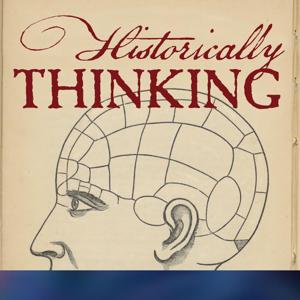
    With me to discuss Giambattista Vico are the two most recent translators of The New Science, an edition published early this year by Yale University Press. Jason Taylor is Associate Professor of Philosophy at Regis College; and Robert Miner is Professor of Philosophy at Baylor University. As you'll see from the conversation, the picture above is actually very, very important.
    1 hr 31 min
  • Episode 149: Edges Are Interesting, or, a History of Eastern Europe
    What is a people? What is a nation? Why do some peoples insist that nations must be synonymous with their particular group of people? And why are others content to be simply part of larger nations composed of many peoples?
    These are some of the questions that John Connelly addresses in his new book From Peoples into Nations: A History of Eastern Europe, published early this year. Nor are they the only questions with which Connelly is preoccupied. Why exactly is the history of Eastern Europe over the last two centuries one of conflict? Was this inevitable? Were these peoples always atagonistic towards one another? The answers that he gives may surprise you.
    John Connelly is Professor of History and Director of the Institute for East European, Eurasian, and Slavic Studies at the University of California, Berkeley. Past books by Professor Connelly include Captive University: The Sovietization of East German, Czech, and Polish Higher Education, 1945-1956 (University of North Carolina Press, 2000) and From Enemy to Brother: The Revolution in Catholic Teaching on the Jews (Harvard University Press, 2012).
    1 hr 13 min
  • Episode 148: Land of Tears, or, the Exploitation of the Congo
    Between 1870 and 1900, the Congo River basin became "one of the most brutally exploited places on earth." Traders in slaves and natural resources; explorers; and builders of would-be empires entered it from the west, east, and north. They were Arab, English, Belgian, French, and even occasionally American. What they entered into was an ecosystem and culture dominated by the Congo River and its navigation, a complex world that was soon irreparably destroyed. Robert Harms in his new book Land of Tears: The Exploration and Exploitation of Equatorial Africa does not focus simply on the interlopers into the Congo, or what happened after they entered, but what existed before their arrival. Nor does he allow villains to be easily chosen; it is soon clear that even those with the best of intentions in the Congo ended up assisting in villainy.
    Robert Harms is the Henry J. Heinz Professor of History and African Studes at Yale University. Professor Harms has written on both African history, and on the slave trade from and within Africa.
    1 hr 9 min
  • From the Archive: Blood Letters
    Given events in China, I thought it might be good to go back to the archive and to one of the most important, and also the most moving, conversations I've had. Recorded in Professor Lian Xi's office at Duke Divinity School, he and I discuss Lin Zhao's life and times, the survival of her writings, and her growing influence in modern China. Please listen, and share with others interested in history, China, human rights, and the triumph of the human person over tyranny.
    In 1960, a poet and journalist named Lin Zhao was arrested by the Communist Party of China and sent to prison for re-education. Years before, she had –at approximately the same time– converted to both Christianity and to Maoism. In prison she lost the second faith but clung to the first.
    She is, judges her biographer Lian Xi, the only Chinese citizen to have openly and steadfastly opposed Mao and his regime–denouncing lies such as those conveyed in the "Great Leap Forward" poster, reproduced above. From her cell, Lin wrote long poems and essays, some written in her own blood, denouncing those who had brought China into such a condition of misery and oppression.
    Eventually she was judged incapable of re-education and executed. Her family was billed (as was typical) for the cost of the bullet that ended her life.
    But Lin Zhao's writings survived: Totalitarian societies are also bureaucratic ones, strangely loath to destroy even the evidence of their own tyranny. When Lin Zhao's sentence was commuted during the rule of Deng Xiaoping, her family gained access to her work.
    In 21st century China, these writings have made her a prophet of change and a voice denouncing oppression. They have also made her as much an opponent of the current government as she was of Mao's dictatorship.
    For Further Investigation
    Lian Xi, Blood Letters: The Untold Story of Lin Zhao, a Martyr in Mao's China (Basic Books, 2018)
    Xi Lian, bio at Duke Divinity School website
    Review of Blood Letters in the South China Morning Post
    Xi Lian gives a short presentation on Lin Zhao

    1 hr 16 min
  • From the Archive: Presidential History
    This is a podcast from deep in the past of this podcast; in fact, it's the second ever episode. It in I talk with my old friend and colleague Michael Connolly about "Presidential History." It's a category I'm not particularly fond of, no more than I am "presidential historians". But Michael pushes back here against me and other skeptics, arguing that given public interest in presidential history, Connolly asserts, historians disregard it at their own risk. He argues that presidential history is a very real and necessary sub-discipline.
    He also surveys past presidents, and argues that the way in which we assess them is often mistaken. Where else can you find a discussion of Warren Harding, Calvin Coolidge, and James Buchanan?
    Books, Articles, and Links to Things Mentioned in the Conversation
    Michael Connollly, Capitalism, Politics, and Railroads in Jacksonian New England
    Jordan Michael Smith, "The Letters the Harding Family Didn't Want You to See." The New York Times, July 7, 2014.
    The Harding-Fulton Correspondence, Library of Congress
    The Center for Presidential History, Southern Methodist University
    The Miller Center, University of Virginia
    Warren Harding House and Tomb
    Calvin Coolidge Historic Site
    Wheatland, Home of President James Buchanan
    56 min
  • Episode 146: The Historically Informed Investment Portfolio; or, the Historian as Financial Analyst
    My guest is Daniel Peris, a historian trained in the history of modern Russia. But by day he is Senior Vice President and Senior Portfolio Manager at Federated Investors in Pittsburgh, PA. He is the author of three books on investing, the most recent of which is Getting Back to Business: Why Modern Portfolio Theory Fails Investors and How You Can Bring Common Sense to Your Portfolio. But he’s also the author of Storming the Heavens: The Soviet League of the Militant Godless. Yet oddly enough, for a podcast called Historically Thinking, we’re going to be talking about the first book—the one on portfolio investing, not the one on Soviet religious policy
    Why? Because I want to know if historical thinking can be applied to investing. If it can, then how is that done? Daniel has given a lot of thought to that question, as you'll find out in the course of the conversation. And if you'd like to hear more of Daniel, he's a regular host at New Books in Finance, one of the great podcasts from the New Books Network.
    1 hr 3 min
  • Episode 145: The Newburgh Conspiracy
    On March 15, 1783, a group of some 100 officers of the Continental Army were gathered in the Temple of Virtue, a meeting hall built in their winter encampment near New Windsor, NY (a reconstruction is pictured above). They were there to “consider the late letter from our Representative in Philadelphia” read an unsigned note that circulated around the army’s camp and “what measure (if any) should be adopted, to obtain that redress of grievances, which they seem to have solicited in vain.”
    This was the crisis moment of what historians have taken to calling the Newburgh Conspiracy. But what was it? Who was conspiring, if anyone, and what were their goals? And was the American Revolution really in jeopardy at this moment?
    These and other question are addressed by David Head in his new book A Crisis of Peace: George Washington, the Newburgh Conspiracy, and the Fate of the American Revolution. David Head is Professor of History at the University of Central Florida in Orlando. This is his fourth book.
    1 hr 18 min

About Historically Thinking

From the publisher's feed

We believe that when people think historically, they are engaging in a disciplined way of thinking about the world and its past. We believe it gives thinkers a knack for recognizing nonsense; and that…

More shows like Historically Thinking

The LRB Podcast by The London Review of Books

The LRB Podcast

301 Listeners

More or Less by BBC Radio 4

More or Less

873 Listeners

In Our Time by BBC Radio 4

In Our Time

5,485 Listeners

HistoryExtra podcast by Immediate

HistoryExtra podcast

3,199 Listeners

The Infinite Monkey Cage by BBC Radio 4

The Infinite Monkey Cage

1,907 Listeners

EconTalk by Russ Roberts

EconTalk

4,275 Listeners

Conversations with Tyler by Mercatus Center at George Mason University

Conversations with Tyler

2,452 Listeners

Tides of History by Audible /  Patrick Wyman

Tides of History

6,224 Listeners

Cautionary Tales with Tim Harford by Pushkin Industries

Cautionary Tales with Tim Harford

5,080 Listeners

The Bunker – Your daily news Deep Dive by Podmasters

The Bunker – Your daily news Deep Dive

102 Listeners

The Old Front Line by Paul Reed

The Old Front Line

181 Listeners

The Rest Is History by Goalhanger

The Rest Is History

15,674 Listeners

Empire: World History by Goalhanger

Empire: World History

2,464 Listeners

Disorder by Jason Pack

Disorder

106 Listeners

Strong Message Here by BBC Radio 4

Strong Message Here

57 Listeners