
Sign up to save your podcasts
Or



Based on Podcast App listening data
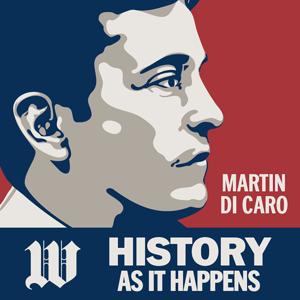
This is the second episode in an occasional series that will focus on slavery, the Constitution, and the ongoing debate over the meaning of the American founding. The first episode with historian Joseph Ellis dropped on Feb. 1.
In a sense it may seem odd that Americans continue to argue over what the Constitution says about slavery. After all, the South's "peculiar institution" was forever abolished in 1865. But we know this is not merely an academic issue or legalistic debate. The racism that underpinned human chattel slavery in the antebellum United States persisted in new forms after the Civil War. New interpretations, from The 1619 Project on the left to 1776 Unites on the right, have emerged amid a tumultuous reckoning with the nation's past, forcing us to revisit the morally unresolvable contradictions of the founding generation. In this episode, Pulitzer Prize-winning historian Alan Taylor weighs in on why the Constitution's compromises over (and protections for) slavery often overshadow the importance of abolition in modern discourse.
Go to historyasithappens.com to learn more.
Hosted by Simplecast, an AdsWizz company. See pcm.adswizz.com for information about our collection and use of personal data for advertising.
Cold War historian Mary Elise Sarotte says a new, more dangerous form of that 20th century conflict may descend upon Europe because of Russia's unprovoked invasion of Ukraine. The nuclear weapons are still around, although fewer in number, but gone are the climate of detente, mutual trust, and most of the major arms control treaties that marked the end of the Reagan years and the early 1990s. The author of "Not One Inch: America, Russia, and the Making of Post-Cold War Stalemate," Sarotte argues the way NATO expanded to the east helped ruin U.S.-Russia relations, but it is far from the only explanation for a war launched by Russian revanchists.
Go to historyasithappens.com to learn more.
Hosted by Simplecast, an AdsWizz company. See pcm.adswizz.com for information about our collection and use of personal data for advertising.
What if Russia were a thriving democratic society today? Would there be war in Ukraine? Maybe these are impossible questions to answer at the moment, but important as it is to consider the factor of NATO enlargement after the Cold War, it is equally vital to understand Russian's internal dynamics when assessing the causes of Russia's unprovoked war in Ukraine. When the USSR left the historical stage, the new Russian state tried to complete the transition from Communist dictatorship and a command economy to democracy and free market capitalism. Well before Vladimir Putin rose to power, this transition, which would have been difficult under the best of circumstances, had already disastrously failed. In this episode Veronica Anghel, an expert on Eastern European politics and security, discusses the critical 1990s in Russia, as well as what the war in Eastern Europe today will mean for "strongman politics" and refugees.
Go to historyasithappens.com to learn more.
Hosted by Simplecast, an AdsWizz company. See pcm.adswizz.com for information about our collection and use of personal data for advertising.
This conversation with Georgetown University historian Michael Kazin was featured on C-SPAN's 'American History TV.' Kazin discusses his new book, "What It Took To Win," which is about the history of the Democratic Party from its 19th century origins to present.
Go to historyasithappens.com to learn more.
Hosted by Simplecast, an AdsWizz company. See pcm.adswizz.com for information about our collection and use of personal data for advertising.
"There is no room in this party for apologists for Putin," former Vice President Mike Pence is said to have told an audience of GOP donors in the days after Russia invaded Ukraine. Why would a major Republican politician need to clarify that? The de facto leader of the party, Donald Trump, had praised Putin in a radio interview, and then at CPAC Trump defended his remarks. Things have gotten so strange that Rep. Liz Cheney, stalwart conservative, says her party now has a "Putin wing." In this episode, The National Review's Charles C. W. Cooke discusses why some figures on the right have taken this illiberal lurch. Most conservatives, Cooke says, disdain Putin for a ruthless tyrant, not someone worthy of admiration.
Go to historyasithappens.com to learn more.
Hosted by Simplecast, an AdsWizz company. See pcm.adswizz.com for information about our collection and use of personal data for advertising.
When Nixon opened doors to China a half century ago, that country was reeling from the cascading disasters of Mao's rule. Today, China is vying to surpass the U.S. position in global leadership. If the American empire is itself in terminal decline, then what of the broader world order established by American power after 1945, an order based on the inviolability of national borders and the principle of universal human rights? In this episode, historian Alfred McCoy argues the world is witnessing a historic shift from the West to the East, and China will soon be the preeminent economic and military power on the Eurasian landmass. But will climate change upend China's ambitions? The science on rising seal levels and warming temperatures is clear: yes.
Go to historyasithappens.com to learn more.
Hosted by Simplecast, an AdsWizz company. See pcm.adswizz.com for information about our collection and use of personal data for advertising.
Russian president Vladimir Putin is "a very dangerous beast," says preeminent military historian Antony Beevor. As war rages in Ukraine, an unpredictable dictator may risk expanding the war to involve NATO members such as the Baltic states. Putin has fallen into the same trap as past Russian and Soviet leaders, obsessed with a perceived encirclement by implacable, hostile powers to the west. In this episode, Sir Antony Beevor explains the deep historical roots of the conflict in Eastern Europe, and the ways in which Putin is trying to turn back the clock to an imperial past.
Go to historyasithappens.com to learn more.
Hosted by Simplecast, an AdsWizz company. See pcm.adswizz.com for information about our collection and use of personal data for advertising.
The Russian invasion of Ukraine is raising questions left unresolved in the immediate aftermath of the Cold War, when President George Bush hoped to bequeath to his successors a peaceful, stable Europe whose nations would remain part of NATO. Among those questions is whether Russia would integrate with Europe, as the Soviet Union's former republics (such as the Baltic states) and satellite states (such as Poland) joined the Western military alliance. With its unprovoked attack on Ukraine, Russia has turned into a pariah state as President Vladimir Putin attempts to reverse his nation's diminished geopolitical status. In this episode, historian Jeffrey Engel discusses the causes of the first major war in Eastern Europe since 1945. It was not inevitable that relations between the West and the former Soviet Union would deteriorate, but certain problems – such as NATO's enlargement, Ukraine's pro-West revolution in 2014, and Putin's revanchist ideas – helped pave the road to war in 2022.
Go to historyasithappens.com to learn more.
Hosted by Simplecast, an AdsWizz company. See pcm.adswizz.com for information about our collection and use of personal data for advertising.
In 1965, after overcoming the threat of a filibuster, large bipartisan majorities in Congress passed the landmark Voting Rights Act. The act was reauthorized five times from 1970 through 2006 with the support of both Democratic and Republican presidents. But in the America of 2022, Democrats' two major voting rights bills have almost no Republican support. The GOP says the bills amount to a partisan power grab and are unnecessary because voter turnout has been strong. Democrats argue minority voting rights are under threat. How did we get to this point? Historian Peniel Joseph explains why the bipartisan consensus around voting rights has dissolved.
Go to historyasithappens.com to learn more.
Hosted by Simplecast, an AdsWizz company. See pcm.adswizz.com for information about our collection and use of personal data for advertising.
Did you know that since 1860 more than 400 rabbis have delivered the opening prayer or blessing that starts each day of Congress? In a nation founded upon religious toleration, articulated in George Washington's letter to the Jews of Newport in 1790, some remarkable rabbis have prayed at the very center of American democracy. We now know more about this overlooked slice of history because of Howard Mortman, the communications director at C-SPAN. His first book, "When Rabbis Bless Congress," documents the life and times of Jewish leaders who left their mark on the U.S. Capitol.
Go to historyasithappens.com to learn more.
Hosted by Simplecast, an AdsWizz company. See pcm.adswizz.com for information about our collection and use of personal data for advertising.
From the publisher's feed
Ranked by our users in the last 21 days
8,441 Listeners
1,100 Listeners

740 Listeners

6,280 Listeners

719 Listeners
901 Listeners
19 Listeners

2,033 Listeners

7,132 Listeners
2,399 Listeners

15,917 Listeners

208 Listeners

384 Listeners
492 Listeners

472 Listeners