
Sign up to save your podcasts
Or

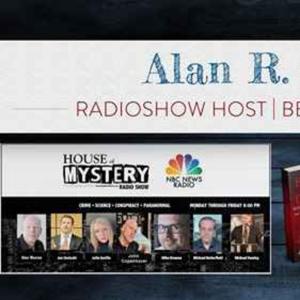


This is the new, complete, single-book edition! If you previously read the three separate books, you do NOT need to buy this one again!
According to the actual police department files and evidence from the original murder cases, there was no "Zodiac Killer," only some phony letters to the SF Chronicle claiming credit for some unrelated murders, followed by an exploitative book full of falsehoods by Robert Graysmith (real name: Robert Smith, Jr). This book thoroughly debunks Graysmith's 1986 book ZODIAC, explores in detail the cultural and literary environment that inspired the original Zodiac hoax, and explains what really happened in each murder, who real suspects were, what the real evidence was--and who REALLY wrote the "Zodiac Killer" letters!
This new edition includes ALL THREE original books: The Great Zodiac Killer Hoax of 1986, The Great Zodiac Killer Hoax of 1969, and the Myth of the Zodiac Killer!
Support this show http://supporter.acast.com/houseofmysteryradio.
Hosted on Acast. See acast.com/privacy for more information.
The Question Remains: Who is the Zodiac?
Only one killer solves the riddle of the Zodiac. Theodore Kaczynski, dubbed the Unabomber, fills in the gaps of the Zodiac mystery to present the full picture of both criminal careers.
Ted Kaczynski:
— had experience building bombs which he threatened to use on school children as the Zodiac, and that he subsequently used to kill his victims as the Unabomber
— had a psychotic break at age 24, where he convinced himself that he was free of any moral or ethical standard that would prevent him from killing anyone he chose
— was a professor at UC Berkeley as the Zodiac murders began, and had easy access to all of the murder sites and victims
— was a prolific letter writer whose primary mode of communication was the written word, just like the Zodiac killer
— was a genius-level mathematician who was fully capable of creating the Zodiac ciphers, as demonstrated by the codes found in his cabin after his capture in 1996
— as the Zodiac, acted out his plan for gaining the attention of the public that he later presented in his Unabomber manifesto
— possessed the type of weapons, disguises, and margin notes that would be expected of the Zodiac serial killer
The evidence is there. The answer is Ted Kaczynski.
Support this show http://supporter.acast.com/houseofmysteryradio.
Hosted on Acast. See acast.com/privacy for more information.
The FBI experts were so confident that the solution was valid that the bureau would essentially close the file on the 340 cipher. “FBI is amending their original report to include our solution as the actual solution,” David reported, “Then they’ll submit it back to the San Francisco Police Department (the original requestor of assistance with the cipher in 1969).”
The solution revealed a message which seemed consistent with the Zodiac’s persona and character as displayed in his previous communications, including the deciphered text of the 408 symbol cipher. In that message, the killer wrote that he was killing people in order to collect slaves to serve him during his afterlife in “paradice.” The Zodiac also included the same misspelling in text using the words “paradice” and “slaves” to form a cross. In the solution to the 340, the writer returned to this theme and declared that he was not afraid of death.
I HOPE YOU ARE HAVING LOTS OF FUN IN TRYING TO CATCH ME THAT WASN’T ME ON THE TV SHOW WHICH BRINGS UP A POINT ABOUT ME I AM NOT AFRAID OF THE GAS CHAMBER BECAUSE IT WILL SEND ME TO PARADICE ALL THE SOONER BECAUSE I NOW HAVE ENOUGH SLAVES TO WORK FOR ME WHERE EVERYONE ELSE HAS NOTHING WHEN THEY REACH PARADICE SO THEY ARE AFRAID OF DEATH I AM NOT AFRAID BECAUSE I KNOW THAT MY NEW LIFE WILL BE AN EASY ONE IN PARADICE DEATH
Support this show http://supporter.acast.com/houseofmysteryradio.
Hosted on Acast. See acast.com/privacy for more information.
Perhaps no president has a more ambiguous reputation than LBJ. A brilliant tactician, he maneuvered colleagues and turned bills into law better than anyone. But he was trailed by a legacy of underhanded dealings, from his “stolen” Senate election in 1948 to kickbacks he artfully concealed from deals engineered with Texas wheeler-dealer Billie Sol Estes and defense contractors like his longtime supporter Brown & Root. On the verge of investigation, Johnson was reprieved when he became president upon JFK's assassination. Among the remaining mysteries has been LBJ's relationship to Mac Wallace who, in 1951, shot a Texas man having an affair with LBJ's loose-cannon sister Josefa, also Wallace's lover. When arrested, Wallace cooly said "I work for Johnson…I need to get back to Washington." Charged with murder, he was overnight defended by LBJ's powerful lawyer John Cofer, and though convicted, amazingly received a suspended sentence. He then got high-security clearance from LBJ friend and defense contractor D.H. Byrd, which the Office of Naval Intelligence tried to revoke for 11 years without success.
Using crucial Life magazine and Naval Intelligence files and the unredacted FBI files on Mac Wallace, never before utilized by others, investigative writer Joan Mellen skillfully connects these two disparate Texas lives and lends stark credence to the dark side of Lyndon Johnson that has largely gone unsubstantiated.
Support this show http://supporter.acast.com/houseofmysteryradio.
Hosted on Acast. See acast.com/privacy for more information.
The Man Who Killed Kennedy: The Case Against LBJ hit the New York Times bestseller list the week of the 50th Anniversary of the assassination of President John F. Kennedy. Consummate political insider Roger Stone makes a compelling case that Lyndon Baines Johnson had the motive, means, and opportunity to orchestrate the murder of JFK. Stone maps out the case that LBJ blackmailed his way on the ticket in 1960 and was being dumped in 1964 to face prosecution for corruption at the hands of his nemesis attorney Robert Kennedy. Stone uses fingerprint evidence and testimony to prove JFK was shot by a long-time LBJ hit man—not Lee Harvey Oswald.
President Johnson would use power from his personal connections in Texas, from the criminal underworld, and from the United States government to escape an untimely end in politics and to seize even greater power. President Johnson, the thirty-sixth president of the United States, was the driving force behind a conspiracy to murder President Kennedy on November 22, 1963.
In The Man Who Killed Kennedy, you will find out how and why he did it.
Legendary political operative and strategist Roger Stone has gathered documents and uses his firsthand knowledge to construct the ultimate tome to prove that LBJ was not only involved in JFK’s assassination, but was in fact the mastermind.
Skyhorse Publishing, as well as our Arcade imprint, are proud to publish a broad range of books for readers interested in history--books about World War II, the Third Reich, Hitler and his henchmen, the JFK assassination, conspiracies, the American Civil War, the American Revolution, gladiators, Vikings, ancient Rome, medieval times, the old West, and much more. While not every title we publish becomes a national bestseller, we are committed to books on subjects that are sometimes overlooked and to authors whose work might not otherwise find a home
Support this show http://supporter.acast.com/houseofmysteryradio.
Hosted on Acast. See acast.com/privacy for more information.
While there haven't been many Secret Service related books about U.S. presidents, the ones still in print (and even those long out of print) are often sanitized memoirs of a politically correct nature or "tell-all" tabloid historical junk meant merely for entertainment purposes. The Not-So-Secret Service provides the facts with the bark off, so to speak, and reveals politically incorrect information of a decidedly unsafe nature. It may be controversial and against the grain, but this book is heavily documented and timely, as the Secret Service guards our political candidates, foreign dignitaries, and, of course, the President, the first family and the ex-presidents and their families
Support this show http://supporter.acast.com/houseofmysteryradio.
Hosted on Acast. See acast.com/privacy for more information.
Abraham Zapruder’s film gets all the attention, but there was another eyewitness to history whose tale has yet to be told. In this eye-opening account, Gayle Nix Jackson tells the story of her grandfather, Orville Nix, a man with a camera who happened to be on the ground for a life-changing—world-changing, and in some ways world-ending—event: the murder of President Kennedy in Dallas in 1963.
The Missing JFK Assassination Film is not a typical JFK assassination book. This book does not attempt to answer the question of who killed John F. Kennedy; instead, it addresses why we should question the actions of those involved and why the truth was withheld from the people. Though copies of Orville’s film exist, the original film is missing. Why? The FBI confiscated the photographer’s camera for several months, then returned it in pieces. Were these actions sinister or were they just examples of governmental incompetence? The Missing JFK Assassination Film exposes information about the House Select Committee staff’s involvement in the missing film. The author’s interviews with people who were close to Orville shed light on the government’s involvement with the filmmaker. And her memories of growing up with her beloved grandfather—and on how his views changed after that fateful day—fuel a quest Jackson is still on to find the film
Support this show http://supporter.acast.com/houseofmysteryradio.
Hosted on Acast. See acast.com/privacy for more information.
A major work of documentary history–the brilliantly edited and annotated transcripts, most of them never before published, of the presidential conversations of Lyndon B. Johnson regarding the Kennedy assassination and its aftermath.
The transition from John F. Kennedy to Johnson was arguably the most wrenching and, ultimately, one of the most bitter in the nation’s history. As Johnson himself said later, “I took the oath, I became president. But for millions of Americans I was still illegitimate, a naked man with no presidential covering, a pretender to the throne….The whole thing was almost unbearable.”
In this book, Max Holland, a leading authority on the assassination and longtime Washington journalist, presents the momentous telephone calls President Johnson made and received as he sought to stabilize the country and keep the government functioning in the wake of November 22, 1963. The transcripts begin on the day of the assassination, and reveal the often chaotic activity behind the scenes as a nation in shock struggled to come to terms with the momentous events. The transcripts illuminate Johnson’s relationship with Robert F. Kennedy, which flared instantly into animosity; the genuine warmth of his dealings with Jacqueline Kennedy; his contact with the FBI and CIA directors; and the advice he sought from friends and mentors as he wrestled with the painful transition.
We eavesdrop on all the conversations–including those with leading journalists–that persuaded Johnson to abandon his initial plan to let Texas authorities investigate the assassination. Instead, we observe how he abruptly established a federal commission headed by a very reluctant chief justice of the Supreme Court, Earl Warren. We also learn how Johnson cajoled and drafted other prominent men–among them Senator Richard Russell (who detested Warren), Allen Dulles, John McCloy, and Gerald Ford–into serving.
We see a sudden president under unimaginable pressure, contending with media frenzy and speculation on a worldwide scale. We witness the flow of inaccurate information–some of it from J. Edgar Hoover–amid rumors and theories about foreign involvement. And we glimpse Johnson addressing the mounting criticism of the Warren Commission after it released its still-controversial report in September 1964.
The conversations rendered here are nearly verbatim, and have never been explained so thoroughly. No passages have been deleted except when they veered from the subject. Brought together with Holland’s commentaries, they make riveting, hugely revelatory reading.
Support this show http://supporter.acast.com/houseofmysteryradio.
Hosted on Acast. See acast.com/privacy for more information.
Donald Sutherland Swanson was born in the remote far north of Scotland, leaving for London in 1867 at the age of 19 and initially working as a City clerk.
The following year he joined the Metropolitan Police and began patrolling the streets of the capital as a uniformed constable. 35 years later he retired as Superintendent of the Criminal Investigation Department, the top detective in the country.
Set against the backdrop of the developing Metropolitan Police, this book tells the story of a life and career which included railway murderers, grave robbers, fraudulent mediums, Jack the Ripper, the Philosopher’s Stone, Fenian dynamite campaigns, shocking revelations about the aristocracy and a crazed captain with sea serpents in a bottle.
Linking it all together is Donald Swanson, whose application letter to the Metropolitan Police spoke of a desire for “a good opening”. After reading his story, the reader will be left in little doubt that he made the most of the opportunities which came his way.
Support this show http://supporter.acast.com/houseofmysteryradio.
See acast.com/privacy for privacy and opt-out information.
In the autumn of 1888, a serial killer known as Jack the Ripper stalked the East End of London. He was never identified, but hundreds of people were accused. Some were known to the authorities at the time, and others were named by later researchers. The truth about them, and the reasons why they came under suspicion, is often lost in a plethora of opinions and misinformation. For the first time, this book presents the evidence against 333 suspects. They include the publican who painted his dog, the first woman sentenced to the electric chair, the writer of the Red Flag, the man with a thousand convictions, Britain’s oldest Prime Minister, and many others. People from all walks of nineteenth century life, representing many different nationalities and professions. United by a link, however tenuous, to the most famous murderer in history.
Support this show http://supporter.acast.com/houseofmysteryradio.
Hosted on Acast. See acast.com/privacy for more information.
From the publisher's feed
Many talented people's writings and movies address the deep, dark mysteries of our world — across both Fiction (Horror, Crime, Sci-Fi, Action-Adventure, Romance, LGBT) and Non-Fiction (Crime,…
Please step into the “House of Mystery” 5 nights a week and join us as we go deep into the creative process behind our esteemed guests' works.
Past Guests in Non-Fiction have included Marcia Clark (of the O.J. Simpson trial), Robert Kennedy, Jr., Jesse Ventura, Burl Barer, Nancy Grace, Aphrodite Jones, Mark Olshaker, Anne Bremner (on Amanda Knox), F. Lee Bailey, Tom Mesereau (on Bill Cosby, Michael Jackson), Roger Stone (on the JFK Assassination), Dan Abrams, Juan Martinez (on Jodi Arias), Michael Hawley (on Jack the Ripper), and Michael Butterfield (on the Zodiac Killer).
Past Guests in Fiction have included Eric Shapiro, George Weir, John Copenhaver, Lee Goldberg, Gregory Ashe, J.D. Horn, Rick Poldark, Greg F. Gifune, Michael Bland, Geoff Symon, Gabriel Rottello, James Polchin, Lev Raphael, and Robert Fieseler.
Support this show http://supporter.acast.com/houseofmysteryradio.
Hosted on Acast. See acast.com/privacy for more information.
45,949 Listeners

12,663 Listeners
142 Listeners

369,469 Listeners

407 Listeners
9,811 Listeners
587 Listeners
343 Listeners

2 Listeners