
Sign up to save your podcasts
Or



Groundbreaking history and exciting investigative journalism combine in a work jam-packed with newly unearthed finds and fresh insights that pull us deeper into the world of Jack the Ripper and closer to the man himself. Wescott does not promote a suspect but instead comprehensively investigates the murders of Polly Nichols and Elizabeth Stride, bringing to light new medical evidence, crucial new material on important witnesses, and – revealed for the first time – the name of a woman who may have met Jack the Ripper and survived to tell the tale.
Also discussed in this book:
Charles Lechmere, recently named as a suspect in the Jack the Ripper documentary, Conspiracy: The Missing Evidence, is restored to his proper place in history as an innocent witness.
Walter Sickert, the subject of Patricia Cornwell’s Jack the Ripper books, was not the Ripper, but is revealed here to have been only one of several artists and poets who may have been acquainted with victim Mary Kelly.
Bruce Robinson’s Jack the Ripper book, They All Love Jack, controversially endorsed the myth that fruiterer Matthew Packer sold grapes to Liz Stride which were later found on her hand. Around this was constructed an intricate police conspiracy. In Ripper Confidential the truth is exposed and these events are proved beyond doubt to have never taken place.
Was Elizabeth Stride a Ripper victim? For the first time, all the myths are cleared away and the facts are looked at in great detail.
The contemporary investigators speak out from the past and tell us what they thought of one of the Ripper’s most enigmatic and controversial clues – the chalk-written message on the wall in Goulston Street. Did the Ripper write it and what might it actually have said?
A comprehensive look is taken at Berner Street witness, Israel Schwartz. Why did he disappear within weeks from the written record? Was or was he not a legitimate witness? This and much more is discussed, and for the first time it’s revealed why he did not give evidence at the inquest, why the two best known versions of his story are inconsistent, and – most crucially – that he was not the last person to see Liz Stride with a man who was probably her killer.
Support this show http://supporter.acast.com/houseofmysteryradio.
Hosted on Acast. See acast.com/privacy for more information.
At age 40 California attorney Jeff Mudgett is stunned to learn a gruesome family secret; his great-great-grandfather was Herman H. Mudgett a.k.a Dr. H. H. Holmes the man considered to be America's first "serial killer." Obsessed with learning more Jeff follows a bloody trail of hidden clues and historical facts which will hopefully strengthen his case and prove his theory that Holmes had travelled to England to commit the "Jack the Ripper" murders. Jeff teams up with a top-notch crime detective who will help link these two sinister historical characters together by connecting century-old clues with modern day methods of investigation.
Support this show http://supporter.acast.com/houseofmysteryradio.
Hosted on Acast. See acast.com/privacy for more information.
An investigation of the evidence for links between Dracula and Jack the Ripper, containing original research and previously unpublished and rare materials/illustrations—as well as an evocative exploration of the theater and esoteric scene in 1880s LondonSince its publication in 1897, there have been suggestions that the fictional exploits of Dracula were more closely associated with Jack the Ripper than a Transylvanian Count. Historian Neil Storey provides the first British-based investigation of the sources used by Stoker and paints an evocative portrait of Stoker, his influences, friends, and the London he knew in the late 19th century. Among Stoker's group of friends, however, were dark shadows. Storey explores how Stoker created Dracula out of the climate of fear that surrounded the Jack the Ripper murders in 1888. Add to this potent combination the notion that Stoker may have known Jack the Ripper personally and hidden the clues to this terrible knowledge in his book. The premise is seductive and connects some of the giants of stage and literature of late Victorian Britain. Having gained unprecedented access to the unique archive of one of Stoker's most respected friends and the dedicatee of Dracula, Storey sheds new light on both Stoker and Dracula, and reveals startling new insights into the links between Stoker's creation and the most infamous murderer of all time
Support this show http://supporter.acast.com/houseofmysteryradio.
Hosted on Acast. See acast.com/privacy for more information.
WINNER - Indie Reader Award for Best True Crime Book
WINNER - Independent Publisher (IPPY) Bronze Medal Award for Best History Book 2014
FINALIST - Indie Excellence Award for Best True Crime Book (second place)*
Jack the Ripper stalked the streets of London’s East End from August through November of 1888 in what is dubbed the ‘Autumn of Terror’. However, the grisly ripping of Polly Nichols on August 31st was not the first unsolved murder of the year. The April murder of Emma Smith and the August murder of Martha Tabram both occurred on bank holidays. They baffled the police and press alike and were assumed by the original investigators to have been the first murders in the series. Were they correct?
In this provocative work of literary archeology, author Tom Wescott places these early murders in their proper historical context and digs to unearth new evidence and hard facts not seen in over 125 years.
The Bank Holiday Murders is the only book of its kind. It eschews the tired approach of unsatisfying ‘final solutions’ in favor of solid research, logical reasoning and new information. The clues followed are not drawn from imagination but from the actual police reports and press accounts of the time. The questions asked by Wescott are ones first suggested by the original investigators but lost to time until now. The answers provided are compelling and sometimes explosive.
Among the revelations are:
The Bank Holiday Murders: The True Story of the First Whitechapel Murders brings us closer than ever to the actual truth behind the Jack the Ripper story and is sure to appeal to fans of Paul Begg, Stewart P. Evans, Philip Sugden, Donald Rumbelow, Ann Rule, Patricia Cornwell (Chasing the Ripper) as well as readers of Victorian true crime, true life mysteries and historical cold cases in genera
Support this show http://supporter.acast.com/houseofmysteryradio.
Hosted on Acast. See acast.com/privacy for more information.
After 125 years of theorizing and speculation regarding the identity of Jack the Ripper, Russell Edwards is in the unique position of owning the first physical evidence relating to the crimes to have emerged since 1888. This evidence is from one of the crime scenes, and has now been rigorously examined by some of the most highly-qualified forensic scientists in the country who have ascertained its true provenance. With the help of modern forensic techniques, Russell's ground-breaking discoveries provide conclusive answers to many of the most challenging mysterious surrounding the case.
Support this show http://supporter.acast.com/houseofmysteryradio.
Hosted on Acast. See acast.com/privacy for more information.
In late 1984 Vic learned that a drifter named Henry Lee Lucas was claiming to have killed over 300 people across the country. The Texas Rangers had custody of Lucas and would announce they solved a new murder every few days. When Lucas confessed to three murders in McLennan County Feazell became suspicious and wanted the Lucas confessions examined more closely. Vic didn’t believe that anyone could kill that many people without leaving any witnesses, fingerprints or other evidence behind.
Support this show http://supporter.acast.com/houseofmysteryradio.
See acast.com/privacy for privacy and opt-out information.
Support this show http://supporter.acast.com/houseofmysteryradio.
See acast.com/privacy for privacy and opt-out information.
A major work of documentary history–the brilliantly edited and annotated transcripts, most of them never before published, of the presidential conversations of Lyndon B. Johnson regarding the Kennedy assassination and its aftermath.
The transition from John F. Kennedy to Johnson was arguably the most wrenching and, ultimately, one of the most bitter in the nation’s history. As Johnson himself said later, “I took the oath, I became president. But for millions of Americans I was still illegitimate, a naked man with no presidential covering, a pretender to the throne….The whole thing was almost unbearable.”
In this book, Max Holland, a leading authority on the assassination and longtime Washington journalist, presents the momentous telephone calls President Johnson made and received as he sought to stabilize the country and keep the government functioning in the wake of November 22, 1963. The transcripts begin on the day of the assassination, and reveal the often chaotic activity behind the scenes as a nation in shock struggled to come to terms with the momentous events. The transcripts illuminate Johnson’s relationship with Robert F. Kennedy, which flared instantly into animosity; the genuine warmth of his dealings with Jacqueline Kennedy; his contact with the FBI and CIA directors; and the advice he sought from friends and mentors as he wrestled with the painful transition.
We eavesdrop on all the conversations–including those with leading journalists–that persuaded Johnson to abandon his initial plan to let Texas authorities investigate the assassination. Instead, we observe how he abruptly established a federal commission headed by a very reluctant chief justice of the Supreme Court, Earl Warren. We also learn how Johnson cajoled and drafted other prominent men–among them Senator Richard Russell (who detested Warren), Allen Dulles, John McCloy, and Gerald Ford–into serving.
We see a sudden president under unimaginable pressure, contending with media frenzy and speculation on a worldwide scale. We witness the flow of inaccurate information–some of it from J. Edgar Hoover–amid rumors and theories about foreign involvement. And we glimpse Johnson addressing the mounting criticism of the Warren Commission after it released its still-controversial report in September 1964.
Support this show http://supporter.acast.com/houseofmysteryradio.
See acast.com/privacy for privacy and opt-out information.
On a fall evening in Corvallis, Oregon in 1967, 17-year-old Dick Kitchel, a senior at the high school, disappeared after attending a party. Ten days later, his body was spotted by two children as it floated down the Willamette River. He had been beaten and strangled.
The investigation into his murder played out during one of the most dramatic years in America. Life in Corvallis, a college town, had offered a protective, idyllic life to many. But in 1967-68, Viet Nam, a presidential campaign, the assassinations of Martin Luther King Jr. and Robert Kennedy, and the murder of Dick Kitchel changed that.
His friends thought his death was ignored because Dick was from the wrong side of the tracks. Police and the District Attorney thought that they knew who had murdered the boy but never made an arrest. Decades later, a cold case detective believed he, too, had solved the case. However, once again, justice was elusive.
Now nearly 50 years later, a classmate, New York Times bestselling author Rebecca Morris returns to her hometown to write about how the murder changed the town and the lives Dick Kitchel’s friends.
Rebecca Morris is the New York Times bestselling author of If I Can’t Have You – Susan Powell, Her Mysterious Disappearance and the Murder of Her Children, A Killing in Amish Country, Ted and Ann, and other books.
Support this show http://supporter.acast.com/houseofmysteryradio.
Hosted on Acast. See acast.com/privacy for more information.
The moment he found out his brother was missing and presumed dead, Ted Kergan launched a relentless effort to bring two suspected killers—a teenaged-prostitute and her much older drifter boyfriend—to justice and find Gary Kergan’s body. Little did he know his quest would consume a fortune and take thirty years to reach its dramatic conclusion.
Thwarted at first by the fact that his brother’s body could not be located and a new district attorney reluctant to prosecute as a result, Kergen had to keep track of the killers from New Orleans’ notorious French Quarter to Las Vegas and points in between and wait for a break in the case that seemed like it would never come.
Then nearly thirty years later, science, detective work and especially a brother's love and tenacity would combine for a resolution that would end in a dramatic trial in which one of the killers' diary would be a star witness.
Support this show http://supporter.acast.com/houseofmysteryradio.
Hosted on Acast. See acast.com/privacy for more information.
From the publisher's feed
Many talented people's writings and movies address the deep, dark mysteries of our world — across both Fiction (Horror, Crime, Sci-Fi, Action-Adventure, Romance, LGBT) and Non-Fiction (Crime,…
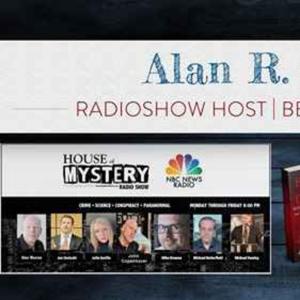
Please step into the “House of Mystery” 5 nights a week and join us as we go deep into the creative process behind our esteemed guests' works.
Past Guests in Non-Fiction have included Marcia Clark (of the O.J. Simpson trial), Robert Kennedy, Jr., Jesse Ventura, Burl Barer, Nancy Grace, Aphrodite Jones, Mark Olshaker, Anne Bremner (on Amanda Knox), F. Lee Bailey, Tom Mesereau (on Bill Cosby, Michael Jackson), Roger Stone (on the JFK Assassination), Dan Abrams, Juan Martinez (on Jodi Arias), Michael Hawley (on Jack the Ripper), and Michael Butterfield (on the Zodiac Killer).
Past Guests in Fiction have included Eric Shapiro, George Weir, John Copenhaver, Lee Goldberg, Gregory Ashe, J.D. Horn, Rick Poldark, Greg F. Gifune, Michael Bland, Geoff Symon, Gabriel Rottello, James Polchin, Lev Raphael, and Robert Fieseler.
Support this show http://supporter.acast.com/houseofmysteryradio.
Hosted on Acast. See acast.com/privacy for more information.
45,953 Listeners

12,663 Listeners
142 Listeners

369,462 Listeners
408 Listeners
9,811 Listeners
587 Listeners
343 Listeners

2 Listeners