
Sign up to save your podcasts
Or

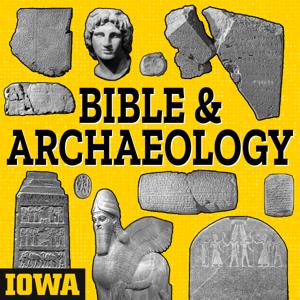

Are the Amarna Letters diplomacy or manipulation?
The Amarna Letters, ancient tablets from Pharaoh Akhenaten’s capital in Egypt, reveal a world of royal drama, political gaslighting, and fragile alliances between the superpowers of the Late Bronze Age. These 3,000-year-old messages between the kings of Egypt, Babylon, Canaan, and the Hittites expose the psychology of empire, but how much can we really trust what these ancient rulers wrote?
This week, Dr. Eric Cline joins us to talk about his new book Love, War, and Diplomacy and to explore what the Amarna Letters reveal about ancient diplomacy, international politics, and the tensions that existed before the Late Bronze Age Collapse. Together, we ask: Who were these kings and envoys? How did early scholars shape our understanding of them? And did anyone see the coming disaster?
👉 Dr. Cline helps us explore:
– What the Amarna Letters really say about ancient diplomacy
– The political psychology of the Late Bronze Age
– How early scholars framed the discovery
– Did the letters foreshadow the collapse of civilization?
🔗 Resources & Links
– Love, War, and Diplomacy
– 1177 B.C.: The Year Civilization Collapsed
– After 1177 B.C.: The Survival of Civilizations
✨ Become a Bible & Archaeology patron on Patreon.
✉️ Send us your questions: [email protected]
🔗 Want to watch the show? Find us on YouTube to see a video recording of this show.
🌐 Everywhere you can find us: Linktree
🎙️ Credits
Guest: Dr. Eric Cline
Hosted, Produced, and Edited by Dr. Jordan Jones
Additional contributions by Mary Kathryn Lichty
The Bible & Archaeology podcast is made with support from Amanda Stone
Bible & Archaeology is a University of Iowa production. The views and opinions expressed on Bible & Archaeology belong solely to the individuals who share them. They do not represent the positions of the University of Iowa or the State of Iowa.
 View all episodes
 By Bible and Archaeology

4.1
3434 ratings
Are the Amarna Letters diplomacy or manipulation?
The Amarna Letters, ancient tablets from Pharaoh Akhenaten’s capital in Egypt, reveal a world of royal drama, political gaslighting, and fragile alliances between the superpowers of the Late Bronze Age. These 3,000-year-old messages between the kings of Egypt, Babylon, Canaan, and the Hittites expose the psychology of empire, but how much can we really trust what these ancient rulers wrote?
This week, Dr. Eric Cline joins us to talk about his new book Love, War, and Diplomacy and to explore what the Amarna Letters reveal about ancient diplomacy, international politics, and the tensions that existed before the Late Bronze Age Collapse. Together, we ask: Who were these kings and envoys? How did early scholars shape our understanding of them? And did anyone see the coming disaster?
👉 Dr. Cline helps us explore:
– What the Amarna Letters really say about ancient diplomacy
– The political psychology of the Late Bronze Age
– How early scholars framed the discovery
– Did the letters foreshadow the collapse of civilization?
🔗 Resources & Links
– Love, War, and Diplomacy
– 1177 B.C.: The Year Civilization Collapsed
– After 1177 B.C.: The Survival of Civilizations
✨ Become a Bible & Archaeology patron on Patreon.
✉️ Send us your questions: [email protected]
🔗 Want to watch the show? Find us on YouTube to see a video recording of this show.
🌐 Everywhere you can find us: Linktree
🎙️ Credits
Guest: Dr. Eric Cline
Hosted, Produced, and Edited by Dr. Jordan Jones
Additional contributions by Mary Kathryn Lichty
The Bible & Archaeology podcast is made with support from Amanda Stone
Bible & Archaeology is a University of Iowa production. The views and opinions expressed on Bible & Archaeology belong solely to the individuals who share them. They do not represent the positions of the University of Iowa or the State of Iowa.

19,521 Listeners

5,576 Listeners
1,855 Listeners

1,482 Listeners

3,295 Listeners

4,029 Listeners

6,005 Listeners

2,065 Listeners

1,662 Listeners

252 Listeners
3,358 Listeners

1,920 Listeners

684 Listeners

228 Listeners

1,455 Listeners