
Sign up to save your podcasts
Or

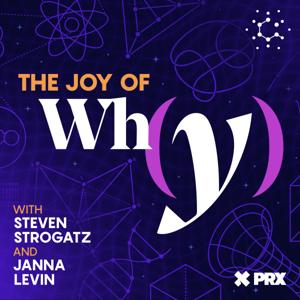

Every time data travels — from smartphones to the cloud, or across the vacuum of space — it relies on a silent but vigilant guardian in the form of error-correcting codes. These codes, baked into nearly every digital system, are designed to detect and repair any errors that noise, interference or cosmic rays might inflict.
In this episode of The Joy of Why, Stanford computer scientist Mary Wootters joins co-host Steven Strogatz to explain how these codes work, and why they matter more than ever. Wootters discusses the evolving list of codes that keep modern communication resilient, and the frontiers in which error correction may have a crucial role, including distributed cloud systems, quantum computing and even DNA-based data storage.
 View all episodes
 By Steven Strogatz, Janna Levin and Quanta Magazine

4.9
495495 ratings
Every time data travels — from smartphones to the cloud, or across the vacuum of space — it relies on a silent but vigilant guardian in the form of error-correcting codes. These codes, baked into nearly every digital system, are designed to detect and repair any errors that noise, interference or cosmic rays might inflict.
In this episode of The Joy of Why, Stanford computer scientist Mary Wootters joins co-host Steven Strogatz to explain how these codes work, and why they matter more than ever. Wootters discusses the evolving list of codes that keep modern communication resilient, and the frontiers in which error correction may have a crucial role, including distributed cloud systems, quantum computing and even DNA-based data storage.

766 Listeners

943 Listeners

321 Listeners

836 Listeners

569 Listeners
547 Listeners

234 Listeners

821 Listeners
1,070 Listeners
4,170 Listeners
2,359 Listeners
506 Listeners
252 Listeners
329 Listeners

21 Listeners

381 Listeners