
Sign up to save your podcasts
Or

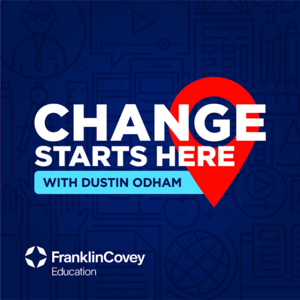

In this episode of Change Starts Here, Kim Yaris explores a pressing question in education: are students and adults less curious than they used to be? In a fast-paced world, the space for wondering is often crowded out by the demand for immediate answers. Yet, workforce research continuously identifies curiosity as a critical, durable skill essential for problem-solving, adaptability, and long-term learning.
Kim dismantles the conventional myth that curiosity is simply a fixed personality trait. Instead, she shares five research insights proving it is highly responsive to its environment. Listeners will learn the neuroscience behind why curiosity emerges when uncertainty feels manageable, and how true engagement often looks more like productive struggle than cheerful exploration. Finally, Kim offers three practical moves for leaders to nurture curiosity in their teams and classrooms: building tiny moments of prediction, normalizing uncertainty, and ensuring questions don't hit a dead end.
Download the Handout: https://resources.franklincovey.com/c/podcast_handout_ep25?x=I8LeIC
Hosts: Kim Yaris, M.Ed. (Associate Director of Research with FranklinCovey Education)
Timestamps:
(00:00 - 01:29) The curiosity question
(01:29 - 02:58) A durable, essential skill
(02:58 - 04:19) The conventional curiosity
(04:19 - 06:19) Five research insights
(06:19 - 08:13) The neuroscience of uncertainty
(08:13 - 09:30) Practice 1: Tiny predictions
(09:30 - 10:28) Practice 2: Normalize uncertainty
(10:28 - 11:20) Practice 3: Avoid dead ends
(11:20 - 12:27) Outro
 View all episodes
 By Franklin Covey Education

4.9
3939 ratings
In this episode of Change Starts Here, Kim Yaris explores a pressing question in education: are students and adults less curious than they used to be? In a fast-paced world, the space for wondering is often crowded out by the demand for immediate answers. Yet, workforce research continuously identifies curiosity as a critical, durable skill essential for problem-solving, adaptability, and long-term learning.
Kim dismantles the conventional myth that curiosity is simply a fixed personality trait. Instead, she shares five research insights proving it is highly responsive to its environment. Listeners will learn the neuroscience behind why curiosity emerges when uncertainty feels manageable, and how true engagement often looks more like productive struggle than cheerful exploration. Finally, Kim offers three practical moves for leaders to nurture curiosity in their teams and classrooms: building tiny moments of prediction, normalizing uncertainty, and ensuring questions don't hit a dead end.
Download the Handout: https://resources.franklincovey.com/c/podcast_handout_ep25?x=I8LeIC
Hosts: Kim Yaris, M.Ed. (Associate Director of Research with FranklinCovey Education)
Timestamps:
(00:00 - 01:29) The curiosity question
(01:29 - 02:58) A durable, essential skill
(02:58 - 04:19) The conventional curiosity
(04:19 - 06:19) Five research insights
(06:19 - 08:13) The neuroscience of uncertainty
(08:13 - 09:30) Practice 1: Tiny predictions
(09:30 - 10:28) Practice 2: Normalize uncertainty
(10:28 - 11:20) Practice 3: Avoid dead ends
(11:20 - 12:27) Outro

43,589 Listeners

15,742 Listeners
1,470 Listeners

112,161 Listeners
14,102 Listeners

2,440 Listeners

35,981 Listeners

245 Listeners
5,781 Listeners

29,247 Listeners

10,759 Listeners

17,602 Listeners

19,692 Listeners