
Sign up to save your podcasts
Or

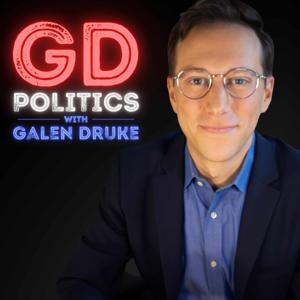

The full episode is available to paid subscribers. Once you become a paid subscriber, you can connect your account to your preferred podcast player here.
Depending on who you ask, we’re either living through a moment that feels totally unprecedented or alarmingly familiar.
Today’s guest argues it’s alarmingly familiar: great powers jostling for influence, nationalism on the rise, trade and technology turning into weapons, and festering conflicts with the potential to spiral.
In his new book, “The Coming Storm: Power, Conflict, and Warnings from History,” Yale historian Odd Arne Westad compares today’s geopolitical landscape to the decades leading up to World War I.
A hundred-plus years ago, the world looked modern, interconnected, and — at least to many people — too prosperous and rational for a major war. Then, in a matter of weeks, a localized conflict became a continent-wide crisis that ended in 40 million casualties.
The percentage of people alive today who have experienced great power conflict is vanishingly small, and after 80 years of great power peace, it can be easy to think of the prospect as far-fetched. Westad argues that this, too, may be a similarity to the early 20th century.
Today we talk about those similarities and differences and what lessons we can learn.
 View all episodes
 By Galen Druke

4.9
557557 ratings
The full episode is available to paid subscribers. Once you become a paid subscriber, you can connect your account to your preferred podcast player here.
Depending on who you ask, we’re either living through a moment that feels totally unprecedented or alarmingly familiar.
Today’s guest argues it’s alarmingly familiar: great powers jostling for influence, nationalism on the rise, trade and technology turning into weapons, and festering conflicts with the potential to spiral.
In his new book, “The Coming Storm: Power, Conflict, and Warnings from History,” Yale historian Odd Arne Westad compares today’s geopolitical landscape to the decades leading up to World War I.
A hundred-plus years ago, the world looked modern, interconnected, and — at least to many people — too prosperous and rational for a major war. Then, in a matter of weeks, a localized conflict became a continent-wide crisis that ended in 40 million casualties.
The percentage of people alive today who have experienced great power conflict is vanishingly small, and after 80 years of great power peace, it can be easy to think of the prospect as far-fetched. Westad argues that this, too, may be a similarity to the early 20th century.
Today we talk about those similarities and differences and what lessons we can learn.
26,012 Listeners
8,474 Listeners
5,130 Listeners

87,868 Listeners
12,741 Listeners

8,121 Listeners
5,832 Listeners

90 Listeners

16,525 Listeners
2,608 Listeners
2,328 Listeners

3,186 Listeners
263 Listeners
1,082 Listeners