
Sign up to save your podcasts
Or

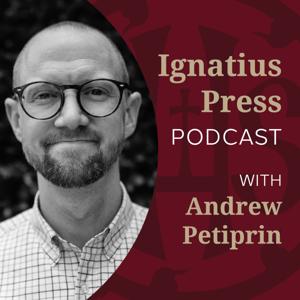


Based on Podcast App listening data
Fifty years ago, Hans Urs von Balthasar, Henri de Lubac, and Joseph Ratzinger, among others, founded the theological journal Communio, which set out, as Balthasar put it, to “fight at all costs against the deadly polarization brought on by the fervor displayed by traditionalists and modernists alike” and “to perceive of the Church as a central communion, a community that originated from communion with Christ, who presented himself as a gift to the Church; as a communion that will enable us to share our hearts, thoughts, and blessings.”
In the last five decades, Communio has continued the work of its founding mission, advancing theological discussion and deepening the Church’s understanding of her role in the world. Later this month, a conference celebrating the journal’s 50th anniversary will take place at St. Bernard’s School of Theology and Ministry.
In this episode, Mark Brumley and Carl E. Olson speak with the organizers of the conference—Matthew Kuhner, Ph.D., Vice President and Academic Dean at St. Bernard's; Daniel Drain, Coordinator of Academic Operations and Lecturer in Pastoral Theology at St. Bernard's; and Lisa Lickona, S.T.L., Assistant Professor of Systematic Theology at St. Bernard's. They discuss the mission and legacy of "Communio," its continued relevance in the life of the Church, and what they hope the conference will achieve.
Related links:
Why were so many of the great writers of detective stories Christians? Dorothy Sayers, G.K. Chesterton, Graham Greene, and many more—in addition to their other literary achievements—wrote (and loved reading) mystery stories. In this week’s episode, John Herreid talks to author Fiorella de Maria about her Father Gabriel mystery novels—the fourth of which, “Death of a Scholar,” is now available—as well as the enduring appeal of detective fiction, and why the genre’s themes of guilt, truth, and justice resonate with the Catholic moral imagination.
“Death of a Scholar” is available in paperback and ebook at Ignatius.com: https://bit.ly/3TmXN1F
When you think of Purgatory, what kind of place comes to mind? In “A Hiker’s Guide to Purgatory,” novelist Michael Norton paints a vivid picture of Purgatory as a place of great beauty, alongside suffering; of hope and even joy, alongside painful transformation and reconciliation. In this episode, Norton speaks with Ignatius Press editor Thomas Jacobi about the personal process of writing this imaginative journey through the afterlife, which he sees not as much as a place of punishment as an opportunity from a merciful God to heal our wounds and brokenness in a way we couldn’t in our earthly lives.
“A Hiker’s Guide to Purgatory: A Novel,” by Michael Norton, is now available in paperback and ebook: https://bit.ly/3dI8dIT
Mark Brumley and Carl E. Olson discuss the latest news and features at Catholic World Report, including pieces about why some call Gen Z “the loneliest generation,” controversies about whether or not Humanae Vitae is infallible teaching, and the outsize influence of social media on how we think about the Church.
Mentioned in this episode:
In a world grown cold without wonder, how do we reimagine the drama and joy of Christianity? For C.S. Lewis, the answer was to invite us into a different world that would help us see this one with fresh eyes. In this episode, Paul Senz talks with Leonard J. DeLorenzo, editor of “Chronicles of Transformation: A Spiritual Journey with C.S. Lewis,” a unique volume that explores the beloved terrain of Narnia with insightful essays, moving poetry, and original new artwork.
The book is now available at Ignatius.com: https://bit.ly/3cz6THK
Many Christians, whether they are aware of it or not, have mistaken notions about the mystery of atonement—particularly the role God the Father plays in Christ’s saving work on the Cross. In her new book “Atonement: Soundings in Biblical, Trinitarian, and Spiritual Theology” (https://bit.ly/3yaUrGb) Margaret Turek, professor of theology at St. Patrick’s Seminary and University, hopes to dispel these misconceptions and present readers with a clear illumination of the wholly gratuitous, radically forgiving, passionate and powerful nature of God's redeeming love for mankind. In this episode, Dr. Turek speaks with Mark Brumley about her book, and about some of the spiritual insights the be gleaned from contemplating the mystery of Christ’s atonement.
Violence, nudity, bad language. These elements are often enough for Catholic viewers to dismiss movies and their potential impact entirely. But is it possible for people of faith to watch, enjoy, and critique the latest Hollywood offerings—without losing their souls? Douglas Beaumont thinks so, and explains why and how in his book, “The Message Behind the Movie, Reboot: Engaging Film without Disengaging Faith” (https://bit.ly/3xaWU37). In this episode, Beaumont talks with Carl E. Olson, editor of Catholic World Report, about the book, as well as how their mutual experience of converting to Catholicism from Evangelical Protestantism shaped how they watch and enjoy movies today.
Join Ignatius Press as we talk about some of the best summer reading books for Catholic kids and teens. Feel free to post questions in the comments!
What does it mean to be a man or a woman? How do we talk about gender in a world that seems confused about the most basic realities of our bodies? What does Christianity bring to the table in discussions of feminism and women’s roles? Dr. Abigail Favale’s new book “The Genesis of Gender: A Christian Theory” (https://bit.ly/3KUyO01) grapples with these questions and more. In this episode, Favale speaks with Leah Libresco Sargeant, author of “Building the Benedict Option: A Guide to Gathering Two or Three Together in His Name” (https://bit.ly/3Fyacta) and the “Other Feminisms” Substack (https://otherfeminisms.substack.com/), about Favale’s new book and how the Catholic view of the human person can help us understand and communicate the beauty and challenges of our sexed bodies.
When Charles de Foucauld was killed by bandits in the Sahara Desert in 1916, the French aristocrat-turned-monk was virtually unknown. Over the course of a century, however, the radiance of Foucauld's hidden life has spread, and the Church will officially recognize him as a saint when Pope Francis canonizes him on May 15, 2022.
In this episode, David Pinault, professor emeritus of religious studies at Santa Clara University, joins us to discuss the life and legacy of Charles de Foucauld. Pinault wrote the foreword to Ignatius Press’ new edition of Foucauld’s definitive biography, “Charles de Foucauld” by Jean-Jacques Antier (https://bit.ly/3Ks6SQN).
From the publisher's feed
Ranked by our users in the last 21 days

4,979 Listeners

5,713 Listeners

810 Listeners

721 Listeners

6,754 Listeners

2,163 Listeners

2,616 Listeners
1,504 Listeners

23 Listeners
927 Listeners

1,273 Listeners

1,217 Listeners

439 Listeners

750 Listeners

158 Listeners