
Sign up to save your podcasts
Or

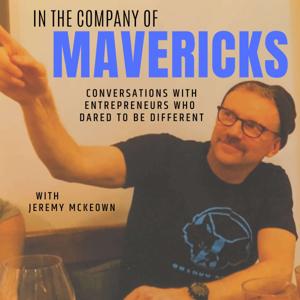


Davos Man, The Revelation & Capital Rotation
For this episode, I chat with Roger Lee, Head of Equity Strategy at Cavendish and a City veteran with almost 30 years in the equity market.
Roger started his broking career with Cazenove, then worked at HSBC James Capel, JPMorgan, Deutsche Bank, and, most recently, as Head of UK Equity Strategy at Investec.
Roger is a Fellow of the Institute of Chartered Accountants, a Physics graduate and a frustrated Politician.
For this discussion, I wanted to talk to Roger about politics and how it has come to dominate markets over recent years. He puts today’s seemingly chaotic geopolitics and rather depressing UK domestic politics into a useful historical context. It was an absorbing and illuminating chat with some suggestions on how markets might play out over the coming months.
But as ever, none of what you are about to hear is any kind of advice; it is for your information and, hopefully, entertainment. Please seek personal financial advice and DYOR before investing a penny in these volatile markets.
And with that said, please enjoy my conversation with Roger Lee.
Brought to you by Progressive Equity.
I spoke last week with Roger Lee, Market Strategist at London broker, Cavendish.
We had a great conversation, sharing views on how politics have impacted markets over the span of our professional careers.
Particularly we discuss how we are in revelationary era for Davos Man, the global elite and the interests of the ordinary man. And how the West can no longer afford the cost of the state.
Roger talks about his ideas of how Trump's policy volatility and the impact of the AI card cycle has and will continue to impact financial markets.
Dropping soon on all good podcast apps. If you want to listen to this and future episodes, be sure to subscribe to In The Company of Mavericks.
Simple But Not Easy
– The Investment Wisdom of Richard Oldfield
Richard Oldfield, Founder of Oldfield Partners and author of Simple But Not Easy.
We discuss the psychology of value investing, the structural flaws of modern asset management, and the challenges of navigating the bifurcated markets of the mid-2020s.
Episode Overview
In this episode, veteran investor Richard Oldfield debunks myths about the finance industry, arguing that successful investing is "simple but not easy." Drawing on decades of experience—from the 1970s inflation era to the AI boom of 2025—Oldfield explains why value investing is a character trait rather than a learned skill, why "doing nothing" is often the best strategy in a crisis, and why investors should treat the stock market like a casino where the odds vary wildly depending on which "table" you sit at.
Key Takeaways
Value Investing is In the Blood. Oldfield argues that true value investors are born, not made. It requires a contrarian temperament that naturally gravitates toward unloved assets—a trait that is "simple" to understand but psychologically challenging ("not easy") to execute.
Growth vs. Value. Oldfield believes value provides a "margin of safety" that prevents the ground from opening up beneath you, as it does with growth stocks. He discusses his view of an exciting future for value versus growth.
Index Hugging. Oldfield is a fierce critic of large asset management firms, arguing they inevitably drift toward mediocrity and "index hugging" (mimicking the market to avoid being fired). He advocates small, independent firms that can maintain "distance" from the noise of Wall Street and the City, enabling independent thought.
A Checklist for Selecting Managers: When choosing a fund manager, Oldfield warns against relying on past performance, calling it a "trap".
Brought to you by Progressive Equity.
A preview of the upcoming episode of In the Company of Mavericks, Simple But Not Easy with Richard Oldfield. Hosted by Jeremy McKeown, this podcast series delivers conversations with people who dare to be different. Listen to this trailer and follow now to catch the full release and other exciting content on its way to your ears.
In this episode, we move beyond the typical hype surrounding cryptocurrency and digital assets to dissect the plumbing of the global financial system.
To do this, we have a panel of industry insiders:
You will hear from Steve Whyman, who previously ran Fidelity International’s debt capital markets business, where he built their investment thesis for digital assets from scratch. Joining him is Ian Hunt, a 40-year veteran of the buy-side who designed the very first ledger for a tokenised fund launched in the UK market. Rounding out the panel is Marvin, an economist and returning "friend of the pod," who brings his critical geopolitical lens to the discussion.
Our guests argue that the current financial ecosystem is not just inefficient, but fundamentally "absurd", filled with intermediaries that add cost without adding value. They contend that we are standing at a precipice: we can either "retool" old processes with new tech, or undergo a paradigm shift toward "composability"—a system in which smart contracts self-execute and assets are built from the ground up as tokens.
This conversation goes far beyond technical theory.
The panel explores:
• How tokenisation will democratise wealth, allowing individuals to invest mere pence into equities, bonds, and private assets.
• The massive geopolitical threat to London’s dominance, as self-executing contracts may remove the need for English Common Law in global debt markets.
• How the rise of US-backed stablecoins could act as a foreign policy tool to counter China and destabilise economies in the Global South.
Stay tuned until the end for an existential risk to the Euro and the European Union: a flight to digital dollars could trigger a major liquidity crisis.
Coming soon, we explore how tokenisation is set to revolutionise the global economy.
Joined by "friend of the pod" Marvin Barth of Seriously, Marvin? and Thematic Markets, we chat with digital assets specialists Dr Ian Hunt and Steve Whyman.
We expose the "absurd" complexity and cost added by traditional intermediaries in the financial sector. Discover how blockchain technology acts as the ultimate disintermediator, democratising access to markets by allowing individuals to invest mere pence into equities, bonds, and private asset funds.
We dive into:
• The geopolitical impact of self-executing contracts, reducing reliance on traditional jurisdictions like the UK for global transactions.
• The rise of dollarised stablecoin economies in emerging markets such as Venezuela, Nigeria, and Argentina.
• Critical predictions regarding the potential "end of the European Union" and financial events that could make the Silicon Valley Bank collapse look minor by comparison.
Tune in to understand why financial markets designed for intermediation are facing a huge disruptive test.
Keywords: Tokenisation, Blockchain, Fintech, Disintermediation, Stablecoins, Global Economics, Investment, Smart Contracts.
Brought to you by Progressive Equity.
Is silver's price spike a bubble, or an early warning of government confiscation for AI data centres and military needs? Craig Tindale, Australian investor and essayist, argues the West has lost touch with the physical economy — and national capitalism is our only path back.
In this episode:
• Why Craig sees silver regulation or confiscation coming, or where we rip out solar panels for their silver content.
• How Western policy has detached from real-world physics
• Lessons from 40 years of upgrading Asian manufacturing, banks & central banks
• Why “national capitalism” is the West’s last hope
• The real economic operating system we’ve forgotten
Timestamps:
0:00 – Intro & Craig’s background
4:44 – The West’s detachment from physical reality
12:24 – Silver: not a bubble, but a strategic signal
20:26 – National capitalism vs globalism
29.04 – Lessons from Asia’s economic transformation
38:03 – Final thoughts & provocative outlook
For information & entertainment only – not financial advice. Always do your own research or consult a professional before investing.
Did you enjoy this? If so, please leave a 5-star review — it really helps the show reach more listeners! Subscribe for weekly deep dives into markets, economics and the investment world.
Brought to you by Progressive Equity.
According to Australian investor and essayist Craig Tindale, we are in an era of Hard Bifurcation, a terminal rupture between the monetary economy and the physical world. For forty years, Western orthodoxy has blythely assumed that financial liquidity and material goods were a unified system. But that linkage is dead, and we have entered a state of Impedance Mismatch.
According to Tindale, Western policymakers must evolve their mandates to reflect the hard physics of strategic rivalry and material constraint. If we continue to manage the economy as a stateless financial abstraction, we will enter the next decade of great-power competition with an operating system designed for a world that no longer exists. Power belongs to the system that aligns its money with matter first.
Please subscribe to make sure you get the full episode, dropping shortly.
Brought to you by Progressive Equity.
I recently caught up with Erik @ YWR, a widely experienced investment professional and popular Substacker.
Erik discusses his experience investing in Africa in the 20'teens and his involvement in what he calls Project Zimbabwe; don't think that we, in the West, are immune from our own versions of Project Zimbabwe. In Erik's view, we are, and counterintuitively, it partially explains Erik's current bullish stance on equities, with his framing of S&P 10,000 and how we can get there.
He also shares how his investing process identifies sectors and markets at inflexion points, and he currently sees energy (specifically oil and gas) as poised to join the commodity rally underway in metals and rare earths.
He also discusses how AI and robo-advisors might challenge the impact of passive investing on equity markets.
But of course, none of what you are about to hear is any type of advice; it's for your information and, hopefully, entertainment only. Please take personal financial advice before investing a penny of your money in these crazy markets.
With that said, please enjoy my conversation with Erik @ YWR.
Brought to you by Progressive Equity.
I recently caught up with experienced investor and Substacker, Erik@YWR, to chat about the state of the markets and how he sees things for 2026.
Erik has a unique perspective on what he calls Project Zimbabwe, which he experienced firsthand while running an African fund in the 2010s, and it enables him to be more bullish than most investors about his call for the S&P to reach 10,000 in this cycle.
Erik's framework seeks out unloved areas of the markets and inflexion points to time his investments. He sees energy as offering such an opportunity at the moment. As he says, inflation-adjusted oil has rarely been cheaper.
But of course, none of this is investment advice. Please take personal financial advice before investing in these crazy markets.
Brought to you by Progressive Equity.
From the publisher's feed
3,052 Listeners
590 Listeners

15 Listeners
950 Listeners

14 Listeners

357 Listeners
1,344 Listeners
263 Listeners
179 Listeners
49 Listeners
411 Listeners
189 Listeners

84 Listeners

152 Listeners
92 Listeners