
Sign up to save your podcasts
Or

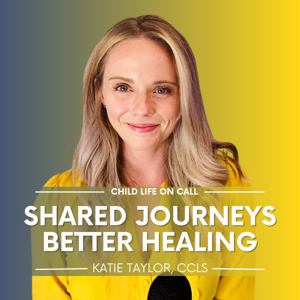


During this week's episode, Katie sits down with Ryan Solieau, an LSU Alum, and dad to a Henry who was diagnosed with Aplastic Anemia. Aplastic Anemia is a rare blood disorder where bone marrow stops making new red blood cells, which appeared in Henry as a heart rate of 250.
Ryan takes us through the experience of learning a new reality during all phases of Henry's diagnoses, from learning how to navigate Henry's initial hospital stay, all the way to supporting Henry emotionally during his monthly transfusions. In the episode, we also learn from Ryan how crucial it is to take care of oneself in order to be the best advocate for Henry.
Timestamps
1:37 - Intro to Ryan
3:38 - The Hospital Experience: A Second Family
6:24 - The Diagnosis: A Life-Changing Moment
9:38 - Navigating the Medical System
13:49 - Understanding Aplastic Anemia
15:27 - The Roles of Fathers in Caregiving
18:12 - Building Relationships with Hospital Staff
20:44 - Recognizing Emotional Needs
26:40 - Advice for Parents: Seeking Help and Support
35:08 - Fatherhood and Personal Growth
42:01 Navigating Medical Challenges and Triumphs
Resourceshttps://www.instagram.com/rsoile6
To listen to more episodes, head to insidethechildrenshospital.com
This podcast is for educational and informational purposes only and is not a substitute for medical advice, diagnosis, or treatment. Every child and family is different. Always talk with your child's healthcare team about questions or decisions related to their care.
The experiences and opinions shared by guests are their own and do not necessarily represent the views of their employers, healthcare organizations, or Inside the Children's Hospital.
Pediatric nurse and mom Brigid shares how her family navigated her son's neuroblastoma diagnosis—with practical guidance on preparing kids for care, accepting support, and finding hope.
Key Topics:The symptoms that led to Brigid's son's neuroblastoma diagnosis
Going from pediatric nurse to parent receiving life-changing medical news
Using medical play to prepare young children for procedures
Giving children choices and control during repeated medical care
Why slowing down can sometimes make procedures easier
Supporting siblings through a cancer diagnosis
Caring for yourself while caring for a seriously ill child
Asking for and accepting practical support from others
Resources including Beads of Courage, Connecting Champions, and neuroblastoma-specific preparation tools
00:00 - Finding support through childhood cancer stories 01:11 - Brigid introduces her family 01:38 - Penn State THON and supporting families facing cancer 03:21 - The first sign: a persistent limp 04:55 - Night sweats, an ER visit, and the diagnosis 05:18 - Understanding neuroblastoma and treatment 06:31 - Receiving serious news in the hospital where Brigid works 10:28 - Being both mom and medical translator 11:32 - Why preparing children for procedures matters 12:52 - Medical play and repeated procedures 14:08 - Choices, breaks, and helping kids feel more in control 15:09 - Practicing dressing changes through play 16:49 - Why faster isn't always easier for kids 18:34 - The hard days and emotional toll of treatment 20:36 - Stem cell transplant and the hardest phase of treatment 21:34 - Prayer, gratitude, and staying grounded 25:31 - Simple medical play using things you already have 27:58 - Explaining cancer to siblings 28:28 - Bringing support into a sibling's school 31:12 - Child life tools that can help with procedures 34:09 - Taking cancer treatment one hurdle at a time 35:22 - What asking for help looked like for Brigid's family 39:36 - Connecting Champions and identity beyond cancer 41:00 - Beads of Courage 42:01 - Neuroblastoma resources and medical play tools 43:32 - What Brigid learned about control, patience, and time
To listen to more episodes, head to insidethechildrenshospital.com
This podcast is for educational and informational purposes only and is not a substitute for medical advice, diagnosis, or treatment. Every child and family is different. Always talk with your child's healthcare team about questions or decisions related to their care.
The experiences and opinions shared by guests are their own and do not necessarily represent the views of their employers, healthcare organizations, or Inside the Children's Hospital.
As we begin to close out NICU Awareness Month, Katie sits down with Matilda "Tilly" Aldridge, a content marketer and mom. During a normal morning, Adelaide, her oldest child, was rushed to the hospital after Tilly and her husband heard Adelaide screaming from her room. She was given a CT scan, and a large tumor was found in her brain.
Tilly recounts her experience not only dealing with the sudden occurrence of Adelaide's medical emergency, but also how Adelaide herself was able to overcome the trauma she suffered. Together, Tilly and Katie dig into what advocating for answers can entail, and finding joy in the aftermath.
Timestamps1:40 - Introduction to Tilly's Journey
4:28 - Navigating Parenthood During COVID
7:21 - Impact of Postpartum Depression
10:41 - Life-Altering Medical Emergency
13:18 - Understanding AVIM
16:10 - The Road to Recovery
22:13 - Managing Anxiety in Children
25:17 - Empowering Children Through Choices
32:04 - The Impact of Medical Trauma
37:00 - The Search for Answers
43:57 - The Fight for Medical Attention
49:07 - The Joys of Motherhood Post-Trauma
ResourcesWhat is AVM
What is AVF
Medical information shared in this episode is not a substitute for professional medical advice. Please consult your healthcare team for guidance specific to your child and family.
Welcome back to NICU Awareness Month. In this episode, Katie is sitting down with Kim Holland, mom of Tripp who was born at 27 weeks and also developed NEC. NEC, or Necrotizing Enterocolitis, is the inflammation of the intestine that often leads to the death of intestinal tissue/lining, which caused Tripp to undergo multiple surgeries and spend months in the NICU.
Kim delves into the raw emotions she went through during her pregnancy with Tripp and his stay in the NICU as she had to make tough medical decisions. She also gives us some insight into how she coped and was ultimately able to create a new normal after the NICU. Katie and Kim speak on how to build community and support during a time of healing for all parents.
Timestamps00:00 - Introduction
1:30 - Kim's Family and Background
4:18 - Emergency C-Section and Preeclampsia Experience
7:39 - Tripp's Birth and NICU Journey
10:20 - Navigating the NICU
13:28 - Understanding NEC and its Impact
16:33 - Surgery and the Role of Faith
19:25 - Post-Surgery and Ongoing Challenges
34:57 - The Grim Reality of Medical Decisions
46:28 - Coping Mechanisms in the NICU
54:26 - Life After the NICU
58:34 - Building Community and Support
Medical information shared in this episode is not a substitute for professional medical advice. Please consult your healthcare team for guidance specific to your child and family.
Every year, U.S. News & World Report releases its Best Children's Hospitals rankings—but what do those rankings actually tell families?
In this episode, Katie Taylor, CCLS, speaks with Jennifer Winston, senior health data scientist at U.S. News & World Report, about how the rankings are built, what the scores measure and how parents can use them without over-reading small differences between hospitals.
Jennifer explains the role of clinical outcomes, hospital resources and care practices in the rankings, along with how parent feedback is incorporated into the methodology. Katie brings in the child life perspective, asking where psychosocial support, interpreter services, family involvement and emotional safety fit into the definition of excellent pediatric care.
They also explore an important question for families: Is traveling to a nationally ranked hospital always better, or can receiving care closer to home sometimes matter more?
What you'll learnHow the Best Children's Hospitals rankings have evolved from clinician surveys into a data-heavy model involving more than 1,000 data points across 11 pediatric specialties
The three primary scoring categories: hospital resources, delivery of care and best practices, and clinical outcomes
Why the outcomes being measured vary by specialty
How child life specialists, social workers, interpreter services and parent participation are represented in the rankings
How feedback from parents and patient advocates reaches the teams shaping the methodology
What it means for a hospital to make the national Honor Roll
Why a move from No. 15 to No. 20 may represent only a very small difference in score
When traveling for highly ranked care may be helpful—and when proximity to home matters
How families can use regional rankings, state rankings and hospital scorecards to look beyond one overall number
Why increased hospital participation may signal a growing commitment to transparency
View the official U.S. News Best Children's Hospitals rankings.
Parents can also search for pediatric hospitals and care by location or specialty.
Rather than relying only on a hospital's overall rank, families can explore individual specialty rankings and hospital scorecards to learn more about outcomes, staffing, available services and other factors that may matter for their child.
Episode timestamps00:00 — Katie opens with the show's purpose and introduces Jennifer Winston
00:17 — Jennifer shares her role at U.S. News and her background in medical geography
02:15 — How the Best Children's Hospitals rankings have evolved
03:59 — The three-part methodology behind the rankings
05:00 — How clinical outcomes differ by specialty
06:09 — What the Honor Roll means
07:00 — Katie explains child life and family-centered support
08:57 — Where child life, social work and parent involvement fit in the scoring
11:56 — How parent feedback reaches the methodology team
13:34 — Should families travel for ranked care or stay closer to home?
14:18 — Using regional and state rankings to find care nearby
15:26 — Regional differences in access to pediatric specialty care
16:22 — How different are hospitals ranked No. 15 and No. 20?
17:29 — What hospitals can learn from higher-ranked programs
19:23 — How children's hospital rankings differ from maternity rankings
21:02 — Maternity care deserts and access to care
21:58 — Do children's healthcare deserts exist?
23:39 — Why outcomes, best practices and resources remain central
24:47 — What parents can ask for when their child is unexpectedly hospitalized
26:56 — Why growing hospital participation is encouraging
28:08 — Closing thoughts
"We really do rely on the experts who are on these working groups to help us make those decisions."
"These are all hospitals that are providing great-quality care."
"It's important for families who need information."
About Inside the Children's HospitalInside the Children's Hospital shares what families lived, what they learned and what they want you to know. Hosted by Katie Taylor, a certified child life specialist, the podcast helps families better understand pediatric healthcare and feel more prepared to participate in their child's care.
Medical disclaimer: This podcast is for educational and informational purposes only and is not a substitute for individualized medical advice, diagnosis or treatment. Always speak with your child's healthcare team about questions or decisions related to their care.
Continuing NICU Awareness Month, in this week's episode, Katie is talking to Emily Rosen, the author of Waiting for Max: A NICU Story. Emily is a mom to 2 children, Max and Eva. Emily's book is about her experience being a parent in the NICU, with the hopes that the book can help communicate with other NICU families that they aren't alone in this journey.
Throughout the episode, Emily details the emotions she went though as a parent, along with giving advice as to how to navigate new and possibly frightening feelings that came be brought on. Together, Emily and Katie walk through the different treks of healing that parents/families go through after being in the NICU, and how not all journeys follow the same path.
Timestamps00:00 - Introduction to Emily
1:39 - Meet Emily Rosen
4:09 - Emily's Journey to Motherhood
7:48 - The NICU Experience
13:42 - The Emotional Toll of the NICU
19:51 - Creating a Children's Book for NICU Families
23:27 - The Decision to Expand the Family
28:05 - Healing through Storytelling
Resources MentionedEmily's Book
Emily's Instagram
Medical information shared in this episode is not a substitute for professional medical advice. Please consult your healthcare team for guidance specific to your child and family.
September is NICU Awareness Month, and in this week's episode, Katie sits down with Dr. Gal, @galthebabydoc, a Neonatologist and Pediatrician, and a dad with experience as a parent in the NICU. He shares his knowledge and experience on social media in digestible ways to help parents and others feel comfortable during difficult times.
Throughout the episode, they delve into the experiences and emotions of what parents might be facing when their baby is in the NICU, and how parents can get the most out of communicating with the hospital's healthcare providers. Dr.Gal, having experience on both ends of the spectrum, brings a unique perspective on how to properly handle sensitive topics between both parties.
Timestamps00:00 - Meet Dr.Gal
1:52 - Introduction and connection to Dr.Gal
3:59 - The Journey to Neonatology
6:39 - The Role of Humor in Medicine
9:43 - Navigating Rounds: Best Practices for Parents
12:49 - Understanding the Attending's Responsibilities
15:56 - The Importance of Family Presence in the NICU
20:04 - A Day in the Life of a Neonatologist
21:22 - Personal Experiences Shaping Professional Perspectives
24:38 - The Emotional Impact of the NICU Admissions
26:45 - Building Trust Through Transparency
29:47 - Humor in Medicine
33:42 - Understanding the Father's Experience in the NICU
Resources Mentioned
Dr.Gal's Tiktok Account
Dr.Gal's Instagram Account
Medical information shared in this episode is not a substitute for professional medical advice. Please consult your healthcare team for guidance specific to your child and family.
How do families navigate a serious childhood diagnosis while still focusing on hope, quality of life, and the everyday moments that matter most?
In this episode of Inside the Children's Hospital Podcast, Katie Taylor sits down with Dr. Korie Leigh, PhD, CCLS, a child life specialist, psychologist, thanatologist, author, educator, and pediatric palliative care advocate. Drawing on more than two decades of supporting children and families, Dr. Leigh shares what pediatric palliative care really is—and why it is so much more than many families believe.
Together, they explore how pediatric palliative care supports children living with serious or complex medical conditions from the time of diagnosis, helping families manage not only medical needs, but also emotional, psychosocial, and spiritual well-being. Dr. Leigh discusses how parents can advocate for palliative care services, even if they are not offered at their local hospital, and explains why caregiver support and respite care are essential parts of caring for the whole family.
The conversation also dives into resilience, grief, and the power of creativity. Dr. Leigh shares how writing can become a meaningful tool for processing difficult experiences, why preparing children for life's hardest moments matters, and how her books were created to help families navigate conversations surrounding illness, hospitalization, and loss with confidence and compassion.
Whether you're navigating a new diagnosis, caring for a child with a complex medical condition, supporting a family through hospitalization, or you're a healthcare professional looking to better understand pediatric palliative care, this episode offers practical insights, encouragement, and hope.
In This Episode, We Discuss:
What pediatric palliative care really means
The difference between palliative care and hospice
Why palliative care should begin at diagnosis
How parents can advocate for pediatric palliative care
Finding support when services aren't available locally
Caregiver burnout and the importance of respite care
Building resilience during a child's medical journey
Talking with children about illness, grief, and loss
Using writing and creativity as tools for healing
Improving access to pediatric palliative care through advocacy
Episode Timestamps
00:00 Meet Dr. Korie Leigh
02:33 A career in child life and palliative care
05:25 What is pediatric palliative care?
08:00 How parents can advocate for support
10:59 Insurance and access to care
12:05 Why respite care matters
14:18 Supporting families beyond the hospital
15:07 Building resilience through crisis
19:13 Writing through grief and healing
22:26 Creativity as a coping tool
27:29 Books, music, and final reflections
Resources MentionedWhen Everything Changes: Parenting through Loss and Grief by Dr. Korie Leigh
Hero's Path Palliative
Dr. Korie Leigh's Website
Leigh Moody (music)
George Mark Children's House
The Artist's Way by Julia Cameron
Medical information shared in this episode is not a substitute for professional medical advice. Please consult your healthcare team for guidance specific to your child and family.
In this episode of Inside the Children's Hospital Podcast, Katie Taylor sits down with Dr. Amy Baxter, pediatric emergency physician, researcher, inventor of Buzzy®, and founder of Pain Care Labs, to explore how childhood experiences with needles can shape a lifetime of healthcare interactions—and what parents and healthcare professionals can do to help.
After watching her own son develop a fear of needles despite her expertise in pediatric pain management, Dr. Baxter began researching why children experience pain differently and how simple, evidence-based strategies can reduce pain during vaccines, blood draws, IV placements, port access, and other medical procedures. Her work ultimately led to the invention of Buzzy®, a device now used by families and healthcare professionals around the world.
Katie and Dr. Baxter discuss the science behind pain, why multiple painful procedures can have a lasting impact on children, and how connection, preparation, and developmentally appropriate support can help children build confidence instead of fear. They also share practical strategies parents can use during medical procedures, the role of child life specialists, and why helping children feel safe matters just as much as reducing physical pain.
Whether you're preparing your child for routine vaccines, navigating frequent hospital visits, supporting a child with a chronic medical condition, or caring for pediatric patients, this episode offers compassionate, research-informed insights that can help make medical experiences less overwhelming for children and families.
In This Episode, We Discuss:
Why children develop pain memories from medical procedures
Reducing pain during vaccines, blood draws, IVs, and port access
The research behind Buzzy® and vibration therapy
Helping children feel safe during medical procedures
Child life strategies that support coping and resilience
The importance of caregiver connection during painful procedures
Developmentally appropriate preparation and distraction techniques
Practical ways parents can advocate for pain management
Dr. Amy Baxter's journey from pediatric emergency physician to medical innovator
The future of non-medication approaches to pediatric pain management
Episode Timestamps
00:00 Meet Dr. Amy Baxter 02:15 Why Buzzy was created 03:40 Understanding childhood needle pain 06:00 Why multiple shots matter 10:20 Child life and helping kids feel safe 12:15 The story behind Buzzy 20:20 Using Buzzy for vaccines, IVs, and ports 24:30 Distraction that actually works 28:20 Building safety and resilience during procedures 31:40 The future of pain management research 38:10 Where families can find Buzzy 41:00 Lessons from innovation and advocacy
Resources MentionedPain Care Labs
Buzzy®
Buzzy Helps (Instagram)
Dr. Amy Baxter (LinkedIn)
TED Talk by Dr. Amy Baxter
Pain Care Labs Resources & Downloads
"What Works for Pain" Guide
"What Works for Needle Fear" Guide
Connect with Us
Instagram: @childlifeoncall + @insidethechildrenshospital
Watch Today's Episode on YouTube
Subscribe: Never miss an episode on Apple Podcasts or Spotify.
Visit: insidethechildrenshospital.com to search stories and episodes.
Leave a Review: It helps other families discover the podcast and access these free resources.
Medical information shared in this episode is not a substitute for professional medical advice. Please consult your healthcare team for guidance specific to your child and family.
YouTube Description
How can parents make shots, blood draws, IVs, and other medical procedures less painful for their children?
In this episode of Inside the Children's Hospital Podcast, Katie Taylor, CCLS, sits down with Dr. Amy Baxter, MD—pediatric emergency physician, researcher, founder of Pain Care Labs, and inventor of Buzzy®—to discuss the science behind pediatric pain management and how small changes can make a big difference during medical procedures.
After realizing she couldn't prevent her own son's fear of needles, Dr. Baxter dedicated her career to understanding why children experience pain the way they do and developing evidence-based solutions to help. Her work has transformed how families and healthcare professionals approach vaccines, blood draws, IV placements, port access, and other procedures that children with medical complexity often experience.
Together, Katie and Dr. Baxter explore why children's early medical experiences matter, how child life principles help children build resilience, and practical ways parents can help their child feel safer and more supported during healthcare visits. They also discuss the research behind vibration and cold therapy, the importance of preparation and caregiver connection, and the future of non-medication pain management.
Whether you're preparing for routine vaccines, navigating frequent lab work, supporting a child with a chronic medical condition, or you're a child life specialist or pediatric healthcare professional, this conversation is filled with compassionate, practical insights to help children experience less pain and more confidence.
In This EpisodeWhy childhood pain experiences matter
The science behind Buzzy® and pediatric pain management
Helping children through shots, blood draws, IVs, and port access
Child life strategies that reduce stress during procedures
Why connection with caregivers helps children cope
Effective distraction techniques that actually work
Practical ways parents can advocate for better pain management
Dr. Amy Baxter's journey from pediatric ER physician to inventor
The future of vibration therapy and pediatric pain research
00:00 Meet Dr. Amy Baxter 02:15 Why Buzzy was created 03:40 Understanding childhood needle pain 06:00 Why multiple shots matter 10:20 Child life and helping kids feel safe 12:15 The story behind Buzzy 20:20 Using Buzzy for vaccines, IVs, and ports 24:30 Distraction that actually works 28:20 Building safety and resilience 31:40 The future of pain management research 38:10 Where families can find Buzzy 41:00 Innovation, advocacy, and hope
Resources MentionedPain Care Labs
Buzzy®
Buzzy Helps (Instagram)
Dr. Amy Baxter on LinkedIn
Dr. Amy Baxter's TED Talk
Pain Care Labs "What Works for Pain" Guide
Pain Care Labs "What Works for Needle Fear" Guide
Dr. Amy Baxter, MD, is a pediatric emergency physician, inventor, researcher, and founder of Pain Care Labs. Internationally recognized for her work in pediatric pain management, Dr. Baxter invented Buzzy® after watching her own son develop a fear of needles despite her expertise as a physician. For more than 20 years, she has researched how vibration, cold therapy, and developmentally appropriate support can reduce pain during vaccines, blood draws, IV placements, and other medical procedures. Her mission is to help children experience less pain, less trauma, and more confidence during healthcare experiences.
❤️ If this episode helped you, please like, subscribe, and share it with another family or healthcare professional who could benefit from these resources.
📱 Connect with us Instagram: @childlifeoncall + @insidethechildrenshospital 🌐 Website: insidethechildrenshospital.com
🎧 Listen on Apple Podcasts, Spotify, or wherever you get your podcasts.
#childlife #pediatrics #medicalparent #hospitalparent #vaccines #blooddraw #IVtherapy #painmanagement #needlepain #childrenshospital #buzzy #medicaltrauma #caregiver #pediatrichealthcare #childlifespecialist #medicalcomplexity #parenting #podcast #amybaxter #paincare
What happens when the child you've dreamed of suddenly receives a diagnosis you've never even heard of? For Deborah, it was Angelman syndrome.
In this episode of Inside the Children's Hospital Podcast, Katie Taylor sits down with Deborah Trejo, Art Therapist, to share the powerful story of her daughter Maya's journey to an Angelman syndrome diagnosis. After months of feeding difficulties, developmental delays, seizures, and countless unanswered questions, Deborah and her family finally received a diagnosis just one day after Maya's first birthday.
Deborah opens up about the emotional realities of medical motherhood—from surviving the uncertainty of the diagnostic process to learning how grief and joy can exist together. She shares how finding community through the Angelman Syndrome Foundation, connecting with other parents, and embracing art as a tool for healing helped her navigate one of the most difficult seasons of her life.
As both a mother and an art therapist, Deborah also reflects on maintaining her identity beyond caregiving, advocating fiercely for her daughter's needs, and celebrating every milestone along the way. Her story is an honest reminder that while a rare diagnosis may change the path a family expected, it can also reveal extraordinary resilience, purpose, and hope.
Whether you're a parent navigating a rare diagnosis, caring for a child with complex medical needs, or a healthcare professional supporting families through uncertainty, this episode offers compassionate encouragement and a reminder that you are never alone.
In This Episode, We Discuss:00:00 Meet Deborah Trejo
01:30 Maya's first year and the journey to diagnosis
05:30 Birth during COVID and early medical concerns
08:00 Developmental delays, seizures, and meeting neurology
11:25 Receiving the Angelman syndrome diagnosis
13:00 Processing grief and surviving the unknown
19:15 Becoming an art therapist through lived experience
21:15 Holding onto identity beyond medical motherhood
24:00 The Angelman Syndrome Foundation and family support
26:50 Learning to ask for help
28:45 Advocacy, milestones, and celebrating progress
31:55 Maya's joy and final reflections
Resources MentionedConnect with Us
Instagram: @childlifeoncall + @insidethechildrenshospital
Subscribe: Never miss an episode on Apple Podcasts or Spotify.
Visit insidethechildrenshospital.com to search stories and episodes easily
Leave a Review: It helps other families find us and access our resources
Medical information shared in this episode is not a substitute for professional medical advice. Please consult your healthcare team for guidance specific to your child and family.
Keywords: Angelman syndrome, Angelman syndrome diagnosis, rare disease, rare genetic disorder, developmental delays, seizures in children, medical motherhood, caregiver support, parenting a child with disabilities, pediatric neurology, rare diagnosis, art therapy, family centered care, child life specialist, medically complex children, disability advocacy, parent support, pediatric healthcare, Inside the Children's Hospital Podcast
From the publisher's feed

14,134 Listeners
1,075 Listeners

8,892 Listeners

25,763 Listeners

39,841 Listeners

57,574 Listeners
4,496 Listeners

41,386 Listeners

58 Listeners
361 Listeners

2,027 Listeners
419 Listeners

10,540 Listeners
7,712 Listeners

10,178 Listeners