
Sign up to save your podcasts
Or

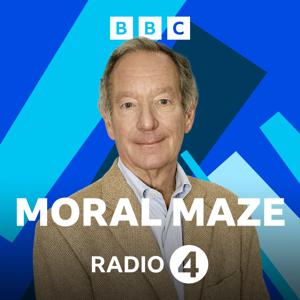

The Church of England marks a historic moment: the installation of its first female Archbishop of Canterbury. A symbol, many would say, of progress in an institution often accused of resisting it. And yet, even as she takes office, around 600 churches reportedly refuse to recognise the authority of ordained women. For them, this is not prejudice but principle. An adherence to theological conviction.
It comes amid fresh scrutiny about the Church’s place in national life - from Prince William signalling a more modern, personal relationship with it, to the Green Party reopening the question of disestablishment. The Church of England is not just a religious body. As the established church, it is entwined with the state. Its bishops sit in Parliament. Its role extends, at least in theory, to the whole nation. It claims to be “a church for everyone.” And yet it operates with exemptions from equality law, particularly in its approach to women’s leadership and same-sex relationships. Defenders argue that religious freedom must include the freedom to dissent from prevailing social norms. Critics counter that an institution with constitutional privilege cannot also claim the right to discriminate.
But there is a further tension. The Church speaks as a national institution at a time when fewer people identify with it at all. Attendance has declined steadily. Belief itself is becoming more marginal in a society that is increasingly secular. For many citizens, religion is not just optional but irrelevant.
So what does establishment mean in such a society? Should the Church be brought into line with equality law or separated from the state altogether? And more fundamentally: can an established church still claim moral authority in a nation that is steadily moving away from it?
Chair: William Crawley.
 View all episodes
 By BBC Radio 4

4.6
5151 ratings
The Church of England marks a historic moment: the installation of its first female Archbishop of Canterbury. A symbol, many would say, of progress in an institution often accused of resisting it. And yet, even as she takes office, around 600 churches reportedly refuse to recognise the authority of ordained women. For them, this is not prejudice but principle. An adherence to theological conviction.
It comes amid fresh scrutiny about the Church’s place in national life - from Prince William signalling a more modern, personal relationship with it, to the Green Party reopening the question of disestablishment. The Church of England is not just a religious body. As the established church, it is entwined with the state. Its bishops sit in Parliament. Its role extends, at least in theory, to the whole nation. It claims to be “a church for everyone.” And yet it operates with exemptions from equality law, particularly in its approach to women’s leadership and same-sex relationships. Defenders argue that religious freedom must include the freedom to dissent from prevailing social norms. Critics counter that an institution with constitutional privilege cannot also claim the right to discriminate.
But there is a further tension. The Church speaks as a national institution at a time when fewer people identify with it at all. Attendance has declined steadily. Belief itself is becoming more marginal in a society that is increasingly secular. For many citizens, religion is not just optional but irrelevant.
So what does establishment mean in such a society? Should the Church be brought into line with equality law or separated from the state altogether? And more fundamentally: can an established church still claim moral authority in a nation that is steadily moving away from it?
Chair: William Crawley.

7,639 Listeners

876 Listeners

1,046 Listeners
156 Listeners

5,520 Listeners

1,799 Listeners

1,763 Listeners

1,049 Listeners
2,110 Listeners

1,920 Listeners
30 Listeners
43 Listeners

393 Listeners
164 Listeners
43 Listeners
58 Listeners
114 Listeners
684 Listeners

3,177 Listeners

720 Listeners

1,002 Listeners

3,336 Listeners

1,183 Listeners
797 Listeners
45 Listeners