
Sign up to save your podcasts
Or



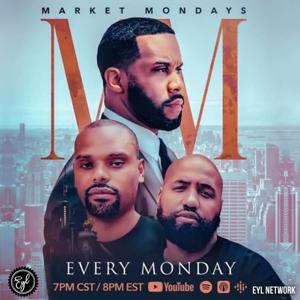
Welcome back to another clip from Market Mondays, your go-to source for insightful discussions on the stock market, investing, and economic trends. In today’s episode, hosts Troy Millings and Rashad Bilal, along with guest Ian Dunlap, tackle the pressing issue of last week's market performance. With stocks taking a downturn, many are asking, "Is this an early warning sign of what could happen in 2025?"
Ian Dunlap starts off by simplifying the situation. According to Ian, there's no need to panic. The recent market slump can be attributed to several factors such as the end of the Christmas trade, tax loss harvesting, the Federal Open Market Committee (FOMC) announcements, and futures expirations. Essentially, people are taking profits after a generally strong year, resulting in a slight market slide. Ian firmly believes that this is the opposite indicator of what will happen in 2025. He offers practical advice on tracking point totals daily, likening it to maintaining a Farmers Almanac for the market to set expectations better.
Troy Millings adds more context, emphasizing that the recent pullback was expected when Powell spoke about rate cuts, hinting there's more rumor than fact at this stage. With quadruple witching occurring on the third Friday of December, many options and futures contracts expired, contributing to the market's dip. Troy highlights the extraordinary performance of major indices like NASDAQ, S&P, and the Dow this year, arguing that such impressive gains naturally lead to sell-offs but aren’t necessarily an omen for 2025.
Diving deeper, Troy discusses potential growth for 2025. With expectations moderating, he proposes that growth in the lower double digits, between 11 to 15 percent, is both realistic and satisfactory. Ian advocates for long-term holding strategies, pointing out that early worries dissipate over time when you maintain your investments in top tech and index funds.
Rashad Bilal brings an interesting angle by discussing the political cycle’s impact on the market. Referencing investment advisor Josh Brown, Rashad explains the typical stock performance during different years of a presidential term. The first year is usually weak, the second most volatile, the third the strongest, and the fourth good but not as strong as the third. Applying this to the current Biden administration, he attributes the bear market in Biden’s second year in office to this cycle, observing the strong performance in the subsequent years.
However, Rashad also notes the unprecedented political situation with Donald Trump, implying that historical trends might not hold. He underscores the need to stay informed and adaptable to the unique circumstances shaping the market landscape in the coming years.
In conclusion, while recent market downturns can be concerning, the insights shared by our hosts and guest should offer some reassurance. The market's cyclical nature, influenced by various external factors, doesn't diminish the long-term growth potential. Make sure you're tuned in for more expert advice and subscribe to our channel for consistent updates!
*#MarketMondays #StockMarketAnalysis #Investing #FinanceNews #EconomicTrends #DowJones #SNP500 #NASDAQ #StockMarketTips #InvestingStrategies #MarketInsights #FinancialAdvice*
---
Stay connected with Market Mondays for all your financial and investment news. Don't forget to like, comment, and subscribe to keep getting valuable insights from our expert hosts and guests! 🔔📈
Disclaimer: The information provided in this video is for educational and informational purposes only and should not be construed as financial advice. Always consult with a financial advisor before making any investment decisions.
---
Thanks for watching, and we'll see you in the next episode!
See omnystudio.com/listener for privacy information.
 View all episodes
 By iHeartPodcasts

4.9
78137,813 ratings
Welcome back to another clip from Market Mondays, your go-to source for insightful discussions on the stock market, investing, and economic trends. In today’s episode, hosts Troy Millings and Rashad Bilal, along with guest Ian Dunlap, tackle the pressing issue of last week's market performance. With stocks taking a downturn, many are asking, "Is this an early warning sign of what could happen in 2025?"
Ian Dunlap starts off by simplifying the situation. According to Ian, there's no need to panic. The recent market slump can be attributed to several factors such as the end of the Christmas trade, tax loss harvesting, the Federal Open Market Committee (FOMC) announcements, and futures expirations. Essentially, people are taking profits after a generally strong year, resulting in a slight market slide. Ian firmly believes that this is the opposite indicator of what will happen in 2025. He offers practical advice on tracking point totals daily, likening it to maintaining a Farmers Almanac for the market to set expectations better.
Troy Millings adds more context, emphasizing that the recent pullback was expected when Powell spoke about rate cuts, hinting there's more rumor than fact at this stage. With quadruple witching occurring on the third Friday of December, many options and futures contracts expired, contributing to the market's dip. Troy highlights the extraordinary performance of major indices like NASDAQ, S&P, and the Dow this year, arguing that such impressive gains naturally lead to sell-offs but aren’t necessarily an omen for 2025.
Diving deeper, Troy discusses potential growth for 2025. With expectations moderating, he proposes that growth in the lower double digits, between 11 to 15 percent, is both realistic and satisfactory. Ian advocates for long-term holding strategies, pointing out that early worries dissipate over time when you maintain your investments in top tech and index funds.
Rashad Bilal brings an interesting angle by discussing the political cycle’s impact on the market. Referencing investment advisor Josh Brown, Rashad explains the typical stock performance during different years of a presidential term. The first year is usually weak, the second most volatile, the third the strongest, and the fourth good but not as strong as the third. Applying this to the current Biden administration, he attributes the bear market in Biden’s second year in office to this cycle, observing the strong performance in the subsequent years.
However, Rashad also notes the unprecedented political situation with Donald Trump, implying that historical trends might not hold. He underscores the need to stay informed and adaptable to the unique circumstances shaping the market landscape in the coming years.
In conclusion, while recent market downturns can be concerning, the insights shared by our hosts and guest should offer some reassurance. The market's cyclical nature, influenced by various external factors, doesn't diminish the long-term growth potential. Make sure you're tuned in for more expert advice and subscribe to our channel for consistent updates!
*#MarketMondays #StockMarketAnalysis #Investing #FinanceNews #EconomicTrends #DowJones #SNP500 #NASDAQ #StockMarketTips #InvestingStrategies #MarketInsights #FinancialAdvice*
---
Stay connected with Market Mondays for all your financial and investment news. Don't forget to like, comment, and subscribe to keep getting valuable insights from our expert hosts and guests! 🔔📈
Disclaimer: The information provided in this video is for educational and informational purposes only and should not be construed as financial advice. Always consult with a financial advisor before making any investment decisions.
---
Thanks for watching, and we'll see you in the next episode!
See omnystudio.com/listener for privacy information.
78,700 Listeners

23,787 Listeners
2,534 Listeners
6,451 Listeners

8,760 Listeners

6,803 Listeners
10,347 Listeners
8,329 Listeners
14,237 Listeners
15,679 Listeners

10,949 Listeners

9,085 Listeners
11,835 Listeners
4,047 Listeners

7,417 Listeners

9,812 Listeners
10,518 Listeners

2,052 Listeners
1,651 Listeners
1,014 Listeners
1,934 Listeners
163 Listeners
310 Listeners

1,924 Listeners