
Sign up to save your podcasts
Or

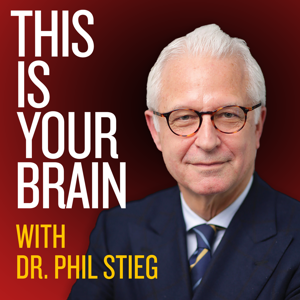

Your brain, your heart -- in fact, every cell in your body -- has its own clock telling you when to be alert and when to pack it in. You probably know that jet lag and daylight savings time affect that clock, but did you know that the food you eat (and when you eat it) as well as your activity level can also wreak havoc on it? Emily Manoogian, PhD, chronobiologist and clinical researcher at the Salk Institute for Biological Studies in San Diego, explains how shift work, long flights, eating at the wrong times, and even staying up too late on weekends all affect health, mood, and emotional regulation.
Plus - what happens when animals are thrown off their rhythm?
 View all episodes
 By Weill Cornell Medicine Neurological Surgery

4.7
142142 ratings
Your brain, your heart -- in fact, every cell in your body -- has its own clock telling you when to be alert and when to pack it in. You probably know that jet lag and daylight savings time affect that clock, but did you know that the food you eat (and when you eat it) as well as your activity level can also wreak havoc on it? Emily Manoogian, PhD, chronobiologist and clinical researcher at the Salk Institute for Biological Studies in San Diego, explains how shift work, long flights, eating at the wrong times, and even staying up too late on weekends all affect health, mood, and emotional regulation.
Plus - what happens when animals are thrown off their rhythm?

38,062 Listeners

43,528 Listeners
26,984 Listeners
12,754 Listeners

4,249 Listeners

14,880 Listeners
31,641 Listeners

3,757 Listeners
14,404 Listeners
8,203 Listeners
1,688 Listeners
10,727 Listeners

19,524 Listeners
11,157 Listeners
1,794 Listeners