
Sign up to save your podcasts
Or

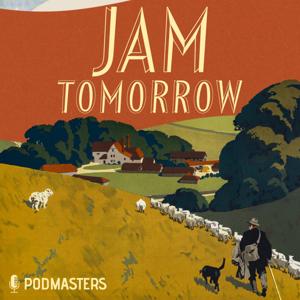


Ros Taylor here with an important message. Jam Tomorrow has MOVED — and it’s now called MORE JAM TOMORROW
It’s super easy to subscribe to the new feed. Just search for MORE JAM TOMORROW on your podcast app or go to morejamtomorrow.com. The first two episodes are already out — they’re on the Channel Tunnel and curry in Britain.
And you can still listen to the back catalogue right here, any time.
Catch up with MORE JAM TOMORROW.
Learn more about your ad choices. Visit podcastchoices.com/adchoices
What does it mean to be Welsh?
The writer Jan Morris said Wales was ‘a distinctly separate and often vehement idea’. But what is that idea? Do you need to understand Welsh to grasp it?
How is Wales … different? And is it going to become even more unlike England?
Ros Taylor talks to Swansea University professor Martin Johnes and Plaid Cymru Senedd member Heledd Fychan about the history of the Welsh nationalist movement and the future of the Welsh language.
‘There’s lots of angst with being Welsh.’ — Heledd Fychan, Plaid Cymru Senedd member
‘The idea that you should take decisions about Wales in Wales has become a political norm. Has devolution made any practical difference to life in Wales? Probably not, to be honest.’ — Prof Martin Johnes
‘Part of the problem is that in many ways we have a one-party state in Wales… Wales is a very small place and Wales suffers from the fact it doesn’t have a diversity of opinions.’ — Martin Johnes
‘Can you believe that in 2024, despite 25 years of devolution, it’s not been normalised that children in Wales should learn Welsh history?’ — Heledd Fychan
JAM TOMORROW is written and presented by Ros Taylor. The producer is Jade Bailey. Voiceovers are by Seth Thevoz. Music is by Dubstar and artwork by James Parrett. The managing editor is Jacob Jarvis and the group editor is Andrew Harrison. JAM TOMORROW is a Podmasters production.
Learn more about your ad choices. Visit podcastchoices.com/adchoices
The expulsion of Asians from Uganda in 1972 was brutal.
Twenty eight thousand refugees arrived in Britain. The government scrambled to find homes and jobs for them.
Not everyone was pleased about it. But if Ugandan Asians held British passports they had the right to come here — and most of them thrived. Why did they do well — and can it teach us anything about how we treat refugees?
Neena Lakhani was 14 when she was forced to leave Uganda. She tells Ros Taylor what it was like to start a new life in Britain, while King’s College London professor Jonathan Portes talks about what happened to the East Asian migrants who arrived.
‘My father said please don’t touch my children. You can kill me but don’t kill my children.’ - Neena Lakhani
‘Everybody around us was welcoming, and that was such a joy.’ - Neena Lakhani
‘The benefits of promoting successful integration, as we know with the East African Asians, are very large.’ - Jonathan Portes
JAM TOMORROW is written and presented by Ros Taylor. The producer is Jade Bailey. Voiceovers are by Seth Thevoz. Music is by Dubstar and artwork by James Parrett. The managing editor is Jacob Jarvis and the group editor is Andrew Harrision. JAM TOMORROW is a Podmasters production.
Learn more about your ad choices. Visit podcastchoices.com/adchoices
In 1969, three kilometres under the North Sea, drillers found something that would change Britain completely.
It would transform us into an oil-producing nation, fuel Thatcherism in the 1980s, feed resentment in Scotland — and yet all of it happened largely out of sight of most Britons.
How did North Sea oil and gas change us? What’s life like for the dwindling group of people who work in the industry? And can drilled-out fields actually help to combat global heating?
“At peak production, the revenue from North Sea profits were taxed at 95 percent.” – Jon Gluyas, chair in geoenergy, carbon capture and storage at Durham University
“People are not blind to what is happening in the industry… It’s hard for older workers.” – photographer and oil worker Peter Iain Campbell
“There’s no doubt about the impact the burning of fossil fuels has had on our environment. We also have to acknowledge how it has utterly transformed our society over the last 50 years.” – Peter Iain Campbell
A selection of Peter Iain Campbell’s photos of North Sea oil installations are on his website.
JAM TOMORROW is written and presented by Ros Taylor. The producer is Jade Bailey. Voiceovers are by Seth Thevoz. Music is by Dubstar and artwork by James Parrett. The managing editor is Jacob Jarvis and the group editor is Andrew Harrision. JAM TOMORROW is a Podmasters production.
Learn more about your ad choices. Visit podcastchoices.com/adchoices
The Lionesses’ Euro victory captivated English football fans – but this success was once unimaginable.
In 1921, the English Football Association banned women from playing on any of its pitches, a ban that would remain in place for 50 years. Who were the women who fought back? How did they defy all odds to get the women’s game to where it is today?
In for Ros Taylor, Jade Bailey talks to Jean Williams, visiting professor at the University of Reading, about the early pioneers of women’s football, the ban that prevented them from playing, and reasons to be optimistic about the women’s game.
Buy Legendary Lionesses: The England Women's Football Team, 1972-2022 through our affiliate bookshop and you'll help fund Jam Tomorrow by earning us a small commission for every sale. Bookshop.org's fees help support independent bookshops too.
Written, presented and produced by Jade Bailey. Original music by Dubstar. Artwork by Jim Parrett. Managing Editor: Jacob Jarvis. Group Editor: Andrew Harrison. Jam Tomorrow is a Podmasters Production.
Learn more about your ad choices. Visit podcastchoices.com/adchoices
Mock cream. Lord Woolton Pie. For 14 years the government put draconian restrictions on how much Britons could eat. Each meal had to be carefully planned and every scrap of food eked out to avoid waste. But at the end of it, Britons were healthier than ever before.
Was it the best of times or the worst of times? Turned out it could be both — depending on who you were. And the rationing that kept Britons fed played a part in the deaths of millions of colonial subjects in India.
Ros Taylor talks to Lizzie Collingham, author of The Taste of War: World War Two and the Battle for Food, about rationing, wartime diets and the Bengal famine.
• “The poor were basically living on a diet of cheap white bread and sugary tea. When the war came along people got the opportunity to go into war industries and earn more money – and rationing ensured that everyone had access to meat and milk.”
• “The middle classes did very well on Dig for Victory, because they grew themselves all the things they missed, like asparagus and peas and lettuce.”
• “It was a calculated decision to export hunger to the colonies.”
Written and presented by Ros Taylor. Produced by Jade Bailey. Voiceovers by Seth Thévoz. Original music by Dubstar. Artwork by Jim Parrett. Managing Editor: Jacob Jarvis. Group Editor: Andrew Harrison. Jam Tomorrow is a Podmasters production.
Learn more about your ad choices. Visit podcastchoices.com/adchoices
Some say it was the greatest ever feat of European engineering. A few even think that we wouldn’t have joined the European Economic Community without it. Others complained it ate up ten times as much as its original budget, and no-one else wanted it.
Why did we decide to build Concorde? Why did we almost abandon it? And how did it become both an object of national pride and an albatross around the neck of British Airways?
Ros Taylor talks to Concorde pilot John Tye and visiting fellow of King’s College London Tom Kelsey about the supersonic bird, and what it can teach us about big infrastructure projects.
• “Secrecy was incredibly important in maintaining public support for Concorde.” – Tom Kelsey
• “I remember phoning up one day and saying “How many people are on the BA003 tonight?” There were only three.” – John Tye
• “She was one of mankind’s greatest technical achievements and she could have gone on physically a lot longer.” – John Tye
Written and presented by Ros Taylor. Produced by Jade Bailey. Voiceovers by Seth Thévoz. Original music by Dubstar. Artwork by Jim Parrett. Managing Editor: Jacob Jarvis. Group Editor: Andrew Harrison. Jam Tomorrow is a Podmasters production.
Learn more about your ad choices. Visit podcastchoices.com/adchoices
The Green Belt is a powerful symbol of rural England — and Labour knows it. The new government says it wants to build on unlovely bits of green belts. A lot of people don’t like that.
Who decided there should be Green Belts? What are they really for? How did they get so big? And how is the government ever going to overcome the opposition of homeowners who treasure their views and have absolutely no personal interest in house prices falling?
Ros Taylor talks to LSE professor Paul Cheshire and journalist Jonn Elledge about the problems facing Labour as it tries to persuade Britons of the need for more housing and infrastructure. And Paul Cheshire sets out a plan to free up land near railway stations for housing.
• “More of Surrey is covered by golf courses than is covered by houses or domestic buildings.” – Paul Cheshire
• “We have a planning system that very much privileges the rights of people to say no, and never the reasons why we should say yes.” – Jonn Elledge
• “In effect our local government system fines a community that allows houses to be built.” – Paul Cheshire
Written and presented by Ros Taylor. Produced by Jade Bailey. Original music by Dubstar. Managing Editor: Jacob Jarvis. Group Editor: Andrew Harrison. Jam Tomorrow is a Podmasters production
Learn more about your ad choices. Visit podcastchoices.com/adchoices
ALERT! Get yourself over to the Oh God, What Now? YouTube channel right now for all-night second-screen coverage of the election with all your favourite presenters. Coverage starts just before 10pm and runs til late… or early.
And if you’ve got questions, Tweet us at @OhGodWhatNowPod. The panel will answer as many as they can…
Learn more about your ad choices. Visit podcastchoices.com/adchoices
In their heyday women’s magazines sold 12 million copies a week. And at their best, these magazines changed women’s lives. They advised, they inspired, they gave us a glimpse of a different way of being — and that was as true of Cosmopolitan as it was of the feminist magazine Spare Rib.
In our Season 2 finale, Ros Taylor talks to Sam Baker, who edited Just Seventeen, Company, Cosmopolitan and Red, about what it was like to play such a big role in teenage girls’ lives, and Roisin Boyd, a member of the Spare Rib collective.
• “If you looked at Cosmopolitan, it was about how you should look, you were objectified… it was about how you should perform for men.” – Roisin Boyd
• “The sense of someone knowing you were thinking something almost before you thought it.” – Sam Baker
• “She had the idea of producing badges that said ‘Don’t Do It, Di’ … There was a lot of humour. You need humour to keep sane.” – Roisin Boyd
Written and presented by Ros Taylor. Produced by Jade Bailey. Original music by Dubstar. Managing Editor: Jacob Jarvis. Group Editor: Andrew Harrison. Jam Tomorrow is a Podmasters production.
Learn more about your ad choices. Visit podcastchoices.com/adchoices
From the publisher's feed

689 Listeners
186 Listeners
45 Listeners

101 Listeners

15,618 Listeners
152 Listeners

3,015 Listeners

1,112 Listeners

807 Listeners
4 Listeners

107 Listeners

154 Listeners
18 Listeners
115 Listeners

2,231 Listeners
39 Listeners
21 Listeners