
Sign up to save your podcasts
Or

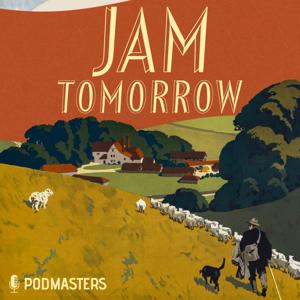


When it comes to intervention in the Middle East, there is one word that sums up British hubris. And that word is Suez. But did Britain learn from one of our most infamous mistakes in the Middle East? Far from it. From opposing the construction of the Suez Canal, then repeatedly going to war to defend it, and most recently bombing Houthi rebels trying to disrupt Red Sea trade, Britain is preoccupied with this vital shipping route — and convinced it can change the course of history in the Middle East.
Ros Taylor talks to Nigel Ashton, professor of history at the London School of Economics and the author of False Prophets: British Leaders’ Fateful Fascination with the Middle East from Suez to Syria, about a disaster that dealt a fatal blow to British imperial ambition.
• “Eden saw Nasser as a dictator out of the Hitler and Mussolini mode, with his hands round Britain’s economic windpipe.”
• “Blair had a remarkable case of historical amnesia.”
Written and presented by Ros Taylor. Produced by Jade Bailey. Original music by Dubstar. Managing Editor: Jacob Jarvis. Group Editor: Andrew Harrison. Jam Tomorrow is a Podmasters production.
Learn more about your ad choices. Visit podcastchoices.com/adchoices
In our latest look into postwar history: decriminalising homosexuality. In 1967 — for the first time in more than 400 years — two men over 21 were legally allowed to have sex, in private, with each other. But the fight for equality was very far from won.
Campaigner Peter Tatchell and Hugo Greenhalgh, whose book The Diaries of Mr Lucas: Notes from a Lost Gay Life is published this month, tell Ros Taylor what life was like for gay men in the late 20th century. It’s a story of pickups in Marble Arch, vicious homophobia, and illegal liaisons with the Kray gang.
• “It was an absolute goldmine of lost queer history.” – Hugo Greenhalgh
• “The gay scene went from being a community of sorts to something far more commercial in the 1970s and 80s. It left Mr Lucas behind. He was always a man of the shadows.” — Hugo Greenhalgh
• “In 1983 I fought the notorious Bermondsey by-election… the dirtiest, most violent and definitely most homophobic election in Britain in the 20th century. It was like living through a low-level civil war.” – Peter Tatchell
• “The 1990s coincided with a huge coming out of LGBT+ people. That mass coming out was key to helping change hearts and minds.” – Peter Tatchell
Buy The Diaries of Mr Lucas: Notes from a Lost Gay Life through our affiliate bookshop and you’ll help fund [name of podcast] by earning us a small commission for every sale. Bookshop.org’s fees help support independent bookshops too.
Written and presented by Ros Taylor. Produced by Jade Bailey. Original music by Dubstar. Managing Editor: Jacob Jarvis. Group Editor: Andrew Harrison. Jam Tomorrow is a Podmasters production
Learn more about your ad choices. Visit podcastchoices.com/adchoices
Coal: filthy, dangerous, and vital to Britain’s economy — but not any more. What did coal mining really mean to people? And why is coal so key to the biggest issues in politics — from the founding of the NHS, to Thatcherism, and even the issue of who should take the blame for the climate emergency?
Ros Taylor talks to Joerg Arnold, a historian at the University of Nottingham, and Ian Winwood, whose family were coal miners in Yorkshire, about why you have to understand the black stuff to understand Britain.
• “It was just so brutal.” – Ian Winwood on the Miners’ Strike.
• “The Thatcher government was taken by surprise that the miners weren’t united, but they were quick to exploit that split.” – Joerg Arnold
• “Nobody openly acknowledged that we were going to phase out coal.” – Joerg Arnold
• “They talk about the Red Wall. In 2019 when much of the Red Wall went blue but Barnsley didn’t. That’s not going to happen.” – Ian Winwood
Written and presented by Ros Taylor. Produced by Jade Bailey. Original music by Dubstar. Managing Editor: Jacob Jarvis. Group Editor: Andrew Harrison. Jam Tomorrow is a Podmasters production
Learn more about your ad choices. Visit podcastchoices.com/adchoices
National service has become part of the mythology of a braver, stronger Britain, where young men did their duty for their country and ended up having a damn good time doing it. But did they? What did people really think of National Service — and why were so many of them utterly relieved when it came to an end?
Ros Taylor talks to Richard Vinen, a historian at King’s College London and author of National Service: A Generation in Uniform, and Martin Stone, who joined the RAF in 1950.
• “I did have one near death mistake there… I thought that’s it, I’ve probably had it.” – Martin Stone
• “The category of people who are keenest on it at the beginning are public schoolboys. By the end of the 1950s they’re deferring.” – Richard Vinen
• “The best week I ever had there was flying sea cadets round in a Tiger Moth, doing some aerobatics for them. A Tiger Moth is easy to fly, but difficult to fly well.” – Martin Stone
• “It’s balls.” – Richard Vinen on the notion that men got to meet others from different social classes.
Written and presented by Ros Taylor. Produced by Jade Bailey. Original music by Dubstar. Artwork by Jim Parrett. Managing Editor: Jacob Jarvis. Group Editor: Andrew Harrison. Jam Tomorrow is a Podmasters production
Learn more about your ad choices. Visit podcastchoices.com/adchoices
Swish… thwack. After the war, one British tradition continued unabated: beating children in schools. It wasn’t until the early 1990s that it was completely outlawed. Why was the UK so attached to corporal punishment and what it did it take to change the law?
Ros Taylor talks to journalist Andrew Brown, who was beaten as a boy, and University of Sheffield historian Heather Ellis about why beatings were seen as an important preparation for life — especially life defending the remains of the British Empire.
Subscribe to Jam Tomorrow for a new episode every fortnight.
• “The first time it was more shocking and humiliating than painful, but it could be bloody painful too.” – Andrew Brown
• “It had to do with an elite model of masculinity which argued that to bring out the manly character in boys they were required to withstand considerable levels of bodily pain — and to be seen to bear them.” – Heather Ellis
• “It wasn’t until I came across the novels of Simon Raven that I realised there might be people who got enjoyment out of it, and that was despite reading a lot of James Bond.” – Andrew Brown
Written and presented by Ros Taylor. Produced by Jade Bailey. Original music by Dubstar. Managing Editor: Jacob Jarvis. Group Editor: Andrew Harrison. Jam Tomorrow is a Podmasters production
Learn more about your ad choices. Visit podcastchoices.com/adchoices
After the War, Britain was broke and broken – even broker than France. America was faced with a stark choice: invest billions in a shattered Europe or watch its citizens go hungry, or worse, Communist. So how did the Marshall Plan come to be? And what sort of Britain did it rebuild beyond the Welfare State?
Ros Taylor talks to Benn Steil, director of international economics at the Council on Foreign Relations in New York, and military historian Dr. Steph Hinnershitz about the aid package Britain needed, but wants to forget.
Subscribe to Jam Tomorrow for a new episode every fortnight.
• “A rubble heap, a charnel house, a breeding ground of pestilence and hate.” – Winston Churchill describes Europe after the War
• “We grossly underestimated the destruction to the European economy by the War… Millions of people in the cities are slowly starving.” – William L Clayton, 1947
• “The State Department knew that if it didn’t prop up Britain and take over her security responsibilities, we might be headed towards a Third World War.” – Benn Steil
Written and presented by Ros Taylor. Produced by Jade Bailey. Original music by Dubstar. Managing Editor: Jacob Jarvis. Group Editor: Andrew Harrison. Jam Tomorrow is a Podmasters production
Learn more about your ad choices. Visit podcastchoices.com/adchoices
Ros Taylor’s exploration of Britain’s postwar identity crisis continues. After the War, Britain was broke and broken. Between 1947 and 1981 over a million Britons left for a new life in Australia, some for just £10 passage. Ros looks at the lives of the ‘Ten Pound Poms’, their conflicted identities, the legacy of the racist ‘White Australia’ policy… and how a country that was once desperate for (white) migrants became a role model for immigration hardliners who wanted a points-based system in the UK.
Subscribe to Jam Tomorrow for a new episode every fortnight.
• “The ‘White Australia’ policy was designed to keep Australia white and English-speaking… It was Gough Whitlam’s reforms that made Australia more accepting of diversity.” – Prof Catherine Cole
• “The Ten Pound Poms didn’t just change Australia. They’re changing Britain now.” – Ros Taylor
Written and presented by Ros Taylor. Produced by Jade Bailey. Voiceovers by Eliza Davis Beard and Bryan Kassulke. Original music by Dubstar. Managing Editor: Jacob Jarvis. Group Editor: Andrew Harrison. Jam Tomorrow is a Podmasters production
Learn more about your ad choices. Visit podcastchoices.com/adchoices
A new fortnightly series of Ros Taylor’s exploration of the post-War promises Britain made to itself… and whether they were kept. In this edition: the quest for cheap, easy-to-access, stigma-free contraception wasn’t the simple progression to female freedom that you might think.
The wartime emancipation of women – not just into work but into “fraternisation” with American servicemen – created a stereotype of “loose” women and racist judgment against Black GIs. Birth control in the 50s was dangerous and hard to obtain. And one of the key advocates of the Pill was Enoch Powell.
With new interviews and archive material, Ros explores the long and winding road to women’s control of their own fertility… and whether our new obsession with “wellness” might be taking women backwards.
(Listener note: this edition contains contemporary quotes from the 40s and 50s featuring antiquated racial language).
• “Since no ‘decent’ woman was having sex outside marriage, it was unthinkable to promote ways of avoiding pregnancy.” – Ros Taylor
• “When it came to sex, most of the risk fell on women. And yet ‘loose’ women were blamed for luring men – and spreading disease.” – Ros Taylor
• “Women’s sexual desires were never taken into account on contraception, only men’s – and the pill didn’t really change that.” – Dr Claire Jones
• “The Pill recast the whole choreography of relationships.” – Mary Kenny
Written and presented by Ros Taylor. Produced by Jade Bailey. Voiceovers by Imogen Robertson and Seth Thévoz. Original music by Dubstar. Managing Editor: Jacob Jarvis. Group Editor: Andrew Harrison. Jam Tomorrow is a Podmasters production.
Learn more about your ad choices. Visit podcastchoices.com/adchoices
From the producers of Jam Tomorrow - a brand new show looking at the tectonic shifts in global power occurring right before our eyes, called This Is Not A Drill.
Presented by ex-BBC News host and Washington correspondent Gavin Esler with a series of co-hosts including Oz Katerji, This Is Not A Drill takes a look at the expanding threats to global stability from Ukraine to the Middle East to China; exploring the dangers, corruption, conflicts and power struggles happening around the world. New episodes out every Wednesday.
If you enjoy the show and want to subscribe, visit https://listen.podmasters.uk/TINADjtfd?at=1001l39LM
Learn more about your ad choices. Visit podcastchoices.com/adchoices
A Jam Tomorrow special: Identity cards. What happens when principles come up against panic? When a high minded determination not to collect private info runs up against a society which depends on data? Ros Taylor charts the history of “show us your papers” from wartime security concerns to football hooliganism, benefit fraud crackdowns, Blairite control freakery and our modern obsession with asylum seekers.
Speaking to experts including New Labour ID card advocate Liam Byrne she finds that this is one post war nightmare that could return. Is State ID coming whether we like it or not?
We’ve got more Jam Tomorrow specials coming over the summer. Follow us so you don’t miss any.
• “Every decade or so there’s been a problem where somebody says the ID card is the solution.” – Jon Agar
• “If you are from a marginalised group you know we already live in a papers, please society.” – Rob Ford
• “Yes, people are happy to unlock their device is using biometric data. That’s not the same as the government storing everybody’s name or face on the database.” – Edgar Whitley
Written and presented by Ros Taylor. Produced by Jade Bailey. Voiceovers by Imogen Robertson. Original music by Dubstar. Lead producer: Jacob Jarvis. Group Editor: Andrew Harrison. Jam Tomorrow is a Podmasters production
Learn more about your ad choices. Visit podcastchoices.com/adchoices
From the publisher's feed

654 Listeners
189 Listeners
45 Listeners

100 Listeners

15,582 Listeners

153 Listeners

3,049 Listeners

1,106 Listeners

948 Listeners
5 Listeners

98 Listeners

144 Listeners
18 Listeners
118 Listeners

2,342 Listeners
42 Listeners
20 Listeners