
Sign up to save your podcasts
Or

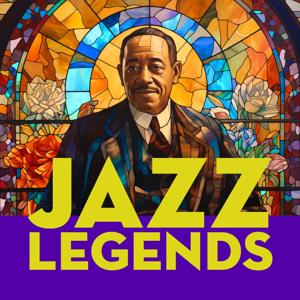


Pianist Horace Silver, born September 2, 1928, in Connecticut, played tenor saxophone and piano in school, and received his first national recognition when his trio was hired to play with saxophonist Stan Getz in 1950. His career received a major boost when he became part of the original Jazz Messengers with Art Blakey, and recorded his first hit composition, The Preacher. He toured with Blakey until 1956, when he left to start his own quintet, which featured his prolific compositional talents, and launched the careers of numerous younger players over the ensuing decades. He is one of the musicians credited with launching the hard bop style.
Saxophonist, composer Wayne Shorter, born August 25, 1933, was one of the most influential jazz artists, and most creative, distinctive and prolific jazz composers the music has produced. Serving as the principal composer for both Art Blakey and Miles Davis’ bands during his tenures there, in addition to the music he wrote for his own twenty record dates and Weather Report, his catalog runs to hundreds of titles, many of which have become jazz standards.
Pianist Mulgrew Miller, born August 13, 1955, toured with the Duke Ellington Orchestra for three years right out of college, later accompanying singer Betty Carter, then three year stints with trumpeter Woody Shaw followed by Art Blakey’s Jazz Messengers. He was already recording with his own groups when he joined drummer Tony Williams in quintet and trio settings, he also served as director of jazz studies at William Paterson college up unto his tragic death of a stroke at age 57. His playing never lost its roots as a church pianist, but he also incorporated the pyrotechnic technical influences of Oscar Peterson and the harmonic language of McCoy Tyner.
Bill Evans, born August 16, 1929, was one of his generation’s most influential jazz pianists. His lyrical melodic lines, use of impressionistic harmony and deft touch at the keyboard combined to make him an influence on every pianist that came after him. After working with Miles Davis and recording the seminal recording "Kind of Blue", he spent the rest of his career performing with his own trios, carving out a career as a soloist and jazz composer for decades, earning 31 Grammy award nominations and winning seven.
Charlie Parker, nicknamed “Yardbird” or “Bird” for short was easily one of the most influential jazz musicians of the 20th century. Born in Kansas City, Kansas on August 29, 1920, he came up in the vital jazz scene of Kansas City, Missouri. Initially heavily influenced by the playing of saxophonist Lester Young, he developed a prodigious saxophone technique and his own unique harmonic and melodic language, heavily rooted in the blues tradition, and together with trumpeter Dizzy Gillespie is credited with creating the style of jazz later referred to as bebop. Bassist Charles Mingus famously commented that so many musicians copied Bird’s innovations that they’d all be guilty of copyright violations in a just world!
Virtuoso trumpeter Lee Morgan (born July 10, 1938) first rose to fame as a teenage member of Dizzy Gillespie’s band. He played as a sideman with John Coltrane, Wayne Shorter, Jackie McLean, Hank Mobley, Art Blakey in addition to producing a series of recordings as a leader, one of which “The Sidewinder” became a surprise commercial hit in 1964. He died tragically in 1972, shot at a club in NYC during a gig.
Composer and lyricist Frank Loesser (born June 29, 1910) worked for years as a lyricist for a series of different songwriters, always telling them he could actually write both words and music himself, and he proved it in 1950 with the Broadway Premiere of Guys and Dolls. Over the course of his career he won a Pulitzer Prize for his show, How to Succeed in Business, Tony awards for Guys and Dolls and How to Succeed in Business and an Academy Award for the song "Baby it’s Cold Outside." Jazz musicians have embraced his tunes for years, his melodies and harmonies are a continuing source of inspiration.
Tenor saxophonist Hank Mobley (born July 7, 1930) was described as the “Middleweight champion of the tenor saxophone” by critic Leonard Feather, but most musicians think he punched well above that weight class. His career included stints with Art Blakey, Horace Silver, Max Roach and Miles Davis as well as over thirty recordings as a bandleader in his own right. Many of his compositions have become jazz standards, and his soulful and lyrical solos stood out every time he played his horn.
Throughout songwriter Richard Rodgers' (born June 28, 1902) long career, with 43 Broadway shows and over 900 songs to his credit, he wrote primarily with only two lyricists, Lorenz Hart and Oscar Hammerstein. Much of his output with both men have become standards, but jazz musicians are particularly enamored with his earlier work, with Lorenz Hart. Some theorize that even though he was often at odds with Hart due to the latter’s unreliable work ethic, the fact that Hart set lyrics to Rodger’s music after it was composed allowed freer range to Rodger’s imagination than the work he composed with Hammerstein, who insisted on writing the lyric beforehand and having Rodgers set it to music.
Pianist, bandleader, composer Chick Corea (born June 12, 1941) is one of the most influential jazz musicians of his generation. After serving his apprenticeship with Miles Davis, Corea started a group called Return to Forever, that featured singer Flora Purim, reedman Joe Farrell and drummer/ percussionist Airto Moreira. Many of the compositions Corea penned for this band have become jazz standards. He had numerous trend setting groups of varying sizes throughout his career, featuring cutting edge sidemen and premiering new compositions on a regular basis, in addition to displaying his prodigious keyboard abilities.
From the publisher's feed

31,927 Listeners

357 Listeners

3,999 Listeners

1,979 Listeners
373 Listeners

2,168 Listeners
211 Listeners

2,997 Listeners

2,183 Listeners
4,117 Listeners

14 Listeners
1,995 Listeners

2,397 Listeners
7 Listeners
732 Listeners