
Sign up to save your podcasts
Or



Illustrations
Lead Sheets
Play Alongs
Jazz Piano Skills Community
Keywords
jazz piano, rhythm, improvisation, jazz standards, musical education, melodic vocabulary, jazz techniques, music theory, jazz practice, jazz skills
Summary
In this episode of Jazz Piano Skills, Dr. Bob Lawrence delves into the essential elements of jazz piano, focusing on the importance of rhythm in musical expression. He emphasizes that rhythm is foundational to melody and harmony, and neglecting it can lead to frustration in musical development. The episode features a comprehensive exploration of 50 must-know rhythms that serve as building blocks for creating melodic vocabulary in jazz. Dr. Lawrence encourages listeners to practice these rhythms artistically, highlighting their significance in improvisation and overall musicianship.
Takeaways
Rhythm is crucial for musical expression and development.
Melody and harmony need rhythm to be effective.
Neglecting rhythm can lead to musical frustration.
Rhythm should be a daily focus in practice routines.
Understanding foundational rhythms is essential for all musicians.
Practicing rhythms helps develop melodic vocabulary.
Artistic presentation of rhythms is more important than mathematical accuracy.
Jazz improvisation relies on applying rhythms to melodic ideas.
Take time to master foundational rhythms before advancing.
Enjoy the process of learning and practicing jazz piano.
Titles
Unlocking the Secrets of Jazz Piano
The Rhythm Revolution in Jazz
Sound bites
"50 must-know rhythms for jazz players."
"Good things come in small packages."
"Take your time and enjoy the process."
Support the show
Illustrations
Lead Sheets
Play Alongs
Jazz Piano Skills Community
Summary
In this episode of Jazz Piano Skills, Dr. Bob Lawrence guides listeners through the process of improving their improvisation skills using the jazz standard 'MISTY'. The conversation covers essential foundational skills for new jazz pianists, the importance of membership resources, and a structured approach to learning a new tune. Dr. Lawrence emphasizes the significance of rhythm and time in music, and provides practical exercises for developing improvisational skills. The episode concludes with a demonstration of applying these skills to play 'MISTY' improvisationally.
Keywords
Jazz Piano, Improvisation, MISTY, Music Theory, Jazz Skills, Piano Techniques, Music Education, Jazz Chords, Melodic Lines, Rhythm
Takeaways
Improvisation skills are developed through structured practice.
Understanding harmony and melody is crucial for jazz pianists.
Membership in Jazz Piano Skills provides valuable resources and support.
Foundational skills include mastering chords, arpeggios, and scales.
Time is a rigid element in music that must be mastered.
Transitioning from amateur to professional requires intentional practice.
Listening to various renditions of a tune enhances understanding.
Composing melodic lines is essential for improvisation.
Rhythmically altering composed lines helps in improvisation.
Practicing with lead sheets aids in developing improvisational skills.
Titles
Mastering Jazz Piano: The Art of Improvisation
Unlocking Your Jazz Potential with MISTY
Essential Skills for Aspiring Jazz Pianists
The Journey of Jazz Piano: From Basics to Improvisation
Exploring MISTY: A Deep Dive into Jazz Improvisation
Sound Bites
"It's time to discover, learn, and play jazz piano."
"We work on developing our improvisation skills."
"Music is the production of sound and silence."
"You should be a subscriber to the Jazz Piano Skills YouTube channel."
"The most important skill for me to focus on developing?"
"You will struggle unsuccessfully with learning how to play music."
"Music is held together by time."
"You transition from amateur to professional musician."
"You have some work to do to have some fun this week."
"Enjoy MISTY, an improvisation approach."
Support the show
Illustrations
Lead Sheets
Play Alongs
Jazz Piano Skills Community
Summary
In this episode of Jazz Piano Skills, Dr. Bob Lawrence delves into the melodic analysis of the classic jazz standard 'Misty.' He emphasizes the importance of a structured practice strategy, the seven facts of music as a guiding compass, and the value of listening to various renditions of a tune. The discussion includes effective practice strategies, daily challenges, and a thorough breakdown of the melody, fingerings, and different treatments of 'Misty.'
Keywords
Jazz Piano, Melodic Analysis, Practice Strategies, Seven Facts of Music, Daily Challenges, Misty, Jazz Education, Improvisation, Music Theory, Jazz Piano Skills
Takeaways
Establishing a well-thought-out practice strategy is crucial.
Information overload can hinder progress in learning jazz.
The seven facts of music serve as a compass for practice.
Listening to multiple renditions of a tune enhances understanding.
Transcribing melodies by ear is essential for jazz musicians.
Daily challenges can help assess and improve skills.
Recognizing melodies is key to effective performance.
Different treatments of a standard can alter its presentation.
Vocal-like playing is a goal for jazz pianists.
A structured approach to learning tunes is beneficial.
Titles
Mastering Melodic Analysis in Jazz Piano
The Seven Facts of Music: Your Guiding Compass
Effective Practice Strategies for Jazz Musicians
Daily Challenges: Maximizing Your Jazz Skills
Exploring 'Misty': A Melodic Journey
Sound Bites
"People don't plan to fail, they just fail to plan."
"Information overload leads to paralysis by analysis."
"The compass are the seven facts of music."
"You cannot formulate a coherent practice plan without the facts."
"Music is the production of sound."
"The daily challenges will help us get there."
"It's important to keep this in mind as we learn."
"We listen to a lot of renditions of whatever tune."
"Does everyone recognize it as I am playing Misty?"
"We want to sound vocal-like when we play melodies."
Support the show
Illustrations
Lead Sheets
Play Alongs
Jazz Piano Skills Community
Summary
In this episode of Jazz Piano Skills, Dr. Bob Lawrence introduces the new monthly tune study, emphasizing a skill-centric approach to learning jazz piano. He outlines the four essential pillars of jazz piano skills: harmony, melody, improvisation, and rhythm. The discussion includes the importance of understanding the seven facts of music and how they relate to developing these skills. Dr. Lawrence also addresses common challenges faced by players, particularly in mastering stride piano, and provides practical tips for improvement. The episode culminates in an exploration of the classic jazz standard 'Misty', detailing the approach to harmonic analysis and the importance of listening to definitive recordings. In this episode, Dr. Bob Lawrence delves into the intricacies of jazz piano, focusing on the classic standard 'Misty.' He discusses the importance of lead sheets for ear training, the structure of the song, and the unique chord changes involved. The conversation also covers common harmonic movements and various voicings, including block, traditional, contemporary, and two-handed structures. Dr. Lawrence emphasizes the significance of these elements in developing jazz skills and invites listeners to participate in the upcoming masterclass for further exploration.
Keywords
Jazz Piano, Stride Piano, Misty, Jazz Skills, Music Education, Harmony, Melody, Improvisation, Rhythm, Music Theory, Jazz, Piano, Lead Sheets, Ear Training, Chord Changes, Voicings, Misty, Harmonic Analysis, Jazz Standards, Music Education
Takeaways
The importance of a skill-centric approach to learning jazz piano.
Essential jazz piano skills are categorized into four pillars: harmony, melody, improvisation, and rhythm.
Understanding the seven facts of music is crucial for developing jazz skills.
Listening to various artists is key to learning a new tune.
Membership in Jazz Piano Skills provides access to premium content and community support.
Struggling with stride piano is common among players; patience and practice are essential.
Practicing strum piano can help develop the skills needed for stride piano.
The two-five-one progression is foundational for jazz musicians.
Transcribing melodies by ear is more effective than using lead sheets.
A structured approach to learning tunes can enhance musical understanding. Lead sheets are essential for ear training.
Understanding the A-A-B-A form is crucial for jazz standards.
Identifying unique chord changes enhances practice.
Common harmonic movements appear frequently in jazz.
Block voicings are foundational for jazz piano.
Traditional and contemporary shells expand harmonic vocabulary.
Two-handed voicings are useful for solo and ensemble playing.
Practice thinking in harmonic functions away from the instrument.
Utilizing software can aid in practicing chord changes.
Engagement in community forums enhances learning.
Titles
Mastering Jazz Piano: The Essential Skills
Unlocking the Secrets of Stride Piano
Exploring the Timeless Standard 'Misty'
The Four Pillars of Jazz Piano Skills
Navigating the Seven Facts of Music
Jazz Piano Skills Membership: Unlocking Your Potential
Sound Bites
"Tunes illuminate our weaknesses very quickly."
"Music is the production of sound and silence."
"Stride piano is not easy, so be patient."
"This is a great packet."
"I want to preserve as much time as possible."
"Misty is textbook A-A-B-A form."
Support the show
Podcast Packets
Illustrations
Lead Sheets
Play Alongs
Jazz Piano Skills Community
Summary
In this episode of Jazz Piano Skills, Dr. Bob Lawrence delves into the essential role of rhythm in jazz music, emphasizing its importance in improvisation and overall musicianship. The discussion begins with a review of the jazz standard 'Georgia on My Mind' and transitions into a deep exploration of rhythmic skills, highlighting common pitfalls in music education regarding rhythm neglect. Dr. Lawrence provides practical exercises for mastering rhythmic concepts and introduces rhythmic major arpeggios as a tool for developing melodic vocabulary. The episode concludes with an invitation to further explore these concepts in upcoming masterclasses and resources available to Jazz Piano Skills members.
Keywords
Jazz Piano, Rhythm, Improvisation, Music Education, Jazz Skills, Major Arpeggios, Musical Growth, Jazz Standards, Georgia on My Mind, Music Fundamentals
Takeaways
Rhythm is the engine that drives music.
Neglecting rhythm leads to musical frustration.
Daily rhythm practice is essential for growth.
Understanding measures and time is crucial for musicianship.
Rhythmic motifs can develop melodic vocabulary.
All rhythms are combinations of basic note values.
Recording yourself can expedite learning.
Practicing in different keys enhances musicality.
Awareness of time is key to playing music.
Rhythm should be a fundamental focus in music education.
Titles
Unlocking the Secrets of Jazz Piano
The Rhythm Revolution in Jazz
Mastering Jazz with Rhythmic Arpeggios
From Georgia to Groove: A Jazz Journey
The Heartbeat of Jazz: Understanding Rhythm
Jazz Piano Skills: The Essential Guide
Sound Bites
"Rhythm is the engine that drives music."
"Neglect rhythm and you will remain musically frustrated."
"Rhythm deserves daily attention."
"It's personal. It's very personal."
"No rhythmic skills, no playing music."
"Good things come in small packages."
"Everything else in music will be difficult."
"You have to be consciously aware of filling one measure."
"Rhythmic motifs can develop melodic vocabulary."
"All rhythms are some combination of basic note values."
Support the show
Illustrations
Lead Sheets
Play Alongs
Jazz Piano Skills Community
Keywords
jazz piano, improvisation, rhythm challenge, Georgia on my mind, music education, jazz skills, harmonic analysis, melodic analysis, jazz community, music practice
Summary
In this episode of Jazz Piano Skills, Dr. Bob Lawrence guides listeners through the essential elements of jazz piano improvisation, focusing on the tune 'Georgia on My Mind.' The discussion covers the importance of rhythmic vocabulary, harmonic and melodic analysis, and the seven facts of music that underpin effective improvisation. Listeners are encouraged to engage with rhythm challenges and explore various approaches to learning and playing jazz piano, emphasizing the value of community and membership in enhancing their musical journey.
Takeaways
Improvisation development is a key focus in jazz piano skills.
Understanding the seven facts of music is crucial for musicians.
Rhythm challenges help develop essential playing skills.
Membership offers valuable resources and community support.
Daily rhythm practice is vital for building a rhythmic vocabulary.
Listening to various artists enhances musical understanding.
Harmonic and melodic analysis are essential for learning tunes.
Improvisation involves unfolding harmony rhythmically.
Engaging with the community fosters growth and learning.
Consistent practice leads to significant improvement in playing.
Titles
Mastering Jazz Piano: The Art of Improvisation
Unlocking the Secrets of Jazz Piano Skills
Rhythm and Harmony: The Foundations of Jazz
Exploring Georgia on My Mind: A Jazz Journey
The Importance of Rhythm in Jazz Improvisation
Building a Rhythmic Vocabulary for Jazz Piano
Sound Bites
"It's time to discover, learn, and play jazz piano."
"We will have our rhythm challenge."
"We must have a crystal clear thought process."
"These seven facts are indeed really important."
"Music is the production of sound and silence."
"Rhythm is essential to our musical skills."
"Your membership keeps the Jazz Panel Skills podcast ad-free."
"Without a rhythmic vocabulary, we will never obtain the playing skills."
"Rhythmic challenges are real for everyone."
"You will see a remarkable improvement in your playing."
Jazz Piano Skills
https://www.jazzpianoskills.com
Jazz Piano Skills Membership
https://www.jazzpianoskills.com/jazz-piano-skills-membership-privileges.html
MEMBERSHIP COUPON
Use the Coupon Code YouTube20 to receive a 20% Membership Savings
Rhythm Challenge
https://www.jazzpianoskills.com/rhythmchallenge.html
One Minute Lessons
https://www.jazzpianoskills.com/one-minute-lessons.html
Jazz Piano Skills Podcast
https://www.jazzpianoskillspodcast.com
Contact Dr. Lawrence
[email protected]
Office: 972-380-8050 Ext. 211
Text: 972-380-8050
Support the show
Podcast Packets
Illustrations
Lead Sheets
Play Alongs
Jazz Piano Skills Community
Keywords
jazz piano, melodic analysis, practice strategy, seven facts of music, Georgia on My Mind, jazz education, improvisation, voicings, target notes, music theory
Summary
In this episode of Jazz Piano Skills, Dr. Bob Lawrence delves into the melodic analysis of 'Georgia on My Mind,' emphasizing the importance of a structured practice strategy and understanding the seven facts of music. The discussion covers the significance of learning melodies by ear, dissecting melodic phrases, and applying various voicings to enhance performance. The episode concludes with practical tips for practicing and enjoying the process of learning jazz piano.
Takeaways
Melodic analysis is crucial for understanding jazz tunes.
A structured practice strategy is essential for progress.
The seven facts of music guide our understanding of sound.
Learning by ear enhances musicality and improvisation skills.
Transcribing melodies develops a musician's ear.
Identifying phrases within a melody aids in memorization.
Target notes help in understanding melodic structure.
Applying voicings enriches the performance of a melody.
Simplicity in playing can lead to effective jazz performance.
Enjoying the learning process is key to becoming a skilled musician.
Titles
Unlocking Jazz Piano Skills: A Melodic Journey
Mastering 'Georgia on My Mind': A Melodic Analysis
The Seven Facts of Music: Your Guide to Jazz
Effective Practice Strategies for Jazz Musicians
Transcribing Melodies: The Key to Jazz Mastery
Exploring Melodic Phrases in Jazz Standards
Sound Bites
"It's time to discover, learn, and play jazz piano."
"People don't plan to fail, they just fail to plan."
"We need correct information that is presented coherently."
"Music is the production of sound and silence."
"The seven facts of music are essential."
"Transcribing melodies develops your ear."
"Learning by ear is crucial for jazz musicians."
"Keep it simple: block chords and melody."
"Practice these shapes with the melody."
"Enjoy Georgia On My Mind, a melodic analysis."
Support the show
Podcast Packets
Illustrations
Lead Sheets
Play Alongs
Jazz Piano Skills Community
In this insightful episode of Jazz Piano Skills, Dr. Bob Lawrence takes a deep dive into the timeless jazz standard “Georgia on My Mind” by Hoagy Carmichael. Join Dr. Lawrence as he unpacks the tune’s elegant form and explores its rich harmonic landscape through a detailed analysis of chord changes and harmonic functions. Discover common harmonic movements that make the song so enduring and musically satisfying, and learn how to apply a variety of jazz voicings—from traditional and contemporary shells to block chords and sophisticated two-handed structures.
Through thoughtful demonstrations and practical examples, Dr. Lawrence shares powerful strategies for practicing and internalizing these voicings, empowering you to bring greater depth and color to your playing. Whether you're a student of jazz piano or a seasoned player looking to refine your skills, this episode offers valuable tools to elevate your understanding and performance of this beloved classic.
Ready to unlock the harmonic secrets of “Georgia on My Mind”? Let’s dig in!
Keywords
Jazz Piano, Essential Skills, Rhythm, Harmony, Melody, Improvisation, Georgia on My Mind, Jazz Standards, Music Education, Piano Techniques
Summary
In this episode of Jazz Piano Skills, Dr. Bob Lawrence introduces the new monthly tune, 'Georgia on My Mind,' emphasizing the importance of a skill-centric approach to learning jazz piano. He discusses the four essential pillars of jazz piano: harmony, melody, improvisation, and rhythm, highlighting how each contributes to a musician's overall proficiency. The episode also addresses common challenges faced by pianists, particularly in rhythm, and offers practical strategies for improvement. The conversation culminates in a detailed harmonic analysis of 'Georgia on My Mind,' providing listeners with insights into the tune's structure and essential skills for performance.
Takeaways
The start of a new month means a new tune.
Being skill-centric is crucial for learning tunes.
Essential jazz skills are organized into four pillars: harmony, melody, improvisation, and rhythm.
Rhythm is often the biggest challenge for musicians.
Daily rhythm challenges can help improve rhythmic skills.
Understanding the seven facts of music is essential for development.
Melodies should be played with elasticity, not rigidity.
Practice harmonic and melodic analysis for better understanding.
Use lead sheets to practice chord changes and harmonic functions.
Engage with the Jazz Piano Skills community for support and resources.
Titles
Mastering Jazz Piano: The Essential Skills
Unlocking the Secrets of Jazz Harmony
Rhythm: The Heartbeat of Jazz Piano
Overcoming Stiffness in Piano Playing
A Deep Dive into Georgia on My Mind
The Four Pillars of Jazz Piano Skills
Sound Bites
"It's time to discover, learn, and play jazz piano."
"Tunes illuminate our weaknesses very quickly."
"Rhythm is the number one reason people struggle."
"Melodies are meant to be played, not mathematically correct."
"You can gain a rhythmic command of time."
"Georgia on my mind is textbook."
"Practice reciting lead sheet three and lead sheet four."
"Nothing wrong with block voicings."
"Bathe in these shapes, get them in your ears."
"Have fun as you discover, learn and play jazz piano."
Support the show
Podcast Packets
Illustrations
Lead Sheets
Play Alongs
Jazz Piano Skills Community
Keywords
Jazz Piano, Improvisation, Rhythmic Command, Music Education, Jazz Skills, Antonio Carlos Jobim, Bossa Nova, Melodic Analysis, Harmonic Analysis, Jazz Vocabulary, jazz piano, improvisation, rhythmic patterns, music education, jazz exercises, melodic lines, recording practice, music theory, jazz skills, piano techniques
Summary
In this episode of Jazz Piano Skills, Dr. Bob Lawrence emphasizes the critical importance of rhythmic command in improvisation. He discusses the misconceptions surrounding improvisation, clarifying that it is not about spontaneous creativity but rather about mastering rhythmic patterns and musical vocabulary. The episode includes practical exercises designed to enhance rhythmic skills both harmonically and melodically, providing listeners with a structured approach to developing their improvisational abilities. In this episode, Dr. Bob Lawrence delves into the intricacies of improvisation in jazz piano, emphasizing the importance of rhythmic command and the mindset required for effective practice. He discusses various exercises that transition from downbeats to upbeats, the significance of recording oneself to identify areas for improvement, and the necessity of approaching exercises as melodic lines rather than mere drills. The conversation culminates in a call to action for listeners to engage with the material and develop their improvisational skills through consistent practice and reflection.
Takeaways
Titles
Sound Bites
Support the show
Podcast Packets
Illustrations
Lead Sheets
Play Alongs
Jazz Piano Skills Community
Keywords
Jazz Piano, Diatonicism, Improvisation, Harmonic Analysis, Melodic Analysis, Jazz Vocabulary, Arpeggios, Jazz Education, Antonio Carlos Jobim, Wave
Summary
In this episode of Jazz Piano Skills, Dr. Bob Lawrence explores the intricacies of jazz piano through the lens of diatonicism, harmonic and melodic analysis, and practical exercises. The discussion begins with a review of the jazz standard 'Wave' by Antonio Carlos Jobim, focusing on harmonic and melodic structures. The importance of diatonicism in improvisation is emphasized, along with practical exercises for mastering four-note arpeggios. The episode culminates in a detailed exploration of diatonic improvisation exercises, providing listeners with tools to enhance their jazz vocabulary and improvisational skills.
Takeaways
Titles
Sound Bites
Support the show
From the publisher's feed
Jazz Piano Skills is a weekly educational podcast for pianists who want to understand jazz harmony, develop improvisation skills, and become more confident jazz…
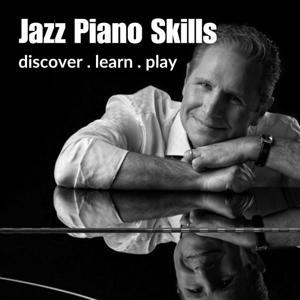
Hosted by Dr. Bob Lawrence, jazz pianist, music educator, and Director of The Dallas School of Music, each episode explores the essential skills of jazz piano through a structured, practical approach to learning.
Each month focuses on a jazz standard through four areas of study:
Whether you're beginning your jazz piano journey or refining your existing skills, Jazz Piano Skills provides a consistent educational process designed to help you understand the music you play.
Discover, learn, and play with Jazz Piano Skills.
Explore Independent and Guided Study memberships at JazzPianoSkills.com.

78,306 Listeners
317 Listeners
151 Listeners

111,832 Listeners

15 Listeners
1,996 Listeners

50,382 Listeners

57,616 Listeners
673 Listeners
9,211 Listeners

2,139 Listeners

6,140 Listeners

32 Listeners