
Sign up to save your podcasts
Or

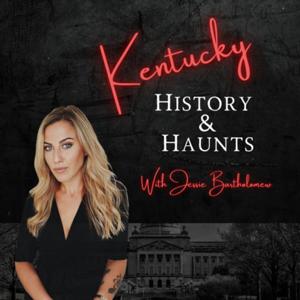


In Part Two, John Reinhardt Pflanz Jr. finally sees his longtime campaign for a modern Louisville jail become a reality—but the new building brings plenty of new problems.
After the jail opens in 1905, Pflanz contends with smuggling, faulty heating, a flooded tunnel, the lack of padded cells and one unfortunate matron who gets locked inside the abandoned jail for five hours. He also establishes a library for prisoners, advocates for Kentucky’s new juvenile court system and helps organize the County Jailers of Kentucky Association, which elects him as its first president.
Pflanz loses his office in 1907 but returns two years later for a much rockier term marked by criticism of the jail’s management, an ugly battle over the appointment of female matrons and another bitter election defeat. We follow his repeated attempts to reclaim the office through his final years and death in 1927.
Today, the jail Pflanz helped build still stands in downtown Louisville—and some believe a few former occupants may have never left.
Hear the mysterious sounds recorded inside the Old Louisville Jail:
https://www.wave3.com/story/36686729/ghost-hunters-reveal-spooky-sounds-in-old-louisville-jail/
Follow Kentucky History & Haunts:
Facebook: facebook.com/kyhistoryhaunts
Instagram: instagram.com/kyhistoryhaunts
Email: [email protected]
Send mail to Jessie:
252 Whittington Pkwy
Louisville, KY 40222
After briefly encountering Jailer John Reinhardt Pflanz Jr. in our episodes about Rainey Bethea, I went looking for a little more information—and wound up with a 10,000-word story.
Born to German immigrants in Louisville’s Portland neighborhood, Pflanz rose from city councilman and local inventor to Jefferson County sheriff and, in 1898, county jailer. He quickly gained a reputation for running a tighter ship while advocating for cleaner, safer and more humane conditions inside Louisville’s dangerously overcrowded jail.
In Part One, we explore Pflanz’s early political career, the supposed discovery of gold beneath one of his Portland properties, his appointment of the jail’s first female matron and his persistent campaign for a modern jail with separate wards for women, children and first-time offenders.
But life inside the jail was rarely dull. There were elaborate dinners for public officials, a wedding between two prisoners, feuding matrons, a smallpox outbreak, an audacious escape through the roof and the arrival of men accused of involvement in the assassination of Governor William Goebel. Pflanz also survived a brutal election-day assault and endured devastating losses within his family.
Although widely praised as a reform-minded jailer, Pflanz was also a deeply contradictory figure whose public speeches revealed the racism underlying Louisville and Kentucky politics at the turn of the twentieth century.
Follow Kentucky History & Haunts for historical photographs, newspaper illustrations and more from this episode:
Facebook: facebook.com/kyhistoryhaunts
Instagram: instagram.com/kyhistoryhaunts
Email: [email protected]
Send mail to:
Jessie
252 Whittington Pkwy
Louisville, KY 40222
In Part One, we followed Rainey Bethea’s story through the murder of Lischia Rarick Edwards, his arrest, conflicting confessions and remarkably swift trial. After a proceeding lasting only a few hours, a jury deliberated for less than five minutes before sentencing him to be publicly hanged.
Part Two begins with Black attorneys, journalists and civil-rights advocates attempting to secure Bethea a new trial. They questioned whether he understood his guilty plea, received adequate representation or had his constitutional rights protected. Although a federal judge temporarily stayed the execution, Bethea’s petition was dismissed. Governor Chandler set a new execution date of August 14, 1936.
Meanwhile, Owensboro prepared for a spectacle. A gallows was erected near the Ohio River, hotels filled with visitors, and residents held “hanging parties.” Thousands gathered around the scaffold, with spectators climbing onto vehicles and nearby buildings for a better view.
National attention focused on Daviess County Sheriff Florence Thompson, Kentucky’s only female sheriff at the time. Newspapers were fixated on whether she would personally spring the trap. Thompson instead selected Arthur L. Hash, a former Louisville police officer and World War I veteran who volunteered for the job. Witnesses said Hash appeared visibly intoxicated and unsteady on the scaffold.
Shortly after 5:00 a.m., Bethea arrived from Louisville. He had been baptized while awaiting execution and reportedly said he had made peace with God. A priest accompanied him onto the scaffold, where he made his final confession but did not address the crowd.
Hash released the trap as thousands watched. Afterward, spectators surged toward the scaffold, and souvenir hunters tore pieces from Bethea’s clothing while he was reportedly still breathing. Professional execution consultant George Philip Hanna later called it the worst display he had witnessed during approximately 70 hangings.
The scene generated immediate outrage. Letters and editorials described it as barbaric and humiliating, arguing that public executions encouraged mob behavior rather than serving justice. Owensboro’s newspaper pushed back, accusing visiting journalists of exaggerating the disorder after they were denied the sensational story they expected: Florence Thompson personally pulling the lever.
The backlash helped change Kentucky law. In 1938, Governor Chandler signed legislation repealing the provision that allowed people convicted of rape to be publicly hanged in the county where the crime occurred.
Rainey Bethea’s hanging is generally recognized as the last public execution conducted in the United States. Its history raises difficult questions about race, justice, punishment, media sensationalism and the public’s willingness to turn death into entertainment.
Content warning: This episode includes discussion of execution, mob violence and racism.
Photos and newspaper clippings will be shared on the Kentucky History & Haunts social media pages.
Questions, comments or episode suggestions? Email [email protected].
Instagram: https://www.instagram.com/kyhistoryhaunts
Facebook: https://www.facebook.com/kyhistoryhaunts
If you enjoy the show, please follow, share the episode and leave a rating or review on Apple Podcasts or Spotify.
Additional reading:
https://time.com/archive/6755762/crime-party/
Mailing address:
252 Whittington Pkwy, Louisville, KY 40222
Rainey Bethea is remembered as the last person publicly executed in Kentucky—and, depending on the source, the last person publicly executed in the United States. But his story did not begin at the gallows, and the familiar version of what happened in Owensboro leaves out some of its most important and troubling details.
In Part One of this two-part series, we trace what is known about Bethea’s early life in Roanoke, Virginia, before following him to Owensboro during the Great Depression. As a young Black man arriving in a segregated western Kentucky river town with few resources or connections, Bethea faced severely limited opportunities. His early encounters with Owensboro police also placed him on the radar of a small local law-enforcement system long before the case that would make his name known across the country.
In 1936, 70-year-old Lischia Rarick Edwards was found dead inside her Owensboro residence. Within days, authorities identified Bethea as their primary suspect and found him hiding near the banks of the Ohio River.
This episode examines the evidence collected against him, his arrest, the threat of mob violence and the decision to move him to Louisville for protection.
The case moved with extraordinary speed. A special grand jury was assembled, and prosecutors deliberately pursued a charge that made Bethea eligible for a public hanging under Kentucky law. The jury returned its guilty verdict in less than five minutes.
Bethea later claimed that he had not understood the charge to which he pleaded guilty. He said the proceedings had been rushed and that he believed he was entering a plea to robbery rather than assault. By then, however, he had already been sentenced to hang.
As Owensboro began preparing for an execution expected to attract thousands of spectators, a group of Black attorneys, journalists and civil-rights advocates stepped forward to investigate whether Bethea’s constitutional rights had been violated. Their questions remain central to understanding this case: Did Bethea receive meaningful legal representation? Did he understand his plea? Could a fair trial have taken place in Owensboro at that moment? Would more time, a change of venue or a defense that called witnesses have made any difference?
Part Two will follow the legal effort to stop the execution, the intense national attention focused on Daviess County Sheriff Florence Thompson, the growing spectacle surrounding the hanging and what actually happened on the morning of August 14, 1936.
Content warning: This episode contains discussion of sexual assault, murder, racism, police violence and threatened mob violence. A warning is also provided within the episode before the description of the crime.
If you enjoy Kentucky History & Haunts, please follow the show, share the episode with a fellow history lover, and leave a rating or review wherever you listen. Those small actions make a tremendous difference in helping new listeners discover the podcast.
Have a Kentucky history story, mystery or haunting you think should be featured? Send your suggestions, questions or feedback to [email protected].
Follow Kentucky History & Haunts:
Instagram: https://www.instagram.com/kyhistoryhaunts
Facebook: https://www.facebook.com/kyhistoryhaunts
Mailing address:
252 Whittington Pkwy, Louisville, KY 40222
Public executions once drew crowds by the thousands in Kentucky. Families traveled by wagon, vendors did business, newspapers covered every detail, and many people believed these spectacles served as a warning to would-be criminals. Others saw them for what they were: state-sanctioned violence disguised as public entertainment.
In this episode, we trace the history of Kentucky's public hangings long before the infamous execution of Rainey Bethea. Through newspaper accounts, court records, and firsthand descriptions, we examine how public opinion shifted over time, why legislators repeatedly debated whether executions should be public or private, and how these events reflected the social and political climate of nineteenth and early twentieth-century Kentucky.
Along the way, we'll explore the executions of John Ryan in Graves County, the notorious Boyd County murders involving Ellis Craft, William Neal, and George Ellis, the execution of Jordan Taylor in Christian County, Henry Hall in the mountains of eastern Kentucky, and the later cases of William Deboe and John Montjoy as Kentucky struggled to reconcile changing attitudes toward capital punishment.
We'll also look at the surprising role of jail reform advocate Jailer Pflanz, the introduction of the electric chair at Eddyville, and the legislation that briefly revived public hangings for certain crimes during the 1920s and 1930s.
This episode contains discussions of murder, sexual violence, executions, child victims, and graphic historical material. Listener discretion is strongly advised.
Next time, we'll examine the case of Rainey Bethea, whose 1936 execution in Owensboro became the last public hanging in Kentucky and the last public execution in the United States. We'll explore the crime, the trial, Sheriff Florence Thompson's unexpected role, the enormous crowds that descended on Owensboro, and how Bethea's execution ultimately ended the era of public hangings forever.
Follow Kentucky History & Haunts on Instagram and Facebook to see photographs, newspaper clippings, and other historical images that accompany each episode.
If you enjoy the show, please consider leaving a rating or review wherever you listen to podcasts. It helps more history lovers discover the stories of Kentucky's fascinating past.
Questions, comments, or episode suggestions? Email [email protected].
*Transcripts are auto-generated and may contain errors
Mailing address:
252 Whittington Pkwy, Louisville, KY 40222
___
https://time.com/archive/6755762/crime-party/
https://www.nytimes.com/1936/08/23/archives/kentucky-aroused-by-public-hanging-press-and-public-take-up-battle.html
Who was “Kentucky Frank”?
Scout. Showman. Snake wrangler. Shooting gallery owner. Wild West performer. Serial storyteller. And eventually, a 72-year-old man who made headlines for marrying a thirteen-year-old Kentucky girl.
In this episode of Kentucky History & Haunts, we trace the strange and unsettling life of the man born George Russell, better known to newspaper readers across the country as “Kentucky Frank.” From dime museums and traveling sideshows in the 1890s to wagon races, shooting galleries, escaped snakes, and rural Christmas light displays powered by an early Delco generator, Frank spent decades carefully crafting his own legend.
Along the way, he crossed paths with some of the most bizarre corners of turn-of-the-century entertainment culture, performing alongside sword swallowers, “freak show” acts, animal performers, and traveling curiosities that filled newspaper advertisements across America.
But beneath the eccentric persona was a much darker reality.
At the center of this story is Margaret Carpenter, the thirteen-year-old Kentucky girl who became “Mrs. Kentucky Frank.” What began as a disturbing newspaper headline slowly transforms into something far more complicated and unexpectedly moving. After Frank’s death, Margaret went on to finish school, attend college, become a beloved educator for nearly four decades, raise a family, and leave behind a legacy far greater than the man whose name once overshadowed hers.
This episode explores:
• Traveling Wild West and dime museum culture
• The mythology of frontier performers
• Vine Street’s strange entertainment district in Cincinnati
• Early shooting galleries and wartime rifle culture
• Rural Kentucky life in the 1920s and 30s
• The troubling normalization of child marriage in early Kentucky history
• And the remarkable life Margaret built afterward
Because in the end, the real story isn’t Kentucky Frank.
It’s Margaret.
Follow Kentucky History & Haunts for historic photos, newspaper clippings, and episode updates:
Instagram: @kyhistoryhaunts
Facebook: Kentucky History & Haunts
Sources for this episode included extensive newspaper archive research, regional Kentucky publications, census records, obituaries, and historical reporting.
Email: [email protected]
Mailing address:
Jessie Bartholomew
252 Whittington Pkwy, Louisville, KY, 40222
*Transcripts are auto-generated and may contain errors
This week, we’re heading back to April 1926, where Kentucky newspapers delivered an especially chaotic mix of adventure, crime, odd headlines, and unexpectedly wholesome trivia. First, we follow Louisville native Jonathan Duff Reed Jr., who beat out more than 1,000 applicants to join Commander Richard E. Byrd’s historic North Pole expedition, and later signed on for another journey toward Antarctica because apparently one polar expedition wasn’t enough.
Then, we shift gears into Kentucky’s surprising connection to the very first Scripps National Spelling Bee, which grew out of a statewide competition organized by the Courier-Journal. Louisville’s own **Frank Neuhauser became the first national champion in 1925 after correctly spelling gladiolus and was welcomed home with a parade.
From there… things get significantly stranger.
This episode also covers:
Sources:Primarily sourced from April 1926 editions of The Courier-Journal, Owensboro Messenger-Inquirer, Kentucky Post, and other regional newspaper archives. Additional research included historical materials on the origins of the Scripps National Spelling Bee and Commander Byrd’s polar expeditions.
Content Note: This episode includes discussions of violent crime, accidental shootings, and capital punishment.
📖 Follow Kentucky History & Haunts for photos, newspaper clippings, bonus research, and episode updates:
Facebook: https://www.facebook.com/KentuckyHistoryHauntsInstagram: https://www.instagram.com/kyhistoryhaunts
And if you enjoy the show, please leave a rating/review and share it with your fellow history lovers.
***My mailing address has changed. Please send postcards, messages in bottles, and carrier pigeons to-
Jessie Bartholomew
252 Whittington Pkwy
Louisville, KY 40222
*Transcripts are auto-generated and may contain errors
This week, we’re heading back to April 1926, where Kentucky newspapers delivered an especially chaotic mix of adventure, crime, odd headlines, and unexpectedly wholesome trivia. First, we follow Louisville native Jonathan Duff Reed Jr., who beat out more than 1,000 applicants to join Commander Richard E. Byrd’s historic North Pole expedition, and later signed on for another journey toward Antarctica because apparently one polar expedition wasn’t enough.
Then, we shift gears into Kentucky’s surprising connection to the very first Scripps National Spelling Bee, which grew out of a statewide competition organized by the Courier-Journal. Louisville’s own **Frank Neuhauser became the first national champion in 1925 after correctly spelling gladiolus and was welcomed home with a parade.
From there… things get significantly stranger.
This episode also covers:
Sources:Primarily sourced from April 1926 editions of The Courier-Journal, Owensboro Messenger-Inquirer, Kentucky Post, and other regional newspaper archives. Additional research included historical materials on the origins of the Scripps National Spelling Bee and Commander Byrd’s polar expeditions.
Content Note: This episode includes discussions of violent crime, accidental shootings, and capital punishment.
📖 Follow Kentucky History & Haunts for photos, newspaper clippings, bonus research, and episode updates:
Facebook: https://www.facebook.com/KentuckyHistoryHaunts
Instagram: https://www.instagram.com/kyhistoryhaunts
And if you enjoy the show, please leave a rating/review and share it with your fellow history lovers.
***My mailing address has changed. Please send postcards, messages in bottles, and carrier pigeons to-
Jessie Bartholomew
252 Whittington Pkwy
Louisville, KY 40222
*Transcripts are auto-generated and may contain errors
In August 1925, fourteen-year-old Mary Vickery vanished from the coal camp of Coxton in Harlan County, Kentucky. Her father, miner E.C. Vickery, stopped going underground and began searching above it, combing hollows and writing desperate letters for help. Months later, a decomposed body was discovered in an abandoned mine shaft between Harlan and Baxter.
A suspect was arrested. A courtroom filled to the rafters. A jury convicted 23-year-old taxi driver Conley Dabney of rape and murder, sentencing him to life in prison.
And then, nearly a year later, the “murdered” girl walked into a hotel in Williamsburg, Kentucky, very much alive.
Mary Vickery – The missing girl who returned from the dead.
E.C. Vickery – Her father, who identified a body that was not his daughter.
Conley Dabney – Taxi driver convicted of Mary’s “murder,” later pardoned.
Marie Jackson – The key witness whose testimony sent a man to prison.
Leila Cole – A woman who may have been the true victim found in the mine.
Roxie Baker – Another young woman killed in Harlan in 1925, whose death still cast a shadow over the county.
The fragility of eyewitness testimony
Moral panic in small towns
How quickly public opinion can flip
The role of newspapers in shaping guilt and innocence
The complexity of teenage runaways in the 1920s
Justice in coal country
This is a story where nearly every thread tangles into another: jealous lovers, missing women, contradictory confessions, misidentified clothing, and suspects who vanish just as grand juries convene.
And at the center of it all, a girl who heard that a man was in prison for killing her… and chose not to come home.
I uncovered photographs of Mary Vickery, Conley Dabney, Governor Fields signing the pardon, Marie Jackson, and even Mary’s courthouse wedding just days after her return. You will absolutely want to see these.
Follow Kentucky History & Haunts on Facebook and Instagram for all episode visuals.
If you’d like to support the research and storytelling that goes into Kentucky History & Haunts, you can buy me a birthday coffee for $5 via Venmo- https://account.venmo.com/u/kyhistoryhaunts
A rating or review on Spotify or Apple Podcasts also helps more than you know.
For feedback or story ideas: [email protected]
Mail:
Jessie Bartholomew
9115 Leesgate Rd, A
Louisville, KY 40222
**Transcripts are autogenerated and may contain errors
First we’re paging through the Courier Journal for stories of romance gone sideways, dramatic gestures, and a few fiery plot twists.
Starting with a Louisville divorce case where Mrs. Bessie Offutt tried to end her 17 year marriage, claiming her much older husband preferred sitting by the fire all day while she earned the living. The judge ruled that the law does not dissolve every unhappy marriage. Still, when her husband died years later, her name was nowhere in his obituary. Draw your own conclusions.
Then we head to Mercer County, where Cecil Connor left a suicide note and his coat on a bridge over Dix Dam Lake, prompting a full scale search. Days later, he reappeared alive, admitting he staged the whole thing to frighten his estranged wife into reconciling. Spoiler alert: it did not work.
Next, a jailhouse romance that feels stranger than fiction. Kentucky native Ray H. Foor, convicted of killing a Kansas policeman in 1923, was released just three years later and married Avereil Gay, a woman who fell in love with him while he was behind bars. She once declared he did not love her yet, but he was the man she intended to marry. They later settled in Brandenburg and lived quietly.
In Accidents & Close Calls, we revisit the dramatic burning of a twenty seven room mansion in Cherokee Park, once owned by Judge Robert Worth Bingham. Thousands of rounds of ammunition exploded in the blaze. The owner, Giles VanCleave, narrowly escaped. The house was never rebuilt. Years later, VanCleave was found dead by suicide in the garage on the same property.
We also remember Letitia Vance DePauw, a decorated Red Cross worker who served near the Argonne Forest in World War I and later became a state parole officer in Kentucky.
And finally, a palate cleanser: a wanted fraud suspect in St. Louis was tracked down partly because of his legendary appetite. Seven pork chops for breakfast tends to leave a paper trail.
Love, pride, scandal, heroism, and a few questionable life choices. Just another week in Kentucky history.
Send feedback to [email protected]
*Transcripts are auto-generated and may contain errors
From the publisher's feed

37,609 Listeners

15,157 Listeners

8,637 Listeners

369,462 Listeners

19,156 Listeners

99,718 Listeners

46,909 Listeners

18,006 Listeners
2,422 Listeners

4,689 Listeners

10,671 Listeners

29,158 Listeners

5,597 Listeners
2,486 Listeners

165 Listeners