
Sign up to save your podcasts
Or

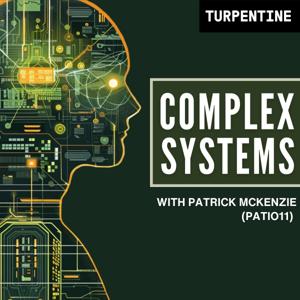

In this episode, Patrick McKenzie (patio11) is joined by Jacob Swett of Blueprint Biosecurity to discuss far UVC technology - a specialized wavelength of UV light that kills airborne pathogens while remaining safe for humans. Jacob explains how widespread deployment of this technology in schools, hospitals, and public spaces could dramatically reduce respiratory diseases and prevent future pandemics, comparing our approach to air quality with the water sanitation revolution that eliminated diseases like typhoid. They discuss the economics of implementation (starting around $30 per student annually with costs likely decreasing), the historical reasons why this technology hasn't been widely deployed, and Blueprint Biosecurity's roadmap for increasing adoption from early users to eventual regulations similar to fire safety codes.
–
Full transcript available here: https://www.complexsystemspodcast.com/killing-viruses-with-light-with-jacob-swett/
–
Sponsor: Mercury
This episode is brought to you by Mercury, the fintech trusted by 200K+ companies — from first milestones to running complex systems. Mercury offers banking that truly understands startups and scales with them. Start today at Mercury.com
Mercury is a financial technology company, not a bank. Banking services provided by Choice Financial Group, Column N.A., and Evolve Bank & Trust; Members FDIC.
–
Recommended in this episode:
–
Timestamps:
(00:00) Intro
(00:31) The importance of indoor air quality
(01:29) Technologies for cleaner air
(02:31) The promise of Far-UVC
(03:10) Impact of COVID-19 on air quality awareness
(04:11) Understanding Far-UVC light
(06:44) Applications and benefits of Far-UVC
(16:42) Challenges and adoption of Far-UVC
(20:40) Sponsor: Mercury
(21:53) Challenges and adoption of Far-UVC (Part 2)
(23:19) Cost and benefits of Far-UVC
(26:40) The broader impact of respiratory pathogens
(29:41) Rediscovering the world for better health
(30:05) Historical perspectives on infectious diseases
(30:57) The role of sanitation and antibiotics
(33:02) Miasma theory and airborne transmission
(34:59) Impact of World War II on disease research
(38:06) The evolution of public health priorities
(42:39) Future of Far-UVC Technology
(46:03) Challenges in implementing Far-UVC
(56:47) The importance of rigorous studies
(01:00:33) Wrap
 View all episodes
 By Patrick McKenzie

4.9
140140 ratings
In this episode, Patrick McKenzie (patio11) is joined by Jacob Swett of Blueprint Biosecurity to discuss far UVC technology - a specialized wavelength of UV light that kills airborne pathogens while remaining safe for humans. Jacob explains how widespread deployment of this technology in schools, hospitals, and public spaces could dramatically reduce respiratory diseases and prevent future pandemics, comparing our approach to air quality with the water sanitation revolution that eliminated diseases like typhoid. They discuss the economics of implementation (starting around $30 per student annually with costs likely decreasing), the historical reasons why this technology hasn't been widely deployed, and Blueprint Biosecurity's roadmap for increasing adoption from early users to eventual regulations similar to fire safety codes.
–
Full transcript available here: https://www.complexsystemspodcast.com/killing-viruses-with-light-with-jacob-swett/
–
Sponsor: Mercury
This episode is brought to you by Mercury, the fintech trusted by 200K+ companies — from first milestones to running complex systems. Mercury offers banking that truly understands startups and scales with them. Start today at Mercury.com
Mercury is a financial technology company, not a bank. Banking services provided by Choice Financial Group, Column N.A., and Evolve Bank & Trust; Members FDIC.
–
Recommended in this episode:
–
Timestamps:
(00:00) Intro
(00:31) The importance of indoor air quality
(01:29) Technologies for cleaner air
(02:31) The promise of Far-UVC
(03:10) Impact of COVID-19 on air quality awareness
(04:11) Understanding Far-UVC light
(06:44) Applications and benefits of Far-UVC
(16:42) Challenges and adoption of Far-UVC
(20:40) Sponsor: Mercury
(21:53) Challenges and adoption of Far-UVC (Part 2)
(23:19) Cost and benefits of Far-UVC
(26:40) The broader impact of respiratory pathogens
(29:41) Rediscovering the world for better health
(30:05) Historical perspectives on infectious diseases
(30:57) The role of sanitation and antibiotics
(33:02) Miasma theory and airborne transmission
(34:59) Impact of World War II on disease research
(38:06) The evolution of public health priorities
(42:39) Future of Far-UVC Technology
(46:03) Challenges in implementing Far-UVC
(56:47) The importance of rigorous studies
(01:00:33) Wrap

1,967 Listeners

4,272 Listeners

2,447 Listeners

1,093 Listeners

377 Listeners

2,354 Listeners

99 Listeners

576 Listeners

292 Listeners

143 Listeners

101 Listeners
146 Listeners

403 Listeners

34 Listeners
138 Listeners