
Sign up to save your podcasts
Or

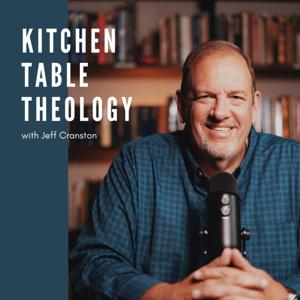


Born out of a desire to uphold biblical authority and orthodox Christian faith, the Global Methodist Church is a new denomination with deep historical roots. In this conversation, Pastor Jeff Cranston sits down with Reverend Scott Pattison to explore the history and formation of the Global Methodist Church. Reverend Scott shares his personal journey through the United Methodist Church, the challenges that led to the Global Methodist formation, and the vision for this new movement in modern Methodism.
🎉 P.S. Don’t miss Part 2 next week as we dive deeper into what worship and church life look like inside the Global Methodist Church!
Here’s What We Discussed:
00:00 – Meet Reverend Scott Pattison
Reverend Scott shares his background growing up in a Methodist parsonage, his early call to ministry, and his 40-year journey serving churches of all sizes.
02:58 – Reverend Scott’s Early Faith Journey
From growing up in church to a decisive moment at summer camp, Reverend Scott recounts how his faith became deeply personal and led him into full-time Christian ministry.
05:58 – History Within the United Methodist Church
The historical merger that formed the United Methodist Church in 1968, and how Reverend Scott’s service spanned decades within its evolving structure.
07:48 – The Formation of the Global Methodist Church
Why the Global Methodist Church was created in 2022 after decades of failed reform efforts within the United Methodist Church, centering on biblical authority and orthodoxy.
12:53 – Building the Great Lakes Conference
The rapid growth from four initial churches to a multi-state conference (Indiana, Illinois, Michigan, Wisconsin) and the structure that was developed to support it.
16:45 – Reviving the Methodist Movement
The new denomination’s commitment to returning to core Methodist principles: strong biblical faithfulness, vital congregations, global mission focus, and avoiding institutional drift.
18:50 – Biblical Authority as the Central Issue
How differences over the authority of Scripture, not merely social issues, created an irreparable divide within the United Methodist Church, leading to the formation of a new movement.
21:02 – The Role of Hymnody and Experience in Methodist Theology
How Charles Wesley’s hymns express the Methodist emphasis on not just correct doctrine but also the personal experience of justifying and sanctifying grace.
Key Quote:
"Correct doctrine informs behavior, but faith must also be experienced—not just known." – Reverend Scott Pattison
We love your feedback! If you enjoyed this episode, leave us a review. If you have any questions or comments on today's episode, email me at [email protected]
Visit my website https://www.jeffcranston.com and subscribe to my newsletter. Join me on Sunday mornings at LowCountry Community Church.
Check-in with us on Facebook or Instagram @pastorjeffcranston
Remember, the real power of theology is not only knowing it but applying it. Thanks for listening!
Tiffany Coker and Pastor Jeff Cranston sit down to recap key takeaways from their two-part conversation with Pastor Erik Janke of May River Lutheran Church. From Martin Luther’s original teachings to the three major Lutheran denominations in the U.S., they explore the key doctrines, worship practices, and theological distinctives that shape the Lutheran tradition today.
🎉 P.S. If you missed Parts 1 and 2, be sure to listen to Episodes 238 and 239 to hear Pastor Erik share firsthand about Lutheran worship, communion, baptism, and more!
Here’s What We Discussed:
01:13 – Where the Term “Lutheran” Comes From
Originally a term of mockery, “Lutheran” was used to describe followers of Martin Luther. Over time, it came to represent those who upheld the truth of the gospel as Luther taught it.
03:49 – Key Historical Foundations of Lutheran Theology
Luther’s teachings emphasized God's sovereignty, grace, the authority of Scripture, and the central distinction between law and gospel. His theology was influenced by St. Augustine and later codified in the Book of Concord (1580).
05:36 – Three Main Lutheran Denominations in the U.S.
The Lutheran Church—Missouri Synod (conservative), the Evangelical Lutheran Church in America (liberal), and the Wisconsin Evangelical Lutheran Synod (the smallest and most conservative, of which Pastor Erik is a part).
07:48 – What a Lutheran Church Service Looks Like
Lutheran worship is typically liturgical, featuring a set order including confession, absolution, creeds, Scripture readings, and a homily. Pastors wear vestments and follow the Christian calendar, with symbolic colors for seasons.
10:44 – Symbols and Vestments in Lutheran Worship
Pastors often wear an alb and a stole—the stole symbolizing the yoke of ministry. Vestment colors shift with the church calendar (e.g., white, purple, black), and elements like altar placement and music reflect deep symbolism.
13:39 – Pulpit and Altar Placement
In many Lutheran churches, the altar is central while the pulpit is off to the side—reflecting a theology centered on Word and Sacrament. This contrasts with many Protestant churches where the pulpit is front and center.
14:00 – Lutheran Polity: Governance and Leadership
Polity varies by denomination. Some Lutheran churches follow an Episcopal-style structure with bishops and district leaders, while others operate congregationally with more local church autonomy.
15:36 – Theological Distinctives: Law & Gospel + Two Kingdoms
Lutherans interpret Scripture through the lens of law (which condemns) and gospel (which forgives). They also hold to the Two Kingdoms Doctrine: Christians live under both civil government (temporal) and God’s spiritual kingdom—each with its own guidance.
Key Quote:
“We should ever read the Scriptures without forgetting the distinction between law and grace.” – Pastor Jeff Cranston
We love your feedback! If you enjoyed this episode, leave us a review. If you have any questions or comments on today's episode, eamail me at [email protected]
Visit my website https://www.jeffcranston.com and subscribe to my newsletter. Join me on Sunday mornings at LowCountry Community Church.
Check-in with us on Facebook or Instagram @pastorjeffcranston
Remember, the real power of theology is not only knowing it but applying it. Thanks for listening!
In this second installment of our conversation with Pastor Erik Janke of May River Lutheran Church, we go deeper into the sacramental life of the Lutheran Church—exploring what Lutherans believe about communion, baptism, and the authority of Scripture.
Pastor Jeff and Pastor Erik unpack some of the differences between the Wisconsin Evangelical Lutheran Synod (WELS) and other branches of Lutheranism, including the ELCA and Missouri Synod, and why staying grounded in God's Word is at the heart of it all.
🎉 P.S. If you missed Part 1, go back and check out our conversation on Lutheran history, liturgical worship, and church structure!
Here’s What We Discussed:
01:27 – Pulpits, Altars, and Symbolism in Worship Spaces
Pastor Erik describes the typical Lutheran sanctuary and explains the symbolism behind elements like the pulpit, altar table, and candles—especially the two candles representing Christ’s humanity and divinity.
03:10 – How Communion Works in the Lutheran Church
Communion is received at the altar under pastoral supervision. WELS practices closed communion, meaning only those who share its confessional beliefs and have met with the pastor may partake.
06:13 – The Presence of Christ in Communion
Lutherans reject transubstantiation, but still believe in the real presence of Christ in, with, and under the bread and wine—based on a literal reading of Jesus’ words: “This is my body.”
08:03 – Do All Lutherans Share the Same Communion Practices?
WELS does not share altar fellowship with the ELCA or Missouri Synod due to doctrinal disagreements, especially around biblical inerrancy and communion practices.
10:43 – Lutheran Teaching on Baptism
Do Lutherans baptize infants? Yes. Pastor Erik shares his personal story of infant baptism and explains why Lutherans believe baptism is a means of grace, not a symbolic gesture.
13:40 – Can Infants Have Faith?
Lutherans affirm that infants can have true faith, even if they cannot articulate it. Faith is seen as a miracle of the Holy Spirit—not dependent on age or intellectual capacity.
16:25 – Sprinkling or Immersion? Lutheran Methods of Baptism
Why Lutherans don’t insist on immersion and how the word “baptize” is more about washing than water depth.
18:24 – Biblical Authority and Liberal Denominations
We close the episode with a powerful reflection on the danger of compromising Scripture, the rise of rationalism, and why abandoning biblical truth leads to declining churches.
Key Quote:
“We would say baptism saves. And that’s not because of the water—but because of God’s promise attached to it.” – Pastor Erik Janke
“You can't jettison part of God’s Word. It’s the thread that unravels the whole sweater.” – Pastor Erik Janke
We love your feedback! If you enjoyed this episode, leave us a review. If you have any questions or comments on today's episode, eamail me at [email protected]
Visit my website https://www.jeffcranston.com and subscribe to my newsletter. Join me on Sunday mornings at LowCountry Community Church.
Check-in with us on Facebook or Instagram @pastorjeffcranston
Remember, the real power of theology is not only knowing it but applying it. Thanks for listening!
What sets the Lutheran church apart from other Protestant traditions? In this episode, Pastor Jeff welcomes Pastor Erik Janke, founding pastor of May River Lutheran Church and fellow fire department chaplain, to unpack the rich theological roots of Lutheranism, its historic emphasis on Word and Sacrament, and the unique structure of the Wisconsin Evangelical Lutheran Synod (WELS).
🎉 P.S. Be sure to join us for Part 2 of this conversation
Here’s What We Discussed:
02:02 – Meet Pastor Erik Janke
Pastor Erik shares how he started May River Lutheran Church, his missionary background, and his journey from California to South Carolina—alongside his medical-professional wife and their two daughters.
04:01 – A Brief History of Lutheranism
We trace the roots of the Lutheran Church back to Martin Luther and the Reformation. Pastor Erik explains how Luther never intended to start a new denomination, only to reform the Catholic Church from within. We also dicuss Katharina von Bora, Martin Luther’s wife and her powerful role in the Reformation.
10:05 – A Family Calling
Erik reflects on growing up as a pastor’s kid and how he followed in the footsteps of generations of pastors in his family—plus a few stories about “being paid in potatoes.”
13:56 – What is a Synod?
We break down what “synod” means (hint: it’s not a senate!) and how WELS originated and expanded globally.
15:26 – WELS Denominational Structure
Pastor Erik explains the organizational structure of the Wisconsin Synod, the role of district presidents, and how accountability and leadership work.
17:51 – Conferences & Community
Find out how often WELS pastors gather for worship and learning, and why a church body that meets in Florida can still call itself "Wisconsin."
18:49 – What to Expect at a WELS Service
From the pulpit and font to creeds and communion, Pastor Erik gives us a walk-through of a typical Sunday morning at a Lutheran church and explains the emphasis on Word and Sacrament.
20:46 – Creeds, Liturgy, and Confession
Discover why Lutherans recite the Apostles' and Nicene Creeds, and how liturgical worship helps us confess, reflect, and focus on Christ.
23:21 – Worship Music and Instruments
Though often associated with hymns and pipe organs, Lutheran churches around the world embrace diverse musical expressions—from piano to bluegrass—while keeping the focus on congregational participation.
Key Quote:
“We call it the Reformation, not a revolution. Luther didn’t set out to start a new church—he wanted to reform the abuses that were in the church at the time.” – Pastor Eric Yanke
We love your feedback! If you enjoyed this episode, leave us a review. If you have any questions or comments on today's episode, email me at [email protected]
Visit my website https://www.jeffcranston.com and subscribe to my newsletter. Join me on Sunday mornings at LowCountry Community Church.
Check-in with us on Facebook or Instagram @pastorjeffcranston
Remember, the real power of theology is not only knowing it but applying it. Thanks for listening!
The Episcopal Church and the Anglican Church share a common origin, but over time, differences in theology, practice, and leadership have led to a significant split. In this episode, Pastor Jeff and Tiffany revisit their recent conversation with Reverend Greg Kronz to debrief what makes these two denominations distinct and why thousands of churches chose to leave the Episcopal tradition and form the Anglican Church in North America.
🎉 By the way, Kitchen Table Theology has officially surpassed 100,000 downloads!
If you missed Part 1 and Part 2 of our conversation with Reverend Kronz, be sure to listen to episode 234 and 235.
Here’s What We Discussed:
03:09 – A Recap of Denominational Conversations
So far, we’ve heard from Baptist, Presbyterian, and Anglican pastors. We begin to notice the rich diversity in worship styles, theology, and church governance across Protestant denominations.
04:01 – Anglicanism’s Global Reach and History
The Anglican Communion is the third-largest Christian body worldwide. Pastor Jeff shares how it grew out of the English Reformation and spread through the British Empire.
06:15 – Anglican vs. Episcopalian: What Caused the Split?
Tensions arose due to theological liberalism in the Episcopal Church—especially over marriage, ordination, and biblical authority—leading to the formation of the Anglican Church in North America in 2009.
08:27 – Anglican Worship: Liturgy, Communion & The Book of Common Prayer
Anglican worship blends structure and depth. Services typically follow a liturgical pattern, center on the Word and the Eucharist, and are guided by the historic Book of Common Prayer.
10:53 – Church Architecture: What is Cruciform Design?
Many Anglican and Episcopalian churches are built in the shape of a cross. Pastor Jeff explains the symbolism behind the “nave,” “transept,” and tall vaulted ceilings often found in these sanctuaries.
14:26 – Anglican Church Governance
Unlike the Catholic Church, Anglicanism doesn’t have a pope. Instead, it follows a hierarchy of archbishops, bishops, rectors, and deacons—with the Archbishop as a “first among equals.”
15:56 – Sacraments and the Presence of Christ in Communion
Anglicans reject transubstantiation and view the bread and wine as symbolic. Christ is present in the heart of the believer through faith—not physically in the elements themselves.
17:28 – Scripture and the Separation from the Episcopal Church
Both denominations affirm the 66-book Protestant canon, but many Anglicans separated from the Episcopal Church over its progressive stance on issues like same-sex marriage and ordination.
Key Quotes:
“The Anglican Communion is the third-largest international Christian family of churches. They have congregations in more than 165 countries.” – Pastor Jeff Cranston
We love your feedback! If you enjoyed this episode, leave us a review. If you have any questions or comments on today's episode, email me at [email protected]
Visit my website https://www.jeffcranston.com and subscribe to my newsletter. Join me on Sunday mornings at LowCountry Community Church.
Check-in with us on Facebook or Instagram @pastorjeffcranston
Remember, the real power of theology is not only knowing it but applying it. Thanks for listening!
When you think of St. Patrick, what comes to mind—green beer, shamrocks, and leprechauns? The real story of Patrick of Ireland is far more powerful and inspiring. In this special bonus episode, Pastor Jeff steps away from our denominational series to share the true history of St. Patrick, the man who brought Christianity to Ireland and left a lasting legacy of faith.
Here’s What We Discussed:
01:35 – The Origins of St. Patrick’s Day
Each year, millions gather to celebrate St. Patrick’s Day, often unaware of the man behind the holiday. From Savannah’s large-scale parade to Chicago’s tradition of dyeing the river green, the day is widely recognized, yet few know the historical and spiritual significance.
03:18 – St. Patrick Wasn’t Irish
Born around 373 AD, likely in Britain or possibly near Glasgow, Scotland, Patrick was not Irish. Captured by pirates at age 16, he was sold into slavery to an Irish chieftain, where he spent years tending sheep and witnessing the brutal pagan culture of the time.
05:55 – A Spiritual Awakening in Captivity
During six years of enslavement, Patrick experienced a profound spiritual transformation. Through prayer and suffering, his faith deepened, leading him to eventually commit his life to Christ. His own writings record how adversity brought him to his knees before God.
08:52 – Escape and the Call to Return
After escaping captivity, Patrick found refuge in France, where he entered a monastery and took the Latin name "Patricus." Years later, he experienced a divine call to return to Ireland—not as a captive, but as a missionary to the very people who had enslaved him.
10:36 – A Missionary to Ireland
Patrick spent nearly 29 years preaching the gospel across Ireland. Fluent in the Irish language, he baptized over 120,000 people and established more than 300 churches, leading a spiritual transformation that turned a pagan nation toward Christianity.
11:55 – Legends: Snakes and Shamrocks
Among the legends surrounding St. Patrick is the claim that he drove all the snakes out of Ireland—though this is likely symbolic, representing his battle against paganism. Another enduring story tells of Patrick using a three-leaf clover to explain the Christian doctrine of the Trinity to a skeptical king.
13:12 – St. Patrick’s Breastplate Prayer
Before facing his enemies, Patrick prayed for divine protection. His prayer, known as “St. Patrick’s Breastplate,” remains a powerful expression of faith, invoking Christ’s presence in every aspect of life—from the moment of rising to every encounter with others.
We love your feedback! If you enjoyed this episode, leave us a review. If you have any questions or comments on today's episode, email me at [email protected]
Visit my website https://www.jeffcranston.com and subscribe to my newsletter. Join me on Sunday mornings at LowCountry Community Church.
Check-in with us on Facebook or Instagram @pastorjeffcranston
Remember, the real power of theology is not only knowing it but applying it. Thanks for listening!
The Episcopal Church and the Anglican Church share common roots, but over time, theological shifts and leadership structures have created key differences. In this episode, Pastor Jeff sits down with Reverend Greg Kronz to break down the Anglican Church’s hierarchy, beliefs on communion and baptism, and why many churches have chosen to leave the Episcopal tradition.
If you didn’t listen to Part 1, be sure to check it out for more background on this conversation.
Here’s What We Discussed:
01:05 - Anglican Church Hierarchy
Reverend Greg explains the leadership structure within the Anglican Church, from the Archbishop to bishops and dioceses. He also shares insights into the role of GAFCON, a global network of Anglican bishops, and its impact on the future of the church.
06:16 - Lay Leadership and Church Governance
How do Anglican churches function at the local level? Reverend Greg discusses the role of rectors (pastors), lay readers, and vestries in church governance, and why he prefers the title of "pastor" over "priest" or "father."
07:21 - The Anglican View on Communion
Unlike the Roman Catholic belief in transubstantiation, Anglicans view communion as a symbolic but deeply meaningful act. Reverend Greg explains the theological basis for this belief and how communion plays a central role in Anglican worship.
08:54 - Baptism in the Anglican Church
Do Anglicans baptize infants or only adults? Reverend Greg breaks down the differences between infant baptism and believer’s baptism, emphasizing that baptism does not guarantee salvation but serves as a covenant commitment.
11:39 - The Role of Scripture in Anglican Theology
Anglicanism holds that Scripture is the inspired, inerrant Word of God, but interpretation must be done within the context of its genre and overarching biblical themes. Reverend Greg discusses how Scripture is central to Anglican belief and why many Anglicans have distanced themselves from the Episcopal Church.
13:00 - Clerical Vestments and Worship Structure
Why do Anglican pastors wear certain robes? Reverend Greg explains the meaning behind clerical vestments and how church traditions, such as colors and garments, have evolved over time.
17:08 - What to Expect in an Anglican Worship Service
From liturgical readings to music, Anglican services blend structure and tradition. Reverend Greg describes a typical service, including the use of hymns, contemporary songs, creeds, and sacraments.
We love your feedback! If you enjoyed this episode, leave us a review. If you have any questions or comments on today's episode, email me at [email protected]
Visit my website https://www.jeffcranston.com and subscribe to my newsletter. Join me on Sunday mornings at LowCountry Community Church.
Check-in with us on Facebook or Instagram @pastorjeffcranston
Remember, the real power of theology is not only knowing it but applying it. Thanks for listening!
The Episcopal Church is a branch of Anglicanism. Over time, theological differences have created a divide, but what sets them apart? In this episode, Pastor Jeff sits down with Reverend Greg Kronz to explore the history, doctrinal shifts, and denominational splits that have shaped these two traditions.
Here’s What We Discussed:
01:10 - Reverend Greg’s Journey to Ministry
Raised in a Roman Catholic family, Reverend Greg had a deep respect for tradition and faith. He later found a personal relationship with Christ through Young Life. Seeking a church that blended historical liturgy with evangelical beliefs, he was drawn to the Episcopal Church.
07:19 - Anglicanism vs. Episcopalianism
Anglicanism began when the Church of England separated from the Roman Catholic Church in 1534. As the British Empire expanded, Anglicanism spread worldwide. In the U.S., Anglican churches were once part of the Episcopal Church. However, as theological differences grew, the Anglican Church of North America was formed, creating two distinct traditions.
09:35 - Why Did Many Churches Leave the Episcopal Church?
In 2003, the Episcopal Church consecrated Gene Robinson, its first openly gay bishop. This event deepened a growing divide. The issue was not just about social change but a larger departure from biblical authority. Reverend Greg explains how many Episcopalians felt the church was moving away from Scripture.
14:22 - Key Differences Between Episcopalian and Anglican Beliefs
The Episcopal Church takes a progressive approach, emphasizing inclusivity and modern interpretations of Scripture. The Anglican Church of North America remains committed to traditional biblical teachings, especially on marriage, salvation, and scriptural authority.
21:20 - The Role of Bishops and Church Structure
Both are led by bishops and organized into dioceses (groups of churches overseen by a bishop). The ACNA was formed as a response to theological shifts in the Episcopal Church. Reverend Greg shares how his church navigated this transition and how entire dioceses chose Anglicanism to maintain traditional beliefs.
We love your feedback! If you enjoyed this episode, leave us a review. If you have any questions or comments on today's episode, email me at [email protected]
Visit my website https://www.jeffcranston.com and subscribe to my newsletter. Join me on Sunday mornings at LowCountry Community Church.
Check-in with us on Facebook or Instagram @pastorjeffcranston
Remember, the real power of theology is not only knowing it but applying it. Thanks for listening!
How does being a Presbyterian differ from other Christian denominations? In this episode, Pastor Jeff Cranston and Tiffany Coker explore the history, beliefs, and denominational differences within Presbyterianism.
If you missed the last two episodes on the Presbyterian Church in America, be sure to check them out!
Here’s What We Discussed:
00:55 - The Roots of Presbyterianism
The word Presbyterian comes from the Greek presbuteros, which means elder or leader. The way Presbyterian churches are structured comes from the teachings of John Calvin and John Knox during the Protestant Reformation. A key document that guides Presbyterian beliefs is the Westminster Confession of Faith, written in the 1640s.
02:55 - Key Differences Between PCUSA, PCA, and EPC
06:13 - Presbyterian Worship & Theology
Presbyterian church services are usually structured and formal, with a strong focus on Bible teaching. The way they worship has stayed mostly the same for centuries, following traditions from the Reformation.
10:01 - Influential Figures in Presbyterianism
You may know some theologians and pastors from Presbyterian backgrounds:
We love your feedback! If you enjoyed this episode, leave us a review. If you have any questions or comments on today's episode, email me at [email protected]
Visit my website https://www.jeffcranston.com and subscribe to my newsletter. Join me on Sunday mornings at LowCountry Community Church.
Check-in with us on Facebook or Instagram @pastorjeffcranston
Remember, the real power of theology is not only knowing it but applying it. Thanks for listening!
The Presbyterian Church has a long history rooted in the Protestant Reformation, but what exactly sets Presbyterianism apart from other Christian traditions?
Pastor Jeff Cranston sits down with Reverend Bill McCutchen, lead pastor at Hilton Head Presbyterian Church, to explore the key aspects of Presbyterian theology. If you haven’t seen part 1 of this conversation, feel free to go back and listen.
Here’s What We Discussed
00:55 - Infant Baptism
Many Christian denominations, including Presbyterians, practice infant baptism—but why? The practice is rooted in covenant theology, where God’s promises extend to believers and their children. They also baptize older children, teenagers, and adults who come to faith later in life.
03:24 - Covenant Theology and Baptism
What does it mean to be part of God’s covenant? God’s promises have always been generational, from Abraham to the New Testament Church. He highlights Peter’s sermon at Pentecost, where he says, “The promise is for you and your children” (Acts 2:39).
06:03 - Sprinkling vs. Immersion
Presbyterians typically use sprinkling or pouring. Rev. McCutchen explains that the Old Testament frequently refers to ritual cleansing through sprinkling (Ezekiel 36:25). The Greek word for baptism (baptizo) can mean to immerse, but also to wash or cleanse. While immersion symbolizes death and resurrection, sprinkling and pouring emphasize the outpouring of the Holy Spirit (Acts 2:17).
10:18 - Church Governance in Presbyterianism
Unlike some churches that are led by a single pastor or bishop, Presbyterian churches follow a plurality of elders model. McCutchen explains the difference between Teaching Elders and Ruling Elders. As far as allowing women pastors it depends on the denomination. The Presbyterian Church in America holds to a complementarian view; women can serve in many leadership roles but not as ordained pastors or elders.
15:04 - The Core of Reformed Theology: TULIP
Reformed theology is summarized by the acronym TULIP:
These doctrines were developed in response to Arminian theology and remain foundational to Presbyterian beliefs today.
20:14 - Closing Thoughts
Reverend McCutchen and Pastor Jeff reflect on the importance of unity in Christ, despite denominational differences.
Visit Hilton Head Presbyterian Church: https://www.hiltonheadpca.com/leadership
Join the Conversation
We love your feedback! If you enjoyed this episode, leave us a review. If you have any questions or comments on today's episode, email me at [email protected]
Visit my website https://www.jeffcranston.com and subscribe to my newsletter. Join me on Sunday mornings at LowCountry Community Church.
Check-in with us on Facebook or Instagram @pastorjeffcranston
Remember, the real power of theology is not only knowing it but applying it. Thanks for listening!
From the publisher's feed
Where Coffee, Conversation, and Theology Meet. During my 40 years in ministry, I’ve developed an increasing burden for what I sense to be an increase in biblical illiteracy, not only among those in…
9,190 Listeners

5,184 Listeners
7,452 Listeners

19,459 Listeners
445 Listeners

12,600 Listeners
28,250 Listeners

5,399 Listeners

35,874 Listeners

65,339 Listeners

46,014 Listeners

39,359 Listeners

61,786 Listeners

26,558 Listeners

15,919 Listeners