
Sign up to save your podcasts
Or



What does it take to promote yourself in the best possible way? And how do you do it in a non-obnoxious way?
Work on your self-awareness - explore your values, preferences and motivations. Get some insightful feedback (not forgetting your peers) on how you show up and understand what's valued by people who matter. Develop your executive presence, and your voice on topics that matter. And supercharge your strategic thinking.
These are the elements of the Promotability approach pioneered by Amii-Barnard Bahn.
More about Amii:
Her work and profile here.
Promotability Index Guidebook.
Promotability Index Assessment.
My resources:
Sign up to my Flashes+Sparks for stimuli, ideas, guidance and tips on how to lead your team, organisation or self more effectively, delivered straight to your inbox:
If you're not subscribed already and do subscribe to my youtube channel where you can watch the conversation. :
You can also find me here:
LinkedIn
Twitter
Personal website, which includes more examples of my work, the services I offer and testimonials from clients.
In complex times we've come to expect the future to be predictable, as strange as that sounds. Seduced by an algorithm or the prediction of a confident economist we think less, become more anxious, and lose some of our creativity and imagination. We become passive and gullible, relying on simplifications or false determinism.
My guest in this episode is Margaret Heffernan, six-time book author, mentor and former CEO of three companies as well as a BBC producer. She argues that we must get comfortable with uncertainty and ambiguity about the future, especially when facing complexity. And we need to be prepared to experiment, explore, and question.
To shape better futures for ourselves and the coming generations will require leaders to have a backbone — to care — and to have the courage to experiment, not rely slavishly on lessons from the past or promises for the future.
More on Margaret
Her work and profile here.
Her book 'Unchartered: how to map the future together' (including a synopsis).
Resources from me:
My review of Margaret's book for Strategy+Business.
Sign up to my newsletter Flashes+Sparks for stimuli, ideas, guidance and tips on how to lead your team, organisation or self more effectively, delivered straight to your inbox: http://bit.ly/36WRpri
If you're not subscribed already and would like to join this youtube channel you can do so here: http://bit.ly/3cFGk1k
You can also find me here:
LinkedIn. https://bit.ly/2Z2PexP
Twitter: https://bit.ly/36XavNI
Personal website: http://bit.ly/3jA0MlN
Summary:
If you’re an ambitious person, you’ll be working out what it takes to be exceptional at work (and everywhere). You’ll know that working super hard helps, but won’t be enough – and might eventually burn you out. Getting candid feedback on what you need to change is critical. It goes hand in hand with compassion, funnily enough.
You’ll want to strive for something far better than you have, in order to work out how far your strengths take you. Only that way you’ll know how to fill the gaps. Finding moments – for yourself and those around you – that activate the parts of your brain (your seeking systems) helps. And you’ll want a hand in shaping your career, team, organisation; after all, it’s pretty debilitating to be told what to do, or to copy somebody else’s work.
In this conversation Prof. Dan Cable shares his research on how to inspire exceptional performance at work.
More on Dan:
You can find out more about Dan here: https://dan-cable.com/
His latest book is called 'Exceptional': https://dan-cable.com/books/
He hosts a podcast called 'Squeezing the Orange from Social Science' with Akin Omobitan https://squeezingtheorange.podbean.com/
Resources from me:
Sign up to my newsletter Flashes+Sparks for stimuli, ideas, guidance and tips on how to lead your team, organisation or self more effectively, delivered straight to your inbox: http://bit.ly/36WRpri
If you're not subscribed already and would like to join this youtube channel you can do so here: http://bit.ly/3cFGk1k
You can also find me here:
LinkedIn. https://bit.ly/2Z2PexP
Twitter: https://bit.ly/36XavNI
Personal website: http://bit.ly/3jA0MlN
Highlights of my work
Every Leader Has Flaws. Don’t Let Yours Derail Your Strategy (HBR): https://hbr.org/2021/09/every-leader-has-flaws-dont-let-yours-derail-your-strategy
5 strategies to infuse diversity & inclusion into your organisation (HBR): https://hbr.org/2021/05/5-strategies-to-infuse-di-into-your-organization
4 actions transformational leaders can take (HBR): https://hbr.org/2021/05/4-actions-transformational-leaders-take
Four building blocks of transformation (S+B): https://www.strategy-business.com/article/The-Four-Building-Blocks-of-Transformation?gko=5a1aa
How to be a visionary leader and still have a personal life (HBR): https://hbr.org/2020/11/how-to-be-a-visionary-leader-and-still-have-a-personal-life
How to practise strategy in an uncertain world (Strategy+Business): http://bit.ly/2OaojhB
10 principles of strategic leadership (S+B): http://bit.ly/3q14kQm
How to reinvent your organisation in the middle of a crisis (HBR): https://hbr.org/2021/02/how-to-reinvent-your-organization-in-the-middle-of-a-crisis
How to convince people that a crisis is also an opportunity (Forbes): https://www.forbes.com/sites/lbsbusinessstrategyreview/2020/04/28/how-to-convince-people-that-a-crisis-is-also-an-opportunity/?sh=441e32b830f8
How do you make difficult decisions under pressure? How do you avoid being "triggered" by some bad behaviour, choice words or a surprising event? These are important questions for any executive, professional or entrepreneur, daily.
Managing your mind is critical. In practice, this means developing greater conscious of what you're thinking, what you're paying attention to, how you're feeling. Tapping into your inner voice - and an imaginary third party (you in the future, or a person you respect) - in order to work out the best course of action. My guest, Josie Thomson, master coach, author and speaker, talks about how to tap into your Wise Advocate.
And she describes what it takes to coach somebody effectively - deep care, listening, attention and using your intuition as to what you observe, feel and sense in the moment.
This is a wide-ranging, deep conversation about the human condition - our frailties, strengths, potential - and how we can nurture it, informed by a greater appreciation, understanding and application of neuroscience.
-------------------------------------------------------------------------------------------
For details about Josie see: https://josiethomson.com/
Her book (with Dr. Jeffrey Schwartz and Art Kleiner): The Wise Advocate: The Inner Voice of Strategic Leadership: https://josiethomson.com/product/the-wise-advocate-the-inner-voice-of-strategic-leadership/
Take Josie's resilience test: https://josiethomson.com/quiz/
------------------------------------------------------------------------------------------------
Sign up to my newsletter Flashes+Sparks for stimuli, ideas, guidance and tips on how to lead your team, organisation or self more effectively, delivered straight to your inbox: http://bit.ly/36WRpri
If you're not subscribed already and would like to join this youtube channel you can do so here: http://bit.ly/3cFGk1k
You can also find me here:
LinkedIn. https://bit.ly/2Z2PexP
Twitter: https://bit.ly/36XavNI
Personal website: http://bit.ly/3jA0MlN
Highlights of my work
Every Leader Has Flaws. Don’t Let Yours Derail Your Strategy (HBR): https://hbr.org/2021/09/every-leader-has-flaws-dont-let-yours-derail-your-strategy
5 strategies to infuse diversity & inclusion into your organisation (HBR): https://hbr.org/2021/05/5-strategies-to-infuse-di-into-your-organization
4 actions transformational leaders can take (HBR): https://hbr.org/2021/05/4-actions-transformational-leaders-take
Four building blocks of transformation (S+B): https://www.strategy-business.com/article/The-Four-Building-Blocks-of-Transformation?gko=5a1aa
How to be a visionary leader and still have a personal life (HBR): https://hbr.org/2020/11/how-to-be-a-visionary-leader-and-still-have-a-personal-life
How to practise strategy in an uncertain world (Strategy+Business): http://bit.ly/2OaojhB
10 principles of strategic leadership (S+B): http://bit.ly/3q14kQm
How to reinvent your organisation in the middle of a crisis (HBR): https://hbr.org/2021/02/how-to-reinvent-your-organization-in-the-middle-of-a-crisis
How to convince people that a crisis is also an opportunity (Forbes): https://www.forbes.com/sites/lbsbusinessstrategyreview/2020/04/28/how-to-convince-people-that-a-crisis-is-also-an-opportunity/?sh=441e32b830f8
We spend a lot of our professional days trying to sell ideas to colleagues or clients, don't we? We may not like the idea of selling but that's exactly what we're doing. It might for support for an initiative or investment in a project - from a Board, Exco, or external investor.
We'd like to think that do it well - describing its features, explaining how it works and selling the benefits. No doubt with conviction, emotion too. But sometimes the answer is 'no'. Perhaps it wasn't compelling enough so we try harder. Often the real problem is that we haven't invested enough time in understanding their resistance.
My guest, Prof. David Schonthal argues that innovators neglect the the psychological frictions that oppose change. And though they are rarely considered, overcoming these frictions is essential for bringing new ideas into the world.
------------------------------------------------------------------------------------
The book: https://www.amazon.co.uk/Fuel-Friction-Taming-Forces-Stand/dp/1119765048
Book site: https://www.humanelementbook.com/
David's profile: https://www.kellogg.northwestern.edu/faculty/directory/schonthal_david.aspx.
------------------------------------------------------------------------------------
Take my new Becoming a Strategic Leader course (https://bit.ly/3KJYDTj)
Sign up to my Every Day is a Strategy Day newsletter (http://bit.ly/36WRpri) for modern mindsets and practices to help you get ahead.
Subscribe to my YouTube channel (http://bit.ly/3cFGk1k) where you can watch the conversation.
For more details about me:
● Services (https://rb.gy/ahlcuy) to CEOs, entrepreneurs and professionals.
● About me (https://rb.gy/dvmg9n) - my background, experience and philosophy.
● Examples of my writing https://rb.gy/jlbdds)
● Follow me and engage with me on LinkedIn (https://bit.ly/2Z2PexP)
● Follow me and engage with me on Twitter (https://bit.ly/36XavNI)
What does it take for a leader to think strategically? You’d hope you didn’t need to ask this question as it should be a core capability. It’s often not as they focus on workplace culture or commercial tactics, both of which are important too. But it’s critical to a clear view as to where the organisation needs to move towards, whom it should serve and how, and how to win you. That way you can build the capabilities, identify the resources and systems you need, and evolve your culture.
In this interview Rita McGrath, a professor at Columbia Business School, tells me that strategy is more important than ever given the complexity and uncertainty we face. But its practice needs to change, away from the closed, top-down approach that characterises many traditional organisations. She talks eloquently about the importance of leaders getting out to the edges of their organisation to spot inflection points and pick up weak signals of change. She also highlights some fascinating practice at Microsoft and Klockner, focusing on how they encourage new and different voices to share their perspectives on where to take the business.
For more details about Rita and her work check out her excellent website: https://www.ritamcgrath.com/
Her latest book 'Seeing around Corners: how to spot inflection points in business before they happen': https://www.ritamcgrath.com/books/
Her weekly Thought Sparks: https://www.ritamcgrath.com/sparks/ and podcast: https://www.ritamcgrath.com/podcast/
---------------------------------------------------------------------------
Take my new Becoming a Strategic Leader course (https://bit.ly/3KJYDTj)
Sign up to my Every Day is a Strategy Day newsletter (http://bit.ly/36WRpri) for modern mindsets and practices to help you get ahead.
Subscribe to my YouTube channel (http://bit.ly/3cFGk1k) where you can watch the conversation.
For more details about me:
● Services (https://rb.gy/ahlcuy) to CEOs, entrepreneurs and professionals.
● About me (https://rb.gy/dvmg9n) - my background, experience and philosophy.
● Examples of my writing https://rb.gy/jlbdds)
● Follow me and engage with me on LinkedIn (https://bit.ly/2Z2PexP)
● Follow me and engage with me on Twitter (https://bit.ly/36XavNI)
An inspirational leader often creates a leap forward in the positioning, performance and profile of the organisation. They’ve been bold enough to look at a situation with new lenses - customer, outsider, new employee. They look for stimulus in the margins, listening carefully to new voices and those who are at the margins. And then they have the courage to take the leap forward. That means letting go of the past – activities, mindset, even people - and identifying the limiting assumptions you make about the business or the space you compete in.
So what do you need to do to "recode yourself" to make this leap forward?
Peter Fisk (https://www.peterfisk.com/), the speaker, author, advisor and professor talks about this and more in this stimulating discussion.
-------------------------------------------------------------------------------------------
Take my new Becoming a Strategic Leader course (https://bit.ly/3KJYDTj)
Sign up to my Every Day is a Strategy Day newsletter (http://bit.ly/36WRpri) for modern mindsets and practices to help you get ahead.
Subscribe to my YouTube channel (http://bit.ly/3cFGk1k) where you can watch the conversation.
For more details about me:
● Services (https://rb.gy/ahlcuy) to CEOs, entrepreneurs and professionals.
● About me (https://rb.gy/dvmg9n) - my background, experience and philosophy.
● Examples of my writing https://rb.gy/jlbdds)
● Follow me and engage with me on LinkedIn (https://bit.ly/2Z2PexP)
● Follow me and engage with me on Twitter (https://bit.ly/36XavNI)
How do you respond to a world that feels more complex, and uncertain? Put your head in the sand, do the same, peddle faster, hoping it goes away? As silly as that sounds, many executives and professionals do this even while they talk eloquently about their context.
A better approach is to double down on your curiosity. At work this means being more curious about the needs and expectations of your customers, the dynamics of the workplace, the wider system you operate in and your own ways of thinking.
There are obvious things you can do: ask more questions, seek out new people to spend time with, learn new skills, spend time in new places (virtual or physical). It means being able to handle the feeling of being uncomfortable and out of your depth. It also means opening your mind to new possibilities, overcoming your limiting assumptions.
Curiosity is the topic I discuss with my guest Francesca Gino, Professor at Harvard Business School. I've long admired her work. I selected her superb book Rebel Talent in my review of the best Strategy Books in 2018 for Strategy+Business.
Links to further resources
Francesca Gino is an award-winning researcher who focuses on why people make the decisions they do at work, and how leaders and employees have more productive, creative and fulfilling lives. She is a Professor at Harvard Business School and the author, most recently, of “Rebel Talent: Why it Pays to Break the Rules in Work and Life.”
For more details of her work see: https://francescagino.com/
Sign up to my Every Day is a Strategy Day newsletter (http://bit.ly/36WRpri) for modern mindsets and practices to help you get ahead.
You can find me here:
LinkedIn. https://bit.ly/2Z2PexP
Twitter: https://bit.ly/36XavNI
Personal website: http://bit.ly/3jA0MlN
Youtube channel: http://bit.ly/
In a job interview, a presentation at work, or a difficult conversation with your team leader; are you getting your message across? Communication skills are not just for public speaking. They are how you express yourself anywhere, to anyone.
How can you speak clearly, confidently, yet still as your authentic self? That's the topic of my conversation with James Bryce, CEO and Founder of Speech Intelligence. James coaches leaders to improve how they communicate. He's also developed an AI-powered app - Speech Intelligence - that provides feedback - you talk for 1-2 minutes, receive a score and personalised feedback, and try again! Find out more here: https://www.speechintelligence.com/
Here's James' profile: https://www.linkedin.com/in/james-b-55b038b/
Running order
1:48 His personal journey in developing speech intelligence
3:23 An overview of the Speech Intelligence Service
5:01 The level of self-consciousness about speech intelligence
9:22 How we recognise great practice
12:15 Gaps in how we practice speech
15:03 Suggestions for improvement
17:33 Importance of discipline
19:48 Famous people who do this well
21:46 How the pandemic has changed the way we speak
25:45 The most important complementors to speech that distinguish exemplary leaders
28:18 Hygiene factors that are important before you get to speech.
31:03 How to prepare for a difficult situation
35:15 More details about Speech Intelligence
My resources:
Sign up to one of my courses (https://bit.ly/3QHvlYm).
Sign up to my Every Day is a Strategy Day newsletter (http://bit.ly/36WRpri) for modern mindsets and practices to help you get ahead.
Subscribe to my YouTube channel (http://bit.ly/3cFGk1k) where you can watch the conversation.
If you’re looking to work with me, check out my:
How well do you make choices? It could be about your career, the focus of your job, your life more broadly. Or it could be about the focus and direction of the organisation
Too often we avoid making real choices, continuing with what we have because it feels safe, and comfortable to do so. Or we make a choice without considering all of the options?
Choices are at the heart of strategy. Choices about where to play, how to win, and how to build the capabilities and resources required to get you there. Imagination plays an important role - you have to ask what do you want to become before figuring out what you need to believe, and do, to get there.
Strategy is separate from a plan. And it doesn't require heavy analysis or long powerpoint decks.
My guest in this conversation, Roger Martin, is one of the world's leading strategy thinkers and adviser to CEOs, talks eloquently about how to do strategy effectively, and counters many of the popular myths.
More about Roger:
Roger Martin is CEO Advisor and Author on the frontiers of strategy and culture. In 2017, Roger was named the world’s #1 management thinker by Thinkers50, a biannual ranking of the most influential global business thinkers. His newest book is When More is Not Better: Overcoming America’s Obsession with Economic Efficiency (Harvard Business Review Press, 2020).
Roger has published an excellent series of articles on strategy in Medium.
My resources:
Sign up to one of my courses (https://bit.ly/3QHvlYm).
Sign up to my Every Day is a Strategy Day newsletter (http://bit.ly/36WRpri) for modern mindsets and practices to help you get ahead.
Subscribe to my YouTube channel (http://bit.ly/3cFGk1k) where you can watch the conversation.
If you’re looking to work with me, check out my:
From the publisher's feed
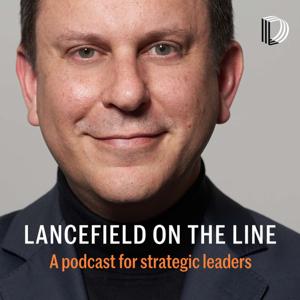
Are you looking to taking your leadership to the next level? Perhaps you’re in a new role, in charge of a big initiative, or looking to move roles. You’ve come to the right place for strategies,…

375 Listeners

56 Listeners

2,164 Listeners

966 Listeners

58 Listeners

628 Listeners

10,106 Listeners

2,187 Listeners

57,766 Listeners

673 Listeners

3,023 Listeners

1,884 Listeners

1,104 Listeners

943 Listeners

12,510 Listeners