
Sign up to save your podcasts
Or

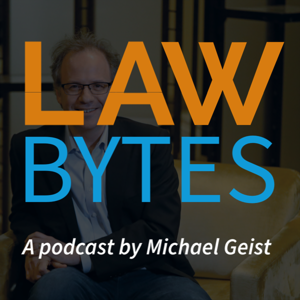


The Standing Committee on Canadian Heritage last week started what it is calling a pre-study on Bill C-10, the Broadcasting Act reform bill. The hearings raises some significant procedural concerns given that the bill has not yet passed second reading so the committee is technically conducting a study about the bill, rather than studying the bill itself. Moreover, committee members have indicated that they have already been invited to provide potential amendment to a bill that hasn’t even made it out to committee, much less been the subject of any study.
Despite those qualms, I was pleased to be invited to appear before the committee and discuss some of the concerns that I’ve identified with the bill. This week’s podcast features my opening statement and the full exchanges that I had with Conservative MP Keven Waugh and Liberal MP Marcie Ian. The audio isn’t ideal, but I hope that the recordings give a sense of both the policy concerns with the bill and the kinds of questions being asked.
The podcast can be downloaded here, accessed on YouTube, and is embedded below. Subscribe to the podcast via Apple Podcast, Google Play, Spotify or the RSS feed. Updates on the podcast on Twitter at @Lawbytespod.
Show Notes:
Credits:
Standing Committee on Canadian Heritage, February 5, 2021
Digital tax policy has emerged as major issue around the world. Canada is no exception. Late last year, the Canadian government announced plans to act on all three fronts: Bill C-10 seeks to address mandated Cancon payment and Finance Minster Chrystia Freeland has promised digital sales taxes by July and what sounds like a digital services tax in 2022.
What is a DST and how might Canada’s digital tax plans play out on the international front? I spoke with Georgetown University professor Itai Grinberg, a leading expert on cross-border taxation and digital tax issues on December 15, 2020, shortly after the government’s announcement. He joined the Law Bytes podcast to talk about the longstanding approach to multi-national tax policy and the emerging challenges that come from the digital economy.
The podcast can be downloaded here, accessed on YouTube, and is embedded below. Subscribe to the podcast via Apple Podcast, Google Play, Spotify or the RSS feed. Updates on the podcast on Twitter at @Lawbytespod.
Show Notes:
Grinberg, International Taxation in an Era of Digital Disruption: Analyzing the Current Debate
Credits:
CityNews Toronto, HST/GST on Digital Purchases to Pay for Pandemic Recovery
The Law Bytes podcast took a breather over the holidays and into early January, but there seemingly is no break for digital policy issues. Over the past few weeks, Internet platforms have found themselves squarely in the public eye as company after company – from Shopify to Twitter to Facebook de-platformed former US President Donald Trump in response to the events in Washington earlier this month. Dr. Heidi Tworek of the University of British Columbia is one of Canada’s most prolific thinkers on Internet platform policies. She joins the podcast for a conversation about the role and responsibilities of Internet platforms, proposals for payments in the news sector, and insights what governments should be doing about better communicating with the public about the COVID-19 global pandemic.
The podcast can be downloaded here, accessed on YouTube, and is embedded below. Subscribe to the podcast via Apple Podcast, Google Play, Spotify or the RSS feed. Updates on the podcast on Twitter at @Lawbytespod.
Show Notes:
Credits:
NBC News, President Trump Permanently Banned from Twitter
Canada is currently considering major reforms to how it regulates Internet services. Canadian Heritage Minister Steven Guilbeault’s Bill C-10 would dramatically reshape the Broadcasting Act by regulating foreign Internet sites and services with the prospect of mandated registration, payments to support Canadian content, confidential data disclosures, and discoverability requirements. The bill would also remove policies supporting Canadian ownership of the broadcasting system and reduce expectations about Canadian participation in film and television productions. This week’s Law Bytes podcast takes a closer look at the implications of the bill, examining key concerns discussed in my ongoing Broadcasting Act blunder blog series.
The podcast can be downloaded here, accessed on YouTube, and is embedded below. Subscribe to the podcast via Apple Podcast, Google Play, Spotify or the RSS feed. Updates on the podcast on Twitter at @Lawbytespod.
Show Notes:
Broadcasting Act Blunder series
Day 1: Why there is no Canadian Content Crisis
Credits:
House of Commons Debate, November 18, 2020
Canada’s new privacy bill is only a couple of weeks old but it is already generating debate in the House of Commons and careful study and commentary from the privacy community. As the biggest overhaul of Canada’s privacy rules in two decades, the bill will undoubtedly be the subject of deep analysis and lengthy committee review, likely to start early in 2021. Last week’s Law Bytes podcast featured Navdeep Bains, the Innovation, Science and Industry Minister, who is responsible for the bill. This week, Professor Emily Laidlaw of the University of Calgary, who holds the Canada Research Chair in Cybersecurity Law, joins the podcast with her take on the good, the bad, and the missed opportunities in Bill C-11.
The podcast can be downloaded here, accessed on YouTube, and is embedded below. Subscribe to the podcast via Apple Podcast, Google Play, Spotify, Youtube or the RSS feed. Updates on the podcast on Twitter at @Lawbytespod.
Show Notes:
Laidlaw, AB Lawg: Canada’s Proposed New Consumer Privacy Protection Act: The Good, the Bad, the Missed Opportunities
Credits:
CTV News, Government Introduces Privacy Bill
From the publisher's feed

26,165 Listeners

26,260 Listeners
210 Listeners
76 Listeners
106 Listeners
8 Listeners

50 Listeners
5,082 Listeners

36 Listeners

575 Listeners

5,554 Listeners

15,918 Listeners
39 Listeners
4 Listeners
34 Listeners