
Sign up to save your podcasts
Or



Based on Podcast App listening data
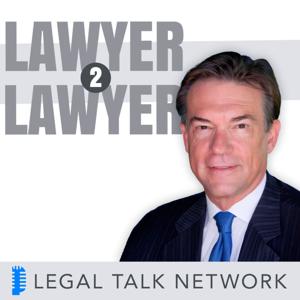
In this episode of our Environmental Law series, host Craig Williams is once again joined by Alisha M. Winterswyk, an attorney from Best Best & Krieger, LLP, as they continue their discussion on NEPA & CEQA. The conversation moves into the specifics of how courts deal with decisions by city councils that dealing with environmental consequences, and on the other side, how citizens deal with this whole process by filing lawsuits.
With primaries set to start in spring of 2024, an upcoming presidential election, and a number of federal & state indictments against former President Trump, including the January 6th indictment, section 3 of the 14th amendment has taken center stage. It reads "no person who has taken an oath as an officer of the United States can hold office if they “have engaged in insurrection or rebellion against the same, or given aid or comfort to the enemies thereof”. So, will Section 3 of the 14th Amendment actually impact the presidential election and eliminate Donald Trump from the running?
In this episode, host Craig Williams is joined by guest Ron Fein, the Legal Director for Free Speech For People. as they spotlight Section 3 and what this could mean for the upcoming presidential election.
Mentioned in this Episode:
The Sweep and Force of Section 3 by William Baude and Michael Stokes Paulsen
The Constitution Prohibits Trump From Ever Being President Again by J. Michael Luttig and Laurence H. Tribe
Conservative Case Emerges to Disqualify Trump for Role on Jan. 6 by Adam Liptak
The 14Point3 Campaign
Trump is Disqualified
While Craig is away on a well-deserved vacation, we wanted to do things a little bit differently, and share with you one of our favorite episodes from the Chicago Bar Association’s @the Bar podcast. This episode is Defending Against Domestic Violent Extremism: A Discussion with Brian Michael Jenkins. We hope you enjoy it!
-----
In this episode, host Jonathan Amarilio speaks with one of the world’s leading authorities on terrorism and the man famously known for predicting 9/11, Brian Michael Jenkins of the RAND Corporation. They discuss Mr. Jenkins’ historical work as an advisor to many U.S. Presidents and governments on terrorism, as well as the current state of domestic political violence and terrorism in America. In this riveting discussion, Mr. Jenkins shares his advice for how we can develop a pragmatic strategy to combat the rising tide of violence in today’s tumultuous world.
In this episode of our Environmental Law series, host Craig Williams is joined by Alisha M. Winterswyk, an attorney from Best Best & Krieger, LLP, as they spotlight NEPA and CEQA, their impact, and purpose.
As SCOTUS wrapped in leadup to its annual summer recess, three controversial rulings, all with a 6-3 vote, created quite the stir: Biden v. Nebraska, Students for Fair Admissions, Inc. v. President & Fellows of Harvard College, and 303 Creative LLC v. Elenis.
So what sort of impact will these rulings have on society? In this episode, host Craig Williams is joined by guest Professor Steven D. Schwinn from the University of Illinois Chicago School of Law, as they spotlight the recent SCOTUS rulings regarding loan relief, affirmative action, & the website designer/first amendment ruling. Craig and Steve discuss SCOTUS, these rulings, and long-term impact of these decisions.
The Clean Air Act also known as (CAA) is a comprehensive Federal law that regulates all sources of air emissions. The 1970 CAA authorized the U.S. Environmental Protection Agency (EPA) to establish National Ambient Air Quality Standards (NAAQS) to protect public health and the environment.
In this episode of our Environmental Law series, host Craig Williams is joined by Trish McCubbin, a retired Professor of Environmental Law at the Southern Illinois University School of Law, as they spotlight CAA, its impact, progress, and how we as a society can reduce air pollution.
On September 30, 2021, California Governor Gavin Newsom signed Senate Bill 2 (SB 2), also known as the Kenneth Ross, Jr. Police Decertification Act of 2021, establishing a statewide system to decertify or suspend officers who have committed serious misconduct.
So what constitutes police misconduct? And how is SB 2 shaping police departments? In this episode, host Craig Williams is joined by guest Marshal Arnwine, Jr., an Advocate for the Criminal Justice Program at the ACLU of Northern California. Craig and Marshal discuss SB 2, decertification due to police misconduct, transparency in police departments, and the impact on states' decertification/revocation laws.
Mentioned in this Episode:
Police Decertification in California: How Does it Work?
Protect SB 2 Press Conference (Bradford, 2021)
Coalition Opposition to SB 2 TBL: Contact Information
The Endangered Species Act of 1973 (ESA) provided a framework to conserve and protect endangered and threatened species and their habitats both domestically and abroad. According to the Center for Progressive Reform, at an April 2023 hearing of the Water, Wildlife and Fisheries Subcommittee of the House Natural Resources Committee, the conservative majority pushed no less than three Congressional Review Act (CRA) resolutions aimed at blocking ESA protections.
In this episode of our Environmental Law series, host Craig Williams is joined by professor of environmental law, Robert L. Fischman from the Indiana University Maurer School of Law, as they spotlight ESA, its impact, and ESA reform.
According to the League of Women Voters, “Voting is a fundamental principle, and all Americans deserve the equal opportunity to make their voices heard in our democracy.” Yet over the years, various states have suppressed voters from reaching the ballot box through various methods like strict ID laws, purging voter rolls, and cutting early voting.
Gerrymandering, defined as “to manipulate the boundaries of (an electoral constituency) so as to favor one party or class” has taken center stage when it comes to voting in elections. Just recently, SCOTUS decided to take up a South Carolina racial gerrymandering case, a lower court decision that struck down a congressional district in South Carolina as an illegal racial gerrymander. This case will be heard by SCOTUS next term.
In this episode, host Craig Williams joins guest, professor Ruth Greenwood, Director of the Election Law Clinic at Harvard Law School. Craig and Ruth discuss election law, voting rights, gerrymandering, and SCOTUS and the South Carolina racial gerrymandering case.
According to the EPA, “The Comprehensive Environmental Response, Compensation, and Liability Act of 1980 -- otherwise known as CERCLA or Superfund -- provides a Federal "Superfund" to clean up uncontrolled or abandoned hazardous-waste sites as well as accidents, spills, and other emergency releases of pollutants and contaminants into the environment. Through CERCLA, the EPA was given power to seek out those parties responsible for any release and assure their cooperation in the cleanup.”
In this episode of our Environmental Law series, host Craig william joins Professor of environmental law at the Elisabeth Haub School of Law at Pace University, Katrina F. Kuh, as they spotlight CERCLA and discuss the origin and history, purpose, and impact.
From the publisher's feed
38,001 Listeners

6,720 Listeners
25,764 Listeners
1,133 Listeners
3,474 Listeners
379 Listeners
487 Listeners
14 Listeners
11 Listeners
22 Listeners
116 Listeners
8 Listeners
1,100 Listeners
9 Listeners
38 Listeners
30,160 Listeners
54 Listeners
32 Listeners
6,280 Listeners
26 Listeners
9 Listeners
34 Listeners
64 Listeners

111,852 Listeners

56,432 Listeners
8,303 Listeners
639 Listeners
47 Listeners
5,225 Listeners
6,378 Listeners

15,918 Listeners
32 Listeners
5 Listeners
51 Listeners
7 Listeners