
Sign up to save your podcasts
Or

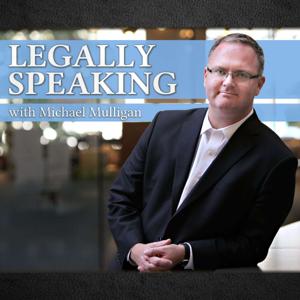


This week on Legally Speaking with Michael Mulligan:
The Supreme Court of Canada has declared an arbitration clause, used by Uber, to be unconscionable, and therefore invalid.
The clause, included in a 14-page agreement that prospective Uber drivers were required to click “I accept” on, twice, purported to require any disputes with Uber to be dealt with by arbitration, in the Netherlands, rather than going to court.
While not specified in the 14-page agreement, it turned out that in order to start the arbitration process, there was a $14,500 USD fee. A driver making a claim would also need to travel to the Netherlands.
If it had been found to be enforceable, the other effect of the arbitration clause would have been to prevent the case from being certified as a class action. Every claim would have to proceed separately and would be subject to the $14,500 fee.
As a result of the Supreme Court of Canada decision, the case, which involves a dispute as to whether Uber drivers are employees or independent contractors, can proceed.
Also discussed is a class action case from British Columbia involving a claim that a group of companies that transport vehicles on ships conspired to fix higher prices for this service. The alleged impact was to raise the price of cars sold in British Columbia.
The British Columbia Court of Appeal held that two of the companies involved could still be sued, even though they didn’t deliver cars to British Columbia. The companies didn’t deny that they were involved in a price-fixing conspiracy. The British Columbia Court of Appeal held that the two companies could still be liable on the basis that their participation in the price-fixing conspiracy artificially raised the price charged by other companies that did deliver cars to British Columbia.
Finally, a case involving a principal, and several companies associated with Bear Mountain development is discussed. The case involved the taxation of a law firm’s account. A taxation, in this context, is supposed to be an expeditious way to determine if a lawyer’s bill is correct and reasonable.
Unfortunately, the former clients made no effort to narrow the focus of the review and demanded a full refund of all fees paid for a complex case that went on for an extended period of time. This resulted in a protracted, 11-day hearing and, ultimately, an award of costs against the client in the amount of $36,465.
Costs, in the civil litigation context, are intended to encourage parties to make reasonable concessions, narrow issues, and resolve disputes. Unfortunately, they don’t always have the desired effect.
Follow this link for a transcript of the show and links to the cases discussed.
This week on Legally Speaking with Michael Mulligan:
From March to May 2020, the number of people who have died as a result of drug overdoses in British Columbia has been more than double the number of people who have died from COVID-19: 401 vs 164.
January COVID-19 deaths: 0 Overdose deaths: 77
February COVID-19 deaths: 0 Overdose deaths: 76
March COVID-19 deaths: 24 Overdose deaths: 113
April COVID-19 deaths: 87 Overdose deaths: 118
May COVID-19 deaths: 53 Overdose deaths: 170
Some of the efforts to assist with COVID-19, such as providing $2,000 / month payments to people who are out of work may have increased the number of drug overdose deaths. As of May 2020, the number of overdose deaths has more than doubled from the number seen in January or February, before the Canadian Emergency Response Benefit became available.
Provincial Health Officer Dr. Bonnie Henry has released a report entitled Stopping The Harm – Decriminalization of people who use drugs in BC. The report proposes that drug addiction be dealt with as a medical, rather than criminal law issue.
Also discussed on the show are three pieces of provincial legislation that were recently introduced.
Bill 22 would permit people under the age of 19, who are determined to have engaged in “severe problematic substance use” to be involuntarily detained by chemical, electronic, mechanical, or other means for the purpose of “stabilization”. For this to be effective, in any long-term way, it’s necessary to have immediately available drug treatment space available. This requires more than legislation: it requires funding.
Bill 21 would permit electronic wills, that can be witnessed remotely. This will be a longer-term solution than Ministerial Order M161, which has temporarily permitted wills to be witnessed remotely, in the context of COVID-19. Without measures like these, people in long term care homes, and others who are in isolation, would be unable to create a will.
Bill 11 is much more problematic. This is the legislation that would implement mandatory no-fault ICBC car insurance. The premise of the legislation is a prohibition on being able to sue someone who injures you in a car accident. Instead, you would be required to accept compensation from ICBC, which is referred to as “the corporation” in the legislation. The compensation from ICBC will the same regardless of who caused the accident.
Follow this link for a transcript of the show and links to the material discussed.
This week on Legally Speaking with Michael Mulligan:
In a recent decision the Supreme Court of Canada has affirmed that when someone is arrested and charged with an offence, the presumption is that they should be released without the imposition of any conditions.
Any conditions of release that are imposed must be clearly articulated, minimal in number, necessary, reasonable, the least onerous in the circumstances, and sufficiently linked to the accused’s risks regarding the statutory grounds for detention.
In British Columbia, courts have been using a 24-page “pick list” of bail conditions, and accused people were routinely being released with numerous conditions selected from it. As a result, a large number of people end up being charged with breaching bail conditions.
The Supreme Court of Canada made clear that the setting of bail is to be an individualized process and there is no place for standard, routine, or boilerplate conditions.
The Supreme Court of Canada further concluded that for someone to be convicted of breaching a condition of release, the Crown is required to prove that the person intended to breach their bail conditions or were reckless about it. This is a change from how British Columbia courts had been dealing with breach of bail charges.
The case the Supreme Court of Canada was dealing with involved a man from Courtenay who was convicted for failing to come to the door when the police rang his doorbell to confirm his compliance with a curfew condition. The man was home but did not hear the doorbell in his bedroom.
Also discussed on the show is a case involving social host liability arising from a tragic car accident on Salt Spring Island following a teenage house party.
While people hosting private parties for adults are not, generally, responsible for car accidents their guests have, there can be a liability for commercial establishments serving liquor, or where there is a duty of care arising from a failure to adequately supervise children.
The case involved parents who permitted a house party that involved teenagers drinking alcohol and smoking marijuana. The parents concluded that because this activity would go on regardless, it would be better to permit and supervise it.
The parents took steps including collecting car keys from people who drove to the party and driving several teenagers home at the end of the night.
Unfortunately, two teenagers who attended the party walked away and took a car parked at a neighbour’s house that had keys left in it. There was a car accident and the driver died. The 17-year-old passenger, who suffered life-altering injuries, sued the parents.
The judge in the case concluded that the parents were not responsible for the accident on the basis that they had taken reasonable steps in the circumstances, including the age of the children.
Follow this link for a transcript of the show and links to the cases discussed.
In 2015 a BC conservation officer was dismissed from his position for refusing to kill two bear cubs.
Initially, the conservation officer didn’t have the assistance of a lawyer and the issue of his dismissal was dealt with by a union representative and the Labour Relations Board.
Eventually, the conservation officer retained a lawyer who identified that conservation officers are peace officers and issues relating to their discipline or dismissal need to be dealt with pursuant to the Police Act.
After several years of litigation, the BC Court of Appeal finally determined that the Labour Relations Board lacked jurisdiction, and the case should have been deal with pursuant to the Police Act from the start.
Also discussed, in the context of the killing of George Floyd in the United States, are the special legal protections afforded police officers in Canada.
In Canada, the Criminal Code only protects peace offers that use force that is likely or intended to cause death or grievous bodily harm if the police officer believes, on reasonable grounds, that the force is necessary for self-preservation, or to protect someone the police officer is protecting from death or grievous bodily harm.
A police officer in Canada would not be permitted to choke off someone's air supply in order to punish them, make them more compliant, or easier to load into a police car while unconscious.
There are some special provisions in Canada that do permit a peace officer to use force likely or intended to cause death or grievous bodily harm in order to prevent an inmate from escaping a penitentiary, if the escape can’t reasonably be prevented by less violent means, as long as the officer believes, on reasonable grounds, that any of the inmates of the penitentiary poses a threat of death or grievous bodily harm.
This could permit, for example, an escaping inmate to be shot even if a peace officer didn’t know if the particular inmate posed a threat to kill someone. There still would need to be no other reasonable way to prevent the escape, by less violent means for the defence to apply.
Finally, a case concerning the Civil Resolution Tribunal is discussed on the show.
The Civil Resolution Tribunal was established to adjudicate strata disputes, and small claims cases for less than $5,000. It’s intended to be an expedited, online, dispute resolution system.
Unfortunately, the legislation that created the Civil Resolution Tribunal requires parties to ask permission to have a lawyer represent them, unless they are a child, or suffer from a disability.
When a man sued the strata corporation in his building for $30,000 over a dispute concerning a patio repair, that strata corporation asked for permission to have their lawyer represent them.
Strata corporations would often be run by a group of volunteers, who may not have the time, experience, or interest, in personally conducting a case.
The adjudicator working for the Civil Resolution Tribunal refused the request and much litigation ensued, eventually resulting in the case going all the way to the BC Court of Appeal. That court concluded that the adjudicator had acted unreasonably in refusing to permit the strata corporation to have a lawyer help them. The case has now been sent back to be done again.
The poorly conceived legislation that permits the Civil Resolution Tribunal to prohibit a party from using a lawyer should be amended to remove this authority.
Follow this link for a transcript of the show and links to the cases discussed.
Can you be entrapped by phone? The Supreme Court of Canada has confirmed that you can.
One of the ways that entrapment can occur is if the police engage in random virtue testing: presenting an opportunity to commit a crime without a reasonable suspicion that the person being tested is already committing the crime, or that the crime is already occurring in the place where the police are testing random people.
An example of a place where police have a reasonable suspicion that crimes are being committed might be an area where illegal drugs are being sold frequently.
The Supreme Court of Canada concluded that a phone number, believed to be associated with illegal drug sales, could also constitute a place, like a street corner.
While a tip on unknown reliability that a phone number is being used to sell drugs would not be enough to constitute reasonable suspicion, the language used when the phone is answered could provide the reasonable suspicion necessary to ask and see if the person answering the phone is willing to sell drugs.
Also discussed is the US Posse Comitatus Act (1878), which is relevant to President Trump’s threat to use the US military to stop riots and looting which have accompanied peaceful protests over a police officer killing a black man by kneeling on his neck after he was handcuffed and laying on the ground.
A Posse Comitatus, at common law, is a group of citizens mobilized by a sheriff to suppress lawlessness, defend the country, or apprehend someone who has committed a serious crime.
The US Posse Comitatus Act restricted the use of the military to enforce domestic laws. Since it was passed, however, various amendments have been passed that permit exceptions to this limitation.
In Canada, while we do not have a history of using the posse, we do have section 67 of the Criminal Code which required a justice, mayor, sheriff, deputy mayor, or deputy sheriff to, upon being informed of a riot of 12 or more people, to attend as close as is safe and, in a loud voice, read, or cause to be read, the following:
"Her Majesty the Queen charges and commands all persons being assembled immediately to disperse and peaceably to depart to their habitations or to their lawful business on the pain of being guilty of an offence for which, on conviction, they may be sentenced to imprisonment for life. GOD SAVE THE QUEEN."
Once this has been read, if people don’t disperse, they commit and offence and are liable to imprisonment for life.
Finally, a Court of Appeal decision is discussed which concludes that you can be convicted for holding an electronic device while driving, even if the device is completely inoperable, or equipped with software that deactivates it in a car.
The decision makes clear that the legislation in question needs to be amended so as to avoid punishing people who are not engaged in an activity that is dangerous.
Follow this link for a transcript of the show and links to the cases and legislation discussed.
In Canada, the decision about whether or not to extradite someone to another country to face criminal charges has both a legal and political aspect.
The courts decide if the legal requirements for extradition have been met. If they have, it is then up to the Minister of Justice to determine if the person should actually be extradited.
The recent decision concerning Wanzhou Meng of Huawei dealt with one of the legal requirements: the offence the person is charged with, in the other country, must also be an offence in Canada. This is referred to as double criminality.
Ms. Meng is charged with fraud in the United States on the basis that she is alleged to have lied about Huawei's control of an Iranian company in order to secure a loan of $1.5 billion that would otherwise have been in violation of United States sanctions against Iran.
Ms. Meng’s lawyers argued that, because Canada didn’t have similar sanctions in place at the time she is alleged to have lied to obtain the loan, the requirement for double criminality hadn’t been met.
The judge disagreed with this argument and concluded instead that it was the “essence of the offence” that must exist in both countries. She reasoned that fraud can be committed in both the United States and Canada if you lie in order to obtain a loan.
Interestingly, fraud of this kind can occur even where the loan is repaid as promised. The theory of this is that the other party was put at risk: in this case, the banks were put at risk of being charged with violating the United States sanctions against Iran.
The way the Canadian justice system has dealt with Ms. Meng is in sharp contrast to how the two Canadians have been dealt with by China.
Ms. Meng is free on bail, living in a mansion in Vancouver, and is availing herself of the Canadian justice system that affords transparent hearings, with an independent judge, legal counsel and all of the other elements of a system premised on the rule of law.
In contrast, the Chinese government arrested two Canadian men days after Ms. Meng was arrested, in retaliation. The men have spent more than 530 days in jail, without bail and without a trial. Their names of the men are Michael Spavor and Michael Kovrig.
This conduct, by the Chinese government, will have no impact on the judicial process. It may, however, inform the Minister’s decision concerning extradition. Refusing extradition, in this context, would encourage future retaliatory arrests by China or other authoritarian regimes.
Also discussed on the show is a case involving a law firm that is suing Google, and an unknown person, for a review left on Google Maps. The law firm is in the process of obtaining a “Norwich order” to require Google to turn over IP, and other information, to reveal the identity of the person who left the review so that they can be named in the civil action.
Follow this link for a transcript of the show and links to the cases discussed.
COVID-19 is a consideration when deciding if someone should remain in jail while waiting for their trial.
In one federal penitentiary, located in Mission BC, 133 inmates and staff contracted the coronavirus.
As a judge recently pointed out, however, the risk of COVID-19 is not a “get out of jail free card.”
The overriding considerations when determining if someone should be kept in jail include whether they will attend court when required and if their detention is necessary for the protection and safety of the community.
In the case discussed, the accused person had a very long criminal record, including 14 convictions for property offences, 22 convictions for fraud, personation, and similar offences, and 13 convictions for breaching court orders. Given this, despite the risk of COVID-19, the judge concluded that it was necessary to detain the accused man, prior to his trial, in order to protect the safety of the community.
Also discussed is a letter from the Criminal Defence Advocacy Society, calling for a limited reopening of the Provincial Court for in-person appearances.
The Provincial Court deals with the large majority of criminal cases and, as the letter from the CDAS points out, many of the people accused of crimes suffer from addiction issues, mental health challenges, homelessness, and have no access to technology. As a result, solutions like Zoom hearings, which are working in the Court of Appeal, don’t work for many accused people in Provincial Court.
With the majority of criminal cases in Provincial Court having been adjourned since March, many people are being left subjected to bail conditions, with no meaningful way to access the justice system.
In other legal news, Texas is the first jurisdiction to attempt a jury trial using Zoom. The experiment ran into some challenges as a result of things including a juror who walked away from their computer to answer a phone call. The judge was unable to call the juror back because they were not wearing the headset connected to their computer.
Follow this link for a transcript of the show and links to the cases discussed.
Does failing to use a condom result in a lack of consent, or constitute fraud?
In a recent decision, the Court of Appeal split three ways on how failing to use a condom should be analyzed.
The case they were dealing with involved two people who had only met in person on one occasion before they decided to spend the night together. The complaint performed fellatio, without asking the accused to wear a condom, but then asked him to put one on before engaging in intercourse. Later in the night, the couple had intercourse again. The complaint didn’t realize that the accused hadn’t used a condom.
On the second occasion, when no condom was used, the accused was behind the complaint, and he asked her if it felt better. She said “yes” but thought the accused was talking about the position they were in.
At trial, the judge acquitted the accused, finding that there was no evidence that the complainant did not consent to the activity.
The Crown appealed the acquittal, and, in the Court of Appeal, all three judges ordered a new trial, but for different reasons.
One judge concluded that the complaint hadn’t consented to intercourse without a condom. A second judge concluded that the complaint did consent, but that the consent was vitiated by fraud. The third judge concluded that there was both no consent and, if she was wrong in that conclusion, then there was also fraud.
All three Court of Appeal judges struggled to interpret and apply a previous Supreme Court of Canada case where an accused used a condom that he had previously poked holes in. In that case, the complaint became pregnant. The Supreme Court of Canada concluded that, while the complainant had consented to the sexual activity, secretly poking holes in the condom constituted fraud and, as a result, there wasn’t consent as a matter of law.
Also discussed is a new practice directive form the BC Supreme Court that will permit accredited media to listen to telephone or video-based court appearances by phone so that COVID-19 doesn’t undermine the principle of an open court process.
Finally, a court decision terminating a spousal support order is discussed. The ex-husband, who is a doctor, had paid $700,000 in spousal support over the past 26 years. He is 70 years old, and about to retire. The recipient ex-wife is also 70 years old but, despite having a university degree, and real-estate licence, amongst various other qualification, never held a job for more than a year, and never become economically self-sufficient.
The judge that terminated the support order pointed out that an “indefinite” support order doesn’t mean that it is permanent. It simply refers to an order for support without a time limit at the time it is made.
Follow this link for a transcript fo the show, and links to the cases discussed.
Vancouver Island, population 870,000, only has 2 people in hospital with COVID-19, as of May 7, and a total of 18 people who have been identified with the virus, who have not recovered, according to the BC Centre for Disease Control.
In this context, the Public Health Act and the Emergency Program Act are discussed on the show. Both acts expressly contemplate different orders being made for different areas of the province.
If the number of people with COVID-19 reaches zero on Vancouver Island, consideration would also need to be given as to how such a state of affairs could be maintained. The number of infections in other areas of BC is greater than those on Vancouver Island.
Section 15 of the Public Health Act has a general provision that applies at all times: A person must not willingly cause a health hazard, or act in a manner that the person knows, or ought to know, will cause a health hazard.
Also discussed is the BC Provincial Court etiquette guide for people appearing by video link for hearings in court. Tips include not eating or drinking anything but water, not needing to stand up or bow for video appearances, and to dress appropriately. The Provincial Court dress guidelines include not wearing hats, short shorts or muscle shirts and wearing shoes. Essentially, people should dress like they were planning to attend a job interview and not the beach.
In other legal news, the Court of Appeal upholds a jury verdict that found the City of Burnaby to be 29% responsible for the burns suffered by a woman when a tenant of the house owned by the city threw a bucket of used motor oil on a fire, causing an explosion. The fire department had previously been called to the house for an out of control fire, with flames 20 feet high, and nothing had been done to remove the unlawfully installed fire pit.
The fire pit was described by the Court of Appeal as a tire rim “affixed to the ground by gravity”.
For links to the cases and legislation discussed, and a transcript of the show, follow this link.
In 2011 two men in Quebec wagered $517,000 on a best-of-three rock, paper, scissors game.
The man the lost took out a mortgage on his home to pay the debt but was successful in having the gambling contract, and mortgage set aside.
In Quebec, private contractual disputes are deal with pursuant to the Civil Code of Quebec, rather than common law principles of contract, that apply in other Canadian provinces.
The Civil Code of Quebec specifies that gambling contracts are only valid if they relate to activities “requiring only skill or bodily exertion on the part of the parties” rather than to chance. In addition, the amount of the wager must not be excessive.
The trial judge who originally decided the case found that rock, paper, scissors was not simply a game of luck because it called upon the skill of the parties in terms of the speed of execution, sense of observation, and in selecting strategic sequences.
The Quebec Court of Appeal disagreed with the trial judge and concluded that rock, paper, scissors was a game involving a large part of chance, and not only the skill or bodily exertion of the parties.
Both the trial judge, and the Court of Appeal, agreed however that the amount wagered was excessive and so the gambling contract, and resulting mortgage, was set aside.
Also discussed are continued efforts, by British Columbia courts, to manage the dislocation caused by COVID-19.
While the Court of Appeal will be back to full operation using Zoom for hearings, the trial courts are still trying to find ways to manage witnesses, juries, and other practical issues, safely.
The Provincial Court has now adjourned cases that were set until July 3rd. In an effort to mitigate what will otherwise be a potentially unmanageable backlog, the court will begin dealing with an increased number of less urgent matters by telephone, including criminal sentencing cases where a jail sentence is not being requested. Judges will also engage in pre-trial telephone hearings in an effort to encourage the resolution of outstanding criminal and family law cases.
Finally, a recently released family law decision from the BC Supreme Court involved the assignment of a replacement judge to decide a case, after the original trial judge became incapable of continuing after hearing a seven-day trial.
The replacement judge was able to listen to audio recordings of the trial, review the transcripts and exhibits, and hear submissions from the lawyers involved.
The replacement judge pointed out that while they were not able to observe the demeanour of witnesses in order to assess creditability, that this is only a small part of making this assessment, and that based on the material and audio recordings they were able to accomplish what was required without needing to start the trial over.
Follow this link for a transcript fo the show and links to the cases discussed.
From the publisher's feed

433 Listeners

408 Listeners

210 Listeners

207 Listeners
76 Listeners

36 Listeners

67 Listeners

106 Listeners

86 Listeners

451 Listeners

50 Listeners

112 Listeners

8,430 Listeners

34 Listeners

47 Listeners