
Sign up to save your podcasts
Or

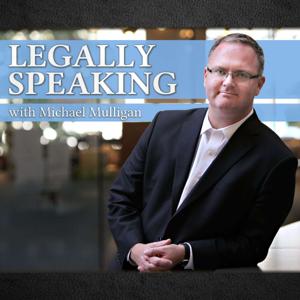


The BC Court of Appeal will be back operating at full capacity thanks to Zoom.
After several weeks of dealing only with urgent matters, the BC Court of Appeal has announced that all oral hearings will proceed using Zoom. All material will be filed electronically. A desire to have an oral argument in person, rather than by Zoom, will not be a reason for an adjournment.
The Court of Appeal is able to make this change more easily than trial courts can because it does not hear from live witnesses and does not need to manage things like juries.
The Supreme Court of Canada has, for many years, both permitted lawyers to appear by video connection, and has video-recorded its hearing. Video recordings of hearing are posted on the court's web site.
While the constitutional requirement for public trials in criminal cases doesn’t apply to appeals, it would make sense to utilize the recording function in Zoom, and for the Court of Appeal to post the recordings of oral arguments in the same way that the Supreme Court of Canada does.
Also discussed on the show is a bail review decision, which resulted in a man who had been held in jail to await a series of fisheries offences being released.
The man was charged with various Fisheries Act offences including unlawfully possessing crabs, fishing without authorization, and being on board a fishing vessel when he was not allowed to be. He was originally detained, at the beginning of March, because he had been convicted of similar offences on 11 previous occasions.
Since the original order for detention, COVID-19 has made it completely uncertain how long it will take for the case to get to trial. As a result, the man could end up spending more time in jail waiting for his trial, than the sentence he would receive if he ever is convicted.
Accordingly, the judge ordered that the man be released, on house arrest conditions, until his trial. He will be required to reside with his mother, who will be acting as a surety.
Finally, a Family Law Act decision makes clear that a generalized concern about COVID-19 is not a reason to withhold a child from exercising access to a child pursuant to a court order.
The fact pattern of the case included a mother that did not want to return a child to a father because the father’s mother performs elder case in a care home, and lives with the father.
The court also made clear that parents who attempt to create fear in the mind of a child by suggesting the child is at risk by being in the care of the other parent, without any objective justification for doing so are not acting in the child’s best interests. Such parents who take this approach risk jeopardizing their own position for maintaining whatever parental responsibilities they enjoy.
Follow this link for a transcript fo the show and links to the cases discussed.
Should custody arrangements be modified where one parent is a nurse working with patients who may be infected with COVID-19?
In child custody cases, the core principle is always what’s in the best interest of the child.
A recent BC court decision set out factors to be considered when assessing a child’s best interest in a situation where a parent is working in an environment of known risk. These include whether the child has medical conditions placing them at higher risk if they are infected, whether either parent has people with elevated risk in their household, what the risk is of either parent contracting the virus, and what steps each parent is taking to mitigate the risk of exposure.
In a recent case involving an eight-year-old child, with a mother working as a nurse, the judge acknowledged that while there was some risk to the child from infection, this was offset by the benefit that the child received spending time with his mother.
The judge took into consideration steps that the mother was following to avoid infection: wearing hospital scrubs, leaving her shoes and clothing at work, wiping down her bag, showing as soon as she got home, and using bleach to clean her door handles.
The judge did direct the child’s parents to continue discussing risk factors, as they had been doing, and that if it became apparent there was an elevated risk to the child, that they should take appropriate measures to protect him.
During the 7 seven-day periods that the mother, who is a nurse, has custody of the child, she would not be working.
Other cases discussed in the episode include a circumstance where a parent with shared custody enters into a new relationship with a partner who also has a child with whom they share custody. This case involved an assessment of the steps being taken to avoid transmission from one home to another.
Two other categories of family law cases also raise issues of urgency are being dealt with by way of hearing conducted by telephone: child apprehension cases and applications to vary support orders.
Where a child is apprehended by the Director of Child, Family and Community Services, the relevant legislation has several provisions directing that hearing be conducted promptly. A recent decision confirmed that this is so, even in the context of COVID-19, and required that a hearing be conducted promptly, by telephone.
A final category of cases, which will need to be dealt with on an urgent basis, will be applications for the reductions in child or spousal support payments as a result of people losing their jobs. There is an obligation to bring applications to modify support orders promptly, rather than not paying and applying after the fact for a change in the order.
If support payments are reduced, or eliminated, as a result of unemployment, former recipients may have issues qualifying for the Canadian Emergency Response Benefit if they were not previously employed.
Follow this link for a transcript of the show and links to the cases discussed.
The Rent Distress Act governs the seizure of property by commercial landlords for the non-payment of rent. Its provisions are utilized in cases, including a recent court decision concerning the seizure and sale of a pizza oven, by a landlord in Tofino.
Unfortunately, in the context of the COVID-19 pandemic, the act is hopelessly out of date. It only permits a tenant to keep $200 worth of property relating to their trade and sets out an archaic list of other property that a tenant is allowed to keep. The list includes one cooking stove with pipe, one lamp, one washboard, two pails, one table, one clock, one broom, one shovel, three smoothing irons, and one chair, knife, spoon, fork and plate for each member of the debtor’s family.
A smoothing iron is a predecessor to the modern iron that you would heat up on your stove, to press your “ordinary wearing apparel” which a landlord would also be required to leave a tenant with. Why a tenant would be allowed three smoothing irons, but only one spoon, is a distinction lost in time.
Section 15 of the Rent Distress Act actually authorizes landlords to “break open a house” to seize property “clandestinely conveyed or carried away by a tenant or lessee”.
In the context of small businesses being forced to close due to COVID-19, the Rent Distress Act need to be updated promptly to prevent commercial landlords from seizing and selling equipment that restaurants, and other businesses, will need when they are permitted to reopen.
Also discussed is a recent message from the BC Supreme Court explaining why it is currently only able to hear urgent cases. The message points out that it would be unsafe to require people to serve on juries with 11 other individuals, or to be compelled to attend in person as a witness.
The other important point made by the court is that the justice system needs to be open and transparent: it must be accessible to the public. As discussed during the show, one solution to this might be to permit public access to the digital audio recordings that are made of all court proceedings in BC. That would facilitate hearings being conducted using Zoom, Skype, or other technology.
Finally, the different mechanisms, and considerations, for releasing people from jail to avoid infection are discussed. BC has already stopped 95 people from having to serve weekend jail sentences as these individuals would be low risk and having them come and go from jails each weekend would place them, and others, at risk.
Follow this link for a transcript fo the show and links to the cases and legislation discussed.
A single mother, who lives in a rural area 20 minutes from the nearest grocery store and pharmacy, was prohibited from driving by the BC Superintendent of Motor Vehicles as a result of two distracted driving tickets she received last year.
On an appeal to the BC Supreme Court, a judge agreed with the Superintendent of Motor Vehicles that they were not required to consider either the circumstances of the tickets or the hardship that a four-month driving prohibition would cause.
Section 93 of the Motor Vehicle Act allows the Superintendent of Motor Vehicles to prohibit anyone from driving if they conclude that their driving record is “unsatisfactory”.
A judge is only permitted to overrule a decision of the Superintendent if they conclude that the decision demonstrated palpable and overriding error, absent a legal error in terms of how the decision was arrived at.
While the judge concluded that the decision to prohibit the single mother from driving was not the result of a palpable and overriding error, she urged the Superintendent to consider delaying the start of the driving prohibition because of the COVID-19 public health emergency. The judge found that, because of the need to maintain physical distancing, the driving prohibition could remove the single mother’s ability to get groceries for herself and her children, and could potentially put her, her family, and others in the community at risk.
While there may be no legal obligation to consider serious hardship, or medical risk, that could result from driving prohibitions, it would certainly be desirable for the government to take these things into account in light of the current circumstances.
Also discussed is a decision by the government of Quebec to have police stop drivers entering the province from Ontario. Police checkpoints have been set up on the Quebec side of bridges from Ottawa to Gatineau and in other locations.
Drivers who are not coming for an “essential” purpose are being denied entry into Quebec.
This sort of provincial checkpoint may be unconstitutional. Section 6 of the Charter permits every citizen of Canada, and every person who is a permanent resident of Canada, to “move and take up residence in any province” and to “pursue the gaining of a livelihood in any province”.
While Charter rights in Canada are subject to reasonable limits, prescribed by law, that can be “demonstrably justified in a free and democratic society”, that exception is not likely to authorize the kind of checkpoints that Quebec has established. Limits must be fair, not arbitrary, carefully designed, and rationally connected to achieve an objective, proportionate, and must impair a Charter right as little as possible.
Follow this link for a transcript of the show and links to the cases and legislation discussed.
Bill C-13: a federal act respecting certain measures in response to COVID-19, has now received royal assent. Several elements of this legislation are discussed on the show.
Bill C-13 created the Emergency Response Benefits Act. This act will provide a monthly payment of $2,000 to people out of work. One important element of the act is that the monthly benefits will not be available to any worker who “quit their employment voluntarily”. So: don’t quit your job if you wish to remain eligible for financial assistance.
Another provision of Bill C-13, that has not received much public attention, are amendments to the Patent Act that permit the Minister of Health to authorize anyone to “make, construct, use and sell a patented invention to the extent necessary to respond to the public health emergency described in the application”. This would permit companies to manufacture things like ventilators, or drugs, that could otherwise be protected by a patent. There is provision for the payment of compensation to the owner of the patent.
Also discussed, in the context of the provincial Public Health Act orders, are the large number of homeless people who are camping, congregating, and lining up together, outside of the Our Place Society facility in the 900-block of Pandora in Victoria.
While Our Place has stopped providing some services, it is still providing three meals a day, washroom, and other services, from its single location. While all with the best of intentions, this has encouraged the unsafe gathering of large numbers of people in close proximity.
Meals, and other services, need to be provided in a distributed fashion, so as to remove the incentive for the large group of homeless people to continue congregating in one place.
Follow this link for a transcript of the show and links to the legislation discussed.
Both the BC Provincial Court, and BC Supreme Court have adjourned all, but the most urgent cases, scheduled from now until early May.
Urgent cases, that will proceed, include in-custody bail hearing, in custody criminal trial, and urgent cases including child protection, house evictions, refusal of treatment and end of life matters, orders under the Quarantine Act or the Public Health Act, or a variety of other urgent cases, as determined by a judge on a written application.
Witnesses, jurors, and others with cases scheduled prior to the beginning of May have been directed not to attend court unless they are specifically directed otherwise.
Both the BC Provincial Court and BC Supreme Court are providing frequently updated directions with respect to how cases, urgent or otherwise, are to be handled on their web sites.
In other legal news, both the province of BC, and the federal government, have legislation to address public health emergencies. Federally there is the Emergencies Act, and provincially there is the Emergency Program Act.
So far, the province is utilizing the legislation, but the federal government is not.
Both pieces of legislation permit temporary emergency government actions without the need for legislation to be passed in the ordinary way.
One of the interesting provisions of the provincial legislation is the power to “authorize or require any person to render assistance of a type that the person is qualified to provide or that otherwise is or may be required to prevent, respond to or alleviate the effects of an emergency or disaster”.
This authority would seem broad enough to allow qualified people to be “authorized” to provide assistance with things they might not ordinarily be permitted to do. This might include authorization for people with lapsed credentials, or training from other jurisdictions, to assist with medical care in an emergency.
As discussed last week, BC is the only jurisdiction in Canada without any Employment Standards Act requirement that employers provide any sick leave for employees. On that front, the premier has suggested this will be remedied in an emergency sitting of the legislature next week.
Follow this link for a transcript of the show and links to the legislation discussed.
BC is the only province in Canada where employers are not required to provide any sick leave. While various other forms of leave are required by the Employment Standards Act, including unpaid leave to care for seriously ill or injured family members, sick leave is not required.
Various other recent amendments to the Employment Standards Act are discussed along with a report assessing the desirability of requiring sick leave, either paid or unpaid.
Those opposed to mandatory sick leave point to Statistics Canada data that show the federal government employees, who are entitled to paid sick leave, take 13.5 sick days a year, compared to 8.4 days for private-sector employees. A culture of “taking a sick day” can undermine productivity, while the alternative of having sick employees attend work, to avoid losing pay, can also be very undesirable.
In the context of the current concerns over COVID-19, it would make sense for the government to, at least temporarily, amend the Employment Standards Act to require sick leave, and time off for employees who are quarantined. Such an amendment would facilitate the federal government’s decision to permit UI payments, in such circumstances, with no waiting period.
Also discussed is a case involving a home inspection of a house in Parksville. The purchasers of the home hired a home inspector who delivered a positive report. A few months after completing the home purchase, water was discovered to be running into the house from a sundeck. The cost of repairs was in excess of $350,000.
The inspection contract had a clause that limited liability to the cost of doing the inspection: $551.25.
The trial judge, and Court of Appeal, upheld the limit on liability finding that there had been no gross negligence, and the contract wasn’t unconscionable. The takeaway advise is that home inspection contracts, with limits on liability, don’t afford insurance for problems not noticed by the inspector.
Finally, a case involving a woman who slipped on a patch of back ice in a parking lot operated by the Town of Sidney is discussed. The claim was dismissed because municipalities are not liable for policy decisions not to clear snow and ice. Governments are only responsible if they make a policy decision to do something, and the policy is implemented in a negligent way. Here the decision to make the clearing of ice in the parking lot a low priority was found to be a legitimate policy decision.
Follow this link for a transcript fo the show and links to the cases and legislation discussed.
The Supreme Court of Canada has permitted a claim by workers at a mine in Eritrea to proceed, after concluding that Canada has adopted “customary international law” into the Canadian legal system.
The Eritrean miners brought the proposed class claim action against a British Columbia based mining company, which is a part-owner of the Eritrean mine where they work.
The miners are seeking damages for breaches of customary international law prohibitions against forced labour, slavery, cruel, inhuman or degrading treatment, and crimes against humanity. They allege that the Eritrean government has forced them to work at the mine, in terrible conditions, without pay, indefinitely.
The majority of the Supreme Court of Canada described modern international human rights law as “the phoenix that rose from the ashes of World War II and declared global war on human rights abuses.”
Also discussed on the show is a decision from the British Columbia Court of Appeal, which will permit a claim by a snowboarder against Grouse Mountain Resorts to proceed.
While attempting a run on the resort’s XL jump, the 20-year-old snowboarder suffered a significant spinal injury and is now a quadriplegic.
The Court of Appeal overturned the trial judge and found that the waiver on the back of the ticket, and posted at the resort, was not determinative. In order to be effective, the court confirmed that waivers of liability need to be sufficiently brought to the customer's attention before they purchase a ticket. Here the sign with the waiver was only visible after the ticket was purchased, and the waiver on the back of the ticket was both small, and not provided until the ticket was already purchased.
There is a larger public policy question to be considered concerning whether waivers of liability like this should ever be permitted. If they were not, it would likely result in increased ticket prices for dangerous recreational activities to cover the cost of insurance. If waivers are permitted, the effect is to shift the cost of caring for people who are injured to the public generally.
Finally, a case concerning the largest claim ICBC has ever experienced is discussed: In 2018, on two separate occasions, sulfuric acid was spilled on the highway near Trail BC, by a truck that was transporting it. The acid damaged thousands of cars, including 846 vehicles that were written off due to the extent of the damage.
The court decision will permit ICBC, and other insurance companies, to bring a single subrogated claim against the companies that allegedly spilled the acid on the highway.
Interestingly, if BC had a no-fault insurance scheme, as has been proposed, it is unlikely anything could be recovered from the companies that spilled the acid. This would not encourage more care to be taken when driving with dangerous goods.
Follow this link for a transcript of the show and links to the cases discussed.
Legally Speaking with Michael Mulligan is live on CFAX 1070 every Thursday at 10:30 am.
If BC moves to an ICBC monopoly no-fault auto insurance system, as has been proposed, the suggested avenues for a review of ICBC decisions would not be adequate, or fair.
Apart from an ombudsperson, and fairness offer, who would have no actual authority to correct unfair decisions by ICBC, what has been suggested is to use the Civil Resolution Tribunal.
The Civil Resolution Tribunal was designed to deal with very small civil and strata property disputes. It is not an appropriate mechanism for resolving disputes where one of the parties is a government-owned insurance company. This is because members of the Civil Resolution Tribunal are hired on short term contracts by the government of between 2 and 4 years, with the possibility of renewal.
Disputes should not be resolved by someone employed by the government that also owns the insurance company.
Unlike with an independent judge, a member of the Civil Resolution Tribunal may be legitimately concerned about keeping their job if they make decisions unfavourable to the government.
Also discussed on the show are the Criminal Code provisions that make it an offence to counsel someone to commit a criminal office. This is relevant in the context of people urging others to block highways or other infrastructure. The act of encouraging others to engage in this activity is, itself, a crime even if the suggested activity doesn’t occur.
Finally, a recent Supreme Court of Canada decision concerning s. 35 aboriginal rights in the context of a mining development that straddles Quebec and Newfoundland and Labrador is discussed.
The Supreme Court of Canada spends some time reviewing the nature of aboriginal title and confirming that it is not a right to sovereign control over territory.
As is the case with other forms of title to property, such as fee simple title to a home, Canadian, and provincial, laws still apply and, where there is a compelling public need to use the property the government is able to do so.
In the case of property held in a regular fee simple fashion, the provincial and federal governments can not only enforce laws on the property but can expropriate it for public purposes. That is how it’s possible to build highways, sewer systems, and other infrastructure even if a property owner doesn’t consent to this.
Suggestions that aboriginal groups retain sovereign control over land, or that aboriginal title affords a veto over the use of land, are inconsistent with Canadian law.
Follow this link for a transcript of the show, and links to the cases discussed.
Who decides if, how, and when, protesters who are blocking rail lines, ferries, driveways, or bridges are to be removed?
Both protesters, and politicians, have suggested that either the Premier of BC, or the Prime Minister of Canada should, or should not, remove protesters who are obstructing transportation infrastructure or natural gas pipeline construction. In many cases, these suggestions demonstrate a fundamental misunderstanding of how such decisions are made.
Neither the Premier of BC, or the Prime Minister of Canada, has the authority to direct the police to enforce, or not enforce, Criminal Code provision that prohibits the interference with property, or blocking of highways. They also have no authority with respect to the enforcement of court orders.
It would be completely undesirable for politicians to have authority over the conduct of police operations.
Police are permitted to arrest people, without a warrant or court order, if they commit a criminal offence. When protesters blocked the Premier’s driveway, for example, the police simply attended and arrested those involved for the criminal offence of mischief.
With respect to protesters who were physically obstructing the construction of the natural gas pipeline, the company involved obtained an order from a judge which directs the police to arrest anyone engaged in this activity. Political leaders have no authority to prevent this order from being carried out or direct how this should be done. Public Safety Minister Bill Blair recognized this and confirmed that it was for the RCMP to decide how the court order was to be enforced.
Similarly, despite various political debates, CN Rail has been obtaining injunctions in other provinces to compel the removal of protestors who are blocking rail lines. The Prime Minister has no control over this process.
The second topic discussed on the show are the finances of ICBC, in the context of the recent claims by the provincial government that dire financial circumstances at ICBC require a move to a monopoly no-fault insurance system. While such a change would leave injured people with less compensation and would eliminate independent review of ICBC decisions, it would, conveniently for the government, permit refund cheques to be mailed out to people shortly before the next provincial election.
In this context, ICBC’s finances are discussed. A review of ICBC’s financial statements reveals that, between March 31, 2018, and March 31, 2019, ICBC’s assets actually increased by $1.8 billion. This is more than the amount of money taken out of ICBC to balance the budget by the last provincial government.
The large increase in ICBC’s attests were a result of it paying out much less than it took in over this period of time.
Despite this result, in this same one-year period, ICBC avoided showing a large surplus by substantially increased it’s “provision for unpaid claims”. It increased this figure from $11.9 billion to $14.29 billion in one year. This amount is supposed to be an estimate of how much future claims could cost. The large change, in one year, is a cause for skepticism.
The politically convenient outcome of the proposed change: refund cheques before an election, is a good reason to look very carefully at the financial rationale for a proposal that would leave accident victims with less compensation and eliminate the ability of courts to independently review ICBC decisions.
Legally Speaking with Michael Mulligan is live on CFAX 1070 every Thursday at 10:30 am.
Follow this link for a transcript of the show and links to the cases discussed.
From the publisher's feed

433 Listeners

408 Listeners

210 Listeners

207 Listeners
76 Listeners

36 Listeners

67 Listeners
106 Listeners

86 Listeners

451 Listeners

50 Listeners

112 Listeners

8,430 Listeners

34 Listeners

47 Listeners