
Sign up to save your podcasts
Or

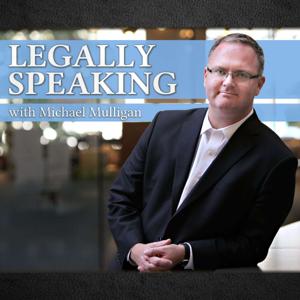


This week on Legally Speaking with Michael Mulligan: The ICBC no-fault system proposed by the NDP would save money by not providing compensation for the loss of future earning capacity.
Currently, with our fault-based system, if someone is seriously injured by a careless driver, they would be entitled to be put back into the position they would have been in had they not been injured. This could include a lump sum payment based on the current value of their lost future earning capacity.
The question for a judge is how much more would they have earned; had they not been injured.
Under the proposed ICBC no-fault system, whether someone is responsible for an accident or not, they would only be entitled to monthly payments based on their income at the time of the accident. This could be particularly unfair to young people who have just started working. A young person, with their first job following graduation, if permanently disabled, would only ever receive monthly payments based on how much they were making when they were disabled.
By moving to monthly payments for disabled people, rather than paying a lump sum, ICBC will be able to spread out their obligations for many years.
This helps explain how the government is planning to justify pre-election rebate cheques from an insurance company described as a financial dumpster fire.
By creating long term, underfunded, liabilities to make monthly payments, ICBC management would also help entrench a monopoly no-fault system because privatization would require these liabilities to be dealt with.
Also discussed on the show is the quia timet injunction obtained by Uber to stop the City of Surrey from issuing tickets to Uber driver for not having Surrey business licences, which Surrey would not issue.
A quia timet injunction is a special kind of injunction that prohibits future, rather than current, conduct. This kind of injunction may of some use to prohibit the pre-planned obstruction of buildings, roads, ferries, and other infrastructure by natural gas pipeline protestors.
Finally, a new trial is ordered in a case where a judge found that a Saanich police officer assaulted a man he pulled over. The trial judge found that the police officer seriously injured the man, however, the municipality of Saanich didn’t have to pay because they hadn’t been provided written notice within 2 months of the incident. The police officer also avoided having to pay for the man’s injuries because the Police Act exempts officers form personal liability unless they engage in “dishonesty, gross negligence or malicious or wilful misconduct”.
The Court of Appeal ordered a new trial because the trial judge had not considered whether the officer who assaulted the man had engaged in “malicious or wilful misconduct” which is different from “gross negligence”.
Follow this link for a transcript of the show and links to the cases discussed.
On the show this week: The Canadian Quarantine Act, and BC Public Health Act powers to quarantine people or order treatment in response to the Wuhan Coronavirus, as well as an analysis of the NDP government’s latest proposal for no-fault car insurance.
The Canadian Quarantine Act and BC Public Health Act provide broad powers to control communicable diseases such as the Wuhan Coronavirus. These include the authority to prohibit entry into Canada by people who have been to a foreign country, or part of a foreign country, in circumstances where there is no reasonable alternative to prevent the introduction or spread of a disease that would pose an imminent and severe risk to public health.
The Quarantine Act imposes an obligation on people to disclose if they might have a communicable disease and the BC Public Health Act obliges people not to willingly cause a health hazard, or act in a manner that a person knows, or ought to know, will cause a health hazard.
If required, any private place may be designated as a quarantine facility for the purpose of isolating or detaining infected people for the purpose of protecting public health.
The latest proposal by the provincial NDP government to introduce a no-fault car insurance system is also discussed.
This is the second time an NDP government has attempted to introduce a no-fault system. On the last occasion, back in 1997, this was so unpopular the idea was abandoned.
A no-fault system is designed to save money by not spending any money determining who was responsible for an accident.
A careless diver, who causes a car accident, would be treated the same way as an innocent person they injure.
It is for this reason that no-fault system insurance systems are inconsistent with the idea that people should be responsible for the harm they cause.
While generally good news for careless drivers, who may save money on their car insurance, no-fault regimes can both remove incentives for people to drive safely, and inadequately compensate innocent people who are seriously injured.
Should this proposal for a no-fault system become law in British Columbia, people injured in car accidents could expect similar treatment to that provided by WorkSafeBC (WCB) and would have no meaningful ability to challenge decisions made by ICBC in court.
Follow this link for a transcript of the show and links to the legislation discussed.
On the show this week: ICBC. The government-owned insurance company has run into financial difficulty as a result of both how the company has been operated, and political decisions to take money that it had been saved for the purpose of paying claims out of the company in order to balance the provincial budget.
Currently, drivers who are at fault for an accident are responsible for it. In some circumstances, such as where a driver is convicted of impaired driving, dangerous driving, or failing to remain at the scene of an accident, they would be in breach of their insurance coverage and they would be personally responsible for repaying ICBC for any loss.
There has been some suggestion that BC should move to a no-fault system, in which it would not matter who caused an accident. This would save money by avoiding litigation concerning who was responsible for an accident but might be inconsistent with community values that people who cause accidents should be responsible for them.
Recently announced changes would create an in-house ombudsperson, to review complaints. This is a ponderous idea as BC already has an ombudsperson and an auditor general. Duplicating these functions inside ICBC doesn’t seem likely to be beneficial.
Another initiative involves having ICBC offer some money to people who suffered a loss, without removing their ability to sue later. This proposal needs to be considered in the context of ICBC’s frequent attempts to settle claims for less than would be awarded if the cases were decided by a judge.
If people who are injured are offered, and accept, less than their claim is worth, either because they are desperate, or don’t have proper legal advice, this may make it uneconomic to sue ICBC later for the difference between this amount, and what they should have been paid.
Fundamentally, ICBC needs to be directed to change its approach to claims. If a claim is legitimate, ICBC should be promptly offering people what would be expected if they went to court. This would be both consistent with the duty of a publicly owned insurance company to treat people fairly and would save significant resources that are currently spent litigating claims.
Despite ICBC claims to the contrary, a review of cases that do proceed to trial demonstrates that ICBC is continuing to offer people less than the amounts be awarded in court.
Finally, the role of ICBC in administering things like drivers’ licences and paying for police traffic enforcement should be reconsidered. These are ordinarily government functions, that would not be paid for by private insurance companies. Having ICBC pay for these things is no different than taking money out of ICBC to pay for government programs.
Follow this link for a transcript of the show and links to the cases discussed.
Topics discussed on the show this week include the Supreme Court of Canada refusing an application by the City of Victoria for leave to appeal a decision by the BC Court of Appeal that the city lacked jurisdiction to ban plastic bags.
In addition, various politicians have mischaracterized the nature of an interim injunction prohibiting blockades, and other self-help remedies, by individuals opposed to the construction of a natural gas pipeline.
A federal Green Party member of parliament suggested that the premier of BC, or the Prime Minister of Canada, should “call off the RCMP” from enforcing the injunction.
Neither the premier nor the prime minister, have the authority to “call off” the RCMP. Because protesters had not voluntarily complied with a previous injunction, imposed a year ago, the BC Supreme Court judge hearing the case ordered the RCMP to enforce the injunction against physically blocking construction.
The obligation of the RCMP to prevent protesters from blocking the construction of the pipeline is a result of the court order and not a political decision.
A number of young people, who apparently misunderstood who had the authority to decide how the matter was going to proceed, occupied the Ministry of Energy, Mines & Petroleum Resources building in Victoria. After fifteen hours, the police carried the protesters out of the building and released them without charges.
In this context, a City of Victoria Councillor unfairly alleged that “there is always a high risk that police will use violence” when dealing with protesters.
What appears to be either uninformed or politically motivated, mischaracterizations of the court-ordered injunction are most unfortunate.
It would be wise for anyone who is inclined to wade into the pipeline issue, the role of the elected first nations representatives, Wet’suwet’en hereditary chiefs, the RCMP, or the government, to actually read the judge’s reasons for judgment.
The background, context and reasons really do matter.
Finally, a tribute to Ted Hughes, the former judge, and lawyer, who passed away on January 17, at age 92, after making a numerous contribution to the Canadian legal system.
Follow this link for a transcript of the show and links to the cases discussed, including the judge's reasons for issuing the injunction.
Two new British Columbia Court of Appeal decisions are discussed on the show this week.
When can you sue a municipality for an injury caused by poorly cleared snow?
The Court of Appeal provided some clarity in a recent case against the City of Nelson. The plaintiff suffered a serious leg injury after stepping into a snowbank trying to get from an angled parking spot to the sidewalk.
While a municipality is not liable for injuries caused by policy decisions, such as whether to clear the snow or not, they can be liable when a policy decision is poorly implemented, and this causes a hazard. The legal distinction is between “policy” and “operation”.
The second case discussed involved a 14-year-old who was diagnosed with gender dysphoria and wished to undertake hormone therapy following a social transition from female to male at age 12.
The child’s parents had been separated for several years and, while the child’s mother supported the treatment, the father opposed it.
Various court application ensued and an order was made against the father declaring that his references to the child as a girl, whether directly or to third parties, was a form of “family violence” pursuant a definition of this term in the Family Law Act that includes things like “psychological or emotional abuse of a family member.”
The father was ordered not to attempt to persuade the child to abandon the treatment, not to refer to the child by his birth name, and not to refer to the child as a girl or with female pronouns to the child, or any third parties.
The unfortunate language used in the Family Law Act, which defines “psychological or emotional abuse” as “violence” seems to have made this dispute worse, as the language is inconsistent with any ordinary meaning of the term “violence”.
While the conduct of the father, in refusing to accept the child’s chosen gender, and to refuse to address him by the name he had chosen was found to be disrespectful and hurtful, the Court of Appeal found that, despite the incongruent definition in the Family Law Act, this should not have been characterized as family violence.
The Court of Appeal also modified the lower court order which prohibited the father from discussing the matter with the child or expressing his opinion to the friends or family members.
The hormone therapy continued, without the approval of the father, because section 17 of the Infants Act permits minors to consent to their own medical treatment.
Legally Speaking with Victoria Lawyer Michael Mulligan is live on CFAX 1070 every Thursday at 10:30 am.
Links to the cases discussed, and a transcript of the show can be found here.
The Motor Vehicle Act distracted driving provisions are in need of an update in order to both provide clarity, and to address technological changes that have taken place over the past ten years.
As a result of the outdated, and confusing, legislative scheme even police officers who are charged with enforcing the scheme are having difficulty interpreting the provisions.
Recent advice, offered by a senior police officer, concerning when and how electronic devices can be used was, unfortunately, misleading.
The Use of Electronic Devices While Driving Regulations permit someone, who is not a new driver with a class 7 or 7L licence, to use the hands-free telephone function of an electronic device, which is properly secured to a motor vehicle, within easy reach of the driver’s seat, or worn securely on the person’s body, by touching it once in order to start or end a phone call.
This “one-touch” exception to the general rule prohibiting the use of electronic devices, only applies to hands-free phone calls. It does not permit the use of a device for some other purpose by touching it once.
There is a separate provision that permits a “Hand-held audio player” to be used, as long as it’s not held in a person’s hand, and is “securely fixed” to the vehicle or “worn securely” in a way that does not obstruct vision or interfere with the safety or operating equipment of the vehicle and as long as the sound “is emitted through the speakers of the sound system of the motor vehicle”.
While the “Hand-held audio player” exception makes no reference to the device only being touched once, "Hand-held audio player" is not defined. It seems to be a relic from the days of stand-alone iPods. This has the real possibility of creating uncertainty and confusion when a modern, multi-use, a smartphone is being used to play music in a car.
Also discussed on this week’s episode of Legally Speaking with Michael Mulligan, are the Montreal and Warsaw Conventions, which limit the liability of airlines for the death or injury of passengers on international flights.
The Montreal Convention has been implemented in Canada by the Carriage by Air Act. This limits the liability of airlines to approximately $175,000 in the event of a passenger being killed on an international flight. In some cases, this may not be enough money to support surviving family members.
The final case discussed was from Port Alberni and involved an evangelical Christian mother claiming that a public elementary school interfered with the religious freedoms of herself and her children by demonstrating the indigenous practice of smudging and having her children see an indigenous dance performance, in the midst of which the dancer said a prayer.
Ultimately, the judge concluded that the mother had not established that the Nuu-chah-nulth smudging in her children’s classrooms or the prayer said by the hoop dancer at the school assembly, interfered with her or her children’s ability to act in accordance with their religious beliefs.
By way of context, until 1989, the School Act required that public school days be opened by the reading of a passage of Scripture followed by the recitation of the Lord’s Prayer.
A transcript of the show, and links to the cases discussed, can be found here.
Legally Speaking with Michael Mulligan is live on CFAX 1070 every Thursday at 10:30 am.
Three Chinese scientists were sentenced to jail for editing the genes of three fetuses in an attempt to provide immunity from HIV. The scientist used CRISPR in an attempt to disable the gene that allows the HIV virus to enter a cell.
The fathers of the children, who appear to be healthy, had HIV. Their mothers did not.
The three scientists announced what they had done at a 2018 conference in Hong Kong and, shortly thereafter, disappeared. They had been in Chinese custody and were recently sentenced to between two and three years in jail, after they plead guilty to practicing medicine without a licence, at a non-public hearing.
The concern with the activity of the scientists is that the genetic changes they made to the fetuses were subject to being passed along to future generations, and the effects are not known.
In Canada, the Assisted Human Reproduction Act prohibits the alteration of “the genome of a cell of a human being in vitro embryo such that the alteration is capable of being transmitted to descendants” in. Doing so is punishable by up to five years in jail.
Other things prohibited, by this act in Canada, include the creation of human-animal hybrids, the transplantation of human fetuses into animals, or animals or animal fetuses into humans. It is also unlawful to “maintain an embryo outside the body of a female person after the fourteenth day of its development following fertilization or creation, excluding any time during which its development has been suspended”.
Also discussed on the show are two proposed class actions.
One proposed class action, against Shaw, alleges that Shaw participated in an “unlawful pricing scheme” involving routine discrimination against existing and potential customers by offering a discounted rate exclusively to individuals who communicated with Shaw in either Mandarin and/or Cantonese.
Shaw denies the allegation and was successful in an application for a summary trial, prior to deciding on an application for the certification of the claim as a class action.
The other class action involved a successful appeal to the British Columbia Court of appeal, in order to certify a class action on behalf of employees of the University of Victoria, who were subjected to a wage freeze from 2013 – 2016 as a result of an emailed direction from the then Minister of Finance.
Follow this link for a transcript of the show and links to the cases discussed.
Legally Speaking with Michael Mulligan is live on CFAX 1070 Thursdays at 10:30 am.
The Supreme Court of Canada has ruled that a man, born in Canada, to parents who were undercover Russian spies, is a Canadian citizen.
This decision, and two others, including a finding that the CRTC does not have the power to require US Super Bowl ads to be shown in Canada, formed the basis of an effort to clarify how courts should deal with the review of administrative decisions.
There are two standards of review when courts are asked to review administrative decisions. These standards are “reasonableness” and “correctness.”
The usual standard of review by a court will be whether a decision was reasonable. This is what was applied in the case of the child of the Russian spies. A decision will be reasonable if it is logical and makes sense in light of the law and facts. In that case, the Supreme Court of Canada concluded that it was not reasonable to deny the child of the Russian spies Canadian citizenship, given the presumption that someone born in Canada is a citizen, and the wording and history of the exceptions to this.
The other standard of review is whether a decision was correct. This standard of review will apply in circumstances including where there is an issue about the legal authority to make a decision at all. That was the case with the CRTC decision: The Supreme Court of Canada concluded that the CRTC lacked the legal authority to require US Super Bowl ads to be shown in Canada. This wasn’t simply a matter of whether this was a reasonable decision to make.
Also discussed on the show was a case involving a British Columbia class action against Ticketmaster, concerning whether Ticketmaster was unlawfully facilitating the automated purchase, and resale, of tickets on a website that is owned by Ticketmaster: StubHub.
The claim alleges breaches of the Business Practices and Consumer Protection Act, as well as the Competition Act.
Ticketmaster provides software, called TradeDesk, which assists with organizing and reselling tickets.
The court decision denied an application by Ticketmaster to stop the British Columbia class action because similar cases were proceeding in Saskatchewan, Ontario, and Quebec.
Finally, the considerations for a judge when deciding on the period of parole ineligibility, following a second-degree murder conviction, are discussed.
A transcript of the show and links to cases discussed can be found here.
The first topic on the show: Sperm, recovered from a man shortly after his death, pursuant to an interim court order, will not be provided to the man’s wife because the man had not provided his written consent before he died.
The Assisted Human Reproduction Act requires written consent for the “removal of human reproductive material” from a donor’s body, after death, for the purpose of creating an embryo.
In this case, the sperm had been collected and stored, pursuant to an emergency, after hours, court order in order to permit the case to be argued. The medical evidence was that the collection needed to occur within 36 hours of death. Not making the interim order would have prevented a meaningful, legal decision.
The evidence before the judge was that the husband had hoped to have more children, and siblings for the couple’s young daughter, but neither he, nor his wife, had contemplated this occurring prior to the sudden, and unexpected, death of the husband.
The second topic on the show: the transfer of a transgender, female, inmate to a jail for men was done in a procedurally unfair fashion and needs to be reconsidered.
The inmate did not argue that her transfer to the Surrey Pretrial Centre was unconstitutional, or in violation of the Human Rights Code. Instead, she argued that the decision was unreasonable, and made in a procedurally unfair way.
The judge, in this case, concluded that the way the decision was made and reconsidered, was procedurally unfair because the inmate was not given the reasons for the initial decision, and when she made a written request that it be reconsidered, nothing of what she said was dealt with in an unsuccessful, reconsideration decision.
As a result, B.C. Corrections will be required to reconsider the transfer decision, in light of what the inmate had to say.
Procedural fairness, in these circumstances, doesn’t dictate a particular outcome but does require an inmate to have notice of the decision, an opportunity to be heard, and to be given reasons for a transfer decision.
Finally, the case of a man who passed away without a will, but having left three, short, handwritten notes, is discussed.
Section 58 of the Wills Estates and Succession Act allows a judge to give testamentary effect to a document that was not properly executed as a will if satisfied that the document represents the testamentary intentions of the deceased.
Here, while only one of the notes was signed, there wasn’t any dispute that the deceased man had written them.
As the deceased man was never married and had no children, if the notes were not applied, his assets would have gone to the estate of his brother, who passed away 5 months after the man who wrote the notes.
Ultimately, the judge did give effect to the note that left money, in two bank accounts, to the man’s long-time girlfriend. The girlfriend was not well off, having worked as a chambermaid for many years before having to stop work in 2008 as a result of ill health.
While the man was not wealthy and was a long-term resident of a room at the Canadian Hotel on Seymour Street in Vancouver, it turned out that he had $272,042.35 in his bank accounts at the time of his death.
Follow this link for a transcript of the show and links to the cases discussed.
Police officers in Montreal believed that a warning picture on an escalator, suggesting that people hold the handrail, made this a legal requirement. The police officers ordered a woman to hold onto the handrail and, when she refused, they arrested her, placed her in handcuffs, searched her purse, and issued her a ticket for not holding onto the handrail.
After being acquitted of the non-existent offence of failing to hold onto the handrail, the woman sued the police officers.
The woman was unsuccessful both at trial and on appeal to the Quebec Court of Appeal. Both of these courts held that the woman was the author of her own misfortunate and that she should have just obeyed the police officers. The Supreme Court of Canada, however, disagreed and awarded the woman $20,000 plus court costs, as a result of her unlawful arrest.
The Supreme Court of Canada concluded that people should not have to put up with being unlawfully arrested, and such actions should not be trivialized.
Also discussed are various ways people can breach the terms of their ICBC insurance coverage. The Insurance (Vehicle) Act and corresponding regulations set out the terms of ICBC insurance coverage, much like an insurance contract would in the case of private insurance.
Part 5 of the Insurance (Vehicle) Act regulations set out numerous ways in which you can breach the terms of your ICBC insurance. If you are in breach you effectively have no insurance and can be personally responsible for paying for any loss or damage you cause.
Some of the ways you can breach your ICBC insurance coverage are relatively clear: a conviction for a Criminal Code driving offence, or driving while prohibited, for example.
Other ways you can end up in breach include more ambiguous and include activates such as operating a vehicle “for an illicit or prohibited trade or transportation” or “if the insured is not authorized and qualified by law to operate the vehicle”. These may be relevant in the context of ride-sharing regulations.
Finally, a Law Society citation for a lawyer who conducted a press conference is discussed. The Law Society rules respecting the need to keep client information confidential, and circumstances in which a lawyer is permitted to provide information to the media are discussed.
Follow this link, for a transcript of the show and links to the cases discussed.
From the publisher's feed

433 Listeners

408 Listeners
210 Listeners

207 Listeners
76 Listeners

36 Listeners

67 Listeners

106 Listeners

86 Listeners

451 Listeners
50 Listeners

112 Listeners

8,430 Listeners

34 Listeners

47 Listeners