
Sign up to save your podcasts
Or

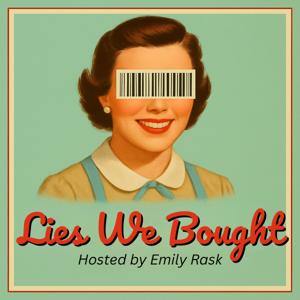


The fried-egg ad that defined the War on Drugs was built by a marketing firm, not a doctor, and the science behind it was thinner than the slogan.
Lies We Bought traces how a single 1987 commercial turned drug fear into federal policy, who kept the budget flowing for a decade, and why the campaign worked long after the data stopped backing it up. It's a story about advertising as propaganda, and about a slogan so effective nobody thought to ask if it was true.
📱 Follow along on
Patreon: https://www.patreon.com/LiesWeBought/
Instagram: https://www.instagram.com/lieswebought/
TikTok: https://www.tiktok.com/@lieswebought
LinkedIn:https://www.linkedin.com/company/lieswebough
Facebook: https://www.facebook.com/lieswebought/
I grew up Mormon, which meant coffee was never allowed in my house, so it's a little ironic that this week's coffee myth isn't really about coffee at all, it's about five words Theodore Roosevelt almost certainly never said. By the 1930s, Maxwell House was telling everyone that Roosevelt coined "good to the last drop" over a cup of coffee at Nashville's Hermitage Hotel in 1907. There was just one problem - he'd been dead for over a decade by the time the company started saying it, and the slogan itself had shown up nearly word for word on a Coca-Cola ad years before Maxwell House ever used it.
This episode talks about the real story behind Joel Cheek and the hotel the coffee was named after, how a coffee brand built a marketing myth around a dead president who could never object, and why companies keep leaning on borrowed authority instead of the truth, backed by the psychology of why founding stories sell better than facts.
A little birdie told me this one's a good one.
Sign up for exclusive emails and behind-the-scenes context: https://www.lieswebought.com/
📱 Follow along on
Patreon: https://www.patreon.com/LiesWeBought/
Instagram: https://www.instagram.com/lieswebought/
TikTok: https://www.tiktok.com/@lieswebought
LinkedIn: https://www.linkedin.com/company/lieswebought
Facebook: https://www.facebook.com/lieswebought/
Advertising lies, branding history, marketing deception: Lies We Bought is a weekly deep dive into the hidden origins of the slogans and campaigns that shaped what you buy. This week, the chocolate industry. "Melts in your mouth, not in your hand" traces back to a WWII battlefield discovery and a secret deal that made M&M's and Hershey's family from day one.
Then, the current cocoa crisis, the legal "chocolatey" loophole candy companies are using to quietly downgrade your favorite bars, the Hershey's scandal and the grandson who called it out, and the neuroscience proving your brain tastes the brand before it tastes the chocolate.
📱 Follow along on
Patreon: https://www.patreon.com/LiesWeBought/
Instagram: https://www.instagram.com/lieswebought/
TikTok: https://www.tiktok.com/@lieswebought
LinkedIn: https://www.linkedin.com/company/lieswebought
Facebook: https://www.facebook.com/lieswebought/
"The customer is always right" wasn't a rule, it was consumer deception dressed up as a promise. In this episode, I go back to 1905 and the two department store men who invented the phrase to get you through their doors, then trace how it slowly stopped being a marketing promise and became something customers use against the workers who once benefited from it. Along the way: a call center study on what absorbing customer aggression actually does to a person, the year Selfridge's own store publicly walked the phrase back, and the piece of corporate mythology the internet invented to give a quote nobody ever said a happier ending.
This is also the sassiest I've ever gotten on this show, because the personal story is mine, six years behind bars from 2006 to 2012, measured pours, and the line I used more times than I can count: "Did you want a double? I'm happy to make it a double. I can absolutely charge you for a double." It almost never got me a tip. I said it anyway.
Lies We Bought is a podcast about advertising lies, branding history, and marketing deception. Hosted by Emily Rask.
📩 Sign up for exclusive emails and behind-the-scenes context: https://www.lieswebought.com/
📱 Follow along on:
Patreon: https://www.patreon.com/LiesWeBought/
Instagram: https://www.instagram.com/lieswebought/
TikTok: https://www.tiktok.com/@lieswebought
LinkedIn: https://www.linkedin.com/company/lieswebought
Facebook: https://www.facebook.com/lieswebought/
In the summer of 2009, the federal government paid Americans to destroy nearly 700,000 working cars, and the four-word slogan that sold it did more work than the three billion dollars behind it. Cash for Clunkers promised to save the auto industry, clean up the environment, and put money back in people's pockets all at once.
In this episode I trace where the name actually came from, how dealers were required to kill every qualifying engine before they could get paid, and why a program meant to rescue American carmakers sent most buyers home in Corollas and Civics. Then the part the evening news skipped: the sales collapse dealers called the hangover, the real cost of around twenty-four thousand dollars per new sale, and the used car buyers and donation charities who quietly took the hit. Plus the psychology that made the slogan land, and two real people on opposite sides of the same program.
Another lie bought and sold, and now maybe one you can finally retire.
New episodes every Tuesday at 7 AM EST.
📱 Follow along on
Patreon: https://www.patreon.com/LiesWeBought/
Instagram: https://www.instagram.com/lieswebought/
TikTok: https://www.tiktok.com/@lieswebought
LinkedIn: https://www.linkedin.com/company/lieswebought
Facebook: https://www.facebook.com/lieswebought/
For forty years, Pizza Hut's Book It program gave kids a free personal pan pizza for reading. More than seventy million children went through it. This is the story of what that pizza was actually buying.
I trace Book It! from the 1984 education panic that opened the door, through the loss-leader economics that made giving away pizza profitable, to the developmental psychology that explains why a brand wants you at age six. We cover the overjustification effect, the 1973 Stanford reward study, and James McNeal's research on lifelong brand loyalty, plus why Pizza Hut just relaunched the whole program for summer 2026 as "Summer of Stories" and who they're really targeting this time.
I was a Book It kid. Hawaiian pizza, and I will not be taking questions.
📱 Follow along on
Patreon: https://www.patreon.com/LiesWeBought/
Instagram: https://www.instagram.com/lieswebought/
TikTok: https://www.tiktok.com/@lieswebought
LinkedIn: https://www.linkedin.com/company/lieswebought
Facebook: https://www.facebook.com/lieswebought/
Always a bridesmaid, never a bride. The phrase sounds like it has been around forever, but it traces back to a 1925 Listerine ad built around a fictional woman named Edna and a manufactured condition called halitosis. This week I follow the phrase back to its real origin, a 1917 British music hall comedy song, and then into the hands of Gerard Lambert, the mouthwash heir who found an obscure word in a medical textbook and used it to make America afraid of its own breath.
We cover Listerine's bizarre early years as a floor cleaner and surgical antiseptic, the fear formula behind the Edna campaign, the sales explosion that made Listerine the third largest print advertiser in the country, and what psychology research on social comparison and fear appeals says about why this same playbook still runs in advertising today. By the end you'll hear the phrase differently, and you'll know exactly why a mouthwash company wanted it in your head.
📱 Follow along on
Patreon: https://www.patreon.com/LiesWeBought/
Instagram: https://www.instagram.com/lieswebought/
TikTok: https://www.tiktok.com/@lieswebought
LinkedIn: https://www.linkedin.com/company/lieswebought
Facebook: https://www.facebook.com/lieswebought/
https://www.lieswebought.com/
In 1993, North Carolina wrote four words on a sign and accidentally handed the federal government one of its most effective behavioral control tools in history. "Click It or Ticket" didn't try to convince you seatbelts were a good idea. It just changed the math.
In this episode, we follow the full story: the 1959 invention of the three-point seatbelt by Volvo engineer Nils Bohlin, the patent Volvo gave away for free, Ralph Nader's 1965 book that forced the government to act, and the spectacular 1974 interlock failure that taught Washington that Americans would rather cut a seatbelt out of a car than be told what to do with it.
We look at how federal highway grants turned local police departments into a coordinated national enforcement machine, what those seatbelt checkpoints were actually catching beyond unbuckled drivers, and why researchers later found that primary enforcement laws may have stopped saving lives once baseline compliance was already high, a finding that never made it onto a billboard.
The science on seatbelts is real and the data is uncontested. The campaign built around that science is a masterclass in compliance-gaining strategy, targeted media buying, and the government's very deliberate decision that threatening your wallet moves faster than changing your mind.
Lies We Bought is a narrative podcast that investigates the marketing psychology and corporate manipulation behind the slogans and phrases Americans grew up believing.
📱 Follow along on
Patreon: https://www.patreon.com/LiesWeBought/
Instagram: https://www.instagram.com/lieswebought/
TikTok: https://www.tiktok.com/@lieswebought
LinkedIn: https://www.linkedin.com/company/lieswebought
Facebook: https://www.facebook.com/lieswebought/
You've had that slogan in your head for thirty years. "Beef. It's What's For Dinner." Someone built it. Someone paid for it. And the story of who, and why, is way stranger than the commercials ever let on.
In Episode 17, Emily traces how a mandatory dollar-per-head tax on every cattle sale in America built one of the most psychologically sophisticated ad campaigns in history, why small ranchers were legally forced to fund a message that undercut their own businesses, and how the U.S. Supreme Court eventually declared the whole thing was never an ad at all. It was government speech.
We also get into the industry-funded nutrition research you've probably been cited at, the celebrity bypass surgery that nearly sank the campaign, and a small carrot-fed beef operation that tried to do things differently and paid for it.
The food system is not what the commercials told you it was.
You can support Santa Carota here: https://www.santacarota.com/
📩 Sign up for exclusive emails and behind-the-scenes context: https://www.lieswebought.com/
📱 Follow along on: Patreon:https://www.patreon.com/LiesWeBought/
Instagram: https://www.instagram.com/lieswebought/
TikTok: https://www.tiktok.com/@lieswebought
LinkedIn: https://www.linkedin.com/company/lieswebought Facebook: https://www.facebook.com/lieswebought/
People take supplements for energy, immunity, or because someone on TikTok said magnesium changed their life. The U.S. supplement industry is worth billions, yet many products reach store shelves without ever proving they actually work.
This episode of Lies We Bought explores the legal loopholes that reshaped supplement regulation, and how marketing turned everyday pills into expensive wellness rituals.
Take Your Supplements:
• The 1994 law (DSHEA) that protected supplement companies
• Major retailers caught selling fake vitamins and fillers
• The truth about wellness trends like collagen and greens powders
• What major clinical studies say about daily multivitamins
• When supplements genuinely save lives vs. when they just fill cabinets
📩 Sign up for exclusive emails and behind-the-scenes context: https://www.lieswebought.com/
📱 Follow along on
Patreon: https://www.patreon.com/LiesWeBought/
Instagram: https://www.instagram.com/lieswebought/
TikTok: https://www.tiktok.com/@lieswebought
LinkedIn: https://www.linkedin.com/company/lieswebought
Facebook: https://www.facebook.com/lieswebought/
From the publisher's feed
Lies We Bought is a podcast that traces advertising lies and marketing deception back to where they started. Host Emily Rask spent over a decade building marketing and advertising campaigns, and now she's reading the fine print out loud (think everything from "got milk?" to "clean beauty") to show how the message got made and why we believed it. Part branding history, part consumer psychology, part 1950s wink.
If you love smart, myth-busting shows about advertising, branding, and the hidden tricks behind the stuff you buy, you're in the right place.
Pulled fresh from the oven every Tuesday at 7 AM EST. Hit follow and start questioning the receipts.
15,777 Listeners
28,565 Listeners
2,220 Listeners

99,816 Listeners
1,991 Listeners
6,478 Listeners
4,146 Listeners
5,621 Listeners
7,331 Listeners
3,032 Listeners
12,334 Listeners
852 Listeners
12,497 Listeners
49 Listeners