
Sign up to save your podcasts
Or



For a generation of kids, stranger danger was the first safety rule we ever learned. Don’t talk to strangers. Don’t take the candy. Don’t get in the van. But the panic behind it was built on statistics that didn’t hold up, and the people who spread them had more than safety on the line.
In this episode, I follow stranger danger from 1950s classroom films to the milk carton kids of the 1980s, the reporting that exposed the numbers, the tracking apps that turned the fear into a business, and the true story of one boy who did everything he was taught. It’s a story about grief, media, and how a slogan can outlive the facts it was built on.
Content warning: This episode discusses child abduction, the deaths of children, and child abuse.
If you have information about a missing or exploited child, contact the CyberTipline at 1-800-843-5678 or report.cybertip.org.
📱 Follow along on:
Patreon: https://www.patreon.com/LiesWeBought/
TikTok: https://www.tiktok.com/@lieswebought
LinkedIn: https://www.linkedin.com/company/lieswebought
Facebook: https://www.facebook.com/lieswebought/
Buy one, get one free sounds like the store is handing you a gift, but the second item has been tucked inside the price of the first one for over a century, and the Supreme Court said so in 1965. Emily Rask follows the word free from Coca-Cola’s first coupon and a paint company’s day in court to the SNL sketch that roasted Jos. A. Bank’s buy one, get three free suits, JCPenney’s failed attempt to take sales away from shoppers, and the MyPillow deal that never ended.
Along the way she looks at the chocolate study that shows why free hits our brains harder than any discount, and she shares the pillow department where a dollar deal cost shoppers more than the Wednesday sale.
📩 Sign up for exclusive emails and behind-the-scenes on PATREON.
Instagram: https://www.instagram.com/lieswebought/
TikTok: https://www.tiktok.com/@lieswebought
LinkedIn: https://www.linkedin.com/company/lieswebought
Facebook: https://www.facebook.com/lieswebought/
They sold it. We bought it. Now we’re unpacking it.
“Breakfast is the most important meal of the day.”“Live. Laugh. Love.”“Ten thousand steps.”“Diamonds are forever.”
We grew up believing these lines were truth, but they were marketing.
Lies We Bought is a narrative storytelling and cultural analysis podcast that explores how billion-dollar campaigns, catchy slogans, and pop culture myths shaped the way we live, shop, and see ourselves. It blends marketing psychology, history, and storytelling to uncover how everyday beliefs were built and sold to us.
From wellness trends to home decor mantras, we dig into the slogans that sold us serenity, success, and self-worth, and the emotional marketing that made them stick.
Because sometimes, the biggest lies are not the ones we are told. They are the ones we keep buying.
This one-minute teaser gives you a first listen inside the world of Lies We Bought, where nostalgia meets marketing and storytelling meets truth.
Launching November 2025.New episodes every other week.Follow now before the next lie drops.
If you love Offline with Jon Favreau, Work Appropriate, The Dream, or Marketing Made Simple, you will love Lies We Bought, a show for millennial women who love stories, strategy, and a little skepticism.
In 1949, a man demonstrating a blender on Cleveland TV got more than 400 phone orders in one day, and As Seen on TV was born.
This episode of Lies We Bought follows the infomercial from that live demo to the Ginsu knife, Billy Mays, the Snuggie, and the FTC cases that finally caught up with the biggest claims. Then we follow the pitch to where it lives now. QVC filed for Chapter 11 bankruptcy in April 2026 as shoppers moved to TikTok Shop, and the urgency of late-night TV followed them into the feed. Plus the trade court case that had to decide whether a Snuggie is a blanket or a robe.
📱 Follow along on
Patreon: https://www.patreon.com/LiesWeBought/
Instagram: https://www.instagram.com/lieswebought/
TikTok: https://www.tiktok.com/@lieswebought
LinkedIn: https://www.linkedin.com/company/lieswebought
Facebook: https://www.facebook.com/lieswebought/
Is laughter really the best medicine? In 1964, Norman Cousins checked out of the hospital, moved into a hotel room with a projector and a stack of Marx Brothers films, and became the man who laughed himself well. His story is still repeated everywhere, minus one detail that was in the room the whole time.
In this episode, I follow the phrase from a biblical proverb about grief to a medieval surgeon's bedside orders, a Reader's Digest joke column, Patch Adams, and the rise of Laughter Yoga, paid certifications, humor consultants, and wellness apps. Along the way, I look at how toxic positivity turns burnout and chronic illness into an attitude problem.
Then the science gets its turn, from a 2023 PLOS ONE meta-analysis on laughter and cortisol to Robin Dunbar's research on pain tolerance and a 2024 study on medical clowns in a children's hospital. The receipts hold up better than you might expect, and they still stop short of the word "best."
I'm very much pro-laughing. This one is about who started charging for it.
📱 Follow along on
Instagram: https://www.instagram.com/lieswebought/
TikTok: https://www.tiktok.com/@lieswebought
LinkedIn: https://www.linkedin.com/company/lieswebought
Facebook: https://www.facebook.com/lieswebought/
The Five Love Languages has sold millions of copies and shows up everywhere from first dates to therapists' offices, yet Gary Chapman built the framework from his own notes as a Baptist pastor counseling couples. This episode traces how the book became relationship gospel and what Focus on the Family has said about it.
It also looks at why critics warn that treating a struggling relationship as a love problem can be dangerous for people in abusive situations, and where the framework can still help couples.
📱 Follow along on
Patreon: https://www.patreon.com/LiesWeBought/
Instagram: https://www.instagram.com/lieswebought/
TikTok: https://www.tiktok.com/@lieswebought
LinkedIn: https://www.linkedin.com/company/lieswebought
Facebook: https://www.facebook.com/lieswebought/
Smokey Bear has been telling America it's your fault since 1944. This episode traces the real story behind the mascot: a wartime scare on the California coast, an ad campaign built to control public behavior, and a real orphaned bear cub who nearly didn't survive the fire that gave him his name.
We dig into the Disney licensing deal for Bambi that almost didn't happen, the FDNY captain whose nickname got repurposed for a federal PSA, and how "only you can prevent wildfires" became one of the longest-running and most quietly manipulative campaigns the U.S. government has ever run. Along the way we look at what wildfire suppression actually costs today, what wildland firefighters are paid to do the real version of Smokey's job, and why a cartoon bear ended up with more longevity than most politicians.
📩 Sign up for exclusive emails and behind-the-scenes context: https://www.lieswebought.com/
📱 Follow along on
Patreon: https://www.patreon.com/LiesWeBought/
Instagram: https://www.instagram.com/lieswebought/
TikTok: https://www.tiktok.com/@lieswebought
LinkedIn: https://www.linkedin.com/company/lieswebought
Facebook: https://www.facebook.com/lieswebought/
The "Made in USA" label feels like a promise. Legally, it's a lot looser than you think, and the amount of stuff that can actually earn it has been shrinking for decades. This episode traces the label from an 1887 British shame tactic to a company that invented its own percentage, to Walmart's founder writing a memoir called "Made in America" while his own company helped build the overseas supply chain the label exists to warn you about.
📩 Sign up for exclusive emails and behind-the-scenes context: https://www.lieswebought.com/
📱 Follow along on:
Patreon: https://www.patreon.com/LiesWeBought/
Instagram: https://www.instagram.com/lieswebought/
TikTok: https://www.tiktok.com/@lieswebought
LinkedIn: https://www.linkedin.com/company/lieswebought
Facebook: https://www.facebook.com/lieswebought/
Extended warranties aren't insurance. Legally, they can't even use the word. They're "service contracts," a separate category with none of the payout rules that protect you when real insurance is on the line, and that one distinction explains almost the entire industry.
This episode traces how a fringe product from the 1950s turned into the reason a TV or a refrigerator costs the same everywhere you shop, why the pitch always lands at the very end of checkout and never before, and why the industry keeps growing every year no matter how many times consumer advocates warn people off it.
📱 Follow along on:
Patreon: https://www.patreon.com/LiesWeBought/
Instagram: https://www.instagram.com/lieswebought/
TikTok: https://www.tiktok.com/@lieswebought
LinkedIn: https://www.linkedin.com/company/lieswebought
Facebook: https://www.facebook.com/lieswebought/
Every Wednesday, GEICO's camel asks what day it is. The original ad that made that question famous racked up more than 16 million views on YouTube and then disappeared, with no explanation ever given.
This episode debunks the corporate mythology built up around hump day, including a water-cooler legend at DuPont that's been misdated for years, and traces the phrase back through a 1959 dictionary citation to a 2011 psychology study showing motivation doesn't actually peak in the middle of the week the way the phrase assumes.
**Show notes on Patreon**
📱 Follow along on
Patreon: https://www.patreon.com/LiesWeBought/
Instagram: https://www.instagram.com/lieswebought/
TikTok: https://www.tiktok.com/@lieswebought
LinkedIn: https://www.linkedin.com/company/lieswebought
Facebook: https://www.facebook.com/lieswebought/
From the publisher's feed
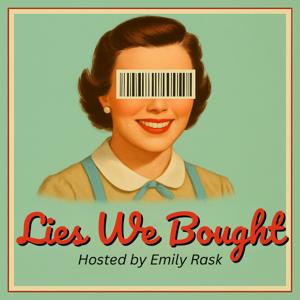
Lies We Bought is an award-winning podcast that traces advertising lies and marketing deception back to where they started. Host Emily Rask spent over a decade building marketing and advertising campaigns, and now she's reading the fine print out loud (think everything from "got milk?" to "clean beauty") to show how the message got made and why we believed it. Part branding history, part consumer psychology, part 1950s wink.
If you love smart, myth-busting shows about advertising, branding, and the hidden tricks behind the stuff you buy, you're in the right place.
Pulled fresh from the oven every Tuesday at 7 AM EST. Hit follow and start questioning the receipts.
Ranked by our users in the last 21 days
15,747 Listeners

28,864 Listeners
2,223 Listeners

99,674 Listeners
1,991 Listeners
6,472 Listeners
4,138 Listeners
5,659 Listeners
7,346 Listeners
3,036 Listeners
12,323 Listeners
855 Listeners

12,506 Listeners
49 Listeners