
Sign up to save your podcasts
Or

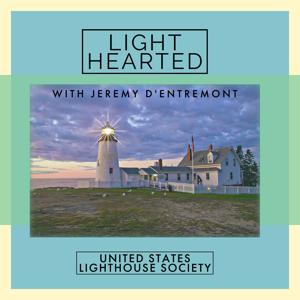


This is part two of a two-part interview. Peter Halil was a lighthouse keeper in the UK from 1974 to 1997, and he was among the last traditional lighthouse keepers there before all the lights were automated.
He also shot video at as many lighthouses as possible before they were automated. His videos sometimes include footage of the keepers at work, and, when possible, interviews with keepers. He’s posted the videos on his YouTube channel, which you can access at youtube.com/@PeterHalil.
The U.S. Lighthouse Society thanks Peter for being a lighthouse for all of us who strive to preserve maritime history.
NOTE – There is a technical issue with posting this episode. It will be posted as soon as possible.
This is part two of a two-part interview. Peter Halil was a lighthouse keeper in the UK from 1974 to 1997, and he was among the last traditional lighthouse keepers there before all the lights were automated.
He also shot video at as many lighthouses as possible before they were automated. His videos sometimes include footage of the keepers at work, and, when possible, interviews with keepers. He’s posted the videos on his YouTube channel, which you can access at youtube.com/@PeterHalil.
The U.S. Lighthouse Society thanks Peter for being a lighthouse for all of us who strive to preserve maritime history.
This is re-edited version of an interview with Rob Benchley first heard in episode 81 in September 2020. Rob is the volunteer modern day keeper of Sankaty Head Lighthouse in the Sconset village on Nantucket in Massachusetts. He’s also an accomplished photojournalist who has been the staff photographer for three island newspapers, and his photography has been featured in the New York Times and the Boston Globe. Rob was one of the first people on the scene when Great Point Lighthouse on Nantucket was toppled by a storm in March 1984.
He has written or co-written several books including Keeping the Light, about the historic move of Sankaty Head Lighthouse back from the edge of an eroding bluff in 2007. Rob and his wife Carol, a retired Nantucket school teacher, live in a house they built together in ‘Sconset.
There are two segments in this episode. The first guest, Peter Halil, was a lighthouse keeper in the UK from 1974 to 1997. He was among the country’s final traditional lighthouse keepers before all the lights were automated. He was stationed at some well known light stations in England and Wales, including South Bishop, Dungeness, St. Catherines, Bishop Rock, the Lizard, and others.
During his final years as a keeper, he visited as many lighthouses as possible before they were automated. He shot video at the lighthouses including walk-throughs, footage of the keepers at work, and, when possible, interviews with keepers. In recent years he’s gone back and edited the videos and posted them on his YouTube channel, which you can access at youtube.com/@PeterHalil. This is part one of a two part interview.
The guest for our special “Be a Lighthouse” segment is Candice Simeoni, who is a police officer in the southern Maine community of Kennebunk. Candice runs the Golden Ornament Project, which benefits local senior citizens in the holiday season. She is also known as the Sugar Angel, for reasons that are explained in the interview.
With the world’s longest coastline and more lakes than the rest of the world combined, Canada is also home to more than 750 lighthouses. In spite of automation, there continue to be 49 staffed lighthouses operated by the Government of Canada.
The light station at Cape Beale is one of the 25 stations that remain staffed on the coast of British Columbia. A resident keeper still maintains the navigation equipment and buildings, monitors the weather and sea conditions, and watches for emergency situations. For more than 15 years, the keeper has been Karen Zacharuk. This is an edited version of an interview first heard on this podcast in July 2020.
In 1836, rumors of gold in a muddy river on the west shore of Lake Michigan near modern day Green Bay, Wisconsin, spurred the creation of what would become the City of Kewaunee. The arrival of a railroad in the late 1800s led to increased shipping in the area, and in 1880-81 two long piers were built at the entrance to the harbor. In the years that followed there were a number of reconfigurations of the piers and lighthouses in the harbor.
In late 1930, a car ferry collided with the south pier and badly damaged a small lighthouse tower that stood adjacent to a fog signal building. The damaged pier was repaired and a square brick lighthouse tower was added on the roof of the fog signal building, giving the lighthouse the appearance it has now. The City of Kewaunee was granted ownership of the lighthouse in 2011. Thanks to the assistance of the nonprofit Friends of the Kewaunee Pierhead Lighthouse, much restoration has been carried out in the past decade. The guest in this episode, Jake Heffernan, is the acting president and historian for the Friends of the Kewaunee Pierhead Lighthouse.
The Flying Santa tradition traces its origins to a pioneering pilot in Maine named Bill Wincapaw. To show his appreciation to lighthouse keepers and their families, on Christmas Day in 1929 he loaded his plane with a dozen packages and dropped gifts for the lighthouse families in the midcoast area. He soon expanded the flights to more of the Maine coast and to the other New England states. Edward Rowe Snow, a teacher and budding historian in Massachusetts, became interested and took part in the 1936 flights. Edward Rowe Snow kept the Flying Santa tradition alive through 1980, flying over the lighthouses of New England and sometimes traveling as far as the West Coast.
Edward Rowe Snow’s daughter Dolly flew on her first Flying Santa flight when she was less than one year old, and flew yearly for decades after that. This interview is an edited version of the one that was first heard on the podcast in December 2020. Today, the Flying Santa flights are carried out by helicopter by the nonprofit Friends of Flying Santa as a show of gratitude to Coast Guard personnel and their supportive families.
Fire Island is one of a chain of barrier islands running along the south shore of Long Island, New York. The first lighthouse on Fire Island was a 74-foot-high stone tower built in 1826. It was considered too short, so the much taller brick lighthouse that still stands was built in 1858. The new tower was fitted with a powerful first-order Fresnel lens. For many years, the flash of the Fire Island Lighthouse was the first sight of land for countless European immigrants coming to America. Fire Island Lighthouse was decommissioned as an aid to navigation on December 31, 1973.
The Fire Island Lighthouse Preservation Society was formed in 1982. Four years later, on Memorial Day in 1986, the lighthouse returned to duty as an aid to navigation. Today, visitors can tour the museum in the keeper’s house, with two floors of exhibits. Visitors can also view the old first-order Fresnel lens, which is on display in a separate building. The guest in this episode, Jonathon Gaare, became the executive director of the Fire Island Lighthouse Preservation Society earlier this year.
Ernie DeRaps, a native Mainer, spent several years in the 1950s and ‘60s as a Coast Guard lighthouse keeper at four Maine lighthouses – Monhegan, Fort Point, Heron Neck, and Browns Head. A book written by Ernie and his wife Pauline was published by Foghorn publishing in 2006. Ernie’s half of the book was called Lighthouse Keeping. If you turn the book over and upside down, the other half of the book, by Pauline, or Polly, Fitzgerald DeRaps, was called Light Housekeeping.
Ernie took up painting at the age of 80 and completed portraits of all of Maine’s lighthouses. He and Pauline were married for 64 years and had six children. Pauline passed away in 2015 and Ernie followed her last year, at the age of 95.
This is an edited version of an interview that was recorded in February 2019. Also taking part in the discussion is Bob Trapani, Jr., executive director of the American Lighthouse Foundation.
Eagle Bluff Lighthouse, established in 1868, is on a 76-foot bluff in Peninsula State Park in Door County, Wisconsin. The square tower, constructed of Cream City brick from Milwaukee, is connected to the keeper’s house. The light served to guide shipping through the Strawberry Channel. In its active history (1868-1926), there were only three keepers. William Duclon served an impressive 35 years (1883-1918). He and his wife raised seven sons at the light station. When the lamp was automated with acetylene gas in 1926, the era of resident keepers and their families at Eagle Bluff came to a close.
The Door County Historical Society in Wisconsin operates two historic sites: Eagle Bluff Lighthouse in Peninsula State Park and Heritage Village at Big Creek in Sturgeon Bay. Restoring and furnishing Eagle Bluff Lighthouse began in 1960 and took three years to complete. Since that time, the society has maintained the site and offered tours during the summer and fall months. Interviewed in this episode is Amy Frank, executive director of the Door County Historical Society.
From the publisher's feed

23,731 Listeners
26,151 Listeners

1,565 Listeners
4,759 Listeners

111,799 Listeners
1,343 Listeners

896 Listeners

295 Listeners
3,415 Listeners
18,041 Listeners
18,955 Listeners
10,863 Listeners
1,175 Listeners