
Sign up to save your podcasts
Or

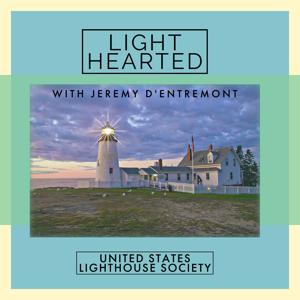


Christian Taber is a 17-year-old high school student and athlete living in Upstate New York. Christian is a speaker, author, and entrepeneur. A passion for lighthouses has figured heavily in his work. Christian has written for the U.S. Lighthouse Society’s journal “The Keeper’s Log” and for our news blog.
As the founder and CEO of NavigatorTeen, Christian has always embraced a simple yet powerful philosophy: anything is possible. One of his many passions is to empower teenagers to create their own path to success here and now… and ultimately to wherever their road takes them.
His new book is called “Be Your Own Navigator: A Success Guide for Teens by a Teen.” Christian says that the book “ is not a lecture from your parents or a cryptic survival manual. It is a compass guiding you through proven skills that can be used to juggle the chaos of daily life, excel in school or sports, and everything in between. Welcome aboard – let’s write your success story.”
Three-acre Cedar Island is on the South Fork of Long Island, New York, on the approach to Sag Harbor, which was a busy whaling port in the first half of the nineteenth century. A wooden lighthouse was established on Cedar Island in 1839, and it was replaced in 1868 by the granite lighthouse and keeper’s dwelling that still stands today. The lighthouse was discontinued in 1934 and was in private ownership until 1967, when it was purchased by Suffolk County and incorporated into a park.
In 1974 the interior of the building was gutted by a fire. In 2002, Friends of the Cedar Island Lighthouse began working with Suffolk County Parks to restore the lighthouse. There are two guests in today’s episode. Joe Livolsi is a board member of the Friends of Cedar Island Lighthouse, and Michael Leahy is the chairman of the organization.
The town of Scituate, Massachusetts, on Boston’s South Shore, developed a significant fishing industry by the late 1800s. A stone lighthouse tower was built at Cedar Point, and it began service in April 1812. A major restoration of the lighthouse has taken place over the past two years.
Much work on the lighthouse has been completed, including the fabrication of a new lantern. The restoration was celebrated at the lighthouse on August 7, National Lighthouse Day. Interviewed in this episode are Bob Chessia, chairman of the board of trustees of the Scituate Historical Society, and Bob Gallagher, who has lived in the keeper’s house for 16 years and has played an active role in the management of the lighthouse.
Judianne Point, award winning volunteer for Friends of Pomham Rocks Lighthouse in Rhode Island, co-hosts. Also discussed is the restoration of Neds Point Lighthouse in Mattapoisett, Massachusetts.
Located a mile offshore from Newport, Rhode Island, is Rose Island Lighthouse, which began service in 1870. It consists of an octagonal lighthouse tower rising from the west side of a mansard roof on top of a one-and-one-half-story wooden keeper’s dwelling. The light lost its importance as a navigational aid with the construction of the Newport Bridge in 1969. In the 1980s, a group of dedicated local preservationists founded the Rose Island Lighthouse Foundation, and the building was fully restored. You can stay overnight at Rose Island for a taste of Lighthouse Service life.
The organization is now known as the Rose Island Lighthouse and Fort Hamilton Trust to reflect the fact that the organization is also the steward of the island’s fort buildings. The guest in this episode, Sean O’Connor, is the executive director of the Trust. There is also a video version of this podcast episode, which you can see on the USLHS YouTube channel. Judianne Point, a volunteer for Pomham Rocks Lighthouse in Rhode Island, also takes part in the discussion.
Suellan Wedmore‘s poetry has appeared in many publications and she has won numerous awards, including first place in both the Writer’s Digest Rhyming and the Non-Rhyming Poem contests. The poems in Suellen’s book A Fixed White Light enter the lives of six of courageous and mostly forgotten female lighthouse keepers, giving readers the opportunity to experience their heroism as well as their trials in a time when they were often met with skepticism and discrimination.
The second guest in this podcast episode is Melanie Correia, associate curator of exhibitions and collections at the New Bedford Whaling Museum in southeastern Massachusetts. The city of New Bedford was a whaling capital and the richest city in the world in the mid-1800s. Today the museum plays a critical role as champions for whale preservation and guardians of the area’s heritage and culture.
The lighthouse tower at Pemaquid Point in the town of Bristol, Maine, was built in 1835, which makes it one of the oldest on the New England coast. The historic fog bell building at Pemaquid Point was badly damaged by storms in January – the same storms that damaged more than 20 light stations in Maine and New Hampshire. Repair work on the bell house and other parts of the light station are almost finished. Shelley Gallagher, director of Parks and Recreation for the town of Bristol, is interviewed about the damage and repairs in today’s first segment.
Absecon Lighthouse in Atlantic City, which began service in 1857, is New Jersey’s tallest lighthouse and the nation’s third tallest masonry lighthouse at 171 feet. There are three guests in today’s episode: Milt Glenn, manager of operations and education; Dan Heneghan, a volunteer docent; and Jean Muchanic, executive director. Most of the conversation focuses on Buddy Grover, a very popular volunteer tour guide. Buddy was a docent who passed away this past January at the age of 96.
Key West Lighthouse has stood as a well-loved landmark in one of America’s most colorful cities since 1848, when it replaced an earlier lighthouse that began service in early 1826. The original tower was destroyed by a hurricane in 1846. The tower that stands today is constructed of brick and stands 73 feet tall.
After the navigational light was discontinued in 1969, the property was turned over to Monroe County. It was then leased to the Key West Arts and Historical Society. The Society opens the lighthouse to the public and also manages a museum in the former keeper’s house. A centerpiece of the museum is a first-order Fresnel lens from the Sombrero Key Lighthouse. Dr. Cori Convertito is the curator and historian for the Key West Arts and Historical Society, which manages three sites in addition to the lighthouse.
Ralph Krugler co-hosts.
Larry Wright is a national gold medal award winning photographer who has been involved with lighthouse preservation since 1991. He was on the Board of Directors for the Great Lakes Lighthouse Keepers Association based in Mackinac, Michigan, for 20 years. Larry has co-written four books about lighthouses on the Great Lakes along with his wife Pat. They are The Great Lakes Lighthouses Encyclopedia; Bonfires and Beacons; Bright Lights, Dark Nights; and Lightships of the Great Lakes.
Larry is currently working on a project called Chronicles of Lighthouses on the Great Lakes. The chronicles have now exceeded 9,000 pages and when finished, Larry says it will be about 12,000 pages. The Chronicles will be housed at a number of universities and non-profit museums and lighthouse organizations.
Averie Shaughnessy-Comfort, executive director of Presque Isle Light Station in Pennsylvania, co-hosts.
This episode has three segments. In the first, photographer Pete Lerro describes a photo workshop he will be leading in Maine in October. In the third segment, Judianne Point discusses some exciting happenings at Chatham Light in Massachusetts and Beavertail Light in Rhode Island. Sandwiched in the middle is a conversation about the Piney Point Lighthouse Museum and Historic Park in Maryland.
In 1836, a 35-foot-tall, conical lighthouse was built at Piney Point on the north side of the entrance to the Potomac River. It was the first of 11 lighthouses built on the river, and one of only three that survive today. The property was transferred to St. Mary’s County in 1983. The buildings were restored in the years that followed, and the grounds were transformed into a public park. Today, the park, museum, and the lighthouse are open all year. Our guest today is Ken Burke, museum supervisor for the Piney Point Lighthouse Museum and Historic Park. Ben Ridings, curator for Cape May MAC in New Jersey, is the guest co-host.
Concord Point Lighthouse in Havre de Grace, Maryland, was built in 1827. That makes it the second oldest standing lighthouse in the state. The conical, 36-foot tower was built of stone that was barged down the Susquehannah River from Port Deposit. In 1918, the light was automated. After that, the property changed hands at least 10 times and for a while served as a rooming house, restaurant, and bar.
The light was decommissioned in 1975, and ownership went to the City of Havre de Grace two years later. By 1979, a citizens group called the Friends of Concord Point Lighthouse was formed. Today, the lighthouse and keeper’s house are open to the public on weekends from April through October. Our guests today are Bill McIntyre, who is on the board of directors for the lighthouse and is also a local historian, and Carie Palmer, who is coordinator for volunteers, events, visitor services, and customer success.
From the publisher's feed

23,731 Listeners
26,151 Listeners

1,565 Listeners
4,759 Listeners

111,799 Listeners
1,343 Listeners

896 Listeners

295 Listeners
3,415 Listeners
18,041 Listeners
18,955 Listeners
10,863 Listeners

1,175 Listeners