
Sign up to save your podcasts
Or

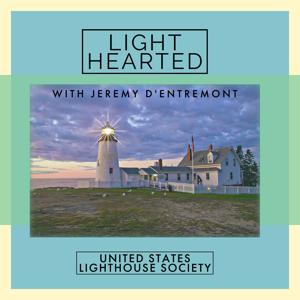


Maine Open Lighthouse Day is a popular annual event that’s sponsored by the U.S. Coast Guard, the Maine Office of Tourism, and the American Lighthouse Foundation. It attracts between 15,000 to 18,000 visitors each year and offers the general public the rare opportunity to climb and learn about more than a dozen historic Maine lights. The event takes place on the second Saturday in September each year. About 20 lighthouse sites will be part of the event on Saturday, September 9, 2023, along with the Maine Lighthouse Museum and the Maine Maritime Museum.
Bob Trapani Jr. is the executive director of the American Lighthouse Foundation. In this conversation, Bob and Light Hearted host Jeremy D’Entremont discuss each of the sites participating in this year’s event. Also discussed is a recent lightning strike at a popular Maine lighthouse.
More information on Maine Open Lighthouse Day
The Strait of Juan de Fuca is a body of water the Salish Sea’s main outlet to the Pacific Ocean. Clallam Bay, Washington, is an indentation on the south side of the strait, about 30 miles from its mouth. Slip Point is at the east end of Clallam Bay. A fog signal was established at Slip Point in 1905. A lantern was hung on the fog signal building to provide a navigational light until another appropriation paid for the addition of a lighthouse tower in 1916. The square, wooden tower was attached to the west side of the fog signal building.
Slip Point Lighthouse was replaced in 1951 by a modern tower. Local resident Susan Heiny and her daughter Sarah Winter Grafstrom have formed a group called the Slip Point Lighthouse Keepers to work with the county to preserve the keepers’ house and its history. Also taking part in this interview is Karolyn Burdick, the group’s historian.
Also featured in this episode are circa 1990 audio recordings of Harold Jennings, son of the light keeper of the Lovells Island Range Light Station in Boston Harbor, Massachusetts.
Porte des Morts, from the French meaning “door of the dead,” is a strait that connects Lake Michigan to Green Bay, Wisconsin. A lighthouse was established in the strait on Plum Island in 1849, but it was determined to be too far west to aid shipping. It was replaced by a lighthouse and fog signal on Pilot Island, less than two miles to the southeast.
It was still difficult for mariners to determine the exact route to enter the Porte des Morts passage, so in 1897 a pair of range lights was established on Plum Island. The rear range lighthouse, a 65-foot-tall cast-iron skeletal-type tower with a central cylinder, remains standing.
Plum and Pilot islands were made part of the Green Bay National Wildlife Refuge in 2007, and management of the lighthouses went to the U.S. Fish and Wildlife Service. Friends of Plum and Pilot Islands was formed to work with Fish and Wildlife for the preservation of the historic properties. The Friends have completed a number of restoration projects. Mary Beth Volmer is the president of Friends of Plum and Pilot Islands.
This episode features a wide-ranging conversation between Light Hearted host Jeremy D’Entremont and Jeff Gales, executive director of the U.S. Lighthouse Society (USLHS). Topics include the early history of the USLHS, the Society’s move from San Francisco to Point No Point Light Station in Seattle, the passport program, overnight stays at the Society’s properties and other lighthouses, and the changing role of foghorns in today’s world — and more.
Jeff Gales became the Society’s executive director in 2005, after time as the manager of Point Arena Lighthouse in California. He is a self-described “lighthouse geek” who is passionate about the past and present of these beacons along our coasts. Among many other duties as director, he edits the Society’s magazine, The Keeper’s Log, and recruits and manages volunteers. Originally from southern California, he lives in Washington with his wife, Melissa, and their Boston terrier Augie.
This episode features two re-edited interviews from past years, Karen Zacharuk and Chris Mills. For more than 15 years, Karen has been the keeper at Cape Beale in British Columbia. Cape Beale is one of 27 lightstations that remain staffed on the coast of British Columbia. As keeper, Karen maintains the navigation equipment and buildings, monitors weather and sea conditions, and watches for emergency situations.
Chris Mills is originally from Ontario, but he has lived most of his life in Nova Scotia. Between 1989 and 1997, Chris worked as a light keeper at 11 different light stations in three provinces on both the east and west coasts of Canada. He was a founding member of the Nova Scotia Lighthouse Preservation Society and he’s authored two books: Vanishing Lights and Lighthouse Legacies: Stories of Nova Scotia’s Lightkeeping Families.
Seal Point Lighthouse is on Cape St. Francis in South Africa, close to the southeasternmost point on the continent. At 91 feet tall, it’s the tallest masonry building on the South African coast.
Construction began in 1874, and materials had to be hauled by oxcart to the remote location. The light station began service on July 4, 1878. For many years, Seal Point was considered one of the most isolated staffed light stations on the country’s mainland.
Seal Point Lighthouse has been developed into a major attraction in recent years, with a boutique hotel, a restaurant, and more. There’s also a studio called Salt, with yoga, Pilates, fitness, and dance instruction.
Visitors can also climb the 154 steps inside the lighthouse tower for a spectacular look at the Cape St. Francis seascape.
Paul Duval is the CEO of Petrel Ventures, the company that has developed the light station site. Wesley Randles is the chef and manager of the Nevermind restaurant at the light station.
The waterfront of Belfast, Northern Ireland, is home to one of the world’s biggest tourist attractions: Titanic Belfast, also known as the Titanic Museum. The museum opened in 2012 and attracted more than six million people in its first seven years of operation. In 2018, two important new attractions – the Great Light and Titanic Walkway – officially opened to the public near the museum. The so-called Great Light is the world’s first and largest hyper-radial Fresnel lens — the largest and most powerful lighthouse lenses ever made. It was originally installed in Tory Island Lighthouse in 1887, and it went through some unusual changes over the years.
Dr. Sally Montgomery has been a science educator for more than 40 years. She is currently a board member of the Commissioners of Irish Lights, a board member of the Titanic Foundation, and a former trustee of the Maritime Belfast Trust. Sally has done much in-depth research on the history of the Great Light.
Focus 244 is a new photography gallery in York, Maine. This month the gallery is hosting a lighthouse festival, featuring an artists’ reception on July 22, kids’ activities on July 23, and also an evening presentation by “Light Hearted” host Jeremy D’Entremont on July 23. Shannon Culpepper is the curator of the Focus 244 gallery.
Absecon Lighthouse in Atlantic City, New Jersey, has the distinction of being New Jersey’s tallest lighthouse and the nation’s third tallest masonry lighthouse at 171 feet. The tower was designed by George Meade, who later commanded the Army of the Potomac during the American Civil War. The light went into service in early 1857.
After three quarters of a century as a family station with a principal keeper and two assistants, the light was deactivated in 1933. There was talk of demolishing the lighthouse, but it was saved when Atlantic City took control of it in 1946. The Inlet Public/Private Association was created in the 1990s to rebuild the principal keeper’s dwelling, which had been demolished, and to restore the lighthouse and lens.
Jean Muchanic has been the executive director of Absecon Lighthouse for nearly 20 years. And Buddy Grover has been a lighthouse volunteer for more than 10 years. At the age of 95, he greets visitors in a keeper’s uniform and answers their questions.
The first lighthouse in the Pacific Northwest was established in 1856 on the north side of the entrance to the Columbia River at Cape Disappointment, in the state of Washington. High land blocked the view of the light from the north, so Congress appropriated funds for a second lighthouse at North Head, just two miles north of Cape Disappointment. North Head Lighthouse, a 65-foot-tall brick tower with a sandstone base, began service in 1898 with its light 194 feet above the water.
In 2012, Washington State Parks took ownership of North Head Light Station, which is within Cape Disappointment State Park. The lighthouse has undergone a major restoration in recent years.
The Lewis and Clark Interpretive Center stands high on the cliffs of the state park, and on display in the center is a first-order Fresnel lens that served in both of the local lighthouses at different times.
Stephen Wood is an exhibit project specialist, and Alex McMurry is a historic preservation planner for Washington State Parks.
The National Historic Lighthouse Preservation Act of 2000, or NHLPA, was created to aid the preservation of federally owned historic light stations. The NHLPA program is a partnership that includes the Coast Guard, the National Park Service, and the General Services Administration, or GSA. The NHLPA allows lighthouse properties to be transferred at no cost to federal agencies, state and local governments, nonprofit corporations, or educational and community development organizations.
Kevin Legare, Sonia Allon-Singh and Anthony Barbati are realty specialists for the GSA, working out of the GSA’s New England Region offices in Boston. All three of them are involved with the lighthouse properties that are currently up for transfer.
The U.S. Lighthouse Society is holding a National Lighthouse Day Dance Contest this summer, and Joe Rivers has written and performed an original song for the occasion. Click here for more details. Joe is interviewed in this episode about his ideas behind the song.
From the publisher's feed

23,731 Listeners
26,151 Listeners

1,565 Listeners
4,759 Listeners

111,799 Listeners
1,343 Listeners

896 Listeners

295 Listeners
3,415 Listeners
18,041 Listeners

18,955 Listeners
10,863 Listeners

1,175 Listeners