
Sign up to save your podcasts
Or

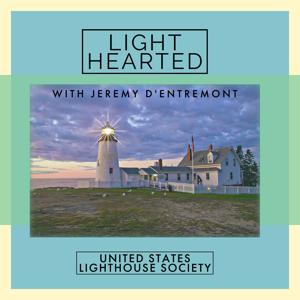


There are three lighthouses on the Lake Erie shore within the state of Pennsylvania. The first of the three, Erie Land Lighthouse, was erected to mark the entrance to Presque Isle Bay. It has the distinction of being the earliest commissioned light station on the American side of the Great Lakes. The present 49-foot tower was built in 1867 of Berea sandstone.
Presque Isle Lighthouse began service in 1873, and Erie Harbor North Pierhead Light has stood since 1940. All three of these lighthouses are now managed by the Presque Isle Light Station, also known as Lake Erie Lights of Pennsylvania, a nonprofit corporation dedicated to the preserving these historic structures, educating the community on their value, and interpreting them for future generations. Averie Shaughnessy-Comfort, interviewed in this episode, is the executive director of the Presque Isle Light Station.
The 66-foot tall cast-iron Chicago Harbor Lighthouse began service in 1893 to help guide shipping traffic in and out of the busy harbor. A new organization, Friends of Chicago Harbor Lighthouse, has been formed to preserve the historic structure. In this episode the organization’s president, Kurt Lentsch, is interviewed by Ralph Krugler.
Constance Scovill Small was born into a Maine family that included sea captains and lighthouse keepers. Connie had dreams of being an artist or writer, but when light keeper Elson Small asked her, “Do you love me enough to go with me on a lighthouse?” she knew she had to say yes. They were soon married.
Connie and Elson had a 28-year career at light stations including Maine’s Avery Rock, Seguin Island, and St. Croix Island –also known as Dochet’s Island — and New Hampshire’s Portsmouth Harbor. Portsmouth Harbor Light Station was their first home with electricity, in 1946.
Some years after Elson’s death in 1960, a woman in a social club said to Connie, “How on earth could anyone have any kind of a life in a lighthouse?” That started Connie on a mission that led to the publication of her book The Lighthouse Keeper’s Wife when she was 85 years old. Connie lived to the age of 103, passing away in 2005.
This interview was recorded at the Mark Wentworth Home in Portsmouth in 1997 by Light Hearted host Jeremy D’Entremont. It’s been edited for this podcast, and some of the questions have been re-recorded for sound quality and continuity.
Listen to the podcast with this player:
Dianne Wolfer’s 2009 book Lighthouse Girl won the West Australian Young Readers’ Book Award for Picture Books. Lighthouse Girl tells the poignant story of Fay Howe, who was the daughter of the lighthouse keeper at Breaksea Island, near Albany in Western Australia, during World War I. In late 1914 a fleet of 36 troop ships left Albany bound for Egypt and Gallipoli. Fifteen-year-old Fay communicated with many of the men using semaphore flags or Morse code. The sight of Fay Howe waving to them from the island became a symbol of hope for the departing soldiers.
Dianne Wolfer was interviewed in Light Hearted episode 96 in January 2021. The original interview extended over two episodes. Also interviewed at that time was Fay Howe’s son, Don Watson, along with his wife Peg and their daughter Denise Rafferty. The interviews with Dianne Wolfer and Don Watson have been edited into a new 30-minute segment in this episode.
Also in this episode is a conversation with Mike Vogel, president of the U.S. Lighthouse Society, and Jeff Gales, executive director of the Society. The discussion touches on the core missions of the Society, but is mostly about the domestic and international tours the Society offers each year. For more about the United States Lighthouse Society and its tours, check out uslhs.org.
Barry Porter was born into a farming family in Porterville, on the north coast of Newfoundland, Canada. After working as a welder, Barry applied to be a relief lighthouse keeper with the Canadian Coast Guard. He spent the next 23 years working as a lightkeeper in four different locations. He has written about his colorful career in a new book, Adventures of a Lightkeeper.
Stephanie Collins writes in the Miramichi Reader about Barry’s book: “Adventures of A Lightkeeper by Barry Porter is, quite simply, a romantic recounting of the maritime lifestyle of light keeping on the rugged northeast coastline of Newfoundland. Written with passion and great respect for the solitary life such a profession brings, Porter’s book opens the door to these beautiful beacons of light and provides an exclusive tour of these lonely behemoths and the mystique for which they have become famous.”
This is part 3 of a three part interview.
Listen to the podcast with this player:
This is the second part in a three-part interview with Barry Porter, whose new book Adventures of a Lightkeeper tells the story of his 23 years (1983 to 2006) with the Canadian Coast Guard as a lighthouse keeper on the northeast coast of Newfoundland. Barry started his years as a full-time principal keeper in 1984 at Long Point Light Station on North Twillingate Island. Long Point, with its distinctive red lighthouse tower, is one of the 23 light stations in Newfoundland that are still staffed by resident keepers. It’s also a major tourist attraction.
Barry’s next stop in 1988 was Bacalhao Island Light Station, which takes its name from the Portuguese word for cod. Barry spent four years at Bacalhao Island and then moved on to Surgeon’s Cove Head on Exploits Island. Barry ended up staying at Surgeon’s Cove for 10 years, until it was automated in 2002. In 2003 Barry spent a brief period at Puffin Island Lighthouse, off Greenspond on the northwest side of Bonavista Bay. Then from 2003 to 2006, Barry was back at Long Point.
Photos courtesy of Barry Porter
Barry’s book, Adventures of a Lightkeeper, is available from online booksellers. If you would like to get an autographed copy directly from Barry, you can contact him directly through his Facebook page. This is part 2 of 3 parts. Listen to the podcast using the player below.
Barry Porter worked as a lighthouse keeper on the northeast coast of Newfoundland with the Canadian Coast Guard for twenty-three years, 1983 to 2006. Born in the small farming community of Porterville, Barry has worked in several professions, as a welder, a photographer, a lighthouse keeper, and later as the curator and manager of the By the Bay Museum in Lewisporte. His lighthouse adventures began at Surgeon’s Cove Head Light Station on Exploits Island. He also worked at the historic Long Point Lighthouse on Twillingate Island and Bacalhao Island Lighthouse, on an island near Twillingate.
Barry’s new book, Adventures of a Lightkeeper, was published in 2022 by Flanker Press. The book describes the isolation, adventure, and beauty of these places, as well as the history of the lighthouses and their keepers. A chapter is devoted to Barry’s efforts to rehabilitate his beloved beagle, Gypsy, after an accident. Barry is an avid outdoorsman and a proud father of two children. He resides in beautiful downtown Porterville, Newfoundland, with his wife, Alice, and his present beagle, Lucy.
Barry’s book, Adventures of a Lightkeeper, is available from online booksellers. If you would like to get an autographed copy directly from Barry, you can contact him directly through his Facebook page. This is part 1 of 3 parts. Listen to the podcast using the player below.
The idea for the Great Lakes Lighthouse Keepers Association, or GLLKA, was born at a gathering back in 1981 at Grosse Point Lighthouse in Illinois, and in the following year the first informal meeting was held in Michigan. The organization was officially launched in 1983 and it’s going strong 40 years later, remaining dedicated to the restoration and preservation of Great Lakes lighthouses. Since 1986, GLLKA has cared for the St. Helena Island Light Station on Lake Michigan, and volunteers carry out a variety of preservation projects. GLLKA also cares for the Cheboygan River Front Range Light.
There are three guests in this episode. Wayne Sapulski is a Great Lakes lighthouse historian, author, and photographer, and a tireless volunteer for GLLKA. He’s also the author of two books and many articles on Great Lakes lighthouses. One of Wayne’s claims to fame is that he has physically visited all 360 lighthouses on the Great Lakes, on both the U.S. and Canadian sides.
Mark and Michele VanderVelde have been involved with St. Helena Island Light Station as volunteers for well over 20 years. In 2019, Mark and Michele received the Richard L. Moehl Award for Excellence in Volunteerism for the countless hours they have contributed in support of GLLKA activities. Wayne Sapulski also received the same award that year.
Elliott Bay, on Puget Sound in the state of Washington, extends southeastward between West Point in the north and Alki Point in the south. The city of Seattle was founded on the bay and the city now surrounds it completely. The bay has served as a key element of the local economy, enabling the Port of Seattle to become one of the busiest ports in the United States. The first navigational light at Alki Point was a kerosene lantern hung on the side of a barn in the 1870s by the property owner.
The Lighthouse Board eventually recognized the need for something more substantial, and a lens lantern was installed on a wooden post at the point. In 1913, the present lighthouse building was completed. It consists of a 37-foot-tall octagonal brick tower attached to a fog signal building. Two residences were also constructed for the keepers and their families.
The station was automated in 1984, and the principal keeper’s quarters became the home of the commander of the Thirteenth Coast Guard District. Today, Coast Guard Auxiliarists provide public tours on most Sunday afternoons between Memorial Day weekend and Labor Day weekend. Debra Alderman serves as the Coast Guard Auxiliary’s project officer for public tours at Alki Point Lighthouse. She has also been instrumental in outreach events for the Auxiliary across South Seattle.
Information on tours at Alki Point Lighthouse
Facebook page for Alki Point Lighthouse
Email address for information on Alki Point Lighthouse
Point No Point is at the north end of Washington’s Kitsap Peninsula in the small town of Hansville. Construction of a lighthouse at Point No Point began in April 1879. Point No Point is the oldest lighthouse on Puget Sound, and it consists of a square 30-foot-tall brick and stucco tower between an attached office and a fog signal building.
In the late 1990s, the last Coast Guard personnel left Point No Point and the property was leased to Kitsap County Parks and Recreation. The county created the 60-acre Point No Point Park. The U.S. Lighthouse Society relocated its headquarters to the keeper’s house at Point No Point in 2008. One side of the duplex house is the Society’s offices and the other side has overnight accommodations open to the public.
There are two interviews in this episode, and the first is with three people. Dave Anderson is the president of the Friends of Point No Point Lighthouse. Lori Raymaker is the docent coordinator for the organization, and Shelly Douglas is a past president. The second interview is with Al Bryant , an architect with special expertise in historic preservation projects. Al is on the board of directors of the Friends of Point No Point Lighthouse and he’s overseeing the current plans for a restoration of the lighthouse buildings. USLHS executive director Jeff Gales takes part in both interviews along with host Jeremy D’Entremont.
Browns Point is on the east side of the entrance to Commencement Bay, which leads from Puget Sound to the Port of Tacoma. The first navigational aid at Browns Point was a simple post light established in 1887 – two years before Washington became a state. A new square wooden lighthouse began service in 1903, and a fog bell was mounted on the side of the tower. In 1933, the current 38-foot concrete lighthouse tower was built. It’s unusual Art Deco style makes it unique among Washington’s lighthouses.
A year after its automation in 1963, Browns Point became a public park. In more recent years, the Points Northeast Historical Society has restored the keeper’s house and has opened it for overnight stays. The Society carried out a major restoration of the lighthouse in 2021. Jim Harnish is a board member and past president of the Points Northeast Historical Society. A 2014 newsletter called him “the glue that holds us all together.” U.S. Lighthouse Society Executive Director Jeff Gales takes part in this interview along with host Jeremy D’Entremont.
This episode features one of our occasional “Be a Lighthouse” segments, which focus on people doing good in the world. George Fox, who lives in Bethel, Maine, recently spent several months in Ukraine, helping war refugees escape the country to Poland. During his time in Ukraine, Fox transported people west out of Ukraine and brought supplies east. After three separate stays in Ukraine, George says he’s fallen in love with the country and its people. He hopes eventually to go back to help rebuild the country.
If anyone would like to contact George Fox, his email address is [email protected]
From the publisher's feed

23,731 Listeners
26,151 Listeners

1,565 Listeners
4,759 Listeners

111,799 Listeners
1,343 Listeners

896 Listeners

295 Listeners
3,415 Listeners
18,041 Listeners
18,955 Listeners
10,863 Listeners

1,175 Listeners