
Sign up to save your podcasts
Or

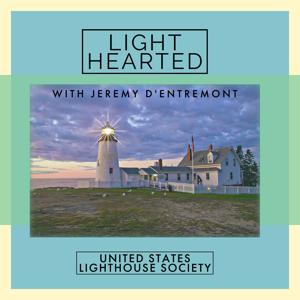


There’s been a lighthouse standing on Bald Head Island at the entrance to the Cape Fear River in the southeast corner of North Carolina for more than two centuries. The original lighthouse began service in 1795 and was the first lighthouse in the state. The Old Baldy Lighthouse that stands today—officially known as Bald Head Island Lighthouse—was built in 1817. The 110-foot tower is constructed of soft red bricks and covered with stucco.
Today, after taking the ferry from the mainland, visitors can climb the lighthouse for a view of Bald Head Island. Next to the lighthouse, the Smith Island Museum offers more information about the lighthouse, pirates, surfmen of the United States Lifesaving Service, and other island history. We have two guests in this episode. Travis Gilbert is a public historian and preservationist and the director of philanthropy for the Old Baldy Foundation. Logan Merchant is on the board of directors of the Old Baldy Foundation and is also an educator in the Wake County Public School System.
This episode consists of audio from the first live streaming edition of our podcast, broadcast live on YouTube on February 26, 2026. The complete video of the live stream can be seen on our YouTube channel. The guests are Colby Thomas and Billy Simmons, who are historic interpreters at Old Cape Henry Lighthouse in Virginia – the first lighthouse commissioned by the federal government.
There are two lighthouses at Cape Henry, marking the south side of the entrance to the Chesapeake Bay. The older of the two lighthouses was built in 1792, and the sandstone tower stands 92 feet tall. The 1792 lighthouse eventually developed some cracks and a new, taller lighthouse was built in 1881. Since 1930, the Old Cape Henry Lighthouse has been owned and operated by Preservation Virginia. It was declared a National Historic Landmark in 1964, and in 2002 the American Society of Civil Engineers designated it lighthouse a National Historic Civil Engineering Landmark.
Knotbrook Taylor is originally from England and now lives in Scotland. He has been writing poetry for more than 25 years. His first published collection of poetry, Beatitudes, was launched in 2007 by Blue Salt Publishing. In 2014 he won the Erbacce prize for his collection Ping-Pong in the Rain. Erbacce is a publisher that holds an annual worldwide poetry contest.
The Museum of Scottish Lighthouses commissioned Taylor to write a book of Scottish lighthouse poems. It was published in 2010 and he was also the poet in residence for a time at the museum.
Here is a quote from the Erbacce website about Knotbrook: “Knotbrook delights in language, it is almost as though he is in love with words and needs to both cherish and almost worship each one.”
This episode focuses on two very special experiences available to lighthouse lovers and lovers of the rocky coast of Maine. The first segment highlights an all-day “Mid-Coast & Monhegan Island 19 Lighthouse Cruise” with Bar Harbor Whale Watch this coming September 5. Interviewed in the segment are Julie Taylor, lead naturalist for Bar Harbor Whale Watch; Zack Klyver, marine mammal scientist, educator, and conservationist; and Bob Trapani Jr., executive director of the American Lighthouse Foundation. Together with U.S. Lighthouse Society Historian Jeremy D’Entremont and photographer Mike Leonard, this team will narrate the September 5th cruise.
Next is an interview with Captain Barry King of the schooner Mary Day, which is homeported in Camden, Maine. Jeremy D’Entremont will be on board to help narrate a 6-day lighthouse cruise, July 26 to August 1. A Maine sailing legend, the Mary Day, a two-masted gaff topsail schooner, was built in 1962 by the famous Harvey Gamage Shipyard in South Bristol, Maine. Unlike earlier schooners that were built to fish or to carry cargo, Mary Day was designed and built to carry passengers.
In this episode, we explore the power of positivity, reframing life’s inconveniences, building community, and how small reminders of encouragement can create a butterfly effect of gratitude. Sarah is joined by Helena, Licensed Mental Health Clinician and Founder of Thoughts with H, which is a daily inspiration platform rooted in mindfulness, connection, and showing up with purpose.
Tune in for an uplifting conversation about how small actions can create meaningful impact.
Notes: For information on Andy Smeaton, who is discussed in this episode:
Bob Napolitano is from Everett, Massachusetts, and now lives in Londonderry, New Hampshire. “The Lighthouse Keeper,” which was published last year, is his seventh book. The main character, John Russell, takes a job as the keeper of the Willamette River Lighthouse in Oregon at the age of 27 in 1923. He sees the lighthouse as a place to heal from unfortunate decisions he’s made in his life, but he eventually wonders if it’s more of a prison than a sanctuary. Shanghaied sailors, brothel barges, opium and bootleg liquor, and floating bodies all play a part in the story.
The primary setting of the story is the Willamette River Light Station, which stood at the confluence of the Willamette and Columbia rivers, about ten miles north of downtown Portland, Oregon. It was established in 1895. After it was decommissioned, it eventually burned down, leaving just a few pilings.
In this episode we revisit an interview that was first heard in 2021. Our guest is Jen Lewis, Fundraising and Outreach Manager for the Point Cabrillo Light Station in northern California.
Point Cabrillo is about midway between San Francisco and the border with Oregon. In 1908 a combined lighthouse and fog signal building was built of local redwood and Douglas fir. Today Point Cabrillo Light Station is a California State Historic Park, and the nonprofit Point Cabrillo Lightkeepers Association manages and interprets the site.
Jen Lewis grew up in Oregon, and she began volunteering at Point Cabrillo in 2016. She eventually became the Outreach Manager, taking care of social media and fundraising for the Point Cabrillo Lightkeepers Association. Jen has been on this podcast several times as a guest and as a co-host.
There are two guests in this episode. The first, Bjorn Karlstrom, splits his time between Florida in the and the beautiful island of Gotland in Sweden. After developing a substantial lighthouse-related library, he decided to start a website that might be useful to others looking for information. His site Lighthouse Reading, at lhreading.com, now has listings for more than 3,800 lighthouse publications.
Massachusetts native Kevin Arsenault was a police officer for about 30 years and now serves as constable in the town of Gardner. He joined the Coast Guard at 19 years old in 1976 and was assigned to Matinicus Rock, an isolated outpost about 20 miles from the mainland in midcoast Maine. After a year there, he spent 18 months at Whitehead Light station, much closer to the mainland at the southwestern entrance to Penobscot Bay.
Pater Noster is a small archipelago off the west coast of Sweden. The island group’s name, which means “The Lord’s Prayer,” is said to come from the tradition that mariners would recite the Lord’s Prayer as they negotiated their way around the dangerous reefs in the vicinity. The 105-foot-tall, red, cast-iron lighthouse was constructed in 1868.
A complete restoration of the lighthouse began in 2002. Since 2020, the location has been operated as a small hotel. The facilities include rooms with a sea view, a restaurant, and three boathouses for dinner and conferences. Our guest, Erik Nissen Johansen is the founder and creative director of Stylt Trampoli, a multi-award winning hospitality design company. He is now a partner in the Pater Noster hotel. This is an edited version of a conversation first heard in episode 115 in April 2021.
Fairport Harbor, on the south side of Lake Erie at the mouth of the Grand River, is considered part of the Cleveland, Ohio, metropolitan area. The first lighthouse in the harbor was a 56-foot brick tower built in 1825. The lighthouse that stands today is a 60-foot stone tower that began service in 1871. After a new lighthouse was built on a breakwater in the harbor in 1925, the government planned to destroy the old lighthouse. A number of organizations in the area objected, and the lighthouse was spared. In 1945, the Fairport Harbor Historical Society established a marine museum inside the old keeper’s house. Museum highlights include a Fresnel lens and the infamous “ghost cat” story.
Our guests today are Marty O’Gara and John Ollila. John is the historian for the lighthouse and a trustee of the Fairport Harbor Historical Society. Marty is the president of the Fairport Harbor Historical Society.
From the publisher's feed

23,731 Listeners
26,151 Listeners
1,565 Listeners
4,759 Listeners

111,799 Listeners
1,343 Listeners

896 Listeners

295 Listeners
3,415 Listeners
18,041 Listeners
18,955 Listeners
10,863 Listeners

1,175 Listeners