
Sign up to save your podcasts
Or

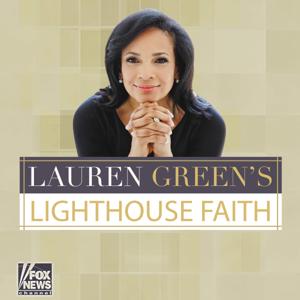


Based on Podcast App listening data
The story surrounding the Jewish Festival of Lights, is filled with intrigue, fear, war, and then of course, victory. The celebration of that victory gives us the miracle now known as Hanukkah, when a one-day supply of sacred oil to light the Temple Menorah lasted eight days. And eight is significant number in the Jewish heritage because it is, as Moses directed, also the number of days old an infant must be for circumcision. It's one of many signs that nothing happens without God's knowledge or Divine direction. But Hanukkah has a lesson for us all: that God is working even when it seems He is not. On this episode of Lighthouse Faith Podcast, Rabbi Motti Seligson, with Chabad Lubavitch, explains how the leader of the Chabad Lubavitch, named the Rebbe, began a campaign in 1973 to elevate the celebration of Hanukkah, to educate not only Jews but the whole of America and the world about the Feast of Dedication. This conversation was recorded in 2021, when Hanukkah began extremely early, on November 28. This year it begins three weeks later on Sunday, December 18th. Rabbi Seligson's explanation about why there are different dates still holds true today.
Learn more about your ad choices. Visit podcastchoices.com/adchoices
This time of year is always brings plenty of joy and hope. But it is also when the needs of those less fortunate are more keenly felt. Josiah Haken, CEO of City Relief in New York City, has a heart for the homeless... And a heart for those who have homes. Haken helps people like you and me understand that there's nothing to fear about the homeless, that they are people, made in God's image. People, who he describes as our "Neighbors With No Doors", the title of his book. On this episode of Lighthouse Faith Podcast, Haken joyfully explains what a privilege it is to help people like Detra Thomas, who never ever expected to be homeless. But as Haken says, her story is more typical. Married for 32 years to a man she says was abusive. When she finally had the strength to leave, she found herself without a permanent home, grown children who had moved away, and a part-time job that didn't pay the rent. Forced to seek a bed in one of the city's shelters, she later found permanent housing thanks to City Relief. She is a face of homelessness that most people never see. Haken says most people think of the homeless as the panhandlers on the street, drug addicts or alcoholics sleeping on benches, but that the bulk of the homeless, who number about 40-60 thousand in New York alone, are families, working parents and children. Haken is hoping during this season of good will, peace and light, that people perform small acts of kindness to help their "neighbors with no doors," to be the "Good Samaritan" that Jesus told of in His parable about the man helping the downtrodden stranger on the road.
Learn more about your ad choices. Visit podcastchoices.com/adchoices
How much do you know about the Christmas story? There's the baby born in a manger in Bethlehem to a virgin named Mary, betrothed to a man named Joseph. There were shepherds in a field visited by angels heralding the child's birth. There's the star which led the Wisemen to the child. These are all part of the Christmas story, but there's so much more to tell. For instance, who were the wisemen? Theologian Rick Renner in his book, "Christmas: The Rest of the Story", explains that the Magi were "an elite, powerful and staggeringly wealthy group of high-ranking priests devoted to interpreting dreams and studying the constellations." It's likely that Daniel in the Old Testament was thought to be one of the first. And those Magi likely traveled with a large entourage of servants when they saw that star that led them to the baby Jesus. And the shepherds. They were no ordinary shepherds. They were tasked with keeping watch over the lambs used for Temple sacrifice to atone of sins. The angels tell the shepherd of the birth of the Lamb of God, who'll be the final sacrifice. On this episode of Lighthouse Faith, Renner talks about many other parts of the Christmas story that lend credence to the entire biblical redemptive narrative. The birth of Christ is not an isolated story, but the climax of God's plan of salvation.
Learn more about your ad choices. Visit podcastchoices.com/adchoices
Maybe you've seen the cozy Christmas TV commercial featuring two young girls and their competing hot cocoa stands. It's a feel-good moment when they learn to work together, and the message from Hobby Lobby is about the joy of Christmas. What you may not know is that David Green, founder and CEO of Hobby Lobby, began the business some 50 years ago with a $600 bank loan and one principle: "God owns the business." That principle and prayer helped build the arts and crafts mom-and-pop operation into a national chain with 50,000 employees, nearly a thousand stores, and an annual gross income of eight billion dollars. Oh, and one other principle that would make a business executive faint... Hobby Lobby gives away 50 percent of its profits. This is a "Made in America" story you rarely hear. On this episode of Lighthouse Faith podcast, David Green (not related to the host), and his co-author Bill High, founder and executive chairman of The Signatry, talk about their book, "Leadership NOT by the Book," explaining how a business can be based on faith and still be successful. Green is living proof. Hear how he also stood his ground in a culture war that went all the way to the United States Supreme Court.
Learn more about your ad choices. Visit podcastchoices.com/adchoices
The story of Daisy Strongin's journey from normal 15-year-old to transgender male and then back to female, is a cautionary tale for Bible believing parents who hold that God created us to be male and female. The documentary "Dysconnected" tells Daisy's heart-wrenching story of gender dysphoria and how the people around her - friends, medical experts and school officials - told her the solution was to alter her body permanently through surgery. On this episode of Lighthouse Faith podcast, filmmaker Don Johnson talks about Daisy's journey, the transgender movement, and why it's taken off like wildfire in the culture. Johnson's film though, is part of a growing push back by people of faith and some medical professionals about the dangers of puberty blockers, hormone therapy and sex change surgeries. Although Diasy was a healthy teenager, she had an elective double-mastectomy that she regretted soon after. The testosterone she took permanently changed her voice. But Daisy's story in the end is hopeful and triumphant. Johnson includes in this documentary the belief that all people of faith should first present compassion and love to young people experiencing gender dysphoria. And that loving them doesn't always mean giving them what they think they want or believe they need.
Learn more about your ad choices. Visit podcastchoices.com/adchoices
The horrific fire that almost completely destroyed Notre Dame Cathedral in 2019 became for some, almost a symbol of the state of Catholicism in the world, fighting for its life in a culture uncommitted to religion. But the students of Architecture at Catholic University of America have something much more uplifting and powerful to add to this equation. They are not only becoming part of the famed Paris Cathedral's 'resurrection' from the ashes but have also become a symbol of a new generation of Catholics, intent on strengthening their faith. The students hand built a life-size replica of one of truss number 6 in Notre Dame's choir loft, using medieval techniques as would have been used on the original construction. Using the design of the architects that are in charge of the restoration of Notre Dame, the students raised the truss in Washington D.C a few weeks ago and talked with the French architects who checked out their work. On this episode of Lighthouse Faith podcast, Tonya Ohnstad, Associate Dean for graduate studies in the Catholic University of America's School of Architecture and Planning, talks about the tremendous opportunity these students had in being a part of Notre Dame's restoration, and how they hope to travel to Paris to be hands on, for the work now being done to bring the French national symbol back to its former grandeur.
Learn more about your ad choices. Visit podcastchoices.com/adchoices
Ted Talks are 18-minute videos of influential speakers. So here's a question: What would Jesus say if he gave a Ted Talk? Turns out, He already did some two-thousand years ago, and it's probably one of the most, if not thee most influential and profound speeches of all time. It's called the Sermon on the Mount, found in the book of Matthew. Many people may not know its name, but they know many of the golden nuggets of Jesus's core teachings that come from it, like The Lord's Prayer, "Our Father who art in heaven..." and the Beatitudes like, "Blessed are those who mourn for they shall be comforted." Dr. Robert Jeffress, Senior Pastor at First Baptist Dallas, explores the philosophies and Divine guidance of the Sermon on the Mount in his book, "Eighteen Minutes with Jesus: Straight Talk from the Savior about the Things that Matter Most." On this episode of Lighthouse Faith podcast, Dr. Jeffress does a deep dive into what is considered Jesus's longest sermon in the Bible. Ironically, it's short by today's sermon standards. But Jesus addresses everything we need to know about the purpose of life. He talks about money, your sex life, how to deal with enemies, how should we treat people. It's all there. And what's even more profound, Jesus wasn't speaking to a group of believers. His audience was a variety of people possessing a wide variety of religious beliefs or no beliefs. Sound familiar? Which is why the Ted Talk from two thousand years ago, still applies today.
Learn more about your ad choices. Visit podcastchoices.com/adchoices
As a medical resident, Dr. John Bruchalski thought that providing the best health care for women meant performing abortions, if that's what his patients wanted. He performed around sixty of them. He, like many in medical schools today, was taught that the woman is the patient, and the fetus could be considered a disease, or a problem like a tumor, that needs to be 'gotten rid of.' He explains that his Catholic upbringing was strong, but that message of the culture was stronger, and so slid into what he calls "moral relativism", a way of living that doesn't see any action as intrinsically evil if it's done in all good conscience. But then came the conversion. His faith conversion brought him closer to Jesus and his Mother Mary. A visit to Guadalupe, Mexico and then to Medjugori, and an encounter with the Living God. On this episode of Lighthouse Faith podcast, Dr. Bruchalski talks about his book "Two Patients: My Conversion from Abortion to Life-Affirming Medicine," explaining why he walked away from performing abortions, and now practices "Merciful Medicine" through his Tepeyac OB/GYN. Although he is now pro-life and passionately defends treating both mother and child, he has compassion for people who adamantly support abortion rights. He has heard their arguments, and at one time believed those same arguments. But then something greater than those arguments became the authority in his life. And that changed everything!
Learn more about your ad choices. Visit podcastchoices.com/adchoices
The last few years have seen some of the most contentious politicking of the modern era, where friends and members of the same family can't talk to each other because of who they voted for, or what cause they support; even in some cases, disinviting family to weddings, or refusing to go to a family funeral, all because they can't love each other enough to say 'we agree to disagree' and to engage in meaningful discussion instead of sparring on social media and canceling each other. Enter Pastors Patrick Miller and Keith Simon. They are answering the clarion call of a Christ centered way to navigate through these next few days leading up to the midterms, the next presidential election and beyond. Their book, "TRUTH OVER TRIBE: Pledging Allegiance to the Lamb, Not the Donkey or the Elephant", is only for those people who want to step away from the precipice of making their politics their very identity. It is only for people who want to bow down to the authority of Christ first, instead of a particular party or position. On this episode of Lighthouse Faith podcast, Miller and Simon talk about, sometimes humorously, the sadness that comes when we can't reconcile and the isolation and anxiety when the tribe we belong carries more weight than God's Truth. The idea is that are you intent on winning an argument, or winning a friend? Miller and Simon point the way to the truth and the Light.
Learn more about your ad choices. Visit podcastchoices.com/adchoices
It's almost surreal that someone has to write a book about Christianity being a religion for all races for all time, and for women just as much as men. But considering the culture of today of Critical Race Theory, Black Lives Matter, the #MeToo era and a whole host of movements of vilifying Christianity as a tool of White male dominance, Christian apologist (meaning defender of the faith) Abdu Murray felt the need to set the record straight. On this episode of Lighthouse Faith podcast, Murray, a convert from Islam, talks about his book, "More Than A White Man's Religion: Why the Gospel Has Never Been Merely White, Male-Centered, or Just Another Religion." Murray says, "The message itself and the prevailing way in which it's [Christianity] impacted the world has actually been positive for people of color and women. And so when you look at the pages of scripture and I try to tackle some of the toughest." Murray also talks about the elephant in the room for many Christians who admired and revered theologian Ravi Zacharias, who died in 2020. After his death it was revealed that he had abused several women. Zacharias founded Ravi Zacharias International Ministry (RZIM) where Murray worked and was one of Zacharias' closest friends. In fact, much of the sordid details of the abuse came out while Murray wrote the book. He pulls no punches in defending Zacharias but uses it as a learning tool for himself and all of us who become blind to the sins of others in our closest circles, as well as our own.
Learn more about your ad choices. Visit podcastchoices.com/adchoices
From the publisher's feed
15,995 Listeners
4,808 Listeners
2,561 Listeners

4,218 Listeners
6,891 Listeners
4,763 Listeners

165 Listeners

3,091 Listeners

931 Listeners
7,116 Listeners

1,720 Listeners
21,174 Listeners
825 Listeners

35,883 Listeners
24 Listeners
810 Listeners
65,453 Listeners
68 Listeners
99 Listeners
39,387 Listeners
863 Listeners
1,613 Listeners
557 Listeners

383 Listeners

543 Listeners

48 Listeners

79 Listeners
373 Listeners

845 Listeners

1,412 Listeners

494 Listeners
0 Listeners

11 Listeners
17 Listeners

16 Listeners