
Sign up to save your podcasts
Or



Based on Podcast App listening data
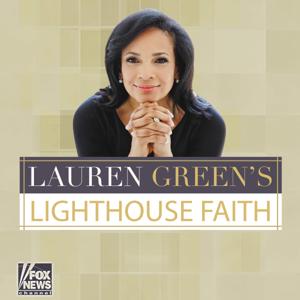
Sixty years ago this week, on October 11, 1962, the Bishops of the Catholic Church gathered in Rome for a solemn ceremony to open what is known as Vatican II. Over four formal sessions during consecutive falls, they would discuss doctrine, and dialogue about how the Global Catholic Church should move forward. It was the most important gathering of the Holy See in half a millennium. What came out of it were sixteen documents that have had a tremendous effect on Catholicism; that Catholics would hear the mass in their own languages instead of only Latin, that there would be a new relationship fostered with non-Catholic religions, and a focus on religious freedom which "recognized that the altar-and-throne alliances of the past were not possible under modern political conditions." Some critics though say Vatican II was prompted by an antiquated Church body responding to a broader culture moving forward through the sexual revolution, feminism, civil rights, and a whole host of other post-modern philosophies skeptical of tradition. Sorting it all out is Vaticanista George Weigel. On this episode of Lighthouse Faith podcast, Weigel, a Distinguished Senior Fellow of Washington’s Ethics and Public Policy Center and the author of several books on the Catholic Church including his biographies on Pope John Paul II, talks about his new book, "To Sanctify the World: The Legacy of Vatican II." He expands on its historical context and what's more, the intrigue behind the scenes of why this unexpected meeting was called by the most unexpected of Popes to do so, Pope John XXIII, who would not live to see its conclusion in 1965.
Learn more about your ad choices. Visit podcastchoices.com/adchoices
The Sistine Chapel, where Michelangelo's masterpiece of the biblical narrative detailed in color and motion adorns the walls and ceiling, is part of the tour of the Vatican Museum in Rome. Why does the Roman Catholic Church have a museum filled with works of art that include not just Christian art, but also those that are of pagan, pre-Christian and Jewish origin and more? Because the history of art and how artists interpret the world, is the history of humanity and God's relationship with His creation. And since the early 16th century, popes have strived to conserve these unique expressions of human existence. The museum itself has a separate entrance from the Vatican grounds, and thanks to Pope John Paul II who had it remodeled in the 1980's, it's a great deal more user friendly, accommodating some 35,000 visitors a day. Not just anyone can give tours of the museum; Dr. Elizabeth Lev is a professor of Art History and is one of the select few licensed to give tours in the museum. On a recent trip to Rome, I was privileged enough to take a tour with Dr Lev. On this episode of Lighthouse Faith, we talked afterwards about how and why art is very much a central part of Christianity and how connected the works are to the central theme of the Holy See's mission, which is saving souls.
Learn more about your ad choices. Visit podcastchoices.com/adchoices
The Vatican Observatory is located on a hill in Castel Gandolfo, Italy, the former summer residence of the popes. It's a physical reminder of the Catholic Church's commitment to science, and in particular the heavens - the universe, star formation, galaxies. Headquartered on the Apostolic Palaces fifth floor, it's roots go back to the 16th century when Pope Gregory VII reformed the calendar, aligning it more closely with the motion of the planets, giving us the much more precise Gregorian calendar. Fr. Richard D'Souza is one of several astronomer priests doing research at the Observatory, whose main offices are now in a new facility and updated telescopes are at the edge of the papal gardens and also in Tuscon, Arizona (Vatican Advanced Technology Telescope -VATT). With degrees in physics and a doctorate in astronomy from the University of Munich, this man of the cloth is also a man of science. His area of research is studying the formation and evolution of galaxies. On this episode of Lighthouse Faith podcast, recorded at the former Apostolic Residence in Castel Gandolfo, Fr. D'Souza talks about why the Catholic Church embraces science, and why it sees no conflict between the Holy Scriptures and Scientific discoveries.
Learn more about your ad choices. Visit podcastchoices.com/adchoices
Let's face it, most of us are a little bit sketchy when it comes to understanding who the Holy Spirit is and what He actually does. Yes, "He." That's one of the identifiers that trips people up these days, especially in this gender-bending, Star Wars influenced worldview culture. It's much easier to think of this third member of the Holy Trinity as some ethereal spiritual force, "Let the Force be with you," than a person with power. On this episode of Lighthouse Faith podcast, Pastor Max Lucado explains who this person the Holy Spirit is, and how we can tap into His power. The Bible talks about how our bodies are the temple of the Holy Spirit. So that means this powerful being is close to us, as close as we want Him to be. Lucado preaches through his new book "Help Is Here" that this power has always been here. Like Dorothy in "The Wizard of Oz," you don't have to travel to some far-off land to find the refuge, strength and love you crave. It's here and now, right where you are. That's the power of the Holy Spirit.
Learn more about your ad choices. Visit podcastchoices.com/adchoices
It was one decision that made a world of difference in a plethora of lives. This is the underlying theme of the movie "Lifemark," now out in theaters, and starring Kirk Cameron. Cameron, who came to fame in the 1980's playing "Mike Seaver" on the sitcom "Growing Pains," is now producing and developing Christian based content for television and film. He's teamed up again with the Kendrick Brothers, who he first worked with on the movie "Fireproof," which is about saving a marriage. Lifemark is about saving a life. In this case it's about a young man who's adopted, who journeys to meet his biological mother. The story of course is very pro-life, but it goes deeper, fleshing out the complex relationships created when a mother elects NOT to have an abortion, and the lives that are changed for the better because of that decision. On this episode of Lighthouse Faith podcast, Cameron talks about why he was moved to make this film. His own experience as the father of four adopted children and his wife Chelsea, who is adopted herself. The Grand Narrative of the film is that God has a tremendous purpose through adoption, and that life is the most incredible gift, even if it comes in the most unexpected ways.
Learn more about your ad choices. Visit podcastchoices.com/adchoices
The unlikely pairing of faithful Christian and former television co-host Kathie Lee Gifford and Messianic Rabbi Jason Sobel seems almost like an act straight from the entertainment world. It's either that or one by Divine design. And I prefer the latter scenario. Gifford and Sobel's second book collaboration, "The God of the Way" is a companion to a new movie musical "The Way," which Gifford calls an oratorio in film form. [An oratorio is basically Scripture telling a story, mixed with musical presentations of that story.] But it's the content and purpose of their collaboration that flies in the face of what most people think about when it comes to Jews and Christians getting along. It's not about making peace even though we disagree. These two agree. Sobel is a Messianic Rabbi believing that Jesus Christ is THE Messiah prophesied in the Old Testament. And there's plenty he's trying to teach Christians about the origins of their faith. One of the main themes is that there isn't an Old and New Testament, it is one Holy Scripture, one continuous narrative. And that so much of what Christians understand as the New Testament, are far clearer and more impactful when absorbed through the lens of the Hebrew Scriptures. Gifford is Sobel's mentee and student who's absorbed a lot of his knowledge, and their relationship has made it safe for Christians to understand Judaism, and Jews to understand Christianity. On this episode of Lighthouse Faith podcast, Gifford and Sobel show how exciting faith can be in a community of shared insights.
Learn more about your ad choices. Visit podcastchoices.com/adchoices
A patriot he certainly is. No one can question that. Lee Greenwood's song celebrating the love of country is also now proclaiming his faith, exploring how the Scriptures are integral to America's founding. Greenwod has created the "God Bless the USA" Bible, which is a King James translation of the Holy Scriptures with America's founding documents in the addendum, showing how the two are related. Greenwood opened the Fox Summer Concert series this year on Memorial Day weekend, and I was privileged to sit down with him then to talk about The Good Book, how America's foundations are tied to it, and why it's important we never forget it. On this episode of Lighthouse Faith podcast, Greenwood also talks about the Uvalde shooting, which had just occurred, and why he and many of his fellow musicians opted to cancel their appearances at the NRA conference. While he supports the Second Amendment, Greenwood says the tragedy made it a no brainer to bow out of the conference.
Learn more about your ad choices. Visit podcastchoices.com/adchoices
There are many people of faith that believe the Boy Scouts of America has lost its way. Where once the organization was almost a rite of passage for boys on the way to becoming men, today it is not just about boys or affirming their strengths. Girls are also invited to join, even though there's such an organization called, "Girl Scouts". And the BSA is not about character based on serving God and country, but about individual achievements. Then there's the tragedy of thousands of boys who now claim they were sexually abused by troop leaders or older boys in authority positions, leading to hundreds of millions of dollars paid out to settle those claims. Whatever you think of the BSA, there has arisen an alternative to the 110-year-old organization. It's called Trail Life USA. On this episode of Lighthouse Faith podcast, Trail Life's CEO Mark Hancock talks about how his organization is growing by leaps and bounds, while BSA's membership is shrinking. Hancock has said that the Boy Scouts of America abandoned its 'laser focus on boys', it's faith-based mission, and it's moral compass. Trail Life has made all three parts of its core principles. It is unapologetically Christ centered in its mission to help boys cultivate their God-given strengths. And they're making it clear that the phrase, 'boys will be boys' means something positive.
Learn more about your ad choices. Visit podcastchoices.com/adchoices
It's a scientific argument in a video interview with a biologist who studied the research on the link between abortion and breast cancer. But fewer people than normal will see or hear about it because according to the conservative Christian organization The Ruth Institute which produced it, YouTube censored it, removing it from its page. YouTube stated that it “does not allow content about abortion that contradicts expert consensus from local health authorities or the World Health Organization (WHO) and poses a serious risk of bodily harm or death.” But The Ruth Institute claims there's a "corrupt process... to create the 'illusion of scientific consensus." And since the Roe decision, YouTube has removed three episodes of RI's weekly podcast featuring the Insitute's president, Dr. Jennifer Roback Morse. According to the Heritage Foundation, which chronicled a long list of examples, Big Tech companies have become the gatekeepers of information, as "a handful of Big Tech corporations - like Google, YouTube, Apple, Facebook (Meta), Twitter -now manipulate the flow of information in such an expansive way as to fundamentally reshape the public discourse." On this episode of Lighthouse Faith podcast, Dr. Morse talks about the content of the interviews that YouTube removed, and why conservative voices of Faith have become big targets for Big Tech.
Learn more about your ad choices. Visit podcastchoices.com/adchoices
The parents and children were active church members. They loved Jesus. They believed they were sinners saved by God's grace. They also believed what the Bible says about gender, that God made us Male and Female, that we are born into as one of those two sexes. So, it was a gut-wrenching surprise when their twelve-year-old daughter decided one day that she was a boy and wanted to be called the pronouns 'they/them'. What's a Christian family supposed to do? The secular world celebrates the transgender ideology. At school "Grace" (not her real name) became popular, something she wasn't before. But when she transitioned back to being a girl, there was only silence. On this episode of Lighthouse Faith podcast, journalist Sarah Zylstra talks about her article in "The Gospel Coalition" and her interview with the family about their long journey of walking with Grace through becoming a transgender boy, and then what they did, and didn't do, that made Grace transition back to being their daughter. As more and more families face this situation, Zylstra's words shed much needed light on the murky waters of "Rapid-onset Gender Dysphoria." For this family, it was faith that gave them the strength to obey God, rather than the world.
Learn more about your ad choices. Visit podcastchoices.com/adchoices
From the publisher's feed
15,995 Listeners
4,808 Listeners
2,561 Listeners

4,218 Listeners
6,891 Listeners
4,763 Listeners

165 Listeners

3,091 Listeners
931 Listeners
7,116 Listeners

1,720 Listeners
21,174 Listeners
825 Listeners

35,883 Listeners
24 Listeners
810 Listeners
65,453 Listeners
68 Listeners
99 Listeners
39,387 Listeners

863 Listeners
1,613 Listeners
557 Listeners
383 Listeners

543 Listeners
48 Listeners

79 Listeners
373 Listeners
845 Listeners

1,412 Listeners

494 Listeners
0 Listeners
11 Listeners
17 Listeners

16 Listeners