
Sign up to save your podcasts
Or



Based on Podcast App listening data
Take the Health Type Quiz or Join the Newsletter here
Please give me podcast feedback with a few questions here
In this episode, I revisit the most powerful tool for longevity—exercise—and unpack fresh research that changes how we should think about its timing, type, and impact.
We begin with a quick recap of the foundational elements covered in Episode 2, emphasizing that aerobic activity can lower the risk of mortality, heart attack, stroke, cancer, and dementia by 20–30%, even when started later in life.
Then we explore compelling new studies that show how exercise affects everything from blood pressure to brain volume. A meta-analysis of 14,000 participants shows even 15–20 minutes of moderate exercise daily lowers blood pressure. A review of 19 trials links physical activity to better sleep efficiency and reduced wake time. In terms of weight management, a meta-analysis of 116 randomized trials finds that even 30 minutes of exercise weekly leads to measurable weight loss, with a dose-response up to 300 minutes per week.
Exercise also appears to influence mood. A review of 33 observational studies involving nearly 100,000 adults suggests that 5,000–7,000 steps daily correlate with reduced depressive symptoms. While causality remains uncertain, the association is intriguing. Beyond mental health, strength training may reduce inflammation: 19 trials show CRP levels dropped in adults who engaged in resistance training. Perhaps most excitingly, a smaller study found higher cardiorespiratory fitness linked to greater hippocampal volume and better memory in older adults.
To optimize these benefits, we explore emerging science around exercise timing and routine structure. A large study of 14,000 users wearing devices found that intense workouts within two hours of bedtime delayed sleep onset by 36 minutes. Perhaps finish workouts at least four hours before sleep for better rest. Interestingly, data from over 400,000 adults reveals that women gain more longevity benefit from exercise than men—and with less time invested.
We also cover weekend warriors. A UK Biobank study showed no difference in health outcomes based on when exercise occurred, debunking the belief that daily consistency is essential—what matters is that you do it. If you're sleep-deprived, caffeine might restore performance, as shown in a 10K time trial study. Lastly, a novel study using post-workout cold exposure showed that cold immersion reduced blood flow and amino acid uptake for up to 3 hours.
Send us Fan Mail
Support the show
📥 Tap to join my free newsletter & get the 1-page episode checklists: drbobbylivelongandwell.comHelp me improve the podcast by answering a few questions here.
In this episode of Live Long and Well, I'm joined by Dr. Anthony Pearson, a board-certified cardiologist known for his evidence-based yet refreshingly skeptical take on mainstream cardiac care. Together, we explore the nuanced science behind heart health and how you can make smarter decisions to protect your cardiovascular system—starting today.
We open by recognizing that heart disease remains the leading cause of death for both men and women. While many of the six pillars of longevity—from exercise to stress reduction—play protective roles, today’s episode zooms in on two powerful, sometimes polarizing topics: the role of diet in heart health and the value of coronary artery calcium (CAC) scans.
Dr. Pearson shares how a personal brunch conversation with his wife challenged decades of low-fat dietary dogma, prompting his transformation into the "Skeptical Cardiologist." Here is a summary showing that dairy won't increase risk of cardiovascular disease. He recounts the
We dive into the broader saturated fat debate, highlighting how different fat sources have varied effects on cholesterol and cardiovascular risk. While dairy fats may be benign or even beneficial, others—particularly those consumed in excess on paleo or keto diets—can raise LDL cholesterol substantially. Dr. Pearson discusses the Keto-CAD Study, which found that even lean, low-risk keto followers may build up arterial plaque if their LDL levels skyrocket.
The conversation then shifts to the calcium heart or CAC scan, a non-invasive $100 screening test that quantifies calcified coronary artery plaque via CT imaging. While traditional risk calculators like the pooled cohort equations often fall short, CAC scoring offers a personalized look at actual plaque burden—critical since many heart attacks occur in people not flagged as high-risk. As Dr. Pearson explains, a high score doesn’t mean you will need surgery. Instead, it’s typically a cue for lifestyle and medication adjustments, not invasive procedures. He references the ISCHEMIA Trial, which found no benefit from stenting stable, asymptomatic patients over optimized medical therapy.
We close with practical advice: talk to your doctor, especially if you have a family history or fall in that “borderline risk” zone where a CAC score might influence your care plan. And yes, it should be okay to keep enjoying that butter—as long as you’re informed and mindful and don't overdue it.
Takeaways: Full-fat dairy is not the enemy—it may even be heart-protective. If your LDL skyrockets on keto, that’s a red flag worth addressing. CAC scans can personalize your prevention plan and offer peace of mind or a critical nudge toward action. Want more clarity on your own heart health journey? Talk with your doctor about whether a calcium scan makes sense for you and explore Dr. Pearson’s writings on The Skeptical Cardiologist and MedPage Today.
Send us Fan Mail
Support the show
📥 Tap to join my free newsletter & get the 1-page episode checklists: drbobbylivelongandwell.comPlease answer a few questions to help my podcast
The microbiome receives lots of attention, but what do we really know? In this episode, Dr. Bobby unpacks whether your gut bacteria are truly the key to preventing disease—or if the science still needs to catch up.
Microbiome buzz is everywhere—from promises of inflammation relief and weight loss to claims about mental health and longevity. But what does the research actually say? Dr. Bobby begins with four essential questions: Is the microbiome important? Does it change based on our habits? Do those changes cause disease? And can restoring it improve our health?
Using his open-minded skeptic lens, Dr. Bobby explains that while mouse studies offer compelling clues—like the famous “fat mouse, skinny poop” experiments showing weight gain linked to microbiome transplants—the same effects haven’t translated reliably in humans. A rare exception is C. difficile colitis. Here, fecal transplants have up to a 90% success rate, with medical societies endorsing this approach (source).
For other conditions like diabetes, rheumatoid arthritis, and Crohn’s disease, microbiome disruptions are well-documented. Still, whether these disruptions cause the illness—or are just innocent bystanders—is unclear. In diabetes, for instance, small studies and reviews show possible improvement in insulin sensitivity after fecal transplants (source) and mixed outcomes with probiotics (source), but nothing rivals the proven power of standard therapies like metformin.
Dr. Bobby also explores whether lifestyle choices—such as eating more fermented foods, fiber, and taking probiotics—can truly “reset” your microbiome and keep us healthy. The answer? These may enhance diversity and gut health, but current data doesn’t yet confirm long-term disease prevention. He references findings from the NIH Human Microbiome Project (source) and other studies showing how gut bacteria influence immune development, vitamin production, and digestion (source).
He also touches on terminology: probiotics are live bacteria (think yogurt and kombucha), prebiotics are their food (found in beans and whole grains), and postbiotics are beneficial byproducts. Each plays a role, but their direct impact on human disease remains uncertain.
Dr. Bobby closes with this: he enjoys homemade yogurt and sauerkraut, but doesn’t chase expensive probiotic supplements. “It can’t hurt and might help,” he says—but don’t expect probiotics to fully replace conventional treatment. As research evolves, he’ll continue to watch the space closely—and encourages listeners to let him know if this type of deep-dive, still-unsettled topic resonates.
Takeaways:
Complete Dr. Bobby’s feedback survey here to help shape future episodes.
Send us Fan Mail
Support the show
📥 Tap to join my free newsletter & get the 1-page episode checklists: drbobbylivelongandwell.comCan you provide feedback on my podcast (what you like? what you want more of? length? Please answer a few questions here.
Can a simple habit like flossing really reduce your risk of stroke? In this episode, Dr. Bobby unpacks the headlines sparked by a recent presentation at the American Stroke Association’s International Conference that claimed regular flossing could reduce stroke risk by 20–50%.
Dr. Bobby begins with a refresher on the importance of stroke prevention. From there, he explores the biological plausibility of a connection between oral health and cardiovascular events. While Americans are fairly diligent about brushing (with 90% brushing once daily and 60% brushing twice a day per YouGov data), flossing habits lag significantly (NIH Oral Health Study—highlighting a clear opportunity if the flossing-stroke link is real.
Dr. Bobby dives into the study behind the headlines, a new analysis from the long-running Atherosclerosis Risk in Communities (ARIC) study, which tracked over 6,000 individuals for 25 years. The preliminary finding: regular flossers had significantly lower risk of ischemic and cardioembolic strokes (Study Abstract). Surprisingly, brushing and dental visits showed no significant benefit in this analysis.
So why isn’t this flossing-stroke connection headline a "five-alarm fire" in medicine? Dr. Bobby explains the limitations: the results were shared via a conference abstract, not a peer-reviewed journal article. Without full access to the data or understanding how many other hypotheses were tested from this large dataset (which has already generated over 2,300 publications), we risk falling into the trap of correlation being mistaken for causation.
To further evaluate the credibility of this association, Dr. Bobby introduces the Bradford Hill criteria—nine principles to assess causality in observational studies. While the biological plausibility is strong and the effect size notable, the study fails on criteria like replication, dose-response, and publication rigor (Bradford Hill Overview).
In closing, Dr. Bobby affirms the benefits of flossing—not necessarily for stroke prevention, but for better oral health, which is valuable in its own right. He shares his personal oral care routine, including flossing nightly and using a water jet, while reminding listeners to stay evidence-informed in their health decisions.
Takeaways
Flossing likely improves oral health, but its role in stroke prevention remains unproven.
Be cautious with headlines drawn from unpublished conference abstracts—they’re a starting point for inquiry, not a reason to change behavior just yet.
"How to Live Long and Well" at DrBobbyLiveLongAndWell.com.
Send us Fan Mail
Support the show
📥 Tap to join my free newsletter & get the 1-page episode checklists: drbobbylivelongandwell.comHelp me improve my podcast content by answering a few questions
Take the Health Type Quiz
Resilience is crucial as we age, especially when it comes to maintaining muscle, joint, and bone health. In this episode, Dr. Bobby DuBois discusses how building physical reserves early on can help withstand inevitable changes and setbacks as we get older. Just like investing in an IRA, the earlier you start building your physical resilience, the better prepared you’ll be for the challenges of aging.
Dr. Bobby shares insights from his interview with Karen, who experienced a rapid decline in strength after a period of inactivity. Despite previous success with weight loss and fitness, Karen found herself struggling to lift groceries after weeks of illness and time away from the gym. Her story highlights the importance of maintaining muscle mass and staying active, even after setbacks.
Key Points:
Takeaways:
Live long and well by staying resilient and proactive. Remember to keep moving, invest in your muscle and bone health, and stay committed to your fitness journey. If you found this episode helpful, please share it with others and rate the show!
Send us Fan Mail
Support the show
📥 Tap to join my free newsletter & get the 1-page episode checklists: drbobbylivelongandwell.comTake my Health Type Quiz and learn about yourself
Summary:
What happens when you need a brain MRI—but the results leave you with more questions than answers? In this episode, I take you through my personal journey of facing unexpected MRI findings, the emotional and medical challenges that followed, and the valuable lessons I learned along the way. If you've ever dealt with medical uncertainty, this episode is for you.
Key Topics & Takeaways:
🔹 Take Action:
Send us Fan Mail
Support the show
📥 Tap to join my free newsletter & get the 1-page episode checklists: drbobbylivelongandwell.comTake the Health Type Quiz
Swearing might not just be an emotional release—it could actually boost athletic performance and increase pain tolerance. In this episode, we dive into fascinating research showing that strategically dropping swear words could make you stronger, push your endurance further, and even help you tolerate pain more effectively. But is it the words themselves or their taboo nature that makes the difference? We explore the science, the theories behind it, and how this connects to the mind-body relationship we discussed back in Episode #5.
Dr. Bobby shares studies showing how grunting enhances performance in tennis and weightlifting, with grunting increasing ball speed by 5% and muscle force by 20% (study). But swearing takes things up a notch: in anaerobic performance tests, swearing every three seconds led to a 4.5% increase in power output, an 8% boost in grip strength, and a staggering 22% improvement in wall sit endurance (study). The research also links swearing to increased pain tolerance, with one study showing a 20% improvement in cold endurance when participants submerged their hands in ice water while swearing (study).
So why does this work? We examine three key theories:
Dr. Bobby even put this to the test in his own “N of 1” experiment during a run—grunting didn’t help, fake swear words did nothing, but real swearing momentarily reduced his perception of fatigue.
Takeaways:
Want to push past perceived limits? Maybe it’s time to embrace a well-placed expletive. Try it for yourself and let me know—just don’t tell my grandson.
Live long, well, and powerful—maybe even a little more powerful with a swear word or two
Want coaching from Dr. Bobby? Information here
Send us Fan Mail
Support the show
📥 Tap to join my free newsletter & get the 1-page episode checklists: drbobbylivelongandwell.comTake the Health Type Quiz here
Does red light therapy actually work? Can morning sun improve your health? Do blue light blocking glasses really help with sleep? In this episode, Dr. Bobby takes a deep dive into the science behind light therapy—what’s backed by evidence and what’s just hype.
Dr. Bobby shares personal experiences, from childhood eczema treated with sunlight to his daughter’s improved sleep from morning walks, and unpacks the latest research on red, white, and blue light exposure. With thousands of red light therapy devices on the market and endless claims about their benefits, it’s time to separate fact from fiction.
Starting with the strongest evidence, Dr. Bobby explores how light affects skin conditions, depression, and sleep. While white light (and UV) therapy has long been used for conditions like psoriasis and seasonal affective disorder (SAD) 【AAD guidelines】, red light therapy is a mixed bag. Studies suggest it can improve wound healing 【Study】, aid hair regrowth 【RCT Review】, and even reduce wrinkles—but much of the research is small-scale and often funded by device manufacturers.
Deeper effects of red light therapy, such as pain relief for arthritis and fibromyalgia, remain controversial. Some studies show moderate pain reduction 【Meta-analysis on osteoarthritis】, while others suggest a placebo effect. And when it comes to weight loss or cognitive enhancement, the evidence is weak at best.
Finally, Dr. Bobby revisits the hype around blue light blocking glasses. While early studies suggested blue light exposure/protection might affect sleep, newer research, and expert opinion indicates that it’s not the light itself but rather the mental stimulation from screens that affects sleep 【Study】. The best solution? Reduce screen exposure and engage in relaxing activities before bed.
Takeaways:
Is light therapy worth the investment? Maybe. If you are thinking of spending hundreds of dollars, consider trying an N-of-1 experiment—track your own results and see if it actually makes a difference. And, as always, focus on evidence-based approaches to living long and well.
Until next time, get outside, soak up some sun, and take the Health Type Quiz to better understand your health type!
Send us Fan Mail
Support the show
📥 Tap to join my free newsletter & get the 1-page episode checklists: drbobbylivelongandwell.comTake the Health Type Quiz
In this episode, Michael Easter and I dissect the fascinating blend of scientific evidence and narrative storytelling, and learn how to navigate the sometimes conflicting realms of expert opinion and personal experience. Michael is the acclaimed author of "The Comfort Crisis" and "Scarcity Brain."
Michael's storytelling prowess paired with my evidence-based approach aims to empower you to step confidently into discomfort and reap the rewards.From the allure of digital distractions to the silent power of solitude, our discussion covers the spectrum of challenges faced when interpreting scientific evidence and applying it to real life.
Discover how venturing beyond the boundaries of comfort can unlock transformative growth in our latest conversation with
Picture this: I'm in Costa Rica, pushing my limits in a Misogi challenge led by Michael, finding new depths of resilience that even my experience with Ironman triathlons hadn't revealed. Michael's journey from a magazine editor to a full-time writer and lecturer is a testament to the power of embracing discomfort for personal evolution and health.
Together, we explore how modern life's conveniences might actually be roadblocks to growth, and how stepping into discomfort can offer profound benefits.
Time Stamps:
(3:03) Let Me Know Your Thoughts
(4:16) Michael’s Accolades and Newsletter
(7:13) Michael’s Background Starting At Men’s Health
(8:58) Short Synopsis of Michael’s Books
(14:37) Pushing Ourselves Outside of Our Comfort Zone
(17:23) Brain Gains
(19:30) Finding Your Sweet Spot
(22:21) The Scientist vs The Storyteller
(26:58) Integrating Expert Opinions
(32:33) The Misogi in Costa Rica
----------
Check Out "2 Percent with Michael Easter" to Improve your Health and Strengthen Your Mindset
Follow Michael on Instagram
----------
Work with Dr. Bobby
Send us Fan Mail
Support the show
📥 Tap to join my free newsletter & get the 1-page episode checklists: drbobbylivelongandwell.comTake the Health Type Quiz
Coaching with Dr. Bobby here
Episode Summary:
Detox programs promise to rid your body of toxins, boost your energy, and restore balance—but is there any credible science behind them? In this episode, we break down the claims, explore the evidence (or lack thereof), and discuss why detox diets and supplements may be more about profit than actual health benefits.
Key Topics Covered:
🔹 The Detox Hype & Marketing Pitch
🔹 How Detoxes Are Supposed to Work
🔹 Does Detoxing Actually Work?
🔹 Can You Sweat Out Toxins?
🔹 Why Do People Feel Better After a Detox?
🔹 Is Detoxing Safe?
🔹 What Should You Do Instead?
Takeaways:
✅ Your liver and kidneys already detox your body—no supplement or cleanse is necessary.
✅ If detoxing makes you feel better, it’s likely due to a placebo effect, temporary water loss, or increased self-awareness of diet.
Send us Fan Mail
Support the show
📥 Tap to join my free newsletter & get the 1-page episode checklists: drbobbylivelongandwell.comFrom the publisher's feed
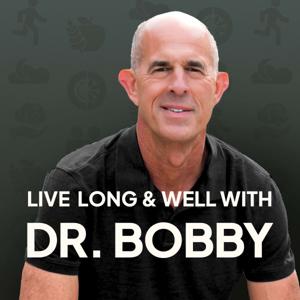
Let's explore how you can Live Long and Well with six evidence based pillars: exercise, good sleep, proper nutrition, mind-body activities, exposure to heat/cold, and social…
Ranked by our users in the last 21 days
3,566 Listeners

1,979 Listeners
450 Listeners
1,309 Listeners
542 Listeners
5,138 Listeners
754 Listeners
695 Listeners

3,064 Listeners
447 Listeners
827 Listeners
1,609 Listeners
200 Listeners
1,069 Listeners
354 Listeners