
Sign up to save your podcasts
Or

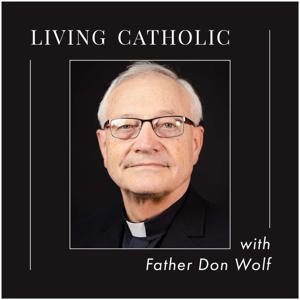


In this episode, Monsignor Wolf pushes past the noise around Halloween and returns to its heart: All Hallows’ Eve as preparation for All Saints. He explores the communion of saints, how their lives shape ours, and how holiness takes root in real times and places.
• reclaiming Halloween as the vigil of All Saints
• communion with the saints as living friendship
• Stephen’s witness and Paul’s awakening in Acts
• saints formed by history, office and duty
• Miguel Pro, Thomas More and Oscar Romero as concrete models
• one Church across parishes, dioceses and centuries
• Rome’s stones as a sign of living continuity
• the saints’ intercession and patronage today
• becoming holy in our own time, not theirs
************
Monsignor Don Wolf is a priest of the Archdiocese of Oklahoma City. Living Catholic also broadcasts on Oklahoma Catholic Radio several times per week, with new episodes airing every Sunday.
In this episode, Monsignor Wolf explores why original sin remains a clear, useful lens for understanding human rivalry and broken freedom, and how grace in Christ offers a real path of rescue. Along the way, he tests rival answers, from detachment to law to social engineering, and find their limits.
• asking better questions in faith as in science
• defining original sin as foundational disorder
• Genesis reframed through mimetic desire
• the teddy bear image and rivalrous wanting
• freedom’s gift and how desire traps us
• limits of law, detachment, and optimism
• critique of denial and utopian fixes
• Christ reorders desire and heals freedom
• slow growth in grace, steady hope
To learn more, visit okr.org
************
Monsignor Don Wolf is a priest of the Archdiocese of Oklahoma City. Living Catholic also broadcasts on Oklahoma Catholic Radio several times per week, with new episodes airing every Sunday.
In this episode, we mourn two Oklahoma priests and reckon with what brotherhood, death, and the promise of resurrection demand of our vocation. We reflect on last rites, family grief, priestly identity, and the quiet discipline of presence at the edge of life.
• priestly life lived near death and dying
• last rites as reconciliation, anointing, commendation
• stories of peaceful deaths and hard departures
• families navigating acceptance, anger and fear
• presence over performance in pastoral care
• missed anointing and the cost of denial
• shared priesthood as one cloth across parishes
• imago Christi and the weight of the collar
• respect and reverence beyond Catholic spaces
• mourning as a way back to hope and footing
• catholic as universal, many seats, one aisle
• cemetery as memory, legacy and promise
************
Monsignor Don Wolf is a priest of the Archdiocese of Oklahoma City. Living Catholic also broadcasts on Oklahoma Catholic Radio several times per week, with new episodes airing every Sunday.
A single question can bend the arc of a life: Will many be saved—or only a few? In this episode, Msgr. Wolf explores how generations shifted from “heaven is promised but not presumed” to “heaven is assumed if we’re decent,” and why both comfort and terror can miss the heart of grace. We unpack the old struggle over predestination and assurance, and how Sunday worship takes shape from those assumptions: is the goal a moving experience that signals chosenness, or the steady sacramental life that Christ entrusted to the Church? We argue for a both/and spirituality—feelings welcomed, sacraments central—anchored in a God whose mercy calls for a real response.
To bring Jesus’ “narrow gate” to life, we contrast Broadway’s bright promise with the quiet courage of daily fidelity. Drama can awaken us; only the cross can change us. The narrow way is the kitchen table, the hospital corridor, the patient choice to forgive without applause, the freedom that comes from dying to self early so fear loses its grip. Blessed Stanley Rother’s witness ties it all together: he did not become a martyr in a moment; he became ready through thousands of hidden yeses. That is the shape of salvation lived now—focused love, steady hope, and a cross that promises all is gained in what is given away.
************
Monsignor Don Wolf is a priest of the Archdiocese of Oklahoma City. Living Catholic also broadcasts on Oklahoma Catholic Radio several times per week, with new episodes airing every Sunday.
In this episode Father Wolf reflects on Erica Kirk's public forgiveness of her husband's murderer and explores how this fundamental Christian teaching continues to surprise our culture despite being central to our faith. We examine why such a basic element of Christianity stunned observers and what it reveals about our disconnect between religious teaching and practice.
• The memorial rally for Charlie Kirk drew 60,000 people and approximately 100 million streaming views
• Erica Kirk's unexpected declaration of forgiveness for her husband's killer shocked onlookers
• Catholics pray "forgive us as we forgive" regularly, yet public displays of forgiveness are treated as extraordinary
• Forgiveness is not a one-time event but a process that may take years to fully realize
• When we forgive, we free ourselves from the burden of resentment and vengeance
• Father Wolf shares his personal struggle with forgiving someone over a $10,000 grievance that troubled him for decades
• The journey of forgiveness begins with simply saying the words "I forgive," even when emotions don't align
• Our own freedom is the gift we receive when we choose to forgive
Begin with the words "I forgive" in your prayer. Don't worry if you don't feel anything except anger or frustration. It's a beginning. Keep saying, keep repeating this central part of the life of faith. It will matter.
************
Monsignor Don Wolf is a priest of the Archdiocese of Oklahoma City. Living Catholic also broadcasts on Oklahoma Catholic Radio several times per week, with new episodes airing every Sunday.
In this episode Father Wolf examines recent high-profile killings and their spiritual implications, providing historical context and theological insight into how Christians should respond to cultural violence. He explores how ordinary people can be drawn to commit horrific acts and how faith offers protection against the pervasive evil of our time.
• Recent school shootings and assassinations capture headlines because they capture our interests and fears
• Historical perspective shows similar waves of political violence have occurred throughout history
• The demonic manifests not just supernaturally but through ideologies and movements that dehumanize
• Baptism serves as spiritual protection against pervasive evil, not merely a cultural tradition
• Violence can be attractive because it creates false unity and purpose in society
• Ordinary people can gradually accept and perpetrate atrocities when influenced by cultural currents
• Self-examination and repentance are essential first steps in countering cultural violence
"Our work always is to be present to and be responsive to the work of God in the world. That means that we cast our minds, our hearts and our souls into the hands of God to know his will and to do it, which is, after all, the passport to happiness and the pathway to heaven."
************
Monsignor Don Wolf is a priest of the Archdiocese of Oklahoma City. Living Catholic also broadcasts on Oklahoma Catholic Radio several times per week, with new episodes airing every Sunday.
In this episode, Father Wolf takes us on a fascinating journey through the missionary work of Oklahoma priests in Santiago Atitlan, Guatemala, revealing profound lessons about faith, culture, and effective evangelization.
The story begins with a penetrating question about how missionaries addressed the syncretistic blend of Catholic and Mayan beliefs among the Tzʼutujil people. This launches an exploration of Guatemala's complicated religious history, where post-independence anti-clerical policies severely restricted Catholic ministry for over a century. With Spanish priests expelled and only two dozen clergy remaining for the entire country, isolated communities like Santiago Atitlan were essentially abandoned, forcing the indigenous people to maintain their faith with minimal guidance.
Without consistent pastoral leadership, the Tzʼutujil naturally integrated Catholic practices with their pre-existing Mayan worldview. Even the American culture blends Christian elements with contradictory values, demonstrating that no society perfectly embodies gospel teachings.
What makes the Oklahoma missionaries' approach remarkable was their pastoral sensitivity. Rather than condemning local practices outright, they invested time understanding Tzʼutujil culture and beliefs. They recognized, as early Church fathers did, that indigenous cultures often contain "seeds of faith" that provide natural bridges to Christian understanding. Building on existing foundations – celebrations of Christmas and Easter, familiarity with baptism and Eucharist – they gradually guided people toward orthodox practice while respecting cultural identity.
This "make haste slowly" approach acknowledges that cultural transformation requires patience, love, and acceptance. By meeting people where they were while lovingly leading them toward fuller faith expression, these missionaries embodied Christ's own method of transformation. Their example challenges us to examine how we might bridge cultural divides in our own evangelization efforts today.
************
Monsignor Don Wolf is a priest of the Archdiocese of Oklahoma City. Living Catholic also broadcasts on Oklahoma Catholic Radio several times per week, with new episodes airing every Sunday.
In this episode, Father Wolf explores Anne Rice's "Interview with the Vampire" to uncover spiritual truths about life's meaning and the emptiness of immortality without God. Through this unexpected vacation read, he examines how even horror literature reveals our deepest spiritual hungers and the universal quest for salvation.
• Reading Anne Rice's vampire novel after her conversion memoir "Called Out of Darkness"
• Rice's brief return to Catholicism followed by her departure from the faith
• The vampire mythology as metaphor for life without transcendent meaning
• Horror literature as reflection of comfortable societies with existential questions
• The vampire's immortality becoming a curse rather than blessing
• Suicide as the ultimate end for vampires facing eternal emptiness
• The contrast between CS Lewis's Ransom character and Rice's vampires
• Modern parallels: how we seek meaning in extended time rather than divine purpose
We must recognize that salvation is more than immortality—it's finding meaning and purpose in life both now and eternally.
************
Monsignor Don Wolf is a priest of the Archdiocese of Oklahoma City. Living Catholic also broadcasts on Oklahoma Catholic Radio several times per week, with new episodes airing every Sunday.
What happens when magnificent churches become beautiful but empty shells? In this episode, Father Wolf takes us on a personal journey through Germany, weaving together family history, cultural observations, and spiritual reflections that resonate far beyond European borders.
Father Wolf recently took a vacation to Germany and shares his thoughts and experiences in a changing country.
The heart of Father Wolf's reflection emerges during his visit to St. Michael's Church, a stunning baroque masterpiece built by Jesuits. Despite its architectural splendor and perfect acoustics, the church feels spiritually hollow - "cold and dead," attracting tourists but offering little to inspire genuine faith. This observation becomes a powerful metaphor for European Christianity's modern crisis, where magnificent churches stand as historical monuments rather than vibrant centers of worship.
His observations extend beyond religion to cultural symbolism, noting how Munich's town hall now displays pride flags where Nazi banners once hung, and how sunbathing habits along the river have dramatically changed since his visit forty years ago. These observations challenge simplistic narratives about cultural evolution, suggesting that social norms can reverse course in unexpected ways.
************
Monsignor Don Wolf is a priest of the Archdiocese of Oklahoma City. Living Catholic also broadcasts on Oklahoma Catholic Radio several times per week, with new episodes airing every Sunday.
In this episode, Father Wolf continues his "Tales from the Rectory" series, offering rare insights into the unique living arrangements of Catholic priests. Drawing inspiration from Bishop Francis Clement Kelly's work, he shares personal stories revealing how priests navigate sharing their homes with colleagues they didn't choose.
• Priest rectories in the US typically house multiple clergy who must learn to live together without any formal training
• Unlike other professions, priests have no say in who they'll share living quarters with—an arrangement that's simply presumed and accepted
• These living situations create both challenges and opportunities for unlikely but enriching friendships
• Formal interactions between Father Gallatin and Father Boeckman reveal how even priests who lived together for years maintain complex relationships
• Priest personalities are shaped differently than others, formed by the "frictions of their lives" rather than family relationships
• Pastoral ministry includes managing unexpected interruptions and unreasonable demands with patience and grace
• The poem "In the Land of Abundance" reflects on finding gratitude amid scarcity rather than comfort
Join us as we continue exploring the human side of priesthood and the deeper dimensions of living our Catholic faith.
************
Monsignor Don Wolf is a priest of the Archdiocese of Oklahoma City. Living Catholic also broadcasts on Oklahoma Catholic Radio several times per week, with new episodes airing every Sunday.
From the publisher's feed
Monsignor Don Wolf, a priest of the Archdiocese of Oklahoma City, offers a Catholic perspective on the issues confronting each person today.

4,984 Listeners

6,223 Listeners

7,653 Listeners

1,357 Listeners

1,508 Listeners

927 Listeners

39,402 Listeners

61,803 Listeners

11,374 Listeners

5,708 Listeners
56 Listeners