
Sign up to save your podcasts
Or

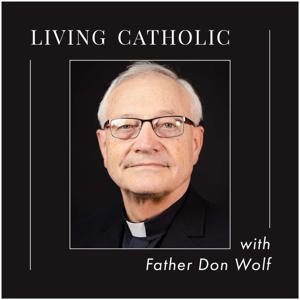


In this episode, Father Wolf takes listeners on a profound journey through the life and martyrdom of Blessed Stanley Rother as the 44th anniversary of his death approaches. The Oklahoma farm boy turned Guatemalan missionary exemplifies how ordinary faithfulness can lead to extraordinary holiness.
When Father Ramon Carlin recruited Stanley Rother to join the Guatemala mission in 1968, he recognized something special in the young priest from Okarche. Stanley's mechanical aptitude—his ability to fix vehicles, maintain buildings, and work with his hands—made him uniquely valuable to the mission. Yet what began as practical service soon blossomed into something deeper as Stanley immersed himself in the community of Santiago Atitlan. Despite earlier academic struggles, he mastered the complex T'zutujil language, allowing him to celebrate Mass and eventually translate the New Testament for his parishioners.
Rother's missionary journey wasn't without significant challenges. He watched as the Oklahoma mission team gradually disbanded, eventually leaving him as the sole Oklahoman serving there. His agricultural projects failed, teaching him humility and respect for indigenous knowledge. The mission's approach was questioned, with some team members moving into the village to live among the people. Throughout these difficulties, Stanley maintained his commitment to the people he served, understanding their struggles in ways many other Americans couldn't comprehend.
Though often described as "apolitical," Stanley recognized the injustices his parishioners faced during Guatemala's violent civil war. His powerful statement that "to shake the hand of an Indian is a political act" revealed his understanding that simple human dignity was revolutionary in that context. When his name appeared on a death list in early 1981, Stanley briefly returned to Oklahoma before making the fateful decision to return to his flock. "The shepherd cannot run," he explained. His presence in the rectory on July 28, 1981, when three masked men took his life, wasn't naivety—it was the culmination of a life dedicated to sacrificial love.
Visit the Shrine of Blessed Stanley Rother in Oklahoma City to learn more about this remarkable American martyr whose witness continues to inspire believers to authentic discipleship and courageous faith.
************
Monsignor Don Wolf is a priest of the Archdiocese of Oklahoma City. Living Catholic also broadcasts on Oklahoma Catholic Radio several times per week, with new episodes airing every Sunday.
In this episode, Father Wolf shares memorable encounters from parish ministry, reflecting on how these experiences taught him valuable lessons about pastoral care. Following in the tradition of Bishop Francis Clement Kelly's "Tales from the Rectory," these stories reveal the complex nature of living Catholic faith in today's world.
• A couple returning to the Church after 20 years abruptly leaves when Father Don explains that inability to attend Mass removes obligation
• The husband's insistence on rigid, black-and-white rules despite his own 20-year absence from Mass reveals how some need absolute certainty
• This encounter taught Father Don to provide deeper context when answering moral questions rather than simple yes/no responses
• Professional beggars targeting church-goers are discovered loading their signs into a new Mercedes after being asked to leave
• Pastoral wisdom requires balancing sincere charity with protection of parishioners from exploitation
• Experience brings necessary wisdom in ministry that seminary education alone cannot provide
************
Monsignor Don Wolf is a priest of the Archdiocese of Oklahoma City. Living Catholic also broadcasts on Oklahoma Catholic Radio several times per week, with new episodes airing every Sunday.
What does a pope actually do? Beyond the ceremonial trappings and media spotlight, how should we measure the effectiveness of the Church's supreme leader? In this episode, Father Wolf takes us on a thought-provoking journey into the heart of papal leadership, offering seven essential dimensions that define authentic spiritual governance.
The pope must first be a genuine Christian whose life conforms to Christ's example. The demanding responsibilities of institutional leadership can easily overwhelm spiritual priorities, making this seemingly simple requirement a profound challenge. "The more pressing the decisions about sustaining the church, the easier it is to give up the harder work of listening faithfully to Christ's presence," Father Wolf explains.
Moving beyond personal spirituality, the pope must effectively listen to the Church's diverse voices while contextualizing what he hears within salvation history. This storytelling function helps believers understand current challenges as chapters in God's ongoing work rather than unprecedented crises.
Perhaps most courageously, authentic papal leadership requires admitting failure when it occurs. While papal infallibility applies narrowly to teaching on faith and morals, the broader workings of Church administration remain subject to human error.
Father Wolf concludes that the pope's attentiveness to the Spirit's movement constitutes his greatest gift – balancing the Church's essential continuity with openness to divine innovation.
************
Monsignor Don Wolf is a priest of the Archdiocese of Oklahoma City. Living Catholic also broadcasts on Oklahoma Catholic Radio several times per week, with new episodes airing every Sunday.
In this episode, Father Wolf explores how the Catholic Church is both universal and completely present in each local parish community, challenging us to reclaim our missionary identity for spiritual renewal and growth.
• The Church isn't just a compilation of individual churches functioning like organs in a body
• Each local parish is the complete Church in itself while simultaneously being part of the whole
• Our challenges in Oklahoma mirror those faced by the Church globally
• The Cursillo movement demonstrates how authentic enthusiasm can spread the faith naturally
• Every diocese should identify specific missionary focuses both locally and globally
• We shouldn't wait until we have "enough" resources to begin missionary outreach
• Father Wolf suggests prison ministry locally and supporting international parishes like Qatar's
If there's a world dying outside our windows, wouldn't it be great to be the ones to give it life?
************
Monsignor Don Wolf is a priest of the Archdiocese of Oklahoma City. Living Catholic also broadcasts on Oklahoma Catholic Radio several times per week, with new episodes airing every Sunday.
In this episode, Father Wolf explores the rich history and profound meaning behind the devotion to the Sacred Heart of Jesus, explaining how this spiritual practice emerged during the Scientific Revolution as a counterbalance to an increasingly mechanical view of God and the universe.
• The Sacred Heart devotion originated in northern Europe during the mid-17th century when scientific advancement was beginning to change how people viewed God and creation
• Throughout Christian history, believers have created new spiritual expressions when existing forms failed to nourish their souls
• As science portrayed the universe as mechanical and governed by immutable laws, theological understanding often followed suit, creating an image of God bound by rigid justice
• The Sacred Heart devotion emphasized Christ's human compassion against the cold intellectualism of the age
• For modern Catholics, this devotion invites us to recognize that God works in the depths of our hearts, beyond both cold rationality and shallow emotionalism
• Jesus meets us wherever we are in our spiritual journey, offering divine mercy that flows from love rather than obligation
Join us in exploring how this "old-fashioned" devotion still offers profound wisdom for contemporary spiritual seekers.
************
Monsignor Don Wolf is a priest of the Archdiocese of Oklahoma City. Living Catholic also broadcasts on Oklahoma Catholic Radio several times per week, with new episodes airing every Sunday.
Imagine going to confession, only to discover that what you whisper through that screen might be reported to the authorities. That's the reality Catholic priests and penitents now face in Washington State, which recently passed legislation requiring priests to report confessions of child abuse to police.
In this episode, Father Wolf examines Washington State's recently passed bill requiring priests to report confessions of child abuse to authorities, explaining why this law threatens an essential Catholic sacrament and represents government overreach into religious practice.
• The seal of confession is absolute, with priests who violate it facing automatic excommunication
• Human beings have a universal desire to confess and be known, as evidenced by phenomena from podcasts to support groups
• Confession provides a protected space allowing people to reveal their deepest truths without fear of exposure
• The Washington law is practically unenforceable and won't effectively address child abuse
• The legislation represents a clash between the Catholic understanding of forgiveness and the state's belief that certain sins are unforgivable
• When government attempts to regulate sacramental practice, it overreaches its legitimate authority
• No priest will comply with this law, as it contradicts fundamental promises made at ordination
************
Monsignor Don Wolf is a priest of the Archdiocese of Oklahoma City. Living Catholic also broadcasts on Oklahoma Catholic Radio several times per week, with new episodes airing every Sunday.
In this episode, Father Wolf examines fatherhood from both theological and cultural perspectives.
The title "Father" for God has become controversial in contemporary religious discourse. Yet when Jesus exclusively addressed God as Father, he wasn't attributing maleness to the divine but invoking a specific understanding of love that illuminates our relationship with God. The distinction between maternal and paternal love reveals something profound: a mother's connection to her child is visible, physical, and undeniable, while a father's love fundamentally involves choice and faith. Before modern DNA testing, no man could prove his paternity beyond doubt. When a father claims a child as his own, he makes an existential choice—a deliberate act of commitment that mirrors God's chosen love for humanity.
Our society increasingly treats commitments as disposable rather than binding. Previous generations understood that when a man said "I do," he shouldered lifelong responsibilities regardless of personal fulfillment. As Father Richard Rohr discovered in conversation with his father, earlier generations didn't question whether they liked their work; they simply performed their duty to provide for those they loved. In this context, true "godly leadership" isn't about dominance but self-sacrifice—saying yes as God does, with forbearance and determination despite obstacles.
Faithfulness remains largely invisible until absent, like oxygen we only notice when it's gone. This Father's Day, we celebrate those men who silently carry their families through life's confusions and anxieties, often without recognition. Their willingness to sustain loved ones at personal cost reflects divine fatherhood—a living testimony to God's enduring presence in our lives and the true meaning of paternal love. Join us as we explore this profound spiritual dimension that remains at the heart of our faith.
************
Monsignor Don Wolf is a priest of the Archdiocese of Oklahoma City. Living Catholic also broadcasts on Oklahoma Catholic Radio several times per week, with new episodes airing every Sunday.
The feast of Pentecost deserves our renewed attention. While most Catholics readily celebrate Christmas and Easter with appropriate fervor, Pentecost—one of Christianity's most ancient celebrations with direct scriptural roots—often passes with minimal recognition.
Unlike many Christian observances that were established after the New Testament era, Pentecost existed as a significant Jewish festival (Shavuot) long before it became associated with the descent of the Holy Spirit.
Originally marking the grain harvest approximately fifty days after Passover, it evolved to commemorate Moses receiving the Law on Mount Sinai. This dual significance of thanksgiving for both physical and spiritual sustenance made it a major pilgrimage feast that drew Jews from throughout the Roman Empire to Jerusalem.
Against this rich backdrop, the dramatic events in Acts 2 take on deeper significance. The "driving wind," "tongues as of fire," and miraculous speaking in different languages weren't random supernatural phenomena but deeply meaningful symbols connecting God's past actions with this new chapter in salvation history. The wind echoes creation and exodus narratives where God's breath brings life and freedom. The fire recalls divine manifestations from Abraham to Moses. The transcending of language barriers reverses Babel's confusion and proclaims the gospel's universal nature.
In this episode, Father Wolf offers a refreshing perspective on speaking in tongues, distinguishing it from pure ecstasy and describing it as "a door being opened in a person's personality." He also highlights Bishop Barron's intriguing observation that the disciples' proclamation of "Christos Kyrios" (Christ is Lord) directly challenged the prevailing "Caesar Kyrios" (Caesar is Lord) of Roman society—a subtle pronunciation change with revolutionary implications.
The Pentecostal experience remains available today, not merely as extraordinary manifestations but as an empowerment to proclaim fundamental truth.
************
Monsignor Don Wolf is a priest of the Archdiocese of Oklahoma City. Living Catholic also broadcasts on Oklahoma Catholic Radio several times per week, with new episodes airing every Sunday.
In this episode, Father Wolf unpacks resurrection narratives to reveal a fascinating pattern: those who knew Jesus best consistently failed to recognize him after his resurrection. Whether on the Emmaus road or in the locked upper room, his followers struggled to perceive who stood before them. What prevented recognition, and when did clarity finally arrive? The answer provides a profound insight into our own spiritual lives.
The breaking of bread emerges as the crucial moment of recognition throughout these stories. This isn't coincidental—it points directly to the Eucharist as the privileged place where Christ becomes known to believers.
************
Monsignor Don Wolf is a priest of the Archdiocese of Oklahoma City. Living Catholic also broadcasts on Oklahoma Catholic Radio several times per week, with new episodes airing every Sunday.
In this episode, we explore the forgotten meaning of Memorial Day and our collective responsibility to honor those who made the ultimate sacrifice. What began as "Decoration Day" to honor Civil War dead has transformed into something far less meaningful for many Americans today.
• Memorial Day originally honored those who died in the Civil War—America's deadliest conflict
• Human societies throughout history have created monuments to honor their fallen warriors
• We possess a remarkable capacity to forget even the most profound events
• The Oklahoma City bombing example shows how quickly even life-changing events fade from memory
• War veterans often find more in common with former enemies than with civilians
• Memorial Day evolved to honor fallen soldiers from both Union and Confederate sides
• As Catholics, we believe the dead remain part of our fellowship in Christ
• The faithful practice of remembrance connects us to those who sacrificed for our freedom
This Memorial Day, let us pause to remember those who gave their lives and find a place for them in our hearts and prayers.
************
Monsignor Don Wolf is a priest of the Archdiocese of Oklahoma City. Living Catholic also broadcasts on Oklahoma Catholic Radio several times per week, with new episodes airing every Sunday.
From the publisher's feed
Monsignor Don Wolf, a priest of the Archdiocese of Oklahoma City, offers a Catholic perspective on the issues confronting each person today.

4,984 Listeners

6,223 Listeners

7,653 Listeners

1,357 Listeners
1,508 Listeners
927 Listeners

39,402 Listeners

61,803 Listeners

11,374 Listeners

5,708 Listeners
56 Listeners