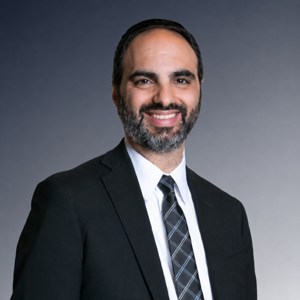
Living Emunah

Living Emunah

By Ashear, Rabbi DavidReligion & SpiritualityJudaism
Download on the App Store
  • Favorites

    27

    Followers

  • Typical duration

    6 min

    per episode

Based on Podcast App listening data

Living Emunah episodes

  • Don’t Forget the Greatest Hishtadlut
    The Gemara says that one of the things that constantly needs chizuk is tefillah. We know in the back of our minds how great tefillah is, but when it is not at the forefront, we may unwittingly fail to take full advantage of it. In Pressburg, where the Ketav Sofer served as the rabbi, a non-Jewish worker once stole the wallet of the head of the city in broad daylight. The official was so outraged that he ordered the entire police force to focus on finding the thief. The worker hid the wallet in the home of the Jew he worked for. When the police searched the house, they found the wallet and immediately jailed the Jew. The head of the city ordered the death penalty. When the Ketav Sofer heard that this innocent Jewish family man was suddenly on death row, he did everything in his power to save him. He spoke to leaders and dignitaries, but nothing helped. The evening before the execution, he made one last desperate attempt — again without success. He returned home exhausted and distraught and eventually fell asleep. In his dream, his father, The Chatam Sofer, appeared with an angry expression and asked how he could sleep while an innocent Jew was about to be killed. The Ketav Sofer replied that he had tried everything in his power but could not free him. The Chatam Sofer answered, "What do you mean you tried everything? Why didn't you pray?" At that moment the Ketav Sofer awoke. He immediately gathered the people of the city to the shul, and they spent the entire night crying out in tefillah. The next morning, the authorities decided to re-examine the case. When they questioned the gentile worker again, he confessed — and the Jew was saved. Sometimes we forget the most important hishtadlut we can make: tefillah. A woman told me she had begun saying a special Yehi Ratzon in the berachah of Hashivenu Avinu LeToratecha , praying that her son should grow closer to Hashem. The progress, she said, has been unbelievable. Her son improved in ways she never could have imagined. A man related to me that he was facing severe financial hardship. One of his most urgent problems was an unpaid electric bill of over $15,000. He had already received multiple shut-off notices, and it seemed only a matter of time before the electricity would be cut. Every time he came home, the first thing he did was check whether the power was still on. He tried hinting to relatives for help, but nothing materialized. He applied for a city assistance program and received only $50 a month. Realizing how desperate the situation was, he decided to focus intensely on heartfelt tefillah. He prayed like never before, believing that Hashem could create a salvation he could not foresee. With no real plan, he called the electric company once again — something he had already done many times. The representative repeated what all the others had said: the best she could offer was a 12-month payment plan with a large down payment. He asked if there was anything else possible, explaining how much he was struggling. This time, she did something no other representative had done. She asked a series of detailed questions about his finances and placed him on hold. During those moments, he again poured out his heart to Hashem. When she returned, she told him she could offer a payment plan of $10 a month for the next 125 years — something completely unheard of. His next bill reflected the change, adding only $10 to his regular monthly charge. He had been told repeatedly that they never offer more than a 12-month plan, and suddenly he received a 125-year plan. Tefillah can accomplish wonders. But it is up to us to give it the importance it truly deserves.
    5 min
  • The Hidden Greatness of a Difficult Life
    As mentioned previously, one of the reasons Hashem may give a person suffering in this world is to save him from something far worse. Sometimes a person endures such hardship that he cannot imagine anything being worse. It is important to remember that there are endless reasons why a person may have to suffer, even if he is completely righteous. The Chovot HaLevavot in Shaar HaBitachon lists several possibilities and then cautions that we will never be able to determine why any individual is experiencing what he is going through. Hashem has a different calculation for every person, and only He knows the true reasons. What we do need to know is that whatever the reason may be, when a person eventually discovers why Hashem dealt with him this way — whether when Mashiach comes or when he reaches the next world — he will be grateful for every moment of the life Hashem gave him. If he can trust in Hashem now and accept it with joy even before understanding, his spiritual level will rise tremendously and his reward will be beyond imagination. One of the explanations given by the Chovot HaLevavot for why a tzaddik may suffer in this world is that through that suffering, Hashem grants him a far greater Olam Haba. We know from Chazal that even the faintest taste of Olam Haba is more pleasurable than all the delights of this world combined. And Olam Haba is eternal, while this world is temporary. But how does suffering here produce a higher Olam Haba? One explanation is based on the teaching of Chazal that one mitzvah performed with difficulty is worth far more than the same mitzvah performed easily. When someone is going through hardship, illness, or pain and still manages to perform a mitzvah, still manages to pray, still manages to learn, everything he does carries infinitely greater value. One minute of his avodah may outweigh hours of effortless service. Two people may be praying in the same shul, learning in the same class, appearing identical in this world. Yet in the next world, one may stand far higher than the other — because the effort required of him was so much greater. For him, getting to shul or opening a sefer demanded real sacrifice, while the other person had it easy. We do not ask for hardship, because we fear we may not accept it properly. But if hardship does come, we must understand that it carries within it a golden opportunity to earn reward beyond anything we can imagine. It may be that someone who appears to be an ordinary Jew in this world is in truth among the greatest of the generation — not because of how much he accomplishes , but because of what he must endure to accomplish whatever he does manage to accomplish. He keeps going with a smile. He keeps doing mitzvot even when it is painfully difficult. He keeps his emunah in Hashem even when life feels unbearably hard. This may also explain the Gemara which tells that when Rav Yosef became ill, his soul briefly departed and then returned. Afterward he said he saw an upside-down world — those who appeared lowly here were elevated there, and those who appeared elevated here were low there. His father told him, "You saw a clear world." A person who looks like a simple Jew down here may occupy the highest place in the upper world because of the enormous difficulty he faces in serving Hashem within the life he was given. There are infinite reasons for suffering in this world. For now, our task is to trust that every one of them is for the best. If a person can accept that Hashem is doing what is best for him and continue to serve Him with joy, he will merit the highest places in Olam Haba for all eternity.
    5 min
  • Accepting the Pain That Saves Us
    When a person experiences any kind of suffering, he must understand that it comes only from the great love that Hashem has for him. The Tanach as well as Chazal are filled with statements attesting to this truth. When a person internalizes this and wholeheartedly accepts that Hashem is actually helping him when he has a difficulty, it is a wondrous expression of emunah, which is heavily rewarded in the next world. We must remind ourselves of this again and again, because when a person is hurting, he naturally wants to complain and bemoan his fate. There is a story brought down in the introduction to the sefer Divrei Yechezkel Shraga about Rabbi Yosef Teitelbaum, who served as the rav of a large city in Europe before the Holocaust. He took care of all the city's religious needs, and they paid his rent and supported him. One day, his non-Jewish landlord informed him that he was selling their apartment and they would have to vacate within the month. At that time, there were no other apartments available for rent in the city, and this meant the rabbi would not only lose his apartment, but his entire community and life's work, as he would have to move to a new city. A few days later, an argument broke out on a street corner between two women from the community. They were each saying hurtful words to each other. At one point, one of the women said to the other, "You are a difficult and terrible person. Even the rebbetzin said you're a dangerous woman." The other woman, hurt by this accusation, was filled with anger toward the rebbetzin for supposedly saying that. She immediately went to the rebbetzin's house and knocked on her door. The rebbetzin answered with a pleasant smile, but the woman burst out loudly and publicly, "How dare you say I'm a difficult and bad woman? Shame on you. You're a miserable woman yourself." The rebbetzin froze in shock. She had no idea what this woman was talking about. She told the woman she had never said anything of the sort, but the other woman was so swept away by her emotions that she continued mercilessly attacking the rebbetzin with harsh words. The rebbetzin could not bear the shame. She ran to her room, locked the door, and burst into tears. She sobbed bitterly. "Ribono Shel Olam I can't endure all of these hardships. First we find out that we have to leave the kehillah that we invested our entire lives in, from which we earn our livelihood and feed our children. And now this terrible pain and humiliation that is unbearable. Why so much suffering?" The rebbetzin cried until she fell asleep. Suddenly, the image of her holy father, Rav Yechezkel Shraga, appeared to her in a dream. He said, "I am ashamed of you, my daughter. Your crying and complaining is bringing me shame and pain in the upper world. "There was a harsh decree, and you were supposed to pass away. I exerted all of my strength to be an advocate for you and your children to annul the decree and keep you alive. After begging and pleading for mercy, my request was accepted. "It was decided in Shamayim to replace the decree with suffering instead. Your landlord would cause you distress by telling you he was going to sell your apartment so that you would have to leave behind your entire life and livelihood for an unknown future. As well, you would be shamed in public. "This was to give you a new life for years to come. How could you be crying and complaining?" The rebbetzin woke up in a sweat, remembering every detail she had just seen. A few minutes later, the woman returned to apologize. She had found out the other woman made it up, and she felt horrible for the way she acted. The rebbetzin told her not to worry. It was all for her best. A few hours later, the landlord came to say that he had decided not to sell the apartment and they could stay living there. The rebbetzin then shared with her husband all that had happened and felt terrible for not accepting her suffering with love. Rabbi Tzvi Nakar quoted the Baal Shem Tov, who said that every time suffering befalls a Jew and he accepts it without complaining, he builds immeasurable structures for himself in Shamayim. He elevates Hashem's honor and brings tikkunim that could not have been accomplished any other way. We always have to remember that Hashem is acting in our best interests, even if sometimes it hurts.
    6 min
  • Mishpatim: Verapoh Yerapeh — The True Healer
    The pasuk says in this week's parashah Mishpatim, regarding one who injures another, וְרַפֹּא יְרַפֵּא — verapoh yerapeh. Chazal learn from those words that a doctor was given permission to heal. The Gemara explains that one might have thought that since illness comes from Hashem, perhaps people do not have the right to intervene. The Torah therefore explicitly grants permission. The Torah uses a double expression — verapoh yerapeh. One explanation is that although the visible healer may be the doctor, we know that the true healer is HaKadosh Baruch Hu. Hashem commands us to go to doctors because He wants the world to function through teva, through natural means. Therefore, we must take medications, we must follow treatment instructions, and we must do our hishtadlut. At the same time, we must know the entire time that healing will only come if Hashem decrees that it should. There have been times when the greatest specialists gave a grim prognosis and suddenly everything turned around and the patient recovered. There have been times when treatment options appeared limited, yet the body responded far beyond expectations. There have been times when two people received the exact same diagnosis, went to the same doctor, followed the same treatments, and yet their outcomes were completely different. Why? Because Hashem decided that this one would be healed and that one would not. Believing that Hashem is the One who brings the healing is a tremendous zechut which can hasten the process. It is not easy to maintain that clarity when we are sitting in doctors' offices, filling prescriptions, and pursuing every possible avenue to get better. And that is precisely why the zechut of seeing through all of it is so great. We have seen so many times when we thought healing would come through one channel, and in the end it came from somewhere completely different. That is a reminder that it is not the avenue that brings the healing — it is only Hashem. Rabbi Rosen from A-Time shared a story that began in 2017. Their organization had developed an innovative medical machine for couples struggling with infertility who had already exhausted every option. When the rabbi shared the news of the discovery, many childless couples felt renewed hope, especially a man named Binyamin and his wife, who had already been waiting for ten long years. After so many disappointments, this finally seemed promising. As they waited for final approval to use the machine, obstacles began to mount. There were restrictions, safety concerns, and endless regulatory requirements. Before anything could proceed, laboratory testing had to verify that the laser and special dye were safe. Then the hospital stalled. Months turned into years. With every delay, the window of opportunity for Binyamin and his wife was narrowing. In the end, they were forced to confront the painful reality that this path was no longer viable. A-Time then attempted to pursue a similar approach in Israel, where regulations were somewhat more flexible and innovation could move faster. They acquired another machine and began testing there. Hope was renewed. Then COVID struck, and everything came to a halt. When the world gradually reopened, they resumed where they had left off. They sent samples to one of the most advanced genetic teams in the world. The results that came back were devastating. The project would not succeed. Binyamin and his wife felt their hope drain away once more. It seemed that nothing else could be done, that the road had ended. Yet with Hashem running the world, there is always hope. Out of nowhere, a group of infertility specialists discovered a new technique utilizing modern technology. The Borei Refu'ot revealed yet another pathway for healing. Baruch Hashem, after nineteen long years of waiting, just a few months ago, Binyamin and his wife were blessed with their own baby. Hashem is the only Healer. We must place our bitachon in Him. With Hashem's help, He will open our eyes to see the cures He has already created for every illness in the world. Shabbat Shalom.
    6 min
  • When Mercy Is Hidden but Never Absent
    There are people who have to face overwhelming challenges in life. A potentially fatal illness that turns their world upside down. Suddenly, the entire focus of their lives changes. What was once taken for granted is now put into question. Some people have to endure great difficulties when it comes to shidduchim. Rejection, disappointment, and loneliness are just some of the issues they have to confront. Others face the test of infertility. Their dream of raising a family is thrown into doubt, and they find it difficult to focus on anything else. To go through even one of these challenges is a daunting task that requires enormous strength and perseverance. One of the hardest parts of any challenge is the feeling that it may never end. What if the illness cannot be cured? What if I never find my zivug? What if I never have a child? Those thoughts can slowly eat away at a person. But for this, Hashem gave us a precious gift. The gift of emunah—an understanding that there is always hope. Even if the doctors do not have a cure, Hashem can create one. Even if the shadchanim have not called for years, Hashem can still send a shidduch. And even if there seems to be no natural path to having a child, Hashem can still make it happen. The length of time that has passed is irrelevant. The moment Hashem decides that salvation should come, it will come. For someone striving to live with emunah, hearing stories of others with similar challenges who were helped brings tremendous chizuk. The proper attitude is not to feel left out and wonder why others were helped while I was not. Rather, it is to say: Just as Hashem helped them, He can help me. These stories are meant to instill strength and hope, to reinforce the belief that salvation can arrive in the blink of an eye. Recently, at the ATIME Shasathon, a man named Yosef Chaim shared how he faced not just one of the challenges mentioned above, but all three: battling a potentially fatal illness, struggling with shidduchim, and confronting infertility. The odds were stacked against him on every front, yet his emunah and inner strength allowed him to grow through them. He was diagnosed with a tumor. After a ten-hour surgery to remove it, his brain had forgotten how to walk. He was left immobile. After enduring infections and additional surgeries, he relearned how to walk—but then the tumor returned. Again and again it came back. He underwent five surgeries and extensive chemotherapy. As a side effect of the multiple operations, doctors told him he would never be able to walk again. When the tumor returned once more, they decided to try something new—a medication recently developed for a different form of cancer. Miraculously, it worked. Against all odds, the Borei Refu'ot granted him a new lease on life. During that same period, his mother was diagnosed with a similar form of cancer, and lo aleinu, she passed away from it. After losing his ability to walk and then losing his mother, Yosef Chaim went to receive chizuk from Rav Shmuel Kamenetsky. He asked how we can say that Hashem is malei rachamim—filled with mercy—when his life felt like the opposite of mercy. After a few minutes of silence, the Rav answered gently: Hashem being merciful is a reality. That is who He is. There is nothing but mercy when it comes to Hashem. If we do not see it, it is only because we are unable to understand Him. Those words gave Yosef Chaim tremendous chizuk. Shidduchim were naturally difficult for someone confined to a wheelchair. To make matters even harder, doctors told him that in all probability he would not be able to have children. But the Mezaveg Zivugim has already prepared a match for every person, and when Hashem wants it to happen, it will happen. Yosef Chaim was set up on a shidduch, and it progressed beautifully. His rabbi advised him to disclose the infertility concern on the fourth date. Remarkably, she agreed to continue. Baruch Hashem, they were married. Eventually, with Hashem's help—and with ATIME serving as the messenger—against all odds, they became the proud parents of a baby boy. Although Yosef Chaim endured so many struggles, he witnessed miracle after miracle, as Hashem guided him through each one. Everyone can be healed. Everyone can get married. Everyone can have children. We must always maintain hope and continue praying to HaKadosh Baruch Hu to help us through all of our challenges.
    7 min
  • Trust That Grows With Time
    There are people who do the right thing, making a difficult decision guided by the Torah, fully expecting to one day see the good that will come from it. Yet sometimes, not only do they fail to see any immediate benefit, but with time it can even appear as though the decision was a mistake. Years pass, and from our limited vantage point it may look as if the person actually lost by doing what Hashem wanted. But Hashem does not test a person only for a week, a month, or even a year. At times, tests in emunah are designed to last for decades. Throughout those years, the Yetzer Hara repeatedly tries to convince the person to regret his decision and to discourage him from making similar choices in the future. But the rule never changes. A person always gains by following Hashem. No one ever fulfilled His will and lost as a result. It may look like a loss, because that is part of the test, but in the end the person will see that he only gained, and that the gain was far greater than he could have ever imagined. The longer the test lasts, the greater the reward. When a person must hold on to his emunah for many years, continuing to trust that choosing correctly will ultimately bring blessing, the reward becomes exponentially greater. Eventually, he will see not only how much he gained in this world, but even more so how much he gained in the next. The Be'er HaParashah related a story of a man from Israel, whom we will call Shemuel. Shortly after his marriage, Shemuel received a very large inheritance, enough at the time to purchase two apartments outright, without any mortgage. He planned to invest the money in real estate so that one day he could give apartments to his children when they married. Before doing anything, he went to ask a rabbi for guidance. The rabbi advised him to invest the money in a loan gemach instead. The funds would help many people over the years, and when the time came, the money would still be there. This, the rabbi said, would be a far better investment. Shemuel accepted the advice. Twenty years later, when his first son was ready to get married, he withdrew the money from the gemach. By then, housing prices had skyrocketed, and the amount was no longer enough to buy even one standard apartment. He began questioning himself: Why did I ask the rabbi? Friends added to the pain, telling him that when it comes to investing money, one should consult financial experts, not rabbis. But the story did not end there. Several years later, after Shemuel merited, with Hashem's help, to marry off all eight of his children, he reflected on the entire shidduch process and realized something remarkable. Six of his children received full apartments from their in-laws. Two received only partial help. At that moment, Hashem illuminated his mind with a powerful insight. According to his own calculations, the inheritance should have been enough to easily take care of two children, while for the remaining six he would have had to struggle mightily to raise the necessary funds. In reality, Hashem reversed the picture entirely. The six children for whom he had no plan and no money were completely taken care of from Heaven. The two children he thought he was financially prepared for were the ones for whom he had to contribute significantly from his own pocket. It took many years for him to recognize the good hidden within his decision, and throughout that time the Yetzer Hara tried to convince him to regret it. In the end, as always, he gained far more than he could have ever dreamed of. And that is only what was visible. The true gains are infinitely greater. When a person can hold on to his emunah for years, trusting in Hashem's system even when the results are delayed, he will see that he did not only gain in this world. His greatest reward is preserved for all eternity.

    5 min
  • The Zechut of Real Bitachon
    When people are in need of a yeshuah and are looking to gain extra zechuyot, they naturally want to know what they can do to earn them. In general, every person knows his own shortcomings, and correcting something that a person is doing wrong is itself a great zechut. In addition, strengthening the belief that Hashem alone is in charge of giving a person what he needs is also a tremendous zechut. The pasuk says, ברוך הגבר אשר יבטח בה׳ והיה ה׳ מבטחו — "Blessed is the man who trusts in Hashem, and Hashem will be his security." When we truly believe that Hashem alone controls what we need, He shows us that by providing it. The Chovot HaLevavot writes in Shaar HaBitachon that one of the criteria for being considered someone who truly has bitachon in Hashem is knowing that Hashem is fully aware of our thoughts and the feelings in our heart. Therefore, it is not proper for a person to tell others that he has bitachon if, in truth, his heart is not there yet. If a person presents himself as someone who has bitachon while internally relying on other things, that creates a desecration of Hashem's honor if the salvation does not come, because people will think that someone who trusts in Hashem was not helped. A person might act outwardly like someone with bitachon, but in his heart he may still be trusting in people, effort, or natural systems. The Chovot HaLevavot compares this to the pasuk בְּפִיו וּבִשְׂפָתָיו כִּבְּדוּנִי וְלִבּוֹ רִחַק מִמֶּנִּי -describing how the Jewish people sometimes honored Hashem with their mouths, while their hearts were distant from Him. When a person truly has bitachon in Hashem, it is considered a great honor to Him. When we believe that no person and no effort has independent power over what happens, and that only Hashem controls outcomes, that itself is a form of honoring Hashem, and that is a tremendous zechut. But it is something that cannot be faked. Hashem knows whether our hearts truly believe what we are saying. When they do, in the zechut of the honor we give Hashem through our bitachon, He, so to speak, honors the person by bringing his salvation. The pasuk tells us in Divrei HaYamim that King Asa placed his trust in doctors when he became ill, and not in Hashem, and as a result he did not receive the salvation he hoped for. In every area of life, we need to do the inner work and truly believe that only Hashem can help us. If we can bring our hearts to feel that way, it is a great honor to Hashem, and Hashem rewards that. It is possible that a person was not originally destined to receive a certain salvation, but in the merit of his bitachon, he receives it anyway. Bitachon is a tremendous zechut, aside from the fact that it is a major part of serving Hashem and is a mitzvah in its own right. One of our main jobs in this world is to see past nature and truly believe that Hashem is controlling everything. I read a story about a man who needed a very large sum of money and had no natural way of obtaining it. Instead of praying for the money itself, he prayed to Hashem to help him have proper bitachon. He asked Hashem to strengthen his bitachon and give him an unwavering feeling in his heart that Hashem, and only Hashem, would be the One to provide the money, and that Hashem is full of chesed and wants to help us. He later said that when he needed the money, Baruch Hashem, it came. There is nothing that compares to true feelings of bitachon in Hashem.
    5 min
  • Trusting Hashem Where It Matters Most
    The Chovot HaLevavot writes that one of the reasons Hashem created us with the need to eat and drink, and with the need to earn a livelihood to provide for all of our other needs, is because we must pass tests in this world in order to gain Olam Haba. The wisdom of Hashem saw that tests in these areas would reveal whether we are truly servants of Hashem, because these needs are so vital to our very existence and therefore feel so critical in our eyes. Hashem wants us to make efforts in these areas in the ways He instructed us, and He wants us to trust that He is the One who is in charge of the results. When the Jewish people followed Hashem into the desert, trusting that He would provide for all their needs, it was so precious to Him that we are still benefiting today from that zechut. The Torah tells us that in the desert, the Jewish people went three days without water, and when they finally found water, it was bitter. The pasuk tells us explicitly that this was a test, to see if they would complain or trust in Hashem, and unfortunately they failed. Before Hashem sent the mann , the Jewish people first ran out of food. That too was a test, to see if they would complain or trust in Him. Then when Hashem did give the mann , He gave it in a way that tested them daily, and He even told them in advance that it was going to be a test. Throughout the forty years in the desert, they always ended up receiving whatever they needed. The delays and the process were all part of Hashem's plan to test them, and the same is true for us. Hashem provides for everyone. The process may sometimes be difficult, but we must recognize that we are being called upon to overcome a test in that area. Hashem wants us to show Him that we trust Him. We never abandon mitzvot because of struggle. It should be just the opposite. When we are struggling, that is when we are meant to strengthen ourselves and serve Hashem even better. In the end, we will see how every moment of our lives was calculated and what we were meant to gain spiritually from each moment. We never want to look back and regret how we reacted. Hashem will get a person through all of his struggles, but our job is to maintain our emunah throughout. A man told me that he was struggling in business, and it caused him to turn away from Hashem. He complained and became bitter about his life. Recently, things turned around for him, and he now feels terrible about how he behaved. He wishes he could go back and react differently, but those months are gone forever. Another man told me that he began listening to emunah classes this past year, and it transformed his life in many positive ways. Recently, he faced a situation at work that put his emunah to the test. He manages many accounts, and he received an email from his largest client instructing him to change their bank information and deposit their money into a new account. He followed the instructions. Only afterward did he discover that the client had never sent that email. It was fraud. It appeared that he had just lost half a million dollars. The money had already been transferred, and since it was his responsibility, he was expected to reimburse the account. He tried contacting many important and influential people to reverse the transaction, but no one was able to help. This all happened on a Friday morning. When his wife found out, she warned the children to be careful how they spoke to their father that Shabbat, because she expected him to be extremely stressed and possibly short-tempered. That Shabbat, however, they could not believe what they saw. He was calm, composed, and even happy, just as usual. They asked him how he could possibly be so calm at a time like that. He told them that he fully believed it was all from Hashem and for his good. He said, "We received eight emails throughout the week about this, and it never even crossed our minds that it might be fraud. Hashem could have opened my eyes to see it, but He didn't. There is nothing to be upset about." His family was deeply inspired by his reaction. It made a lifelong impression on them. Baruch Hashem, on Monday morning he received word that the money was recovered and nothing was lost. It was all a test, one that he passed, and one that will benefit him for all eternity. One of our primary missions in this world is to trust in Hashem in everything that happens, especially in the area of parnassah.
    6 min
  • The Power of a Simple Word of Praise
    Living Emunah 2891 The Power of a Simple Word of Praise When Yitro heard about how Hashem saved the Jewish people from Mitzrayim, he immediately exclaimed, "Baruch Hashem asher hitzil etchem." Baruch Hashem for saving you. As the pasuk says: וַיֹּאמֶר יִתְרוֹ בָּרוּךְ ה' אֲשֶׁר הִצִּיל אֶתְכֶם מִיַּד מִצְרַיִם וּמִיַּד פַּרְעֹה The Gemara says that the Jewish people were held accountable for not saying "Baruch Hashem" before Yitro did. Although they did sing the Az Yashir, the Be'er Yosef explains that they did not praise Hashem specifically for saving them from the dangers of Egypt and Pharaoh. Furthermore, they sang as a group with ruach hakodesh, whereas Yitro said his praise on his own. We have no idea how valuable it is when an individual says even one word of praise to Hashem. The Chachmei Kabbalah, who understand what takes place in the upper worlds, teach us that praising Hashem creates a massive impact in Shamayim. When Hashem is praised here, all the angels gather and praise Him above, and the honor of Hashem becomes glorified in both the upper and lower worlds. In Birkat Hamazon we say, "Ve'al hakol Hashem Elokeinu anachnu modim lach u'mevarchim et shemecha," and the Chesed La'alafim explains these words based on how the Alshich explains the pasuk: כִּי טוֹב חַסְדְּךָ מֵחַיִּים שְׂפָתַי יְשַׁבְּחוּנֶךָּ (תהלים ס״ג:ד)׳ There is a kindness that Hashem does for us that is greater than life itself. What is that kindness? That Hashem gives us the zechut to say His praises. The angels in Heaven wish they could say even one word of praise to Hashem in this world. In Shamayim, Hashem is revealed, and it is obvious that He should be praised. But in this world, Hashem is hidden, and we do not understand His ways. If someone in this world can say one word of praise, it is the greatest zechut. Those who have passed on and now see the glory of Hashem and the value of praising Him wish they could return to this world for just one moment to say one word of praise. This is the meaning of what we say in Birkat Hamazon "Ve'al hakol Hashem Elokeinu anachnu modim lach.... Above all, we thank You, Hashem, for the mitzvah of Birkat Hamazon that You gave us, which consists of praises and thanks for the food we ate, as the Torah commands: וְאָכַלְתָּ וְשָׂבָעְתָּ וּבֵרַכְתָּ אֶת ה' אֱלֹקֶיךָ Through this, Hashem shows us His great love for us. He knows how valuable mitzvot are in this world, and He gives them to us so that He can reward us for all eternity for performing them. A person can give praise to Hashem at any moment, in any language, and in any way he wants. When people are enjoying blessing and goodness, their praises are extremely valuable. But even more so is when a person is going through difficulties or struggles and nevertheless rises up and praises Hashem despite what he is experiencing. Those praises are infinitely greater. Every time we say the words "Baruch Hashem," we are praising Hashem. The Zohar says that the Jewish people could not receive the Torah until Yitro said those words, "Baruch Hashem." How fortunate we are that we can say them at any time. Even if we do not understand the true value of praising Hashem, we should make use of the opportunity to do so as much as we can. Shabbat Shalom
    5 min
  • Salvation Is Always Within Reach
    It is so comforting to know that no matter what situation we are going through, help is always possible. There is nothing beyond Hashem, and salvation can always come in the blink of an eye. Sometimes what is needed is deeper, more heartfelt prayer. Sometimes what is needed is a heroic act. And sometimes it is a combination of both. We do not know what else we need to do to be zocheh to the yeshuah we are waiting for, but Hashem knows. And we are able to ask Him to please place before us the opportunity to do the deed that will merit us the salvation we are hoping for. We can also ask Hashem to help us recognize that opportunity when it comes, and to give us the strength to rise to it. Everything is possible. Even the hope and belief we place in Hashem is, in itself, a great zechut. Rabbi Yitzchak Zilberstein related the following story, as it was told to him by the person to whom it happened. A man we will call Yosef shared that his daughter got married two years ago, at the beginning of the month of Nisan. The Shabbat Sheva Berachot was scheduled to take place in a hall in Kiryat Sefer. There were ninety people attending, which meant extensive planning for meals and sleeping arrangements. Finally, Shabbat arrived. While the tables were still being set, the generator suddenly failed and the entire hall went dark. Aside from a few candles, there was complete darkness. The hot plates warming the food shut off, and the refrigerators storing the upcoming meals also stopped working. The men were praying in total darkness, and the person in charge of the hall was running around desperately trying to find a solution. He attempted to locate a non-Jew, relying on a leniency brought in the Rama in cases of great need, but he was unable to find anyone. People nearby arranged for the food to be transferred to functioning refrigerators and hot plates, while everyone worked on strengthening their emunah and accepting that this too was for the best. Suddenly, a young man approached Yosef with an idea. He explained that he lived in the building across from the hall and had a large, beautiful living room with an attached yard. He happily offered to host all ninety guests in his home. Yosef hesitated. "It's only a few days before Pesach," he said. "Your house is surely already cleaned. How can you host ninety men, women, and little children? We would need to bring over all the tables and chairs and set everything up. Your furniture would have to be moved. Things could get damaged. Children will be running around eating chametz. And your own family is about to eat their Shabbat meal. We would be disturbing you tremendously." But the man, like an angel, pleaded again and again. Yosef was still reluctant, until the man finally said, "If you come, our joy will be even greater than yours." Seeing that there was no other viable option, Yosef agreed. Very quickly, everyone pitched in and transferred everything from the hall to the man's home. What followed was an extraordinary evening, far more beautiful than it would have been in the hall. The baal habayit was unbelievably gracious. He moved his own family elsewhere to eat and gave the wedding party full use of his home. Only once during the meal did he come in, and the guests seized the opportunity to thank him and ask how they could ever repay such an incredible kindness. He answered that he had a daughter who was still waiting for a shidduch, and he asked everyone to please give her a berachah that she should find her zivug soon. The entire crowd responded with a heartfelt berachah, filled with deep gratitude. Just a few weeks later, the man called Yosef with wonderful news. His daughter had gotten engaged. The day after the Sheva Berachot, they had received a positive response from a shidduch they were hoping for, and Baruch Hashem, it worked out. They later discovered that the young man had many offers, but when he heard about how this family had taken in ninety guests for a Sheva Berachot just days before Pesach, he chose to say yes. This man performed a heroic act by opening his already Pesach-cleaned home to so many people. That act became the catalyst for the yeshuah he had been longing for, his daughter's engagement. Hashem can always bring salvation. Our role is to pray, to seek out zechuyot, and to ask Hashem to give us the opportunities we need to get them
    6 min

About Living Emunah

From the publisher's feed

A Daily ethical teaching by Rabbi David Ashear

Best of Living Emunah

Ranked by our users in the last 21 days

More shows like Living Emunah

The Rabbi Sacks Legacy by Rabbi Lord Jonathan Sacks

The Rabbi Sacks Legacy

557 Listeners

The Israel Guys by The Israel Guys

The Israel Guys

308 Listeners

Jewish Stories to Inspire: Motivational & Spiritual Stories Based on the Torah's Ethics, Values and Wisdom by Stories to Inspire

Jewish Stories to Inspire: Motivational & Spiritual Stories Based on the Torah's Ethics, Values and Wisdom

186 Listeners

Living with Emunah by Rabbi Efrem Goldberg

Living with Emunah

110 Listeners

Meaningful People by Meaningful Minute

Meaningful People

1,987 Listeners

From the Inside Out: With Rivkah Krinsky and Eda Schottenstein by Rivkah and Eda

From the Inside Out: With Rivkah Krinsky and Eda Schottenstein

263 Listeners

The Q & A with Rabbi Breitowitz Podcast by Rabbi Dr Yitzchak Breitowitz

The Q & A with Rabbi Breitowitz Podcast

234 Listeners

Call Me Back - with Dan Senor by Ark Media

Call Me Back - with Dan Senor

3,197 Listeners

The Times of Israel Daily Briefing by The Times of Israel

The Times of Israel Daily Briefing

1,070 Listeners

Kosher Money by Living Lchaim

Kosher Money

821 Listeners

History for the Curious - The Jewish History Podcast by JLE

History for the Curious - The Jewish History Podcast

232 Listeners

Gedale Fenster - Podcast by Gedale Fenster - Podcast

Gedale Fenster - Podcast

399 Listeners

Honestly with Bari Weiss by The Free Press

Honestly with Bari Weiss

8,473 Listeners

Inspiration for the Nation with Yaakov Langer by Living Lchaim

Inspiration for the Nation with Yaakov Langer

1,120 Listeners

Stories Of Hope With Tzipora Grodko by Meaningful Minute

Stories Of Hope With Tzipora Grodko

324 Listeners