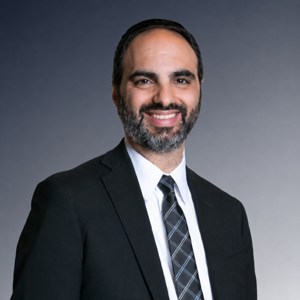
Living Emunah

Living Emunah

By Ashear, Rabbi DavidReligion & SpiritualityJudaism
Download on the App Store
  • Favorites

    27

    Followers

  • Typical duration

    6 min

    per episode

Based on Podcast App listening data

Living Emunah episodes

  • You Never Lose by Doing What Is Right
    Chazal tell us, "Ein adam shome'a leey u'mafsid" — no one ever listens to Hashem and loses. When a person acts according to the will of Hashem, he always gains. He may not see the gain immediately. He may not see any result right away. But in the end, he always wins. Sometimes Hashem gives a person a very difficult test. If he acts honestly, he may lose money. If he speaks truthfully, he may lose an opportunity. If he refuses to cut corners, he may lose a deal, a job, or a position. And then the thought creeps in, "If I had just been a little less careful, I would have gained so much." But that thought is a mistake. It may look like he lost in the short term, but in the end he will only gain from doing what was right. Rarely do we see the reward immediately. Most of the time, the benefit comes later, in a way we never could have imagined. But when we do merit to see the reward right away, it gives us tremendous chizuk. An avreich from New York told the following story. His parents live in London, and from time to time he travels there with his family to visit them. One winter day, he traveled with his wife and children — five people altogether. There were many delays at the airport. When boarding finally began, he realized there were only a few minutes left to pray Mincha. As soon as he started the Amidah, an announcement was made: the flight was overbooked, and they were looking for volunteers to get off the plane. Anyone who agreed would receive a ticket for the next day and compensation of one thousand dollars. A thought flashed through his mind. Five people. Five thousand dollars. Money he could certainly use. He was about to raise his hand, but then he stopped himself. He was standing before Melech Malchei HaMelachim. It is forbidden to interrupt the Amidah, even with a gesture. The yetzer hara whispered, "You already lost your concentration. Make the sign quickly, and then you'll go back to praying properly." But he strengthened himself and said, "If this money is meant for me, Hashem will give it to me without my doing something forbidden." He continued praying with all his heart. A few moments after he finished, another announcement was made. Since no volunteers had come forward, the compensation was now raised to two thousand five hundred dollars per passenger. He went to the counter and accepted the offer. Later, he calculated. Five thousand dollars for changing the flight. And seven thousand five hundred dollars for not interrupting his prayer. Another woman told me her story. Her family had grown, several children were already married, and she no longer had room to host them. She and her husband were looking to buy a bigger home, but they did not want to leave their neighborhood. One day, a real estate agent called with an unbelievable opportunity. A huge lot with a small house in the exact area they wanted, at a price that almost never exists. They could buy it cheaply and use the extra money to build their dream home. Then they discovered that buying this property would seriously harm someone else. Without hesitation, she said no. People told them they were foolish. "Opportunities like this don't come twice," they said. But she refused. Less than two weeks later, the agent called again. Just one block away, an even better property was about to go on the market. Same size lot, similar house — and one hundred twenty-five thousand dollars cheaper. They bought it, built exactly what they needed, and saw clearly how Hashem had rewarded them for doing what was right. Most of the time, we do not see immediately how much we gain by choosing Hashem. But the rule never changes. No one ever lost by doing the will of Hashem. No one ever sacrificed for Hashem and came out the loser. In the end — always — the one who chooses what is right is the one who wins.
    6 min
  • Hashem, the Only Healer
    There are times when a person is faced with illness, and suddenly the entire world seems to revolve around doctors, tests, scans, diagnoses, and treatments. The more complicated the condition, the more the person tends to feel that everything is dependent on the doctor's words and the medications that he prescribes. If a person believes that the power to heal is in the hands of flesh and blood, then when the doctors say, "There is nothing more we can do," his hopes will collapse. Fortunately for us, we know the truth. The pasuk says,אני ה' רפאך- "I am Hashem, your Healer." Not the doctor is your healer, and not the medication is your healer. Rather, Hashem — and only Hashem — is our Healer. The more a person believes that, the more zechuyot he will gain, and the more likely it will be that he will be healed. Hashem is called the Borei Refuot, the One who creates the medications that we use to heal ourselves. Sometimes He creates a cure before we need it, and sometimes He creates a cure precisely when we need it. How many times has it happened that it seemed there was no hope, and suddenly a new treatment was discovered, a new approach was tried, and a recovery took place just in time. The treatment was discovered not because the medical world suddenly became wiser, but because Hashem decided that the time of healing had arrived. There is no illness for which Hashem lacks a cure. There is no condition for which He cannot create a new path of healing. The limitation is never in Hashem. It all depends on how much we are ready to trust in Him. We must go to doctors, and we must take medication, but we cannot put too much emphasis on them. We can never feel that without a specific doctor we cannot be healed, or without a certain medication we cannot be cured. A man told how he was diagnosed with a life-threatening illness. It was recommended that he go to the biggest expert in the country in that particular field. The doctor, however, did not take insurance, and he needed to fill out forms to try to get approval for financial coverage. They refused his request, saying they had their own doctors who dealt with his issue. He tried every possible way to get approval — going to special committees, appealing to managers, explaining that it was a matter of life and death — but nothing helped. So he went to a doctor who was not recommended. That doctor told him that for his specific illness there was no standard medication, but this doctor knew something that others did not. At that very time, a new medication was being developed for precisely this type of sickness. That doctor was part of the development team, and when they reached the stage of trying the medication on patients, he included him in the trial — even though, according to the rules, he should not have been eligible. Baruch Hashem, he received the medication, and his life was saved. Six months later, the medication was approved for public use — but by then it would have been too late for him. Hashem led this man to the exact messenger through whom He wanted to give him the cure that He Himself had created. We are always in Hashem's hands. The more we know that, the more we trust that only He can heal, and the more heavenly help we will receive.
    5 min
  • There Is No One Like Hashem
    As we know, the miracles that Hashem performed at Yetziat Mitzrayim were not only to take revenge on the Egyptians. They were also to teach us lessons that we would need for all generations. Rabbi Menashe Reizman quoted Rabbeinu Chaim Paltiel, who explained one of those lessons. The Egyptians believed in numerous gods, and every one of them was connected to their source of parnassah. They worshipped the sheep that gave them parnassah. They worshipped the Nile River that gave them parnassah. They worshipped Pharaoh, who they believed gave them parnassah. And Hashem made a mockery of all those gods, including the Baal Tzafon. Baal Tzafon was the place where Yosef hid all of the treasures that he accumulated during the years of famine. As long as Baal Tzafon stood, the Egyptians felt secure. It was their insurance policy. Even if the Nile failed, even if their livestock died, even if everything else collapsed, they still had mountains of gold hidden away there. Pharaoh emptied that treasure house and gave everything to the Egyptians in order to convince them to chase the Jews into the Yam Suf. That is what caused them to ultimately drown there, and that is how all of that wealth was transferred to Am Yisrael. Hashem was showing us that all of the things the Egyptians believed in were nothing. It was only Him who controlled everything. Sometimes a person becomes so wrapped up in his parnassah that he begins to trust in it. And if there is an issue with the product, or the customer, or the boss, he begins to tremble in fear that his parnassah is in jeopardy. Believing in the cause of parnassah is very similar to believing in the Egyptian deities. The Gemara says that whoever is somech geulah l'tefillah, no harm will befall him that day. Rabbeinu Yonah explains that if a person truly absorbs the message of the geulah from Mitzrayim, he will nullify all other imagined sources of help and rely fully on HaKadosh Baruch Hu. Only then can he truly pray. So long as a person believes that his refuah is in the hands of the doctor, and his future is in the hands of a diagnosis, how can he truly mean the words כי אל רופא רחמן ונאמן אתה that he says in tefilah? The more emotional involvement a person has in his hishtadlut, the weaker his emunah becomes. When it comes to parnassah, when a person truly believes that only Hashem is giving it to him, that only Hashem is marrying off his children, and that only Hashem is giving each person the house he needs to live in, then his kavanah in prayer becomes deep and real. First a person must nullify all other sources of support in the berachah of Ga'al Yisrael, and only then can he begin the Amidah properly. The Arugat HaBosem explains that the main essence of every berachah in the amidah is in its conclusion: כי אל גואל חזק אתה כי אל טוב וסלח אתה כי אל טוב ומטיב אתה Even though we must make hishtadlut, the Chazon Ish warns that we must not have emotional attachment to it. We must not lose our composure when hearing bad news about the industry we work in. Rather, we should remain calm, with the serenity of one who trusts that the same Hashem who helped him yesterday in one way can help him today in another way. The Gemara says that someone whose mind is preoccupied with worry in the performance of a mitzvah can be exempt from Keriat Shema. Then the Gemara asks: what about someone whose mind is preoccupied with worry because his merchandise sank at sea? Should he also be exempt? The Gemara answers no. He must remove the worry from his heart, because Hashem can provide his livelihood from somewhere else instantly. In fact, sometimes it is precisely through the sinking of the ship that his livelihood will come. Like the story of Rav Huna, who had four hundred barrels of wine turn sour into vinegar. One opinion in the Gemara says that afterward the emperor's daughter became ill and needed vinegar for healing. Suddenly vinegar was in great demand, and Rav Huna sold all of his vinegar at a great profit. He did not need wine in order to succeed. Hashem gave him even greater blessing through vinegar. Part of the purpose of Yetziat Mitzrayim is to bring us to one clear conclusion: כי אין כמוני בכל הארץ-there is no one like Hashem. Everything we could ever want or need comes only from Him. And the more deeply we believe that, the greater our tefillot and our avodat Hashem will become.
    6 min
  • Parashat Va’era: The Lesson of the Makkot
    In this week's parasha, Va'era , we read about seven of the makot which Hashem brought upon the Mitzrim . The Ramban says one of the lessons we are supposed to learn from the makot is that in the same way it was obvious that Hashem was behind those open miracles, it's also supposed to be obvious that Hashem is controlling the world through nature as well. If a person's roof is leaking, it is Hashem who caused it to happen. If a person's car got dented, it was Hashem who made it happen. If a person made money through a business deal, it was Hashem who made the deal for him. And whenever a person receives any type of help from another individual, it was Hashem who brought it about. Each time a person experiences any situation in life and he attributes what happens to the workings of Hashem, that is included in the mitzvah of אנכי ה' אלוקיך אשר הוצאתיך מארץ מצרים. A woman told, she was going through a lot of hardships. When Chanukah came, she managed to put them out of her mind and was looking forward to spending one of the evenings at her parents' house who were hosting a Chanukah party. That night when her son came home from school, he was very upset about his basketball practice. He made everyone in the house miserable because of it and, in the end, things got so bad, they didn't end up going to her parents' party. This made matters much worse. The next day, she did not want to talk to anyone, especially her son. That evening, her husband reminded her they had a Bar Mitzvah to attend. She wasn't feeling well, she was in a terrible mood and did not want to go, but she forced herself to go because it was the Bar Mitzvah of a close friend of theirs. She sat at a table there feeling sorry for herself, not wanting to talk to anyone. But then, a friend came over to say hello and that friend began talking to her about how difficult it has been raising her children. And then she mentioned, her eldest son, who was a senior in high school, just spent the whole night crying because his basketball team lost the game and it has been a strain on the house. This woman couldn't believe the hashgacha that was taking place. Here, she felt her son's attitude which ruined the previous night was so silly and now a friend, who she hadn't spoken to in a very long time, comes over to tell her the same thing happened in her house. This gave the woman so much chizuk . She felt Hashem talking to her and was able to move on happily, despite all the problems she was having. Her belief that it was Hashem who orchestrated that, and sent that friend to talk to her, is a mitzvah in its own right. So in addition to all of the other benefits that she received from that meeting, she also got a spiritual elevation by fulfilling a mitzvah. A relative of mine told me that for whatever reason, she hadn't made chulent in the past three months. This past Shabbat, she prepared it and, as usual, was planning to plug in the crock pot right before she lit the candles, but it completely slipped her mind. Her housekeeper had polished the tray that her candles are set upon this past week and therefore the tray was a little out of place so she moved the tray back into place and, all of a sudden, a small folded yellow piece of paper came out from underneath and fell right into her hands. She opened the paper and it had just one word on it. " Chulent ." She had written that note three months before to remind herself not to forget to plug in the crock pot. And on this day, it "accidentally" fell into her hands. She was so excited seeing how Hashem reminded her to plug in her crock pot. Although one could look at this and say, "Yeah, that just happened to be," she is fulfilling a mitzvah by believing it was all done by hashgacha peratit . The more we accustom ourselves to seeing the yad Hashem in everything that happens, the more we will be fulfilling the main purposes of Hashem's performances of the makot in Mitzrayim . Shabbat Shalom.
    6 min
  • Our Job
    Our parnasa is only b'yad Hashem, nobody can take away money that Hashem wants us to have. הרבה שלוחים למקום – Hashem has many ways of giving us parnasa . Our job is to deal in business the way Hashem wants us to – honestly, keeping our word, and being upright. He decides how much we make and where it comes from and we do our part by doing business according to halacha . A man we'll call Yosef told me, he started listening to emunah classes a couple of years ago and he has become a completely different person when it comes to money. He knows now, he only works for Hashem and his main concern is doing what Hashem wants him to do. This past year, he did a job for a customer and the customer began nitpicking every step of the way. The customer mentioned to him that someone stole a lot of money from him and, when the job was completed, the customer said he was not paying the balance due - $30,000. He seemed to think that because someone wronged him, he was allowed to wrong someone else to get his money back. Yosef told him that he did everything he was supposed and deserved to be paid, but the customer was adamant about not paying. They went to a rabbi for advice to resolve the matter and the rabbi told the customer, "You owe the $30,000." The customer nodded his head, but later on refused to pay. Yosef said to himself, I worked honestly, I did my hishtadlut, Hashem is my boss, He will pay me the way He wants to . He mentioned that he sits next to that customer in the same shul, his children play with his children, but he did not tell anybody about what happened. He doesn't hold a grudge against that man and he would never speak lashon hara about him. The day after he decided to let the money go and not cause a machloket over it, he received a phone call for a very easy job that earned him $75,000. He works for Hashem and Hashem is the only One who matters to him. What an inspiring attitude to live by! It is so clear that our parnasa comes only from Hashem. A Rabbi told me, he was once learning with a very wealthy man and, after they finished, another man walked up to them and he told the wealthy man he had a tip on a stock and told him to buy it right away. On the spot, the wealthy man called his broker to place the order. It was a cheap stock and he told the broker to buy one million shares. A few days later, once again while the wealthy man was learning with the rabbi, the other man came over to them and apologized that the stock went down. The wealthy man said, "What do you mean went down? I made millions on it, thank you!" "Are we talking about the same stock?" said the other man. They looked into it and saw that the wealthy man accidentally told the broker the wrong symbol of the stock. The stock he bought went up while the other one went down. In fact, he said, the president of that company called him asking him why he bought so many shares. He thanked him because he was the cause of the stock rising. If Hashem wants someone to make money, that person's going to make the money. He is the only One we need to impress and He wants honesty and integrity. When people see us acting the way Hashem wants us to act, it also brings about a great kiddush Hashem.
    5 min
  • Keep Praying
    For a 20% discount on Rabbi Ashear's new book on Parnassah click the link below and enter Promo Code - Emunah20 https://www.artscroll.com/ Books/9781422640708.html Some people say they can't pick up a siddur to pray with. They feel betrayed. They had invested hundreds of tefillot, day and night, crying out to Hashem for help, but never got what they were asking for. They weren't asking for luxuries, and they knew it was so easy for Hashem to give it to them. They don't think that they are so bad that they shouldn't deserve what they were asking for. The only conclusion they have is that prayer doesn't really work, at least not for them, so why should they bother continuing with it. It is certainly not easy to deal with disappointment, but we must know this is one of our main jobs in this world. For someone like this to say, “I trust you, Hashem. I know You hear every word that I say, and I know You love my prayers,” and he continues to pray, it would elevate him so much. The prayers from a person who has so many reasons to turn away are so valuable. Every tefila is a mitzvah in its own right, and will earn a person eternal life, especially when it's so hard for him to do. Every tefila is heard, and every tefila counts. A businessman in Yerushalayim needed $300,000 to take his business to the next level, and went to the bank to apply for a loan. The bank dragged their feet and did not give him an answer for two months. During that time, he prayed so hard for heavenly help. He went to Meron to pray by the kever of Rabbi Shimon Bar Yochai. He went to the Kotel numerous times. The day they finally called back, he was in the car, and immediately recognized the number of the bank manager lighting up on his phone. The first words he heard was, “I'm sorry, I hate to disappoint you, but we can't approve your loan.” To him, this loan was his entire future. His head started to ache, and he felt dizzy. He couldn't continue driving, so he pulled over to the side of the road. He thought of all the heartfelt tefilot that he had made. He said to himself, “ Ribono Shel Olam , what happened to all my prayers? Weren't they worth anything?” He was ready to give up on prayer altogether, but then he stopped himself, and he reminded himself of the basic principles of emunah. He said to himself, if Hashem decided not to give me this loan, that means it was the best possible outcome. He sat there for ten minutes, giving himself chizuk in emunah, and then he was ready to continue driving. As he was going to pull away, an elderly man knocked on his window, asking him for a ride. When the man got in the car, he asked if he could relate a short devar Torah . He then went on to give a mashal of how every tefila we make is heard by Hashem and connects us to Hashem. The man was floored. Exactly when he needed that chizuk , a man came into his car and asked him if he could relate that chiddush to him. That evening, he went back to the Kotel to pray, this time with deep-rooted emunah. He accepted Hashem's decision about the bank, and then he asked Hashem to give him the money in a different way. The very next morning, his accountant called and told him, he just found out that the government is giving financial backing to small businesses, but there are two conditions to get it. Number one, he had to have all the papers ready in two days. And number two, only someone with no outside financial backing qualified for the offer. Since he had just applied for the loan, he had all the papers ready, and because he was denied for that loan, he qualified for this much better offer. Nobody knows what we need better than Hashem. Sometimes all we need is just to keep praying more.
    5 min
  • Capitalize on Your Opportunities
    There are times when a person wants something very much. He prays all the time for Hashem to help him and he makes the necessary hishtadlut to get it done. Yet, day after day goes by with no sight of salvation ahead. The person wonders why he's not being answered. He's willing to do anything to get what he wants, but he doesn't know what else he could possibly do. Very often, Hashem sends the opportunities we need to get exactly what we want, but we fail to see them. It could come in the form of a test to overcome or a mitzvah opportunity that is presented to us. If we capitalize on those opportunities, the outcome we are hoping for would surely arrive. There could have been dozens of times that we could have gotten what we were asking for, if we would have only utilized the opportunities that Hashem sent us. A man, who we’ll call Yehuda, told that after years of work, he finally completed a manuscript with Divrei Torah and mefarshim on the topic of shemirat einayim . He took the manuscript to a Gadol for a beracha and the Gadol was very impressed. The only thing Yehuda needed was a lot of money to print the book. He didn't know anyone he could ask and really could not think of any hishtadlut to make. He prayed for a yeshua day and night. It was Friday, the 9th of Shevat and the yahrtzeit of Rav Shalom Sharabi was on Shabbat, so people were going to his kever on Har HaZetim that day. After Shacharit , a man came over to him and asked if he would accompany him to Har HaZetim. Yehuda said he was busy and needed to help at home. As he was speaking to this man, Yehuda's wife called asking for him to come home and help get the children ready to make their bus for school. Yehuda then told the man he had to go and suggested someone else to go with him. The man replied that the other person went with him the night before and he really wanted Yehuda to come. He said he would come to his house and pick him up after he finished doing what he needed to do. Yehuda didn't know what else to say because the man was obviously not getting the hint. Yehuda went home and sure enough, a short while later, this man actually came to his house and waited outside for him to come. Because the man was so insistent, Yehuda went with him. When they finally arrived back, Yehuda went to the beit midrash to work on the finishing touches of his sefer . It was only fifteen minutes later that this man showed up in the beit midrash and began asking Yehuda questions about what he was working on. As of the day before this, Yehuda had hardly known this man and all of a sudden he was acting like they were best friends. Yehuda understood that this man didn't have too much to do with his time and being that he did, he tried to make it obvious that he was not interested in talking to him. This time, the man seemed to get the hint and started backing away. At that moment, Yehuda caught himself and thought, you're writing a sefer about guarding your eyes, but what about guarding your mouth? And what about loving your fellow? That is also part of the Torah. Yehuda immediately changed his tone and called the man back over and started talking about the book that he was working on. The man was so happy to talk. He asked Yehuda many, many questions and Yehuda patiently answered all of them until the man finally left. A minute later, another man came over to Yehuda and said, “I saw how you acted so graciously to that man and I saw how in the morning he drove you crazy and yet you still spoke to him with such respect. I also overheard all about your book and I want to help you put it out. How much do you need in total?” At that point, they spoke numbers. And on Sunday, this person brought Yehuda the entire sum he needed. And baruch Hashem, the book was put out. What Yehuda thought was a nuisance was really the opportunity Hashem was sending him to get the salvation he had been praying for. He passed the test and the yeshua came. The best hishdadlut we can make is always doing the best we can in our service to Hashem.
    6 min
  • Parashat Shemot
    The pasuk says in this week's parashat Shemot, וַתֵּתַצַּב אֲחֹתוֹ מֵרָחֹק לְדֵעָה מַה־יֵּעָשֶׂה -לוֹ Simply, this refers to Miriam, Moshe's older sister, who was standing by watching what would happen to him when he was put into the Nile River. Rabbi Menashe Reizman quoted the Midrash which explains that this pasuk is referring to the Shechinah, standing there watching from afar. The Midrash proves from other pesukim how every word in that pasuk is a reference to the Shechinah. The Maharsha, Masechet Sotah, explains the Midrash is teaching us that although Moshe being thrown into the river seemed like an act of destruction, the ways of Hashem are very far from us. Miriam had a prophecy that the savior was going to be born, and this looked like a nullification of that prophecy. However, this was actually the way in which the prophecy became fulfilled. It was through this that Moshe was raised safely in the palace by the daughter of Pharoah. It also teaches us that although this took place when the harshest slavery began, it appeared that Hashem was so distant, but He was right there standing with them. During their darkest time, Hashem was making the greatest miracles—causing the daughter of Pharoah to go down to the Nile at the exact time Moshe was placed there, and then making the miracle of her arm stretching out to reach him. Rabbi Reizman pointed out that the Torah only devotes six pesukim to discussing all of the slavery in Mitzrayim. Right after that, begins the story of the redemption—how Moshe was born and how he became the go'el. Even the pesukim that speak about the throwing of the babies into the Nile mention Miryam and Yocheved, the mother and sister of the go'el. Perhaps one explanation of this is that we are not meant to dwell too much on the difficulties that we are given. It is hard for us to comprehend how pain and suffering could possibly be good for us, and therefore it is incumbent upon us not to analyze the details too deeply, but rather to trust in Hashem. When Hashem called to Moshe from the burning bush, the pasuk says that Moshe was afraid to look. Hashem appeared to Moshe in a thorn bush, symbolizing עִמּוֹ אָנֹכִי בְצָרָה -He was with us during that hard time. Moshe did not see all the harsh slave labor because he was in Midyan. The Mefarshim explain that here Hashem began showing Moshe the suffering that the Jewish people were going through, but Moshe was afraid to look because he did not want to lower his level of emunah and potentially have questions on the way Hashem was dealing with them. One of the harshest decrees was that Pharoah was killing 150 babies every morning and another 150 every evening, bathing in their blood because he had tzara'at. When Moshe heard about this, along with the fact that Jewish babies were being built into the walls as bricks, he asked Hashem what they did to deserve this. Hashem told Moshe that all of those babies were from previous generations and were receiving their tikkun. It was all chesed, meant to purify them. Hashem told Moshe that if he really wanted, he could save one—and Moshe did. That one baby-Micha- brought about the worst destruction. He was the one who took the Shem Hashem that Moshe used to bring Yosef's aron out of the sea, threw it into the fire when the Jews were waiting for Moshe to come down from Har Sinai, and caused the Egel(golden calf) to emerge alive. Until today, we are still suffering from the effects of the Egel. He later made an idol when they entered Eretz Yisrael, causing countless tragedies to befall the Jewish people. He was also known as Nevat, the father of Yeravam, who caused the exile of the Ten Tribes. That destruction came from just one of those babies. The Lev Aryeh writes that all those who perished in Mitzrayim were neshamot from earlier generations that returned for a tikkun—the generations of the Mabul, Dor HaPelagah, and the people of Sedom. The Mishnah says in Pirkei Avot, אַל תִּסְתַּכֵּל בַּקַּנְקָן אֶלָּא בְּמַה שֶּׁיֵּשׁ בּוֹ (Avot 4:20) The Lev Aryeh explains homiletically that this also refers to the tragedies in Mitzrayim. The word קן has the numerical value of 150. Do not look at what happened to the 150 babies in the morning and the 150 babies in the evening; rather, look at who those people really were—resha'im who needed a tikkun. Hashem is always standing near us, but He appears to be afar because His ways are so far beyond our understanding. Everything He does is chesed. We do not have the ability to comprehend His ways in this world, but we do have the ability to trust in Him. We should not dwell excessively on the difficulties; rather, we should believe that everything is chesed done out of love. And if we have that emunah, then we will be considered people who are truly loyal. Shabbat Shalom
    7 min
  • The Endless Power of Being Mezakeh the Rabim
    Besides for the eternal merits that mitzvot give us, there are also segulot within them that bring blessing in this world as well. When someone is in need of a yeshua, one of the greatest approaches is to become extra careful with a specific mitzvah to increase his merits through it. The Chovot HaLevavot, in Shaar Ahavat Hashem, writes that when a person helps others grow in Torah and mitzvot, his merits become endless, because they are multiplied according to the merits of all those he helped. Rabbi Yisrael Brog shared a powerful story that reveals the value in Shamayim of being mezakeh the rabim. Rabbi Pinchas Peretz is a rabbi in Ofakim. Every day, his wife would take their daughter to playgroup. One day, she asked him to do it instead, because she had something important to attend to. Rabbi Peretz put his daughter into the car and then drove to his print shop, as he did every day. At one o'clock in the afternoon, his wife called to remind him to pick up their daughter. The playgroup was not far from his shop, so he walked there calmly. When he arrived, he was told that his wife had never brought their daughter that day. In an instant, he froze. He realized that since eight o'clock that morning, his daughter had been left in the car on a blazing hot day. He began screaming and running frantically back to his car, fearing the worst. As he ran, he called Hatzalah. When he reached the car, he saw his daughter, her face beet red, but unbelievably, she was still alive. She was breathing heavily and appeared to be in a deep sleep. Emergency responders arrived immediately, administered treatment, and stabilized her. They told Rabbi Peretz that she was literally minutes away from tragedy. She was rushed to the hospital, given IV fluids, and treated extensively. The doctors could not believe that a child who had been in a hot car for five hours was still alive. That night, Rabbi Peretz saw in a dream that he was standing before the Heavenly Court. A decree had been issued that his daughter would pass away. Suddenly, Chacham Ovadia Yosef appeared and pleaded on her behalf, saying that in the merit of her father being mezakeh the rabim, she should live. Rabbi Peretz prints Torah messages in his print shop and distributes them free of charge to the public. So many people grow closer to Hashem through those words of Torah. When he woke up, he understood the magnitude of the miracle that had taken place. Rabbi Brog also shared another story. There was a man who would hang signs in his neighborhood every Wednesday, reminding people of candle lighting times and when Shabbat begins. When someone asked him why he does it, he answered that he wanted to help people be more careful with the honor of Shabbat. Another individual, already in his forties and still not married, decided to take on a merit for the public. He became a central contact point where people could send resumes, and he would forward them to those who could help with shidduchim. Baruch Hashem, not long afterward, he himself got married. There is no shortage of mitzvot through which a person can help others. Some strengthen shemirat halashon by sharing daily halachot through phone lines or printed sheets in shuls. Some help others with modesty, others with shemirat ha'einayim, and the list goes on. Every mitzvah carries immense merit, but when a person helps others perform mitzvot, the merit becomes endless.
    5 min
  • Rise to the Occasion
    Hashem has many ways of helping a person. Sometimes the person has a middat hadin upon him, and because of it, he is unworthy of being helped. In those instances, Hashem will first give the person an opportunity to gain the zechuyot that he needs to overcome that middat hadin , and thereby be able to access the help that Hashem wants to give him. Sometimes it requires a very big act of self-sacrifice, and when the person is being asked to do it, he'll naturally want to say no. He must remember, every mitzvah opportunity that he gets is hand-picked by Hashem, and if he is able to rise to the occasion, he will always gain from it. Sometimes we see immediate benefits, and sometimes we don't. But guaranteed, whenever we do a mitzvah, especially a difficult one, we always win. A man from Yerushalayim related that his friend, who we'll call Daniel, who made aliyah fifteen years ago, received an urgent call from his brother's family in America, asking him to come and give emotional and physical strength to his brother, who was suffering in the hospital. Although they hadn't seen each other in fifteen years, the family felt only a brother could do the job that was necessary to be done. Daniel understood he was needed, and so heroically, he bought a plane ticket and planned to spend a full week in America, giving his brother the chizuk and encouragement that he so desperately needed. Daniel did the job wholeheartedly, and really was able to lift his brother's spirits. One day, while in the hospital with his brother, Daniel suddenly had a terrible headache. It wasn't the first time his head hurt, but the intensity of the pain was cause for concern. He said to himself, he's in a hospital anyway, so he might as well have it checked out. He was taken for an examination, and the doctors were in shock. Daniel needed immediate medical intervention, and because of it, his life was saved. What would have been had Daniel gotten this headache on a routine day in Yerushalayim? He surely would not have gone to the hospital to check it out. The act of mesirut nefesh that he did to help his brother, helped him in a much bigger way. Another man from Israel told, that one day last year he got a call from a neighborhood friend, apologizing for his request in advance. He said his wife was not feeling well, and was not able to get the house ready for Pesach. Additionally, he had a very important guest coming that evening, and they had to get the house organized. He did not have the means to pay for cleaning help, and so he humbly requested if perhaps one of his daughters could come and help. The man told his neighborhood friend not to worry, as he would send one of his daughters as soon as possible. The man approached his eldest daughter, who was engaged to be married at that time, and asked her if she wanted to do this great mitzvah before her wedding. She happily agreed, and went right away. As soon as she arrived, she understood the situation, and started working immediately, clearing up, cleaning, organizing, shining, and polishing. A few hours later, the house was sparkling. A few minutes before she was going to leave, the important guest from Antwerp arrived. He greeted everyone there, and then asked about this girl, who he knew was not part of the family. The baal habayit told him about the tremendous mitzvah that she had just spent hours doing, and also said she was a kallah, with her wedding just a few weeks away. The guest said, "If that's the case, I want to give her a wedding present as hachnasat kallah to help pay for her expenses." He gave her a check for $10,000, which her family needed very badly. Her act of self-sacrifice seemed to be just for helping others, and in the end, she and her family were helped even more. Many times, the difficult opportunities we are presented with are Hashem's ways of giving us the help that we need.

    5 min

About Living Emunah

From the publisher's feed

A Daily ethical teaching by Rabbi David Ashear

Best of Living Emunah

Ranked by our users in the last 21 days

More shows like Living Emunah

The Rabbi Sacks Legacy by Rabbi Lord Jonathan Sacks

The Rabbi Sacks Legacy

557 Listeners

The Israel Guys by The Israel Guys

The Israel Guys

308 Listeners

Jewish Stories to Inspire: Motivational & Spiritual Stories Based on the Torah's Ethics, Values and Wisdom by Stories to Inspire

Jewish Stories to Inspire: Motivational & Spiritual Stories Based on the Torah's Ethics, Values and Wisdom

186 Listeners

Living with Emunah by Rabbi Efrem Goldberg

Living with Emunah

110 Listeners

Meaningful People by Meaningful Minute

Meaningful People

1,987 Listeners

From the Inside Out: With Rivkah Krinsky and Eda Schottenstein by Rivkah and Eda

From the Inside Out: With Rivkah Krinsky and Eda Schottenstein

263 Listeners

The Q & A with Rabbi Breitowitz Podcast by Rabbi Dr Yitzchak Breitowitz

The Q & A with Rabbi Breitowitz Podcast

234 Listeners

Call Me Back - with Dan Senor by Ark Media

Call Me Back - with Dan Senor

3,197 Listeners

The Times of Israel Daily Briefing by The Times of Israel

The Times of Israel Daily Briefing

1,070 Listeners

Kosher Money by Living Lchaim

Kosher Money

821 Listeners

History for the Curious - The Jewish History Podcast by JLE

History for the Curious - The Jewish History Podcast

232 Listeners

Gedale Fenster - Podcast by Gedale Fenster - Podcast

Gedale Fenster - Podcast

399 Listeners

Honestly with Bari Weiss by The Free Press

Honestly with Bari Weiss

8,473 Listeners

Inspiration for the Nation with Yaakov Langer by Living Lchaim

Inspiration for the Nation with Yaakov Langer

1,120 Listeners

Stories Of Hope With Tzipora Grodko by Meaningful Minute

Stories Of Hope With Tzipora Grodko

324 Listeners