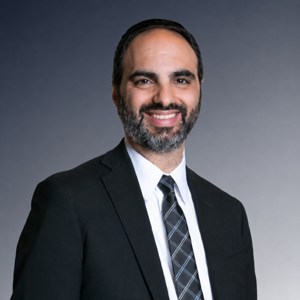
Living Emunah

Living Emunah

By Ashear, Rabbi DavidReligion & SpiritualityJudaism
Download on the App Store
  • Favorites

    27

    Followers

  • Typical duration

    6 min

    per episode

Based on Podcast App listening data

Living Emunah episodes

  • Reduce Financial Stress
    A large part of the stress caused by finances is due to worry about the future, with thoughts such as, "We got by until now, but how are we going to be able to afford that?" The fear of the future can demoralize a person. Our Chazal taught us that basic emunah means if we have enough for today, we're not allowed to worry about tomorrow. Every day is a new calculation. Just because we don't have enough now for next week's expenses doesn't mean Hashem won't take care of them when the time comes. And even if when that time comes, we still have to struggle to get the bills paid, that doesn't mean that Hashem is not helping. Hashem always helps. Sometimes for a person's own benefit, Hashem wants him to go through a certain struggle. When we look back in hindsight and see all of the expenses that we somehow managed to pay, we can appreciate more how much Hashem was helping. A couple who raised a very large family, marrying off twelve children, once sat down to calculate the total price of how much each of those weddings must have cost including the hall, the band, the caterer, the clothing, the gifts, the rent money for an apartment, plus the down payments on purchases of apartments. The picture that emerged before their eyes was nothing less than miraculous. It seemed that those expenses far exceeded all of the money they had ever made, and that's without even factoring in their daily expenses. A young man told that his father, who we'll call Yehuda, has been learning in a kollel since his wedding and his mother earns just enough to support the family in a very modest way. When his sister became of age, his parents wanted her to find an outstanding talmid chacham. However, in their circles, it was customary to pay a hefty sum for such a chatan, which they most definitely did not have. Yehuda went to Rav Shteinman for guidance. He told the Rosh Yeshiva that he has an excellent daughter with great yir’at shamayim, who deserves someone of her caliber, but he was not in a position to put up the amount of money necessary for that. The Rosh Yeshiva told him, "If you don't have the ability to pay, then you don't have to promise any money." Yehuda couldn't believe that would work, so he asked the Rosh Yeshiva incredulously, "How could I say nothing?" The Rosh Yeshiva said, "Okay, so commit to 50,000 shekels. That's a number you should be able to pay back with good terms." That was a lot of money for him, but not nearly enough to get someone of the type that he was looking for. Nevertheless, he accepted the words of the Rosh Yeshiva. When an outstanding boy was eventually suggested, the shiduch progressed with no discussion of money at all. When it came time to finalize the shiduch, Yehuda was asked how much he could contribute, and he said, "50,000 shekels." The mechutan told him what he could contribute and the shiduch was finalized. The next day, Yehuda was telling his brother about the shiduch and told him how much he committed. His brother said, "There must have been a misunderstanding. Maybe he thought you said 500,000 shekels?" He urged Yehuda to call him back and go over the numbers again because he didn't want the engagement to end suddenly closer to the wedding date. Yehuda called the mechutan to discuss, and he said he was fully aware of what he said, and he explained why he accepted it. A few weeks before this, he was sitting next to Rav Shteinman at a fundraising event and he took the opportunity to ask the Rosh Yeshiva about his son who was starting shiduchim. He told the Rosh Yeshiva, his son was an outstanding learner with wonderful midot and he wanted to ask the other side to pay for most of the apartment. Rav Shteinman told him, "The type of people who can pay that much money may not be the right ones for your son. You want your son to grow in an environment of bnei Torah, a family where the father is learning full time. Accept whatever the other side offers." And that's what he did. The young man telling the story said, "It's been six years since they got married," and he said, "I don't know how, but my sister and her husband have an apartment registered in their name, and they did not receive it from their parents." Somehow everyone manages to get by, and it's because of the chesed of Hashem. If we can calm ourselves and not worry so much about the future with the knowledge that Hashem is in charge of parnasa, we would be doing the great avoda of having Emunah.

    6 min
  • Internalizing the Miracle
    Rabbi Menashe Reizman shared a beautiful idea from the Or HaChaim that we can take with us as the days of Chanukah come to an end. One of the central components of lighting the Nerot Chanukah is pirsumei nisa—publicizing the miracle. But this raises a question. The miracle that the oil lasted for eight days is common knowledge among Jews. Why, then, is there such an emphasis on publicizing it? Usually, the need to publicize something is when the message is not yet well known. The Ramban, at the end of Parashat Bo, explains that when Hashem performs open miracles, the purpose is not only the miracle itself, but what we are meant to learn from it. We are meant to internalize that just as Hashem performs revealed miracles, He is equally behind all the hidden miracles that take place every second of our lives. That is the true message we are meant to publicize. Not merely that oil burned for eight days, but that Hashem is behind everything that happens in this world, at every moment. In this week's Parashah, Vayigash, when Yaakov Avinu hears that Yosef is still alive, the pasuk says וַיָּפָג לִבּוֹ כִּי לֹא הֶאֱמִין - that his heart did not believe them. Rashi explains that although Yaakov physically heard the words, his heart was not yet ready to internalize the reality. This happens to us very often. With our mouths, we say that we believe Hashem is in charge of everything that happens in the world. But when we look honestly at the way we live, it becomes clear that our hearts have not fully internalized that belief. If we truly believed that only Hashem runs everything, why do we get so angry when things don't go our way? Why do we become upset at people when they hurt us? Why don't we invest more effort into tefillah? Why are we late to tefillah? If Hashem is the only One in control, then He is the only One we need to impress. If HaKadosh Baruch Hu alone decides our parnassah, then why do we feel pressured to run out of davening for a business meeting? The Nerot Chanukah are there to remind us that Hashem's presence fills every detail of life. Hashem decided that a small amount of oil would burn for eight days. Oil does not burn on its own—it burns only because Hashem wills it to burn. He also made a small group of Jews defeat the mighty Greek army. The Greeks wanted us to believe that the world runs on autopilot, that everything happens naturally. Unfortunately, this belief still exists today. People see weather patterns and global warming, but they don't see Hashem behind every raindrop, every gust of wind, and every change in temperature. When someone loses a business deal, he sees the person who took it away, not Hashem. When someone gains a good opportunity, he credits the person who gave it, not Hashem. We must know with absolute clarity that no human being has any power to help or harm us. No one can use their free will to affect our lives unless Hashem decrees it. But because we are constantly involved in hishtadlut—searching for the best doctor, the best shadchan, the best deal—we easily become absorbed in the effort itself. We begin to believe that success comes from our actions or from the people we rely on, and we forget Who is truly running everything. The message of the Nerot Chanukah is that Hashem alone is behind it all. Someone who has not yet married off his children may still believe that shidduchim depend on shadchanim and networking. But someone who has already married off his children knows with absolute clarity and without the slightest doubt that HaKadosh Baruch Hu alone does everything. There are people who send their children to one yeshivah instead of another out of fear that it might, quote-unquote, "damage shidduchim." But what does that really mean? Hashem brings the shidduch, and He would never want us to do something that is not truly beneficial for our child. One of the clearest indicators of whether we truly believe in Hashem's control is the way we engage in hishtadlut. May we be zocheh to take the light of the Nerot Chanukah with us throughout the year—to move our emunah from our lips into our hearts—and to live with a deep, internalized belief in Hashem's absolute control over everything that happens.
    6 min
  • The Perfect Measure of Hishtadlut
    Living Emunah 2867 The Perfect Measure of Hishtadlut The Midrash at the beginning of this week's parashah says: אַשְׁרֵי הַגֶּבֶר אֲשֶׁר שָׂם ה' מִבְטַחוֹ "Fortunate is the man who places his trust in Hashem." This refers to Yosef, who wholeheartedly trusted in Hashem. The Midrash continues: וְלֹא פָנָה אֶל רְהָבִים — "and he did not turn to the arrogant," which also refers to Yosef, who did not rely on the Sar HaMashkim for help when he was in jail. Yet it also says that because Yosef told the Sar HaMashkim, זְכַרְתַּנִי — "remember me," נִתוֹסַף לוֹ שְׁתֵּי שָׁנִים — two more years were added to his sentence. The mefarshim ask: the Midrash seems to contradict itself. On one hand, it praises Yosef for relying only on Hashem and not on the Sar HaMashkim; on the other hand, it says he was punished for asking the Sar HaMashkim to remember him. Furthermore, the word נִתוֹסַף sounds positive — like תּוֹסֶפֶת כְּתֻבָּה — as if staying longer in prison was somehow beneficial. Rav Leib Diskin explained the following. There is a pasuk in Mishlei: בְּטַח אֶל ה' בְּכָל לִבֶּךָ וְאֶל בִּינָתְךָ אַל־תִּשָּׁעֵן "Trust in Hashem with all your heart, and do not rely on your own understanding." (Mishlei 3:5) The Gaon explains that this pasuk refers to the highest form of bitachon — when a person needs no hishtadlut at all, like Chizkiyahu HaMelekh, when Hashem wiped out 185,000 soldiers while Chizkiyahu slept in his bed. But there is another pasuk: וּבֵרַכְתִּיךָ בְּכֹל אֲשֶׁר תַּעֲשֶׂה "I will bless you in all that you do." (Devarim 15:18) From here we learn that we must act , and then Hashem will bless our efforts. This sounds like full hishtadlut is always required, contradicting the pasuk in Mishlei. Then there is a third pasuk in Tehillim that reconciles the two: גּוֹל אֶל־ה' דַּרְכֶּךָ וּבְטַח עָלָיו וְהוּא יַעֲשֶׂה "Roll your way upon Hashem, and trust in Him, and He will do." (Tehillim 37:5) The word גּוֹל — roll — is the key.: משל למה הדבר דומה ? If someone wants to roll a barrel down a hill, all he must do is give it the initial push — and then it rolls on its own. This is how our hishtadlut must be viewed. We give the minimal beginning effort, showing that we know Hashem is the One accomplishing everything afterward. But if a person keeps checking every second to ensure the barrel rolls exactly as he wants, then he believes that his push is what makes everything happen, and he thinks he must constantly control the outcome. Proper hishtadlut means giving an effort that demonstrates that we recognize that Hashem is the One accomplishing.. That was Yosef's level. It was clear hashgachah that the Sar HaMashkim was placed with Yosef in jail, that Hashem gave him a dream, and that Yosef could interpret it. Yosef did not feel on the level of Chizkiyahu to do nothing, but he also did not want to engage in full hishtadlut. Therefore, he did not plead with the Sar HaMashkim. Instead, he minimally said כי אם זְכַרְתַּנִי — "If you happen to remember this episode, then mention me to Par'oh." He remained calm, composed, and made the smallest gesture that showed he believed his role was merely to begin the process — and Hashem would handle the rest. The Maharil Diskin says: Had Yosef done too much hishtadlut — pushing, begging, strategizing — he might have been released immediately. And perhaps he would have returned to his family. But then Ya'akov and the Shevatim would have had to come to Mitzrayim in chains. Because Yosef made the correct hishtadlut, Hashem allowed him to remain the extra two years — until Par'oh would have the dream that would elevate Yosef to become the viceroy of Egypt. Thus, the Midrash fully praises Yosef for the quality of his hishtadlut. The lesson for us is clear. We must be careful never to overdo our hishtadlut in ways that make us believe we control outcomes. If someone pleads for help in a desperate, panicked tone, he is showing that he thinks the results depend on him. If someone constantly emails a buyer until he gets a response, he thinks it is his pressure that will determine the sale. He may indeed get the response — but had he simply begun the process in the right way, he would have gotten the same outcome without the excess hishtadlut that is against Hashem's will. May Hashem help us realize always that He is the One who accomplishes everything, enabling us to make only the hishtadlut that He desires from us. Shabbat Shalom.
    6 min
  • Giving Honor Where Honor Truly Belongs
    In Parashat Vayera, the angels told Lot, מַשְׁחִיתִים אֲנַחְנוּ אֶת הַמָּקוֹם הַזֶּה — "We are going to destroy this city." And then in the very same pasuk they said, וַיְשַׁלְּחֵנוּ ה' לְשַׁחֲתָהּ — "Hashem sent us to destroy it." At first glance it sounds repetitive. Rabbeinu Bachya explains that the angels initially made a serious mistake. They were supposed to say that Hashem was destroying the city, but instead they said they were going to do it. They were taking credit for something that was not theirs. Immediately afterward, they corrected themselves and said that Hashem was doing it, not them. Rabbeinu Bachya adds that these angels were punished for this error. They did not receive another assignment from Hashem for 138 years, until they descended on the ladder in Yaakov's dream to escort him. Rabbeinu Bachya concludes: from here we see how severe it is for a person to take the honor that rightfully belongs to Hashem and use it for himself. The world was created to bring glory to Hashem, and it is incumbent upon us to do whatever we can to increase His honor. Whenever we accomplish something and later tell people about it, that moment becomes a tremendous opportunity to bring kavod to Hashem. We can tell them the truth — that it was Hashem who accomplished it. But if instead we say that we did it, not only are we saying something false, we are stealing Hashem's honor and using it for ourselves. How many times do people make this mistake without even realizing it? When someone says, "I negotiated a great deal," he is stealing Hashem's honor. When someone says, "My dieting and discipline improved my health," he is stealing Hashem's honor. When someone says, "I recovered because of the treatment that I chose," he is stealing Hashem's honor. When someone says, "The project succeeded because of my strategies," he is stealing Hashem's honor. Even with Torah knowledge, we are not allowed to attribute success to ourselves. When Moshe Rabbeinu told the people about the new judicial system, he said that the difficult cases could be brought to him and he would give the rulings. Because he said that, and implied that the answers came from him, Hashem took away his knowledge when he was asked the question of the daughters of Tzelofhad regarding their father's inheritance. Moshe was meant to say, "Bring me the difficult cases and Hashem will answer them." This is something we must keep in mind always. Our purpose in this world is to bring glory to our King. Every time it appears that we accomplished something and then speak about it afterward, we are standing at a crossroads. We can give credit where credit is truly due and elevate Hashem's name in people's eyes, or we can elevate our own name and diminish His glory. In this week's Parashat Miketz, Pharaoh was disturbed by his dreams, and none of his advisors were able to help him. Finally, the Sar HaMashkim remembered Yosef and told Pharaoh about him. Suddenly, Yosef was rushed out of prison and found himself standing before the king of the most powerful nation in the world. This was his chance to impress the king, his chance for honor and glory, and his opportunity to finally escape prison. Pharaoh said to him, "I heard that you know how to interpret dreams." Yosef, at that very moment, seized the golden opportunity to bring glory to Hashem instead of himself. He replied, בִּלְעָדָי, אֱלֹהִים יַעֲנֶה אֶת שְׁלוֹם פַּרְעֹה — "It is not from me; Hashem will answer the welfare of Pharaoh." "It is not I. Hashem interprets dreams." With complete heroism, Yosef refused to take any credit for himself and gave it all to Hashem. And in the end, Hashem rewarded him with an honor greater than anything he could have imagined, elevating him to become the viceroy of Egypt. Our mission in this world is to bring glory and honor to our King. And we are given opportunities to do so all day long.
    6 min
  • The Power of Modim
    The Gemara says in Masechet Berachot that a person is not allowed to make personal requests during the first three berachot of the Amida which are designated for praise, nor during the last three berachot which are designated for thanking. Rabbi Menashe Reizman noted, it is only forbidden to add requests during those sections, but it is not forbidden to make additions that have to do with the beracha being said. In fact the Shut HaRambam discusses an instance in which a questioner asks if he is allowed to make additions after Retzeh which have to do with the topic of that beracha , and the Rambam answered yes. Therefore, knowing how great thanking Hashem is and how great the beracha of Modim is, a person is encouraged to add his own thank yous in the same place that we add Al HaNisim on Purim and Chanukah. A person who was given a salvation should add his own words, something like the following: רבונו של עולם אתה ידעת שהייתי במיצר– Master of the Universe, You know how much distress I was in – לא ידעתי איך להסתדר – And I didn't know what to do to get out of it – פניתי לימין ואין מציל – I turned to the right and I did not find anyone to help me – ולשמאל ואין מושיע– and I turned to the left and there was no savior for me – ואתה הושעתני ברוב רחמיך וחסדיך– but You were there to save me, Hashem, in Your abundant kindness and mercy. And then proceed to describe what Hashem did and thank Him for it. This is just one example. We are encouraged to specify all of the blessings for which we feel gratitude for and describe them in detail. There is something very special about thanking Hashem specifically in Modim . The Da'at Zekenim writes, In general, after a person thanks Hashem, he should also make a request to keep the blessing coming. The Chovot HaLevavot , however, warns us not to thank Hashem just with the intention to receive more, but rather we should thank Hashem wholeheartedly for everything He has given us already. Being that we are not allowed to make personal requests in Modim , there we can comfortably thank Hashem without any ulterior motives of asking for more. Rabbi Moshe Shlesinger said he was once praying next to his Rebbe, Rav Yechezkel Abramski, and in the Rabbi's old age, he needed to whisper loudly for his ears to hear what he was saying. After he said Modim with great kavana , before he began ועל כולם , he started thanking Hashem in Yiddish for so many things, one of which was for giving him the zechut of sending money to the young Rav Chaim Kanievsky, to help support him when he was learning in kollel. At that time, he was not well known and he was going through a very difficult time with poverty. Rabbi Abramski saw his greatness and had the zechut to keep him learning, with his support. The beracha of Modim is so powerful. There are opinions who say that if a person did not have kavana during the first beracha of the Amida , he can still make it up if he has kavana in Modim . The Belzer Rebbe said, when a Jew thanks Hashem properly in his tefila , no prosecuting angels can hold back that tefila. The Mabit writes in his sefer Derech Hashem that the main part of the entire Amida is Modim . The Radbaz asks, how can Chazal tell us that the last three berachot of the Amida are all reserved for thanking Hashem? We understand Modim is thanking, but Retzeh is full of requests, as well as Sim Shalom. The Radbaz answered something amazing. He said the last three berachot are all collectively called the beracha of Modim . That is the main beracha, to thank Hashem. The beracha is so powerful, the Rabbis wanted to honor it by putting a beracha before it and after it, similar to Shema where we have berachot before and after it. The beracha of Retzeh is related to Modim because we know when we get back the Beit HaMikdash , we'll be able to thank Hashem there with the ultimate thank yous and with a true recognition of what He does for us. And Sim Shalom as well. When we have peace and blessing, we're in the best frame of mind to thank Hashem properly. Let us utilize every Amida to thank Hashem more and fulfill one of the main purposes that we were put on this earth, like it says, עם זו יצרתי לי תהילתי יספרו
    7 min
  • A Moment That Changes a Lifetime
    When the Chashmonaim entered the Beit HaMikdash, they had every reason to despair. It was in shambles, and it seemed like all of the oil had already been defiled. And then, one moment of extra effort changed history. They discovered one jug of pure oil. That single moment of discovery brought about eight days of light, which in turn produced thousands of years of spiritual illumination for Am Yisrael. Furthermore, they knew they had only enough oil for one day. They could have easily said, what is the point? Anyway, they were going to be without oil for another seven days until they produced more pure oil. However, they understood the value of every effort when it comes to mitzvot. We never say, why bother? Every bit of effort is precious to Hashem. When a person acts l'shem shamayim, Hashem generally blesses his efforts, allowing them to reach far beyond anything he could have imagined. A man whom we will call Joe told me that six years ago, when he was about sixty, his job forced him to relocate to a new city. He had lived his entire life completely devoid of Torah and mitzvot. But with hashgachah pratit, the new city he moved to had a large population of religious Jews. One morning, everything seemed to be going wrong, and he felt he needed to clear his head, so he went out for a bike ride. After riding four miles, a large, magnificent building caught his eye — a recently built shul. He felt it might make him feel better to go inside, so he walked in and decided to sit for a while. When he entered, he saw a minyan in progress and sat quietly in the back, wearing shorts and a T-shirt, simply observing the tefillah. His attire and the fact that he was an out-of-towner drew some attention, but most people continued naturally with their tefillah. Afterward, one man approached him with a warm smile and said hello. He then asked Joe if he would like to put on tefillin. At first, Joe resisted, but then he accepted. It was the first time he had put on tefillin since his bar mitzvah nearly fifty years earlier. He described feeling something incredibly powerful — indescribable — and he began to cry. The man then asked him if he would return the next day to put on tefillin again, and Joe agreed. Without telling him, the man went and purchased a pair of tefillin for Joe. Joe came back the next day, put them on, and once again felt uplifted. The man then introduced him to a website, itorah.com , where thousands of shiurim are available for people on all levels. Joe thanked him and said he would listen. A few weeks later, that same man saw Joe riding his bicycle, this time wearing a kippah and listening to a Torah class. It was an astonishing sight — someone who had never lived a religious life was now proudly wearing a kippah in public. Since then, Joe has learned and completed five masechtot of Gemara, and today he learns every morning for about three hours in a local yeshivah. His wife also became religious, and he says he has never been happier. He now recognizes how much his neshamah was starving for Torah and mitzvot. He sees clearly how the hashgachah of Hashem guided every step: the forced relocation to a religious city, the difficult morning that led him to ride his bike, the inexplicable pull to enter a shul despite his attire, and finally, the one individual who made a small extra effort to say hello and invite him to put on tefillin. He often wonders how different his life would have been without that moment. A little extra effort goes a very long way, especially when we are acting l'shem shamayim.
    6 min
  • The Light That Endures Through the Darkness
    As we mourn the tragic loss of sixteen pure neshamot who were killed in Sydney, Australia, we are reminded once again that in every generation they rise up against us. We are reminded that we are still in galut, yearning for the coming of the Mashiach, when we will no longer experience terror or sadness. Those who were murdered al kidush Hashem are now in the highest realms of Gan Eden, basking in the radiance of the Shechinah. Their friends and families, however, are left reeling from the tragedy, struggling to understand how their loved ones could be taken in such a horrific way. As we begin the holiday of Chanukah, we must internalize that although it is impossible for us to comprehend the ways of Hashem in this world, we know this is yet another part of His master plan. Hashem is the One who takes lives, and He is the One who will restore them. He has always protected us throughout the generations, though at times we needed to experience forms of affliction beforehand. He is the One who obliterated the Egyptians after they enslaved us for centuries. He saved us from Amalek when we were caught off guard. He saved us from Balak and Bil'am whcen we did not even know how much danger we were in. He saved us from Sanheriv's army, killing 185,000 soldiers in a single night without us lifting a finger. He saved us from the hands of Haman and Ahashverosh. The mighty Greeks issued decrees to tear us away from our Torah. They, like all the other nations, were jealous of our connection to Hashem and sought to destroy it. And once again, Hashem sent heavenly assistance to His people to defeat the strongest empire in the world. The celebration of Chanukah was not that we were physically saved. The celebration was that the light of our Torah and mitzvot was going to continue shining brightly. To make it clear that it is our Torah and mitzvot that are the most precious things we have in this world, Hashem made an additional miracle and kept the flames of the menorah burning for eight days and nights. Our nation is eternal. Our adherence to Torah and mitzvot are the keys to our success. Our response to tragedy must be to redouble our efforts in the performance of mitzvot. A small amount of light can push away a large amount of darkness. Right now, a thick cloud of darkness hovers over us. We ache for our brothers and sisters who are deeply affected by this devastating event. A time of joy has turned into one of grief. We must empathize with those in pain, pray for the injured, and beseech Hashem to console the mourners. We must also use this moment as a personal calling to come closer to Hashem. It will be our collective efforts that bring about the greatest day in history—the day of Bila HaMavet LaNetsach, Umachah Hashem Dima Me'al Kol Panim. The day when there will be no more death, and Hashem Himself will wipe away the tears of all who have suffered. For now, we are still in the dark. But the candles we light on Chanukah will pierce that darkness. Every mitzvah we perform and every word of Torah we learn adds more light to the world. Let us linger a bit longer by the nerot Chanukah, praying for those who are suffering. Let us devote more time to our families, offering chizuk and inspiration to help them grow in the ways of Hashem. Our Torah and mitzvot are our greatest tools. May we be zocheh to witness the greatest light of all—the Or of the Mashiah. Then all the nations of the world will recognize the glory of Hashem and understand that we are His treasured children.
    6 min
  • Tests that Open the Gates of Blessing
    There are times when Hashem wants to bestow a blessing upon a person, but in order to do so, the person first needs to acquire extra merits. Therefore, Hashem sends him a test in the very area in which He wants to bless him. By overcoming that test, the person earns far more than anything he would gain by failing it and taking the immediate, fleeting benefit. A rabbi told me that one of his congregants recently received a paycheck that was two thousand dollars more than it was supposed to be. At first, he hoped it was a bonus or a raise, but the more he thought about it, the more he realized that if it were something extra, his boss would have told him beforehand. Then came an internal struggle: Should he mention it or quietly deposit it? After a sincere inner battle, he did the right thing and asked the woman who writes the checks about the extra amount. She told him she had made a mistake and had accidentally added the next person's pay to his check. She was so grateful that he came forward, sparing her from serious trouble. She issued a corrected check, and the man walked away having forfeited a potential extra $2,000. Just an hour later, he received a call from a wealthy man asking him to stop by his home on his way home from work. When he arrived, the man thanked him for helping his son and handed him an envelope. Inside was a check for $10,000—five times the amount he had just returned. He had helped that man's son long before, but Hashem placed it in the father's mind to contact him precisely at that moment, right after he passed his test with honesty. Rabbi Ayal Amrami from Israel told another remarkable story. A man, struggling terribly with parnassah, was supposed to receive 600,000 shekel from an inheritance after his father-in-law passed away. His brothers-in-law maneuvered him out of it, and he received nothing. Devastated and furious, he vowed never to speak to them again. Sometime later, he attended one of Rabbi Amrami's classes, where the topic was being mevater—forgiving others even when we are right—and how powerful that is in Shamayim. The man received tremendous chizuk. He decided to forgive his brothers-in-law completely and restore peace in the family. A few weeks later, he went to thank the rabbi for the chizuk and to share the incredible yeshuah that followed. He had just earned three times the inheritance he lost—1.8 million shekels. The rabbi, knowing he learned full-time, asked how he could have possibly made such a sum. The man explained that someone approached him asking to buy the rights above the roof of his apartment in Beit Shemesh. He had never even known he owned such rights. The buyer said he would make a generous, nonnegotiable offer. The man expected a few thousand shekels—until the offer came: 1.8 million shekels. Overcoming nisyanot brings endless reward in the next world, but very often Hashem gifts people with blessings even in this world—using their heroic efforts as the very channel through which those blessings flow.
    5 min
  • There Are No Mistakes in Shidduchim
    As we know, shidduchim are from Hashem. Even what appear to be mistakes are all part of the Master Plan. Someone told me that their friend, who is six foot two, became engaged to a girl who is four feet eleven. When the question of her height came up, the initial response was, "almost five feet." Somehow, on the other side, this was heard as five foot three. And based on that, they said yes. Clearly, this was Hashem setting things up so that the meeting would take place and the proper match could come to be. It reminds us that even when details seem unclear or inaccurate, Hashem is orchestrating the outcome. It is important to remember that even when things don't work out, even when the process feels slow, confusing, or painful, it is also from Hashem—and it is for our benefit. A man told me that just before Shavuot, a boy was suggested for his daughter. However, she was scheduled to be out of town until after Shavuot. Then the boy went away. After that, she was leaving for Eretz Yisrael for the summer. The other side initially sounded willing to wait. But when the girl returned in September, they discovered that the boy had already begun dating someone else. A few weeks later, they found out that he was getting engaged to a family friend. The girl's mother was crushed. She felt sure that this boy was perfect for her daughter, and it didn't seem that there were any other options. The father asked their rav to speak to his wife and give her chizuk. The rav told her that in Shamayim, not only is each person's match decided, but there are also several suggestions that a person must hear along the way. Before meeting the right one, a person often has to pass by others who are not meant to be. This process itself brings a person closer to their true zivug. The woman felt comforted and they moved forward. Baruch Hashem, a few months later, another boy was suggested, and this time the shidduch moved quickly to an engagement. The mother later said, "Now that I see the boy she actually got engaged to compared to the previous one, it's so clear that this match is far more compatible for her." We don't know what's truly good for us. Only Hashem does. And therefore, the only logical response is to accept His decisions with trust and happiness. Rabbi Reuven Elbaz shared a powerful story about a young man who had been offered an outstanding shidduch. The girl had wonderful qualities and came from an aristocratic family. After three meetings, however, the girl ended it. The young man was deeply hurt, and because his middot were not refined, he decided to take revenge. He approached a friend he didn't like and suggested this girl to him. The friend took it seriously, looked into her, and reported back that he was interested. The young man then told him that he arranged a meeting for the next night at seven o'clock and gave him the girl's address—without ever asking the girl or her family. The next night, the friend knocked on the door asking for the girl, and the father had no idea what he was talking about. The young man was mortified. The father, realizing something wasn't right, asked who had sent him. When the boy mentioned the young man's name, the father understood immediately what had happened. Rather than sending him away, the father invited the boy to sit for a few minutes to ease his embarrassment. In the course of that short conversation, the father was extremely impressed with him. After looking into him properly, he decided that this young man was suitable for his daughter. Baruch Hashem, they eventually got married. There are no mistakes. Everything is biyad Hashem. And everything He does is for our very best.
    5 min
  • The Greatest Sigulot Are the Mitzvot Themselves
    The greatest segulot are found in the 613 mitzvot that Hashem gave us. Of course, the true reward for mitzvot is paid in the next world, but they also come with side benefits in this world as well. One man told me that from the time he started saying Birkat HaMazon properly, with understanding and focus, he was able to break through with four new customers in his business. Another man told me that he suddenly received two unexpected payments totaling $25,000. Another man shared something even more striking. He had a fever for nine straight days—the longest he had ever been sick in his life. Just a few days after the fever finally broke, he became ill again, this time with another high fever. He went to the doctor, who ran a series of blood tests. The results were very troubling. His numbers were completely out of range, and his white blood cell count was extremely high, indicating a serious infection. The doctor told him further testing would be needed and that he would have to return for a chest X-ray, as pneumonia was a real concern. Meanwhile, over the previous six weeks, many unusual things had been happening to this man's children. He felt that something wasn't right and decided it was time to have his mezuzot checked. The very same day the doctor gave him the alarming news about his blood work, a sofer arrived at his home to check his mezuzot. After examining them, the sofer told him that thirteen mezuzot were invalid. The man was stunned. He begged the sofer to replace them immediately. The sofer said he would return the next day with new mezuzot. The following day, the man went to the imaging center for his chest X-ray, only to be told that he couldn't have it done without a prescription. Since his doctor's office was located in the same building, he went upstairs to get one. The doctor looked at him and said that he appeared a bit better than before and asked if he could recheck his bloodwork. Just minutes before entering the doctor's office, the sofer had called to inform him that all thirteen mezuzot had been replaced with beautiful, high-quality, kosher mezuzot. When the new blood test results came back, the doctor was astonished. Every number had returned to normal. He told the man, "Everything looks completely fine. I've never seen anything like this in my life." The very next day, the man felt one hundred percent better and resumed his normal routine. Hashem gives us mitzvot for our benefit. He doesn't need anything from us. He only wants to give to us. And the way He gives us is through the performance of mitzvot—but they must be done properly. Birkat HaMazon has extraordinary segulot, but it needs to be said with true appreciation and understanding of the words. Mezuzot protect us, but only when they are written and affixed according to halachah. It was a tremendous act of kindness from Hashem to alert this man that his mezuzot were invalid. Because the primary reason we keep mitzvot is not for the segulot. It is because they are the will of Hashem and a fulfillment of His Torah. When mitzvot are deficient, a person is missing part of his tikkun in this world. Our mission in life is to become complete in the fulfillment of mitzvot. In Hashem's great love for us, along the way, He gives us encouragement, bonuses, and gentle reminders—so that we can succeed in the purpose for which we were created.
    5 min

About Living Emunah

From the publisher's feed

A Daily ethical teaching by Rabbi David Ashear

Best of Living Emunah

Ranked by our users in the last 21 days

More shows like Living Emunah

The Rabbi Sacks Legacy by Rabbi Lord Jonathan Sacks

The Rabbi Sacks Legacy

557 Listeners

The Israel Guys by The Israel Guys

The Israel Guys

308 Listeners

Jewish Stories to Inspire: Motivational & Spiritual Stories Based on the Torah's Ethics, Values and Wisdom by Stories to Inspire

Jewish Stories to Inspire: Motivational & Spiritual Stories Based on the Torah's Ethics, Values and Wisdom

186 Listeners

Living with Emunah by Rabbi Efrem Goldberg

Living with Emunah

110 Listeners

Meaningful People by Meaningful Minute

Meaningful People

1,987 Listeners

From the Inside Out: With Rivkah Krinsky and Eda Schottenstein by Rivkah and Eda

From the Inside Out: With Rivkah Krinsky and Eda Schottenstein

263 Listeners

The Q & A with Rabbi Breitowitz Podcast by Rabbi Dr Yitzchak Breitowitz

The Q & A with Rabbi Breitowitz Podcast

234 Listeners

Call Me Back - with Dan Senor by Ark Media

Call Me Back - with Dan Senor

3,197 Listeners

The Times of Israel Daily Briefing by The Times of Israel

The Times of Israel Daily Briefing

1,070 Listeners

Kosher Money by Living Lchaim

Kosher Money

821 Listeners

History for the Curious - The Jewish History Podcast by JLE

History for the Curious - The Jewish History Podcast

232 Listeners

Gedale Fenster - Podcast by Gedale Fenster - Podcast

Gedale Fenster - Podcast

399 Listeners

Honestly with Bari Weiss by The Free Press

Honestly with Bari Weiss

8,473 Listeners

Inspiration for the Nation with Yaakov Langer by Living Lchaim

Inspiration for the Nation with Yaakov Langer

1,120 Listeners

Stories Of Hope With Tzipora Grodko by Meaningful Minute

Stories Of Hope With Tzipora Grodko

324 Listeners